
A Trident II D5 missile built by Lockheed Martin for the Navy is tested.
Loren Thompson, Contributor
National security is shaping up to be the top issue in next year’s
presidential election. The media are awash in worries about terrorism
and cyber attacks, with President Obama generally getting low marks for
his handling of threats. Republican presidential candidates say he has
no coherent strategy for dealing with the danger posed by radical
jihadists, and complain that he has deprived the military of the funding
needed to protect America.
However, there is one facet of national security — arguably the most important one — where
President Obama is turning out to be a real hardliner. That area is nuclear weapons.
Obama
has backed investment in new nuclear delivery systems, upgraded
warheads, resilient command networks, and industrial sites for
fabricating nuclear hardware that, when added to the expense of
maintaining the existing arsenal, will cost $348 billion between 2015
and 2024. At least, that’s what the Congressional Budget Office
estimated earlier this year. If the Obama plan continues to be funded by
his successors, it will be the biggest U.S. buildup of nuclear arms
since Ronald Reagan left the White House.
This isn’t what most observers expected from Obama. A longtime
supporter of nuclear disarmament, he gave a speech shortly after being
inaugurated in 2009 highlighting “America’s commitment to seek the peace
and security of a world without nuclear weapons.” He backed up that
commitment with concrete actions. When his administration completed the
third post-Cold War review of America’s nuclear posture in April of
2010, it called for “a multilateral effort to limit, reduce, and
eventually eliminate all nuclear weapons worldwide.” A nuclear arms pact
signed with Russia the same year called for cutting the number of
warheads in the strategic arsenal to a quarter of the level agreed to in
1991 — about 1,500. The New York Times reported early the following
year the administration wanted to cut the warhead count yet again to
1,000.
That doesn’t sound like much of an arsenal for a country that had
over 30,000 nuclear warheads the year Obama began elementary school.
Granted, there are several thousand additional warheads in storage or
not counted by the 2010 pact, but the general trend in inventory levels
has been down, down and down, and the Obama Administration began its
time in office planning to stay on that vector. So what changed?
What changed was that the White House ceased believing it could work
with Russia at a time when much of the Cold War nuclear arsenal was
reaching an advanced state of decay. With prospects for further arms
reduction agreements rapidly receding, the administration decided it had
to move forward with modernization of the entire nuclear enterprise.
Although plans to
sustain a
nuclear “triad” of land-based intercontinental ballistic missiles,
sea-based ballistic missiles, and long-range nuclear bombers had
been endorsed by the 2010 posture review, the White House initially
appeared ambivalent about spending the money needed to revitalize the
nuclear arsenal. But any resistance to “recapitalizing” the arsenal
disappeared after Russia began threatening Eastern Europe, and
conducting nuclear exercises seemingly aimed at scaring the West.
So now Barack Obama, the longtime proponent of nuclear disarmament,
finds himself presiding over a vast reconstruction of the nation’s
strategic force, not to mention the introduction of new aircraft and
weapons for conducting tactical nuclear operations in places like
Europe. The basic goal is to dissuade any enemy from nuclear aggression
by fielding a resilient retaliatory force that can survive a surprise
attack, and then destroy the assets that matter most to the aggressor.
The strategy is called deterrence, and in the absence of active defenses
capable of intercepting a nuclear attack, it is the main bulwark
America has against a threat that could destroy the Republic in a single
day. Here are the key elements of the Obama buildup.
A new ballistic missile submarine.
The U.S. Navy’s 14 Ohio-class ballistic missile submarines are the most
survivable part of the nuclear triad, but the subs will begin retiring
at the rate of one per year toward the end of the next decade. To have a
replacement ready, the Obama Administration is pushing ahead with the
Ohio Replacement Program which will commence construction of a new class
of subs in 2021. There will be
twelve such vessels, each carrying 16 ballistic missiles
equipped with multiple warheads. General Dynamics GD -0.72% Electric
Boat division, builder of the Ohio class, is leading development of the
next-generation subs, and will likely perform most of the construction. A
separate Navy program is extending the life of the Lockheed Martin LMT
-0.93% D5 missiles carried on the Ohio class, and at least initially on
its successor. Both the missiles and their improved warheads will be
operational for another 30 years.
A new strategic bomber.
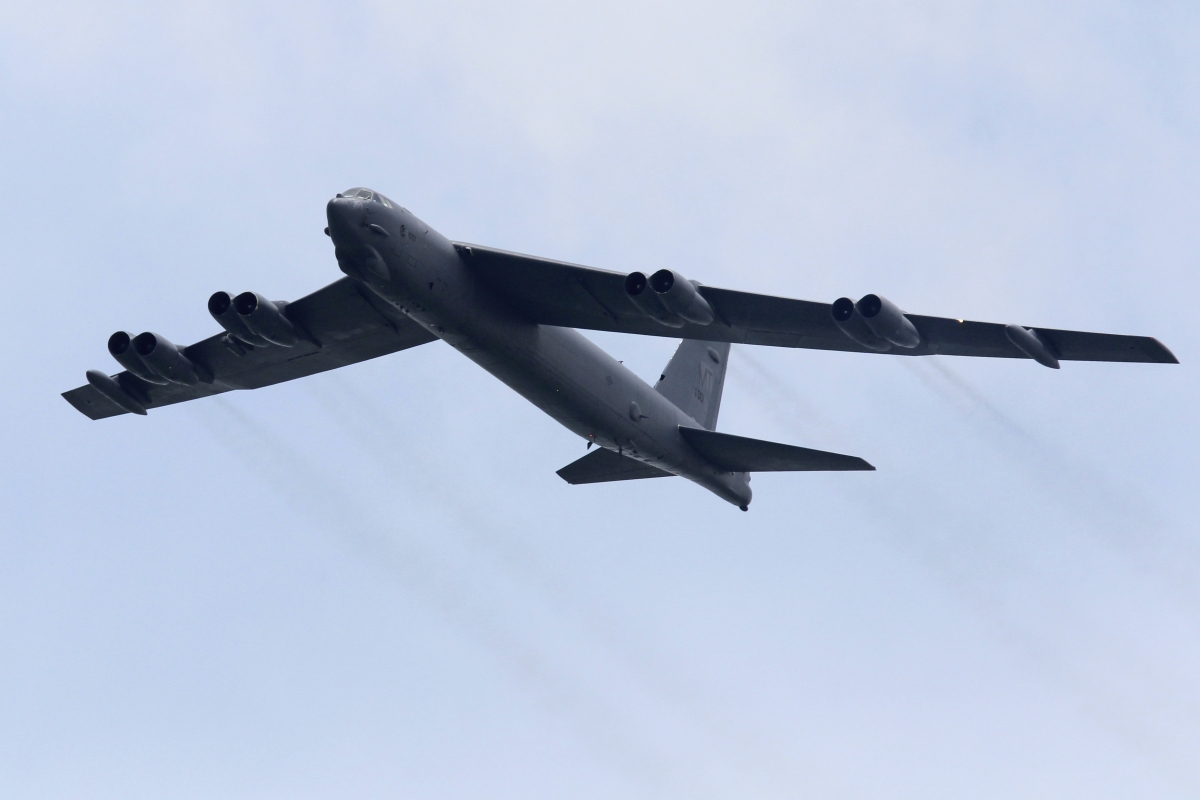
The airborne part of the nuclear triad currently consists of 76 aged
B-52 bombers and 20 newer B-2s, both of which also perform non-nuclear
missions. However, a senior Air Force officer told Congress earlier this
year that the bombers “are becoming increasingly vulnerable to modern
air defenses,” so last month the service awarded a contract to Northrop
Grumman for development of a “Long Range Strike Bomber” that will
provide
80-100 very stealthy
successors beginning in 2025 (loser Boeing is protesting the award).
Meanwhile, all of the nuclear missiles and gravity bombs carried on the
bombers are being upgraded to extend their lives, improve their
accuracy, and assure their safety. A new air-launched cruise missile is
also planned, but the administration is taking no chances, pouring
billions of dollars into enhancing the performance and connectivity of
the existing fleet.
A new intercontinental ballistic missile. The third leg of the nuclear triad consists of
450 Minuteman III missiles deployed in hardened silos at three bases in the western U.S. The Air Force is spending
$7 billion
to modernize the propulsion systems, guidance, warheads and other
elements of the Minuteman force, but the force’s projected service life
only extends to 2030. In 2014, the command responsible for managing the
missiles conducted an analysis of alternatives for developing a
next-generation “Ground Based Strategic Deterrent,” meaning a new ICBM.
InsideDefense.com reports that the Air Force will begin operating the
new missile in 2027. Missile silos and launch control centers, which
have become quite decrepit, will be renovated for decades of additional
service. A parallel effort is under way to upgrade the warheads carried
on ICBMs, substituting more powerful weapons from the retired MX
missile.
An enhanced command, control & communications network. Credible
deterrence requires a resilient command system that can ride out a
surprise attack and then execute appropriate responses (there are
numerous retaliatory options in nuclear war plans). The network of
assets supporting this system includes sensors that can detect an
attack, flying command posts, hardened underground operations centers,
secure communications satellites, and a complex array of links between
them. The Congressional Budget Office estimates that administration
plans for modernizing the nuclear command and control system will cost
$52 billion between 2015 and 2024,
with the biggest outlays going to Boeing for flying command posts,
Lockheed Martin for satellites, and Northrop Grumman for sensors and
networks. Raytheon will also likely be a key player in nuclear-related
sensors and networks.
New tactical nuclear systems. Although
the Obama nuclear posture has sought to minimize the role of nuclear
weapons outside the area of strategic deterrence, the administration
faces a practical problem in countering thousands of tactical nuclear
systems that Russia has deployed in Europe. Under the doctrine of
“extended deterrence,” the U.S. must have credible retaliatory options
for dealing with the regional threat that these weapons pose in order to
reassure its overseas allies. The administration therefore plans to
equip at least some Lockheed Martin F-35 fighters with a capability to
deliver tactical nuclear weapons, and is upgrading the inventory of
nuclear munitions suitable for conducting such operations.
A revitalized nuclear weapons industrial base. Much
of the responsibility for supporting the U.S. nuclear posture resides
not in the Department of Defense, but in the Department of Energy. DoE
is expected to spend
$121 billion between 2015 and 2024
on its nuclear-weapons functions, over a third of the $348 billion
spent on the nuclear enterprise during that period. A big chunk of that
money will go to the laboratories and industrial facilities involved in
researching, refurbishing, modifying or demilitarizing nuclear
devices. Although the U.S. no longer builds new nuclear warheads, it is
constantly reclaiming nuclear material from old devices and enhancing
the features of warheads already in the stockpile. That requires
extensive investment in revitalizing the plant and equipment at
facilities that often trace their origins to the dawn of the Cold War.
Some might quibble with using the word “buildup” to characterize this
sprawling effort, since the Obama Administration does not plan to
exceed weapons levels specified in arms reduction agreements. However,
the reality is that President Obama is backing efforts to upgrade and
replace every nuclear delivery system in the U.S. arsenal, plus
the warheads they carry, plus the command networks and industrial base
that supports them. None of his recent predecessors undertook nuclear
efforts this ambitious — the Arms Control Association says the
life-cycle cost of the new submarine alone will be over $300 billion
through 2080 — and whether the arsenal shrinks or grows will be left to
his successors. So for all of the criticism about Mr. Obama being weak
on defense, when it comes to the most fearsome weapons humanity has
devised, he will be remembered as the president who kept America on top.
(Disclosure: All of the companies mentioned here have contributed
to my think tank at one time or another; some are consulting clients.)


 Bob Woodward: US in nuclear arms race with Russia


