Showing posts with label south korea. Show all posts

Monday, January 25, 2021

Babylon the Great Stands Up to the China Nuclear Horn

U.S. reaffirms Taiwan support after China sends warplanes

“We urge Beijing to cease its military, diplomatic, and economic pressure against Taiwan and instead engage in meaningful dialogue.”

Ambassador Kelly Craft accompanied the tweet with a photo of herself in the U.N. General Assembly Hall where the island is banned. She carried a handbag with a stuffed Taiwan bear sticking out of the top, a gift from Taiwan’s representative in New York, Ambassador James Lee.

Taiwan and China separated amid civil war in 1949 and China says it is determined to bring the island under its control by force if necessary. The U.S. switched diplomatic recognition from Taipei to Beijing in 1979, but is legally required to ensure Taiwan can defend itself and the self-governing democratic island enjoys strong bipartisan support in Washington.

Tsai has sought to bolster the island’s defenses with the purchase of billions of dollars in U.S. weapons, including upgraded F-16 fighter jets, armed drones, rocket systems and Harpoon missiles capable of hitting both ships and land targets. She has also boosted support for Taiwan’s indigenous arms industry, including launching a program to build new submarines to counter China’s ever-growing naval capabilities.

China’s increased threats come as economic and political enticements bear little fruit, leading it to stage war games and dispatch fighter jets and reconnaissance planes on an almost daily basis toward the island of 24 million people.

Friday, January 22, 2021

The growing threat of the Chinese nuclear horn: Daniel 7

China to field more nuclear weapons that can target the United States, says report

by Gabriel Dominguez Jan 21, 2021, 09:24 AM

China’s missile force is expanding, with the number of nuclear warheads capable of reaching the United States on intercontinental ballistic missiles (ICBMs) potentially…

China’s missile force is expanding, with the number of nuclear warheads capable of reaching the United States on intercontinental ballistic missiles (ICBMs) potentially increasing to “well over 200” within the next five years, according to a report by the US Air Force’s National Air and Space Intelligence Center (NASIC).

Published on 11 January 2021, NASIC’s ‘2020 Ballistic and Cruise Missile Threat’ report says that China, which “continues to have the most active and diverse ballistic missile development programme in the world”, has been adding the 11,000+ km-range, single warhead DF-31A (US Department of Defense designation CSS-10 Mod 2) and the 12,000+ km-range DF-5B (CSS-4 Mod 3) to the inventory of the People’s Liberation Army Rocket Force (PLARF), with the silo-based DF-5B being China’s first ICBM with multiple independently-targetable re-entry vehicles (MIRVs).

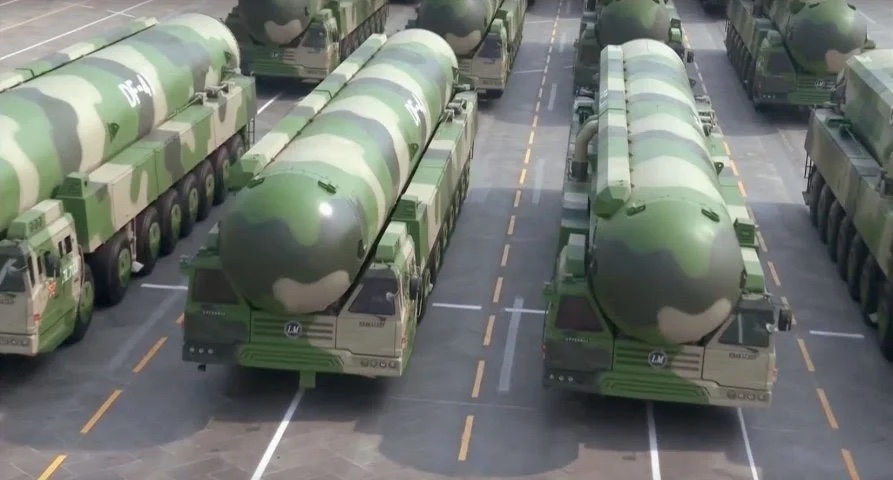
Moreover, NASIC changed its designation for the DF-41 MIRV-capable, road-mobile ICBM from CSS-X-20 to CSS-20, indicating that it considers development of the weapon has been completed. The DF-41 was first displayed at a military parade held at Tiananmen Square in Beijing on 1 October 2019.

NASIC provided no range estimate for the three-stage, solid-fuelled missile but the DF-41 is believed to have a comparable range to the older liquid-fuelled DF-5B ICBM. The DF-41’s mobility, however, makes it less vulnerable to elimination in a first strike than the silo-based DF-5 missile.

NASIC has changed its designation for China’s DF-41 ICBM (seen here during the October 2019 military parade in Beijing) from CSS-X-20 to CSS-20, indicating that it considers development of the weapon has been completed. (Via CGTN video footage)

Saturday, January 2, 2021

The rising Asian nuclear horns: Revelation 7

America’s Asian Allies Need Their Own Nukes

Want to cut costs and contain China? Allow friendly nuclear proliferation.

Doug Bandow

December 30, 2020, 6:00 AM

People watch a television showing footage of a North Korean missile test, at a railway station in Seoul, on Jan. 1, 2020. Jong Yeon-Je/AFP via Getty Images

Nobody envies U.S. President-elect Joe Biden at the moment. The problems he faces seem insurmountable.

China likely will be the administration’s most serious foreign challenge. The United States is wealthier and more powerful, but remains committed—overcommitted, in fact—around the globe. The world’s finest—and most expensive—military goes only so far.

Moreover, domestic needs and international wants will increasingly clash. As America entered 2020, the federal budget deficit was expected to run to $1.1 trillion. Combating the coronavirus pandemic and providing economic relief pushed that number to $3.1 trillion. It will be more than $2 trillion this year, and could go much higher, if Congress and the president agree on a new stimulus package. The Congressional Budget Office had predicted another $10 trillion in red ink over the coming decade, but the additional COVID-19 deficit, reflecting a combination of increased outlays and decreased revenues, could be as much as $16 trillion.

China is a challenge—but it’s not a direct military threat to the United States itself. Without such a threat, it will be difficult if not impossible to rouse public sentiment sufficiently to fund the sort of military expansion necessary to overawe and defeat a rising China in its own neighborhood. It costs much more to project power than deter its use, especially across an ocean several thousand miles wide. But there’s a cheaper and more effective solution to keeping the peace: Let America’s allies have nukes.

Can the United States defend Taiwan, destroy Chinese naval outposts on artificial islands, keep sea lanes open, protect territories claimed by Japan and the Philippines, and so on? Beijing is focused on developing Anti Access/Area Denial capabilities: It costs much less for China to build missiles and submarines capable of sinking aircraft carriers than for the United States to construct, staff, and maintain the latter. The Pentagon is concocting countervailing strategies, but they will be neither cheap nor risk-free. How much can Americans, facing manifold, expensive challenges at home and elsewhere abroad, afford to devote to containing the PRC essentially within its own borders?

And should the United States even attempt to do so? It will be difficult to generate sustained public support for sacrificial military spending to, say, ensure that the Senkaku Islands remain under Japanese control. Japan analysts at Washington think tanks might wax eloquent in their latest webinar about the vital American interests at stake, but the public will be more skeptical. And, in fact, many of the Washington policy community’s greatest fears understandably don’t matter much to the American people.

For instance, it isn’t terribly important that Beijing has grabbed control of Mischief Reef and Scarborough Shoal from the Philippines. Ownership of such specks of land yield control over fish and hydrocarbons, but that does not make them worth Americans’ blood. Nor are the Paracel and Spratly Islands. Indeed, American involvement is not the best response, and certainly shouldn’t be the first response in such contingencies. It is self-evident that such activities matter more to allied and friendly nations than to America. The best constraint on the PRC comes from its neighbors. It is surrounded by nations it’s fought with in the last century, both as victim and invader: Russia, Japan, Korea, Vietnam, and India. New middling powers include Australia, Indonesia, Malaysia, and Singapore. Just as Beijing is concentrating on deterring U.S. military intervention in the region, other countries can create forces capable of deterring China. They surely have an interest to do so —and not just to hold outlying territories. The independence of these and other nations matters more than their control over disputed lands.

Of course, these nations, which vary widely in size, wealth, and government, typically contend that they can ill afford to mount a defense, and that historical or political differences prevent them organizing together. Despite some truth to their objections, such claims should not become excuses for cheap riding. If these states are under threat, one much greater than that facing the United States, with pacific neighbors south and north, and vast oceans east and west, they have a powerful incentive to act. Yet America’s friends and allies have taken a shockingly lackadaisical attitude toward their own security. Even if the United States backstops their independence, American involvement should be a last resort.

If these states are under threat, one much greater than that facing the United States, with pacific neighbors south and north, and vast oceans east and west, they have a powerful incentive to act.

The Europeans have pioneered freeloading on Washington’s vast military spending, but the Asians are not far behind. If Tokyo is truly worried about losing a few barren pieces of rock—or, more seriously, fears an invasion of its main islands—why doesn’t it devote more than 1 percent of spending on defense? The tribulations of history are well-known, but they are no justification for expecting badly cash-strapped Americans to step into the breach.

What Does the Future of America’s Nuclear Briefcase Look Like?

The Philippines barely makes an effort, devoting less than a 1 percent of its GDP to its armed forces. A few years back its defense minister complained that the navy could barely sail and the air force could barely fly. The navy’s flagship is a half-century old U.S. Coast Guard cast-off. Manila hopes to borrow the U.S. Pacific fleet in case of trouble.

Worse, Taiwan, by far China’s most endangered neighbor, spends less than 2 percent of GDP to protect itself—although a recently proposed budget envisages raising this considerably. Military outlays have gotten caught in the political crossfire between the two major parties. Grant Newsham of the Japan Forum for Strategic Studies cited “successive Democratic Progressive Party and Kuomintang administrations’ mystifying but steadfast refusal to properly fund defense—even though Taiwan is a wealthy nation and facing a serious threat from mainland China.”

Why are countries so unwilling to do more on their own behalf? Perhaps they do not believe Beijing poses a threat—or they are convinced that America will step in if necessary. Growing concern over the PRC and its perceived ambitions appears to have loosened the military purse strings of some Chinese neighbors—but not nearly enough. U.S. officials have tried complaining, whining, and demanding, with only indifferent success. Better for the incoming administration to tell allies and friends that while America “is back,” as the president-elect has proclaimed, that doesn’t mean Americans should carry a burden that rightly belongs to others. Nor should other governments want to put their nations’ futures into someone else’s hands, even those belonging to the United States.

This applies with greatest force to the principle of extended deterrence, which friendly governments seem to assume is their due. Washington’s threat to go nuclear on its allies’ behalf—an implicit promise of undetermined reach in unstated circumstances—is an extraordinary commitment, since it treats other nations’ interests of varying importance as existential for America. This strategy is most likely to work if the opponent does not possess nuclear weapons or Washington’s interest in its ally’s security is at least as great as that of the nuclear-armed adversary. That is not the case in today’s potential East Asia-Pacific conflicts.

This applies with greatest force to the principle of extended deterrence, which friendly governments seem to assume is their due.

Put bluntly, none of the contested interests are worth the resulting risks to America’s homeland. Certainly not the various islands, reefs, shoals, islets, rocks, and other detritus strewn about the South China Sea, East China Sea, and other waters nearby. Nor the Philippines, a semi-failed state, almost uniquely badly governed. Taiwan is a better, or certainly a more valuable, friend, but is little more important to America’s defense than Cuba is to Chinese security, which isn’t much.

It is difficult to make a credible case for extended deterrence even for Japan. Would any American president really trade Los Angeles for Tokyo? The promise is made on the assumption that the bluff will never be called: Advocates simply assume perfect deterrence. However, history is littered with similar military and political presumptions, later shattered with catastrophic consequences.

The danger surrounding South Korea is most acute, and not because of Beijing. Rather, the threat is North Korea’s nuclear program. Pyongyang has no interest in attacking the United States but can be expected to defend itself. It would have a strong incentive to use nukes if Washington threatened the North’s defeat. Yet nothing in the Korean peninsula is worth the sacrifice of American cities.

What to do? There is one way to square the circle. The Biden administration should reconsider reflexive U.S. opposition to “friendly proliferation.” Ironically, current policy ensures that nuclear weapons are held by only the worst Asian states—authoritarian and revisionist China and Russia, Islamist and unstable Pakistan, illiberal and Hindu nationalist India, and totalitarian and threatening North Korea. Against all these, Washington is supposed to defend Japan and South Korea, certainly, the Philippines and Australia, possibly, and Taiwan, conceivably. That is dangerous for everyone, especially the United States.

Ironically, current policy ensures that nuclear weapons are held by only the worst Asian states—authoritarian and revisionist China and Russia, Islamist and unstable Pakistan, illiberal and Hindu nationalist India, and totalitarian and threatening North Korea.

Reversing a policy supported by neoconservative nation-builders, unilateral nationalists, and liberal internationalists would not be easy. The change would be dramatic, and not without risk, whether from potential terrorism, nuclear accidents, or geopolitical provocations. Although the nuclear age has been surprisingly stable, proliferation necessarily creates additional risks for conflict and leakage. Nevertheless, the existence of nuclear weapons probably helped contain conventional conflict, especially between the United States and the Soviet Union. Even more, nations are convinced that modest arsenals keep rival states at bay, which is why countries as disparate as Israel, North Korea, and India have developed arsenals at great cost.

All of these countries, except the Philippines, are easily capable of developing their own nuclear weapons. Of course, they might decide not to do so, as is their right. However, there is significant popular support in South Korea for amassing a countervailing arsenal. The issue is understandably far more fraught for Japan. However, Japanese enthusiasm for pacifism always has reflected a belief that Washington would come to that country’s defense. If that was no longer certain, the Japanese people might react differently.

Australia is another potential nuclear state. Until recently, Canberra might have been hesitant to risk its commercially advantageous relationship with the PRC. However, under sharp economic assault from Beijing today, Australians may be more inclined to add the ultimate weapon to their military repertoire.

Taiwan is in greatest need of such a weapon, but developing one would be highly destabilizing, since Beijing would be tempted to preempt the process. The alternative would be for Washington to fill Taiwan’s need, with a profound impact on Sino-American relations. Proliferation would not be a good solution—but it might be the least bad one.

No doubt, a nuclear-armed China would react badly to better-armed neighbors, but it is no happier with a more involved United States. Moreover, the prospect of American friends and allies developing nukes might prompt the PRC to change course, backing away from confrontation, seeking diplomatic answers for territorial disputes, and pushing North Korea harder to limit if not roll back its nuclear program. Two or three additional nations choosing nukes would permanently transform the regional balance of power, to China’s great disadvantage.

The PRC, not Russia or the Middle East, will pose the defining challenge to the Biden administration. Grappling with such a rising power will be very different to confronting the Soviet Union during the Cold War. It is easier to know what not to do with China than what to do. Don’t go to war. Don’t stage a new cold war. Don’t sacrifice core values and basic interests. Don’t make the issue all about Washington. Don’t waste money and credibility on overambitious, unsustainable attempts at containment. Don’t attempt to dictate to the PRC.

But what to do? The United States should think creatively about new approaches to old problems. One way to do so is to stop hectoring partners and preventing them from doing what they want to do. Including, perhaps, developing nuclear weapons.

Doug Bandow is a senior fellow at the Cato Institute. A former special assistant to President Ronald Reagan, he is the author of several books, including Tripwire: Korea and U.S. Foreign Policy in a Changed World.

Thursday, March 26, 2020

Saudis and S Koreans Are Becoming a Nuclear-Proliferation Threat

As the Trump administration scrambles traditional foreign-policy practice, experts warn that some of America’s longest allies are increasingly considering what would previously have been unthinkable: the pursuit of nuclear weapons.
Days after the 2016 American election, Reuters published an interview with Roderich Kiesewetter, foreign policy spokesperson for German Chancellor Angela Merkel’s conservative bloc. Reacting to President Trump’s victory, Kiesewetter declared, “Europe needs to think about developing its own nuclear deterrent.”
It was shocking. Germany’s flirtations with nuclear weapons have been minimal since it committed to nonproliferation in the 1960s. But prominent academics and journalists joined Kiesewetter. The publisher of one influential conservative newspaper even suggested that Germany develop its own nuclear arsenal.
“We initially thought this was going to go away because of how vociferous the opposition was; that it was a phantom debate among fringe elements,” said Tristan Volpe, fellow at the Carnegie Endowment for International Peace’s nuclear program. “But it’s come back at least four times with some serious people weighing in as proponents.”
Germany is not unique. Of all the Trump administration’s global impacts, one of the most worrying is a sudden increase in the risk of nuclear proliferation among American allies, many of whom are considering a nuclear path which America may be unable to control.
This debate has been most intense in South Korea, which began pursuing a nuclear weapons program in the 1970s only to abandon it under intense pressure. The idea remained popular; upwards of 60 percent of South Koreans favor pursuing nuclear weapons.
“South Korea has become much more serious,” said David Santoro, nuclear policy director at Pacific Forum, a Honolulu thinktank. “A number of politicians have been making the case that South Korea should develop a nuclear arsenal.” Former South Korean foreign minister Song Min-soon told an American audience last year that “the Republic of Korea taking its own measures to create a nuclear balance on the peninsula” was “widely touted.”
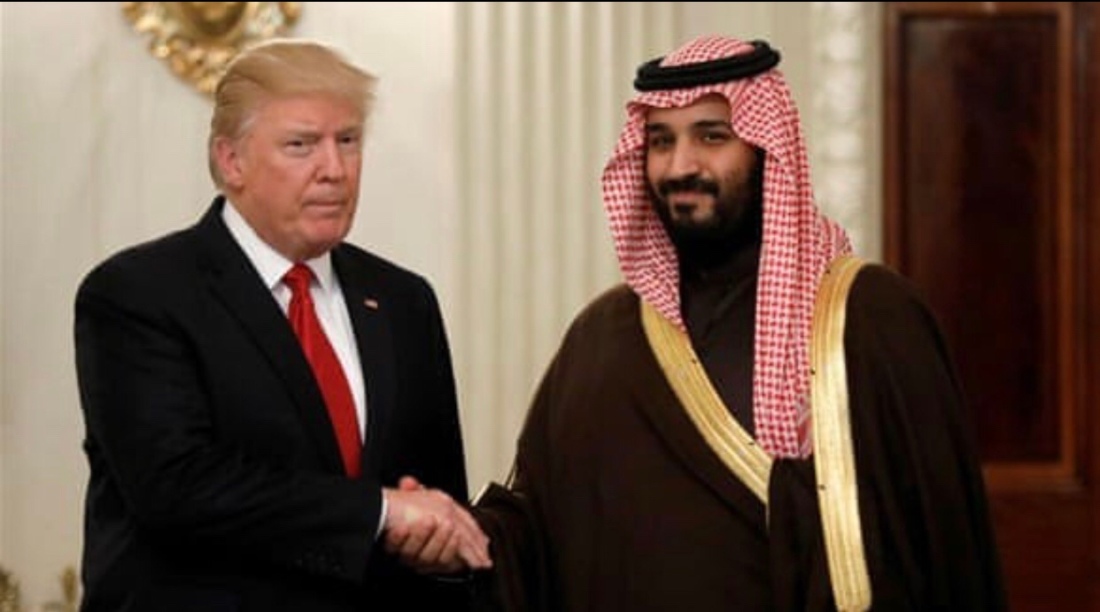
The most significant steps by an American partner are being taken by Saudi Arabia. It is pursuing civil nuclear capabilities and, according to Carnegie’s Volpe, “have been quite reluctant to foreswear the option to enrich uranium down the road. They’ve been very coy around it. Well, working-level officials in Saudi Arabia have been very coy.” That reticence does not extend to Saudi leaders. Crown Prince Mohammed bin Salman warned in 2018 that if Iran “developed a nuclear bomb, we will follow suit as soon as possible.”
‘Trump’s instincts and style’
These shifts are partly the product of long-term trends. Never since the Cold War has America’s global position seemed more fragile, making its commitments seem questionable. And North Korea’s success in acquiring long-range nuclear capabilities was guaranteed to spook nearby American allies. As Mira Rapp-Hooper, Senior Fellow for Asia Studies at the Council on Foreign Relations, has observed, “The trouble is, the United States has far less incentive to intervene on behalf of South Korea or Japan if North Korea can respond with a nuclear strike against the U.S. homeland.” Iran’s interest in nuclear weapons has similarly terrified regional rivals.
But Trump’s behavior has accelerated those trends. Santoro noted that the nuclear discussion in South Korea is “taking off now because there’s a lot of discussions in Washington about whether or not the Trump administration is considering withdrawing troops.” Vipin Narang, associate professor of political science at MIT, said, “You can really boil this down to Trump’s instincts and style. For the first time in a long time, the allies have had to fundamentally question the credibility of the U.S.[nuclear protection] guarantee.”
This uncertainty is fed by moves like Trump’s demand, since rescinded, that South Korea quintuple its contribution to the cost of maintaining American troops there. “The concern is that it’s not a genuine negotiating position, that it’s demanded as an excuse to eventually pull out of South Korea,” Narang said. “There’s a deep enough thread in Trump’s thinking and rhetoric to suggest that he genuinely believes that American [nuclear] assurance and conventional deployments to these allies are a waste of money.”
Opening the box
Experts emphasize that the risk of allies rapidly nuclearizing is low. “There’s a number of hurdles that [allies] would have to get very powerfully motivated to overcome,” said Michael Mazarr, senior political scientist at the RAND Corporation. But Volpe observed that “opening that box and having to ask those questions about the U.S. commitment is worrisome…The proliferation risk is low. The problem is that it’s increased. It was an almost 0 percent risk for a long time, and the reason there’s lots of interest is that that risk has gone up in a noticeable way.”
Moreover, that risk will grow. According to Nicholas Miller, assistant professor of government at Dartmouth: “There are geopolitical trends that are making this happen, and are going to make it increasingly common…The shift towards multipolarity with the rise of China, the relative decline of the U.S, and Russia behaving increasingly assertively—that all makes a lot of our allies feel more insecure. That’s going to persist, so these conversations will continue.”
Part of the Trump administration’s legacy will be the corrosion of America’s ability to control those risks. Previous administrations restrained proliferation by denying other governments access to technology, coercing them through threats, and reassuring them through commitments. But the rise of Russian and Chinese nuclear-technology providers has made the first option far less effective. And it would be counterproductive to coerce already-nervous allies with the type of confrontational strategies used against states like Iran and North Korea.
The only useful tool the next president will have is reassurance, itself badly dulled by the current president. “From an allied perspective, you look at the U.S. and you think, ‘Well, for four years I’ll get assurance, but then the administration will change and the commitment might die again’,” Santoro said. “It’s going to be very hard for the next administration to recommit to U.S. obligations.”
The consequences of proliferation among allies are dire. Miller explained that “the more countries with nuclear weapons, the more likely that a weapon gets used. That could be a deliberate attack, accident or nuclear terrorism.” Crucially, “the U.S. has adopted a strong stance against proliferation [because] we’re very worried about cascades or tipping points. If one [ally] gets nuclear weapons, it gives others incentives to do the same”.
As the 2020 election looms, this issue will grow in importance. “I think most allies are willing to give American until 2020, but if Trump is reelected, then I think these concerns will be really exacerbated,” said Narang. “Because that’s enough time for Trump to implement a vision of reducing America’s footprint.”
So as America negotiates its way through the Trump question, the answer it chooses may require it to confront a newly pressing nuclear challenge: holding back its own friends.

Tuesday, August 6, 2019

The Rising South Korean Nuclear Horn (Daniel 7)

Will South Korea Get Nuclear Weapons?

05.08.2019
Andrei Lankov
© 2019 South Korea Defense Ministry via AP
On July 29, Cho Kyoung-Tae, one of the leaders of the Liberty Korea Party (LKP), went on record as saying that South Korea should give serious thought to developing a nuclear deterrent of its own.
In actual fact, he said that an ideal solution would be to obtain America’s consent to the redeployment of US tactical nuclear weapons that were withdrawn in the early 1990s. If, however, the consent was not forthcoming, he said, South Korea should formally quit the Nuclear Non-Proliferation Treaty and start deploying its own nuclear missiles.
The Liberty Korea Party is no marginal political group. Right now, the South Korean right-wing forces are in disarray but the LKP has a membership of three million and over 100 seats in parliament, which makes it the biggest right-wing conservative party and the main parliamentary opposition party.
The question of South Korea acquiring nuclear weapons has been mooted for quite a while and, properly speaking, it was Seoul rather than Pyongyang that instigated a nuclear arms race on the Korean Peninsula.
In the early 1970s, the United States, influenced by the “Vietnam syndrome,” proclaimed the so-called Guam Doctrine that provided for a phased withdrawal of US forces from Asia. It was highly likely at that point that US troops would be withdrawn from South Korea as well. What is more, Washington was in fact considering this scenario.
The then South Korean leadership was far from pleased with this turn of events, given that their entire strategy was based on a US military presence in the country. This is why Gen. Park Chung Hee’s government, on the one hand, took all conceivable diplomatic steps to prevent a US withdrawal, while on the other, launched a clandestine project to develop own nuclear weapons.
The South Korean attempts of this kind soon ceased to be a secret and caused much concern in the United States. As a result, both governments reached a compromise in the late 1970s, with Washington promising to keep its military presence in South Korea and the latter pledging not to develop nuclear weapons. The compromise has held for 50 years, although over the last 10 or 15 years, many in South Korea have voiced discontent with the commitments Seoul assumed at that time.
According to opinion polls, nuclear weapons are quite popular in South Korea, with 50 to 70 percent of respondents consistently supporting (for years!) the idea that their country should have a nuclear deterrent of its own. True, the polls reflect vox populi, whereas the political elites, until recently, had no nuclear ambitions.
South Korea is an ideologically split society and the outlook of its left-wing nationalists (now in power) is a far cry from what their right-wing conservative opponents have in mind. Nevertheless, both flanks had a negative attitude to nuclear weapons.
The South Korean right-wingers have taken a consistently – and I am even tempted to say a “radically” – pro-American position. For this reason, they, firstly, did not doubt (again, until recently) the reliability of the US “nuclear umbrella,” and, secondly, they were not prepared to do anything that would inevitably raise the ire of Washington.
The left-wingers, on the contrary, are traditionally pacifist-minded and tend to believe that South Korea can cope with outside threats diplomatically, without recourse to military means or a deterrent. Moreover, they do not take the threat from the North so seriously as their right-wing opponents and for the most part are certain that the North Koreans will never use nuclear weapons against their kin.  
Nevertheless, some developments over the last two or three years could – at least at first sight – impel the South Korean establishment to change its attitude to nuclear weapons.
One of these developments is the election of Donald Trump. After he assumed office in early 2017, Seoul, including its right-wing conservative elites, conceived doubts as to whether the United States was ready to perform its allied obligations under the new conditions. Contributing to these apprehensions are statements made by Trump himself, who is constantly displeased with both the system of US military-political alliances as a whole and the alliance with South Korea in particular.
Second, North Korea’s technological breakthrough of recent years is also an important factor contributing to a change of sentiment in Seoul (at least on the right flank of South Korean politics). During 2017, North Korea tested two ICBM models capable of reaching targets on the North American continent and carried out successful tests of a thermonuclear charge. Work is also advancing on submarine-launched ballistic missiles (SLBM), with North Korea ready to commission its second missile-carrying submarine.
This means that the DPRK either already is or will soon become the world’s third country (after China and Russia) with the potential to wipe New York or Washington off the map. Under these circumstances, even the most pro-American members of the Seoul elite began asking themselves whether the United States would risk supporting South Korea if the cost of its interference in an inter-Korean conflict would be the death of millions of US civilians. In other words, South Korea is beginning to have doubts as to whether the US will be ready to sacrifice San Francisco to defend Seoul, while Donald Trump’s words and deeds only strengthen these misgivings.
When the reliability of the main – and, in fact, the only – strategic ally is in doubt, the idea of creating one’s own nuclear deterrent begins to appear much more attractive than previously.
Thus, it is clear why pro-nuclear sentiments have emerged among the South Korean right-wingers and why, taking into account the situation in which their country finds itself, this is quite logical. But does this mean that these plans can soon be translated into reality? Should we start being anxious about the “East Asian nuclear dominoes?”
According to the “East Asian nuclear dominoes” concept, North Korea’s nuclear development effort may trigger a geopolitical chain reaction, with nuclear weapons being acquired first by Japan and South Korea, then by Taiwan, and later possibly by some Southeast Asian countries, including Vietnam. All of these countries have the economic and technological potential to create and deploy their own nuclear deterrents within an acceptable timeframe.
But most probably there is no cause for alarm and nuclear dominoes are unlikely to start falling in East Asia any time soon. Even if we assume that the South Korean conservatives (and the question of nuclear weapons is mooted only in the conservative camp, which is currently in opposition) will try to live up to their nuclear ambitions after coming to power in an election, they most likely are in for a failure.
The obstacle to Seoul achieving its nuclear ambitions does not lie in technological or financial problems. There are no such problems for South Korea and it would take it a couple of years at the most to develop its own nuclear weapons. But if Seoul started working on nuclear weapons (which is frankly improbable), it would immediately face serious economic and political consequences which, more likely than not, would force it to change position and abandon its nuclear ambitions.
By withdrawing from the Nuclear Non-Proliferation Treaty, South Korea would very probably lay itself open to international sanctions. For a number of reasons, on which we have no need to dwell, sanctions against South Korea would be less strict than those imposed on North Korea. Nevertheless, they would have a tangible impact on the country’s economic situation, given its strong dependence on international trade.
China’s position will be an even more serious problem. Right now China is the country with the most reason to fear that the “nuclear dominoes” scenario in East Asia will become a reality. With the exception of South Korea, all countries in the region with the potential to acquire nuclear weapons of their own will do so primarily in order to contain China. For this reason, China must prevent the dissolution of the nuclear non-proliferation system in East Asia, for which purpose Beijing will stop at nothing, including operations by secret services, clandestine support for anti-nuclear groups in South Korea, and sabotage at research centers (if this seems like an exaggeration, please recall Israel’s reaction to the Iranian nuclear program).
So, if and when South Korea’s putative nuclear project gets under way, the country will be subjected to the most severe Chinese sanctions. China may go as far as imposing a near total embargo on trade with South Korea.
These sanctions will be a crushing blow for the South Korean economy, given that China accounts for nearly 23% of South Korean trade. International and particularly Chinese sanctions will inevitably result in a substantial deterioration in the country’s economic status.
We saw something like this, albeit on a modest scale, in 2017, when Seoul allowed the United States to deploy its THAAD missile defense system on its territory and China in response introduced sanctions against South Korean companies. The sanctions were of a limited nature and included a restriction on the travel of Chinese tourists to South Korea and various “unofficial” obstacles for South Korean firms in China. Nevertheless, even this moderate action had a certain impact on the economy and proved a shock for the South Korean public. Eventually, the Moon Jae-in administration made concessions to Beijing.
Any large-scale sanctions would cause a full-blown economic crisis and a perceptible drop in living standards. The resultant disaffection would be much greater than what came in the wake of those semi-symbolic moves that were undertaken in response to the THAAD deployment.
Moreover, the overwhelming majority of South Koreans do not feel that their country is facing an existential threat or that its very existence is in question. With the exception of the right-wing conservative radicals, the people at large are surprisingly calm and relaxed with regard to the North Korean nuclear program. Seoul is certainly far from pleased with the fact that the neighboring hostile state has developed nuclear weapons, but the majority of South Koreans have no fear. Most of them are absolutely sure that North Korea will under no circumstances use nuclear weapons against its ethnic brothers. This certainty may be naïve but it is a political factor in its own right. This means that the ordinary South Korean voters, though theoretically supporting the idea of South Korea as a nuclear power, are not prepared to make considerable sacrifices for the sake of this goal.
On the other hand, economic success is the criterion by which the South Korean public assesses the efficiency of any government. The Moon Jae-in administration has to become convinced of this once again as it sees the steady decline of its popularity ratings in the wake of a gradual deterioration in the economy.
Therefore, the South Korean electoral reaction to a potential crisis provoked by international and Chinese sanctions would most likely be unequivocal. Outraged by a perceptible slide in living standards, voters would demand an immediate renunciation of the economically damaging and, from their point of view, hardly justified nuclear ambitions. If the ruling party refused to make concessions, its chances of winning the next election would drop to zero. In addition, the South Korean media, though extremely politicized, are not controlled by any single force, being equally divided between the left and right wings. Therefore, the right-wingers, even if they found themselves in a position of power, would hardly be able to carry out a proactive propaganda campaign in favor of the nuclear option.
More likely than not, however, things will not go as far as this, since most Korean politicians are aware – or at least feel intuitively – that all attempts to create South Korea’s own nuclear potential are doomed to failure. There is every likelihood that all the talk about nuclear weapons, although reflecting the hidden hopes of many right-wing politicians, is just an additional means for bringing pressure to bear on Washington and the world community, a “soft blackmail” method, if you will. In this way, South Korea wants to elicit a more serious international attitude to the North Korean nuclear issue and is reminding the world that Seoul too can pose problems to the nuclear non-proliferation regime on a par with Pyongyang.
Apart from that, the Korean rightists are hoping that this talk will impel Washington to strengthen the military alliance. For example, a group of US military experts, almost simultaneously with Cho Kyoung-Tae’s statement, made an informal proposal in a Joint Forces Quarterly article on US-South Korean joint control of a certain number of nuclear munitions. Agreements of this kind have long been in force with some NATO countries. In many respects, these ideas may be put forward in response to Seoul’s nuclear ambitions.
This does not mean, of course, that the fears in connection with the “nuclear dominoes” scare, a geopolitical chain reaction in East Asia, are totally groundless. But there is no need to panic over such a turn of events in the near future. If, after all, the chain reaction does begin, Seoul is unlikely to be its hub, no matter what conservative South Korean politicians have been saying recently.

Saturday, May 25, 2019

Trump Preps the Saudis for War (Daniel 7)

Trump cites Iran to bypass Congress on Saudi arms sales

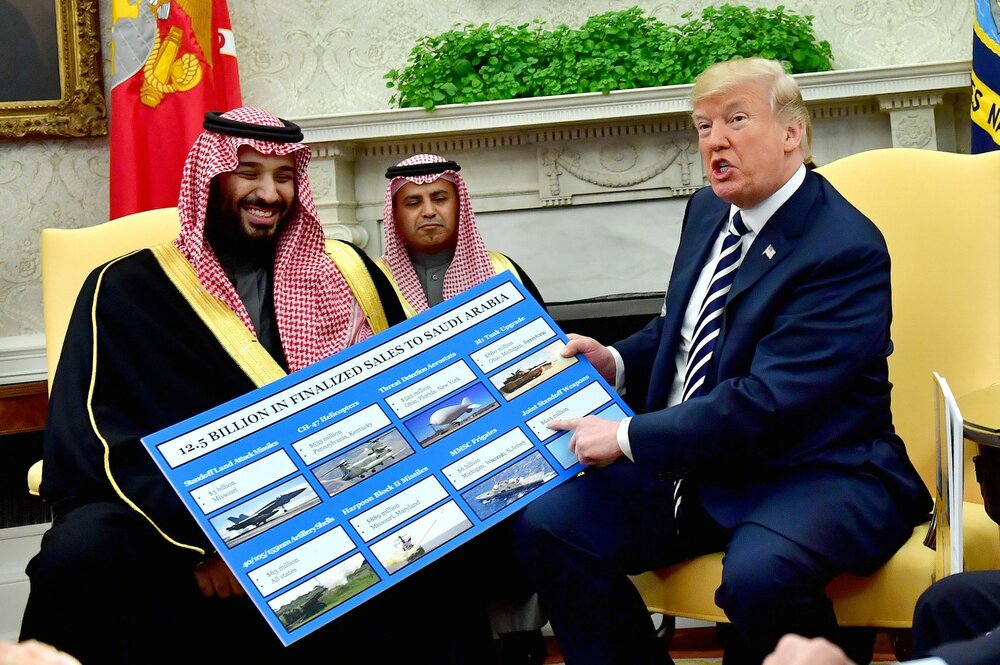
(Newser) – The Trump administration on Friday invoked a rarely used provision in federal law to bypass congressional review of arms sales to Saudi Arabia, citing threats the kingdom faces from Iran. Secretary of State Mike Pompeo notified Congress of the decision to use an emergency loophole in the Arms Export Control Act to move ahead with sales of $7 billion in precision guided munitions, other bombs and ammunition and aircraft maintenance support to Saudi Arabia, along with the United Arab Emirates and Jordan, without lawmakers‘ approval. Pompeo said, the AP reports, „that an emergency exists which requires the immediate sale“ of the weapons „to deter further the malign influence of the government of Iran throughout the Middle East region.“ He said the transfers „must occur as quickly as possible in order to deter further Iranian adventurism.“
Pompeo’s move follows President Trump’s announcement that the U.S. will send 1,500 additional U.S. troops to the Middle East in response to an unspecified threat from Iran. Democratic critics of the Saudi campaign denounced Friday’s step. Sen. Bob Menendez of New Jersey said the administration did not cite a specific legal or practical reason for using the loophole other than Iran. Sen. Chris Murphy of Connecticut said the administration was only declaring an emergency because lawmakers would have blocked the transfers. „There is no new ‚emergency‘ reason to sell bombs to the Saudis,“ Murphy said. There is precedent for using the exemption for arms sales to Saudi Arabia: President Ronald Reagan and Presidents George H.W. Bush and George W. Bush invoked it.

Thursday, May 2, 2019

How the US is Building the Saudi Nuclear Horn (Daniel 7)


Saudi-U.S. nuclear hypocrisy exposed
KASHMIR – According to author and radio host, Harvey Wasserman, U.S. President Donald Trump’s recent decision to infuse $3.7 billion dollars into Vogtle nuclear power plants is a criminal act.
The U.S. nuclear industry is facing stiff competition from cheap natural gas and renewable energy, so financial assistance is critical for the survival of the industry. Trump administration is not only infusing money into the troubled U.S. nuclear energy sector but strongly advocating the transfer of sensitive nuclear technology to the regime in Riyadh. It has adopted a well-coordinated strategy to guarantee the survival of the U.S. nuclear industry.
The unilateral withdrawal of the U.S. from JCPOA, malign interests of the U.S. military-industrial complex and a comprehensive plan to contain Iranian influence in the Middle East are some important links that can explain the Saudi-U.S. nuclear hypocrisy.
At the superficial level, Saudi regime considers itself a strong advocate of weapons of mass destruction free zone (WMDFZ) in the Middle East but by praising the unilateral withdrawal of U.S. from JCPOA and an open admission to acquire nuclear weapons in case Iran undertakes a nuclear program is a testament to Saudi hypocrisy.
It seems logical to put deterrence against a rival but Saudi intentions to acquire nuclear weapons date back to the inception of Pakistan’s nuclear program.
The justification for deterrence against Iran is a fabricated story as we analyze the Iran nuclear deal which reduced the enriched uranium stockpile of Iran by 98% and the number of gas centrifuges reduced to two-thirds for 13 years.
Iran even agreed to halt building new heavy water facilities and enrich uranium up to 3.67%. Further it agreed on regular inspection of its nuclear program by international Atomic Energy Agency (IAEA).
In this context, the statement of former UK ambassador to UN and IAEA, Peter Jenkins that “as long as Iran is complying with the JCPOA, the U.S., Israel, and Saudi Arabia are deprived of any basis for claiming that Iran presents a nuclear threat which must be eliminated by use of force” sufficiently explains the Saudi nuclear hypocrisy.
Saudi criticism of Iran’s civilian nuclear program highlights its double standard as according to Abdul Hameed Nayyer, a Pakistani nuclear physicist, Saudi Arabia can demand nuclear weapons from Pakistan due to its generous investment in the country.
Additionally, Brigadier Feroz Hassan Khan in his book “Eating Grass: The Making Of the Pakistani Bomb” also explains the Saudi ambitions to acquire nuclear weapons.
Considering the nuclear option from Pakistan and potentially a huge space to exploit solar energy for clean power renders the establishment of nuclear infrastructure by Saudi regime useless. But the report from investigative journalist Kim Kleppin has revealed how Saudi lobby is pushing Trump administration to transfer the sensitive nuclear technology to the regime. According to the report a U.S. law firm linked to Trump vigorously lobbied the U.S. administration for nuclear technology transfer and received half a million dollars within one month of its establishment.
The vested business interests in Saudi nuclear program were revealed on February 19, 2019, in a report by the ‘house oversight and reform committee’ that disclosed Trump administration’s plan to bypass U.S. Congress for nuclear technology transfer to Saudi Arabia.
The report of the committee highlights intentions of IP3 international, a consortium of nuclear power producers. IP3 was founded by retired army general Jack Keane and its proposal was presented to White House officials by Thomas Barrack. Barrack is a close friend of Trump who raised $107 million for Trump’s inaugural committee. Michael Flynn is another central figure to the report who has worked as a paid advisor to a subsidiary of IP3 while serving in Trump’s presidential campaign. Flynn promoted IP3’s intention to sell nuclear technology to Saudi Arabia to white house officials.
McFarlane, the former national security advisor to the U.S. and currently an advisor to IP3, compared the transfer of nuclear technology to Saudi Arabia to the Marshall plan for the Middle East. According to the report, the founders of the IP3, McFarlane, and CEOs of Toshiba energy, GE power, Exelon Corporation Bechtel Corp and Siemens have promoted the plan to sell nuclear technology to Riyadh.
The retired generals who founded IP3 have always portrayed Iran as a nuclear threat but now their intentions to transfer such technology to Saudi regime is meant to serve their monetary interests. The house oversight committee quoting a senior Trumps official said “the proposal of IP3 is not a business plan but rather a scheme for these generals to make some money.”
In an interview with Sputnik, Tom Sauer of the University of Antwerp Belgium said the Saudi proposal to build about 40 nuclear reactors is a great business opportunity for troubled the U.S. nuclear industry and the Wall Street perceives peaceful Middle East as a nightmare for its military-industrial complex.
According to some experts, the nuclear technology transfer to Saudi Arabia will initiate an arms race in the Middle East that is what U.S. military-industrial complex wants.
According to Tom Collin, policy director at Ploughshares Fund, Saudis don’t require nuclear power and if the U.S. transfers such technology to the kingdom it will force Iran to restart its nuclear program.
The arms race will serve both the U.S. military industrial complex and the Saudi regime because Saudi regime wants to derail Iranian economy by draining its resources through arms race as they are frustrated by Iran’s influence and progress in the region.
It is similar to U.S. strategy to contain Russian influence by initiating arms race as the U.S. economy has an unlimited supply of petrodollars but Russian economy has limited options to finance its military and civilian projects.
IAEA has denied any military vector of Iran’s nuclear program but Saudi-U.S. hypocrisy to portray Iran as is a nuclear threat is meant to serve their vested interests. They consider nuclear arms race as a tool to serve private business interest and simultaneously a counterweight against Iran’s axis of resistance that consists of Iran, Assad government, Hezbollah and the alliance of Russia and China.
Mudasir Sheikh is a student and researcher based in Indian controlled Kashmir. 

Thursday, April 25, 2019

The Accelerating Saudi Nuclear Horn (Daniel 7)


By Tim Lister and Tamara Qiblawi, CNN
Updated 3:09 AM EDT, Sun April 07, 2019
(CNN) On the outskirts of Riyadh, a building site is quickly being transformed into the birthplace of Saudi Arabia’s quest for nuclear power, a bid that has sparked concern in the US Congress and fury in Tehran.
New satellite imagery shows that construction on an experimental reactor is making „expeditious“ progress — just three months after the Kingdom announced plans to build it, according to former director for nuclear inspections at the International Atomic Energy Agency (IAEA), Robert Kelley.
Kelley estimated that the reactor could be completed in „nine months to a year.“
The Kingdom has been open about its nuclear program with the IAEA, which sent a team to Saudi Arabia last July to check on building plans. It has repeatedly pledged that the program is peaceful. But Crown Prince Mohammed bin Salman said last year that „without a doubt if Iran developed a nuclear bomb, we will follow suit as soon as possible.“
Also raising concern among industry experts and some in Congress is the Saudi insistence that it should be allowed to produce its own nuclear fuel, rather than import it under strict conditions.
In an interview last year, Saudi Energy Minister Khalid al Falih said: „It’s not natural for us to bring enriched uranium from a foreign country to fuel our reactors,“ citing the country’s uranium reserves.
Vision 2030
Saudi Arabia went public with its nuclear ambitions nine years ago, but the plans have gone into overdrive as part of the Crown Prince’s „Vision 2030“ — a strategy to wean Saudi Arabia off its reliance on oil and diversify both the economy and its energy mix.
It already consumes about one-quarter of its own oil production, and output is likely to remain roughly stable even as demand for energy is expected to triple by 2030. So the blueprint for Vision 2030 includes solar and wind power as well as a nuclear program in an effort to source one-third of energy needs from non-oil resources.
Longer-term, Saudi Arabia envisions 17 gigawatts of nuclear capacity by 2040, enough to provide 15% of its power needs.
Robert Kelley, former director for nuclear inspections at the IAEA, has said that Saudi Arabia’s nuclear reactor is designed for training scientists.
The experimental reactor under construction at the King Abdulaziz City for Science and Technology is designed for training scientists, Kelley told CNN.
„It’s the size of a waste basket and has no strategic importance,“ he said, adding that it would take 100 years to process enough plutonium for a nuclear weapon.
Next, the Saudis want to build two commercial reactors and are shopping around for contractors. There are five finalists, according to the Saudis: Westinghouse from the US, as well as companies from China, Russia, France and South Korea. Saudi Arabia has also signed agreements with the China National Nuclear Corporation for exploring uranium reserves in the Kingdom.
The IAEA sent a team to Saudi Arabia in July last year to review the development of its nuclear power infrastructure. That mission concluded that the Kingdom is „well placed to finalize its plans for construction of its first nuclear power plant“ through partnerships with countries that have nuclear power industries.
Saudi Arabia consumes around one quarter of its own yearly oil production.
In a visit to Riyadh in January, Mikhail Chudakov, IAEA Deputy Director General, confirmed Saudi Arabia had „made significant progress in the development of its nuclear power infrastructure.“
But when the Saudis want to move to the next stage — fueling the reactor at King Abdulaziz City and any commercial plants — they will have to submit to more intrusive IAEA involvement.
„They’ve been exempt for 30 years since they signed a non-proliferation treaty,“ said Kelley. „Now they’re going to have to make some serious paperwork and agree to inspections,“ if they want to acquire nuclear fuel.
US concerns
Skepticism in the US Congress over whether Saudi Arabia can be a trusted partner has grown since the gruesome murder of journalist Jamal Khashoggi in Istanbul last year. That’s now manifested itself in critical scrutiny of the Saudi nuclear program — and especially whether the Trump Administration is doing enough to ensure non-proliferation.
Asked whether it was acceptable for Saudi Arabia to become a nuclear power, US Secretary of State Mike Pompeo was unequivocal in a TV interview on Friday.
„We will not permit that to happen. We will not permit that to happen anywhere in the world,“ Pompeo told CBS. „The President understands the threat of proliferation. We will never write a $150 million check to the Saudis and hand them over the capacity to threaten Israel and the United States with nuclear weapons, never.“
A bipartisan resolution introduced in the Senate in February demanded that the use of any US nuclear power technology in Saudi Arabia must be accompanied by safeguards to ensure Saudi Arabia cannot enrich uranium or reprocess spent fuel.
„The last thing America should do is inadvertently help develop nuclear weapons for a bad actor on the world stage,“ said Democratic Senator Jeff Merkley, one of the resolution’s sponsors.
US Secretary of Energy Rick Perry has warned that Saudi Arabia will look to China or Russia to develop its nuclear industry if the US fails to cooperate.
House Democrats in February claimed that in 2017 White House officials had pushed the sale of nuclear technology to Saudi Arabia despite warnings from National Security Council officials. A spokesman for Republicans on the House Intelligence Committee, said the report amounted to „a ridiculous conspiracy theory.“
In heated exchanges at the Senate Armed Services committee at the end of March, US Energy Secretary Rick Perry said that if the United States did not cooperate with the Saudis, they would look to Russia or China to develop their nuclear industry.
„I can assure you that those two countries don’t give a tinker’s damn about non-proliferation,“ Perry said.
„That’s why we continue to work very, very diligently to try to bring those countries that want to develop civil nuclear programs into the sphere of the United States, because we are committed to non-proliferation.“
Perry said his department had approved several applications for US companies to sell nuclear power technology and assistance to Saudi Arabia. However, they do not allow the transfer of nuclear material, equipment or components.
Iran claims that the Trump Administration plans to sell Saudi Arabia nuclear technology without sufficient safeguards. „First a dismembered journalist; now illicit sale of nuclear technology to Saudi Arabia fully expose #USHypocrisy,“ Foreign Minister Javad Zarif tweeted in February.
And in March, Ali Shamkhani, secretary of Iran’s Supreme National Security Council, accused unnamed regional states of developing „suspicious nuclear projects,“ which would force Tehran to revise its defense strategy. Quoted by Iranian news agencies, Shamkhani said such plans would „force us to revise our strategy.“
Whatever Saudi Arabia’s energy strategy, and however sincere its pledge that it has no wish to develop nuclear weapons, the mere existence of a nuclear program is bound to inflame tensions across the Gulf.

Friday, April 19, 2019

Trump is Helping the Saudi Nuclear Horn (Daniel 7)


Is the Trump Administration Helping the Saudis Build a Bomb?
The crown prince can’t be trusted with a bone saw, let alone nuclear weapons.
By Doug BandowApril 18, 2019
President Donald Trump went dancing with the Saudi royals in Riyadh, where he tried to sell America’s principles in exchange for a mess of weapons contracts. Since then, Secretary of State Mike Pompeo has become Saudi Arabia’s lead PR counsel in America. The Pentagon is the Saudi regime’s premier armorer.
Now Energy Secretary Rick Perry is acting as chief nuclear procurer for the Saudis. “By ramming through the sale of as much as $80 billion in nuclear power plants,” The New York Times warned recently, “the Trump administration would provide sensitive knowhow and materials to a government whose de facto leader, Crown Prince Mohammed bin Salman, has suggested that he may eventually want a nuclear weapon as a hedge against Iran and has shown little concern for what the rest of the world thinks.”
Obviously, Trump has not endorsed a Saudi nuclear weapon. However, his administration’s ongoing attempt to provide the Kingdom with nuclear technology raises serious questions about U.S. policy.
America’s relationship with Riyadh has long been fraught with tension, inconsistency, and hypocrisy. The faux friendship revolves around oil, the lifeblood of the Western economy. However, the fracking revolution turned the U.S. into an energy super-supplier, and other hydrocarbon sources have since emerged. And if Washington stopped routinely sanctioning other governments for not following its dictates, oil producers such as Iran, Russia, and Venezuela would be supplying international markets, further reducing Riyadh’s importance.
American officials like to promote the Saudis’ antediluvian absolute monarchy as the foundation for Middle East stability. Alas, the price is unrivaled repression. Despite the crown prince’s reputation as a social reformer, he so far has not relaxed the Kingdom’s totalitarian political or religious controls one bit.
And that brutality has not guaranteed stability. Saudi Arabia looks brittle, an artificial, antiquated governing structure held together by tyranny and bribery. In time, it will likely lose to demands for justice, equality, and democracy, which have doomed a host of other corrupt, brutal, Mideast dictatorships, most recently Sudan’s Omar al-Bashir.
Outside of the country, Crown Prince Mohammed bin Salman (MbS) has pursued a wild and reckless strategy of regional domination. Even Senator Lindsey Graham, perhaps the United States’ most war-happy lawmaker, has called MbS “crazy,” “dangerous,” and a “wrecking ball.”
The KSA has backed radical Islamists in Syria, subsidized the al-Sisi dictatorship in Egypt, kidnapped Lebanon’s prime minister, used troops to sustain Bahrain’s dictatorial Sunni monarchy, isolated Qatar, kidnapped and murdered Saudi critics in foreign nations, invaded Yemen, intensified the Mideast’s long-running sectarian conflict, and promoted General Khalifa Haftar’s attack on Libya’s internationally recognized government. MbS is even willing to court war with Iran if he believes it’s necessary for regional domination.
Moreover, the Saudi royals are not Westerners in different dress. They have poured $100 billion into the promotion of intolerant fundamentalist Wahhabism around the world, including in Yemen, where a Saudi-Emirati coalition has allied with radical jihadists against the Houthis, who had opposed al-Qaeda in the Arabian Peninsula.
Nuclear weapons would further embolden MbS. Currently there is no active nuclear program. Nevertheless, suspicions about Riyadh’s intentions are legion. A decade ago, King Abdullah bin Abdulaziz told U.S. officials that if Iran acquired a nuke, “we will get nuclear weapons.” Last year, MbS said, “If Iran developed a nuclear bomb, we will follow suit as soon as possible.”
Nevertheless, the Trump administration is pushing the sale of nuclear technology to Saudi Arabia. And no one seems to know what safeguards will be imposed and whether MbS will abide by those limits. “There’s a legitimate question over whether such a government could be trusted with nuclear energy and the potential weaponization of it,” worries Senator Marco Rubio. Senator Jeff Merkley agrees: “The last thing America should do is inadvertently help develop nuclear weapons for a bad actor on the world stage.” The two are pushing legislation that would give Congress the final say over any sale.
The transfer of nuclear reactors is usually not controversial, so long as it’s accompanied by a cooperation agreement under Section 123 of the Atomic Energy Act. Deputy Energy Secretary Dan Brouillette insists, “We won’t allow them to bypass 123 if they want to have civilian nuclear power that includes U.S. nuclear technologies.” Legislators remain wary, however, complaining that seven permits, called “Part 810 authorizations,” have been issued to firms to provide nuclear technology to Saudi Arabia without notification to Congress. “I believe the Saudis saw an opportunity with Trump and [son-in-law Jared] Kushner to conclude this rapidly on their terms, holding out the promise of major purchases,” charges Thomas Countryman, head of the Arms Control Association.
In fact, the Saudis, in contrast to the Emiratis, want to enrich uranium, which offers a principal opportunity to divert nuclear materials for military use. And Riyadh hasn’t agreed to any weapons inspections. As a result, if the Saudis come to believe they “need” a bomb—and their criteria might broaden over time—any peacetime program could automatically be turned into one for military development.
Admittedly, America’s refusal to deal might not stop Riyadh. Prince Turki al-Faisal has pointed to China, France, Pakistan, and Russia as other options, a point that’s been echoed by administration officials. Even so, Washington should not aid, even inadvertently, another nation, especially such a repressive and aggressive power, in acquiring nuclear weapons. The consequences would be grave, including to America’s nonproliferation credentials.
Prince al-Faisal also pointedly included “our friends in Pakistan” as a nuclear power option. But Islamabad could provide more than peaceful energy. Riyadh might purchase weapons directly from the cash-strapped and unstable Pakistan government—especially since the Saudis financed the Pakistani nuclear program. Doing so would cause an international furor, but for years, A.Q. Khan, father of the Pakistani bomb, has essentially operated a Nukes “R” Us open to the world. When confronted, Islamabad closed down Khan’s market, but with the right incentives it might be convinced to accept another client.
Six years ago, Israel’s former head of military intelligence, Amos Yadlin, claimed that Pakistan had already produced and set aside weapons for Riyadh. Gary Samore, who advised President Barack Obama on nonproliferation, observes, “I do think that the Saudis believe that they have some understanding with Pakistan that, in extremis, they would have claim to acquire nuclear weapons from Pakistan.”
The Trump administration’s fixation on Iran has malformed American policy towards the rest of the Mideast, including Saudi Arabia. The United States should not take sides in the bitter Sunni-Shia rivalry that lies beneath the Saudi-Iran conflict. It certainly shouldn’t treat Saudi Arabia as a permanent and trusted ally. The latter shares neither values nor interests with the United States, and is aggressively pursuing dangerous imperial ambitions.
Washington should drop its support for MbS’s irresponsible policies and be on guard against the Kingdom’s possible acquisition of nuclear weapons. A Saudi bomb would unsettle the region, guarantee a Middle Eastern nuclear arms race, and encourage sectarian conflict. MbS can’t be trusted with a bone saw, let alone nukes.
Doug Bandow is a senior fellow at the Cato Institute. A former special assistant to President Ronald Reagan, he is author of Foreign Follies: America’s New Global Empire.