Showing posts with label Daniel 8. Show all posts

Monday, October 23, 2023

Quakeland: On the Road to America’s Next Devastating Earthquake: Revelation 6


Quakeland: On the Road to America’s Next Devastating Earthquake
Roger BilhamQuakeland: New York and the Sixth Seal (Revelation 6:12)
Given recent seismic activity — political as well as geological — it’s perhaps unsurprising that two books on earthquakes have arrived this season. One is as elegant as the score of a Beethoven symphony; the other resembles a diary of conversations overheard during a rock concert. Both are interesting, and both relate recent history to a shaky future.
Journalist Kathryn Miles’s Quakeland is a litany of bad things that happen when you provoke Earth to release its invisible but ubiquitous store of seismic-strain energy, either by removing fluids (oil, water, gas) or by adding them in copious quantities (when extracting shale gas in hydraulic fracturing, also known as fracking, or when injecting contaminated water or building reservoirs). To complete the picture, she describes at length the bad things that happen during unprovoked natural earthquakes. As its subtitle hints, the book takes the form of a road trip to visit seismic disasters both past and potential, and seismologists and earthquake engineers who have first-hand knowledge of them. Their colourful personalities, opinions and prejudices tell a story of scientific discovery and engineering remedy.
Miles poses some important societal questions. Aside from human intervention potentially triggering a really damaging earthquake, what is it actually like to live in neighbourhoods jolted daily by magnitude 1–3 earthquakes, or the occasional magnitude 5? Are these bumps in the night acceptable? And how can industries that perturb the highly stressed rocks beneath our feet deny obvious cause and effect? In 2015, the Oklahoma Geological Survey conceded that a quadrupling of the rate of magnitude-3 or more earthquakes in recent years, coinciding with a rise in fracking, was unlikely to represent a natural process. Miles does not take sides, but it’s difficult for the reader not to.
She visits New York City, marvelling at subway tunnels and unreinforced masonry almost certainly scheduled for destruction by the next moderate earthquake in the vicinity. She considers the perils of nuclear-waste storage in Nevada and Texas, and ponders the risks to Idaho miners of rock bursts — spontaneous fracture of the working face when the restraints of many million years of confinement are mined away. She contemplates the ups and downs of the Yellowstone Caldera — North America’s very own mid-continent supervolcano — and its magnificently uncertain future. Miles also touches on geothermal power plants in southern California’s Salton Sea and elsewhere; the vast US network of crumbling bridges, dams and oil-storage farms; and the magnitude 7–9 earthquakes that could hit California and the Cascadia coastline of Oregon and Washington state this century. Amid all this doom, a new elementary school on the coast near Westport, Washington, vulnerable to inbound tsunamis, is offered as a note of optimism. With foresight and much persuasion from its head teacher, it was engineered to become an elevated safe haven.
Miles briefly discusses earthquake prediction and the perils of getting it wrong (embarrassment in New Madrid, Missouri, where a quake was predicted but never materialized; prison in L’Aquila, Italy, where scientists failed to foresee a devastating seismic event) and the successes of early-warning systems, with which electronic alerts can be issued ahead of damaging seismic waves. Yes, it’s a lot to digest, but most of the book obeys the laws of physics, and it is a engaging read. One just can’t help wishing that Miles’s road trips had taken her somewhere that wasn’t a disaster waiting to happen.
Catastrophic damage in Anchorage, Alaska, in 1964, caused by the second-largest earthquake in the global instrumental record.
In The Great Quake, journalist Henry Fountain provides us with a forthright and timely reminder of the startling historical consequences of North America’s largest known earthquake, which more than half a century ago devastated southern Alaska. With its epicentre in Prince William Sound, the 1964 quake reached magnitude 9.2, the second largest in the global instrumental record. It released more energy than either the 2004 Sumatra–Andaman earthquake or the 2011 Tohoku earthquake off Japan; and it generated almost as many pages of scientific commentary and description as aftershocks. Yet it has been forgotten by many.
The quake was scientifically important because it occurred at a time when plate tectonics was in transition from hypothesis to theory. Fountain expertly traces the theory’s historical development, and how the Alaska earthquake was pivotal in nailing down one of the most important predictions. The earthquake caused a fjordland region larger than England to subside, and a similarly huge region of islands offshore to rise by many metres; but its scientific implications were not obvious at the time. Eminent seismologists thought that a vertical fault had slipped, drowning forests and coastlines to its north and raising beaches and islands to its south. But this kind of fault should have reached the surface, and extended deep into Earth’s mantle. There was no geological evidence of a monster surface fault separating these two regions, nor any evidence for excessively deep aftershocks. The landslides and liquefied soils that collapsed houses, and the tsunami that severely damaged ports and infrastructure, offered no clues to the cause.
“Previous earthquakes provide clear guidance about present-day vulnerability.” The hero of The Great Quake is the geologist George Plafker, who painstakingly mapped the height reached by barnacles lifted out of the intertidal zone along shorelines raised by the earthquake, and documented the depths of drowned forests. He deduced that the region of subsidence was the surface manifestation of previously compressed rocks springing apart, driving parts of Alaska up and southwards over the Pacific Plate. His finding confirmed a prediction of plate tectonics, that the leading edge of the Pacific Plate plunged beneath the southern edge of Alaska along a gently dipping thrust fault. That observation, once fully appreciated, was applauded by the geophysics community.
Fountain tells this story through the testimony of survivors, engineers and scientists, interweaving it with the fascinating history of Alaska, from early discovery by Europeans to purchase from Russia by the United States in 1867, and its recent development. Were the quake to occur now, it is not difficult to envisage that with increased infrastructure and larger populations, the death toll and price tag would be two orders of magnitude larger than the 139 fatalities and US$300-million economic cost recorded in 1964.
What is clear from these two books is that seismicity on the North American continent is guaranteed to deliver surprises, along with unprecedented economic and human losses. Previous earthquakes provide clear guidance about the present-day vulnerability of US infrastructure and populations. Engineers and seismologists know how to mitigate the effects of future earthquakes (and, in mid-continent, would advise against the reckless injection of waste fluids known to trigger earthquakes). It is merely a matter of persuading city planners and politicians that if they are tempted to ignore the certainty of the continent’s seismic past, they should err on the side of caution when considering its seismic future.

Sunday, August 20, 2023

Quakeland: On the Road to America’s Next Devastating Earthquake: Revelation 6


Quakeland: On the Road to America’s Next Devastating Earthquake
Roger BilhamQuakeland: New York and the Sixth Seal (Revelation 6:12)
Given recent seismic activity — political as well as geological — it’s perhaps unsurprising that two books on earthquakes have arrived this season. One is as elegant as the score of a Beethoven symphony; the other resembles a diary of conversations overheard during a rock concert. Both are interesting, and both relate recent history to a shaky future.
Journalist Kathryn Miles’s Quakeland is a litany of bad things that happen when you provoke Earth to release its invisible but ubiquitous store of seismic-strain energy, either by removing fluids (oil, water, gas) or by adding them in copious quantities (when extracting shale gas in hydraulic fracturing, also known as fracking, or when injecting contaminated water or building reservoirs). To complete the picture, she describes at length the bad things that happen during unprovoked natural earthquakes. As its subtitle hints, the book takes the form of a road trip to visit seismic disasters both past and potential, and seismologists and earthquake engineers who have first-hand knowledge of them. Their colourful personalities, opinions and prejudices tell a story of scientific discovery and engineering remedy.
Miles poses some important societal questions. Aside from human intervention potentially triggering a really damaging earthquake, what is it actually like to live in neighbourhoods jolted daily by magnitude 1–3 earthquakes, or the occasional magnitude 5? Are these bumps in the night acceptable? And how can industries that perturb the highly stressed rocks beneath our feet deny obvious cause and effect? In 2015, the Oklahoma Geological Survey conceded that a quadrupling of the rate of magnitude-3 or more earthquakes in recent years, coinciding with a rise in fracking, was unlikely to represent a natural process. Miles does not take sides, but it’s difficult for the reader not to.
She visits New York City, marvelling at subway tunnels and unreinforced masonry almost certainly scheduled for destruction by the next moderate earthquake in the vicinity. She considers the perils of nuclear-waste storage in Nevada and Texas, and ponders the risks to Idaho miners of rock bursts — spontaneous fracture of the working face when the restraints of many million years of confinement are mined away. She contemplates the ups and downs of the Yellowstone Caldera — North America’s very own mid-continent supervolcano — and its magnificently uncertain future. Miles also touches on geothermal power plants in southern California’s Salton Sea and elsewhere; the vast US network of crumbling bridges, dams and oil-storage farms; and the magnitude 7–9 earthquakes that could hit California and the Cascadia coastline of Oregon and Washington state this century. Amid all this doom, a new elementary school on the coast near Westport, Washington, vulnerable to inbound tsunamis, is offered as a note of optimism. With foresight and much persuasion from its head teacher, it was engineered to become an elevated safe haven.
Miles briefly discusses earthquake prediction and the perils of getting it wrong (embarrassment in New Madrid, Missouri, where a quake was predicted but never materialized; prison in L’Aquila, Italy, where scientists failed to foresee a devastating seismic event) and the successes of early-warning systems, with which electronic alerts can be issued ahead of damaging seismic waves. Yes, it’s a lot to digest, but most of the book obeys the laws of physics, and it is a engaging read. One just can’t help wishing that Miles’s road trips had taken her somewhere that wasn’t a disaster waiting to happen.
Catastrophic damage in Anchorage, Alaska, in 1964, caused by the second-largest earthquake in the global instrumental record.
In The Great Quake, journalist Henry Fountain provides us with a forthright and timely reminder of the startling historical consequences of North America’s largest known earthquake, which more than half a century ago devastated southern Alaska. With its epicentre in Prince William Sound, the 1964 quake reached magnitude 9.2, the second largest in the global instrumental record. It released more energy than either the 2004 Sumatra–Andaman earthquake or the 2011 Tohoku earthquake off Japan; and it generated almost as many pages of scientific commentary and description as aftershocks. Yet it has been forgotten by many.
The quake was scientifically important because it occurred at a time when plate tectonics was in transition from hypothesis to theory. Fountain expertly traces the theory’s historical development, and how the Alaska earthquake was pivotal in nailing down one of the most important predictions. The earthquake caused a fjordland region larger than England to subside, and a similarly huge region of islands offshore to rise by many metres; but its scientific implications were not obvious at the time. Eminent seismologists thought that a vertical fault had slipped, drowning forests and coastlines to its north and raising beaches and islands to its south. But this kind of fault should have reached the surface, and extended deep into Earth’s mantle. There was no geological evidence of a monster surface fault separating these two regions, nor any evidence for excessively deep aftershocks. The landslides and liquefied soils that collapsed houses, and the tsunami that severely damaged ports and infrastructure, offered no clues to the cause.
“Previous earthquakes provide clear guidance about present-day vulnerability.” The hero of The Great Quake is the geologist George Plafker, who painstakingly mapped the height reached by barnacles lifted out of the intertidal zone along shorelines raised by the earthquake, and documented the depths of drowned forests. He deduced that the region of subsidence was the surface manifestation of previously compressed rocks springing apart, driving parts of Alaska up and southwards over the Pacific Plate. His finding confirmed a prediction of plate tectonics, that the leading edge of the Pacific Plate plunged beneath the southern edge of Alaska along a gently dipping thrust fault. That observation, once fully appreciated, was applauded by the geophysics community.
Fountain tells this story through the testimony of survivors, engineers and scientists, interweaving it with the fascinating history of Alaska, from early discovery by Europeans to purchase from Russia by the United States in 1867, and its recent development. Were the quake to occur now, it is not difficult to envisage that with increased infrastructure and larger populations, the death toll and price tag would be two orders of magnitude larger than the 139 fatalities and US$300-million economic cost recorded in 1964.
What is clear from these two books is that seismicity on the North American continent is guaranteed to deliver surprises, along with unprecedented economic and human losses. Previous earthquakes provide clear guidance about the present-day vulnerability of US infrastructure and populations. Engineers and seismologists know how to mitigate the effects of future earthquakes (and, in mid-continent, would advise against the reckless injection of waste fluids known to trigger earthquakes). It is merely a matter of persuading city planners and politicians that if they are tempted to ignore the certainty of the continent’s seismic past, they should err on the side of caution when considering its seismic future.
Sunday, July 30, 2023

Quakeland: On the Road to America’s Next Devastating Earthquake: Revelation 6


Quakeland: On the Road to America’s Next Devastating Earthquake
Roger BilhamQuakeland: New York and the Sixth Seal (Revelation 6:12)
Given recent seismic activity — political as well as geological — it’s perhaps unsurprising that two books on earthquakes have arrived this season. One is as elegant as the score of a Beethoven symphony; the other resembles a diary of conversations overheard during a rock concert. Both are interesting, and both relate recent history to a shaky future.
Journalist Kathryn Miles’s Quakeland is a litany of bad things that happen when you provoke Earth to release its invisible but ubiquitous store of seismic-strain energy, either by removing fluids (oil, water, gas) or by adding them in copious quantities (when extracting shale gas in hydraulic fracturing, also known as fracking, or when injecting contaminated water or building reservoirs). To complete the picture, she describes at length the bad things that happen during unprovoked natural earthquakes. As its subtitle hints, the book takes the form of a road trip to visit seismic disasters both past and potential, and seismologists and earthquake engineers who have first-hand knowledge of them. Their colourful personalities, opinions and prejudices tell a story of scientific discovery and engineering remedy.
Miles poses some important societal questions. Aside from human intervention potentially triggering a really damaging earthquake, what is it actually like to live in neighbourhoods jolted daily by magnitude 1–3 earthquakes, or the occasional magnitude 5? Are these bumps in the night acceptable? And how can industries that perturb the highly stressed rocks beneath our feet deny obvious cause and effect? In 2015, the Oklahoma Geological Survey conceded that a quadrupling of the rate of magnitude-3 or more earthquakes in recent years, coinciding with a rise in fracking, was unlikely to represent a natural process. Miles does not take sides, but it’s difficult for the reader not to.
She visits New York City, marvelling at subway tunnels and unreinforced masonry almost certainly scheduled for destruction by the next moderate earthquake in the vicinity. She considers the perils of nuclear-waste storage in Nevada and Texas, and ponders the risks to Idaho miners of rock bursts — spontaneous fracture of the working face when the restraints of many million years of confinement are mined away. She contemplates the ups and downs of the Yellowstone Caldera — North America’s very own mid-continent supervolcano — and its magnificently uncertain future. Miles also touches on geothermal power plants in southern California’s Salton Sea and elsewhere; the vast US network of crumbling bridges, dams and oil-storage farms; and the magnitude 7–9 earthquakes that could hit California and the Cascadia coastline of Oregon and Washington state this century. Amid all this doom, a new elementary school on the coast near Westport, Washington, vulnerable to inbound tsunamis, is offered as a note of optimism. With foresight and much persuasion from its head teacher, it was engineered to become an elevated safe haven.
Miles briefly discusses earthquake prediction and the perils of getting it wrong (embarrassment in New Madrid, Missouri, where a quake was predicted but never materialized; prison in L’Aquila, Italy, where scientists failed to foresee a devastating seismic event) and the successes of early-warning systems, with which electronic alerts can be issued ahead of damaging seismic waves. Yes, it’s a lot to digest, but most of the book obeys the laws of physics, and it is a engaging read. One just can’t help wishing that Miles’s road trips had taken her somewhere that wasn’t a disaster waiting to happen.
Catastrophic damage in Anchorage, Alaska, in 1964, caused by the second-largest earthquake in the global instrumental record.
In The Great Quake, journalist Henry Fountain provides us with a forthright and timely reminder of the startling historical consequences of North America’s largest known earthquake, which more than half a century ago devastated southern Alaska. With its epicentre in Prince William Sound, the 1964 quake reached magnitude 9.2, the second largest in the global instrumental record. It released more energy than either the 2004 Sumatra–Andaman earthquake or the 2011 Tohoku earthquake off Japan; and it generated almost as many pages of scientific commentary and description as aftershocks. Yet it has been forgotten by many.
The quake was scientifically important because it occurred at a time when plate tectonics was in transition from hypothesis to theory. Fountain expertly traces the theory’s historical development, and how the Alaska earthquake was pivotal in nailing down one of the most important predictions. The earthquake caused a fjordland region larger than England to subside, and a similarly huge region of islands offshore to rise by many metres; but its scientific implications were not obvious at the time. Eminent seismologists thought that a vertical fault had slipped, drowning forests and coastlines to its north and raising beaches and islands to its south. But this kind of fault should have reached the surface, and extended deep into Earth’s mantle. There was no geological evidence of a monster surface fault separating these two regions, nor any evidence for excessively deep aftershocks. The landslides and liquefied soils that collapsed houses, and the tsunami that severely damaged ports and infrastructure, offered no clues to the cause.
“Previous earthquakes provide clear guidance about present-day vulnerability.” The hero of The Great Quake is the geologist George Plafker, who painstakingly mapped the height reached by barnacles lifted out of the intertidal zone along shorelines raised by the earthquake, and documented the depths of drowned forests. He deduced that the region of subsidence was the surface manifestation of previously compressed rocks springing apart, driving parts of Alaska up and southwards over the Pacific Plate. His finding confirmed a prediction of plate tectonics, that the leading edge of the Pacific Plate plunged beneath the southern edge of Alaska along a gently dipping thrust fault. That observation, once fully appreciated, was applauded by the geophysics community.
Fountain tells this story through the testimony of survivors, engineers and scientists, interweaving it with the fascinating history of Alaska, from early discovery by Europeans to purchase from Russia by the United States in 1867, and its recent development. Were the quake to occur now, it is not difficult to envisage that with increased infrastructure and larger populations, the death toll and price tag would be two orders of magnitude larger than the 139 fatalities and US$300-million economic cost recorded in 1964.
What is clear from these two books is that seismicity on the North American continent is guaranteed to deliver surprises, along with unprecedented economic and human losses. Previous earthquakes provide clear guidance about the present-day vulnerability of US infrastructure and populations. Engineers and seismologists know how to mitigate the effects of future earthquakes (and, in mid-continent, would advise against the reckless injection of waste fluids known to trigger earthquakes). It is merely a matter of persuading city planners and politicians that if they are tempted to ignore the certainty of the continent’s seismic past, they should err on the side of caution when considering its seismic future.
Wednesday, June 22, 2022

As Bush the Beast of the Sea jokes about war, I walk among the ruins of Baghdad: Revelation 13

As Bush jokes about war, I walk among the ruins of Baghdad

I woke up in tears a few days ago, my blue shirt soaked in someone else’s blood. I knew that because I wasn’t in pain. A child wept aloud outside in the alley. “Tell the kid to take the candy,” a US soldier snapped when I peeked through the door. The child’s father, fettered, bled to death on the curb.

That was me hallucinating a few years ago in Baghdad. Tonight, a candle sits on a table in my rented Virginia apartment. Its flame performs a death dance to the blues of a Tom Waits song rising from the coffin of deceased years: “The bats are in the belfry / The dew is on the moor / Where are the arms that held me / And pledged her love before?”

The men inside seem perplexed, sitting quietly in plastic chairs, immersed in grief as if in a funeral not for the dead, but for the living

In Baghdad, my mother rebuked me when she climbed the stairs and plunged into the thicket of smoke clouding the second story of our residence. Waits was no good for me, she would say, nor were Cuban cigars.

But she knew the reason behind my solitude was to mourn Baghdad, an ailing metropolis I wished not to meet at times, choosing instead to hide in my study like a hermit. I would be content in the company of a vintage Badr Shakir al-Sayyab book, whose pages the late poet traversed with a crutch on his way to the gates of hell: “Open it, and feed my body to the fire!”

My mother is gone now. She left our world days before I jumped on a plane headed for Washington, DC, to study at Georgetown University. Al-Sayyab is dead too, and I hear voices tonight. I hear the voices of pain that Palestinian poet Mahmoud Darwish heardhowling at him like a siren from afar: “Come, come to me!”

Deafening silence

I heed, blindly. I know the beaten roads of memory like many Iraqis do – a rusted metal door always left ajar for us, squeaking in the deafening silence of exile. I step onto its threshold, my eyes wide open to see in the dark. Someone sobs in a dim corner inside. “I am in the right place,” I tell myself. I make my way to the edges of Baghdad from afar.

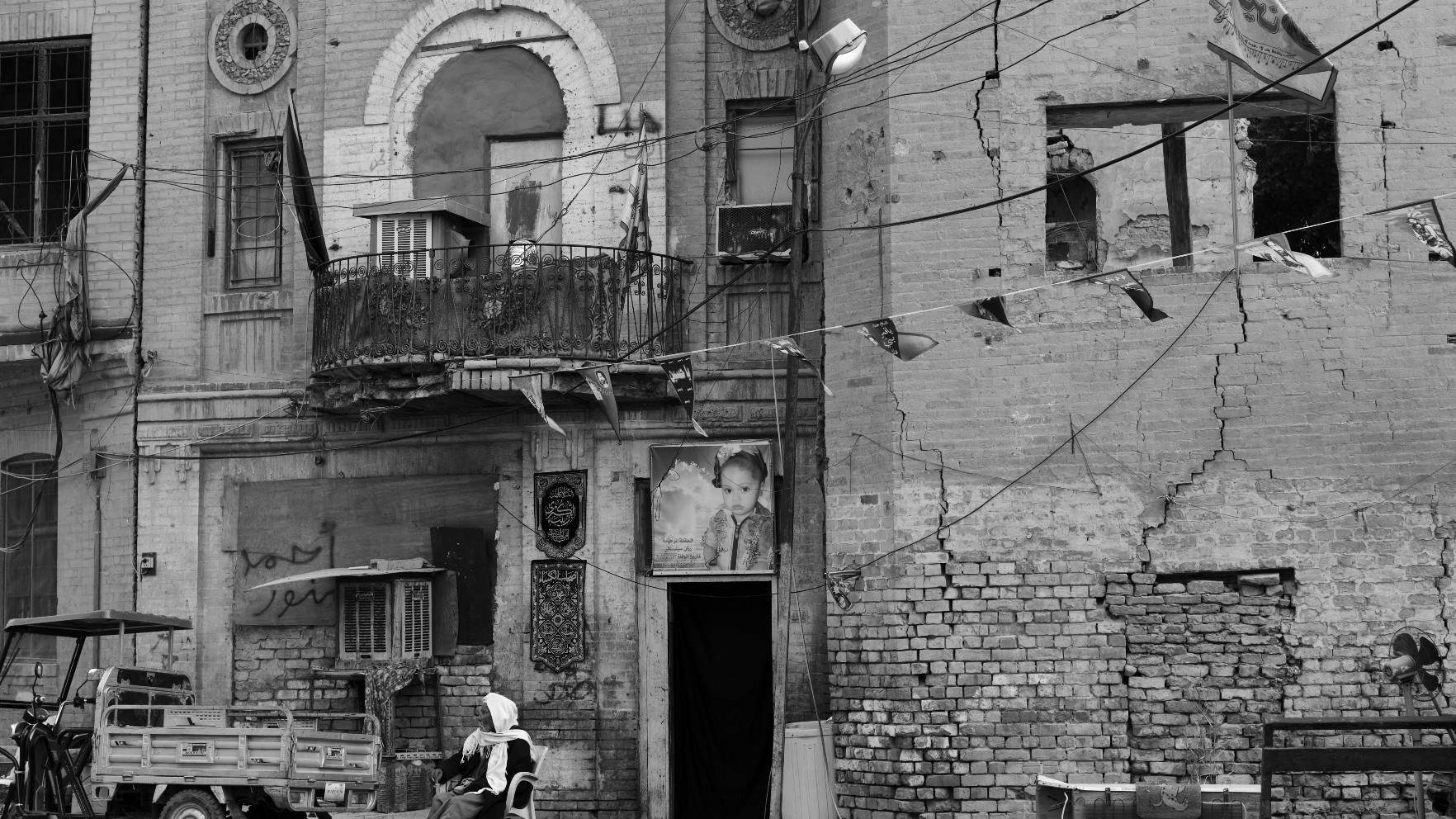
An Iraqi man outside a rundown house with a dead child's portrait in Baghdad in November 2020 (Nabil Salih)

Saturday, June 11, 2022

Drone Attack Against Babylon the Great

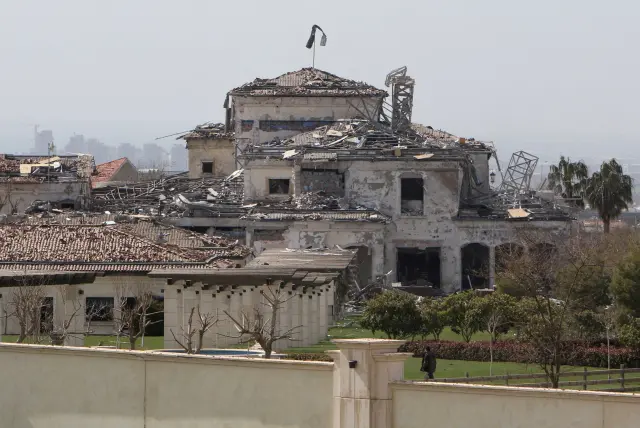
Explosive drone detonates in Iraq’s northern city of Erbil

June 8, 20224:07 PM MDTLast Updated a day ago

ERBIL, June 8 (Reuters) – A drone exploded in Iraq’s northern city of Erbil on Wednesday injuring three people and damaging several cars, according to a statement by Kurdistan’s counter-terrorism service.

The explosive drone detonated on Pirmam road in Erbil’s outskirts at 9:35 p.m. Iraq time, the statement said.

Two security sources, speaking on condition of anonymity, said the drone was shot down.

A security source said earlier that a drone attack targeted the U.S. consulate but did not give further details.

Iraqi Prime Minister Mustafa al-Kadhimi told Kurdish Prime Minister Masoud Barzani in a phone call that Baghdad will cooperate with Erbil to hold the perpetrators accountable, according to a statement.

“Bomb-laden drone hit Erbil-Pirmam road, causing civilian injuries and damage,” the U.N. Assistance Mission for Iraq said on Twitter. “Iraq does not need self-proclaimed armed arbiters. Asserting State authority is essential. If the perpetrators are known, call them out and hold them to account.”

Last month, Iran Revolutionary Guards artillery fire hit an area north of Erbil, targeting what Iranian state television described as terrorist bases.

Also, in March the Guards attacked the capital of the Kurdish region with a dozen ballistic missiles in an unprecedented assault on the capital of the autonomous Iraqi Kurdish region that appeared to target the United States and its allies read more

At least three other attacks have targeted oil refineries in Erbil since the March attack, but no group has claimed responsibility for them.

Reporting by Ali Sultan; Writing by Amina Ismail; Editing by Lisa Shumaker and Grant McCool

Our Standards: The Thomson Reuters Trust Principles.

Friday, May 27, 2022

Terrorists Fail To Assassinate The Beast of the Sea: Revelation 13

Former president George W. Bush

Elizabeth Troutman • May 24, 2022 5:45 pm

An Islamic State operative plotted to assassinate former president George W. Bush at his home in Dallas by smuggling assassins across the Mexican border, according to an FBI search warrant application obtained by Forbes.

The FBI alleged in the application that Shihab Ahmed Shihab Shihab, an Iraqi national residing in Columbus, Ohio, planned to sneak four terrorists across the border to kill Bush. The suspect, who filmed the former president’s house in November in order to plot his assassination, was charged in federal court on Tuesday with aiding and abetting attempted murder, according to the Department of Justice.

The FBI said it uncovered the plan through the work of two confidential informants and surveillance of the alleged plotter’s account on the WhatsApp messaging platform. According to the warrant application, the suspect said he wanted to assassinate Bush in retaliation for the 2003 U.S. invasion of Iraq.

Shihab said he planned to bring four Iraqi ISIS operatives located in Iraq, Turkey, Egypt, and Denmark into the United States, one of whom he claimed was “the secretary of an ISIS financial minister,” according to the warrant application. His scheme allegedly involved acquiring Mexican visitor visas for the assassins in order to get them across the border.

Shihab claimed he belonged to a terrorist unit called Al-Raed, led by a former Iraqi pilot for Saddam Hussein, the warrant application said. According to a conversation detailed in the warrant, Shihab’s job was “to locate and conduct surveillance on former president Bush’s residences and/or offices and obtain firearms and vehicles to use in the assassination.”

Two law enforcement officials maintained that Bush’s safety was never threatened, and a representative for Bush told Forbes the former president has “all the confidence in the world in the United States Secret Service and our law enforcement and intelligence communities.”

Seamus Hughes, an expert on extremism and counterterrorism at George Washington University, told Forbes the United States has not seen a plot of this scale in years. 

“It shows that while domestic terrorism rightly takes a good amount of counterterrorism focus, the threats are not there alone,” Hughes said.

Thursday, May 26, 2022

ISIS Plotting To Assassinate the Beast of the Sea: Revelation 13

President Bush assassination attempt by ISIS foiled

EXCLUSIVE: ISIS Plotting To Assassinate George W. Bush In Dallas

09:54am EDT


Two confidential informants and surveillance of the alleged plotter’s WhatsApp account reveal plans to smuggle assassins into the U.S. to murder the former president, according to a search warrant application discovered by Forbes.


An Iraqi man in the U.S. accused of being linked to ISIS operatives was plotting to kill George W. Bush, going so far as to travel to Dallas in November to take video around the former president’s home and recruiting a team of compatriots he hoped to smuggle into the country over the Mexican border, according to an FBI search-warrant application filed March 23 and unsealed this week in the Southern District of Ohio.

The FBI said it uncovered the scheme through the work of two confidential informants and surveillance of the alleged plotter’s account on the Meta-owned WhatsApp messaging platform. The suspect, Shihab Ahmed Shihab Shihab, based in Columbus, Ohio, said he wanted to assassinate Bush because he felt the former president was responsible for killing many Iraqis and breaking apart the country after the 2003 U.S. military invasion, according to the warrant.

The case shows how federal investigators continue to monitor threats from ISIS even as the group has been severely weakened by American intelligence and military operations in recent years. It also shows how the FBI, despite its claims of being prevented from investigating major crimes because of Meta and other tech providers’ use of encryption, has been able to work around WhatsApp security by using old-school policing with sourcing of informants and tracking the metadata they can get from the messaging company.

A snippet from the search warrant uncovered by Forbes detailing the plot on George W. Bush’s life. The name of the suspect has been redacted.

Shihab is an Iraqi national who’d been in the U.S. since 2020 and had an asylum application pending, according to the FBI’s search-warrant application. Federal agents used two different confidential sources to investigate the plot, one who claimed to offer assistance obtaining false immigration and identification documents, the second a purported customer of the alleged people smuggler, who was willing to pay thousands of dollars to bring his family into the country.

(As the criminal complaint against the suspect has not been made public, Forbes is not publishing the full warrant. According to NBC, he was arrested earlier today, a fact later confirmed by the Department of Justice.)

Freddy Ford, chief of staff for the Office of George W. Bush, said, “President Bush has all the confidence in the world in the United States Secret Service and our law enforcement and intelligence communities.”

In November 2021, Shihab revealed to the FBI insider the plot to assassinate Bush and asked the confidential source if he knew how to “obtain replica or fraudulent police and/or FBI identifications and badges” to help carry out the killing, and whether it was possible to smuggle the plotters out of the country the same way they came in after their mission was complete, according to the warrant. The alleged smuggler said he also wanted to find and assassinate a former Iraqi general who helped Americans during the war and whom he believed was living under a fictitious identity in the U.S., investigators said.

The alleged plotter claimed to be part of a unit called “Al-Raed,” meaning “Thunder,” that was led by a former Iraqi pilot for Saddam Hussein who had been based out of Qatar until his recent death, the warrant said. As many as seven members of the group would be sent to the U.S. to kill President Bush, according to a conversation described in the warrant, and the Shihab’s job was “to locate and conduct surveillance on former president Bush’s residences and/or offices and obtain firearms and vehicles to use in the assassination.”

After traveling to Dallas with the informant to take video of Bush’s residence, the accused took more footage at the George W. Bush Institute, according to federal agents. The Texas city was the site of the assassination of President John F. Kennedy in 1963.

Bush, a Republican who was in the news last week when he inadvertently referred to the U.S. invasion of Iraq in a speech about the Russian invasion of Ukraine, was president from 2001 to 2009.

In one conversation with a confidential FBI source, the suspect said he was planning to get four Iraqi national males located in Iraq, Turkey, Egypt and Denmark into the U.S., according to the warrant. In a later conversation, he claimed that one of the four was “the secretary of an ISIS financial minister,” the FBI said. The alleged smuggler described the men as “former Baath Party members in Iraq who did not agree with the current Iraqi government and were political exiles,” the FBI said. He was planning to charge each $15,000 to be smuggled into America, the FBI said. The Baath Party was the political organization of Hussein, who was deposed in the 2003 U.S. invasion.

His plan, according to the warrant, was to get Mexican visitor visas for the ISIS operatives, using passport information he would send to the informant over WhatsApp, before getting them over the border. Meanwhile, he was communicating with a contact in Egypt over a fake Facebook profile, which carried a profile picture of two individual hands each holding a rose, designed to look romantic and “not suspicious,” according to the FBI’s account. In 2021, the FBI got a warrant to search that Facebook account, though it’s unclear what they obtained.

Seamus Hughes, deputy director of the Program on Extremism at George Washington University, told Forbes, “It’s clear this was a sophisticated counterterrorism operation with a lot of moving parts. It was both far reaching and unique in its targeting.

“It also shows that while the debate on so called “going dark” can be overcome through the use of undercover operatives, it’s labor intensive but possible.” The term “going dark” is used by law enforcement to describe the inability to get to data that has been encrypted by software applications.

“Also, we haven’t seen a plot of this scale in a number of years. It shows that while domestic terrorism rightly takes a good amount of counterterrorism focus, the threats are not there alone.”

As part of its surveillance of the alleged plotters, the FBI recently received permission to acquire mobile location information from AT&T. It had already used what’s known as a “pen register” on the WhatsApp account believed to belong to the chief suspect, helping them determine how often the account was used, what numbers it was contacting and whether or not it was active.

Though Shihab seemed convinced his WhatsApp account was secure, he was unaware that the confidential sources were passing on messages to the FBI. Nor was he aware that starting in October he was using a phone that he was given by the informant at the FBI’s request. The informant noted that the target was a keen user of WhatsApp and was a member of Baath and ISIS chat groups on the app. In another conversation with an informant, the suspect claimed to have “been in recent communications with a friend in Qatar who was a former minister in Iraq under Saddam Hussein who had access to large quantities of money” and was messaging him over WhatsApp, the FBI said.

A mysterious group known as Al-Raed was allegedly plotting to kill former President George W. Bush, according to an FBI search warrant, shown here in redacted form.

While the sources were passing on what they learned over WhatsApp throughout 2021 and 2022, they were also secretly recording the in-person meetings with the alleged plotter in which additional startling details were revealed, according to the FBI. In one conversation from December, according to the warrant, the suspect claimed to have had just smuggled two individuals associated with Hezbollah — a terrorist organization, according to the U.S. — into the U.S. for a fee of $50,000 each.

Also in the FBI court filing, the alleged plotter claimed to be a member of “the resistance” and had killed many Americans in Iraq between 2003 and 2006, packing vehicles with explosives and detonating them when U.S. soldiers were near.

Updated at 1.50pm ET to publish the suspect’s name, following NBC reporting that he had been apprehended.Follow me on Twitter. Check out my website. Send me a secure tip.

I’m associate editor for Forbes, covering security, surveillance and privacy. I’m also the…

Saturday, May 21, 2022

Bush the beast of the sea finally tells the truth: Revelation 13

Trying to condemn the war in Ukraine, Bush inadvertently calls Iraq war unjustified

Former President George W. Bush was criticizing Russian President Vladimir Putin on Thursday when his old nemesis, the verbal slip, struck again. Bush eventually condemned Putin’s invasion of Ukraine — but not before he condemned “a wholly unjustified and brutal invasion of Iraq.”

Bush was drawing a parallel between how countries conduct elections and their stance toward other nations when his tongue went rogue.

“The result is an absence of checks and balances in Russia, and the decision of one man to launch a wholly unjustified and brutal invasion of Iraq — I mean of Ukraine,” Bush said.

“Iraq… anyway,” he said with a shake of his head, as members of the audience chuckled. He then cited his age, 75, before returning to his speech.

Bush was speaking to an audience at his presidential library in Dallas, Texas, at an event focused on the importance of ensuring free, fair and secure elections, aiming to bolster voters’ confidence in U.S. elections. But the former president’s verbal gaffe quickly drew notice on social media and in headlines.

In 2003, Bush led the U.S. into an invasion and war in Iraq on the grounds that Saddam Hussein’s regime had weapons of mass destruction and was working toward a nuclear weapon. No evidence of such threats was found in the country. Members of his administration have insisted they were acting on faulty intelligence.

In Thursday’s speech, Bush was comparing the free and fair election of Ukrainian President Volodymyr Zelenskyy to Putin’s suppression of his political opponents.

He also said he recently spoke to Zelenskyy via Zoom, declaring the Ukrainian leader to be a “cool little guy — the Churchill of the 21stcentury.”

Bush has famously been a wellspring of malapropisms, even prompting the term “Bushisms” and sparking research into slips of the tongue. His latest high-profile foray into mangled speech adds to what is shaping up as an odd return to the early 2000s, when news outlets tracked Brittney Spears and reported on the Taliban’s rule of Afghanistan. 

Copyright 2022 NPR. To see more, visit https://www.npr.org. 

Saturday, March 5, 2022

The British Horn Is Campaigning for Nuclear War: Daniel 7

A Sukhoi Su-35S fighter jet of the Russian Aerospace Forces takes part in the Allied Resolve 2022 joint military drills held by Belarusian and Russian troops at the Obuz-Lesnovsky training ground. (Peter Kovalev / TASS via Getty Images)

The British Media Is Campaigning for Nuclear War

ByAlex MacDonald

By advocating a No-Fly Zone in Ukraine, the commentariat is demanding that we roll the dice on nuclear war – the latest reminder of just how dangerous our warmongering media truly is.

It’s hard to watch the ongoing Russian onslaught in Ukraine without feeling a sense of helplessness. The images of the country’s cities reduced to rubble, civilians huddling in bomb shelters, and the grim statistics of those killed—at least 406 civilians so far—ticking up on international news sites understandably provoke calls that ‘something must be done’.

There are things to do. The government must instantly open the UK’s border to all Ukrainian refugees (all and any refugees wouldn’t hurt either); domestically there must be a push for the dirty money of Putin’s cronies to exposed and seized; and all solidarity should be shown with both the determined people of Ukraine defending their right to nationhood and the brave anti-war activists in Russia who are being locked up by the thousands but still keep up their opposition to Putin’s brutality. And it’s worth highlighting and calling for consequences for those politicians who have actually served to prop up and excuse Putin’s regime over the past two decades or so, too.

But should more be done militarily? There is very little appetite for direct military intervention in the post-Iraq War world. Perhaps noting this, a number of British commentators have in the past few days been touting the idea of a No-Fly Zone.

‘Pleased to see powerful voices joining my call for a humanitarian partial or total NO FLY ZONE,’ tweeted Tobias Ellwood, Chair of the House of Commons Defence Select Committee, on Tuesday morning, citing a call by retired US General Philip Breedlove for such an action. ‘What scale of war crimes, what numbers of civilian deaths must we witness—before NATO, the most powerful military alliance in the world, is tasked to intervene?’

No-Fly Zones involve the creation of a demilitarized air space above a territory. In practice, it means preventing aircraft—in this case, Russian jets—access to Ukrainian airspace through surveillance and military action. This can extend to pre-emptive strikes on airfields to prevent enemy aircraft from taking off.

No-Fly Zones have been used a number of times in past. One popular example of a supposed success story was the No-Fly Zone imposed by the US, UK, and (initially) France over Iraq’s northern Kurdish region in the ’90s. Coming in the wake of Saddam Hussein’s brutal genocide of the Kurds (which was at the time downplayed by those same countries), it prevented further air strikes on the territory and is cited as helping develop Kurdish autonomy and eventually the creation of the autonomous, and thoroughly pro-Western, Kurdistan Regional Government.

What is often forgotten when No-Fly Zones are raised, however, is that they are an act of war. The No-Fly Zone over Iraq, for example, resulted in large numbers of deaths, including those of civilians, and was against an army that was demoralised, crumbling, and weak after years of war.

On Monday, White House Press Secretary Jen Psaki quite straightforwardly laid out what a No-Fly Zone really meant and why the US was reluctant to get involved in such an action. ‘It would essentially mean the US military would be shooting down planes, Russian planes. That is definitely escalatory. That would potentially put us in a place where we’re in a military conflict with Russia. That is not something the President wants to do.’

A No-Fly Zone would mean direct military confrontation between NATO and Russia—the most powerful military force in the world against the second most powerful. And it doesn’t take years of working in International Relations to realise this would be a bad thing.

For decades, the fear of confrontation between the US and the USSR meant whole generations accepted the risk of nuclear annihilation. From the sci-fi cinema and satire of the 1950s and ’60s to grim what-if productions like When the Wind Blows and Threads, through songs and literature that reminded the world of the destruction that took place in Hiroshima and Nagasaki and, of course, the tireless efforts of the Campaign for Nuclear Disarmament and other anti-war movements, the idea of nuclear war was never far from the public mind, and the chance of humanity rapidly, suddenly ending life on Earth was understood to be a real possibility.

For many, especially those on Twitter, this has apparently been forgotten.

‘If people want to oppose a no-fly zone, fine. But understand that is an act of appeasement no different to our appeasement of Hitler in 1938. We are refusing to do what we know is morally right out of fear. We are prepared to let a free nation die to safeguard ourselves. What accounts for this attitude?’ tweeted Mail on Sunday commentator Dan Hodges.

Piers Morgan, no doubt in good faith as always, also made reference to ‘appeasement’ and suggested that the fear that Putin might ‘chuck his nukes around’ as ‘bullsh*t designed to scare everyone off’.

In response to UK Prime Minister Boris Johnson’s confirmation that the UK would not be supporting a No-Fly Zone, one Ukrainian journalist criticised him at press conference on Tuesday, saying ‘people are desperately asking for the West to protect our sky [with] no-fly zone.’ ‘We are crying, we don’t know where to run,’ she said.

For some, it is this sense of helplessness: seeing the horror unfolding for Ukrainian citizens, fearing how far Putin might be willing to go, and wishing for military might be thrown in his way as a result. The brazenness with which the ‘Butcher of Grozny’ has been willing to assault civilian areas with weaponry prohibited under international law, such as cluster bombs, is clear to anyone who remembers Chechnya and Syria—and it is entirely understandable to want to protect civilians.

For another tranche of commentator, though, it’s about re-legitimising the idea of righteous military might and the West as the planet’s pre-eminent power. There are those who have never recovered from the backlash to the wars in Iraq and Afghanistan, as well as the failure to take military action in Syria, and are determined to find any excuse to reassert the status quo of the long ’90s, when the US and those in its orbit appeared unchallengeable.

None of this changes the basic fact that the US, the British prime minister, and the more cool-headed among our commentator class have realised: a No-Fly Zone means war between nuclear powered states.

Alex MacDonald is a reporter at Middle East Eye.

Sunday, February 27, 2022

How the Beast of the Sea ruined US Credibility and Enabled Putin’s Invasion of Ukraine: Revelation 13

How Bush’s Iraq Fiasco ruined US Credibility and Enabled Putin’s Invasion of Ukraine

Juan Cole 02/25/2022

Ann Arbor (Informed Comment) – George W. Bush issued a statement about the Russian invasion of Ukraine. It went like this:

George W. Bush actually came out and condemned “”unprovoked and unjustified invasion”!

The point isn’t just to decry his hypocrisy. Bush’s willful act of aggression, his invasion and eight-and-a-half-year military occupation of Iraq, has deeply hindered effective policy-making by the U.S. regarding Russia’s attack on Ukraine.

Here are some of the ways it matters:

Bush filled the U.S. air waves with false assertions that Iraq had an active nuclear weapon program. His vice president, Dick Cheney, repeatedly said things like “We know he’s got chemicals and biological and we know he’s working on nuclear.” (May 19, 2002, NBC Meet the Press) and `But we now know that Saddam has resumed his efforts to acquire nuclear weapons . . . Simply stated, there is no doubt that Saddam Hussein now has weapons of mass destruction. There is no doubt that he is amassing them to use against our friends, against our allies, and against us.”( August 26, 2002, Speech of Vice President Cheney at VFW 103rd National Convention.)

This, despite severe doubts expressed to him by seasoned CIA analysts, whom he pressured to give him the statements he wanted. When he couldn’t get them, he went to raw intelligence, i.e. any old garbage anyone ever said. 

Bush himself could not get the CIA to agree that a phony document alleging Iraqi purchases of uranium from Niger was legitimate, so he sourced it to British intelligence. The document was a fraud.

Bush and company were lying to get the war they wanted.

The problem with lying for policy reasons is that people come to view you as a liar. When it became apparent that Iraq did not have any chemical, biological or nuclear weapons or even programs, the United States was humiliated before the world. But it was too late– America had 120,000 troops in Iraq, a society that was collapsing around them. The wounded society would be a maelstrom of instability in the Middle East for decades.

So when U.S. intelligence analysts began reporting this winter that they had excellent reason to believe that Vladimir Putin intended to invade the Ukraine, President Biden’s team could not get people to take this prospect seriously. The Ukrainian government castigated Washington for hyping the threat and engaging in hyperbole.

President Volodomyr Zelensky told Biden to cut it out, and that he was endangering the Ukraine economy with that wild talk.

Administration officials and spokespeople went blue in the face saying Putin was about to invade, and many in the US press replied, “You said Iraq had weapons of mass destruction.”

Maybe it would have made a difference at the margins if Ukraine’s leader Volodymyr Zelensky had trusted the US intelligence and had swung into action to harden his military defenses.

George W. Bush laid the foundations for the disaster in the Ukraine by destroying American credibility on enemy intentions and capabilities.

Bush also vocally tried to spread around fascist ideas at odds with the United Nations charter such as “preemptive war” — i.e., launching an all-out war on another country in case they may at some point in the future come into conflict with you. Putin would say his Ukraine war is preemptive.

W. also issued the “Bush doctrine” making harboring “terrorists” a basis for war, which India and Pakistan immediately deployed against one another. Putin sees the democratically elected Zelensky government as hand in glove with the small Ukrainian far-right nationalist movement, which he categorizes as terrorists.

Putin did not need Bush’s example, of launching an aggressive war on a country that hadn’t attacked you, in order to plot against Ukraine. But the American ability to counter him and have it received with a straight face by the rest of the world was completely undermined by W.’s mendacious warmongering.

Sunday, January 30, 2022

20 Years Ago: Beast of the Sea Gives “Axis of Evil” Speech a Year Before Illegal Invasion of Iraq: Revelation 13

20 Years Ago: George W. Bush Gives “Axis of Evil” Speech a Year Before Illegal Invasion of Iraq

Saturday marks 20 years since then-President George W. Bush branded the nations of Iraq, Iran and North Korea the “axis of evil” during his first State of the Union address.

President George W. Bush: “States like these, and their terrorist allies, constitute an axis of evil, arming to threaten the peace of the world.”

A little over a year later, the U.S. invaded Iraq, despite lacking any evidence Iraq had weapons of mass destruction. The attack was widely considered illegal under international law. According to the Costs of War project at Brown University, there have been over 180,000 Iraqi civilians killed by direct violence since the U.S. invasion.

Saturday, November 13, 2021

The nuclear winter from the first nuclear war: Revelation 8

The environmental dimension of the use of nuclear weapons

In 2010, Jakob Kellenberger, the then President of the International Committee of the Red Cross, demonstrated extraordinary courage when he gathered all the accredited ambassadors in Geneva and made it clear that his organisation would not be able to ensure the required international standards of humanitarian assistance to civilian populations in the case of the use of nuclear weapons. In his words, “The mere assumption that atomic weapons may be used, for whatever reason, is enough to make illusory any attempt to protect non-combatants.”

That statement was made on the eve of the 2010 Nuclear Non-Proliferation Treaty (NPT) Review Conference in New York, and was instrumental to the adoption by that conference of the concept of the “catastrophic humanitarian consequences of any use of nuclear weapons”, which nuclear-armed states had traditionally been reluctant to accept. One year earlier, with his historic speech in Prague (in which he promised to “seek the peace and security of a world without nuclear weapons”), President Obama had already prepared the ground for the inclusion of the “catastrophic consequences” principle in the final document of the New York conference. During three international conferences subsequently convened by Norway, Mexico and Austria, the “humanitarian catastrophic” nature of any use of atomic weapons was further confirmed. This concept should be reiterated during the upcoming NPT Review Conference, scheduled for January 2022.

As the world’s leaders gather to discuss how to tackle climate change, it is also necessary to add that the use of nuclear weapons would have dangerous consequences for the environment. The environmental impact of nuclear weapons has been amply evidenced by the over 2000 nuclear tests carried out in deserted and uninhabited areas, while the dangers of radiation have also been demonstrated by the major accidents at the civilian nuclear power plants of Chernobyl and Fukushima.

Today the environmental impact of a nuclear attack on inhabited centres and industrial areas can only be calculated through simulations. The deadly environmental effects of the two bombs that annihilated Hiroshima and Nagasaki can hardly be considered a precedent since they would pale in comparison to what would happen if only part of the 13,000 nuclear devices currently possessed by the nuclear powers were to be detonated today. Studies on the environmental side of the nuclear coin have intensified in parallel with the growing nightmare of climate change and the increase of nuclear risks. While there are debates over the precise modelling (such as a controversy between scientists over whether an India-Pakistan nuclear exchange would be enough to cause a global nuclear winter), multiple studies raise alarming prospects that in the event of a nuclear conflict, there would be shocks akin to climate change, but on a much faster timescale and with an exponential impact.

Nonetheless, the international community and the nuclear-armed states have not yet drawn political conclusions from the anticipated environmental impacts of the use of nuclear weapons. This concept has so far only been mentioned in some official texts (the Partial Test Ban Treaty, Comprehensive Test Ban Treaty and Treaty for the Prohibition of Nuclear Weapons), while the ENMOD (Environmental Modification Convention) Treaty adopted in 1978 is mostly focused on prohibiting the hostile use of environmental weather modification techniques but does not address the nuclear threat.

In his memorable statement on 11th November 2017 at the Vatican, Pope Francis expressed his “genuine concern” for the “catastrophic humanitarian and environmental effects of any employment of nuclear devices”.   More recently, on 28thOctober of this year, an event chaired by World Future Council and Parliamentarians for Nuclear Nonproliferation and Disarmament was dedicated to the Climate /Nuclear Disarmament Nexus. Climate protection and nuclear risk reduction were the core subjects debated during the meeting which was called in preparation for the UN Climate Change Conference (COP 26) and the incoming NPT RevCon.

This is the first step. A process similar to the 2010 humanitarian initiative should be launched during next year’s NPT conference, leading to the recognition of the “catastrophic environmental consequences of any use of nuclear weapons”. Hopefully, on the occasion of that conference, one or more international leaders will have the vision to promote this topic as Jakob Kellenberger did in 2010. The tragic consequences of climate change will be dramatically amplified if the Damocles sword of a nuclear disaster continues hanging over humanity.

The opinions articulated above represent the views of the author(s) and do not necessarily reflect the position of the European Leadership Network (ELN) or any of its members, or the Comprehensive Nuclear-Test-Ban Treaty Organization (CTBTO). The ELN’s aim is to encourage debates that will help develop Europe’s capacity to address the pressing foreign, defence, and security policy challenges of our time.

Image: Flickr, The Official CTBTO Photostream, Sedan Plowshare Crater

Wednesday, November 10, 2021

Racing to the First Nuclear War: Revelation 8

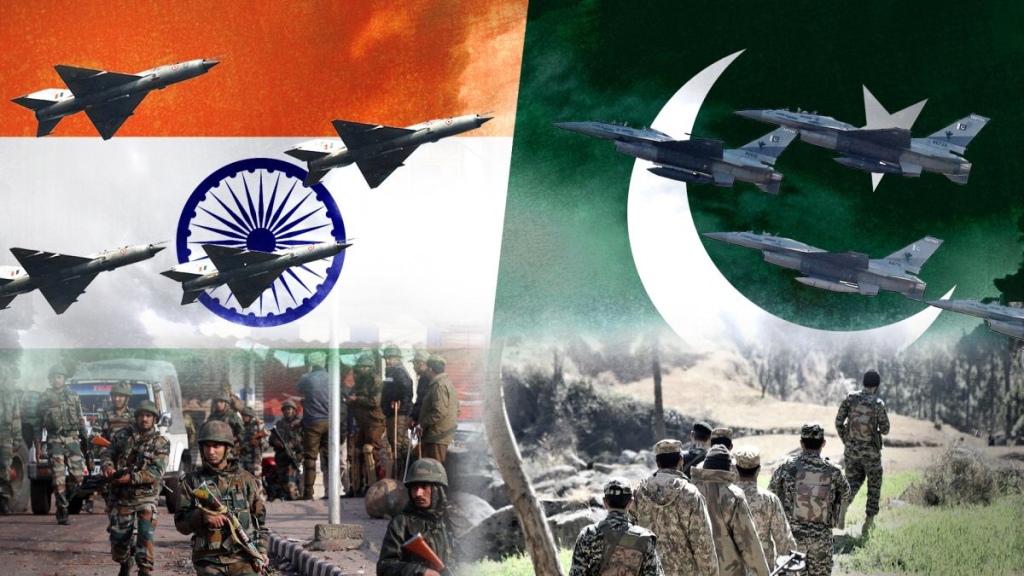
India imposed Arms Race on Pakistan

on November 9, 2021

ByProf. Engr. Zamir Ahmed Awan

To demonstrate the credibility of its nuclear deterrence, India test-fired a nuclear-capable intercontinental ballistic missile with a range of 5,000 kilometres on October 27. With Agni-5, India can strike nearly all of China. Moreover, it is already capable of striking anywhere inside Pakistan. Subsequently, India’s sharpening of its missile arsenal necessitates Pakistan to take similar measures concerning its own nuclear forces. To reinforce its defense, Pakistani policymakers need to spend resources wisely in innovations in artificial intelligence, big data analysis, quantum computing, and quantum sensing and biotechnology. Sparing more resources into science and innovation results in the modernization of both conventional and nuclear forces.

While Pakistan is passing through the worst economic crisis, the defence budget is facing constraints. An arms race initiated by India is a completion at an odd time for Pakistan to enhance its defence capabilities. Whereas other challenges like environment, Pandemic, Poverty, etc., are yet to be addressed, but Indian threats may push everything on the back burners and focus on defence. Unfortunate!

India’s confidence in the steady progress of the BMD program and struggle to develop hypersonic missiles capability adds a new variant in India-Pakistan’s competitive strategic dyad. As a result, Pakistani security experts agree that Islamabad needs to continue modernizing its nuclear forces. For two decades, it appeared that Pakistan has been investing in a calculated nuclear buildup because its strategic elite believes that developing over-kill capacity or entangling in an arms race with India is not in its national interest. Therefore, despite New Delhi’s dissent, Islamabad has endeavoured for nuclear restraint arrangements in South Asia.

Realistically, India is a rising missile power. And this is where Pakistan needs to focus as a strategic rival. It must keep a sharp eye on BMD developments and deployments. It needs to do everything it can to balance this Indian rush to offensive and defensive missile superiority. Where can Islamabad best spend to ensure its future defence.  Besides the cruise and ballistic missiles, the focus should be on the new and emerging technologies that are rapidly maturing into military assets.

The global politics and security situation is deteriorating sharply. The Sino-US-Russia tension has put the whole world at stake. The US is taking aggressive policies to contain China, resist China’s rise, and counter Russian revival. In response, China and Russia are left with no option to reciprocate. The US is in the habit of lobbying and forming alliances against adversaries. Although NATO is ineffective, Quad has been undermined, but the newly formed partnership AUSKUS is the real threat. Arming Australia with a Nuclear-powered submarine may put the whole region at stake.

The US has the highest defence budget, the highest number of overseas military bases and is over-engaged in military confrontation globally. The US was enjoying the status of a unique superpower in the unipolar world. But, recently, been facing resistance from Russia and China, that is why. The US is trying to counter them. However, the US economy, social unrest, and international reputation have deteriorated significantly. So the US is struggling to regain its lost position in geopolitics.

Russia and China are also aware of American intentions and actions. So they are also preparing for the worst time. Appropriate measures are taking place to counter the American threat. China’s recent test of a hypersonic nuclear-weapon delivery system will have a strategic effect on geopolitics. President Xi Jinping is determined to achieve “the great rejuvenation of the Chinese nation” by 2049. In 2017, he laid out two People’s Liberation Army (PLA) modernization goals to transform the PLA into a “world-class” military by 2049. Therefore, PLA is developing the capabilities to conduct joint long-range precision strikes across domains, increasingly sophisticated space, counter space, and cyber capabilities, and accelerating the large-scale expansion of its nuclear forces. It planned to quadruple its nuclear warhead numbers from 350 to 1000 by 2030.

Based on past experience, Pakistan can not be a battleground and may avoid any direct or indirect confrontation. Pakistan stands for peace, protection of human lives, and welfare of humankind only. Pakistan is a partner with anyone, anywhere, any time, but for peace only. Yet, prepared well to face any challenge imposed.