The prophecy is more than seeing into the future. For the prophecy sees without the element of time. For the prophecy sees things as they were, as they are, and as they always shall be.
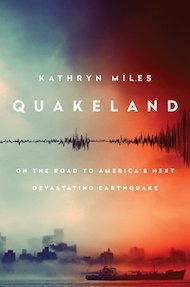
Quakeland: On the Road to America’s Next Devastating Earthquake
Roger BilhamQuakeland: New York and the Sixth Seal (Revelation 6:12)
Given recent seismic activity — political as well as geological — it’s perhaps unsurprising that two books on earthquakes have arrived this season. One is as elegant as the score of a Beethoven symphony; the other resembles a diary of conversations overheard during a rock concert. Both are interesting, and both relate recent history to a shaky future.
Journalist Kathryn Miles’s Quakeland is a litany of bad things that happen when you provoke Earth to release its invisible but ubiquitous store of seismic-strain energy, either by removing fluids (oil, water, gas) or by adding them in copious quantities (when extracting shale gas in hydraulic fracturing, also known as fracking, or when injecting contaminated water or building reservoirs). To complete the picture, she describes at length the bad things that happen during unprovoked natural earthquakes. As its subtitle hints, the book takes the form of a road trip to visit seismic disasters both past and potential, and seismologists and earthquake engineers who have first-hand knowledge of them. Their colourful personalities, opinions and prejudices tell a story of scientific discovery and engineering remedy.
Miles poses some important societal questions. Aside from human intervention potentially triggering a really damaging earthquake, what is it actually like to live in neighbourhoods jolted daily by magnitude 1–3 earthquakes, or the occasional magnitude 5? Are these bumps in the night acceptable? And how can industries that perturb the highly stressed rocks beneath our feet deny obvious cause and effect? In 2015, the Oklahoma Geological Survey conceded that a quadrupling of the rate of magnitude-3 or more earthquakes in recent years, coinciding with a rise in fracking, was unlikely to represent a natural process. Miles does not take sides, but it’s difficult for the reader not to.
She visits New York City, marvelling at subway tunnels and unreinforced masonry almost certainly scheduled for destruction by the next moderate earthquake in the vicinity. She considers the perils of nuclear-waste storage in Nevada and Texas, and ponders the risks to Idaho miners of rock bursts — spontaneous fracture of the working face when the restraints of many million years of confinement are mined away. She contemplates the ups and downs of the Yellowstone Caldera — North America’s very own mid-continent supervolcano — and its magnificently uncertain future. Miles also touches on geothermal power plants in southern California’s Salton Sea and elsewhere; the vast US network of crumbling bridges, dams and oil-storage farms; and the magnitude 7–9 earthquakes that could hit California and the Cascadia coastline of Oregon and Washington state this century. Amid all this doom, a new elementary school on the coast near Westport, Washington, vulnerable to inbound tsunamis, is offered as a note of optimism. With foresight and much persuasion from its head teacher, it was engineered to become an elevated safe haven.
Miles briefly discusses earthquake prediction and the perils of getting it wrong (embarrassment in New Madrid, Missouri, where a quake was predicted but never materialized; prison in L’Aquila, Italy, where scientists failed to foresee a devastating seismic event) and the successes of early-warning systems, with which electronic alerts can be issued ahead of damaging seismic waves. Yes, it’s a lot to digest, but most of the book obeys the laws of physics, and it is a engaging read. One just can’t help wishing that Miles’s road trips had taken her somewhere that wasn’t a disaster waiting to happen.
Catastrophic damage in Anchorage, Alaska, in 1964, caused by the second-largest earthquake in the global instrumental record.
In The Great Quake, journalist Henry Fountain provides us with a forthright and timely reminder of the startling historical consequences of North America’s largest known earthquake, which more than half a century ago devastated southern Alaska. With its epicentre in Prince William Sound, the 1964 quake reached magnitude 9.2, the second largest in the global instrumental record. It released more energy than either the 2004 Sumatra–Andaman earthquake or the 2011 Tohoku earthquake off Japan; and it generated almost as many pages of scientific commentary and description as aftershocks. Yet it has been forgotten by many.
The quake was scientifically important because it occurred at a time when plate tectonics was in transition from hypothesis to theory. Fountain expertly traces the theory’s historical development, and how the Alaska earthquake was pivotal in nailing down one of the most important predictions. The earthquake caused a fjordland region larger than England to subside, and a similarly huge region of islands offshore to rise by many metres; but its scientific implications were not obvious at the time. Eminent seismologists thought that a vertical fault had slipped, drowning forests and coastlines to its north and raising beaches and islands to its south. But this kind of fault should have reached the surface, and extended deep into Earth’s mantle. There was no geological evidence of a monster surface fault separating these two regions, nor any evidence for excessively deep aftershocks. The landslides and liquefied soils that collapsed houses, and the tsunami that severely damaged ports and infrastructure, offered no clues to the cause.
“Previous earthquakes provide clear guidance about present-day vulnerability.” The hero of The Great Quake is the geologist George Plafker, who painstakingly mapped the height reached by barnacles lifted out of the intertidal zone along shorelines raised by the earthquake, and documented the depths of drowned forests. He deduced that the region of subsidence was the surface manifestation of previously compressed rocks springing apart, driving parts of Alaska up and southwards over the Pacific Plate. His finding confirmed a prediction of plate tectonics, that the leading edge of the Pacific Plate plunged beneath the southern edge of Alaska along a gently dipping thrust fault. That observation, once fully appreciated, was applauded by the geophysics community.
Fountain tells this story through the testimony of survivors, engineers and scientists, interweaving it with the fascinating history of Alaska, from early discovery by Europeans to purchase from Russia by the United States in 1867, and its recent development. Were the quake to occur now, it is not difficult to envisage that with increased infrastructure and larger populations, the death toll and price tag would be two orders of magnitude larger than the 139 fatalities and US$300-million economic cost recorded in 1964.
What is clear from these two books is that seismicity on the North American continent is guaranteed to deliver surprises, along with unprecedented economic and human losses. Previous earthquakes provide clear guidance about the present-day vulnerability of US infrastructure and populations. Engineers and seismologists know how to mitigate the effects of future earthquakes (and, in mid-continent, would advise against the reckless injection of waste fluids known to trigger earthquakes). It is merely a matter of persuading city planners and politicians that if they are tempted to ignore the certainty of the continent’s seismic past, they should err on the side of caution when considering its seismic future.
Quakeland: On the Road to America’s Next Devastating Earthquake
Roger BilhamQuakeland: New York and the Sixth Seal (Revelation 6:12)
Given recent seismic activity — political as well as geological — it’s perhaps unsurprising that two books on earthquakes have arrived this season. One is as elegant as the score of a Beethoven symphony; the other resembles a diary of conversations overheard during a rock concert. Both are interesting, and both relate recent history to a shaky future.
Journalist Kathryn Miles’s Quakeland is a litany of bad things that happen when you provoke Earth to release its invisible but ubiquitous store of seismic-strain energy, either by removing fluids (oil, water, gas) or by adding them in copious quantities (when extracting shale gas in hydraulic fracturing, also known as fracking, or when injecting contaminated water or building reservoirs). To complete the picture, she describes at length the bad things that happen during unprovoked natural earthquakes. As its subtitle hints, the book takes the form of a road trip to visit seismic disasters both past and potential, and seismologists and earthquake engineers who have first-hand knowledge of them. Their colourful personalities, opinions and prejudices tell a story of scientific discovery and engineering remedy.
Miles poses some important societal questions. Aside from human intervention potentially triggering a really damaging earthquake, what is it actually like to live in neighbourhoods jolted daily by magnitude 1–3 earthquakes, or the occasional magnitude 5? Are these bumps in the night acceptable? And how can industries that perturb the highly stressed rocks beneath our feet deny obvious cause and effect? In 2015, the Oklahoma Geological Survey conceded that a quadrupling of the rate of magnitude-3 or more earthquakes in recent years, coinciding with a rise in fracking, was unlikely to represent a natural process. Miles does not take sides, but it’s difficult for the reader not to.
She visits New York City, marvelling at subway tunnels and unreinforced masonry almost certainly scheduled for destruction by the next moderate earthquake in the vicinity. She considers the perils of nuclear-waste storage in Nevada and Texas, and ponders the risks to Idaho miners of rock bursts — spontaneous fracture of the working face when the restraints of many million years of confinement are mined away. She contemplates the ups and downs of the Yellowstone Caldera — North America’s very own mid-continent supervolcano — and its magnificently uncertain future. Miles also touches on geothermal power plants in southern California’s Salton Sea and elsewhere; the vast US network of crumbling bridges, dams and oil-storage farms; and the magnitude 7–9 earthquakes that could hit California and the Cascadia coastline of Oregon and Washington state this century. Amid all this doom, a new elementary school on the coast near Westport, Washington, vulnerable to inbound tsunamis, is offered as a note of optimism. With foresight and much persuasion from its head teacher, it was engineered to become an elevated safe haven.
Miles briefly discusses earthquake prediction and the perils of getting it wrong (embarrassment in New Madrid, Missouri, where a quake was predicted but never materialized; prison in L’Aquila, Italy, where scientists failed to foresee a devastating seismic event) and the successes of early-warning systems, with which electronic alerts can be issued ahead of damaging seismic waves. Yes, it’s a lot to digest, but most of the book obeys the laws of physics, and it is a engaging read. One just can’t help wishing that Miles’s road trips had taken her somewhere that wasn’t a disaster waiting to happen.
Catastrophic damage in Anchorage, Alaska, in 1964, caused by the second-largest earthquake in the global instrumental record.
In The Great Quake, journalist Henry Fountain provides us with a forthright and timely reminder of the startling historical consequences of North America’s largest known earthquake, which more than half a century ago devastated southern Alaska. With its epicentre in Prince William Sound, the 1964 quake reached magnitude 9.2, the second largest in the global instrumental record. It released more energy than either the 2004 Sumatra–Andaman earthquake or the 2011 Tohoku earthquake off Japan; and it generated almost as many pages of scientific commentary and description as aftershocks. Yet it has been forgotten by many.
The quake was scientifically important because it occurred at a time when plate tectonics was in transition from hypothesis to theory. Fountain expertly traces the theory’s historical development, and how the Alaska earthquake was pivotal in nailing down one of the most important predictions. The earthquake caused a fjordland region larger than England to subside, and a similarly huge region of islands offshore to rise by many metres; but its scientific implications were not obvious at the time. Eminent seismologists thought that a vertical fault had slipped, drowning forests and coastlines to its north and raising beaches and islands to its south. But this kind of fault should have reached the surface, and extended deep into Earth’s mantle. There was no geological evidence of a monster surface fault separating these two regions, nor any evidence for excessively deep aftershocks. The landslides and liquefied soils that collapsed houses, and the tsunami that severely damaged ports and infrastructure, offered no clues to the cause.
“Previous earthquakes provide clear guidance about present-day vulnerability.” The hero of The Great Quake is the geologist George Plafker, who painstakingly mapped the height reached by barnacles lifted out of the intertidal zone along shorelines raised by the earthquake, and documented the depths of drowned forests. He deduced that the region of subsidence was the surface manifestation of previously compressed rocks springing apart, driving parts of Alaska up and southwards over the Pacific Plate. His finding confirmed a prediction of plate tectonics, that the leading edge of the Pacific Plate plunged beneath the southern edge of Alaska along a gently dipping thrust fault. That observation, once fully appreciated, was applauded by the geophysics community.
Fountain tells this story through the testimony of survivors, engineers and scientists, interweaving it with the fascinating history of Alaska, from early discovery by Europeans to purchase from Russia by the United States in 1867, and its recent development. Were the quake to occur now, it is not difficult to envisage that with increased infrastructure and larger populations, the death toll and price tag would be two orders of magnitude larger than the 139 fatalities and US$300-million economic cost recorded in 1964.
What is clear from these two books is that seismicity on the North American continent is guaranteed to deliver surprises, along with unprecedented economic and human losses. Previous earthquakes provide clear guidance about the present-day vulnerability of US infrastructure and populations. Engineers and seismologists know how to mitigate the effects of future earthquakes (and, in mid-continent, would advise against the reckless injection of waste fluids known to trigger earthquakes). It is merely a matter of persuading city planners and politicians that if they are tempted to ignore the certainty of the continent’s seismic past, they should err on the side of caution when considering its seismic future.
Quakeland: On the Road to America’s Next Devastating Earthquake
Roger BilhamQuakeland: New York and the Sixth Seal (Revelation 6:12)
Given recent seismic activity — political as well as geological — it’s perhaps unsurprising that two books on earthquakes have arrived this season. One is as elegant as the score of a Beethoven symphony; the other resembles a diary of conversations overheard during a rock concert. Both are interesting, and both relate recent history to a shaky future.
Journalist Kathryn Miles’s Quakeland is a litany of bad things that happen when you provoke Earth to release its invisible but ubiquitous store of seismic-strain energy, either by removing fluids (oil, water, gas) or by adding them in copious quantities (when extracting shale gas in hydraulic fracturing, also known as fracking, or when injecting contaminated water or building reservoirs). To complete the picture, she describes at length the bad things that happen during unprovoked natural earthquakes. As its subtitle hints, the book takes the form of a road trip to visit seismic disasters both past and potential, and seismologists and earthquake engineers who have first-hand knowledge of them. Their colourful personalities, opinions and prejudices tell a story of scientific discovery and engineering remedy.
Miles poses some important societal questions. Aside from human intervention potentially triggering a really damaging earthquake, what is it actually like to live in neighbourhoods jolted daily by magnitude 1–3 earthquakes, or the occasional magnitude 5? Are these bumps in the night acceptable? And how can industries that perturb the highly stressed rocks beneath our feet deny obvious cause and effect? In 2015, the Oklahoma Geological Survey conceded that a quadrupling of the rate of magnitude-3 or more earthquakes in recent years, coinciding with a rise in fracking, was unlikely to represent a natural process. Miles does not take sides, but it’s difficult for the reader not to.
She visits New York City, marvelling at subway tunnels and unreinforced masonry almost certainly scheduled for destruction by the next moderate earthquake in the vicinity. She considers the perils of nuclear-waste storage in Nevada and Texas, and ponders the risks to Idaho miners of rock bursts — spontaneous fracture of the working face when the restraints of many million years of confinement are mined away. She contemplates the ups and downs of the Yellowstone Caldera — North America’s very own mid-continent supervolcano — and its magnificently uncertain future. Miles also touches on geothermal power plants in southern California’s Salton Sea and elsewhere; the vast US network of crumbling bridges, dams and oil-storage farms; and the magnitude 7–9 earthquakes that could hit California and the Cascadia coastline of Oregon and Washington state this century. Amid all this doom, a new elementary school on the coast near Westport, Washington, vulnerable to inbound tsunamis, is offered as a note of optimism. With foresight and much persuasion from its head teacher, it was engineered to become an elevated safe haven.
Miles briefly discusses earthquake prediction and the perils of getting it wrong (embarrassment in New Madrid, Missouri, where a quake was predicted but never materialized; prison in L’Aquila, Italy, where scientists failed to foresee a devastating seismic event) and the successes of early-warning systems, with which electronic alerts can be issued ahead of damaging seismic waves. Yes, it’s a lot to digest, but most of the book obeys the laws of physics, and it is a engaging read. One just can’t help wishing that Miles’s road trips had taken her somewhere that wasn’t a disaster waiting to happen.
Catastrophic damage in Anchorage, Alaska, in 1964, caused by the second-largest earthquake in the global instrumental record.
In The Great Quake, journalist Henry Fountain provides us with a forthright and timely reminder of the startling historical consequences of North America’s largest known earthquake, which more than half a century ago devastated southern Alaska. With its epicentre in Prince William Sound, the 1964 quake reached magnitude 9.2, the second largest in the global instrumental record. It released more energy than either the 2004 Sumatra–Andaman earthquake or the 2011 Tohoku earthquake off Japan; and it generated almost as many pages of scientific commentary and description as aftershocks. Yet it has been forgotten by many.
The quake was scientifically important because it occurred at a time when plate tectonics was in transition from hypothesis to theory. Fountain expertly traces the theory’s historical development, and how the Alaska earthquake was pivotal in nailing down one of the most important predictions. The earthquake caused a fjordland region larger than England to subside, and a similarly huge region of islands offshore to rise by many metres; but its scientific implications were not obvious at the time. Eminent seismologists thought that a vertical fault had slipped, drowning forests and coastlines to its north and raising beaches and islands to its south. But this kind of fault should have reached the surface, and extended deep into Earth’s mantle. There was no geological evidence of a monster surface fault separating these two regions, nor any evidence for excessively deep aftershocks. The landslides and liquefied soils that collapsed houses, and the tsunami that severely damaged ports and infrastructure, offered no clues to the cause.
“Previous earthquakes provide clear guidance about present-day vulnerability.” The hero of The Great Quake is the geologist George Plafker, who painstakingly mapped the height reached by barnacles lifted out of the intertidal zone along shorelines raised by the earthquake, and documented the depths of drowned forests. He deduced that the region of subsidence was the surface manifestation of previously compressed rocks springing apart, driving parts of Alaska up and southwards over the Pacific Plate. His finding confirmed a prediction of plate tectonics, that the leading edge of the Pacific Plate plunged beneath the southern edge of Alaska along a gently dipping thrust fault. That observation, once fully appreciated, was applauded by the geophysics community.
Fountain tells this story through the testimony of survivors, engineers and scientists, interweaving it with the fascinating history of Alaska, from early discovery by Europeans to purchase from Russia by the United States in 1867, and its recent development. Were the quake to occur now, it is not difficult to envisage that with increased infrastructure and larger populations, the death toll and price tag would be two orders of magnitude larger than the 139 fatalities and US$300-million economic cost recorded in 1964.
What is clear from these two books is that seismicity on the North American continent is guaranteed to deliver surprises, along with unprecedented economic and human losses. Previous earthquakes provide clear guidance about the present-day vulnerability of US infrastructure and populations. Engineers and seismologists know how to mitigate the effects of future earthquakes (and, in mid-continent, would advise against the reckless injection of waste fluids known to trigger earthquakes). It is merely a matter of persuading city planners and politicians that if they are tempted to ignore the certainty of the continent’s seismic past, they should err on the side of caution when considering its seismic future.
During his campaign for president, Joe Biden criticized President Donald Trump’s withdrawal from the 2015 Iran nuclear deal and promised to reverse it.
Whereas Trump embraced a policy of “maximum pressure” to compel Iran to cease terrorism, covert nuclear and ballistic missile work, and other rogue behavior, Biden and Rob Malley, his special envoy for Iran, took the opposite approach. They sought to entice Iran with incentives such as sanctions relief, unfreezing assets, and the liquidation of restricted-use escrow accounts.
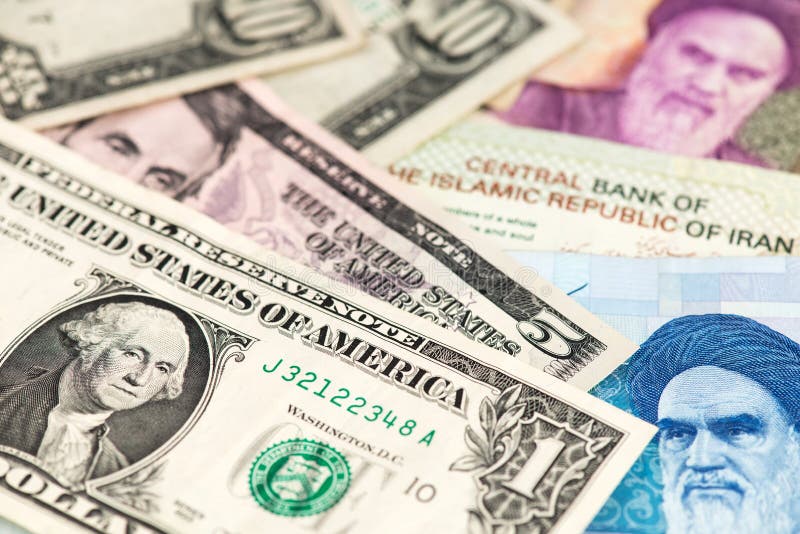
In May 2021, Malley was offering Iran relief equivalent to $7 billion, nearly equal to the budget of Iran’s entire conventional military for 2022. As Iranian negotiators stonewalled — they have not sat down with Malley or his team but instead insist on talking through intermediaries — Malley’s team upped the ante. Today, the Biden administration appears poised to provide Tehran with $12 billion, equivalent to a quarter of Iran’s total budget at the real exchange rate. This does not include, of course, the windfall Tehran seeks to gain from increased oil sales already augmented by lack of sanctions enforcement. This fund does not include off-budget spending, such as the oil revenue directly allocated to the Revolutionary Guards or the additional billions that Iran’s national oil company allocates for national stabilization and development but in actuality flows into Revolutionary Guards’ coffers.
Should Supreme Leader Ali Khamenei accept Malley’s offer, the regime will receive an infusion of over $20 billion over the following year, essentially doubling the Revolutionary Guard’s budget. To put that conservative estimate in perspective , a suicide belt costs just $1,500, and the bombing of the Hebrew University cafeteria that killed five Americans cost only $50,000.
Nor does the money now offered to Iran account for the billion-dollar ransoms that the Iranians expect for hostage releases. After all, ever since Jimmy Carter’s administration acquiesced to release Iranian funds in exchange for hostages and Ronald Reagan traded arms for hostages, the Iranian regime simply seizes new hostages to use as chits in their negotiations.
The logic of Malley’s approach appears to be the belief that he can overcome the Iranian regime’s enmity by acquiescing to nearly all its demands. These need not only be financial — it could also be to acquiesce to Iranian influence in Iraq and Lebanon, support the Syrian regime’s rehabilitation, or to normalize Yemen’s Houthis at a time they increasingly attack Saudi Arabia and the United Arab Emirates with Iranian-made drones and missiles.
While Biden has criticized maximum pressure, the fact is such pressure has a track record of success. Maximum pressure and diplomatic isolation ended the Iran-Iraq War and, under President Barack Obama, a decline of 5.4% in Iran’s gross domestic product forced Tehran to the negotiating table.
The problem with Malley’s approach is that it has never worked. Ideology matters. Both Democrats and Republicans understood during the Cold War that the key to success was grinding down the Soviet economy, not subsidizing it. When the Clinton administration sought to provide food and oil to North Korea, Pyongyang diverted that assistance to the military and held on to its nuclear program. Decades of aid and concession to Russia and China did not end their enmity; they simply pocketed the cash and focused on their own military programs. Likewise, Palestinian terrorism has surged in direct proportion to Western and U.N. assistance.
Simply put, there is a reason why the Biden administration does not put Malley in front of Congress. If Congress asked Malley for any precedent of success or evidence that administration logic works, he could not answer the question. Malley is not gambling with the future security of America, its allies, and, for that matter, an Iranian public that increasingly despises the regime. Rather, he is selling out each one for nothing in return other than a future of terrorist bloodshed and nuclear blackmail.
Michael Rubin ( @mrubin1971 ) is a contributor to the Washington Examiner’s Beltway Confidential. He is a senior fellow at the American Enterprise Institute.
In the past, it has generated occasional activity that generated a 2.6 magnitude quake in New Jersey’s Peakpack/Gladstone area and 3.0 magnitude quake in Mendham.
“There is occasional seismic activity in New Jersey,” said Robinson. “There have been a few quakes locally that have been felt and done a little bit of damage over the time since colonial settlement — some chimneys knocked down in Manhattan with a quake back in the 18th century, but nothing of a significant magnitude.”
“More recently, in the 1970s and early 1980s, earthquake risk along the Ramapo Fault received attention because of its proximity to Indian Point,” according to the New Jersey Geological Survey website.
Historically, critics of the Indian Point Nuclear facility in Westchester County, New York, did cite its proximity to the Ramapo fault line as a significant risk.
“Subsequent investigations have shown the 1884 Earthquake epicenter was actually located in Brooklyn, New York, at least 25 miles from the Ramapo Fault,” according to the New Jersey Geological Survey website.
Welcome back to The Farda Briefing, an RFE/RL newsletter that tracks the key issues in Iran and explains why they matter.
I’m Mehrdad Mirdamadi, a senior editor and journalist at RFE/RL’s Radio Farda. Here’s what I’ve been following and what I’m watching out for in the days ahead.
The Big Issue
In a break with policy, Iranian officials have started talking publicly about the possibility of the country building a nuclear bomb.
After Supreme Leader Ayatollah Ali Khamenei issued a fatwa, or religious ruling, against nuclear weapons in 2005, officials were adamant that Tehran’s nuclear program was strictly for civilian purposes. But the rhetoric has shifted in recent weeks.
Kamal Kharazi, a senior adviser to Khamenei, suggested on July 17 that the country was capable of making a nuclear weapon but that a decision on whether to do so had not yet been made. A video posted on a Telegram channel affiliated with the powerful Islamic Revolutionary Guards Corps (IRGC) on July 29 asked the audience, “When will Iran’s sleeping nuclear bomb wake up?”
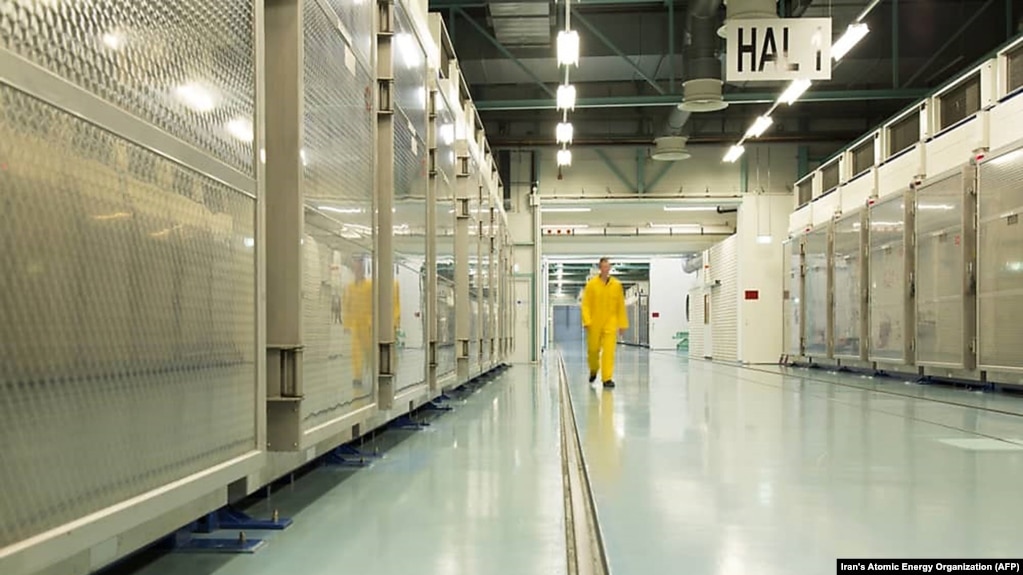
The channel claimed that the underground Fordow enrichment facility was able to produce enough highly enriched uranium for one nuclear weapon. Those claims were echoed on August 1 by Mohammad Eslami, the head of Iran’s atomic energy organization.
Why It Matters: The recent statements are unprecedented. It could be an attempt by Iran to gain leverage and concessions at the negotiating table. Protracted talks aimed at reviving the 2015 nuclear deal between Iran and world powers have been deadlocked for months. On the other hand, Iran could simply be revealing its intentions to become a nuclear power.
When discussing the nuclear issue, Iranian officials in recent years have cited the Islamic notion of taqiya, in which believers can conceal their faith in the face of persecution. In other words, you can achieve your original purpose in secret.
What’s Next: It is hard to believe that these statements were made without the consent of Khamenei, who has the final say on all important state matters. The supreme leader’s aim could be to restore public faith and pride in the country’s nuclear program and showcase the Islamic republic’s resolve. In this way, if Iran does agree to recommit to the nuclear deal, Khamenei can save face.
When the original agreement was signed in 2015, he hailed the country’s “heroic flexibility.” Since then-U.S. President Donald Trump withdrew Washington from the deal in 2018, the agreement has been on life support. This time, Khamenei has resorted to what some have described as “defiant perversity” in his dealings with the West.
The hardening rhetoric that has emerged in recent weeks is likely to continue. On August 2, lawmaker Mohammadreza Sabaghiyan openly threatened that if “bullying from the enemy continues, we will ask our leader to change his fatwa in favor of making a bomb.”
Stories You Might Have Missed
• Iranian authorities amputated the fingers of a man convicted of theft using a guillotine machine. Amnesty International called it an “unspeakably cruel punishment.” Puya Torabi had fingers cut off on July 27 inside Tehran’s notorious Evin prison.
In May, authorities amputated the fingers of another convict, Sayed Barat Hosseini, without giving him anesthetic, Amnesty said, revealing that at least eight other prisoners in Iran were at risk of having fingers amputated. Finger amputation as punishment for theft has reemerged recently amid a rise in petty crime and worsening economic conditions.
• Iranian security agents halted a music concert in Tehran while the musicians were on stage playing, in another sign of the crackdown authorities are waging against events they deem contrary to Islamic values.
According to a video published on social media on July 29, the members of the band Kamakan were performing when a security guard suddenly came on stage and told the band’s singer: “Stop! We were ordered to stop this!”
Following a recent uptick in social protests, dozens of concerts and cultural performances have been abruptly called off.
Al-Wasil speaking at the Tenth Review Conference of the Parties to the Treaty on the Non-Proliferation of Nuclear Weapons on Wednesday.
Saudi Gazette report
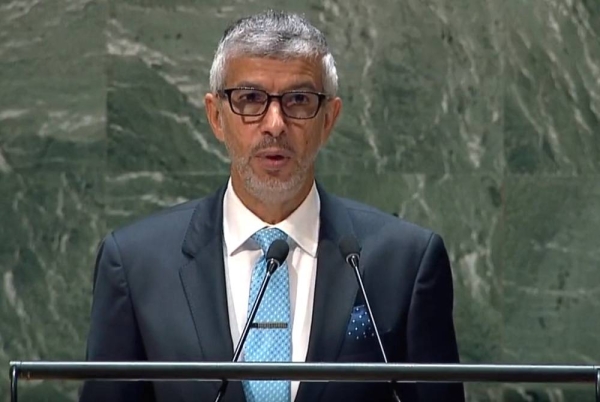
NEW YORK — Saudi Arabia’s new Permanent Representative to the United Nations Ambassador Dr. Abdulaziz Al-Wasil said that Iran’s practices increase the risks of nuclear proliferation.
Al-Wasil was speaking at the Tenth Review Conference of the Parties to the Treaty on the Non-Proliferation of Nuclear Weapons on Wednesday.
He said that freeing the Middle East from nuclear weapons is a collective responsibility.
“Transparency is necessary for the peaceful use of nuclear energy. Iran’s lack of transparency with the International Atomic Energy Agency violates the UN Charter.”
Britain’s official National Security Advisor has warned that the risk of nuclear escalation is greater today than it was during the Cold War, particularly with respect to China.
29 Jul 2022Britain’s official National Security Advisor, Sir Stephen Lovegrove, has warned that the risk of nuclear escalation is greater today than it was during the Cold War, particularly with respect to China.Speaking to the Center for Strategic and International Studies (CSIS) in Washington D.C., the former top bureaucrat at the Ministry of Defence
China’s ‘breathtaking’ nuclear arms push a rising challenge, Stratcom chief saysChina is expanding its nuclear forces at a “breathtaking” pace, the commander of the U.S. Strategic Command warned in urging for strengthened U.S. nuclear deterrence against the danger.
Jack Montgomery 29 Jul 2022 Britain’s official National Security Advisor, Sir Stephen Lovegrove, has warned that the risk of nuclear escalation is greater today than it was during the Cold War, particularly with respect to China.”likely succeeded in making tactical advances in the Donbas around the Vuhlehirska Power Plant,” adding that some Ukrainian forces have”likely withdrawn from the area.“We must acknowledge that existing nuclear states are investing in novel nuclear technologies and developing new warfighting nuclear systems, which they are integrating into their military strategies and doctrines and into their political rhetoric to seek to coerce others,” U.Follow Us.
Speaking to the Center for Strategic and International Studies (CSIS) in Washington D.C. — Blinken to speak with Russian counterpart about Brittney Griner and Paul Whelan release Jim Watson | AFP | Getty Images US Secretary of State Antony Blinken speaks about US policy towards China during an event hosted by the Asia Society Policy Institute at George Washington University in Washington, DC, on May 26, 2022., the former top bureaucrat at the Ministry of Defence argued that the West “face[s] a much broader range of strategic risks and pathways to escalation” than during the Cold War, not least because, during that long-simmering conflict, the Soviet Union and its satellites reached something of a “shared understanding of doctrine” which made the threat of nuclear conflict more manageable — some notable flirtations with destruction notwithstanding. “For example, we have clear concerns about China’s nuclear modernization program that will increase both the number and types of nuclear weapon systems in its arsenal. He highlighted both “Russia’s repeated violations of its treaty commitments” and, perhaps more significantly, “the pace and scale with which China is expanding its nuclear and conventional arsenals and the disdain it has shown for engaging with any arms control agreements” as particularly dangerous, saying that nuclear doctrine today “is opaque in Moscow and Beijing, let alone Pyongyang or Tehran” — referring to the capitals of North Korea and the Islamic Republic of Iran.S. A report by the Stockholm International Peace Research Institute said China is pursuing a “substantial expansion” of its nuclear arsenal, including the development of new delivery systems and the construction of hundreds of additional missile silos.
Off-peninsula developments are equally sobering. Russia has successfully ring-fenced its February invasion of Ukraine by threatening nuclear use against any nation that dares to cross its red lines. As a result, while Kiev receives moral, financial and arms support from Western partners, it stands alone on the battlefield.
South Korea, unlike Ukraine, has a national insurance policy: The US is treaty-bound to defend it. However, there is the question of US resolution: The credibility of that insurance is untested in the face of real-world nuclear aggression.
Some fret that – if push came to shove – Washington would be unwilling to risk losing one or more of its cities to a North Korean reprisal, leaving South Korea exposed to potential perdition.
One of the highest-profile proponents of that possibility put a stark question to Asia Times on the sidelines of a recent conference. “How can we sleep at night?” asked political heavyweight and Hyundai Heavy Chairman Chung Mong-joon.
Currently, institutes are churning out research showing that the public overwhelmingly supports the national acquisition of nuclear arms. It is increasingly a hot topic at conferences and in media.
But with the Yoon Suk-yeol administration cleaving tightly to a US that is still strongly attached to non-proliferation, there is no tangible momentum. And any South Korean leader who decided to go critical would need to first answer the multiple questions that hang over the issue.
Technically: Is South Korea capable of creating both nuclear arms and their delivery systems? And if it built a nuclear weapon, where would it test it?Intercontinental ballistic missiles at a military parade celebrating the 70th founding anniversary of the Korean People’s Army in Pyongyang. North Korea’s nuclear arsenal is a key – but not the only – issue prodding South Korea to follow suit. Photo: KCNA via Reuters
The case for going nuclear
That the Korean public is in favor of a domestic nuclear deterrent is clear.
The matter was in the open at this month’s Asian Leadership Conference 2022 in Seoul, with a dedicated discussion panel.
“People are talking about this now,” said panelist Robert Kelly, an American professor of political science at Pusan National University. “It is more blunt and open than ever before.”
A key reason to proceed would be to directly deter North Korea, which has defied all efforts by all parties to halt its nuclear arms programs.
“So that begs the question: ‘If North Korea does go ahead, what are we to do? More condemnation, more UNSC resolutions, more sanctions?” Lee continued. “That has not worked for two decades.”
America is strongly attached to the Nuclear Non-proliferation Treaty, or NPT, raising worries that Washington would crack down if Seoul decided to go nuclear. But other friendly power players would not be likely to sanction Seoul beyond lip service.
Moreover, Article 10 of the treaty would allow South Korea to exit the NPT in good faith.
“Acquiring nuclear weapons is not a violation of international law – only for those countries who are members of the NPT,” said Daryl Press, an associate professor at Dartmouth College. “South Korea could do it in a legal fashion by exercising its Article 10 legal rights to withdraw…there is no need to be a pariah.”
For a South Korean diplomat, explaining the necessity of the step would be “an easy day on the job,” Press suggested.
In fact, signaling an NPT withdrawal could be a legitimate step on Seoul’s response ladder, Lee proposed. “If [North Korea] conducts a seventh nuclear test, the least we can do is withdraw from the NPT,” he said. “That would put a lot of pressure on the international community to do more.”
Experts are divided regarding how much or little pressure Beijing has exerted over the years on Pyongyang to denuclearize – and how much leverage it realistically possesses. But any proposed Seoul withdrawal from the NPT – and the additional possibility that Tokyo would follow Seoul’s lead and tip over the nuclear threshold – would certainly trigger alarm bells in Beijing.
“China will strongly oppose this step,” Press said. “But the South Korean position is eminently reasonable: South Korea should hold open other options and say, ‘If there is some way the international community, perhaps led by China, [could] get North Korea to denuclearize, we would happily rejoin the NPT.’”
He added, “I would not phrase this as a threat to the Chinese, but a reach out of the hand.”
Others say that not even Beijing – a key source of fuel, food and medicine for North Korea – can reign in Pyongyang.
“North Korea has already demonstrated that they don’t give a damn about the US, the UN and China,” Chun In-bum, a retired South Korean general told Asia Times. “The North Koreans will eat each other before they give up nuclear weapons.”
A key argument for Seoul’s nuking up is the possibility of the US backing down if faced with a truly locked-and-loaded North Korea.
“The core issue is that North can strike US with an ICBM and in doing so you introduce the classic dilemma: [French President Charles] De Gaulle asked [US President John] Kennedy if he would exchange New York for Paris,” Kelly said of the 1961 discussion between the two leaders. “Kennedy waffled. I think the answer is probably ‘no.’” I don’t believe the US would fight a nuke war solely for non-Americans.”
In this sense, South Korean nuclearization would not just aim a close-to-home deterrent at North Korea but could also lower risks for the US. And the nuclearization of US allies France and UK during the Cold War provides a European benchmark that could be applied to Asian allies South Korea and Japan, Kelly said – warning the US not to act in “hegemonic” fashion.
America’s public, he guessed, would be supportive. “My sense is that the issue of North Korea is so obvious it will move US public opinion, and the US foreign policy community will come around,” he said.
Policy cleavages between Seoul and Washington provide another rationale for independent nukes, according to Press. The rise of China and the “wedge” being driven “between South Korean and US priorities” is not yet “catastrophic” but is a “growing strain,” the American scholar said.
Rising fears are also hovering over not American strengths but rather its weaknesses.
In war, Washington is acutely casualty-sensitive and in recent conflicts has arguably lacked the political will to win. Moreover, US society and politics are deeply – some say dangerously – polarized. These chinks in America’s armor may be leveraged by a wily foe.
“[South] Korea needs a very stable US, but right now the US is trying to find itself or to be reborn,” Chun said. “As they do this, enemies will see an opportunity.”
Cheong Seong-chang, who directs the Center for North Korean Studies at the Sejong Institute think tank, argued that the nuclearization of South Korea and/or Japan would rebalance Northeast Asia’s off-center strategic geography.
“There is tilted ground that will be more and more tilted…Russia, China and North Korea all have nuclear weapons,” he told the ALC. Conversely, among Japan, South Korea and the US, only the latter possesses a nuclear deterrent.
Chun agreed. “The US faces such a variety of challenges now,” he said. “It is only natural that Korea should have the ability to help the US in whatever situation.”
So could South Korea pull it off?President Yoon Suk-yeol gives a speech at the construction site of a nuclear power plant. Yoon is upping atomic power production, but has made any move on nuclear arms. Image: Twitter
Nuclear feasibility
There is no question about the “what” of the issue. South Korea, a highly-educated G10 economy that is home to a competitive nuclear power sector that exports reactors, could independently create atomic arms.
While Cheong did not specify kilotonnage, that would be a massive armory: World leader Russia is believed to field fewer than 6,000 nuclear warheads. The six-reactor Wolseong, in the country’s southeast, started operations in 1983.
It is not just plutonium South Korea could leverage. “Korea also has uranium enrichment technologies held by only a handful of countries in the world,” Cheong said.
In 2000, the Korea Atomic Energy Research Institute tested laser enrichment technology, according to a 2016 article in the Chosun Ilbo, that was reproduced by the Non-Proliferation Policy Education Center. Using that, 1 kilogram of highly enriched U-235 could be produced in around four hours. The article also reported that the country already produces the kind of industrial alloys needed to encase fissile materials.
The question then is “when” – how long would the process take if the political will was mustered? Experts differ on the question.
The 2016 article estimated it would take six months to produce fissile materials and six-nine months to develop a detonation device – an overall timeline of approximately 18 months.
Others believe it could be done more quickly. In a widely quoted comment, Suh Kune-yull, a professor of nuclear engineering at the elite Seoul National University told the New York Times in 2017, “If we decide to stand on our own feet and put our resources together, we can build nuclear weapons in six months…the question is whether the president has the political will.”
A more recent June 2022 commentary in the military website War on the Rocks by Lami Kim, who directs the Asian Studies Program at the US Army War College, found, “Although South Korea has advanced nuclear technologies…Seoul would still need three to five years to acquire a workable nuclear arsenal.”
It was unclear if Kim was discussing device production or a full nose-to-tail system. The latter would include the development of nuclear doctrine and leadership protocols; the creation of a dedicated command-and-control net; and the marriage of atomic devices with delivery systems.
Addressing a full-program scenario, Cheong was more optimistic. “If we pursued it at very high speed, we could have fully usable and deployable weapons within two years,” he said. “At slow speed, three years would be enough.”
In terms of delivery systems, South Korea looks to be good to go. Given that North Korea borders the country, tactical nuclear devices could be fired via tube or rocket artillery. But Seoul has ex-peninsular reach, too.
There is one hole in this otherwise impressive armory of capabilities. To be a credible deterrent, any nuclear device must be physically tested. So where could South Korea potentially conduct one?
North Korea has tested devices in underground tunnels in a remote, mountainous area. That is near-impossible for South Korea for reasons of population densities and politics.
The South has nearly double the population of its northern rival – 52 million versus the North’s 26 million – all compressed into a smaller land area – 100,210 square kilometers versus the North’s 120,540 square kilometers.
And authoritarian Pyongyang does not have to consider popular push back against its policies, while democratic Seoul must contend with street politics and NIMBYism related to defense, energy and other issues.
In recent years, there have been high-profile protests against a naval base on Jeju Island, nuclear reactors and the placement of a US anti-missile battery.
Still, Cheong hinted – tantalizingly – that the issue has been discussed.
“Where a nuclear test would be done is a very sensitive question – there are few candidate [locations] where tests are possible,” he said. “If this was tabled, the residents would protest, so I cannot disclose.”
One possibility could be a Bikini Atoll-style seafloor test off of one of the uninhabited islands that ring South Korea’s coast.
It has long been rumored – but never proven – that Imperial Japan test-detonated a nuclear device on an island off the coast of northeastern Korea in the waning days of World War II.South Korea’s Nuri space rocket blasts into the sky. The boosters sending this peaceful projectile into the heavens could feasibly be converted to an intermediate-range ballistic missile. Photo: South Korean Ministry of Science and ICT
The case against
Despite energetic discussion in specialist circles, the acquisition of a nuclear deterrent is currently not on the national political agenda.
One reason – counter-intuitively – is that it has customarily been liberal Seoul governments that have pursued independent defense capabilities.
The process of moving wartime operational control (“OPCON Transfer”) of the South Korean military from Washington’s grip to Seoul’s was initiated by the leftist Roh Moo-hyun government that was in office from 2003-2008.
Subsequently, the Moon Jae-in administration (2017-2022) oversaw the lifting of US-set range caps on South Korean missiles and tested submarine-launched ballistic missiles. It also tabled the acquisition of an aircraft carrier, while pressing ahead with (still incomplete) OPCON transfer.
The latter program is costing the Korean taxpayer billions – and adding a nuclear capability would add to the burden.
“An indigenous nuclear program would consume and divert enormous funding from South Korea’s defense budget,” Bruce Klinger, senior fellow for Northeast Asia at US think tank The Heritage Foundation told Asia Times. “South Korea’s defense funding would be better spent augmenting conventional force requirements as stipulated in South Korea’s Defense Reform Plan 2.0 and the bilateral plan” for OPCON transfer.
Conservative administrations, such as Yoon’s, have historically been unadventurous on defense, preferring to place maximum trust in the US. Hence, Seoul is not courting Washington’s displeasure by initiating a nuclear deterrent.
“The Yoon administration, like its predecessors, has declared it will not pursue an indigenous nuclear weapons program,” Klinger said.
This ambiance is reflected in the caution some feel. “We would lose more than we gain,” a person familiar with the topic told Asia Times.
It is sensitive: The moderator of this month’s ALC discussion, Lee, noted that the topic was “…politically controversial and, perhaps, not politically correct.”
Doubly so given that movement on the issue could so alarm Washington that it could spark the risk that has stalked South Korean politics since the Donald Trump administration: A withdrawal of US troops.
“An attempt by Seoul to keep a major military capability separate from the combined and integrated command structure would be antithetical to the foundation of the bilateral alliance as well as long-standing US counter-proliferation policy,” Klinger warned.
“Such a step could lead to calls for reduction or withdrawal of US forces either due to concerns of possible independent South Korean actions or isolationist perceptions that Seoul could now go it alone.”
A further risk is likely sanctions damage – such as the heavy hit Korea Inc suffered from Chinese retaliation after Seoul established a US THAAD anti-missile system on South Korean soil in 2017.
And there is one other issue – one that lurks deep below the surface.
“Advocacy for developing an indigenous South Korean nuclear capability seems grounded more on national prestige rather than strategic considerations,” Klinger said.
Pollsters admit it. “Public attitudes on nuclear weapons do not strongly align with rationales for armament offered by some South Korean politicians and analysts,” the Chicago Council conceded.
The Council found that acquisition of home-grown nuclear muscle in the Korean public mind is not aimed exclusively at North Korea.
“Threats other than North Korea” are a “main driver of support” the Chicago Council found – with 55% of respondents saying China will be the biggest threat to South Korea in ten years.
Meanwhile, 26% of South Koreans considered national prestige as the key reason for their support for nuclear arms, higher than those who see the aim being to counter North Korea, who came in at just 23%.
These findings may reflect deep-seated public emotion.
A 1993 South Korean novel, “The Rose of Sharon is Blooming Again” – the reference is to the national flower – became a best-seller and was turned into a movie in 1995. It depicts North and South Korea joint-developing nuclear arms to take on national bete noire, Japan.
Be that as it may, Chun puts forward a final rationale for going nuclear.
“It’s a volatile world with multiple challenges and we need multiple capabilities and flexibilities,” he said. “There is so much we can prepare for.”
Russian President Vladimir Putin with Chinese President Xi Jinping. Photo / Getty Images
China’s military plans could see nuclear-powered torpedoes capable of striking Australia within a week
23 Jul, 2022 03:44 PM
Australia’s greatest defence — distance — is under threat.
China wants to build a nuclear-powered torpedo “swarm” capable of striking targets anywhere in the Pacific within a week.
The idea’s just a proposal at this stage. But it builds upon Russia’s ‘Poseidon’ nuclear-powered torpedo designed to trigger a tsunami off any coastal city with a nuclear warhead.
The state-controlled South China Morning Post reports Beijing is thinking smaller. But in greater numbers.
Australia has defended its intention to buy or build nuclear-powered submarines against accusations of nuclear proliferating by separating its use as a power source from that of a warhead.
China is doing the same.
“Thanks to its high flexibility and low cost, this unmanned underwater vehicle equipped with the nuclear power system can be used as a conventional force like an attack nuclear submarine, rather than as a nuclear missile,” China’s Institute of Atomic Energy chief Guo Jian reportedly says.
Keep up to date with the day’s biggest stories
Sign up to our daily curated newsletter for the day’s top stories straight to your inbox.
Like Australia, China finds the prospect of an almost unlimited reach appealing.
The institute wants to use tiny “disposable” nuclear reactors to power long-range submarine drones. This would drastically reduce the weapon’s size by eliminating the need for bulky fuel storage and making it harder to detect through a quiet, all-electric propulsion system.
Unlike Australia, China appears to be angling toward a large fleet of torpedo-sized, low-cost nuclear-powered “killer robots” that can be carried by any military vessel. Australia’s defence force aspires to a $170 billion force of 12 large, fully crewed submarines.
China’s researchers say they can deliver wolf-packs of the AI-controlled weapon within 10 years.
After 15 years of dithering over a replacement for the ageing Collins-class diesel-electric submarines, Australia’s earliest possible date for constructing nuclear replacements is in the 2040s.
Nuclear propulsion
Atomic power has been harnessed as a propulsion system since the 1960s. It drives enormous aircraft carriers. It allows submarines to stay underwater for as long as their air and food supplies hold out. It’s still powering the Voyager II space probe as it passes beyond the solar system’s edge after 45 years in space.
What’s changed is a fundamental redesign of the technology to make it more stable. And the ability for it to be miniaturised.
Guo says China will build the weapon with “mature and simple technology that is easy to use and maintain, inexpensive and suitable for mass production.”
“We need to think out of the box,” he added.
This involves removing most of the shielding around the reactor. As a result, only sensitive electronic components will be protected from radiation. The torpedo will operate on batteries for half an hour after launch. Only then will the reactor fire up to its 315C operating temperature.
The report also explains the reactor will not use expensive rare-earth minerals in its construction. Instead, it will be built with cheaper materials like graphite — which caught fire during the Chernobyl disaster and contributed to the radioactive fallout.
The result is a power pack needing just 4kg of low-grade uranium fuel. China says this will produce 1.4 megawatts of heat, of which only 6 per cent will be converted into electricity.
The allure of such a small power pack is that it can potentially drive a torpedo or underwater drone at speeds of 30 knots (56km/h). However, the Post gave conflicting reports about how long (200 or 400 hours).
It stated the torpedo would have a 10,000km range — “about the distance from Shanghai to San Francisco”. And Sydney.
Poseidon junior
Russia this month put a nuclear-powered submarine weapon into service.
Dubbed “Poseidon”, the giant torpedo was unveiled by President Vladimir Putin in 2019 as one of six “super weapons” destined to return Russia’s military to greatness.
The first crewed submarine capable of carrying the enormous device — the K-329 Belgorod — entered service earlier this month.
Unlike the Chinese proposal, Poseidon is huge. But it is reportedly capable of loitering at sea for long periods or travelling great distances before striking its target. A two-megaton nuclear warhead (some 100 times more potent than that dropped on Hiroshima) will then trigger a tsunami large enough to level a coastal city.
This puts the likes of Pearl Harbour in Hawaii and Norfolk Naval Station in Virginia at risk of a surprise nuclear attack.
There’s no reason the standard-sized Chinese torpedo can’t also carry a small nuclear warhead.
But the Post reports China intends to use lurking swarms of the smart torpedo to “strike submarines as they leave a port in home waters that is difficult to reach by manned platforms.”
Its designers also reject any accusation of it being a “dirty bomb” or a nuclear weapon in disguise. Instead, the small reactor will be “ejected” to the seabed shortly before the torpedo strikes its target – with the final propulsion stage powered by the on-board battery.
This would leave the radioactive material outside any blast radius.
“Even if the hull is broken, the interior is filled with water, and the whole body falls into the wet sand on the seabed, the reactor will not have a critical accident. The safety is ensured,” argues Guo.
And the nuclear-powered submarine won’t only be a weapon, Guo says. Its high speed and endurance will enable it to inspect distant waters and track potential targets — such as nuclear-powered aircraft carriers and crewed submarines.
“When the manufacturing cost is low enough, even if the nuclear-powered device can only be used once, the overall cost will be low,” Guo says.



/cloudfront-ap-southeast-2.images.arcpublishing.com/nzme/VJKWR3PVERWWCD4IPQONKSBFUM.jpg)