Showing posts with label Nukes. Show all posts

Thursday, March 23, 2023

Biden & Obama open up the bank vault for Iran

Biden opens up the bank vault for Iran

FEBRUARY 03, 2022 07:00 AM

BY MICHAEL RUBIN

During his campaign for president, Joe Biden criticized President Donald Trump’s withdrawal from the 2015 Iran nuclear deal and promised to reverse it.

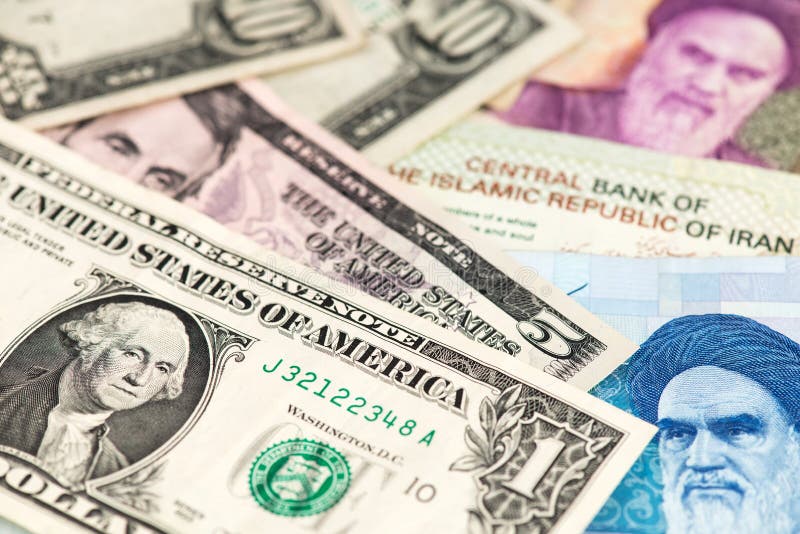
Whereas Trump embraced a policy of “maximum pressure” to compel Iran to cease terrorism, covert nuclear and ballistic missile work, and other rogue behavior, Biden and Rob Malley, his special envoy for Iran, took the opposite approach. They sought to entice Iran with incentives such as sanctions relief, unfreezing assets, and the liquidation of restricted-use escrow accounts.

The scale of the financial relief offered to Iran is now mind-boggling.

In May 2021, Malley was offering Iran relief equivalent to $7 billion, nearly equal to the budget of Iran’s entire conventional military for 2022. As Iranian negotiators stonewalled — they have not sat down with Malley or his team but instead insist on talking through intermediaries — Malley’s team upped the ante. Today, the Biden administration appears poised to provide Tehran with $12 billion, equivalent to a quarter of Iran’s total budget at the real exchange rate. This does not include, of course, the windfall Tehran seeks to gain from increased oil sales already augmented by lack of sanctions enforcement. This fund does not include off-budget spending, such as the oil revenue directly allocated to the Revolutionary Guards or the additional billions that Iran’s national oil company allocates for national stabilization and development but in actuality flows into Revolutionary Guards’ coffers.

Should Supreme Leader Ali Khamenei accept Malley’s offer, the regime will receive an infusion of over $20 billion over the following year, essentially doubling the Revolutionary Guard’s budget. To put that conservative estimate in perspective , a suicide belt costs just $1,500, and the bombing of the Hebrew University cafeteria that killed five Americans cost only $50,000.

Nor does the money now offered to Iran account for the billion-dollar ransoms that the Iranians expect for hostage releases. After all, ever since Jimmy Carter’s administration acquiesced to release Iranian funds in exchange for hostages and Ronald Reagan traded arms for hostages, the Iranian regime simply seizes new hostages to use as chits in their negotiations.

The logic of Malley’s approach appears to be the belief that he can overcome the Iranian regime’s enmity by acquiescing to nearly all its demands. These need not only be financial — it could also be to acquiesce to Iranian influence in Iraq and Lebanon, support the Syrian regime’s rehabilitation, or to normalize Yemen’s Houthis at a time they increasingly attack Saudi Arabia and the United Arab Emirates with Iranian-made drones and missiles.

While Biden has criticized maximum pressure, the fact is such pressure has a track record of success. Maximum pressure and diplomatic isolation ended the Iran-Iraq War and, under President Barack Obama, a decline of 5.4% in Iran’s gross domestic product forced Tehran to the negotiating table.

The problem with Malley’s approach is that it has never worked. Ideology matters. Both Democrats and Republicans understood during the Cold War that the key to success was grinding down the Soviet economy, not subsidizing it. When the Clinton administration sought to provide food and oil to North Korea, Pyongyang diverted that assistance to the military and held on to its nuclear program. Decades of aid and concession to Russia and China did not end their enmity; they simply pocketed the cash and focused on their own military programs. Likewise, Palestinian terrorism has surged in direct proportion to Western and U.N. assistance.

Simply put, there is a reason why the Biden administration does not put Malley in front of Congress. If Congress asked Malley for any precedent of success or evidence that administration logic works, he could not answer the question. Malley is not gambling with the future security of America, its allies, and, for that matter, an Iranian public that increasingly despises the regime. Rather, he is selling out each one for nothing in return other than a future of terrorist bloodshed and nuclear blackmail.

Michael Rubin ( @mrubin1971 ) is a contributor to the Washington Examiner’s Beltway Confidential. He is a senior fellow at the American Enterprise Institute.

Sunday, August 28, 2022

A Closer Look At The Sixth Seal (Revelation 6:12)


A Look at the Tri-State’s Active Fault Line

Monday, March 14, 2011
The Ramapo Fault is the longest fault in the Northeast that occasionally makes local headlines when minor tremors cause rock the Tri-State region. It begins in Pennsylvania, crosses the Delaware River and continues through Hunterdon, Somerset, Morris, Passaic and Bergen counties before crossing the Hudson River near Indian Point nuclear facility.
In the past, it has generated occasional activity that generated a 2.6 magnitude quake in New Jersey’s Peakpack/Gladstone area and 3.0 magnitude quake in Mendham.
“There is occasional seismic activity in New Jersey,” said Robinson. “There have been a few quakes locally that have been felt and done a little bit of damage over the time since colonial settlement — some chimneys knocked down in Manhattan with a quake back in the 18th century, but nothing of a significant magnitude.”
Robinson said the Ramapo has on occasion registered a measurable quake but has not caused damage: “The Ramapo fault is associated with geological activities back 200 million years ago, but it’s still a little creaky now and again,” he said.
“More recently, in the 1970s and early 1980s, earthquake risk along the Ramapo Fault received attention because of its proximity to Indian Point,” according to the New Jersey Geological Survey website.
Historically, critics of the Indian Point Nuclear facility in Westchester County, New York, did cite its proximity to the Ramapo fault line as a significant risk.
“Subsequent investigations have shown the 1884 Earthquake epicenter was actually located in Brooklyn, New York, at least 25 miles from the Ramapo Fault,” according to the New Jersey Geological Survey website.

Wednesday, August 10, 2022

China upgrades her nuclear horn with an eye on Taiwan: Daniel 7

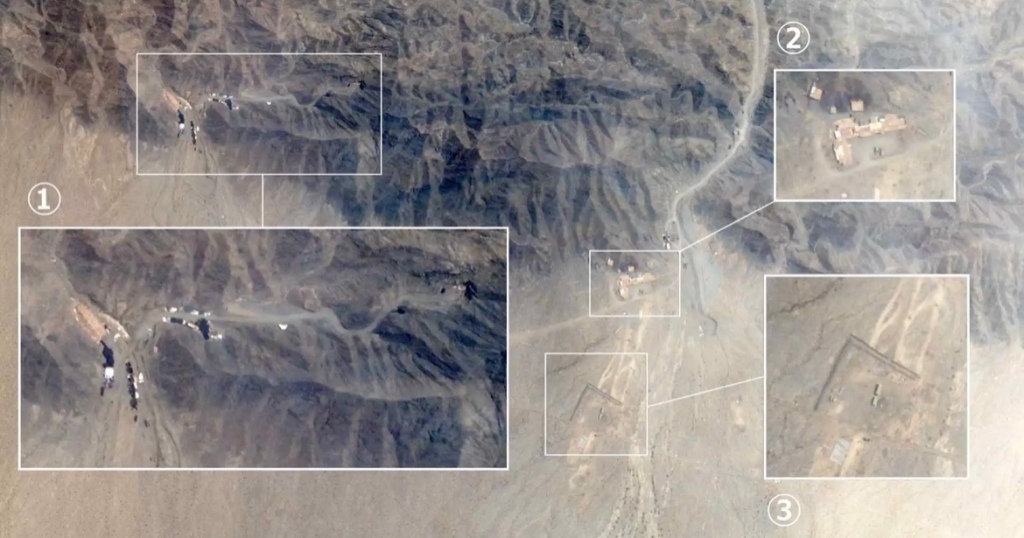
New satellite photos show China is upgrading its nuclear test site in Xinjiang. Image: Twitter

China upgrades nuke test site with an eye on Taiwan

Construction at Lop Nur test site could signal resumption of Chinese nuclear tests as tensions over Taiwan reach new boiling point

by Gabriel Honrada August 9, 2022

Satellite photos obtained by Nikkei last week show that China is rapidly expanding its nuclear test facilities in western Xinjiang, sparking fears of a renewed nuclear arms race with the US as tensions boil over Taiwan.

The Nikkei report states that a satellite hovering at 450 kilometers detected extensive construction at the Lop Nur test site, a dried salt lakebed in the arid and restive Xinjiang region that borders Kazakhstan, Kyrgyzstan, Tajikistan, Afghanistan, and Pakistan.

The report said that China may be building a sixth tunnel for underground testing, evidenced by broken rocks piled nearby and extensive coverings erected on a nearby mountainside. The satellite photos also show power cables, possible storage facilities for high explosives and unpaved roads from command centers.

An unnamed expert from US private geospatial analysis company AllSource Analysis told Nikkei that these developments enable China to conduct nuclear-related tests anytime. The power lines and road system now connect Lop Nur’s western military nuclear test facilities to new possible test areas in the east.

Nikkei suggested that evidence of a sixth test tunnel points to China’s planned resumption of nuclear tests, the last of which was conducted in 1996.

Nobumasa Akiyama, a professor of East Asian security at Hitotsubashi University, told Nikkei that China’s accelerated development of the Lop Nur test site means it intends to deter US intervention in an invasion of Taiwan by threatening the use of small nuclear weapons.

Nikkei also notes that maritime control will be the primary military issue in any invasion of Taiwan. Small nuclear weapons with limited strike capabilities would be sufficient for China to ward off US aircraft carriers. This strategy mirrors that of Russia in Ukraine, with its threat of nuclear escalation used as strategic cover to pursue conventional military operations.While still trailing the US in nuclear weapons strength, experts say China is increasing its capability across the board. Credit: Handout.

The development may be part of China’s more extensive efforts to modernize its nuclear arsenal for a Taiwan scenario. Asia Times has previously reported on other stories regarding China’s nuclear arsenal, including its building of land-based nuclear silos, rail-based nukes, ballistic missile submarines and nuclear-armed stealth bombers at a rapid-fire pace.

Taiwanese and US officials have opined that China may invade Taiwan sooner than anticipated, suggesting dates as soon as 2025, 2027 and 2030.

“By 2025, China will bring the cost and attrition to its lowest. It has the capacity now, but it will not start a war easily, having to take many other things into consideration,” said Taiwan’s Defense Minister Chiu Kuo-cheng in a 2021 article in The Guardian.

General Mark Milley, US chairman of the Joint Chiefs of Staff, noted in a 2021 US Naval Institute (USNI) article that China wants to acquire the military capabilities to invade and hold Taiwan by 2027. His assessment was based in part by Chinese President Xi Jinping’s speech calling for an acceleration of China’s military modernization and capabilities to seize Taiwan.

Moreover, US Director of National Intelligence Avril Haines mentioned in a 2022 CNN articlethat Taiwan faces an acute China threat between the present and 2030, noting that China is working hard to put itself in a military position to take Taiwan over a US military intervention. However, Haines declined to comment on China’s planned timeline for its move against Taiwan.

Internal factors such as flaws in China’s political system, slowing economic growth, and a shirking population may give China an added sense of urgency to strike a decisive blow against Taiwan within an accelerated timeframe.

In a 2022 Taipei Times article, Jerome Keating notes that one-party authoritarian states such as China and Russia are vulnerable to power struggles as their leaders often lack graceful exit strategies as institutionalized in democratic states.

Moreover, he notes that as strongmen leaders get to the top, they make numerous enemies in the process, which gives them a sense of urgency to stay in power for their safety.

Keating mentions Xi had made many enemies during his rise to power and that there had at least been seven attempts on his life. However, he also notes that with no clear successor in sight, settling the Taiwan issue before 2027 would cement his legitimacy and extend his hold on power.

In that connection, China’s slowing economy may give it further incentive to act on Taiwan sooner rather than later. In a 2022 Axios article, Matt Philips notes that economic analysts doubt that China will regain its breakneck economic development as seen in the 1990s and 2000s, which lifted millions of Chinese out of poverty.Chinese President Xi Jinping inspects a joint military exercise in the South China Sea in April 2018. Photo: Xinhua

With limited options to restart economic growth, Philips notes that Xi may have shifted his source of legitimacy from boosting economic growth to a broader sense of national prestige by retaking Taiwan and projecting China’s power on the world stage. 

However, he also cautions that China’s escalation in the Taiwan Strait is not to provide a distraction from its present economic woes, as since 1949 China has always been very sensitive about Taiwan’s international status.

China’s slowing population growth may also weaken its military in the long run, adding another reason for resolving the Taiwan issue before the debilitating effects of demographic decline hit its military. A 2021 Taiwan News article reports that 18% of China’s population is over 60 years old, and there were only 8.5 live births per 1000 in 2020, a massive drop from 18 per 1000 in 1978.

In addition, high living costs and a hyper-competitive education system have forced many Chinese to put off having children, resulting in a significant population decline.

The same source notes that a shrinking manpower pool and Chinese youth’s preference to enter technology rather than military fields has motivated projects to bring aging veterans back to active duty.

In the last analysis, China’s push to accelerate its nuclear weapons program to deter a US intervention in a Taiwan scenario may be driven equally by military and internal factors.

Saturday, August 6, 2022

One miscalculation away from the first nuclear war: Revelation 8

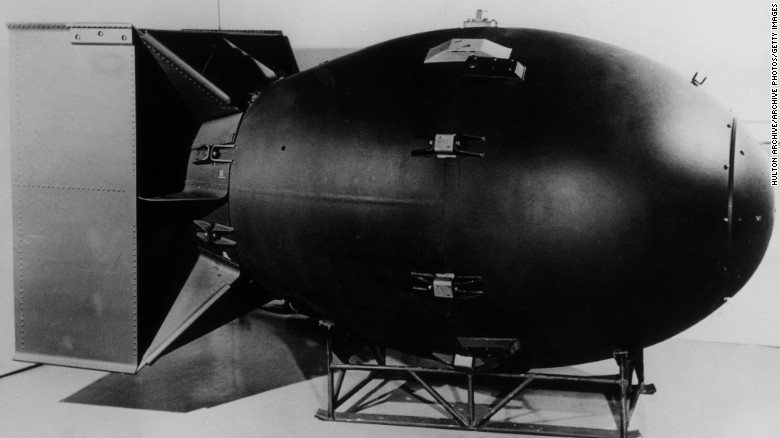
 Side view of the 'Fat Man' atomic bomb, the kind that the US dropped on Nagasaki, Japan, on August 9, 1945, killing thousands of people during the Second World War.

Opinion: One miscalculation away from nuclear holocaust

Opinion by David A. Andelman

Updated 4:17 AM ET, Thu August 4, 2022

David A. Andelman, a contributor to CNN, twice winner of the Deadline Club Award, is a chevalier of the French Legion of Honor, author of “A Red Line in the Sand: Diplomacy, Strategy, and the History of Wars That Might Still Happen” and blogs at Andelman Unleashed. He formerly was a correspondent for The New York Times and CBS News in Europe and Asia. The views expressed in this commentary are his own. View more opinion at CNN.

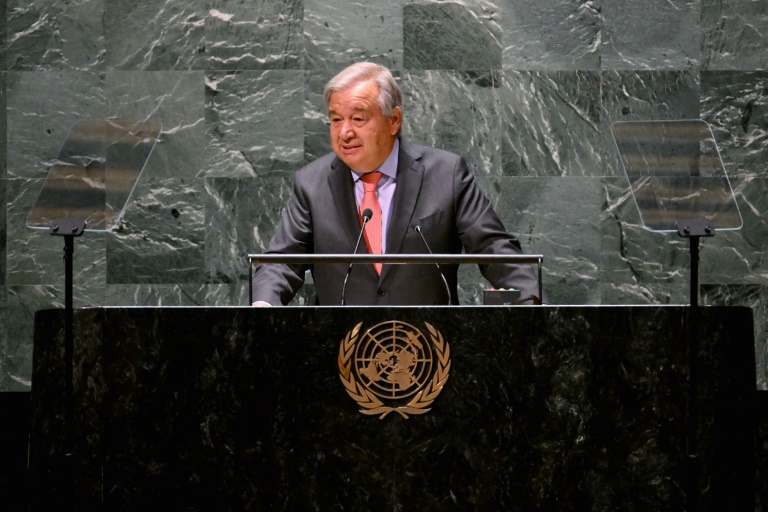
(CNN)United Nations Secretary-General Antonio Gutteres is hardly a global figure given to panic, or hyperbole for that matter. But rarely has he seemed quite so afraid.

“Humanity is just one misunderstanding, one miscalculation away from nuclear annihilation,” Gutteres said this week. The way he and a growing number of those who think deeply about nuclear issues and their consequences see it, the world is plunging headlong towards potential Armageddon, with little regard to the consequences of their actions, or inaction.

House Speaker Nancy Pelosi seems to have paid little heed to such fears as she moved blithely ahead with her visit to Taiwan in the face of dire warnings from the leadership of mainland China, whose arsenal of 350 nuclear weapons lies just across a narrow strait. And this in the context of bellicose words and actions from Russian President Vladimir Putin on Ukraine and Kim Jong Un’s ongoing nuclear rhetoric and actions in nearby North Korea.

Gutteres’s fears, of course, were broader and deeper than this single Asian flashpoint. He was addressing a world conference of the nations that have signed the Treaty on the Non-Proliferation of Nuclear Weapons — a gathering delayed by two years due to the Covid-19 pandemic.

Side view of the ‘Fat Man’ atomic bomb, the kind that the US dropped on Nagasaki, Japan, on August 9, 1945, killing thousands of people during the Second World War.

Signed on July 1, 1968, by 93 nations, and in force two years later, the treaty now has 191 adherents. Yet never has it seemed more vulnerable, if not more relevant, than today.

The context, as Gutteres observed, was that this year’s conference — the 10th since its signing — “occurs at a time of nuclear danger not seen since the height of the Cold War.”

Indeed, the very foundations of global security that have effectively guaranteed the peace since the explosion of the “Fat Man” plutonium device — the last ever detonated in battle over Nagasaki on August 9, 1945 — have been deeply eroded.

The United States was, and remains, the only nation ever to have detonated a nuclear weapon in a war. The Soviet Union tested its first device four years later.

In July 1959, then-French President Charles de Gaulle sent the Count Alexandre de Marenches, the co-author of our book, “The Fourth World War” to Washington, to ask US President Dwight Eisenhower to give France the secrets that would allow the French to join the nuclear club. Ike politely but firmly declined.

Still, in less than a year, France had exploded its first nuclear device, eight years after the British.

Russia was already en route to equalizing this balance. By the early 1960s, the Kremlin had deployed the first of what would be an arsenal of more than 3,000 nuclear weapons to Ukraine, where some of the first steps toward a Soviet bomb had been taken in Ukrainian institutes located in the now deeply contested cities of Kharkiv and Donetsk. More Soviet weapons then found their way to Belarus and Kazakhstan.

By the mid-1960s, on the western side of the Iron Curtain there were three nuclear powers (the US, Britain and France), on the eastern side, four ostensibily nuclear-armed states, though utterly controlled by the Kremlin. Effectively, there were just two nuclear blocs.

There are many who look back on that era as the good old days of nuclear confrontation — and with good reason. Each side, for decades, possessed enough nuclear weapons — as many as 41,000 for the USSR and 31,000 for the US at their respective peaks — to have utterly obliterated the other side, not to mention all life on earth. This led to the concept of Mutually Assured Destruction (MAD).

Since then, arms control agreements have reduced the size of these arsenals dramatically — to levels still able to incinerate the earth, but without reducing much of the tension. While arsenals have shrunk since the Cold War, the number of countries with nuclear weapons has proliferated.

How is it at all possible to have MAD when you have nuclear weapons in the hands of nine powers? (The countries in question are the US, Britain, France, Israel, Pakistan, India, Russia, China, and North Korea.) Within this group of nations, there are pockets of mutually assured destruction. Some 93% of all the world’s 13,900 nuclear weapons are still controlled by Washington and Moscow.

To a degree, MAD prevails there, and indeed the prospect of mutually assured destruction comprises a good part of what has deterred Pakistan and India from launching their arsenals at each other during any of three Indo-Pakistani wars or other regular confrontations across their contested borders.

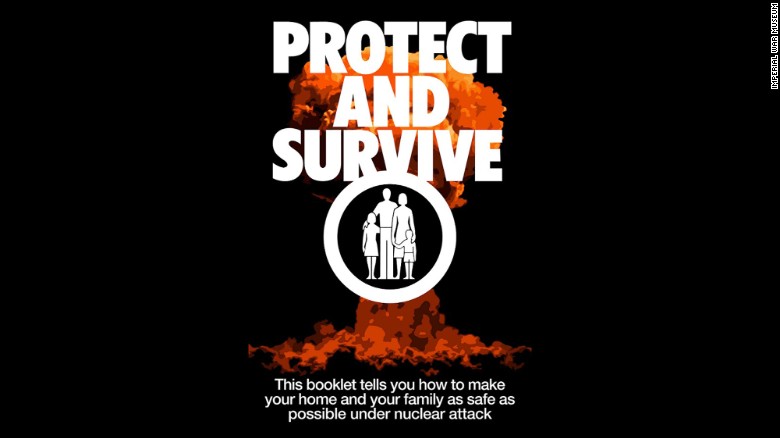
The original cover of the UK government's 1980 guide to surviving a nuclear attack.

The original cover of the UK government’s 1980 guide to surviving a nuclear attack.

A broader threat, though, has only expanded. How likely is it that given some existential challenge, Russia or even China, which arrived in the nuclear club in 1964, might not deploy a weapon of their own? Certainly, Russia has issued such a threat in Ukraine. Just weeks before its invasion of Ukraine, Russia conducted maneuvers with nuclear units, while Putin announced that his nuclear deterrent forces were being placed on a “special regime of alert.”

And then there are the peripheral nuclear powers. While most of the world has been preoccupied with Ukraine, Taiwan, and terrorist leaders in Afghanistan, North Korea has continued to launch missiles and threaten new rounds of nuclear tests. On Victory Day last month, Kim Jong Un warned he was “ready to mobilize” his nuclear deterrent.

Finally, we are potentially within weeks of a new round of escalations, this time involving Iran. Though Secretary of State Antony Blinken has embraced a return to the conference table to restore the nuclear accord that was restraining Iran’s headlong dash toward a nuclear weapon, there is little real evidence Iran is prepared to agree.

Indeed, on Monday the Biden administration unveiled a new round of sanctions targeting “illicit” support of the Iranian oil industry, which is already under crushing sanctions. And there are indications that the “breakout time” — the time needed for Iran to produce enough fissile material for a nuclear weapon — has shrunk to near-zero.

Should Iran test or even exhibit the capacity to test a nuclear weapon, its arch enemy Saudi Arabia has already indicated it will do all within its power to deploy its own. Indeed, it has fostered close relations with the nuclear programs of Pakistan and with China, whose appetite for foreign sources of oil knows few bounds.

It is hardly surprising that the UN Secretary-General has waxed so pessimistic. The speeches that followed his opening of the non-proliferation conference seemed scarcely calculated to return the genie to its nuclear bottle.

Blinken charged in his speech at the same conference that Russia is “engaged in reckless, dangerous nuclear saber-rattling” in Ukraine, while North Korea “is preparing to conduct its 7th nuclear test.” And as for Iran, it “remains on a path of nuclear escalation.”

“To escape the logic of fear,” Blinken concluded, should be the most immediate mission of all nations who’ve agreed to restrain the proliferation of nuclear arms.

Somehow, though, an even more worthwhile objective might just be for the world to find a way to turn back the clock from 2022 to 1962 or even 1982. These were terrifying years when, innocently, we practiced weekly duck-and-cover exercises under our little wooden desks in kindergarten, dug home fallout shelters in our backyards against an imminent nuclear attack.

But those very real and immediate threats led the nightly news, consumed the global dialogue, motivated every action by every world leader who understood that nuclear arms were, and should be, at the very top of priorities. They no longer are.

It is this fear that is at the heart of the Secretary-General’s pessimism — and should be at the heart of all of us

Iranian Horn is Ready to Nuke Up: Revelation 16

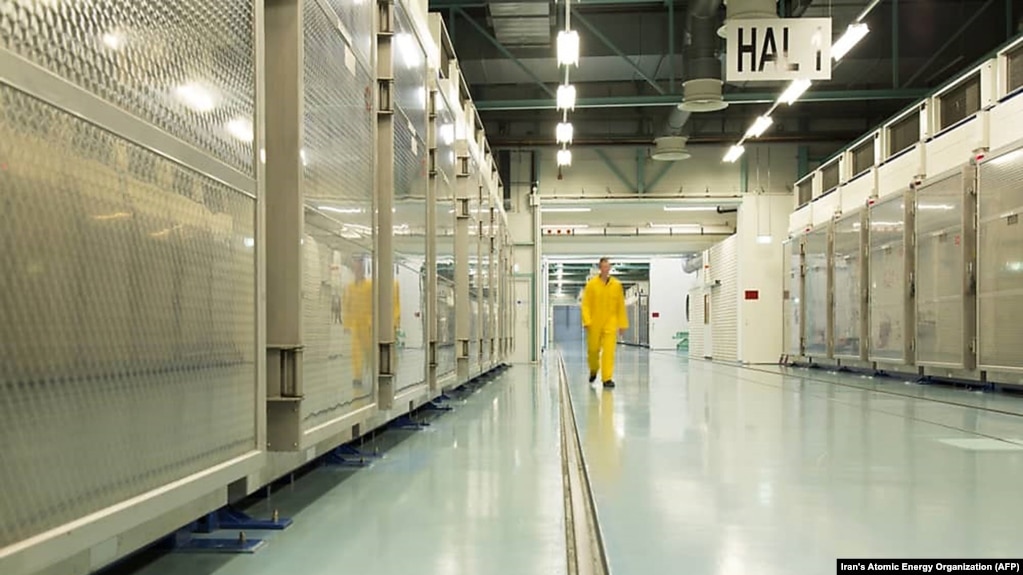
The interior of the Fordow Fuel Enrichment Plant near Qom, Iran. (file photo)

The interior of the Fordow Fuel Enrichment Plant near Qom, Iran. (file photo)

The Farda Briefing: For The First Time, Iran Raises The Possibility Of Building A Nuclear Bomb

August 03, 2022 11:22 GMT


Welcome back to The Farda Briefing, an RFE/RL newsletter that tracks the key issues in Iran and explains why they matter.

I’m Mehrdad Mirdamadi, a senior editor and journalist at RFE/RL’s Radio Farda. Here’s what I’ve been following and what I’m watching out for in the days ahead.

The Big Issue

In a break with policy, Iranian officials have started talking publicly about the possibility of the country building a nuclear bomb.

After Supreme Leader Ayatollah Ali Khamenei issued a fatwa, or religious ruling, against nuclear weapons in 2005, officials were adamant that Tehran’s nuclear program was strictly for civilian purposes. But the rhetoric has shifted in recent weeks.

Kamal Kharazi, a senior adviser to Khamenei, suggested on July 17 that the country was capable of making a nuclear weapon but that a decision on whether to do so had not yet been made. A video posted on a Telegram channel affiliated with the powerful Islamic Revolutionary Guards Corps (IRGC) on July 29 asked the audience, “When will Iran’s sleeping nuclear bomb wake up?”

The channel claimed that the underground Fordow enrichment facility was able to produce enough highly enriched uranium for one nuclear weapon. Those claims were echoed on August 1 by Mohammad Eslami, the head of Iran’s atomic energy organization.

Why It Matters: The recent statements are unprecedented. It could be an attempt by Iran to gain leverage and concessions at the negotiating table. Protracted talks aimed at reviving the 2015 nuclear deal between Iran and world powers have been deadlocked for months. On the other hand, Iran could simply be revealing its intentions to become a nuclear power.

When discussing the nuclear issue, Iranian officials in recent years have cited the Islamic notion of taqiya, in which believers can conceal their faith in the face of persecution. In other words, you can achieve your original purpose in secret.

What’s Next: It is hard to believe that these statements were made without the consent of Khamenei, who has the final say on all important state matters. The supreme leader’s aim could be to restore public faith and pride in the country’s nuclear program and showcase the Islamic republic’s resolve. In this way, if Iran does agree to recommit to the nuclear deal, Khamenei can save face.

When the original agreement was signed in 2015, he hailed the country’s “heroic flexibility.” Since then-U.S. President Donald Trump withdrew Washington from the deal in 2018, the agreement has been on life support. This time, Khamenei has resorted to what some have described as “defiant perversity” in his dealings with the West.

The hardening rhetoric that has emerged in recent weeks is likely to continue. On August 2, lawmaker Mohammadreza Sabaghiyan openly threatened that if “bullying from the enemy continues, we will ask our leader to change his fatwa in favor of making a bomb.”

Stories You Might Have Missed

• Iranian authorities amputated the fingers of a man convicted of theft using a guillotine machine. Amnesty International called it an “unspeakably cruel punishment.” Puya Torabi had fingers cut off on July 27 inside Tehran’s notorious Evin prison.

In May, authorities amputated the fingers of another convict, Sayed Barat Hosseini, without giving him anesthetic, Amnesty said, revealing that at least eight other prisoners in Iran were at risk of having fingers amputated. Finger amputation as punishment for theft has reemerged recently amid a rise in petty crime and worsening economic conditions.

• Iranian security agents halted a music concert in Tehran while the musicians were on stage playing, in another sign of the crackdown authorities are waging against events they deem contrary to Islamic values.

According to a video published on social media on July 29, the members of the band Kamakan were performing when a security guard suddenly came on stage and told the band’s singer: “Stop! We were ordered to stop this!”

Following a recent uptick in social protests, dozens of concerts and cultural performances have been abruptly called off.

Thursday, August 4, 2022

Threats of the First Nuclear War: Revelation 8

Threat of nuclear war

The rising tensions among nuclear-armed states could lead to a nuclear war

Any misunderstanding amid rising tensions among nuclear-armed states could lead to a nuclear war, and several prominent figures around the world, including UN Secretary General Antonio Guterres, are warning that rhetoric and aggression needs to be brought in check to prevent such an eventuality.

He was speaking at the 10th review conference of the Non-Proliferation Treaty (NPT), which has largely failed to meet its objectives since India, Pakistan, North Korea, and allegedly Israel managed to go nuclear since it was signed, while South Africa built and willfully dismantled a nuclear weapons programme since the NPT first came into being. Guterres singled out Russia for “its dangerous nuclear rhetoric and behaviour” as he noted that the world faced “a nuclear danger not seen since the height of the Cold War.” He also noted how “extraordinarily lucky” humanity has been that such a misunderstanding or miscalculation has not already happened, before going on to say that luck should not be a strategy and arguing that a world free of nuclear weapons would be safer than a world which uses them as “a shield from geopolitical tensions.”

There is evidence to back up the statement including the events around the Cuban Missile Crisis, several false alarms that were resolved only due to cool-headed political figures and military officers, or the dozens of ‘missing’ nuclear weapons around the world. The US, for example, has at least six nuclear weapons unaccounted for, and some Soviet-era sources have claimed that about 100 nuclear weapons of varying yields may have gone missing during the fall of the Soviet Union.

However, the last NPT moot in 2015 yielded no substantive agreements on how to restrict the proliferation of nuclear weapons or expanding recognition as nuclear weapons states to Pakistan and India, which have been responsible actors since making their nuclear capabilities known.

Without fully involving the known players, any efforts to eventually move towards denuclearisation will remain futile — the five permanent UN Security Council members, who are all military powerhouses and also the only ‘recognised’ nuclear powers, cannot expect the rest of the world to blindly accept their open hypocrisy as they continue to hold enough weapons to destroy the world many times over, while punishing smaller nations that believe nuclear weapons are the key to a secure existence.

Published in The Express Tribune, August 3rd, 2022.

Like Opinion & Editorial on Facebook, follow @ETOpEd on Twitter to receive all updates on all our daily pieces.

China Horn rejects US call for nuclear arms control talks amid Pelosi visit to Taiwan

Nancy Pelosi lands in Taiwan for historic visit, pledging 'unwavering commitment' to democracy

China rejects US call for nuclear arms control talks amid Pelosi visit to Taiwan

| August 02, 2022 04:26 PM

China denounced Secretary of State Antony Blinken’s call for nuclear arms control talks as an attempt to “deflect blame” amid a brewing crisisover House Speaker Nancy Pelosi’s (D-CA) visitto Taiwan.

“The U.S. asks China to be part of the nuclear disarmament dialogue … with one purpose only, which is to deflect blame and distract attention,” Chinese Foreign Ministry spokeswoman Hua Chunying said Tuesday. “The size of our nuclear arsenal is not on the same level with the U.S. At the current stage, to ask China to be part of the multilateral disarmament process is not fair, nor is it reasonable.”

China’s nuclear weapons advancements have stoked global anxiety that Beijing might imitate Russia’s strategy of attacking a weaker neighbor while using so-called “tactical” nuclear weapons to deter U.S. intervention. Hua shot down the call for nuclear talks amid a wider uproar over Pelosi’s travel plans, as the California Democrat refused to change her itinerary in the face of ominous official and propaganda statementsthat Chinese forces would retaliate in some fashion if she continued the visit.

“The U.S. has been following a strategy of using Taiwan to contain China,” she said, per the official transcript. “Any countermeasure to be taken by China would be a justified and necessary response to the U.S. oblivion to China’s repeated démarches and the U.S.’s unscrupulous behavior.”

US AND JAPAN MOVE TOWARD FOUNDING OF ‘ECONOMIC NATO’ TO COUNTER CHINA

Hua delivered that protest, as a Chinese state media outlet emphasized, during her first appearance at the daily press briefing since “February 24, when Russia’s military operation in Ukraine started.” Japanese Prime Minister Kishida Fumio — who aired his “strong sense of urgency that Ukraine today, maybe East Asia tomorrow” at a security conference in June — traveled to New York to participate in a conference reviewing the efficacy of the treaty on the nonproliferation of nuclear weapons, known as the NPT.

“While the number has significantly decreased since the peak of the Cold War … maintaining this decreasing trend is extremely important in getting closer to a world without nuclear weapons,” the Japanese leader told the United Nations in a Monday speech. “In this vein, Japan supports the dialogue conducted between the United States and Russia for further reduction and encourages the U.S. and China to engage in a bilateral dialogue on nuclear arms control and disarmament.”

His statement brightened the spotlight on China’s nuclear arsenal at a conference otherwise haunted by Russia’s nuclear threats.

“Any country that asks others to reject the pursuit of nuclear weapons also has to be willing to reduce — and eventually, eliminate — their own stockpiles of nuclear weapons,” Blinken said in his appearance at the conference. “We stand ready to work with all partners, including China and others, on risk reduction and strategic stability efforts. As we look to the future, we also have to strengthen agreements preventing nuclear conflict — and create new ones.”

Chinese officials have refused to contemplate restrictions on their burgeoning nuclear arsenal for years. And Beijing has touted the modernizing Chinese forces in an attempt to curtail U.S. government contacts with Taiwan, which the Chinese Communist regime regards as its sovereign territory, despite never managing to exert authority on the island.

CLICK HERE TO READ MORE FROM THE WASHINGTON EXAMINER

“Making themselves an enemy of the 1.4 billion Chinese people will not end up well,” Hua wroteon Twitter. “Acting like a bully in front of the whole world will only make everyone see that the US is the biggest danger to world peace.”

Wednesday, August 3, 2022

China Is Expanding Her Nuclear Horn: Daniel 7

China Is Expanding Nuclear Test Facilities; New Satellite Images Reveal Dragon’s Dangerous Plans

August 2, 2022

The latest satellite images reveal that China is expanding its nuclear test sites in the Xinjiang Uyghur Autonomous Region, including erecting a facility that could be used to store explosives.

In its latest report, the Nikkei has reviewed the latest satellite images with several experts that seem to affirm China is enhancing its nuclear testing capability. The satellite images show new development and expansion of China’s nuclear test facilities in the Xinjiang Uyghur Autonomous Region.

The new evidence was discovered by the satellite at China’s Lop Nur nuclear test site southeast of Western China’s Xinjiang Uyghur Autonomous Region. Many experts think the People’s Liberation Army is responsible for protecting the covert nuclear testing site.

According to the report, extensive coverings have been constructed on a mountainside in this arid region and the broken rocks piled nearby are thought to prove that a new “sixth tunnel” for testing has been dug out nearby.

Recent construction includes power transmission cables and a facility that could be used to store high explosives. The images also showed that several unpaved white roads branch off a command post.

An expert at AllSource Analysis, a US private geospatial company, said that China could undertake nuclear-related tests anytime, especially considering the electricity line and road network that now joins Lop Nor’s western military nuclear test facilities to new prospective test sites in the east.

China is expanding its nuclear arsenal to establish itself as the world’s dominant power. In 2021, a pentagon report outlined many developments, including Beijing’s “large-scale expansion of its nuclear forces,” which could seriously threaten the US. 

The Pentagon has previously issued similar warnings. The Pentagon’s 2020 report on China’s military revealed that Beijing’s arsenal of nuclear warheads would have at least doubled by the decade’s end.

However, the recent report contains a more urgent warning: according to the Pentagon, China “has accelerated its nuclear expansion” and is “exceeding the pace and size the DoD projected in 2020.” Military vehicles carrying the DF-17 hypersonic ballistic missile roll past Tiananmen Square during a parade in Beijing in October 2019.

The communist country, however, faces many difficulties in its quest to catch up to the US. The Chinese Communist Party, according to President Xi Jinping, “rules east, west, north, and south,” which implies that it has control over the PLA. 

The latest report highlighted that China’s military leadership is still corrupt and nepotistic. The Sino-Vietnamese War of 1979 was the PLA’s previous significant experience in actual combat.

The Xi administration may be thinking about forcibly annexing Taiwan. Even the possibility of Nancy Pelosi, the speaker of the US House of Representatives, visiting Taiwan has drawn a grave threat from Beijing. Chinese officials might consider this potential visit an invasion and take drastic military action.

But given the severe flaws in the quality of Russian military hardware, the Russian invasion of Ukraine has served as a stark reminder of the dangers of military actions. Over 66% of China’s imported military hardware comes from Russia.Courtesy: Nikkei

Sixth Tunnel On Its Way?

Beijing stopped conducting explosive tests in the area a quarter century ago. The country has conducted five underground nuclear tests at Lop Nur, the last being in 1996. The latest report highlighted the evidence of a planned resumption, including excavating the sixth tunnel.

Tenders requested from the area contain some convincing evidence as well. An official Chinese procurement website issued a request for proposals in April for “10 radiation dose alarms,” “12 protective suits,” and “one wound site taints detector,” the report revealed. 

The Xinjiang Uyghur Autonomous Region has no nuclear power plants, but the XPCC stated that it will “start strengthening the capacity to monitor radioactivity in 2022.” In the area, there has been a rise in the purchase of related equipment.

In October 2020, satellites found fresh evidence of Lop Nur’s terrain leveling work. The report noted, “Big trucks came and went in 2021, and the power infrastructure for the sixth tunnel was built in the first half of 2022.” The construction work of the explosive storage facility was completed in June 2022. 

Alongside these developments, excessive radiation levels were seen in the area. Nearby, a new underground facility was discovered that could be employed to launch nuclear missiles, the report added. File Image; China’s YJ-18 anti-ship cruise missile.

Why Is China Expanding Its Nuclear Facility?

China worries that the US, which has a more powerful triad and more nuclear weapons, could launch a preemptive attack on its nuclear arsenal and launch capabilities, leaving China without sufficient defenses. 

This has driven Beijing to seek out more weapons and delivery systems to have enough to withstand an attack and get past US missile defenses.

Also, maritime control will be the primary concern in a Taiwan Strait emergency. China may be able to keep US aircraft carriers at bay with the help of small nuclear weapons with limited strike power.

Although the US has not yet taken a direct part in the conflict in Ukraine, some analysts contend that the potential use of nuclear weapons has made Washington even more cautious about getting involved. China is undoubtedly aware of this line of thinking.

The expansion of China’s nuclear arsenal may be the most obvious sign of the country’s combat readiness. Still, it’s only one part of a more extensive buildup that worries military leaders and decision-makers worldwide.

Trouble Before the First Nuclear War: Revelation 8

New Nuclear Troubles in Southern Asia?

While China, India, and Pakistan have long had competitive and often antagonistic relationships, the significant transformation of each nation’s nuclear capabilities over the past decades now complicates—and in some ways mitigates—their geopolitical rivalries. How have the nuclear transformations in the region fostered stability amid heightened risk? And what do these ongoing changes mean for the ever-intricate web of global competition and alliances?

Join Carnegie for the launch of Ashley J. Tellis’ new report “Striking Asymmetries: Nuclear Transitions in Southern Asia” which studies the implications of China’s dramatic nuclear expansion, Pakistan’s striking diversification of its nuclear arsenal, and India’s slow nuclear modernization. Featuring Ashley J. Tellis, Rabia Akhtar, Rakesh Sood, and Tong Zhao, moderated by Evan A. Feigenbaum.

UN chief warns of the Bowls of Wrath: Revelation 16

 UN chief warns of ‘nuclear annihilation’

UN chief warns of ‘nuclear annihilation’

UN Secretary-General Antonio Guterres addresses the 2022 Review Conference of the Parties to the Treaty on the Non-Proliferation of Nuclear Weapons at the United Nations in New York City on August 1, 2022

United Nations – UN head Antonio Guterres warned Monday that a misunderstanding could spark nuclear destruction as the United States, Britain and France urged Russia to stop “its dangerous nuclear rhetoric and behaviour.”

At the opening of a key nuclear Non-Proliferation Treaty (NPT) conference in New York, Guterres warned that the world faced “a nuclear danger not seen since the height of the Cold War.”

Citing Russia’s war with Ukraine and tensions on the Korean peninsula and in the Middle East, Guterres said he feared that crises “with nuclear undertones” could escalate.

“Today, humanity is just one misunderstanding, one miscalculation away from nuclear annihilation,” Guterres told the 10th review conference of the NPT, an international treaty that came into force in 1970 to prevent the spread of nuclear weapons.

“We have been extraordinarily lucky so far. But luck is not a strategy. Nor is it a shield from geopolitical tensions boiling over into nuclear conflict,” he added, calling on nations to “put humanity on a new path towards a world free of nuclear weapons.”

The meeting, held at the UN’s headquarters in New York, has been postponed several times since 2020 due to the Covid-19 pandemic. It will run until August 26.

Guterres said the conference was “a chance to strengthen” the treaty and “make it fit for the worrying world around us.

“Eliminating nuclear weapons is the only guarantee they will never be used,” the secretary-general implored, adding that he would visit Hiroshima for the anniversary of the August 6, 1945 atomic bombing of the Japanese city by the United States.

“Almost 13,000 nuclear weapons are now being held in arsenals around the world. All this at a time when the risks of proliferation are growing and guardrails to prevent escalation are weakening,” Guterres added.

In January, the five permanent members of the UN Security Council — the United States, China, Russia, Britain and France — had pledged to prevent the further dissemination of nuclear weapons.

On Monday, America, Britain and France reaffirmed their commitment in a joint statement, saying a “nuclear war cannot be won and must never be fought.”

The three also took aim at Russia, urging Moscow to respect its international commitments under the NPT.

“Following Russia’s unprovoked and unlawful war of aggression against Ukraine, we call on Russia to cease its irresponsible and dangerous nuclear rhetoric and behaviour,” they said.

The statement came as US President Joe Biden called on Russia and China to enter nuclear arms control talks.

The US leader reiterated in a statement that his administration is ready to “expeditiously negotiate” a replacement to New START, the treaty capping intercontinental nuclear forces in the United States and Russia, which is set to expire in 2026.

The NPT, which the signatories review every five years, aims to prevent the spread of nuclear weapons, promote complete disarmament and promote cooperation in the peaceful use of nuclear energy.

At the last review conference in 2015, the parties were unable to reach agreement on substantive issues.

“The world can never be safe as long as any country has nuclear weapons,” said Beatrice Fihn, executive director of the International Campaign to Abolish Nuclear Weapons, who was in New York for the meeting.

“And the NPT recognizes this,” she added. “It’s the reason that the treaty exists. And now states, parties more than ever need to act.”

The Russian Horn says no one can win a nuclear war

Putin says no one can win a nuclear war

August 2, 2022

Russian President Vladimir Putin said on Monday there could be no winners in a nuclear war and no such war should ever be started.

Putin made the comment in a letter to participants of a conference on the nuclear non-proliferation treaty (NPT), more than five months into his war on Ukraine.

“We proceed from the fact that there can be no winners in a nuclear war and it should never be unleashed, and we stand for equal and indivisible security for all members of the world community,” he said.

International concern about the risk of a nuclear confrontation has heightened since Russia invaded Ukraine on Feb. 24. In a speech at the time, Putin pointedly referred to Russia’s nuclear arsenal and warned outside powers against any attempt to interfere.

Tuesday, August 2, 2022

Iran Is Trying to Play the Saudis Against the US Horn : Daniel andrewtheprophet Uncategorized August 2, 2022 3 Minutes

Iran Is Trying to Play the Saudis Against the US. It Won’t Work.

With US President Joe Biden having departed the Middle East, the region’s two prime antagonists are thinking about just getting along. Iran and Saudi Arabia, having completed five rounds of talks in Iraq over the past year, both said last week they were moving toward higher-level negotiations on reconciliation. Paradoxically, this budding rapprochement between friend and foe offers important opportunities for Washington.

After severing diplomatic ties following a January 2016 mob attack on the Saudi Embassy in Tehran, the Riyadh government hoped sanctions on Iran by President Donald Trump’s administration might produce a change in Iranian conduct. Instead, Iran became more aggressive than ever, culminating with a devastating missile strike on Saudi Aramco facilities in September 2019.

The Trump administration, usually bellicose toward Iran, turned a blind eye, noting that no Americans had been killed. That proved a final straw for the Saudis. They were already upset that the Barack Obama administration’s 2015 nuclear deal with Iran ignored two main concerns — Iran’s drone and missile arsenal, and its network of armed gangs in Arab countries including Iraq, Lebanon, Syria and Yemen.

Story continues below advertisement

The Saudis concluded that Washington was no longer reliable, and that if they wanted their top security issues involving Tehran to be on the negotiating table, they were going to put them there by themselves. After the 2020 US election, that realization dovetailed with the Biden administration’s encouragement of diplomacy over the use of force in the region.

The formal reconciliation talks began in April 2021 at the Baghdad airport; Iraq constituting something approximating neutral ground. Initially, little progress was made. The Saudis focused on getting Iran to pressure its Houthi clients in Yemen to agree to a cease-fire and eventual peace settlement in a war that has turned into a quagmire for Riyadh. The Iranians wanted only to discuss restoring diplomatic relations.

But after the fifth round earlier this year, and amid the growing sense that Iran was stubbornly blocking Biden’s effort to revive the nuclear deal, there was a minor, but real, breakthrough. Responding to Iranian prodding, the Houthis finally agreed to a truce, which has lasted more than two months and allowed significant humanitarian relief into the beleaguered country.

Story continues below advertisement

The Saudis’ securing and maintaining the cease-fire in the bloody conflict pleased the White House and Congress. Riyadh also took the opportunity to finally rid itself of the obstreperous Yemeni president, Abd Rabbuh Mansur Hadi, replacing him with a new Presidential Leadership Council.

Another round of talks, which seems imminent, will come at a pivotal moment in US relations with friends and foes in the Middle East. Biden’s visit was intended to repair strained US-Saudi relations. But perhaps more importantly, the president encouraged Saudi Arabia to join other Arab countries, and even Israel, in building a set of informal cooperative security arrangements. These would include air- and missile-defense systems to offset Iran’s increasingly powerful arsenal.

The eventual aim of such expanded collaboration is for the US military to reduce its Middle East footprint, doing less with more, because regional cooperation could prove more effective and sustainable than outside intervention.

Story continues below advertisement

Not everything is going smoothly. There are already signs that the Houthis may break the uneasy truce in Yemen. Iran will play a central role in whether that happens, because it uses such militias to increase or relieve pressure on its adversaries, adjusting violence like turning a spigot.

It’s also clear that Tehran hopes to use the reconciliation talks with Riyadh to drive a wedge between the US and Saudi Arabia. The idea is to make the Saudis choose between either rebuilding close cooperation with Washington or achieving rapprochement with Iran and extraction from the Yemen war.

It’s a crude trap. Washington can outflank Tehran by strengthening security commitments to Saudi Arabia, while making it clear it expects greater Saudi cooperation on energy production and pricing, keeping Russia and China at arm’s length, and being open to greater regional security coordination. The Gulf Arab countries still have major doubts about US commitment and reliability, but they understand there’s no practical alternative to American support.

Story continues below advertisement

Iranian media are playing up Saudi Arabia’s supposed enthusiasm for wide-ranging reconciliation, but in fact the Saudis remain highly skeptical. The US and Saudi Arabia can give the Iranians a set of clear choices: They can have relations restored with the Saudis, a renewed nuclear agreement with Washington, and respect for legitimate security concerns — but only on reasonable terms, starting with curbing violence by their regional proxies.

The partnership between Washington and Riyadh may not be as strong as it once was, but it’s clearly on the mend. And it’s certainly still strong enough to be able to show Iran that it can’t score cheap victories by trying to divide them.

Sunday, July 31, 2022

Hybrid Warfare: A New Face Of Conflict before the First Nuclear War

 Flags of India and Pakistan

Hybrid Warfare: A New Face Of Conflict In South Asia – OpEd

July 29, 2022

Flags of India and Pakistan

Hybrid warfare or hybrid threat seems to be the emerging modality in the changing nature of warfare. In the nuclear era, more attention has been given to the sub-conventional conflicts, because of the lethality of the nuclear weapons; the deterrence being created by the nuclear-weapon states prevents other nuclear-weapon states to wage a total war. Furthermore, international legal bindings of prohibiting the use of nuclear weapons against non-nuclear-weapon states eliminate the probability of an all-out war. Thus, the thrust of war has been envisioned by revisionist actors in the form of a new kind of warfare, predominantly through cyber-attacks and subversion, fake news campaigns, sponsoring of proxy forces, or even through economic blackmail. Hybrid warfare is a challenge, which brings into play an array of tactics and strategies thereby inflicting harm to the adversary, whilst exploiting the revolution in technological affairs. It targets the vulnerabilities of any society, with the aim to divide and dissuade the population, undermines the key institutions, and even deteriorates the bond between the states and international organizations. In a nutshell, hybrid warfare is a full-spectrum of war, which encompasses both physical and psychological aspects of the adversary.

Pakistan has also been the victim of hybrid warfare. Since its inception, India has been trying to wage a war or indulge in a conflict with Pakistan, in one way or the other. India is sparing no effort to target Pakistan at the domestic level which encompasses all the political, social, economic, and religious factors. In this regard, it has been leaving no stone unturned in defaming and maligning Pakistan in the international arena through its fake propaganda. Pakistani society is an amalgam of ethnic groups, sectarian faction, and cultural blocs, that are being exploited by India and used as a fault line as a grey-zone in conflict. India is operating a radicalized militant group in Pakistan and is fueling the unrest in Baluchistan. In pursuit of this, Afghanistan’s land is being exercised by India in its endeavor to destabilize Pakistan by operating terrorist organizations for launching sub-conventional warfare inside Pakistan.

Considering the spillover of untrue and fallacious information, the complexity of warfare has tremendously being increased. India is involved in various operations against Pakistan in order to defame and discredit the country, in its pursuit to isolate it internationally as well. Its conspiracy of defaming and maligning Pakistan has also been put out in the EU DisinfoLab Report of 2020. According to that report, India is operating the largest ever fake media network, with 750+ fake media websites, and resurrecting the dead scholars, and propagating the false news in the international media. Moreover, it misused the politicians who genuinely want to defend human rights, and provided platform to far-right politicians when convergent objectives were pursued.

Moreover, India is also keenly involved in terrorists and separatist activities, and trying its level best to sabotage the economic project of Pakistan- the China-Pakistan Economic Corridor (CPEC), which certainly is a headache to the adversary. India is using a variety of subversive tactics of hybrid warfare, in order to destabilize Pakistan both externally and internally. Pakistan has encountered many security challenges successfully but has been prone to the non-traditional security challenge-the hybrid warfare, waged by India. Therefore, in the contemporary state of affairs, Pakistan must identify and efficiently counter the gradually escalating non-traditional threats such as the hybrid threats.

There is a need to pen down a grand strategy for countering all the traditional and non-traditional threats posed by the adversary. Pakistan needs to devise a comprehensive strategy to counter the aggression of hybrid warfare. It is appropriate for Pakistan to develop Hybrid Warfare and Stratagem Centre, with its aim to address policymakers of the threats posed by the hybrid warfare, develop metrics to get a grip on events, and to make them susceptible of the threats and cognizance for curbing them in the future. Media, on the other hand, is seen as one of the lethal and a sophisticated weapon to target the enemy’s will and exploit its weaknesses. It is used to target the opponent population by changing their perception regarding their government. Therefore, media has to play a pivotal role in curbing the fake news propaganda and misinformation, as it is the most significant tool used in propagating bogus information; besides, media should strictly promote Pakistan’s narrative in fighting against this ubiquitous threat. 

Furthermore, the law enforcement agencies should work in coordination with each other and should be properly trained and equipped to fight against this abstract threat, additionally, they should be able enough to smartly utilize Artificial Intelligence as well. The government must provide adequate awareness and vigilance to the local population of the country, in order to make them aware of the actions and ill-will of the adversary in its attempt to dissect the society, as the objective is to target the common people. Hence, the cautious and observant society is the first and foremost step in the line of defense against this new challenge, and the entire country needs to play the crucial role in curbing the spiteful act of the foe.