Showing posts with label france. Show all posts

Friday, August 5, 2022

Saudis Threaten to Nuke Up: Daniel 7

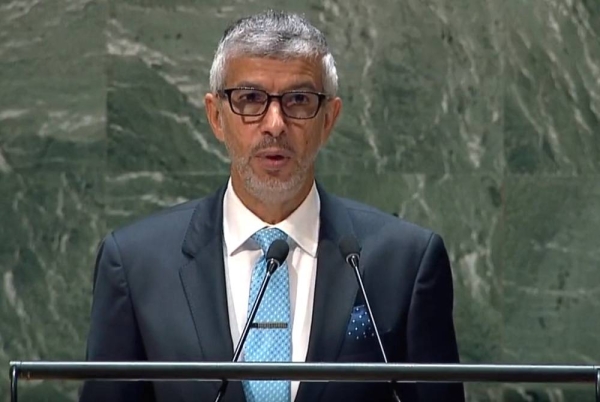
Al-Wasil speaking at the Tenth Review Conference of the Parties to the Treaty on the Non-Proliferation of Nuclear Weapons on Wednesday.

Iran’s practices increase risks of nuclear proliferation — Saudi envoy to UN

Al-Wasil speaking at the Tenth Review Conference of the Parties to the Treaty on the Non-Proliferation of Nuclear Weapons on Wednesday.

Saudi Gazette report

NEW YORK — Saudi Arabia’s new Permanent Representative to the United Nations Ambassador Dr. Abdulaziz Al-Wasil said that Iran’s practices increase the risks of nuclear proliferation.

Al-Wasil was speaking at the Tenth Review Conference of the Parties to the Treaty on the Non-Proliferation of Nuclear Weapons on Wednesday.

He said that freeing the Middle East from nuclear weapons is a collective responsibility.

“Transparency is necessary for the peaceful use of nuclear energy. Iran’s lack of transparency with the International Atomic Energy Agency violates the UN Charter.”

He pledged the Kingdom’s support to the expansion of the Non-Proliferation Treaty. Al-Wasil indicated that Saudi Arabia supports all efforts aimed at preventing Iran from acquiring a nuclear weapon.

He stressed the necessity of confronting nuclear proliferation in the Middle East as this threatens the Middle East and the world as a whole.

August 03, 2022

Tuesday, July 19, 2022

US, Saudi Arabian Horns agree on stopping Iran getting nuclear weapons: Daniel 7

svg%3E

US, Saudi Arabia agree on stopping Iran getting nuclear weapons

JEDDAH: The United States and Saudi Arabia agreed on the importance of stopping Iran from “acquiring a nuclear weapon”, during a visit by US President Joe Biden, a joint statement carried by the Saudi state news agency (SPA) said.

The statement said Biden also affirmed the United States’ continued commitment to supporting “Saudi Arabia’s security and territorial defence, and facilitating the Kingdom’s ability to obtain necessary capabilities to defend its people and territory against external threats.”

Tehran and Riyadh, the leading Shia and Sunni Muslim powers in the Middle East, severed ties in 2016 over backing opposing sides in proxy wars across the region, from Yemen to Syria and elsewhere.

Saudi Arabia and the United States underscored the need to further deter Iran’s interference in “the internal affairs of other countries, its support for terrorism through its armed proxies, and its efforts to destabilise the security and stability of the region,” the statement said.

Both sides stressed the importance of preserving the free flow of commerce through strategic international waterways such as the Bab al-Mandab and the Strait of Hormuz.

In 2015, Iran signed a deal with six major powers to limit its nuclear programme to make it harder to obtain a weapon in exchange for relief from economic sanctions. Iran says its nuclear programme seeks only civilian atomic energy.

In 2018, then-US President Donald Trump pulled the United States out of the pact, saying it was insufficient to keep Iran from developing nuclear weapons.

Iran has since ramped up some nuclear activities, putting a ticking clock on an attempt to return to a deal in talks between Western powers and Tehran in Vienna.

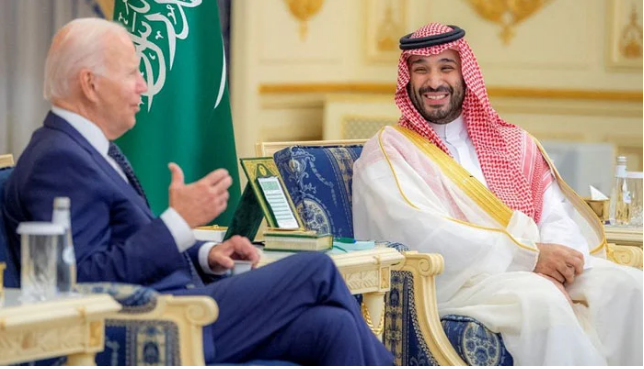
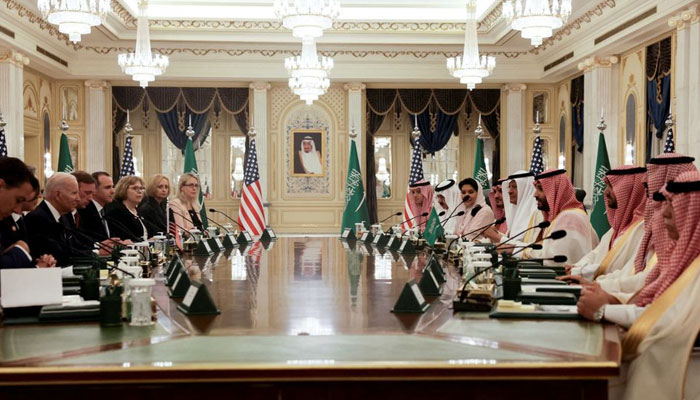
U.S. President Joe Biden participates in a bilateral meeting with Saudi Arabias Crown Prince Mohammed bin Salman, at Al Salam Royal Palace, in Jeddah.

U.S. President Joe Biden participates in a bilateral meeting with Saudi Arabia’s Crown Prince Mohammed bin Salman, at Al Salam Royal Palace, in Jeddah. 

The US president will also hold bilateral talks with the leaders of Egypt, the United Arab Emirates and Iraq before taking part in the wider summit where he will “lay out clearly” his vision and strategy for America’s engagement in the Middle East, US national security adviser Jake Sullivan said on Friday.

“He’s intent on ensuring that there is not a vacuum in the Middle East for China and Russia to fill,” Sullivan said.

Biden will discuss energy supplies with Gulf oil producers, but Washington said it does not expect OPEC heavyweight Saudi Arabia to boost oil output immediately and will await the outcome of an OPEC+ meeting on Aug. 3.

Gulf states, who have refused to side with the West against Russia in the Ukraine conflict, are in turn seeking a concrete commitment from the United States to strategic ties that have been strained over perceived US disengagement from the region.

Riyadh and Abu Dhabi have been frustrated by US conditions on arms sales and for being excluded from indirect US-Iran talks to revive a 2015 nuclear pact that they see as flawed for not tackling regional concerns about Tehran’s missile programme and behaviour.

“The most important demand from the Saudi leadership and other Gulf leaders — and Arabs in general — is clarity of US policy and its direction towards the region,” said Abdulaziz Sager, chairman of Riyadh-based Gulf Research Center.

Israel, which shares their concerns over Iran, encouraged Biden’s trip to the kingdom, hoping it would foster a warming between Saudi Arabia and Israel as part of a wider Arab rapprochement after the UAE and Bahrain forged ties with Israel in US-brokered pacts that received Riyadh’s blessings.

‘Groundbreaking process’

In a sign of progress under what Biden described as a groundbreaking process, Saudi Arabia said on Friday it would open its airspace to all air carriers, paving the way for more overflights to and from Israel.

Washington and Riyadh also announced the removal of US and other peacekeepers from Tiran — an island between Saudi and Egypt in a strategic position leading to the Israeli port of Eilat. The troops have been stationed as part of accords reached in 1978 and which led to a peace deal between Israel and Egypt.

The US-Arab summit would discuss “tighter coordination and collaboration when it comes to Iran,” Sullivan said, as well as regional integration, including that of Iraq, where Tehran has built deep influence. Support by wealthy Gulf states for global infrastructure and investment will also be discussed.

The United States and Israel are also seeking to lay the groundwork for a security alliance with Arab states that would connect air defence systems to combat Iranian drone and missile attacks in the Middle East, sources have said.

Such a plan would be a hard sell for Arab states that do not have ties with Israel and balk at being part of an alliance seen as against Iran, which has built a strong network of proxies around the region including in Iraq, Lebanon and Yemen.

Senior Emirati official Anwar Gargash said on Friday the idea of a so-called Middle East NATO was difficult and that bilateral cooperation was faster and more effective. Read full story

The UAE, he said, would not back a confrontational approach: “We are open to cooperation, but not cooperation targeting any other country in the region and I specifically mention Iran.”

Tuesday, June 28, 2022

The Saudi Nuclear Horn:Daniel 7


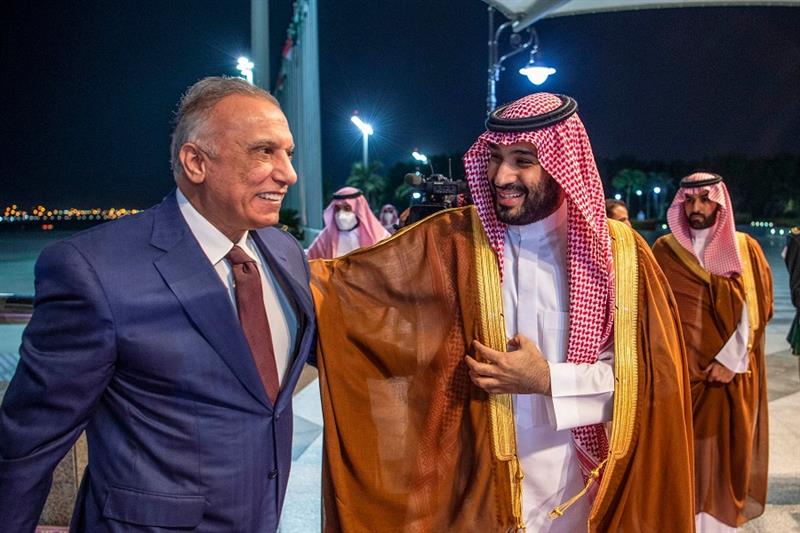
Saudi and Iraqi leaders

Saudi crown prince, Iraq PM discuss ‘regional stability’

Iraq’s prime minister met with Saudi Arabia’s Crown Prince Mohammed bin Salman, in the kingdom Sunday as part of Baghdad’s efforts to mediate between Riyadh and Tehran.

Mustafa al-Kadhemi, who headed to Saudi Arabia on Saturday, is expected to then visit Iran, its regional rival with which Riyadh has had no diplomatic ties since 2016.

Prince Mohammed and Kadhemi addressed “bilateral relations and opportunities for joint cooperation”, reported the official Saudi Press Agency.

“They exchanged points of view on a number of issues that would contribute to supporting and strengthening regional security and stability,” it added.

Iraq has over the past year hosted five rounds of talks between the two regional rivals, with the last session held in April.

Kadhemi said at the time he believed that “reconciliation is near” between Riyadh and Tehran, a further reflection of shifting political alignments across the region.

On Saturday an Iraqi cabinet source said that Kadhemi’s trip to Saudi Arabia and Iran “comes in the context of talks that Riyadh and Tehran recently held in Baghdad”.

The source said those talks “represented a road map for mending relations and returning to the right course of strengthening bilateral relations” between Saudi Arabia and Iran, which support rival sides in conflict zones around the region.

Saudi Arabia and Iran have had no diplomatic ties for six years.

In early March, Prince Mohammed said his country and Iran were “neighbours forever”, and that it was “better for both of us to work it out and to look for ways in which we can coexist”.

After his arrival in the kingdom, Kadhemi performed the minor pilgrimage, known as umra, in the holy city of Mecca, according to pictures released by his office.

Saturday, May 7, 2022

Saudi Arabia is Nuking Up: Daniel 7

Analysis: Riyadh may flood Pakistan with cash for nuclear technology transfer

Analysis: Riyadh may flood Pakistan with cash for nuclear technology transfer

May 5, 2022 – 8:57 AM News Code : 1254665 Source : Al Waght NewsLink:

Saudi Arabia, a country that over the past decade has been giving away its petrodollars to the other Muslim countries to advance its plans in the region, is now focusing on the new Pakistani government. Shahbaz Sharif who recently assumed the prime minister post in Islamabad chose Riyadh his first foreign destination as a PM hoping that he persuades the Saudis for fundings to his country.

AhlulBayt News Agency (ABNA): Saudi Arabia, a country that over the past decade has been giving away its petrodollars to the other Muslim countries to advance its plans in the region, is now focusing on the new Pakistani government. Shahbaz Sharif who recently assumed the prime minister post in Islamabad chose Riyadh his first foreign destination as a PM hoping that he persuades the Saudis for fundings to his country. 

According to Pakistani government officials, during Shahbaz’s visit to Riyadh, the country suggested to the Saudi officials doubling of oil purchase financing from $1.2 billion to $2.4 billion. Saudi Arabia agreed, they said. Therefore, Pakistan will receive a financing package worth about $8 billion from the oil-wealthy kingdom, which includes doubling the finances related to the purchase of oil from this country, receiving more money through bonds or Islamic sukuk and transferring the existing $4.2 billion in finances during Sharif’s trip to Riyadh. 

The Pakistani PM may set hopes on the Saudi giveaways to inject new life into his government, the Saudis in the past, too, made financial aids promises to his predecessors but declined to fulfill much of them. 

During a visit to Riyadh by former Pakistani PM Imran Khan, the Saudi Crown Prince Mohammed bin Salman agreed to invest billions of dollars in Pakistan and release thousands of Pakistanis imprisoned in the kingdom, but he did not keep his promises. The Saudis make huge aids promises to the Pakistanis but in practice do nothing for Islamabad benefit.

The Saudis have always shown that they invest on governments that are relatively politically-stable, but in Pakistan the government changes every few years following a stealth coup, and the short life of these governments does not allow them to benefit from the Saudis. The new government, which came to power with a narrow margin of votes of the members of parliament, sees its political future shaky. Actually, the Saudis do not bet on an already losing horse, and this time, too, agreeing to the multi-billion aid package will not go beyond simple words. 

The Saudis always make demands from other countries in return for fundings. In recent years, Pakistan cozied up to Iran and Turkey, thus worrying Saudi Arabia, a rival to both countries. Riyadh always looks at Islamabad as a balance maker in relation to Tehran and tries to keep it away from Iran and bring it to its camp. The Saudis have badly suffered in Yemen war and blame Iran for their losses not just in Yemen but across the region. Riyadh is pushing for a regional alliance against Iran and is trying to bring Pakistan face to face with Iran through aid promises. Whereas the Saudis in the past months walked a path of de-escalation with Iran, they have always had on their table the choice of destabilizing the Iranian eastern borders. With takfiri factions active on the Pakistani and Afghanistani soil, Riyadh has in the back of its head bolstering terrorist cells on the Iranian borders.

Also, by the Western exit from Afghanistan, the Saudis are trying to fill their security vacuum in the region. They seek a toehold in Afghanistan through Pakistan for a role in Afghan developments. 

Using Pakistan nuclear experiences 

The Arab monarchy is eyeing use of technology and experiences of Pakistan, a nuclear state, for development of its nuclear power plants. In recent years, the Saudis have sought to build nuclear power plants under the pretext that Iran is building a nuclear bomb, and have asked Western countries for help. In 2018, bin Salman announced that if Iran acquired a nuclear bomb, Saudi Arabia would follow suit at the same speed, and such statements show that the Saudis are seriously pursuing a nuclear program. Repeated claims by the West that Iran is only one step away from building a nuclear weapon could lead the Saudis to the point where they think they must go nuclear in order to confront Iran.

Worried about a nuclear Saudi Arabia with a bomb, the West has so far not responded to the Saudi calls affirmatively. The source of the Western worry about a nuclear Saudi Arabia is Riyadh’s behavior in the region that includes waging war on Yemen and backing terrorist organizations in Syria and Iraq.

The Western ignorance of Saudi nuclear demands is frustrating to Riyadh and that is why it is heading to Pakistan, which it finds a suitable choice to respond to its nuclear ambitions. To that end, Riyadh took the initial steps, and last year sent a team of researchers in nuclear and renewable energy to Pakistan to see courses at Pakistani nuclear institutions. It is also said that Saudi Arabia intends to inject new funding into Pakistan’s military industry in exchange for further nuclear assistance. 

Intermittent tensions between Washington and Riyadh in recent years and American opposition to the Saudi nuclear ambitions on the one hand and Riyadh’s feeling of a need to check the Iranian policies in the region on the other hand are expected to shore up Pakistan-Saudi Arabia nuclear cooperation in the future, causing new challenges to the region and Saudi relations with the West.

Sunday, May 1, 2022

The Saudi Horn Prepares to Nuke Up: Daniel 7

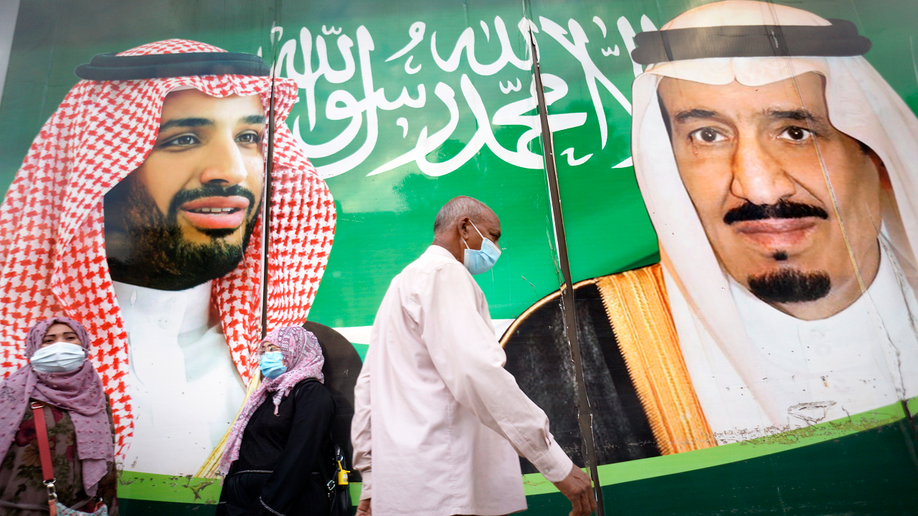
  • Saudi Arabia King Crown PrincenextImage 1 of 3A banner shows Saudi King Salman, right, and his Crown Prince Mohammed bin Salman, outside a mall in Jeddah, Saudi Arabia, on Feb. 5. (AP Photo)
Saudis would develop bomb ‘the next day’ if Iran nuclear deal led to weapons capability: experts

Saudi Arabia may exploit its ties with Pakistan to quickly acquire a bomb

By Peter Aitken | Fox News

Saudi Arabia will likely look to develop its own nuclear capabilities should an Iran nuclear deal go through, experts told Fox News Digital.

“If Iran went nuclear tomorrow, the next day the Saudis would probably buy a nuclear weapon from Pakistan or ratchet up their own nuclear program,” said Jim Phillips, a senior research fellow for Middle Eastern affairs at The Heritage Foundation. “They have a long way to go, but they reportedly financed the Pakistani program, and there might be some quid pro quo involved in that.” 

Saudi Arabia strongly opposed the original nuclear deal but recently has shown more willingness to engage Tehran on an agreement. Experts point to a number of factors that have drawn Riyadh to the negotiating table – chiefly economic and security concerns for the region. 

“I think Saudi Arabia is being more diplomatic, but not really positive because it saw the deal went through in 2015 despite its objection and the objections of Israel,” Phillips argued. “So, I think it’s minimizing its negative reception.”

“It’s publicizing its negative views of a possible deal, but I believe it remains strongly opposed because of the impact of a possible deal on its national interests.”

A nuclear deal would likely see Iran resume its previous level of trade, which would provide a significant impact on the economic balance of the region. Todd Young recently wrote in a Fox News opinion piece that the windfall could total as much as $130.5 billion. 

“Saudis and others would be worried about reductions in oil prices – that’s the first concern – and overall, more the worry is whether Iran will be able to use the income from a new nuclear deal to help further fuel the expansion of its missile and proxy terrorist activities,” Matthew McInnis from the Institute for the Study of War explained.

“The Houthis are certainly the number one concern for the Saudis right now,” McInnis said. “That’s the number one thing on the Saudi agenda: how to deal with the Houthis. They want resolution of the conflict.” 

The Wall Street Journal reported earlier this year that Saudi crown prince Mohammad bin Salman refused a call from President Biden – which the White House denies – and Phillips argued this was likely in reaction to how Biden has handled the Houthis security concern. Biden removed the Houthis from a list of designated terrorist groups shortly after taking office but has considered adding them back to the list as a means of easing tensions with Riyadh. 

But the greatest concern remains Iran’s ability to obtain nuclear weapons should it start to develop its capabilities. The JCPOA limited Iran’s nuclear capabilities for a period of 10 years on centrifuges and 15 years on the amount of enriched uranium it can possess. 

Critics argue the 15-year window only delays Iran’s nuclear pathway rather than stops it, and it provides Iran with upfront, permanent benefits of cash that cause immediate concerns for the region. Supporters believe that gap will allow a new generation to take power and make new agreements, but it’s a gamble that some other countries – such as Israel and, until more recently, Saudi Arabia – do not support.

Saudi Arabia’s program remains far less developed compared to Iran’s, but it has some potential shortcuts: A “variety of sources” told BBC Newsnight in 2013 that Saudi Arabia had invested in Pakistan’s nuclear weapons project, largely to prepare for the possibility of Iran obtaining a bomb. 

Amos Yadlin, a former head of Israeli military intelligence, told a conference in Sweden at the time that if Iran got the bomb, “the Saudis will not wait one month. They already paid for the bomb, they will go to Pakistan and bring what they need to bring.”

McInnis argues that is may still be the case: Pakistan would likely provide the “easiest” option for Saudi Arabia to arm itself, but he questions how effectively that method would work. 

“I think the Iranians probably underestimate the risk of other regional states pursuing nuclear weapons if they do decide to go for a bomb,” McInnis said. “This is one of the reasons why we have to be extremely concerned about the Iranians pursuing a nuclear weapon, considering the possibility of a nuclear arms race in the region.” 

“Obviously, with the long-standing connections with Pakistan on a variety of fronts, there is the concern that that would be the avenue by which Saudi Arabia could achieve a nuclear weapon quickly,” he added. “I think the Pakistan pathway is probably the easiest, but I think there are still a number of questions as to whether that would work.” 

Friday, January 14, 2022

Saudi horn continues to Nuke Up: Daniel 7


‘Our uranium is key to achieving energy transformation’: Saudi minister

‘Our uranium is key to achieving energy transformation’: Saudi minister

Arab News 

January 12, 202212:13

RIYADH: Saudi Arabia will not sacrifice energy security for the sake of energy transformation, a leading minister has warned as he talked up the importance of uranium to the Kingdom’s power plans.

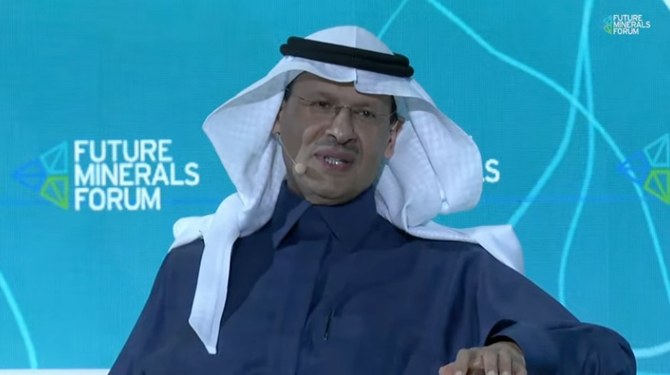
Energy minister Prince Abdulaziz bin Salman made the comments at the Future Minerals Forum in Riyadh as he discussed how developing the Kingdom’s mining sector could help with economic and environmental transitions.

Prince Abdulaziz was bullish when it came to the use of nuclear power in the energy mix, telling delegates at the conference: “We have a huge amount of uranium resource, which we would like to exploit and put in the most transparent way. 

“We will bring partners and we will be exporting and manufacturing and developing it and we will be commercially monetizing that resource.”

Referring to the drive to move the Kingdom away from its reliance on oil, he said: “We should not forfeit energy security for the sake of a publicity stunts — that transition needs to be well thought.

“Let’s not forfeit energy security for moving away from the classical concern of over-reliance in the Middle East when it comes to oil to different types of energy security challenges which has to do with availability of these minerals and the concentration of the ownerships of those minerals.”

The Future Minerals Forum is a special event bringing together ministers, organisations and mining leaders from more than 30 countries.

Hosted by the Saudi Ministry of Industry and Mineral Resources, is aimed at highlighting the role of mining in Saudi Vision 2030, after the government identified it as the third pillar of the Kingdom’s economy.

Friday, December 31, 2021

China is helping the Saudi Arabian Nuclear Horn: Daniel

Saudi Arabian DF-3A missiles. Photo: Armed Forces of Saudi Arabia

China helping Saudi Arabia build ballistic missiles

China’s missile technology may be a key enabler to Saudi Arabia’s nuclear weapons program

by Gabriel Honrada December 29, 2021

Last week CNN reported that US intelligence had assessed that Saudi Arabia was building its own ballistic missiles – with China’s assistance. 

Saudi Arabia is known to have purchased ballistic missiles from China in the past, but has never been able to build any until now. 

Satellite images of the Al Watah missile base show Saudi Arabia has expanded the base to include rocket engine production and test facilities, although it is unclear if any missiles are under production at this point. 

The Saudi government had sought assistancefrom the People’s Liberation Army Rocket Force, China’s armed forces branch responsible for its land-based nuclear arsenal. Saudi advisers and an official familiar with US intelligence said talks between Saudi Arabia and China had moved to the stage of the former acquiring critical hardware necessary to produce its own ballistic missiles. 

Ballistic missiles follow a ballistic trajectory, or arc, to deliver conventional or nuclear warheads on targets. They have a powered flight phase which takes them into the upper layers of the atmosphere, an unpowered free flight phase, and a re-entry phase. 

In addition, last year China also assisted Saudi Arabia in building its own yellowcake uranium enrichment plant near Al Ula. This move seems to have enjoyed the tacit approval of the Trump administration, as it attempted to bypass US laws safeguarding against the US transfer of such sensitive technology to Saudi Arabia. 

Saudi Arabia is also in the process of negotiating a civil nuclear cooperation agreement with the US, but is reluctant to agree on restrictions regarding fuel enrichment and international oversight. 

Yellowcake enrichment is a critical step in manufacturing nuclear weapons. It is an important precursor for making highly-enriched uranium, a key element for nuclear warheads. 

Saudi Arabia first acquired ballistic missilesfrom China in 1988, with the purchase of the DF-3A that year. However, the DF-3A was outdated as it first entered service in 1971, is highly inaccurate and is restricted to launch pads. 

Saudi Arabia followed up this purchase by acquiring the DF-21 in 2007. The DF-21 entered service in 1991 and is a newer road-mobile design, making missile launches much harder to detect and stop. 

While both the DF-3A and DF-21 are nuclear-capable, it appears the versions China sold to Saudi Arabia were modified to carry conventional warheads only. It was for this reason that perhaps the US tacitly approved the sale of these weapons to its Saudi ally. China’s DF-31 ballistic missile, a more recent version than the DF-21. Photo: WikiCommons

However, Saudi Arabia could later modify these missiles to fit a nuclear warhead. 

These developments have raised concerns of nuclear proliferation, resulting in bleak prospects for negotiations on Iran’s nuclear and missile programs and a further escalation in Saudi-Iranian tensions. 

That may make it hard to persuade Iran to scale down its nuclear program, missile development and support for its regional proxies in the Middle East if it sees that arch-rival Saudi Arabia has its own nuclear program with tacit, albeit reluctant, US approval. 

It should be noted that Iran was the first state to carry out an attack against a nuclear facilityduring the Iran-Iraq War. However, a direct attack by Iran at this time would be implausible, considering the outdated state of its air force and the threat of retaliation by the US and its Gulf allies. 

Considering such constraints, Iran could stage an attack against Saudi Arabia’s missile base at Al Watah and the yellowcake facility at Al Ula using rockets, missiles or drone swarms operated by its proxies in Gaza and Yemen.  

Also, the US has been pushing the Abraham Accords which aim to normalize relations between Arab countries and Israel. However, this move may be interpreted as a US effort to form a de facto regional alliance against Iran. 

With the Abraham Accords, the US has effectively outsourced its security role to regional military powers such as Saudi Arabia and Israel, as it refocuses its efforts to counter China in the Pacific. 

That said, Saudi Arabia and Israel’s nuclear programs may substitute for the strategic deterrence formerly provided by the US against Iran.

Tuesday, December 28, 2021

Saudi Arabia is Nuking Up with China’s help: Daniel 7

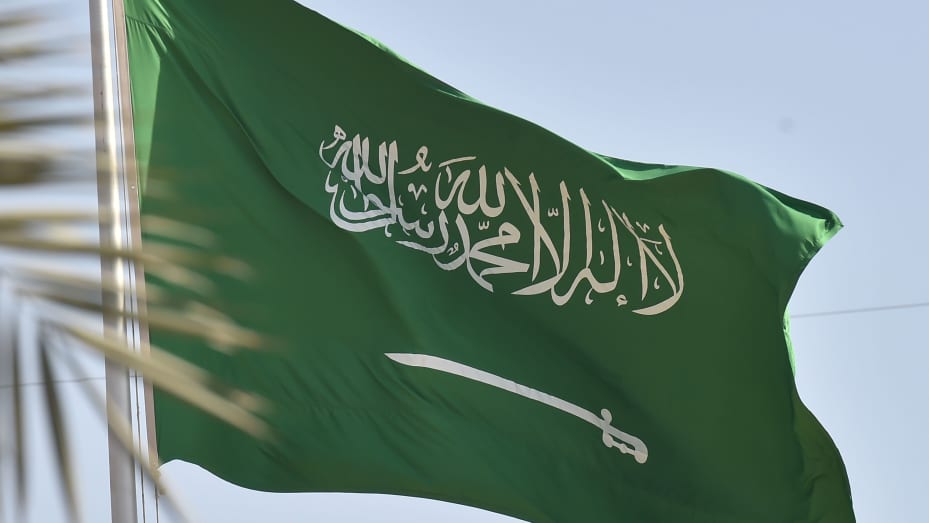
A picture taken on September 22, 2020 shows a Saudi national flag in the capital Riyadh.

Saudi Arabia appears to be building its own ballistic missiles with China’s help

Saudi Arabia is building its own ballistic missiles with the help of China, according to United States intelligence assessments and satellite images.

The assessment of U.S. intelligence agencies is that the kingdom, which is long thought to have acquired missiles from Beijing, is now manufacturing its own, according to a source familiar with the matter and a U.S. official.

Satellite images obtained by NBC News also suggest that Saudi Arabia is producing ballistic missiles at a site west of the capital, Riyadh, according to researchers at the Middlebury Institute of International Studies at Monterey, in California. 

“The key piece of evidence is that the facility is operating a ‘burn pit’ to dispose of solid-propellant leftover from the production of ballistic missiles,” wrote Jeffrey Lewis and David Schmerler of the James Martin Center for Nonproliferation Studies at the Middlebury Institute. 

They added that the site “appears to have been constructed with Chinese assistance.”

The news was first reported by CNN on Thursday.  The images were provided by commercial imaging company Planet Labs PBC.

The development could shift security calculations in the Middle East and further complicate the Biden administration’s efforts to coax Iran back into its nuclear deal with world powers. It could also add another layer of complexity to Washington’s relations with Beijing.

Iran and Saudi Arabia are regional foes and there will be concern that Riyadh’s manufacturing of ballistic missiles could alter Tehran’s calculations on its possible agreements in talks aimed at reviving the 2015 accord. The new development comes days before the talks, which have struggled to make any headway, are expected to resume in Vienna, and may make Iran even more unlikely to give up its own ballistic missiles.

“If Iran were to enter into negotiations over its missile programme, it would be unlikely to accept limits that did not also apply to other countries,” wrote Mark Fitzpatrick, an associate fellow at the London-based International Institute for Strategic Studies, in an article about Saudi Arabia’s ballistic missile program published by the institute in August. 

Fitzpatrick, a former State Department official, said at the time that other than a general desire to keep pace with Iran, Riyadh’s motivations for acquiring ballistic missiles were not entirely clear. Unlike Tehran, however, Saudi Arabia is not known to have initiated any work to develop a nuclear warhead for its missiles, he added. 

Ballistic missiles are rocket-propelled weapons that can carry conventional explosives as well as nuclear warheads. 

Nevertheless, the fact that Saudi Arabia is now known to be manufacturing its own ballistic missiles will spark concerns of a ramped-up arms race in a highly tense region that is already riven with conflict. 

The Saudi Ministry of Media did not respond to requests for comment. 

Britain on Friday condemned a launch of ballistic missiles by Iran in war games conducted this week.

“These actions are a threat to regional and international security and we call on Iran to immediately cease its activities,” the Foreign Office said in a statement.

In 2018, former President Donald Trump withdrew the United States from the nuclear accord and re-imposed crippling sanctions on Iran. Tehran has since reduced its compliance with the deal, announcing that it would enrich uranium to up to 60 percent purity — significantly closer to the amount needed to make an atomic bomb. 

In the past, Saudi Arabia’s de facto leader, Crown Prince Mohammed bin Salman, has been clear that if Tehran develops a nuclear bomb, Riyadh will also do so. 

“Saudi Arabia does not want to acquire any nuclear bomb, but without a doubt if Iran developed a nuclear bomb, we will follow suit as soon as possible,” he told CBS in 2018. 

The crown prince is attempting to transform Saudi Arabia from an oil-dependent nation into an economic powerhouse that is more accepted in the West.

The Saudis have long been U.S. allies and enjoyed a close relationship with the Trump administration, but those efforts to overhaul the country’s image were tainted by the murder of journalist Jamal Khashoggi in the Saudi consulate in Istanbul in 2018. 

Meanwhile, the continued close military relationship between Saudi Arabia and China will also probably be of concern to the Biden administration as it tries to manage a complex and fraught relationship with Beijing, criticizing its human rights record while also cooperating with Chinese leaders on major global threats like climate change and the Covid-19 pandemic. 

The White House did not immediately return a request for comment.

Asked to respond to these fresh indications it was aiding Saudi Arabia’s push to produce ballistic missiles, China said it has always opposed the proliferation of weapons of mass destruction and their means of delivery, and implements strict export controls on missiles and related technologies, according to a statement from its Ministry of Foreign Affairs. 

“China and Saudi Arabia are comprehensive strategic partners,” the ministry said. “Such cooperation does not violate any international law and does not involve the proliferation of weapons of mass destruction.” 

It added that Beijing has always opposed unilateral sanctions and “will continue to take necessary measures to resolutely safeguard its own rights and interests.”

Saudi Arabia has been known to have purchased missiles from China in the past but has never built its own, the source familiar with the matter and the U.S. official confirmed.

Sunday, December 26, 2021

Saudi Arabia is Nuking Up: Daniel 7

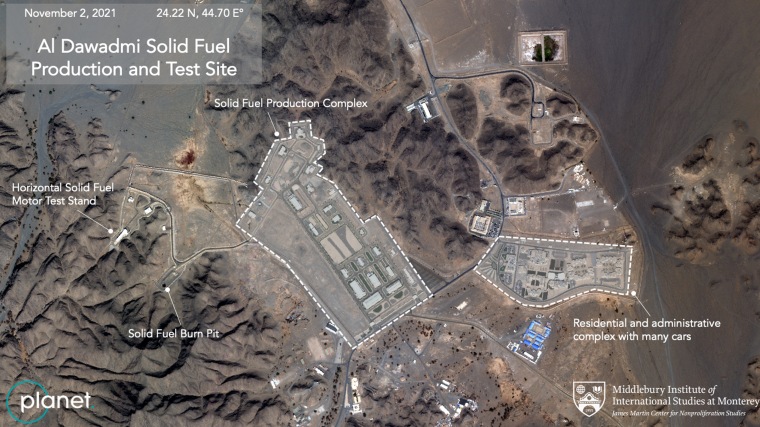
Satellite images from commercial imaging company Planet show the test site in Saudi Arabia on Nov. 2, 2021.

Saudi Arabia appears to be building its own ballistic missiles with China’s help

The development could shift security calculations in the Middle East and further complicate the Biden administration’s efforts to coax Iran back into its nuclear deal with world powers.

Satellite images from commercial imaging company Planet show the test site in Saudi Arabia on Nov. 2, 2021. Planet Labs PBCDec. 24, 2021, 12:36 PM MSTBy Courtney Kube and Saphora Smith

Saudi Arabia is building its own ballistic missiles with the help of China, according to United States intelligence assessments and satellite images.

The assessment of U.S. intelligence agencies is that the kingdom, which is long thought to have acquired missiles from Beijing, is now manufacturing its own, according to a source familiar with the matter and a U.S. official.

Satellite images obtained by NBC News also suggest that Saudi Arabia is producing ballistic missiles at a site west of the capital, Riyadh, according to researchers at the Middlebury Institute of International Studies at Monterey, in California. 

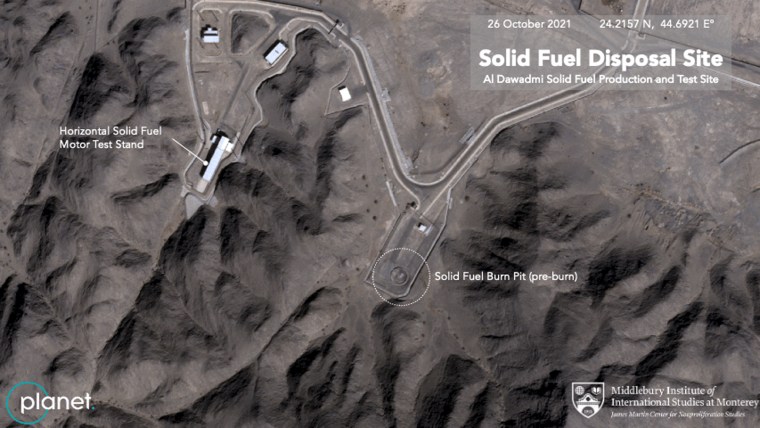
“The key piece of evidence is that the facility is operating a ‘burn pit’ to dispose of solid-propellant leftover from the production of ballistic missiles,” wrote Jeffrey Lewis and David Schmerler of the James Martin Center for Nonproliferation Studies at the Middlebury Institute. 

They added that the site “appears to have been constructed with Chinese assistance.”

The news was first reported by CNN on Thursday.  The images were provided by commercial imaging company Planet Labs PBC.

Planet Labs PBC

The development could shift security calculations in the Middle East and further complicate the Biden administration’s efforts to coax Iran back into its nuclear deal with world powers. It could also add another layer of complexity to Washington’s relations with Beijing.

Iran and Saudi Arabia are regional foes and there will be concern that Riyadh’s manufacturing of ballistic missiles could alter Tehran’s calculations on its possible agreements in talks aimed at reviving the 2015 accord. The new development comes days before the talks, which have struggled to make any headway, are expected to resume in Vienna, and may make Iran even more unlikely to give up its own ballistic missiles.

“If Iran were to enter into negotiations over its missile programme, it would be unlikely to accept limits that did not also apply to other countries,” wrote Mark Fitzpatrick, an associate fellow at the London-based International Institute for Strategic Studies, in an article about Saudi Arabia’s ballistic missile program published by the institute in August. 

Fitzpatrick, a former State Department official, said at the time that other than a general desire to keep pace with Iran, Riyadh’s motivations for acquiring ballistic missiles were not entirely clear. Unlike Tehran, however, Saudi Arabia is not known to have initiated any work to develop a nuclear warhead for its missiles, he added. 

Ballistic missiles are rocket-propelled weapons that can carry conventional explosives as well as nuclear warheads. 

Nevertheless, the fact that Saudi Arabia is now known to be manufacturing its own ballistic missiles will spark concerns of a ramped-up arms race in a highly tense region that is already riven with conflict. 

The Saudi Ministry of Media did not respond to requests for comment. 

Britain on Friday condemned a launch of ballistic missiles by Iran in war games conducted this week.

“These actions are a threat to regional and international security and we call on Iran to immediately cease its activities,” the Foreign Office said in a statement.

In 2018, former President Donald Trump withdrew the United States from the nuclear accord and re-imposed crippling sanctions on Iran. Tehran has since reduced its compliance with the deal, announcing that it would enrich uranium to up to 60 percent purity — significantly closer to the amount needed to make an atomic bomb. 

In the past, Saudi Arabia’s de facto leader, Crown Prince Mohammed bin Salman, has been clear that if Tehran develops a nuclear bomb, Riyadh will also do so. 

“Saudi Arabia does not want to acquire any nuclear bomb, but without a doubt if Iran developed a nuclear bomb, we will follow suit as soon as possible,” he told CBS in 2018. 

The crown prince is attempting to transform Saudi Arabia from an oil-dependent nation into an economic powerhouse that is more accepted in the West.

The Saudis have long been U.S. allies and enjoyed a close relationship with the Trump administration, but those efforts to overhaul the country’s image were tainted by the murder of journalist Jamal Khashoggi in the Saudi consulate in Istanbul in 2018. 

Meanwhile, the continued close military relationship between Saudi Arabia and China will also probably be of concern to the Biden administration as it tries to manage a complex and fraught relationship with Beijing, criticizing its human rights record while also cooperating with Chinese leaders on major global threats like climate change and the Covid-19 pandemic. 

The White House did not immediately return a request for comment.

Asked to respond to these fresh indications it was aiding Saudi Arabia’s push to produce ballistic missiles, China said it has always opposed the proliferation of weapons of mass destruction and their means of delivery, and implements strict export controls on missiles and related technologies, according to a statement from its Ministry of Foreign Affairs. 

“China and Saudi Arabia are comprehensive strategic partners,” the ministry said. “Such cooperation does not violate any international law and does not involve the proliferation of weapons of mass destruction.” 

It added that Beijing has always opposed unilateral sanctions and “will continue to take necessary measures to resolutely safeguard its own rights and interests.”

Saudi Arabia has been known to have purchased missiles from China in the past but has never built its own, the source familiar with the matter and the U.S. official confirmed.

Saturday, December 25, 2021

Saudi Arabia is now building up her nuclear horn: Daniel 7

Exclusive: US intel shows Saudi Arabia escalated its missile program with help from China

CNN Exclusive: US intel and satellite images show Saudi Arabia is now building its own ballistic missiles with help of China

Washington (CNN) — US intelligence agencies have assessed that Saudi Arabia is now actively manufacturing its own ballistic missiles with the help of China, CNN has learned, a development that could have significant ripple effects across the Middle East and complicate the Biden administration’s efforts to restrain the nuclear ambitions of Iran, the Saudis’ top regional rival. 

Saudi Arabia is known to have purchased ballistic missiles from China in the past but has never been able to build its own — until now, according to three sources familiar with the latest intelligence. Satellite images obtained by CNN also suggest the Kingdom is currently manufacturing the weapons in at least one location.

US officials at numerous agencies, including the National Security Council at the White House, have been briefed in recent months on classified intelligence revealing multiple large-scale transfers of sensitive ballistic missile technology between China and Saudi Arabia, according to two sources familiar with the latest assessments. The Biden administration is now confronted with increasingly urgent questions about whether Saudi’s ballistic missile advancements could dramatically change regional power dynamics and complicate efforts to expand the terms of a nuclear deal with Iran to include restraints on its own missile technology — a goal shared by the US, Europe, Israel and Gulf countries. 

Iran and Saudi Arabia are bitter enemies and it is unlikely Tehran will agree to stop making ballistic missiles if Saudi Arabia has begun manufacturing its own. “While significant attention has been focused on Iran’s large ballistic missile program, Saudi Arabia’s development and now production of ballistic missiles has not received the same level of scrutiny,” Jeffrey Lewis, a weapons expert and professor at the Middlebury Institute of International Studies, told CNN. “The domestic production of ballistic missiles by Saudi Arabia suggests that any diplomatic effort to control missile proliferation would need to involve other regional actors, like Saudi Arabia and Israel, that produce their own ballistic missiles,” Lewis added.Any US response could also be complicated by diplomatic considerations with China, as the Biden administration seeks to reengage Beijing on several other high-priority policy issues, including climate, trade and the pandemic. “It’s all a matter of calibration,” a senior administration official told CNN.The National Security Council and CIA declined to comment.Asked if there have been any recent transfers of sensitive ballistic missile technology between China and Saudi Arabia, a spokesperson for China’s Ministry of Foreign Affairs told CNN in a statement that the two countries are “comprehensive strategic partners” and “have maintained friendly cooperation in all fields, including in the field of military trade.””Such cooperation does not violate any international law and does not involve the proliferation of weapons of mass destruction,” the statement said.The Saudi Government and embassy in Washington did not respond to CNN’s request for comment.New challenges for BidenCNN first reported in 2019 that US intelligence agencies were aware that Saudi Arabia was collaborating with China to advance its ballistic missile program.The Trump administration did not initially disclose its knowledge of that classified intelligence to key members of Congress, infuriating Democrats who discovered it outside of regular US government channels and concluded it had been deliberately left out of a series of briefings where they say it should have been presented.That fueled Democratic criticism that the Trump administration was too soft on Saudi. Nuclear proliferation experts also say Trump’s lack of response emboldened the Saudis to continue expanding their ballistic missile program. “Normally, the U.S. would have pressured Saudi Arabia not to pursue these capabilities, but the first indicators that the Saudis were pursuing these capabilities indigenously emerged during the Trump era. The Trump administration, to put it lightly, was not interested in bearing down on Riyadh over these issues,” according to Ankit Panda, a nuclear policy and weapons expert at the Carnegie Endowment for International Peace.Some lawmakers have been briefed over the past few months on new intelligence about transfers of ballistic missile tech between Saudi Arabia and China, multiple sources told CNN. The Biden administration is preparing to sanction some organizations involved in the transfers, sources told CNN, though some on Capitol Hill are concerned the White House is not willing to impose significant consequences on the Saudi government for its actions. Given the current state of negotiations with Iran, the Saudi missile program could make an already thorny problem even more difficult. “A robust Saudi missile program would introduce new challenges to constraining other missile programs in the region. To take just one example, Iran’s missiles, which are a major concern to the U.S., would be more difficult to constrain in the future without parallel constraints on a growing Saudi program,” Panda told CNN. ‘First unambiguous evidence’New satellite images obtained by CNN indicate the Saudis are already manufacturing ballistic missiles at a site previously constructed with Chinese assistance, according to experts who analyzed the photos and sources who confirmed they reflect advancements that are consistent with the latest US intelligence assessments. Satellite photos taken by Planet, a commercial imaging company, between October 26 and November 9 show a burn operation occurred at a facility near Dawadmi, Saudi Arabia, according to researchers at the Middlebury Institute of International Studies, who told CNN this is “the first unambiguous evidence that the facility is operating to produce missiles.” New satellite images suggest Saudi Arabia is now producing ballistic missiles at the site. The key piece of evidence is that the facility is operating a “burn pit” to dispose of solid-propellant leftover from the production of ballistic missiles. Satellite image captured on November 2 shows the facility is operating a “burn pit” to dispose of solid-propellant leftover from the production of ballistic missiles. “The key piece of evidence is that the facility is operating a ‘burn pit’ to dispose of solid-propellant leftover from the production of ballistic missiles,” said Lewis, a weapons expert and professor at the Middlebury Institute of International Studies who reviewed the images. “Casting rocket motors results in leftover propellant, which is an explosive hazard. Solid-propellant missile production facilities often have burn pits where leftover propellant can be disposed of by burning. Burn operations are, therefore, a strong signature that the facility is actively casting solid rocket motors,” he added.A satellite image captured on November 9 shows the “burn pit,” which is used to dispose of solid-propellant leftover from the production of ballistic missiles, post-burn cleanup. Still, little is known about the ballistic missiles that Saudi Arabia is building at this site, including important details like range and payload. Considering the facility in question was built with Chinese assistance and new intelligence assessments showing Saudi Arabia has recently purchased sensitive ballistic missile technology from China, it is possible that the missiles being produced there are of Chinese design, according to Lewis. But there is also evidence Saudi Arabia has looked to other countries for help with developing a ballistic missile program in recent years, making it difficult to identify exactly which weapons system the Kingdom is now building at this facility, Lewis noted.

Tuesday, October 26, 2021

The Sins of the Saudi Nuclear Horn: Daniel 7

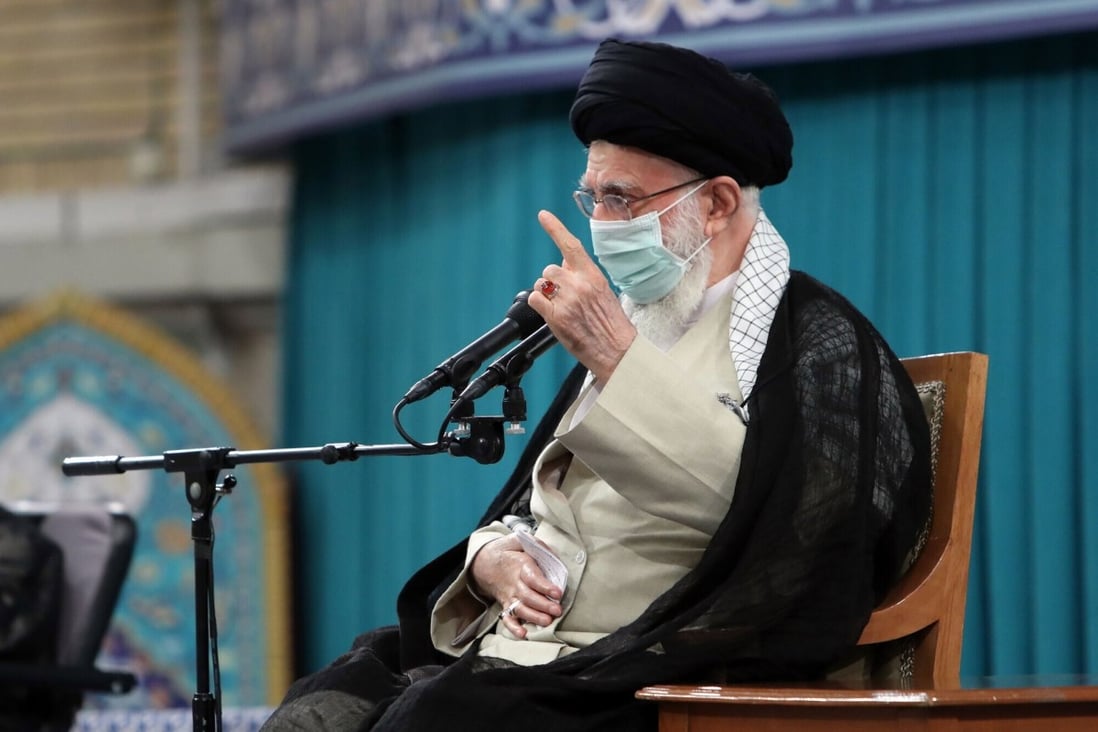
Iran’s supreme leader Ali Khamenei speaks during a meeting in Tehran on Sunday. Photo: EPA

Iran says Arab nations ‘sinned’ by normalising ties with Israel

The United Arab Emirates, Bahrain, Sudan and Morocco all agreed to normalise ties with Israel last year at Washington’s requestIran’s supreme leader Ali Khamenei said on Sunday these governments had ‘made big errors’ and acted ‘against Islamic unity’

Iran’s supreme leader Ali Khamenei speaks during a meeting in Tehran on Sunday. Photo: EPA

Arab nations that normalised ties with Israel last year have “sinned” and should reverse such moves, Iran’s supreme leader Ali Khamenei said on Sunday.

The United Arab Emirates, Bahrain, Sudan and Morocco all agreed to normalise ties with Israel in 2020, as Washington under the administration of then-US president Donald Trump made Arab-Israeli rapprochement a foreign policy priority.

“Some governments have unfortunately made errors – have made big errors and have sinned in normalising [their relations] with the usurping and oppressive Zionist regime,” Khamenei said, referring to Israel.

“It is an act against Islamic unity, they must return from this path and make up for this big mistake,” Khamenei added, in a speech marking a public holiday honouring the birth of the Prophet Mohammed.

Iran has in the four decades since the 1979 Islamic revolution positioned itself as a strong defender of the Palestinian cause.

Egypt and Jordan were until last year the only two Arab countries to normalise relations with Israel.

“If the unity of Muslims is achieved, the Palestinian question would definitely be resolved in the best fashion,” Khamenei said.EVERY SATURDAYSCMP Global Impact NewsletterBy submitting, you consent to receiving marketing emails from SCMP. If you don’t want these, tick hereBy registering, you agree to our T&C and Privacy Policy

In May, Khamenei characterised Israel as a “terrorist base” and “not a country”.

Soon after Khamenei’s speech, Iran’s top security official, Ali Shamkhani, vowed to inflict many “billions of dollars” worth of damage in a “shocking response” if Israel strikes Tehran’s nuclear programme.

The tweet by the secretary of Iran’s Supreme National Security Council came in response to Israeli media reports that 5 billion shekels (US$1.5 billion) had been approved to prepare the military for a potential strike on Iran’s nuclear programme.

Iran has repeatedly accused Israel of being behind acts of sabotage targeting its nuclear facilities.

The two countries have exchanged sharp rhetoric recently, against the backdrop of efforts to renew talks to revive a nuclear deal between Iran and world powers.

Friday, October 1, 2021

The Saudi Nuclear Horn Should Face Full UN Inspection: Revelation 7

Saudis Nuclear Program Should Face Full UN Inspection: Iran Official

As top US officials variously meet leading Saudis, Iran’s deputy foreign minister calls for Riyadh to open its atomic sites to full inspection and for Israel to sign NPT.

Iran’s Deputy Foreign Minister Reza Najafi Tuesday urged Saudi Arabia to be transparent over its nuclear activities and open up the access of the United Nations’ International Atomic Energy Agency (IAEA).

Najafi rejected remarks by Saudi Foreign Minister Prince Faisal bin Farhan earlier Tuesday to the UN General Assembly criticising “Iran’s continued breaches and violations of international agreements and treaties related to the nuclear agreement, and its escalation of its nuclear activities in addition to research and development activities.”

Addressing the UN General Assembly’s high-level meeting held to commemorate and promote International Day for the Total Elimination of Nuclear Weapons (September 26), Najafi said Iran rejected the retention, stockpiling, development, use, and proliferation of nuclear arms.

Iran is in a dispute with the International Atomic Energy Agency (IAEA) over traces of previously undeclared radioactive material that it has failed to fully explain and over monitoring access to the UN nuclear watchdog.

Reza Najafi, Iran's Deputy Foreign Minister for legal affairs. FILE PHOTO

Reza Najafi, Iran’s Deputy Foreign Minister for legal affairs. FILE PHOTO

It has also been enriching uranium to 60 percent and stockpiling it in violation of the 2015 nuclear agreement with world powers.

Najafi condemned the modernization and strengthening of nuclear arsenals by the United States and other nuclear-weapon states in violation of their arms-reduction commitments under the Nuclear Non-Proliferation Treaty (NPT). Najafi said Israel continued to “threaten peace and security in the Middle East and beyond through its clandestine nuclear program,” and urged the world to invite Israel to join the NPT and place its nuclear facilities under IAEA monitoring.

Unlike Israel, which is believed to hold around 180 nuclear bombs, both Iran and Saudi Arabia are NPT signatories. Saudi Arabia – which has no nuclear reactor but reportedly past nuclear links with both Iraq and Pakistani scientist AQ Khan – has limited the Safeguards access of the IAEA under a ‘small quantities protocol.’

Referring to a 2018 interview with the US CBC’s 60 Minutes program in which Saudi Crown Prince Mohammed bin Salman suggested Riyadh might adopt nuclear weapons if Iran developed one, Iran’s state-run English channel Press TVand Tasnim news agency both claimed Wednesday that there is “international concern” over Saudi Arabia’s nuclear ambitions.

Saudi Arabia backed former United States president Donald Trump’s 2018 withdrawal from Iran’s 2015 deal with world powers limiting its nuclear program – the JCPOA, Joint Comprehensive Plan of Action. The new administration of President Joe Biden has continued Trump’s ‘maximum pressure’ sanctions as Iran has continued to expand its atomic program with steps that began in 2019.

Prince Faisal this week met with US special envoy for Iran Robert Malley on the sidelines of the UN General Assembly to discuss recent developments in Iran’s nuclear case. US National Security Advisor Jake Sullivan met with Saudi Arabia’s Crown Prince Mohammed bin Salman in Saudi Arabia Tuesday to discuss Yemen and Iran – the White House kept Sullivan’s visit low-profile and no photos were issued.

In his speech to the annual UN General Assembly last week, Saudi Arabia’s King Salman bin Abdulaziz expressed hope that continuing talks with Iran, brokered by Baghdad, to restore relations would build confidence. The kingdom cut diplomatic ties in 2016 when protestors attacked its Tehran embassy after Riyadh executed 47 dissidents including leading Shi’ite cleric Sheikh Nimr al-Nimr

Friday, September 24, 2021

The Saudi Nuclear Horn threatens Iran: Daniel

Saudi king Tells UN Kingdom Supports Efforts To Prevent Nuclear Iran

US Says Window Open For Iran Nuclear Talks But Won’t Be Forever

Thursday, 23 Sep 2021 20:38 

WASHINGTON, Sept 23 (Reuters) – The window is still open to revive the 2015 Iran nuclear deal but Tehran has yet to indicate whether it is willing to resume talks in Vienna or whether it would do so on the basis of where they left off in June, a senior U.S. official said on Thursday.

The official told reporters on condition of anonymity that Washington’s patience would not last forever but declined to set a deadline, saying this depended on technical progress in Iran’s nuclear program and a wider judgment by the United States and its partners on whether Iran was willing to revive the deal.

“We’re still interested. We still want to come back to the table,” the senior U.S. State Department official said in a telephone briefing. “The window of opportunity is open. It won’t be open forever if Iran takes a different course.”

Under the 2015 deal, Iran curbed its uranium enrichment program, a possible pathway to nuclear arms, in return for the lifting of economic sanctions. Former President Donald Trump quit the deal three years ago and re-imposed harsh sanctions on Iran’s oil and financial sectors that have crippled its economy, prompting Iran to take steps to violate its nuclear limits.

The U.S. official declined to say what the United States might do if Iran refuses to return to negotiations, or if a resumption of the original deal proves impossible. Such U.S. contingency planning is often referred to as “Plan B.”

“The ‘Plan B’ that we’re concerned about is the one that Iran may be contemplating, where they want to continue to build their nuclear program and not be seriously engaged in talks to return to the JCPOA,” he said, in a reference to the deal’s formal name, the Joint Comprehensive Plan of Action.

Wednesday, September 15, 2021

The War on Terror Has United the Shi’a Horn: Daniel 8

Mehmet Alaca, Iran news, Iraq news, Islamic State terrorism, war on terror at 20, 20 anniversary of 9 11, US invasion of Iraq, Iraq militias, Middle East news, Iraq politics news, Qassem Soleimani assassination

The War on Terror Drove Iraq Into Iran’s Orbit

By Mehmet Alaca

September 13, 2021

© Andy.LIU / Shutterstock

After al-Qaeda targeted the World Trade Center and the Pentagon on September 11, 2001, then-US President George W. Bush declared his (in)famous doctrine of the global war on terror, which will continue to have a great effect on the Middle East and the world for the coming decades, if not centuries. The framework implemented an aggressive foreign policy against Iraq, Iran and North Korea, singled out as the “axis of evil” in the new world order.

After 20 years of the doctrine in action, which saw the occupation of Afghanistan and Iraq that further ignited regional instability, President Joe Biden has withdrawn US troops from Afghanistan and is determined to end the combat mission in Iraq by the end of the year. Without concluding whether two decades of aggression succeeded in defeating terrorism, it can be said that the war on terror opened a new area of influence for one of the axis of evil, namely Iran in Iraq.

Opening the Gates

Thanks to its Shia population, Iraq has been a significant target of Iranian foreign policy since the Islamic Revolution of 1979. Due to both geographic and sectarian proximity, Iran, which sees Washington as an enemy and a source of instability in the region, was suspicious of the 2003 US invasion of Iraq. 

Deeming Baathist Iraq as a major threat to its national security, the regime in Tehran has meddled in its neighbor’s internal politics and strategic tendencies ever since coming to power. With the US toppling of Saddam Hussein, however, Iran succeeded in courting Iraq’s Shia population by taking advantage of its shared border and cultural, religious and economic ties.

The fact that significant Shia figures opposed to the Iraqi regime took refuge in Iran in the early 1980s strengthened Tehran’s relations with these groups in the post-invasion period. During this time, the Shia population has become influential in the Iraqi state and society. For example, Hadi al-Amiri, the leader of the Badr Organization militia, and Abu Mahdi al-Muhandis, the recently deceased vice president of the Popular Mobilization Units (PMU), count among some of the most prominent pro-Iranian figures in the current Iraqi political and military establishments.

The Supreme Council of the Islamic Revolution in Iraq, a Shia resistance group headed by Ayatollah Mohammad Baqir al-Hakim hoping to topple Saddam Hussein’s regime, was established in Iran in 1982. It became a pioneer organization for various Shia militias and political groups with connections to Tehran, incorporating the Badr Organization, then known as the Badr Brigades. 

While Iran benefitted from the support of Iraqi militias during the inconclusive war with Iraq in the 1980s, Tehran redirected this mobilization against the US forces following the 2003 invasion. The Iraqi militia group Kataib Hezbollah was formed in early 2007, followed by Asaib Ahl al-Haq, as part of the campaign by the Iranian Revolutionary Guard Corps (IRGC) Quds Force against US forces.

Iran’s presence in Iraq came to light when the Americans captured several Iranian operatives in 2006 and 2007, among them Mohsen Chizari of the IRGC. Asaib Ahl al-Haq kidnapped and killed five US soldiers in January 2007, but two months later, coalition forces captured the militia’s leader, Qais al-Khazali, alongside an operative of Hezbollah, Tehran’s proxy in Lebanon, Ali Musa Daqduq. It is well known that the Jaish al-Mahdi militias led by Muqtada al-Sadr, who still has distant dealings with Iran, received intensive Iranian support to fight against the United States.

The disbanding the Iraqi army and establishing the interim government by the US after 2003 provided Iran with new opportunities to secure many significant positions in the bureaucracy. In this process, many members of the Badr Brigades were integrated into the new army and police forces, their political connections winning many rapid promotions. Today, Badr is still one of the most active groups within the police, the army and the Ministry of Interior.

Consolidation of Iranian Power

The Baghdad government was formed along ethnic and sectarian quotas. As per the country’s 2005 constitution, the presidency was allocated to the Kurds, the prime minister’s office to the Shia and the position of parliament’s speaker to the Sunnis. The allocation of the executive position to Shia leaders strengthened Iran’s elbow room in Iraqi politics.

The sectarian policies of Prime Minister Nuri al-Maliki, who held office between 2006 and 2014, disquieted the Sunni society further. In addition to the fact that the Shia occupied a central position in the administrative system, the American inability to understand Sunni expectations has marginalized Sunni society. Radicalization led to the resurgence of al-Qaeda and later the formation of the even more extreme Islamic State (IS) group in the Sunni regions or Iraq.

After capturing Mosul in June 2014, IS has taken control of almost a third of Iraqi territory. All Shia groups fighting against the new threat were united under the banner of the Popular Mobilization Units — an umbrella organization controlled mainly by pro-Iran armed groups — after Iraq’s top Shia cleric, Grand Ayatollah Ali al-Sistani, called for all those able to carry a weapon to take up arms.

The PMU militias were provided with American and Iranian-made weapons during their fight against IS. Pro-Iranian militias such as the Badr Organization, Kataib Hezbollah and Asaib Ahl al-Haq dominated the PMU. Active support by the IRGC provided to Iraqi militias and the presence of Qassem Soleimani, a Quds Force commander, at the front lines pointed to Iran’s effectiveness in the field.

Integrating the PMU as a legal part of the Iraqi security mechanism in 2016 further legitimized Iranian influence in the political and military establishments. For instance, almost $1.7 billion was allocated to the PMU, which consists of some 100,000 militants, from the $90-billion Iraqi budget in 2021.  

Defeating the Islamic State

After the declaration of victory against IS in 2017, tensions between Iran and the US, placed on the back burner during the campaign, reignited. While US officials argued that the PMU completed their mission and should be dissolved, pro-Iranian groups reassumed their anti-American tone. 

Thanks to their active role in the fight against IS, Iran-backed militias secured their position in the military bureaucracy and were able to establish themselves politically. The Fatah Alliance, under the leadership of Hadi al-Amiri and backed by pro-Iranian militias, gained victory in the 2018 election, becoming the second-largest group in the Iraqi parliament. Iran has thus become one of the decision-makers in post-IS Iraq.

Tensions increased in 2018 after President Donald Trump decided to unilaterally withdraw the United States from the nuclear deal with Iran. Pro-Iranian forces began to attack US forces on the ground in Iraq. While Iran seemed to want to punish the US via the Iraqi militias, these attacks also aimed at forcing Americans to withdraw from Iraq. The situation has come to an apogee with the killing of Soleimani and Muhandis in the US drone strike in Baghdad on January 3, 2020.

The assassinations shifted the tensions to the political arena. On January 5, under the leadership of pro-Iranian groups, a resolution was passed in Iraq’s parliament to call on the government to expel foreign troops from the country. In addition to political pressures, as a result of ongoing attacks by pro-Iranian militias on American bases and soldiers in Iraq, the US abandoned many of its bases in the country. As a result of strategic dialogue negotiations with Baghdad, Washington decided to withdraw its combat forces and retain only consultant support. To a large degree, Iran managed to get what it wanted — to drive the US out and reassert its own influence in the region.

Pro-Iranian militias, already active in the Shia regions, started to show their presence in Sunni-dominated areas such as Mosul, Anbar and Saladin after the defeat of IS. Furthermore, Iran-backed groups pursue a long-term strategy to seize control of disputed areas between the central government and the Kurdistan Region of Iraq. Iran-backed groups, including the Badr Organization, Asaib Ahl al-Haq, Kataib Imam Ali, Kataib Sayyid al-Shuhada and Saraya al-Khorasani, have been active in the disputed territories since 2014.

At the same time, these militias under the PMU umbrella reject control by Baghdad and threaten the central government. So much so that Abu Ali Askari, a spokesman for Kataib Hezbollah, was able to say that “the time is appropriate to cut his ears as the ears of a goat are cut,” referring to Iraqi Prime Minister Mustafa al-Kadhimi, while militias were able to flex their muscle against the government in the streets of Baghdad amid tensions leading up to the anniversary of Soleimani’s assassination.

Make Sense of the World

Aiming to limit US influence, Iran has been gradually reshaping Iraq‘s internal and security policy since 2003. While millions are still paying the price of the war on terror in Iraq, which resulted in the collapse of the political and economic systems followed by a campaign of terror by the Islamic State, Iran continues to consolidate its power, both in military and political spheres. 

After an 18-year-long story of invasion and with the US poised to withdraw its combat forces, Iran’s hegemony over Iraq will inevitably come to fruition. The sectarian and ethnic emphasis within the framework of the government quota system not only prevents the formation of independent Iraqi identity but also keeps fragile social fault lines dynamic, an opportunity that Iran will, without doubt, continue to exploit.