Showing posts with label deal. Show all posts

Sunday, February 27, 2022

How the Beast of the Sea ruined US Credibility and Enabled Putin’s Invasion of Ukraine: Revelation 13

How Bush’s Iraq Fiasco ruined US Credibility and Enabled Putin’s Invasion of Ukraine

Juan Cole 02/25/2022

Ann Arbor (Informed Comment) – George W. Bush issued a statement about the Russian invasion of Ukraine. It went like this:

George W. Bush actually came out and condemned “”unprovoked and unjustified invasion”!

The point isn’t just to decry his hypocrisy. Bush’s willful act of aggression, his invasion and eight-and-a-half-year military occupation of Iraq, has deeply hindered effective policy-making by the U.S. regarding Russia’s attack on Ukraine.

Here are some of the ways it matters:

Bush filled the U.S. air waves with false assertions that Iraq had an active nuclear weapon program. His vice president, Dick Cheney, repeatedly said things like “We know he’s got chemicals and biological and we know he’s working on nuclear.” (May 19, 2002, NBC Meet the Press) and `But we now know that Saddam has resumed his efforts to acquire nuclear weapons . . . Simply stated, there is no doubt that Saddam Hussein now has weapons of mass destruction. There is no doubt that he is amassing them to use against our friends, against our allies, and against us.”( August 26, 2002, Speech of Vice President Cheney at VFW 103rd National Convention.)

This, despite severe doubts expressed to him by seasoned CIA analysts, whom he pressured to give him the statements he wanted. When he couldn’t get them, he went to raw intelligence, i.e. any old garbage anyone ever said. 

Bush himself could not get the CIA to agree that a phony document alleging Iraqi purchases of uranium from Niger was legitimate, so he sourced it to British intelligence. The document was a fraud.

Bush and company were lying to get the war they wanted.

The problem with lying for policy reasons is that people come to view you as a liar. When it became apparent that Iraq did not have any chemical, biological or nuclear weapons or even programs, the United States was humiliated before the world. But it was too late– America had 120,000 troops in Iraq, a society that was collapsing around them. The wounded society would be a maelstrom of instability in the Middle East for decades.

So when U.S. intelligence analysts began reporting this winter that they had excellent reason to believe that Vladimir Putin intended to invade the Ukraine, President Biden’s team could not get people to take this prospect seriously. The Ukrainian government castigated Washington for hyping the threat and engaging in hyperbole.

President Volodomyr Zelensky told Biden to cut it out, and that he was endangering the Ukraine economy with that wild talk.

Administration officials and spokespeople went blue in the face saying Putin was about to invade, and many in the US press replied, “You said Iraq had weapons of mass destruction.”

Maybe it would have made a difference at the margins if Ukraine’s leader Volodymyr Zelensky had trusted the US intelligence and had swung into action to harden his military defenses.

George W. Bush laid the foundations for the disaster in the Ukraine by destroying American credibility on enemy intentions and capabilities.

Bush also vocally tried to spread around fascist ideas at odds with the United Nations charter such as “preemptive war” — i.e., launching an all-out war on another country in case they may at some point in the future come into conflict with you. Putin would say his Ukraine war is preemptive.

W. also issued the “Bush doctrine” making harboring “terrorists” a basis for war, which India and Pakistan immediately deployed against one another. Putin sees the democratically elected Zelensky government as hand in glove with the small Ukrainian far-right nationalist movement, which he categorizes as terrorists.

Putin did not need Bush’s example, of launching an aggressive war on a country that hadn’t attacked you, in order to plot against Ukraine. But the American ability to counter him and have it received with a straight face by the rest of the world was completely undermined by W.’s mendacious warmongering.

Wednesday, September 22, 2021

Bush’s Iraq War is a Complete Failure: Revelation 13:1

Is it Time to Reconsider Bush’s Iraq War as a Complete Failure?

A recent article in Foreign Policy by Alia Brahimi suggests that the U.S.-led war on terrorism was a failure and that the poorly managed and chaotic withdrawal of U.S. forces from Afghanistan has led to a weakening of U.S. power and leadership.

While well written, the piece ignores some realities on the ground in the Middle East. In Iraq, there is a budding, though admittedly fragile, representative form of government. One that has had several successful elections that were relatively peaceful. There is no ongoing civil conflict in Iraq as compared to the situation in Syria and in Libya, and new elections are scheduled to take place in October.

A close and unemotional analysis of the geopolitical realities in that part of the Middle East suggests that a new balance of power is emerging. The emerging balance of power is one that will promote negotiations to end the constant struggle for power between Iran and Saudi Arabia, strengthen the continuing democratic experiment in Iraq, the rise of Israel’s influence in once hostile capitals in the Gulf region, as well as the moderation of Iran’s demands for an end to sanctions as a price to resume nuclear talks with the West. As an example, Iran has agreed to allow the IAEA access to the monitoring equipment that tracks its nuclear research.

It can be argued that the goals of the United States have been met in full, and given time, provide a fertile ground for representative government throughout the region.

The objectives that the United States set for itself as it began its War on Terror were two-fold; to prevent terrorists from using Afghanistan as a base of operations and the capture or death of Osama bin Laden.

Osama bin Laden was killed in 2011 and the Taliban concluded an agreement with the Trump administration last year. While the Taliban have retaken power in Afghanistan, it has also pledged not to allow its territory to be used as a base of operation for groups like Al Qaeda. Whether this actually happens remains to be seen.

While former President George W. Bush has been universally criticized for his invasion of Iraq, and the savage guerrilla war that followed, the fact that a representative form of government has emerged in the middle of despotic regimes cannot be ignored.

The current Iraqi government structure was set up in a time of war and has many shortcomings, reminiscent of the first government of the United States.

Naufel Alhassan, an Iraqi politician, as well as a former senior advisor to former Iraqi Prime Minister Haider al-Abadi, has established a number of principles for keeping Iraq’s fragile democracy alive. Among them: Redesigning and restructuring Iraq’s political system; reforming the judicial, supervisory, and legislative systems; the redistribution of wealth; reorganizing the economy; and finally, ensuring a representative form of government that includes voices from across all of Iraqi society.

These are lofty goals, but corruption and waste are holding back the economy, and are radicalizing the young people of Iraq.

An article in Al-Fanar Media expresses the challenges facing the people of Iraq. “The country is in an economic vise, with billions going annually to its civil service. Each government worker has been estimated by the World Bank to get about 17 minutes of work done per day. Iraq is currently the seventh-largest oil-producing country, but oil revenue has been dropping. Little of the money the country earns is being invested in future economic growth or spreading services to a larger share of the population. Meanwhile about 700,000 young Iraqis come onto the job market each year. A primer on job creation in Iraq written for the World Bank estimated the youth unemployment rate at 36 percent.”

The biggest threat to the democratic experiment in Iraq is the lack of capital investment and entrepreneurship. With a large youth population, Iraqi youth need opportunities for employment and establishing small businesses.

The United States needs to find a way to help the more than 32 million young adults in Iraq find an economic future. This method needs to be able to bypass the corrupt bureaucracy of Iraq, and invest directly into the economy of Iraq. Microloans might be the answer.

The United States Small Business Administration provides a working model for a possible microloan project for under-employed Iraqi youth. The microloans could be used for working capital, inventory or supplies, furniture, or fixtures, and or machinery or equipment.

Such a program would have to have the blessing of the Iraqi government and be administered from the U.S. embassy in order to prevent further corrupt officials from diverting money for their own personal use. If possible, it might be advisable to have Iraqi religious leaders assist in the disbursement of funds.

During a recent protest, protestors chanted “Secular, secular, not Shia, not Sunni!” With demands for more economic opportunity, the youth of Iraq may tip the balancetowards a more responsible Iraqi government, and fulfill George Bush’s idea of infecting the Middle East with democracy.

Friday, September 17, 2021

Twenty years after 9/11, terrorists will l go nuclear: Revelation 16

Twenty years after 9/11, terrorists could still go nuclear

By Matthew Bunn | September 16, 2021

As Americans reeled after the 9/11 attacks 20 years ago, one question was at the front of many minds: Could even worse be coming? If the terrorists who attacked on September 11 had a crude nuclear bomb on the plane, it wouldn’t have been just the twin towers—the whole lower half of Manhattan could have been turned to rubble and ash, with hundreds of thousands dead and injured.

Unfortunately, that possibility was all too real. Investigations after the attacks uncovered focused al Qaeda efforts to get nuclear, biological, and chemical weapons. The nuclear program reported directly to Ayman al-Zawahiri, now the leader of the group, and got as far as carrying out crude but sensible conventional explosive tests for the bomb program in the Afghan desert. Weeks before 9/11, Osama bin Laden and Zawahiri met with two senior Pakistani nuclear scientists and discussed how al Qaeda could get nuclear weapons.

But that was then. Today, both al Qaeda and another major jihadist terror group, the Islamic State, have suffered tremendous blows, with their charismatic leaders dead and many others killed or captured. A US-led counterterrorism coalition destroyed the Islamic State’s geographic caliphate in Iraq and Syria. In recent years, many terrorist attacks have not been much more sophisticated than driving a van into a crowd. Al Qaeda has not managed to carry out a single successful attack in the United States since 9/11. Is a terrorist nuclear attack still something to worry about?

The short answer, unfortunately, is “yes.” The probability of terrorists getting and using a nuclear bomb appears to be low—but the consequences if they did would be so devastating that it is worth beefing up efforts to make sure terrorists never get their hands on a nuclear bomb’s essential ingredients. To see the possibilities, we need to look at motive, capability, and opportunity.

Motive. Violent Islamic extremists desperately want to strike back at the “crusader forces” who have inflicted such punishing blows on their organizations. And both the Islamic State and al Qaeda would like a spectacular action to put them firmly back at the forefront of the violent Islamic extremist movement. Years ago, al Qaeda spokesman Sulaiman Abu Ghaith argued that because Western actions had killed so many Muslims, al Qaeda had “the right to kill four million Americans, one million of them children.” That kind of hatred still festers. (Abu Ghaith is serving a life sentence in a US prison.)RELATED: The US government’s comic approach to information warfareNuclear explosives are only one of the paths to mass slaughter that terrorists have pursued. Nuclear efforts must compete for terrorists’ attention with tried-and-true conventional weapons, biological weapons—whose dangers the pandemic has highlighted—chemical weapons, and more. Many of these other types of weapons would be easier for terrorists to acquire, and so their use may be more likely. But the history-changing power of a mushroom cloud rising over a major city has proved attractive to terrorists in the past and may again.Capability. Government studies make clear that if a sophisticated, well-funded terrorist group got hold of the needed plutonium or highly enriched uranium (HEU), they might well be able to put together a crude nuclear bomb. Unfortunately, it does not take a Manhattan Project to build a bomb, when you have weapons-usable fissile material. Indeed, the group needed to make a crude bomb might not have a footprint much bigger than the 9/11 attackers had. Despite the enormous destruction that has been rained on al Qaeda and the Islamic State over the last 20 years, a cell of terrorists could be working on a nuclear project even now, somewhere far from US attention and drone strikes.The intense counterterrorism campaigns of the last two decades have surely reduced terrorists’ ability to plan and carry out such a complex effort. But we simply do not know what capability might remain. The Taliban’s rapid return to power in Afghanistan could add to that capability, making that country a terrorist haven again—but there are many other largely ungoverned or terrorist-controlled places where such a project could be undertaken.And the capability side of the equation can change at remarkable speed. In January 2014, the US intelligence community did not mention the Islamic State in its annual assessment of threats to US security. By summer, the group had seized much of Iraq and Syria and declared a global caliphate.Opportunity. Fortunately, around the world, security for plutonium and HEU is far better than it once was, making it far harder for terrorists to get their hands on the needed ingredients for a bomb. More than half of all the countries that once had such material on their soil have gotten rid of it. While stolen HEU or plutonium was once showing up in parked cars and airplane luggage racks in Europe, there hasn’t been a major seizure of potential nuclear bomb material for a decade now.RELATED: Climate conversations neglect an essential component of a healthy planet: the oceanNevertheless, with the Obama-era nuclear security summits now far in the rearview mirror, the momentum of nuclear security improvement has slowed. There is still a need to ensure that nuclear weapons, materials, and facilities are protected against the full range of plausible threats—especially from insiders, who appear to pose the biggest nuclear security problem. The rise of domestic violent extremists in the United States and other advanced democracies makes the insider threat even more challenging. There is still a need for realistic tests and assessments of nuclear security systems’ real capabilities against intelligent adversaries looking for ways to beat them. And there’s still a need to strengthen nuclear security culture—to make sure the staff and guards at nuclear facilities are giving security the priority it needs, day-in and day-out.If terrorists ever did manage to turn the heart of a modern city into a smoldering radioactive ruin, they would change history. The economic, political, and social consequences would reverberate far and wide. Fears that it could happen again—possibly stoked by terrorist claims that they had more bombs already hidden in cities and would detonate them unless their demands were met—could lead people to flee major cities. The reactions after 9/11—a more aggressive US foreign policy, racist animosity, expanded government powers, cutbacks in civil liberties—would be expanded manyfold, particularly once people realized that the material for such a bomb could be hidden in any suitcase.President Biden has warned of these dangers. Now is the time for him to act. Despite the many other priorities on his desk, it is time for him to launch a new, expanded nuclear security initiative, working to ensure that nuclear stockpiles worldwide are secure and accounted for to the highest standards, that major obstacles are placed in the path of nuclear smugglers, that states are deterred from helping terrorists with nuclear, biological, or chemical weapons, and that terrorist nuclear plots are found and stopped. The risk of a nuclear 9/11 will persist as long as high-capability terrorists and the materials needed to make a nuclear bomb both exist in the world.

Tuesday, August 31, 2021

How the Beast of the Sea Failed: Revelation 13:1

The roots of America’s defeat

The foundations of failure were laid in the days, weeks and months that followed the Sept. 11 attacks, when the guiding assumptions of the “War on Terror” were put together.

Caroline Glick(August 29, 2021 / JNS)

Afghanis crowd the airport in Kabul after U.S. troops get ready to withdraw and the Taliban wait to take over the country, Aug 18, 2021. Credit: John Smith 2021/Shutterstock.

Even before the suicide bombings outside the Kabul airport on Thursday evening, the U.S. media was acting with rare unanimity. For the first time in memory, U.S. media organs across the ideological and political spectrum have been united in the view that U.S. President Joe Biden fomented a strategic disaster for the United States and its allies with his incompetent leadership of the U.S. withdrawal from Afghanistan. Some compare it to the 1961 Bay of Pigs; others to Saigon in 1975; others to the U.S. embassy in Tehran in 1979. Whatever the analogy, the bottom line is the same: Biden’s surrender to the Taliban has already entered the pantheon of American post-war defeats.

Biden is personally responsible for the humanitarian and strategic disaster unfolding before our eyes. He is the only American leader in history who has willfully abandoned Americans and American allies to their fate behind enemy lines. But while Biden is solely responsible for the decision to leave Afghanistan in its current condition, it isn’t Biden’s fault that after 20 years of war, the Taliban was still around, stronger than it was on Sept. 11, 2001, and fully capable of seizing control of the country. The foundations of that failure were laid in the days, weeks and months that followed the Sept. 11 attacks.

In the aftermath of Sept. 11, then-President George W. Bush and his national security team put together the guiding assumptions for what came to be known as the global war on terror. In the years since, some of the assumptions were updated, adapted or replaced as conditions on the ground evolved. But three of the assumptions that stood at the foundation of America’s military, intelligence and diplomatic planning and operations since then were not revisited, save for the final two years of the Trump administration. All three contributed significantly to America’s defeat in Afghanistan and its failure to win the war against global terror as a whole. The first assumption related to Pakistan, the second to Iran and the third to Israel.

By rights, Pakistan should have been the first domino to fall after the Sept. 11 attacks. The Taliban were the brainchild of Pakistan’s jihad-addled ISI intelligence agency. Al-Qaeda operatives also received ISI support. But aside from a few threats and temporary sanctions around the time of the U.S. invasion of Afghanistan in October 2001, the United States took no significant actions against Pakistan. The reason for America’s inaction is easy to understand.

In 1998 Pakistan tested nuclear weapons. By Sept. 11, 2001, Pakistan fielded a significant nuclear arsenal. Following the attacks, Pakistan made clear its view of nuclear war, and the connection between its position and its sponsorship of terror.

In October and December 2001, Kashmiri terrorists sponsored by Pakistan attacked the Jammu and Kashmir parliament and the Indian parliament. When India accused Pakistan of responsibility and threatened reprisals, then-Pakistani President Pervez Musharraf placed the Pakistani military on alert. India began deploying troops to the border and Pakistan followed suit.

Rather than side with India, the United States pressured Delhi to stand down, which it did in April 2002. In June 2002, Pakistani-backed terrorists carried out suicide bombings against the wives and children of Indian soldiers. The countdown to war began again. In June 2002, again bowing to U.S. pressure, India pledged it would not be the first to introduce nuclear weapons to the conflict. Musharraf refused to follow suit.

Rather than rally behind India, the Bush administration wrested an empty promise from Musharraf that he would stop sponsoring terrorism and then pressured India to stand down again. The U.S. message was clear. By credibly threatening to use its nuclear weapons, Pakistan deterred the Americans. Less than six months later, North Korea expelled United Nations inspectors from its nuclear reactor at Yongbyon and withdrew from the Nuclear Non-Proliferation Treaty. Iran escalated its covert nuclear activities at Isfahan and Natanz.

The U.S. decision to dodge a confrontation with Pakistan following the Sept. 11 attacks empowered the ISI to rebuild the Taliban and Al-Qaeda after the United States decimated both in its initial offensive. Taliban leaders decamped to Pakistan, where they rebuilt their forces and waged a war of attrition against U.S. and NATO forces and the Afghan army and government they built. Osama bin Laden was living in what amounted to a Pakistani military base when he was killed by U.S. commandos. That war ended with Biden’s surrender and the Taliban’s recapture of Kabul this month.

This brings us to Iran. In their post-Sept. 11 deliberations, Bush and his advisers decided not to confront Iran, but instead seek to reach an accommodation with the mullahcracy. This wasn’t a new policy. Since the Reagan administration, the dominant view in Washington has been that it is possible to reach an accord with the Iranian regime that would restore the strategic alliance between Washington and Tehran that existed prior to the 1979 Islamic Revolution.

Bush and his advisers were not moved to reassess that view when they learned that Iran provided material support to the September 11 hijackers. They didn’t reconsider their assumption after Al-Qaeda’s leadership decamped to Tehran when the Taliban was routed in Afghanistan. They didn’t reconsider it when Iran served as the headquarters and the arms depot for Al-Qaeda in Iraq or the Shi’ite militias in their war against U.S. and coalition forces in Iraq.

Barack Obama embraced Bush’s assumption on Iran. Instead of confronting Tehran, he tried to realign the U.S. Middle East alliance system toward Iran and away from America’s Arab allies and Israel. He effectively handed Iran control over Iraq when he withdrew U.S. forces. He paved Iran’s path to nuclear arsenal with the 2015 nuclear deal.

After a prolonged fight with the Washington establishment and its representatives in his cabinet who embraced Bush’s assumptions, in his last two years in office, Donald Trump partially abandoned the strategic assumption that Iran could and should be appeased. Biden, for his part, is committed to reinstating and escalating Obama’s policies towards Iran.

As for Israel, in the immediate aftermath of the Sept. 11 attacks, then secretary of state Colin Powell convinced Bush to adopt two related assumptions on Israel. First, he determined that terrorism against Israel was different—and more acceptable—than terrorism against everyone else. And second, Bush determined that the war against terror would be directed at terror groups, but not at governments that sponsored terrorism (except Iraq). As former Bush administration official David Wurmser, who was involved in the post-Sept. 11 deliberations, recalled recently, Powell argued that terrorism threatened the Arabs no less than it threatened America. This being the case, the trick to winning them over to the U.S. side was to give them a payoff that would make it worth their while.

Israel was the payoff. The United States would be able to bring Syria on board by getting Israel to give the Golan Heights to the Assad regime. Washington would bring in the Saudis and the rest of the Sunnis by forcing Israel to give Judea, Samaria, Gaza and Jerusalem to the PLO.

Ahead of the U.S.-led invasion of Iraq in 2003, then-Israeli Prime Minister Ariel Sharon tried to unravel Washington’s guiding assumption about Iran. He told Bush and his advisers that Iraq hadn’t posed a strategic threat to Israel or anyone else in the region since the 1991 Gulf War. If the United States wanted to defeat global terror, Sharon explained, it should act against Iran. The administration ignored him.

As for the administration’s assumptions about Israel, a week after the attacks, Bush deliberately left the terrorism against Israel out of the war on terror when he told the joint houses of Congress that the war would be directed against terror groups “with global reach.”

Recognizing where the Americans were headed, in October 2001, Sharon gave what became known as his “Czechoslovakia speech.”

Following a deadly terror attack in Gaza, Sharon said, “I call on the Western democracies, and primarily the leader of the free world, the United States: Do not repeat the dreadful mistake of 1938, when enlightened European democracies decided to sacrifice Czechoslovakia for ‘a convenient temporary solution.’

“Do not try to appease the Arabs at our expense—this is unacceptable to us. Israel will not be Czechoslovakia. Israel will fight terrorism. There is no ‘good terrorism’ and ‘bad terrorism,’ as there is no ‘good murder’ and ‘bad murder.’”

The administration’s response to Sharon’s statement was swift and furious. Sharon was harshly rebuked by Powell and the White House and he beat a swift retreat.
A month later, Powell became the first senior U.S. official to officially endorse the establishment of a Palestinian state.

Sharon’s failure to convince the Americans to rethink their false assumptions owed to his incomprehension and fear of Washington. Benjamin Netanyahu, in contrast, had an intimate familiarity with the ways of Washington. As a result, his efforts to convince the Americans to reconsider their assumptions about Iran and Israel met with significant success. Netanyahu’s first success in relation to Iran came through the Arabs.

Netanyahu recognized that the Arab Gulf states were as threatened by Iran—and by Obama’s efforts to appease Iran—as Israel was. So he reached out to them. Convinced by Netanyahu, Saudi Arabia led the Arab Gulf states and Egypt in embracing Israel as their ally in their existential struggle against Iran. Confronting Iran, the Saudis explained, was far more important to the Arabs than helping the Palestinians.

Israeli-Arab unity on Iran stymied Obama’s efforts to win congressional approval for his nuclear deal. It also stood at the foundation of Trumps’ decision to abandon Obama’s deal.

Netanyahu used his operational alliance with the Arabs as well in his effort to undo the U.S.’s false assumptions about Israel, particularly in regard to the Palestinians. He also used public diplomacy geared towards influencing Israel’s congressional supporters and public opinion. Netanyahu’s efforts derailed Obama’s plan to dictate the terms of a “peace” settlement to Israel. Under Trump, Netanyahu’s efforts influenced Trump’s decision to move the U.S. Embassy to Jerusalem and convinced Trump to support Israeli sovereignty over parts of Judea and Samaria.

Distressingly, Netanyahu’s successes are being swiftly undone by the Biden administration and the Bennett-Lapid government.

There is a growing sense that Biden’s catastrophic withdrawal from Afghanistan is setting the world back 20 years. But the truth is even more dire. In 2001, the United States was far more powerful relative to its enemies than it is today. And as has been the case for the past 20 years, the situation will only start moving in the right direction if and when America finally abandons the false assumptions it adopted 20 years ago.

Caroline Glick is an award-winning columnist and author of “The Israeli Solution: A One-State Plan for Peace in the Middle East.”

This article first appeared in Israel Hayom.

Wednesday, August 18, 2021

The Canadian and American nuclear horns join forces: Daniel 7

The statement from Defence Minister Harjit Sajjan and U.S. Secretary of Defence Lloyd Austin would appear to represent a deepening of Canada-U.S. collaboration in protecting North America from missile threats.Sean Kilpatrick/The Canadian Press

Canada, U.S. vow stronger protection against ‘greater and more complex’ missile threat

Published 1 day ago

The Canadian and U.S. governments say they intend to proceed with “co-ordinated investments” that bolster their ability to protect North America from “a greater and more complex conventional missile threat” including gear that watches for incoming threats from “the sea floor to outer space.”

The joint announcement from Defence Minister Harjit Sajjan and his American counterpart U.S. Secretary of Defence Lloyd Austin was published Saturday night, on the eve of Sunday’s federal election call in Canada. There were no spending commitments.

The risk that Canada and the U.S. have in mind is missile technology advancements in Russia and China that can send non-nuclear warheads far greater distances with far more accuracy, said Dave Perry, vice-president of the Canadian Global Affairs Institute. These include hypersonic missiles, which travel extremely fast and can dodge and weave during flight to avoid interception, as well as next-generation cruise missiles. This evolution in conventional missiles’ power have made them an increasingly important tool to deter threats or project power without resorting to nuclear weapons.

“It’s the Chinese and Russians that are building really cutting-edge new stuff with three characteristics: very accurate, long range and maneuverable,” Mr. Perry said.

The Sajjan-Lloyd statement would appear to represent a deepening of Canada-U.S. collaboration in protecting North America from missile threats. Titled “Joint Statement on NORAD modernization,” it sets out priorities for the future of North American Aerospace Defense Command, the heart of the Canada-U.S. continental defence pact, saying the two countries must be able to “detect, identify [airborne] threats earlier and respond to them faster and more decisively.”

However the Liberal government insisted Sunday this does not represent a deviation from its policy to avoid participation in U.S. ballistic missile defence, announced in 2005. “[The] joint statement does not reflect any change in the Government of Canada’s position,” Daniel Minden, press secretary for Mr. Sajjan, said. “The statement will help guide our collaborative approach to security and NORAD renewal with our closest neighbour in the coming years.”

One of the most imminent spending decisions for Canada is rebuilding the soon-to-be obsolete North Warning System, a joint United States and Canadian radar system that includes dozens of radar sites from Yukon to Labrador. Its job is to detect airborne threats. The price tag has been estimated at more than $11-billion.

The statement said the North Warning System will be replaced with technology including “next-generation over-the-horizon radar systems,” which have the ability to detect targets at very long ranges. It’s technology that is being developed by Canada’s Department of National Defence. It also talks of building a network of American and Canadian sensors installed everywhere from the seabed to satellites in space.

Andrea Charron, director of the Centre for Defence and Security Studies at the University of Manitoba, said modernization of NORAD will comprise far more than North Warning System renewal and the statement helps prioritize where Canada can focus its efforts while the United States engages in a “wider rethink of homeland defence.”

“Certainly what you can read into this is the United States needs Canada to make certain commitments – and sooner than later – and so ‘Here we are prioritizing them for you’,” she said.

Prof. Charron said in her opinion the statement also underlines the need for Canada to proceed with buying new fighter jets. In 2010 Canada announced its intent to buy Lockheed Martin F-35s in 2010 but backed off amid controversy over the lack of a competitive bidding process. The government is now expected to announce later this year which fighter jet will replace Canada’s aging CF-18 aircraft.

She speculated one reason for the timing of this joint NORAD announcement with the United States, hours before Prime Minister Justin Trudeau triggered a federal election campaign, could have been political. “I am guessing but the Liberals are always accused, especially by the Conservatives, as being soft on defence, so here is something that they can point to and say ‘Look at what we are doing with the U.S. Here are the priorities,’” Prof. Charron said.

She also said the United States has been very eager to move forward on NORAD modernization.

Mr. Perry said that it’s considered likely now that if Russia were to launch conventional-warhead missiles at North America they would come straight over the North Pole through the Canadian Arctic or from the North Atlantic. Thirty years ago, the range of conventional missiles was so much shorter that the Russians would have had to fly relatively close to the U.S. mainland to strike a target there. “So there’s more pressure from the United States for us to make a big contribution here, as well a much more direct Canadian defence concern, given the geography is ours.”

Tuesday, August 10, 2021

While 9/11 Came Closer, the Beast from the Sea Focused on Saddam Hussein’s WMDs: Revelation 13

The Road to 9/11 Header

While 9/11 Came Closer, George W. Bush’s Team Focused on Saddam Hussein’s WMDs

By William M. Arkin On 8/7/21 at 5:00 AM EDT

In this series, Newsweek maps the road to 9/11 as it happened 20 years ago, day by day.

The Defense Intelligence Agency (DIA) published a secret report on “Iraq’s Reemerging Nuclear Weapon Program,” part of a raging debate within U.S. intelligences community agencies as to the state of Saddam Hussein’s weapons of mass destruction program. United Nation’s inspectors had been banned from inside the country since November 1998, leaving U.S. intelligence to largely speculate as to what was going on.

Intelligence thereafter poured in from the intense American monitoring of Iraq, from regional allies (particularly Israel and Jordan) as well as the Iraqi expatriate community, suggesting that Iraq was pursuing nuclear and biological weapons as well as long-range missile—a phantom that would build in intensity after 9/11. The high priority intelligence collection supported the basic American policy—and the U.N. requirement—to eliminate all of Iraq’s WMD. Before the events that forced Saddam to eject U.N. inspectors—a combination of increasing aggressiveness on the part of the singularly focused U.N. Special Commission (UNSCOM), the discovery of U.S. spying under the guise of the inspection effort—Iraq had been about to receive a clean bill.

We now know that U.S. intelligence not only misread the situation but that much of the reason that Washington (under the Bush and Clinton administrations) believed Saddam was secretly pursuing WMD was that he was lying to his own generals and diplomats, telling them that Iraq indeed had such a capability, hoping the lie would deter major attack and keep him in power.

The main issue on the table on August 7 was the purpose of aluminum tubes that Iraq attempted to import from China, the 3,000 tubs intercepted in Jordan in July. Though the tubes were intended to manufacture multiple rocket launchers, at the time, the DIA, CIA and Department of Energy intelligence component concluded that the thickness and strength of the tubes made them more suitable to be rotors in a gas centrifuge, to be used to enrich uranium. The DIA stated in the August 7 report that “alternative uses” for the tubes were “possible,” but that such alternatives are “less likely because the specifications [of the tubes] are consistent with late 1980’s Iraqi gas centrifuge rotor designs.”

saddam hussein intelligence  9/11 bush clinton iraq
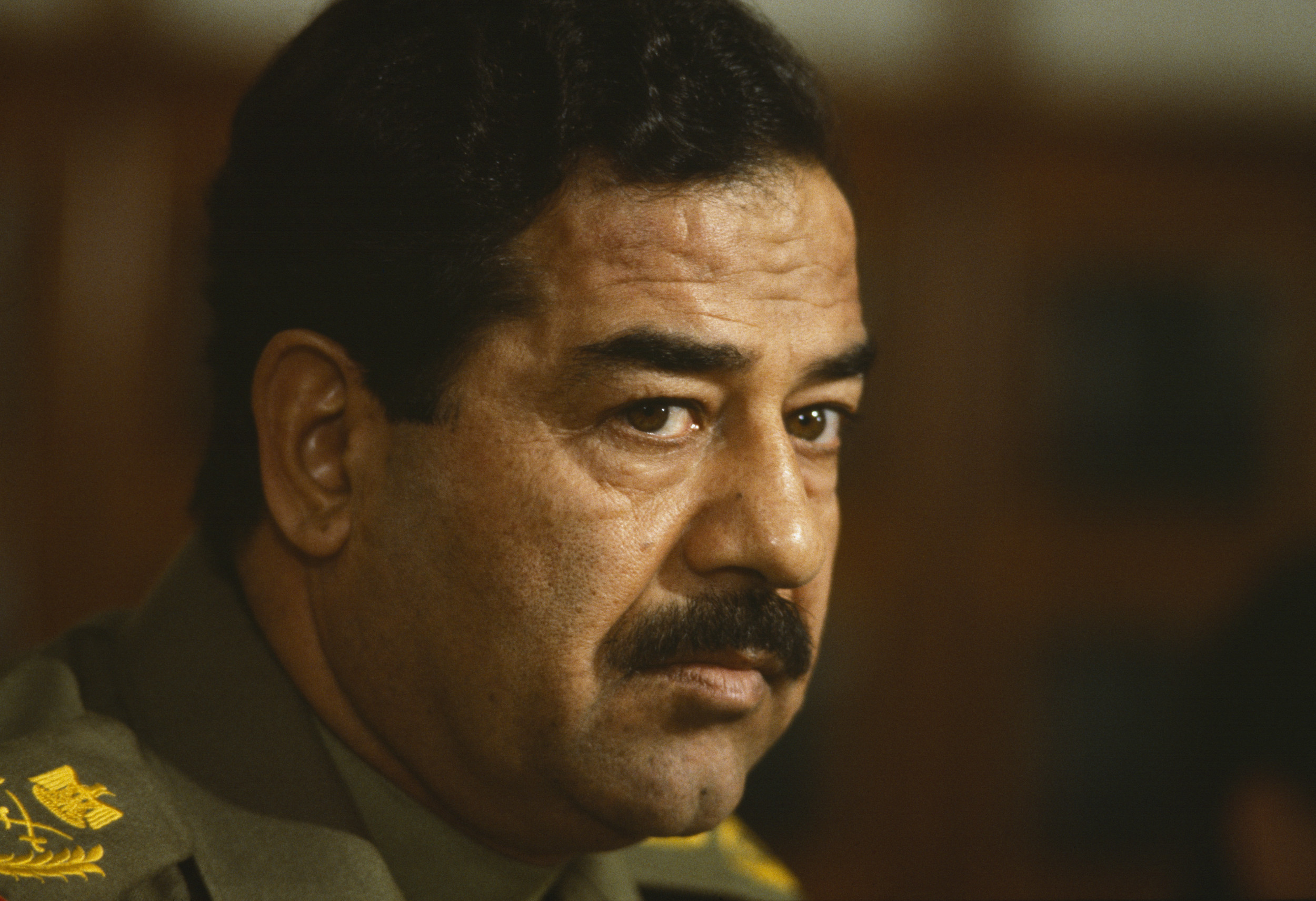
While the U.S. intelligence community failed to see the 9/11 plot, it overestimated the threat of Iraqi WMDs. Iraqi leader Saddam Hussein. Jacques Pavlovsky/Sygma via Getty Images

Though many government analysts would change their view regarding the tubes—and Iraq would argue vociferously, and accurately, that the tubes were indeed intended to build multiple rocket launchers—the debate would continue up until the March 2003 invasion of Iraq. It is now clear in hindsight that Iraq was front and center in Washington and a focus of the Bush administration long before 9/11. The outgoing Clinton administration not only left the status of Iraq’s WMD unclear, and a priority for intelligence collection, but had instituted a policy (adopted by the new Bush team) that there could be no certification of Iraq being free of biological, chemical or nuclear weapons, nor normalization of relations, until there was regime change. The approach left little room for a negotiated settlement, paving the way to eventual war.

Follow the Newsweek live tweet of September 11, 2001 (based upon the new book On That Day) starting at 4:45 a.m. EST @Roadto911.

Saturday, May 22, 2021

Iran Closes In On A Nuclear Bomb: Daniel 8

Without a Nuclear Deal, How Close Is Iran to a Bomb?


Jonathan Tirone
May 20, 2021, 10:00 PM MDT
Three years after former President Donald Trump withdrew the U.S. from a landmark nuclear agreement with Iran, Tehran’s government is closer to having the material needed for a nuclear weapon than if the deal had remained in place. Iranians have enriched more uranium to higher levels using more sophisticated technologies than they would otherwise have had access to under a strict monitoring regime. Those developments have led President Joe Biden’s administration to join diplomats from Europe, China and Russia in seeking to revive the 2015 agreement, which reined in Tehran’s atomic program in exchange for relief from economic sanctions.

  1. How close is Iran to making a bomb?

Iran has accumulated enough enriched uranium (meaning it has an increased concentration of the isotope uranium-235) to construct several bombs should its leaders choose to purify the heavy metal to the 90% level typically used in weapons. For the first time, the nation is producing small quantities of highly enriched uranium, purified to levels of 60%, demonstrating that its engineers could quickly move to weapons-grade. International Atomic Energy Agency inspectors report the country has stockpiled more than 3,000 kilograms of low-enriched uranium, which typically has 3%-5% concentration of U-235. That’s 10 times the volume allowed under the 2015 agreement.

Iran’s 5% Enriched Uranium Stockpile

Iran’s low-enriched inventory up 10 fold since Trump broke deal
Source: IAEA data compiled by Bloomberg

  1. Why is enrichment so important?

Obtaining the material necessary to induce atomic fission is the most difficult step in the process of making nuclear power or bombs. Countries need to develop an industrial infrastructure to produce uranium-235 isotopes, which comprise less than 1% of matter in uranium ore but are key to sustaining a fission chain reaction. Thousands of centrifuges spinning at supersonic speeds are used to separate the material. The IAEA keeps track of gram-level changes in uranium inventories worldwide to ensure the material isn’t being diverted for weapons. Whether or not Iran retains the right to enrich uranium has been at the heart of its nuclear conflict with the U.S. for two decades.

Iran’s History of War and Weapons

  1. Did the 2015 deal slow Iran’s progress?

The latest in global politicsGet insight from reporters around the world in the Balance of Power newsletter.
Yes. The deal was written to ensure that even if it was someday broken, Iran would need at least a year to restore weaponization capacity. Iran forfeited some 97% of its enriched uranium and mothballed three-quarters of the industrial capacity needed to refine the heavy metal. Before the accord, Iran had enough to potentially build more than a dozen bombs. Iran always maintained it was pursuing nuclear energy, not nuclear weapons, but world powers doubted that claim.

  1. Why did Iran break its part of the agreement?

President Hassan Rouhani waited a year after the Trump administration reimposed sanctions before giving the orders to break the nuclear covenants set out by the accord. Over the last 18 months, Iran has shown it could steadily lift its atomic capacity despite the best efforts of saboteurs and assassins to derail the program.

  1. Can the deal be revived?

Biden promised during his presidential campaign that if Iran returned to compliance with its obligations under the 2015 deal, the U.S. would also return to the deal and lift sanctions. Diplomats bunkered down in Vienna have conducted intensive talks over two months to revive the accord. As of mid-May, they’d made substantial progress and were close to reinstituting the safeguards needed to ensure Iran can’t construct a weapon. Envoys are under pressure to seal a return to the accord before Iran’s presidential election in June, when the outcome is expected to favor political hardliners.

  1. What happens if the agreement is revived?

To return to compliance with the deal’s limits, Iran would have to dramatically reduce uranium stockpiles and sideline much of its enrichment technology. International inspectors would again have full access to places where nuclear material is produced, an important consideration as monitors continue parsing information about the country’s alleged historical weapons-related activities. Iran would win reprieve from sanctions that hamstrung its exports of oil and other economic activities. While some of the nuclear limitations in the deal begin to expire in 2025, diplomats expect follow-on talks to take place that would focus on regional security and Iran’s production of ballistic missiles.

  1. What happens if there’s no deal?

After entering the original deal in 2015, then-President Barack Obama said the alternative might have been a military conflict with major disruptions to the global economy. Over the last three years, the dispute between Washington and Tehran has roiled the wider Middle East, fueling conflicts where Iran and American allies are on opposing sides, with Iran blamed for attacks on shipping in key waterways.

Friday, May 21, 2021

The Beast of the Earth Adds His Insight on Iran: Revelation 13

George W. Bush: ‘Iranian influence’ is behind Hamas attacks on Israel


By Steven Nelson
Former President George W. Bush said in a new interview that Iran helped spur the Hamas terrorist group to attack Israel.

Bush told Fox News that what “you’re seeing playing out is Iranian influence targeted toward Israel.”

“I think the best approach with regard to Iran is to understand that their influence is dangerous for world peace,” he said.

The Republican former commander in chief said “they are very much involved with extremist movements in Lebanon and Syria and Yemen, and they are aiming to spread their influence.”

Hamas is a Palestinian offshoot of Egypt’s Muslim Brotherhood, a Sunni Islamist movement that seeks to infuse religious fundamentalism into government. The US has condemned the group — which has controlled Gaza since 2007 — as a terrorist organization.

Although Iran opposed Sunni extremists in civil wars in Syria and Yemen, it allegedly supports the Palestinian group in fighting common enemy Israel.

The Lebanese Shiite group Hezbollah, which is closely linked to Iran, joined the current fighting by firing its own missiles at Israel this week.

Other Republicans, including Senate Minority Leader Mitch McConnell (R-Ky.) have speculated that Iran arms Hamas, which launched about 3,750 rockets over nine days from poverty-stricken Gaza toward Jerusalem and Tel Aviv.

McConnell said Iran backs Hamas and “keeps their rocket arsenals full.”

Hamas launched a barrage of missiles into Israel beginning last week after clashes in Jerusalem sparked by an Israeli court decision that ordered the eviction of Palestinian tenants who stopped paying rent in East Jerusalem.

Although Iran’s precise involvement in regional conflicts often is murky, the head of the Iranian Revolutionary Guard Corps, Gen. Hossein Salami, said Wednesday that “Tehran backs the Palestinians’ fight against the Zionist regime.”

Salami boasted, “The Palestinians have emerged as a missile-equipped nation.”

Bush, who was president from 2001 to 2009, led the US invasion of Afghanistan in 2001 after 9/11 and ordered the US invasion of Iraq in 2003, making claims about weapons of mass destruction that turned out to be bogus.

Rockets fired by Hamas from Gaza City heading towards Israel on May 18, 20219.
Rockets fired by Hamas from Gaza City heading toward Israel on May 18, 2021.
Photo by MAHMUD HAMS/AFP via Getty Images
US military involvement in the Middle East later divided Republicans, with former President Donald Trump calling the invasion of Iraq one of the worst decisions in US history, in part because it allowed Iran’s influence to expand during a long-running insurgency against US troops.

Bush has rarely commented on political issues since leaving office, but told Foxnews.com that he’s concerned about efforts by the Biden administration to resurrect a nuclear deal with Iran that was brokered under former President Barack Obama. He said a new deal should be “comprehensive.”

“Any deal that is done has got to not only focus on its nuclear capabilities, but also its influence in the Middle East,” Bush said. “And you know, any deal, you’ve got to keep in mind the dangers of an aggressive Iran to our allies, and to stability, so it has to be a comprehensive look.”

Bush also offered support for the Abraham Accords negotiated by Trump’s son-in-law Jared Kushner. The accords resulted in the recognition of Israel by four Arab countries.

“Once the sit-in settles down, and if those Abraham Accords hold, it will make it easier to establish peace,” Bush said. “But right now, those who don’t want peace are provoking and attacking Israel, and Israel is, of course, responding for national security reasons.”

Thursday, April 15, 2021

Canadian nuclear horn rises: Daniel 7

Uranium production to resume in Canada

13 April 2021

Canada’s Cameco and Orano Canada on 9 April both announced plans to resume uranium production. Cameco said that it plans to restart production at its Cigar Lake uranium mine located in northern Saskatchewan. Production at Cigar Lake was temporarily suspended in December 2020 due to increasing risks posed by the Coronavirus (COVID-19) pandemic. At that time, the availability of workers in critical areas was shrinking due to the pandemic, with more individuals screening out or residing in communities with pandemic-related travel restrictions.

“The safety of our workers, their families and communities is always our top priority,” said Cameco president and CEO Tim Gitzel. “In recent months we have implemented several enhanced safety protocols for Cigar Lake, including increased distancing between passengers on flights, mandatory medical-grade masks for all workers and increased sanitisation and physical barriers in our eating areas. We also worked with the Saskatchewan Health Authority and have established a licensed COVID-19 testing facility at the mine site. These further safety measures, along with the provincial vaccine rollout programme and increased confidence around our ability to manage our critical workforce, have given us greater certainty that Cigar Lake will be able to operate safely and sustainably.”

Cameco said the timing of production restart and the production rate at Cigar Lake will depend on how quickly it is possible to remobilise the workforce. “Cameco will not be in a position to provide updates to our outlook for 2021 until production has resumed and we understand the rate at which we will be able to sustainably operate the mine, it said.

Gitzel said Cameco always intended to resume production. “There are significant costs associated with having the mine in temporary care and maintenance, and we have a home in our contract portfolio for these low-cost pounds. We will also continue to purchase material, as needed, to meet our committed deliveries. Having said that, worker health and safety is our top priority, and we will not hesitate to take further action if we feel our ability to operate safely is compromised due to the pandemic.”

Cameco said its strong balance sheet has provided the company with the financial capacity to successfully manage the production disruption at Cigar Lake. As of 31 December 2020, Cameco had $943 million in cash and short-term investments and a $1 billion undrawn credit facility. The Cigar Lake operation is owned by Cameco (50.025%), Orano Canada (37.1%), Idemitsu Canada Resources Ltd (7.875%) and Tepco Resources (5.0%). It is operated by Cameco.

Orano Canada said it will resume production at its McClean Lake uranium mill over the coming weeks in tandem with the announced restart of production at the Cigar Lake uranium mine. Production has been paused at McClean Lake since late December, “but the operation has maintained its staffing levels to minimise disruption to our employees while performing maintenance, training and preparations to enable a smooth restart of the mill”, Orano said.

“I am pleased with the restart of production at the Cigar Lake mine and McClean Lake mill,” said Orano Canada President and CEO Jim Corman. “We are encouraged to see that the vaccine roll out in northern Saskatchewan specifically is having a real impact and that the pace of vaccinations throughout the Province is accelerating.

“Safety remains our utmost priority and we have been proud to continue to offer a safe workplace over this difficult year.”

Orano Canada accounted for the processing of 10 million pounds of uranium concentrate produced in Canada in 2020. Orano Canada has been exploring for uranium, mining and milling in Canada for more than 55 years. It is the operator of the McClean Lake uranium mill and a major partner in the Cigar Lake, McArthur River and Key Lake operations. The company employs over 450 people in Saskatchewan, including about 320 at the McClean Lake operation where over 46% of employees are self-declared Indigenous. Orano Canada is a subsidiary of the multinational Orano group.

Sunday, February 7, 2021

IAEA inspectors watch the Iranian Nuclear Horn Grow: Daniel 8:4


IAEA inspectors find new evidence of Iran’s undeclared nuclear work — WSJ

AL-MUKALLA: Several European ambassadors to Yemen visited the southern port of Aden, the interim capital of the country, on Saturday as Yemeni officials reported that the Houthis were raising obstacles during the prisoner swap talks in Amman.

The ambassador of the EU and ambassadors of France, Germany, France, the Netherlands, Belgium, Sweden, Ireland and Finland, as well as the deputy ambassador of Norway, landed in Aden, where they discussed peace efforts with senior government officials.

Ahmed Awad bin Mubarak, Yemen’s foreign minister, was quoted by the official media thanking the EU ambassadors for their visit to Aden that carries an “important political message” of support to the Yemeni government, adding that he discussed with the ambassadors the Riyadh Agreement, Houthi resistance to repairing the Safer tanker, the government’s efforts to restore services in the liberated provinces and the government willingness to reach a “real, comprehensive and lasting” peace in Yemen.

The EU delegation is the highest ranking group of foreign envoys to visit Aden since the arrival of Yemen’s new government, which was formed under the Riyadh Agreement.

The Yemeni government delegation in the prisoner swap talks in Amman said the talks encountered a stumbling block after the Iran-backed Houthis refused to swap abducted journalists and activists and seriously ill abductees.

“The Yemeni government delegation has offered concessions for the talks to succeed,” Majed Fadhail, deputy minister of human rights and a member of the government delegation in the talks, told Arab News on Saturday, adding that the Houthis have become more uncompromising and sought to obstruct the talks.

The Yemeni official attributed the Houthis’ new hardline behavior during talks to the US decision to reverse the designation of the Houthis as terrorists.

“Everyone must know that this criminal and terrorist militia refuses to release the remaining journalists in their detention or even consider swapping them with their fighters captured on the battlefields,” Fadhail said.

Representatives of the Yemeni government and the Houthis last month resumed UN-backed prisoner exchange talks with the aim of releasing 301 prisoners on both sides.

At the same time, the Abductees Mothers’ Association, an umbrella organization for thousands of relatives of abductees in Yemen, called for the urgent release of 127 extremely sick prisoners held by the Houthi militia and the Yemeni government.

Fadhail said the government delegation presented names of dozens of sick abductees among the Houthi prisoners and demanded their release during this round of talks. “We floated their names during the talks, but the Houthis refused to discuss releasing them,” Fadhail said.

In a social media campaign Yemeni activists, journalists and politicians demanded an end to Houthi crimes against Yemenis and criticized the US move to drop the terrorist designation of the Houthis.

Using the hashtag #StopHouthiTerrorismInYemen, dozens of Yemenis said that the Houthis have displaced thousands of people, abducted thousands more, blown up the houses of their opponents and carpeted the Yemeni land with tens of thousands of landmines.

Jamal Al-Mamari, a former abductee, reminded the new US administration in a tweet that the Houthis had tortured and killed an American contractor John Hamen, who died in Houthi custody in 2015

“For the Yemenis, the word Houthis means death, destruction, kidnapping, displacement, prisons, torture, diseases, starvation and rape,” said Mohammed Al-Asal, the deputy governor of Raymah province.

Yemeni activists also expressed opposition to any peace deal with the Houthis that does not punish them for human right abuses.

“Yemen does not want an incomplete peace with the Houthi militia who only believe in the language of exclusion, murder, torture, pillage and lack of equal citizenship. Our demand is a comprehensive and just peace, punishing the Houthis for all violations and crimes they committed and disarming them,” Huda Al-Sarari, a Yemeni lawyer and human rights activist who documents human right abuses in the southern city of Taiz.

The US administration should have used the terrorism designation of the Houthis as pressure to force them to stop obstructing the UN mission to repair the floating Safer tanker, Yemen experts said.

“By revoking Houthis designation unconditionally, the Biden administration made a huge mistake. It could have been used as leverage on the Houthis to deliver something in return — at least to allow engineers to empty the Safer. The US just lost that leverage for nothing,” said Nadwa Al-Dawsari, a Yemeni conflict analyst and a non-resident fellow at the Middle East Institute.

Friday, February 5, 2021

Iran deepens breach of nuclear deal: Daniel 8

Iran deepens breach of nuclear deal at underground enrichment site

Tehran has recently accelerated its breaches of the deal, raising pressure on US President Joe Biden.

Iran has deepened a key breach of its 2015 nuclear deal, enriching uranium with a larger number of advanced centrifuge machines in an underground plant as it faces off with the new US administration on salvaging the accord.

Tehran has recently accelerated its breaches of the deal, raising pressure on US President Joe Biden as both sides say they are willing to come back into compliance with the badly eroded agreement if the other side moves first.

Iran began its breaches in 2019 in response to Washington’s withdrawal in 2018 under then-President Donald Trump and the reimposition of US economic sanctions against Tehran that were lifted under the deal.

The accord says Iran can refine uranium only at its main enrichment site – an underground plant at Natanz – with first-generation IR-1 centrifuges. Last year Iran began enriching there with a cascade, or cluster, of much more efficient IR-2m machines and in December said it would install three more.

“Iran has completed the installation of one of these three cascades, containing 174 IR-2m centrifuges, and, on 30 January 2021, Iran began feeding the cascade with UF6,” the International Atomic Energy Agency said in a report obtained by Reuters on Tuesday, referring to uranium hexafluoride feedstock.

The IAEA later confirmed that the Islamic Republic had started enriching with the second cascade.

Tehran is also pressing ahead with the installation of more advanced centrifuges, the report indicated. Of the remaining two cascades of IR-2m machines, installation of one had begun while the other’s installation was “nearing completion,” it said.

Iran’s ambassador to the IAEA, Kazem Gharibabadi, said on Twitter Tehran had also started installing IR-6 centrifuges at Fordow, a site dug into a mountain where Iran has begun enriching uranium to the 20% purity it last achieved before the 2015 deal. The IAEA report made no mention of that.

Earlier on Tuesday Israel’s energy minister said it would now take Iran about six months to produce enough fissile material for one nuclear weapon, a timeline almost twice as long as that anticipated by a senior Biden administration official.

Iran denies any intent to weaponise enrichment. The nuclear deal sets a limit of 3.67% enrichment purity, suitable for producing civilian nuclear energy and far below the 90% that is weapons-grade.

Thursday, February 4, 2021

Blinken: Iran Will Be Ready to Develop Nuclear Weapon in ‘Weeks’

Blinken: Iran Could Be Ready to Develop Nuclear Weapon in ‘Weeks’

Asharq Al-Awsat

Tuesday, 2 February, 2021 – 06:45

How Iran Lured a Dissident From France to Execution

Tuesday, 2 February, 2021 – 06:15

In October 2019, Iranian dissident Ruhollah Zam was running a widely followed news site based in France, accompanied by his family and benefitting from refugee status as well as security in his country of exile.

But just over a year later, on December 12, 2020, Zam was hanged in Iran, an execution that prompted international condemnation.

How had Zam gone from the relative comfort of his life in France to meeting his death aged just 42 at the hands of the hangman in his home country, whose leaders he had targeted in his work?

His father Mohammad Ali Zam is a cleric still based in Iran and was, at one time, a senior figure in Iranian cultural institutions.

So fervent was his support of the 1979 Islamic Revolution that ousted the Shah that he named his son after its founder, Ruhollah Khomeini.

Colleagues and friends of Ruhollah Zam in France told AFP that he had made the mistake of being lured into a trip to Iraq in October 2019, defying their warnings of danger and falling into a trap set to exploit his own character.

“He played a dangerous game by going to Iraq and he lost,” said Mahtab Ghorbani, a Paris-based Iranian writer and a refugee who worked with Zam.

“He was dragged into a dirty psychological game designed by this regime.”

Resident in France for almost half a decade, Ruhollah Zam had attracted up to two million followers to his Telegram channel Amadnews, encouraging people to turn out in protests during the winter of 2017-2018 and also publishing sometimes sensational allegations about the Iranian leadership.

As the privileged child of an influential father, Zam enjoyed good contacts in Tehran which he held onto even after leaving the country following the 2009 protests over disputed elections.

He first went to Malaysia and Turkey, and then France.

“When there were turf wars between people in power, they turned to Zam,” said Maziyar, a friend and fellow Iranian refugee, who worked on Amadnews and asked that his full name not be published.

“He delivered information without limits, he had no red line, he respected neither the president, nor the supreme leader, nobody. He even laughed at his own father.”

But the success of Amadnews and Zam’s own growing radicalism proved their undoing as Telegram suspended the account for inciting followers to use Molotov cocktails against police.

Zam’s influence appeared to be waning. Even friends began to question if he was pushing too hard for the overthrow of the Iranian regime.

“Ruhollah became really well known. He advocated the overthrow of the regime and maybe he started to think of himself as a leader,” said Hassan Fereshtyan, a Paris-based lawyer who assisted Zam.

“Bit by bit, he lost his friends,” he said.

“He was alone and isolated, and part of the Iranian opposition in exile did not trust him,” added Ghorbani.

He was also receiving an increasing number of threats, which prompted French police to give him protection.

His friends said this was a dark time for Zam, a hugely ambitious man who feared that the media presence he had built up so fast was now rapidly losing clout.

“He was in the position where he could make bad decisions and fall for the trap,” said Maziyar.

In mid-October 2019, he appeared at Fereshtyan’s Paris office and told the astonished lawyer that he was going to travel to Iraq to conduct an interview with Ayatollah Ali Sistani, one of the most influential figures in Shia Islam.

This interview was supposed to launch a new television channel suggested by an individual claiming to be an Iranian businessman.

His associates immediately sensed the danger, given the security influence Iran has in Iraq.

“I shouted, I told him: ‘If you go, it’s the end, you will never come back to France!'” said Fereshtyan.

And even though Zam gave no indication of when he planned to go, he took the plane to Amman and then onwards to Baghdad the next day.

“Everyone advised him against leaving, even his bodyguard, but he simply replied that he was tired of waiting,” added Maziyar.

“And he went. Sadly.”

Zam telephoned his wife from Amman airport but he appears to have been apprehended as soon as he arrived in Baghdad.

He was later blindfolded, put into a car and driven to the Iranian border in footage later seen on Iranian state TV.

His detention inside Iran saw him in July 2020 give an interview to state TV, a method used on prisoners in Iran that activists regard as a forced confession extracted by torture.

Sitting in a deep armchair, he was interviewed on the program “Without Compliments” by Ali Rezvani, officially a journalist for state broadcaster IRIB but who campaigners say is actually an interrogator for the Revolutionary Guards.

Zam was convicted of charges including “sowing corruption” and spying for foreign intelligence including France and Israel, accusations vehemently denied by him and his supporters.

His execution on December 12 came just four days after the confirmation of the supreme court’s verdict was announced, a haste that is unusual.

His father wrote on his Instagram account that he was allowed to meet his son a day before the execution, about which he said Ruhollah had been kept in the dark.

His daughter Niaz wrote on social media that her father had called on WhatsApp — inexplicably from a +44 UK number — hours before his execution.

“I knew that was it, and the hardest thing was that I knew and I could not do anything about it!” she wrote.

Still in grief, the family declined requests for interviews from AFP through their lawyer.

The United States and Europe expressed outrage at the execution while UN rights chief Michelle Bachelet said there were “serious concerns” that Zam’s capture outside of Iran “could amount to an abduction”.

But Iranian President Hassan Rouhani said he did not believe the killing would harm relations between Iran and Europe, noting that capital punishment is part of Iranian law.

And for dissidents based in France, the execution was a warning that their security cannot be guaranteed even while outside the country.

“With this execution, they wanted to send a message to the loyalists of the regime not to take another path,” said Ghorbani. “And also to show opponents outside of Iran their power and sow panic among them.”