Showing posts with label power. Show all posts
Showing posts with label power. Show all posts
Saturday, May 25, 2019

Thursday, May 2, 2019
How the US is Building the Saudi Nuclear Horn (Daniel 7)
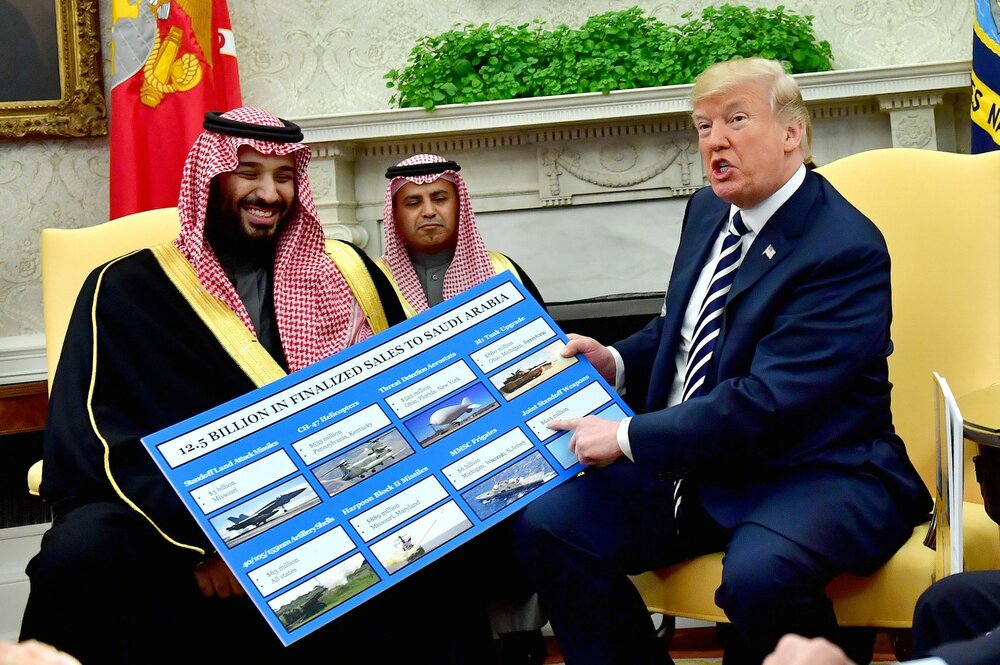
Saudi-U.S. nuclear hypocrisy exposed
KASHMIR – According to author and radio host, Harvey Wasserman, U.S. President Donald Trump’s recent decision to infuse $3.7 billion dollars into Vogtle nuclear power plants is a criminal act.
The U.S. nuclear industry is facing stiff competition from cheap natural gas and renewable energy, so financial assistance is critical for the survival of the industry. Trump administration is not only infusing money into the troubled U.S. nuclear energy sector but strongly advocating the transfer of sensitive nuclear technology to the regime in Riyadh. It has adopted a well-coordinated strategy to guarantee the survival of the U.S. nuclear industry.
The unilateral withdrawal of the U.S. from JCPOA, malign interests of the U.S. military-industrial complex and a comprehensive plan to contain Iranian influence in the Middle East are some important links that can explain the Saudi-U.S. nuclear hypocrisy.
At the superficial level, Saudi regime considers itself a strong advocate of weapons of mass destruction free zone (WMDFZ) in the Middle East but by praising the unilateral withdrawal of U.S. from JCPOA and an open admission to acquire nuclear weapons in case Iran undertakes a nuclear program is a testament to Saudi hypocrisy.
It seems logical to put deterrence against a rival but Saudi intentions to acquire nuclear weapons date back to the inception of Pakistan’s nuclear program.
The justification for deterrence against Iran is a fabricated story as we analyze the Iran nuclear deal which reduced the enriched uranium stockpile of Iran by 98% and the number of gas centrifuges reduced to two-thirds for 13 years.
Iran even agreed to halt building new heavy water facilities and enrich uranium up to 3.67%. Further it agreed on regular inspection of its nuclear program by international Atomic Energy Agency (IAEA).
In this context, the statement of former UK ambassador to UN and IAEA, Peter Jenkins that “as long as Iran is complying with the JCPOA, the U.S., Israel, and Saudi Arabia are deprived of any basis for claiming that Iran presents a nuclear threat which must be eliminated by use of force” sufficiently explains the Saudi nuclear hypocrisy.
Saudi criticism of Iran’s civilian nuclear program highlights its double standard as according to Abdul Hameed Nayyer, a Pakistani nuclear physicist, Saudi Arabia can demand nuclear weapons from Pakistan due to its generous investment in the country.
Additionally, Brigadier Feroz Hassan Khan in his book “Eating Grass: The Making Of the Pakistani Bomb” also explains the Saudi ambitions to acquire nuclear weapons.
Considering the nuclear option from Pakistan and potentially a huge space to exploit solar energy for clean power renders the establishment of nuclear infrastructure by Saudi regime useless. But the report from investigative journalist Kim Kleppin has revealed how Saudi lobby is pushing Trump administration to transfer the sensitive nuclear technology to the regime. According to the report a U.S. law firm linked to Trump vigorously lobbied the U.S. administration for nuclear technology transfer and received half a million dollars within one month of its establishment.
The vested business interests in Saudi nuclear program were revealed on February 19, 2019, in a report by the ‘house oversight and reform committee’ that disclosed Trump administration’s plan to bypass U.S. Congress for nuclear technology transfer to Saudi Arabia.
The report of the committee highlights intentions of IP3 international, a consortium of nuclear power producers. IP3 was founded by retired army general Jack Keane and its proposal was presented to White House officials by Thomas Barrack. Barrack is a close friend of Trump who raised $107 million for Trump’s inaugural committee. Michael Flynn is another central figure to the report who has worked as a paid advisor to a subsidiary of IP3 while serving in Trump’s presidential campaign. Flynn promoted IP3’s intention to sell nuclear technology to Saudi Arabia to white house officials.
McFarlane, the former national security advisor to the U.S. and currently an advisor to IP3, compared the transfer of nuclear technology to Saudi Arabia to the Marshall plan for the Middle East. According to the report, the founders of the IP3, McFarlane, and CEOs of Toshiba energy, GE power, Exelon Corporation Bechtel Corp and Siemens have promoted the plan to sell nuclear technology to Riyadh.
The retired generals who founded IP3 have always portrayed Iran as a nuclear threat but now their intentions to transfer such technology to Saudi regime is meant to serve their monetary interests. The house oversight committee quoting a senior Trumps official said “the proposal of IP3 is not a business plan but rather a scheme for these generals to make some money.”
In an interview with Sputnik, Tom Sauer of the University of Antwerp Belgium said the Saudi proposal to build about 40 nuclear reactors is a great business opportunity for troubled the U.S. nuclear industry and the Wall Street perceives peaceful Middle East as a nightmare for its military-industrial complex.
According to some experts, the nuclear technology transfer to Saudi Arabia will initiate an arms race in the Middle East that is what U.S. military-industrial complex wants.
According to Tom Collin, policy director at Ploughshares Fund, Saudis don’t require nuclear power and if the U.S. transfers such technology to the kingdom it will force Iran to restart its nuclear program.
The arms race will serve both the U.S. military industrial complex and the Saudi regime because Saudi regime wants to derail Iranian economy by draining its resources through arms race as they are frustrated by Iran’s influence and progress in the region.
It is similar to U.S. strategy to contain Russian influence by initiating arms race as the U.S. economy has an unlimited supply of petrodollars but Russian economy has limited options to finance its military and civilian projects.
IAEA has denied any military vector of Iran’s nuclear program but Saudi-U.S. hypocrisy to portray Iran as is a nuclear threat is meant to serve their vested interests. They consider nuclear arms race as a tool to serve private business interest and simultaneously a counterweight against Iran’s axis of resistance that consists of Iran, Assad government, Hezbollah and the alliance of Russia and China.
Mudasir Sheikh is a student and researcher based in Indian controlled Kashmir.
Thursday, April 25, 2019
The Accelerating Saudi Nuclear Horn (Daniel 7)

By Tim Lister and Tamara Qiblawi, CNN
Updated 3:09 AM EDT, Sun April 07, 2019
(CNN) On the outskirts of Riyadh, a building site is quickly being transformed into the birthplace of Saudi Arabia’s quest for nuclear power, a bid that has sparked concern in the US Congress and fury in Tehran.
New satellite imagery shows that construction on an experimental reactor is making „expeditious“ progress — just three months after the Kingdom announced plans to build it, according to former director for nuclear inspections at the International Atomic Energy Agency (IAEA), Robert Kelley.
Kelley estimated that the reactor could be completed in „nine months to a year.“
The Kingdom has been open about its nuclear program with the IAEA, which sent a team to Saudi Arabia last July to check on building plans. It has repeatedly pledged that the program is peaceful. But Crown Prince Mohammed bin Salman said last year that „without a doubt if Iran developed a nuclear bomb, we will follow suit as soon as possible.“
Also raising concern among industry experts and some in Congress is the Saudi insistence that it should be allowed to produce its own nuclear fuel, rather than import it under strict conditions.
In an interview last year, Saudi Energy Minister Khalid al Falih said: „It’s not natural for us to bring enriched uranium from a foreign country to fuel our reactors,“ citing the country’s uranium reserves.
Vision 2030
Saudi Arabia went public with its nuclear ambitions nine years ago, but the plans have gone into overdrive as part of the Crown Prince’s „Vision 2030“ — a strategy to wean Saudi Arabia off its reliance on oil and diversify both the economy and its energy mix.
It already consumes about one-quarter of its own oil production, and output is likely to remain roughly stable even as demand for energy is expected to triple by 2030. So the blueprint for Vision 2030 includes solar and wind power as well as a nuclear program in an effort to source one-third of energy needs from non-oil resources.
Longer-term, Saudi Arabia envisions 17 gigawatts of nuclear capacity by 2040, enough to provide 15% of its power needs.

Robert Kelley, former director for nuclear inspections at the IAEA, has said that Saudi Arabia’s nuclear reactor is designed for training scientists.
The experimental reactor under construction at the King Abdulaziz City for Science and Technology is designed for training scientists, Kelley told CNN.
„It’s the size of a waste basket and has no strategic importance,“ he said, adding that it would take 100 years to process enough plutonium for a nuclear weapon.
Next, the Saudis want to build two commercial reactors and are shopping around for contractors. There are five finalists, according to the Saudis: Westinghouse from the US, as well as companies from China, Russia, France and South Korea. Saudi Arabia has also signed agreements with the China National Nuclear Corporation for exploring uranium reserves in the Kingdom.
The IAEA sent a team to Saudi Arabia in July last year to review the development of its nuclear power infrastructure. That mission concluded that the Kingdom is „well placed to finalize its plans for construction of its first nuclear power plant“ through partnerships with countries that have nuclear power industries.

Saudi Arabia consumes around one quarter of its own yearly oil production.
In a visit to Riyadh in January, Mikhail Chudakov, IAEA Deputy Director General, confirmed Saudi Arabia had „made significant progress in the development of its nuclear power infrastructure.“
But when the Saudis want to move to the next stage — fueling the reactor at King Abdulaziz City and any commercial plants — they will have to submit to more intrusive IAEA involvement.
„They’ve been exempt for 30 years since they signed a non-proliferation treaty,“ said Kelley. „Now they’re going to have to make some serious paperwork and agree to inspections,“ if they want to acquire nuclear fuel.
US concerns
Skepticism in the US Congress over whether Saudi Arabia can be a trusted partner has grown since the gruesome murder of journalist Jamal Khashoggi in Istanbul last year. That’s now manifested itself in critical scrutiny of the Saudi nuclear program — and especially whether the Trump Administration is doing enough to ensure non-proliferation.
Asked whether it was acceptable for Saudi Arabia to become a nuclear power, US Secretary of State Mike Pompeo was unequivocal in a TV interview on Friday.
„We will not permit that to happen. We will not permit that to happen anywhere in the world,“ Pompeo told CBS. „The President understands the threat of proliferation. We will never write a $150 million check to the Saudis and hand them over the capacity to threaten Israel and the United States with nuclear weapons, never.“
A bipartisan resolution introduced in the Senate in February demanded that the use of any US nuclear power technology in Saudi Arabia must be accompanied by safeguards to ensure Saudi Arabia cannot enrich uranium or reprocess spent fuel.
„The last thing America should do is inadvertently help develop nuclear weapons for a bad actor on the world stage,“ said Democratic Senator Jeff Merkley, one of the resolution’s sponsors.

US Secretary of Energy Rick Perry has warned that Saudi Arabia will look to China or Russia to develop its nuclear industry if the US fails to cooperate.
House Democrats in February claimed that in 2017 White House officials had pushed the sale of nuclear technology to Saudi Arabia despite warnings from National Security Council officials. A spokesman for Republicans on the House Intelligence Committee, said the report amounted to „a ridiculous conspiracy theory.“
In heated exchanges at the Senate Armed Services committee at the end of March, US Energy Secretary Rick Perry said that if the United States did not cooperate with the Saudis, they would look to Russia or China to develop their nuclear industry.
„I can assure you that those two countries don’t give a tinker’s damn about non-proliferation,“ Perry said.
„That’s why we continue to work very, very diligently to try to bring those countries that want to develop civil nuclear programs into the sphere of the United States, because we are committed to non-proliferation.“
Perry said his department had approved several applications for US companies to sell nuclear power technology and assistance to Saudi Arabia. However, they do not allow the transfer of nuclear material, equipment or components.
Iran claims that the Trump Administration plans to sell Saudi Arabia nuclear technology without sufficient safeguards. „First a dismembered journalist; now illicit sale of nuclear technology to Saudi Arabia fully expose #USHypocrisy,“ Foreign Minister Javad Zarif tweeted in February.
And in March, Ali Shamkhani, secretary of Iran’s Supreme National Security Council, accused unnamed regional states of developing „suspicious nuclear projects,“ which would force Tehran to revise its defense strategy. Quoted by Iranian news agencies, Shamkhani said such plans would „force us to revise our strategy.“
Whatever Saudi Arabia’s energy strategy, and however sincere its pledge that it has no wish to develop nuclear weapons, the mere existence of a nuclear program is bound to inflame tensions across the Gulf.Friday, April 19, 2019
Trump is Helping the Saudi Nuclear Horn (Daniel 7)

Is the Trump Administration Helping the Saudis Build a Bomb?
The crown prince can’t be trusted with a bone saw, let alone nuclear weapons.
By Doug Bandow • April 18, 2019
President Donald Trump went dancing with the Saudi royals in Riyadh, where he tried to sell America’s principles in exchange for a mess of weapons contracts. Since then, Secretary of State Mike Pompeo has become Saudi Arabia’s lead PR counsel in America. The Pentagon is the Saudi regime’s premier armorer.
Now Energy Secretary Rick Perry is acting as chief nuclear procurer for the Saudis. “By ramming through the sale of as much as $80 billion in nuclear power plants,” The New York Times warned recently, “the Trump administration would provide sensitive knowhow and materials to a government whose de facto leader, Crown Prince Mohammed bin Salman, has suggested that he may eventually want a nuclear weapon as a hedge against Iran and has shown little concern for what the rest of the world thinks.”
Obviously, Trump has not endorsed a Saudi nuclear weapon. However, his administration’s ongoing attempt to provide the Kingdom with nuclear technology raises serious questions about U.S. policy.
America’s relationship with Riyadh has long been fraught with tension, inconsistency, and hypocrisy. The faux friendship revolves around oil, the lifeblood of the Western economy. However, the fracking revolution turned the U.S. into an energy super-supplier, and other hydrocarbon sources have since emerged. And if Washington stopped routinely sanctioning other governments for not following its dictates, oil producers such as Iran, Russia, and Venezuela would be supplying international markets, further reducing Riyadh’s importance.
American officials like to promote the Saudis’ antediluvian absolute monarchy as the foundation for Middle East stability. Alas, the price is unrivaled repression. Despite the crown prince’s reputation as a social reformer, he so far has not relaxed the Kingdom’s totalitarian political or religious controls one bit.
And that brutality has not guaranteed stability. Saudi Arabia looks brittle, an artificial, antiquated governing structure held together by tyranny and bribery. In time, it will likely lose to demands for justice, equality, and democracy, which have doomed a host of other corrupt, brutal, Mideast dictatorships, most recently Sudan’s Omar al-Bashir.
Outside of the country, Crown Prince Mohammed bin Salman (MbS) has pursued a wild and reckless strategy of regional domination. Even Senator Lindsey Graham, perhaps the United States’ most war-happy lawmaker, has called MbS “crazy,” “dangerous,” and a “wrecking ball.”
The KSA has backed radical Islamists in Syria, subsidized the al-Sisi dictatorship in Egypt, kidnapped Lebanon’s prime minister, used troops to sustain Bahrain’s dictatorial Sunni monarchy, isolated Qatar, kidnapped and murdered Saudi critics in foreign nations, invaded Yemen, intensified the Mideast’s long-running sectarian conflict, and promoted General Khalifa Haftar’s attack on Libya’s internationally recognized government. MbS is even willing to court war with Iran if he believes it’s necessary for regional domination.
Moreover, the Saudi royals are not Westerners in different dress. They have poured $100 billion into the promotion of intolerant fundamentalist Wahhabism around the world, including in Yemen, where a Saudi-Emirati coalition has allied with radical jihadists against the Houthis, who had opposed al-Qaeda in the Arabian Peninsula.
Nuclear weapons would further embolden MbS. Currently there is no active nuclear program. Nevertheless, suspicions about Riyadh’s intentions are legion. A decade ago, King Abdullah bin Abdulaziz told U.S. officials that if Iran acquired a nuke, “we will get nuclear weapons.” Last year, MbS said, “If Iran developed a nuclear bomb, we will follow suit as soon as possible.”
Nevertheless, the Trump administration is pushing the sale of nuclear technology to Saudi Arabia. And no one seems to know what safeguards will be imposed and whether MbS will abide by those limits. “There’s a legitimate question over whether such a government could be trusted with nuclear energy and the potential weaponization of it,” worries Senator Marco Rubio. Senator Jeff Merkley agrees: “The last thing America should do is inadvertently help develop nuclear weapons for a bad actor on the world stage.” The two are pushing legislation that would give Congress the final say over any sale.
The transfer of nuclear reactors is usually not controversial, so long as it’s accompanied by a cooperation agreement under Section 123 of the Atomic Energy Act. Deputy Energy Secretary Dan Brouillette insists, “We won’t allow them to bypass 123 if they want to have civilian nuclear power that includes U.S. nuclear technologies.” Legislators remain wary, however, complaining that seven permits, called “Part 810 authorizations,” have been issued to firms to provide nuclear technology to Saudi Arabia without notification to Congress. “I believe the Saudis saw an opportunity with Trump and [son-in-law Jared] Kushner to conclude this rapidly on their terms, holding out the promise of major purchases,” charges Thomas Countryman, head of the Arms Control Association.
In fact, the Saudis, in contrast to the Emiratis, want to enrich uranium, which offers a principal opportunity to divert nuclear materials for military use. And Riyadh hasn’t agreed to any weapons inspections. As a result, if the Saudis come to believe they “need” a bomb—and their criteria might broaden over time—any peacetime program could automatically be turned into one for military development.
Admittedly, America’s refusal to deal might not stop Riyadh. Prince Turki al-Faisal has pointed to China, France, Pakistan, and Russia as other options, a point that’s been echoed by administration officials. Even so, Washington should not aid, even inadvertently, another nation, especially such a repressive and aggressive power, in acquiring nuclear weapons. The consequences would be grave, including to America’s nonproliferation credentials.
Prince al-Faisal also pointedly included “our friends in Pakistan” as a nuclear power option. But Islamabad could provide more than peaceful energy. Riyadh might purchase weapons directly from the cash-strapped and unstable Pakistan government—especially since the Saudis financed the Pakistani nuclear program. Doing so would cause an international furor, but for years, A.Q. Khan, father of the Pakistani bomb, has essentially operated a Nukes “R” Us open to the world. When confronted, Islamabad closed down Khan’s market, but with the right incentives it might be convinced to accept another client.
Six years ago, Israel’s former head of military intelligence, Amos Yadlin, claimed that Pakistan had already produced and set aside weapons for Riyadh. Gary Samore, who advised President Barack Obama on nonproliferation, observes, “I do think that the Saudis believe that they have some understanding with Pakistan that, in extremis, they would have claim to acquire nuclear weapons from Pakistan.”
The Trump administration’s fixation on Iran has malformed American policy towards the rest of the Mideast, including Saudi Arabia. The United States should not take sides in the bitter Sunni-Shia rivalry that lies beneath the Saudi-Iran conflict. It certainly shouldn’t treat Saudi Arabia as a permanent and trusted ally. The latter shares neither values nor interests with the United States, and is aggressively pursuing dangerous imperial ambitions.
Washington should drop its support for MbS’s irresponsible policies and be on guard against the Kingdom’s possible acquisition of nuclear weapons. A Saudi bomb would unsettle the region, guarantee a Middle Eastern nuclear arms race, and encourage sectarian conflict. MbS can’t be trusted with a bone saw, let alone nukes.
Doug Bandow is a senior fellow at the Cato Institute. A former special assistant to President Ronald Reagan, he is author of Foreign Follies: America’s New Global Empire.
Wednesday, April 10, 2019
Middle East Worries about the Saudi Arabia Nuclear Horn

Middle East Worries about Saudi Arabia’s Nuclear Project
Beirut, Apr 9 (Prensa Latina) Experts from the Middle East on Tuesday expressed concern about the Saudi nuclear project that is still outside the safeguards stipulated by the International Atomic Energy Agency (IAEA).
IAEA Director General Yukiya Amano made public that he asked Riyadh for its commitment to join the regulations to purchase fissionable material destined for his first atomic reactor.
Amano said that Saudi Arabia could import that material in late 2019 for a plant that is being built with Argentine assistance.
According to the IAEA chief, the Saudis were called upon to put in force an agreement, by virtue of which the agency can guarantee the peaceful nature of the project.
Saudi Arabia signed a small-scale protocol in 2005 that exempts countries with minimal or no nuclear programs from inspections.
Riyadh announced plans to invest about $80 billion USD in the construction of 16 nuclear power stations in the next two decades.
The project reportedly raises concerns about the risks of a race for nuclear weapon in the Middle East.
mh/iff/oda/arc/gdc
Monday, April 8, 2019
The Growing Saudi Nuclear Horn (Daniel 7)

Saudi nuclear program accelerates, raising tensions in a volatile region
On the outskirts of Riyadh, a building site is quickly being transformed into the birthplace of Saudi Arabia’s quest for nuclear power, a bid that has sparked concern in the US Congress and fury in Tehran.
New satellite imagery shows that construction on an experimental reactor is making “expeditious” progress — just three months after the Kingdom announced plans to build it, according to former director for nuclear inspections at the International Atomic Energy Agency (IAEA), Robert Kelley.
Kelley estimated that the reactor could be completed in “nine months to a year.”
The Kingdom has been open about its nuclear program with the IAEA, which sent a team to Saudi Arabia last July to check on building plans. It has repeatedly pledged that the program is peaceful. But Crown Prince Mohammed bin Salman said last year that “without a doubt if Iran developed a nuclear bomb, we will follow suit as soon as possible.”
Also raising concern among industry experts and some in Congress is the Saudi insistence that it should be allowed to produce its own nuclear fuel, rather than import it under strict conditions.
In an interview last year, Saudi Energy Minister Khalid al Falih said: “It’s not natural for us to bring enriched uranium from a foreign country to fuel our reactors,” citing the country’s uranium reserves.
Vision 2030
Saudi Arabia went public with its nuclear ambitions nine years ago, but the plans have gone into overdrive as part of the Crown Prince’s “Vision 2030” — a strategy to wean Saudi Arabia off its reliance on oil and diversify both the economy and its energy mix.
It already consumes about one-quarter of its own oil production, and output is likely to remain roughly stable even as demand for energy is expected to triple by 2030. So the blueprint for Vision 2030 includes solar and wind power as well as a nuclear program in an effort to source one-third of energy needs from non-oil resources.
Longer-term, Saudi Arabia envisions 17 gigawatts of nuclear capacity by 2040, enough to provide 15% of its power needs.
The experimental reactor under construction at the King Abdulaziz City for Science and Technology is designed for training scientists, Kelley told CNN.
“It’s the size of a waste basket and has no strategic importance,” he said, adding that it would take 100 years to process enough plutonium for a nuclear weapon.
Next, the Saudis want to build two commercial reactors and are shopping around for contractors. There are five finalists, according to the Saudis: Westinghouse from the US, as well as companies from China, Russia, France and South Korea. Saudi Arabia has also signed agreements with the China National Nuclear Corporation for exploring uranium reserves in the Kingdom.
The IAEA sent a team to Saudi Arabia in July last year to review the development of its nuclear power infrastructure. That mission concluded that the Kingdom is “well placed to finalize its plans for construction of its first nuclear power plant” through partnerships with countries that have nuclear power industries.
In a visit to Riyadh in January, Mikhail Chudakov, IAEA Deputy Director General, confirmed Saudi Arabia had “made significant progress in the development of its nuclear power infrastructure.”
But when the Saudis want to move to the next stage — fueling the reactor at King Abdulaziz City and any commercial plants — they will have to submit to more intrusive IAEA involvement.
“They’ve been exempt for 30 years since they signed a non-proliferation treaty,” said Kelley. “Now they’re going to have to make some serious paperwork and agree to inspections,” if they want to acquire nuclear fuel.
US concerns
Skepticism in the US Congress over whether Saudi Arabia can be a trusted partner has grown since the gruesome murder of journalist Jamal Khashoggi in Istanbul last year. That’s now manifested itself in critical scrutiny of the Saudi nuclear program — and especially whether the Trump Administration is doing enough to ensure non-proliferation.
Asked whether it was acceptable for Saudi Arabia to become a nuclear power, US Secretary of State Mike Pompeo was unequivocal in a TV interview on Friday.
“We will not permit that to happen. We will not permit that to happen anywhere in the world,” Pompeo told CBS. “The President understands the threat of proliferation. We will never write a $150 million check to the Saudis and hand them over the capacity to threaten Israel and the United States with nuclear weapons, never.”
A bipartisan resolution introduced in the Senate in February demanded that the use of any US nuclear power technology in Saudi Arabia must be accompanied by safeguards to ensure Saudi Arabia cannot enrich uranium or reprocess spent fuel.
“The last thing America should do is inadvertently help develop nuclear weapons for a bad actor on the world stage,” said Democratic Senator Jeff Merkley, one of the resolution’s sponsors.
House Democrats in February claimed that in 2017 White House officials had pushed the sale of nuclear technology to Saudi Arabia despite warnings from National Security Council officialshttp://www.andrewtheprophet.com/. A spokesman for Republicans on the House Intelligence Committee, said the report amounted to “a ridiculous conspiracy theory.”
In heated exchanges at the Senate Armed Services committee at the end of March, US Energy Secretary Rick Perry said that if the United States did not cooperate with the Saudis, they would look to Russia or China to develop their nuclear industry.
“I can assure you that those two countries don’t give a tinker’s damn about non-proliferation,” Perry said.
“That’s why we continue to work very, very diligently to try to bring those countries that want to develop civil nuclear programs into the sphere of the United States, because we are committed to non-proliferation.”
Perry said his department had approved several applications for US companies to sell nuclear power technology and assistance to Saudi Arabia. However, they do not allow the transfer of nuclear material, equipment or components.
Iran claims that the Trump Administration plans to sell Saudi Arabia nuclear technology without sufficient safeguards. “First a dismembered journalist; now illicit sale of nuclear technology to Saudi Arabia fully expose #USHypocrisy,” Foreign Minister Javad Zarif tweeted in February.
And in March, Ali Shamkhani, secretary of Iran’s Supreme National Security Council, accused unnamed regional states of developing “suspicious nuclear projects,” which would force Tehran to revise its defense strategy. Quoted by Iranian news agencies, Shamkhani said such plans would “force us to revise our strategy.”
Whatever Saudi Arabia’s energy strategy, and however sincere its pledge that it has no wish to develop nuclear weapons, the mere existence of a nuclear program is bound to inflame tensions across the Gulf.
Sunday, April 7, 2019
Acceleration of the Saudi Nuclear Horn (Daniel 7)
 Saudi nuclear program accelerates, raising tensions in a volatile region
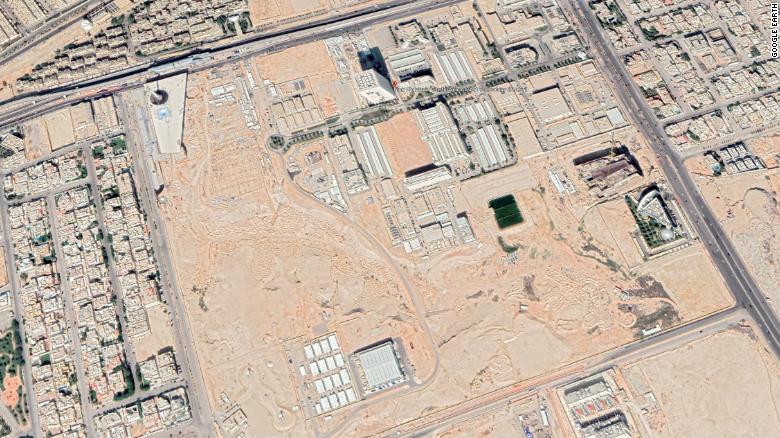
Saudi Arabia’s first nuclear reactor is located in the King Abdulaziz City for Science and Technology in Riyadh.
(CNN)On
the outskirts of Riyadh, a building site is quickly being transformed
into the birthplace of Saudi Arabia’s quest for nuclear power, a bid that has sparked concern in the US Congress and fury in Tehran.
New satellite imagery shows
that construction on an experimental reactor is making „expeditious“
progress — just three months after the Kingdom announced plans to build
it, according to former director for nuclear inspections at the
International Atomic Energy Agency (IAEA), Robert Kelley.
Kelley estimated that the reactor could be completed in „nine months to a year.“
The Kingdom has been open about its
nuclear program with the IAEA, which sent a team to Saudi Arabia last
July to check on building plans. It has repeatedly pledged that the
program is peaceful. But Crown Prince Mohammed bin Salman said last year
that „without a doubt if Iran developed a nuclear bomb, we will follow
suit as soon as possible.“
Also raising concern among industry
experts and some in Congress is the Saudi insistence that it should be
allowed to produce its own nuclear fuel, rather than import it under
strict conditions.
In an interview last year,
Saudi Energy Minister Khalid al Falih said: „It’s not natural for us to
bring enriched uranium from a foreign country to fuel our reactors,“
citing the country’s uranium reserves.
Vision 2030
Saudi Arabia went public with its
nuclear ambitions nine years ago, but the plans have gone into overdrive
as part of the Crown Prince’s „Vision 2030“ — a strategy to wean Saudi
Arabia off its reliance on oil and diversify both the economy and its
energy mix.
It already consumes about one-quarter of
its own oil production, and output is likely to remain roughly stable
even as demand for energy is expected to triple by 2030. So the
blueprint for Vision 2030 includes solar and wind power as well as a
nuclear program in an effort to source one-third of energy needs from
non-oil resources.
Longer-term, Saudi Arabia envisions 17 gigawatts of nuclear capacity by 2040, enough to provide 15% of its power needs.
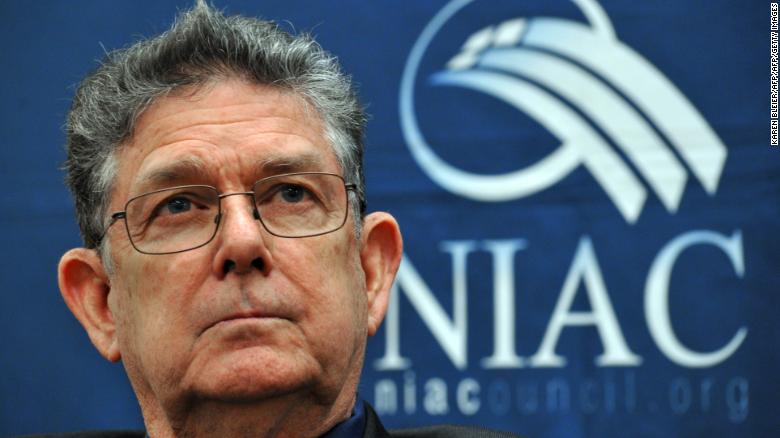
Robert Kelley, former
director for nuclear inspections at the IAEA, has said that Saudi
Arabia’s nuclear reactor is designed for training scientists.
The experimental reactor under
construction at the King Abdulaziz City for Science and Technology is
designed for training scientists, Kelley told CNN.
„It’s the size of a waste basket and has
no strategic importance,“ he said, adding that it would take 100 years
to process enough plutonium for a nuclear weapon.
Next, the Saudis want to build two
commercial reactors and are shopping around for contractors. There are
five finalists, according to the Saudis: Westinghouse from the US, as
well as companies from China, Russia, France and South Korea. Saudi
Arabia has also signed agreements with the China National Nuclear
Corporation for exploring uranium reserves in the Kingdom.
The IAEA sent a team to Saudi Arabia in
July last year to review the development of its nuclear power
infrastructure. That mission concluded that the Kingdom is „well placed
to finalize its plans for construction of its first nuclear power plant“
through partnerships with countries that have nuclear power industries.
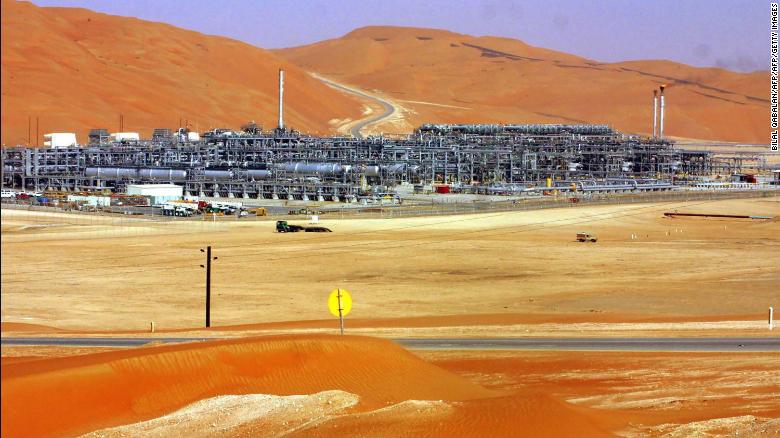
In a visit to Riyadh in January,
Mikhail Chudakov, IAEA Deputy Director General, confirmed Saudi Arabia
had „made significant progress in the development of its nuclear power
infrastructure.“
But when the Saudis want to move to the
next stage — fueling the reactor at King Abdulaziz City and any
commercial plants — they will have to submit to more intrusive IAEA
involvement.
„They’ve been exempt for 30 years since
they signed a non-proliferation treaty,“ said Kelley. „Now they’re going
to have to make some serious paperwork and agree to inspections,“ if
they want to acquire nuclear fuel.
US concerns
Skepticism in the US Congress over
whether Saudi Arabia can be a trusted partner has grown since the
gruesome murder of journalist Jamal Khashoggi in Istanbul last year.
That’s now manifested itself in critical scrutiny of the Saudi nuclear
program — and especially whether the Trump Administration is doing
enough to ensure non-proliferation.
Asked whether it was acceptable for
Saudi Arabia to become a nuclear power, US Secretary of State Mike
Pompeo was unequivocal in a TV interview on Friday.
„We will not permit that to happen. We will not permit that to happen anywhere in the world,“ Pompeo told CBS.
„The President understands the threat of proliferation. We will never
write a $150 million check to the Saudis and hand them over the capacity
to threaten Israel and the United States with nuclear weapons, never.“
A bipartisan resolution introduced in
the Senate in February demanded that the use of any US nuclear power
technology in Saudi Arabia must be accompanied by safeguards to ensure
Saudi Arabia cannot enrich uranium or reprocess spent fuel.
„The last thing America should do is inadvertently help develop nuclear weapons for a bad actor on the world stage,“ said Democratic Senator Jeff Merkley, one of the resolution’s sponsors.
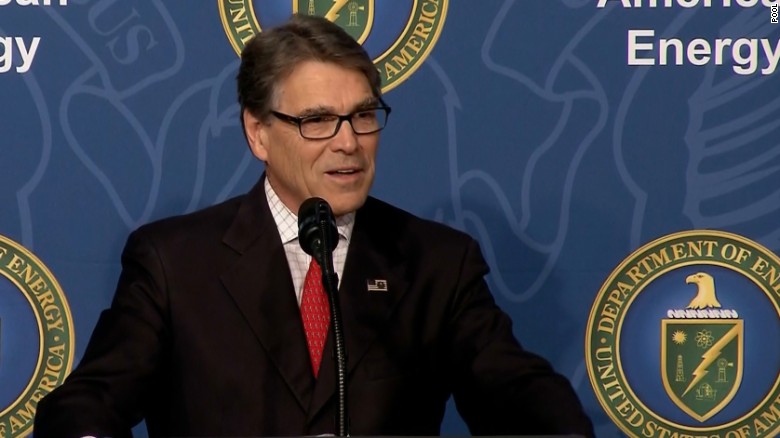
US Secretary of Energy
Rick Perry has warned that Saudi Arabia will look to China or Russia to
develop its nuclear industry if the US fails to cooperate.
House Democrats in February claimed that in 2017 White House officials had pushed the sale of nuclear technology to Saudi Arabia despite warnings from National Security Council officials. A spokesman for Republicans on the House Intelligence Committee, said the report amounted to „a ridiculous conspiracy theory.“
In heated exchanges at the Senate Armed
Services committee at the end of March, US Energy Secretary Rick Perry
said that if the United States did not cooperate with the Saudis, they
would look to Russia or China to develop their nuclear industry.
„I can assure you that those two countries don’t give a tinker’s damn about non-proliferation,“ Perry said.
„That’s why we continue to work very,
very diligently to try to bring those countries that want to develop
civil nuclear programs into the sphere of the United States, because we
are committed to non-proliferation.“
Perry said his department had approved
several applications for US companies to sell nuclear power technology
and assistance to Saudi Arabia. However, they do not allow the transfer
of nuclear material, equipment or components.
Iran claims that the Trump
Administration plans to sell Saudi Arabia nuclear technology without
sufficient safeguards. „First a dismembered journalist; now illicit sale
of nuclear technology to Saudi Arabia fully expose #USHypocrisy,“
Foreign Minister Javad Zarif tweeted in February.
And in March, Ali Shamkhani, secretary
of Iran’s Supreme National Security Council, accused unnamed regional
states of developing „suspicious nuclear projects,“ which would force
Tehran to revise its defense strategy. Quoted by Iranian news agencies, Shamkhani said such plans would „force us to revise our strategy.“
Whatever Saudi Arabia’s energy strategy,
and however sincere its pledge that it has no wish to develop nuclear
weapons, the mere existence of a nuclear program is bound to inflame
tensions across the Gulf.
Friday, April 5, 2019
Building up the Saudi Nuclear Horn

Saudi Arabia’s first nuclear reactor nearly finished, sparking fears over safeguards
Riyadh has so far resisted international watchdog’s requests to accept a strict inspection regime
Julian Borger
Last modified on Thu 4 Apr 2019 07.54 EDT
Saudi Arabia is within months of completing its first nuclear reactor, new satellite images show, but it has yet to show any readiness to abide by safeguards that would prevent it making a bomb.
The reactor site is in the King Abdulaziz city for science and technology on the outskirts of Riyadh. The site was identified by Robert Kelley, a former director for nuclear inspections at the International Atomic Energy Agency (IAEA), who said it was very small 30-kilowatt research reactor, not far from completion.
“I would guess they could have it all done, with the roof in place and the electricity turned on, within a year,” said Kelley, who worked for more than three decades in research and engineering in the US nuclear weapons complex.
The satellite photos show that a 10-metre high steel tubular vessel, which will contain the nuclear fuel, has been erected, and construction work is under way on the surrounding concrete building.
Kelley said the main practical purpose of the research reactor would be to train nuclear technicians, but it also marked the crossing of a nuclear threshold. Before inserting nuclear fuel into the reactor, Saudi Arabia would have to implement a comprehensive set of rules and procedures, including IAEA inspections, designed to ensure no fissile material was diverted for use in weapons – something it has so far avoided.
The reactor has been designed by an Argentinian state-owned company, Invap SE.
“This reactor should be operational by the end of the year roughly,” Rafael Mariano Grossi, Argentina’s envoy to the IAEA, confirmed. “It depends on a number of factors. Invap is in charge of design. They are directing all the operations. But the local engineering is being done by the Saudis.”
The emergence of the satellite images, first published by Bloomberg, comes in the midst of a struggle between the Trump White House and Congress over the sale of nuclear technology to Riyadh, after it emerged that the US department of energy had granted seven permits for the transfer of sensitive nuclear information by US businesses to the Saudi government.
The secretary of state, Mike Pompeo, and the energy secretary, Rick Perry, have both stonewalled congressional committees demanding to know what the authorisations were for, and which companies were involved.
On Tuesday, the head of the independent Nuclear Regulatory Commission, Kristine Svinicki, and her fellow commissioners remained silent when repeatedly asked by Democratic senator Chris Van Hollen, whether the commission had been consulted on the nuclear permits.
Tempers flared last week in a confrontation between Pompeo and the Democrat-run House foreign affairs committee, when legislators demanded to know why the administration appeared to be shielding a Saudi regime responsible for wholesale human rights abuses, mass civilian deaths in Yemen and the murder and dismemberment of Washington Post columnist and dissident Jamal Khashoggi.
Brad Sherman, a California Democrat, told Pompeo: “If you cannot trust a regime with a bone saw, you should not them with nuclear weapons.”
Sherman said the issuance of the seven permits, known as Part 810 authorisations, represented an effort by Trump and his son-in-law Jared Kushner to bypass Congress, and spare the Saudi monarchy the need to accept a formal agreement that would put strict limits on its nuclear programme.
“It tells the country that if Jared and Donald Trump can transfer nuclear technology to the Saudis on seven occasions and not reveal the details to members of Congress with the highest national security clearance, even in special classified rooms – what are they hiding?” Sherman said in a telephone interview.
He said there was a bipartisan majority in Congress that would insist Saudi Arabia could buy US nuclear technology only if it agreed to the “gold standard”: no enrichment of uranium and no reprocessing of plutonium, and the acceptance of intrusive IAEA inspections.
But Sherman was less sure Congress could overcome a presidential veto. “The cards are stacked against us,” he said. “We would need a two-thirds vote and the country has gotten so partisan, Congress is no longer independent.”
A report in February by the House oversight committee cited evidence from whistleblowers that senior White House political appointees, had repeatedly pushed for a quick deal to sell nuclear reactors to Saudi Arabia, without non-proliferation safeguards.
According to the report, the campaign was led initially by Trump’s first national security adviser, Michael Flynn, who had close ties to one of the companies pushing the scheme, IP3 International, but it was pursued after Flynn was fired, by Kushner, Perry and a Trump friend, Tom Barrack.
Saudi Arabia joined the Non-Proliferation Treaty (NPT) in 1988 but signed a comprehensive safeguards agreement with the IAEA only in 2005, and at the same time exempted itself from regular inspections, by signing a “small quantities protocol” (SQP), designed for countries with negligible quantities of nuclear material.
Largely because of controversy over Riyadh being shielded from scrutiny under these rules, the IAEA made the SQP more rigorous, but the Saudis resisted making changes.
“Saudi Arabia was the last country allowed to sign the old SQP. And they never agreed to adjust or rescind it,” said Laura Rockwood, a former senior official in the IAEA’s legal affairs office, now head of the Vienna Centre for Disarmament and Non-Proliferation.
Thomas Countryman, who was assistant secretary of state for international security and nonproliferation in the Obama administration, said his negotiations with Saudi officials stalled over their resistance to accepting prohibitions on enrichment or reprocessing, as well as a strict IAEA inspections protocol.
“I believe the Saudis saw an opportunity with Trump and Kushner to conclude this rapidly on their terms, holding out the promise of major purchases,” Countryman, now board chairman of the Arms Control Association, said.
He thought it unlikely the seven export permits issued by the administration would be any help to Saudi Arabia in developing nuclear weapons, but he questioned the lack of transparency involved.
“The unusual level of secrecy surrounding these approvals will only add to Congress’s suspicion of the intentions of both the administration and of Saudi Arabia,” Countryman said. “If there is a deal to be made for US reactor sales to Saudi Arabia, it can only be achieved, and supported by Congress, through transparency and not through secrecy.”
Wednesday, April 3, 2019
Building the Saudi Nuclear Horn (Daniel 7)

Nuclear issues sharpen focus on US-Saudi relations
April 02, 2019 – 11:00 AM EDT
By Simon Henderson, opinion contributor 12
The views expressed by contributors are their own and not the view of The Hill
A nuclear war is in prospect between Congress and the Trump administration. Tension is high. Skirmishes have begun. But the political battle is not being fought with nukes. Rather, it is about nukes — Saudi nukes.
The word “Saudi” is cropping up in many headlines these days. Perhaps too many. The Saudis likely are players in the “deal of the century” — the yet-to-be-announced Middle East plan, where their financial weight, regional prestige and religious significance could be crucial to U.S. diplomacy.
But this role runs in parallel with the challenge of coping with the notoriety gained by imprisoning and allegedly abusing women political activists, and the cause celebre of the murder and dismemberment of dissident Saudi journalist Jamal Khashoggi.
The nuclear issue bridges the positives and negatives — what we want the Saudis to do, and what we hope they will stop doing.
Riyadh wants nuclear power plants, for generating electricity and for desalination. To access U.S. technology, Riyadh needs to sign a so-called 123 Agreement, which would lay out the parameters for nuclear cooperation. When the United States signed one with the United Arab Emirates (UAE) in 2009, Abu Dhabi pledged not to enrich its own fuel nor to reprocess its spent fuel. (Enriching is the technique that can result in highly enriched uranium, a nuclear explosive. Reprocessing produces plutonium, which also can be used in atomic bombs.)
Riyadh declares its nascent nuclear program is entirely for peaceful purposes but wants to retain the right to enrich and reprocess. An additional argument made by individual Saudis is that, if Iran is allowed to enrich under the terms of the 2015 Joint Comprehensive Plan of Action (JCPOA) nuclear accord — which still exists even though President Trump withdrew the United States last year — why can’t Riyadh?
For skeptics, there are powerful economic arguments why, perhaps counter-intuitively, oil and gas rich countries such as the kingdom, the UAE and Iran need nuclear power. First, it enables them to generate electricity at a fixed cost, rather than one that fluctuates with energy prices. Second, it enables these countries to maximize their oil and gas foreign exchange revenues.
The White House wants to secure any Saudi nuclear technology purchases, worth up to $80 billion, for American business rather than the competing Russians, Chinese, French or South Koreans. In Congress, there is a bipartisan belief, likely reinforced by intelligence briefings on the demise of Khashoggi, that the mercurial Saudi Crown Prince Mohammad bin Salman, aka MbS, is not reliable. Politicians and the public alike are concerned by his comment in a “60 Minutes” interview a year ago: “… If Iran developed a nuclear bomb, we will follow suit as soon as possible.”
In the Middle East, the UAE reportedly will want to revisit its 123 Agreement if the kingdom’s is less restrictive. And Saudi neighbor Qatar was bothered by news reports last year that not only would a canal be dug to separate it from the kingdom but the area between the two countries would be used as a nuclear waste dump.
Even Israel, arguably one of MbS’s best, albeit low-profile, advocates in Washington, reportedly is concerned about nuclear technology in Saudi hands. And MbS’s recent high-profile visit to Islamabad has rekindled anxieties about Pakistan being prepared to give or lend nuclear-tipped missiles to the kingdom in time of regional tension. (A new missile manufacturing facility in the Saudi desert looks very similar in layout to one China supplied to Pakistan in the 1990s.)
The latest round of arguments in Congress on March 28 involved Energy Secretary Rick Perry not remembering whether any of the paperwork he had authorized, allowing American companies to have initial nuclear discussions with the Saudis, had been signed after Oct. 2, 2018, the day Khashoggi was murdered. A subsequent Department of Energy (DOE) statement did not clarify the timeline. The same day, Saudi Prince Khalid bin Salman, the 31-year-old former ambassador to Washington and MbS’s younger brother, discussed “bilateral issues” with Secretary of State Mike Pompeo at the State Department.
For the moment, it is perhaps nuclear theater rather than nuclear war. But it is certainly time to make the popcorn.
Simon Henderson is the Baker Fellow and director of the Bernstein Program on Gulf and Energy Policy at the Washington Institute for Near East Policy.
Saturday, March 30, 2019
US Approves the Saudi Nuclear Horn (Daniel 8:8)
 US approves companies’ nuclear work in Saudi Arabia
Agence France-Presse, Washington, MAR 29 2019, 11:12AM IST UPDATED: MAR 29 2019, 11:45AM I
The United States has given the green light to companies to work on six nuclear projects in Saudi Arabia, Energy Secretary Rick Perry said Thursday, despite lawmakers’ worries that the kingdom could seek weapons.
Questioned during a Senate hearing, Perry confirmed that the Trump administration has approved six applications to do initial nuclear work in Saudi Arabia and two in Jordan.
Perry, who said the Energy Department approved 37 of the 65 applications it received globally since 2017, promised the United States was committed to ensuring the Saudis do not reprocess spent fuel to make nuclear weapons.
“What I’m really concerned about, senator, is that if the United States is not the partner with Saudi Arabia, (or) for that matter Jordan,” Perry said, “they will go to Russia and China for their civil nuclear technology.”
“I can assure you that those two countries don’t give a tinker’s damn about nonproliferation,” he said.
“We’ve got a history of nonproliferation, and nobody in the world will do it better than us.”
The approvals, first reported Wednesday by news site The Daily Beast, were not earlier announced, with Perry saying the companies wanted to shield proprietary information.
But Democratic lawmakers have voiced alarm that the Trump administration is rushing in secret to approve civilian nuclear energy in Saudi Arabia even though the kingdom — the world’s largest oil exporter — has not sought a so-called Section 123 agreement, under which a country assures the peaceful use of technology.
US companies cannot legally transfer nuclear material to countries without Section 123 agreements.
President Donald Trump has pursued a close relationship with Saudi Arabia, saying openly that the kingdom was good for US business even if the powerful crown prince, Mohammed bin Salman, is confirmed to have ordered the killing of journalist Jamal Khashoggi in October.
Khashoggi, a contributor to The Washington Post who wrote critically of the crown prince, was strangled and his body dismembered after he entered the Saudi consulate in Istanbul to handle wedding paperwork.
Representative Brad Sherman, in a hearing Wednesday with Secretary of State Mike Pompeo, accused the administration of working with the Saudis to do an “end-run around the law.”
“If you cannot trust a regime with a bone-saw, you should not trust them with nuclear weapons,” said Sherman, a Democrat from California.
Prince Mohammed has warned that the Saudis will pursue nuclear weapons if their arch-rival Iran obtains them.
Friday, March 29, 2019
Trump Secretly Builds the Saudi Nuclear Horn (Daniel 7)
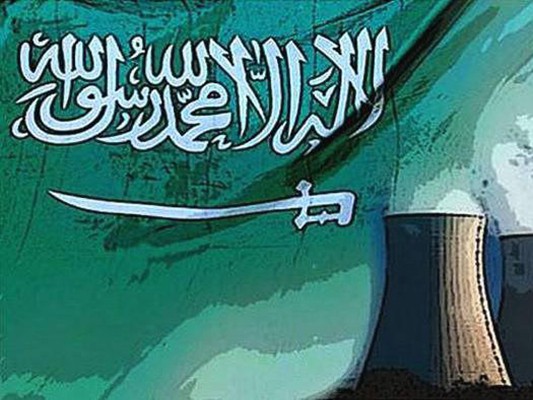 Trump administration approves secret nuclear power work for Saudi Arabia
Published Wed, Mar 27 2019 • 9:23 PM EDT Updated Thu, Mar 28 2019 • 7:36 AM EDT
U.S. Energy Secretary Rick Perry has approved six secret authorizations by companies to sell nuclear power technology and assistance to Saudi Arabia, according to a copy of a document seen by Reuters on Wednesday.
The Trump administration has quietly pursued a wider deal on sharing U.S. nuclear power technology with Saudi Arabia, which aims to build at least two nuclear power plants. Several countries including the United States, South Korea and Russia are in competition for that deal, and the winners are expected to be announced later this year by Saudi Arabia.
Perry’s approvals, known as Part 810 authorizations, allow companies to do preliminary work on nuclear power ahead of the deal, but not ship equipment that would go into a plant, a source with knowledge of the agreements said on condition of anonymity. The approvals were first reported by the Daily Beast.
The Department of Energy’s National Nuclear Security Administration (NNSA) said in the document that the companies had requested that the Trump administration keep the approvals secret. “In this case, each of the companies which received a specific authorization for (Saudi Arabia) have provided us written request that their authorization be withheld from public release,” the NNSA said in the document.
The NNSA and the Department of Energy did not immediately respond to requests for comments.
Many U.S. lawmakers are concerned that sharing nuclear technology with Saudi Arabia could eventually lead to a nuclear arms race in the Middle East.
Saudi Crown Prince Mohammed bin Salman told CBS last year that the kingdom would develop nuclear weapons if its rival Iran did. In addition, the kingdom has occasionally pushed back against agreeing to U.S. standards that would block two paths to potentially making fissile material for nuclear weapons clandestinely: enriching uranium and reprocessing spent fuel.
Concern in Congress about sharing nuclear technology and knowledge with Saudi Arabia rose after Oct. 2, 2018 when U.S.-based journalist Jamal Khashoggi was killed in the Saudi consulate in Istanbul. The Part 810 authorizations were made after November 2017, but it was not clear from the document whether any of them were made after Khashoggi’s killing.
Rep. Brad Sherman, D-Calif., called on Secretary of State Mike Pompeo during a congressional hearing on Wednesday to release the names of the companies that got the approvals by the middle of April, and Pompeo said he would look into it. Sherman also said the Trump administration has attempted to evade Congress on sharing nuclear power with the kingdom. Pompeo said the administration was working to ensure any shared technology nuclear power would not present proliferation risks.
Last month, Democratic House members alleged in a report that top White House aides ignored warnings they could be breaking the law as they worked with former U.S. officials in a group called IP3 International to advance a multibillion-dollar plan to build nuclear reactors in the Middle East, including Saudi Arabia.
IP3 did not immediately respond to a request for comment about whether it was one of the companies that got a Part 810 authorization.
Separately, the Government Accountability Office, the investigative arm of Congress, has accepted a request by Senators Marco Rubio, a Republican and Bob Menendez, a Democrat, to probe the administration’s talks on a nuclear deal with Saudi, a GAO official who spoke on condition of anonymity, said on Wednesday.
Sunday, December 23, 2018
The Evolving Saudi Nuclear Horn
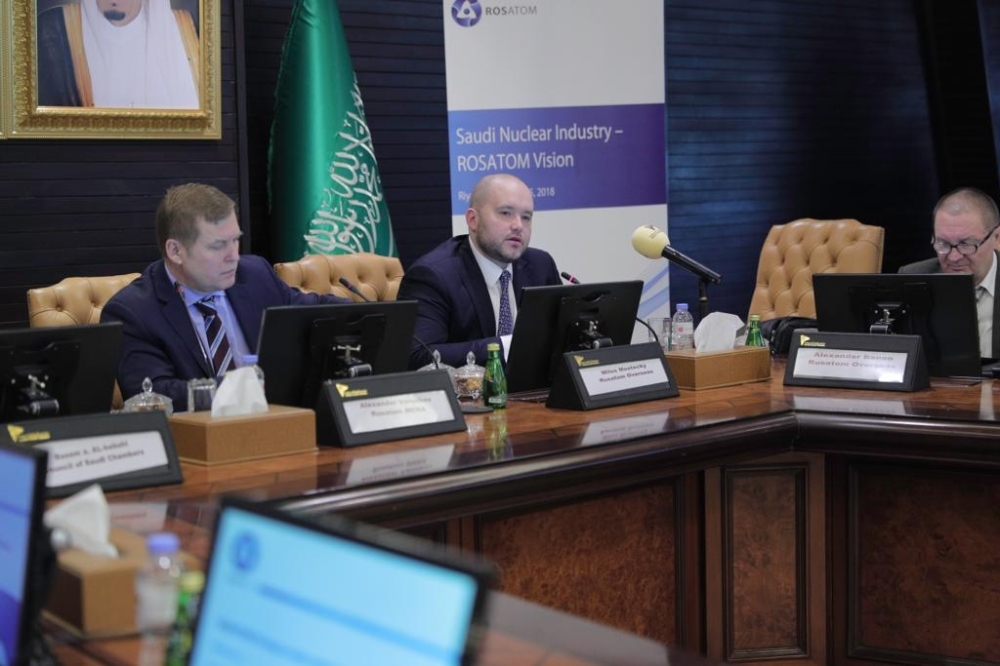
Saudi Arabia is currently in the process of selecting a company for the construction of the first nuclear power plant in the country.
Saudi Arabia ‘on its way to become a nuclear power’
2018-12-22 16:55:00
RIYADH — Saudi Arabia’s population has grown from 4 million in 1960 to over 31 million in 2016. It is the main electricity consumer and producer in the Gulf region, with 345 trillion watts of gross production in 2016, of which 41 percent was produced from oil and 59 percent from gas. The electricity consumption in the country continues to grow substantially — by 8 to 10 percent annually, compared with less than 1 percent in Europe.
Faced with surging energy demand for economic growth, Saudi Arabia is turning to nuclear power to diversify its electricity-generating mix and therefore reduce its reliance on fossil fuels. The Kingdom plans to build two large nuclear power reactors as part of a program of delivering as many as 16 nuclear power plants over the next 20 to 25 years at a cost of more than $80 billion. It has projected 17 gigawatts (GW) of nuclear capacity by 2032 to provide 15 percent of the power then, along with more than 40 GW of solar capacity. Plans for small reactors for desalination are also well advanced.
Hamid Al-Saqqaf, director of independent production projects at Saudi Electricity Company, points out: “Introducing nuclear power into the national energy mix is a sovereign decision in every country, according to its needs. In Saudi Arabia, this decision was already made in advance. The Kingdom has a continuously elevating demand on electricity.
“In 2015, we had about 62,000 megawatts in demand, and even though there currently seems to be a decrease in the amount of load, yet the growing demand for energy requires the introduction of nuclear energy as a means to achieve the base-load. As you might know, the operating costs for nuclear power is much less than the one produced from fossil fuel. The console of nuclear fuel produces more energy and at a lower price.”
The move toward nuclear power falls in line with the Kingdom’s Vision 2030, in which diversification of economy and energy from hydrocarbons is implied.
In 2010, a Saudi royal decree said that the development of atomic energy was essential to meet the Kingdom’s growing requirements for energy. Saudi Arabia is currently in the process of selecting a company for the construction of the first nuclear power plant in the country. There are five finalists from five countries — the US, China, Russia, France and South Korea — that the Kingdom invited last year to bid on a project to build the two units. A preferred bidder in the competitive dialogue is expected to be chosen in 2019.
Rosatom plans to outfit the Saudi nuclear power plant (NPP) project with the world’s first operational Generation 3+ reactor technology, known as the VVER-1200. The reactor is known for the most advanced safety systems, which fully complies with international security standards and post-Fukusima safety requirements.
As a part of its integrated offer, Rosatom is ready to supply the Saudi nuclear power project with nuclear fuel throughout its operational lifetime and ensure decent level of Saudi industry involvement and complex human resource development, in addition to growing public acceptance of nuclear power. Nuclear power plant deployment is always very beneficial and, obviously, it will be so for Kingdom.
Nuclear power gives a boost for local economy enhancement by highly-qualified personnel development and gains new competences to local industry, previously focused mainly on the fossil fuel sector.
Russia is the pioneer in peaceful use of nuclear energy: the first commercial NPP went into operation in 1954. Strong with more than 70 years long expertise in this sphere, nowadays Russia is the world innovation leader in nuclear technologies and holds the first place for the largest portfolio of foreign construction projects (36 NPP Units in 12 countries as diverse as Finland and China, India and Hungary, Egypt and Bangladesh).
“In October 2017, Rosatom and King Abdullah City for Atomic and Renewable Energy signed the Program for Cooperation in the Peaceful Uses of Nuclear Energy. Due to investments into nuclear and based on the international expertise and decades-long innovation experience, Saudi Arabia will profit from the stable, clean and environmentally secure energy source at affordable tariffs,” commented Saeed Al-Shahrani, a Saudi expert in renewable energy. — SG
Saturday, December 8, 2018
How to Prevent Saudi Arabia from Getting Nuclear Weapons

DEC. 7 2018
Skeptics of the 2015 nuclear deal with Iran warned that it could prompt a nuclear arms race in the Middle East. As they predicted, Saudi Arabia has been seeking assistance from the U.S. in obtaining civilian nuclear capabilities, while also speaking—in imitation of the Islamic Republic—of a “right” to enrich uranium, something it pledged not to do in a 2008 agreement with Washington. Were Riyadh to begin such enrichment, it could also produce the fuel necessary for nuclear weapons. Emily Landau and Shimon Stein warn of the dangers inherent in Saudi proliferation, and discuss how the U.S. and Israel should respond:
So long as the motivation to go nuclear remains strong, states are likely to find a way to develop [nuclear] capabilities, even if they have to pay a price for doing so. In Iran’s case, the major motivation for going nuclear is to enhance its hegemonic power in the Middle East. . . . But in the case of Saudi Arabia, if strong international powers . . . were to take a harsher stance toward Iran’s regional aggressions and missile developments and were to cooperate in order to improve the provisions of the [2015 nuclear deal], this would most likely have a direct and favorable impact on Saudi Arabia’s calculations about whether to develop nuclear capabilities.
A decision by the U.S. administration (or for that matter any other supplier) to allow Saudi Arabia to have enrichment capabilities will confront Israel with a dilemma.
On the one hand, it has been Israeli policy to do its utmost to deny any neighboring country with whom it does not have a peace treaty the means to acquire and develop a nuclear program. If Israel remains loyal to this approach, it should seek to deny Saudi Arabia enrichment capabilities. In practical terms this would imply making its opposition known in Washington.
On the other hand, given the “tactical alliance” with Saudi Arabia which has been primarily developed in response to the common Iranian threat, Israel could consider sacrificing its long-term interest in denying nuclear capabilities for the sake of its current interest in cultivating relations with the Saudis. Israel, [however], should support the traditional U.S. nonproliferation policies that allow states to have access to nuclear fuel for civilian purposes, while denying them the option to produce it themselves.
Thursday, December 6, 2018
The United States Will Never Prevent Saudi Arabia from Getting Nuclear Weapons
 Can the United States Prevent Saudi Arabia from Getting Nuclear Weapons?
After having sought negotiations with previous U.S. administrations on civilian nuclear cooperation, Saudi Arabia has recently renewed these efforts with the Trump administration, for the development of nuclear energy, power plants and desalination reactors. Negotiations on a possible deal are ongoing, although according to a recent New York Times article, the administration refuses to say where things currently stand. Saudi Arabia claims that it is seeking purely civilian capabilities, but it has also insisted on retaining its “right” to work on the fuel cycle and enrich uranium, which can lay the ground for a military nuclear capability in the years ahead. However, it is also clear that the Saudis’ nuclear plans are intimately tied to Iran’s, and since 2010 Saudi leaders have become more and more open about the fact that if Iran attains nuclear weapons, they will quickly follow suit. The latest statement was by Crown Prince Mohammed bin Salman (MBS) in March 2018, in the context of an interview to 60 Minutes. He noted that while Saudi Arabia does not want to acquire nuclear weapons, if Iran develops nuclear weapons, so would Saudi Arabia. Generally speaking, the Iranian program has been a trigger for additional Gulf states to establish or revitalize civilian nuclear programs.
The United States has always been very concerned about the proliferation risks involved in nuclear cooperation, and in 2008 it was able to achieve a memorandum of understanding with Saudi Arabia on nuclear energy cooperation whereby the latter pledged to acquire nuclear fuel from international markets, rather than producing it indigenously. But ten years later, it seems that Saudi Arabia no longer views itself as bound by that understanding. The current challenge for the United States is how to insist on what is known as a 123 agreement with Saudi Arabia, meaning that the agreement explicitly denies Saudi Arabia the right to work on sensitive nuclear technologies (enrichment capabilities and plutonium reprocessing), without driving it into the hands of other nuclear suppliers, such as Russia, China and South Korea, that may be less worried about ensuring these restrictions.
There are concerns that the Trump administration might be willing to concede to Saudi Arabia sensitive capabilities, and the fact that it is not willing to divulge information regarding the status of the negotiations does not bode well in this regard. The administration is keenly aware of the link to Iran’s nuclear posture, and that the Joint Comprehensive Plan of Action (JCPOA) set a very negative precedent for nuclear cooperation with other states when it legitimized Iran’s enrichment capabilities. While Iran must cap its stockpile of enriched uranium for the duration of the deal, it is allowed—under the explicit terms of the deal—to work on R&D into an entire range of advanced centrifuges. Iran has plans to install and operate these centrifuges eleven years into the deal. There is a real question of how these capabilities can be denied to states like Saudi Arabia who are in good standing with the NPT, whereas Iran—who blatantly violated the nonproliferation treaty—was granted the right to continue with these dangerous enrichment-related activities.
The dilemmas of nuclear cooperation between the United States and Saudi Arabia have recently come into sharper relief against the backdrop of the Jamal Khashoggi murder at the Saudi consulate in Istanbul last month. This brutal murder, and the ensuing Saudi evasion has sparked a major debate in the United States and around the world about the reliability of MBS as a strategic partner. There are many calls in the United States—from both Democrats and Republicans in Congress—for the administration to not only punish Saudi Arabia for this gross transgression, but to rethink its relations with the kingdom, and certainly not to reward it with cooperation in the nuclear realm.
But Saudi Arabia is not dependent solely on the United States for cooperation in the nuclear realm. Will other potential suppliers be willing to agree not to cooperate with Saudi Arabia unless it forsakes sensitive nuclear technologies? Will they agree to set up a supplier mechanism and insist that Saudi Arabia, and other states seeking nuclear cooperation, can only buy fuel from this source? With lucrative deals on the table, it might prove difficult to garner this kind of commitment. Moreover, there have long been suspicions that, after Saudi Arabia financed Pakistan’s nuclear program, a deal might have been struck whereby Pakistan will return the favor by providing some kind of nuclear cover—whether by transferring technologies directly to the kingdom or providing a nuclear umbrella from Pakistan—in Saudi Arabia’s hour of need. As such, the nonproliferation challenge remains, whether or not the United States concludes a deal on civilian nuclear cooperation. And if it is the United States that makes the deal, it can insist that Saudi Arabia ratify the Additional Protocol (which would grant the International Atomic Energy Administration additional inspections rights), return spent fuel and generally supervise the project.
Beyond attempts to deny Saudi Arabia technologies and capabilities, it is important also to address Saudi motivation for going nuclear. There is no doubt that Saudi Arabian concerns focus on the Iranian nuclear threat; the kingdom’s concern with Iran’s capabilities—as a motivation to go nuclear itself—is reflected in the few explicit Saudi statements on the topic. As long as the motivation to go nuclear remains strong, states are likely to find a way to develop capabilities, even if they have to pay a price for doing so. In Iran’s case, the major motivation for going nuclear is to enhance its hegemonic power in the Middle East—a difficult motivation to address. But in the case of Saudi Arabia, if strong international powers—the P5+1 and perhaps others—were to take a harsher stance on Iran’s regional aggressions and missile developments, and were to cooperate in order to improve the provisions of the JCPOA, this would most likely have a direct and favorable impact on Saudi Arabia’s calculation of whether or not to develop nuclear capabilities.
Additionally, without minimizing the impact of the crisis atmosphere surrounding the Khashoggi affair, it is nevertheless important to consider whether significantly downgrading ties with Saudi Arabia is the right way to go, from a proliferation point of view. While this might not be the most opportune time to reward the Saudi’s desired nuclear cooperation, U.S. security guarantees to the Saudis could be another route to lowering their motivation to achieve a nuclear deterrent vis-à-vis Iran.
A decision by the U.S. administration (or for that matter any other supplier) to allow Saudi Arabia to have enrichment capabilities will confront Israel with a dilemma. On the one hand it has been Israeli policy to do its utmost to deny any neighboring country with whom it does not have a peace treaty the means to acquire and develop a nuclear program. If Israel remains loyal to this approach, it should seek to deny Saudi Arabia enrichment capabilities. In practical terms this would imply making its opposition known in Washington. On the other hand, given the “tactical alliance” with Saudi Arabia which has been triggered primarily by the common Iranian threat, Israel could consider sacrificing its long term interest in denying nuclear capabilities for the sake of its current interest in cultivating relations with the Saudis. Israel should support the traditional U.S. nonproliferation policies which allow states to have access to nuclear fuel for civilian purposes, while denying them the option of self production.
Subscribe to:
Posts (Atom)