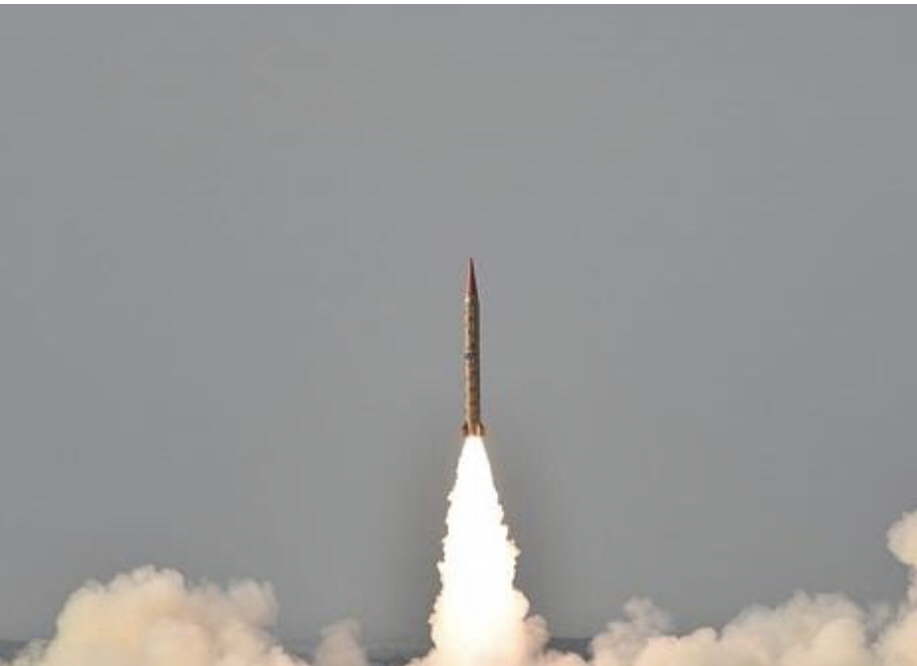
Showing posts with label putin. Show all posts

Saturday, July 9, 2022

Shadow of the bomb: the Russian Horn’s nuclear threats

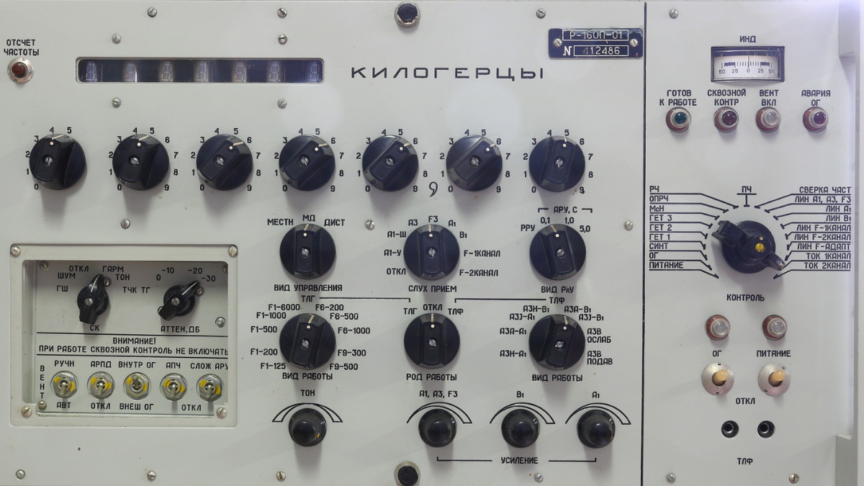
A missile control panel in CyrillicImage by 2427999 from Pixabay

Shadow of the bomb: Russia’s nuclear threats

Russia is the first state to use nuclear threats as part of a war of expansion. Unless it loses in Ukraine, the world will become a far more dangerous place.

7 July 2022

Since launching its full-scale invasion of Ukraine, Russia has conducted an intense campaign of nuclear signalling and threats designed to provide it with a strategic advantage. The Kremlin aims to not only deter the West from directly interfering in its attempts to conquer Ukraine but also to limit Western political, economic, and military support for the country.

Moscow has been particularly successful in this: not only has NATO refrained from direct intervention – such as by setting up a no-fly zone – but Western nations have avoided forms of military assistance for Ukraine that fall within their rights as third parties in the conflict. For instance, Poland and the United States agreed in March 2022 not to deliver Polish Mig-29 fighter jets to Ukraine. The US and other NATO countries appear to have been restrained by fear of a direct confrontation with Russia.

In contrast, the Soviet Union supplied fighter jets in large quantities to North Korea and Vietnam when each country was at war with the US, and to Egypt and Syria when they were at war with Israel. None of this triggered nuclear escalation or threats from the US in response.

Slovakia now plans to donate its Mig-29s to Ukraine. And such support will not cause NATO to stumble into a third world war. This was true in March and will remain true.

Current Western efforts to supply Ukraine with heavy weapons are just enough to keep it in the fight

The Biden administration has restricted the range of ammunition it provides to Ukraine with the M-142 HIMARS multiple rocket launcher to 80km (the M-30 series of munition), withholding longer-ranged MGM-140 ATACMS. The administration has also demanded that Ukraine avoid strikes on targets in Russian territory (even though facilities supporting the Russian war effort there would be legitimate military targets under the Hague and Geneva conventions).

After Secretary of Defence Lloyd Austin declared on 24 April that Russia needs to be weakened to the point that it could not bully its neighbours, President Joe Biden wrote in the New York Times that the US would not use the war to inflict more damage on Russia than was necessary to halt the invasion. This prompted widespread speculation about whether the war aims of the White House differed from those of the state and defence departments.

Fear of nuclear escalation is even more apparent in some western European capitals than in Washington. German Chancellor Olaf Scholz stated in April that “there must not be a nuclear war” as a defence of his reluctance to supply Ukraine with heavy weapons. He decided that Germany would only deliver certain systems – main battle tanks and infantry fighting vehicles – to its eastern European allies so that they could provide Soviet-era systems to Ukraine. Militarily, these swap deals make no sense, as they only delay assistance to Ukraine and provide it with inferior materiel.

French President Emmanuel Macron later statedthat it was “almost” NATO policy not to supply certain weapons systems to Ukraine, hinting that other Western European governments shared Berlin’s views. But this is an incoherent approach to the challenge. A modern Panzerhaubitze 2000 howitzer of the kind Germany has now supplied to Ukraine is far more lethal than a 1970s-era Leopard 1 main battle tank. The former has a much greater range than the latter, potentially allowing it to strike targets in Russia. Nonetheless, Germany will not provide Ukraine with the Leopard 1 because it is a particular class of weapon. Such arbitrary restrictions cannot have come from military advice or from independent risk-benefit calculations. Rather, they seem to have come from Russian President Vladimir Putin’s threats to escalate if the West supplied Ukraine with certain systems.

Current Western efforts to supply Ukraine with heavy weapons are just enough to keep it in the fight. But they will not allow the country to recapture its territory and defeat the Russian military. Privately, politicians and officials from various European countries have told this author of their belief that Russia could or would use nuclear weapons if it faced the prospect of defeat in Ukraine. It is conceivable that this fear is the main restraint on their support for Kyiv.

However, these fears are unjustified. Nuclear warfare against Ukraine makes no sense. A single nuclear strike would not alter the military balance in the war. The use of multiple nuclear weapons would do so, but would also inflict huge and lasting damage on Russia. Nuclear attacks on a NATO country would begin escalation that Russia could not control. And the Russian military would be unable to respond to any other contingency, because it would be bogged down in Ukraine. Russia could only respond to retaliation for a nuclear strike with further nuclear escalation – which would be suicidal. Putin is certainly not concerned with morals or ethics, but he is far from crazy or suicidal.

One could always have anticipated that Putin would use a nuclear scare to influence the West’s position. However, it is surprising how successful his approach has been. This is the first time a state has used the threat of nuclear weapons to engage in a colonial conflict or a war of expansion. France did not threaten to use nuclear weapons against states that backed Algerian nationalists or the Viet Minh. Nor did the United Kingdom threaten Argentina in this way during the Falklands war. The Soviet Union did not resort to nuclear threats during its Afghanistan campaign. Nor did the US in Vietnam, Iraq, or Korea. None of the diplomats who negotiated the Nuclear Non-Proliferation Treaty (NPT) – be they Western, Soviet, or non-aligned – appeared to consider that a state would use nuclear threats as cover for expansion into the territory of a non-nuclear state.

Putin’s threats will fundamentally alter cost-benefit calculations on nuclear non-proliferation in many capitals. For example, Iran – which is slowly developing the capability to produce a nuclear weapon at short notice – now has a pretext to rethink its nuclear commitments.

Meanwhile, Western countries’ overly cautious approach to military assistance will concern countries that have tried to strengthen their political and economic ties with them in exchange for security. Sweden and Finland could quickly join NATO, a nuclear alliance. But many other countries cannot. They now know that the world outside formal defence pacts will be brutal and cynical. European non-nuclear states – some of which abandoned nuclear weapons programmes in the 1970s and joined the NPT in good faith – have not emphasised this point enough when calling on countries such as Argentina and South Africa to isolate Russia. They need to explain to them, and to voters at home, why a world in which great powers build empires in the shadow of the bomb will be even more dangerous one than one in which Russia loses its war on Ukraine.

Monday, June 17, 2019

The Skyrocketing Threat of Nuclear War

World’s nuclear arsenal down but risk of nuclear conflict up: SIPRI | Euronews

The global nuclear arsenal has slightly decreased in the past twelve months, according to the Stockholm International Peace Research Institute (SIPRI), but the risk of nuclear conflict has risen.
„There is a new type of arms race, not about the quantity of warheads but about technologies,“ Hans M. Kristensen, an associate senior fellow with the SIPRI Disarmament, Arms Control and Non-proliferation programme, told Euronews.
The global security thinktank estimates in its latest report released on Monday that the nine states with nuclear arsenals — the US, Russia, the UK, France, China, India, Pakistan, Israel and North Korea — possessed a collective 13,865 nuclear weapons at the beginning of 2019, down from 14,465 a year before.

‚Tactical war‘

This is partly due to nuclear weapon-possessing states‘ efforts to modernise their arsenal due to a shift in strategy.
„We are no longer in the classic strategy of deterrence by the accumulation of nuclear warheads,“ said Kristensen.
„Now they have embarked on a tactical war„, he added, whereby the different states „set out new scenarios“ to develop technologies and weapons.
For instance, Russia is developing weapons capable of circumventing the US anti-missile shield, while the United States is working on developing new short-range tactical nuclear weapons to respond to Russian challenges.
„It’s a whole new dynamic. We have seen these „tactical threats“ before, during the Cold War,“ Kristensen explained, highlighting however that „it’s not as bad as during the Cold War yet“.
The US withdrawal from the Middle East Non-Proliferation Treaty and the new plans for the renewal of the nuclear arsenal that President Donald Trump has brought to Congress, as well as the conflict between Washington and Iran, are mentioned as other elements of instability in the global balance, prompting Kristensen to believe that the risk of a potential nuclear conflict has increased.

New START

The other factor explaining the decrease is the US-Russia New Strategic Arms Reduction Treaty (New START). Signed in 2010 and in force since February 2011, it limits the number of strategic nuclear weapons the two powers — which account for over 90% of all nuclear accounts — can have.
Under the terms of the treaty, each can possess up to 800 deployed or non-deployed inter-continental ballistic missile as well as deploy 1,550 warheads and 700 missile and bombers. Both Moscow and Washington said they had met the limitations by the February 2018 deadline.
However, the treaty is to expire in 2021 and negotiations to renew it have not yet begun, and are uncertain, in view of the growing differences between the two major powers.
Meanwhile, China, India and Pakistan are increasing the size of their respective arsenal with the latter two expanding their production capabilities on a scale that may lead to significant increases in the size of their arsenal over the next decade, the report notes.
France and the UK kept their inventories fairly stable over the past twelve months but are also modernising their stocks, working on submarines and enhancing capabilities and technologies.
As every year, the report denounces the lack of transparency of many powers, especially North Korea and Israel.

Saturday, June 8, 2019

The New START Treaty Will Fail (Revelation 16)

Vladimir Putin threatens to drop New START nuclear treaty

The Russian president has warned that unless the US comes to the negotiating table, a key nuclear weapons treaty will collapse. If it does, it will be the second such pact to fail under Donald Trump’s leadership.

Russian President Vladimir Putin on Thursday said an Obama-era nuclear weapons pact would lapse unless the US took an interest in renewing it.
The New Strategic Arms Reduction Treaty (New START) pact limits the number of deployed nuclear warheads, missiles and bombers and is due to expire in 2021 unless renewed.
What Putin said:
Speaking on the sidelines of the St. Petersburg International Economic Forum, Putin said:

Wednesday, June 5, 2019

Manufacturing the Bowls of Wrath (Revelation 16)

Now is the time for a serious, new arms control agreement. (Photo: Presidential Administration of Russia)Manufacturing War With Russia

We are in a new and more perilous point in a 50-year nuclear arms race

Despite the Robert Mueller report’s conclusion that Donald Trump and his campaign did not collude with Russia during the 2016 presidential race, the new Cold War with Moscow shows little sign of abating. It is used to justify the expansion of NATO to Russia’s borders, a move that has made billions in profits for U.S. arms manufacturers. It is used to demonize domestic critics and alternative media outlets as agents of a foreign power. It is used to paper over the Democratic Party’s betrayal of the working class and the party’s subservience to corporate power. It is used to discredit détente between the world’s two largest nuclear powers. It is used to justify both the curtailment of civil liberties in the United States and U.S. interventions overseas—including in countries such as Syria and Venezuela. This new Cold War predates the Trump presidential campaign. It was manufactured over a decade ago by a war industry and intelligence community that understood that, by fueling a conflict with Russia, they could consolidate their power and increase their profits. (Seventy percent of intelligence is carried out by private corporations such as Booz Allen Hamilton, which has been called the world’s most profitable spy operation.)
„Why do we like communist leaders in Russia better than we like Russia’s anti-communist leader? It’s a riddle.“
“This began long before Trump and ‘Russiagate,’ ” Stephen F. Cohen said when I interviewed him for my television show, “On Contact.” Cohen is professor emeritus of politics at Princeton University, where he was the director of the Russian studies program, and professor emeritus of Russian studies and history at New York University. “You have to ask yourself, why is it that Washington had no problem doing productive diplomacy with Soviet communist leaders. Remember Richard Nixon and Leonid Brezhnev? It was a love fest. They went hunting together [in the Soviet Union]. Yet along comes a post-Soviet leader, Vladimir Putin, who is not only not a communist but a professed anti-communist. Washington has been hating on him ever since 2003, 2004. It requires some explanation. Why do we like communist leaders in Russia better than we like Russia’s anti-communist leader? It’s a riddle.”
“If you’re trying to explain how the Washington establishment has dealt with Putin in a hateful and demonizing way, you have to go back to the 1990s before Putin,” said Cohen, whose new book is “War With Russia? From Putin & Ukraine to Trump & Russiagate.” The first post-Soviet leader is Boris Yeltsin. Clinton is president. And they have this fake, pseudo-partnership and friendship, whereas essentially the Clinton administration took advantage of the fact that Russia was in collapse. It almost lost its sovereignty. I lived there in the ’90s. Middle-class people lost their professions. Elderly people lost their pensions. I think it’s correct to say that industrial production fell more in the Russian 1990s than it did during our own Great Depression. It was the worst economic and social depression ever in peacetime. It was a catastrophe for Russia.”
In September 1993 Russians took to the streets to protest the collapse of the economy—the gross domestic product had fallen by 50% and the country was convulsed by hyperinflation—along with the rampant corruption that saw state enterprises sold for paltry fees to Russian oligarchs and foreign corporations in exchange for lavish kickbacks and bribes; food and fuel shortages; the nonpayment of wages and pensions; the lack of basic services, including medical services; falling life expectancy; the explosion of violent crime; and Yeltsin’s increasing authoritarianism and his unpopular war with Chechnya.
In October 1993 Yeltsin, after dissolving the parliament, ordered army tanks to shell the Russian parliament building, which was being occupied by democratic protesters. The assault left 2,000 dead. Yet during his presidency Yeltsin was effusively praised and supported by Washington. This included U.S. support for a $10.2 billion International Monetary Fund loan to Russia during his 1996 re-election campaign. The loan enabled the Yeltsin government to pay huge sums in back wages and pensions to millions of Russians, with checks often arriving on the eve of the election. Also, an estimated $1.5 billion from the loan was used to directly fund the Yeltsin presidential campaign. But by the time Yeltsin was forced out of office in December 1999 his approval rating had sunk to 2%. Washington, losing Yeltsin, went in search of another malleable Russian leader and, at first, thought it had found one in Putin.
“Putin went to Texas,” Cohen said. “He had a barbecue with Bush, second Bush. Bush said he ‘looked into his eyes and saw a good soul.’ There was this honeymoon. Why did they turn against Putin? He turned out not to be Yeltsin. We have a very interesting comment about this from Nicholas Kristof, the New York Times columnist, who wrote, I think in 2003, that his own disillusion with Putin was that he had turned out not to be ‘a sober Yeltsin.’ What Washington was hoping for was a submissive, supplicant, post-Soviet Russian leader, but one who was younger, healthier and not a drinker. They thought they had that in Putin. Yeltsin had put Putin in power, or at least the people around Yeltsin did.”
“When Putin began talking about Russia’s sovereignty, Russia’s independent course in world affairs, they’re aghast,” Cohen said of the Washington elites. “This is not what they expected. Since then, my own thinking is we were pretty lucky after the 1990s to get Putin because there were worst contenders in the wings. I knew some of them. I don’t want to name names. But some of these guys were really harsh people. Putin was kind of the right person for the right time, both for Russia and for Russian world affairs.”
“We have had three years of this,” Cohen said of Russiagate. “We lost sight of the essence of what this allegation is. The people who created Russiagate are literally saying, and have been for almost three years, that the president of the United States is a Russian agent, or he has been compromised by the Kremlin. We grin because it’s so fantastic. But the Washington establishment, mainly the Democrats but not only, have taken this seriously.”
“I don’t know if there has ever been anything like this in American history,” Cohen said. “That accusation does such damage to our own institutions, to the presidency, to our electoral system, to Congress, to the American mainstream media, not to mention the damage it’s done to American-Russian relations, the damage it has done to the way Russians, both elite Russians and young Russians, look at America today. This whole Russiagate has not only been fraudulent, it’s been a catastrophe.”
“There were three major episodes of détente in the 20th century,” Cohen said. “The first was after Stalin died, when the Cold War was very dangerous. That was carried out by Dwight Eisenhower, a Republican president. The second was by Richard Nixon, advised by Henry Kissinger—it was called ‘the Nixon détente with Brezhnev.’ The third, and we thought most successful, was Ronald Reagan with Mikhail Gorbachev. It was such a successful détente Reagan and Gorbachev, and Reagan’s successor, the first Bush, said the Cold War was over forever.”
“The wall had come down,” Cohen said of the 1989 collapse of East Germany and the fall of the Berlin Wall. “Germany was reunifying. The question became ‘where would a united Germany be?’ The West wanted Germany in NATO. For Gorbachev, this was an impossible sell. Twenty-seven point five million Soviet citizens had died in the war against Germany in the Second World War on the eastern front. Contrary to the bunk we’re told, the United States didn’t land on Normandy and defeat Nazi Germany. The defeat of Nazi Germany was done primarily by the Soviet army. How could Gorbachev go home and say, ‘Germany is reunited. Great. And it’s going to be in NATO.’ It was impossible. They told Gorbachev, ‘We promise if you agree to a reunited Germany in NATO, NATO will not move—this was Secretary of State James Baker—one inch to the east. In other words, NATO would not move from Germany toward Russia. And it did.”
“As we speak today, NATO is on Russia’s borders,” Cohen said. “From the Baltics to Ukraine to the former Soviet Republic of Georgia. So, what happened? Later, they said Gorbachev lied or he misunderstood. [That] the promise was never made. But the National Security Archive in Washington has produced all the documents of the discussion in 1990. It was not only [President George H.W.] Bush, it was the French leader François Mitterrand, it was Margaret Thatcher of England. Every Western leader promised Gorbachev NATO would not move eastward.”
“What do you end up with today?” he asked. “Betrayal. Any kind of discussion about Russian-American relations today, an informed Russian is going to say, ‘We worry you will betray us again.’… Putin said he had illusions about the West when he came to power.”
“Trump comes out of nowhere in 2016 and says, ‘I think we should cooperate with Russia,’ ” Cohen said. “This is a statement of détente. It’s what drew my attention to him. It’s then that this talk of Trump being an agent of the Kremlin begins. One has to wonder—I can’t prove it—but you have to think logically. Was this [allegation] begun somewhere high up in America by people who didn’t want a pro-détente president? And [they] thought that Trump, however small it seemed at the time that he could win—they really didn’t like this talk of cooperation with Russia. It set in motion these things we call Russiagate.”
“The forefathers of détente were Republicans,” Cohen said. “How the Democrats behaved during this period of détente was mixed. There was what used to be called the Henry Jackson wing. This was a very hard-line, ideological wing of the Democratic Party that didn’t believe in détente. Some Democrats did. I lived many years in Moscow, both Soviet and post-Soviet times. If you talk to Russian, Soviet policymakers, they generally prefer Republican candidates for the presidency.”
Democrats are perceived by Russian rulers as more ideological, Cohen said.
“Republicans tend to be businessmen who want to do business in Russia,” he said. “The most important pro-détente lobby group, created in the 1970s, was called the American Committee for East-West Accord. It was created by American CEOs who wanted to do business in Soviet Russia.”
“The single most important relationship the United States has is with Russia,” Cohen went on, “not only because of the nuclear weapons. It remains the largest territorial country in the world. It abuts every region we are concerned about. Détente with Russia—not friendship, not partnership, not alliance—but reducing conflict is essential. Yet something happened in 2016.”
The accusations made repeatedly by James Clapper, the former director of the National Security Agency, and John Brennan, the former director of the Central Intelligence Agency, concerning the Kremlin’s supposed control of Trump and Russia’s alleged theft of our elections are deeply disturbing, Cohen said. Clapper and Brennan have described Trump as a Kremlin “asset.” Brennan called Trump’s performance at a news conference with the Russian president in Finland “nothing short of treasonous.”
Clapper in his memoir, “Facts and Fears: Hard Truths From a Life in Intelligence,” claims Putin’s interference in the 2016 presidential election on behalf of Trump was “staggering.”
“Of course, the Russian efforts affected the outcome,” writes Clapper. “Surprising even themselves, they swung the election to a Trump win. To conclude otherwise stretches logic, common sense and credulity to the breaking point. Less than eighty thousand votes in three key states swung the election. I have no doubt that more votes than that were influenced by this massive effort by the Russians.”
Brennan and Clapper have on numerous occasions been caught lying to the public. Brennan, for example, denied, falsely, that the CIA was monitoring the computers that Senate staff members were using to prepare a report on torture. The chairwoman of the Senate Intelligence Committee, Dianne Feinstein, took to the Senate floor to accuse Brennan and the CIA of potentially violating the U.S. Constitution and of criminal activity in its attempts to spy on and thwart her committee’s investigations into the agency’s use of torture. She described the situation as a “defining moment” for political oversight. Brennan also claimed there was not a “single collateral death” in the drone assassination program, that Osama bin Laden used his wife as a human shield before being gunned down in a U.S. raid in Pakistan, and insisted that torture, or what is euphemistically called “enhanced interrogation,” has produced valuable intelligence. None of these statements are true.
Clapper, who at the time of the U.S. invasion of Iraq was the head of the National Geospatial-Intelligence Agency, the Pentagon unit responsible for interpreting spy-satellite photos and intelligence such as air particles and soil samples, concocted a story about Saddam Hussein spiriting his nonexistent weapons of mass destruction and the documents that verified his program to Syria on the eve of the invasion. He blatantly committed perjury before the Senate when being questioned about domestic surveillance programs of the American public. He was asked, “Does the NSA [National Security Agency] collect any type of data at all on millions, or hundreds of millions of Americans?” Clapper responded, “No, sir. … Not wittingly.” It was, as Clapper knew very well, a lie.
Our inability to oversee or control senior intelligence officials and their agencies, which fabricate information to push through agendas embraced by the shadow state, signals the death of democracy. Intelligence officials seemingly empowered to lie—Brennan and Clapper have been among them—ominously have in their hands instruments of surveillance, intimidation and coercion that effectively silence their critics, blunt investigations into their activities, even within the government, and make them and their agencies unaccountable.
“We have the Steele dossier that was spookily floating around American media,” Cohen said of the report compiled by Christopher Steele.
The report was commissioned by Fusion GPS and paid for by the Hillary Clinton presidential campaign and the Democratic National Committee. Bob Woodward reported that Brennan pushed to include the Steele dossier in the intelligence community assessment of Russian election interference.
“He [Steele] got it from newspapers,” Cohen said. “I don’t think he had a single source in Russia. Steele comes forward with this dossier and says, ‘I’ve got information from high-level sources.’ The Clinton campaign is funding this operation. But Steele is very important. He’s a former U.K. intelligence officer, if he’s really former, who had served in Russia and ran Russian cases. He says he has this information in the dossier about Trump frolicking with prostitutes. About Trump having been corrupted decades ago. He got it from ‘high-level’ Kremlin sources. This is preposterous. It’s illogical.”
“The theory is Putin desperately wanted to make Trump president,” Cohen said. “Yet, guys in the Kremlin, around Putin, were feeding Trump dirt to a guy called Steele. Even though the boss wants—does it make any sense to you?”
“Why is this important?” Cohen asked. “Right-wing American media outlets today, in particularly Fox News, are blaming Russia for this whole Russiagate thing. They’re saying that Russia provided this false information to Steele, who pumped it into our system, which led to Russiagate. This is untrue.”
“Who is behind all this? Including the Steele operation?” Cohen asked. “I prefer a good question to an orthodox answer. I’m not dogmatic. I don’t have the evidence. But all the surface information suggests that this originated with Brennan and the CIA. Long before it hit America—maybe as early as late 2015. One of the problems we have today is everybody is hitting on the FBI. Lovers who sent emails. But the FBI is a squishy organization, nobody is afraid of the FBI. It’s not what it used to be under J. Edgar Hoover. Look at James Comey, for God’s sake. He’s a patsy. Brennan and Clapper played Comey. They dumped this stuff on him. Comey couldn’t even handle Mrs. Clinton’s emails. He made a mess of everything. Who were the cunning guys? They were Brennan and Clapper. [Brennan,] the head of the CIA. Clapper, the head of the Office of [the Director of] National Intelligence, who is supposed to oversee these agencies.”
“Is there any reality to these Russiagate allegations against Trump and Putin?” he asked. “Was this dreamed up by our intelligence services? Today investigations are being promised, including by the attorney general of the United States. They all want to investigate the FBI. But they need to investigate what Brennan and the CIA did. This is the worst scandal in American history. It’s the worst, at least since the Civil War. We need to know how this began. If our intelligence services are way off the reservation, to the point that they can try to first destroy a presidential candidate and then a president, and I don’t care that it’s Trump, it may be Harry Smith next time, or a woman; if they can do this, we need to know it.”
“The second Bush left the Anti-Ballistic Missile Treaty in 2002,” Cohen said. “It was a very important treaty. It prevented the deployment of missile defense. If anybody got missile defense that worked, they might think they had a first strike [option]. Russia or the United States could strike the other without retaliation. Once Bush left the treaty, we began to deploy missile defense around Russia. It was very dangerous.”
“The Russians began a new missile program which we learned about last year,” he said. Hypersonic missiles. Russia now has nuclear missiles that can evade and elude any missile defense system. We are in a new and more perilous point in a 50-year nuclear arms race. Putin says, ‘We’ve developed these because of what you did. We can destroy each other.’ Now is the time for a serious, new arms control agreement. What do we get? Russiagate. Russiagate is one of the greatest threats to national security. I have five listed in the book. Russia and China aren’t on there. Russiagate is number one.”
Monday, August 28, 2017

The French Nuclear Horn (Daniel 7:7)


France’s Nuclear Arsenal Could Kill Millions of People in Minutes
Kyle Mizokami 
France was the fourth country to join the so-called “Nuclear Club,” and at the height of the Cold War maintained its own nuclear triad of land-based missiles, nuclear-armed bombers and ballistic missile submarines. Today, France’s sea-based nuclear deterrent is the home of most of its nuclear arsenal, with four nuclear-powered ballistic missile submarines, of French design and construction, providing constant assurance against surprise nuclear attack.
France’s nuclear weapons arsenal began in earnest on February 13th, 1960, with the country’s first nuclear weapons test. The test, code-named “Gerboise Bleue” (Blue Desert Rat) confirmed that France had the know-how to build its own weapons. It also confirmed that France had the nuclear know-how to part ways with the United States and NATO and chart its own course versus the Soviet Union.
France began working on its own naval nuclear propulsion program in 1955, under what was known as Project Coelacanth. The first effort to build a nuclear-powered submarine, Q.244, was to be the first of five nuclear ballistic missile submarines. The effort to develop Q.244 was a failure, due to the inability of nuclear engineers to sufficiently miniaturize the reactor, and the submarine was cancelled in 1959. A subsequent project to develop a land-based reactor, PAT 1, was a success and led to development of Q.252, which became the submarine Le Redoutable.
At the same time, France’s defense industry was working diligently to produce a submarine-launched ballistic missile. The result was the M1 MSBS, or Mer-Sol Balistique Stratégique (Sea-Ground Strategic Ballistic Missile). The M1 was a two stage rocket with a 500 kiloton warhead and a range of 1,553 miles. This was sufficient range for a French ballistic missile submarine in the Bay of Biscay to strike Moscow.
France’s first generation missile submarines, the five submarines of the Le Redoutable class and the single L’Inflexible submarine, were all built at the Cherbourg shipyards and completed between 1971 and 1980. The cancellation of Q.244 may have been fortuitous, as it allowed the United States to make pioneer engineering decision in nuclear ballistic submarine design, something also seen in the Soviet Union’s first generation Yankee-class ballistic missile submarine. The overall layout of the Redoutable class was very similar to the U.S. Navy’s second generation Lafayette-class ballistic missile submarines, with fin-mounted hydroplanes and sixteen missile silos in two rows of eight directly behind the fin.
The first two submarines, Le Redoutable and Le Terrible, carried the M-1 missile, while the third, Le Foudroyant, carried the improved M-2 missile with a longer 1,841 mile range. The next two submarines, L’Indomptable and Le Tonnant had a mix of M-2 missiles and the new M-20, which had the same range but a gigantic 1 megaton thermonuclear warhead. The last submarine, L’Inflexible, carried missiles of a completely new design. Designated M4, the missiles had a 2,474 mile range, allowing them to strike as far east as Kazan.
At the height of France’s nuclear weapons arsenal, 87 percent of France’s nuclear arsenal was in submarines. France’s nuclear submarine fleet, the Force Océanique Stratégique (FOST), was based at Ile Longue in Brest, and FOST submarines were sent on two month patrols off the coast of France and Portugal. Three submarines were to be at sea at any one time, with a fourth also ready to go to sea.
Starting in the mid 1980s, all submarines except for Le Terrible were outfitted with improved M-4A and then M-4B missiles with ranges of up to 3,720 miles and multiple independently targetable reentry vehicles, allowing each missile to carry six 150 kiloton warheads. The MIRVing of the M4 increased the firepower of each submarine sixfold.
In addition to their nuclear firepower, the Redoutable class submarines had four 533-millimeter torpedo tubes for self-defense, capable of launching the L5 Mod. 3 anti-submarine torpedo and the F 17 dual-purpose torpedo. They could also launch the SM 39 Exocet anti-ship cruise missile, but the primary mission of ballistic missile submarines is always to avoid detection until their nuclear missiles are needed.

Tuesday, May 30, 2017

The French Nuclear Horn (Daniel 7)


Image result for putin visit france

Putin visits France for talks; Macron does not give an inch – WLOX.com

By VLADIMIR ISACHENKOV, SYLVIE CORBET and JOHN LEICESTER
Associated Press
VERSAILLES, France (AP) – Flexing his diplomatic muscles, French President Emmanuel Macron said he had “extremely frank, direct” talks with Russian President Vladimir Putin on Monday, pushing for cooperation on Syria and against the Islamic State group but also launching an extraordinary attack on two Russian media outlets he accused of spreading “lying propaganda.”
The two leaders emerged from their first meeting – discussions at the sumptuous Palace of Versailles that lasted more than an hour longer than planned – clearly still at odds on multiple issues, but also seemingly keen not to let their differences define their fledgling relationship.
Macron said he spoke to Putin about LGBT rights in Chechnya and about the rights of embattled NGOs in Russia, vowing he would be “constantly vigilant” on these issues. Putin emphasized the need for closer cooperation between Russia and France, two nuclear-armed permanent members of the U.N. Security Council.
Speaking with remarkable frankness, Macron tore into the state-funded Russian media outlets Sputnik and Russia Today, for spreading what he said were “serious untruths” during the French election.
“When press outlets spread defamatory untruths, they are no longer journalists, they are organs of influence. Russia Today and Sputnik were organs of influence during this campaign, which, on several occasions produced untruths about me and my campaign,” Macron said.
“I will not give an inch on this,” he said. “Russia Today and Sputnik … behaved as organs of influence, of propaganda, of lying propaganda.”
Macron was the first Western leader to speak to Putin after the Group of Seven summit over the weekend, where relations with Russia were a key topic.
His invitation to the Russia leader was a surprise after the tough stance on Russia Macron took during the French election. Macron’s aides also claimed that Russian groups launched hacking attacks on his campaign.
Moscow strongly denied all allegations of meddling in the French election that Macron won on May 7. Putin on Monday again poo-pooed the idea as unfounded press speculation.
But he also defended his March meeting with Macron’s rival in the presidential race, far-right leader Marine Le Pen.
Putin described Le Pen as a politician who wants to develop friendly ties with Russia and said it would have been strange to rebuff her overtures.
He said the meeting with Le Pen didn’t represent an attempt to sway the race. Putin added that Russia had been well-aware of opinion polls predicting Macron’s victory.
Macron said he was firm on other issues, too.
He said any use of chemical weapons in Syria – where Russia is propping up the government of President Bashar Assad – is a “red line” for France and would be met by “reprisals” and an “immediate riposte” from France.
He did not specify what form such reprisals could take, but France flies warplanes over Syria and Iraq, striking Islamic State targets as part of an international coalition.
Macron portrayed the meeting as just a first step in resetting the country’s relations with Russia.
“Big things are built over time,” he said. “It was an exchange that was extremely frank, direct, with a lot of things that were said.”
“We have disagreements, but at least we talked about them,” he added.
The leaders’ first handshakes – relatively brief and cordial – after Putin climbed out of his limousine at Versailles were far less macho than Macron’s now famous who-will-blink-first handshake showdown with President Donald Trump when the two leaders met for the first time last week.
Putin said he and Macron agreed to discuss pursuing closer cooperation on anti-terror efforts, with a proposed exchange of experts to work toward that goal.
On Syria, Putin underlined the importance of securing the Syrian state, adding that it’s essential for combatting terrorism. Macron took the same stance, saying: “I want us to organize a democratic transition but also preserve a Syrian state.”
“Failed states in that region are a threat for our democracies,” and fuel terrorism, he said.
Later Monday, Putin was visiting a newly built Russian Orthodox Spiritual and Cultural Center near the Seine River that includes the Holy Trinity Cathedral. The site was sold to Russia under former President Nicolas Sarkozy amid criticism from human rights groups.
Ostensibly, the reason for Putin’s visit was for him to tour an exhibition in Versailles about the 300th anniversary of Russian Czar Peter the Great’s trip to Paris. But it became an opportunity for him and Macron to go over all the thorny issues that divide them, and see where they have common ground.
Human rights activists protested Monday in Paris over the situation of gays in the Russian republic of Chechnya, holding a banner “Stop homophobia in Chechnya” near the Eiffel Tower.
The Macron-Putin relationship got off to a less-than-ideal footing during Macron’s presidential campaign.
Macron had strong words for Russia in his race for the presidency, saying France and Russia don’t share the same values. Putin bet – wrongly – on Macron’s far-right opponent Marine Le Pen, hosting her at the Kremlin in March, before Macron then handily beat her.
___
Leicester contributed from Paris.

Thursday, March 9, 2017

Russia Prepares For Nuclear War

03/08/17 AT 4:06 PM
A top U.S. military official accused Russia of breaking its commitment to a decades-old arms treaty Wednesday by deploying a new land-based, nuclear-capable cruise missile in Europe. The remarks came days after the Russian military announced it was arming its nuclear submarine fleet with new supersonic cruise missiles to modernize its naval forces.
During a House Armed Services Committee hearing, Vice Chairman of the U.S. Joint Chiefs of Staff Air Force Gen. Paul Selva said Russia's SSC-8 cruise missile threatens Washington's allies in NATO and warned Moscow intentionally is using it to put pressure on its neighboring foes. He echoed sentiments raised last month by U.S. officials who called Russia's developing and testing of the weapon a violation of the "spirit and intent" of the 1987 Intermediate-Range Nuclear Forces Treaty signed by the U.S. and the Soviet Union to eliminate such short- and intermediate-range missiles. Selva said the renewed missile activity could threaten regional stability at an already tense period in relations between NATO and Russia.
"The system itself presents a risk to most of our facilities in Europe and we believe that the Russians have deliberately deployed it in order to pose a threat to NATO and to facilities within the NATO area of responsibility," Selva said, without mentioning whether the missile was armed with a nuclear warhead or not, Reuters reported.
The news came two days after Russian Deputy Defense Minister Yori Borisov announced Monday that Moscow's navy would be equipping its Project 949A Oscar II-class nuclear-powered guided missile submarines with 3M-54 Kalibr cruise missiles, the Diplomat reported. The move was reportedly part of a greater effort to update the country's naval capabilities, something Russian Defense Minister Sergei Shoigu pledged to do last month.
Both NATO and Russia have undergone massive military escalations in recent months with each side accusing the other of provocation. Since Moscow annexed the Ukrainian territory of Crimea in 2014, Russia's European neighbors increasingly have become concerned about their national sovereignty and have looked toward the U.S. to bolster NATO's military forces, which it did under former President Barack Obama. Since taking office in January, President Donald Trump has expressed less enthusiastic views toward the U.S. commitment to NATO as well as the 2010 New START agreement through which Russia and the U.S. agreed to limit their nuclear weapon arsenals.

Saturday, February 11, 2017

Russia Soon To Be A Nuclear Ally With The US

Russia and AmericaDonald Trump seeks a grand bargain with Vladimir Putin

It is a terrible idea
GEORGE W. BUSH looked into Vladimir Putin’s eyes and thought he saw his soul. He was wrong. Barack Obama attempted to “reset” relations with Russia, but by the end of his term in office Russia had annexed Crimea, stirred up conflict elsewhere in Ukraine and filled the power vacuum that Mr Obama had left in Syria. Donald Trump appears to want to go much further and forge an entirely new strategic alignment with Russia. Can he succeed, or will he be the third American president in a row to be outfoxed by Mr Putin?
The details of Mr Trump’s realignment are still vague and changeable. That is partly because of disagreements in his inner circle. Even as his ambassador to the UN offered “clear and strong condemnation” of “Russia’s aggressive actions” in Ukraine, the president’s bromance with Mr Putin was still smouldering. When an interviewer on Fox News put it to Mr Trump this week that Mr Putin is “a killer”, he retorted: “There are a lot of killers. What, you think our country’s so innocent?”
For an American president to suggest that his own country is as murderous as Russia is unprecedented, wrong and a gift to Moscow’s propagandists. And for Mr Trump to think that Mr Putin has much to offer America is a miscalculation not just of Russian power and interests, but also of the value of what America might have to give up in return.
The art of the deal meets the tsar of the steal
Going by the chatter around Mr Trump (see Briefing), the script for Russia looks something like this: America would team up with Mr Putin to destroy “radical Islamic terror”—and in particular, Islamic State (IS). At the same time Russia might agree to abandon its collaboration with Iran, an old enemy for America in the Middle East and a threat to its allies, including Bahrain and Saudi Arabia. In Europe Russia would stop fomenting conflict in Ukraine, agree not to harass NATO members on its doorstep and, possibly, enter nuclear-arms-control talks. In the longer term, closer ties with Russia could also help curb Chinese expansion. Stephen Bannon, Mr Trump’s most alarming adviser, said last year that he had “no doubt” that “we’re going to war in the South China Sea in five to ten years.” If so, America will need allies, and Russia is a nuclear power with a 4,200km (2,600-mile) border with China. What’s not to like?
Pretty much everything. Russian hacking may have helped Mr Trump at the polls, but that does not mean he can trust Mr Putin. The Kremlin’s interests and America’s are worlds apart.
In Syria, for example, Mr Putin makes a big noise about fighting IS terrorists, but he has made no real effort to do so. His price for working with America could be to secure a permanent Russian military presence in the Middle East by propping up Bashar al-Assad, whose regime was revealed this week to have hanged thousands of Syrians after two- or three-minute trials. None of this is good for Syria, regional stability or America. Even if Mr Putin and Mr Trump shared a common goal (they don’t) and Americans did not mind becoming complicit in Russian atrocities (they should), American and Russian forces cannot easily fight side by side. Their systems do not work together. To make them do so would require sharing military secrets that the Pentagon spends a fortune protecting. Besides, Russian aircraft do not add much to the coalition air power already attacking IS. Ground troops would, but Mr Putin is highly unlikely to deploy them
Likewise, Russia is not about to confront Iran. The country’s troops are a complement to Russian air power. Iran is a promising market for Russian exports. And, most of all, the two countries are neighbours who show every sign of working together to manage the Middle East, not of wanting to fight over it.
The notion that Russia would be a good ally against China is even less realistic. Russia is far weaker than China, with a declining economy and population and a smaller army. Mr Putin has neither the power nor the inclination to pick a quarrel with Beijing. On the contrary, he values trade with China, fears its military might and has much in common with its leaders, at least in his tendency to bully his neighbours and reject Western lecturing about democracy and human rights. Even if it were wise for America to escalate confrontation with China—which it is not—Mr Putin would be no help at all.
The gravest risk of Mr Trump miscalculating, however, is in Europe. Here Mr Putin’s wishlist falls into three classes: things he should not get until he behaves better, such as the lifting of Western sanctions; things he should not get in any circumstances, such as the recognition of his seizure of Ukrainian territory; and things that would undermine the rules-based global order, such as American connivance in weakening NATO.
Mr Putin would love it if Mr Trump gave him a freer hand in Russia’s “near abroad”, for example by scrapping America’s anti-missile defences in Europe and halting NATO enlargement with the membership of Montenegro, which is due this year. Mr Trump appears not to realise what gigantic concessions these would be. He gives mixed signals about the value of NATO, calling it “obsolete” last month but vowing to support it this week. Some of his advisers seem not to care if the EU falls apart; like Mr Putin, they embrace leaders such as Marine Le Pen who would like nothing more. Mr Bannon, while admitting that Russia is a kleptocracy, sees Mr Putin as part of a global revolt by nationalists and traditionalists against the liberal elite—and therefore a natural ally for Mr Trump.
Played for a sucker by a silovik
The quest for a grand bargain with Mr Putin is delusional. No matter how great a negotiator Mr Trump is, no good deal is to be had. Indeed, an overlooked risk is that Mr Trump, double-crossed and thin-skinned, will end up presiding over a dangerous and destabilising falling-out with Mr Putin.
Better than either a bargain or a falling-out would be to work at the small things to improve America’s relations with Russia. This might include arms control and stopping Russian and American forces accidentally coming to blows. Congressional Republicans and his more sensible advisers, such as his secretaries of state and defence, should strive to convince Mr Trump of this. The alternative would be very bad indeed.

Sunday, January 15, 2017

Preparing For The Great Nuclear War

By Sputnik
Global Research, January 13, 2017
On Thursday, US Secretary of Defense nominee James Mattis told a Senate committee in confirmation hearings that NATO must build capacity in eastern Europe to deter Russia’s alleged aggression. This came a day after Secretary of State nominee Rex Tillerson testified that the United States would defend NATO member states if Russia invaded.
“There is little or no evidence that Russia is being aggressive towards the NATO countries,” Caldicott, co-winner of the 1985 Nobel Peace Prize, told Sputnik. “That is a lie that the United States insists on maintaining.”
Caldicott pointed out, however, that it was the United States and NATO, not Russia, that was building up its armed forces to unprecedented levels in central and eastern Europe and exacerbating tensions in the region.
“The severely provocative buildup of military forces, ABM [anti-ballistic missile] systems and equipment on the Russian border is at the least unnecessary and at the most could lead to a nuclear war with Russia,” Caldicott warned.
Far from threatening nuclear war, the Russian government and media were warning their people about the dangers of the NATO military buildup, Caldicott claimed.
“Indeed, the Russian press and leading politicians in the Duma are now postulating that this could well be a future reality, and they are encouraging the Russian population to practice drills to shelter themselves from nuclear war,” she said.
The American public and US policymakers also need to take the threat of nuclear war and the nightmarish consequences that would flow from it far more seriously, Caldicott explained.
In the event of any thermonuclear conflict breaking out between Russia and the United States and NATO “we are all doomed to die a dreadful death of vaporization, severe burns, acute radiation sickness, or freezing and starving to death in the nuclear winter that will ensue,” Caldicott admonished.
Although US Vice President Joe Biden praised the record of outgoing President Barack Obama on reducing the threat of nuclear war during his eight years in office, Caldicott said Obama’s anti-Russian policies had made the danger far worse.
“What on earth Obama, the once-peace-maker, and [US Secretary of Defense] Ashton Carter think they are doing, God only knows unless they are obeying the dictates of their military industrial masters, who need war or the risk of such to survive economically,” Caldicott added.
Caldicott expressed the hope that President-elect Donald Trump would reverse the US force build-up in Eastern Europe after he took office on January 20.
“Once Trump is inaugurated one hopes that his close relationship with [Russian President Vladimir] Putin will lead to rapid withdrawal of these forces and a refashioning of the relationship between Russia and the United States which may ensure our survival,” she said.
Caldicott is the author of many books, including “The New Nuclear Danger: George W. Bush’s Military Industrial Complex” and “War in Heaven: The Arms Race in Outer Space.”

Wednesday, January 11, 2017

Russian Troops Preparing For Nuclear War

Russia is to up the number of nuclear training drills it holds by 50 percent over the next year.
The increase will affect Russian troops of all military branches, including the Strategic Missile Troops (RVSN), responsible for maintaining the nation’s nuclear and non-atomic warheads.
Russia revamped its training exercises in the wake of its diplomatic fallout with the West over events in Ukraine in 2014—an incident that saw the country’s pro-Russian leadership toppled by a wave of pro-EU protesters.
The Kremlin responded by accusing the West of organizing the protests, before annexing Crimea from Ukraine and backing a pro-Russian insurgency in East Ukraine.
The Ministry of Defense has subsequently held more snap and mass drills to reflect the new militarized climate, and has stated that 2017 will see a further increase.
In a statement released by state news agency RIA Novosti, the troops’ command announced Tuesday that RVSN’s combat readiness drills will rise from 100 to 150 in 2017.
During each of the two annual training periods—held in the winter and summer—the troops will undergo 40 test deployments across the country in a bid to reach the highest possible battle readiness levels.
Russia’s missile drills have concerned neighbors and commentators in the past. However, experts such as former U.S. ambassador Steven Pifer have emphasized the need to look beyond Moscow’s nuclear posturing.
Pifer has claimed that Russia’s nuclear modernisation is nearing its end due to budget cuts, and has argued that the U.S. still outmatches Russia in its ability to store and deploy nuclear warheads.

Monday, January 2, 2017

Russia Enters The New Nuclear Race

Moscow (AFP) - Russian President Vladimir Putin on Thursday called for the country to reinforce its military nuclear potential and praised the army's performance in its Syria campaign.
In a speech that recapped military activities in 2016, Putin said the army's preparedness has "considerably increased" and called for continued improvement that would ensure it can "neutralise any military threat".
"We need to strengthen the military potential of strategic nuclear forces, especially with missile complexes that can reliably penetrate any existing and prospective missile defence systems," the Kremlin strongman said.
"We must carefully monitor any changes in the balance of power and in the political-military situation in the world, especially along Russian borders, and quickly adapt plans for neutralising threats to our country."
He said Russia's military had successfully demonstrated its capabilities in Syria, showcased its technology to potential arms buyers and helped the Syrian army make considerable advances.
"The Syrian army received considerable support, thanks to which it carried out several successful operations against militants," he said.
"The effective use of Russian weapons in Syria opens new possibilities for military-technical cooperation.
"We must take maximum advantage of this. We know there is interest in modern Russian weapons from foreign partners."
Russia began its bombing campaign in Syria in September 2015 in support of President Bashar al-Assad, with its special forces also operating on the ground in the country.
Defence Minister Sergei Shoigu said the military had used "162 types of modern armaments during the military campaign in Syria," including its Sukhoi warplanes and MiG and Kamov helicopters.
"They have shown to be highly effective," he said.
- '35,000 fighters' -
Shoigu produced figures for the entire campaign in Syria but did not mention any estimate of civilian casualties.
Russian warplanes have "liquidated 725 training camps, 405 weapon factories and workshops, 1,500 pieces of terrorist equipment, and 35,000 fighters, including 204 field commanders," he said.
The Russian airforce has conducted a total of 18,800 sorties and carried out 71,000 strikes since the start of its campaign, Shoigu said.
"In general, the operation has allowed (us) to solve several geopolitical problems," he said.
"We have considerably damaged international terrorist organisations in Syria, stopped their expansion... (and) prevented the breakup of Syria."
Russia is prioritising its Asian partners including India and China for arms sales, he added.
Shoigu said NATO activities along Russia's western borders have grown eight-fold over the past decade, forcing Moscow to send more warplanes to prevent breaches of Russian airspace.
Next year, four additional S-400 anti-missile defence systems will be delivered to the army, and Russia will pay particular attention to its Western flank and the Arctic, he said.
"First and foremost, we will continue to increase military capabilities... take measures to reinforce troops in the western, southwestern and Arctic strategic sectors," Shoigu said.