Showing posts with label asia. Show all posts

Friday, June 26, 2020

The East Fails the Iranian Horn

Alex VatankaJune 24, 2020, 10:15 AM
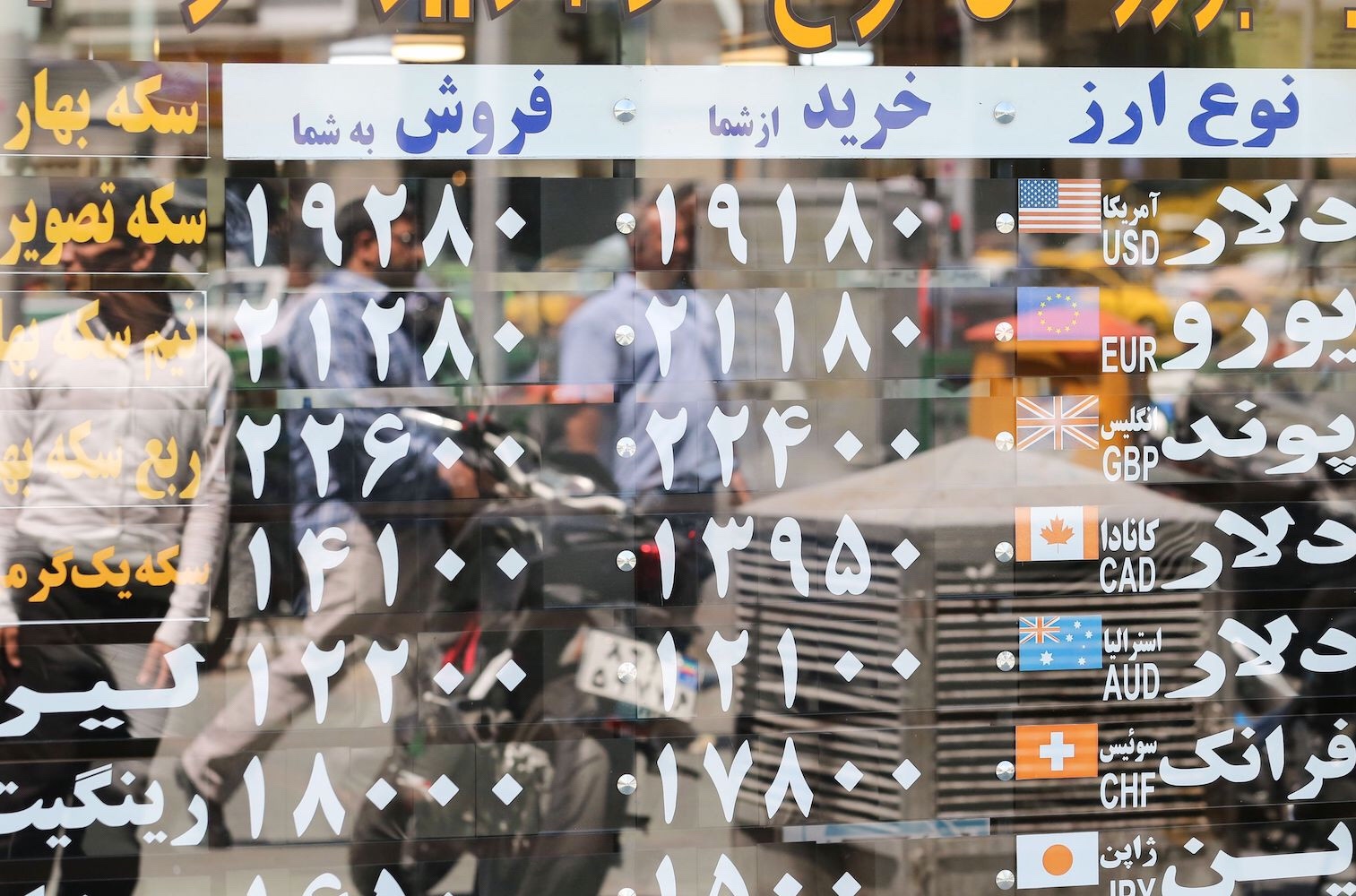
Pedestrians are reflected in a window displaying currency exchange rates in the Iranian capital Tehran on June 22. Atta Kenare/AFP/Getty Images
Officials in Tehran have a lot to worry about. But they are particularly irked at the speed by which Asian states have dropped Iran as a trading partner. Iran had hoped that the East would save the country’s economy from the barrage of sanctions enacted by the administration of U.S. President Donald Trump. In early 2018, at a time when Trump and his team were about to unveil the most punishing sanctions regime ever imposed on a country, Supreme Leader Ali Khamenei explicitly urged Tehran to look east for trading partners. Khamenei’s track record in vilifying the West is lengthy, with the ayatollah regularly scorning any official in Tehran who disagreed as a simpleton or “unreasonable.” But his alternative has so far proved to be nothing but a pipe dream. Even so, Khamenei maintains the charade of a promised bailout.
Over the course of the Trump presidency, Iran’s relations with Asian countries have varied, but there is no sign of a clear success anywhere. Among the country’s big former trading partners, South Korea and India stand out as the most eager to respect U.S. sanctions on Iran. They stopped buying Iran’s oil, halted any long-term investments they had in Iran, and more or less refuse to sell anything to the country. In June, after two years of negotiations, South Korea finally sent to Iran a cargo of humanitarian goods worth $500,000. Another shipment worth $2 million is said to be under way, but only if Seoul first secures the approval of Washington.
Tehran is also livid that Seoul is still blocking payments of some $7 billion for oil that was exported to South Korea before U.S. sanctions were implemented in late 2018. Iranian media are full of headlines demanding not only that Koreans pay up but also that they hand over maintenance fees for having kept the money in two South Korean banks. Iranian President Hassan Rouhani has asked his government take legal action against Seoul to deter other countries from behaving the same way.
Iran’s protestations have had few results. When in 2019 the South Korean companies Samsung and LG announced that they would stop operating in Iran, officials in Tehran warned them that coming back to the Iranian market might not be so easy. “Commercial logic dictates that keeping a market is easier than reentering a market once you leave,” said one. Still, the South Koreans left. Although Iran does represent a big market, of course, the United States represents a bigger one.
South Korea is not alone. Take India. New Delhi has in recent years rebuffed Tehran at every critical turn. When the Trump administration first reimposed sanctions on Iran in 2018, the Indians first sought to push for a hard bargain with Tehran. India has historically had a large trade deficit with the country. In 2018, for example, its imports amounted to around $13 billion from Iran, but its exports were worth merely $3 billion. New Delhi was looking to address that imbalance. The Indians offered a barter of oil for goods. It was a major setback for Tehran, since such an arrangement would have deprived it of much-needed foreign currency exchange. In the end, U.S. pressure was impossible for the Indian government to resist, and it basically cut Iran loose altogether.
The United States had even given New Delhi a waiver so it could continue as an investor and operator in the development of Iran’s deep-sea port at Chabahar on the Gulf of Oman, but the Indians still dragged their feet on that project. Chabahar has long been touted as India’s strategic conduit to markets in Afghanistan and in Central Asia and as a regional counter to the Chinese-sponsored port of Gwadar in Pakistan. But India had second thoughts, and Tehran’s anger was palpable. In retaliation, Khamenei himself has begun to issue criticism of Indian policies in Kashmir, a conflict he had in the past largely ignored.
Among Iran’s other top trading partners in the East, Japan and China stand out for different reasons. In the case of Japan, Tokyo swiftly ended trade with Iran in compliance with U.S. sanctions. Still, the government, as former National Security Advisor John Bolton’s new book underscores, was at the same time happy to play a possible mediator role between Tehran and Washington. Since Japan is a top U.S. ally, Tehran never held out much hope for maintaining trade with Tokyo, but it seemed to genuinely appreciate Japanese efforts aimed at a diplomatic resolution. This was evident in Rouhani’s decision to pay a state visit to Tokyo in December 2019, the first by an Iranian president since 2000. Even as Japanese mediation failed to result in a breakthrough, Tokyo’s handling of the U.S.-Iranian standoff stood out as rather skillful diplomatic navigation.
Meanwhile, in Tehran’s eyes, China has ranged from being a potential silver bullet to the mother of all disappointments. In May 2019, Foreign Minister Mohammad Javad Zarif visited China on a two-pronged mission. Zarif asked Beijing to help save the Iran nuclear deal of 2015, which the Trump administration left in May 2018. He also pushed the Chinese to continue to buy Iran’s oil and ignore U.S. sanctions. At first it looked like Zarif’s message had been well received. As he was in Beijing, it was reported that a tanker with Iranian oil had delivered its cargo to a Chinese port. This was the first time Iranian oil arrived in China since the Trump administration put a total ban on all Iranian oil exports starting in late 2018.
Just a few weeks before, at the January 2019 Munich Security Conference, Zarif had admonished the Europeans for abandoning trade with Iran under U.S. pressure. The Europeans had that month launched Instex, a mechanism to facilitate trade with Iran, but it was already clear that European investors and firms were rushing out of Iran. Only China could be Iran’s economic savior—or so the thinking went in Tehran. In fact, for the year 2019, Iran-China trade dropped by one-third to a total of around $23 billion. Both Iran and ChinaX are exporting less to each other.
The alarming data was revealed at a time when the Iranian public was already increasingly anti-Chinese due to the coronavirus, which had arrived in Iran from China sometime in late 2019. The state of affairs became so tense that China’s ambassador to Tehran, Chang Hua, had to write an open letter. He explained that the downturn in trade was due to the COVID-19 crisis in China and that it would be temporary. Since then, the Chinese ambassador has periodically reminded the Iranian public that China has long-term strategic plans for Iran and said that it is bound to be a country that will eventually dominate the global economy.
Still, while China has a strong protector in Tehran in Khamenei, there are official voices within the ranks of the ruling class that question the logic behind Iran putting all its eggs in the Chinese basket. Iran’s dependence on Beijing is creating tough questions about Tehran’s inability to risk offending its partner. And yet, the two institutions most dedicated to China in Iran are the Office of the Supreme Leader and his armed foot soldiers in the Islamic Revolutionary Guard Corps, the two most significant centers of power in the country. This is why China feels comfortable in its position as Tehran’s matchless foreign partner.
There is no doubt that Iran’s relationship with China is bigger than mere trade. As was evident in China’s vote against censuring Iran at the International Atomic Energy Agency on June 19, Iran and China have a multitiered engagement. Most notably, each see the other as a card to be played in their respective tugs of war with the United States. But even in the unlikely event that Beijing comes through for Iran in saving its economy from U.S. sanctions, this would not be tantamount to a successful Iranian anchor in the so-called East as Khamenei has for years advocated. It is more a case of subjugation to China and its interests. There is otherwise no sign of a working Iranian policy toward the East. There are plenty of analysts and commentators in Tehran who recognize this hard reality, but very few are willing to stick their necks out and say so publicly and loudly. After all, self-censorship is a way of life for Iranian officials, and very few of them dare to question the purported wisdom of Ayatollah Khamenei’s much-coveted pivot to the East.
Alex Vatanka is a senior fellow and the director of the Iran Program at the Middle East Institute in Washington, D.C. His forthcoming book is The Battle of the Ayatollahs in Iran: The United States, Foreign Policy and Political Rivalry Since 1979. Twitter: @AlexVatanka

Sunday, January 29, 2017

The Growing Asian Nuclear Horns (Revelation 8)

Vishwanath Patil and Manoj
G02:24 PM, January 28, 17
No-dong-B Medium-Range Ballistic Missile
North Korea, India and Pakistan launched a total of about 37, some capable of carrying nuclear weapons in 2016 making it one the busiest years for medium-to-long-range missile tests in recent memory.
North Korea reportedly carried out about 25 medium to long range missile test launches of which just one was claimed as a success by Pyongyang. India carried out seven while Pakistan launched four, and China launched one.
NORTH KOREA
North Korea started 2016 with conducting its fourth nuclear weapons test on January 6. Pyongyang announced it as a success with the detonation of a miniaturized hydrogen bomb.
On February 7, North fired a long-range rocket. It claimed that the rocket was carrying a satellite which was viewed as a front for testing an intercontinental ballistic missile by US, Japan and South Korea.
Pyongyang tested a Musudan, an intermediate-range ballistic missile on April 15, a month after the UN imposed a ban on North Korea to carry out nuclear tests and against usage of ballistic missile technology under Resolution 2270.
North Korea also fired a submarine-launched ballistic missile (SLBM) on April 23. The missile blew up minutes after the launch. This was the second SLBM tested by North Korea. The first one was attempted in 2015.
Later, in the same week, on April 28, Pyongyang tested two more Musadan missiles. On May 30, North Korea carried out another Musadan launch. All of these failed.
North Korea posted success of Musadan ICBM on June 21, after it tested two more Musadan missiles. One of them was partially successful, it claimed.
A submarine launched ballistic missile (SLBM) was tested on July 9 which exploded after flying for 6 miles.

Friday, October 7, 2016

Preparing For The Asian Nuclear War (Rev 18)

By Nabanita Maji on October 6, 2016
It seems like the India vs. Pakistan war will soon become real. There is no denial that the two major incidents, the Uri attack and the surgical strikes between the two nations, have jeopardized the situation even more. And now, Pakistan has raised the possibility of a nuclear attack against India.
Talking to the media, Pakistani Defense Minister Muhammad Asif went out in the open and threatened to hit back at India. He has also raised the possibility of a nuclear strike against the rival nation.
He said, “We haven’t kept the nuclear devices that we have just as showpieces. But if our safety gets threatened, we will annihilate them (India).”
In fact, sometime back, Asif had said, “Allah has said in the Qur’an, ‘The horses must be prepared,’ therefore Pakistan must always keep itself all prepared. In case there is a threat to our security, or if anyone steps on to our soil or if there’s someone designing a threat to our security, we would not hesitate to use those (nuclear) weapons for our defense.”
In yet another shocking incident, the Indian police department recently detained a pigeon that was found carrying a warning note message for Prime Minister Narendra Modi. The note read, “Modi, we’re not the same people from 1971. Now each and every child is ready to fight against India.”
Sources claimed that the Pakistan-based militant group Lashkar-e-Taiba (LeT) penned the warning note. It also somewhat hinted that Pakistan is even set to train its children for an India vs. Pakistan War.
On the other hand, Sharif has openly denounced India’s bold move against the jihadi militants – the infamous surgical strikes. But that is not the end of it. Pakistan also received strong support from China on the Kashmir issue. Furthermore, China has also pledged to resolve disputes between Islamabad and New Delhi.
For comments and suggestions, leave a message in the comments section below. Like and Follow our Facebook page for more stories and to stay up-to-date with the latest happenings.

Friday, August 12, 2016

The Asian Nuclear Horns Continue To Grow


Asia’s nuclear stockpile is worryingly growing

August 02, 2016 11:22 IST
China will be the nuclear threat of most concern to New Delhi for at least another decade, the latest report by the Arms Control Association says.

Greg Thielmann and David Logan — authors of the report titled The complex and increasingly dangerous nuclear weapons geometry of Asia — say that that the nuclear arsenals and ambitions of India, Pakistan, and China pose significant dangers and deserve more attention.

While Pakistan’s nuclear arsenal is designed to counter India’s conventional and nuclear forces, New Delhi measures its own nuclear weapons programme against that of China.

Beijing, in turn, judges the adequacy of its nuclear arsenal against the threat it perceives from the United States’ strategic offensive and defensive capabilities. And in its efforts to mitigate the ballistic missile threat from North Korea, the United States and its allies in the region are expanding their strategic and theater missile defense capabilities.

The complicated nuclear weapons geometry of Asia thus extends from the subcontinent to the other side of the world.

Here’s what the report states about the three Asian nuclear powers:
India

Nuclear stockpile: 120 warheads
What the report says about India:

* Even though India has now flight-tested ballistic missiles that can reach over the Himalayas to target China’s largest cities, it remains a regional nuclear weapons power. Although India has long aspired to build a nuclear triad, its nuclear forces today still essentially constitute a dyad based on attack aircraft carrying gravity bombs and short-and medium range ballistic missiles, mostly based on land.

* During the next decade, it is likely that India will be able to deploy significant numbers of longer-range, land-based ballistic missiles, the Agni-4 (3,500+ km range) and Agni-5 (5,200+ km range), which will be able to cover targets throughout China. (See the table below to see India’s nuclear strength)

* India’s stockpile of fissile materials is estimated to include 5.7 tons of weapon-grade plutonium for non-civilian purposes and 3.2 tons of HEU — although part of India’s HEU is reserved for naval propulsion.

* Due to technical realities and doctrinal inclinations, India’s nuclear forces will remain an inherently secondstrike system against China and Pakistan for the foreseeable future — even if it is perceived otherwise in Islamabad.

* More than is the case with India’s two potential nuclear antagonists, New Delhi wields its nuclear weapons to enhance its prestige and to gain leverage for winning “a seat at the high table” among the NPT nuclear-weapon states. Equating nuclear weapons prowess with prestige also means that India will be tempted to pursue technological advances in its capabilities whether or not they are required to assure the viability of its nuclear deterrent.

China

Nuclear stockpile: 230 warheads
What the report says about China:

* There is little evidence that China is very concerned with Indian nuclear forces — or with the massive nuclear arsenal of Russia, which from a technical standpoint, potentially poses a much larger threat.

* Just over ten years ago, most of China’s nuclear-armed missiles and all of its ICBMs were liquid-fueled, silo-based, and each capable of carrying only one very heavy warhead. Today, China’s missiles are increasingly solid-fueled, road-mobile, and capable of carrying multiple warheads.
* Over the last decade, China has added more than 50 nuclear warheads to its ICBM forces capable of hitting the US mainland; within another decade, the number could well exceed 100. (See the table below to see China’s nuclear strength)

* Although there is not yet evidence that China’s political leadership has altered any of its core beliefs about nuclear weapons, nor that the newly-created PLA Rocket Force command implies a change in nuclear doctrine, the modernization and expansion of Chinese nuclear weapons may be harbingers of such changes down the road.

* A larger, more sophisticated Chinese nuclear arsenal, at a higher alert level, could also spur both horizontal and vertical proliferation by potentially prompting Japan or Korea to consider their own nuclear programs or motivating India to further expand its growing nuclear arsenal.

Pakistan

Nuclear stockpile: 130 warheads
What the report says about Pakistan:

* Whatever the role of national pride in motivating their initial development, Islamabad wields them today primarily to compensate for the growing conventional military superiority of India. As India increases its conventional military edge and economic power, Pakistan will rely more and more on its nuclear forces to counter conventional threats from India.

* As of the end of 2014, Pakistan was estimated to have accumulated a stockpile of about 0.19 tons of plutonium and 3.1 tons of HEU. With four reactors (Khushab-I, -II, -III, and -IV) now believed to be operational,23 Pakistan is adding 0.04 tons of weapons grade plutonium to its inventory annually. (See the table below to see Pakistan’s nuclear strength)

* Pakistan has six types of operational nuclear-capable ballistic missiles and at least two more under development. It has also deployed nuclearcapable, air-launched cruise missiles, is testing ground launched cruise missiles, and apparently plans to develop and deploy sea-launched cruise missiles as well.

* Military planners in Pakistan are convinced of its utility by the advocacy of some Indian planners for a “Cold Start” doctrine that would permit Indian forces to seize territory in response to a provocation before Pakistan had a chance to fully mobilize.

* Alone among Asian nuclear-weapon states, Pakistan faces serious challenges to the security of its nuclear weapons stockpiles. Terrorist groups like Lashkar-e-Tayiba, the Pakistani Taliban, and the al-Qaeda affiliate Jaish-eMohammed, operate out of Pakistan and are supported by some elements of the Pakistani government, like the Inter Services Intelligence directorate.

Thursday, January 28, 2016

US Fails to Convince the Asian Nuclear Horns


U.S. and China appear to be at an impasse over North Korea and the South China Sea

Jonathan Kaiman Contact Reporter

Secretary of State John F. Kerry and Chinese Foreign Minister Wang Yi appeared to reach an impasse Wednesday over the severity of prospective sanctions for North Korea, three weeks after the isolated country conducted its fourth nuclear bomb test.

Kerry arrived in Beijing on Tuesday night after two days in Laos and Cambodia, and met with Wang for more than four hours Wednesday morning. North Korea “topped the agenda,” he told reporters at a news conference afterward.

At the conference, Kerry and Wang painted a positive picture of U.S.-China relations in broad strokes, discussing “cooperation” on a range of issues including the Iranian nuclear deal, wildlife trafficking and combating the Ebola virus.

Yet their failure to bridge a deep divide on North Korea’s nuclear program and Beijing’s territorial ambitions in the South China Sea illustrated the fragility of the region’s security environment.
On Jan. 6, North Korea announced that it successfully conducted its first underground test of a hydrogen bomb; experts said that a nuclear bomb clearly detonated but raised doubts about Pyongyang’s claim of owning a significantly more powerful thermonuclear weapon.

Beijing has provided an economic lifeline to North Korea for decades and fears that unrest in the country could destabilize China’s northeastern provinces.

“North Korea poses an overt threat, a declared threat to the world,” Kerry told reporters. He proposed negotiating a U.N Security Council resolution to tighten sanctions on North Korea, dealing a potential blow to China-North Korea trade in industries including aviation, shipping, and the exchange of resources such as fuel and coal.

“The U.S. will do what is necessary to protect the people of our country and our friends and allies in the world,” he said. “All nations, particularly those who seek a global leadership role or have a global leadership role, share a fundamental responsibility to meet this challenge with a united front.”

Although Wang agreed that the U.N. Security Council must pass a new resolution in response to the nuclear test, he balked at the prospect of tightening sanctions. “Sanctions are not an end of themselves,” he said. “We must point out that the new resolution should not provoke new tension in the situation, much less destabilize the Korean peninsula.”

Experts said that China likely does not see much upside in adopting the U.S.’ proposed framework for dealing with Pyongyang.

“On the nuclear side, I’ve never had any doubt that the Chinese want to end this program but they don’t see a strategy in the international community to achieve that goal,” said Bonnie Glaser, a senior advisor for Asia at the Center for Strategic and International Studies. “A lot of people think China is the missing link and if only it would get on board with sanctions that North Korea could be compelled to give up its nuclear weapons. The Chinese just don’t look at it like that.

“They play out in their minds, what are the consequences if they really agree to very tough sanctions — if they cut off oil deliveries to North Korea?” she added. “So that creates instability in North Korea most likely, then China ends up with a crisis on its border that potentially brings U.S. troops closer to China, and you end up with a worse situation than when you started.

On Wednesday morning, China’s New China News Agency accused Washington of “uncompromising hostility” toward North Korea, “flaring up the country’s sense of insecurity and thus pushing it towards reckless nuclear brinkmanship.”

Kerry also reached loggerheads with Wang regarding China’s maritime ambitions, which have riled the country’s neighbors and threatened the region’s U.S.-led security order.

China claims virtually all of the South China Sea, a potentially oil and gas-rich area of the western Pacific Ocean dotted with remote islands and reefs. Vietnam, the Philippines, Brunei, Malaysia and Taiwan also claim parts of the sea as their own.

China has stepped up its claims in recent years with a series of heavyweight projects, including building artificial islands on a shoal also claimed by the Philippines. In October, the U.S. sent a warship within 12 nautical miles of these islands, drawing harsh rebukes from Beijing.

“The South China Sea islands were historically China’s territory, and China has a right to protect its maritime sovereign and legal rights and interests,” Wang said at Wednesday’s news conference. He denied accusations that China has militarized its artificial islands, adding that Beijing has built “some necessary facilities for self-defense.”

Southeast Asian countries are indeed divided over how to handle the issue, and the lack of consensus has allowed China to advance its projects with limited opposition.

Kerry said he also met with Chinese President Xi Jinping and that they had a “constructive discussion.”

Before his meetings in China, Kerry visited Laos, a landlocked, deeply impoverished country of 7 million people between Thailand and Vietnam, and Cambodia, which enjoys close economic ties with China and tends to side with Beijing on issues of maritime rights.

Although the Assn. of Southeast Asian Nations, or ASEAN, a 10-member regional bloc, could band together to counter China’s territorial claims, internal divisions have stymied attempts at collective action. In 2012, Cambodia blocked mentions of the disputes at a summit in Phnom Penh, leading the association to fail to issue a joint communiqué.

ASEAN leaders will attend a summit hosted by President Obama in California in February. Laos is the association’s chair.

During his visit to Laos, Kerry — only the second U.S. secretary of State to visit the country since 1955 — promised to boost U.S.-funded programs to ameliorate malnutrition and remove unexploded ordnance left from the Vietnam war. China, meanwhile, has promised the country major investments in infrastructure, including a high-speed rail line.

China’s state media have responded to U.S. pressure on the South China Sea issue with significantly less restraint than the country’s foreign minister.

Washington’s strategy has fed the strategic distrust between China and the US, and prompted smaller countries in the region to vacillate between the two powers and try to benefit from their contest,” said a Tuesday commentary in the state-owned, notoriously bombastic Global Times newspaper.

Many of them are manipulated by Washington behind the scenes as a proxy to counter China. Washington instigates some smaller nations to challenge China in the South China Sea, one of China’s core interests, and sugarcoats itself as a defender of justice.”

Tuesday, January 26, 2016

Bush Helped Cause The Present South Asian Nuclear Crisis


Bush Administration Nuclear Policy Enabled India’s H-bomb Program

xin_58070219085702394614
In December, the Center for Public Integrity published an investigative report by Adrian Levy titled Experts worry that India is creating new fuel for an arsenal of H-bombs. It was also published in Foreign Policy with the more alarming title India Is Building a Top-Secret Nuclear City to Produce Thermonuclear Weapons, Experts Say.
The Indian government has appropriated a large chunk of land in the southern Karnataka state to build a military complex of nuclear research laboratories and testing facilities. Also ostensibly intended to produce fuel for India’s nuclear reactors and submarines, it seems that, writes Levy
… another, more controversial ambition, according to retired Indian government officials and independent experts in London and Washington, is to give India an extra stockpile of enriched uranium fuel that could — if India so decides — be used in new hydrogen bombs (also known as thermonuclear weapons), substantially increasing the explosive force of those in its existing nuclear arsenal.
Bear in mind that because India never signed the nuclear Non-Proliferation Treaty (NPT),it’s a “rogue” nuclear nation like Pakistan, Israel, and North Korea, and not subject to inspections by the IAEA (International Atomic Energy Agency). Presumably, India seeks to build up its arsenal to counter Pakistan, right? Not necessarily. Levy:
Gary Samore, who served from 2009 to 2013 as the White House coordinator for arms control and weapons of mass destruction, said “I believe that India intends to build thermonuclear weapons as part of its strategic deterrent against China.”
The Bush administration’s deal of cooperation with India implemented in 2008 was controversial because India was not a signatory to the NPT. (Bear in mind that with all the heat we have kept on Iran for decades about its nuclear research, it’s a signatory to the NPT — just one we haven’t got along with.) Levy again:
Opponents of the deal complained … that it did not compel India to allow inspections of nine reactor sites known to be associated with the country’s military, including several producing plutonium for nuclear arms. The deal also allowed 10 other reactor sites subject to IAEA inspection to use imported uranium fuel, freeing up an indigenously-mined supply of uranium that was not tracked by the international community and could now be redirected to the country’s bomb program.
Given India’s “need to build up [its] nuclear deterrent arsenal as fast as possible,” it should “categorize as many power reactors as possible as civilian ones, to be refueled by imported uranium, and conserve our native uranium fuel for weapons grade plutonium production,” strategist Krishnaswamy Subrahmanyam, a longtime adviser to the Indian government, notoriously wrote in December 12, 2005, in The Times of India. [Emphasis added.]
Which is exactly what India is doing. Thank you George Bush for expediting thermonuclear weapons in the Indian subcontinent. Though the West might be able to dodge direct involvement in a nuclear war between India and China or Pakistan, the ensuing nuclear winter would have a devastating effect on the entire planet for years to come.

Friday, January 15, 2016

The Threat of Nuclear War in South Asia


By Lt Gen Prakash Katoch (Retd.)
That Pakistan has been using the nuclear bogey to continue its proxy war on India is no secret. The United States has for long ignored blatant Chinese nuclear proliferation to Pakistan, as well as nuclear proliferation engineered by Musharraf through Abdul Qadeer Khan, digesting Musharraf’s lie that it was unaware of these happenings.
AQ Khan was not even interrogated by Americans. The rapidly multiplying tactical nuclear weapons (TNWs) stockpile of Pakistan too is largely ignored by the US save for the perfunctory noises that are occasionally made, like the safety of sea-based systems. It seems that the States is apparently content with Pakistani explanation these are to counter India’s ‘Cold Start’ doctrine, even as Khalid Kidwai, former Adviser to Pakistan’s National Command Authority, says India has already been forced to rethink the said doctrine.
Significantly, Pakistan’s Shaheen-III has a range of 2,750 kms, giving it the reach to strike Middle East including Israel. Pakistan’s assertion that Shaheen-III would deter India’s second strike is actually laughable. More significantly, the US administration continues to support and equip Pakistani military even despite the fact that majority of the US-NATO casualties in Afghanistan is due to Pakistani proxies.
Paul Joseph Goebbels, Hitler’s Minister of Propaganda, once said: “It would not be impossible to prove with sufficient repetition and a psychological understanding of people concerned that a square is in fact a circle. They are mere words, and words can be moulded until they clothe the ideas and disguise.” So, as witnessed in the past few years, the western think tanks have been ranting about India-Pakistan nuclear war or rather conventional war mushrooming into nuclear exchange, with all these alarmist discussions happening despite knowing that nuclear weapons are meant or deterrence; used for political leverage.
US and British think-tanks creating the hyperbole understand it best, both being part of Permanent 5 cohort. Yet, the repetition continues tirelessly with the scenario bragging about a potential major terrorist attack in India resulting in a conventional military response, and which would eventually result in nuclear exchange albeit first initiated by Pakistan.
In fact, the Goebbels’ theory succeeds every time when our media and scholars even with army background, air their views on how the nuclear exchange will play out, and that too on day-to-day basis. Similar views are being aired post the terrorist strike at the Pathankot Indian Air Force (IAF) base. That such perception-building facilitates the west to continue molly-coddling Pakistan despite all the extremism it generated is pretty obvious, though much more is involved.
Let us go into the realm of hypothetical that most of those on the media engage in. Let us for instance imagine the initiation of a nuclear weapon by Pakistan against Indian forces. When crossing the nuclear threshold it is immaterial whether a tactical or a strategic nuke is used. Pakistan knows what India’s response would be in case it initiates a nuclear strike. The Pakistani military is not naïve to do so and trigger a nuclear war of mutual destruction especially considering Pakistan’s geography which has placed it adjacent to India.
The fact is that military on both the sides of the border would hardly exercise the nuclear option for this very reason. Sure the window for conventional war in nuclear backdrop remains, but that does not imply nukes would be used. To quote Lt Gen Vijay Oberoi, former Vice Chief of Army Staff (VCOAS), “they (nuclear weapons) are not weapons for use. Those who think that nuclear weapons are merely many times more destructive weapons are wrong; they are on a different plane altogether”.
At the same time nuclear saber-rattling by Pakistan will continue. It is now known that Musharraf wanted to deploy the Ghauri nuclear missiles to reinforce the massive Kargil intrusions in 1999 but “air went out of his balloon when the top general in-charge of the missile program told him the missile had a faulty guidance system”. According to Bruce Riedel, Central Intelligence Agency (CIA) warned President Clinton “that Pakistan was preparing its nuclear weapons for deployment and possible use.” But that being the height of saber-rattling, Musharraf surely knew there was no hole to hide from the inevitable Indian riposte.
For that matter, conventional war does not resolve the issue of terrorism, which US-NATO should know best. Interestingly in their book ‘Nuclear Express’, Thomas C. Reed and Danny B Stillman (former was secretary of United States Air Force and latter Director, Los Alamos Technical Intelligence Division) bring out that during the regime of Deng Xiaoping, the Chinese were of the view that use nuclear weapons against the west by radical and rogue countries would be good for China provided the trail is not traced back to it. And hence, the covert nuclearization of Pakistan and North Korea was pursued.
The western propaganda of India-Pakistan nuclear war was given fresh fillip during 2015. George Perkovich and Ashley Tellis, both from Carnegie Endowment presented the doom’s day scenario to a US Senate panel in February 2015, arguing that Pakistan might use nuclear weapons against India if the latter launched a large-scale military assault in retaliation for a major terror attack from across the border. Yes, Ashley Tellis also urged the US to use its influence in preventing a terrorist attack, but there is little evidence that the US is taking such advice seriously.
Next came an article titled ‘Fast, Radioactive, and Out of Control’ by Adrian Levy, R and Jeffrey Smith written for the Washington based Centre for Public Integrity, alleging that India was building a secret nuclear city 160 miles to the south of Challakere, near Mysore – an allegation denied by India. Obviously this was a subtle move to sow a fresh idea through third party when CIA has the wherewithal to ascertain the ground truth. US think-tanks have stepped up efforts with categorical assessments that the next India-Pakistan war will be the last war in South Asia.
The west knows very well that India has nuclear China and Pakistan as its neighbours and while China is racing along the thermonuclear path, Pakistan is increasingly getting radicalized, waging proxy wars in India and Afghanistan and rapidly increasing her nuclear arsenal. Yet, the west appears to be hyphenating Indian nuclear capability only with Pakistan, discounting the China threat. In August 2011 Pervez Hoodbhoy, Professor of Nuclear and High Energy Physics, Quaid-e-Azam University, Islamabad said, “an extremist takeover of Pakistan is probably no further than five to ten years away….. The common belief in Pakistan is that Islamic radicalism is a problem only in Federally Administered Tribal Areas, and that madrassas are the only institutions serving as jihad factories. This is a serious misconception. Extremism is breeding at a ferocious rate in public and private schools within Pakistan’s towns and cities. …… The mindset it creates may eventually lead to Pakistan’s demise as a nation state.”
Whatever be the case, that the US that could make Pakistan join the Global War on Terror (GWOT) under the threat of being “bombed into stone age” is not putting any pressure on Pakistan to stop terrorism anymore. As Pakistan is an important element to America’s ‘great game’ in South Asia to counter Chinese and Russian influence, the US sees itself benefitting more by doing precious little in the context of a nation-state that has the potential of going rogue.
The West has never ever appreciated the manner in which India assisted East Pakistan, liberated Bangladesh and how soon Indian forces vacated the territory of the newly formed Bangladesh. But much more importantly, the western thinktanks are not even discussing the most probable use of nuclear weapons by Pakistan – through its proxies. Chemical, Biological, Radiological and Nuclear (CBRN) terrorism is a reality – a fact that got demonstrated with the 1995 Sarin Gas attacks on Tokyo Subway, Anthrax attacks in the US in 2001, prolific use in Syria and the like. So why not low-yield nukes? Should that be orchestrated inside India, the West would solemnly sermonize India to show restraint. A Russian view is that nuclear war may occur in South Asia if the US so wants. There is merit in that too because the holocaust would reverse Beijing’s push to the Persian Gulf by a couple of years.
*Lt. Gen. Prakash Katoch (Retd) is a Council Member of United Services Institution of India, New Delhi. He can be reached at: editor@spsindia.in

Tuesday, April 14, 2015

Nuclear Escalation In Asia Is Imminent (Dan 7)


Nuclear tensions rising in South Asia

Jawad Iqbal
BBC

The time, attention and effort devoted to reaching a deal with Iran over its nuclear ambitions has unwittingly tended to obscure the growing dangers of nuclear proliferation elsewhere in the world.

South Asia, a volatile and unstable region, has been witnessing an escalation in military and nuclear rivalry, somewhat overshadowed by the understandable fears of a nuclear arms race in the Middle East.

This part of the world, according to analysts, is fast becoming a race for nuclear supremacy between three powers – India, Pakistan and China (while technically not classified as South Asia, the country shares borders with both India and Pakistan).

This rivalry in the eyes of many analysts is dangerous in itself but is made even more complex by the mutual suspicions and historical enmities that bedevil the region.

‘Restraint and deterrence’

First, take Pakistan. The country is plagued by economic and political insecurity but is locked in a fight for military bragging rights with India. The country is believed to have one of the world’s fastest growing nuclear arsenals. A recent report indicated that it had tripled the number of warheads it had a decade ago.

Nuclear strength is a political and military strategy in the eyes of the Pakistani governing class, a way of countering India’s political and military clout. Pakistan has no official nuclear doctrine, but official communiques speak of “restraint” and “deterrence”.

The Pakistan government recently approved the purchase of eight submarines from China. It is not clear from reports whether they have the capacity to be equipped with nuclear missiles. The deal, said to be worth billions, is one of China’s biggest arms deals. It also threatens to intensify a growing battle for military supremacy in the Indian Ocean, a stretch of sea that has long been a source of rivalry and tensions in the region.

The reported deal sheds light on one other area of conflict and rivalry.

China has long been one of Pakistan’s main arms suppliers, accounting for half of Pakistani weapons imports, according to a report published by the Stockholm International Peace Research Institute.

Troubled history

China and Pakistan have been close for decades, based largely on their mutual suspicion of India.

In other developments, the Pakistanis are reported to have test-fired a missile recently that appears capable of carrying a nuclear warhead. Pakistan possesses the medium-range Shaheen-III missile with a range of some 1,700 miles, leaving India easily within range. A recent leader article in the New York Times reported claims that Pakistan continues to develop short-range tactical nuclear weapons. Again, leaving India well within range.

No-one should underestimate the rivalry between the two countries, informed by their troubled history, which includes outright wars in 1947, 1965 and 1971.

India is estimated by analysts to have some 110 warheads but continues to expand its nuclear programme but at a slower pace, according to some reports. The country has a mixed strategy, combining short and long-range ballistic missiles, nuclear submarines and cruise missiles. It tested its first nuclear device in 1974.

India has a No First Use doctrine, recently confirmed by Prime Minister Narendra Modi. Security is a key part of India’s nuclear strategy.

China’s nuclear strength is a worry to India, as is its more advanced strategic weapons and its numerically superior military force. Also a worry is the traditionally close relationship between China and Pakistan, India’s erstwhile enemy.

Informed analysis estimates that China’s nuclear weapons number some 250 warheads – a mixture of short, intermediate, and long-range ballistic missiles.

China’s ambitions encompass land, air and sea-based nuclear delivery systems.

China’s nuclear ambitions took off in the 1950s, in the wake of the Korean War. Its first nuclear test is believed to have been conducted in 1964. It is a view among informed commentators that the country’s nuclear capability will continue to grow in the coming years. China has always maintained that its own No First Use policy is defensive. The country is a signatory to the Non-Proliferation Treaty, the NPT. It is also a signatory to the Comprehensive Nuclear-Test-Ban Treaty (CTBT) but has yet to ratify it.

Lethal cocktail?

The fierce nuclear competition in South Asia is seen by many as a recipe for instability in a region already burdened with problems.

is a potentially lethal addition to the cocktail of territorial disputes and cross-border terrorism. The capacity of other world powers to influence the situation is hampered by the fact that neither India nor Pakistan belong to the NPT.

Pakistan’s economic and political instability also poses huge and troubling questions. The country is persistently challenged by militant groups and fears persist that these groups could get their hands on nuclear materials, despite strong insistence from Pakistani officials that its nuclear facilities are secure.

America and Russia still possess more than 90% of the world’s nuclear weapons but South Asia, home to three nuclear states, remains a growing worry, perhaps one that will get more attention in the coming months.

Tuesday, April 7, 2015

World Loses Site Of The Pakistani Nuclear Horn (Dan 7:7)


 Nuclear Fears in South Asia

By THE EDITORIAL BOARD
APRIL 6, 2015

The world’s attention has rightly been riveted on negotiations aimed at curbing Iran’s nuclear program. If and when that deal is made final, America and the other major powers that worked on it — China, Russia, Britain, France and Germany — should turn their attention to South Asia, a troubled region with growing nuclear risks of its own. 

Pakistan, with the world’s fastest-growing nuclear arsenal, is unquestionably the biggest concern, one reinforced by several recent developments. Last week, Pakistan’s prime minister, Nawaz Sharif, announced that he had approved a new deal to purchase eight diesel-electric submarines from China, which could be equipped with nuclear missiles, for an estimated $5 billion. Last month, Pakistan test-fired a ballistic missile that appears capable of carrying a nuclear warhead to any part of India. And a senior adviser, Khalid Ahmed Kidwai, reaffirmed Pakistan’s determination to continue developing short-range tactical nuclear weapons whose only purpose is use on the battlefield in a war against India.

These investments reflect the Pakistani Army’s continuing obsession with India as the enemy, a rationale that allows the generals to maintain maximum power over the government and demand maximum national resources. Pakistan now has an arsenal of as many as 120nuclear weapons and is expected to triple that in a decade. An increase of that size makes no sense, especially since India’s nuclear arsenal, estimated at about 110 weapons, is growing more slowly. 

The two countries have a troubled history, having fought four wars since independence in 1947, and deep animosities persist. Prime Minister Narendra Modi of India has made it clear that Pakistan can expect retaliation if Islamic militants carry out a terrorist attack in India, as happened with the 2008 bombing in Mumbai. But the latest major conflict was in 1999, and since then India, a vibrant democracy, has focused on becoming a regional economic and political power. 

At the same time, Pakistan has sunk deeper into chaos, threatened by economic collapse, the weakening of political institutions and, most of all, a Taliban insurgency that aims to bring down the state. Advanced military equipment — new submarines, the medium-range Shaheen-III missile with a reported range of up to 1,700 miles, short-range tactical nuclear weapons — are of little use in defending against such threats. The billions of dollars wasted on these systems would be better spent investing in health, education and jobs for Pakistan’s people. 

Even more troubling, the Pakistani Army has become increasingly dependent on the nuclear arsenal because Pakistan cannot match the size and sophistication of India’s conventional forces. Pakistan has left open the possibility that it could be the first to use nuclear weapons in a confrontation, even one that began with conventional arms. Adding short-range tactical nuclear weapons that can hit their targets quickly compounds the danger.


This is not a situation that can be ignored by the major powers, however preoccupied they may be by the long negotiations with Iran.

Friday, January 2, 2015

India And Pakistan Exchange Nuclear Facility “Ghost” Lists

List of nuclear facilities exchanged between India and Pakistan
Pakistan India Nuclear Facilities
— By AGENCIES | Jan 01, 2015 02:25 pm

New Delhi : The Ministry of External Affairs (MEA) on Thursday in a statement said that India and Pakistan exchanged the list of their nuclear installations and facilities.

This annual exercise carried out between the two countries is covered under a bilateral agreement that bars them from attacking each other’s nuclear facilities.

This is the twenty fourth consecutive exchange of such list taking place between the two countries, the first one having taken place on January 1, 1992.

The agreement, which was signed on 31 December 1988 and entered into force on January 27, 1991 provides, inter alia, that the two countries inform each other of nuclear installations and facilities to be covered under the Agreement on the first of January of every calendar year.

The two countries also exchanged, through diplomatic channels simultaneously at their respective capital, the list of nationals of each country lodged in the jails of the other country.

The agreement which was signed on 31st May 2008 provides for a comprehensive exchange of list of nationals of each country lodged in other country’s jails twice a year on 1st of January and 1st of July.
– See more at: http://freepressjournal.in/list-of-nuclear-facilities-exchanged-between-india-and-pakistan/#sthash.xSPAWCKo.dpuf

Thursday, January 1, 2015

Terrorism: The Mark Of The Antichrist (Rev 13:16)

Gurmeet Kanwal, Jan 1, 2015, DHNS:
 
The gruesome terrorist strike on hapless school children in Peshawar on December 16, 2014, once again underlined the dark reality that the Af-Pak region is the terror centre of Southern Asia. In fact, the region is the second most unstable region in the world and is competing closely with West Asia for the number one spot.

Both China and Pakistan have become militarily more assertive on India’s borders. Chinese transgressions into Demchok and Chumar in Ladakh cast a shadow on President Xi Jinping’s visit to India. Chinese intransigence on demarcating the Line of Actual Control continues. Quite inexplicably, despite Prime Minister Narendra Modi’s efforts at reaching out to the SAARC leaders, the Pakistan army under General Raheel Sharif repeatedly violated the ceasefire agreement and once again stepped up the infiltration of terrorists across the LoC.

The single greatest cause of an unstable regional security environment is the conflict in Afghanistan and the areas along the Hindukush Range astride the Durand Line. The present security situation can be characterised as a stalemate. With the drawdown of NATO-ISAF forces by year end, the situation is likely to deteriorate further.

The Afghan National Army (ANA) has assumed responsibility for security, but does not yet possess the professional standards necessary to prevail over the increasingly resurgent Taliban. The remaining US forces will ‘train, advise and assist’ the ANA. However, they are likely to continue to launch air and drone strikes in Pakistan against extremists sheltering in the Khyber-Pakhtoonkhwa and FATA areas against Al Qaeda terrorists. A gradual drift into civil war appears to be the most likely outcome.
Pakistan’s half-hearted struggle against the remnants of the al Qaeda and the home grown Taliban like the TTP and the TNSM, fissiparous tendencies in Balochistan, continuing radical extremism and creeping Talibanisation in the heartland, tentative efforts towards counter-terrorism, the floundering economy and, consequently, the nation’s gradual slide towards becoming a ‘failed state’, pose a major security challenge for the region.
The Pakistan army’s campaign against the TTP in North Waziristan is floundering. The army refuses to give up its idiosyncratic notions of ‘strategic depth’ and ‘good Taliban’ and continues to sponsor terrorism in India and Afghanistan. Unless it concentrates on eliminating the scourge of terrorism, Pakistan will continue to slide deeper into chaos.

Sri Lanka’s inability to find a lasting solution to its ethnic problems despite the comprehensive defeat of the Liberation Tigers of Tamil Eelam (LTTE) has serious repercussions for long-term stability in the island nation. The unchecked rise of Islamist fundamentalist terrorism in Bangladesh, even as it struggles for economic upliftment to subsistence levels, could trigger new forces of destruction. Much will depend on how well the government of Sheikh Hasina cooperates with the new government in India to neutralise organisations like HuJI and the Jamaat-ul-Mujahideen Bangladesh (JMB) that operate on both sides of the border.

Nepal’s fledgling democracy is continuing to struggle. The government’s inclination to seek neutrality between India and China is a blow to the historically stable India-Nepal relationship. Simmering discontentment that is gathering momentum in Tibet and Xinjiang against China’s repressive regime has the potential to snowball into a full-blown revolt.

The people’s nascent movement for democracy in Myanmar and several long festering insurgencies may destabilise the military Junta despite its post-election confidence. Australia and most South-east Asian nations are apprehensive of the increasing Chinese presence even as US influence appears to be gradually declining. The US pivot to the Indo-Pacific is not yet seen as becoming potentially capable of balancing China.

With the newly proclaimed Caliphate astride the Iraq-Syria border that calls itself the Islamic State, turmoil in West Asia is likely to continue. Despite the efforts of the Iraqi forces, the Kurdish Peshmerga and the air strikes being launched by the US and its allies, the IS militia has been gaining ground. The Israel-Palestinian stand-off shows no sign of abating. Israel refuses to halt the construction of new settlements in the West Bank and the Hamas militia is getting increasingly restive.

Iran’s refusal to unambiguously renounce its nuclear ambitions and the vaguely stated threats of several of its neighbours to follow suit are a cause for concern in the region. Saudi Arabia is suspected to be funding Pakistan’s nuclear expansion programme as a hedging strategy against the acquisition of nuclear weapons by Iran.The collusive nuclear weapons-cum-missile development programme of China, North Korea and Pakistan also causes apprehension.

Security environment


The Korean military stand-off along the 38th Parallel is a destabilising factor in the precarious security environment in East Asia. This sub-region will remain volatile unless the Chinese use their influence with North Korea to persuade it to back off from the path of confrontation. Increasing Chinese assertiveness over the Senkaku/Diaoyu islands and in the South China Sea is completely out of character with China’s stated objective of a peaceful rise. Other negative factors impacting regional stability include the unchecked proliferation of small arms being sustained by large-scale narcotics trafficking. India lies between the golden triangle and the golden crescent.

With a history of four conflicts in 60 years and three nuclear-armed adversaries with unresolved territorial disputes continuing to face off, Southern Asia has been described as a nuclear flashpoint. India’s standing as a regional power that has global power ambitions and aspires to a permanent seat on the UN Security Council has been seriously compromised by its inability to successfully manage the external conflicts in its neighbourhood, singly or in concert with its strategic partners.

Together, the ongoing conflicts are undermining Asia’s efforts towards socio-economic development and poverty alleviation by hampering governance and vitiating the investment climate. A cooperative security framework to unitedly meet future threats and challenges is nowhere in sight.

(The writer is former Director, Centre for Land Warfare Studies, New Delhi)

Sunday, December 28, 2014

Raising the Ante: Tactical Nukes

Pakistan is Learning the Wrong Lesson: Tactical Nuclear Weapons in South Asia

International Policy Digest
Tactical nuclear missiles
The renowned philosopher, George Santayana, said, “Those who cannot learn from history are doomed to repeat it.” Pakistan is repeating the US decision to deploy tactical nuclear weapons during the Cold War and which has limited applicability in South Asian. NATO’s perceived military inferiority against the Soviet Union is often cited to justify Pakistan’s pursuit of tactical nuclear weapons against the conventionally superior India.

By deploying tactical nuclear weapons, the United States’ goal was to deter any conventional attack by the Soviet Union on Western Europe. The United States also wanted to prevent any European conflict from developing into a full fledge nuclear war between the two superpowers. These weapons proved to be useless militarily and most of them were withdrawn from Europe in 1991. The United States’ strategists learned that nuclear use at the tactical level would lead to a strategic response and an uncontrollable escalation. Pakistan, however, has embraced this discarded strategy by testing the short-range ballistic missile, the Nasr (Hatf IX) on April 19, 2011 and has repeated tests four times since then. India, on the other hand, has tested a short-range ballistic missile on July 21, 2011.

In response to cross-border terrorism, allegedly supported by Pakistan, the Indian army developed a “Cold Start Doctrine” in 2004. This doctrine is based on rapid, limited conventional military operations against terrorist organizations in Pakistan. It calls for quick penetration into Pakistan in response to cross-border terrorist strikes and the seizing of territory to negotiate the end of a terrorist attack on Indian soil. Empirical developments since 2004 show that India has not implemented this doctrine. Indian officials and policymakers have either denied the existence of this doctrine or have not endorsed this adventurous strategy. A classified document released by WikiLeaks dated February 16, 2010 revealed that Tim Roemer, then US Ambassador to India, described Cold Start as “a mixture of myth and reality.” He further argued, “While the army may remain committed to the goals of the doctrine, political support is less clear.” India did not apply Cold Start in the wake of the 2008 Mumbai attack, which calls into question the political will for this doctrine.

Cold Start is designed to punish Pakistan in a limited military operation without triggering a nuclear response. However, one can never be sure whether Pakistan will refrain from using nuclear weapons. To counter the potential for limited Indian intrusions along the line of this doctrine, Pakistan has begun to develop Nasr under the rubric of “full spectrum deterrence.” In the 2008 Mumbai attack, however, India was deterred from initiating cross-border retaliation without the presence of tactical nuclear weapons on Pakistan’s side. Pakistan’s strategic weapons were enough to deter India. During the Cold War what deterred the Soviet Union from attacking NATO countries was not the possession of tactical nuclear weapons but the risk of escalation to the strategic level once tactical weapons were used.

Pakistan seems to imply that actions at the tactical or operational level have no strategic implications and a limited nuclear war will not escalate into a full fledge nuclear war. India threatens massive retaliation against the use of tactical nuclear weapons. Shyam Saran, former foreign secretary and the current Chairman of India’s National Security Advisory Board said that if India is attacked with nuclear weapons “it will engage in nuclear retaliation which is massive and designed to inflict unacceptable damage on its adversary. The label on a nuclear weapon used for attacking India, strategic or tactical is irrelevant from Indian perspective.”

The deployment of tactical nuclear weapons may lead to loosening the highly centralized command and control mechanism.  Battlefield nuclear weapons require local commanders to have authority and capability to arm and launch nuclear weapons. This raises the risk of unauthorized use during a crisis or inadvertent escalation during a conventional conflict by a local commander of a nuclear-armed unit who might feel it necessary to use the weapons in order to avoid defeat. A positive sign is that Pakistan has not deployed the weapons in forward positions yet and has not delegated the authority to local commanders.

The idea of using nuclear weapons at the operational level on Pakistani soil will cause significant civilian causalities due to the dense population along the Indian and Pakistan border. This will also have a damaging effect on Pakistan’s own military forces and render the land uninhabitable. In 1955 NATO conducted a military exercise to test its ability to defend West Germany by employing nuclear weapons. The results estimated that 1.3 millions Germans would have died, 3.5 millions would have been seriously injured and a large territory would have become uninhabitable.

More tactical nuclear weapons in Pakistan also increase safety and security problems. The safety of Pakistan’s nuclear weapons program has been a major concern in the international community in the wake of terrorist organizations operating in the country. Political instability and terrorist attacks on the military installations, including army headquarters in Rawalpindi, a naval base in Karachi, and an air base in Kamra with inside support, have exacerbated these concerns.

Tactical nuclear weapons carry the risk of preemptive strikes. During the Cold War the Soviet Union monitored all the nuclear sites in West Germany. Any movements on those sites including preparations to launch nuclear weapons, mating of warheads to missiles and uploading would have prompted the Soviet Union to strike preemptively. There was a strong temptation to destroy the weapons before they were launched. In the case of India and Pakistan the short flight times of ballistic missiles exacerbate these tensions by sharply reducing decision-making time for leaders during a crisis.

The Indians and the Pakistanis have a practice of using their missiles for both conventional and nuclear weapons, which further increases the risk of misperception and unintended escalation. The real lessons to be learned from the Cold War experience is not to develop tactical nuclear weapons but to imitate the US and USSR’s experience about enhancing strategic stability by increasing transparency and using diplomacy to alleviate an arms race. The lesson of the Cold War is not to rely on nuclear weapons, but to find ways to reduce reliance on tactical nuclear weapons and place a crises stability mechanism and a confidence building mechanism in South Asia. Both Narendra Modi and Nawaz Sharif have a lot to learn from Ronald Reagan and Mikhail Gorbachev about negotiating over their differences. But so far, each leader seems focused on placating their myopic bases.

Wednesday, December 10, 2014

The Ending Begins In Babylon Where It All Began (Genesis 11)

The Threshold For Nuclear War Between Pakistan And India Keeps Dropping

Mukesh Gupta/ReutersAn Indian Border Security Force soldier patrols near the fenced border with Pakistan in Suchetgarh, southwest of Jammu January 11, 2013.
 India-Pakistan border
Most people think that, since the end of the Cold War, chances that a nuclear war will break out are slim to none.

Though some nervousness has surfaced since the Ukraine crisis, it’s true that, barring an accident, the United States and Russia are unlikely to attack each other with nuclear weapons.

Southeast Asia is another matter, as Gregory Koblentz warns in a report for the Council of Foreign Relations titled Strategic Stability in the Second Nuclear Age. Interviewed about the report by Deutsche Welle, Koblentz pointed out: “The only four countries currently expanding their nuclear arsenals are China, India, Pakistan and North Korea.”

China, for example, is developing mobile intercontinental ballistic missiles to prevent its stationery ICBMs from becoming sitting ducks, as well as submarines capable of launching ballistic missiles. Meanwhile, by 2020, Pakistan could have enough nuclear material to build 200 nuclear weapons, about as many as Great Britain currently has. Koblentz told Deutsche Welle:
Altogether, Pakistan has deployed or is developing eleven different nuclear delivery systems including ballistic missiles, cruise missiles, and aircraft.
As if terrorism, such as the Mumbai attacks of 2008, and territorial disputes, such as over Jammu and Kashmir, don’t make relations between Pakistan and India volatile enough, a new element has been introduced. Pakistan is now seeking to develop low-yield tactical nuclear weapons (as opposed to strategic ― the big ones) to compensate for its inferiority to India in conventional weapons and numbers of armed forces. Koblentz told Deutsche Welle:
Since the conventional military imbalance between India and Pakistan is expected to grow thanks to India’s larger economy and higher gross domestic product (GDP) growth rate, Pakistan’s reliance on nuclear weapons to compensate for its conventional inferiority will likely be an enduring feature of the nuclear balance in South Asia.
What makes tactical weapons so dangerous is that, by blurring the distinction between nuclear and conventional weapons, they turn nuclear weapons from unthinkable to thinkable. Equally as dangerous, Koblentz explains:
The introduction of tactical nuclear weapons may lead Pakistan to loosen its highly centralized command and control practices. Due to their short-ranges (the Nasr/Hatf-IX has a range of about 60 kilometers), these types of weapons need to be deployed close to the front-lines and ready for use at short-notice.
Thus are lower-ranking officers granted “greater authority and capability to arm and launch nuclear weapons” which “raises the risk of unauthorized actions during a crisis.” Another risk
… is inadvertent escalation. There is the potential for a conventional conflict to escalate to the nuclear level if the commander of a forward-deployed, nuclear-armed unit finds himself in a ‘use it or lose it’ situation and launches the nuclear weapons under his control before his unit is overrun.”
It’s all too vertiginous for words. Some in the United States might think that’s not our problem. Pakistan and India are digging their own grave ― let them lie in it.” But, of course, nuclear war in Southeast Asia has the potential to turn the entire world into a grave. To wit:

Summary of Consequences of Regional nuclear war between India and Pakistan
(from studies done at Rutgers, the University of Colorado-Boulder and UCLA)

If …War is fought with 100 Hiroshima-size weapons (currently available in India-Pakistan arsenals), which have half of 1 percent (0.05%) of the total explosive power of all currently operational and deployed U.S.-Russian nuclear weapons

20 million people die from the direct effects of the weapons, which is equal to nearly half the number of people killed during World War II

Weapons detonated in the largest cities of India and Pakistan create massive firestorms which produce millions of tons of smoke

1 to 5 million tons of smoke quickly rise 50 km above cloud level into the stratosphere
The smoke spreads around the world, forming a stratospheric smoke layer that blocks sunlight from reaching the surface of Earth

Within 10 days following the explosions, temperatures in the Northern Hemisphere would become colder than those experienced during the pre-industrial Little Ice Age
… This cold weather would also cause a 10% decline in average global rainfall and a large reduction in the Asian summer monsoon.

25-40% of the protective ozone layer would be destroyed at the mid-latitudes, and 50-70% would be destroyed at northern high latitudes.Massive increases of harmful UV light would result, with significantly negative effects on human, animal and plant life.

These changes in global climate would cause significantly shortened growing seasons in the Northern Hemisphere for at least years. It would be too cold to grow wheat in most of Canada.
World grain stocks, which already are at historically low levels, would be completely depleted. Grain exporting nations would likely cease exports in order to meet their own food needs.

Some medical experts predict that ensuing food shortages would cause hundreds of millions of already hungry people, who now depend upon food imports, to starve to death during the years following the nuclear conflict.

When it comes to nuclear weapons, we truly are all in it together. Many claim that whatever leadership the United States and the West might demonstrate in disarmament would be lost on Asian nuclear-weapon states. But they fail to take into account how disarmament is becoming a norm all over the world including in Asia.