Showing posts with label hezbollah. Show all posts

Friday, August 2, 2019

The Shi’a Horn (Daniel 8:8)

Tzemach Yehudah Richter Jul 31, 2019, 9:03 PM
This is a political analysis which was published by Rami Dabbas -a Jordanian Writer and Political Analyst- in The Greater Middle East, a bipartisan, policy research organization.
The Political Analysis States :
Iran has a major arm under the name of the Quds Force of the Revolutionary Guard, which is responsible for foreign terrorist operations and has a key role in the establishment of foreign support to Iran, which is composed of local militias in several countries in the region.
These militias are based on sectarianism as a focal point for all their moves to mobilize minorities to implement the Iranian project in the region.
The following are the most prominent terrorist wings of Iran in the Middle East:
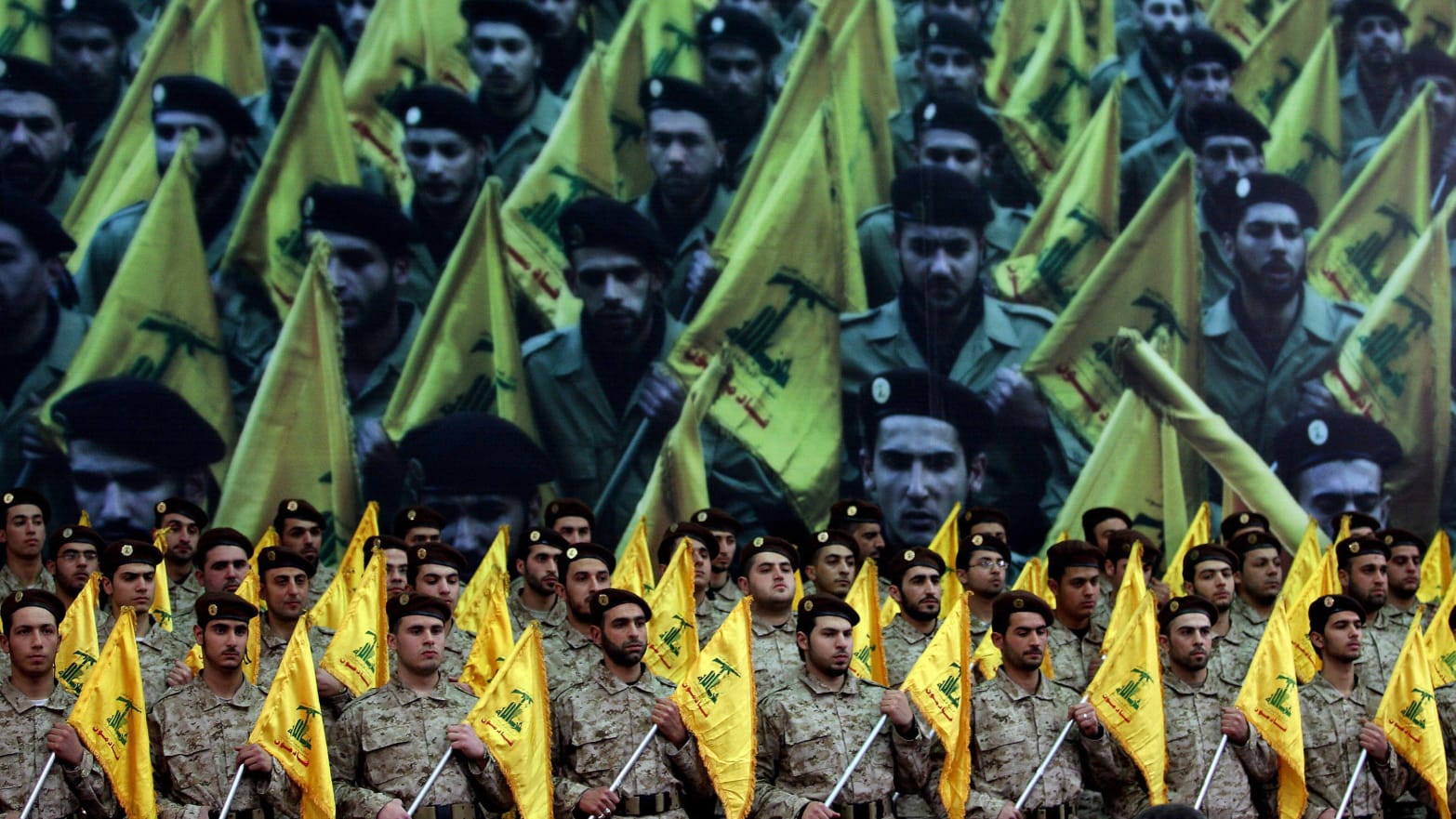
Iran established Hezbollah’s militia in Lebanon in 1982, becoming its most prominent military agent in the Middle East. In addition to the militia’s control of the Lebanese decision making by force, the militia has been involved in terrorist acts in Lebanon and many countries.
The party presented themselves as terrorists immediately after its establishment through its involvement in the kidnapping of 96 foreigners in Lebanon in 1982, including 25 Americans known as the 10-year hostage crisis.
The terrorist organization carried out the bombing of the US embassy in Beirut, April 1983, killing 63 people at the embassy. In the same year, the party launched coordinated attacks on the US and French embassies in Kuwait along with an oil refinery and a residential district, killing five people.
Hezbollah is directly linked to the 1996 bombing of Saudi Arabia by establishing and supporting the so-called Hizballah-Hejaz, which blew up residential towers, killing 120 people, including 19 Americans.
In 1988, Hezbollah guerrillas hijacked a civilian plane bound for Kuwait to demand the release of those accused of bombing infrastructure in Kuwait.
Hezbollah also participated in the training of militias in other countries. It also played a major role in the Syrian war by deploying its fighters to the Syrian regime, while providing direct support to the Iranian Houthi militias in Yemen.
The Arab League, the United States, France, the Gulf Cooperation Council, Canada, Japan, and the Netherlands have designated Hezbollah as a terrorist organization.
The European Union, New Zealand, the United Kingdom, and Australia banned the military wing of Hezbollah as a terrorist organization.
The Hizballah-Hejaz terrorist group was established in Saudi Arabia through the Lebanese Hezbollah, and it expanded from 1987 to 1996.
One of the organization’s most prominent operations was the 1996 bombing of the US Mission compound in Khobar, killing 120 people, including 19 Americans.
The Iraqi Hezbollah militia was formed after the fall of the Iraqi regime in 2003. Several Iranian militias, including the Brigades of the Abu Fadl al-Abbas Brigade, the Karbala Brigades, the Carpet Corps and the Zaid Bin Ali Brigades, all united under the banner of the Iraqi Hizballah in 2006.
The armed militia was involved in several crimes on Iraqi soil, where it was involved in a sectarian war against other Iraqi components, in order to establish Iranian influence.
The militia was founded in 2006 with direct Iranian support and has split from the Mehdi Army militia of religious leader Moqtada al-Sadr. The group has become a major component of the popular mobilization forces that were formed in 2014 on the pretext of confronting a militant organization but committed many sectarian crimes against Iraqis. The militia is also involved with other Iranian operations in the Syrian war.
Founded in 2014 from the Hezbollah Brigades, Asaib Ahl al-Haq, Badr Organization, and Martyr al-Sadr’s forces. The crowd then expanded from Shiite volunteers.
The crowd set up a declared goal: to protect Baghdad and the holy shrines from Isis terrorist organization that controlled Mosul, Ramadi, Anbar, and Falluja. However, these forces were involved in massacres against civilians in Sunni-majority cities and quickly emerged with its sectarian link.
Iran has more than 50 armed militias in Syria under many denominations with a sectarian dimension. In addition to the main arm Hezbollah, the Syrian war was joined by battalions under the banner of the popular Iraqi popular mobilization forces, most notably the Liwa Abu al-Fadl al-Abbas Brigade, the Imam Ali Brigades, the Hezbollah Brigades, the Kata’ib Sayyid al-Shuhada Brigades and Harakat al-Abdal, The Fatimid’s “from Afghanistan and the” Zinbion “from Pakistan.
The militia was established under the name Ansar Allah Group in 1992 and began armed military activity since 2004 to enter into six wars against the Yemeni army until 2010.
Iran has long used the Houthis as a powerful tool to carry out its project in Yemen, supplying them with weapons so that they could exploit the fragile security situation in 2014 and carry out a coup against the legitimately elected authority to plunge the country into a cycle of violence.
At the request of the Yemeni government, the forces of the Saudi Arabia-led Coalition for Legitimacy Support in April 2015 began to defeat the insurgency after political efforts were exhausted.
Saraya al-Mukhtar – Bahrain
Saraya al-Mukhtar was founded in Bahrain in late 2011, relying on guerrilla tactics, blasts, and bombings against civilian targets and security forces.
The organization was established in March 2012 and was supported by Iran and Iraqi Shiite groups associated with the Iranian Revolutionary Guards.
The organization is led by Ahmed Yousef Sarhan, known as Abu Montazer, and Jassim Ahmed Abdullah, also known as Zulfiqar, both Bahraini who escaped, believed to be in Iran.
Many organizations, including the Popular Resistance Brigades, have emerged. These organizations have adopted all terrorist operations carried out in Bahrain.”

Tuesday, July 23, 2019

Four Palestinians Shot Outside the Temple Walls (Revelation 11)

Hundreds take part in ‘truck march,’ IDF responds with crowd dispersal means
By TOI staffToday, 3:22 pm
The Hamas-run Gaza health ministry said the wounded were shot in the eastern part of the Gaza Strip and suffered various degrees of injuries, the Kan public broadcaster reported.
The injured demonstrators were reportedly part of a “truck march” taking place on the border with tractor-trailers, with hundreds of Palestinians calling for Israel’s blockade on the Gaza Strip to be lifted.
Israel maintains the blockade is necessary to prevent arms smuggling into the Strip.
The IDF said it responded with riot dispersal means.
Over 100 Palestinians were reportedly injured during border rioting Friday. Some 6,000 people reportedly took part in the demonstrations. The army said some rioters hurled rocks and explosive devices at the border fence and that troops were responding with less-lethal means as well as live fire in several cases where suspects attempted to sabotage or break through the border.
Egyptian security officials held talks with Palestinian leaders in recent days, in part to prevent a new flareup of tensions between Israel and the Gaza Strip.
Fresh tensions were feared after Israel shot dead a Hamas field commander along the border on July 11, prompting the Islamist terror organization to vow revenge.Israel later signaled it had fired in error, saying an initial inquiry showed  the Hamas member, Mahmoud Ahmad Sabri al-Adham, had been erroneously identified by soldiers as an armed terrorist, but was apparently an operative trying to stop Palestinian youths from breaching the security fence.
A young Palestinian uses a slingshot to hurl rocks at Israeli troops during clashes between Palestinian protesters and Israeli forces across the barbed-wire fence during a border demonstration near Rafah in the southern Gaza Strip on July 19, 2019. (Said Khatib/AFP)
On July 19 Israel’s military said two rockets were fired from the Gaza Strip into Israeli territory, but no damage or injuries were reported. Uncharacteristically, the Israel Defense Forces did not respond to the attack.
Hamas, an Islamist terror group which seeks to destroy Israel, seized control of Gaza from the West Bank-based Palestinian Authority and has been the de facto rulers of the territory ever since.
Under the fragile ceasefire brokered by Egyptian and UN officials following a severe flareup in May, Israel is meant to ease aspects of its blockade on the coastal enclave in exchange for relative calm. Israel maintains that the blockade is necessary to prevent arms from entering Gaza that could be used in attacks against it.
Throughout the past year and a half, the two sides have fought several bouts — with terror groups firing mortar shells, rockets and missiles at Israeli cities and towns, and the IDF retaliating with airstrikes — often sparked by smaller incidents along the border. There has also been weekly border rioting during the period.

The Nations Trample Outside the Temple Walls (Revelation 11)

Iran's state TV says a delegation from the Palestinian militant group Hamas that is visiting Iran has met with the country's supreme leader.
The TV report on Monday says Ayatollah Ali Khamenei held talks with Hamas' deputy chief, Saleh al-Arouri, who is heading the delegation. The Hamas delegation also met with Kamal Kharrazi, an adviser to Khamenei.
"Hamas is Iran's first line of defense," said Al-Arouri following the meeting.
The supreme leader issued a statement at the end of the meeting, calling the U.S. peace proposal - dubbed "the deal of the century" - a "dangerous plot" intended to destroy Palestinian identity with money.  
"This is the main point that one should resist, and not allow them to eliminate the Palestinian identity using money ... several years ago, Palestinians were fighting using stones now they have precision rockets," he said.
The Iranian official news agency IRNA says al-Arouri's visit to Tehran follows a visit by senior Iranian parliamentary official Hossein Amir-Abdollahian to Lebanon last week. Iran backs both Hamas and the Lebanese militant Hezbollah group.
Earlier on Sunday, Hamas rulers in Gaza condemned Israel's demolition of a Palestinian village Sur Baher on the outskirts of Jerusalem, which the Supreme Court ruled was an illegal construction.
The terror group called for intensifying "resistance" to the "the Zionist settlement project" in an official statement.

"The increase in the occupation's crimes against the residents of the holy city is a result of total American support," said Hazem Qassem, a spokesman for the militant group.

Monday, July 22, 2019

Iran Tramples Outside the Temple Walls (Revelation 11)

TEHRAN - Kamal Kharrazi, chairman of Iran’s Strategic Council on Foreign Relations, said on Sunday that liberation of Palestine, especially the noble Quds, is among the greatest causes of Iran.
During a meeting with Saleh al-Arouri, the deputy leader of Hamas, Kharrazi said that Iran has supported Palestine since the victory of the Islamic Revolution in 1979.
For his part, Arouri, who was accompanied by a delegation to Tehran, praised Iran’s position in supporting the Palestinian issue.
Talking to reporters after the meeting, Kharrazi said relations between Iran and Hamas are growing.
“Policies of the enemies of Islam and Palestine in supporting occupant Israel are obvious. The Palestinians are aware of these policies and have come to the conclusion that they should stand against the foreigners’ plots,” stated Kharrazi, who was Iran’s foreign minister from 1997-2005.
Pointing to the U.S. proposed “deal of the century”, he said that the Palestinian people countered the plot and all the Muslims condemned it.
Under the deal of the century, U.S. President Donald Trump has proposed to limit Palestine’s land to around half of the West Bank.
The International Quds Day, which falls on the last Friday of the holy month of Ramadan, was marked on May 31. This year’s demonstrations revolved around the slogan of “The International Quds Day, failure of deal of the century and stabilization of the Palestine cause”.
A Hamas delegation headed by Musa Abu Marzouq also met with Russian Deputy Foreign Minister Michael Bogdanov in Moscow, the Middle East Monitor reported on July 17.
Abu Marzouq briefed the Russian official on the political developments of the Palestinian issue including the U.S. “deal of the century”, stressing that all Palestinian people reject it.
The senior Russian official confirmed that Moscow is interested in following up on the political developments in Palestine and the region.
He stressed that Russia supports the Palestinian rights and rejects the deal of the century, highlighting that Moscow’s absence during the Bahrain workshop was evidence of this.
The Hamas delegation reiterated that the movement is eager to achieve reconciliation with other Palestinian factions by holding general elections, forming a unity government and agreeing on a comprehensive national program.
Russian Deputy Foreign Minister Mikhail Bogdanov told the visiting delegation that national unity should be a priority for all Palestinian factions, expressing his rejection of the “punitive policy” adopted by Palestinian Authority President Mahmoud Abbas.
Hamas highlighted the difficult conditions under which Palestinians in the Gaza Strip, the West Bank and al-Quds (Jerusalem) live, as well as the situation for those in the diaspora.
Abu Marzouk said he believes Russia could be a “strong player” in achieving internal Palestinian reconciliation.

NA/PA

126 More Wounded Outside the Temple Walls (Revelation 11)

On 28 June 2019, the sixty-fourth Friday of the Great March of Return (GMR), Israeli forces continued to use live fire, amounting to excessive force, in policing unarmed protests. 126 people were injured, including 39 children, two women, four paramedics, and two journalists. Of the injured, 41 sustained wounds from live fire, while 46 were hit directly by tear gas canisters. According to medical sources, eight of the injured are in critical condition.
The documentation by Al Mezan Center for Human Rights shows that on Friday:
• Ikhlas Al-Qirnawi, 23, and Ahmed Matar, 29, both paramedics volunteering with the Palestinian Red Crescent Society (PRCS), were injured with shrapnel in the right leg and with a tear gas canister in the left leg, respectively, while evacuating and providing aid to casualties at the demonstration in the Middle Gaza district.
• Mohammed Al-Shrafi, 25, a paramedic volunteering with PRCS, was injured in the stomach with a plastic-coated steel bullet at the demonstration in North Gaza district.
• Mohammed Abu Daqqa, 24, a volunteering paramedic with Rowwad Al-Salam Medical Team, was injured in the head with a tear gas canister.
• Ali Al-Aloul, 22, a volunteering paramedic with Nabd Al-Hayah Medical Team, was injured in the pelvis with a plastic-coated steel bullet at the demonstration in Rafah district.
• A PRCS ambulance was targeted with live fire and was partially damaged in east Rafah.
• Ra’ed Abu Mathkour, 29, a freelance photojournalist, was injured in the left leg with a live bullet while covering the demonstration in Rafah.
• Mohammed Kassab, 27, a freelance photojournalist, was injured in the neck with shrapnel of live fire while covering the demonstration in the Middle Gaza district.
Al Mezan’s documentation shows that from 30 March 2018, Israeli forces have killed 310 Palestinians in the Gaza Strip. Of the total fatalities, 207 were killed at the protests, including 44 children, two women, four paramedics, two journalists, and nine persons with disability. Another 17,106 persons have been wounded, including 4,015 children, 764 women, 203 paramedics, and 171 journalists. Of the wounded, 8,598 were wounded from live fire, including 1,717 children and 168 women. The Israeli forces continue to keep the bodies of 12 fatalities, including four minors.
Al Mezan condemns the continued use of excessive and other unlawful force by the Israeli forces, including sharpshooters, to police demonstrations. Al Mezan also expresses concern at the continued deliberate attacks on unarmed protesters, including children, persons with disability, paramedics and journalists—the last two categories being visible as such to Israeli forces. Al Mezan stresses that the rights to peaceful assembly and to free expression are fundamental rights and must be respected. Unarmed protesters not posing any serious or imminent threat to the Israeli forces must not be shot.

Al Mezan calls on the international community to condemn all violations of international law and to promptly intervene to ensure the protection of civilians from unlawful attack in the context of the protests. The international community must end its silence on the aggravating human rights situation and condemn all violations of international law. Al Mezan also calls on the international community to take firm action to ensure accountability and justice for serious violations of international law.

Sunday, July 21, 2019

97 Injured Outside the Temple Walls (Revelation 11)

97 injured in Gaza border protests

By TAMAR BEERI
Of those injured during the weekly protest, 47 were hurt by live fire coming from Israeli territory.  This week’s protest march was called „Burning the Israeli Flag.“
Stones were thrown in large waves at the fence along the border, as well as explosive devices.

Saturday, July 20, 2019

Preparing for War Outside the Temple Walls (Revelation 11)

Joseph Barrak/Getty

As Iran-U.S. Tensions Rise, Hezbollah Readies for War With Israel

Hezbollah field commanders say they’re redeploying toward Israel’s border, ready to fight in a devastating conflagration.
BEIRUT—The tranquil winding roads of Lebanon’s mountainous interior are far from the tense waters of the Persian Gulf where President Donald Trump says America came within 10 minutes of war with Iran a few weeks ago. And where, he said on Thursday, the U.S. shot down an Iranian drone. But if fighting ever does begin, these hills and valleys near the border with Israel will quickly be on the front lines. And according to Hezbollah commanders, that moment could be coming soon.
When Trump talked of war, he meant a shooting war in the conventional sense. But for Iran and its allies, it’s Trump’s economic war with its suffocating sanctions that is bringing the region to the brink of armed conflict. The targets of Trump’s weaponized dollar increasingly see resorting to military engagements as the only response left.
Here in Lebanon, Hezbollah’s commanders are close allies and clients of Iran—and they are targeted by U.S. sanctions as well. They warn that if the pressure continues these rugged hills where the Party of God fought bloody guerrilla campaigns to end 15 years of Israeli occupation in 2000 and repel an Israeli invasion in 2006 could erupt once again.
And this time, they say, the combat will be far more devastating.
Hezbollah’s forces, battle-hardened in the Syrian civil war, have begun redeploying toward the Israeli border, not only in Lebanon, but in Syria opposite the Israeli-occupied side of the Golan Heights.
Hezbollah fighters who spoke to The Daily Beast say their organization is hurting from sanctions and ready to initiate hostilities—if and when Tehran deems that necessary.
“The sanctions now have us preparing for dealing with the Israeli front,” says “Commander Samir,” a Hezbollah officer in charge of 800 fighters on Lebanon’s border with Israel. He declines to use his real name because he is not authorized to speak to the media. “We will fire the first shot this time,” he says.
“The pressure may actually be consolidating and motivating Iran’s proxies.”
Hezbollah’s military wing has changed fundamentally since its 2012 entrance into the war in Syria to prop up the Assad regime, transforming into a regional fighting force the Shia organization inspired by the Iranian revolution that the U.S. lists as a terrorist group.
When Trump offers the reasons he pulled out of the nuclear deal with Iran last year, precipitating the current crisis, he cites Iran’s support for militias that extend its power and influence across the region as something the U.S. intends to end—with Hezbollah the main target.
But the pressure may actually be consolidating and motivating Iran’s proxies.
Hezbollah is still fighting in Syria while training Iranian allied militias in Iraq and Yemen. The commander says his organization and Iran have moved past their split with Palestinian allies over Syria, where they were on opposite sides of the Syrian revolution as it turned into a bloody regional proxy war, and Iran is once again providing training and support for Hamas and Palestinian Islamic Jihad.
From a living room overlooking the valleys where he became a veteran, ambushing the Israeli army and melting away into the surrounding hills, Samir says the next war will be nothing like those that came before.

Wednesday, July 26, 2017

The U.S. is absolutely on the road to war with Iran


Is the U.S. on the road to war with Iran?
Dr. Arshad M. Khan
Is the U.S. on the road to war with Iran?
There are two kinds of people: those with, and without, grace. President Trump can decide on which side he falls, although Mrs. Abe the Japanese Prime Minister’s wife has clearly made up her mind. Anyone who can read a whole speech in English knows enough to say, ‘Excuse me, I do not speak English well’. So, to not respond at all to the U.S. president sitting beside her, who turns to converse, conveys a distinct meaning.
There was a time when countries prided themselves on their civility and their citizenry for their courtesy. Now the byword is the put down; rudeness, crudeness and vulgarity rule the day — not to forget the jingoism, demagoguery and xenophobia that can win elections. If such was the state of a democracy, its founders, were they alive, would weep.
In the past week, U.S. presidential ire has been directed at Iran. Shortly after the administration’s annual declaration to Congress certifying Iran’s compliance with the nuclear deal, it slapped additional economic sanctions the following Tuesday (July 18). Three days later, Trump added threats of ‘new and serious consequences’ unless detained U.S. citizens are returned. Robert Levinson, a former law enforcement officer disappeared ten years ago in Iran. In addition, Xiyue Wang, a Chinese-born U.S. citizen, as well as a father and son Iranian-Americans, Baquer and Siamak Namazi — the elder a former provincial governor in Iran — have been sentenced to 10 years jail for spying. For perspective, it is worth noting that 5 million tourists visit Iran annually contributing $2 billion in revenue, and the country is trying to expand its tourism industry.
The nuclear agreement itself is difficult for the U.S. to abrogate unilaterally as it involves the five permanent veto-wielding members of the UN Security Council plus Germany. Yet Trump appears to have swallowed the Netanyahu line on the deal. Add that to Trump’s new found chumminess with the Saudis and their deep Wahhabi antagonism towards Shia Iran and we could be on the edge of another cataclysm in the Middle East, this time enveloping the whole region.
If we recall the history of the deal, the Obama regime first had to give up their zero-enrichment requirement before the Iranians would even agree to talk. They got low enrichment.
While sanctions had hurt Iran, it refused to buckle under the pressure; in fact it added centrifuges and speeded up enrichment. Had the Obama administration continued on this course, they would have had a nuclear Iran or war.
There are those in Washington who still believe sanctions and pressure would bring Iran to its knees. They have forgotten the Iranian response to Iraq and the Iran-Iraq war when Iran stood up to a better-armed Iraq despite enormous casualties.
If Trump keeps up the pressure imposing further sanctions, how soon before the extremists in Iran secure an upper hand and the deal falls apart? Could an unwinnable war (Iraq and Afghanistan are living examples) and/or a nuclear Iran be the consequence?
Dr. Arshad M. Khan is a former Professor based in the US. Educated at King’s College London, OSU and The University of Chicago, he has a multidisciplinary background that has frequently informed his research. Thus he headed the analysis of an innovation survey of Norway, and his work on SMEs published in major journals has been widely cited. He has for several decades also written for the press: These articles and occasional comments have appeared in print media such as The Dallas Morning News, Dawn (Pakistan), The Fort Worth Star Telegram, The Monitor, The Wall Street Journal and others. On the internet, he has written for Antiwar.com, Asia Times, Common Dreams, Counterpunch, Countercurrents, Dissident Voice, Eurasia Review and Modern Diplomacy among many. His work has been quoted in the U.S. Congress and published in its Congressional Record.

Tuesday, July 4, 2017

Babylon vs Babylon the Great


Iran versus the United States – Raddington Report
BY MAJID RAFIZADEH
It’s war by any other means. The Iranian regime is heightening its efforts to damage US national interests and scuttle Washington’s foreign policy objectives by ramping up its interventions in the Middle East.
The regime’s concerted efforts are being directed by its Supreme Leader, Ali Khamenei, his Revolutionary Guard Corps (IRGC) and its many tentacles. Among the actors in this play are the Navy, the Aerospace Force, ground forces, the Ministry of Intelligence, and the elite Qods force, which is led by General Qassem Soleimani and operates outside Iran’s borders to export the regime’s revolutionary ideals
Lately, Iran’s state-owned media outlets, long since the mouthpieces of Khamenei and the IRGC, have been extensively covering the increasing capabilities, power, and influence of Iran’s armed forces in the region. Iran’s leaders enjoy boasting about the leverage that the regime revels in defying the US in various fields.
The regime is accomplishing these objectives by steadfastly extending the core pillar of its foreign policy. In practice, this means the regime is working hard to widen its connections to militia and terrorist groups through different means, including political and military interventions in countries throughout the Middle East, including as Yemen, Syria, Iraq and Lebanon — not countries known for their stability at present.
Over in Iraq, Iranian leaders are delegating a more expansive role to the Popular Mobilization Forces (PMF), a network of Tehran-backed Shi’ite paramilitary groups, which are estimated to have roughly more than 60,000 fighters. With Tehran’s bank balances back in the black thanks to the nuclear agreement, the IRGC provides vital military, financial and advisory assistance to the PMF. The IRGC and Iran’s news outlets do not hide the presence of Iran’s ground forces in Iraq. The IRGC appointed one of its generals, Iraj Masjedi, to be the new ambassador to Iraq.
During the latest visit of the Iraqi Prime Minister Haider al-Abadi to Tehran, Khamenei emphasized the expanding role of PMF and how the presence of Shi’ite paramilitary groups on the ground are becoming political realities in Baghdad. One approach is linked to intensifying interference in the upcoming Iraqi elections. Iran’s sophisticated interventions has prompted the Iraqi Vice President Ayad Allawi to point out that “Iran has been interfering even in the decision [making process] of the Iraqi people…We don’t want an election based on sectarianism, we want an inclusive political process … we [hoped] that the Iraqis would choose themselves without any involvement by any foreign power.”
Khamenei warned Haider al-Abadi not to interfere with Iranian foreign policy goals. He made it clear that the objective of expanding the role of Iraqi militia groups is to spread anti-American sentiments and disrupt US regional objectives, telling the Iraqi leader that “We should remain vigilant of the Americans and not trust them.”
In Syria, IRGC has launched ballistic missiles, kicking off fresh phase of military interventions — this is Iran’s first deployment of such weaponry abroad in nearly three decades. It speaks to a transformation in how Iran’s armed forces will escalate its engagement in the region. But it also highlights the fact that Iran is buttressing Assad’s military. The IRGC generals made it evident that the attacks were “a message” and a “warning” not only to ISIS but also to the US and its regional allies.
For Iran, this is just the beginning. As former IRGC Guard chief Gen. Mohsen Rezai warned, darkly, “The bigger slap is yet to come.”
Iran has been busy in Yemen, as well. The Iranian regime is not only stepping up its support for the Tehran-backed Houthis, but is also deploying other proxies, including Hezbollah, in the war-torn state, in an attempt to further damage the country’s infrastructure and spoil US initiatives in Yemen. Although Iranian leaders deny playing any role in Yemen, the IRGC forces and its proxies are present in Yemen fighting alongside Houthi forces. Iran’s rising shipments of arms to Yemen, however, is impossible to deny. Several countries including the US have intercepted Iran’s attempt to deliver weapons to the Houthis. Most recently, the Saudi navy captured three members of the IRGC from a boat approaching Saudi Arabia’s offshore Marjan oilfield. The Saudi information ministry stated: “This was one of three vessels which were intercepted by Saudi forces. It was captured with the three men on board, the other two escaped.”
Hezbollah currently enjoys a presence in “every third or fourth house” in southern Lebanon, according to the IDF Chief of Staff, a clear violation of United Nations Security Council Resolution 1701 — and Iran does not show any signs of wishing to give up on their Lebanese proxy. Hezbollah affects Lebanon decision-making to serve Khamenei’s interest, not that of the Lebanese people. The growing financial and military assistance has also made Hezbollah “more militarily powerful than most North Atlantic Treaty Organization members” according to a former Israeli ambassador to the United Nations.
Iran’s support for terrorist groups across the spectrum, which are sworn to disrupt US foreign policy and damage Washington’s interests, is a core pillar of Tehran’s foreign policy. The 2016 statement by Director of National Intelligence (DNI) James Clapper remains very much accurate: “Iran — the foremost state sponsor of terrorism — continues to exert its influence in regional crises in the Middle East through the Islamic Revolutionary Guard Corps — Qods Force (IRGC-QF), its terrorist partner Lebanese Hezbollah, and proxy groups.”
There exists a rare opportunity that the US should seize. After eight years of Obama’s administration trying to appease the Iranian regime and after eight years of neglecting the security concerns of other regional governments, the Gulf states and other regional powers long to counter Iran’s support for terrorist groups, increasing use of brute force and regional military adventurism. The Trump administration can capitalize on regional powers’ political and military weight in holding back Iran. Isolating and sanctioning Tehran via establishing a powerful and united front is critical at this moment.
The Iranian regime is rapidly using its militia and terrorist groups to shape political realities across the Middle East. It is penetrating the political, military and security infrastructures of several Middle Eastern nations. The aim is to advance the regime’s Islamist revolutionary ideals, hegemonic ambitions, and to damage US national interests. A swift and proportionate response to the Iranian regime, which is an integration of political pressure and military force, ought to be a top priority.

Sunday, November 6, 2016

Antichrist's Men Trained By The First Horn (Daniel 8:3)

Hezbollah fighters train Iraqi Shiite militants near Mosul
Hezbollah A video surfaced this week which purports to show Lebanese Hezbollah fighters present on the outskirts of the Iraqi city of Mosul. The footage, published by Pan-Arab news site Al-Araby Al-Jaeed, was reportedly filmed in al-Zarka, approximately 30 miles southwest of Mosul, where thousands of Shiite militia fighters have assembled. Though the fighters, seen in the video training Iraqi Shiite militiamen to fire mortar shells, are not wearing their militia’s insignia, their distinct southern Lebanese accents betray their membership in the Lebanon-based Iranian proxy group.
According to the video’s accompanying report, an unnamed Iraqi Shiite militant said that the Hezbollah fighters arrived in the area days earlier to reinforce local Shiite fighters.
“[Hezbollah chief] Sayyed Hassan Nasrallah sent them to support us, for Syria and Iraq are all on one side,” he said.
Hezbollah’s intervention in Iraq is not new, its fighters and advisors have been on the ground since the outset of the Iranian-led fight against the Islamic State. Hezbollah has been sending highly trained military experts to help in managing the battles against the extremist Sunni organization. Their presence was made known in late 2014, when Hezbollah commander Ibrahim al Hajj was killed fighting against the Islamic State in northern Iraq’s Tel Afar. Nasrallah himself finally acknowledged sending Hezbollah’s fighters to Iraq in a 2015 speech, describing the organization’s presence at the time as small and “in its earliest stages.” He also issued an invitation for volunteers to join them there to fight ISIS.
Since then, Hezbollah appears to have stepped up its involvement in Iraq. In late April, Hussein Yazadan, a Kurdish military official, alleged that the Shiite organization had deployed 1,000 fighters to the city of Kirkukon – approximately 100 miles southeast of Mosul – on Iranian orders and were concentrating in the nearby town of Taza Khurmatu. Led by an Islamic Revolution Guard Corps–Quds Force (IRGC-QF) commander, the Hezbollah guerillas arrived in the area to provide support for the Iraqi Popular Mobilization Forces (PMF) fighters as part of Iran’s attempt to solidify its control over both oil-rich cities of Kirkuk and Mosul, and establish a land-bridge to the Syrian border. Yazadan said that the Hezbollah fighters were wearing PMF uniforms in an effort to conceal their identity. At the time, Hezbollah denied having sent such a large contingent of fighters to Iraq, instead claiming it had sent the PMF dozens of military experts and trainers months prior to Yazadan’s warning.
Hezbollah’s Iraqi presence actually predates the rise of ISIS by a decade, going back to the US-led invasion of Iraq in 2003. Hezbollah developed its own insurgent capability in Iraq, engaging in assassinations, kidnappings and bombings. At Iran’s behest, Hezbollah also created Unit 3800, an external operations unit to train and assist Iraqi Shiite militias – known as the “Special Groups” – fighting against US and multinational forces. In fact, the group is even rumored to have sent its late legendary military commander Imad Mughniyeh to Iraq in early 2006 to help train members of the Mahdi Army, the Shiite militia led by Muqtada al-Sadr.
However, the key figure in this effort by Hezbollah was Ali Musa Daqdouq.
Daqdouq joined the Shiite organization in its early days in 1983 and quickly rose to commend its Special Operations Unit 2800, Unit 3800’s predecessor. In May 2006, Daqdouq was sent to Iran to coordinate the Special Groups’ training program with the IRGC-QF, and make periodic visits to Iraq. Daqdouq trained Iraqi militants in carrying out terrorist operations, including the IED attacks, especially using Explosively Formed Penetrators, which Hezbollah excelled at using against Israel during the IDF’s 15-year occupation of south Lebanon. He also trained them to use mortars, rockets and sniper rifles, as well as carrying out intelligence and kidnapping operations.
US forces finally captured Daqdouq in March 2007, along with the leader of the Asa’ib Ahl Al-Haq Shiite militia, which carried out the Jan. 2007 attack on the Karbala Joint Provincial Coordination Center. Five US soldiers were captured during the attack and later executed.
Currently, Hezbollah’s activities in Iraq are being led by Muhammad Kawarithmi, who works on behalf of the group’s leadership to promote its interests in Iraq. Through Kawarithmi, the organization continues to provide training, funding, political and logistical support to Iraqi Shiite militant groups.
David Daoud is an Arabic-Language Analyst at the Foundation for Defense of Democracies.

Tuesday, July 5, 2016

Iran Prepared To Annihilate Israel


Iranians Have 100,000 Missiles In Lebanon Ready To Hit Israel

Toni LivakBy Toni Livak
Posted: 07/4/2016 2:00 AM EDT 

Based on Hossein Salami, deputy commander of the IRGC, “the chance to destroy Israel is now higher than ever.”

Talking in Tehran on Saturday at an iftar meal breaking the Ramadan fast, Rouhani mentioned the pre-Iran nuclear-deal period is past and Iran now must benefit from the brand new environment to pursue its “nationwide pursuits more than before,” Iran’s Islamic Republic Information Company reported.

The nation’s supreme chief Ayatollah Ali Khamenei on Saturday called for student associations to determine a “unified anti-US and anti-Zionist entrance” among the many Muslim world’s college students, Tasnim Information Company reported.

“By utilizing superior technique of communication and in our on-line world, basic campaigns might be fashioned by Muslim college students primarily based on the opposition to the insurance policies of the US and the Zionist regime of Israel so that when needed, thousands and thousands of younger Muslim college students create a giant movement within the Islamic world,” he mentioned.
Khamenei additionally warned against plots by enemies seeking to sabotage the nation.
Individually, on Saturday, Fars Information Company reported a senior official of the Islamic Revolutionary Guards as having mentioned Israel’s Iran Dome anti-rocket system has vulnerabilities that had been revealed in current wars.

Monday, May 9, 2016

The Iranian vs American Horn (Daniel)


  • “The Persian Gulf is the Iranian nation’s home and the Persian Gulf and a large section of the Sea of Oman belong to this powerful nation. Therefore, we should be present in the region, hold war games and display our power.” – Iranian Supreme Leader Ali Khamenei
  • In addition, Khamenei is sending a message to the Iranian people that the current process of implementing the nuclear agreement, lifting sanctions, and partial economic liberalization does not mean that Iran is going to liberalize its politics and allow freedom of speech, freedom of the press, and more political participation.
Some politicians and policy analysts argue that Iran’s sanctions relief and the continuing implementation of its nuclear program would push Iran towards moderation in dealing with the United States and Israel, as well as scaling down Iran’s expansionist and hegemonic ambitions. The realities on the ground suggest otherwise.

As Tehran’s revenues are rising, anti-American and anti-Semitic rhetoric by Iran’s Supreme Leader, Ayatollah Ali Khamenei, are escalating.

The Iranian regime continues to view the U.S. and Israel as their top geopolitical, strategic and ideological enemies. According to Iran’s Mehr News Agency, on May 1, Khamenei welcomed the Secretary General of Palestinian Islamic Jihad, Ramadan Abdullah Shalah, and his accompanying delegation in Tehran:

“Ayatollah Khamenei reaffirmed that with this perspective in regional issues, Iran sees the United States as the main enemy with the Zionist regime standing behind it. He pointed to extensive, unprecedented sanctions of the U.S. and its followers against the Islamic establishment in recent years and dubbed the objective of them as discouraging Iran from continuing its path; ‘but they failed to achieve their goals and will fail in future as well.’ “
Khamenei is sending a strong signal to Washington that Iran’s reintegration in the global financial system does not mean that the Iranian regime will change its hostility towards the U.S. and Israel.
In addition, Khamenei is sending a message to the Iranian people that the current process of implementing the nuclear agreement, lifting sanctions, and partial economic liberalization does not mean that Iran is going to liberalize its politics and allow freedom of speech, freedom of the press, and more political participation.

Khamenei is also making it clear that Iran is not going to fundamentally change its foreign policy objectives in the region.

Regarding Iran’s role in the Gulf, Iran’s Supreme Leader pointed out on May 2 that
“The Persian Gulf is the Iranian nation’s home and the Persian Gulf and a large section of the Sea of Oman belong to this powerful nation. Therefore, we should be present in the region, hold war games and display our power.”
When it comes to Syria, Iran’s Islamic Revolutionary Guard Corps (IRGC) has become more emboldened and empowered in supporting the Syrian regime financially, militarily, and in intelligence and advisory capacities. Even during the current peace talks, Iran is ramping up its presence in Syria to increase Bashar Assad’s leverage in the negotiations.

In Iraq, Iran’s sectarian agenda and support for Shiite militias continues to cause political instability. This week, hundreds of followers of the Iraqi Shia leader, Muqtada al-Sadr, stormed into the Iraqi parliament building, demanding its speaker halt the session. Prime Minister Haider al-Abadi warned that these protests could lead to the Iraqi state’s failure. After the protests, al-Sadr — who spent several years studying in Qom (Iran’s center of Islamic studies) — travelled to Iran.

Currently, some of the powerful Iraqi Shiite militias with which Iran has close connections, and in which it is investing its resources, are: Sadr’s Promised Day Brigade, the successor to the Mahdi Army; the Badr Organization, Asa’ib Ahl al Haqq (League of the Righteous) and Kata’ib Hezbollah (Battalions of Hezbollah).

In Yemen and Bahrain, Iran’s support for the Houthi rebels and Shiite groups continues to fuel the sectarian conflicts there.

Khamenei has also unleashed a series of anti-U.S. and anti-Israel tweets, including:
“Lebanon’s Hezbollah is strong enough not to be hurt by some pressures; today, no doubt Zionist regime is scared of Hezbollah more than past.” (1 May 2016)
“Shia-Sunni clash is colonialist, US plot. Top issue is to realize 2 sides of the extensive war & one’s stance to avoid being against Islam.” (1 May 2016)
Iran’s foreign policy is anchored in three areas: ideological principles (anti-Americanism and anti-Semitism), national interests (mainly economic gains), and nationalism.

Although Khamenei needed to emphasize Iran’s national and economic interests, there is no evidence that he is giving up on the revolutionary ideological norms. Khamenei is relying on the so-called moderates — President Hassan Rouhani and his U.S.-educated foreign minister, Javad Zarif — to continue the process of implementing the nuclear deal in order to benefit Iran economically and ensure the regime’s hold on power.

Nevertheless, at the end of day, the key decision makers in Iran’s political establishments are Khamenei and the senior cadre of the IRGC, who prioritize Iran’s ideological and revolutionary principles. It is from them that Khamenei draws his legitimacy.

As long as the Supreme Leader is alive, one should not expect that Iran’s reintegration into the global economy to move the country to the moderate end of the spectrum, or that its anti-American, anti-Semitic sentiments and fundamentals of Tehran’s foreign policies will change.
Dr. Majid Rafizadeh, an Iranian-American political scientist and Harvard University scholar, is president of the International American Council.

Friday, April 22, 2016

Iran and the Shia Sickle (Daniel 8)


Khamenei vows full support for Hezbollah

By ARIEL BEN SOLOMON
Wed, 20 Apr 2016, 05:33 PM

Rouhani warns world powers against lagging in implementing nuclear deal.

Iran’s Supreme Leader Ayatollah Ali Khamenei reiterated the Shi’ite country’s full support for its ally Hezbollah, as the Lebanese organization came under harsh attack by Saudi Arabia and other Gulf states for its involvement in Syria’s civil war.

“Hezbollah and its faithful youth are shining like the sun and are a source of honor for the Muslim world,” he told members of the Iranian Students’ Islamic Association in Tehran on Wednesday, Fars News Agency reported.

Khamenei’s comments came after Riyadh and its allies harshly criticized Iran and Hezbollah for their interference in the internal affairs of states in the region in the final statement at the 13th summit of the Organization of Islamic Cooperation last week.

Saudi Arabia and other Gulf states have cracked down on Hezbollah, and have deported residents suspected of supporting the group.

Iran’s supreme leader also said that Iranian youth are being targeted in a “soft war” of the “imperialist front” led by the US and “Zionist regime” which includes the political, economic, and cultural fields, Iran’s Mehr News Agency reported.

“A reason why they would confront us in our attempt to achieve peaceful nuclear technology is this feature of the imperialist front; should Iran concede some ground, they will advance any further deny us further progress in biotechnology, nanotechnology and other strategic technologies,” he added.
President Hassan Rouhani warned world powers that Tehran would seriously respond if they lag in implementing the nuclear deal.

“We should monitor and verify the other side’s performance,” Rouhani at a cabinet meeting in Tehran on Wednesday, according to Mehr. “If we see any lagging and shortages from the other side, we should certainly show serious reaction,” he added.

Saturday, April 16, 2016

Antichrist Quest To Control Iraq


Shia leaders in two countries struggle for control over Iraqi state

4320


When Iraq’s prime minister, Haider al-Abadi, failed again this week to replace his corrupt cabinet with a new breed of reformists, the impact reverberated far beyond Baghdad.

A hundred miles south, in Najaf, ayatollah Ali Sistani seethed with anger. The 86-year-old cleric, the most revered figure among Iraq’s majority Shia sect, has staked his name on Abadi establishing some form of control over the country’s political class and the powerful presence of its neighbour Iran.

Across the border, in the Iranian shrine city of Qom, the failure was also noted, though not with the same concern. For more than 13 years, Iran has been an essential stakeholder in Baghdad. But in the past three years in particular, it has had more role shaping political outcomes than many of Iraq’s most influential players.

After Abadi’s second capitulation in a fortnight, senior officials close to Sistani say he is fast losing hope that the leader he helped appoint in late 2014 can deliver reforms he believes are essential to the survival of the state of Iraq. Worse still, perhaps nobody else can either.

In the decade-plus since the ruthless order of Saddam Hussein’s dictatorship was overthrown, Iraq is being torn apart by a convergence of crises that many observers say make it all but ungovernable.

Rampant corruption by a political class, appointed on sectarian lines, has seen the country plundered of enormous wealth that record pumping of oil can’t come close to making up for – especially with oil prices 70% lower than the heady highs of three years ago.

Add to that a withering war with Islamic State, which has shredded Iraq’s military, sacked some of its cities, imperilled its borders and exposed the fragility of post-Saddam authority, and there seems little hope that Iraq can secure a sovereign footing.

This concern is central to Sistani’s angst. Najaf has long been his power base, and a centre of gravity for Shia Iraqi nationalists, whom Sistani overwhelmingly leads. Qom, meanwhile, especially since the Islamic Revolution of 1979, has become a symbol of Iran’s theological and political projection.

Since 2003, the two centres of Shia learning have been rival power bases, but never more so than now. Sistani, apolitical throughout his life, now finds himself pitched against Iran’s Shia leader, ayatollah Ali Khamenei, in a tussle to define Iraq’s national character.

“This is something that has underpinned every administration over the last decade or so, but it has become more acute, more pointed since 2010,” said Ali Khedery, a former adviser to US ambassadors to Iraq and military chiefs.

“Sistani is now very aware that the extent of Iranian influence has reached new levels. This is about power and influence. This is about taking control of what remains of the state.”

As Abadi has struggled to impose his will, the leader he replaced in late 2014, Nouri al-Maliki, has been steadily reaccumulating power. The Shia militias, who have been organised under the banner of the Popular Mobilisation Front (PMF), report to him, and he is especially close to Iran

“He has been set up by Iran like a scarecrow for Abadi,” the former vice-president Iyad Allawi told the Guardian earlier this year. “There is not much that he can do about him.”

The PMF continues to play a dominant role in many of the clashes against Isis across much of Iraq, often having primacy over the Iraqi army. Nearly all of the PMF’s factions are led by men who are proxies of the Iranian Revolutionary Guards.

Moqtada al-Sadr, the leader of one of Iraq’s most dominant Shia factions, is a prominent exception. A cleric who was instrumental in the 2005-08 sectarian war and anti-US insurgency, Sadr has been the most forthright voice in the country to call for political reforms.

A picture of Moqtada al-Sadr is held up at a protest against corruption in Sadr City, Baghdad.
Pinterest
A picture of Moqtada al-Sadr is held up at a protest against corruption in Sadr City, Baghdad. Photograph: Ahmad Al-Rubaye/AFP/Getty Images
Abadi’s latest attempt to appoint a cabinet of technocrats, supposedly at arm’s length from the sectarian quota system that has led to ministries being used as personal fiefdoms, and wealth being hoovered up by a rigid patronage system, came after Sadr set up a protest camp inside Baghdad’s green zone.

Abadi, meanwhile, who Sistani had believed could somehow turn it all around, seems less likely than ever to deliver. Iraq’s political class remains vested in a sectarian system that has enriched it, and Abadi has next to no room to manoeuvre.

“What that means for Sistani is that his command of the street, which has remained unquestioned throughout all this, could be tested for the first time,” said one senior Iraqi official who refused to be named.

“He gave the fatwa to raise the militias in June 2014 and in doing so, he gave Iran cover. He now knows what that meant. It was an invitation for them to take over in many ways. If Abadi stays, it is bad for Sistani and for Iraq, but if he goes, it could be much worse.”

Questionable Motives Of The Antichrist In Lebanon


PSP chief questions Iraq’s Sadr visit to Beirut

512971_img650x420_img650x420_crop

Sadr later took up the demand for a technocratic government, organizing a two-week sit-in, putting Abadi under pressure to act, but also supporting the course of action he wanted to take.

Sadr relented after Abadi presented his first list of nominees at the end of March, but has yet to react to the most recent developments in efforts to replace the cabinet.