The prophecy is more than seeing into the future. For the prophecy sees without the element of time. For the prophecy sees things as they were, as they are, and as they always shall be.
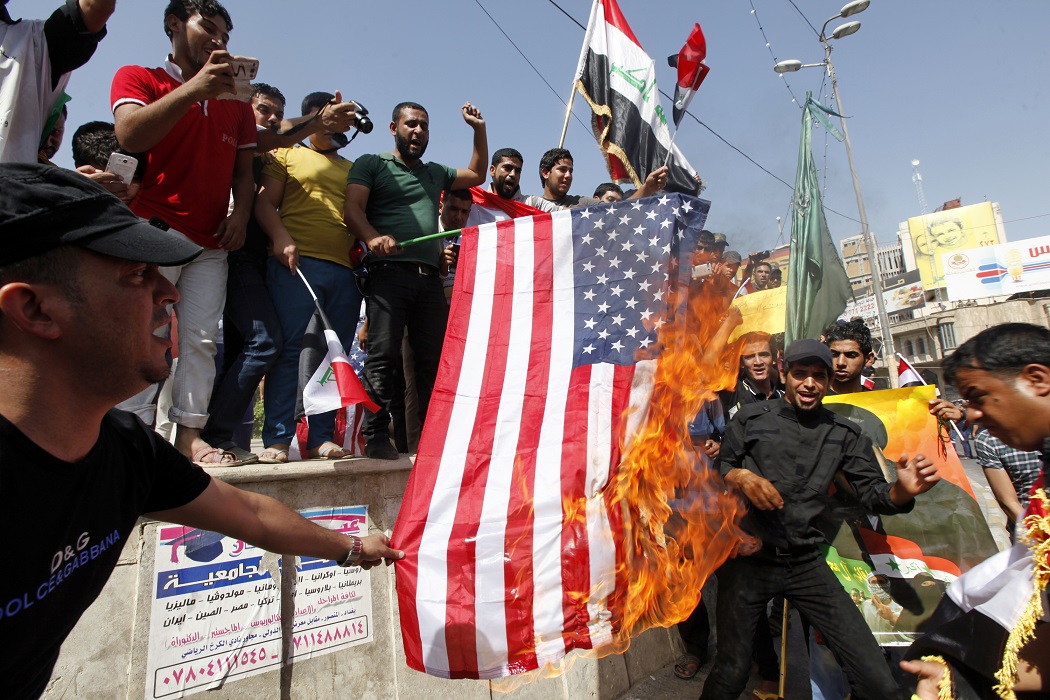
Supporters of Shia cleric Muqtada al-Sadr burn a US flag during a protest demanding the government prevent the entry of U.S. troops into Iraq at Al-Tahrir Square in Baghdad, September 20, 2014.REUTERS/Ahmed Saad
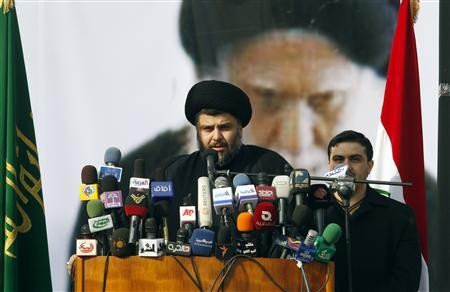
While he opposed the Baathist regime, his rise to prominence came with his resistance to the Anglo-American occupation after 2003, founding a militia known as the Mahdi Army, which was involved in the post-invasion insurgency, and accused of sectarian violence. Being able to count on both large popular support and a powerful military force, he soon became one of Iraq’s leading political and religious figures.
Sadr’s stance with regards to Iraqi politics has been rather ambiguous, leading some to describe him as “a hybrid of anti-establishment positions while being part of the establishment himself.” His involvement in the country’s public life has seen him make moves and take positions which are sometimes in contrast with the Shia ruling majority’s orientations. He is a steadfast opponent of sectarian politics, although some members of his bloc, the Sadrist Movement, have held, and continue to hold, positions in governments based on quota-sharing.
A common thread since 2003 has been the opposition to foreign interference in Iraq, regardless whether it comes from the West (US, UK) or the East (Iran). His disenchantment as to the possibility of pursuing an alternative to sectarian politics was one of the reasons that led him to suddenly announce his withdrawal from political life in 2014, as one of his movement’s officials stated. Since then, things have evolved in Iraq. The rise of Islamic State (Isis) in which sectarian politics undoubtedly played a role has posed a serious threat to the stability of the country, exacerbated by the political tensions of Maliki’s government at the time. Despite enormous difficulties (the constant threat of extremism, the recent fall of oil prices), his successor Haidar al-Abadi has managed to keep the country afloat as the Hashd al-Shaabi (PMU) and the Security Forces have regained territory from Daesh.
Abadi has been able to ease tensions with the Kurdistan Regional Government (KRG), to take some anti-corruption measures, and to purge the army of inefficient officials. Some issues which have taken root in Iraq have not yet been entirely solved, such as poor public services, corruption, lack of transparency, and sectarianism.
These are the plagues that Sadr has vowed to fight against, on the base of a populist vision of national unity in which religiosity and patriotism are often conflated, as the slogan “Love for one’s country is part of the faith” suggests. The Shia leader supported Abadi’s pledge to carry out a government reshuffle, aimed at installing a technocratic cabinet, as well as to fight corruption, restore services, and implement public accountability.
Looking at the causes that may have led Sadr to such a steadfast return to public life, it has been suggested that he hopes to prevent other Shia groups from asserting their influence in the country, on both a political and a military level. After a government reshuffle was proposed, factions have been in disagreement over how this is to be done: while one side prefers the ministries to be chosen by political parties, another side, led by Sadr, asserts that parties should not interfere. Sadr has also threatened the current government with a vote of no-confidence if no agreement is reached within 45 days. It is also worth noting that Sadr does not oppose Abadi, but he thinks he should take the chance to promote reforms before it’s too late.
How is Sadr’s comeback to be evaluated? This week, the third demonstration led by the Shia leaexpected to be held, which threatens to storm the Green Zone in the Iraqi capital. There are mixed feelings in the Iraqi street regarding Sadr’s role. Some support his push for change, frustrated at Abadi government’s poor performance in terms of reforms.
Others, however, are afraid that if a breach in security occurs during the protests, it will undermine the rule of law and set a precedent that Sadr is taking the law into his own hands. This is why some of the Green Zone residents have allegedly left the area lest the situation gets out of control. Despite being characterised by some clearly populist motifs, Sadr’s pledge to fight against corruption and for the sake of the most vulnerable classes of Iraqi society can function as an incentive for the large-scale reforms proposed by Abadi. At the same time, though, Sadr’s uncompromising stances may lead to political stalemate in a country that still needs to recapture the remaining areas under Daesh control.
His call for a more transparent and efficient administration, then, can be beneficial as long as his long-term vision does not hinder the current government’s activity, given the delicate stage the country is going through.
Stefano Freyr Castiglione is an Arab media analyst at Integrity UK
But on January 25th Mr Sadr ordered his followers to withdraw, blaming the hostile behaviour of the protesters towards his men. A crackdown on the protesters who remained appeared imminent. Over 600 people have been killed since the unrest began in October. As expected, the police cleared the streets in some cities. The protesters, though, have not gone home. There are more now.
With Mr Sadr throwing his weight behind the establishment, Iraq’s battle lines are clearly defined. The politicians and clerics who champion Shia political Islam, and who are backed by Iran, face protesters calling for a secular, non-sectarian government free of Iranian influence. The result is stalemate and stagnation. Adel Abdul-Mahdi, the prime minister, resigned last year, but he carries on as a caretaker (unconstitutionally, say some). The ruling parties have mulled many possible successors. Each name elicits guffaws from the crowds in the street.
Mr Sadr hopes to fill the post with a loyalist. Ever since America toppled the dictatorship of Saddam Hussein in 2003, the cleric has sought power. He styles himself a local hero who endured American sanctions and Saddam, while other elites lived the high life abroad. That has given him clout on the street, which he occasionally cashes in for a seat at the table. In 2016 he led a large rabble that occupied parliament. Last year the political bloc that he leads, called Sairoun, won the most seats in parliamentary elections.
But the post he most covets is head of Iraq’s clergy.Currently Grand Ayatollah Ali al-Sistani, a respected 89-year-old, sits atop the clerical establishment. Mr Sadr, half his age, has had a go at him before. The Mahdi Army seized the holy city of Najaf, the seat of Mr Sistani, in 2004—until America’s army forced it out. Today followers of Mr Sadr predict he could mount a theological challenge. Though just a hujjat al-islam, or junior cleric, he has spent over a decade in the cloisters of Qom, Iran’s clerical capital, improving his scholastic credentials and ties with Iran’s rulers.
Mr Sadr may hope to become Iraq’s version of a supreme leader. But it will be a bumpy ride to the top. Some in his ranks seethe at his betrayal of the protesters. Sheikh Asaad al-Nasari, a close associate, declared he would remain on the street. The protesters, for their part, detect disarray in the governing ranks. They sound emboldened. “Without Suleimani the militias are sheep without a shepherd,” says Faiq al-Sheikh Ali, a liberal parliamentarian who claims to be the protesters’ choice for prime minister. He wants American forces to stay in Iraq to keep Iran out.
Both sides hope to exhaust the other, but they might end up exhausting ordinary Iraqis. Business is grinding to a halt. With oil prices low, the budget deficit is widening. Fears are mounting about the government’s ability to pay salaries. Meanwhile, President Donald Trump threatens to seize Iraq’s foreign assets and impose sanctions if the government persists with its request for American troops to leave. He has allowed Iraq to bypass American sanctions on Iran and buy its gas and electricity. The waiver expires in mid-February. It might not be renewed, particularly if militias continue to lob rockets at America’s embassy in Baghdad, as they did on January 26th. Iraq is desperate for some calm. But continued unrest is more likely. ■
This article appeared in the Middle East and Africa section of the print edition under the headline “Muqtada al-Sadr, Iraq’s most volatile cleric, stakes his claim to power”
The uprising, which is demanding the removal of the entire political class, has undermined the influence of Iran, Mr Al Sadr’s patron.
In the past three days, attacks by security forces and Iran-backed militia, who overran protest centres in Baghdad and other cities in the south, killed at least 17 civilians and wounded 250, civil activists and the Iraqi High Commission for Human Rights said.
The attacks came after Mr Al Sadr said on Friday that he would no longer interfere in the protest movement.
The demonstrations also denounced what many Iraqis regard as Iranian tutelage, in contrast to the narrative of Mr Al Sadr and other pro-Iran politicians, who blame Iraq’s ills on the US.
The square of Al Sadreen (the two Sadrs) in Baghdad in March 2010. Ayatollah Mohammad Baqer Al Sadr, depicted left, an uncle of Moqtada Al Sadr, was an eminent Shiite thinker, although Moqtada’s father, Ayatollah Mohammad Sadeq, was less of an intellectual figure. Both were killed during during Saddam Hussein’s rule. Their lives were marked by resistance to Saddam and the Baathist dictatorship. AP
In a tweet on Friday, Mr Al Sadr accused the demonstrators, many of whom belong to the Shiite underclass he champions, of ignoring an “impending danger” against Iraq, which he did not identify.
He had turned down pleas by many of his supporters not to go ahead with an anti-US march, saying it would undermine the three-month uprising.
The anti-US rally took place in Baghdad on Friday, giving a boost to the renewed crackdown on the uprising by the authorities and the militia supported by Iran, who have killed at least 700 civilians since October, with hundreds more abducted or disappeared.
The cleric has based his political career on being perceived as an outsider.
But he backed the Iraqi uprising without wholly committing to its demands for fundamental change.
The overhaul demonstrators want would in theory rid Iraq of a spoils system shared primarily between pro-Iran militia overlords and their political associates, and restore the rule of law.
Mr Al Sadr’s position changed after the killing of Suleimani. The attack also killed Abu Mahdi Al Muhandis, Suleimani’s Iraqi militia sidekick and a rival of Mr Al Sadr.
After their death, Mr Al Sadr met other Iraqi militia leaders, many of them rivals, in the Iranian city of Qom and called for the rally against US troops in Iraq.
Hamidreza Azizi, an Iranian political researcher, told The National that the interests of Iran and Mr Al Sadr have aligned more closely since January 3. Mr Azizi said the US attack made it clear Mr Al Sadr was no longer immune from similar US action.
Mr Azizi said it could give Mr Al Sadr an opportunity to try to become the supreme figure among the militias supported by Iran, not only in Iraq but across the Middle East.
“Sadr is behaving opportunistically,” Mr Azizi said.
“His relationship with Iran is better, but it remains mostly a tactical alliance.”
But an Iraqi member of parliament and a source in the Najaf seminary with ties to Mr Al Sadr’s camp said any room for manoeuvre Mr Sadr may have had regarding Iran has greatly decreased since January 3.
They said Iran moved to contain any fallout from the Suleimani killing, clamping down on Mr Al Sadr and the other Iraqi warlords.
“Moqtada is just playing his favourite game, which is blackmail. He was never really with the uprising and his aim has been always to amass more spoils,” the Najaf source said.
“But make no mistake: Iraq is in Iran’s pocket.”
Mr Al Sadr’s perceived legitimacy is largely derived from his father, ayatollah Mohammad Sadeq, and his uncle, ayatollah Mohammad Baqer Al Sadr, a seminal figure in Shiite theology.
The two men were killed during Saddam Hussein’s rule while resisting his dictatorship.
He identified with Shiites living in abject poverty in the slums of Baghdad and the south, as opposed to other Shiite players connected with the Najaf religious establishment and the merchant class.
From a glorified defender of Iraq’s Shiite underclass, Mr Al Sadr’s political ambitions are placing him at the top of a bloody counter-revolution against many of the downtrodden who had made him their hero and only hope.
“All honourable Iraqis should request that they leave.”
On Friday, January 3, the USA undertook a drone airstrike following a series of “orchestrated” attacks on coalition bases in Iraq over the past few months and attacks on the US Embassy in Baghdad, all of which was done on the orders of General Soleimani.
US President Donald Trump approved of the assault on General Soleimani claiming the action was undertaken to make “the world a safer place”.
In a statement, the Pentagon said: “At the direction of the President, the US military has taken decisive defensive action to protect US personnel abroad by killing Qassem Soleimani.”
It added: “This strike was aimed at deterring future Iranian attack plans.
“The United States will continue to take all necessary action to protect our people and our interests wherever they are around the world.”
This assassination has been dubbed by many high-ranking Iranians a “declaration of war”.
Donald Trump has warned the US could act “disproportionately” if Iran targets any American “person or target” in revenge for the killing of Major General Qassem Soleimani.
Since that time, Iran “unintentionally” shot down a Ukranian passenger jet which saw 176 people killed.
According to Al-Sumaria TV on Friday, Sayyed Sadr made the announcement, via a lengthy statement about the scheduling of the departure of American forces from Iraq, after he called for a temporary halt to the “resistance” and “punishing” of those who violated the political truce.
The Sadrist leader confirmed that he would work to exhaust all peaceful methods, and that his goal was to force the exit of American forces from Iraq, while he pointed to a set of demands and obligations that define the relationship between Iraq and foreign countries.
Sayyed Sadr published a statement calling on the Iraqi government to conclude non-aggression treaties with all neighboring countries, stressing that the United States will be treated as an “occupied and hostile country” if it refuses to leave Iraq, and called on the Iraqi neighboring countries to stop interfering in the Iraqi position with the United States.
He called for closing of all American military bases in Iraq, closing the headquarters of the American security companies working in them and ending their work.
His eventual decision to hold it away from a separate anti-government protest camp, and away from the U.S. embassy, looked pivotal in keeping the march peaceful.
However two protesters were killed and 25 wounded later in a separate protest. Three French nationals and one Iraqi, working for charity SOS Chretiens d’Orient, also went missing in Baghdad, the NGO said.
Throngs started gathering early on Friday at al-Hurriya Square near Baghdad’s main university. They avoided Tahrir Square, symbol of mass protests against Iraq’s ruling elite.
“We support the anti-government protests in Tahrir Square as well, but understand why Sadr held this protest here so it doesn’t take attention from theirs,” he added.
Unrest erupted in October with protests against a corrupt ruling elite, including Iran-backed politicians, that have met deadly force from government security forces and pro-Iran paramilitaries that dominate the state.
Washington’s killing this month of Iranian military mastermind Qassem Soleimani added a new dimension to the crisis.
Supporters of Iraqi Shi’ite cleric Moqtada al-Sadr protest against what they say is U.S. presence and violations in Iraq, during a demonstration in Baghdad, Iraq January 24, 2020. REUTERS/Thaier al-Sudani
It has temporarily united rival Shi’ite groups in opposition to the presence of U.S. troops – a rallying cry that critics say aims simply to refocus the street and kill the momentum of the anti-establishment protests that challenge their grip on power.
Sadr, who commands a following of millions in vast Baghdad slums, opposes all foreign interference in Iraq but has recently aligned himself more closely with Iran, whose allies have dominated state institutions since a 2003 U.S.-led invasion.
Sadr supported anti-government protests when they began in October, but did not publicly urge his followers to join them.
The demonstrations have since taken aim at all groups and figures that are part of the post-2003 system including Sadr, who although often considered an outsider is part of that system, commanding one of the two largest blocs in parliament.
Parliament urged the government to eject U.S. troops after the killing of Soleimani, but Sunni and Kurdish politicians boycotted the session, the first time lawmakers have voted along ethnic and sectarian lines since the defeat of IS.
Sunnis and Kurds generally oppose the withdrawal of U.S. troops, seeing them as crucial in fighting IS remnants and a buffer against the dominance of Iran.
“DO NOT CROSS THIS BARRIER”
U.S.-Iran tension playing out on Iraqi soil has further fractured Iraqi politics and distracted leaders from forming a new government.
Iraq’s top Shi’ite Muslim cleric, Grand Ayatollah Ali al-Sistani, called in his weekly sermon for political groups to form a government as soon as possible to bring stability to the country and enact reforms to improve Iraqis’ lives.
“Iraq’s sovereignty must be respected … and citizens should have the right to peaceful protest,” said the cleric, who comments on politics only in times of crisis and wields great influence over Iraq’s Shi’ite majority.
Iraqi President Barham Salih posted a photo of Friday’s march on Twitter and wrote that Iraqis deserved a “fully sovereign state that serves its people”.
Under the government of caretaker Prime Minister Adel Abdul Mahdi, who said he would quit in November, security forces and unidentified gunmen believed to be linked to powerful Iran-backed militias killed nearly 450 anti-establishment protesters.
Security forces used live ammunition and tear gas to disperse a separate anti-government protest that broke out in the early evening in Baghdad’s Mohammed al-Qassim highway, security and medical sources said. Two protesters were killed and 25 wounded following violent clashes.
Iraqi armed forces were deployed in the oil city of Basra where protests have raged over the last four months, state news agency INA reported.
Anti-American marchers on Friday wore Iraqi flags and symbolic white robes indicating they were willing to die for Iraq while others sat looking out over the square from half finished buildings, holding signs reading “No America, no Israel, no colonialists”.
Marchers were protected by Sadr’s Saraya al-Salam, or Peace Brigades, and Iraq’s Popular Mobilization Forces, an umbrella grouping of mostly Iran-backed Shi’ite militias, witnesses said.
The march did not head as initially feared towards the U.S. Embassy, the scene of violent clashes last month when militia supporters tried to storm the compound.
Outside the U.S. embassy in Baghdad’s fortified Green Zone, a sign read “Warning. Do not cross this barrier, we will use pre-emptive measures against any attempt to cross”.
Additional reporting by Nadine Awadalla; Writing by Aziz El Yaakoubi, Editing by William Maclean and Nick Macfie
A woman wears a shirt with a photograph of Grand Ayatollah Mohammed Sadeq Al Sadr, a Shiite Muslim cleric assassinated during the late Iraqi president Saddam Hussein’s rule, and Moqtada Al Sadr, as thousands gather in the capital Baghdad for a “million-strong” march to demand an end to the presence of US forces in their country. AFP
Yet the numbers fell well short of Mr Al Sadr’s targeted million, and crowds had largely dispersed by early afternoon, with a some heading to the capital’s Tahrir Square, the site of months-long anti-government protests, and others taking buses home.
In a speech read out to the crowd, Mr Al Sadr called for the abolition of all security agreements with the United States, adding that he would not accept anything short of a full US troop withdrawal from Iraq and the closing of American bases throughout the country.
Supporters of the cleric, whose militia waged an insurgency against US and British troops following the US-led invasion in 2003, began arriving in Baghdad’s Jadariyah neighbourhood from across the country on Thursday.
Buses, plastered with the slogan “No, No to America” were organised to bring in supporters of the cleric from as far afield as the southern cities of Basra and Nasiriyah. Demonstrators were also fed and given Iraqi flags. Mr Al Sadr had warned those turning out not to fly flags of any militias or foreign states.
It underlined a top down dimension to the rally, contrasting the more organic protest movements which have rocked the country in recent weeks.
Fearing a repeat of the storming of the US Embassy by members and supporters of Iraqi militias in late December, concrete blast walls were placed outside the diplomatic mission’s perimeter, and US officials announced the embassy would be on a heightened state of caution.
Mr Al Sadr’s Shiite rivals rallied behind the cause after he announced the demonstration last week. Yet the run-up to the march was fraught with behind the scenes bickering that led to it being cancelled after initially being scheduled for last Friday.
The more pro-Iranian elements had called for the demonstration to be held at or pass through the Tahrir Square, where thousands of anti-government protesters have been based since October.
Yet those in Tahrir Square made it very clear that they did not identify with the Mr Al Sadr as a leader of their movement, even going as far as unfurling a giant banner accusing him of attempting to hijack their protests.
As crowds gathered for Mr Al Sadr’s march, the number of demonstrators also grew in Tahrir Square and on the nearby overpass of the Mohammed Al Qassem expressway where vicious clashes between security forces and protesters took place in recent days.
The protest comes almost three weeks since Iraq’s parliament voted along sectarian lines on a non-binding motion to expel US forces. The motion was passed with the backing of Shiite representatives, while Iraq’s Kurdish and Sunni politicians overwhelmingly boycotted the vote.
The previous day, January 22, Al-Sadr’s spokesman Salah Al-Obaidi told the state-run Al-Iraqyia TV[1] that “the instructions given by Al-Sadr last week regarding his proposed march underline that the participation of militias, including those who targeted the U.S. Embassy, is not wanted.”[2]
On January 23, Saleh Mohammad Al-Iraqi, an affiliate of Al-Sadr, tweeted a poster titled “It has to be a million,” in reference to the number of participants the organizers aim to mobilize.
On January 22, Qais Al-Khazali, the secretary-general of the PMU group Asa’ib Ahl Al-Haq, appeared in a video message in which he called on Iraqis from all religions and sects to join the anti-U.S. demonstration. Referring to the Iraqi parliament’s decision to expel the U.S. forces, he said: “In Iraq, the fighters of the Popular Mobilization Units are the ones who defeated the American terrorist takfiri scheme of ISIS. These same fighters are the now the heroes of the resistance [movement]. They are at the highest levels of readiness should the U.S. continue to reject the political and public decision.”
Al-Khazali in his video message (Source: Youtube.com/watch?v=jipoqYbXS4MYouTube, January 22, 2020)
He further explained that this decision “will be evidenced by the millions who will come out Friday to show the world that the Iraqi youth and resistance are capable of forcing all occupation forces to withdraw.”
The video message signals Al-Khazali’s first media appearance since the funerals of IRGC Qods Force commander Khazali and PMU deputy commander Abu Mahdi Al- Muhandis.
Earlier, on January 22, the Hizbullah Brigades in Iraq issued a statement calling on Sunnis and Shi’ites to join the demonstration.[4] The statement described Friday’s march as “the second 1920 revolution,” referring to a revolt by Iraqi tribes against the British occupation.
The Hizbullah Brigades statement (Source: Kataibhezbollah.com)
“For those whose grandparents did not have the honor of fighting the British occupation in the first revolution of 1920, you have the chance to write your name in letters of gold on this page of the struggle, to be a source of pride for your children and grandchildren and a beacon for future generations,” the statement said.
A statement by the Al-Nujaba Movement in Iraq called on Iraqis to join the march to “reject the powers of the global arrogance” – a term for the U.S. used by the Iranian regime.
The Al-Nujaba statement (Source: Alsumaria.tv)
The statement went on to remind Iraqis: “The Great Satan [the U.S.], with its supporters, want to intimidate you, yet they are weak… The world is awaiting an historic stance from Iraq – a stance that will reject humiliation and honor Iraq and determine its future.”
[1] Nasnews.com, January 22, 2020.
[2] See MEMRI Special Dispatch No. 8496, After Meeting In Iran, Shi’ite Militia Leaders And Cleric Muqtada Al-Sadr Call For One Million Man March To End U.S. Military Presence, January 14, 2020.
[3] See MEMRI Special Dispatch No. 8491, Commanders Of Shi’ite Militias In Iraq Continue To Threaten U.S. Forces While Seeking To Mend Internal Rifts, January 13, 2020.
Tensions between the United States and several middle eastern countries have teetered since President Trump ordered a missile strike that killed Iranian Gen. Qassam Soleimani on Jan. 3.
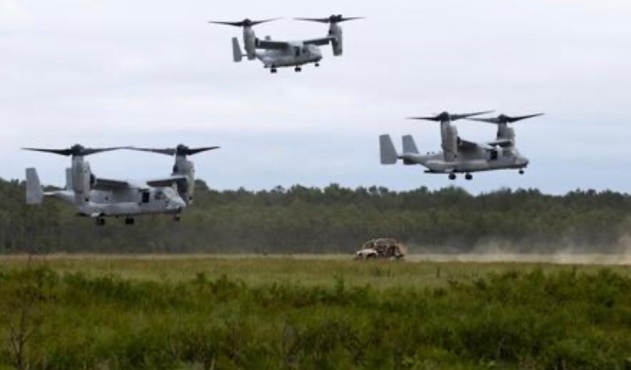
With some military assignments being rerouted and so much of the future unknown, military members in Eastern North Carolina stand ready to deploy — they are trained on the importance of being ready to deploy on a moment’s notice.
Marines and sailors are constantly engaged in combat and job-specific training, and units make sure their military members and their families are always prepared for deployments, said Lt. Col. Rob Shuford of the II Marine Expeditionary Force, Camp Lejeune.
Recently, Iranian Supreme Leader Ayatollah Ali Khamenei and President Trump have taken verbal shots at one another. Khamenei called the U.S. government “villainous” and said if the United States is standing with the Iranian people, “it is only to stab them in the heart with their venomous daggers,” USA Today reported.
Iraq has also requested the removal of American troops from their soil, stating the missile strike was an unacceptable breach of Iraqi sovereignty and violation of security agreements, the Associated Press reported. However, on Friday the U.S. State Department rejected the request and instead asked for Iraq and the United States to talk about how to recommit to their partnership.
Shuford said units are constantly training at facilities aboard Camp Lejeune, Marine Corps Air Stations Cherry Point, New River and Beaufort, but training is not limited to these locations only.
Climate training plays a tremendous role in a military member’s readiness to be deployed and the Marine Corps also sends units to various locations around the United States and overseas in order to acclimate themselves, according to Shuford.
Shuford also stressed the importance of sending supplies, like fuel, replacement parts for vehicles and aircraft, along with food and ammunition required for the units to operate.
In addition to supplies that are ready to deploy from Camp Lejeune, Shuford said the U.S. Department of Defense maintains prepositioned equipment and supplies all over the world that can be used when needed.
However, taking care of the homefront is something Shuford explained is a critical part of the military’s overall readiness.
Ultimately, service members and unit leaders are responsible for items such as power of attorney, financial matters, housing for families, etc.; however many units have established liaisons between the families and the commands.
“Aside from unit leadership, many units have assigned Deployment Readiness Coordinators to help address any challenges that families may have preparing for a deployment, or to help during a deployment,” said Shuford.
More Headlines
N.C. Gov. Roy Cooper recently shared a long list of state government support resources for military members and their families in light of the recent deployments.
The list includes tax assistance with deadline extensions and combat zone pay provided at NCDOR.gov; rental and leasing resources like the Servicememebers Relief Act and the N.C. Servicesmembers Civil Relief Act, which provides protection for service men and women and their families, including determining eligibility for lease termination or eviction protection at NCDOJ.gov; and behavioral health services provided through the Department of Health and Human Services. To view the full list of available services visit Governor.NC.gov.
“Our brave servicemembers work tirelessly to keep us safe, and they should be able to carry out their service without worrying about loved ones back home,” Cooper is quoted as saying in the recent release. “It is important that we provide resources to servicemen and women and their families to ensure that a sudden deployment does not put them at financial or other risk.”
ENC and its residents are no strangers to the challenges they would face if the military deployed a large number of military members.
“A major deployment would mean a ghost town for the residents living here in Jacksonville,” said retired Naval Petty Officer 2nd Class Erica Nightingale, who served in the U.S. Navy for 10 years.
The area would see the effect not only in the number of military men and women being sent elsewhere, but also with their families. Nightingale said some spouses and families members choose to go home to their own families to seek help while their loved one is deployed.
However, some families choose to stay, or must stay due to the lives they’ve built in ENC.
Victoria Johnson, whose husband is stationed at MCAS Cherry Point and has been through three major deployments, said she wouldn’t move back home.
“Normally, it’s a younger couple going through their first deployment that chooses to go back home because they haven’t built that support system, however the ones that have several deployments under their belts are the ones that stay put,” she said.
Factors such as buying a house, older children, pets, and friends are some of the reasons why Johnson continues her life in ENC during deployment.
Johnson added that in some cases, like her own, she didn’t have that support system back home and it is easier not to drop everything and leave, along with not wanting to constantly move her family during every deployment.
In terms of setting up their affairs, Johnson took advantage of the Readiness Coordinators to ensure her family was set up before deployment with a general power of attorney, along with making sure her family IDs were up to date and house maintenance was taken care of.
Johnson stressed that the biggest assurance was that her family had the address of where her husband was deploying in order to send mail and care packages.
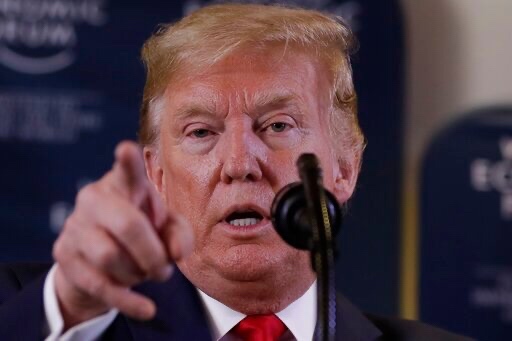
BAGHDAD (AP) — U.S. President Donald Trump hinted that sanctions on Iraq were still a possibility in a bilateral meeting with Iraq’s president Wednesday, the first since a U.S. drone strike on Iraqi soil killed a top Iranian general, straining Washington-Baghdad ties.
It was the first high-level meeting since the Jan. 3 U.S. drone strike that killed Iranian Gen. Qassem Soleimani and senior Iraqi militia commander Abu Mahdi al-Muhandis near Baghdad’s airport. The attack provoked the ire of Iraqi officials across the political spectrum and lead to the passing of a non-binding resolution to oust U.S. troops from Iraq.
In response, Trump threatened sanctions in Iraq, which would have profound and devastating effects on the country’s economy if realized.
Trump said Washington and Baghdad have had “a very good relationship” and that the two countries had a “host of very difficult things to discuss,” in remarks to reporters.
Asked whether the administration was still considering slapping sanctions on Iraq, Trump said: “We’ll see what happens because we have to do things on our terms.”
Saleh interjected here, saying the two countries shared common interests including the fight against extremism, regional stability and an independent Iraq.
“And we’re also involved with them in their oil business, and that’s always been very important from their standpoint and from our standpoint. So we have a lot of very positive things to talk about,” said Trump.
Asked whether there was a plan for U.S. troops to remain in Iraq, Trump said: “We’re down to 5,000. So we’re down to a very low number — historically low. And we’ll see what happens.”
The bilateral meeting came amid threats from Iraqi militia group Kataeb Hezbollah, backed by Iran, which warned Saleh to avoid meeting Trump or not to return to Baghdad, in statements posted online. The same group threatened lawmakers from voting against the resolution to oust U.S. troops.
Al-Muhandis was also the founder of Kataib Hezbollah, an Iran-backed armed group that the US targeted in Iraq and Syria on December 30, killing at least 25 fighters and injuring more than 50. The attack was in response to the killing of a US civilian contractor two days earlier.
Supporters and members of Kataib Hezbollah and other paramilitary groups within the PMF, an umbrella organisation of mostly Iran-backed Shia armed groups, responded by storming the US embassy in Baghdad.
Mohammad Mohie, a spokesperson for Kataib Hezbollah, told Al Jazeera that the group considered the Salih-Trump meeting “deeply humiliating and inconsiderate of the loss of Iraqi blood”.
“He [Salih] has positioned himself against the Iraqi people. We call on him to step down and not return to Baghdad. He is no longer welcome among us.”
‘Must step down’
Echoing those sentiments, Nasser al-Shammari, deputy secretary-general of the al-Naujabaa Brigades, another Shia armed group in Iraq, told Al Jazeera: “The hands of this man [Trump] are covered in Iraqi blood.
“Most Iraqi people consider this [meeting] treacherous. We no longer accept him [Salih] as our representative and won’t rest until he’s held accountable for going against the will of the Iraqi parliament and disregarding our martyrs’ blood.
“He must step down and be banished from Baghdad,” al-Shammari added.
Following the meeting, Naeem al-Aboudi, a member of the Sadiqoon parliamentary bloc, the political arm of the Iran-backed Asaib Ahl al-Haq armed group, wrote on Twitter: “A statesman should not violate his country’s constitution and sovereignty, or be a reason to infuriate millions of his people.”
The PMF, which was legally integrated into Iraq’s state security forces last year, did not issue a formal statement on the meeting. Its media representative, Mohannad Hussein, told Al Jazeera: “We are part of the Iraqi government. It is within diplomatic protocols for heads of state to meet.”
Critics say some of the armed groups within the umbrella organisation operate independently of Baghdad.
Ahead of the meeting, Kataib Hezbollah had warned that Salih would be “violating the will of the people” if he met Trump.
In a statement ahead of the event, the Shia paramilitary group al-Nujabaa said it hoped Salih “rejects meeting this fool”.
‘Indebted’
In his address in Davos, Salih said: “Iraq is indebted to the US-led coalition for its military and economic support which [it] continues to provide in the fight against ISIL.
“The US-led military coalition was essential in allowing Iraqi forces to defeat ISIL.
“The Iraqi parliament’s vote to expel US troops was not a sign of enmity. It was just a reaction to what many Iraqis saw as a violation to their country’s sovereignty, an issue that will be addressed through dialogue.”
A statement from the Iraqi presidency said that the two heads of state discussed “reducing foreign troops in the country and the importance of respecting the demands of Iraqi people to preserve the country’s sovereignty”.
In a joint news conference with Salih, Trump said the US and Iraq had “a very good relationship” and said the number of US troops in the country was “historically low”.
Trump also met the president of Iraq’s semi-autonomous Kurdish region, Nechirvan Barzani, at the Swiss resort.
The leader of the Asaib Ahl al-Haq, Qais al-Khazali, issued a video statement condemning the meeting and called on Iraqis to join the march scheduled for Friday morning in Baghdad.
The leader of the Iran-backed group warned that the US will have to face the consequences if it “continues to disregard Iraq’s political and public will to expel US troops”.
Reiterating a similar message, Shammari told Al Jazeera: “We expect an unprecedented number of people to take part on Friday. It will reignite the flame of resistance which won’t die until we expel every single one of them [US troops] from Iraq.
“This is the will of the Iraqi people and the parliament,” he added.
Sadr’s calls for the march came just days after the country’s parliament voted to expel foreign troops and cancel its request for assistance from the US-led coalition that had been working with Baghdad to fight ISIL.
Around 5,000 US troops are left in Iraq – most of them soldiers who came to Iraq in an advisory capacity to help the PMF from 2014 to 2017 in their fight against ISIL.
The parliament vote earlier this month provoked Trump to threaten “sanctions like they’ve never seen before” on Iraq.
Abdullah al-Salam reported from Baghdad. Arwa Ibrahim reported from Doha.