Showing posts with label politics. Show all posts

Thursday, July 25, 2019

The Merchant of Merchants is not Exonerated

Mueller tells Congress his report did not exonerate Trump — live updates

Speaking in short sentences and frequently turning to cite his report, former special counsel Robert Mueller spent the morning testifying to lawmakers for the first time about his two-year investigation into Russian interference in the 2016 campaign and attempts by the president to impede his probe.
The former FBI director hewed closely to the findings of his report in response to sometimes-heated questioning from 41 members of the House Judiciary Committee during the first of two hearings slated for Wednesday. His hearing before the House Intelligence Committee began shortly before 1 p.m.
In the first hearing, Mueller gave one-word answers — „yes,“ „no,“ „true,“ „correct“ — 112 times over the course of nearly four hours. He repeatedly asked members to repeat their questions. He flatly refused to address a range of topics or even read directly from his report, asking members to recite relevant passages themselves. He declined to discuss whether his report was a tacit recommendation of impeachment, and would not elaborate on the process behind key decisions that were made over the course of his investigation.
At the beginning of the hearing, Mueller reiterated his investigation did not exonerate President Trump on obstruction of justice, emphasizing Department of Justice policies against charging a sitting president.
Democrats largely focused on the portion of Mueller’s report dealing with possible obstruction by the president, while Republicans expressed outrage over Mueller’s failure to clear the president and questioned the origins of the investigation itself.
The few instances when Mueller diverged from the report came when he defended the integrity of his investigators, pushing back on Republicans who suggested his team was politically motivated.
Mueller’s testimony at the first hearing began at 8:30 a.m. and ran longer than its allotted time, concluding shortly after noon. He is testifying before the House Intelligence Committee for another two hours in the afternoon. — Stefan Becket
Watch the hearing on CBSN in the player above, and follow along with updates below
Turner questions Mueller’s ability to „exonerate“ Trump
1:45 p.m.: GOP Rep. Mike Turner questioned whether Mueller had the ability to „exonerate“ Mr. Trump. Mueller declined to argue whether Attorney General William Barr had the power to exonerate someone of a crime, saying: „I’m going to pass on that.“
Asked why, Mueller replied: „Because it embroils us in a legal discussion and I’m not prepared to do a legal discussion in that arena.“
„You have no more power to declare Trump exonerated than you do to declare him Anderson Cooper,“ Turner said, after referencing a headline seen on CNN.
The concept of „total exoneration“ in the investigation (or lack thereof) originated with Mr. Trump.
— Grace Segers
Mueller clarifies earlier answer on why Trump wasn’t indicted
1:15 p.m.: In his opening statement, Mueller clarified an exchange he had with Rep. Ted Lieu in the first hearing. Lieu had asserted Mueller did not recommend charges against the president because of Justice Department policy that says a sitting president cannot be indicted.
But Mueller clarified that his office „did not reach a determination as to whether the president committed a crime.“
— Kathryn Watson
Nunes calls hearing a „Hail Mary“ attempt
1:05 p.m.: House Intelligence Committee ranking member Devin Nunes called the Mueller hearing a „Hail Mary“ attempt by Democrats to revive what he calls the Russian hoax. Nunes described the hearing as the „last gasp of the Russia collusion conspiracy theory.“
„As Democrats continue to foist this spectacle on the American people as well as you, Mr. Mueller, the American people may recall the media first began spreading this conspiracy theory in the spring of 2016 when Fusion GPS funded by the DNC and the HIllary Clinton campaign started developing the Steele dossier, a collection of outlandish accusations that Trump and his associates were Russian agents.“
— Kathryn Watson
Trump: „#ShiftySchiff“ an „Embarrassment to our country“
1:04 p.m.: Mr. Trump thanked Democrats for holding the hearing in a tweet, seemingly expressing confidence that Mueller’s testimony had benefited him more than it had Democrats. He also took aim at Schiff, the committee chairman:
— Grace Segers
House Intelligence Committee hearing begins
12:52 p.m.: The House Intelligence Committee kicked off its hearing after a brief break. This time around, Mueller deputy Aaron Zebley at the witness table to assist him with any details.
Chairman Adam Schiff began by thanking Mueller for a „lifetime of service to the country.“ Schiff called Mueller’s report „methodical“ and „devastating.“
Schiff said Mueller’s report is not only about Russian interference, but about disloyalty to country and lies.
„Disloyalty to country. Those are strong words,“ Schiff said.
— Kathryn Watson
White House calls first hearing a „disgrace“ for Democrats
12:48 p.m.: White House press secretary Stephanie Grisham issued a statement after the conclusion of the first hearing saying, „The last three hours have been an epic embarrassment for the Democrats. Expect more of the same in the second half.“
Jay Sekulow, the president’s private lawyer, claimed the first hearing revealed „troubling deficiencies of the special counsel’s investigation“ and „revealed that this probe was conducted by a small group of politically-biased prosecutors who, as hard as they tried, we’re unable to establish either obstruction, conspiracy, or collusion between the Trump campaign and Russia.“
— Kathryn Watson
Judiciary Committee hearing concludes
12:10 p.m.: The Judiciary Committee hearing concluded shortly after noon. After a brief break, Mueller will testify before the House Intelligence Committee. That testimony is scheduled for two hours.
— Grace Segers
Mueller declines to discuss impeachment
11:55 a.m.: Mueller, asked whether or not his report recommends impeachment, declined to discuss the topic. The former special counsel told a questioning member of Congress he was „not going to talk about that issue.“
Some critics of the president have interpreted Mueller’s report as a call to Congress to begin impeachment proceedings. Mueller’s report says that, because of current OLC policy, charging a sitting president isn’t an option. „The Constitution requires a process other than the criminal justice system,“ Mueller’s report says, a line that has fueled speculation about Mueller’s meaning.
— Kathryn Watson
Mueller defends integrity of his team of investigators
11:50 a.m.: Mueller defended the integrity of his team of investigators, saying he did not believe their political beliefs impacted their ability to do their jobs. When there was a conflict, like with Peter Strzok, those investigators were transferred.
Mueller said asking about someone’s political affiliation before hiring them is „not done“ at DOJ.
„I’ve been in this business almost 25 years, and in those 25 years I’ve not had occasion once to ask about somebody’s political affiliation. It is not done,“ Mueller said. „What I care about is the capability of the individual to do the job and do the job seriously and quickly and with integrity.“
— Grace Segers
Trump campaign fundraising off Mueller hearing
11:43 a.m.: The Trump campaign is sending texts and emails to fundraise off the Mueller hearing.
„Pres. Trump: There was NO COLLUSION! Let’s tell the Dems to end this WITCH HUNT by raising $2,000,000 in 24 HOURS! Contribute NOW,“ a text message sent to supporters read.
An email sent to supporters included a lengthier version of that plea.
„Robert Mueller is testifying on right now, and the Democrats and Corrupt Media are going to pull out all the stops to try and TRICK the American People into believing their LIES,“ the email read. „How many times do I have to be exonerated before they stop?“
— Kathryn Watson
Graham calls Mueller hearing „confusing“
11:36 a.m.: Elsewhere on Capitol Hill, Sen. Lindsey Graham told reporters he finds the Mueller hearing „confusing.“
„I like Bob Mueller,“ Graham, a Trump ally, said. „The hearing is confusing. Bob Mueller has served our nation well for a very long time. This hearing should not be the judge of his service to our country. He’s a decorated marine. He received a Purple Heart, he was the FBI director after 9/11. I’ve known him for a long time and I’m not going to let this hearing change my opinion of Mr. Mueller.“
— Kathryn Watson
Mueller won’t say whether investigators interviewed Steele
11:35 a.m.: Under questioning by Rep. Greg Steube, Mueller repeatedly said he could not get into whether his investigators interviewed former British spy and dossier author Christopher Steele.
Mueller said at the beginning of the hearing he couldn’t discuss the origins of the Russia investigation, something he repeated during the congressman’s line of questioning.
„As I said at the outset this morning, that was one of the investigations I could not speak to,“ Mueller told Steube.
— Kathryn Watson
Lesko hits Mueller for citing news stories in report
11:09 a.m.: GOP Rep. Debbie Lesko criticized Mueller for citing news articles in the second section of the report, which dealt with whether Mr. Trump obstructed justice. Lesko said, by her count, the report cited The Washington Post around 60 times, The New York Times 75 times and Fox News 25 times.
„It looks like Volume II is mostly regurgitated press stories,“ Lesko said.
Mr. Trump initially denied a 2018 New York Times article reporting he asked former White House Counsel Don McGahn to have Mueller fired, even though the Mueller report later confirmed the incident.
— Grace Segers
Mueller’s team told committee he wouldn’t read report aloud
10:59 a.m.: Mueller’s team specifically informed the Judiciary and Intelligence committees that he would decline to read from the report during the hearing, according to a committee source involved in the negotiations surrounding Mueller’s appearance.
He has asked members several times to read portions of the report aloud themselves. A Democratic source said their questioning was structured around that assumption, which is why members have had citations ready.
— Olivia Gazis
Mueller declines to agree with ex-prosecutors‘ letter on obstruction
10:50 a.m.: Democratic Rep. Eric Swalwell referenced a May letter signed by about 1,000 former federal prosecutors of both parties, who agreed that Mr. Trump would be charged with obstruction if he weren’t president.
Swalwell asked whether Mueller agreed with the prosecutors.
„They have a different case,“ Mueller said.
Swalwell then asked if Mueller wanted to sign the letter.
„They have a different case,“ Mueller repeated.
— Grace Segers
Mueller says attempting to obstruct justice is still a crime
10:43 a.m.: Democratic Rep. David Cicilline asked Mueller about Mr. Trump’s multiple attempts to limit the scope of the Russia investigation, such as when he asked former Attorney General Jeff Sessions to reverse his decision to recuse himself from the probe or when he told former White House Counsel Don McGahn to order Mueller’s firing.
„An unsuccessful attempt to obstruct is still a crime, is that right?“ Cicilline asked.
„True,“ Mueller replied, again indicating Mr. Trump could conceivably face indictment after leaving office.
— Grace Segers
Mueller reaffirms Trump could be indicted after leaving office
10:38 a.m.: Mueller reaffirmed to GOP Rep. Ken Buck that a president can be indicted on criminal charges after he leaves office. Current Justice Department guidance says a sitting president cannot be indicted.
„We cannot indict a sitting president, so one of the tools a prosecutor could use isn’t there,“ Mueller said about making a determination about whether Mr. Trump obstructed justice.
Republicans on the committee have repeatedly criticized Mueller for not making a determination while also not exonerating the president, arguing he should have made a determination one way or the other.
— Grace Segers
Mueller avoids questions on Steele dossier
10:25 a.m.: Republican Rep. Matt Gaetz, a staunch Trump ally, raised his voice as he criticized Mueller for not doing enough to address the dossier authored by former British spy Christopher Steele.
Mueller declined to address the matter in detail, adding that the subject is „under investigation“ internally at the Justice Department and is therefore „beyond my purview.“ Gaetz shot back, calling that notion „absurd.“
— Kathryn Watson
Trump tweets Fox coverage of Mueller testimony
10:11 a.m.: Mr. Trump had said he probably wouldn’t watch Mueller’s testimony, but the president, who has nothing on his public schedule before 4 p.m., appears to be watching Fox News, which is televising Mueller’s testimony.
„‚This has been a disaster for the Democrats and a disaster for the reputation of Robert Mueller,'“ Mr. Trump said, apparently quoting anchor Chris Wallace.
— Kathryn Watson
Mueller can’t say why Trump wanted to fire him
9:45 a.m.: When Democratic Rep. Ted Deutch asked why the president wanted to fire him, Mueller responded, „I can’t answer that question.“
But Mueller did confirm his report suggests the president wanted to fire him because Mueller was investigating him for obstruction of justice.
Mueller’s report outlines multiple times when McGahn said he was instructed to remove the special counsel.
— Kathryn Watson
Mueller says he didn’t discuss FBI job with Trump „as a candidate“
9:40 a.m.: Rep. Louie Gohmert, a firebrand ultra-conservative, asserted that Mueller spoke with Mr. Trump about becoming FBI director before he was appointed special counsel in 2017, but Mueller clarified he did not meet with Mr. Trump „as a candidate.“ The president has repeatedly claimed Mueller is „conflicted“ because he wanted to be FBI director, and Mr. Trump didn’t offer him the job.
Gohmert also questioned Mueller’s friendship with former FBI Director James Comey. The two have known each other for years, and once worked together.
At one point during his questioning, Gohmert began yelling at Mueller for allowing former FBI official Peter Strzok, who made critical comments about the president in texts, to join his investigative team. Mueller did not react.
— Kathryn Watson
Mueller ducks questions on Fusion GPS
9:30 a.m.: Responding to repeated questions about Fusion GPS, the firm that commissioned Christopher Steele’s investigation and the so-called „Steele dossier,“ Mueller said questions about the origins of the Russia investigation were „outside of my purview.“
— Grace Segers
Mueller declines to answer question on „impeachable conduct“
9:20 a.m.: When asked why he did not determine if the president had undertaken any „impeachable conduct,“ Mueller noted his mandate did not include determining whether an offense could be addressed by other means.
„We have studiously kept in the center of the investigation our mandate. And our mandate does not go to other ways of addressing conduct. Our mandate goes to developing the report and turning the report in to the attorney general,“ Mueller said, in response to a question by Republican Rep. Jim Sensenbrenner.
— Grace Segers
Ratcliffe says Mueller violated his mandate as special counsel
9:12 a.m.: GOP Rep. John Ratcliffe slammed Mueller for not exonerating Mr. Trump in his report, arguing there should be a presumption of innocence if someone is not indicted of a crime.
„Donald Trump should not be above the law. He’s not. But he damn sure shouldn’t be below the law, which is where Volume II this report puts him,“ Ratcliffe said, referring to the section of the report dealing with obstruction.
Ratcliffe said Mueller was meant to come to a decision on obstruction of justice under his mandate as special counsel. Ratcliffe criticized Mueller for failing to do so in the second portion of his report.
„You wrote 180 pages about decisions that weren’t reached,“ Ratcliffe said.
Mueller was largely unable to respond, and Ratcliffe’s combative questioning served as an indication of how Republicans would use their time to undermine the conclusions of the report and Mueller’s seeming independence.
— Grace Segers
Collins questions difference between „collusion“ and „conspiracy“
9:02 a.m.: Noting that „collusion“ is not a legal term, ranking member Rep. Doug Collins asked whether Mueller believed the terms „collusion“ and „conspiracy“ were synonymous. The report found that no Trump campaign official criminally conspired with Russian individuals to influence the election.
Mueller initially said „collusion“ and „conspiracy“ were not synonymous. However, when Collins noted the report said the two terms were „largely synonymous,“ Mueller deferred to the language in his report.
— Grace Segers
Mueller says report did not “totally exonerate” the president
8:54 a.m.: Questioning Mueller first, Nadler asked whether the report totally exonerated the president, as Mr. Trump and his allies have frequently claimed.
„No,“ Mueller responded.
Mueller also reiterated his report did not clear the president of obstruction of justice, and that the president could still be indicted after leaving office.
— Grace Segers
Mueller says his testimony will be „limited“
8:47 a.m.: In his opening statement, Mueller defended the independence of his investigation, saying he and his investigators aimed to „to work quietly, thoroughly, and with integrity so that the public would have full confidence in the outcome.“
Mueller added that his testimony would be „limited“ due to ongoing litigation, and because he was unable to comment on the origins of the investigation and the so-called „Steele dossier“ — a key talking point for Republicans on the committee.
„These matters are the subject of ongoing review by the Department. Any questions on these topics should therefore be directed to the FBI or the Justice Department,“ Mueller said about the origins of the investigation.
He also indicated his testimony Wednesday would not include any new information.
„I do not intend to summarize or describe the results of our work in a different way in the course of my testimony today. As I said on May 29: the report is my testimony. And I will stay within that text,“ Mueller said, adding that he would not comment on Barr’s determination that Mr. Trump did not obstruct justice.
„Over the course of my career, I’ve seen a number of challenges to our democracy. The Russian government’s effort to interfere in our election is among the most serious. As I said on May 29, this deserves the attention of every American,“ Mueller concluded.
— Grace Segers
Collins defends Trump in opening statement
8:39 a.m.: In his opening statement, ranking member Rep. Doug Collins defended Mr. Trump, noting that the Mueller report concluded that no one on the Trump campaign „colluded, collaborated or conspired“ with Russian officials.
Collins referred to Mr. Trump’s repeated criticism of the investigation and Mueller, saying that „the president’s attitude toward the investigation was understandably negative.“ However, Collins said Mr. Trump did not shut down the investigation — even though the report suggested the president had questioned his advisers about firing Mueller and limiting the scope of the probe.
„Nothing we hear today will change those facts,“ Collins said, referring to Mueller finding no conspiracy by Trump campaign officials and Russia to influence the election.
— Grace Segers
Nadler: „Not even the president is above the law“
8:35 a.m.: In his opening statement, chairman Jerry Nadler points directly to Mueller’s findings from the Russia report that while Mr. Trump was not charged with obstruction of justice, citing long standing Department of Justice policy, he „made clear that he is not exonerated.“
„Any other person who acted this way would have been charged with a crime. And in this nation, not even the president is above the law,“ Nadler says in his prepared opening statement.
„Director Mueller, we have a responsibility to address the evidence you have uncovered. You recognized as much when you said ‚the Constitution requires a process other than the criminal justice system to formally accuse a sitting president of wrongdoing.'“
— Emily Tillett
Mueller hearing begins
8:33 a.m.: The hearing began on schedule, with Mueller taking his seat shortly after 8:30 a.m.
— Grace Segers
Mueller arrives for hearing
7:50 a.m.: the former special counsel pulled up in a grey SUV ahead of his highly-anticipated testimony. Mueller ignored shouted questions from reporters as he made his way into the Capitol.
Trump attorneys say legal team is confident
7:41 a.m.: Mr. Trump’s personal attorney Rudy Giuliani told CBS News the Trump legal team is „feeling very confident that no matter what Democrats do, they can’t rewrite the report’s conclusion that no case be brought.“
Not surprisingly, Giuliani wants to see an emphasis on the origins of the probe. He said, „More interesting will be how Mueller answers questions about how much he knew about the now obvious effort to frame the President. And why didn’t he follow exculpatory leads.“
Attorney Jay Sekulow meanwhile confirmed that the Trump legal team has not had any contact with Mueller ahead of the hearing.“We expect that his report is his testimony, and his testimony is his report,“ he said.
— Weijia Jiang and Paula Reid
Dems to push Mueller on Barr spar
7:29 a.m.: While Democrats will push Mueller to be on the record about potential instances where Mr. Trump could have been charged with obstruction of justice, CBS News‘ chief legal correspondent Jan Crawford predicted Democrats will also push to expose a rift between Mueller and Barr.
Crawford told „CBS This Morning“ they would press Mueller on whether he thought the attorney general was right in making his call to issue a conclusion before the report was released, pointing to his widely contested 4-page summary of the 448-page report.
Crawford said Democrats want Mueller on the record if he felt Barr was ever misleading to Congress and the American people in testifying on the report’s findings, a moment that is sue to cause tension between Mueller and the attorney general.
Trump issues first tweet on testimony day
7:05 a.m.: „So Democrats and others can illegally fabricate a crime, try pinning it on a very innocent President, and when he fights back against this illegal and treasonous attack on our Country, they call It Obstruction? Wrong! Why didn’t Robert Mueller investigate the investigators?“ President Trump posed on Twitter just an hour before Mueller is to appear before lawmakers.
Just days before, Mr. Trump’s Justice Department told Mueller to limit his congressional testimony to information contained in the public version of his report on Russian interference in the 2016 election.
Mueller had previously been adamant that his report was the only testimony needed on the matter.
Mr. Trump added, „It was NEVER agreed that Robert Mueller could use one of his many Democrat Never Trumper lawyers to sit next to him and help him with his answers.“
„This was specifically NOT agreed to, and I would NEVER have agreed to it. The Greatest Witch Hunt in U.S. history, by far!“
There is no evidence that Zebley is a „Never Trumper.“
Pelosi pushes for Dems to safeguard election ahead of testimony
6:46 a.m.: Ahead of Mueller’s testimony, Speaker Nancy Pelosi distributed a 6-page memo to House Democrats telling them to „fight for our national security“ by safeguarding the U.S. election process.
The memo, which was obtained by CBS News, cites „key findings“ from Mueller’s report on Russian interference in the 2016 election. But while Pelosi’s memo offers a damning assessment of the president’s behavior, it makes no mention of impeachment, an issue that has roiled the Democratic caucus since the spring.
„Democrats will close gaps in existing law, bolster our defenses and uphold the balance of powers enshrined in our sacred Constitution, honoring our oath: investigate, litigate, legislate. Nothing less than the integrity of our democracy, the rule of law and national security are at stake,“ the memo, titled „Exposing the Truth,“ reads.
Lines form before hearing starts
6:37 a.m.: Hours before Mueller is to appear before lawmakers, a long line, comprised of mostly young professionals, formed along the winding halls of the Rayburn House office building. Many of those camped out told CBS News that they suffered through the long lines „for the historic moment.“
Two interns told CBS News they had sat in the hallways since 8 p.m. the night before and ordered take out food to make it through the night.
What Democrats expect from Mueller
In a public statement at the end of May, Mueller indicated he wouldn’t provide any new information if called to testify before Congress. „The report is my testimony,“ he said at the time. „I would not provide information beyond that which is already public in any appearance before Congress.“
Democratic staffers on the House Judiciary Committee aren’t expecting a „big, dramatic new revelation“ from Mueller. They think he’ll „lean into“ the factual findings and legal conclusions.
Lawmakers will „respect“ the fact that Mueller has been very clear about not wanting to give his personal opinion on whether Mr. Trump broke the law, the staffers said, and understand Mueller feels he has to stay within the confines of the report.
— Rebecca Kaplan
What Democrats hope to accomplish
A Democrat on the House Judiciary Committee told CBS News that lawmakers are „just hoping“ to get the basic findings and conclusions related to obstruction of justice out in the open for people to hear them, away from the „thick fog of propaganda“ put forth by the attorney general and president.
„The hope is that we can achieve some kind of national consensus about what took place, based on the report, and then we can move on to oversight and to all of the other allegations,“ the representative said.
Lawmakers, according to the staff, plan to focus on five instances they think would incur criminal charges for obstruction of justice if any other individual besides the president had carried out these actions. They’re laid out here:
Mr. Trump’s repeated directions to former White House counsel Don McGahn to fire Mueller;
His direction to McGahn to deny he’d been ordered to fire Mueller;
His direction to adviser Corey Lewandowski to deliver a message to then-Attorney General Jeff Sessions to limit the investigation to exclude the president and only focus on future elections;
Mr. Trump’s message to Lewandowski to tell Sessions he would be fired if he didn’t meet with Lewandowski
His tampering with witnesses Paul Manafort, the former campaign chairman, and former Trump personal lawyer Michael Cohen
— Kathryn Watson and Rebecca Kaplan
Trump doesn’t think Mueller should testify
Mr. Trump says he thinks Mueller’s testimony is another ploy by Democrats to undermine his presidency.
„Highly conflicted Robert Mueller should not be given another bite at the apple. In the end it will be bad for him and the phony Democrats in Congress who have done nothing but waste time on this ridiculous Witch Hunt. Result of the Mueller Report, NO COLLUSION, NO OBSTRUCTION!“ Mr. Trump tweeted Monday.
However, Mueller’s report made no determination about whether Mr. Trump had obstructed justice.
„As set forth in the report, after the investigation, if we had confidence that the president did not clearly commit a crime, we would have said so,“ Mueller told reporters in May.
© 2019 CBS Interactive Inc. All Rights Reserved.

Sunday, July 21, 2019

The US and Pakistan Horns Separate (Daniel 7-8)


Pakistan’s Prime Minister Imran Khan
Ahead of Prime Minister Imran Khan’s visit to the United States, a Congressional report has said the security assistance to Pakistan would remain suspended pending „decisive and irreversible“ action against terrorist groups.
At the direction of President Donald Trump, the US had suspended all its security assistance to Pakistan in January 2018. This is first high-level trip by a Pakistani prime minster to the White House during the Trump administration.
„Pakistan is a haven for numerous Islamist extremist and terrorist groups, and successive Pakistani governments are widely believed to have tolerated and even supported some of these as proxies in Islamabad’s historical conflicts with its neighbors,“ the independent Congressional Research Service (CRS) said in a latest report on Pakistan.
The CRS is an independent and bipartisan research wing of the the US Congress, which prepares periodic reports on issues of interest for lawmakers to make informed decisions. Its reports are prepared by eminent experts of the field and are not considered as an official view of the Congress.
The latest CRS report told lawmakers that the 2011 revelation that Al Qaeda leader Osama bin Laden had enjoyed years-long refuge in Pakistan led to intensive US government scrutiny of the bilateral relationship. It also sparked congressional questioning of the wisdom of providing significant aid to a nation that may not have the intention or capacity to be an effective partner.
The Trump administration has taken a harder line on Pakistan than its predecessors, sharply cutting assistance and suspending security-related aid, said the CRS report dated July 15.
„The United States continues to press for decisive and irreversible action against externally-focused militant groups and UN-designated terrorist organizations operating from its territory,“ it said. „Pending such action, security assistance will remain suspended.“
During a September 2018 visit to Islamabad amidst talk of a „reset“ of bilateral ties, Secretary of State Mike Pompeo expressed hope that the US could find common ground with Pakistan’s new leadership, but mutual distrust was seen to be pervasive in the relationship and American leverage was much reduced.
In mid-2017, the administration announced that it would „pause“ disbursement of $255 million in Foreign Military Financing (FMF) and announced a broader security aid suspension in January 2018. According to the State Department, about $790 million in unobligated FMF dating back to 2001 is affected.
Pakistani politicians and analysts of all stripes decried what they perceived as an effort to scapegoat their country for US policy failures in Afghanistan. The administration’s 2020 budget request for assistance to Pakistan totals about $70 million, including $48 million for economic and development aid.
Noting that numerous indigenous terrorist groups operate on or from Pakistani territory, many designated as ‚Foreign Terrorist Organisations‘ under the US law, the CRS said incidents of domestic terrorism decreased since the Pakistan Army launched major operations in 2014.
However, some externally-oriented terrorist groups like the Lashkar-e-Taiba continue to operate, by some accounts supported by state elements. Al Qaeda and Islamic State networks are also present in Pakistan, it said. According to the report, Pakistan’s continued conflict and rivalry with India is unabated, with international fears about the possibility of war between two nuclear-armed powers.
Pakistan, it said, seeks to raise the issue of Kashmiri rights internationally, while India rejects any high-level peace negotiations pending decisive Pakistani action against anti-India militants inside Pakistan. The report also notes that the Trump administration had noted Pakistan’s growing debt to China and expressed opposition to any bailout that would go to reducing such debt.
Pakistan’s Finance Ministry denies that the IMF funds would be used to repay Chinese debt and it is seeking to renegotiate aspects of the China-Pakistan Economic Corridor (CPEC) to reduce long-term debt, the CRS said.

Friday, April 5, 2019

The Coming War Against Iran


REUTERS/Goran Tomasevic
An explosion rocks Baghdad during air strikes March 21, 2003.
We had one disastrous war in the Middle East. Don’t start a new war with Iran.
By Jacob Thomas
March 20 marked the 16th anniversary of the start of the Iraq War. It’s an appropriate time to remember the value of diplomacy in advancing America’s national security interests. And there is no better example of smart diplomacy than the Iran nuclear agreement, which blocked Iran’s paths to a nuclear bomb without putting a single American life in harm’s way.
As a former technical sergeant with the United States Air Force and recipient of the Nuclear Deterrence Operations Service Medal, I fully appreciate the gravity of what a nuclear Iran could mean. I also have no desire to see American service members needlessly put in danger. The Iran deal exemplified the critical role and brilliance of our nation’s diplomatic arm.
President Donald Trump intentionally violated the Iran deal by reimposing unilateral sanctions, even though Iran is complying. Trump’s careless violation of our obligations risks unraveling the very deal so many fought to create. The next president should reverse this reckless decision and re-enter the Iran agreement, for American security and the security of our allies.
12 years to negotiate
The nuclear deal was a triumph of international diplomacy. It took the U.S., Great Britain, France and Germany 12 years to negotiate. The sobering reality is that before the deal was signed in 2015, Iran was on the brink of a nuclear bomb. The U.S. and allies imposed severe economic sanctions that brought Iran to the negotiating table and convinced Iran to end its dangerous nuclear activities. In exchange for sanctions relief, Iran submitted to the most intensive monitoring regime ever negotiated, ensuring that its nuclear activities remain peaceful. The relief of sanctions was our international promise that Trump is intent on breaking.
Trump, claiming Iran was not complying, reimposed nuclear sanctions, violating our commitment under the agreement. However, the president’s claims have no basis in reality. Director of National Intelligence Daniel Coats and CIA Director Gina Haspel recently testified to Congress that Iran is not conducting nuclear weapons work. This assessment is shared by the Israeli intelligence community and by the International Atomic Energy Agency, which has inspectors on the ground in Iran’s nuclear facilities.
The only person who shares the president’s conviction is his national security adviser, John Bolton. Yet Bolton is hardly a credible source. As the top arms control analyst for President George W. Bush, Bolton advocated for the Iraq war, claiming Iraq possessed weapons of mass destruction and ignoring evidence to the contrary. Bolton supported the U.S. withdrawal from the Iran agreement and now claims that Iran “continues to seek nuclear weapons,” despite clear evidence that Iran is complying. Bolton’s claims about Iran do not reflect the facts, but they do reflect his role in the Iraq war and his advice, laid out in a New York Times op-ed, “to stop Iran’s bomb, bomb Iran.” We should not let a warmonger lie to us (again) and undermine 12 years of courageous work.
A reckless and dangerous decision
Trump’s decision to withdraw from the Iran deal was reckless and dangerous. It has severely damaged our relationship with our European allies who helped broker this deal. The U.S. role as a global leader is not based solely in our military might but in our economic influence and in our ability to conduct diplomacy with democratic allies in Western Europe. By withdrawing from the Iran deal and threatening to sanction our allies if they do not do the same, the Trump administration has undercut both our economic and our diplomatic relationships.
Trump once sent a bizarre, all caps tweet threatening Iran with “consequences the likes of which few throughout history have ever suffered before.” As Sen. Amy Klobuchar says, “our front line troops, diplomats and intelligence officers … who are out there every day risking their lives for us … deserve better than foreign policy by Tweet.” She is absolutely right.
The Trump administration’s disdain for diplomacy and over-reliance on crude military force has damaged America’s standing on the global state. We cannot and we must not bludgeon our way through foreign policy. We need the next president to restore our role as a world leader, trusted partner and committed advocate for diplomacy and democracy. Klobuchar has already taken a good step by committing to the climate accord — and I applaud her for that. As her constituent, I urge her to take the next crucial step of committing to rejoin the nuclear agreement. Not only is it the right choice for America and for our allies, it is the only choice that keeps our nation safe from a nuclear threat from Iran.
Jacob Thomas, of Minneapolis, is an Air Force veteran and member of Common Defense, a grassroots organization of veterans. 

Babylon the Great Shows NO Mercy on Iran


Damaged vehicles are seen after a flash flooding in Shiraz, Iran Image Credit: AFP
Iran floods force evacuations as U.S. denies sanctions harming aid efforts
Agencies Published:  April 03, 2019 09:51
US blames disaster on the Iranian government’s own ‘mismanagement’
Highlights
Sanctions have prevented Iran from acquiring badly needed equipment, including relief helicopters
Tehran – Iranian authorities ordered the evacuation of scores of villages on Tuesday as the impact of severe flooding spread further across the country, while Washington denied Tehran’s claim that U.S. sanctions were slowing aid efforts.
The spokesman for the emergency department said 57 people have died in the flooding since mid-March. Mojtaba Khaledi was quoted by the state-run IRNA news agency on Tuesday as saying another 478 have been injured, with 19 still hospitalized.
State television said armed forces had stepped up relief efforts, airing footage of military and Red Crescent helicopters taking part in rescue operations.
Flood risks forced authorities to order the evacuation of more than 70 villages in the oil-rich southwestern province of Khuzestan, state news agency IRNA said.
Iran’s top authority, Supreme Leader Ayatollah Ali Khamenei, praised rescue efforts but said officials should have anticipated the disaster better, state TV reported, as a war of words broke out between Tehran and Washington over relief responses.
Iran’s foreign minister says sanctions imposed by the Trump administration last year have hampered rescue efforts in flood-stricken areas of the country, where nearly 60 people have died since mid-March, while the U.S. blamed the disaster on the Iranian government’s own “mismanagement.”
Mohammad Javad Zarif tweeted late Monday that America’s “maximum pressure” policy on Iran “is impeding aid efforts by #IranianRedCrescent to all communities devastated by unprecedented floods.”
He said the sanctions have prevented Iran from acquiring badly needed equipment, including relief helicopters. “This isn’t just economic warfare” it’s economic TERRORISM,” he tweeted.

Flooded streets in the northern Iranian village of Agh Ghaleh. US Secretary of State Mike Pompeo on April 2, 2019 blamed Iran for the level of devastation from major floods, and said Washington was ready to help. Image Credit: AFP
U.S. President Donald Trump restored crippling sanctions on Iran last year after withdrawing from Tehran’s 2015 nuclear deal with world powers. The sanctions have worsened an economic crisis that has ignited sporadic anti-government protests over the past year.
U.S. Secretary of State Mike Pompeo said Tuesday the floods show the “level of Iranian regime mismanagement in urban planning and in emergency preparedness.”
“The regime blames outside entities when, in fact, it is their mismanagement that has led to this disaster,” he said. “The United States stands ready to assist and contribute to the International Federation of Red Cross and Red Crescent Societies, which would then direct the money through the Iranian Red Crescent for relief.”
In a tweet late Tuesday, Zarif called Pompeo’s remarks “fake news” and urged the U.S. to accept responsibility for economic pressures on Iranians.
The regime blames outside entities when, in fact, it is their mismanagement that has led to this disaster. The United States stands ready to assist and contribute to the International Federation of Red Cross and Red Crescent Societies, which would then direct the money through the Iranian Red Crescent for relief.
– U.S. Secretary of State Mike Pompeo
Iran has seen major flooding for the past two weeks in hundreds of villages, towns and cities in the western half of the country, where in some places an emergency situation has been declared.
Foreign Ministry spokesman Bahram Ghasemi told IRNA that because of the U.S. sanctions, all foreign bank accounts of the Iranian Red Crescent are closed and no foreign-based entity is able to transfer funds for those suffering from the floods.

A man crosses a flooded street in the city of Khorramabad in western province of Lorestan, Iran. Image Credit: AP
Local authorities in the stricken areas have repeatedly asked for more helicopters to reach remote locations. Iranian state media said Tuesday that dozens of military and Iranian Red Crescent helicopters are taking part in the relief operation.
Britain and Germany have offered to send help, including boats and safety equipment.
Iranian media say the floods have cut off some 80 intercity roads, as well as roads to nearly 2,200 villages, and that electricity and communications with many places have been cut.
Supreme Leader Ayatollah Ali Khamenei held an emergency meeting Tuesday on the flood response with top officials and army commanders, state TV reported. Authorities have already issued evacuation warnings and ordered emergency discharges from reservoirs.

Iranian authorities ordered the immediate evacuation of flood-stricken cities in a western province as rivers burst their banks, dams overflowed and vast areas were cut off from communication Image Credit: AFP
Emergency services are advising people to postpone travel to western and southern Iran, including the oil-rich Khuzestan province, which is expecting heavy flooding in the coming days from overflowing rivers that flow down to the province.
Provincial Gov. Gholamreza Shariati told the semi-official Tasnim news agency that at least three towns with nearly 140,000 residents are on evacuation alert.
Last year, at least 30 people were killed by flash floods in Iran’s East Azerbaijan province.

Thursday, April 4, 2019

The Nuclear Bowls of Wrath (Revelation 16)


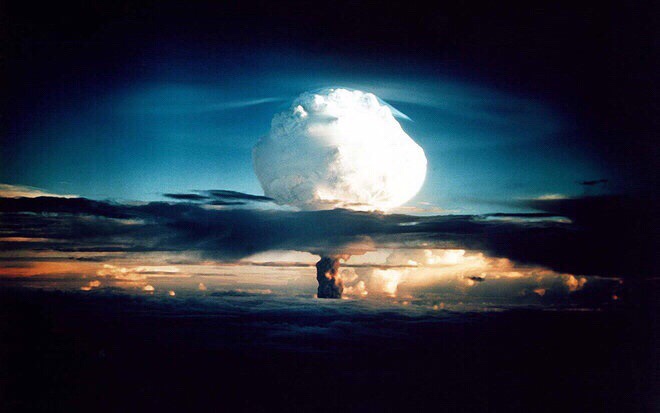
First of all, it is safe to say that detonating the world’s arsenal of nukes would be a Very Bad Idea.
A nuclear confrontation involving 100 or so warheads would plunge the world into a nasty nuclear winter. This would involve years of winter-like temperatures and extreme levels of crop failure, sending the global food system into a tailspin and creating unprecedented levels of famine. As few as five could drag us into a nuclear autumn, less severe, sure, but still pretty devastating. As a result, we could lose 20 to 80 percent of global rainfall and up to 1 billion lives. 
Now, if we consider the world’s entire nuclear stock, you are looking at around 15,000 warheads. The US and Russia both possess a little under 7,000 each, with the rest split unevenly among the remaining nuclear powers – the UK, France, China, India, Pakistan, Israel, and North Korea. It’s fair to say that these weapons could do quite a lot of damage.
In case you are wondering what level of destruction can be done with 15,000 nukes, you will be pleased to know that YouTube channel Kurzgesagt­ – In a Nutshell has your back. In an animation posted on Sunday, they answer the question, “What would happen if all the world’s nuclear bombs were detonated at once?”
The answer is a lot.
Kurzgesagt­ – In a Nutshell/YouTube
According to scientists consulted by the host of the channel, it takes just three nuclear warheads to destroy one of the planet’s 4,500 cities. This means that even after you have taken out every urban area of 100,000 or more people, you have 1,500 warheads left over.
If, instead, you decide to put all your nukes in one basket and drop that basket in the Amazon, you could unleash an explosion with the force of 3 billion tons of TNT, according to the host. That is equivalent to 15 Krakatoa 1883 eruptions, the most powerful volcanic eruption on record.
It would trigger a 50-kilometer (30-mile) fireball that would destroy all within a 3,000-kilometer (1,800-mile) radius of the blast. This would generate a series of pressure waves that would circle the world in the following weeks. Meanwhile, a mushroom cloud would extend to the upper levels of the Earth’s atmosphere and millions of tons of incinerated material would be catapulted into the skies.
A (relatively) small crater 10 kilometers (6 miles) across would mark the site of the explosion, while the entire continent of South America would be engulfed in extreme wildfires that would make the Californian flames of last summer (the deadliest and most destructive in history) look minute in comparison.
But this is when the “unpleasant part” begins, the host says. Because this is when extreme levels of radiation would do their damage, killing living things. Everywhere from the crater to hundreds of kilometers downwind would be simply uninhabitable, while the rest of the planet would be doused in the fallout carried into the atmosphere by the mushroom cloud. The world would be plunged into a nuclear winter.
Still, we are told, “human life will go on”. It just won’t be very nice.
For an explanation of what would happen if we put every bit of uranium on Earth into a nuclear bomb and watched it burn, check out the video here.

The Risk of Nuclear War Continues to Rise (Revelation 16)


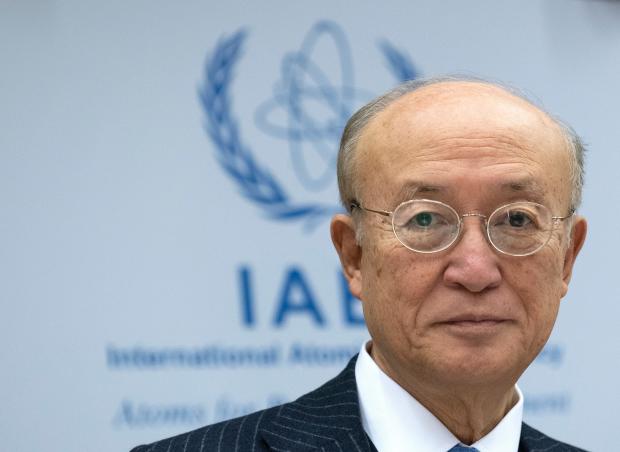
“In general terms, the technology to develop nuclear weapons is an old one, dating back 70 years, and after that lots of progress has been made in technology,” said Yukiya Amano, Director General of the International Atomic Energy Agency (IAEA). “You can get the information, you can get the material, the education. It’s available.” The nuclear weapons club has remained small; only a handful of countries have fully developed programs. But Amano, the world’s so-called nuke chief, warns that “the current environment” makes it “easier for countries to proliferate.”
“That is one of the reasons why we have to strengthen our activities to prevent the proliferation of nuclear weapons and verify that all the material and equipment stay for a peaceful purpose,” he said.
The IAEA was formed in 1957 and is charged with promoting the safe, secure and peaceful use of nuclear technology — and preventing the proliferation of nuclear weapons. Amano, a Japanese diplomat who became head of the nuclear watchdog agency in 2009, sounded one reassuring note in a wide-ranging interview with CBS News: The threat “does not keep me up at night… the IAEA is doing its job.”

Here’s how Amano sees the state of nuclear technology in three key countries: North Korea, Iran and Saudi Arabia.

North Korea’s nuclear program advancing

Amano said that over the last decade North Korea’s “nuclear program has significantly expanded.”
“Over the past year, activities at some facilities continued or developed further,” he said.
His comments come after warnings from South Korean officials and independent analysts that, with U.S. efforts to negotiate the “complete denuclearization” of the Kim regime stalled, North Korea has rebuilt its primary long-range rocket test site and is also operating its main nuclear research facility.
The North has explicitly warned that it could resume nuclear and long-range missile tests.
Amano said the IAEA “is the only international organization that can verify and monitor denuclearization in an impartial, independent and objective manner,” but with the U.S. talks — the only real current dialogue with North Korea — going nowhere, there was little hope that inspectors could enter the isolated country any time soon.
Ever hopeful, Amano noted that the IAEA was ready and able to send a team of inspectors into the country “within weeks,” if an agreement were to be reached.

Iran still sticking to nuke deal

“I don’t see activities that are contrary to the Iran nuclear agreement … but we need to monitor very, very carefully,” Amano said of the international agreement that the Trump administration unilaterally walked away from last year.
All of the other parties to the agreement hammered out by former President Barack Obama; Iran, Russia, China, France, Germany, Britain and the European Union, are still trying to keep it viable.
Under the 2015 deal, Iran agreed to limit its nuclear program in exchange for sanctions relief. The IAEA has said consistently since the agreement was reached that Iran continues to abide by it, and he confirmed on Tuesday to CBS News that the agency’s “inspectors have had access to all the sites and locations in Iran which they needed to visit.”
Mr. Trump had long bashed the deal as too generous to Tehran. He pulled the U.S. out for that reason — the White House has never claimed that Tehran was in violation of the deal.
“So far they are implementing” the agreement, Amano said of Iran. He noted that the U.S. is “a very important country, so, of course, it (the U.S. withdrawal) has impact.”

Saudi Arabia’s nuclear energy bid

Saudi Arabia is eager to join the nuclear energy community, as rapid economic development has left it hungry for electricity. The kingdom is currently reviewing bids from international companies to build its two first nuclear reactors, but it is not currently held to the most rigid international standards for nuclear oversight. That, experts and the IAEA say, is a problem.
The Trump administration has appeared keen, regardless, to push ahead and secure the contract to help build a Saudi nuclear energy program for a U.S. firm. The White House has said if the U.S. doesn’t get the contract, a country with less interest in ensuring a verifiably safe and legal nuclear program may get it instead.
Westinghouse is leading a U.S. consortium competing for the contract against companies from China, France, Russia and South Korea.
In the late 90s the IAEA adopted a new, stricter monitoring program known as the “additional protocol.” Many countries with nuclear programs, old and new, have agreed to adhere to the new oversight mechanism, but not Saudi Arabia.
Amano said the additional protocol is, “a powerful verification tool that gives the Agency broader access to information about all parts of a State’s nuclear fuel cycle. It also gives our inspectors greater access to sites and locations, in some cases with as little as two hours’ notice.”
Saudi Arabia insists it is only pursuing nuclear energy, not weapons, but remarks by the conservative Islamic kingdom’s future king have led to concerns that it could change its mind on that point.
Last year Saudi Crown Prince Mohammed bin Salman told “60 Minutes” that his country “does not want to acquire any nuclear bomb — but without a doubt, if Iran developed a nuclear bomb, we will follow suit as soon as possible.
“I think there is indeed a danger of a slippery slope,” Gary Sick, senior research scholar at Columbia University’s Middle East Institute and a professor at the School of International and Public Affairs, told CBS News. He believes Saudi Arabia should be held to the same strict standard Iran has been.
The world “should insist on the same level of assurance; (that) under no circumstances will it ever seek, develop or acquire any nuclear weapons,” Sick told CBS News.
Brett Bruen, the former Global Engagement Director at the White House, told CBS News that Saudi Arabia “is precisely the sort of country that shouldn’t have access to our nuclear technology. Even if we see the need for an alliance of convenience against Iran and ISIS, that doesn’t necessitate that we hand over the recipe for our secret sauce.”
The IAEA has been working with Saudi Arabia for several years, and even the soft-spoken Amano wants additional verification for the kingdom.
“Not only Saudi Arabia, but I am asking all the countries to implement the additional protocol. This would increase confidence,” Amano said.

Tuesday, April 2, 2019

Renewing the Cold War (Revelation 16)


WASHINGTON (Reuters) – The demise of the only U.S.-Russia arms control pact limiting deployed nuclear weapons would make it harder for each to gauge the other’s intentions, giving both incentives to expand their arsenals, according to a study released on Monday.
The expiration of the New START accord also may undermine faith in the Nuclear Non-Proliferation Treaty, which calls on nuclear states such as the United States and Russia to work toward nuclear disarmament, as well as influence China’s nuclear posture, historically one of restraint.
The study, produced by the CNA Corp non-profit research group, is the most comprehensive public examination to date of the consequences of New START’s demise. It argues for extending the 2011 treaty, which expires in February 2021 but can be extended for five years if both sides agree.
The Trump administration is deliberating whether to extend the pact, which President Donald Trump has reviled as a bad deal and his national security adviser, John Bolton, has long opposed. Russia has said it is prepared to extend New START but wants to discuss what it regards as U.S. violations first.
The State Department did not immediately respond to a request for comment on the administration’s deliberations.
Trump has said Washington will withdraw from another arms pact, the 1987 Intermediate-range Nuclear Forces Treaty, this summer unless Moscow ends its alleged violations, compounding tense ties. Russia denies violating the INF treaty.
The New START treaty required the United States and Russia to cut their deployed strategic nuclear warheads to no more than 1,550, the lowest level in decades, and limit delivery systems – land- and submarine-based missiles and nuclear-capable bombers.
It also includes extensive transparency measures requiring each side to allow the other to carry out 10 inspections of strategic nuclear bases each year; give 48 hours notice before new missiles covered by the treaty leave their factories; and provide notifications before ballistic missile launches.
Both sides must also exchange data declaring their deployed strategic nuclear warheads, delivery vehicles and launchers, as well as breakdowns of how many of each are located at individual bases.
All of that would end if the treaty expires.
“Neither country would have the same degree of confidence in its ability to assess the other’s precise warhead levels,” CNA’s Vince Manzo wrote in the study (bit.ly/2JUdSvW). “Worst-case planning is also more likely as a result.
“Increased opacity between U.S. and Russian strategic nuclear forces would unfold within the broader context of growing mistrust and diverging perceptions about strategy, intentions, and perceptions,” he added.
Without the data, the United States would have to reassign its overworked satellites, possibly devoting more surveillance to Russia and less to China, Iran and North Korea.
Another casualty of the treaty’s expiration could be global nonproliferation, making non-nuclear states doubt the United States and Russia will keep working toward nuclear disarmament under the NPT, the study said.

While it was impossible to predict how China – estimated to have about 280 nuclear warheads – would react to New START’s expiry, the study cites factors that could make Beijing expand its capability.
Without a treaty limiting U.S. and Russian nuclear forces, China could overestimate their arsenals. Unconstrained U.S. and Russian forces could also strengthen voices in China that view a large arsenal as symbolically important, as well as those already advocating for more nuclear weapons.
The study recommends steps for the United States and Russia to mitigate the risks from the treaty’s expiration, including voluntarily sticking to its limits and continuing to exchange data. It also recommends Washington propose annual exchanges of nuclear weapons information and dialogue with Beijing.
Reporting by Arshad Mohammed and Jonathan Landay; Editing by Mary Milliken and Dan Grebler

Monday, April 1, 2019

Nuclear War is a Far Worse Challenge (Rev 16)


Nuclear war worse than climate change challenge
March 28 — To the Editor:
When it comes to threats to our environment, the consequences of increased greenhouse gas emissions driving climate change has received most of our attention. However, many of us still clearly remember the Cold War between the superpowers and living under the constant threat of a nuclear war. That real threat still exists today.
Both the US and Russia have over a thousand nuclear-armed missiles on hair-trigger alert threatening population centers of our planet with consequences that are both more rapid and longer-lasting than the challenges posed by climate change. A nuclear war may not be intentional, but could be triggered by unexpected accidents or misinterpretations, occurrences that have happened in the past but were luckily defused before situations got out of hand. While both of these nations have abundant conventional weapons to protect their respective countries, nuclear weapons represent to them objects of respect and fear. In fact, as recently as last year, verbal exchanges between Russia and the US have heated up with both sides threatening to upgrade and increase their nuclear arsenals.
Money for such efforts would be unnecessary and a huge waste of taxpayer money and could be put to better use improving the lives of the residents of their countries, e.g. addressing our global climate change challenges.
I would like to congratulate the Portsmouth City Council for their support of a recent resolution to ask the US government to renounce the “First-Use” of nuclear weapons, increase safety measures surrounding our current nuclear weapons, and cancel all nuclear weapons upgrades which would cost taxpayers $2.7 trillion without increasing our security or providing more protection.
Such a resolution is also in line with the membership of the Portsmouth Mayor in the international organization “Mayors for Peace”.
Peter Somssich, State Representative / District 27

Sunday, March 31, 2019

American Idiots Clamoring To Attack Iran


Hawks Clamoring To Attack Iran
Emile Nakhleh1 day ago
As Vice President Mike Pence, Secretary of State Mike Pompeo, National Security Advisor John Bolton, Israeli Prime Minister Benjamin Netanyahu, and Saudi crown prince and de facto ruler Mohammad bin Salman clamor for a war against Iran, they seem to have conveniently forgotten the destruction and mayhem wrought by the American invasion of Iraq 16 years ago.
These war drummers are underestimating the potential negative consequences of the war and overestimating the Iranian people’s dislike of their theocratic regime. They, like the advocates of the Iraqi invasion in the winter of 2002 and early spring 2003, are confusing Iranians’ dislike of the ayatollahs with their potential embrace of a foreign invader.
On the eve of the Iraq war, former President George W. Bush, Vice President Dick Cheney, Defense Secretary Donald Rumsfeld, National Security Advisor Condoleezza Rice, Deputy Secretary of Defense Paul Wolfowitz, the Vice President Chief of Staff and Assistant to the President David Addington all claimed that the Iraqi invasion aimed at liberating the country from the brutal regime of Saddam Hussein. Removing Saddam from power, they maintained, would eliminate the threat of weapons of mass destruction (WMD) and bring stability, security, and democracy to Iraq.
As developments unfolded over the past 16 years, the “liberation” claims proved to be bogus. The invasion and the decision to de-Ba’athify Iraq and dissolve the Iraqi military created an environment conducive to sectarianism, insurgency, and terrorism. The vacuum that followed the regime collapse, the incompetence of the American administration in the “Green Zone,” and the pervasive corruption of the new Iraqi governing councils was quickly filled by pro-Iranian militias, al-Qaeda, and later the Islamic State. The promise of stability and security was replaced by chaos, bloodshed, and mayhem.
The massive destruction of Iraq and the horrendous human and material cost the American “liberation” caused for the country will be child’s play compared to what could happen if Trump and his Israeli and Saudi allies decide to attack Iran. Unlike Iraq—which the British cobbled together after World War One out of the Shia, Sunnis, and Kurds under a minority Sunni rule—  Iran has been in existence for centuries with a vast territory and a huge population. If attacked, Iran has the capability to retaliate against its neighbors, especially Saudi Arabia. Its air and missile forces could quickly destroy the oil and gas facilities and the water and power grids on the Arab side of the Gulf. A war against Iran could easily spread to the Gulf and the Levant. The entire region could go up in flames.
Hubris and Ignorance
The Bush administration was not willing or interested in answering the “morning after” questions regarding the post-Saddam future of Iraq. Whenever I and others urged policy makers to consider the law of unintended consequences and what could go wrong in Iraq following the invasion, Vice President Cheney and Secretary of Defense Rumsfeld dismissed our concerns and arrogantly claimed that the U.S. military and civilian administration following the invasion would be able to control the situation in Iraq. Their hubris regarding America’s power and ignorance of Iraqi realities on the ground led to a total breakdown of Iraqi society following the demise of the Saddam regime.
The Trump administration seems to be equally arrogant and ignorant about Iran. It has displayed a similar disregard for strategic thinking about the future of Iran beyond the clerical regime. The Iranophobes within the administration seem to be more obsessed with Iran than the Bush administration was ever with Iraq.
Instead of relying on calm, expert-based analysis, Secretary of State Pompeo has made a series of trips to the region that have involved bullying, threats, and hilarious, if not tragic, mischaracterizations. In a recent conversation with Christian broadcasters in Jerusalem, Pompeo waxed eloquent about God’s presumed divine plan designating Trump as a possible savior of the “Jewish people,” Sunni Islam, Maronite Lebanon, Alawite Syria, and the rest of the world from the perceived modern-day Persian “Hamans.”
Instead of relying on calm, expert-based analysis, Secretary of State Pompeo has made a series of trips to the region that have involved bullying, threats, and hilarious, if not tragic, mischaracterizations.
The American foreign policy process is in serious trouble if Pompeo truly believes that Trump could be the twenty-first-century version of Queen Esther or Hadassah and that this religious vision could chart the path to a grand strategy in the Middle East. When warped religious interpretations are offered as a substitute for rationally debated policy, whether by a radical Wahhabi Salafist, an evangelical Christian, or an ultra-Orthodox Jew, democratic governments should fear for their future. Invoking the divine as an inspiration or a justification for violence against another country, much as Osama bin Laden did on the eve of 9/11, is a rejection of rational discourse and a return to the barbarism of previous epochs.
Pompeo’s imagined “shuttle diplomacy” in the Middle East has been reduced to supporting Netanyahu’s upcoming election bid, threatening Hezbollah in Lebanon, recognizing Israeli sovereignty over the Golan Heights, and lambasting any state that does business with Iran. His ambassador-designee to Saudi Arabia, John Abizaid, told Congress that the threat from Iran supersedes concerns for human rights in Arab autocracies.
Furthermore, Trump administration policy operatives, including John Bolton and Rudy Giuliani, have treated an Iranian group called the Mujahedin-e Khalq or MEK as a legitimate alternative to the clerical regime in Iran. The MEK, however, is a terrorist cult that has received funding from all sorts of dubious sources and is often used as a tool by outside groups, states, and organizations, including intelligence services of regional and international state actors, to further an anti-Iran agenda.
Similarly, the Bush administration viewed Ahmed Chalabi, the Iraqi émigré, and the organization he founded, the Iraqi National Congress, as the legitimate alternative to the Saddam regime in Iraq. Vice President Cheney and Secretary of Defense Rumsfeld fully bought into Chalabi’s snake-oil sales. Chalabi was instrumental in instigating America’s invasion of Iraq at the cost of trillions of dollars and thousands of American and Iraqi lives. Iraq has never recovered from that ill-fated, unnecessary war. Bolton and Giuliani are as susceptible to MEK’s claims as Cheney and Rumsfeld were to Chalabi’s.
For the sake of whipping up regional animus toward Iran and preparing the ground for a war against the “Persian menace,” Pompeo in effect has told Arab autocrats that so long as they keep mouthing anti-Iran rhetoric, Washington will ignore their despicable human rights record and the continued repression of their people. The thousands of political prisoners in Egyptian, Saudi, and Bahraini jails will have to wait for another day.
Arab regimes have become masters in the art of communicating with their American benefactors. During the Cold War, they received American aid as long as they brandished anti-Communist slogans. After the collapse of the Soviet Union and with the rise of terrorism, these same strongmen were happy to adopt an anti-terrorism rhetoric in order to continue receiving American military and economic aid. Their current anti-Iran public posture is the latest phase in their communication with Washington and is as equally profitable as the previous two phases.
When some regional politicians demurred about getting tough with Iran, as happened during Pompeo’s recent visit to Lebanon, he did not hesitate to threaten them with a panoply of economic sanctions. Vice President Mike Pence used similar language at the recent meeting in Warsaw to berate and even threaten America’s European allies if they dared to take a conciliatory posture toward Iran. The European reaction to Pence’s speech showed that his pathetic performance backfired. Pompeo’s Warsaw meeting ended in utter failure.
Iran Nuclear Deal
Managing Iran’s malign behavior through the Iran nuclear deal or the Joint Comprehensive Plan of Action (JCPOA) was a stroke of diplomatic genius, which former Secretary of State John Kerry and Secretary of Energy Ernest Moniz negotiated. The Obama administration placed Iran’s objectionable behavior in two baskets—a nuclear basket, which they addressed through the Iran deal, and a non-nuclear one, which the Obama administration was to address once the nuclear inspection became operational and Iran fully compliant. That approach would have worked: most experts judged Iran to be in compliance with the conditions of the nuclear deal. Unfortunately, President Trump decided not to recertify the agreement.
Trump’s decision contradicted the judgment of most nuclear and intelligence experts about Iran’s compliance. The International Atomic Energy Agency (IAEA), for example, affirmed Iran’s compliance in more than a dozen of its successive quarterly reports and as recently as earlier this month.
In his open testimony to Congress in January, the Director of National Intelligence Dan Coats stated that Iran continued to comply with the deal even after Trump announced his intention to scuttle it. Coats said, “We do not believe Iran is currently undertaking activities we judge necessary to produce a nuclear device.” Iran was of course cheating in other areas, according to the DNI’s testimony, but not on the nuclear agreement.
In a statement issued April 25 of last year, over two dozen Israeli senior military and intelligence officials judged that it was “in Israel’s best interest that the United States maintains the nuclear agreement with Iran.” The Israeli statement went on to say that “The current deal is better than no deal” and that “Iran’s destructive regional policies and actions, its support for acts of terrorism, its presence in Syria, and its ballistic missiles program should be dealt with outside the framework of the agreement.” This was precisely the position of the Obama administration when it negotiated the deal in the first place.
The Path Forward
Fifty-plus retired American generals and diplomats, in a statement published earlier this month, urged the Trump administration to rejoin the Iran nuclear deal and work on resolving outstanding concerns with Iran diplomatically. They advised against a war because they saw no good outcome. The statement did not seek to exonerate Iran’s destabilizing behavior and its involvement in Yemen, Syria, Iraq, or Lebanon. Nor did the retired senior leaders ignore Iran’s link to terrorism. The statement, however, pointed out, among other things, that the 2015 nuclear deal “put limitations on Iran’s nuclear program that provided assurances that it would not be used to develop weapons, improved American intelligence about potential future development and significantly improved the security of the United States and our allies.”
Additionally, the retired generals and diplomats emphasized that Iran is complying with the agreement and that, under the JCPOA, Iran is barred from engaging in nuclear weapons development program, which prevents it from producing a nuclear device. “Reentering the agreement and lifting the sanctions will greatly enhance United States’ ability to negotiate improvements and enable us to address concerns with the existing agreement.”
Coming from these military and policy realists, who are dedicated to the security of this country, Israel, and America’s allies, this advice is grounded in sane strategic analysis, not in theological whimsy.