Showing posts with label Netanyahu. Show all posts

Thursday, July 15, 2021

Palestinians Find New Unity Outside the Temple Walls: Revelation 11

People line Gaza Beach on June 17. Since the 2007-imposed blockade, Gazans have almost no chance of leaving the small enclave.

Palestinians Find New Unity After War With Israel

The 11-day conflict between Israel and Hamas has unified disparate Palestinian enclaves.

July 13, 2021, 1:13 PM

JERUSALEM—Tensions between Israelis and Palestinians remain high after a fourth war with Hamas ended in a shaky cease-fire in May, and home demolitions and evictions of Palestinians, supported by the Israeli government, continue in both East Jerusalem and the West Bank. But Palestinians—and even Israelis—say that the Palestinian cause has been galvanized like never before, and disparate groups of Palestinians are discovering a new sense of unity in the rubble of the 11-day war.

Since the creation of the State of Israel in 1948, Palestinians have lived physically divided. In the Gaza Strip, a blockade imposed by Israel and Egypt in 2007 means that most of its people have never left the small enclave and have had vanishingly few contacts with fellow Palestinians in the West Bank or East Jerusalem. That isolation was further deepened by decades of illegal occupation of the West Bank and East Jerusalem.

“We have seen that all these colonial borders—whether cement blocks and walls or barriers in our minds that have caused divisions—are starting to come down. We are reclaiming our unified identity,” said Mohammed El-Kurd, a 23-year-old student who grew up in occupied East Jerusalem and studied in New York. “Millions of people around the world are, for the first time, waking up to the reality of apartheid and ethnic cleansing Palestinians are facing on a daily basis.”

A girl in a Gaza shopping mall on June 20 checks her Instagram account where she says she connects with Palestinians outside of Gaza.

The recent war, and especially the social media frenzy that accompanied it, has helped tear down those divisions. 

Over weeks of turmoil, hashtags such as #SaveSheikhJarrah and #GazaUnderAttack went viral. For El-Kurd, this meant that the number of his social media followers on Instagram went from 4,000 to 750,000 within weeks. He was quickly in the spotlight, with his own family having faced the threat of forced eviction in the East Jerusalem neighborhood of Sheikh Jarrah for years. But the situation escalated in May when Yaakov Fauci, a settler from New York, took over part of the El-Kurd family’s home, telling them that “if I don’t steal it, someone else will.”

Mohammed El-Kurd, photographed on July 4, is a 23-year-old creative writing student who grew up in occupied East Jerusalem.

“Our voices have been policed by the public, but this is changing,” El-Kurd said. “We want the blockage to end, we want to roam freely, and we want Palestinians to return home, instead of rotting in refugee camps.”

The quick fight between Israel and Hamas militants in Gaza began with heavy-handed Israeli tactics in Jerusalem met by a barrage of what was ultimately 4,000 Hamas rockets. The conflict left at least 256 Palestinians and 13 Israelis dead. While the war resulted in a quick military victory for Israel, it also offered a victory of sorts to Palestinians, putting issues like Sheikh Jarrah, which had simmered in the background for years, at the center of a new Palestinian sense of purpose.

A scene in the Old City in Jerusalem on June 15. The eastern part of the city is mostly home to Palestinians, though some have been evicted from their houses.

“Our nation has returned to its real cause,” said Amjad Shawa, director of the Palestinian Non-Governmental Organizations Network in Gaza. “Since the developments in East Jerusalem, the West Bank, and the war in Gaza, we are once again united as a people. We have raised our voices, because the current situation is unacceptable.”

Basem Naim, head of the Council on International Relations within Hamas, said that the main catalyst for the fighting was Israel’s behavior at Al-Aqsa Mosque and the evictions in East Jerusalem. “It has touched two sensitive points: holy places and refugees. We continue to fight a political conflict about statehood, land, and borders. It’s not just about a few houses—but about a long-term plan to extinguish the Palestinian existence in Jerusalem,” Naim said. 

“I’d still say this conflict was different,” he added. “Palestinians have gained confidence, even though the devastation in Gaza is widespread. They felt like they were able to stand up to Israel for the first time.”

The newfound sense of Palestinian unity is also apparent among Israel’s leadership, said Mairav Zonszein, senior analyst on Israel and Palestine at the International Crisis Group.

“Conceptually, Hamas put the Palestinians back on the radar and Jerusalem at the center of their issues,” she said. “The [Israeli] government has realized that Palestinians are uniting; that the fragmentation isn’t as effective as they would like it to be; that they empathize with each other’s struggles, regardless of whether they are in the West Bank, Jerusalem or Gaza.”

Salma Shawa, 24, photographed on June 24, is advocating for Palestinians using social media.

Salma Shawa, a 24-year-old activist and entrepreneur, grew up in the closed-off enclave of Gaza, where she rarely had a chance to interact with people from Jerusalem or the West Bank due to strict movement restrictions on Palestinians. But in the wake of the recent conflict, she too has made new connections with other Palestinians and transcended borders that seemed impassable. 

“Over the past months, Palestine has moved onto the global stage—so much so, that it was even discussed in the U.S. Congress. This has reunited its people, including several generations of diaspora Palestinians who have never been to their own country,” she said. 

“There is no going back now. There is new hope.”

‘Bombardments were everywhere’ outside the Temple Walls: Revelation 11

‘Bombardments were everywhere’—MCC responds to bombing in Gaza’s

News and Press Release Source 

Posted 13 Jul 2021 Originally published 13 Jul 2021

By Emily Loewen

Nighttime was the hardest for Mahmoud Alhalimi. With the electricity cut and bombs falling, the hours were dark and loud, as he tried in vain to help his two young children fall asleep. 

“They asked me all the time, ‘What are these sounds?… Are they coming to our home?’” he says of their time during an Israeli bombardment on Gaza in May. “They were very scared, and I tried to play games with them in order to relieve their fear.”

The 11 days were dark. “Bombardments were everywhere, while no place was safe in Gaza; the shelling was everywhere from sky, sea and land,” says Alhalimi, project coordinator at Near East Council of Churches (NECC), which receives support from MCC. 

Mohamed Al-Attar also was sheltering in his home with his wife and three children, who panicked as the bombs fell. They couldn’t leave their home with explosions all around them. Then the unthinkable happened. Their home was hit, and Al-Attar lost his wife and children, Mohamed Izz Eddin, Islam and Ameera, in the blast. Then, while staying with his brothers and their families, that house too was hit by a bomb and they were buried under the rubble for hours. 

“We have become refugees in our own country,” Al-Attar says. “Me and many people like me have lost their families, children and parents during this conflict… and even the ones who survived are suffering over the things they have lost. They have no place to be.” 

Since the bombardment, Al-Attar has been able to continue in his teaching position, but he is now trying to support his brothers’ families as well. He is trying to stretch his income, but it isn’t enough.

The outbreak of violence followed weeks of growing protest and violence triggered by Israel’s plans to remove Palestinians from their homes in Sheikh Jarrah (in East Jerusalem), as well as heavy policing of Palestinians during Ramadan, particularly at the al-Aqsa mosque.

The bombing destroyed or damaged thousands of homes and displaced up to 8,500 people. Access to essential services like clean water and health care have been difficult in Gaza for years. But the conflict combined with the COVID-19 pandemic have dramatically worsened the situation.

Many residents in Gaza have very low income, so they struggle to buy enough to eat. Gaza has been under a blockade by Israel since 2007, with severe restrictions on what can come in and out. The economic situation in Gaza was already poor at the time of the siege and continued to deteriorate. Many people have no steady income to provide for their families. 

With your support, MCC is responding to the crisis, providing emergency food, hygiene items and psychosocial support. Four hundred fifteen families will receive either monthly food packages or vouchers through MCC’s local partners Al Najd Development Forum and Culture and Free Thought Association (CFTA). Two hundred fifteen families also will receive hygiene supplies. And 400 children will receive mental health support to help them deal with the trauma of the experience. 

Another MCC partner, the Near East Council of Churches (NECC), runs a vocational training school. They will provide psychosocial counseling support for students and their families and one-time emergency cash distributions. With those funds, families can purchase food and hygiene items and cover other medical or household expenses. 

This bombardment is only the latest escalation in a long cycle of conflict that has lasted for more than a decade. “These wars on Gaza are repeated every three to five years and I am not sure I will survive [the] next war,” says Alhalimi. “We say: no more wars, we want to live in peace and to develop our country and enjoy our state in our homeland.” 

Mennonite Central Committee: Relief, development and peace in the name of Christ

-END-

Emily Loewen is the marketing and communication manager for MCC Canada.

Tuesday, July 13, 2021

Gaza Children at Risk Outside the Temple Walls: Revelation 11

Israeli warplanes attacked hundreds of ‘targets’ in the Gaza Strip. (Photo: Mahmoud Ajjour, The Palestine Chronicle)

Gaza Children at Risk: UNICEF Calls for Immediate Humanitarian Assistance

July 11, 2021

The United Nations Children’s Emergency Fund (UNICEF) has called for allowing an immediate delivery of urgent humanitarian assistance to the besieged Gaza Strip.

“Gaza has 1 million #children, many are in need of assistance. We call for the immediate delivery of unimpeded humanitarian assistance to the #GazaStrip, many children need urgent health, water and education,” UNICEF Palestine tweeted.

“No assistance will have dire consequences on children.”

On Friday, the UN Humanitarian Coordinator of the occupied Palestinian territory Lynn Hastings warned that the Israeli ban on bringing supplies to the besieged Gaza Strip puts vital sectors in the enclave at risk.

She said without a return to the regular entry of goods into Gaza, the capacity of the UN and its partners to deliver critical interventions is at risk, as are the livelihoods of and basic services for the people in Gaza.

(WAFA, PC, Social Media)

Saturday, July 10, 2021

Child Soldiers Outside the Temple Walls: Revelation 11

Israeli NGO urges UNICEF to probe Hamas, PIJ for using child

The call to the UN agency follows reporting by The Jerusalem Post on Hamas and Palestinian Islamic Jihad running “training camps” to recruit child soldiers.

The Israel-based NGO International Legal Forum (ILF) has called on UNICEF to investigate allegations of Palestinian children being trained as child soldiers in Gaza, following a report by The Jerusalem Post.The NGO, which is a network of over 3,000 lawyers and activists in over 40 nations worldwide, stated that they have “grave concern” following reports that the Gaza-based Palestinian terrorist groups Hamas and Palestinian Islamic Jihad (PIJ) were training and recruiting children.Arsen Ostrovsky, director of ILF, told The Post that UNICEF’s ongoing failure to act on this issue is an “unconscionable dereliction of duty in its central mission to protect and defend children’s rights.”

As reported by the Post, Hamas announced in late June its annual summer camp, where it trains children to take up arms. 

According to Post analyst Seth J. Frantzman, the terrorist group says the youth need to be ready to make “sacrifices,” which appears to be the language used to describe recruiting them to be killed. The speech by Hamas members said the camps include religious indoctrination and “security” training.An English video was released by Hamas with an explanation that it intended to “prepare the youth,” calling the summer camps “training camps” that were named after the “Sword of al-Quds (Sword of Jerusalem).” This is the term they used to refer to the 11-day Hamas-Israel conflict in May, dubbed by the IDF as Operation Guardian of the Walls.

As reported by Post correspondent Khaled Abu Toameh, around 50,000 children had registered.The Meir Amit Intelligence Terrorism Information Center published a report that at least one Palestinian child killed in Gaza during the conflict was a member of Hamas. This is especially notable, as an entire front-page story in The New York Times with photos of each child killed in Gaza during the conflict drew significant attention. 

UNICEF, the UN agency responsible for humanitarian and developmental aid for children, has stated that recruiting child soldiers violates international humanitarian laws.

“Thousands of children are recruited and used in armed conflicts across the world. Often referred to as ‘child soldiers,’ these boys and girls suffer extensive forms of exploitation and abuse that are not fully captured by that term,” UNICEF’s website states.

“Warring parties use children not only as fighters but as scouts, cooks, porters, guards, messengers and more. Many, especially girls, are also subjected to gender-based violence,” it said.

“Children become part of an armed force or group for various reasons,” the website explained. “Some are abducted, threatened, coerced or manipulated by armed actors. Others are driven by poverty, compelled to generate income for their families. Still others associate themselves for survival or to protect their communities. No matter their involvement, the recruitment and use of children by armed forces is a grave violation of child rights and international humanitarian law.”

The ILF released a statement including a selection of pictures from the training camp showing children receiving “military terror training” by PIJ and Hamas.

“Hamas and PIJ are committing a war crime under customary and treaty international law as appears in the Rome Statute (Article 2(b)(xxvi) and Optional Protocol to the Convention on the Rights of the Child regarding the involvement of children in armed conflict, inter alia,” the statement reads.

The citing of the Rome Statute is notable, as it is under this jurisdiction that the International Criminal Court (ICC) has launched a war crimes probe into both Israel and Hamas for their 2014 conflict, Operation Protective Edge.

According to International Legal Forum advocate Russell Shalev, “As an organization committed to protecting and defending child rights, it is incumbent upon UNICEF to act immediately and without reservation to prevent the continuation of such unconscionable atrocities and abuse of children in Gaza, as well as to hold Palestinian terror groups Hamas and PIJ, accountable for these heinous crimes.” 

Nope Seth J. Frantzman contributed to this report.

Friday, July 9, 2021

UN Condemns Use of Human Shields Outside the Temple Walls: Revelation 11

UN Condemns Use of Human Shields, a Win for Israel Against Hamas

27 Tammuz 5781 – July 7, 2021

Photo Credit: Senator Claire McCaskillGilad Erdan

The United Nations on Wednesday passed a resolution condemning the use of civilians as human shields by terrorist groups, a strategy which is practiced frequently by Hamas in the Gaza Strip.

“Human shield” is a legal, military, and political term denoting non-combatants who are either forced or volunteer to shield with their bodies a military target and deter the enemy from attacking it.


Israel’s UN envoy Gilad Erdan tweeted Wednesday: “One month after Operation Guardian of the Walls and following great efforts by the Israeli delegation – the UN has adopted a counter-terrorism strategy condemning the criminal use of civilians as human shields. The UN also addressed and condemned anti-Semitic terrorism for the first time.”

“Terrorists must not be allowed to use schools, homes, and hospitals to shield their murderous activities,” Erdan said in his speech at the UN following the adoption of the resolution, adding, “Terrorism is terrorism is terrorism, and should never be explained away, justified or excused. No matter what.”

During the 1982 Lebanon War, the Palestinian refugee camp of Ain al-Hilweh was surrounded by Israeli forces as the last stronghold of “Soldiers of Allah” terrorists who were commanded by a Muslim fundamentalist named Haj Ibrahim. Over a two-day period, Brigadier General Yitzhak Mordechai’s soldiers repeatedly announced that “whoever does not bear arms will not be harmed” and urged civilians in the camp to evacuate, but only a few did. Three delegations of prominent Sidon figures were sent to persuade Haj Ibrahim’s fighters that “their cause was hopeless, and whoever was willing to lay down his arms would be allowed to leave the camp unharmed.” None of the delegations were successful. Meanwhile, militiamen were shooting civilians who tried to escape, and in one incident, three children were riddled with bullets before their parents’ eyes because their father had dared to suggest calling an end to the fighting. Eventually, a bloody battle ensued and the IDF finally took the camp. According to a 1982 Congressional report, Israeli soldiers were attacked by PLO fighters disguised as hospital patients.

After the 2014 Gaza War, numerous reports emerged that Hamas used human shields. The UN High Commissioner for Human Rights Navi Pillay accused Hamas terrorists of violating international humanitarian law by “locating rockets within schools and hospitals, or even launching these rockets from densely populated areas.” The European Union condemned Hamas over its “calls on the civilian population of Gaza to provide themselves as human shields.” In a September 2014 interview, a Hamas official acknowledged to Associated Press that the group fired at Israel from civilian areas.Advertisement

Thursday, July 8, 2021

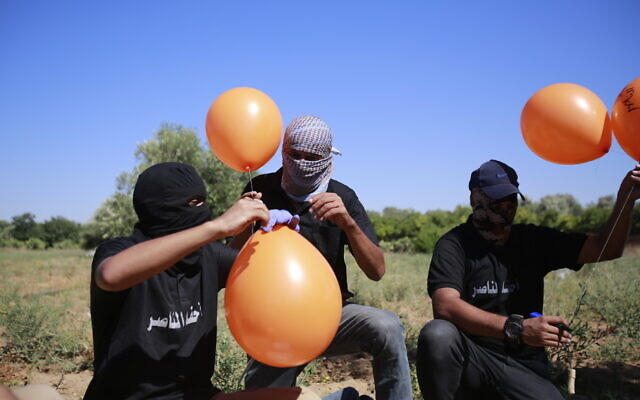
Incendiary Balloons: Hamas’ Explosive Terror Tactic Outside the Temple Walls: Revelation 11

Incendiary Balloons: Hamas’ Explosive Terror Tactic Against Israel

Outside of the Gaza Strip, a balloon symbolizes childhood and freedom. However, for Israelis who live near the coastal enclave, seeing a balloon floating in the sky evokes images of Hamas, the US-designated terrorist group that rules the Palestinian territory.

Incendiary balloons and kites have been used by Hamas for the past few years as part of its terror campaign against Israeli citizens. These attacks are not used to target military assets, but, rather, are meant to inflict harm on Israeli civilians, cause property damage and destroy the surrounding ecosystem.

While they may look like children’s toys, the rudimentary weapons contain elements ranging from oil-soaked rags to explosives. Accordingly, the balloons, and previously kites, effectively function as long-distance Molotov cocktails that are launched at Israel from a distance. And while the Israel Defense Forces are able to intercept many of them, many have nevertheless penetrated Israeli territory.

A History of Exploding Balloons

The terror tactic was first implemented in 2018 during Palestinian riots along the Gaza border. Hamas claimed it was a response to the US Embassy move to Jerusalem. However, there were riots taking place several weeks before the mission’s relocation. Gazans were strongly encouraged by terrorist leaders to storm the border fence and attack Israel soldiers. Leaving no stone unturned, the riot organizers also went online, calling on Palestinians via social media posts to bring concealed weapons and kidnap or kill Israeli soldiers and civilians.

According to Jewish National Fund Director of Communications Stefan Oberman, incendiary objects from Gaza have over the past three years set fire to over 12,000 acres of land in the so-called Gaza Envelope, the populated areas of southern Israel within seven kilometers of the shared border.

That is an area larger than Manhattan.

And while they are low-tech, the attacks have destroyed vast tracts of farmland and endangered the lives of Israelis. To date, no fatalities have been reported.

Even during the latest ceasefire between Israel and Hamas, which ended an 11-day conflict in May, the latter has demonstrated that it does not intend to abandon its use of exploding balloons and kites any time soon.

These attacks have caused millions of dollars worth of damage in Israel, destroying agricultural land as well as causing a decrease in local tourism and other economic activity.

The appeal of the incendiaries is that they are extremely easy to create and launch. Explosive devices are also inexpensive to manufacture in comparison to the rockets used by Gaza’s various terrorist groups.

How Media Cover the Exploding Balloons Story

On June 16, Hamas violated the current truce by launching incendiary balloons into Israel. The media depicted this development as a response to the Jerusalem Day march that occurred the same day. However, the balloons were launched well before the march took place. Israel responded to this violation of its sovereignty by conducting air strikes against Hamas military sites in Gaza.

Hamas retaliated the next day by sending more terror balloons that ignited twenty fires.

Yet, media reports tended to downplay the destructive nature of these attacks. For example, an article from Reuters shortly after Israeli retaliatory strikes in Gaza included this tweet about the Jerusalem Day March.

Reuters labels all of the marchers at the event as “far-right nationalists.” But while there were isolated incidents of parade-goers chanting “death to Arabs,” they were quickly condemned by Prime Minister Naftali Bennett as well as other Israeli political leaders.

Moreover, participants in the march walked through the streets of Jerusalem in a way that purposefully avoided the Muslim Quarter in the Old City. This decision to change part of the march’s route was made by the Israeli government so as to keep the peace.

Additionally, even though the march has long been a part of the annual Jerusalem Day festivities, it was cut short this year due to a Hamas rocket barrage. The Reuters article does not mention this fact, which gives the impression that the event was simply held as a “provocation.” In truth, it is part of a holiday that commemorates Israel’s victory in the 1967 Six-Day War, during which the Israel Defense Forces captured the eastern part of Jerusalem that had been occupied for nearly 20 years by Jordan. Between 1948 and 1967, the Jordanians had desecratedmany Jewish buildings and holy sites.

The article further claimed that “the overnight violence follows a march in East Jerusalem on Tuesday by Jewish nationalists that had drawn threats of action by Hamas, the ruling militant group in Gaza.”

But the IDF Spokesperson’s Unit made clear that “the Hamas terror organization attacked Israel by sending terror balloons into Israeli territory. These balloon attacks were carried out throughout the entire day. The attack began before the Jerusalem flag march, and continued for the whole day, both before and after the march.”

Other news sites also ignored these facts, with Forbes headlining an article, “Israel Strikes Gaza As Tensions Threaten To Unravel Fragile Ceasefire.”

The title Forbes chose to use implies that Israel struck first, without mentioning the Hamas balloons. The piece also refers to the marchers as all being “far-right,” and goes so far as to imply that the parade “threatened to upend a short-lived ceasefire between Israel and the Gaza-based militant group Hamas.”

Hamas’ Rationale For Using Exploding Balloons Co Opted by Media

During May’s conflict, Hamas justified its rocket barrage against Israel by citing Sheikh Jarrah and the Al-Aqsa Mosque “protests.” The media often take the terrorist group at its word, ignoring the fact that Hamas has repeatedly attacked the Jewish state irrespective of what the government in Jerusalem was doing at the time.

In fact, there were multiple calls for violence by Palestinian politicians against Israel and unprovoked attacks against Jews weeks before Sheikh Jarrah made international headlines.

This makes sense, as Hamas is openly committed to Israel’s destruction.

What also goes unmentioned by the media is the fact that the Palestinian Authority canceled what would have been the first presidential and legislative elections since 2005 and 2006, respectively. This increased tensions between the Mahmoud Abbas-led government in the West Bank and Hamas in Gaza.

Many analysts have speculated that Hamas initiated May’s war in order to demonstrate its anti-Israel credentials and thereby increase its popularity among Palestinians.

And it worked.

According to a recent public opinion pollconducted by the Ramallah-based Palestinian Center for Policy and Survey Research, support for Hamas has increased dramatically while backing for Palestinian Authority President Mahmoud Abbas’ ruling Fatah faction dropped significantly. The poll found that if new Palestinian presidential elections were held, Hamas leader Ismail Haniyeh would get 59 percent of the votes, compared to 27 percent for Abbas.

Hamas would also win in a parliamentary election, with more than 40 percent of respondents saying they would cast their ballots for Gaza’s rulers as opposed to 30 percent for the West Bank-based Fatah.

But instead of holding Hamas accountable, news organizations have repeatedly failed to provide much-needed context regarding the terror group’s history, tactics and stated desire to annihilate Israel and Jews everywhere.

The author is a contributor to HonestReporting, a Jerusalem-based media watchdog with a focus on antisemitism and anti-Israel bias, where this video was first published.

More than 90% of Gaza’s children suffering from trauma outside the Temple Walls: Revelation 11

Palestinian students in Gaza  who received letters from US children, prepare messages in bottles as a response. Photograph:  Mahmud Hams/AFP via Getty

Palestinian students in Gaza who received letters from US children, prepare messages in bottles as a response. Photograph: Mahmud Hams/AFP via Getty

More than 90% of Gaza’s children suffering from trauma, report finds

Human rights body says Israel, in May, carried out disproportionate attacks in areas where 75% of the inhabitants were children and women

Michael JansenTue, Jul 6, 2021, 15:40

More than 90 per cent of Gaza’s children suffer from trauma more than a month after Hamas and Israelexchanged bombs and rockets in an 11-day eruption of violence in May, according to the Geneva-based Euro-Mediterranean Human Rights Monitor.

In its report, One War Older, Euro-Med Monitor documented the situation of children and women, the two most vulnerable groups in the Israeli besieged and blockaded narrow coastal strip. Children under 15 make up more than half Gaza’s population and 49 per cent are girls, the report says.

Euro-Med Monitor, which was founded in 2011, said that during the recent conflict Israel carried out “disproportionate attacks against densely populated residential neighbourhoods” where 75 per cent of the inhabitants were children and women.

Forty of the 248 Palestinians killed in Gaza were women and 66 were children, the report said. At least 470 children and 310 women were wounded, some of whom would have lasting disabilities, it added.

Among the 12 killed in Israel, one was a child and one a woman, Euro-Med Monitor stated. Israel’s official figure of those killed is 13, including three Asian workers, and 200 wounded.

The Euro-Med Monitor report is based on five weeks of field research by the organisation’s team, which “documented hundreds of cases of direct targeting of civilian homes”. The homes of 5,400 children were destroyed or severely damaged, while 72,000 children sought refuge in UN schools or with relatives. More than 4,000 remain displaced.

Some 400,000 children had difficulties accessing water due to damage inflicted by bombing of wells, groundwater sources, desalination plants and sewage treatment plants, the report said.

Acute loss

Euro-Med cited two examples of acute loss. Mutassin Khalifa (12) “saw the body of his brother Yahia, 15 years old, in pieces on the ground, after he was killed by an Israeli air strike” on May 13th. His mother Shaima said that Mutassin initially “lost consciousness” and “since that day he has been behaving strangely; suddenly screaming in anger, laughing, or crying all day for no reason. When he sleeps, he keeps shouting his brother’s name throughout the night”.

Mohammed al-Hadidi and his five-month old son Omar survived an Israeli bombing: “I cannot imagine what the world will look like for my child Omar when he grows up, knowing that he lost his mother and all his siblings in one night. How will a child who has lost all sources of safety in his life live?”

Euro-Med said that 91 per cent of children in Gaza suffered from some form of conflict-related trauma. Even before Israel’s bombing campaign, 33 per cent of Gaza’s children “needed support as a result of traumas caused by previous attacks”.

Its findings were issued shortly after the UN Security Council marked the 25th anniversary of the adoption on its agenda of protection of children in armed conflict.

An Israeli spokesman contacted by The Irish Times did not comment on the Euro-Med Monitor report.Real news has value

Wednesday, July 7, 2021

Israel used swarm of drones to attack outside the Temple Walls: Revelation 11

Israel used swarm of drones to attack Hamas terrorists: report

Drone swarms have been looked to as the next phase of war fighting

By Brittany De Lea| Fox News

Israel reportedly used a swarm of drones to locate and attack Hamas targets during the 11 day conflict that broke out in May.

The Israeli Defense Forces employed artificial intelligence to identify and strike targets in the Gaza Strip, according to a report from the New Scientist, which alleged it may be the first time a drone swarm has been used in combat.

Drone swarms have been characterized as the next phase of war fighting, whereby “hundreds of drones that integrate their actions using emergent behavior.”

“By exploiting the swarm’s ability to rapidly concentrate through maneuver, it becomes possible to mass effect at hundreds of points simultaneously,” as noted in a U.S. Air Force report. “The advantage this provides is the ability to conduct … a parallel attack, but at an unprecedented scale.”

IDF LAUNCHES OVERNIGHT AIRSTRIKE ON GAZA STRIP FOR INCENDIARY BALLOONS

As previously reported by Fox News, drone systems have been acquired by U.S. adversaries including Russia, China and Iran. The U.S. has identified that trend as a “rapidly evolving challenge.”

Not only can the technology provide enhanced surveillance capability, but it can also present precision strike capability, direct attacks using small munitions, laser designation for indirect fires and deploy chemical agents, as noted in a Department of Defense report.

Ever since a shaky ceasefire was brokered in the Gaza Strip between Israel and Hamas on May 21, there have been several outbursts of violence.

Over the weekend, Israel launched an airstrike against Hamas in response to incendiary balloon launches.https://f5ebc277cd176c0bc9acb2a40732a186.safeframe.googlesyndication.com/safeframe/1-0-38/html/container.html

The initial conflict began on May 10 and resulted in hundreds of casualties.

Monday, July 5, 2021

Israel strikes Hamas sites outside the Temple Walls after renewed arson balloon attacks: Revelation 11 andrewtheprophet Uncategorized July 5, 2021 2 Minutes

Israel strikes Hamas sites in Gaza after renewed arson balloon attacks in south

After incendiary devices spark 2 fires on Friday and Saturday, the military targets a rocket launcher and a weapons factory in Palestinian enclave

By Emanuel Fabian3 Jul 2021, 11:58 pm

Israeli warplanes struck a Hamas rocket launcher and a weapons factory in the Gaza Strip Saturday night in response to a wave of arson balloon attacks launched at Israel from the coastal enclave over the weekend, the Israel Defense Forces said.

Amid the strikes, Gaza-based terror group members fired machine guns toward southern Israel, which did not set off alerts, according to the military. Palestinian media reports said the gunfire was aimed at Israeli aircraft. There were no reports of injuries or damage from the gunfire.

The army said in a statement that the targeted site in the airstrike was used by the terror organization to manufacture weapons, and released an infographic showing its location.

“The strikes were made in response to the arson balloons fired towards Israeli territory. The IDF will continue to respond firmly against terror attempts from the Gaza Strip,” the army said.

The Hamas-run Health Ministry said there were no casualties in the Israeli airstrikes.

Get The Times of Israel’s Daily Edition by email and never miss our top storiesBy signing up, you agree to the terms

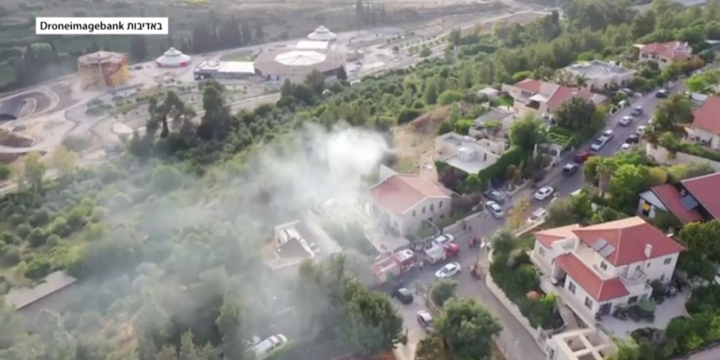
The incendiary balloons launched from Gaza on Saturday sparked one fire near a town along the southern border, on the second day of such attacks since the military last struck targets in Gaza, in response to previous arson balloon attacks on southern Israel.

Between Thursday night and early Friday morning, Israeli warplanes bombed a Hamas weapons factory in Gaza, in response to at least four fires caused by incendiary balloons on Thursday.

Thursday’s fires broke more than two weeks of quiet since the last wave of arson attacks.Advertisement

In June, arson balloons launched by Hamas operatives caused some 20 fires in Israeli communities near Gaza. Israel Defense Forces planes struck a wide range of Hamas military targets throughout the Gaza Strip, responding to the attacks in less than a day.

The response by the new government, led by Prime Minister Naftali Bennett, indicated a shift in policy from the previous one, which did not always respond to arson balloon attacks with airstrikes.

Last month’s arson balloons and counterstrikes were the first since the 11-day war that Israel fought against Gaza terror groups in May. They took place amid Israel’s decision to allow far-right activists to proceed with a flag march through the Old City of Jerusalem, which Palestinian groups branded as a provocation.

For the past three years, Palestinians in the Gaza Strip, mostly linked to Hamas and other terror groups, have launched thousands of balloon-borne incendiary and explosive devices into southern Israel, causing widespread fires and significant damage to agricultural fields, nature reserves, and private property.

Hamas has used the launching of incendiary devices to pressure Israel to move ahead with reconstruction efforts in the Strip.

Bennett, who replaced former prime minister Benjamin Netanyahu on June 13, had long urged a tougher response to arson balloons, saying in previous years that they should be treated the same as rockets, and that attacks on southern Israel should receive the same response as attacks targeting central Israel.Advertisement

In 2018, for instance, Bennett — then the education minister — called for the IDF to try to kill all those launching attack balloons from Gaza, a proposal that was opposed by then-IDF chief of staff Gadi Eisenkot.

Times of Israel staff contributed to this report.

Saturday, July 3, 2021

Israel bombs Hamas weapons factory outside the Temple Walls: Revelation 11

Illustrative: A fireball lights up the night sky above buildings near Khan Younis in southern Gaza, as IDF planes hit a Hamas site in the Palestinian enclave, on June 17, 2021. (Screen capture)

Israel bombs Hamas weapons factory in Gaza in response to arson balloons

After 2 weeks of quiet, incendiary balloons launched from Gaza start 4 fires in southern Israel, but do not cause major damage

By TOI staffToday, 1:41 am

Israeli warplanes bombed a Hamas weapons factory in the Gaza Strip early Friday in response to a wave of arson balloon attacks launched at Israel from the coastal enclave the day before, the Israel Defense Forces said.

The army said the site was used by the terror organization to develop and build weapons.

“The strike was carried out in response to the arson balloon attacks on Israeli territory. The IDF will respond with determination against all terror attempts from the Gaza Strip,” the army said.

There were no immediate reports of casualties.

The incendiary balloons launched from Gaza Thursday sparked four fires near Israeli towns along the southern border, breaking more than two weeks of quiet since the last wave of arson attacks.

Get The Times of Israel’s Daily Edition by email and never miss our top storiesBy signing up, you agree to the terms

Most of the fires were small and not dangerous, according to the Fire and Rescue Services, which said that its respondents quickly managed to gain control of the blazes in the Eshkol Regional Council before significant damage was caused.

In June, arson balloons launched by Hamas operatives caused some 20 fires in Israeli communities in the Gaza periphery. IDF planes struck a wide range of Hamas military targets throughout the Strip, responding to the attacks in less than a day.

The response by the new government led by Prime Minister Naftali Bennett indicated a shift in policy from the previous one, which did not always respond to arson balloon attacks with airstrikes, and wouldn’t do so as quickly or as forcibly, in order to avoid escalation along the southern border.Advertisement

Last month’s arson balloons and counterstrikes were the first since the 11-day war that Israel fought against Gaza terror groups in May. They took place amid Israel’s decision to allow far-right activists to proceed with flag march through the Old City of Jerusalem, which Palestinian groups branded as a provocation.

For the past three years, Palestinians in the Gaza Strip, mostly linked to Hamas and other terror groups, have launched thousands of balloon-borne incendiary and explosive devices into southern Israel, causing widespread fires and significant damage to agricultural fields, nature reserves, and private property.

Hamas has used the launching of incendiary devices in order to keep pressure on Israel to move along with reconstruction efforts in the Strip.

Bennett, who replaced Benjamin Netanyahu on June 13, had long urged a tougher response to arson balloons, saying in previous years that they should be treated the same as rockets, and that attacks on southern Israel should receive the same response as attacks targeting central Israel.

In 2018, for instance, Bennett — then the education minister — called for the IDF to try to kill all those launching attack balloons from Gaza, a proposal that was opposed by then-IDF chief of staff Gadi Eisenkot.

Media Outlet Hides the Fact that Hamas Killed Palestinian Children: Revelation 11

Media Outlet Hides the Fact that Hamas Killed Palestinian Children

A Guardian article (“‘I refuse to visit his grave’: the trauma of mothers caught in Israel-Gaza conflict,” June 30) focusing on the suffering of a Palestinian mother who lost her young child in the recent conflict doesn’t explicitly blame Israel for the boy’s death.

But, that would likely be the take-away for the casual reader:

Here are the opening paragraphs of the piece, written by Stefanie Glinski:

In the last month of her pregnancy, May al-Masri was preparing dinner when a rocket landed outside her home in northern Gaza, killing her one-year-old son, Yasser.

Masri had felt the explosion’s shockwave when the attack happened last month, but was largely unharmed. Running outside once the air had cleared, she found her husband severely wounded and her child’s body covered in blood.

With her husband in a West Bank hospital – and likely to be there for months to come – Masri gave birth to a healthy boy a few weeks later. However, the trauma of the attack, and the grief of her loss, have made it difficult for the 20-year-old to bond with or breastfeed her newborn baby.

May’s escalation of violence in the long-running Israel-Palestine conflict killed 256 Palestinians and 13 Israelis. Yasser was one of the 68 children killed in Gaza, according to the authorities there.

Though the word “rocket,” instead of bomb or airstrike, would indicate to the careful reader that the child’s tragic death was likely caused by a misfired projectile by a Gaza terrorist group, and not the IDF, it’s telling that the writer doesn’t inform readers anywhere in the article that this is the case.

In fact, in researching the boy in question, it seems almost certain that, although the journalist got some details wrong (his name is usually reported asYazan al-Masri, and he was 2, not 1) al-Masri, as noted on these pages, and by Israeli and Palestinian NGOs, wasindeed killed by a rocket fired by a terrorist group in Gaza.

Moreover, though a significantpercentage of the 4,360 rockets fired by terrorists in the Gaza Strip during the fighting fell inside Gaza, there’s been almost no coverage of that topic at The Guardian or other British media outlets.

Finally, it’s worth noting that the article was published on The Guardian’s “Global Development” page, which is funded by the Bill and Melinda Gates Foundation.

By obfuscating Hamas’ responsibility for the death of al-Masri and other Palestinian children during the war — which is consistent with the media outlet’s broader failure to hold the extremist group responsible for their prioritization of destroying Israel over the basic social and economic needs of Palestinian residents — the primary cause of the conflict and Gaza’s under-development will continue to elude readers.

Adam Levick serves co-editor of CAMERA UK — an affiliate of the Committee for Accuracy in Middle East Reporting in America (CAMERA), where a version of this article first appeared.

Friday, July 2, 2021

Here’s the Truth About Terrorist Casualties Outside the Temple Walls: Revelation 11

Here’s the Truth About Terrorist Casualties From the Gaza War

The Meir Amit Intelligence and Terrorism Information Center (ITIC) has issued its analysis of the names of the people killed in Gaza.

They have identified 234 people killed in attacks by Israel — of which 112 (48%) were positively identified as terrorists.

Sixty-three belonged to Hamas, 20 to Islamic Jihad, 25 to Fatah, two to the Popular Front for the Liberation of Palestine (PFLP), one to the Mujahedeen Brigades, and one to the Popular Resistance Committees.

Eleven more men may have been targeted as terrorists, but the ITIC could not identify any affiliation for them.

Furthermore — an additional 21 were identified as being killed by Gaza rockets.

According to the Center’s findings, 31 people were killed because they were in the same house as a targeted terrorist, and were effectively human shields for terrorists.

I believe that others were likely killed by Gaza rockets — but in general, the report is very cautious before identifying terrorists or likely victims of rocket fire.

Two of the identified terrorists were under 18 years of age; a third — who the ITIC said was 20 — had previously been identified as a child by The New York Times, and as a 12th grader by the Palestinian Ministry of Education.

Thursday, July 1, 2021

Hamas’ Human Rights Violations Outside the Temple Walls: Revelation 11

Hamas’ Human Rights Violations in the 2021 Gaza War

Hamas’ Human Rights Violations in the 2021 Gaza War

Amelia Navins, Lenny Ben-David,   June 29, 2021

Institute for Contemporary Affairs

Founded jointly with the Wechsler Family Foundation

No. 647     June 28, 2021

This article is part of the forthcoming Jerusalem Center research report: The Gaza War 2021: The Iranian and Hamas Attack on Israel.

  • As recognized by international law, Israel has the legal right to employ the force necessary to defend itself. President Biden, on May 16, 2021, “reaffirmed his strong support for Israel’s right to defend itself against rocket attacks from Hamas and other terrorist groups in Gaza.”
  • From a young age, Palestinian children are indoctrinated by the Palestinian leadership to seek death through war. For example, the daughter of a Hamas official was recorded saying, “If we die, we will die as Martyrs for the sake of Jerusalem and Al-Aqsa.” Such indoctrination is reinforced in summer camps for children and culminates in the conscription of children into military units, in direct violation of international humanitarian law.
  • In the course of the 11-day conflict, from May 10 to May 21, 2021, Hamas launched 4,300 rockets at Israeli civilians in a blatant violation of international humanitarian law, which calls to protect civilian populations during military operations. Article 25 of the 1907 Hague Regulations specifically prohibits attacks or bombardment of towns, villages, dwellings, or buildings that are undefended.
  • Hamas unapologetically uses its own civilians as human shields, unconcerned with the fatal ramifications of its actions. British Colonel Richard Kemp designated Hamas as “the first ‘army’ in history to use their own civilian populations as a primary weapon of war.” On May 12, 2021, UN Special Coordinator Tor Wennesland told the UN Security Council, “Hamas and other militants’ indiscriminate launching of rockets and mortars from highly populated civilian neighborhoods into civilian population centers in Israel violates international humanitarian law, is unacceptable, and has to stop immediately.”
  • Israel makes a concerted effort to limit civilian casualties. The IDF engages in the practice of “roof knocking” to warn civilians prior to an attack on Hamas targets. In addition, before Israeli attacks, civilians receive phone calls advising them to evacuate. Israeli drones watch from above, and attacks are permitted only after it is confirmed that the building has been evacuated.
  • Hamas demonstrates no respect for international humanitarian law designed to protect innocent civilians. Therefore, it is vital that Hamas be held accountable for its illegal actions in international forums and international courts of law. Without doing so, there will be no justice for those who have suffered from the grave human rights abuses committed by Hamas.

Rules of Law

As recognized by the international community, Israel has the legal right to defend itself under international law. When confronted with threats by Hamas to Israel’s citizens and national security, it is well within Israel’s right to employ the force necessary to defend itself.

U.S. President Joe Biden reiterated this sentiment on May 16, 2021, when he “reaffirmed his strong support for Israel’s right to defend itself against rocket attacks from Hamas and other terrorist groups in Gaza, and condemned these indiscriminate attacks against Israel.”1

During a debate on a one-sided resolution adopted by the UN Human Rights Council on May 27, 2021, several speakers said, “the indiscriminate barrage of rockets fired by Hamas and Palestinian Islamic Jihad into Israel were completely unacceptable.”2

Despite international law justifying Israel’s self-defense efforts, Israel continues to come under fire from international organizations. On March 3, 2021, the International Criminal Court, which launched a war crimes probe into the 2014 Gaza War, concluded, “The Court may exercise its criminal jurisdiction in the Situation in Palestine, and that the territorial scope of this jurisdiction extends to Gaza and the West Bank, including East Jerusalem.”3The “State of Palestine” became a member of ICC and the Assembly of States Parties in the ICC in January 2015, while Israel is not a member state.4

Promotional poster announcing registration for Gaza summer camps

The Use of Child Soldiers

One large group victimized by Hamas is Palestinian children. From a young age, Palestinian children are indoctrinated by the Palestinian leadership. Hamas-controlled media encourage young viewers to seek death through war and violence or become martyrs by sacrificing their lives for Jerusalem. Their young age and naïveté leave children vulnerable to the influence of anti-Israel and anti-Semitic language, indoctrinating them to resort to violence.

For example, the daughter of Hamas’ Ministry of Internal Affairs’ spokesman Iyad Al-Buzum, Lama, was recorded saying, “If we die, we will die as Martyrs for the sake of Jerusalem and Al-Aqsa,” insisting that Israel “will be destroyed” – evidence of the tenor of Hamas’ media campaigns.5

Hamas leader Yahya Sinwar hoisting gun-toting child
Screenshot from video showing Hamas leader Yahya Sinwar hoisting gun-toting child, the son of a “martyred” Hamas fighter.

Additionally, Palestinian leaders use social media to share videos of child fighters, encouraging other Palestinian children to follow their lead. On February 17, 2020, PA President Mahmoud Abbas’ Fatah party shared a video produced by Gaza TV Media with a child soldier speaking about his desire to “shoot Jews” and “die for Jerusalem,” encouraging followers to “share the video.”6

Hamas also uses children’s imagery to garner support for their cause, as exemplified by the viral photograph of Yahya Sinwar holding a child, the son of a dead Hamas fighter, who is holding a rifle.

Much of the indoctrination of Palestinian children takes place during summer camps run by armed groups like the al-Qassam Brigades7 and the Palestinian Islamic Jihad’s Saraya al-Quds,8 which aim to instill Islamist values and military training in children. Promotional videos and advertisements entice young children to register for these camps, culminating in the conscription of children into military units. 

Hamas teen fighter
Screenshot from a June 2021 obituary video9 of a young Hamas teen fighter who drowned. The video shows him training on an RPG, AK-47 rifle, heavy machine gun, and emerging from a tunnel.

What International Law Says

The 2007 Paris “Principles and Guidelines on Children Associated with Armed Forces or Armed Groups”10define a “child soldier” as any person below the age of 18 who has been recruited or used by an armed group in any capacity, not just a child who has taken direct action in hostilities. By this internationally accepted definition, Palestinian children in Hamas’ summer camps and those brainwashed by armed groups through other media all fit into the category of “child soldiers.”

Palestinian children at a Hamas summer camp in Gaza
Screenshot of Palestinian children at a Hamas summer camp in Gaza, June 2021.

Hamas’ indoctrination of children has fatal consequences: many Palestinian children engage in violence against Israel, which often results in casualties. Such was the case with Samah Mubarak, 16, who was killed after she attempted to stab an Israeli security officer in 2019.11 Both Nihad Raed Muhammad Waked and Fouad Marwan Khaled Waked, both 15, were killed after opening fire at IDF soldiers in 2016.12

Promotional Poster for Palestinian Child Soldier Week

Both the Use of Child Soldiers and The Indoctrination of Youth by Hamas Violate International Human Rights Law

The Rome Statute of the International Criminal Court13 stipulates:

  • Article 8(b)(xxvi) considers the conscription or enlisting of children into the armed forces a war crime.

The 1989 United Nations Convention on the Rights of the Child14 includes:

  • Articles 28 and 29, which refer to the right of the child to an education.
  • Article 36, which protects the child against all forms of exploitation.
  • Article 38(2), which prohibits children under the age of 15 from directly engaging in hostilities.
  • The 2000 Optional Protocol on the Involvement of Children in Armed Conflict “exists to strive for the promotion and protection of the rights of the child.”15
  • Article 1 prohibits the conscription of children under 18 into the armed forces.

Various international campaigns, such as UNICEF’s “Children, Not Soldiers”16and the Coalition to Save Palestinian Child Soldiers,17 were created to campaign against the use of child soldiers in conflict.

Violations of Freedom of the Press in Gaza

Hamas’ control of the media means that much of the reporting coming out of Gaza is unreliable. Some journalists in Gaza report threats by Hamas if they film certain content, such as Hamas firing rockets. [See a compilation of threats to journalists, including a Spanish journalist’s admission, “If ever we dare pointing our camera on (rocket teams) they would simply shoot at us and kill us.”18] This inability to report the news objectively contributes to an overall lack of transparency regarding events in Gaza, often leading to one-sided and misinformed reporting.

In addition to facilitating the spread of false news and promoting widespread media bias against Israel, Hamas is in violation of freedoms of the press and speech. Censorship and misinformation hide the truth, and only the occasional testimonies of journalists and activists regarding their experiences reveal the extent of the limitations to freedom of speech and freedom of the press under Hamas. 

To control the media, Hamas resorts to arbitrary arrests of journalists and activists. In April 2017, Hamas arrested 17 activists and journalists and charged them with “spreading false rumors and news through social networking sites,”19despite their denying such charges.

Gazan journalist Ahmed Said recalled that Hamas police spokesman Ayman Al Batnihi told him after his arrest that Said was “causing us many problems and inciting people. I know how to deal with people. You need to be hanged.”20

The New York Times Was Not Harassed by Hamas

Bias in the media is seen in major international news sources. On May 28, 2021, the New York Times published a front-page spread containing 65 pictures of children supposedly killed during the 2021 Gaza War. This article, clearly designed with an anti-Israel agenda, was based on misinformation, some obtained from the Hamas-controlled Gaza Health Ministry or the terrorist-affiliated NGO, Defense for Children International-Palestine.21 On May 10, 2021, at least nine of the children pictured were killed when errant Hamas rockets fell short of reaching Israel and hit Gazan civilians.22Overall, 680 Hamas and Islamic Jihad rockets fell on Gaza.23 On May 13, 2021, the IDF published a video documenting a Hamas rocket falling on Gaza.24 In addition to the children, the Gazans killed by Palestinian rocket fire included ten men and two women.25

Moreover, some of the children pictured by the Times were actually terrorist operatives. For example, Muhammad Suleiman,16, a member of Hamas’ Qassam Brigades, was killed with his father, Tsabar, a Hamas commander, on May 10, 2021.