Showing posts with label hegemony. Show all posts

Friday, August 6, 2021

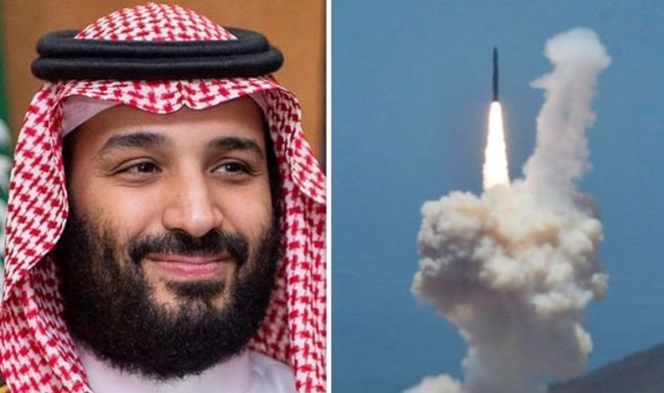
Saudi Arabia justifies going nuclear: Daniel 7

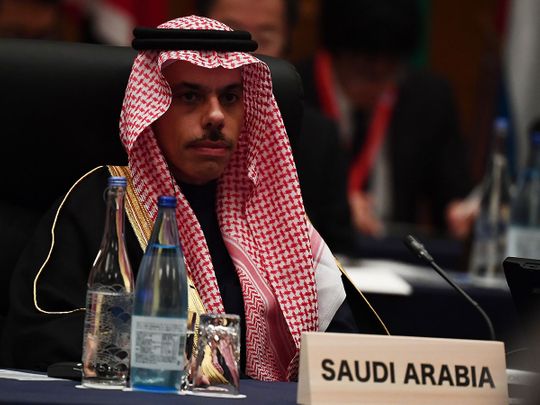
Saudi Foreign Minister Prince Faisal bin Farhan

Saudi Foreign Minister Prince Faisal bin Farhan attends the first plenary session of the G20 foreign ministers’ meeting in Nagoya, in a file picture. Image Credit: AFP

Minister: Saudi Arabia says sees an emboldened Iran around Middle East

ReutersPublished:  August 04, 2021 13:39

‘It’s endangering shipping, arming Houthis contributing to Lebanon political deadlock’ 

Washington: Saudi Arabia’s foreign minister said on Tuesday he sees an emboldened Iran acting in a negative manner around the Middle East, endangering shipping, arming Yemen’s Al Houthis and contributing to political deadlock in Lebanon.

“All around the region, Iran continues to be emboldened,” Saudi Foreign Minister Prince Faisal bin Farhan Al Saud told a US think tank in an online appearance, alluding to reports that Iranian-backed forces were believed to have seized an oil tanker off near Iran.

“Iran is extremely active in the region with its negative activity, whether it’s continuing to supply the [Al] Houthis with weapons or endangering shipping in the Arabian Gulf, which we have got reports coming in today that may indicate additional activity there,” he said. Iran, he added, had abetted the political impasse that has undermined Lebanon’s economy.

Addressing a virtual gathering of the Aspen Security Forum, he also repeated Riyadh’s stance that it could live with a “longer and stronger” version of Iran’s 2015 nuclear deal with world powers if it ensured Tehran never obtained nuclear arms know-how.

“We certainly support a deal with Iran as long as that deal ensures that Iran will not now or ever gain access to nuclear weapons technology,” he said, saying Riyadh would welcome an Iran that contributed to regional stability and prosperity.

“But that would require [Iran] engaging in the region as a state actor in a normal way…, not supporting militias, not sending weapons to armed groups, and most importantly, giving up a nuclear program which might be used…to develop nuclear weapons.”

Tuesday, May 25, 2021

The Iranian Nuclear Horn Rejects Saudi Arabia: Daniel

Iran Rejects Saudi Calls To Discuss Tehran’s Missiles And Regional Role


Iran’s Parliament Speaker Says He Hopes Israel Will Disappear ‘As A Virus’

Monday, 24 May 2021 17:31

Speaker of Iran’s parliament Mohammad Bagher Ghalibaf (Qalibaf) has told the visiting Syrian deputy speaker of parliament that he hopes Palestinians will achieve victory and the “Zionist parasite and virus will be eradicated” from the region.

Ghalibaf met Mohammad Akram al-Ajlani on the sidelines of the Fourth Extraordinary Meeting of Permanent Committee on Palestine at the Parliamentary Union of the Organization of Islamic Cooperation (OIC) Member States (PUIC) in Tehran on Monday.

Ghalibaf also told al-Ajlani that Syria is the “front line” of the “resistance”, a term used by Iran to denote its allies and proxies in the region. He expressed hope for stronger ties and cooperation with Syria that could serve “the defense and protection of Palestine,” Fars news close to the Revolutionary Guard reported.

Ghalibaf also stated: The latest victory of the Palestinian nation in fact is a big victory for the resistance front, Palestinians residing in the occupied lands, in Gaza and also for Islamic world.

Iranian officials have often called for Israel’s annihilation using different language and tone. Not only Iran does not recognize the Jewish state but it never uses the word Israel. Instead, Iranian officials and the state-controlled media use “Zionist entity” for Israel and Zionists for its Jewish population.

The Syrian deputy speaker expressed hope for a productive inter-parliamentary meeting and said his country “extends its hand in good faith” for cooperation to solve the region’s problems, especially in regard with the Palestinian people.

Sunday, April 18, 2021

How the Saudis Will Become a Nuclear Horn: Daniel 7

How the Saudis can fast-track a nuclear-weapons program

If I were them—and with Iran in mind—I would conclude that all the misbehavior that the Biden administration wants to punish me for would evaporate if I only had a nuclear-weapons program that I could use as leverage to extract whatever concessions I wish.

Eric R. Mandel(April 16, 2021 / JNS)

While the Biden administration offers sanctions relief to Tehran in exchange for temporarily limiting uranium enrichment to less than 20 percent, it is fulfilling another promise, to “recalibrate”—i.e., punish—longtime American ally Saudi Arabia. As the Saudis sustain Iranian-directed missile and drone attacks from Yemen and Iraq, the Biden administration chose to remove Patriot missile batteries from Saudi Arabia, as well as redeploy an aircraft carrier and surveillance systems away from the region. The clear message to Iran is: We will abandon our ally Saudi Arabia, your arch-enemy, if you will only rejoin the 2015 nuclear deal.

If I were the Saudis, I would conclude that all the misbehavior that the Biden administration wants to punish me for would evaporate if I only had a nuclear-weapons program that I could use as leverage to extract whatever concessions I wish from the Americans. I could do like the Iranians—threaten, intimidate and take over neighboring states—and be absolved if I would just slow down my nuclear-development program.

The Saudis might open their Rolodex and call Pakistan. According to the BBC, in 2013, “a senior NATO decision-maker … had seen intelligence reporting that nuclear weapons made in Pakistan on behalf of Saudi Arabia are now sitting ready for delivery.” This is the logical conclusion. The way we are headed, the Biden administration is about to start a nuclear arms race in the region with Egypt, the United Arab Emirates and Saudi Arabia, among others learning the lessons of the Iranian nuclear agreement. The formula is to develop a secret nuclear program, lie about it, engage in disruptive behavior and then trade some of that for a nuclear deal in your favor or foreign aid.

Saudi Arabia is no angel. The stain of the Sept. 11 terror attacks and the country’s exporting radical Sunni Islamist ideology in the late 20th century has ramifications that we live with to this day. ISIS was the worst permutation yet of radical Sunni ideology. But after 9/11, the Saudis turned a page and began to align more closely with American interests. In the 21st century, they have been a moderating and stabilizing force in Sunni Islam.

Their support of the Abraham Accords, which allowed the UAE, Bahrain, Sudan and Morocco to recognize Israel with diplomatic relations, is groundbreaking. Previous administrations did not even contemplate its possibility. If nurtured for regional stability, it is a path to suppress the Saudi need for a nuclear-weapons program. It also ended the fiction that the Israeli-Arab conflict needs to wait until the Israeli-Palestinian conflict ends. That is excellent news for those who believe Palestinian intransigence has been the roadblock to peace.

Instead of building on the game-changing Abraham Accords and pulling Saudi Arabia to the finish line by recognizing Israel, the Biden administration has chosen to make the Saudis a pariah, while begging the Iranian revolutionary regime to return to a deal that was created in their favor. As a reminder, it was created to give Iran international legitimacy for an industrial-size nuclear program within the decade. Stipulated within the nuclear agreement is Iran’s ability to buy an unlimited number of conventional weapons right now. No wonder that Supreme Leader Ayatollah Ali Khamenei allowed his minions to sign it.

Like the Obama team, the Biden administration still believes that you can appease Iran by acquiescing in their nuclear blackmail. Obama’s policy was to distance the United States from its Gulf state allies and Israel while ingratiating his administration with the Iranians, who have never ceased undermining U.S. security interests worldwide. The only good to come out of this mistaken policy is the increased willingness of the Saudis and others in the region to be friendlier to Israel as the only nation willing to take on the Iranians. This has been especially evident as Israel continues to impede Iran’s progress towards a nuclear weapon, most recently with its alleged attack this week on the Natanz enrichment facility.

Kowtowing to a third-rate military that supports terror sends a poor message to American allies around the world. The administration seems intent on settling for merely slowing down Iran’s quest for nuclear weapons while ignoring and, in effect, funding with sanctions relief the Islamic Republic’s decades-long worldwide campaign of terrorism. The false hope offered to the American people that the administration will be able to negotiate a new agreement dealing with Tehran’s malign activities after the resumption of a deal would be laughable if it were not so dangerous.

Hopefully, the administration will reflect on the potential consequences of its actions and change course to avoid turning the Middle East into a nuclear Wild West. The Saudis and the rest of the Sunni Muslim world are watching.

Dr. Eric R. Mandel is the director of MEPIN, the Middle East Political Information Network. He regularly briefs members of the U.S. Senate, House and their foreign-policy advisers. He is a columnist for “The Jerusalem Post” and a contributor to i24TV, “The Hill,” JTA and “The Forward.”

Friday, April 16, 2021

Saudi Arabia concerned about the Iranian Nuclear Horn

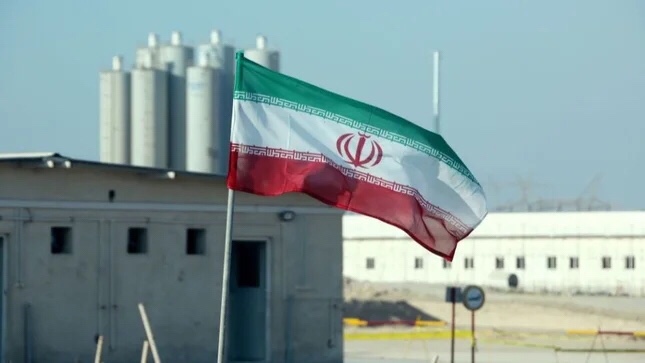
Saudi Arabia says it is concerned about Iran uranium enrichment

DUBAI (Reuters) – Saudi Arabia said on Wednesday it was concerned about Iran’s intention to start enriching uranium to 60% purity and said such a move could not be considered part of a peaceful nuclear programme.

A foreign ministry statement called on Iran to avoid escalation and engage seriously in talks with global powers about a 2015 nuclear pact. The statement also urged the international community to reach an agreement “with stronger parameters of a longer duration”.

Iran’s announcement about its plan to enrich to 60%, bringing the fissile material closer to the 90% level suitable for a nuclear bomb, came after Tehran accused Israel of sabotaging a key nuclear installation and ahead of the resumption of nuclear talks in Vienna.

Saudi Arabia and its Gulf allies, who are also worried about Iran’s ballistic missiles and regional network of proxies, had supported former U.S. President Donald Trump’s move to quit the accord in 2018 and re-impose harsh sanctions on Iran.

Iran responded by breaching several nuclear restrictions.

The Saudi foreign ministry statement on state media said any deal should “also take into consideration the deep concern of regional states over escalatory steps by Iran to destabilise regional security and stability, including its nuclear programme”.

Saudi Arabia and Iran have been locked in several proxy wars in the region, including in Yemen where the Iran-aligned Houthi movement has launched cross-border missile and drone attacks at the kingdom.

Reporting by Maher Chmaytelli; writing by Ghaida Ghantous; editing by Jason Neely, William Maclean

Saturday, April 3, 2021

Iraq Will be Challenged by the Iranian Horn: Daniel 8:3

A growing challenge for Iraq: Iran-aligned Shiite militias

BAGHDAD — It was a stark message: A convoy of masked Shiite militiamen, armed with machine guns and rocket-propelled grenades, drove openly through central Baghdad denouncing the U.S. presence in Iraq and threatening to cut off the prime minister’s ear.

The ominous display underscored the growing threat that rogue militias loyal to Tehran pose for Iraq. It came at a time when Baghdad seeks to bolster relations with its Arab neighbors and is gearing up for early elections, scheduled for October, amid a worsening economic crisis and a global pandemic.

Last week’s procession also sought to undermine Prime Minister Mustafa al-Kadhimi’s credibility, with Iran-aligned militias driving down a major highway and passing near ministries as Iraqi security forces looked on. Ahead of a new round of talks between the U.S. government and Iraq, it sent a stark warning that the militias will not be curbed.

A fourth round of so-called strategic Iraq-U.S. talks is scheduled for next week after the Iraqi government requested it, partly in response to pressure from Shiite political factions and militias loyal to Iran that have lobbied for the remaining U.S. troops to leave Iraq.

The talks, which began in June under the Trump administration, would be the first under President Joe Biden. On the agenda is an array of issues, including the presence of U.S. combat forces in the country and the issue of Iraqi militias acting outside of state authority. The discussions are meant to shape the future of the U.S.-Iraq relationship, a senior U.S. official recently said.

It is a tightrope for al-Kadhimi, who has said that bringing armed groups under state control is a goal of his administration but finds himself increasingly helpless in reining in the groups. U.S. officials have said Washington will use the meetings to clarify that U.S. forces remain in Iraq for the sole purpose of ensuring the Islamic State group “cannot reconstitute” itself — a signal that the U.S. seeks to keep the 2,500 remaining American soldiers in Iraq.

Political analyst Ihsan Alshamary said the militias’ military-style parade sought to weaken al-Kadhimi’s government and project strength.

The militiamen in the parade were mostly from a shadowy Shiite group known as Rabaallah — one of about a dozen that surfaced after the Washington-directed drone strike that killed Iranian general Qassem Soleimani and Iraqi militia leader Abu Mahdi al-Muhandis in Baghdad in January 2020.

Both Soleimani and al-Muhandis were key in commanding and controlling a wide array of Iran-backed groups operating in Iraq, and their deaths in the U.S. airstrike outraged Iraqi lawmakers, prompting them to approve a non-binding resolution to oust U.S.-led coalition forces from the country.

Since then, militias have also become increasingly unruly and disparate. Some Washington and Iraq-based observers argue the militias have splintered into new, previously unknown groups, allowing them to claim attacks under different names to mask the extent of their involvement.

Rabaallah, for instance, is believed to be a front for one of the most powerful Iran-backed factions in Iraq, which the U.S. has blamed for rocket attacks targeting the American Embassy in Baghdad and military bases that house U.S. troops.

For his part, al-Kadhimi has tried to curb the militias’ money-making border activities, including smuggling and bribery, and show his American interlocutors that he is capable of keeping domestic adversaries in check.

Badawi said the pressure from the militias will likely increase ahead of the strategic talks with the U.S. on April 7.

Saturday, March 27, 2021

The Saudi Horn Opposes the Iranian Nuclear Horn: Daniel

Saudi Arabia welcomes efforts to ensure Iran does not acquire nuclear weapon – Cabinet

Updated 18 March 2021 Arab News March 16, 2021 23:22

RIYADH: Saudi Arabia welcomed international efforts to ensure Iran does not acquire a nuclear weapon, and to make the Gulf region free of all weapons of mass destruction.

During the weekly cabinet meeting, chaired by King Salman, ministers said they supported efforts to respect the independence and sovereignty of states and not to interfere in their internal affairs.

The cabinet also called for extending the arms embargo on Iran, as “it continues to provide the Houthi militia with advanced weapons and drones that are used to terrorize Yemenis, and to target civilians and civilian objects in the Kingdom in a deliberate and systematic manner,” acting information minister Majid Al-Qasabi said.

The Kingdom supports the efforts of the UN envoy to Yemen to reach a comprehensive cease-fire and start a political process to end the war in Yemen, he added.

The ministers also stressed the importance of continuing to support efforts to solve the Syrian crisis, and find “a political path that adds to the settlement and stability of the situation, in a way that guarantees the security of its people and protects them from terrorist organizations and sectarian militias.”

The cabinet congratulated Libya on the new unity government and said the Kingdom supports efforts leading to a political solution to the crisis that achieves stability, security and development, and preserves its unity and sovereignty void from “external interference that endangers Arab regional security.”

During the meeting, the minsters were briefed on King Salman’s letter to the Kuwaiti emir Sheikh Nawaf Al-Ahmed Al-Jaber Al-Sabah that dealt with consolidating relations.

They were also briefed on talks between Crown Prince Mohammed bin Salman and Indian Prime Minister Narendra Modi and Russian Foreign Minister Sergey Lavrov, that dealt with enhancing bilateral relations, regional and international developments, and coordinating efforts to enhance security and stability.

The ministers also reviewed the latest developments in the coronavirus pandemic, including statistics and data from the national vaccination campaign, which has now expanded and launched more vaccine centers in various regions of the Kingdom.

Monday, March 22, 2021

Khamenei calls Babylon the Great’s maximum pressure policy failure

Khamenei calls US’ maximum pressure policy failure

Gopi

Tehran, March 21 (SocialNews.XYZ) Iran’s Supreme Leader Ayatollah Ali Khamenei said that Washington’s maximum pressure policy against Tehran has been a failure.

The enemies of Iran, led by the US, sought to bring the Iranian people to their knees, Khamenei said in his Iranian New Year message on Saturday.

However, the Iranian nation stood up, and the failure of the maximum pressure policy was a sign of national capability, Xinhua news agency quoted the Supreme Leader as further saying.

In response to the US withdrawal from the 2015 nuclear deal, formally known as the Joint Comprehensive Plan of Action (JCPOA) in 2018 and the re-imposition of sanctions, Iran has suspended implementing parts of its obligations under the agreement.

The incumbent US administration under President Joe Biden has said that if Iran returns to full compliance with the nuclear deal, Washington would do the same.

But Iran insisted its compliance would only take place once US sanctions were removed.

Source: IANS

Gopi Adusumilli is a Programmer. He is the editor of SocialNews.XYZ and President of AGK Fire Inc.

He enjoys designing websites, developing mobile applications and publishing news articles on current events from various authenticated news sources.

When it comes to writing he likes to write about current world politics and Indian Movies. His future plans include developing SocialNews.XYZ into a News website that has no bias or judgment towards any.

He can be reached at gopi@socialnews.xyz

Saturday, March 20, 2021

Iran Extends Her Horn Into Yemen: Daniel 8:4

Iran using Yemen’s Houthis to achieve its sinister goals

Mohamed Fahim inspects his house after it was damaged by an intercepted Houthi missile, Riyadh, Saudi Arabia, Feb. 28, 2021. (Reuters)

Not only is the Iranian regime showing no sign of backing down from its destabilizing behavior in Yemen and its support for the Houthi militia group, it is actually escalating the conflict through its proxy.

One prominent example is how the Houthis have ratcheted up their attacks on Saudi Arabia. Even US officials have acknowledged the escalation, with a senior defense official telling NBC News: “We’re certainly aware of a troubling increase in Houthi cross-border attacks from a variety of systems, including cruise missiles, ballistic missiles and UAVs (unmanned aerial vehicles).” The US, along with France, Germany, Italy and the UK, also last week condemned the “major escalation of attacks the Houthis have conducted and claimed against Saudi Arabia.”

More than 40 drones and missiles were launched at Saudi Arabia by the Houthis in February alone. The sophisticated weapons the militia group is using have most likely come from the Iranian regime. Based on a UN report released in January, there are strong signs that Tehran is a provider of weapons to the Houthis. The UN panel of experts report stated: “An increasing body of evidence suggests that individuals or entities in Iran supply significant volumes of weapons and components to the Houthis.” Iran relies mostly on the sea route to smuggle weapons to the Houthis, although several shipments bound for war-torn Yemen have been seized.

The Iranian regime has several objectives for escalating the conflict and interfering in Yemen’s domestic affairs. First of all, by sponsoring the Houthis, the regime is attempting to gain leverage over the Biden administration ahead of potential new nuclear deal negotiations.

Secondly, the modus operandi of Tehran is to control other nations through its proxies. As Massoud Jazayiri, the former deputy head of Iran’s Armed Forces, told Iran’s Tasnim News Agency early in the Yemen conflict, Tehran was ready to copy the process it adopted in Syria and use it in Yemen too.

Thirdly, Iran’s regional hegemonic ambitions direct its leaders to pursue policies that are aimed at countering the power of other state actors (mainly Saudi Arabia), weakening their strategic, economic and geopolitical significance in order to tip the Middle East’s balance of power in favor of Tehran.

While one can argue that Yemen does not pose a national security threat to Iran, it does to Saudi Arabia, since the two countries share a border.

Iran’s regional hegemonic ambitions direct its leaders to pursue policies that are aimed at countering the power of other state actors.

Dr. Majid Rafizadeh

An important dimension of Iran’s involvement in Yemen is ideological. A core pillar of its foreign policy is anchored in its so-called Islamic revolutionary principles. The key decision-maker in Iran’s foreign policy is Supreme Leader Ali Khamenei, who pursues the ideology of his predecessor, Ayatollah Khomeini. One of Khamenei’s underlying “revolutionary values” is that he views himself as the leader of the Muslim world. As a result, from Khamenei’s perspective, influencing and directing the political affairs of every Muslim country, including Yemen, is his religious and ideological duty.

Another of Iran’s revolutionary ideals is anti-Americanism. Khamenei regards his rhetoric and projection of Iran’s increasing role in Yemen’s conflict as a tactic to counterbalance America’s role in the region.

Unfortunately, the Biden administration has emboldened and empowered the Houthis by reversing the militia group’s terrorist designation. It is incumbent on White House to pursue a firmer policy toward the Houthis and to block Iran’s supply of weapons to the group.

• Dr. Majid Rafizadeh is a Harvard-educated Iranian-American political scientist. Twitter: @Dr_Rafizadeh

Disclaimer: Views expressed by writers in this section are their own and do not necessarily reflect Arab News’ point-of-view

Friday, March 19, 2021

The Iranian nuclear horn is a threat to the whole world


Iran Poses ‘Major Threat’ To Middle East And Beyond

By Ray Hanania and Arab News

March 19, 2021

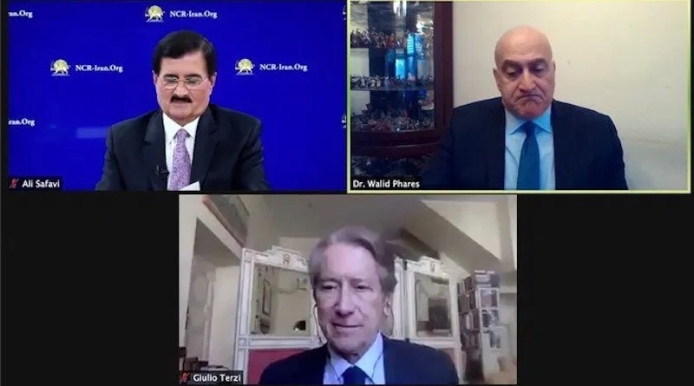
Diplomats at a press conference Thursday hosted by the National Council of Resistance of Iran (NCRI) warned that a buildup of ballistic missiles by Iran poses a “major threat.” (Screenshot)

Diplomats at a press conference Thursday hosted by the National Council of Resistance of Iran (NCRI) warned that a buildup of ballistic missiles by Iran poses a “major threat” to the Arabian Gulf, the Middle East and western nations.

NCRI Foreign Affairs Committee spokesperson Ali Safavi, former Italy Foreign Minister Giulio Terzi and Walid Phares, the co-secretary general of the Transatlantic Parliamentary Group on Counterterrorism, said the Joint Comprehensive Plan of Action (JCPOA), otherwise known as the Iran nuclear deal, has failed to curb Iran’s militant attacks through proxy militias in Yemen, Lebanon, Iraq and Syria.

The officials argued that US President Joe Biden and European leaders need to take a “tougher stand” against Tehran and its ongoing nuclear and ballistic missile program.

Phares, who is also an adviser to the anti-terrorism caucus of the US House of Representatives, said that the focus has always been on curbing Iran’s nuclear program. But the regime has also built up a formidable arsenal of ballistic missiles that are being used in “four battlegrounds” in Yemen, Lebanon, Iraq and Syria.

“The problem is that over the past five years, the regime has displayed and continues to display a behavior that would endanger Iran, its people, the Middle East, Europe, the US and the international community,” Phares said.

“Any return to the Iran deal cannot just go back to Tehran and deal with the technical matter of counting the points that Iran is doing or not doing. It has completely changed. We are talking about the geopolitics of the whole region.”

Phares said negotiations must also include a focus on “Iran’s behaviors” and its use of militant proxies in the Middle East.

“Through its militias, Iran has established control of Iraq with some exceptions,” Phares said. “It has been able to penetrate the country with its own militias. But those militias are not only controlling the government, economy and banks. They are actually engaged — as is the case in Yemen — in suppressing the population.”

In Syria, where 700,000 people have been killed and 5 million have been displaced, Phares said the Bashar Al-Assad regime is fully backed by the Iranian regime. He also noted that in Lebanon, Hezbollah has openly touted its allegiance to Tehran.

“What we are dealing with now is an Iranian regime in a quasi-occupation of four Arab countries. There cannot be a return to an Iran deal without resolving the ‘Khamenei imperialism’ that is occupying half of the Middle East,” Phares said in reference to Iranian Supreme Leader Ali Khamenei and his foreign intervention policies.

Terzi called the JCPOA, which was signed in 2015 and attempted to restrict Iran’s pursuit of a nuclear weapon, a “flawed deal” and “total failure.”

He noted that Biden wants to pursue an agreement that will end the attacks from proxy groups like the Houthis and prevent the situation from worsening.

“This is a major issue and a major question mark. We see a cautious approach but up to now, I do not consider it a weak approach by the Biden administration,” Terzi said.

“There is a willingness by Biden to deter attacks, especially against American interests. But more in general to avoid at least a scaling up of the existing aggressive strategies by proxies of the Iranian regime.”

Monday, March 15, 2021

Iranian Proxy Militias Hold the World Hostage

Iranian Proxy Militias Blackmail Iraqi Government While US Stands Idle

While the Pentagon is still dragging its feet to assign blame for the most recent rocket attacks on U.S. interests in Iraq, the Iranian proxy militias have removed any doubt, if there ever was any, of who the perpetrator was: They have stated that they will agree to stop attacking U.S. forces in Iraq if Iraqi Prime Minister Mustafa al-Kadhimi formally demands that the United States withdraws all its troops.

The Middle East Eye (MEE) news was the first to report on the issue. It seems that these Iranian-backed militias have moved from conducting local security to trying to dictate policy — Tehran’s policy — on the increasingly embattled Kadhimi government. And their coercive tactics have even spelled out a timeline: The militias gave Kadhimi a 12-month window to get this done.

But then the militias turned around and claimed that they had nothing to do with the attacks on the U.S. If in fact, this is true, then what exactly are they pledging to stop attacking?

The group of militias who have made this ultimatum to the Kadhimi government is calling itself the Coordinating Committee for the Resistance Factions and had meetings in Baghdad, Beirut, and Tehran according to MEE.

Iranian and Lebanese militia factions, as well as “an international organization operating in Iraq,” helped craft the message “one acting as a guarantor and another as a negotiator,” according to an unnamed Iraqi official.

U.S. troops and the coalition fighting the Islamic State inside of Iraq, which is what the militias are supposed to be doing as well, were invited legally into the country by the Iraqi government.

Meanwhile in Washington, the Biden administration is so intent on restarting nuclear negotiations with Iran that it will go out of its way to avoid upsetting Tehran and thus giving it all the plausible denial it desires. Last week, after a targeted missile strike in Iraq, Defense Secretary Lloyd Austin said that the U.S. will do what is necessary to “protect” troops overseas.

But the Pentagon’s statements, even after the president ordered strikes on Iranian-backed militias including Kait’ib Hezbollah (KH) and Kait’ib Sayyid al-Shuhada (KSS), have refused to mention Iran. Pentagon press secretary John Kirby’s insistence on blaming the attacks on “Shia-backed militias” rather than “Iranian-backed militias,” which is what they truly are, is quite telling.

There is no such thing as “Shia-backed militias.” And when reporters tried to question Kirby during a Pentagon press briefing, he insisted three times that the attacks were from Shia-backed militias and not Iranian proxies. Later, he grudgingly admitted that “some of the Shia-back militias have Iranian backing.”

Iran has sensed a weakness in Washington and has had its proxies step up the pressure as the U.S. is intent on restarting nuclear negotiations. In Yemen, as soon as the Biden administration cut offensive aid to the Saudi-led coalition that battles Houthi rebels, the Iranian-led Houthis opened an offensive against the oil-rich province of Marib. They’ve also conducted several airstrikes attacking military bases and civilian targets in Saudi Arabia with drones. They have assassinated an Iranian critic in Lebanon and launched the three latest rocket attacks in Iraq.

The nuclear deal will not prevent Iran from producing nuclear weapons. In fact, it will have the opposite effect and give it a clear path to one in just a few years. By ramping up the pressure on Washington, Tehran is pushing what it considers a weak, disjointed United States to offer concessions prior to resuming negotiations.

Iran’s President Hassan Rouhani said earlier this month that the nuclear deal is Iran’s best course.

“America and the world will have to kneel before our great nation and give up on their oppressive sanctions. Indeed, we have moved a step forward and achieved a great victory. That murderous butcher in America [President Donald Trump] was toppled, and the current administration has acknowledged, four times so far, that the maximum-pressure [policy] of the previous administration had been a mistake and had failed to achieve the desired result.”

The Islamic Republic is hiding behind its proxies and Washington, so eager to return to the flawed nuclear deal, is providing it the very blanket of deniability it desires. Washington has to stop this and hold Iran accountable.

Sunday, March 14, 2021

The New Shi’a Axis: Daniel 8

US & the Great South Asian Realignment

Chirayu Thakkar

For the last two decades, the US’ India-Pakistan balancing was majorly driven by an equilibrium between two lenses through which Washington looked at South Asia — ‘the Afghanistan lens’ and ‘the China/Indo-Pacific lens’. With a gradual withering away of the Afghanistan lens, the US’ South Asia approach would enter a phase of realignment leaving Pakistan in a quest for ‘strategic relevance’ to the US, writes Chirayu Thakkar

President Biden’s first diplomatic outreach — America is Back — is laden with harsh domestic realities such as irreconcilable partisanship, stark ethnic differences, pandemic riven economy, and an unprecedented assault on the democratic process, all needing urgent attention that limits US’ international focus. The White House’s limited foreign policy bandwidth, at least in the first couple of years, means retracting the US from unwarranted and intractable commitments and focusing on significant challenges — addressing China’s rise, preventing drift of European allies, limiting nuclear proliferation in the Middle East, and fostering healthy globalisation and free trade that benefits the US.

A productive American foreign policy geared up to wind down its presence in Afghanistan and poised to increase its focus on China disrupts its longstanding balance between India and Pakistan, where both rivals have enjoyed equal strategic relevance to the US if not equal benefits. For the last two decades, the US’ India-Pakistan balancing was majorly driven by an equilibrium between two lenses through which Washington observed South Asia — ‘the Afghanistan lens’ that necessitated relying on Pakistan for its support in getting out of the Afghan quagmire and ‘the China/Indo-Pacific lens’ that compelled investing in India as a strategic partner who can stand against Beijing. The equilibrium meant internecine parity to Pakistan while ensuring a steady flow of financial and military aid. With a gradual withering away of the Afghanistan lens, the US’ South Asia approach would enter a phase of realignment, leaving Pakistan in a quest for ‘strategic relevance’ to the US.

Such a realignment would prove a mixed bag for New Delhi. On the one hand, it would limit impunity enjoyed by Pakistan with the US for its state-sponsored terrorism against India by encashing its Afghanistan card. On the other, Pakistan’s desperate attempt to remain strategically relevant can include nefarious designs that can harm Indian interest and threaten regional security. As the American appetite to get out of Afghanistan grows, it is not only imperative for New Delhi to remain vigilant about its interest in Afghanistan but also keep a tab on the strategic desires of its next-door neighbour.

Quest for strategic relevance

Strategic relevance is used in the context of small states. Small states try to play a minor yet critical role in the strategy of big powers in exchange for their own security assurances and financial largesse.

Pakistan, by no means a small state, made strategic relevance to the US a cornerstone of its foreign policy since independence for nearly similar reasons. First, having the US by its side, Pakistan hoped to offset military disparity with a mighty neighbour and arch-rival India during the Cold War years. Second, it would ensure a continuous flow of civilian and military aid from the US. Third, it allowed the unelected Military Inc. of Pakistan to get away with its real power and authority, unlike military juntas of the Third World who face American censure.

Having understood the benefits, Pakistan became a member of SEATO in 1954. While the membership did not obtain security guarantees against Indian incursion similar to NATO Art. 5, it ensured US goodwill and considerable financial assistance. Pakistan continued to seize opportunities coming its way. For example, the late 1960s gave it a chance for yeoman service during the Sino-American détente. Pakistan was summoned to facilitate negotiations with Mao Zedong, which it happily delivered in the hope of American favours.

Nothing turned out to be more fortunate for Pakistan than the Soviet invasion of Afghanistan. That fortuitous event entrenched Pakistan in the US’ strategic calculus like never before. Pakistan had constant attention of the US as the escalation with the Taliban kept piling on the body count of American troops. However, it seems that the denouement of that dream is approaching, making Pakistan’s rulers in both Islamabad and Rawalpindi jittery.

Geoeconomic reset

Most recently, Pakistan’s National Security Advisor Moeed Yusuf has expressed a desire for a US-Pakistan ‘reset’ based on geoeconomics and not geopolitics. With an ostentatious candor, he says a ‘new Pakistan’ does not want the relationship to be viewed through lens A, B, or C. If Pakistan is really sincere about an economic security paradigm, it is a most-welcomed scenario for India. The market size disparity will settle the unabating chase for parity with India, which is at the root of many regional problems.

This can be a mere charm offensive by Moeed, an old DC warhorse who has spent over a decade shaping pro-Pakistan opinion and lobbying for his country through lucrative think-tank positions he perched. Or, it indicates buying time until Rawalpindi formulates a new strategy. The recent India-Pakistan ceasefire agreement feeds into this arithmetic of taking a step back.  For two reasons, the geoeconomics desire smacks of insincerity.

First, it does not square with Pakistan’s domestic realities. With soaring inflation, billions in circular debt, decreasing per capita purchasing power, incessant political wrangles, federal government’s policy command contested by the provincial, military, and baronial powers, lack of urban infrastructure and connectivity, and domestic security challenges, much leaves to be desired for Pakistan to enamor private US capital.

Second, a geoeconomics-oriented Pakistan has to give up on using terrorism as a state policy; there is no way tradesmen and terrorists can thrive together. However, any such changes would mean the military losing control over the Pakistani state, which it would never let happen. It also raises a paradox: Pakistan’s civil-military elite who have disproportionately benefited from one extraneous lens or another — most recently, Afghanistan — why wants to give that lens suddenly for a standalone relationship? Hence the reset pitch is indicative of both consternation and parallel churning that wants to recapture any potential loss of that status.

Post-Afghan anxiety

With its decision to test Shaheen-III missile that can carry nuclear weapons to Israel on Biden’s inauguration day, Rawalpindi has betrayed its desperation for relevance and attention. But what makes Pakistan so insecure about losing relevance? Apart from internecine parity and millions of dollars in aid, it is Pakistan’s elite that stands to lose the most. It is unimaginable for Pakistan’s civil-military rulers, some of whom are dual citizens having properties, businesses, and families in the US, to lose the heft. It is a personal loss too.

Further, being in the US’ good books grants complete impunity to the military leadership in domestic and international affairs. Just look at the countries that invited US incursions or wrath and their corresponding sins-Iraq for allegedly supporting Osama bin Laden and al-Qaeda, Iran for aspiring to possess nukes that can threaten Israel, Syria and Libya for dictatorships and abetting jihadists, Myanmar for military despotism, and North Korea for proliferation. But a country where all sins converge — the presence of Osama bin Laden, nuclear weapons that can reach Tel Aviv, sworn animus towards Israel, sheltering jihadists, military dictatorship, indirect control of the civilian government, human rights abuses, and proven proliferation to North Korea, Iran, and Libya — is immune from any American punitive actions because the US needs it to navigate and exit the largest quagmire it entered after Vietnam. Even the idea of losing this privilege can fret Pakistan’s generals more than anything else.

But will Afghanistan be pushed to oblivion? Is a post-Afghan world dawning in? Given the American involvement in Afghanistan today and the Taliban’s truculence, it seems that the US troops would never leave Kabul’s soil. Once, it did not appear to be true in the case of Vietnam too. Many had assumed that a small American presence in Vietnam was a fait accompli, and total disengagement was next to impossible. In a couple of years, they were proven wrong.

Moreover, mere troop presence does not mean high salience in American foreign policy. Some American 5,000 troops are still stationed in Iraq compared to around 2,500 in Afghanistan, but Afghanistan is a high-priority issue today. Even if a battalion remains hunkered down in Kabul, Afghanistan will not attract the same foreign policy focus forever. And Pakistan is aware that the expiry date is approaching.

A new access point

Pakistan is now preparing to plug itself into any issue that can continue its present perks as a ‘strategically relevant’ country. Asad Majeed Khan, the Pakistani ambassador to the US, talking to a DC-based think-tank, said that “we also represent the Iranian interest here… and we have been doing that for the last 40 years.” As Iran supplants Afghanistan as the prime focal point in the days to come, Pakistan would want to encash that issue to its advantage.

Pakistan’s pursuit of strategically relevant access point would be oriented towards west and central Asia instead of eastwards. To its east lies two behemoths — India and China, both would ensure American attention towards Pakistan without the endearing ‘strategic relevance.’ India-US partnership has acquired a new strategic hue shedding the subcontinental shibboleth of a nuclear flashpoint. Pakistan has too often rehearsed nuclear brinkmanship with the US to blunt its utility. After the abrogation of Art. 370, Imran Khan’s entreaties of ‘nuclear shadow hovering over South Asia’ in the pages of New York Times fell on deaf ears.

Similarly, its inordinate proximity with ‘iron brother’ China that proved an asset during the Cold War is now a sure liability. It is folly even to imagine another Sino-American rapprochement, and hence, Pakistan’s China bet is a sunk cost for its American calculus. In fact, anything it needs to do is to salvage its image from sin by association.

Implications for India

This situation leaves Pakistan with three possible options. First, delay the Afghan peace process and buy as much time with the current situation as possible. Although US presence limits Pakistan’s ability to assert itself in Afghanistan, it can endure the short-term pain. Such instability hurts Indian interests as it hurts others. Second, it has already increased its overtures toward Tehran, even if it means upsetting Saudi Arabia and the UAE to an extent. Pakistan is emboldened by China’s leverage brought by Beijing’s promise to pour billions in an economy stifled by sanctions. Beyond beguiling its American counterparts through the Tehran card, cutting India to size in Persia would be its another goal. India’s camaraderie with Gulf monarchs comes at the partial cost of old warmth with Iran, but New Delhi should ensure its vital energy and security interests are not hurt. Finally, Pakistan has a notorious past of fomenting troubles through non-state actors when it is desperate. India would need to stay ahead with better intelligence and border surveillance to meet potential challenges.

Pakistan is facing a crisis moment of bulk expiries in the coming days — Afghanistan, China, and nuclear cards — while its desire to milk its strategic relevance continues. New Delhi needs to closely monitor the internal strategic churning in its neighbourhood and war-game its own responses to stay ahead in the game.

The writer is Visiting Fellow at the Stimson Center in Washington DC
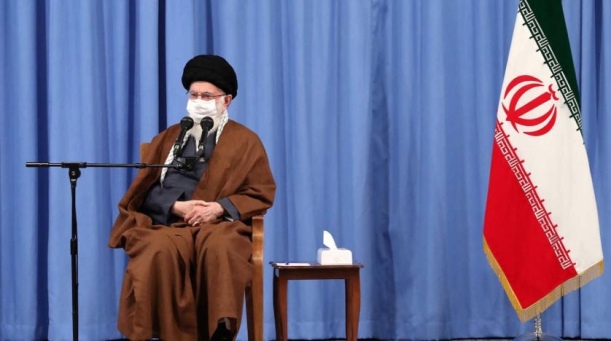
Khamenei Hits Out at Babylon the Greats Presence in Syria, Iraq

Friday, 12 March, 2021 – 07:15

Khamenei Hits Out at US Presence in Syria, Iraq

Asharq Al-Awsat

The United States repeated on Thursday it will not offer Iran unilateral incentives to attend talks about both sides resuming compliance with the 2015 Iran nuclear deal.

“We will not offer any unilateral gestures or incentives to induce the Iranians to come to the table. If the Iranians are under the impression that, absent any movement on their part to resume full compliance with the (nuclear deal), that we will offer favors or unilateral gestures, well that’s a misimpression,” State Department spokesman Ned Price told reporters.

According to Reuters, Price suggested Washington would consider each side taking steps to resume compliance with the agreement once they are at the negotiating table.

“If and only if Tehran comes to the negotiating table would we be in a position, would we be prepared, to discuss proposals that would help push both sides back on that path of mutual compliance to the deal,” he said. “Ultimately, that is where we seek to go: compliance for compliance.”

Price was referring to the deal between Iran and six major powers under which Tehran agreed to limit its nuclear program in return for the easing of US and other economic sanctions.

The deal made it harder for Iran’s atomic program to be used to produce nuclear weapons, an ambition Tehran denies. Former US President Donald Trump abandoned the deal in 2018 and restored US sanctions on Iran, prompting Tehran to begin violating the deal’s nuclear restrictions about a year later.

Saturday, March 13, 2021

Iran’s influence on the Shi’a Horn: Daniel 8


Iran’s influence on the chaos in Iraq and Syria

Nakul Suresh

Earlier this year on Feb. 15, a series of rockets struck the Iraqi city of Erbil. Some of these rockets directly hit the U.S.-led coalition base near the Erbil International Airport, while others hit the residential surroundings. Erbil is the capital of the semi-autonomous Kurdish region of Iraq. Since Iraqi Kurdistan has been a relatively safe and stable region for the past few years, this attack was unusual. The casualties included two killed and thirteen injured; no Americans soldiers were killed in these attacks.

In response to the attack in Erbil, the Biden administration authorized airstrikes on “Iranian backed” militant groups in Eastern Syria on Feb. 25. According to the Syrian Observatory for Human Rights, the airstrikes killed at least 22 people.

NBC’s Chief White House correspondent, Kristen Welker, claimed “the administration wanted to send a strong message to Iran, attacks like those last week against American assets will not be tolerated.” In addition, she claimed the attacks were meant to be “proportionate and targeted, which basically means it was aimed at avoiding escalation.” Furthermore, she reiterated that the administration’s intent was to display strength, despite being open to discourse on renegotiating the Iran Nuclear Deal.

However, who are these “Iranian backed” militant groups? The group that claimed responsibility for the attack in Erbil is called Saraya Awliya al-Dam. According to an NBC News article, this obscure Iraqi militant group is apparently “a front organization created by the main Shiite militias in Iraq.” Since Iran is a powerful Shiite-Muslim power in the region, the United States presumed Iran was behind the attack in Erbil. As a consequence, other Shiite paramilitary groups in Eastern Syria were attacked. Iran and other Middle Eastern countries condemned the military action taken by the Biden administration, as they were viewed as an infringement of Syrian sovereignty.

When ISIL was still an eminent threat in the region, the same Shiite paramilitary groups known as the Popular Mobilization Forces, aided the US in stabilizing the region. Now that ISIL is essentially wiped out, these Iraqi Shiite forces do not see a place for the United States in the region.

In addition, the US also recently carried out a swift operation to take out Iran’s most powerful general, Qasem Soleimani. He was assassinated through a drone strike in Baghdad, Iraq. Soleimani was considered the second most powerful political figure in Iran, equivalent to Vice Presidential status. As a result, this further caused resentment amongst the Iranians and Iraqis toward the US.

The unfortunate reality is that countries like Syria and Iraq are victims of proxy wars, where greater powers like the US and Iran try to exert their influence. Syria has a Shiite government led by Bashar Al-Assad, while Iraq has a Shiite majority population. Therefore, Iran utilizes its cultural ties to expand its influence on the region. On the other hand, Saudi Arabia, Israel and the United States have a common goal in stifling Iran’s power. The question is whether to harm them economically or prevent them from developing nuclear weapons.

Moreover, the controversial Iran Nuclear Deal was viewed as an achievement of peace by some, and a catastrophe by others. The deal ensured Iran would stop enriching uranium, curbing its nuclear program. As a result, some viewed this policy as progress towards creating a safer world. This also meant that Iran’s economy would prosper due to previous sanctions being lifted. Those who viewed the deal poorly claimed a more prosperous Iran could further exert its influence around the region.

The unstable relationship and lack of diplomacy between the United States and Iran has created palpable tension in the Middle East. Consequently, this gives the American Military-Industrial Complex the justification to commit violence in the region in the name of protecting American interests. This extremely well-funded, hawkish military establishment tends to fearmonger Americans into believing war is necessary. For example, the war in Iraq was justified due to the country’s supposed weapons of mass destruction, which never existed in the first place. Similarly, will the ambiguous label “Iran backed” always warrant immediate military action?

All in all, will this administration continue to take swift and decisive military action against any perceived threat or proceed with caution in order to bolster diplomacy?

Wednesday, March 10, 2021

The Shi’a arc of crisis: Daniel 8

The Middle East’s arc of crisis

The Iranian regime’s dramatic showcasing of the apparent ebb and flow of its nuclear project is a red herring.

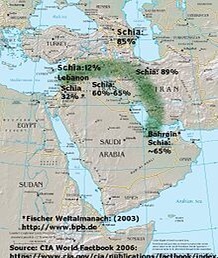
The Shiite Crescent is an imagined geopolitical entity composed of Bahrain, Iran, Iraq, Syria and Lebanon. These countries are home to the majority of the Shiite population of the Middle East. (Afghanistan and Azerbaijan also have sizable Shiite populations outside the region, while the Houthis in Yemen are distant cousins of the Shiites.) The five countries are arranged on the map in a continuous curve that stretches from Bahrain in the southeast to Lebanon in the southwest. That curve has been called the Shiite Crescent.

Follow Israel Hayom on Facebook and Twitter

While the term was reportedly coined by King Abdullah II of Jordan in the early 2000s to refer to the Iranian regime’s interference in Iraq, similar concepts have been in existence in the intellectual and political parlance of the region since at least the 1960s. At that time, the Iranian Islamists embarked upon a large-scale and wide-ranging ideological armed struggle to create a transnational Islamist geopolitical super-unit – a Shiite empire – out of the Shiite-majority nations of the Middle East, with Iran as the empire’s beating heart.

Syria takes up a significant portion of the curve, making it the Shiite Crescent’s most strategic point. If that country is lost to Iran, it would devastate the regime’s plans for the Crescent. Not only would Syria, a Sunni-majority nation ruled by a Shiite/Alawite minority, be snatched from the Shiite Islamists, but the lifeline supporting Hezbollah in Lebanon would be severed.

As a consequence, the Iranian regime would lose its “land border” with Israel, which it effectively exploits to pressure and harass the Jewish state. It would also lose access to many strategic sites on the Mediterranean and consequently to the jihadi groups in the Gaza Strip. A break in the Shiite Crescent would affect the hegemony of the Shiite camp in the Middle East and would likely translate into a radical shift in the balance of power.

It is therefore of the utmost importance to the Islamic Republic that it maintain the status quo in the form of frozen conflicts in the region – particularly in Syria – on the pretext of fending off ISIS and al-Qaida. It was specifically to maintain the territorial integrity of the Shiite Crescent that the Iranian regime, which finally (if begrudgingly) agreed in 2015 to put a temporary lid on its nuclear project, has been fighting tooth and nail to keep Syria inside its zone of influence.

The regime is well aware that it can revive its nuclear ambitions whenever the international climate is favorable toward such a move (i.e., when there is a Democrat in the White House), but it will be extremely hard, if not downright impossible, for it to regain a lost sphere of influence.

The year 2015 was not the first time the Iranian regime paused its nuclear-weapons project only to push it forward later. Using North Korea as a model, the regime began to seriously consider going nuclear as a safeguard against the West in the mid-1990s. When US President George W. Bush invaded Iraq and toppled the Baathist regime of Saddam Hussein, the Islamists in Iran, already named by Bush as part of the so-called “Axis of Evil,” realized that they could be the next target of his War on Terror.

As a result, they put an immediate halt to their nuclear project. As soon as the American presence in Iraq started to dwindle, however – first under Bush and then under Barack Obama – the centrifuges were activated once again in Iran, this time much faster than before. As recent International Atomic Energy Agency reports clearly demonstrate, the 2015 nuclear deal that many in the West are determined to revive has utterly failed to stem the Islamist regime’s nuclear ambitions.

But the twist in this game of cat and mouse is that the Islamist regime’s dramatic showcasing of the apparent ebb and flow of its nuclear project is a red herring. With the West’s attention focused on the nuclear issue, the regime has quietly and steadily expanded the Middle East’s arc of crisis via terrorism, sectarianism, para-militarism and conventional warfare. And that is where Syria comes in.

The strategic importance of Syria for the Iranian regime is such that Mehdi Taeb, the Supreme Leader’s Special Envoy to the Revolutionary Guards, called it the “35th province of Iran.” He added that protecting Syria was more important than protecting Khuzestan, the oil-rich province in southwestern Iran that was a major theater of conflict during the Iran-Iraq War (1980–1988).

There is another reason why the preservation of the Shiite Crescent is crucial for the regime: its standing in Iran. Here, the regime’s peculiar Islamist ideology must be taken into account. Tehran’s regional imperialism is in many ways a projection of its domestic totalitarianism. Indeed, they feed upon one another.

The classic forms of imperialism that had their roots in Western democracies did not generally burden their mother nations with the unsavory aspects of imperialism; that is, Western imperialists could commit atrocities overseas, while democracy flourished at home.

Subscribe to Israel Hayom’s daily newsletter and never miss our top stories!

The Islamist regime of Iran, on the other hand, is a totalitarian imperialist power in the vein of the former Soviet Union and Nazi Germany. It projects its oppressive ideology across all spheres of influence, both at home and abroad. In fact, according to historical evidence, the regime is at its most cruel domestically when it is strongest overseas.

As such, if the regime is pushed out of the region, with the loss of its regional influence and ability to mobilize sectarian and proxy forces, it is more likely to collapse at home in the face of domestic resistance by millions of disaffected citizens. Dismantling the Shiite Crescent is a vital first step toward the establishment of peace, stability and democracy in the Middle East.

Featured on JNS.org, this article was first published by the Begin-Sadat Center for Strategic Studies.

Tuesday, March 9, 2021

The Shiite Horns: The Middle East’s Arc of Crisis Daniel 8

The Shiite Crescent: The Middle East’s Arc of Crisis

Dr. Reza Parchizadeh

March 7, 2021

The Shiite Crescent, public domain image by CIA World Fact Book via Wikipedia

BESA Center Perspectives Paper No. 1,952, March 7, 2021

EXECUTIVE SUMMARY: Iran’s hegemonic ambitions depend on an unbroken Shiite arc from Bahrain to Lebanon. It is for this reason that the Islamist regime considers the maintenance of its influence in Syria to be a top priority. If Iran is to be prevented from projecting its totalitarian imperialism throughout the region and beyond, it will have to lose its foothold in Syria.

The Shiite Crescent is an imagined geopolitical entity composed of Bahrain, Iran, Iraq, Syria, and Lebanon. These countries are home to the majority of the Shiite population of the Middle East. (Afghanistan and Azerbaijan also have sizable Shiite populations outside the region, while the Houthis in Yemen are distant cousins of the Shiites.) The five countries are arranged on the map in a continuous curve that stretches from Bahrain in the southeast to Lebanon in the southwest. That curve has been called the Shiite Crescent.

While the term was reportedly coined by King Abdullah II of Jordan in the early 2000s to refer to the Iranian regime’s interference in Iraq, similar concepts have been in existence in the intellectual and political parlance of the region since at least the 1960s. At that time, the Iranian Islamists embarked upon a large-scale and wide-ranging ideological armed struggle to create a transnational Islamist geopolitical super-unit—a Shiite empire—out of the Shiite-majority nations of the Middle East with Iran as the empire’s beating heart.

Syria takes up a significant portion of the curve, making it the Shiite Crescent’s most strategic point. If that country is lost to Iran, it would devastate the regime’s plans for the Crescent. Not only would Syria, a Sunni-majority nation ruled by a Shiite/Alawite minority, be snatched from the Shiite Islamists, but the lifeline supporting Hezbollah in Lebanon would be severed. As a consequence, the Iranian regime would lose its “land border” with Israel, which it effectively exploits to pressure and harass the Jewish State. It would also lose access to many strategic sites on the Mediterranean and consequently to the jihadi groups in the Gaza Strip. A break in the Shiite Crescent would affect the hegemony of the Shiite camp in the Middle East and would likely translate into a radical shift in the balance of power.

It is therefore of the utmost importance to the Islamic Republic that it maintain the status quo in the form of frozen conflicts in the region—particularly in Syria—on the pretext of fending off ISIS and al-Qaeda. It was specifically to maintain the territorial integrity of the Shiite Crescent that the Iranian regime, which finally (if begrudgingly) agreed in 2015 to put a temporary lid on its nuclear project, has been fighting tooth and nail to keep Syria inside its zone of influence. The regime is well aware that it can revive its nuclear ambitions whenever the international climate is favorable toward such a move (i.e., when there is a Democrat in the White House), but it will be extremely hard if not downright impossible for it to regain a lost sphere of influence.

The year 2015 was not the first time the Iranian regime paused its nuclear weapons project only to push it forward later. Using North Korea as a model, the regime began to seriously consider going nuclear as a safeguard against the West in the mid-1990s. When President George W. Bush invaded Iraq and toppled the Baathist regime of Saddam Hussein, the Islamists in Iran, already named by Bush as part of the so-called “Axis of Evil,” realized they could be the next target of his War on Terror. As a result, they put an immediate halt to their nuclear project. As soon as the American presence in Iraq started to dwindle, however—first under Bush and then under Barack Obama—the centrifuges were activated once again in Iran, this time much faster than before. As recent IAEA reports clearly demonstrate, the 2015 nuclear deal that many in the West are determined to revive has utterly failed to stem the Islamist regime’s nuclear ambitions.

But the twist in this game of cat and mouse is that the Islamist regime’s dramatic showcasing of the apparent ebb and flow of its nuclear project is a red herring. With the West’s attention focused on the nuclear issue, the regime has quietly and steadily expanded the Middle East’s arc of crisis via terrorism, sectarianism, paramilitarism, and conventional warfare. And that is where Syria comes in.

The strategic importance of Syria for the Iranian regime is such that Mehdi Taeb, the Supreme Leader’s Special Envoy to the Revolutionary Guards, called it the “35th province of Iran.” He added that protecting Syria was more important than protecting Khuzestan, the oil-rich province in southwestern Iran that was a major theater of conflict during the Iran-Iraq War (1980–1988).

There is another reason why the preservation of the Shiite Crescent is crucial for the regime: its standing in Iran. Here, the regime’s peculiar Islamist ideology must be taken into account. Tehran’s regional imperialism is in many ways a projection of its domestic totalitarianism. Indeed, they feed upon one another.

The classic forms of imperialism that had their roots in Western democracies did not generally burden their mother nations with the unsavory aspects of imperialism. That is, Western imperialists could commit atrocities overseas while democracy flourished at home.

The Islamist regime of Iran, on the other hand, is a totalitarian imperialist power in the vein of the former Soviet Union and Nazi Germany. It projects its oppressive ideology across all spheres of influence, both at home or abroad. In fact, according to historical evidence, the regime is at its most cruel domestically when it is strongest overseas.

As such, if the regime is pushed out of the region, with the loss of its regional influence and ability to mobilize sectarian and proxy forces, it is more likely to collapse at home in the face of domestic resistance by millions of disaffected citizens. Dismantling the Shiite Crescent is a vital first step toward the establishment of peace, stability, and democracy in the Middle East.

View PDF

Dr. Reza Parchizadeh is a political theorist, historian, and senior analyst. He can be reached on Twitter at @rezaparchizadeh and at https://iup.academia.edu/RezaParchizadeh.