Special Report - In modernising nuclear arsenal, U.S. stokes new arms race | Article [AMP] | Reuters
Scot Paltrow
WASHINGTON (Reuters) - President Barack Obama rode into office in 2009 with promises to work toward a nuclear-free world. His vow helped win him the Nobel Peace Prize that year.
The next year, while warning that Washington would retain the ability to retaliate against a nuclear strike, he promised that America would develop no new types of atomic weapons. Within 16 months of his inauguration, the United States and Russia negotiated the New Strategic Arms Reduction Treaty, known as New START, meant to build trust and cut the risk of nuclear war. It limited each side to what the treaty counts as 1,550 strategic nuclear warheads.
By the time Obama left office in January 2017, the risk of Armageddon hadn’t receded. Instead, Washington was well along in a modernization programme that is making nearly all of its nuclear weapons more accurate and deadly.
And Russia was doing the same: Its weapons badly degraded from neglect after the Cold War, Moscow had begun its own modernization years earlier under President Vladimir Putin. It built new, more powerful ICBMs, and developed a series of tactical nuclear weapons.
The United States under Obama transformed its main hydrogen bomb into a guided smart weapon, made its submarine-launched nuclear missiles five times more accurate, and gave its land-based long-range missiles so many added features that the Air Force in 2012 described them as “basically new.” To deliver these more lethal weapons, military contractors are building fleets of new heavy bombers and submarines.
President Donald Trump has worked hard to undo much of Obama’s legacy, but he has embraced the modernization programme enthusiastically. Trump has ordered the Defence Department to complete a review of the U.S. nuclear arsenal by the end of this year.
Reuters reported in February that in a phone conversation with Russian President Vladimir Putin, Trump denounced the New START treaty and rejected Putin’s suggestion that talks begin about extending it once it expires in 2021.
Some former senior U.S. government officials, legislators and arms-control specialists – many of whom once backed a strong nuclear arsenal -- are now warning that the modernization push poses grave dangers.
“The idea that we could somehow fine tune a nuclear conflict is really dangerous thinking,” says Kingston Reif, director of disarmament and threat reduction policy at the Arms Control Association, a Washington-based think tank.
One leader of this group, William Perry, who served as defence secretary under President Bill Clinton, said recently in a Q&A on YouTube that “the danger of a nuclear catastrophe today is greater than it was during the Cold War.”
Perry told Reuters that both the United States and Russia have upgraded their arsenals in ways that make the use of nuclear weapons likelier. The U.S. upgrade, he said, has occurred almost exclusively behind closed doors. “It is happening without any basic public discussion,” he said. “We’re just doing it.”
The cause of arms control got a publicity boost in October when the International Campaign to Abolish Nuclear Weapons, a Geneva organization, won the Nobel Peace Prize for its role in getting the United Nations General Assembly in July to adopt a nuclear prohibition treaty. The United States, Russia and other nuclear powers boycotted the treaty negotiations.
The U.S. modernization programme has many supporters in addition to Trump, however. There is little or no pressure in Congress to scale it back. Backers argue that for the most part the United States is merely tweaking old weapons, not developing new ones.
Some say that beefed up weapons are a more effective deterrent, reducing the chance of war. Cherry Murray served until January as a top official at the Energy Department, which runs the U.S. warhead inventory. She said the reduction in nuclear weapon stockpiles under New START makes it imperative that Washington improve its arsenal.
During the Cold War, Murray said in an interview, the United States had so many missiles that if one didn’t work, the military could simply discard it. With the new limit of 1,550 warheads, every one counts, she said.
“When you get down to that number we better make sure they work,” she said. “And we better make sure our adversaries believe they work.”
An Obama spokesman said the former president would not comment for this story. The Russian embassy in Washington did not respond to multiple requests for comment.
Asked about Trump’s view on the modernization programme, a spokeswoman for the White House National Security Council said the president’s goal is to create a nuclear force that is “modern, robust, flexible, resilient, ready, and appropriately tailored to deter 21st-century threats and reassure our allies.”
As defence secretary under Obama, Leon Panetta backed modernization. Now he questions the price tag.
“We are in a new chapter of the Cold War with Putin,” he told Reuters in an interview, blaming the struggle’s resumption on the Russian president. Panetta says he doubts the United States will be able to fund the modernization programme. “We have defence, entitlements and taxes to deal with at the same time there are record deficits,” he said.
New START is leading to significant reductions in the two rival arsenals, a process that began with the disintegration of the USSR. But reduced numbers do not necessarily mean reduced danger.
In 1990, the year before the Soviet Union collapsed, the United States had more than 12,000 warheads and the Soviets just over 11,000, an August 2017 Congressional Research Service report says. Soon the two countries made precipitous cuts. The 1991 START treaty limited each to somewhat more than 6,000 warheads. By 2009 the number was down to about 2,200 deployed warheads.
Tom Collina, policy director of the Ploughshares Fund, an arms control group, says that both Moscow and Washington are on track to meet the 1,550 limit by the treaty’s 2018 deadline. The treaty, however, allows for fudging.
At Russia’s insistence, each bomber is counted as a single warhead, no matter how many nuclear bombs it carries or has ready for use. As a result, the real limit for each side is about 2,000. Collina says the United States currently has 1,740 deployed warheads, and Russia is believed to have a similar number. Each side also has thousands of warheads in storage and retired bombs and missiles awaiting dismantlement.
The declining inventories mask the technological improvements the two sides are making. There is a new arms race, based this time not on number of weapons but on increasing lethality, says William Potter, director of nonproliferation studies at the Middlebury Institute of International Studies in Monterey, California.
“We are in a situation in which technological advances are outstripping arms control,” Potter says.
One example of an old weapon transformed into a more dangerous new one is America’s main hydrogen bomb. The Air Force has deployed the B61 bomb on heavy bombers since the mid-1960s. Until recently, the B61 was an old-fashioned gravity bomb, dropped by a plane and free-falling to its target.
The new B61 is the most expensive bomb ever built. At $20.8 million per bomb, each costs nearly one-third more than its weight in 24 karat gold. The estimated price of the planned total of 480 bombs is almost $10 billion.
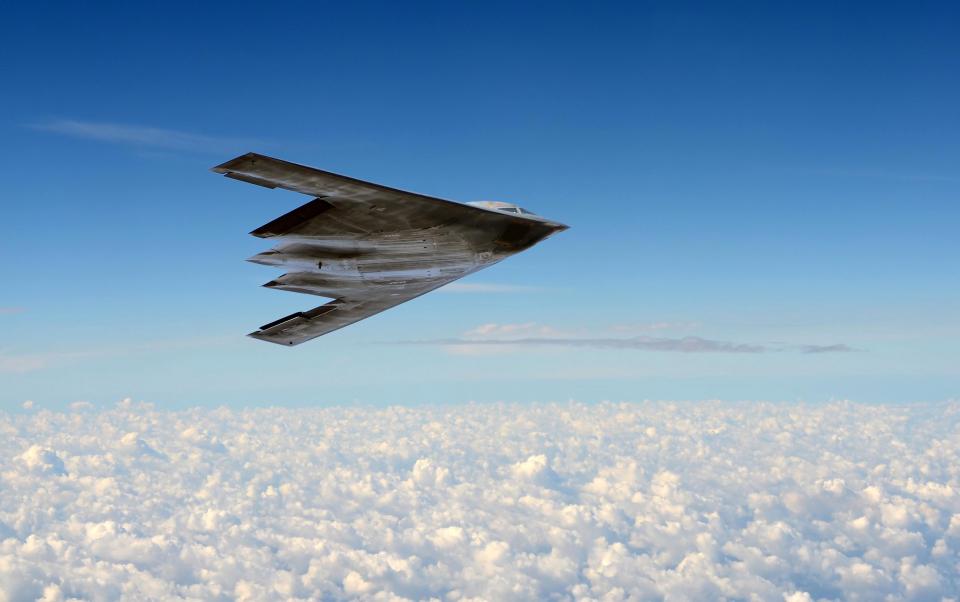
Congress also has approved initial funding of $1.8 billion to build a completely new weapon, the “Long Range Stand-Off” cruise missile, at an estimated $17 billion total cost. The cruise missiles, too, will be launched from aircraft. But in contrast to stealth bombers dropping the new B61s directly over land, the cruise missiles will let bombers fly far out of range of enemy air defences and fire the missiles deep into enemy territory.
Obama’s nuclear modernization began diverging from his original vision early on, when Republican senators resisted his arms reduction strategy.
Former White House officials say Obama was determined to get the New START treaty ratified quickly. Aside from hoping to ratchet down nuclear tensions, he considered it vital to assure continued Russian cooperation in talks taking place at the time with Iran over that country’s nuclear programme. Obama also feared that if the Senate didn’t act by the end of its 2010 session, the accord might never pass, according to Gary Samore, who served four years as the Obama White House’s coordinator for arms control and weapons of mass destruction.
Obama hit resistance from then-Senator Jon Kyl, a Republican from Arizona. Kyl, the Senate’s minority whip, assembled enough Republicans to kill the treaty.
In e-mailed answers to questions, Kyl said he opposed the accord because Russia “cheats” on treaties and the United States lacks the means to verify and enforce compliance. Moscow’s deployment of new tactical weapons since 2014, he said, was a violation of the 1987 Intermediate Range Nuclear Forces Treaty. (Russia denies violating the treaty.) Kyl also faulted New START for omitting Russia’s large arsenal of tactical nuclear weapons for use on battlefields, a subject the Russians have refused to discuss.
But Kyl proved willing to let the treaty pass – for a price. In exchange for ratification, the White House would have to agree to massive modernization of the remaining U.S. weapons. Obama agreed, and the Senate passed the treaty on the last day of the 2010 session.
Samore, the former White House arms control coordinator, says Obama did not oppose taking steps to refurbish superannuated weapons. He just did not plan the costly decision to do it all at once, Samore said.
The upshot, according to former Obama advisers and outside arms-control specialists, is that the modernization destabilised the U.S.-Russia status quo, setting off a new arms race. Jon Wolfsthal, a former top advisor to Obama on arms control, said it is possible to have potentially devastating arms race even with a relatively small number of weapons.
The New START treaty limits the number of warheads and launch vehicles. But it says nothing about the design of the “delivery” methods – land- and submarine-based ballistic missiles, hydrogen bombs and cruise missiles. Thus both sides are increasing exponentially the killing power of these weapons, upgrading the delivery vehicles so that they are bigger, more accurate and equipped with dangerous new features – without increasing the number of warheads or vehicles.
The United States, according to an article in the March 1 issue of the Bulletin of the Atomic Scientists, has roughly tripled the “killing power” of its existing ballistic missile force.
The article’s lead author, Hans Kristensen, director of the Federation of American Scientists’ Nuclear Information Project, said in an e-mail that he knows of no comparable estimate for Russia. He noted, however, that Russia is making its own extensive enhancements, including larger missiles and new launch vehicles. He said Russia also is devoting much effort to countering U.S. missile defence systems.
The U.S. modernization programme “has implemented revolutionary new technologies that will vastly increase the targeting capability of the U.S. ballistic missile arsenal,” Kristensen wrote in the article. “This increase in capability is astonishing.”
Kristensen says the most alarming change is America’s newly refitted submarine-launched Trident II missiles. These have new “fuzing” devices, which use sensors to tell the warheads when to detonate. Kristensen says that for decades, Tridents had inaccurate fuzes. The missiles could make a direct hit on only about 20 percent of targets. With the new fuzes, “they all do,” he says.
Under New START, 14 of America’s Ohio Class subs carry 20 Tridents. Each Trident can be loaded with up to 12 warheads. (The United States has four additional Ohio subs that carry only conventional weapons.) The Trident II’s official range is 7,456 miles, nearly one-third the Earth’s circumference. Outside experts say the real range almost certainly is greater. Each of its main type of warhead produces a 475-kiloton blast, almost 32 times that of Hiroshima.
Russia is building new ground-based missiles, including a super ICBM, the RS-28 Sarmat. The Russian missile has room for at least 10 warheads that can be aimed at separate targets. Russian state media has said that the missile could destroy areas as large as Texas or France. U.S. analysts say this is unlikely, but the weapon is nonetheless devastatingly powerful.
Russia’s new ICBMs have room to add additional warheads, in case the New START treaty expires or either side abrogates it. The United States by its own decision currently has only a single warhead in each of its ICBMS, but these too have room for more.
Russia has phased in a more accurate submarine-launched missile, the RSM-56 Bulava. While it is less precise than the new U.S. Tridents, it marks a significant improvement in reliability and accuracy over Russia’s previous sub-based missiles.
A Russian military official in 2015 disclosed a sort of doomsday weapon, taking the idea of a “dirty bomb” to a new level. Many U.S. analysts believe the disclosure was a bluff; others say they believe the weapon has been deployed.
The purported device is an unmanned submarine drone, able to cruise at a fast 56 knots and travel 6,200 miles. The concept of a dirty bomb, never used to date, is that terrorists would spread harmful radioactive material by detonating a conventional explosive such as dynamite. In the case of the Russian drone, a big amount of deadly radioactive material would be dispersed by a nuclear bomb.
The bomb would be heavily “salted” with radioactive cobalt, which emits deadly gamma rays for years. The explosion and wind would spread the cobalt for hundreds of miles, making much of the U.S. East Coast uninhabitable.
A documentary shown on Russian state TV said the drone is meant to create “areas of wide radioactive contamination that would be unsuitable for military, economic, or other activity for long periods of time.”
Reif of the Arms Control Association says that even if the concept is only on the drawing board, the device represents “really outlandish thinking” by the Russian government. “It makes no sense strategically,” he said, “and reflects a really egregiously twisted conception about what’s necessary for nuclear deterrence.”
(Reported by Scot Paltrow; edited by Michael Williams)
The next year, while warning that Washington would retain the ability to retaliate against a nuclear strike, he promised that America would develop no new types of atomic weapons. Within 16 months of his inauguration, the United States and Russia negotiated the New Strategic Arms Reduction Treaty, known as New START, meant to build trust and cut the risk of nuclear war. It limited each side to what the treaty counts as 1,550 strategic nuclear warheads.
By the time Obama left office in January 2017, the risk of Armageddon hadn’t receded. Instead, Washington was well along in a modernization programme that is making nearly all of its nuclear weapons more accurate and deadly.
And Russia was doing the same: Its weapons badly degraded from neglect after the Cold War, Moscow had begun its own modernization years earlier under President Vladimir Putin. It built new, more powerful ICBMs, and developed a series of tactical nuclear weapons.
The United States under Obama transformed its main hydrogen bomb into a guided smart weapon, made its submarine-launched nuclear missiles five times more accurate, and gave its land-based long-range missiles so many added features that the Air Force in 2012 described them as “basically new.” To deliver these more lethal weapons, military contractors are building fleets of new heavy bombers and submarines.
President Donald Trump has worked hard to undo much of Obama’s legacy, but he has embraced the modernization programme enthusiastically. Trump has ordered the Defence Department to complete a review of the U.S. nuclear arsenal by the end of this year.
Reuters reported in February that in a phone conversation with Russian President Vladimir Putin, Trump denounced the New START treaty and rejected Putin’s suggestion that talks begin about extending it once it expires in 2021.
Some former senior U.S. government officials, legislators and arms-control specialists – many of whom once backed a strong nuclear arsenal -- are now warning that the modernization push poses grave dangers.
"REALLY DANGEROUS THINKING"
They argue that the upgrades contradict the rationales for New START - to ratchet down the level of mistrust and reduce risk of intentional or accidental nuclear war. The latest improvements, they say, make the U.S. and Russian arsenals both more destructive and more tempting to deploy. The United States, for instance, has a “dial down” bomb that can be adjusted to act like a tactical weapon, and others are planned.“The idea that we could somehow fine tune a nuclear conflict is really dangerous thinking,” says Kingston Reif, director of disarmament and threat reduction policy at the Arms Control Association, a Washington-based think tank.
One leader of this group, William Perry, who served as defence secretary under President Bill Clinton, said recently in a Q&A on YouTube that “the danger of a nuclear catastrophe today is greater than it was during the Cold War.”
Perry told Reuters that both the United States and Russia have upgraded their arsenals in ways that make the use of nuclear weapons likelier. The U.S. upgrade, he said, has occurred almost exclusively behind closed doors. “It is happening without any basic public discussion,” he said. “We’re just doing it.”
The cause of arms control got a publicity boost in October when the International Campaign to Abolish Nuclear Weapons, a Geneva organization, won the Nobel Peace Prize for its role in getting the United Nations General Assembly in July to adopt a nuclear prohibition treaty. The United States, Russia and other nuclear powers boycotted the treaty negotiations.
The U.S. modernization programme has many supporters in addition to Trump, however. There is little or no pressure in Congress to scale it back. Backers argue that for the most part the United States is merely tweaking old weapons, not developing new ones.
Some say that beefed up weapons are a more effective deterrent, reducing the chance of war. Cherry Murray served until January as a top official at the Energy Department, which runs the U.S. warhead inventory. She said the reduction in nuclear weapon stockpiles under New START makes it imperative that Washington improve its arsenal.
During the Cold War, Murray said in an interview, the United States had so many missiles that if one didn’t work, the military could simply discard it. With the new limit of 1,550 warheads, every one counts, she said.
“When you get down to that number we better make sure they work,” she said. “And we better make sure our adversaries believe they work.”
An Obama spokesman said the former president would not comment for this story. The Russian embassy in Washington did not respond to multiple requests for comment.
Asked about Trump’s view on the modernization programme, a spokeswoman for the White House National Security Council said the president’s goal is to create a nuclear force that is “modern, robust, flexible, resilient, ready, and appropriately tailored to deter 21st-century threats and reassure our allies.”
A BUDGET BUSTER?
The U.S. modernization effort is not coming cheap. This year the Congressional Budget Office estimated the programme will cost at least $1.25 trillion over 30 years. The amount could grow significantly, as the Pentagon has a history of major cost overruns on large acquisition projects.As defence secretary under Obama, Leon Panetta backed modernization. Now he questions the price tag.
“We are in a new chapter of the Cold War with Putin,” he told Reuters in an interview, blaming the struggle’s resumption on the Russian president. Panetta says he doubts the United States will be able to fund the modernization programme. “We have defence, entitlements and taxes to deal with at the same time there are record deficits,” he said.
New START is leading to significant reductions in the two rival arsenals, a process that began with the disintegration of the USSR. But reduced numbers do not necessarily mean reduced danger.
In 1990, the year before the Soviet Union collapsed, the United States had more than 12,000 warheads and the Soviets just over 11,000, an August 2017 Congressional Research Service report says. Soon the two countries made precipitous cuts. The 1991 START treaty limited each to somewhat more than 6,000 warheads. By 2009 the number was down to about 2,200 deployed warheads.
Tom Collina, policy director of the Ploughshares Fund, an arms control group, says that both Moscow and Washington are on track to meet the 1,550 limit by the treaty’s 2018 deadline. The treaty, however, allows for fudging.
At Russia’s insistence, each bomber is counted as a single warhead, no matter how many nuclear bombs it carries or has ready for use. As a result, the real limit for each side is about 2,000. Collina says the United States currently has 1,740 deployed warheads, and Russia is believed to have a similar number. Each side also has thousands of warheads in storage and retired bombs and missiles awaiting dismantlement.
The declining inventories mask the technological improvements the two sides are making. There is a new arms race, based this time not on number of weapons but on increasing lethality, says William Potter, director of nonproliferation studies at the Middlebury Institute of International Studies in Monterey, California.
“We are in a situation in which technological advances are outstripping arms control,” Potter says.
One example of an old weapon transformed into a more dangerous new one is America’s main hydrogen bomb. The Air Force has deployed the B61 bomb on heavy bombers since the mid-1960s. Until recently, the B61 was an old-fashioned gravity bomb, dropped by a plane and free-falling to its target.
THE MOST EXPENSIVE BOMB EVER
Now, the Air Force has transformed it into a controllable smart bomb. The new model has adjustable tail fins and a guidance system which lets bomber crews direct it to its target. Recent models of the bomb had already incorporated a unique “dial-down capacity”: The Air Force can adjust the explosion. The bomb can be set to use against enemy troops, with a 0.3 kiloton detonation, a tiny fraction of the Hiroshima bomb, or it can level cities with a 340-kiloton blast with 23 times the force of Hiroshima’s. Similar controls are planned for new cruise missiles.The new B61 is the most expensive bomb ever built. At $20.8 million per bomb, each costs nearly one-third more than its weight in 24 karat gold. The estimated price of the planned total of 480 bombs is almost $10 billion.
Congress also has approved initial funding of $1.8 billion to build a completely new weapon, the “Long Range Stand-Off” cruise missile, at an estimated $17 billion total cost. The cruise missiles, too, will be launched from aircraft. But in contrast to stealth bombers dropping the new B61s directly over land, the cruise missiles will let bombers fly far out of range of enemy air defences and fire the missiles deep into enemy territory.
Obama’s nuclear modernization began diverging from his original vision early on, when Republican senators resisted his arms reduction strategy.
Former White House officials say Obama was determined to get the New START treaty ratified quickly. Aside from hoping to ratchet down nuclear tensions, he considered it vital to assure continued Russian cooperation in talks taking place at the time with Iran over that country’s nuclear programme. Obama also feared that if the Senate didn’t act by the end of its 2010 session, the accord might never pass, according to Gary Samore, who served four years as the Obama White House’s coordinator for arms control and weapons of mass destruction.
Obama hit resistance from then-Senator Jon Kyl, a Republican from Arizona. Kyl, the Senate’s minority whip, assembled enough Republicans to kill the treaty.
In e-mailed answers to questions, Kyl said he opposed the accord because Russia “cheats” on treaties and the United States lacks the means to verify and enforce compliance. Moscow’s deployment of new tactical weapons since 2014, he said, was a violation of the 1987 Intermediate Range Nuclear Forces Treaty. (Russia denies violating the treaty.) Kyl also faulted New START for omitting Russia’s large arsenal of tactical nuclear weapons for use on battlefields, a subject the Russians have refused to discuss.
But Kyl proved willing to let the treaty pass – for a price. In exchange for ratification, the White House would have to agree to massive modernization of the remaining U.S. weapons. Obama agreed, and the Senate passed the treaty on the last day of the 2010 session.
Samore, the former White House arms control coordinator, says Obama did not oppose taking steps to refurbish superannuated weapons. He just did not plan the costly decision to do it all at once, Samore said.
DESTABILISING THE STATUS QUO
While the number of warheads and launch vehicles is limited by the treaty, nothing in it forbids upgrading the weaponry or replacing older arms with completely new and deadlier ones. Details of the modernized weapons show that both are happening.The upshot, according to former Obama advisers and outside arms-control specialists, is that the modernization destabilised the U.S.-Russia status quo, setting off a new arms race. Jon Wolfsthal, a former top advisor to Obama on arms control, said it is possible to have potentially devastating arms race even with a relatively small number of weapons.
The New START treaty limits the number of warheads and launch vehicles. But it says nothing about the design of the “delivery” methods – land- and submarine-based ballistic missiles, hydrogen bombs and cruise missiles. Thus both sides are increasing exponentially the killing power of these weapons, upgrading the delivery vehicles so that they are bigger, more accurate and equipped with dangerous new features – without increasing the number of warheads or vehicles.
The United States, according to an article in the March 1 issue of the Bulletin of the Atomic Scientists, has roughly tripled the “killing power” of its existing ballistic missile force.
The article’s lead author, Hans Kristensen, director of the Federation of American Scientists’ Nuclear Information Project, said in an e-mail that he knows of no comparable estimate for Russia. He noted, however, that Russia is making its own extensive enhancements, including larger missiles and new launch vehicles. He said Russia also is devoting much effort to countering U.S. missile defence systems.
The U.S. modernization programme “has implemented revolutionary new technologies that will vastly increase the targeting capability of the U.S. ballistic missile arsenal,” Kristensen wrote in the article. “This increase in capability is astonishing.”
Kristensen says the most alarming change is America’s newly refitted submarine-launched Trident II missiles. These have new “fuzing” devices, which use sensors to tell the warheads when to detonate. Kristensen says that for decades, Tridents had inaccurate fuzes. The missiles could make a direct hit on only about 20 percent of targets. With the new fuzes, “they all do,” he says.
Under New START, 14 of America’s Ohio Class subs carry 20 Tridents. Each Trident can be loaded with up to 12 warheads. (The United States has four additional Ohio subs that carry only conventional weapons.) The Trident II’s official range is 7,456 miles, nearly one-third the Earth’s circumference. Outside experts say the real range almost certainly is greater. Each of its main type of warhead produces a 475-kiloton blast, almost 32 times that of Hiroshima.
RUSSIA'S DIRTY DRONE
Russia, too, is hard at work making deadlier strategic weapons. Ploughshares estimates that both sides are working on at least two dozen new or enhanced strategic weapons.Russia is building new ground-based missiles, including a super ICBM, the RS-28 Sarmat. The Russian missile has room for at least 10 warheads that can be aimed at separate targets. Russian state media has said that the missile could destroy areas as large as Texas or France. U.S. analysts say this is unlikely, but the weapon is nonetheless devastatingly powerful.
Russia’s new ICBMs have room to add additional warheads, in case the New START treaty expires or either side abrogates it. The United States by its own decision currently has only a single warhead in each of its ICBMS, but these too have room for more.
Russia has phased in a more accurate submarine-launched missile, the RSM-56 Bulava. While it is less precise than the new U.S. Tridents, it marks a significant improvement in reliability and accuracy over Russia’s previous sub-based missiles.
A Russian military official in 2015 disclosed a sort of doomsday weapon, taking the idea of a “dirty bomb” to a new level. Many U.S. analysts believe the disclosure was a bluff; others say they believe the weapon has been deployed.
The purported device is an unmanned submarine drone, able to cruise at a fast 56 knots and travel 6,200 miles. The concept of a dirty bomb, never used to date, is that terrorists would spread harmful radioactive material by detonating a conventional explosive such as dynamite. In the case of the Russian drone, a big amount of deadly radioactive material would be dispersed by a nuclear bomb.
The bomb would be heavily “salted” with radioactive cobalt, which emits deadly gamma rays for years. The explosion and wind would spread the cobalt for hundreds of miles, making much of the U.S. East Coast uninhabitable.
A documentary shown on Russian state TV said the drone is meant to create “areas of wide radioactive contamination that would be unsuitable for military, economic, or other activity for long periods of time.”
Reif of the Arms Control Association says that even if the concept is only on the drawing board, the device represents “really outlandish thinking” by the Russian government. “It makes no sense strategically,” he said, “and reflects a really egregiously twisted conception about what’s necessary for nuclear deterrence.”
(Reported by Scot Paltrow; edited by Michael Williams)