Showing posts with label isis. Show all posts

Tuesday, July 19, 2022

Plagues Upon Plague: Revelation 6

Gabriel Morales faced terrible pain after contracting the monkeypox virus but had trouble finding treatment.

Gabriel Morales faced terrible pain after contracting the monkeypox virus but had trouble finding treatment.Amir Hamja for The New York Times

For Monkeypox Patients, Excruciating Symptoms and a Struggle for Care

As New York City and the federal government strain to supply enough vaccines, patients face a private battle to find treatment and relief from serious symptoms.

July 18, 2022Updated 9:53 a.m. ET

Although he was covered with lesions, it took four hours of phone calls, and then five hours in a Harlem emergency room, for Gabriel Morales to be tested for the monkeypox virus earlier this month. And that was just the beginning of his wait.

Mr. Morales was sent home and told the Department of Health would call with his results in less than a week. The call never came.

He spent the next eight days alone in his apartment in what he described as excruciating pain, trying to find someone to prescribe him pain medication and a hard-to-access antiviral drug.

As time passed, the disorganization in the public health response disturbed him more and more: the city’s vaccine website glitches; a vaccine rollout that seemed designed to reach the privileged and that turned him away; an opaque process to access medicine that he believed could help, but that he couldn’t find.

When he received a $720 bill for his emergency room visit, it felt like more than incompetence. It felt like a lack of compassion.

“I understand that this is new — but it is urgent,” said Mr. Morales, 27, who was eventually prescribed the antiviral drug to help with his symptoms. His test, he found out after 10 days, had never been picked up from the hospital. “It was just the worst pain I’ve experienced in my life.”

While monkeypox can sometimes result in mild symptoms, it is turning out to be unexpectedly severe for a substantial number of patients infected in this outbreak, according to doctors, public health officials and patients in New York City, the epicenter of the nation’s cases.

Beyond the very public shortcomings in the government’s vaccination efforts are the private struggles of the men infected with the disease who have found care hard to come by. Internal lesions in the anus, genitals and mouth can be particularly painful, and there is growing concern that they may cause debilitating scarring.

“What many of us learned in medical schools is that monkeypox is a mild, self-limiting illness,” said Dr. Mary Foote, medical director of the office of emergency preparedness and response at the city’s Department of Health, speaking at a Thursday briefing hosted by the Infectious Diseases Society of America. “But the reality on the ground is that a lot of people with this infection are really suffering.”

What’s also striking, she said, about this outbreak, is “how many of these patients have had difficulty getting the care they need to treat these symptoms.”

What to Know About the Monkeypox Virus


What is monkeypox? Monkeypox is a virus endemic in parts of Central and West Africa. It is similar to smallpox, but less severe. It was discovered in 1958, after outbreaks occurred in monkeys kept for research, according to the Centers for Disease Control and Prevention.

What to Know About the Monkeypox Virus


What are the symptoms? Monkeypox creates a rash that starts with flat red marks that become raised and filled with pus. Infected people may also have a fever and body aches. Symptoms typically appear in six to 13 days but can take as long as three weeks after exposure to show, and can last for two to four weeks. Health officials say smallpox vaccines and other treatments can be used to control an outbreak.

What to Know About the Monkeypox Virus


How infectious is it? The virus spreads mainly through body fluids, skin contact and respiratory droplets, though some experts suggest that it could occasionally be airborne. Typically it does not lead to major outbreaks, though it has spread in unusual ways this year, and among populations that have not been vulnerable in the past.

What to Know About the Monkeypox Virus


Should I be worried? The likelihood of the virus being spread during sexual contact is high, but the risk of transmission in other ways is low. Most people have mild symptoms and recover within weeks, but the virus can be fatal in a small percentage of cases. Experts say that monkeypox is unlikely to create a pandemic scenario similar to that of the coronavirus.

What to Know About the Monkeypox Virus


What’s the situation in the United States?Experts say that the rapid spread of monkeypox across the country and the government’s sluggish response raise questions about the nation’s preparedness for pandemic threats. Tests will not be readily available until later this month and vaccines will be in short supply for months. Official case counts, now in the hundreds, are likely a gross underestimate.

Monkeypox, endemic in parts of Africa for decades, has been spreading globally since early May through networks of men who have sex with men, probably sparked by transmission at one or more raves in Europe, researchers believe. The disease, which mostly transmits though intimate, skin-to-skin contact, has resulted in fatalities in Africa, but no one has yet died of the disease in the United States.

The first American case was recorded on May 18. There have now been more than 1,800 cases, affecting almost every state. Experts are concerned that if the outbreak is not contained, the virus will persist and spread more widely.

In New York City, cases have nearly tripled over the past week to 461 total cases on July 15, up from 160 on July 8. While some of that increase stems from expanded testing capacity and awareness, the spread of the disease in the city is “exponential,” said Dr. Foote, and is likely to continue for a while.

The unexpected severity of symptoms is making patients’ encounters with an overburdened health care system that was not prepared for this outbreak even more difficult. Interviews with six recent and current monkeypox patients in New York City, and three in other cities across the country, suggest that the public health response has been slow and underresourced at every level, from testing to treatment to vaccination.

Another of those patients, Sebastian Kohn, 39, felt exhausted and feverish through much of the July 4 weekend and had painful, swollen lymph nodes. Then the rash started. 

Mr. Kohn, who lives in the Flatbush neighborhood of Brooklyn, has private health insurance, so he went to a local urgent care to get tested while dizzy with a 103-degree fever. But he was not prescribed anything stronger than Tylenol for the pain. “The most painful thing are the anal rectal lesions,” he said. “They are just excruciating.”

Ultimately, he said, lidocaine helped, but for a week, no one prescribed it to him.

Both Mr. Morales and Mr. Kohn are sexually active gay men, as are most patients so far in the outbreak in New York and beyond. Within that group, privilege and know-how has helped some people find care faster than others.

Sign up for the New York Today Newsletter  Each morning, get the latest on New York businesses, arts, sports, dining, style and more.

A lawyer who asked to be identified by his initial, M., to protect his medical privacy, said he went into full litigator mode after a sexual partner called him on June 15 to tell him he had monkeypox.

M. was able to get a first vaccine dose at Bellevue, the city’s main public hospital and a hub of its monkeypox response, by showing up and insisting. After he tested positive despite the dose, he was able to get the sought-after antiviral drug, TPOXX, which relieves symptoms but requires special approval for each patient, because one medical practice helped.

“It was still horrible but I was lucky,” he said. “I’m just worried about everybody else.”

Mr. Kohn also eventually received TPOXX, but only after an exhausting process.

The urgent care center where he had been tested told him to call the Department of Health. The Department of Health told him he had to be referred by his primary care doctor. His doctor’s office told him to speak to the health department.

Eventually, he received a call back from a sexual health clinic affiliated with NewYork-Presbyterian Hospital, which said someone at the health department had referred him. “It’s just no coordination at all,” he said. “It’s just not fair to have patients who are severely ill run in circles to organize their own care.”

TPOXX, or tecovirimat, which was originally developed in case of a smallpox bioterrorism incident, is only available for monkeypox treatment through a compassionate-use protocol, which requires submitting hours of paperwork to the Centers for Disease Control and Prevention for each patient. It is not approved by the Food and Drug Administration for the treatment of monkeypox, though anecdotally it is showing positive results, clinicians say.

Providers and local health officials are pushing the federal government to open up access to the drug.

“This is not a mild disease, for a percentage of people it is much more worse than I would have anticipated,” said Dr. Jason Zucker, an infectious disease specialist at the NewYork-Presbyterian clinic.

His clinic has given the antiviral to 26 patients so far, he said. Citywide, 70 prescriptions have been written, Dr. Foote said.

“As a city and a system, we are still really struggling to meet the demand,” she said.

Sergio Rodriguez, 39, is a queer trans man who lives on Manhattan’s Lower East Side. Because he was already a patient at Callen-Lorde, a well-known sexual health clinic, he was able to quickly get an appointment to be swabbed there for lesions on July 5. But his results never came back, either.

A week after his test, he did receive a call from the Health Department — but it was a contact tracer telling him he had been exposed to someone else with the virus. Mr. Rodriguez told the tracer he was living with his immunocompromised, 76-year-old father, and that he desperately needed him vaccinated.

Finally, on July 15, the department called his father to arrange for his vaccination.

Mr. Rodriguez was frustrated with the response. “In my experience, especially as a trans Latino person in New York City, my health and my concerns are not going to be emphasized,” he said. “Things are going to go to people that have more access and that have more strings to pull and also who are of a different socioeconomic class.”

Dr. Foote said the Health Department is well aware of the difficulties people are having in accessing care. City health officials are trying to push the federal government for more vaccines and access to TPOXX and are concerned about equity in distributing it. Mayor Eric Adams recently wrote a letter to President Biden asking for more vaccines.

In recent weeks, aspects of the response have improved. Testing capacity has grown after LabCorp, a commercial lab, began offering tests. Vaccines have begun to flow into the city in greater numbers, though demand still far outstrips supply. On Friday, 9,200 vaccine appointments were booked in seven minutes, the city said.

The city has also been working to improve its vaccine rollout system, reserving some doses for distribution through community providers and developing a mass vaccination plan. And education among health care providers, though still uneven, has been growing: L.G.B.T.Q. health organizations have held webinars, and the city has issued treatment guidance to providers.

Eli, 28, a Chelsea resident who works in nightlife and asked to be identified by his nickname to protect his medical privacy, was among the first in New York to test positive for monkeypox. He came down with a fever on June 22 and began noticing anal pain the next day, as did three friends he had been sexually active with on Fire Island.

The next day, he went to the Chelsea Sexual Health Clinic, where he was told by two providers that he most likely had a different sexually transmitted disease, not monkeypox.

By Sunday night, the pain had increased so much that he and his friends went to an urgent care clinic in Union Square. The doctor at first refused to test him for monkeypox, he said, but eventually agreed to submit photos of his lesions to the Department of Health.

He said the Health Department called five days later with his results, and that, after he pushed, the contact tracer gave him the cellphone number for the Department of Health’s head of bioterrorism. That connection helped him obtain shots for 26 close contacts — friends and people he works with in nightlife who he knew were at high risk.

Though his own case was relatively mild, Eli said he has found it very upsetting to watch the government flub its virus response. He has known from the beginning, he said, that it probably wasn’t going to go well. 

“‘Y’all are being dumb about this,’” he recalled yelling at the Health Department tracer. “‘This is going to be bad.’”

Wednesday, March 31, 2021

Pestilence Continues to Plague Us: Revelation 6


CDC director warns of “impending doom” as COVID cases increase – Axios

Marisa Fernandez

Centers for Disease Control and Prevention Director Rochelle Walensky went off script at a briefing Monday and made an emotional plea to Americans not to let up on public health measures amid fears of a fourth wave.

What they’re saying: “I’m going to reflect on the recurring feeling I have of impending doom,” Walensky said, appearing to hold back tears. “We do not have the luxury of inaction. For the health of our country, we must work together now to prevent a fourth surge.”

Driving the news: The White House coronavirus response team is seeking to confront the current dichotomy in the U.S., in which immense optimism from the speed of the vaccine rollout must be balanced with continued restraint in moving forward with normalcy.

• “The thing that’s different this time is we actually have it in our power to be done with this scale of vaccination and that will be so much slower if we have another surge to deal with as well,” Walensky said.

• “I’m speaking today not necessarily as your CDC director, but as a wife, as a mother, as a daughter to ask you to just please hold on a little while longer. I so badly want to be done. I know you all so badly want to be done. We are just almost there, but not quite yet.”

The big picture: Coronavirus cases are rapidly rising in places including Michigan, New York, New Jersey and other Northeastern states, partially a result of variants of the virus becoming more widespread, experts say. An uptick in travel and states loosening restrictions are also factors.

• The 7-day daily average of new cases increased 10.6% from the previous week to 59,773, while the 7-day daily average of deaths increased 2.6% to 968.

• Even though a remarkable 72% of Americans 65 and older have received at least one dose of the vaccine, millions of Americans — particularly younger Americans with underlying conditions — remain vulnerable.

What to watch: Walensky said she is speaking with governors tomorrow to address the rise in cases.

• “We’re essentially pleading with people even though we have an urge particularly with the warm weather to just cut loose,” NIAID director Anthony Fauci said.

• “We’ve just got to hang in there a bit longer,” he said. “I think the reason we’re seeing this plateauing and the increase that I hope doesn’t turn into a surge is because we are really doing things prematurely right now with regard to opening up.”

Sunday, August 23, 2020

How John Kerry Betrayed US

By David Harsanyi
It took approximately 20 seconds for former Secretary of State John Kerry to drop the first flagrant lie in his Democratic National Convention speech, when he claimed that the Obama administration’s so-called Iran deal had “eliminated the threat of an Iran with a nuclear weapon.” It didn’t get any better from there.
Kerry knows well that sunset provisions in the Joint Comprehensive Plan of Action provided Iran’s government with a pathway to building nuclear weapons in a few years. He knows well that Israel uncovered a giant cache of documents with instructions on how to jumpstart a program to build a nuclear arsenal, which undermined both the spirit and the rationale of the nonproliferation agreement Iran signed. He knows that Iran was developing ballistic-missile programs.
Kerry’s big accomplishment was to destroy a sanctions program that was working, thereby saving the Islamic Republic from economic ruin. This allowed the Islamist government to strengthen its proxies in Syria, Lebanon, the Palestinian territories, Yemen and Iraq.
Now Kerry says Trump “doesn’t know how to defend the troops”? Well, I’m not sure that the man who oversaw the billions in direct cash payments to a government that had a hand in murdering and maiming hundreds of American troops has the moral authority to level that criticism.
Kerry himself acknowledged that sanctions relief would likely end up in the coffers of Iran’s Revolutionary Guard — now a designated terror group.
Surely, then, he knew that the pallets of euros and Swiss francs he was shipping to Tehran in an unmarked cargo plane would also find their way to the groups triggering conflicts across the Middle East — not to mention subjugating people at home.
While many argued for a maximum-pressure campaign against the Islamic Republic, Kerry preferred the no-pressure route. The Iran deal, in fact, often seemed to be the Obama administration’s top obsession. Nothing would stand in the way. And while the media echo chamber was misleading the public at home, Kerry was placating Russia and allowing a humanitarian disaster to unfold in Syria in an effort to save the deal.
Around the time the Obama administration was chasing an Iran deal, the Syrian government, backed by the Islamic Republic, was crossing the president’s “red line” and gassing civilians. Even when the United States began funding rebel forces in Syria, the administration reportedly wouldn’t allow Iran’s ally to be touched.
When pressed on the matter by some Syrian civil-society workers in London, then-Secretary Kerry snapped, “What do you want me to do, go to war with Russia?” Obama officials — led by Kerry — long peddled this false choice: the Iran deal or war. Well, we are no longer a party to the Iran deal, and there is no war.
Kerry would continue to entertain Iranian officials even after he was out of government. When Trump ordered a drone strike on terrorist Qassem Soleimani, a man who masterminded the killing of American soldiers and thousands of Iraqi civilians, Kerry said the world was in “no way at all” safer and claimed that Trump was risking an “outright war.”
Kerry was wrong about Iran. Kerry was also wrong about Israel. When the US embassy was about to be moved to Jerusalem, Kerry warned it would lead to “an explosion” in the Middle East — more specifically, “an absolute explosion in the region, not just in the West Bank and perhaps even in Israel itself, but throughout the region.”
Moreover, Kerry declared, it would have serious and negative repercussions on relations between Israel and the Arab world, making peace far less likely.
Of course, outside of some typical Palestinian noise, the opposite has happened. Only recently, Israel and the United Arab Emirates agreed to a historic deal that normalized relations between them. Other Arab Gulf states are expected to join the UAE, though it is well-known that many of them already have clandestine working relationships with Israel.
This week, Sudan, the third-largest Arab nation, announced it was close to reaching its own peace deal with the Jewish state.
All of this seems pretty significant. It would surely have been massive news if the Obama administration had helped forge the pacts. Right now, though, Obama has one more Nobel Prize than he does a peace agreement.
And time keeps proving John Kerry wrong.

Friday, August 14, 2020

The Next Round of Pestilence (Revelation 6:8)

The new flu strain is similar to the swine flu that spread globally in 2009
It emerged recently and is carried by pigs, but can infect humans, they say.
The researchers are concerned that it could mutate further so that it can spread easily from person to person, and trigger a global outbreak.
While it is not an immediate problem, they say, it has “all the hallmarks” of being highly adapted to infect humans and needs close monitoring.
As it’s new, people could have little or no immunity to the virus.
The scientists write in the journal Proceedings of the National Academy of Sciences that measures to control the virus in pigs, and the close monitoring of swine industry workers, should be swiftly implemented.
Scientists believe another pandemic will happen during our lifetime
Pandemic threat
A bad new strain of influenza is among the top disease threats that experts are watching for, even as the world attempts to bring to an end the current coronavirus pandemic.
The last pandemic flu the world encountered – the swine flu outbreak of 2009 – was less deadly than initially feared, largely because many older people had some immunity to it, probably because of its similarity to other flu viruses that had circulated years before.
That virus, called A/H1N1pdm09, is now covered by the annual flu vaccine to make sure people are protected.
The new flu strain that has been identified in China is similar to 2009 swine flu, but with some new changes.
These bats in Thailand could carry useful information about human viruses
So far, it hasn’t posed a big threat, but Prof Kin-Chow Chang and colleagues who have been studying it, say it is one to keep an eye on.
How worried should we be?
The virus, which the researchers call G4 EA H1N1, can grow and multiply in the cells that line the human airways.
They found evidence of recent infection in people who worked in abattoirs and the swine industry in China when they looked at data from 2011 to 2018.
Current flu vaccines do not appear to protect against it, although they could be adapted to do so if needed.
Prof Kin-Chow Chang, who works at Nottingham University in the UK, told the BBC: “Right now we are distracted with coronavirus and rightly so. But we must not lose sight of potentially dangerous new viruses.”
While this new virus is not an immediate problem, he says: “We should not ignore it.”
In theory, a flu pandemic could occur at any time, but they are still rare events. Pandemics happen if a new strain emerges that can easily spread from person to person.
Although flu viruses are constantly changing – which is why the flu vaccine also needs to change regularly to keep up – they do not usually go pandemic.
Prof James Wood, head of the Department of Veterinary Medicine at the University of Cambridge, said the work “comes as a salutary reminder” that we are constantly at risk of new emergence of pathogens, and that farmed animals, with which humans have greater contact than with wildlife, may act as the source for important pandemic viruses.
A World Health Organization spokeswoman said: “Eurasian avian-like swine influenza virus are known to be circulating in the swine population in Asia and to be able to infect humans sporadically. Twice a year during the influenza vaccine composition meetings, all information on the viruses is reviewed and the need for new candidate vaccine viruses is discussed. We will carefully read the paper to understand what is new.
“It also highlights that we cannot let down our guard on influenza; we need to be vigilant and continue surveillance even during the COVID-19 pandemic.”

Thursday, August 6, 2020

The Plagues and Famine of the Fourth Seal (Revelation 6)


Photo: Reuters
July 31, 2020 — News Tags: Coronavirus, COVID-19, Desert locusts, East Africa, Iran, Iran Nuclear Dispute, Iran-U.S., Israel News, Israel Now, Latin America, locust swarms, Middle East, UN Food & Agriculture Organization, US Sanctions on Iran
Israeli authorities remain vigilant against the threat posed by the pests, while confident that the nation’s advanced technology and preparedness would successfully eradicate any swarms soon after their detection.
In a brief overview starting in Latin America: grains powerhouse Argentina is getting hit by a second swarm of locusts arriving from neighboring Paraguay, Argentina’s Senasa agricultural health inspection agency said earlier this week – putting farmers on notice about possible crop damage. The new swarm is concentrated in the province of Formosa in north-east Argentina, on the Paraguay border. The area is not part of Argentina’s main Pampas grains belt, but it could hurt crops if the low temperatures of the Southern Hemisphere winter do not keep the swarm from spreading too far southward. “The swarm detected in Formosa advanced in a southern direction,” Hector Medina, a coordinator at Senasa, told Reuters, adding that “The wind allowed it to move quickly and is expected to approach Rio Bermejo, so the alert is extended to Chaco province.”
Brazil declared a phytosanitary state of emergency in Rio Grande do Sul and Santa Catarina due to the risk of an outbreak of the Schistocerca cancellata plague caused by the cloud of locusts flying through Argentina, made up of thousands of the species that arrived in the country from May 11 from Paraguay, traveling at a daily speed of up to 150 kilometers per day.
Turning to East Africa, and the Food and Agricultural Organization (FAO) of the United Nations has just publicly thanked the government of Canada for a substantial contribution toward helping to battle infestations of crop- and pasture-devouring desert locusts in the region, as well as for having been among the first nations to respond with donations that now amount $1.5 million. Earlier this month, the European Union injected an additional $17 million. Other funding for the effort to contain desert locust and diminish the upsurge’s food security impacts has also been received from the Governments of Belgium, China, Denmark, France, Germany, Italy, the Netherlands, Norway, the Republic of Korea, the Russian Federation, Saudi Arabia, Sweden, Switzerland, the United Arab Emirates, the United Kingdom of Great Britain and Northern Ireland and the United States of America, the African Development Bank, the Africa Solidarity Trust Fund, the Bill and Melinda Gates Foundation, the European Union, the Louis Dreyfus Foundation, the Mastercard Foundation, the UN Central Emergency Response Fund (CERF), the UN’s Office for the Coordination of Humanitarian Affairs (OCHA) and the World Bank Group.
The FAO noted that so far, “nearly half a trillion locusts are estimated to have been killed in the Horn of Africa and Yemen in control operations since January and one million tons of crops – enough to feed nearly 7 million people – have been spared from devastation.”
But “despite the success of control operations spanning 500 000 ha (hectares), heavy rains during this spring season created ideal conditions for reproduction and the potential destruction caused by the new-generation swarms which could still provoke a humanitarian crisis as new swarms strike Ethiopia, Kenya, Somalia, South Sudan, Sudan and Yemen,” said the FAO, adding that “Survey and control operations are in progress in all countries.
Locusts move in swarms of up to 50 million, can travel 90 miles a day, and lay as many as 1,000 eggs per square meter of land. The locust outbreak in East Africa “is the worst to strike Ethiopia and Somalia for 25 years – for Kenya, in 70 years.”
The most recent FAO Desert Locust Watch report determined that spring-bred swarms are shifting north to the summer breeding areas. Even though there has been a notable decline in immature swarms in northwest Kenya due to control operations and migration to Ethiopia, there are still some swarms present in parts of Samburu and in Turkana near the Uganda border. Immature swarms in Ethiopia are mainly present in the Somali region and also, to a lesser degree, in parts of Afar, Amhara and Tigray regions. In Somalia, immature swarms are present on the northern plateau where some of them have started to become mature. Survey and control operations are in progress in the three countries. In Sudan, low numbers of solitarious mature adults are present between Eritrea and North Kordofan while mainly immature adults are present further north in the Nile Valley. Small-scale breeding will start shortly in areas of recent rainfall. So far, there are no reports of swarms arriving from NW Kenya, and intensive surveys are in progress.
The situation remains calm in West Africa. Solitarious adults are present in the summer breeding areas in southern Mauritania, central and northern Niger, and in western and eastern Chad where egg-laying will occur shortly in areas of recent rainfall. While the threat of a swarm invasion continues to decline, it is necessary to maintain strict vigilance, preparedness, and thorough monitoring.
In the Arabian Peninsula, local infestations of solitarious adults are present in the southwest in Saudi Arabia, near Najran. Yemen continues to be of particular cause of concern because of the continuation of good rains and breeding in interior areas where hopper bands and swarms are forming. Survey and control operations are in progress in some areas. The locusts have compounded an already dire hunger situation after five years of war that has also been impacted by coronavirus restrictions, reduced remittances, floods and significant underfunding of this year’s aid response. U.N. warnings in late 2018 of impending famine prompted an aid ramp-up after which the World Food Program fed up to 13 million a month. Resurgent violence in recent weeks between warring parties, despite U.N. peace efforts, is also killing and injuring civilians. In Oman, control operations are in progress against hopper groups and bands that formed on the southern coast near Salalah while solitarious adults are present in adjacent areas of the interior.
Summer breeding is underway along both sides of the Indo-Pakistan border. In India, numerous adult groups and swarms are laying eggs over a wide area of Rajasthan between Jodhpur and Churu while hatching and band formation from earlier laying have occurred further south from Phalodi to Gujarat.
Pakistan is especially prone to locust attacks because it is situated on the migratory route of locusts coming from the Horn of Africa, Yemen and Oman. Hopper groups and bands are present in the Nagarparkar area of Pakistan in Tharparkar of southeast Sindh. Adult groups are scattered throughout Cholistan and other parts of Tharparkar that will lay eggs shortly.
Last year, Pakistan suffered its worst attack of locusts since 1993, for which the country was largely unprepared. Officials from the Ministry of Food Security and Research say swarms coming from the Horn of Africa could be 400 times more than those that came last year.
Pakistani authorities warned that immediate steps needed to be taken to thwart huge swarms of desert locusts expected to reach Pakistan later this month from the Horn of Africa.
“The situation today is that, within the next few days or weeks, these swarms from the Horn of Africa, especially from Somalia, may arrive in South West Asia. South West Asia means Iran, Pakistan, India,” Federal Minister For National Food Security And Research, Fakhr Imam told a meeting of the National Locust Control Centre (NLCC) last  Friday (July 24).
According to statements from NLCC, 1051 joint teams of Pakistan army, Agriculture Ministry and Food Department have conducted surveys in over 43,9312.21 square kilometers of the affected areas of the country and carried out fumigation operations in 10,720.49 kilometers of land. Around 8000 military personnel, and 9 aircraft, are taking part in the locust control operations.
Meanwhile, in Iran, the Mehr News Agency headquartered in Tehran and owned by the Islamic Ideology Dissemination Organization (IIDO), reported that the Islamic Republic’s Embassy’s representative in Pakistan, Somayeh Karimdoost, criticized “problems in bilateral cooperation to cope with the challenge of desert locust attacks, the called for strengthening regional cooperation to deal with desert locust.”
She went on to say that the “swarms have already devastated crops and it is feared that they can cause greater damage,” but that “interference is creating hurdles in the implementation of the bilateral mechanism.”
Karimdoost called on the FAO and the World Food Organization of the United Nations to play a more effective role in assisting countries affected by desert locusts and facilitate cooperation between them. She maintained that “Iran has made every effort to control locust attacks and help its neighbors to prevent the damage caused by this problem,” before going on to level veiled criticism at the United States’ sanctions program against her nation, saying that a continuation of “such coercive behavior” would have “a negative impact on the region especially the neighboring states of Iran” in dealing with the locust challenge.
Iranian Ambassador to Pakistan Sayyed Mohammad Ali Hosseini previously stated that Washington’s punitive campaign against Tehran, aimed at curbing its nuclear ambitions, “significantly reduced the resources allocated to dealing with desert locusts.”
Overall, the most recent FAO update has assessed a decline in Iran’s locust numbers. According to the organization’s GIEWS Country Brief: Iran (Islamic Republic of) 20-July-2020 FOOD SNAPSHOT: there has been a slightly above‑average cereal harvest forecast in 2020, but that further increases in food inflation following currency devaluation are likely over a detrimental effect on household incomes due to COVID‑19 containment measures, combined with economic slowdown and rapid currency devaluation.
Pertaining to the desert locust, the report noted that even though the pest is common in Iran, “breeding conditions in 2020 were particularly favourable due to abundant rains in the country. Seven provinces (Sistan and Baluchistan, Hormozgan, Bushehr, Fars, Khuzestan, Kerman and South Khorasan) in the southern part of the country, stretching from eastern Islamic Republic of Iran on the border with Pakistan to the southwestern border with Iraq, were affected. As of June 2020, seasonal infestations were declining due to control operations and migration to Indo‑Pakistan summer breeding areas. More than 400 000 hectares were treated since January 2020, with almost one‑third of the treatment carried out in May 2020.”
Economic analysis revealed that “In 2019/20 (April‑March), the overall economy contracted by 7%. Growing 3%, agriculture was the only expanding sector and it contributed to about 8 percent of Gross Domestic Product (GDP).”
Among other findings, “The food and beverages price inflation index in Khordad 1399 (corresponding to 22 May‑21 June 2020) was recorded at 14.9% on a yearly basis, driven by the devaluation of its currency, up from 10.7% in Farvardin 1399 (22 March‑21 April 2020), but below 74.1% in mid‑2019.
The general inflation registered 22.5% in Khordad 1399, up from the 19.8% in April 2020, but below 50.4% in July 2019” – with the GIEWS Country Brief on Iran concluding that “The sanctions severely limit the export earnings.”
The coronavirus pandemic deepened Iran’s fiscal deficit and balance of payments, prompting the government in May to slash four zeros and replace the national currency with the Toman at an equivalency to ﷼ 10,000 Iranian Rial (IRR). “The Central Bank of Iran maintains a dual tier exchange rate system. The fixed rate of IRR 42,000 per US dollar is used to finance the imports of essential goods, such as food and medicine, although reports indicate that in the current fiscal year (starting from 20 March 2020), the practice was discontinued for rice. For other transactions, the current official exchange is IRR 22,2763 per US dollar. As of 13 July 2020, USD 1 was trading for IRR 234,000 on the free market exchange, up from IRR 171,000 on 21 June 2020,” reads the report.
Precautionary measures to prevent spread of COVID-19 in March (although somewhat eased in April) were found to have had “a detrimental effect on the incomes, particularly of casual labourers” when “combined with the economic slowdown and the rapid currency devaluation.” In addition to required physical distancing, quarantine for returnees, bans on gatherings, educational activities, social and religious events; several economic steps were also taken.
COVID‑19 relief and recovery measures declared by presidential decree in March amounted to more than 10% of Iran’s GDP. A moratorium on tax payments for a period of three months (7% of the GDP) was implemented, in addition to the establishment of credit facilities for affected businesses (4.4%) in terms of loans with a 12% rate and a repayment period of two years; additional funding of the health sector (2%) and cash transfers to vulnerable households (0.3%). Three million Iranians in the lower income bracket were qualified to receive payments between IRR 2 million to IRR 6 million in four stages, depending on the size of the household. Other measures included increased support to the unemployment insurance fund (0.3%) and new low interest rate loans to vulnerable families.
In early March 2020, the Central Bank also allocated funds (equivalent to 0.06% of the GDP) to import medicine, while also coordinating an agreement with commercial banks to postpone loan repayments that had been due in February for another three months, and granting temporary penalty waivers for clients with non‑performing loans. The Central Bank also expanded the infrastructure for contactless payment via QR codes and digital wallets to limit exposure to the coronavirus through the circulation of banknotes.

Tuesday, August 4, 2020

Trump Continues to Deny the Plague (Revelation 6:8)

(Newser) – President Trump isn’t shy about expressing displeasure with Dr. Anthony Fauci, and on Monday he slammed fellow COVID adviser Dr. Deborah Birx for the first time, reports Axios. Trump’s criticism came after Birx issued a dire coronavirus outlook for the US, saying the disease was in a “new phase” and was now more widespread than it was in March or April. The president accused Birx of caving to pressure from Nancy Pelosi, who’d earlier criticized Birx for going along with the president too much and painting too rosy of a picture. “So Crazy Nancy Pelosi said horrible things about Dr. Deborah Birx, going after her because she was too positive on the very good job we are doing on combatting the China Virus, including Vaccines & Therapeutics,” Trump wrote. “In order to counter Nancy, Deborah took the bait & hit us. Pathetic!”
The background on that Pelosi criticism: Last week, Politico reported that in a closed-door meeting, the House speaker told top White House officials that Birx “was the worst” and that the White House was in “horrible hands” with her because Birx was spreading misinformation—or at least allowing Trump to spread it. Pelosi has since repeated similar criticism publicly, including on CNN Monday, when she said: “I don’t have confidence in anyone who stands there while the president says, ‘Swallow Lysol and it’s going to cure your virus.'” On Sunday, Birx defended herself against the Pelosi criticism, again on CNN. “I have never been called Pollyannish, or nonscientific, or non-data driven,” she said. “And I will stake my 40-year career on those fundamental principles of utilizing data to really implement better programs to save more lives.”

Thirty Years In The Iraqi Horn (Daniel 8:8)

Paul Iddon
Aerospace & Defense
I write mostly about Middle East affairs, politics and history.
August 2020 marks the 30th anniversary of Iraq’s infamous invasion of Kuwait. It also marks 30 years since the U.S. military begun its involvement in Iraq. An involvement that has lasted, in one form or another, almost continuously to this day.
On August 2, 1990, Saddam Hussein launched his invasion of Kuwait and conquered the tiny oil-rich sheikdom in a highly effective two-day operation. By doing so, he rapidly turned the United States and most of the world against him.
The George H.W. Bush administration promptly established a coalition consisting of 35 countries. It launched Operation Desert Shield, a military build-up in Saudi Arabia primarily aimed at protecting that kingdom from any potential Iraqi attack.
U.S. jets flying over burning oil wells in Kuwait [+]
U.S. Air Force photo
Saddam, likely believing the Americans were bluffing with their threat of military force, refused to withdraw from Kuwait by the deadline set by the United Nations Security Council. Consequently, in January 1991, the U.S. launched Operation Desert Storm, an enormous air campaign against Iraq that rapidly devastated both its armed forces and infrastructure.
Television viewers across the world saw the bombing of Baghdad in real-time. The U.S. military showcased its hi-tech military gear, particularly its stealthy F-117 Nighthawk bombers, Tomahawk cruise missiles, and various precision-guided ‘smart’ bombs.
The Iraqi military stood no chance against this superior firepower and technology.
Following Desert Storm, the U.S. launched a ground campaign called Operation Desert Sabre that lasted a mere 100-hours. U.S.-led armored forces battled the Iraqis in the desert and suffered minuscule losses compared to their Iraqi adversary. Iraqi forces fled Kuwait, after infamously looting it and setting its oil wells on fire, and the war was formally ended by a ceasefire by the end of February.
In the lead-up to the war, Bush had promised a quick and decisive victory, insisting that the Persian Gulf War would be nothing like the costly and demoralizing quagmire the U.S. experienced in Vietnam. In many ways, in the immediate aftermath of the Gulf War, the U.S. felt it had gotten over its so-called “Vietnam Syndrome” since it achieved its objectives quickly and suffered few casualties.
However, the removal of Saddam’s forces from Kuwait and the ceasefire did not end the U.S. military’s involvement in Iraq. In many ways, it was merely the beginning.
Despite gaining much momentum and ground early on, the widespread uprisings were brutally crushed and countless numbers of people were massacred by Saddam’s ruthless forces.
Bush wanted to avoid becoming entangled in any internal conflict in Iraq. However, images of destitute Kurdish refugees fleeing into the mountains under fire from Saddam’s helicopter gunships resulted in widespread public pressure for the U.S. to do something.
After all, Bush had continuously compared Saddam to Hitler in the run-up to and during that war. But when Saddam began slaughtering his victims before the world’s eyes, Bush sought to keep the U.S. on the sidelines.
The U.S. finally did intervene in April 1991, establishing no-fly zones over large swathes of Iraq’s northern Kurdish region and the southern Shiite regions. Operation Provide Comfort saw the U.S. military and its allies Britain and France provide humanitarian aid to the Kurds and helped incubate the autonomous Kurdistan region that exists there today.
Saddam remained in power, presiding over large swathes of a largely destroyed and destitute country subjected to a crippling international embargo that further devastated its economy and left many Iraqis hungry.
The no-fly zones remained in place throughout Bill Clinton’s presidency and U.S., along with British and French, fighter jets often patrolled designated swathes of Iraq’s airspace. While Clinton opted to contain Saddam Hussein his administration also took some limited military action against Iraq throughout the 1990s.
In his first year in power, Clinton launched Tomahawk cruise missiles against Baghdad in retaliation over a suspected Iraqi plot to assassinate former President Bush while he was on a visit to Kuwait to commemorate the coalition’s victory in the Gulf War.
In October 1994, the U.S. also promptly deployed forces to Saudi Arabia in Operation Vigilant Warrior when it looked like Saddam was positioning force for a second invasion of Kuwait — which, of course, never happened.
Tomahawk cruise missile launch from USS LaBoon [+]
U.S. Navy Photo by Photographer’s Mate 1st Class Wyane W. Edwards
Clinton’s pinpoint strikes often had a questionable impact on reprimanding certain actions of the Iraqi regime. For example, when Saddam briefly sent a large ground contingent to intervene in the Iraqi Kurdish Civil War in 1996, Clinton responded by firing cruise missiles at some remnants of Iraq’s air defense in the south of the country.
The most punitive strikes the U.S. military carried out against Iraq during Clinton’s administration was undoubtedly Operation Desert Fox in December 1998. The four-day bombing campaign aimed to degrade Iraq’s purported capability to produce weapons of mass destruction. It had debatable results.
Clinton was succeeded by President George W. Bush, who ran on a platform of isolationism regarding foreign policy in the 2000 presidential elections. Bush’s worldview, however, changed after the September 11, 2001, terrorist attacks. Although Saddam’s Iraq had nothing to do with that terrorist atrocity, his regime soon found itself in the Bush administration’s crosshairs.
In March 2003, ditching prior containment efforts, the U.S. outright invaded Iraq in Operation Iraqi Freedom. It toppled the Iraqi regime under the pretext of preventing it from developing lethal weapons of mass destruction. It quickly became apparent, however, that Saddam’s prior efforts at developing such weapons had long since ceased before that invasion.
While the Iraqi armed forces promptly crumbled in the face of the coalition’s superior firepower, the U.S. quickly became embroiled in an occupation and conflict against various insurgents. Its early decision to disband the old Iraqi Army proved fatal since it antagonized tens-of-thousands of Iraqis who had military training overnight.
The U.S. also fought the ruthless Al-Qaeda in Iraq group, which sought to exploit Sunni disenchantment with the invasion and that minority’s displacement from power. Some of the bloodiest fighting experienced by U.S. forces during the Iraq War took place in Fallujah in late 2004 against entrenched Al-Qaeda militants. By the time the militants were routed much of that city was reduced to rubble.
Significant elements of Iraq’s Shiite-majority also at times violently opposed the U.S. presence, particularly forces loyal to the rabble-rousing Shiite cleric Muqtada al-Sadr. Vicious sectarian conflict also consumed Iraq in this period and threatened to completely destroy its society.
U.S. troops in firefight with Iraqi insurgents in [+]
U.S. military photo.
Approximately 4,000 U.S. troops ultimately lost their lives throughout the Iraq War, which lasted from March 2003 until the U.S. withdrawal in December 2011. Tens-of-thousands of Iraqis, many of them civilians, also lost their lives during that period.
The U.S. military achieved some success in building up a new Iraqi government and army and briefly afflicting a series of strategic defeats against Al-Qaeda in Iraq. However, the Iraq War became widely opposed in the U.S. and viewed by many in retrospective as a costly and shameful blunder.
During the 2008 presidential elections, Barack Obama vowed to bring all U.S. troops home from Iraq. On the other hand, his opponent John McCain once suggested he would support the U.S. military having an open-ended presence in the country that could last up to 100 years. McCain cited long-term U.S. deployments to Germany and South Korea as possible precedents.
All U.S. troops in Iraq withdrew under the terms of a status of forces agreement reached with Baghdad during the Bush administration. For two years and seven months – between December 2011 and August 2014 – the U.S. military had no presence in Iraq, a conspicuously exceptional period in the last 30 years.
That all changed in Obama’s second term in office when the vicious Islamic State (ISIS) group took over one-third of Iraq, including the country’s second city Mosul, in the summer of 2014. ISIS quickly demonstrated its brutality and immense cruelty by subjecting the Yazidi minority of Sinjar to a campaign of genocide and slaughtering up to 1,700 unarmed Shiite Iraqi cadets at Camp Speicher in Tikrit.
The U.S. quickly established a multinational coalition to combat the terrorist group. Then-U.S. Secretary of State John Kerry cited George H.W. Bush’s coalition to force Saddam out of Kuwait as a model for that new anti-ISIS coalition.
Operation Inherent Resolve, which is ongoing, relied heavily on airstrikes to target the group in both Iraq and Syria. Adverse to troop casualties and generally reluctant to have the U.S. become embroiled in Iraq again, Obama continuously vowed early in the campaign that he would avoid putting America ‘boots on the ground’.
Nevertheless, about 5,000 U.S. troops would redeploy to Iraq, mostly to train Iraqi and Kurdish military forces. U.S. special forces also participated in combat. The U.S. suffered minimal casualties, especially compared to the Iraq War.
Tens of thousands of U.S.-led airstrikes supported ground offensives by Iraqi forces, which gradually reclaimed territories and cities captured by ISIS. In 2015, the Iraqis recaptured Tikrit and Ramadi. In 2016, it recaptured Fallujah from the group. In October 2016, Iraqi forces launched the lengthy and ferocious battle to reclaim Mosul.
That urban campaign lasted until July 2017 and saw much of the city’s west side reduced to rubble after months of bitter fighting and hundreds of supporting air and artillery strikes.
U.S. commanders watch High Mobility Artillery [+]
U.S. Marine Corps Capt. Ryan Alvis
Even after the complete destruction of its self-styled caliphate, ISIS still retains a dangerous presence in Iraq. The U.S. troop presence in the country has also become increasingly contentious.
In December 2018, Obama’s successor Donald Trump made a surprise visit to U.S. troops stationed at the Al-Asad airbase in Iraq’s western Anbar province. He did not meet any Iraqi officials on that unannounced visit. Many officials in Baghdad perceived the stunt as both a snub and a flagrant violation of Iraq’s sovereignty.
Shortly after that, Trump further inflamed anti-U.S. sentiment in the country when he suggested the U.S. could use Al-Asad to “watch Iran.”
Iran-backed Iraqi Shiite militias began increasingly targeting Iraqi bases hosting U.S. troops with mortars and rockets. After one such attack killed a U.S. civilian contractor in Kirkuk in December 2019, the U.S. retaliated with a series of airstrikes that killed several members of the militia it suspected of carrying out that attack.
Then, on January 3, 2020, a U.S. drone strike killed Iraqi Shiite militia leader Abu Mahdi al-Muhandis alongside Qasem Soleimani, the head of Iran’s Islamic Revolutionary Guard Corps’ (IRGC) extraterritorial Quds Forces, in Baghdad. Iran retaliated with ballistic missiles attacks targeting two U.S. bases, including Al-Asad, a few days later, leaving several U.S. troops with traumatic brain injuries.
Calls in Baghdad for evicting U.S. troops from Iraq once again intensified.
Today, 30 years after U.S. troops began their deployment to Saudi Arabia in response to Saddam’s aggression against Kuwait, the U.S. military retains a troop presence in Iraq and remains active in that country.
If the incumbent President Trump loses this year’s presidential election, then the fifth Iraq handoff will automatically commence. In other words, a Joe Biden administration will become the fifth U.S. administration in a row that inherits a status-quo in which the U.S. military has substantial involvement in Iraq.
It’s unclear how much longer the U.S. military will remain in Iraq. If this history is any indicator, the U.S. military will remain engaged in and with Iraq in one way or another for at least the foreseeable future.
Follow me on Twitter. 

I am a journalist/columnist based in Erbil, Iraqi Kurdistan from where I’ve been writing about regional affairs for five years now.

Wednesday, July 29, 2020

Trump Tries to Stop the Plague (Revelation 6)

About 30K volunteers will receive shots in tests by Moderna for a coronavirus vaccine
John Johnson
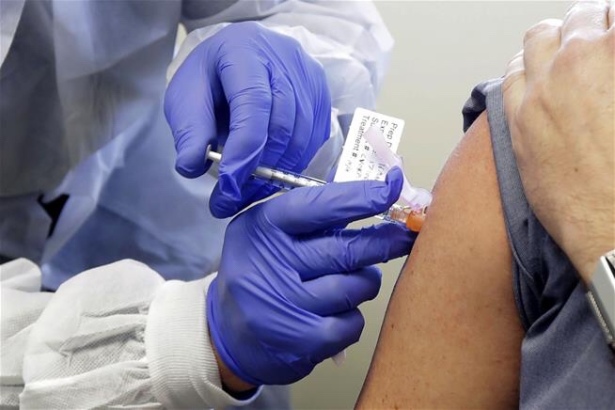
In this March 16, 2020, photo, a subject receives a shot in the first-stage safety study clinical trial of a potential vaccine by Moderna for COVID-19 at the Kaiser Permanente Washington Health Research Institute in Seattle.   (AP Photo/Ted S. Warren, File)
(Newser) – The early, small-scale testing is over, and now the largest trial to date for a COVID-19 vaccine is underway, reports the AP. This one involves the vaccine made by Moderna, and the first of 30,000 volunteers in the US will begin getting shots on Monday. Half will get the real thing, half a placebo, and researchers will then begin assessing how well it keeps people from contracting the coronavirus around the US. The Moderna vaccine is the first of a handful of candidates to reach this stage—another out of Oxford University begins its large-scale trial in August. Coverage:
• Reality check: Under the best-case scenario, an initial vaccine might be available by the end of the year, but the first one to emerge might be more about reducing the severity of the virus rather than eliminating it, reports Axios. “Maybe it doesn’t prevent you from getting infected, but it prevents you from getting hospitalized, or prevents you from dying,” says a John Hopkins expert. Still, even “that would be huge.”
• Reality check, II: Another issue is that if enough people decide to skip the vaccine—and polls suggest roughly half of Americans are either leaning that way or unsure—that makes it harder for “herd immunity” to emerge, reports the Atlantic. Then there’s the staggering logistics of getting 300 million doses ready for the US, or perhaps 600 million doses if a second dose is needed, as seems likely. “Even when a vaccine is introduced, I think we will have several months of significant infection or at least risk of infection to look forward to,” says Jesse Goodman, former chief scientist at the FDA.
• Side effects: The vaccines that emerge are likely to be “reactogenic,” reports STAT News, meaning they will have side effects including headache, fever, sore arms, fatigue, and chills. For example, one of the early volunteers in the Moderna trial sought medical care after his fever spiked to 103 after his second dose. Medical experts say it’s wise to begin explaining all of this now to Americans.
• Trump message: A separate story at Axios focuses on the political aspect of this for President Trump, predicting that his new strategy will be to focus heavily on vaccines and treatments. “If he … stays on message and offers people a light at the end of the COVID tunnel, he’s gonna be in a lot stronger position to win reelection than I think a lot of people think right now,” one administration official tells the outlet.
• Warp Speed: Moderna is one of a number of companies getting support from the federal government’s Operation Warp Speed project to produce a vaccine as quickly as possible, reports CNN. The company said Sunday it received another $472 million from the Biomedical Advanced Research and Development Authority toward that end.