Tuesday, August 28, 2018

The Antichrist Consolidates His Power (Revelation 13)

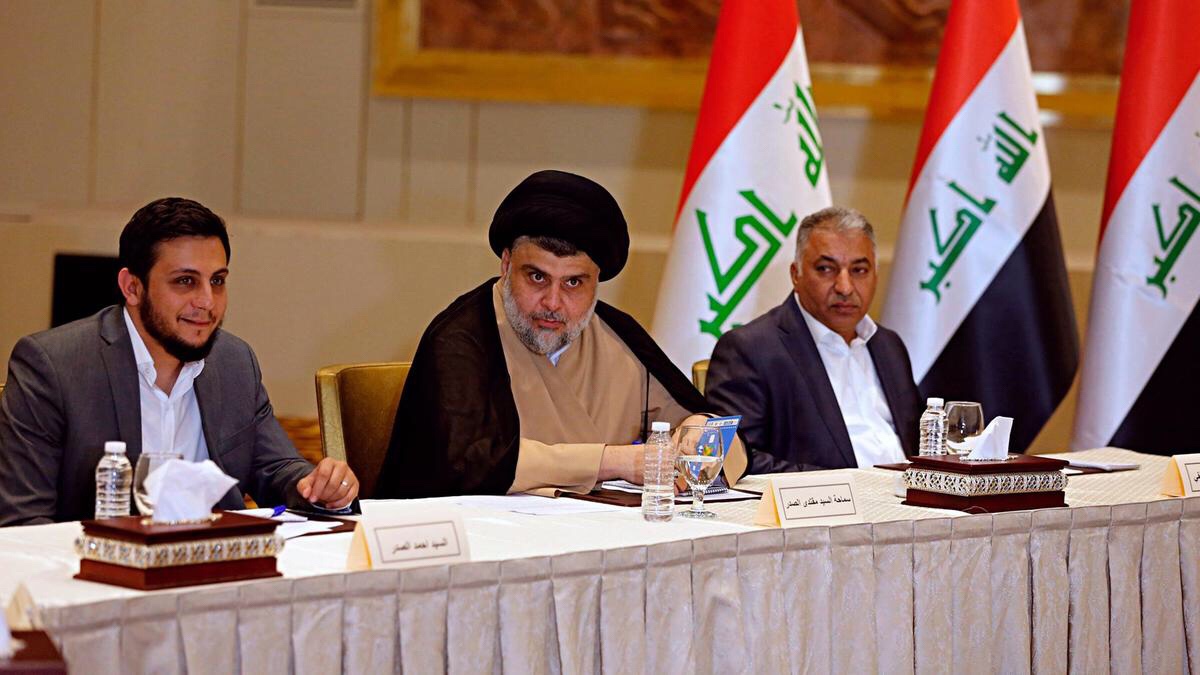
image-939Iraq's Maliki sidelined as Kurds and Sunnis seek Sadr coalition

Sadr's Sairoon bloc says it expects deal to establish biggest alliance in parliament
Mina Aldroubi
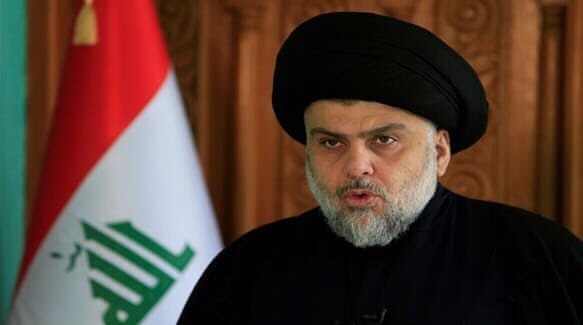
Iraq's Kurdish and Sunni blocs have expressed their willingness to form a coalition with election winner Moqtada Al Sadr, an indication that former Prime Minister Nouri Al Maliki, who is seeking power, could lose his grip over the country's political scene.
Mr Al Sadr's Sairoon bloc and Mr Al Maliki's State of Law coalition have been competing to strike a deal with the Kurdistan Democratic Party (KDP) and the Patriotic Union of Kurdistan (PUK) as well as Sunni blocs to establish the biggest ruling alliance in parliament.
"There are signs of agreement between the Kurds and the Sunnis to ally with Sairoon," Raed Fahmi, a prominent politician in Sairoon's bloc said on Sunday.
Yet, Kurdish parties will play a central role in the formation of the next government as they collectively secured over 40 seats in the May elections. They have yet to officially announce their alliance.
The Kurdish parties have set conditions for allying with the major blocs, PUK leader Arez Abduallah said in a statement.
"Our conditions are constitutional and include the existence of a government with a true national partnership that is in balance with the constitution," Mr Abduallah said, adding that his party will ally with the bloc that is "consistent with our political vision".
The development is seen as a blow to Mr Al Maliki's efforts as he seeks to gain support from the northern Iraqi parties. During his time in power, he was criticised for alienating Sunnis and Kurds by excluding them from key positions and undermining power-sharing in Iraq.May's parliamentary elections saw electoral lists led Mr Al Sadr and Iranian-backed militia chief Hadi Al Amiri win the largest number of seats out of the 329 seat house.
Mr Al Sadr, who is leading a quartet of major parties with 136 seats, needs to secure 28 more to form a parliamentary majority.
Kurdish parties have previously been in talks with Mr Al Maliki to join his State of Law bloc, which won 26 seats, along with Mr Al Amiri's Fateh bloc which won 47 seats.
The two proposed coalitions account for around 249 seats between them, meaning that 80 seats held by smaller parties and individuals would hold the balance of power.
But there is no word on how close to an agreement the parties are, although officials from the two blocs are expected to visit Iraqi Kurdistan next week in hopes of announcing a deal.
Mr Al Maliki is a small player in the Iraqi parliament, with three or four seats out of his bloc who are loyal to him, said Michael Knights, a senior fellow at the Washington Institute for Near East Policy.
"However, he’s a natural politician, so he can bring people together and make deals, and this is why you talk to him," Mr Knights said, adding that he would have a limited role if Mr Al Sadr formed a government.
Iraqi President Fuad Masum held talks on Friday with Prime Minister Haider Al Abadi on the latest political developments, stressing the need to speed up the negotiation process to form the largest bloc in government.
The results of May's elections were only ratified by the supreme court on August 19 following allegations of fraud forced a partial recount of ballots.
Mr Al Abadi is heading a fragile caretaker government until its replacement can be agreed and has already had to contend with mass protests across the south at the state of basic government services.
The court's decision paves the way for Mr Masum to summon lawmakers to an inaugural session of the new, 329-seat house. In theory, parliament should then proceed to elect a speaker, a president and a prime minister, who will, in turn, form a new government within 90 days.

Monday, August 27, 2018

History Warns New York Is The Sixth Seal (Revelation 6:12)


New York Earthquake 1884
Friday, 18 March 2011 – 9:23pm IST | Place: NEW YORK | Agency: ANI
If the past is any indication, New York can be hit by an earthquake, claims John Armbruster, a seismologist at Columbia University’s Lamont-Doherty Earth Observatory.
If the past is any indication, New York can be hit by an earthquake, claims John Armbruster, a seismologist at Columbia University’s Lamont-Doherty Earth Observatory.Based on historical precedent, Armbruster says the New York City metro area is susceptible to an earthquake of at least a magnitude of 5.0 once a century.According to the New York Daily News, Lynn Skyes, lead author of a recent study by seismologists at the Lamont-Doherty Earth Observatory adds that a magnitude-6 quake hits the area about every 670 years, and magnitude-7 every 3,400 years.A 5.2-magnitude quake shook New York City in 1737 and another of the same severity hit in 1884.Tremors were felt from Maine to Virginia.
There are several fault lines in the metro area, including one along Manhattan’s 125th St. – which may have generated two small tremors in 1981 and may have been the source of the major 1737 earthquake, says Armbruster.
There’s another fault line on Dyckman St and one in Dobbs Ferry in nearby Westchester County.
“The problem here comes from many subtle faults,” explained Skyes after the study was published.
He adds: “We now see there is earthquake activity on them. Each one is small, but when you add them up, they are probably more dangerous than we thought.”
“Considering population density and the condition of the region’s infrastructure and building stock, it is clear that even a moderate earthquake would have considerable consequences in terms of public safety and economic impact,” says the New York City Area Consortium for Earthquake Loss Mitigation on its website.
Armbruster says a 5.0-magnitude earthquake today likely would result in casualties and hundreds of millions of dollars in damage.
“I would expect some people to be killed,” he notes.
The scope and scale of damage would multiply exponentially with each additional tick on the Richter scale.

Trampling the Palestinians Outside the Temple Walls (Revelation 11:2)


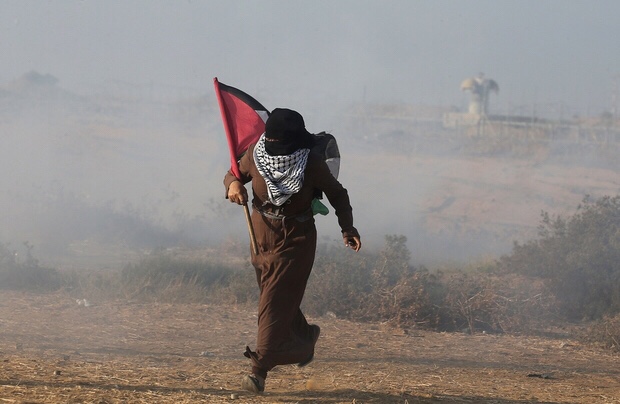
Israeli forces wound dozens of Palestinian protesters in Gaza
MEE Staff
At least 189 Palestinian protesters were wounded by Israeli soldiers in Gaza on Friday as demonstrators in the besieged strip continued their weekly protests as a part of the Great March of Return.
Of the peaceful protesters wounded on Friday, 73 were hospitalised and 50 were hit by live ammunition, according to the Gaza health ministry spokesman. The rest were treated on the scene.
In late March, Palestinians launched the Great March of Return, gathering peacefully along the "buffer zone" in Gaza near the fence separating it from Israel.
The protest campaign calls for an end to the 11-year Israeli-led blockade on Gaza and for Palestinian refugees' right of return to the lands that their families fled during the establishment of the state of Israel in 1948.
At least 171 Palestinians in Gaza, including demonstrators, journalists and medics have been killed by Israeli forces during the protests since then.
Earlier this week, the chair of a UN Human Rights Council investigation into Israel's use of force against protesters in Gaza stepped down less than a month after being appointed.
Former Pentagon official David Crane resigned from the inquiry for "personal reasons", according to a statement by the Office of the UN High Commissioner for Human Rights issued on Wednesday.
Elsewhere in the Palestinian territories, Israeli settlers destroyed 30 olive trees in a village south of Nablus in the West Bank on Friday, official Palestinian news agency WAFA reported.
Settlers regularly uproot, burn and destroy olive trees in the West Bank, a source of income for Palestinian farmers that also symbolises Palestinians' attachment to their land.
Ghassan Douglas, a Palestinian Authority official who monitors settlements, told WAFA that settler attacks against Palestinian civilians have increased lately, and the assaults are happening under the protection of Israel's army.
Meanwhile, the United States will "redirect" more than $200m in economic aid for projects to Palestinians, a US State Department official told Reuters on Friday.
"We have undertaken a review of US assistance to the Palestinian Authority and in the West Bank and Gaza to ensure these funds are spent in accordance with US national interests and provide value to the US taxpayer," said the official, speaking on condition of anonymity.
"As a result of that review, at the direction of the president, we will redirect more than $200 million in FY2017 Economic Support Funds originally planned for programmes in the West Bank and Gaza. Those funds will now address high-priority projects elsewhere."

Iran Will Finish Their Nuclear Triad

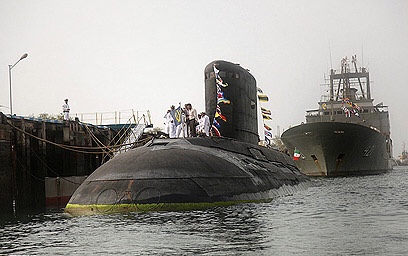
Iran to launch indigenous submarine by 2019: commander
Source:Xinhua Published: 2018/8/25 19:23:31
Iran's navy commander said that the country's homegrown submarine will come on stream by March 2019, Tasnim news agency reported on Saturday.
The manufacturing process of Fateh (Conqueror) has already finished and the submarine is now undergoing laboratory and field tests, Navy Commander Hossein Khanzadi told Tasnim.
Iran is also planning to manufacture the second upgraded version of the military watercraft, said Khanzadi.
The second version of Fateh will be much better, he said, adding that the Iranian submarines will serve as the "powerful subsurface fleet" in Iran's southern waters for effective deterrence purposes.
The fact that Iran has the technical know-how to manufacture submarines indicates that the country has no limitations in producing other military equipment, he stressed.
On Thursday, Iran's Supreme Leader Ayatollah Ali Khamenei appointed Ali Reza Tangsiri as the new commander of the Islamic Revolution Guards Corps' (IRGC) navy.
Khamenei said the decision for the appointment has been made with regard to the new commander's "commitment, competency and valuable experiences."
He also called on Tangsiri to push for promoting the training skills and upgrade the maritime equipment.
Khamenei has underlined to promote security of the region through the cooperation with other regional countries, refuting the presence of non-regional forces.
Khamenei has also called for the enhancement of the Iranian naval forces' presence in international waters and expanding the navy's power in balance with the merit of the Islamic establishment.
Posted in: MID-EAST

Antichrist Forms New Iraq Government

Iraqi top leaders discuss political efforts to form new gov't
Source: Xinhua| 2018-08-26 02:07:32|
BAGHDAD, Aug. 25 (Xinhua) -- Iraqi President Fuad Masoum on Saturday discussed with Vice Present Nuri al-Maliki the political efforts to form the new Iraqi government.
Political parties highlighted the necessity of convening the first parliament session 15 days after the ratification of the final elections results according to the Constitution, said a statement by the presidency media office.
The two Iraqi leaders stressed the importance of adhering to the Constitution, respecting the will of voters to reform, developing state institutions and providing basic services, the statement added.
On Aug. 19, the Federal Supreme Court ratified the final results of May 12 parliamentary elections, marking the first step toward forming the new Iraqi government.
The approval confirmed the preliminary results of the parliamentary elections which showed the Sairoon Coalition, backed by Shiite cleric Moqtada al-Sadr, won 54 seats in the 329-seat parliament as the front runner.
The ratification widely opened the door for Iraqi politicians to form the next government and would give a push for the tough negotiations by the political blocs to form the largest alliance before the first session of the new parliament.
According to the Iraqi constitution, the ratification of the results entails the outgoing President Masoum to call on the new parliament to hold its first session under the chairmanship of the eldest parliament member within 15 days from the court's ratification, to elect a president of parliament and then the president of the republic, who will ask the largest alliance to form a government within 30 days.
On May 12, millions of Iraqis went to 8,959 polling centers across the country to vote for their parliamentary representatives in the first general election since Iraq's historic victory over the Islamic State militant group in December 2017.

Babylon the Great Upgrades ‘Earth-Penetrating’ Nuclear Bomb

US Air Force Tests Upgraded ‘Earth-Penetrating’ Nuclear Bomb
Sputnik
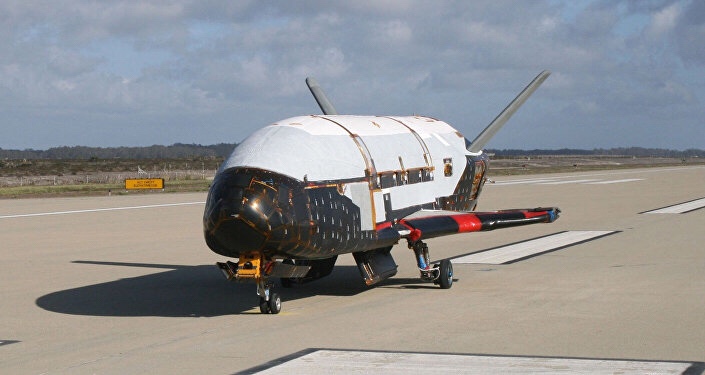
The US Air Force sent out a B-2 stealth bomber to deploy an upgraded B61-12 nuclear bomb recently in an effort to review the weapon’s accuracy and ability to carry out its various attack options.
According to Warrior Maven, the latest upgrades enable the nuclear bomb to be able to carry out "earth-penetrating attacks, low-yield strikes, high-yield attacks, above surface detonation and bunker-buster options," giving the Air Force a five-in-one kind of deal.
"The main advantage of the B61-12 is that it packs all the gravity bomb capabilities against all the targeting scenarios into one bomb," Hans Kristensen, director of the Nuclear Information Project, told the website. "That spans from very low-yield tactical ‘clean' use with low fallout to more dirty attacks against underground targets."
"A nuclear weapon that detonates after penetrating the earth more efficiently transmits its explosive energy to the ground, thus is more effective at destroying deeply buried targets for a given nuclear yield. A detonation above ground, in contrast, results in a larger fraction of the explosive energy bouncing off the surface," Kristensen added, noting that the B-2 bomber presently carries nuclear bombs of the models B61-7, B61-11 and B83-1.

© AP Photo / U.S. Air Force
However, the B61-12 nuclear bomb won't be the only piece of military equipment to receive a facelift. The B-2 bomber, first introduced in the 1980s, is expected to see upgrades to its Defensive Management System, hardware used to help the bomber recognize and deter enemy air defenses, Warrior Maven reported. The US Air Force operates an estimated 20 B-2 bombers. Its next-generation competition is the B-21 Raider.
The latest test, conducted at an undisclosed area, follows news in late June that the Department of Energy's National Nuclear Security Administration (NNSA) and the US Air Force tested two B61-12 bombs on June 9 at the Tonopah Test Range in Nevada.
In a statement released on June 29, Brig. Gen. Michael Lutton, NNSA's principal assistant deputy administrator for military application, indicated that the June tests were conducted in order to see whether "the B61-12 design meets system requirements and illustrate the continued progress of the B61-12 life extension program to meet national security requirements."
The life extension program is part of a joint effort to preserve the critical elements of the US nuclear triad, a three-pronged military structure consisting of land-launched missiles, nuclear missile-armed submarines and strategic aircraft with nuclear bombs and missiles.
The June flight test included hardware designed by Sandia National Laboratories and Los Alamos National Laboratory. They were manufactured by plants from the Nuclear Security Enterprise.

Sunday, August 26, 2018

U.S. IS Prepping to Airstrike Iran

Is the U.S. Prepping to Airstrike Iran?
Curt Mills
There are parallels with 1998 and Iraq.
Daniel McCarthy correctly observes in The National Interest that this presidency bears more resemblance to Bill Clinton’s than Richard Nixon’s: a principal short on probity in affairs sexual and personal financial, but one who is, so far, overseeing a rip roaring economy and largely conventional foreign policy.
Amidst convulsions in the chattering classes about Michael Cohen and Paul Manafort and ouster from office, another parallel lurks: much like the Clinton administration, this White House quietly assesses an unsavory Middle Eastern government as its preeminent challenge .
This time it’s Iran, not Iraq, of course. But as 2018 closes, the U.S. is nearing the twenty-year anniversary of an oft-forgotten event in history: Bill Clinton’s airstrikes on Saddam Hussein’s regime in December 1998. The 42nd president explained the strikes , which killed over one thousand of Saddam’s Republican Guard, from the Oval Office: their mission was “to attack Iraq's nuclear, chemical and biological weapons programs” but also “its military capacity to threaten its neighbors.” Their purpose was “to protect the national interest of the United States, and indeed the interests of people throughout the Middle East and around the world.”
As I’ve previously pointed out, the Trump administration officially maintains its policy is to seek change in the Iranian regime’s behavior, not necessarily change in the regime itself. But top hawks flying in the president’s orbit disagree. Ali Safavi of the National Council for Resistance of Iran (NCRI), associated with the MEK, has told me: “We welcome the call for the Iranian regime’s change of behavior at home and abroad as that would lead to its definite demise.”
But if protests combined with a torrent of financial pressure don’t collapse the clerical government in Tehran, or if President Hassan Rouhani’s government (infuriated and humiliated at home by U.S. secession from the Iran deal) flails out militarily, might the U.S. entertain military action? As I’ve written before, those seeking change in Iran near-universally see the parallel here as 1989 and the collapse of the Soviet Union, not 2003 and the military decapitation of the government in Baghdad.
But a hybrid option exists -- select airstrikes on the 1998 model -- to further squeeze the Iranians. Regime opponents like NCRI and MEK insist this will not be necessary if Tehran is isolated enough. But precision military strikes have been, quite subtly, floated before by those in and around the Trump administration as a failsafe.
Prior to his return to power this spring, John Bolton, now national security advisor, wrote last summer in National Review what he thought the world should look like after U.S. nullification of the JCPOA: “With Israel and selected others, we will discuss military options.” He urged delivery of F-35s to Jerusalem. Walter Russell Mead at The Wall Street Journal , who has been cited as Steve Bannon’s favorite columnist and is perhaps the most prominent foreign policy thinker in the country at least open to this administration, has written if the Iranians respond to the JCPOA abdication “by restarting their nuclear program” that “Israeli-American airstrikes could both stop the process and inflict a humiliating blow to the regime’s prestige.”
So is this actually in the cards? On this administration, two prime theories of the case abound.
In one reading, this is a Republican administration going through the motions of being reflexively hawkish. Adherents to this interpretation notes that all of the major presidential candidates for the nomination, even restrainer Rand Paul, opposed President Obama’s nuclear deal. This is the fear of hardliners like Frank Gaffney of the Center for Security Policy (CSP), friendly with the administration. He has called for the diminishment of Brian Hook, newly named the State Department’s pointman on Iran’s malign activity.
“Iran’s foreign minister marked the 65th anniversary of an American-backed coup that toppled a hostile and oppressive government in Tehran by vowing that the United States’ new ‘Iran Action Group’ won’t have the same effect. He’s likely right,” Gaffney said in an email message to subscribers last week. “If President Trump wants to help the Iranian people liberate themselves from a Sharia kleptocracy that oppresses them and threatens us and wants the Action Group to do that, putting Brian Hook in charge ensures it won’t happen. Hook is deeply hostile to Trump and has, to date, used his top job at State to save the Obamabomb deal, and prop up Iran’s regime.” This is quite a statement for foreign policy restrainers, a Mitt Romney alum generally considered a dependable hawk. But for Gaffney and other hardliners, not so.
“The potential for an unprovoked attack on Iran exists, but I think it’s less than 10 percent,” a former senior U.S. military officer friendly with the administration and leading Republicans told me Thursday. Bolton this week said the U.S. goal was to drive Iranian oil exports down to zero, and announced that U.S. rejected a Tehran-proposed compromise plan to swap sanctions relief for a drawback in Syria. But Bolton, in Israel, also reported that U.S. sanctions on the country had already been more effective than expected, seeming to pour cold water on imminent, further action.