Showing posts with label wars. Show all posts

Monday, May 29, 2017

The End of the Saudi Nuclear Horn (Daniel 7)

Image result for sunni vs shiaSaudi rulers will perish: Khamenei
ANI | Tehran [Iran] May 28, 2017 03:10 PM IST
On the occasion of the beginning of the holy fasting month of Ramadan, Iran’s supreme leader Ayatollah Seyyed Ali Khamenei said that “Saudi rulers are going to perish”.
He further added that the Saudi rulers “are too harsh on Muslims, yet kind to the disbelievers. They are giving special handouts to the US. To whom does all this wealth belong? This is the Saudi people’s wealth, which they give away to disbelievers and their people’s enemies.”
“Among the Muslim world, a group of worthless, inept and villainous people are ruling over a community of the Muslim nation, namely the Saudi government. The fools actually think they can gain the friendship of Islam’s enemies by providing them with money and assistance. There is no friendship there; as they say themselves, they are ‘milking them’ like cattle. They oppress their own people in this manner, and oppress the people of Yemen and Bahrain in other ways. But they are going to perish.”IRNA news agency quoted Iran’s supreme leader as saying.
After re-elected for a second term, Iran’s reformist president, Hassan Rouhani asserted that unity and consensus is the solution against the terrorism.
The era of interfering in other countries’ affairs, waging wars and funding terrorism is over and fighting terrorism is the only way ahead, he added.
Iran’s leader also reminded his audience on the experience of the Iranian nation’s victory over the eight-year imposed war; adding that the Iranian nation triumphed during the eight-year war as the ‘underdog.’
Referring to the afflictions of the Islamic world and disputes imposed on the Muslim states, Foreign Minister Mohammad Javad Zarif called on leaders of the Islamic world to undertake further responsibility regarding unity of the Islamic nations.

Friday, July 15, 2016

So Much For “Star Wars”


Science group warns of shortcomings in U.S. missile defense

Thu Jul 14, 2016 | 12:09 AM EDT
By David Alexander | WASHINGTON

(Reuters) – The U.S. missile defense system to counter attacks from rogue states like North Korea has no proven capability to protect the United States and is not on a credible path to achieve that goal, a science advocacy group said on Thursday.

The ground-based midcourse missile defense system, which has deployed 30 interceptors in Alaska and California, has been tested under highly scripted conditions only nine times since being deployed in 2004, and failed to destroy its target two-thirds of the time, the Union of Concerned Scientists said in a report.

After nearly 15 years of effort to build the GMD homeland missile defense system, it still has no demonstrated real-world capability to defend the United States,” said Laura Grego, a UCS physicist who co-authored the report.

Deficiencies in the program, which has cost $40 billion so far and is being expanded to include 44 interceptors by 2017, are due largely to a Bush administration decision to exempt the system from normal oversight and accountability, to rush it into service by 2004, Grego said in an interview.
“Instead of getting something out to the field that worked well or worked adequately, in fact this has been a disaster. It’s done the opposite,” she said.

The Obama administration’s efforts to improve oversight while keeping the system outside the normal development and procurement process have contributed to the problems, she said.

“The lack of accountability has had and will have real lasting effects, especially for a system … that’s strategically important. It should be held to the highest standards, the highest rigor,” she added.
The Missile Defense Agency said in a statement the rapid deployment requirement in the law that created the system was “a driving factor” in the delivery of a ground-based interceptor with “reliability challenges.”

The agency said the problems had led to changes in the interceptor’s design and a program to improve reliability, including use of more mature technologies. The MDA said it was seeking ways to reduce the risks of deploying equipment still under development.

The UCS report echoed criticisms the homeland missile defense system has faced from other quarters. A Pentagon assessment in 2015 found that flight testing of the system was still “insufficient to demonstrate that an operationally useful defense capability exists.”

A February report by Congress’s Government Accountability Office said the MDA was taking a “high-risk” approach by buying interceptors still under development for operational use.
(Reporting by David Alexander; Editing by David Gregorio)

Thursday, October 15, 2015

The Korea Nuclear Horn Can Hit Babylon (Daniel 7)


N. Korea can strike U.S. with nuclear ICBMs
Obama relies on Star Wars to defend California

By L. Todd Wood –
Tuesday, October 13, 2015

Since the last nuclear deal, when then-Democratic President Bill Clinton channeled future President Barack Obama and told the world how great the “deal” was for peace and security on the Korean Peninsula and how North Korea would not achieve nuclear weapon status, much has changed. Now, North Korea can play the mutually assured destruction game just like the United States and other nuclear powers.

The Washington Free Beacon reported Monday that U.S. Adm. William Gortney, Northcom commander, stated that North Korea currently has the means to hit the United States with a long-range missile tipped with a miniaturized nuclear warhead. This is not maybe, in the future, or if; it is now a reality.

“I agree with the intel community that we assess that they have the ability, they have the weapons, and they have the ability to miniaturize those weapons, and they have the ability to put them on a rocket that can range the homelands. And as the defender of North America, the United States officially, in the ballistic missile defense, I think the American people expect me to take the threat seriously,” he said Wednesday at the Atlantic Council.

During a recent North Korean military parade in Pyongyang, a North Korean commentator said, “With the vengeful desire to turn the citadel of our enemies into a sea of fire, our powerful tactical rockets loaded with diversified and miniaturized nuclear warheads are on the move.” The missiles were shown loaded onto a Chinese transporter, erector, launcher. Mobile missiles pose an especially serious threat as they are hard to target by Western forces.

“But three years after these Chinese TELs appeared, and now with their third appearance in a North Korean military parade, the administration has yet to provide a substantive public explanation to the American people about China’s assistance for North Korean ICBMs that can now devastate American cities,” said Rick Fisher, a senior research fellow with the International Assessment and Strategy Center.

“I agree with the intel community that we assess that they have the ability, they have the weapons, and they have the ability to miniaturize those weapons, and they have the ability to put them on a rocket that can range the homelands. And as the defender of North America, the United States officially, in the ballistic missile defense, I think the American people expect me to take the threat seriously,” he said Wednesday at the Atlantic Council.

What is especially ironic is that the administration is relying on missile defense technology to defend the United States against a North Korean missile strike. This “Star Wars” program championed by Ronald Reagan in the 1980s was vilified by the Left as lunacy and a waste of money. After significant reductions by the Obama administration, U.S. missile defense is left wanting, even though it is desperately needed to counteract disastrous foreign policy decisions such as the Iran nuclear deal. Today, to face the North Korean threat, the United States has Aegis warships off the Korean Peninsula as well as a limited system of radar/interceptors in California and Alaska. Satellite systems are also involved.

America needs a new leader to complete the vision of Reagan and not rely on mutually assured destruction but American know-how and technology to defend the homeland. The Russians and Chinese would not be so vocally against such a program if they were not afraid of it.

Tuesday, June 2, 2015

The Final Nuclear Battle: The Sunni Shia Divide (Dan 7)

shia-sunni 
Nukes Along the Sunni-Shia Divide

June 1, 2015
By Dr. Terry Simmons
Contributor, In Homeland Security

When the Saudi Royal House snubbed President Obama with their low profile attendance at the GCC conference recently, there was a de facto quid pro quo in play based on an old axiomatic formula in Middle East politics. The Sunni-Shia Divide is the lowest common denominator in the Islamic World and is still not well understood by the West, especially by the United States. International relations are spinning around a new formulaic that promises to involve the historically dominant United States.

The pseudo super-power states, China, The Russian Federation, India and the remaining BRIC countries such as Brazil, are consistently transmitting a political message to America. The quid pro quo is this: We will trade you cooperation for an effective re-alignment of post WW2 and post Cold War geopolitical architectures and security arrangements for a global political system based on multi-polarity and reduction of American hegemony both militarily and financial institutionalism. Ending a sustained period of global dominance by the United States is the coordinated goal.

The new reality manifests itself in current alignments between Washington-Riyadh and Washington-Iran. Ostensibly centered over the emerging American-Iranian nuclear agreement, the Realpolitik type struggle is a traditional one. Who is the dominant force in the pan-Islamic world? Is it a Sunni force or a Shiite force? It is a classic ideologically based contest for hearts and minds reminiscent of the ideologically centered Cold War struggle between Christian-based democracy and Godless communism? It too is a zero-sum game.

Saudi Arabia (KSM) is capable of procuring advanced nuclear weaponry from Pakistan on short notice for quick delivery from the Kingdom. Months of rumors regarding such transfers have now been confirmed by recent Saudi authoritative and attributable announcements in the international press. What was once conjectural has now become state-sponsored policy through declaratory state policy. The decision-tree rationale offered is that the Kingdom must protect itself from the inevitable impending nuclear breakout by Iran on the heels of an ill advised course of action by the Obama White House. As Pakistan has a long history of political indebtedness to the Saudi Royal House, weapons of mass destruction are a guaranteed reciprocal-strategically significant commodity owed to KSM from the massive nuclear repository in Islamabad.

This emerging political reality changes the perennial power arrangements of the region and the entire Middle East. With a nuclear armed Israel backed by the world’s most advanced nuclear regime, the United States, and Iran backed by the world’s second most advanced nuclear power, The Russian Federation, a dangerous new world based on the threat of WMD usage by previously conventional power users, has emerged in a rapidly alarming fashion along an ancient fault line of a divisive religious-based endemic struggle-the frozen culture wars between Sunnis and Shiites throughout the Islamic world..

What is perhaps more striking is the evolving re-alignment of operational partnerships. Even if undeclared, for the sake of keeping domestic audiences at bay, Tel Aviv and Riyadh are finding common cause in their evolving security parameters. Sunnis and Jews are traditionally antithetical in security symbiosis but consider this: Washington declares the unbreakable historical bond between Tel Aviv and Washington in American declaratory policy but Obama’s perceived apparent tilt toward Tehran has caused a major security shift never deemed remotely possible before the tectonic plates of geopolitics based on a new field of possibilities shifted under the Obama Doctrine of “talking to our enemies.” What is perhaps more remarkable in view of the revolutionary direction of these dramatic shifts is that the ideologues on all sides appear largely muted. No cries of “apostates” have rung out.

These facts are current realities on the ground as we speak and portend a dangerous combination of factors creating massive instabilities in the world’s most volatile zones. When overshadowed by the majors, the United States, the Russian Federation and the potentially the PRC with their new littoral imperialism in the South China Sea and Russian revanchism in re-securing their Near Abroad in the FSU through a newly emboldened militarism,

SUMMARY OBSERVATIONS:

In the waning days of the Obama government, prospective presidential successors from both American political parties are faced with stark choices both at home and in American foreign policy abroad. Will Hillary Clinton practice “smart power’ and formulate a more practical, less ideologically based, approach to international relations? Will Jeb Bush return American military and strategic nuclear posture to the traditionally robust defense-first legacy of superior American firepower? Will either abandon the soft power demilitarization of American foreign policy of the Obama Doctrine that has spurred the global rush to deconstruct traditional American hegemony and fill the power extant power vacuum that has created massive instability throughout the world?

The Sunni-Shia Divide is historical and apparently irreversible. Its recalcitrance is arguably what makes it inevitable and ultimately dangerous, accelerated and magnified by WMD. As Putin attempts to redraw the map of Europe and Eurasia, the map of the countries surrounding the Arabian Peninsula will be affected in a similar manner if the current political dynamics are allowed to manifest themselves. The problematic momentum of the dangerous new polemics in the region may already be irreversible. The overriding security concern is those potential changes do not usher in uncontrolled calamity through miscalculation and force proximity of the world’s most destructive strategic forces.

Saturday, March 28, 2015

Babylon The Great Expands The Shi’a Horns (Daniel 8)

370679_US-drone
Washington’s Two Air Wars: With Iran In Iraq, With Saudis (Against Iran) In Yemen
By Juan Cole

26 March, 2015


Initially, the US sat out the Tikrit campaign north of the capital of Baghdad because it was a largely Iran-directed operation. Only 3,000 of the troops were regular Iraqi army. Some 30,000 members of the Shiite militias in Iraq joined in– they are better fighters with more esprit de corps than the Iraqi army. Some of them, like the Badr Corps of the Islamic Supreme Council of Iraq, have strong ties to Iran. The special ops unit of the Iranian Revolutionary Guards Corps, the Jerusalem Brigade, provided tactical and strategic advice, commanded by Qasem Solaimani.

The campaign deployed tanks and artillery against Daesh in Tikrit, but those aren’t all that useful in counter-insurgency, because they cannot do precise targeting and fighting is in back alleys and booby-trapped buildings where infantry and militiamen are vulnerable.


US air intervention on behalf of the Jerusalem Brigades of the IRGC is ironic in the extreme, since the two have been at daggers drawn for decades. Likewise, militias like Muqtada al-Sadr’s “Peace Brigades” (formerly Mahdi Army) and League of the Righteous (Asa’ib Ahl al-Haqq) targeted US troops during Washington’s occupation of Iraq. But the fight against the so-called “Islamic State group” or Daesh has made for very strange bedfellows. Another irony is that apparently the US doesn’t mind essentially tactically allying with Iran this way– the reluctance came from the Shiite militias.

Not only US planes but also those of Jordan and some Gulf Cooperation Council countries (Saudi Arabia? the UAE? Qatar?) will join the bombing of Daesh at Tikrit, since these are also afraid of radical, populist political Islam. But why would they agree to be on the same side as Iran? Actually, this air action is an announcement that Iraq needs the US and the GCC, i.e. it is a political defeat for Iranian unilateralism. The US and Saudi Arabia are pleased with their new moxie in Baghdad.

Then in Yemen, Saudi Arabia has begun bombing the positions of the Shiite Houthi movement that has taken over northern and central Yemen and is marching south. One target was an alleged Iranian-supplied missile launcher in Sanaa to which Saudi Arabia felt vulnerable. That isn’t a huge surprise. The Saudis have bombed before, though not in a while. The big surprise is that they have put together an Arab League anti-Houthi coalition, including Egypt, Jordan, Sudan, and the GCC. Even Pakistan has joined in. (Sudan and Pakistan are a surprise, since they had tilted toward Iran or at least had correct relations with it formerly). The US State Department expressed support for this action and pledged US logistical and military support. It remains to be seen if this coalition can intervene effectively. Air power is unlikely to turn the tide against a grassroots movement.

About a third of Yemenis are Zaidi Shiites, a form of Shiism that traditionally was closer to Sunni Islam than the more militant Iranian Twelver or Imami branch of Shiism. But Saudi proselytizing and strong-arming of Zaidis in the past few decades, attempting to convert them to militant Sunnism of the Salafi variety (i.e. close to Wahhabism, the intolerant state church of Saudi Arabia) produced the Houthi reaction, throwing up a form of militant, populist Zaidism that adopted elements of the Iranian ritual calendar and chants “Death to America.” The Saudis alleged that the Houthis are Iranian proxies, but this is not likely true. They are nativist Yemenis reacting against Saudi attempts at inroads. On the other hand, that Iran politically supports the Houthis and may provide them some arms, is likely true.

The Houthis marched into the capital, Sanaa, in September, and conducted a slow-motion coup against the Arab nationalist government of President Abed Rabbo Mansour Hadi. He came to power in a referendum with 80% support in February, 2012, after dictator Ali Abdallah Saleh had been forced out by Yemen’s youth revolution of 2011-12. Hadi recently fled to the southern city of Aden and tried to reconstitute the nationalist government there, with support from 6 southern governors who, as Sunni Shafi’is, rejected dictatorial Houthi Zaidi rule (no one elected the Zaidis).

But the Houthis, seeking to squelch a challenge from the south, moved south themselves, taking the Sunni city of Taiz and attracting Sunni tribal allies (Yemeni tribes tend to support the victor and sectarian considerations are not always decisive). Then Houthi forces neared Aden and Mansour Hadi is said to have fled. The nationalist government appears to have collapsed.

The other wrinkle is that elements of the old nationalist Yemen military appear to be supporting the Houthis, possibly at the direction of deposed president Ali Abdallah Saleh. So in a way all this is a reaction against the youth revolution of 2011, which aimed at a more democratic nationalist government.

The US support for the Saudi air strikes and the new coalition makes the Yemen war now the second major air campaign supported by the US in the region. But the one in Iraq is in alliance with Iran. The one in Yemen is against a group supported in some measure by Iran. This latter consideration is probably not important to the US. Rather, the US is afraid that Houthi-generated chaos will create a vacuum in which al-Qaeda in the Arabian Peninsula will gain a free hand. AQAP has repeatedly targeted the US. The US also maintains that in each instance, it is supporting the legitimate, elected government of the country.

A lot of the online press in Yemen appears to have been knocked offline by the turmoil, by the way.

Friday, October 17, 2014

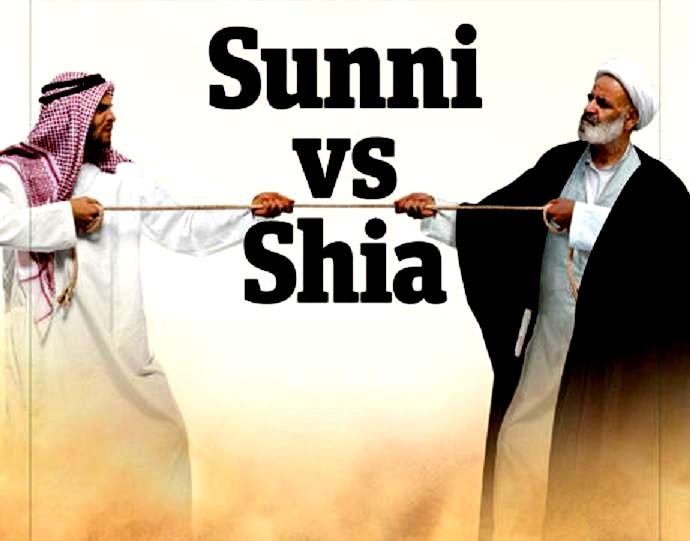
Sunni vs Shia = Saudi vs Iran

War of words between Saudi and Iran is exacerbating regional crises

sunni shia
Arabic News Digest Oct 16, 2014


The rising tension between Saudi Arabia and Iran is a major cause of the problems plaguing the Middle East, argued Abdel Bari Atwan, the editor of the London-based news website Rai Al Youm.
The two countries are fighting proxy wars in Syria, Iraq, Yemen, Lebanon and Palestine, and people of the region are paying the price in their blood, wealth, territorial integrity and stability, the writer contended.

The Iranian-Saudi conflict is not new. It dates back to 1979 when the Shah, Mohammad Reza Pahlavi was overthrown.

It was later exacerbated when Tehran revealed its nuclear ambitions and it reached its climax in the continuing crisis in Syria and the Saudis’ loss of control of Iraq to Iran.

The Saudi leadership wants the Assad regime to fall by any means. To this end, it is using all its material resources and its regional and international alliances. On the other hand, the Iranian leadership is striving to foil such attempts and has so far succeeded by helping the Assad regime survive.

The Saudi-Iranian confrontation, the writer said, is taking its toll on the region, fuelling civil and sectarian wars and turning many countries into failed states. It is difficult for Riyadh to win in Syria and it is almost impossible for Iran to win in Yemen. And to say that ISIL was a by-product of the Riyadh-Tehran conflict would not be an overstatement.

According to the writer, dialogue is the only way out of this lethal whirlpool. Tehran and Riyadh have to bring all their disputes to the table and seek to reach an agreement to end the bloody conflict ravaging the region before it is too late.

Writing for the Jordanian daily Addustoor, Oraib Al Rantawi noted that the intensifying trade of accusations between the two countries not only augurs ill for bilateral ties, it could also intensify the crises across the region.

The writer observed that the expressions used by these regional foes in the latest war of words were probably unprecedented. Iran’s sway over these countries has been described by a senior Saudi official as “occupation”, while Iran levelled a similar set of accusations against Saudi Arabia.

Before this crisis, many analysts had expected a thaw in relations between them in the light of a few positive signs.

Those include a foreign minister-level meeting in New York in September, the ties between the former president Akbar Hashemi Rafsanjani and the Saudi palace, and the election of the moderate politician Hassan Rouhani as president.

However, such predictions turned out to be too optimistic as the developments playing out in the region are widening the rift between the rivals. The Houthi rebels’ takeover of nine governorates in Yemen’s north and a strategic seaport in the city of Hudeidah must have played a pivotal role in escalating the war of words. For years Yemen was part of Riyadh’s sphere of influence. But now Iran through its Houthi allies in the north is turning the table, with separation of Yemen to pro-Saudi south and pro-Iran north looming large.

The recent Saudi-Iranian escalation could also have been sparked by reports of an imminent US-Iranian rapprochement and the prospects of an agreement between the P5+1 – the UN Security Council permanent members plus Germany – and Iran over the latter’s nuclear programme, as well as Riyadh’s concerns that the American-led war on ISIL could result in a vacuum Iran and its allies might fill.

The editorial of the London-based Al Quds Al Arabi asserted that the recent tension between Riyadh and Tehran, which threatens to take their bilateral ties back to square one, cannot be understood in isolation from what is unfolding in the region.

It noted that Saudi Arabia’s recent diatribe against Iran came amid strained relations between Iran and the US over the situation in Iraq and the nuclear talks.

Iran has clearly mobilised its allies in Iraq against any possible American intervention there. It also rejected demands to reduce the number of its uranium enrichment centrifuges. Moreover, the editorial went on, the US-led coalition against ISIL came to a conviction that air strikes alone will not destroy the group.

But Iran is a main obstacle to a ground involvement in both Syria and Iraq, where it has greater power on the ground. As things stand, without some sort of agreement with Iran, the coalition does not seem to stand a chance.

Translated by Abdelhafed Ezzouitni

aezzouitni@thenational.ae