A
clever pundit could undoubtedly paint all of the above as
a realpolitik ballet on Washington’s part, but the truth seems so much
simpler and more painful. Since the invasion of Iraq in 2003, U.S.
policy in the region has combined confusion on an immense scale with
awkward bursts of ill-coordinated and exceedingly short-term acts of
expediency. The country that has most benefited is Iran. No place
illustrates this better than Iraq.
Iraq Redux (Yet Again)
On
April 9, 2003, just over 12 years ago, U.S. troops pulled down a statue
of Saddam Hussein in Baghdad’s Firdos Square, symbolically marking what
George W. Bush hoped was the beginning of a campaign to remake the
Middle East in America’s image by bringing not just Iraq but Syria and
Iran to heel. And there can be no question that the invasion of Iraq did
indeed set events in motion that are still remaking the region in ways
once unimaginable.
In
the wake of the Iraq invasion and occupation, the Arab Spring blossomed
and failed. (The recent Obama administration decision to resume arms
exports to the military government of Abdel Fattah al-Sisi in Egypt
could be considered its coup de grâce.) Today, fighting ripples through
Libya, Syria, Yemen, the Maghreb, the Horn of Africa, and other parts of
the Greater Middle East. Terrorists attack in once relatively peaceful
places like Tunisia. There is now a de facto independent
Kurdistan — last a reality in the sixteenth century — that includes the
city of Kirkuk. Previously stable countries have become roiling failed
states and home to terrorist groups that didn’t even exist when the U.S.
military rolled across the Iraqi border in 2003.
And,
of course, 12 years later in Iraq itself the fighting roars on. Who now
remembers President Obama declaring victory in 2011 and praising
American troops for coming home with their “heads held high”? He seemed
then to be washing his hands forever of the pile of sticky brown sand
that was Bush’s Iraq. Trillions had been spent, untold lives lost or
ruined, but as with Vietnam decades earlier, the U.S. was to move on and
not look back. So much for the dream of a successful Pax Americana in the Middle East, but at least it was all over.
You
know what happened next. Unlike in Vietnam, Washington did go back,
quickly turning a humanitarian gesture in August 2014 to save the Yazidi
people from destruction at the hands of the Islamic State into a
full-scale bombing campaign in Syria and Iraq. A coalition of 62
nations was formed. (Where are they all now while the U.S.
conducts 85% of all air strikes against IS?) The tap on a massive arms
flow was turned on. The architect of the 2007 “surge” in Iraq and
a leaker of top secret documents, retired general and former CIA
Director David Petraeus, was brought back in for advice.
Twenty-four-seven bombing became the order of the day and several
thousand U.S. military advisors returned to familiar bases to retrain
some part of an American-created army that had only recently collapsed
and abandonedfour key northern cities to Islamic State militants. Iraq
War 3.0 was officially underway and many pundits – including me –
predicted a steady escalation with the usual quagmire to follow.
Such
a result can hardly be ruled out yet, but at the moment it’s as if
Barack Obama had stepped to the edge of the Iraqi abyss, peered over,
and then shrugged his shoulders. Both his administration and the U.S.
military appear content for the moment neither to pull back nor press
harder.
The
American people seem to feel much the same way. Except in the
Republican Congress (and even there in less shrill form than usual),
there are few calls for… well, anything. The ongoing air strikes remain
“surgical” in domestic politics, if not in Iraq and Syria. Hardly
noticed and little reported on here, they have had next to no effect on
Americans. Yet they remain sufficient to assure the right wing that the
American military is still the best tool to solve problems abroad, while
encouraging liberals who want to show that they can be as tough as
anyone going into 2016.
At
first glance, the American version of Iraq War 3.0 has the feel of
the Libyan air intervention – the same lack of concern, that is, for the
long game. But Iraq 2015 is no Libya 2011, because this time while America sits back, Iran rises.
Iran Ascendant
The
Middle East was ripe for change. Prior to the 2003 invasion of Iraq,
the last major transformational event in the area was the fall of that
classic American stooge, the Shah of Iran, in 1979. Otherwise, many of
the thug regimes in power since the 1960s, the height of the Cold War,
had stayed in place, and so had most of the borders set even earlier, in
the aftermath of World War I.
Iran
should send America a fruit basket to thank it for setting the stage so
perfectly for its ascent. As a start, in 2003 the United States
eliminated Iran’s major border threats: Iraq’s Saddam Hussein to the
west and the Taliban in Afghanistan to the east. (The Taliban are back
of course, but diligently focused on America’s puppet Afghan
government.) The long slog of Washington’s wars in both those countries
dulled even the reliably bloodthirsty American public’s taste for yet
more of the same, and cooled off Bush-era plans in Tel Aviv and
Washington for air strikes against Iran’s nuclear facilities. (After
all, if even Vice President Dick Cheney couldn’t pull the trigger on
Iran before leaving office in 2008, who in 2015 America is going to do
so?)
Iran in Iraq
In
Tikrit, Iranian-led Shia forces recently drove the Islamic State from
the city. In charge was Qassem Suleimani, the leader of the Qods
Force (a unit of Iran’s Revolutionary Guards), who had
previously led the brutally effective efforts of Iranian special forces
against U.S. soldiers in Iraq War 2.0. He returned to that country and
assembled his own coalition of Shia militias to take Tikrit. All of them
have long benefited from Iranian support, as has the increasingly
Shia-dominated Iraqi army.
In
addition, the Iranians seem to have brought in their own tanks and
possibly even ground troops for the assault on the city. They also
moved advanced rocket systems into Iraq, the same weapons Hamas has used
against Israel in recent conflicts.
Only
one thing was lacking: air power. After much hemming and hawing, when
it looked like the assault on Tikrit had been blunted by well-dug-in
Islamic State fighters in a heavily booby-trapped city, the Obama
administration agreed to provide it.
On
the U.S. side, the air of desperation around the decision to launch air
strikes on Tikrit was palpable. You could feel it, for instance, in
this statement by a Pentagon spokesperson almost pleading for the Iraqi
government to favor Washington over Tehran: “I think it’s important that
the Iraqis understand that what would be most helpful to them is a
reliable partner in this fight against IS. Reliable, professional,
advanced military capabilities are something that very clearly and very
squarely reside with the coalition.”
Imagine
if you had told an American soldier — or general — leaving Iraq in 2011
that, just a few years later in the country where he or she had watched
friends die, the U.S. would be serving as Iran’s close air support.
Imagine if you had told him that Washington would be helping some of the
same Shia militias who planted IEDs to kill Americans go after Sunnis —
and essentially begging for the chance to do so. Who would’ve thunk it?
The Limits of Air Power 101
The
White House no doubt imagined that U.S. bombs would be seen as the
decisive factor in Tikrit and that the sectarian government in Baghdad
would naturally come to… What? Like us better than the Iranians?
Bizarre
as such a “strategy” might seem on the face of it, it has proven even
stranger in practice. The biggest problem with air power is that, while
it’s good at breaking things, it isn’t decisive. It cannot determine who
moves into the governor’s mansion after the dust settles. Only ground
forces can do that, so a victory over the Islamic State in Tikrit, no
matter what role air strikes played, can only further empower those
Iranian-backed Shia militias. You don’t have to be a military expert to
know that this is the nature of air power, which makes it all the more
surprising that American strategists seem so blind to it.
As
for liking Washington better for its helping hand, there are few signs
of that. Baghdad officials have largely been silent on America’s
contribution, praising only the “air coverage of the Iraqi air force and
the international coalition.” Shia militia forces on the ground have
been angered by and scornful of the United States for — as they see it
– interfering in their efforts to take Tikrit on their own.
The
victory in that city will only increase the government’s reliance on
the militias, whom Prime Minister Haider al-Abadi now refers to as
“popular volunteers,” rather than the still-limited number of soldiers
the Americans have so far been capable of training. (The Pentagon might,
by the way, want to see if Iran can pass along any training tips, as
their militias, unlike the American-backed Iraqi army, seem to be doing
just fine.) That also means that the government will have no choice but
to tolerate the Shia militiaatrocities and acts of ethnic cleansing that
have already taken place in Sunni Tikrit and will surely follow in any
other Sunni areas similarly “liberated.” Claims coming out of Washington
that the U.S. will be carefully monitoring the acts of Iraqi forces
ring increasingly hollow.
What
Tikrit has, in fact, done is solidify Iran’s influence over Prime
Minister al-Abadi, currently little more than the acting mayor of
Baghdad, whoclaimed the victory in Tikrit as a way to increase his own
prestige. The win also allows his Shia-run government to seize control
of the ruins of that previously Sunni enclave. And no one should miss
the obvious symbolism that lies in the fact that the first major city
retaken from the Islamic State in a Sunni area is also the birthplace of
Saddam Hussein.
Iran in Syria, Lebanon, and Yemen
In
Syria, Iranian forces, including the Islamic Revolutionary Guards
Corps, the Qods Force, and their intelligence services, advise and
assist Bashar al-Assad’s military. They also support Hezbollah elements
from Lebanon fighting on Assad’s side. At best, Washington is again
playing second fiddle, using its air power against the Islamic State and
training “moderate” Syrian fighters, the first of whom refused to even
show up for their initial battle.
In
Yemen, a U.S.-supported regime, backed by Special Forces advisers and a
full-scale drone targeted assassination campaign, recently crumbled.
The American Embassy was evacuated in February, the last of those
advisers in March. The takeover of the capital, Sana’a, and later
significant parts of the rest of the country by the Houthis, a rebel
Shiite minority group, represents, in the words of one Foreign Policy writer,
“a huge victory for Iran… the Houthis’ decision to tie their fate to
Tehran’s regional machinations risks tearing Yemen apart and throwing
the country into chaos.”
The
panicked Saudis promptly intervened and were quickly backed by the
Obama administration’s insertion of the United States in yet another
conflict by executive order. Relentless Saudi air strikes (perhaps using
some of the$640 million worth of cluster bombs the U.S. sold them last
year) aresupported by yet another coalition, this time of Sudan, Egypt,
the United Arab Emirates, and other Sunni powers in the region. The
threat of an invasion, possibly using Egyptian troops, looms. The
Iranians have moved ships into the area in response to a Saudi naval
blockade of Yemen.
No matter what happens, Iran will be strengthened.
Either it will find itself in a client relationship with a Houthi
movement that has advanced to the Saudi border or, should they be driven
back, a chaotic state in Yemen with an ever-strengthening al-Qaeda
offshoot. Either outcome would undoubtedly discombobulate the Saudis
(and the Americans) and so sit well with Iran.
To
make things even livelier in a fragmenting region, Sunni rebels
infiltrating from neighboring Pakistan recently killed eight Iranian
border guards. This probably represented a retaliatory attack in
response to an earlier skirmish in which Iranian Revolutionary Guards
killed three suspected Pakistani Sunni militants. Once started, fires do
tend to spread.
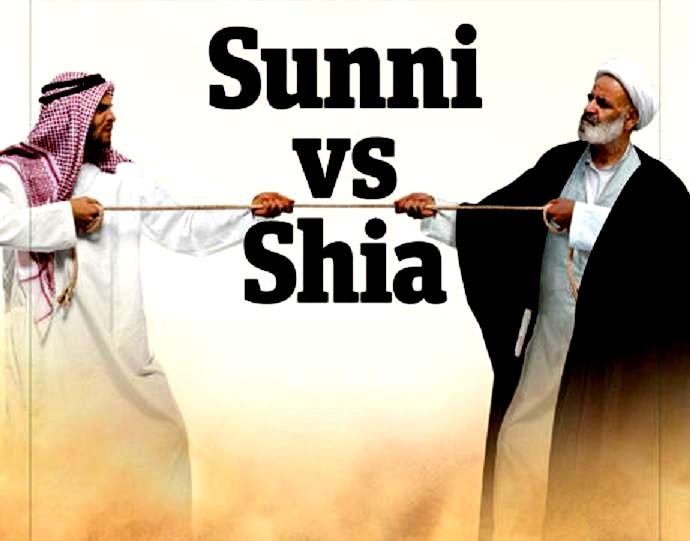 Saudi rulers will perish: Khamenei
 | Sept. 27, 2016 at 9:44 AM


