Showing posts with label drone. Show all posts

Friday, September 13, 2019

Jihad Against Babylon the Great


Telegram post by Abu Hafs Al-Maqdisi, leader of the Gaza-based Jaysh Al-Ummah Al-Salafi. Credit: MEMRI.
Gaza-based jihadi group calls on Taliban to increase attacks on America
U.S. President Donald Trump supposedly planned—and then cancelled—a secret meeting with leaders of the Taliban to have been held at Camp David.
(September 11, 2019 / JNS)
The leader of a Gaza-based jihadi group called on the Taliban to increase its attacks on America after  U.S. President Donald Trump broke off talks with the Taliban, according to a report by the Middle East Media Research Institute (MEMRI), shared exclusively with JNS.
Abu Hafs Al-Maqdisi, the leader of the Gaza-based Jaysh Al-Ummah Al-Salafi, released a statement on Telegram on Tuesday commenting on Trump’s decision not to sit down with the Taliban.
Al-Maqdisi called on the Taliban to intensify its operations against America, adding that the country is on the brink of collapse.
Following Trump’s cancellation of what was supposed to be a secret U.S.-Taliban meeting to have been held at Camp David on Sept. 9, the Islamic Emirate of Afghanistan (the Taliban organization) said the following in a statement:
“Now, as the president of the United States has announced suspension of negotiations with the Islamic Emirate, this will harm America more than anyone else. It will damage its reputation, unmask its anti-peace policy to the world even more, increase its loss of life and treasure and present its political interactions as erratic.”

Friday, September 6, 2019

Striking Iraq was a low-risk opportunity for Netenyahu and Bolton


Striking Iraq was a low-risk opportunity for Netanyahu
The balance between the US and Iran in Iraq allowed Netanyahu to make a military show of might before the election
Iraq is locked in an Iranian-American-Israeli geopolitical triangle of tensions.
An air strike on 20 August against a Popular Mobilisation Unit (PMU) militia base in central Iraq was the fourth in a series of recent attacks targeting their facilities. Israel did not deny its role in the strike, asserting that it was part of its campaign to weaken Iranian influence in Iraq.
Many questions
The question remains as to why Israel claimed credit for the attack, when usually it seeks a policy of plausible deniability after an air strike or assassination?
Second, why did Iran, the Iraqi government, and the PMU all remain relatively quiet immediately after the attack? As of yet Iran and its allied militias within the PMU have failed to retaliate after this provocation.
The question remains as to why Israel claimed credit for the attack, when usually it seeks a policy of plausible deniability after an air strike or assassination?
On 26 August and following a drone strike in the western Iraqi town of Qaim which killed a PMU commander, the Fatah Coalition, a parliamentary bloc representing PMU, said the attacks was “a declaration of war on Iraq and its people” and held the US fully responsible for it.
However, the answer to the above questions can be answered by the complex regional equation that maintains the balance of power in Iraq. After the toppling of Saddam Hussein in 2003, Baghdad had to balance relations with Iran and the US, and on numerous occasions both Tehran and Washington have pursued their own objectives in Iraq, without any regards for its sovereignty.
The recent strikes symbolise Israel’s ability to do the same in Iraq, creating a complex triangle of actors seeking to project their power there, yet playing by certain rules that has kept the triangle from collapsing into a proxy battleground.
The Israeli angle
Israel targeting Iraq from the air is significant: it is has not done so since its 1981 air raid on an Iraqi nuclear reactor.
The recent strike will do little to damage the PMUs or Iran’s influence in Iraq, which raises the question as to why Israel bothered in the first place? The answers have to do with Israel’s – or more precisely – Prime Minister Benjamin Netanyahu’s domestic, regional and international objectives.
Israel targeting Iraq from the air is significant as it is has not done so since its 1981 air raid on an Iraqi nuclear reactor
Since 2017 Israel has primarily focused on alleged Iranian weapons depots and convoys in Syria, conducting more than 200 air strikes. On the domestic level, as Netanyahu heads into a re-election later this month, he could claim credit for a more spectacular act in Iraq than the usual strikes in Syria.
On the regional level the strikes in Iraq, a state on Iran’s borders, serve as another demonstration of the long range of Israel’s aircraft.
Internationally, the latest Israeli strikes in Iraq coincided with recent French attempts to facilitate Iranian-American negotiations to deescalate current tensions. These overtures could have been scuttled had any Iranian-affiliated Iraqi groups retaliated against US forces deployed in Iraq.
The US-Iran connection
Ironically, both the US and Iran have the same foreign policy angle when it comes to Iraq. Neither one seeks a potential conflagration in Iraq in which they cannot control the outcome. Thus, both are displeased by Israel’s actions as it threatens their assets in Iraq. Israel targeted Iranian weapons and facilities in Iraq, while the US fears that Israel’s actions could jeopardise American forces in Iraq. 

Nevertheless, this situation remains precarious for Iran as the various militias within the PMUs have their own agency and constituencies. Both the Iraqi and Iranian government have to calculate the risk that one of these militias could act on their own.
From Iraq to Lebanon, Israel attacks its neighbours with impunity
Fortunately for both Iran, Iraq, and the US none of the PMU militias had taken matters into their own hands against the American forces as of yet. Pro-Iranian militias within the PMU were most likely instructed to not retaliate after the attacks.
While these militias have little means at their disposal in terms of missiles or artillery that could reach Israel, they do have the ability to attack American forces in Iraq, which some of the PMUs have blamed for the strikes, alleging that the US had colluded with Israel.
The Iraqi target
A former Israeli air force general, who took part in the 1981 raid, asked in a Foreign Policy piece: “Is Iraq the New Front Line in Israel’s Conflict with Iran?” The answer to this question can be found in both Iranian and American unwillingness to let Iraq emerge as a new battleground, as both are already facing off in the Gulf, which has already emerged as a low intensity theatre of conflict on the high seas.
Iraq provided a unique target of opportunity for Netanyahu. Israel, aware of this precarious balance, could strike targets in Iraq knowing it could get away with it and face few repercussions. The balance between the US and Iran in Iraq prevailed, allowing Netanyahu a military show of might before the election.
In the past, not only Iran and the US undermined Iraq’s sovereignty after 2003, but so did most of Iraq’s neighbours, including Syria, Turkey and Saudi Arabia. Israel has become just another regional actor to do so, albeit trying to foment tensions at a time when the stakes have never been higher.
The views expressed in this article belong to the author and do not necessarily reflect the editorial policy of Middle East Eye.

Wednesday, September 4, 2019

The Iran and Iraq Horns Promise to Kill US Troops


Following the August 20 attack on PMU’s Balad air force base. Source: Almaalomah.com, August 20, 2019)
Iraqi Shi’ite Militias: U.S. Is To Blame For Attacks On Al-Hashd Al-Sha’abi (PMU) Positions; U.S. Interests In Iraq Are Within Range Of Our Weapons
N. Mozes
The following report is now a complimentary offering from MEMRI’s Jihad and Terrorism Threat Monitor (JTTM). For JTTM subscription information, click here.
In recent weeks, there have been a series of attacks in Iraq on operatives, positions, and weapons depots of Iran-backed Iraqi Shi’ite militias. These have included a July 19, 2019 attack on the Al-Shuhada base in the Amerli region, some 100 km from the Iranian border, in which 30 people were killed, and an August 25 attack, apparently aerial, on a convoy of the Al-Hashd Al-Sha’abi (Popular Mobilization Units, PMU) militia’s 45th Brigade in the Al-Qaim region near the Syrian border, in which at least two people were killed. One of those killed was the brigade’s logistical support chief, Kazem ‘Ali Muhsen, aka Abu ‘Ali Al-Dabi.
Militia officials are blaming the U.S. and Israel for the attacks and have threatened to respond forcefully, including against the U.S. Embassy and consulates and other U.S. interests in the country. Demonstrating the seriousness of this threat, militias have reported in the past few days that they are firing at suspicious drones flying over their positions.
Further, the Qom, Iran-based Iraqi Shi’ite Grand Ayatollah Kazem Hosseini Haeri issued a fatwa prohibiting any further U.S. presence in Iraq, and stating that the only option is “resistance, defense, and confronting the enemy.” He added he would take up arms himself were he capable of doing so.
It appears that the Iraqi government is seeking to prevent an escalation on its soil and to balance its relations with Iran and the militias it backs against its relations with the U.S. Thus, it has announced that it will act through diplomatic channels to prevent more attacks, and that its armed forces are ready to respond to them if they do occur. At the same time, messages were conveyed to the militias to rein in their reactions to attacks. For example, an announcement released following a meeting among Iraqi President Barham Salih, Prime Minister ‘Adel ‘Abd Al-Mahdi, and parliamentary speaker Muhammad Al-Halbousi called the August 25 attack on the PMU’s 45th Brigade convoy “aggression against Iraqi sovereignty” and referred to those killed as “Iraqi martyrs,” but added, “The state’s source of authority” – that is, the Iraqi government – “must be respected,” and that circumventing it caused “harm to the national interest and the law.” Likewise, it stressed that “we must not be drawn into the policy of [either] the [Iranian or the Western] axis, and we must resist turning Iraq into an arena of war and prevent a situation in which Iraq becomes a base for attacking its neighbors.”[1]
Prime Minister ‘Abd Al-Mahdi announced on August 27, at the conclusion of a government meeting, that Iraq was ready to respond with determination and using all means at its disposal to any aggression originating either within or outside of Iraq, and that Iraqi armed forces were on high alert “to defend Iraq, its citizens, and the state, and all diplomatic representations operating in it”[2] – possibly referring to the Shi’ite militias’ threat to harm U.S. representations.
This government policy prompted criticism from militia officials and militia representatives in the Iraqi parliament; they said that the Iraqi government was not doing enough to deter the U.S. and Israel from attacking them and threatened widespread protests in the country.
Clear evidence of the tension between the Iraqi government and the Shi’ite militias that are part of the PMU, which by law is subordinate to the government, can be found in a dispute that erupted between PMU chief Falih Fahad Al-Fayyad and his deputy Abu-Mahdi Al-Muhandis. When the latter blamed the U.S. for the attack on the PMU, Al-Fayyad, who is also national security advisor to the prime minister and was appointed PMU chief by the government, said that Al-Muhandis’ statements do not represent the PMU’s position.
This report will review reactions in the Shi’ite militias and their supporters to these events:
Deputy PMU Chief: U.S. Forces Are To Blame For What Happened; We Will Down Aircraft Circling Above Our Bases
On August 21, one day after an attack on the PMU’s Balad air force base in Salah province, PMU deputy commander Al-Muhandis, as noted, blamed the U.S. for the attack and threatened to fire upon any foreign aircraft  circling over PMU bases. He stated: “We have accurate information that the Americans have in the past year sent four Israeli drones into Iraq via Azerbaijan to operate as part of the U.S. forces, in order to carry out sorties against Iraqi Army positions. We have information, maps, and lists of all the types of American aircraft that have taken off, when they have landed, and how many hours they spent in Iraqi skies.
“Recently they conducted surveillance against our positions, instead of against the Islamic State [ISIS], and collected information about PMU brigades, weapons depots, and equipment… The American forces are the main culprits in what is happening… Our only option is to defend ourselves and our positions by using the weapons now [in our possession] and advanced weaponry… We see every foreign aircraft circling above our positions without Iraqi government authorization as enemy aircraft, and we will use all means of deterrence to prevent strikes on our positions.”[3]
Al-Muhandis’ announcement appears to have stirred resentment in Prime Minister Al-Mahdi, since by law the PMU is under his control, and he fears an escalation of tensions and damage to Iraq-U.S. relations. PMU chief Al-Fayyad hastened to clarify that the statements “attributed to the PMU deputy chief… do not represent the PMU’s official position. It is the armed forces’ commander in chief [i.e. the prime minister] or his proxy who express the official position of the Iraqi government and its armed forces.”[4]
Hizbullah Brigades: All U.S. “Fortresses” In Iraq “Are Within Range Of Our Missiles”
Despite PMU head Al-Fayyad’s announcement, deputy head Al-Muhandis is supported by many PMU-member Shi’ite militias, which brings into question the Iraqi government’s ability to enforce its authority over these militias. An August 22, 2019 Hizbullah Brigade announcement stated: “We blame the Americans for the attack on the Iraqi military positions, and we know that they are planning more attacks, either direct attacks or by encouraging the Zionists to carry them out… It is not out of the question that they are planning to assassinate fighters and strike national figures, even holy sites…”
Threatening retaliation against U.S. interests in Iraq in the event of any further attack, the announcement continued: “We address a final warning to the American enemy: Any new strike on any Iraqi position will be met with a firm and harsh response, giving you a taste of cruel and sudden death. Your fortresses will not protect you, because they are all within range of our missiles… We keep our word and do what we say we will do. Be assured that if a clash begins, it will end only with your final expulsion from the region, and you will know what price you will pay.”[5]

Hizbullah Brigades’ emblem
Hizbullah Brigades spokesman Muhammad Muhyi called on the U.S. to take this warning seriously, “because there will be a genuine, determined, and harsh response to any future U.S.- or Israel-backed attack on any security forces’ position. The U.S. is to blame, and it will bear the responsibility for what will follow… The fight will continue until it reaches its final stage, that will lead those involved in idiotic deeds to a direct conflict that will [in turn] lead… to the final battle that will end in the eradication of Israel.“[6] He added that the recent attacks were planned in advance and were carried out following U.S. or Israeli drone surveillance.[7]
Siding with PMU deputy leader Al-Muhandis, PMU official Hadi Al-Jazaeri stated that the PMU factions’ response to any future attack would be as described by Al-Muhandis, “because he is the true PMU leadership.” He reiterated that any aircraft flying over PMU positions without Iraqi government authorization would be considered hostile.[8]

Vehicle destroyed in August 25 attack on PMU’s 45th Brigade convoy in Al-Qaim (Source: Almaalomah.com, August 25, 2019)
Muhammad Mahdi Al-Bayati, chief of the Badr organization’s northern sector, criticized the Iraqi government and called on it to “take a bold stand in light of the Zionist attacks on PMU positions and commanders.” He warned: “The government’s silence will push the masses opposing the foreign presence into the streets, in large protest demonstrations, to compel Prime Minister ‘Adel ‘Abd Al-Mahdi and parliament to expel the American forces from the country.”[9]
Firing At Drones Circling Above PMU Positions
In recent days, the militias have actualized their threat to fire on drones flying over PMU positions. On August 23, it was reported that shots were fired at a drone above the PMU’s 12th Brigade’s position in the Baghdad region. According to the report, the drone was “forced to leave before completing its mission.”[10]
On August 25, it was reported that a drone was downed near the PMU’s 50th Brigade base in Nineveh.[11]
Militias’ Parliamentary Representative: We Can Expel U.S. Forces By Diplomatic And Military Means
Similar threats were expressed by Iraqi MPs representing the Shi’ite militias. Hassan Salem, MP from the Sadiqoun faction and senior official in the ‘Asaeb Ahl Al-Haq movement, which is designated a Foreign Terror Organization by the U.S., pointed at the U.S.-Israel connection and called for closing the U.S. Embassy in Baghdad and ending the U.S. military presence in Iraq. He said:
“The Zionist entity has an embassy within the U.S. Embassy in Baghdad, and it has a security-intelligence-espionage arm that carries out various missions, including assassinations, explosions, and bomb placement… There will be no security in Iraq without the closure of this Embassy, that is in essence two embassies, not one… There is no option but to end the American coalition’s presence, which is the main reason for the infiltration of Iraqi airspace.”[12]
On another occasion, Salem said: “Iraq can expel the American forces by both military and political means. We will begin to act within parliament but if we do not succeed at this for any reason then we will turn to the armed option that Washington knows so well. The Iraqi government’s silence is unwarranted, and perhaps even increases the Israeli attacks. We in the resistance factions have both a political and military option, and we have the armed capability to strike at American interests in the country.”[13]
The Al-Fath Coalition, which is headed by Hadi Al-‘Amari, announced following the August 25 attack on the PMU convoy: “We reserve the right to react to these Zionist attacks, and lay full blame for this aggression on the international coalition, particularly the U.S. This is a declaration of war on Iraq… There is no need for an American presence [here]…”[14]
Qom, Iran-Based Iraqi Shi’ite Cleric: Continue The Resistance, Expel All U.S. Forces From Iraq
The militias’ threats to respond to additional attacks on them were supported by Qom, Iran-based Iraqi Shi’ite Grand Ayatollah Kazem Hosseini Haeri. On August 22, 2019, he called for responding to the aggression and acting to expel the U.S. forces from Iraq in an announcement to Shi’ite militia fighters, stating:
“…I have been informed of the recurring attacks on your bases and weapons depots in recent days by foreign hostile aircraft that, according to the results of an investigation by my sons [i.e. the Shi’ite militias], have turned out to be Zionist, and supported by the American forces in the region… We, like others, know that the American politicians are not blessed with the necessary courage and capability to learn their lesson from their defeats in Afghanistan, Yemen, Syria, and Palestine, where they lost billions [of dollars’ worth] of their country’s resources and spilled the blood of their own citizens in failed adventures and perverse schemes in the Islamic world and the rest of the world. [Therefore they came] to the point where they recruited their agents and their bases in the region and in the world to attack Al-Qaeda and the Taliban movement in Afghanistan.
“Today we see that they are investing most of their efforts in sitting down with some of these entities and directly negotiating with them in order to leave with an agreed-upon plan. Who among us does not know, for example, that [deposed Iraqi president] Saddam [Hussein] was one of their perversities, and they were forced in the end to bring him down, at great cost, and that the ISIS project is [also] directed by them and that they even openly transported its [i.e. ISIS’s] leaders from the battlefield in their [i.e. the Americans’] helicopters after they lost the confrontation with our sons from the brave [Iraqi] armed forces. This was after they [i.e. the Americans] had spent huge amounts and made tremendous efforts to establish it [ISIS]…
“In the clash with our sons in the sacred PMU,  the U.S. is taking advantage of the permission [to operate given it by the Iraqi] government to carry out aerial intelligence operations in the country, and [is also taking advantage of] the senior [Iraqi] officials’ decision to disregard the attack on the country’s sovereignty and airspace…
“In this context, I say clearly and out of religious responsibility that no U.S. military force or its ilk must be left remaining, on any pretext whatsoever – whether it be for training, advisory, or military purposes, or for fighting the terrorism  that it trained … Our devoted men in the armed forces must continue their honorable and legitimate defense of Islam and of the state and its honor in the face of any aggression against its territory or airspace or the positions of its brave forces. Oh my sons, you have but one choice: [to continue your] resistance, defense, and clashing with the enemy that is so lowly and defeated that the tyrant Trump could not enter your land openly.[15] If I were only capable… of taking up arms, I would do so and fight in your ranks…”[16]

Excerpt from Haeri’s announcement (Source:Alhaeri.org, August 22, 2019)
Following Grand Ayatollah Haeri’s Announcement, Shi’ite Militias Declare: All U.S. Embassies, Consulates, And Positions In Iraq Are Within Range Of The Resistance
Shi’ite militia members treated Grand Ayatollah Haeri’s announcement like a fatwa, and called for implementing it. ‘Asaeb Ahl Al-Haq senior official and MP Hassan Salem said: “Following Kazem Hosseini Haeri’s announcement, we must act to expel the American forces from the homeland. The Iraqi government must announce to the American forces that they have a short time to clear out their equipment and withdraw their troops, and that afterwards they – their embassies, consulates, and all their positions – will be within range of the sons of the Islamic resistance. Their excuses will no longer be accepted. We want no training, support, or transfer of knowhow.”[17]
Nasr Al-Shamari, assistant secretary-general of the Al-Nujaba militia, designated by the U.S. as a terrorist organization, said: “The Iraqi resistance is present and will carry out its job and role as long as necessary. We now have a clear fatwa by the religious authority [Haeri] regarding the continued presence of the American forces in Iraq, and we will act to implement it by every political and military [means] at our disposal. It is the Americans who imposed the terms of the new confrontation after the attack on the PMU positions and depots. We are committed to defending ourselves.”[18]
On August 27, a Shi’ite group called Jund Al-Imam Al-Hujja[19] posted a two-minute video in which a masked fighter threatens to implement the fatwa regarding the U.S. interests in Iraq, saying: “We heed the fatwa issued by Ayatollah Kazem Haeri, who called to strike the forces of the American occupation… Let Trump know that [America’s] sites, bases, and interests – both military and civilian – are legitimate targets, at the mercy of the weapons of our mujahideen, who, with Allah’s help, will bring Hell upon them and shake the ground beneath them. We will not rest until we drive out every last soldier of the infidel occupation.”[20]
To view a MEMRI TV clip of this video, click below:
* N. Mozes is a Research Fellow at MEMRI.

[1] Almaalomah.com, August 26, 2019.
[2] Almaalomah.com, August 27, 2019.
[3] Central-media.org, August 21, 2019.
[4] Iraqnewspaper.net, August 21, 2019.
[5] Kataibhezbollah.com, August 22, 2019.
[6] Alahednews.com.lb, August 23, 2019.
[7] Alansaar.net, August 24, 2019.
[8] Almaalomah.com, August 25, 2019.
[9] Almaalomah.com, August 26, 2019.
[10] Almayadeen.net, August 23, 2019.
[11] Aalansaar.net, August 25, 2019.
[12] Alansaar.net, August 22, 2019.
[13] Alansaar.net, August 26, 2019.
[14] Almaalomah.com, August 25, 2019.
[15] This apparently refers to U.S. President Donald Trump’s December 26, 2018 visit to American troops at the Ain Al-Assad military base in Iraq, which was publically announced only after it took place.
[16] Alhaeri.org, August 22, 2019.
[17] Almaalomah.com, August 24, 2019.
[18] Baghdadtoday.news, August 24, 2019.
[19] According to its Facebook page, the group was founded in April 2018 to fight “the American occupation in Iraq” (page was accessed on August 28, 2019, is now defunct). So far there have been no reports of the group’s activity and it is unclear whether it is part of the PMU.
[20] Youtube.com/watch?v=7b-hH3y3ooY, August 27, 2019.

Tuesday, September 3, 2019

Iran Plans to Cross the Redline (Daniel 8:4)


Iran’s Payback Plan Targets America
Iraqi leaders of the Popular Mobilization Forces, a group of mostly Shi’ite militias, have put out conflicting statements accusing the United States, Israel and foreign forces of involvement in mysterious explosions that damaged munitions warehouses over the last month. On Wednesday, August 21, the powerful paramilitary leader Abu Mahdi al-Muhandis said the Iranian-backed Shi’ite militias would hold the United States responsible for recent alleged airstrikes and that the threat came from “four Israeli drones” brought into Iraq via Azerbaijan.
Muhandis is the deputy of the PMF, but he is also the leader of Kata’ib Hezbollah, a militia closely linked to Iran’s Islamic Revolutionary Guard Corps. The U.S. Treasury in 2009 designated the group a terrorist organization. Muhandis fought alongside the IRGC in the 1980s and is wanted in connection with attacks in Kuwait that took place in the 1980s.
During the last mount for control, explosions destroyed munitions at PMF warehouses in Amerli, Camp Ashraf, Camp Falcon and near Balad Air Force Base. The explosion on August 20 was so large senior Iraqi officials visited the site. Now the Shi’ite militias, who are officially part of the government’s security forces, must figure out how to react. Muhandis statement is the most clear. He holds the United States responsible and asserts exactly how the attacks have happened, alleging Israeli drones transported via Azerbaijan to Iraq with knowledge of the United States. Azerbaijan does not share a border with Iraq. Arabic media reports from Asharq al-Awsat and Al-Ain have alleged that Israel was behind the attacks.
Muhandis has claimed via Facebook and Twitter that the PMF will defend itself and attack any drone flying over PMF bases. However, Faleh al-Fayyadh (Falih Fayyad), the head of the PMF and national security advisor of Iraq, has said that the incident is being investigated. He said on Wednesday that the incidents appear to be linked to an “external force” or foreign forces. Initial investigations, which he did not describe, had concluded this. This is an important distinction. Blaming nebulous “foreign” actors—rather than asserting a link between Israel, the United States and Azerbaijan—shows a more cautious and judicious response. The statement issued by the official PMF illustrates the internal discussions and disagreements within the organization.
This is important because the PMF is made up of several powerful groups, such as the Badr Organization, Kata’ib Hezbollah, Asaib Ahl al-Haq, Harakat Hezbollah al-Nujaba, Kata’ib Imam Ali, and others. These are formed into brigades that were created during the war on the Islamic State. These units were themselves rooted in older militias and groups, some of which had fought the United States and fought against Sunni extremists after 2003. Several senior PMF members have roots going back to the 1980s fighting alongside the IRGC against Saddam Hussein. The PMF has struggled to unite all its brigades, which tend to be linked to political parties, religious structures, and sometimes even tribal or minority groups. For instance, the 30th Brigade in Nineveh plains is made up Shi’ite Shebeks, a minority group. It has refused orders from Baghdad to be redeployed and Baghdad has had to relent on some of its orders after protests by Shebeks closed a road from Mosul to Erbil. The militias therefore appear sometimes independent of federal control, stockpiling their own weapons on their own bases. It is these bases that have now been victims of mysterious explosions, allegedly targeted in airstrikes. These bases may contain small arms, but some are also said to contain missiles and heavier munitions supplied by Iran.
Last year, in August and November, reports emerged that Iran was transferring missiles to the militias in Iraq. A June 2018 airstrike targeted a Kata’ib Hezbollah in Syria next to the Iraqi border. At the time the militia blamed the United States for the attack initially. This shows a long-term agenda by groups like Kata’aib Hezbollah, to oppose the United States in Iraq and Syria. The United States has increased tensions by sanctioning many of the Shi’ite militias in Iraq as terrorist groups—except Badr. In April, the United States sanctioned the entire IRGC, which affects its links to these groups in Iraq. In May, U.S.-Iran tensions increased an rockets and mortars were fired near U.S. forces and the U.S. embassy. The United States accused Iran of prodding its militias to fire them. At the same time many of the militia leaders have called for the United States to leave Iraq.
The recent alleged airstrikes now bring the tension to a new height amid disagreements within the PMF on what to do next. Iraq has wanted to downplay claims that Israel was behind the attacks. But Iraqi members of parliament and militia leaders, like Qais Khazali, want answers. In December 2017, Khazali went to Lebanon and visited the area near Israel’s border. Some Shi’ite militias in Iraq have said they could join a future war alongside Hezbollah against Israel. Now those like Khazali wonder if the conflict is already closer to home.
A timeline of statements by the various groups within the PMF show that after the first incidents in July the groups alternated between denial and blaming foreign actors. U.S. Central Command even put out a statement on July 19 noting that “we are aware of reports of an attack against the Iranians and a Popular Mobilization Force unit in Salah ad-Din. US Forces were not involved.” A member of the State of Law Coalition in Iraq’s parliament accused the United States of being behind the bombing at Camp Amerli that month.
In mid-August, after the explosion at Camp Falcon, Asaib Ahl al-Haq accused Israel of being responsible for the attack. A member of the Fatah Coalition in Iraq’s parliament alleged the United States was responsible. Harakat Hezbollah al-Nujaba also accused the United States of being behind the mysterious explosions. Iraq’s government sought to allay concerns by adding more strict rules to use of Iraq’s airspace, including by coalition aircraft operating against the Islamic State.
U.S. forces could be targeted in the wake of subsequent incidents. A Lead Inspector General report on Operation Inherent Resolve published in early August noted that the threat from Iranian-backed forces in Iraq increased in the past quarter between April and June 2019. The OIR spokesman issued a statement in Arabic on August 21 to try to allay concerns in Iraq. It noted that the United States is only involved in Iraq as part of the mission to assist Iraqi Security Forces and to defeat the Islamic State. But the PMF is aware of other statements from the White House in December 2018 that the United States could use Iraq to “watch over Iran.”
The initial reactions from the PMF, whose political allies in parliament make up the second largest parliamentary group as part of the Fatah coalition, show disagreement on whether to blame Israel, the United States or a more general “foreign” actor. The militias that have been designated as terrorists by the United States are more likely to blame the United States as part of a campaign of incitement against U.S. forces that has gone on for years. However, the PMF’s high-level officials appear more reticent, biding their time and seeing how the Iraqi government will respond.
Seth J. Frantzman is a Jerusalem-based journalist who holds a Ph.D. from the Hebrew University of Jerusalem. He is the executive director of the Middle East Center for Reporting and Analysis and a writing fellow at Middle East Forum. He is the author of After ISIS: America, Iran and the Struggle for the Middle East (forthcoming Gefen Publishing). Follow him on Twitter at @sfrantzman.
Image: Reuters

Saturday, August 31, 2019

Crossroads with Israel, Iran, and Iraq


Alleged Israeli Strikes Bring US to Crossroads in Iraq
A recent series of suspected Israeli strikes inside Iraq could end the American nation-building project that began with the 2002 invasion — or show the limits of the Trump administration’s campaign to constrain Iran.
In the last month, attacks on Iran-linked weapons depots and militia convoys in Iraq — as well on targets across Syria and Lebanon — have suggested that Israel has launched a new front in its shadow war with Iran. The strikes mark the first known attacks by Israel on Iraq since 1981, though its forces have carried out hundreds of such attacks in Syria and Lebanon over the last seven years. In Baghdad, where a burgeoning nationalist faction in domestic politics has for months been pushing for the removal of U.S. troops, some groups have blamed Washington. Although it doesn’t appear that the United States provided any support to the striking forces, Israel is a close U.S. ally, and at least appears to be helping the Trump administration “push back” on Iran.
Pentagon leaders see the U.S. relationship with Iraq as a strategic berm in the troubled region, raising the question of what short-term tactical gains from a strike would be worth damaging that relationship. The Defense Department has fiercely denied carrying out the attacks. On Wednesday, Defense Secretary Mark Esper said that he was concerned about “anything that may impact our mission, our relationship, or our forces” in Iraq.
But across the river, where the White House has made constraining Iran its top regional goal, the tone has been very different. Administration officials, speaking anonymously, have pinned the blame on Iran. On Monday, Vice President Mike Pence touted a “great conversation” with Israeli Prime Minister Benjamin Netanyahu. “The United State fully supports Israel’s right to defend itself from imminent threats,” Pence tweeted. “Under President @realDonaldTrump, America will always stand with Israel!”
“Could there be backlash? Yes,” said Michael Knights, a senior fellow at the Washington Institute who specializes in the military and security affairs of Iraq and travels often to Baghdad. “It could seriously damage the U.S. coalition position inside Iraq. But the question is whether the U.S. really cares that much about being removed from Iraq.”
Why Now?
Israel has long sought to disrupt the spread of Iranian weapons to proxies who could strike Israel. Tel Aviv says  Tehran is trying to establish a land-based supply line through Iraq and Syria to Hezbollah in Lebanon. (Israel fought a brief war with the Iran-linked militia-and-political party in 2006.) In particular, Israel worries about long-range missiles and anti-aircraft defenses.
Israel has repeatedly demonstrated that it can find and destroy Iranian targets in Lebanon and western Syria. But the strikes in Iraq are a significant escalation, analysts say — one that likely reflects both domestic politics in Israel, maturing military capabilities, and perhaps tacit support from Washington.
“What’s very significant is that Israel has demonstrated that it has fine grain insight into the movement and operations of the Iranian proxies in Iraq, and that it has the reach to actually strike those targets successfully,” Knights said. “Clearly over the last couple years, it has been developing the technology to reach into Western and Northeastern Iraq, right up to Iranian border, and strike with great precision.”
The nature of targets themselves is also an open question that could explain the new campaign, says Behnam Ben Taleblu, an analyst at the hawkish Foundation for the Defense of Democracies. Reports that Iran had parked weapons in Iraq’s western Anbar province in 2018 “likely impacted Israel’s tolerance for risk.”
As Iran began to transfer weapons to Iran-backed militias in western Iraq, I believe the Israeli calculus began to change,” Taleblu said. “They may have realized that no matter how successful strikes in Syria are, they would only be mowing the lawn if they did not stem the source of these transfers.”
Some analysts believe that Netanyahu approved the strikes to buttress his tough-on-Iran campaign platform and help win re-election on Sept. 17. Last January, he began publicly acknowledging strikes on Iranian weapons in Syria; more recently he has hinted that Israel is responsible for the Iraq attacks.
What About Washington?
It remains an open question how much support for the strikes Washington has given Israel, if any. The Pentagon has robustly denied any involvement. Officials have noted that they lack authority over Iraqi skies, and emphasized that U.S. troops are in Iraq at the invitation of the government solely to fight ISIS.
But Trump stirred controversy in Baghdad in February when he said that he wanted to use troops stationed in Iraq to “watch Iran.”
While it is not clear that the Trump administration has done anything to encourage the Israelis, it’s equally unclear that it has sought to discourage them, either. Despite rhetoric about “pushing back” on Iran, the Trump administration has so far relied on choking sanctions and maritime patrols to box in Tehran. Most of the kinetic activity has been carried out by U.S. allies in the region like Israel and Saudi Arabia. Joint Chiefs Chairman Joseph Dunford said Wednesday that additional forces sent to the region in recent months to deter Iran “hasn’t had a material effect on the actual capacity of the Iranian forces or their proxies.”
“The Americans have the incentive to look the other way,” Taleblu said, since the strikes “accomplish a goal the U.S. wants to accomplish: rolling back Iran’s regional influence and eroding its freedom of maneuver.”
To some analysts, the uncertainty reflects an apparent divide within the Trump administration on how to handle what it has termed Iranian “malign activities” in Iraq. According to Knights, there is a growing awareness amongst Iraqi lawmakers that a U.S. presence in the country is not a foregone conclusion under the Trump administration, especially at the expense of the administration’s hardline Iran policy.
“This administration is of two minds,” Knights said. Although the Pentagon still sees Iraq as an important security partner in the region, there is part of the administration that thinks, “Iraq already lost to Iran so why are we wasting our time?” he said.
A Fraught Relationship
The Trump administration has pressed Baghdad to crack down on Iran-aligned militias that helped fight ISIS.
But those groups are deeply intertwined in the Iraqi political system. Many of them are associated with political parties represented in parliament and some of have been incorporated into the Iraqi military as so-called “Popular Mobilization Forces.” Hinting at the complexity of unraveling the militias from Iraq’s political system is the fact that the PMF groups are on the military’s payroll, which receives security assistance from the United States. Privately, Pentagon leaders often acknowledge that straining all Iranian influence from Iraq, with which it shares a border, is unlikely.
There is a simmering movement in Iraq to kick the Americans out of the country, lead by the nationalist Shiite cleric Moqtada al-Sadr. (Sadr’s faction is also opposed to Iranian influence in the country.) But Baghdad is also worried about a nascent resurgence of ISIS — a resurgence that it would likely need U.S. support to suppress — and so, at least for now, the sovereignty movement has stopped short of forcing a U.S. departure.
How long the United States will be able to look the other way while Israel continues to strike Iraq depends on how the Iraqis respond, both Taleblu and Knights said. So far, Sadr has encouraged his followers to remain focused on disarming the militias that aren’t under state control. But public opinion could shift if the strikes continue.
“The X-factor is the Iraqi response,” said Taleblu. “As Israel expands targeting into Iraq, it likely means the U.S. will have thread a needle based on how the Iraqi government wants to respond.”
Knights said he expects the crisis to “fizzle out.”
“Eventually, the U.S. is probably going to have a word with the Israelis and the Israelis will feel a bit more pressure to wind it down,” he said, suggesting they are hitting as many targets as they can now. “That’s how all of their wars have been fought: get their licks in quickly before the international community shuts down the fighting.”
The alternative, Taleblu said — that the U.S. is asked to leave Iraq — would be “devastating.”

Tuesday, August 27, 2019

The Drone War That Will Lead to WW3


Drone War Takes Flight, Raising Stakes in Iran, US Tensions
By Jon Gambrell, Josef Federman and Zeina Karam
Published Aug 25, 2019 at 1:22 PM | Updated at 4:17 PM EDT on Aug 25, 2019
From the vast deserts of Saudi Arabia to the crowded neighborhoods of Beirut, a drone war has taken flight across the wider Middle East, raising the stakes in the ongoing tensions between the U.S. and Iran.
Since the U.S. withdrawal from the Iran nuclear deal last year, there has been an increasing tempo of attacks and alleged threats, notably this weekend, from unmanned aircraft flown by Tehran’s and Washington’s allies in the region.
The appeal of the aircraft — they risk no pilots and can be small enough to evade air-defense systems — fueled their rapid use amid the maximum pressure campaigns of Iran and the U.S. As these strikes become more frequent, the risk of unwanted escalation becomes greater.
The U.S. military nearly launched airstrikes against Iran after a U.S. military surveillance drone was shot down in June. Meanwhile, Israeli fighter jets attack targets in Syria on an almost weekly basis, including on Saturday night. Israel’s reason for the latest bombing: To thwart what it called a planned Iranian drone strike.
A Timeline of US-Iran Relations

Israeli aircraft then buzzed over Beirut on Sunday after allegedly losing two drones hours earlier, raising the risk of a wider conflict between it and the Lebanese militant group Hezbollah. On Sunday evening, another drone strike hit an Iran-backed paramilitary force in Iraq, killing one commander and wounding another, members of the group said. It was not immediately clear who carried out the strike.
Amid the escalation, Iranian Foreign Minister Mohammad Javad Zarif made a surprise trip Sunday to the Group of Seven summit in France, at the invitation of the French president.
The mounting tensions are rooted in the May 2018 U.S. withdrawal from Iran’s nuclear deal with world powers. Under the deal, Tehran limited its enrichment of uranium in exchange for sanctions relief. In response to Washington’s withdrawal, Iran initially sought diplomatic support from European partners still in the accord, but ever-increasing American sanctions choked off its sale of crude oil in the international market.
• Trump Says He’d Meet Iran’s Rouhani Over Nuclear Standoff
This May, the U.S. sent nuclear-capable B-52 bombers, fighter jets, an aircraft carrier and additional troops to the region over what it described as threats from Iran. Mysterious explosions struck oil tankers near the Strait of Hormuz.
Coordinated drone attacks followed, first from the Iranian-backed Houthi rebels of Yemen. Major attacks targeted the kingdom’s oil infrastructure — one on a crucial East-West Pipeline, the other a major facility deep in the desert of Arabian Peninsula’s Empty Quarter.
Saudi Arabia immediately tied the attacks to Iran, its longtime Mideast rival. While Iran denies arming the Houthis, the West and United Nations experts say that drones used by the rebels mirror models used by the Islamic Republic.
Door Wide Open for Negotiations with Iran

Meanwhile, a suspected Israeli strike in Iraq last month targeted a base of Shiite militias allied to Iran — in what would be the first attack to be carried out by Israel in Iraq since 1981. Israel remained mum, and U.S. officials who linked the strike to Israel did not say if drones were involved.
Israel, meanwhile, acknowledged striking Syria on Saturday night, in what it described as a pre-emptive attack. The military said it prevented an effort by Iran to position so-called killer drones ahead of an attack on Israel.
Hezbollah leader Hassan Nasrallah disputed the Israeli version in a speech later Sunday, saying the Israeli strikes hit a Hezbollah rest house and killed two of the group’s members. He said that going forward, any Israeli drones that enter Lebanon would be shot down.
The drones Israel says it was targeting in Syria are known to experts as loitering munitions and are similar to the ones being used by the Houthis. The bomb-carrying drone flies to a destination, likely programmed before its flight, and either explodes in the air over the target or on impact against it.
Israeli Prime Minister Benjamin Netanyahu, who is seeking re-election in September, paraphrased a Talmudic passage on self-defense after the attack: “If someone rises up to kill you, kill him first.”
Israel’s military released a map Sunday of what it said were the Iranian supply routes to deliver the planes to Syria. This included what Israel described as the planned drone launch site in the Syrian village of Aqraba, as well as another location in the village of Arneh where a previous launch attempt was allegedly thwarted last Thursday.
‘Late Night’: A Closer Look at Escalating US-Iran Tensions

Lt. Col. Jonathan Conricus, an Israeli military spokesman, said Israel had been monitoring the activity for weeks and struck when it became clear that Iran’s Revolutionary Guard planned to launch the aircraft. He said it is easier to destroy the drones, which are agile and hard to detect once airborne, while they are still on the ground.
“We know the Quds Force spent a lot of effort and time trying to execute this plan,” he said. The Quds, or Jerusalem, Force is the Guard’s expeditionary unit.
Iran denied Israel’s strikes in Syria did any damage to its forces.
“It is a lie,” Guard Gen. Mohsen Rezaei said, according to Iran’s semi-official ILNA news agency. However, Rezaei added that the “defenders of Syria and Iraq will soon give an answer,” without elaborating.
Rezaei’s response shows the escalatory danger of drone strikes. Overnight in Lebanon, one alleged Israeli drone crashed in Beirut while another exploded, authorities there said, calling it an Israeli act of aggression and violation of Lebanese sovereignty.
In his speech, Nasrallah said one of the drones had been flying low among buildings.
Trump Signs ‘Hard-Hiting’ Sanctions on Iran

Israel did not acknowledge the incident.
Hezbollah was quick to say that it did not fire on any of the drones, underscoring the group’s keenness to avoid further escalation with its southern neighbor.
The developments, however, present a direct challenge to the group, which is still recovering from a bruising years-long conflict in neighboring Syria that saw thousands of its fighters killed and wounded while fighting alongside President Bashar Assad’s forces.
Hezbollah, which is part of a fragile national unity government already struggling to deal with a serious economic and financial crisis, does not wish to be seen as dragging the country into another ruinous war with Israel, but may be feeling pressured to respond to perceived Israeli provocations.
In the overnight incident, the first drone, apparently unarmed, crashed onto the roof of a Beirut building where Hezbollah’s media office is located and caused damage to the group’s offices.
The group has repeatedly warned Israel to stop its nearly daily violations of Lebanese airspace, but has so far shown restraint despite a series of Israeli attacks that targeted Hezbollah in Syria. Any retaliation, however, risks sparking an unwanted conflict with Israel that the group would much rather avoid.
Trump Calls off Iran Strikes

Associated Press writer Nasser Karimi contributed to this report.
Copyright Associated Press

Sunday, August 25, 2019

How Israel is Trying to Provoke an Iran-US War


Why is Israel striking pro-Iran outfits in Iraq?
Israel is using Iraq as a staging ground for its proxy battles with Iran – and Iraq can do nothing to stop it.
A string of airstrikes over the past month targeting facilities run by pro-Iran Shia militias fighting under the umbrella of the quasi-official Popular Mobilisation Forces (PMF) has really stirred the hornet’s nest in Iraq.
Previously untouched and unscathed, the PMF enjoyed total freedom to move, set up checkpoints, run their own detention camps, and got a taste of the national defence budget and the largely US-supplied armoury.
Now, senior Iraqi Shia militant leaders are in a panic because they are being targeted by an old and largely untouchable enemy – Israel.
Drone strikes are probably Israeli
The airstrikes appear to carry all the hallmarks of a sophisticated Israeli drone campaign.
The first attack occurred a month ago at the al Shuhada military base near Amerli in Iraq’s northern Salahuddin governorate. Reports suggest that an armed drone struck an Iranian ballistic missile shipment heading to Syria that was being concealed in trucks used to transport refrigerated food. One Iraqi and two Iranians were said to have been killed in that strike.
The second attack occurred at the end of July, this time striking Iranian targets in Camp Ashraf near the Iranian border and just 40 kilometres northeast of Baghdad. Iranian “military advisors” and ballistic missiles that had just arrived in Iraq from Iran were targeted.
The third attack took place last week in the Iraqi capital, Baghdad, with the al Saqr military base being the primary target, killing one person and wounding 29 others.
Al Saqr is in the southwest of Baghdad and is controlled by the Iran-backed PMF. ImageSat International, an Israeli satellite imagery analysis company, has said that the explosion was probably “caused by an airstrike”.
The latest and final strike happened on Tuesday night and was again in Salahuddin, but this time targeting a PMF arms depot at Balad Airbase 64 kilometres north of Baghdad. Footage from outside the base showed billowing clouds of black smoke rising into the air.
While Iraqi police speculated that the “mysterious” explosions were caused by faulty equipment and the extreme heat of an Iraqi summer, an Iraqi parliamentary fact-finding mission concluded that this was not the case and that an unidentified drone was responsible for the explosion. Media are now quoting US officials as confirming that Israel was behind at least the third strike.
The likelihood that the rest of these strikes are also Israeli is quite high. While PMF commanders have blamed both the US and Israel for the strikes, it is unlikely that the Pentagon has struck these targets.
After all, Washington provided extensive close air support to these militias that were operating as part of the federal police and other units infiltrated by Iran-sponsored outfits during the fighting against Daesh. In other words, the US facilitated and protected militants linked to Iran’s Islamic Revolutionary Guard Corps (IRGC), a military force it has now designated in its entirety as a Foreign Terrorist Organization.
However, it is likely that the US was informed of Israeli intentions and simply stood aside and let the airstrikes take place. While not exactly the same, the United States was also aware of Israel’s Operation Opera in 1981 where it bombed Iraq’s light water Osirak nuclear reactor, ironically with Iranian intelligence assistance and cooperation. When it comes to its favourite ally’s “national security”, the White House will rarely say no to Israel.
Iraqi “countermeasures” will fail
These strikes are ultimately about Israel’s national security interests. Last year, Tel Aviv signalled that it considered Iraq as an elevated security risk and could target Iranian military assets in the country.
As Iran is continuing to use Iraq as a logistics hub and nexus to smuggle ballistic missiles from Iran to its proxies in Syria and Lebanon, it is unsurprising that Israel would rather strike earlier up the logistics chain rather than wait for these missiles to come closer to its borders in the Levant.
As a result of the strikes, Iraqi Prime Minister Adel Abdul Mahdi has revoked all licenses for foreign military aircraft to operate in Iraqi airspace without his direct and prior consent and has also ordered all munitions dumps to be moved outside of heavily populated areas.
The PMF’s deputy commander Abu Mahdi al Muhandis, blacklisted as a terrorist by the US, has also threatened to use military force against both American and Israeli assets.
Although national security chief Faleh al Fayyadh has walked back from Muhandis’ threats, Muhandis controls his own militia independently of the PMF and can, therefore, act unilaterally with the IRGC’s permission and support.
That said, Iraq is incapable of policing its own airspace, quite apart from the fact that the PMF lack’s the capability to stop any future attacks. It is clear Israel sought no permission to strike these targets in Iraq and would never do so even if Baghdad demanded it, much as it conducts airstrikes in Syria against other Iranian targets and ballistic missile shipments.
Also, the Iraqi government will find it impossible to enforce its own rules over its airspace as Iraq lacks its own early warning detection systems and its anti-air defences are sparse and lack the capability to intercept advanced unmanned and manned aircraft like those used by the Israeli Air Force and suspected of being used in these four separate attacks.
Iraq has relied almost exclusively on the United States for air defence and, without the White House’s cooperation, it is highly unlikely Iraq will be able to curtail Israeli designs.
Until Iraq gets out from under both the thumb of the United States and Iran, it can never enforce its own sovereignty. It also continues to leave itself open to attack by allowing – or being powerless to prevent – Iranian use of Iraq as a distribution hub to transport men, material, and cash to its proxies.
This means that, as long as Tehran continues to move military resources through Iraq, Israel will likely continue to strike targets as and when it deems necessary, and the US will do nothing to stop them.
Disclaimer: The viewpoints expressed by the authors do not necessarily reflect the opinions, viewpoints and editorial policies of TRT World.
We welcome all pitches and submissions to TRT World Opinion – please send them via email, to opinion.editorial@trtworld.com
Tallha Abdulrazaq is an award-winning academic and writer, with a specialism in Middle Eastern strategic and security affairs.

Friday, July 19, 2019

Babylon the Great Downs Iran’s Drone


Dan Mangan
Amanda Macias
CNBC.com
• Trump said the drone got too close to the USS Boxer in the Strait of Hormuz on Thursday amid already high tensions between Iran and the United States.
• „The Boxer took defensive action against an Iranian drone, after it ignored „multiple calls to stand down threatening safety of ship and ship’s crew,“ Trump said.
President Donald Trump said Thursday that a U.S. Navy ship had destroyed an Iranian drone in a „defensive action,“ escalating already high tensions in the oil-rich Gulf region.
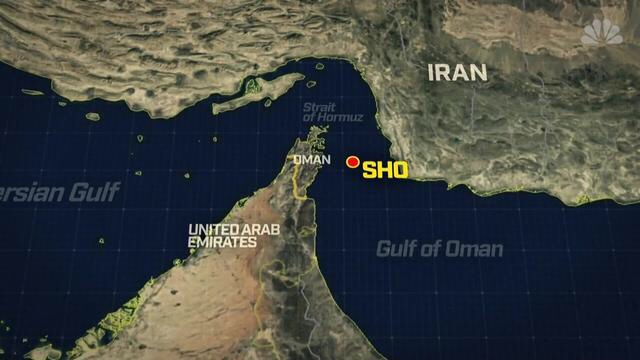
The Boxer is part of a group of Navy ships that was in the strait, located between the Persian Gulf and the Gulf of Oman, as part of an increased U.S. military presence in the region.
Twenty percent of the world’s crude oil passes through the Strait of Hormuz.
The incident came four weeks after Iran shot down a U.S. surveillance drone flying over international airspace the same area, in what American officials at the time called an „unprovoked attack.“
And it came hours after Iran’s Revolutionary Guard seized a foreign tanker it accused of smuggling oil.
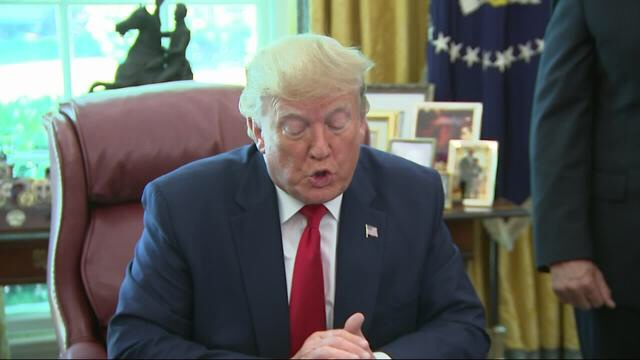
During an event at the White House, Trump said, „The Boxer took defensive action against an Iranian drone, which had closed into a very, very near distance, approximately 1000 yards, ignoring multiple calls to stand down and was threatening the safety of the ship and the ship’s crew.“
„The drone was immediately destroyed,“ Trump said.
The president called the drone’s approach toward the Boxer „the latest of many provocative and hostile actions against vessels operating in international waters.“
He said the United States „reserves [the] right to defend our personnel, our facilities, and interests and calls upon all nations to condemn Iran’s attempts to disrupt freedom of navigation and global commerce.“
„I also call on other nations to protect their ships as they go through the Strait and to work with us in the future,“ Trump said.
A U.S. defense official would not say how the drone was brought down when asked by CNBC.
The USS Boxer is equipped with the Phalanx CIWS — close-in weapon system — for defense against threats including anti-ship missiles and helicopters.
The ship also is armed with short-range anti-ship missiles and non-kinetic systems that could be capable of targeting a drone.
The Pentagon, in a statement issued after the president spoke, said, „At approximately 10 a.m. local time, the amphibious ship USS Boxer was in international waters conducting a planned inbound transit of the Strait of Hormuz.“
„A fixed wing unmanned aerial system (UAS) approached Boxer and closed within a threatening range. The ship took defensive action against the UAS to ensure the safety of the ship and its crew,“ the Pentagon said.
MCSN Craig Z Rodarte | Getty Images News | Getty Images
File photo of t he U.S. Navy, the amphibious assault ship USS Boxer (LHD 4).
Earlier this month, several Iranian boats approached a British commercial ship that was passing through the Strait of Hormuz and tried to stop its passage, but were driven off by a British military ship, NBC News has reported, citing a senior defense official and a British government spokesman.
A day after Iran shot down the U.S. drone on June 20, Trump approved military strikes on Iran in retaliation — but then abruptly cancelled them.
„We were cocked & loaded to retaliate last night on 3 different sights when I asked, how many will die. 150 people, sir, was the answer from a General,“ Trump wrote in a tweet on June 21. „10 minutes before the strike I stopped it, not…..proportionate to shooting down an unmanned drone.“
Days later, Trump signed an executive order imposing what he called „hard-hitting“ new sanctions on Iran.
„We will continue to increase pressure on Tehran until the regime abandons its dangerous activities,“ including its nuclear ambitions, Trump said on June 24.
The new sanctions denied Iran Supreme Leader Ayatollah Ali Khamenei and his office access to key financial resources. The sanctions also targeted Iranian military leaders who were responsible for shooting down the drone.

Iran’s Nefarious Drones Threaten the Region

Written by Amir Taghati on 18 July 2019.
The United States believes that Iran-linked militia in Iraq have recently increased their surveillance of American troops and bases in the country by using off-the-shelf, commercially available drones, U.S. officials told Reuters.
The disclosure comes at a time of heightened tensions with Iran’s regime and underscores the many ways in which Tehran and the forces it backs are increasingly relying on unmanned aerial vehicles (UAVs) in places like Yemen, Syria, the Strait of Hormuz and Iraq.
Beyond surveillance, Iranian regime drones can drop munitions and even carry out “a kamikaze flight where they load it up with explosives and fly it into something”, according to a U.S. official who spoke on condition of anonymity.
Yemen’s Iranian-backed Houthis have significantly increased their UAV attacks in recent months, bombing airports and oil facilities in Saudi Arabia.
Last month, Iran’s regime shot down a U.S. drone with a surface-to-air missile over international waters, a move that nearly triggered retaliatory strikes by U.S. President Donald Trump.
President Trump withdrew from a major 2015 nuclear deal last year and reimposed sanctions to cut off the Iranian regime’s oil exports and pressure the regime to negotiate over its ballistic missile program and regional policy.
The increased use of drones by Iran’s regime or its regional allies is a strategy aimed at pushing back and defending against pressure from the United States and foes like Saudi Arabia and Israel, current and former security officials and analysts say.
The Iranian regime now flies two or three drones over Gulf waters every day, the first U.S. official estimated, making it a core part of Tehran’s effort to monitor the Strait of Hormuz, through which one fifth of the world’s oil consumption flows.
“We have seen an uptick in drone activity in Iraq near our bases and facilities,” the first official said. “Certainly the drones that we have seen are more of the commercial off-the-shelf variant. So they’re obviously a deniable type UAV-activity in Iraq.”
A second official said the recent increase in surveillance was worrying but acknowledged Iran-linked militia in Iraq had a history of keeping tabs on Americans.
Reuters has previously reported that the United States has indirectly sent warnings to Iran’s regime, saying any attack against U.S. forces by proxy organizations in Iraq will be viewed by Washington as an attack by Tehran itself.
In recent weeks, mortars and rockets have been fired at bases in Iraq where U.S. forces are located but no American troops have been injured. U.S. officials did not link those attacks to the increased surveillance.
Iraqi militia groups linked to the Iranian regime began using drones in 2014 and 2015, according to militia members and Iraqi security officials.
These groups received training on the use of drones from members of the Iranian regime’s Islamic Revolutionary Guards Corps (IRGC) and Lebanon’s Iranian-backed Hezbollah, two Iraqi security officials with knowledge of militia activities said.
“Key militia groups have the ability to launch aerial attacks using drones. Will they target American interests? That hasn’t happened yet,” said one Iraqi security official. “They used Katyusha [rockets] and mortars in very restricted attacks against American interests in Iraq to send a message rather than trying to inflict damage. Using explosive-laden drones is very possible once we have a worsening situation between Tehran and Washington.”
In March, the mullahs‘ regime boasted about a complex military exercise involving 50 drones. In a slickly edited video aired on Iranian state TV, waves of drones streak across a clear blue sky, bombing buildings on an island in the Gulf.
The show of force was intended to highlight Iran’s locally developed UAV program, which it has been building up for several years.
Iran’s regime has passed on its drones and technical expertise to regional allies, current and former security officials and analysts say.
The IRGC and Hezbollah advise the Houthis on the use of drones and operate video uplinks from Tehran and Beirut to beam in technical expertise when needed, an official from the Saudi-led coalition fighting in Yemen told Reuters.
U.N. experts say the Houthis now have drones that can drop bigger bombs further away and more accurately than before. In May, drones hit two oil pumping stations hundreds of kilometers inside Saudi territory.
“Either the drones that attacked the pipelines were launched from inside Saudi territory or the Houthis just significantly upped their capability with satellite technology and were provided with the capability to extend the distance,” said Brett Velicovich, a drone expert and U.S. Army veteran, about the May attack.
A commander of Kataib Hezbollah, an Iraqi militia closely linked to Iran, using the nickname Abu Abdullah, told Reuters in 2014 that Iran’s regime had provided training for operating drones.
He said at the time that they had also used the drones to carry out surveillance on American military positions in Iraq and in the conflict in Syria, where Kataib Hezbollah fought in support of Syrian dictator Bashar al-Assad.
Iraqi militia groups have now acquired enough expertise to modify drones for attacks, two Iraqi security officials with knowledge of the militia activities said.

Babylon the Great Downs Iran’s Drone

“The Boxer took defensive action against an Iranian drone, which had closed into a near distance, approximately 1,000 yards,” Trump said July 18 about the incident in the strait that lies between the Gulf of Oman and the Persian Gulf.
The president was referring to the USS Boxer, an amphibious assault ship that is often deployed in and around the Persian Gulf.
“The drone was immediately destroyed,” Trump continued. He gave no other details.
“This is the latest of many provocative and hostile actions by Iran against vessels operating in international waters,” Trump said, according to a White House pool report.
The United States, he explained, has “the right to defend our personnel, our facilities, and interests, and calls upon all nations to condemn Iran’s attempts to disrupt freedom of navigation and global commerce.”
The USS Boxer in a file photo. (US Navy)
Later, Trump issued a tweet about the drone takedown, reiterating that the Boxer “took defensive action” against the drone. He didn’t offer further details, including what type of drone it was.
Earlier on July 18, the United States condemned Iran’s seizure of a foreign tanker after Tehran made the announcement. Iran’s Revolutionary Guard forces said it had impounded the tanker ship after accusing 12 crew members of smuggling oil, according to state-run media outlets.
While Iran didn’t mention the tanker, the UAE-based, Panamanian-flagged tanker Riah made trips from Dubai and Sharjah along the UAE’s coast before it went through the Strait of Hormuz and drifted into Iranian waters, The Associated Press reported.
Iran released a video of the seized tanker, which matches the Riah, Haaretz reported.
A stock photo of an oil tanker (Marcos Moreno/AP Photo)
“We live in a very dangerous environment. The United States has pushed itself and the rest of the world into probably the brink of an abyss,” Iran’s Foreign Minister Mohammad Javad Zarif said, according to Haaretz.
Iran and “its committed forces will not leave this evil without a response,” he said.
According to Reuters, Khamenei on July 16 denounced the UK for its role in the tanker seizure.
A Ghadr-F missile is displayed next to a portrait of Iran’s Supreme Leader Ayatollah Ali Khamenei in Tehran, Iran, on Sept. 26, 2016. (Atta Kenare/AFP/Getty Images)
“Evil Britain commits piracy and steals our ship … and gives it a legal appearance. Iran and those who believe in our system will not leave such evil deeds unanswered,” Khamenei said in remarks broadcast on television.