Saturday, January 4, 2020

The Merchant Is Clueless on Iran and North Korea


Trump Is Clueless on Iran and North Korea
Two of the world’s most perilous hot spots are about to catch fire, and Trump has no strategy for dousing the flames.
Fred KaplanJan 02, 20203:49 PM
North Korean leader Kim Jong-un and Iranian President Hassan Rouhani.
Photo illustration by Slate. Photos by Brendan Smialowski/AFP via Getty Images and Spencer Platt/Getty Images.
President Donald Trump enters the new year—his year of reelection or rejection—with two of the world’s most perilous hot spots about to catch fire and with no strategy on how to douse the flames.
Iran and North Korea are once again inspiring banner headlines, and not in the ways that Trump had hoped for in 2019. He believed that “maximum pressure” would prod the mullahs of Tehran to come crawling back to the bargaining table—or, better still, to be ousted from power—and that his putative friendship with Kim Jong-un would unleash a new era of peace and disarmament in northeast Asia. But if anything, the opposite has occurred, either in spite or because of Trump’s actions.
North Korea poses Trump’s most intractable problem—and highlights his most mortifying folly. For a year and a half, ever since first meeting with Kim in Singapore, Trump has been singing the praises of the world’s cruelest dictator, heralding him as a “great leader” and a “man of his word” and fully expecting him to “denuclearize” without so much as defining the term.
But Kim ushered in 2020 with a seven-hour stemwinder to fellow members of the ruling Workers’ Party, outlining a new course of “arduous and protracted struggle” with the West and announcing, most dramatically, an end to his self-imposed moratorium—in effect for the past two years—on testing nuclear weapons and long-range missiles.
Trump has waved away North Korea’s recent tests of several short-range missiles, despite the fact that they violated U.N. Security Council resolutions and unnerved our allies in South Korea and Japan. To Trump, as long as Kim held to his pledge not to test-fire long-range missiles (i.e., missiles that could hit the United States), all was well.
So what happens now if Kim tests precisely such a missile and maybe resumes testing nuclear weapons too? Will Trump realize what everyone else has known for 18 months—that the man with whom he “fell in love” after Singapore has, all along, been taking him for a ride? He’s played to Trump’s ego, writing him “beautiful letters” while continuing to expand his nuclear arsenal and sow divisions between the United States and its allies in the region. If Trump experiences this epiphany, how will he react to the betrayal and humiliation? Kim probably thinks Trump won’t react at all: He hasn’t responded with much force to any other provocation in the world; moreover, Kim might think, Trump is unlikely to start a war in Asia amid his impeachment trial and election campaign. Kim might be right, but wars have been sparked by less drastic miscalculations.
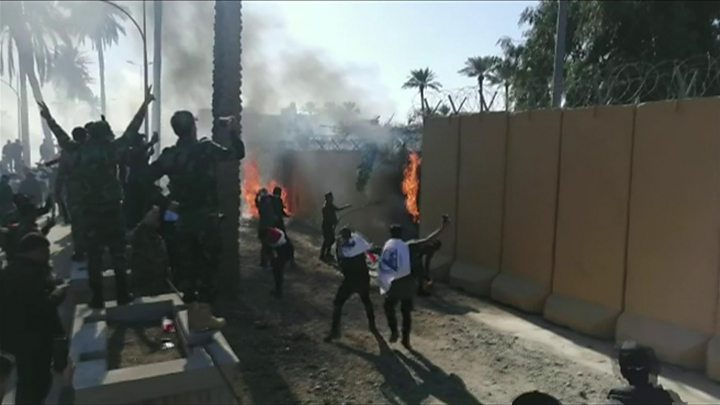
Meanwhile, in Baghdad, thousands of Iranian-backed militiamen spent New Year’s Eve smashing into the U.S. Embassy while chanting “Death to America.” The demonstrators pulled back two days later, after the Iraqi government—which initially let them cross into the Green Zone surrounding the embassy—pressured the leaders of Kataib Hezbollah, the main militia. Trump, who responded to the incident by ordering 4,000 more U.S. troops into Iraq, took the end of the siege as a triumph—“the Anti-Benghazi,” as he proclaimed.
Trump seems to think that the end of the siege marked an eclipse of Iranian strength, tweeting, “To those many millions of people in Iraq who want freedom and who don’t want to be dominated and controlled by Iran, this is your time!” This is naïve. Iranian influence in Iraq’s politics is immovably strong; it has been since the aftermath of the U.S. invasion in 2003; and the incident that precipitated this week’s siege probably strengthened its hold.
The spurring incident was a series of U.S. airstrikes against Kataib Hezbollah targets, killing 24 people and injuring dozens more. The strikes were meant as retaliation to a militia missile attack that killed an American contractor. But the commander of Iraq’s armed forces, who apparently wasn’t consulted about the airstrikes, condemned them afterward as a “stab in the back.” For the previous three months, protesters held massive demonstrations in the streets of Baghdad and throughout southern Iraq against, among other things, Iran’s excessive influence on its government. But the U.S. airstrikes—which killed Iraqis on Iraqi territory—allowed pro-Iran forces to stage their own protests and to show that they can be rallied to do so anytime, on a moment’s notice.
In his dealings with both Iran and North Korea, Trump has displayed a cluelessness about the causes of the crises. Iran’s recent eruptions probably would have been avoided if Trump hadn’t withdrawn from the Iran nuclear deal, reimposed economic sanctions against Iran, and—to compound the aggravation—imposed further sanctions on any country that did business with Iran. The nuclear deal, signed in 2015 by then-President Barack Obama and the leaders of five other nations, required Iran to dismantle its nuclear infrastructure—in exchange for which those nations would lift sanctions. International inspectors attested several times that Iran was obeying the terms of the deal, dismantling its nuclear program; as a result, the other nations started lifting sanctions—until Trump intervened, against the advice of all his top officials, mainly because he couldn’t bear to continue abiding by Obama’s signal diplomatic achievement.
For a while, the Iranians tried to persuade the other signatories—France, Britain, Germany, Russia, and China—to keep their side of the bargain and to continue trade, but U.S. sanctions were too stiff for them to bypass. So Tehran stepped up pressure in the politico-military sphere, hoping to bring Trump back to the bargaining table. Some top Iranian officials hoped to drive a wedge between Trump and some of his advisers, including Secretary of State Mike Pompeo and then–national security adviser John Bolton, who were clearly pressing for “regime change” in Iran. But if Trump differed from his advisers on this point, he put forth no other ideas on how to resume relations—so the crisis festered and intensified.
Similarly, the crisis in eastern Asia is aggravated by Trump’s refusal to recognize that North Korea is a nuclear power—which, like other nuclear powers, can be deterred and contained—and that Kim has no intention of changing that fact. Trump seems to believe that Kim signed “a contract” in Singapore to “denuclearize” North Korea. But in fact, he pledged in that summit’s joint statement merely to “work toward” denuclearizing “the Korean Peninsula”—which, as some North Korean officials subsequently explained, involves removing all military units capable of carrying nuclear weapons from all areas within firing range of Korea. This would mean dismantling almost all American nuclear weapons, and that isn’t going to happen, not in exchange for eliminating North Korea’s relatively puny arsenal.
North Korea and Iran are among the most intractable regimes on earth, but there are ways of conducting diplomacy with both. President Bill Clinton managed to negotiate the Agreed Framework, a pact that froze North Korea’s nuclear program for eight years. Obama and his partners negotiated the seemingly less likely Joint Comprehensive Plan of Action (the formal name for the Iran nuclear deal).
One problem is that no one in the Trump administration has any experience in negotiating with those countries. Another problem is that Trump doesn’t care. He has said several times that he knows more about making deals than any of his diplomats, and he might even believe it’s true. Many of our ablest career civilians, in the diplomatic corps and in the Pentagon, have been fired or have simply fled, and few with any talent have taken their place.
North Korea, Iran, and many other hot spots are hard problems for the most expert and dedicated public servants to solve. Without such public servants, they’re impossible.
Update, Jan. 2, 2020: This article was updated to note that nuclear powers like North Korea can be deterred and contained.

The Mahdi is Resurrected (Revelation 13)


Shia cleric reactivates powerful anti-US army after airstrike kills Iran general
Richard Hartley-Parkinson
Friday 3 Jan 2020 7:38 am
Muqtada al-Sadr’s message told the anti-American paramilitary to ‘defend Iraq’
A prominent Iraqi cleric has called an anti-US army to arms following the death of a top Iranian general in an airstrike in Baghdad.
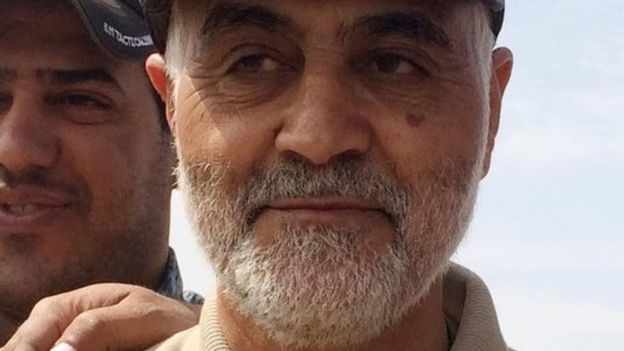
Muqtada al-Sadr tweeted that he was reactivating the army this morning following the death of Qasem Soleimani – an assassination that was ordered by Donald Trump.
He said ‘I, as the official of the Iraqi National Resistance, give an order to the readiness of the Mujahideen, especially the Imam Mahdi Army and the Promised Today Brigade and whoever commands our order from the national disciplined factions to be fully prepared to protect Iraq.’
This morning all US citizens were ordered to leave Iraq immediately.
The killing of the general – Iran’s second in command and head of the elite Quds Force – marks a major escalation in the standoff between Washington and Iran, which has careened from one crisis to another since President Donald Trump withdrew from the 2015 nuclear deal and imposed crippling sanctions.
Iran’s Supreme Leader Ali Khamenei warned that a ‘harsh retaliation is waiting’ for the US after the airstrike, calling Soleimani the ‘international face of resistance.’ Khamenei declared three days of public mourning for the general’s death.
Iran also summoned the Swiss charges d’affaires, who represents US interests in Tehran, to protest the killing.

Muqtada al-Sadr pictured with Iran’s supreme ruler Ali Khamenei and assassinated general Qasem Soleimani  (Picture: EPA)

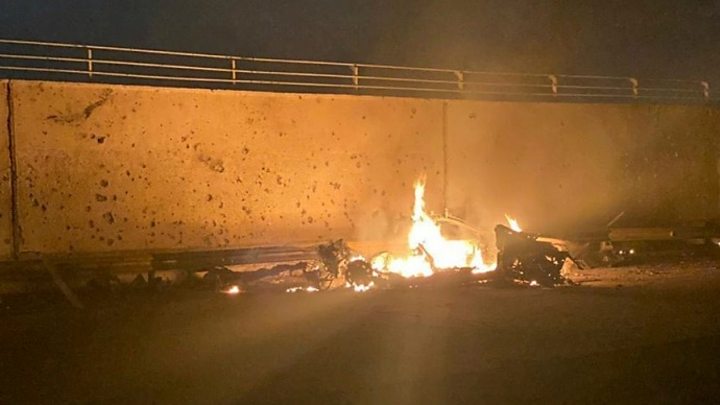
The aftermath of the airstrike that completely destroyed the car carrying Soleimani
The killing, and any forceful retaliation by Iran, could ignite a conflict that engulfs the whole region, endangering US troops in Iraq, Syria and beyond. Over the last two decades, Soleimani assembled a network of powerful and heavily armed allies stretching all the way to southern Lebanon, on Israel’s doorstep.
The Defense Department said it killed Soleimani because he ‘was actively developing plans to attack American diplomats and service members in Iraq and throughout the region.’ It also accused Soleimani of approving the orchestrated violent protests at the US Embassy in Baghdad earlier this week.
Iranian state television called Trump’s order to kill Soleimani ‘the biggest miscalculation by the US’ since World War II. ‘The people of the region will no longer allow Americans to stay,’ it said.
The airport strike also killed Abu Mahdi al-Muhandis, deputy commander of Iran-backed militias in Iraq known as the Popular Mobilization Forces, and five others, including the PMF’s airport protocol officer, Mohammed Reda, Iraqi officials said.
Trump was vacationing on his estate in Palm Beach, Florida, but sent out a tweet of an American flag.
The dramatic attack comes at the start of a year in which Trump faces both a Senate trial following his impeachment by the Congress and a re-election campaign. It marks a potential turning point in the Middle East and represents a drastic change for American policy toward Iran after months of tensions.
Tehran shot down a US military surveillance drone and seized oil tankers last year. The US also blames Iran for a series of other attacks targeting tankers, as well as a September assault on Saudi Arabia’s oil industry that temporarily halved its production.
The tensions are rooted in in Trump’s decision in May 2018 to withdraw the US from Iran’s nuclear deal with world powers, struck under his predecessor, Barack Obama.
The 62-year-old Soleimani was the target of Friday’s US attack, which was conducted by an armed American drone, according to a US official. His vehicle was struck on an access road near the Baghdad airport.
A senior Iraqi security official said the airstrike took place near the cargo area after Soleimani left his plane and joined al-Muhandis and others in a car. The official said the plane had arrived from either Lebanon or Syria.

The wreckage from Suleimani’s car after it was destroyed in a US airstrike (Picture: AP)
PMF officials said the bodies of Soleimani and al-Muhandis were torn to pieces. A senior politician said Soleimani’s body was identified by the ring he wore.
It’s unclear what legal authority the US relied on to carry out the attack. American presidents claim broad authority to act without the approval of the Congress when US personnel or interests are facing an imminent threat. The Pentagon did not provide evidence to back up its assertion that Soleimani was planning new attacks against Americans.
House Speaker Nancy Pelosi said the ‘highest priority’ was to protect American lives and interests, but that ‘we cannot put the lives of American service members, diplomats and others further at risk by engaging in provocative and disproportionate actions.’
‘Tonight’s airstrike risks provoking further dangerous escalation of violence. America – and the world – cannot afford to have tensions escalate to the point of no return,’ she said in a statement. She said Congress was not consulted on the strike and demanded it be ‘immediately’ briefed on the situation and the next steps.
Democratic presidential candidate Joe Biden said Trump had ‘tossed a stick of dynamite into a tinderbox,’ and, like other Democratic White House hopefuls, criticised Trump’s order, saying it could leave the US ‘on the brink of a major conflict across the Middle East.’

The scene of the airstrike moments after the convoy was hit by an American missile
But Trump allies were quick to praise the action. ‘To the Iranian government: if you want more, you will get more,’ tweeted South Carolina Sen. Lindsey Graham.
For Iran, the killing represents the loss of a cultural icon who represented national pride and resilience while facing US sanctions. Although careful to avoid involving himself in politics, Soleimani’s profile rose sharply as US and Israeli officials blamed him for Iranian proxy attacks abroad.
While Iran’s conventional military has suffered under 40 years of American sanctions, the Guard has built up a ballistic missile program. It also can strike asymmetrically in the region through forces like Lebanon’s Hezbollah and Yemen’s Houthi rebels. The US long has blamed Iran for car bombings and kidnappings it never claimed.

Soleimani’s vehicle was struck on an access road near the Baghdad airport (Picture: AP)
As the head of the Quds, or Jersualem, Force of Iran’s paramilitary Revolutionary Guard, Soleimani led all of its expeditionary forces and frequently shuttled between Iraq, Lebanon and Syria. Quds Force members have deployed into Syria’s long war to support President Bashar Assad, as well as into Iraq in the wake of the 2003 US invasion that toppled dictator Saddam Hussein, a longtime foe of Tehran.
Soleimani rose to even greater prominence by advising forces fighting the Islamic State group in Iraq and in Syria.
US officials say the Guard under Soleimani taught Iraqi militants how to manufacture and use especially deadly roadside bombs against US troops after the invasion of Iraq. Iran has denied that. Soleimani himself remains popular among many Iranians, who saw him as a selfless hero fighting Iran’s enemies abroad.
Soleimani had been rumoured dead several times, including in a 2006 aeroplane crash that killed other military officials in northwestern Iran and following a 2012 bombing in Damascus that killed top aides of Assad. Rumours circulated in November 2015 that Soleimani was killed or seriously wounded leading forces loyal to Assad as they fought around Syria’s Aleppo.
Soleimani’s killing follows the New Year’s Eve attack by Iran-backed militias on the US Embassy in Baghdad. The two-day embassy attack, which ended Wednesday, prompted Trump to order about 750 US troops deployed to the Middle East. No one was killed or wounded in the attack, which appeared to be mainly a show of force.
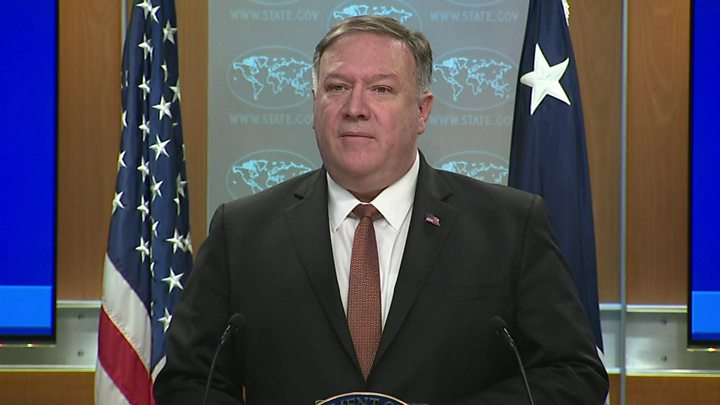
It prompted Secretary of State Mike Pompeo to postpone his trip to Ukraine and four other countries ‘to continue monitoring the ongoing situation in Iraq and ensure the safety and security of Americans in the Middle East,’ the State Department said.
The breach at the embassy followed US airstrikes Sunday that killed 25 fighters of Kataeb Hezbollah, an Iran-backed militia operating in Iraq and Syria. The US military said the strikes were in retaliation for last week’s killing of an American contractor in a rocket attack on an Iraqi military base that the US blamed on the militia.
US officials have suggested they were prepared to engage in further retaliatory attacks in Iraq.
‘The game has changed,’ Defense Secretary Mark Esper said Thursday, telling reporters that violent acts by Iran-backed Shiite militias in Iraq will be met with US military force.

The Iranian Pearl Harbor is Coming


Iran’s Supreme Leader Ayatollah Ali Khamenei: ‘Harsh Retaliation Is Waiting’ For U.S. After General’s Assassination
Iranian state TV carried a statement by Khamenei also calling Gen. Qassem Soleimani “the international face of resistance.”
Qassim Abdul-Zahra and Zeina Karam
01/03/2020 01:13 AM ET
BAGHDAD (AP) — Iran has vowed “harsh retaliation” for a U.S. airstrike near Baghdad’s airport that killed Tehran’s top general and the architect of its interventions across the Middle East, as tensions soared in the wake of the targeted killing.
The killing of Gen. Qassem Soleimani, the head of Iran’s elite Quds Force, marks a major escalation in the standoff between Washington and Iran, which has careened from one crisis to another since President Donald Trump withdrew from the 2015 nuclear deal and imposed crippling sanctions.
The United States urged its U.S. citizens to leave Iraq “immediately.” The State Department said the embassy in Baghdad, which was attacked by Iran-backed militiamen and other protesters earlier this week, is closed and all consular services have been suspended.
Around 5,200 American troops are based in Iraq, where they mainly train Iraqi forces and help to combat Islamic State militants.
Iran’s Supreme Leader Ayatollah Ali Khamenei warned that a “harsh retaliation is waiting” for the U.S. after the airstrike, calling Soleimani the “international face of resistance.” Khamenei declared three days of public mourning for the general’s death.
Iran also summoned the Swiss charges d’affaires, who represents U.S. interests in Tehran, to protest the killing. Iran’s Foreign Minister Mohammad Javad Zarif called the strike “an act of state terrorism and violation of Iraq’s sovereignty.”

Ayatollah Ali Khamenei declared three days of public mourning for the general’s death. (Anadolu Agency via Getty Images)
The killing, and any forceful retaliation by Iran, could ignite a conflict that engulfs the whole region, endangering U.S. troops in Iraq, Syria and beyond. Over the last two decades Soleimani had assembled a network of powerful and heavily armed allies stretching all the way to southern Lebanon, on Israel’s doorstep.
The Defense Department said it killed Soleimani because he “was actively developing plans to attack American diplomats and service members in Iraq and throughout the region.” It also accused Soleimani of approving the orchestrated violent protests at the U.S. Embassy in Baghdad earlier this week.
The airport strike also killed Abu Mahdi al-Muhandis, deputy commander of Iran-backed militias in Iraq known as the Popular Mobilization Forces. A PMF official said the strike killed a total of eight people, including Soleimani’s son-in-law, whom he did not identify.
Trump was vacationing on his estate in Palm Beach, Florida, but sent out a tweet of an American flag.
The dramatic attack comes at the start of a year in which Trump faces both a Senate trial following his impeachment by the Congress and a re-election campaign. It marks a potential turning point in the Middle East and represents a drastic change for American policy toward Iran after months of tensions.
Tehran shot down a U.S. military surveillance drone and seized oil tankers last year. The U.S. also blames Iran for a series of other attacks targeting tankers, as well as a September assault on Saudi Arabia’s oil industry that temporarily halved its production.
The tensions are rooted in in Trump’s decision in May 2018 to withdraw the U.S. from Iran’s nuclear deal with world powers, struck under his predecessor, Barack Obama.
The 62-year-old Soleimani was the target of Friday’s attack on an access road near the airport, which was conducted by an armed American drone, according to a U.S. official.
A senior Iraqi security official said the airstrike took place near the cargo area after Soleimani left his plane and joined al-Muhandis and others in a car. The official said the plane had arrived from either Lebanon or Syria.
PMF officials said the bodies of Suleimani and al-Muhandis were torn to pieces. A senior politician said Soleimani’s body was identified by the ring he wore.
The officials spoke on condition of anonymity because they were not authorized to brief media.
It’s unclear what legal authority the U.S. relied on to carry out the attack. American presidents claim broad authority to act without the approval of the Congress when U.S. personnel or interests are facing an imminent threat. The Pentagon did not provide evidence to back up its assertion that Soleimani was planning new attacks against Americans.
House Speaker Nancy Pelosi said the “highest priority” was to protect American lives and interests, but that “we cannot put the lives of American service members, diplomats and others further at risk by engaging in provocative and disproportionate actions.” She said Congress was not consulted on the strike and demanded it be “immediately” briefed on the situation and the next steps.
Democratic presidential candidate Joe Biden said Trump had “tossed a stick of dynamite into a tinderbox,” saying it could leave the U.S. “on the brink of a major conflict across the Middle East.” Other Democratic White House hopefuls also criticized Trump’s order.
But Trump allies were quick to praise the action. “To the Iranian government: if you want more, you will get more,” tweeted South Carolina Sen. Lindsey Graham.
The killing promised to strain relations with Iraq’s government, which is closely allied with both Washington and Tehran. Prime Minister Adel Abdul-Mahdi condemned the strike as an “aggression against Iraq” and a “blatant attack on the nation’s dignity.”
He also called for an emergency session of parliament to take “necessary and appropriate measures to protect Iraq’s dignity, security and sovereignty.”
The Syrian government, which has received key support from Iran throughout the civil war, also condemned the strike, saying it could lead to a “dangerous escalation” in the region. Hassan Nasrallah, the head of the Iran-backed Lebanese militant group Hezbollah, released a statement mourning those killed in the U.S. strike, saying their blood was not wasted.
There was no immediate reaction from Israel, which views Iran as its greatest threat. Authorities closed the Mount Hermon ski resort near the borders with Lebanon and Syria as a precaution but didn’t announce any other security measures. Prime Minister Benjamin Netanyahu’s office said he was cutting short a trip to Greece to return home and follow “ongoing developments.”
Yoel Guzansky, an expert on Iran at the Institute for National Strategic Studies, a prestigious Tel Aviv think tank, said the killing restored America’s deterrence powers in the Middle East.
“I think the Iranians are shocked now, the Russians, the Chinese, no one would believe Trump would do that,” he said, adding that Iran, in the short run, was likely to retaliate against the U.S. or its allies, and possibly against Israel. But he said in the long run, the loss of Soleimani — who had also been on Israel’s radar for some time — would weaken Iran’s capabilities across the region.
For Iran, the killing represents the loss of a cultural icon who represented national pride and resilience while facing U.S. sanctions. While careful to avoid involving himself in politics, Soleimani’s profile rose sharply as U.S. and Israeli officials blamed him for Iranian proxy attacks abroad.
While Iran’s conventional military has suffered under 40 years of American sanctions, the Guard has built up a ballistic missile program. It also can strike asymmetrically in the region through forces like Lebanon’s Hezbollah and Yemen’s Houthi rebels.
As the head of the Quds, or Jersualem, Force of Iran’s paramilitary Revolutionary Guard, Soleimani led all of its expeditionary forces and frequently shuttled between Iraq, Lebanon and Syria. Quds Force members have deployed into Syria’s long war to support President Bashar Assad, as well as into Iraq in the wake of the 2003 U.S. invasion that toppled dictator Saddam Hussein, a longtime foe of Tehran.
Soleimani rose to even greater prominence by advising forces fighting the Islamic State group in Iraq and in Syria.
U.S. officials say the Guard under Soleimani taught Iraqi militants how to manufacture and use especially deadly roadside bombs against U.S. troops after the invasion of Iraq. Iran has denied that.
Soleimani’s killing follows the New Year’s Eve attack by Iran-backed militias on the U.S. Embassy in Baghdad. The two-day embassy attack, which ended Wednesday, prompted Trump to order about 750 U.S. troops deployed to the Middle East. No one was killed or wounded in the attack, which appeared to be mainly a show of force.
It prompted Secretary of State Mike Pompeo to postpone his trip to Ukraine and four other countries “to continue monitoring the ongoing situation in Iraq and ensure the safety and security of Americans in the Middle East,” the State Department said.
The breach at the embassy followed U.S. airstrikes Sunday that killed 25 fighters of Kataeb Hezbollah, an Iran-backed militia operating in Iraq and Syria. The U.S. military said the strikes were in retaliation for last week’s killing of an American contractor in a rocket attack on an Iraqi military base that the U.S. blamed on the militia.
U.S. officials have suggested they were prepared to engage in further retaliatory attacks in Iraq.
“The game has changed,” Defense Secretary Mark Esper said Thursday, telling reporters that violent acts by Iran-backed Shiite militias in Iraq will be met with U.S. military force.
___
Karam reported from Beirut. Associated Press writers Robert Burns and Zeke Miller in Washington; Jon Gambrell in Dubai, United Arab Emirates; Nasser Karimi and Amir Vahdat in Tehran, Iran; Bassem Mroue and Sarah El Deeb in Beirut; and Joseph Krauss and Josef Federman in Jerusalem contributed to this report.

Payback is Coming to Babylon the Great


General Qassem Soleimani was killed in a U.S. strike in Baghdad Friday.

TEHRAN — Iranian officials have warned of a “vigorous vengeance” after General Qassem Soleimani, head of Quds Force of Iran’s Islamic Revolutionary Guard Corps (IRGC), was killed in a U.S. strike at Baghdad’s International Airport on Friday, and have swiftly moved to appoint a replacement.Iran’s Supreme Leader Ayatollah Ali Khamenei described General Soleimani as the “international face of resistance” and announced three days of public mourn in Iran for his assassination.“His pure blood was shed by the hands of the cruelest of the mankind on the earth,” Ayatollah Khamenei said in a statement published Friday. “A vigorous vengeance awaits those whose hands are tainted with his blood,” he added.The elite Quds Force of Iran led by General Qassem Soleimani have been carrying out unconventional and extraterritorial operations of the IRGC abroad. Soleimani has been running Iran’s operations in Iraq and Syria for a number of years.Khamenei has appointed Brigadier General Esmail Ghaani, the previous deputy commander of Quds force, as Soleimani’s replacement.The White House said that the attack was launched on the direct order of President Donald Trump.“At the direction of the President, the U.S. military has taken decisive defensive action to protect U.S. personnel abroad by killing Qasem Soleimani, the head of the Iranian Revolutionary Guard Corps-Quds Force, a U.S.-designated Foreign Terrorist Organization,” a White House statement said. “General Soleimani was actively developing plans to attack American diplomats and service members in Iraq and throughout the region,” it added.
While the U.S. described Soleimani as a threat to American diplomats and service members, Iranian authorities emphasized his role in fighting against ISIS on the ground both in Syria and Iraq, and called the U.S strike an “act of terrorism.”
In a tweet, Iran’s foreign minister Mohammad Javad Zarif described Soleimani as “THE most effective force fighting Daesh (ISIS), Al Nusrah, Al Qaeda et al” and said that “the US bears responsibility for all consequences of its rogue adventurism.”
Iran’s President, Hassan Rouhani, also denounced the U.S. attack on Soleimani, saying that “the great nation of Iran will take revenge for this heinous crime.”
In his sermon during the Friday prayer, Ayatollah Ahmad Khatami of Tehran said that “Americans will not have peace anywhere in the world anymore,” Fars News reported. “Comrades of martyr Soleimani will take sleep away from America and its allies,” he added.
For the first time, Ayatollah Khamenei has been heading the emergency session of the Supreme National Security Council held to discuss the situation, according to unofficial reports.
In addition to Soleimani, the U.S strike also killed Abu Mahdi al-Muhandis, the deputy commander of Iran-backed militias known as the Popular Mobilization Forces, or al Hashd al Shabi.
Others in the region are reacting to the targeted strike.
The Secretary-General of the Lebanese Hezbollah Resistance Movement, Hassan Nasrallah, said that “we will pursue [Soleimani’s] path and work day and night to achieve his goals.”
“It will be the responsibility, duty, and action of all the resistance fighters and Mujahideen throughout the world to take revenge from his criminal killers who are the worst villains of this world,” he said in a statement. “The US killers, God willing, will not be able to achieve any of their goals with this great crime.”
In Iraq, Prime Minister Adil Abdul-Mahdi has denounced the assassination and warned of destructive consequences. He criticized the U.S. strike as an act of “aggression” which could spark “a devastating war,” according to Iranian Press TV.
Additional reporting by ABC News’ Nasser Atta.

Getting Ready for the Final War


Why kill Soleimani now and what happens next?

By Jonathan Marcus Defence and diplomatic correspondent

Media captionChief international correspondent Lyse Doucet explains the significance of the attack
The killing of Gen Qasem Soleimani, commander of the Iranian Revolutionary Guards’ Quds force, represents a dramatic escalation in the low-level conflict between the US and Iran and one whose consequences could be considerable.
Retaliation is to be expected. A chain of action and reprisal could ensue bringing the two countries closer to a direct confrontation. Washington’s future in Iraq could well be called into question. And President Trump’s strategy for the region – if there is one – will be tested like never before.
Philip Gordon, who was White House co-ordinator for the Middle East and the Persian Gulf in the Obama administration, described the killing as little short of a “declaration of war” by the Americans against Iran.
The Quds Force is the branch of Iran’s security forces responsible for operations abroad. For years, whether it be in Lebanon, Iraq, Syria or elsewhere, Soleimani has been a key instigator in expanding and extending Iran’s influence through planning attacks or bolstering Tehran’s local allies.

Qassem Soleimani stands at the frontline during offensive operations against Islamic State militants in the town of Tal Ksaiba in Salahuddin provinceImage copyrightReuters
For Washington, he was a man with US blood on his hands. But he was popular in Iran itself. And in practical terms, he led Tehran’s fightback against the broad campaign of pressure and US-imposed sanctions.
What is most surprising is not that Soleimani was in President Trump’s sights but quite why the US should strike him now.
A series of low-level rocket attacks against US bases in Iraq were blamed on Tehran. One US civilian contractor was killed. But earlier Iranian operations – against tankers in the Gulf; the shooting down of a US unmanned aerial vehicle; even the major attack against a Saudi oil facility – all went without a direct US response.


Media playback is unsupported on your device
Media captionPompeo designated Iran’s Revolutionary Guards Corp as a terrorist group last year
As for the rocket attacks against the US bases in Iraq, the Pentagon has already hit back against the pro-Iranian militia believed to be behind them. That prompted a potential assault on the US embassy compound in Baghdad.
In explaining the decision to kill Soleimani, the Pentagon focused not just on his past actions, but also insisted that the strike was meant as a deterrent. The general, the Pentagon statement reads, was “actively developing plans to attack US diplomats and service members in Iraq and throughout the region”.
Quite what happens next is the big question. President Trump will hope that in one dramatic action he has both cowed Iran and proven to his increasingly uneasy allies in the region like Israel and Saudi Arabia that US deterrence still has teeth. However it is almost unthinkable that there will not be a robust Iranian response, even if it is not immediate.
The 5,000 US troops in Iraq are an obvious potential target. So too are the sorts of targets hit by Iran or its proxies in the past. Tensions will be higher in the Gulf. No wonder the initial impact was to see a surge in oil prices.
The US and its allies will be looking to their defences. Washington has already despatched a small number of reinforcements to its embassy in Baghdad. It will have plans to increase its military footprint in the region quickly if needed.
But it is equally possible that Iran’s response will be in some sense asymmetric – in other words not just a strike for a strike. It may seek to play on the widespread support it has in the region – through the very proxies that Soleimani built up and funded.
It could for example renew the siege on the US embassy in Baghdad, putting the Iraqi government in a difficult position, and call into question the US deployment there. It could prompt demonstrations elsewhere as cover for other attacks.


Media playback is unsupported on your device
Media captionCould Iran instigate more attacks on the US embassy in Baghdad such as this one earlier this week?
The strike against the Quds force commander was a clear demonstration of US military intelligence and capabilities. Many in the region will not mourn his passing. But was this the wisest thing for President Trump to do?
How well is the Pentagon prepared for the inevitable aftermath? And just what does this strike tell us about Mr Trump’s overall strategy in the region? Has this changed in any way? Is there a new zero-tolerance towards Iranian operations?
Or was this just the president taking out an Iranian commander he would no doubt regard as “a very bad man”.

Friday, January 3, 2020

A Closer Look At The Sixth Seal (Revelation 6:12)

Monday, March 14, 2011

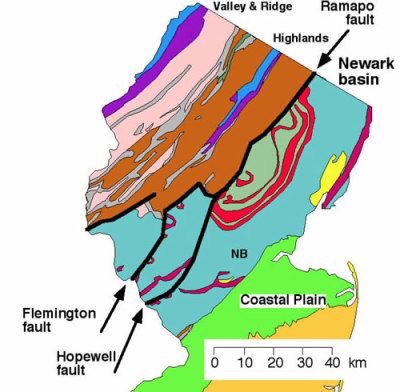
The Ramapo Fault is the longest fault in the Northeast that occasionally makes local headlines when minor tremors cause rock the Tri-State region. It begins in Pennsylvania, crosses the Delaware River and continues through Hunterdon, Somerset, Morris, Passaic and Bergen counties before crossing the Hudson River near Indian Point nuclear facility.
In the past, it has generated occasional activity that generated a 2.6 magnitude quake in New Jersey’s Peakpack/Gladstone area and 3.0 magnitude quake in Mendham.
„There is occasional seismic activity in New Jersey,“ said Robinson. „There have been a few quakes locally that have been felt and done a little bit of damage over the time since colonial settlement — some chimneys knocked down in Manhattan with a quake back in the 18th century, but nothing of a significant magnitude.“
Robinson said the Ramapo has on occasion registered a measurable quake but has not caused damage: „The Ramapo fault is associated with geological activities back 200 million years ago, but it’s still a little creaky now and again,“ he said.
„More recently, in the 1970s and early 1980s, earthquake risk along the Ramapo Fault received attention because of its proximity to Indian Point,“ according to the New Jersey Geological Survey website.
Historically, critics of the Indian Point Nuclear facility in Westchester County, New York, did cite its proximity to the Ramapo fault line as a significant risk.
„Subsequent investigations have shown the 1884 Earthquake epicenter was actually located in Brooklyn, New York, at least 25 miles from the Ramapo Fault,“ according to the New Jersey Geological Survey website.

Korea Continues Nuclear Missile Tests


North Korea threatens to resume nuclear and ICBM testingAFP
Mr Kim warns he’s got a new strategic weapon up his sleeve
North Korean leader Kim Jong-un has said he is ending the suspension of nuclear and long-range missile tests put in place during talks with the US.
Mr Kim also said his country would soon introduce “a new strategic weapon”.
But he left a door open for dialogue, and said the scope of any testing would depend on the US’s “attitude”.
The momentum of the past few years has stalled, as Washington refuses to lift sanctions until Pyongyang fully abandons its nuclear programme.
The North conducted several smaller weapons tests late in 2019, in what was seen as an attempt to pressure the US into making concessions.
But the self-declared moratorium on nuclear tests and tests of intercontinental ballistic missiles (ICBMs) that could reach the US mainland had been one of the foundations of the negotiations with Washington.
Pyongyang has not carried out such tests since 2017.
• North Korea’s missile and nuclear programme
• North Korea crisis in 300 words
What did Mr Kim say?
Mr Kim’s comments came at the end of a four-day gathering of party leaders in Pyongyang, an unusual event for this time of the year.
On 1 January, state media reported him as saying North Korea was no longer bound by the self-declared moratorium, as the US continued joint military drills with South Korea and had stepped up their sanctions.
“Under such condition, there is no ground for us to get unilaterally bound to the commitment any longer, the commitment to which there is no opposite party, and this is chilling our efforts for worldwide nuclear disarmament and non-proliferation,” news agency KCNA quoted him as saying.
He threatened that “the world will witness a new strategic weapon” from the North “in the near future”, while giving no further details.
• North Korea carries out ‘very important test’
• North Korea attacks Trump’s ‘dotage of a dotard’

Reuters
North Korea tested several smaller missiles in 2019
Mr Kim’s comments to the party meeting also admitted that sanctions have hit the economy and were unlikely to be lifted soon, warning that North Koreans will have to “tighten our belts”.
The North Korean leader did not, however, mention Donald Trump or South Korea by name, seen by observers as a toning-down of language compared to the aggressive rhetoric of recent months.
The comments were “notable for falling short of directly tearing up the April 2018 moratorium on long-range missile and nuclear tests”, Chad O’Carroll of North Korea analysis site NK News told the BBC.
“Instead, Mr Kim’s remarks implied that such resumed testing will be contingent on US actions in the weeks and months ahead.”
Why did he say it?
Mr Kim’s published comments appear to have taken the place of his usual New Year’s Day speech.
Previous addresses have signalled changes in policy direction to Pyongyang’s international adversaries and this year’s comments appear to have a similar role.

Donald Trump and Kim Jong-un: From enemies to frenemies
“Kim Jong-un knows that President Trump faces an election campaign soon and that renewed North Korean ICBM and nuclear testing would be a major foreign policy embarrassment for the White House,” said Mr O’Carroll.
“The remarks delivered today communicate a simple message to Washington: provide us with major concessions soon if you want to avoid long-range missile tests during the election campaign.”
There is little indication the White House will give in to that pressure, he adds, so “we appear headed toward significant turbulence in the year ahead”.
How did the US respond?
As he headed into a New Year event in Florida, Mr Trump told reporters that he and Mr Kim “did sign a contract, talking about denuclearisation”.
“I think he’s a man of his word,” he said.
US Foreign Secretary Mike Pompeo said he hoped the North would choose peace over war.
“If Chairman Kim has reneged on the commitments he made to President Trump, that is deeply disappointing,” Mr Pompeo told US broadcaster CBS.
“He made those commitments to President Trump in exchange for President Trump agreeing not to conduct large-scale military exercises. We’ve lived up to our commitments. We continue to hold out hope that he will live up to his as well.”
How did we get here?
• Throughout 2017, North Korea tests nuclear devices and ICBMs able to reach the US mainland.
• On 1 January 2018, Kim Jong-un says he’s “open to dialogue” with both South Korea and the United States.
• June 2018: Mr Kim and Mr Trump hold historic face-to-face talks in Singapore, agreeing on denuclearisation in vague, unspecific terms.
• Kim Jong-un also meets with South Korean President Moon several times, including once in North Korea.
• In February 2019, he meets Donald Trump again in Vietnam but the talks end early without agreement.
• In June that year, they have an “impromptu” but largely symbolic meeting at the demilitarised zone (DMZ) that separates North and South Korea.
But relations between the US and North Korea have deteriorated in the months leading up to 2020.

President Trump: “Stepping across that line was a great honour”
Already in May, North Korea had started testing short-range missiles again – though not the long-range missiles capable of reaching the US, which are more controversial – and more recently, the language between the two sides has grown increasingly hostile.
Pyongyang had set Washington an end-of-year deadline to offer sanctions relief, threatening that the US could expect a “Christmas gift” if it did not comply.
So far though, Washington has refused to lift sanctions, insisting that North Korea must first fully abandon its nuclear programme.