Showing posts with label Dirty. Show all posts

Monday, September 12, 2016

Terrorism Is On The Rise

The terrorist threat is worse now than it was before 9/11
Pamela Engel
9/11 September 11th AttacksNew York police stand near a wanted poster printed by on a full page of a New York newspaper for Saudi-born militant Osama bin Laden in the financial district of New York.REUTERS/Russell Boyce-Files
It's been 15 years since the 9/11 terror attacks, but in some ways, we're no safer from terrorism today than we were before 2001.
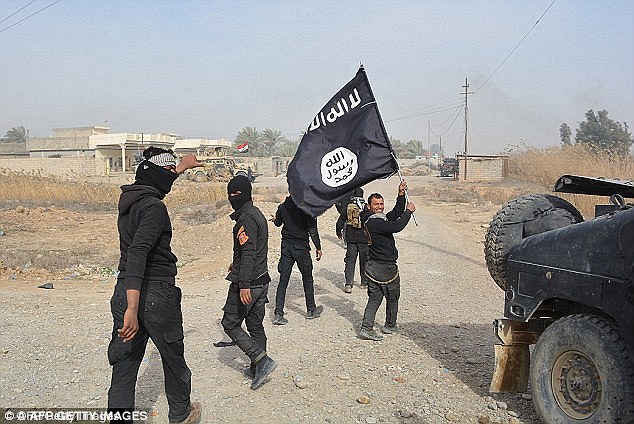
Al Qaeda still has a formidable presence across the world, and a new terror threat - ISIS - rose up during the chaos that followed the US invasion of Iraq.
The world is also now contending with spates of attacks carried out by radicalized individuals who have managed to fly under the radar of Western intelligence officials.
The Soufan Group, a strategic security firm, contended in a note this week that the terror threat against the US is actually more pronounced today than it was before 9/11.
Since September 11, 2001, "the global terror threat has compounded and cascaded," said the note. We're now facing "unprecedented terror concerns" that will likely persist for years to come, according to the firm.
The firm noted that after the attacks, the US outlined several goals with regards to fighting terrorism: Preventing another terrorist attack on the scale of 9/11; denying terrorists sanctuaries in countries like Afghanistan; destroying Al Qaeda, and countering extremist ideology.
"As the 15th anniversary of the 9/11 attacks approaches, only one of these goals - the prevention of an attack nearing the scale of 9/11 - has been met," the firm stated. "While the prevention of another such attack is a significant achievement, many of the other post-9/11 concerns are considerably worse now than in 2001."
The US successfully toppled the Taliban in Afghanistan, but the group still controls territory there.
And the death of Al Qaeda founder Osama bin Laden hasn't weakened the group to the point where it's no longer a threat. Bin Laden's ideology has actually continued to inspire and radicalize people across the globe, especially with the rise of ISIS, a group that borrowed from the ideological doctrine bin Laden espoused, and the use of social media by extremist recruiters.
Al Qaeda is in fact stronger today than it was before 9/11, The Soufan Group argued in its note. The intelligence apparatus in the US has grown to counter this threat, and new counterterrorism and security measures have succeeded at preventing many attacks, but some terrorists have still been able to slip through the cracks.
"The spread of violent extremism since 9/11 has surpassed anything bin Laden likely thought achievable in a fifteen-year period," The Soufan Group note said. And the threat of attacks by lone actors as well as terrorist cells in the West "will remain for years to come."
Richard Haass, president of the Council on Foreign Relations, noted in a column this week how widespread terrorism has become since 9/11.
"September 11, 2001, was unique in the sense of its scale; otherwise it was anything but," Haass wrote. "Terrorism has become commonplace."
But Haass also puts things into perspective - while terrorism certainly is a serious threat, it is not yet a threat to the very existence of the US.
"Over the last decade, there have been, on average, more than 10,000 terrorist attacks per year, causing an average of more than 15,000 deaths per year," Haass noted.
He continued: "Relatively little of this terrorism has involved Americans. Over this same decade, there have been fewer than 15 terrorist attacks a year in the United States. An average of five Americans per year have died on US soil and approximately 20 per year have lost their lives worldwide."
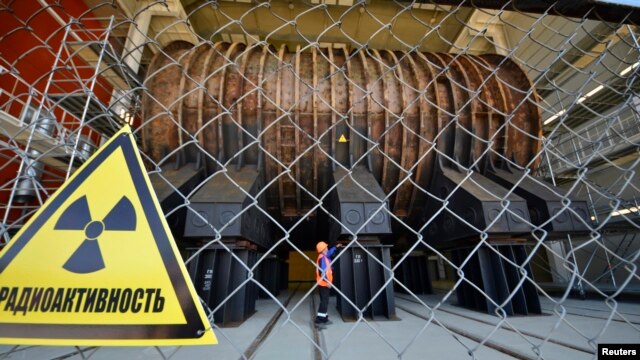
Where terrorism could become an existential threat, however, is with the use of nuclear weapons or a "dirty bomb" with nuclear material.
"Such 'grand terrorism' has for decades been the nightmare of many strategic thinkers," Haass wrote.
While such "grand terrorism" hasn't become a reality yet, it could be in the future. Pakistan, for example, is country that has nuclear weapons, a significant terrorist presence, and a weak government. This could create conditions where nuclear material could fall into the hands of terrorists.
Even the US has nuclear material that could fall into the hands of terrorists, some of which is relatively accessible in places like hospitals.
Steven Brill noted recently in The Atlantic that "despite significant work done by the Obama administration, large quantities of radioactive material already sit unguarded in the US."
"It doesn't require a wild leap to imagine someone with terrorist sympathies planting shielded radioactive material in a car or a cargo container that then makes its way through one of our ports," Brill wrote. "But it's even easier to imagine a dirty bomb being constructed from material that doesn't have to be snuck through the ports."
As the threats have grown, Americans have also been forced to grapple with another reality: Terrorism doesn't just threaten American lives - it threatens our way of life. Terrorists seek to sow fear and provoke overreactions that could fundamentally change not only US policies but how Americans live their lives day-to-day.
In his editorial, Haass wrestled with the balance between freedom and security.
"Terrorism will happen sometimes despite our best efforts," he wrote, concluding, "This argues for resilience in addition to all else. This may require some compromise on privacy for individuals in order to promote collective security, but this is a price worth paying, since the threat to democracy would quickly become far greater if existential terrorism were to become a reality." 

Wednesday, August 31, 2016

The Reality Of The Dirty Bomb (Daniel 8:4)


Dirty bombs: update on US safeguardsdirty-bomb-ISIS
What is a dirty bomb?

Yahoo News

The Nuclear Regulatory Commission (NRC) defines a dirty bomb as a device that “combines conventional explosives, such as dynamite, with radioactive material.” Its detonation would result in a “regular” explosion, with the added effect of dispersing radioactive material.

But the consequences might not be as dire as some fear. “This wouldn’t be like a nuclear bomb,” says David Albright, the first nongovernmental inspector of Iraq’s nuclear program in 1996, and a frequent testifier on nuclear issues before Congress. “It’s important for people to understand that it can be dangerous, but the risk isn’t what the public often imagines – making a city uninhabitable, causing hundreds or thousands of deaths.”

What are the safeguards surrounding radioactive materials in the United States?

The NRC is responsible for ensuring the safe use of radioactive sources for civilian uses. The group works with other agencies, both domestic and international, to track and control all nuclear material designated for peaceful purposes. “We as a country have spent billions making sure these materials can’t be smuggled in,” but those efforts would be for naught if a “bad actor” could simply acquire them from within, says David Trimble, who heads the department in the Government Accountability Office (GAO) that conducted the recent investigation.

A set of regulations, based upon International Atomic Energy Agency designations, governs the distribution of radioactive sources in the US. Category 1 materials are the most dangerous, and Category 5 the least.

Why did the GAO conduct its investigation?

In 2007, the agency carried out an operation almost identical to the recent effort – with sobering results. It set up fictitious companies and was able to obtain an NRC license for Category 3 materials. And by altering that license, it entered into agreements with multiple suppliers, giving it access to dangerous quantities.

Now, almost a decade later, the GAO aimed to assess what had changed. After the last investigation, for example, mandatory site visits were introduced; previously, the whole process had taken place over the phone.

This time, the GAO team created fake websites to serve as refer-ences, giving their fake businesses glowing reviews. It set up spaces for the nonexistent companies but left them vacant, doing nothing to make them appear legitimate.

Twice, inspectors refused to grant licenses – one uncovering the fake references, the other demanding that the site be more developed. The third, however, was content with assurances that the site would be further developed, and granted the license. Again, the operatives altered the license and were able to place orders with two suppliers.

What can be done?

“NRC staff are already considering the GAO recommendations,” says Maureen Conley, an NRC spokeswoman. “All of that will then be rolled into a paper and presented to the commission. They will decide how to proceed.”

The commission is led by five politically appointed commissioners.

In 2009, after the GAO’s first covert operation, the commission rejected a proposal to include Category 3 materials in the nascent National Source Tracking System. The argument was that the NSTS was experiencing too many teething troubles to be expanded beyond Categories 1 and 2. As soon as the GAO’s new report was published in July, Jeff Baran, one of the NRC commissioners, stated in a memorandum that it was “time to revisit the question of whether and how to track Category 3 sources.”

“The NRC appears to be taking our work seriously and is already implementing corrective actions,” says Mr. Trimble of the GAO. “Of course we can’t be sure they’ll get them all done, but they’re on the right track.”

Is it a good idea to publicize this kind of information?

Some may question the wisdom of sharing publicly how an undercover investigation obtained materials for a dirty bomb. But Trimble says the only way the shortcomings will be addressed is if they “see the light of day.”

“The point is that these things can be fixed,” he says. “If we had uncovered things that couldn’t be fixed, we would have considered that very sensitively.” There certainly are occasions, he says, when issues are handled “through other channels.”

Mr. Albright, who is also founder and president of the Institute for Science and International Security in Washington, agrees. First, he says, it acts as an alert for people to show “due diligence” in controlling the hazardous materials. Second, it provides an opportunity to put things in perspective, to remind people that while a dirty bomb is dangerous, the imagined horrors tend to exceed reality.

Monday, August 22, 2016

ISIS planning ‘dirty bomb’ terror attack on London


ISIS planning ‘dirty bomb’ terror attack on European city claims nuclear expert

17:45, 9 JUN 2016 UPDATED 18:03, 9 JUN 2016 BY CHRIS HUGHES

A ‘dirty bomb’ terror attack on a European city is more likely than at any time since the end of the Cold War, nuclear experts claim.

Islamic State terrorists want to seize nuclear materials to strike terror in the West and have already launched many chemical attacks in Iraq and Syria.

The group attacked rebels and government forces in Iraq and Syria and militants linked to both the Paris and Brussels attacks are thought to have studied a Belgian nuclear power plant.

Moshe Kantor, head of the Luxembourg Forum on Preventing Nuclear Catastrophe, warned: “ISIS has already carried out numerous chemical weapons attacks in Syria . We know it wants to go further by carrying out a nuclear attack in the heart of Europe.

“This, combined with poor levels of security at a host of nuclear research centres in the former Soviet Union mean the threat of a possible ‘dirty-bomb’ attack on a Western capital is high.”

Khalid El Bakraoui planned attack on nuclear site in Belgium

He warned the US and Russia to co-operate on using their technological resources to monitor the illegal transportation of radioactive materials.

Brussels suicide bomber brothers Khalid and Ibrahim El Bakraoui had originally planned an attack on a nuclear site in Belgium and had filmed the routine of the head of Belgium’s nuclear research and development programme.

On Tuesday the Kurdish military warned IS is planning on using chemical weapons in future suicide bombings.

Peshmerga General Akram Mohammed Abdulrahman said that while ISIS has previously used both chemical weapons and suicide bombings separately, they are now looking to combine them, training brainwashed teenage insurgents to carry out suicide bombings using munitions containing harmful chemicals.

Nuke cops face cuts

The warning comes after claims the police force guarding Britain’s nuclear arsenal is operating “at the limits of its resources”

Chairman of the Defence Police Federation Eamon Keating spoke out as the civilian Ministry of Defence Police (MDP) faces a potential further reduction of 15% in its workforce.

Read more: Paris attacks suspect had papers about nuclear research base hidden in flat
He said: “There is the potential for a substantial skills gap that would affect the security of our most important defensive asset. Not only this, but service personnel used for guarding duties could not then be deployed for any other duties – even in the event of a crisis.

“The loss of officers will put defence assets at greater risk, and that is not a decision that should be taken to cut costs.”

There are currently around 2,600 MDP officers and the workforce was reduced by a third due to Coalition budget cuts in 2010.

Friday, July 1, 2016

Worry About The Islamic State Dirty Bomb


Islamic State And The Threat Of WMDs

By David Patrikarakos
From Fallujah to Mosul, Paris to Brussels, the terrorist organization that calls itself Islamic State (IS) murders, maims, and enslaves with wanton abandon, if not exactly impunity. By now the world has woken up to the serious threat that the group poses, not just in the Middle East but also in Europe and the United States.

Islamic State’s crimes are horrific enough with its present capabilities, but a question increasingly asked among politicians and military officials is: What if IS were to acquire the unthinkable — a weapon of mass destruction (WMD)?

Earlier this month I attended the International Luxembourg Forum on Preventing Nuclear Catastrophe in Amsterdam, an NGO set up to tackle exactly this type of problem. And what emerged is that the danger of IS acquiring its most fearsome weapon yet is now a significant one.

According to an expert who participated in the forum, the danger is twofold. The gravest threat would come if IS were able to get its hands on nuclear materials. These would mean, for example, the type of enriched uranium Iran uses in its nuclear program — from which IS could theoretically make a small nuclear bomb with further enrichment — or existing weapons-grade plutonium, from which it could do the same.

But the probability of IS being able to do this is slim. The requisite materials are located in only 24 countries and are in highly guarded facilities. Set against this fact, however, have been several lapses in security. In 2012 an 82-year-old nun and peace activist, Megan Rice, broke into the Oakridge nuclear reservation in Tennessee. Rice never got near any nuclear material but a lot of systems had to fail for her to get as close as she did. Likewise, according to a British Ministry of Defense report, guards at one of the U.K.’s nuclear facilities were caught sleeping on the job. And then there is the problem of poor levels of security at a host of nuclear research centers in the former Soviet Union.
The probability of IS taking advantage of these lapses in security is low, but not insignificant. The greatest danger comes from the most unstable countries with the largest amounts of documented radical activity: Pakistan, Russia, and India — with Pakistan at the top of the list.

Moreover, as retired Major General Vladimir Dvorkin, a chief researcher at the Center for International Security at the Russian Academy of Sciences’ Institute of World Economy and International Relations, told me: “there is a lot of illegal activity, trafficking in illegal natural material…so [IS] could either pull off a purchase for a significant amount of money or intercept illegal trafficking. Plus, they seem to have enough money to recruit scientists to build a rudimentary nuclear device. Not a nuclear warhead, but an explosive nuclear device; it may, in fact, only weigh a few tons but it’s still something you could assemble close to an urban area, or on a vessel that could then be brought to U.S. or European shores.”

Many Ways To Dirty Bomb

Another problem would be a conventional weapons attack on a nuclear facility, which could conceivably cause a Chernobyl-like disaster or worse. It remains nearly impossible to attack a nuclear power plant, as they have substantial protection, but attacking nuclear-research facilities that have reactors filled with nuclear materials is far easier, and a lot of cities have these. According to Dvorkin even bombing a nuclear-storage facility with a relatively small bomb would mean the destruction of buildings within a 3-4-kilometer radius and fallout covering a much larger area and creating a lasting effect.

The second and far more immediate threat is that of attack with a radiological device. The materials for this are located in over a 100 countries and, critically found not just in specialized facilitates but in hospitals and research centers used, for example, in treating cancer — places that, unlike major nuclear facilities, don’t have gates, guards, and guns. The expert who attended the forum warned me that IS has many such facilities within the land it already controls and that is where the “dirty bomb” (a radiological as opposed to nuclear bomb) threat is now unequivocally real.

One can easily use conventional resources to make a dirty bomb, use agents to plant it in a major urban center, then simply watch it ignite and cause billions of dollars of damage. The loss of life would likely be modest — only those in its immediate vicinity would die. But the psychological element would be huge; as a nuclear specialist told me, the public hears “radiological” and immediately panics. Then there would be the cost of demolishing and rebuilding the buildings that had been contaminated in a far wider area.

While nothing is certain when dealing with what is clearly a fanatical organization, it is clear that IS is organized and thinks strategically. As Dvorkin points out, the chances of IS using even a rudimentary nuclear device are accordingly slim. First, it would risk alienating even Sunni Muslim communities across the Middle East that might presently have some sympathy with its aims. Second, what is now a fractious coalition fighting against IS would almost certainly unite and bring its combined weight to utterly annihilate the organization.

Nonetheless, as The New York Times reported in February, a man linked to the November 13 Paris attackers was found in possession of surveillance footage of a high-ranking Belgian nuclear official. With IS any horror is possible, even if it is not probable.

The question more realistically facing us is not whether IS can employ a dirty bomb — most likely in Europe or the United States — but will it? And experts fear the worst. According to Dr. Moshe Kantor, president of the Luxembourg Forum, “the threat of a terrorist group, such as Islamic State, staging a nuclear bomb attack on a major European city, such as London, is ‘high.'”

Given that IS has already carried out numerous chemical-weapons attacks in Syria, its willingness to use a WMD of some kind is clearly present. As Kantor continued “the threat of a so-called ‘dirty bomb’ attack is at its highest level since the end of the Cold War.”

The world should be worried.

Tuesday, June 28, 2016

US And Russia’s Contribution To The London Dirty Bomb


Poor U.S.-Russia relations increase risk of dirty bomb in Europe – experts

(Corrects this June 7 story to remove reference in paragraph 6 to Swedish diplomat Hans Blix and IAEA chief Yukiya Amano, who did not attend the conference.)

By Toby Sterling

(Reuters) – Tension between Russia and the West may be distracting them from cooperating to prevent an accidental nuclear confrontation or a dirty bomb attack by militants, nuclear policy experts said on Tuesday.

Former U.S. Secretary of Defence William Perry said he regretted the current lack of communication between the United States and Russia, which went into a deep freeze after Russia’s 2014 annexation of Crimea.

“We are about to recreate the conditions that nearly brought us to the brink of nuclear war” during the Cold War, Perry said.

Anatoly Adamishin, a former Russian Deputy Foreign Minister, argued that the U.S. has focused on a policy of “strangling Russia” and hoping for the departure of Russian President Vladimir Putin, which has the effect of putting Russia at the forefront of a list of U.S. enemies.

“The U.S. simply has to rethink its own policy: what should be in focus is nuclear reductions,” he said. “Russia and the U.S. are not inherent enemies.”

They made their comments at a conference organised by the the Luxembourg Forum on Preventing Nuclear Catastrophe.

The forum’s head, Moshe Kantor, said the threat of a ‘dirty bomb’ attack on a European city was at its highest level since the end of the Cold War.

Security experts have raised concerns since the attacks in Paris and Brussels by Islamist militants that poorly guarded European nuclear facilities pose a risk.

Kantor cited chemical weapons attacks carried out by Islamic State in Iraq, their stated desire to carry out more attacks in Europe, and evidence militants linked to the attacks in Paris had also been studying a Belgian nuclear power plant.

“This, combined with poor levels of security at a host of nuclear research centres in the former Soviet Union mean the threat of a possible ‘dirty-bomb’ attack on a Western capital is high,” Kantor said.

He urged the United States and Russia, both nuclear powers, to cooperate on using their technological resources to monitor the illegal transportation of radioactive materials.

Gorbachev, appearing by satellite link, said he was alarmed by the increasing readiness of many nations to use military force to resolve conflict rather than negotiation.

“I note that these have not solved the problems, but they have served to undermine international law and weaken international relations,” he said.

Sunday, June 26, 2016

Huge Threat For ISIS Dirty Bomb This Summer


The threat of a NUCLEAR terror attack is at its highest since the Cold War, as ISIS continues to try and obtain materials for a dirty bomb, warns international think-tank


ISIS’s efforts to obtain nuclear materials, and continued threats to attack Western capitals contribute to experts’ analysis that the threat of a bomb is higher than ever.

ISIS has used chemical weapons in Iraq and Syria and militants linked to both the Paris and Brussels attacks had been studying a Belgian nuclear power plant.

‘ISIS has already carried out numerous chemical weapons attacks in Syria,’ Moshe Kantor, head of Luxembourg Forum on Preventing Nuclear Catastrophe, said at a conference on Tuesday.

‘We know it wants to go further by carrying out a nuclear attack in the heart of Europe.

He urged the United States and Russia, both nuclear powers, to cooperate on using their technological resources to monitor the illegal transportation of radioactive materials.

In March, it emerged that Brussels suicide bomber brothers Khalid and Ibrahim El Bakraoui had originally been considering an attack on a nuclear site in Belgium.

In what may have been preparation for an attack, the El Bakraoui brothers had filmed the daily routine of the head of Belgium’s nuclear research and development programme.

It is thought the brothers’ spying operation was possible preparation for a kidnap plot to force him to let them into one of Belgium’s two atomic facilities.

However, it is likely they switched targets to the less well-guarded Zaventem airport and Maelbeek Metro station after authorities became suspicious.

Also on Tuesday, the Kurdish military warned that ISIS are planning on using using chemical weapons in future suicide bombings.

Peshmerga General Akram Mohammed Abdulrahman said that while ISIS has previously used both chemical weapons and suicide bombings separately, they are now looking to combine them.

ISIS’s tactic involves training brainwashed teenage insurgents to carry out suicide bombings using munitions containing harmful chemicals, he told Russian media.

There have been previous reports of ISIS militants using mustard gas in their attacks on civilians in Iraq.

‘Recently, the militants have been using chemical weapons and suicide bombers, and before it was adults, now – teenagers,’ General Akram Mohammed Abdulrahman told Russian news agency RIA Novosti.

‘From our intelligence, there is evidence that they are prepared, so to speak, to combine these two tactics and develop a method to supply chemical weapons to suicide bombers to use on the front.

Tuesday, June 21, 2016

US Fails To Stop ISIS Dirty Bomb


U.S. Program Deterring Nuclear Smuggling Can’t Measure Progress

Watchdog cites shortcomings of program to stop proliferation of WMDs

An instrument for detecting radiation during a 2011 exercise to intercept radioactive "dirty bombs" in waterways near New York / AP


The federal program responsible for detecting and deterring the international smuggling of nuclear and radiological materials cannot measure its progress, a government watchdog says.
The Nuclear Smuggling Detection and Deterrence program, or NSDD, is a key prong of the federal government’s effort to ensure that terrorists do not get ahold of nuclear or radiological materials to create weapons of mass destruction. The program has spent $1 billion over five years to provide equipment and training to other countries to counter nuclear smuggling. It plans to spend $809 million over the next five years.

But the Government Accountability Office concluded in a report released Friday that the program “cannot measure its progress toward completing key activities” because its current goals are not measurable and do not address all tasks relevant to the program, in addition to other shortcomings.
“NSDD cannot measure its progress toward completing key activities and achieving these goals,” the report explains.

“NSDD’s goals are not all measurable, some describe actions rather than outcomes, and they do not fully address all of the program’s key activities,” the report continues. “In addition, its performance measures are not aligned with these goals, and its program plan does not detail how it will complete key program activities or achieve its goals.”
Without being able to measure progress, the program’s officials may not be able to recognize when their mission is accomplished. They also risk “continuing to deploy equipment past the point of diminishing returns,” the auditors said.
The counter-smuggling effort is housed within the National Nuclear Security Administration, a semi-autonomous agency operating within the Department of Energy that promotes national security through the military application of nuclear science. The administration, established nearly two decades ago, protects the U.S. stockpile of nuclear weapons and also works to prevent terrorists, rogue nations, and other adversaries from obtaining nuclear weapons or other weapons of mass destruction.
The NSDD partners with 59 countries to provide tools and training in order to detect and counter nuclear smuggling. Program officials install radiation detection systems at locations of interest worldwide, including airports, seaports, and border checkpoints.
Established as the Office of the Second Line of Defense in 1998, the NSDD at first only provided equipment and technical support to sites in Russia. The program’s work was expanded to nations formerly part of the Soviet Union and in Eastern Europe following the domestic terrorist attacks of September 11, 2001.
While NSDD has selected four five-year goals to guide its efforts, the goals are not all easily measurable and do not cover all program tasks, the GAO report concludes.
For instance, the NSDD seeks to “prepare partner countries to take full responsibility” of the radiation detection equipment and other tools they receive. GAO auditors concluded this specified goal is not measurable because it describes an action, not an outcome. The NSDD’s program plan does not specify the number of countries expected to take over full operation of equipment and does not provide a deadline for when this should occur.
The program plan also does not address what goals need to be met after countries assume full operation of the equipment they are provided.
GAO auditors noted that NSDD faces “unusual” challenges carrying out its work because of fluctuating conditions in partner countries. For example, more than two-dozen detection systems installed by program contractors in Ukraine have been destroyed as a result of the ongoing conflict between the Ukrainian government and Russian-backed separatists, which began in 2014
“NSDD officials do not know whether the program will be able to fix or replace them and, if so, when,” the report says. “To mitigate this challenge, NSDD plans to deploy additional radiation detection equipment at key locations outside the conflict area.”
The status of equipment sites in Russia—representing roughly 45 percent of program sites—is also unknown given Russia’s decision in 2014 to stop cooperating with the U.S. government on most matters related to nuclear nonproliferation.
The international smuggling of nuclear and radiological materials poses a significant national security threat, with terror groups like ISIS pursuing weapons capabilities. The Wall Street Journal reported in April that ISIS had hijacked a university chemistry lab in Mosul, Iraq, to create new explosive devices, including chemical weapons. Experts worry that ISIS has sought nuclear material to make a dirty bomb.
An Associated Press investigation published last October revealed that arms smugglers with Russian ties attempted to sell radioactive material to ISIS and other extremist groups, though the attempts were thwarted by the FBI.
Small quantities of highly enriched uranium can be used to fashion an improvised nuclear device, and radiological materials can also be combined with conventional explosives to create a dirty bomb.
There have been roughly 2,900 confirmed cases of illicit trafficking of nuclear and radiological materials as of 2015, according to an International Atomic Energy Agency database. Those cases come only from countries that volunteer the information.
Despite NSDD’s shortcomings, the program has provided equipment to other countries that helped detect and deter illicit nuclear smuggling. Officials in one unnamed partner country told GAO auditors that NSDD equipment and training had helped detect and interdict radiological material 15 times since 2009. Tools provided by NSDD to another country were used to seize weapons-grade highly enriched uranium, according to officials.
Jack Caravelli, a former National Nuclear Security Administration senior official, told the Washington Free Beacon that the GAO report points to chronic problems with the NSDD that have been ignored by leaders in the Department of Energy.
“For nearly 20 years DOE’s program management problems have been routinely singled out as a major flaw in the department’s ability to implement critical national security programs. Moreover, the problems cited by the GAO go to the fundamental quality of the program and raise questions about its integrity,” Caravelli said.
“Unfortunately, senior DOE management seems incapable of learning or addressing the lessons of the past that keep recurring—and continue to be pointed out. That these same issues surface repeatedly by an independent investigatory body and are routinely ignored attest to either the department’s willful refusal to fix chronic problems or inability to do so,” Caravelli said.
“In either case, the program is important and deserves to be better managed, perhaps outside DOE control.”

Saturday, June 18, 2016

The Coming Dirty Bomb In London (Daniel 8:4)


ISIS is plotting a DIRTY BOMB strike on a major EUROPEAN city, top nuclear experts warn

THE Islamic State could launch a “dirty bomb” attack on a central European city at any moment, leading nuclear experts have warned.

Nuclear
GETTY


Experts claim the jihadis are looking to develop nukes to blast europe
 
ISIS terror fanatics – who have been working to bolster their ranks with a team of jihadi scientists capable of creating a dirty bomb – have already launched chemical attacks in Syria and Iraq.And now experts have said the jihadi death cult are looking to develop nuclear weapons that mark the biggest threat to Europe since the cold war.Moshe Kantor, head of the Luxembourg Forum on Preventing Nuclear Catastrophe, warned: “ISIS has already carried out numerous chemical weapons attacks in Syria.
ISIS 
NC
ISIS terror fanatics have been working to bolster their ranks with a team of jihadi scientists
“We know it wants to go further by carrying out a nuclear attack in the heart of Europe.“This, combined with poor levels of security at a host of nuclear research centres in the former Soviet Union mean the threat of a possible ‘dirty bomb’ attack on a Western capital is high.”The threat of ISIS developing a nuclear arsenal of its own was brought to a terrifying reality when it was discovered two of the Brussels suicide bombers had filmed the routine of the head of the country’s nuclear research and development programme.
 
Brothers Khalid and Ibrahim El Bakraoui had originally planned to strike a nuclear site in Belgium before committing the horrific attack, murdering 32 innocent civilians.And 25 years on from the end of the Cold War, the nuclear expert called on Russia and the US to merge their technological prowess to monitor the trafficking of illegal nuclear materials.Earlier this year, David Cameron raised fears that the Jihadis are ready to launch a horrific nuclear attack on the West.
 Cameron called on world leaders to address: “The issue of nuclear security and the security of nuclear materials, particularly when it comes to the problems of international terrorism, the concept of terrorists and nuclear materials coming together – which is obviously a very chilling prospect and something in the light of the Belgian attacks, we know is a threat that is only too real.
Bombers 
GETTY
Two of the Brussels bombers filmed the routine of the head of the country’s nuclear programme
It comes as it was revealed that the security of Britain’s nuclear arsenal is at risk as the Government threatens to slash the already overstretched workforce charged with protecting the Trident missile system.The Government is considering a further 15 per cent cut to staff within the Ministry of Defence Police force.But Chairman of the Defence Police Federation Eamon Keating claimed the strained security unit is already “at the limits of its resources”.

Thursday, June 16, 2016

The ISIS nuclear attack in London


ISIS nuclear attack in Europe is a real threat, say experts
Kim Sengupta | The Independent | 8 hours ago

LONDON: The threat of a terrorist attack using nuclear material is the highest since the end of the Cold War, with ISIS actively trying to acquire weapons of mass destruction, according to a leading international think-tank on proliferation.

“ISIS has already carried out numerous chemical weapons attacks in Syria; we know it wants to go further by carrying out a nuclear attack in the heart of Europe. This, combined with poor levels of security at a host of nuclear research centres in the former Soviet Union mean the threat of a possible ‘dirty-bomb’ attack on a Western capital is high,” said Moshe Kantor, the president of the International Luxembourg Forum.

The warning from the organisation, whose members include former government ministers and senior officials from Russia and the West, comes amid deep apprehension that jihadists will attempt to carry out atrocities during the impending Euro 2016 football championship in France. The forum is not suggesting that a terrorist nuclear attack is likely to take place during the tournament, but Dr Kantor pointed out that the Islamist cell which carried out the Brussels attacks two months ago were believed to be monitoring workers and security arrangements at a Belgian nuclear facility.

“Their previous documented attempts to gain access to a nuclear power station in Belgium are evidence of their intent,” he stated at an international conference in Amsterdam. “The terrorists don’t necessarily have to use a ‘dirty bomb’. We are not just talking about stolen nuclear material, using conventional explosives in a nuclear plant, such as smuggling in a bomb, would have catastrophic consequences.”

Former British defence secretary Des Browne, a member of the forum and vice-chairman of the Nuclear Threat Initiative (NTI), said the threat of nuclear terrorism was a highly significant and complex issue which needed a unified international response. “It shouldn’t be a surprise that if terrorists get hold of nuclear material they will try to use it, we also know that they are seeking such material, there were reports, for example, of ISIS getting hold of uranium when they captured Mosul,” he said.

“It isn’t that hard to build a ‘dirty bomb’. They may not kill that many people with such a bomb, but the effect on the environment, the infrastructure and the psychological impact on people would be devastating. They can also use cyber warfare to target a nuclear facility.”

The meeting in Amsterdam marks the 30th anniversary of the Reykjavik summit between US President Ronald Regan and Soviet leader Mikhail Gorbachev which paved the way for a historic missile treaty between the US and the Soviet Union. It comes after a nuclear conference hosted by President Barack Obama in Washington earlier this year which focused on the threat of a terrorist attack using nuclear material by ISIS and other extremist groups following the Paris and Brussels attacks.

The President’s deputy national security adviser, Ben Rhodes, said: “We know that terrorist organisations have the desire to get access to these raw materials and to have a nuclear device.”

Around 2,000 metric tons of highly enriched uranium and separated plutonium, that is being used internationally in civilian and military programmes, could be turned into a nuclear bomb if stolen or diverted, said the White House. But fewer than half of the 50 countries attending the summit had even agreed to secure their sources of radiological material.

President Vladimir Putin refused to attend the Washington meeting with the Kremlin claiming it was an American attempt to take over the system of securing radioactive material. It was revealed last autumn that four attempts by Russian-linked gangs in Moldova, a former Soviet state, to sell nuclear material to terrorists, including ISIS, has been foiled. Evidence laid before the courts by Moldovan authorities showed that the smugglers had tried to exploit a breakdown in cooperation between Russia and the West on security issues.

Pakistani President Nawaz Sharif also cancelled his Washington visit after an Islamist terrorist bombing killed 72 people. His country, which has a nuclear arsenal, and figures in the military and security establishment that may be sympathetic to jihadists, is viewed by analyst as a prime source for a terrorist device.

President Obama had repeatedly stressed the danger of nuclear terrorism and his emphasis on nuclear disarmament was an important factor in him winning the Nobel peace prize. Months into his presidency, he said in a much publicised speech in Prague that nuclear weapons were “the most dangerous legacy of the Cold War”.

But in Amsterdam yesterday, Dr Kantor held that the current impasse on nuclear arms control was due to the stance of Washington. “The United States’ refusal to discuss limits for its missile defence programme is a bottleneck for talks, which impedes the entire process of controlling nuclear weapons and heightens the threat of a nuclear incident. If we take the matter seriously, there should be no ‘sacred cows’ either among defensive or offensive weapons,” he argued.

In a video message to the conference, Mr Gorbachev, said: “We cannot be satisfied with the current situation, the window to a nuclear-free world first opened in Reykjavik, is being shut and locked before our eyes…The danger of nuclear weapons proliferation has grown to a large extent for this reason.”

Saturday, June 11, 2016

Impending ISIS Nuclear Dirty Bomb (Daniel 8:4)


The New Nuclear Terrorism

Experts And German FBI Warn Of Impending ISIS Chemical Or Nuclear Attack On Western Targets

On Thursday the Islamic State again targeted the Iraqi capital of Baghdad.

The Jihadist terror organization staged two suicide bombings that took the lives of at least 31 people.
The deadliest attack targeted the market of a Shiite neighborhood, the favorite target of ISIS in Baghdad. Nineteen people died, and another 46 were wounded when a suicide bomber detonated his explosive device in a crowd of people.

Another 12 people were murdered and 32 were injured when a suicide bomber drove his car bomb into an Army checkpoint north of Baghdad.

Ján KubiÅ¡, the U.N. special envoy to Iraq said in a statement the attacks were “cowardly acts that not only aim at inflicting a heavy toll on the civilian population but also seek to weaken the country’s unity and destroy its social fabric.”

He added that the “Islamic State should not be allowed to succeed.”

The increase in terror attacks in Iraq could be only the beginning of a much larger terror campaign now that ISIS is facing mounting battle losses in Syria, Iraq and Libya where government forces have now reportedly entered the Islamic State’s stronghold, Sirte.

This terror campaign could very well involve weapons of mass destruction including nuclear weapons reports the International Luxembourg Forum On Preventing Nuclear Catastrophe.

The Forum says that the threat of a nuclear attack is the highest since the Cold War.

“ISIS has already carried out numerous chemical weapons attacks in Syria; we know it wants to go further by carrying out a nuclear attack in the heart of Europe. This, combined with poor levels of security at a host of nuclear research centers in the former Soviet Union mean the threat of a possible ‘dirty-bomb’ attack on a Western capital is high,” Viatcheslav Kantor, the President of the Luxembourg Forum, told the Independent.

Kantor told a conference in Amsterdam on Thursday that the terrorists who carried out the attack on Zaventem International Airport in Brussels, Belgium at the end of March had been monitoring a Belgian nuclear facility.

“Their previous documented attempts to gain access to a nuclear power station in Belgium are evidence of their intent. The terrorists don’t necessarily have to use a ‘dirty bomb.’ We are not just talking about stolen nuclear material, using conventional explosives in a nuclear plant, such as smuggling in a bomb, would have catastrophic consequences,” Kantor told the attendants of the conference.

Des Browne, who is a former British Defense Secretary and is now the vice-chairman of the Nuclear Threat Initiative and a member of the Luxembourg Forum, said that ISIS could be working on a dirty bomb. He also said the Islamic State has seized uranium isotopes during the conquest of Mosul in Iraq.

“It isn’t that hard to build a ‘dirty bomb.’ They may not kill that many people with such a bomb, but the effect on the environment, the infrastructure and the psychological impact on people would be devastating. They can also use cyber warfare to target a nuclear facility,” Browne told the conference.
It was the second time in less than a year that experts warned ISIS is likely working on a dirty bomb.
Western Journalism reported in June 2015 that according to Australian intelligence, the Islamic State was in the possession of enough radioactive material to build a large and devastating dirty bomb.
The nuclear material needed for the bomb was likely obtained in Iraq and in Syria where eyewitnesses reported that ISIS was digging at the site that once housed the Syrian nuclear reactor in Deir a-Zur. This secret Syrian nuclear reactor at Al-Kibar in Deir a-Zur was destroyed in 2007 by the Israeli Air Force in a spectacular raid called Mivtza Bustan.

At the end of last year it was revealed that smugglers with ties to the Russian mafia in Moldova had intended to sell nuclear material to terrorist groups, including the Islamic State. The attempts were foiled after the Moldovan authorities revealed they had discovered that the criminals exploited “a breakdown in cooperation between Russia and the West on security issues.”

The alarming news about ISIS’ attempts to obtain a nuclear weapon or to launch a bomb attack on a nuclear facility came the same day the Federal Criminal Office in Germany warned for an impending ISIS WMD attack on crowds at the Euro 2016 soccer tournament that will start Friday.

The German FBI warned that ISIS could use flying drone bombs packed with chemical agents to wreak havoc during the tournament. The threat has already resulted in the establishment of no-fly zones in the vicinity of French stadiums where the matches will take place.

The Mirror reported, “In the past two years there have been dozens of illegal drone flyovers at sensitive nuclear and military plants in France.” It remains unclear who carried out the drone flights but it could be that they were related to ISIS’ plans to carry out a mega terrorist attack in Europe.

Friday, June 10, 2016

ISIS Prepares Dirty Bomb For London


Report: Islamic State ‘Actively Trying to Acquire WMDs’ for Nuclear Attack on West

A photo posted on internet on April 7, 2015 shows ISIS or Daesh (Daech) or “Islamic State” group militants posing in Yarmouk (Yarmuk) Palestinian camp, located in a suburb of Damascus, Syria, that is partially now under their control. Photo by Balkis Press/Sipa USA (Sipa via AP Images)

The threat of a terrorist group like the Islamic State (ISIS/ISIL) using nuclear material to carry out a “dirty bomb” attack against the West is the highest since the Cold War came to an end, warns a leading international think tank on proliferation.

According to the International Luxembourg Forum on Preventing Nuclear Catastrophe, the jihadist group is “actively trying to acquire weapons of mass destruction [WMDs]”:

[ISIS] has already carried out numerous chemical weapons attacks in Syria; we know it wants to go further by carrying out a nuclear attack in the heart of Europe. This, combined with poor levels of security at a host of nuclear research centers in the former Soviet Union mean the threat of a possible ‘dirty-bomb’ attack on a Western capital is high.

The Independent reports that Dr. Viatcheslav Moshe Kantor, the think tank’s president, declared:
[ISIS] has already carried out numerous chemical weapons attacks in Syria; we know it wants to go further by carrying out a nuclear attack in the heart of Europe. This, combined with poor levels of security at a host of nuclear research centers in the former Soviet Union mean the threat of a possible “dirty-bomb” attack on a Western capital is high.

The warning from the organization is consistent with a June 2015 assessment by Australia’s Foreign Minister Julie Bishop. Citing Australia’s departments of Defense and Foreign Affairs, as well as NATO, she told The Australian that ISIS had gained access to radioactive material from hospital and research centers in territory it captured in Iraq and Syria, raising the likelihood that the jihadist group could develop a large “dirty” bomb.

Moreover, ISIS, in the ninth edition of its propaganda magazine Dabiq, published last year, indicated that it could purchase a nuclear weapon in Pakistan, take it to Nigeria, and then smuggle it into the United States through Mexico by using existing trafficking networks in Latin America.

ISIS has established a growing presence in the region of Pakistan, the only Muslim nation with a nuclear arsenal.

The most recent warning, issued by the international think-tank, comes amid concerns that ISIS will attempt to carry out attacks during the upcoming Euro 2016 soccer championship in France, reports The Independent.

Although the forum did not explicitly suggest that a terrorist nuclear attack is likely to occur during the tournament, Dr. Kantor noted that the jihadist cell linked to the Brussels attacks earlier this year were believed to be monitoring employees and the security apparatus at a Belgian nuclear facility.
“Their previous documented attempts to gain access to a nuclear power station in Belgium are evidence of their intent,” he told an international conference in Amsterdam. “The terrorists don’t necessarily have to use a ‘dirty bomb.’ We are not just talking about stolen nuclear material; using conventional explosives in a nuclear plant, such as smuggling in a bomb, would have catastrophic consequences.”

“It shouldn’t be a surprise that if terrorists get hold of nuclear material they will try to use it. We also know that they are seeking such material; there were reports, for example, of Isis getting hold of uranium when they captured Mosul,” added former U.K. Defense Secretary Des Browne, a member of the forum and vice-chairman of the Nuclear Threat Initiative (NTI), noting that the threat of nuclear terrorism required attention from the international community.

In 2015, the Australian foreign minister said that the nuclear threat linked to ISIS is severe enough to have gained the attention of the Australia Group, an alliance of about 40 nations, plus the European Community, established 30 years ago to prevent the export of materials that can be used to develop chemical, biological, and radiological weapons.

“It isn’t that hard to build a ‘dirty bomb.’ They may not kill that many people with such a bomb, but the effect on the environment, the infrastructure and the psychological impact on people would be devastating,” explained Browne. “They can also use cyber warfare to target a nuclear facility.”
“We know that terrorist organizations have the desire to get access to these raw materials and to have a nuclear device,” added Ben Rhodes, U.S. President Barack Obama’s deputy national security adviser.

London About To Be Attacked By A Dirty Bomb


ISIS planning ‘dirty bomb’ terror attack on European city claims nuclear expert

17:45, 9 JUN 2016 UPDATED 18:03, 9 JUN 2016 BY CHRIS HUG

A ‘dirty bomb’ terror attack on a European city is more likely than at any time since the end of the Cold War, nuclear experts claim.

Islamic State terrorists want to seize nuclear materials to strike terror in the West and have already launched many chemical attacks in Iraq and Syria.

The group attacked rebels and government forces in Iraq and Syria and militants linked to both the Paris and Brussels attacks are thought to have studied a Belgian nuclear power plant.

Moshe Kantor, head of the Luxembourg Forum on Preventing Nuclear Catastrophe, warned: “ISIS has already carried out numerous chemical weapons attacks in Syria . We know it wants to go further by carrying out a nuclear attack in the heart of Europe.

“This, combined with poor levels of security at a host of nuclear research centres in the former Soviet Union mean the threat of a possible ‘dirty-bomb’ attack on a Western capital is high.”

He warned the US and Russia to co-operate on using their technological resources to monitor the illegal transportation of radioactive materials.

Brussels suicide bomber brothers Khalid and Ibrahim El Bakraoui had originally planned an attack on a nuclear site in Belgium and had filmed the routine of the head of Belgium’s nuclear research and development programme.

On Tuesday the Kurdish military warned IS is planning on using chemical weapons in future suicide bombings.

Peshmerga General Akram Mohammed Abdulrahman said that while ISIS has previously used both chemical weapons and suicide bombings separately, they are now looking to combine them, training brainwashed teenage insurgents to carry out suicide bombings using munitions containing harmful chemicals.

Nuke cops face cuts

The warning comes after claims the police force guarding Britain’s nuclear arsenal is operating “at the limits of its resources”

Chairman of the Defence Police Federation Eamon Keating spoke out as the civilian Ministry of Defence Police (MDP) faces a potential further reduction of 15% in its workforce.

He said: “There is the potential for a substantial skills gap that would affect the security of our most important defensive asset. Not only this, but service personnel used for guarding duties could not then be deployed for any other duties – even in the event of a crisis.

“The loss of officers will put defence assets at greater risk, and that is not a decision that should be taken to cut costs.”

There are currently around 2,600 MDP officers and the workforce was reduced by a third due to Coalition budget cuts in 2010.

Monday, June 6, 2016

The Dirty Bomb In London (Daniel 8:4)


Could Isil actually detonate a nuclear ‘dirty bomb’ in Britain?

HAMISH DE BRETTON-GORDON 5 APRIL 2016 • 11:53AM

Last week’s Nuclear Security Summit in Washington DC put the threat of Isil using some sort of fissile or radioactive material in the media spotlight.

If Isil could build an Improvised Nuclear Device (IND) or a “Dirty Bomb” they would certainly use it, and all the better for them if were able to use it in London, Paris or New York.

It would appear that the Isil terror attacks in Belgium two weeks ago were originally planned to have some sort of nuclear element, but through good intelligence-gathering and some luck this nightmare scenario was avoided, for now.

It is possible that some of the 15,000 or more nuclear warheads quoted by Eric Schlosser in his recent book Gods of Metal may be poorly guarded and could fall into terrorist hand, but it is highly improbable. At the end of the Cold War, international efforts were made to secure the most vulnerable storage locations, including the removal of 600 kilograms of weapons-grade uranium under Project Sapphire from Kazakhstan to the US.

“15-20 kilograms of Highly Enriched Uranium…could yield a blast equivalent to 2000 tonnes of TNT, which would be enough to flatten several blocks”

But beyond this, having been involved in nuclear security in the UK, I am acutely aware of the challenges and hurdles required for a terror group to successfully smuggle a viable device to a suitable target location and then override the numerous safety features to detonate such a weapon. It’s all very unlikely.

In my opinion the real areas of concern in future are, firstly, the development of North Korea’s nuclear capability and its “apparent” intercontinental ballistic missile programme; secondly, the possibility of highly enriched, weaponised isotopes falling into terrorist hands through the black market or dark web to build an IND; thirdly, using commonly available radiological sources to create a dirty bomb. These are in ascending order of likelihood.

I am relatively confident that the five permanent members of the UN Security Council, and in particular the US, are keeping a very close eye on North Korea and would take offensive action if it appeared that this country was about to launch some kind of nuclear-tipped missile. It would appear that this is still some way off at the moment.

The next concern is the possibility that nuclear weapons-grade viable material is acquired by Isil and fashioned into an IND. 15-20 kilograms of Highly Enriched Uranium (HEU), with a simple “gun-gadget” initiation device, could yield a blast equivalent to 2000 tonnes of TNT, which would be enough to flatten several blocks. This is probably within the capabilities of Isil’s scientists in Iraq and Syria, technically. But I very much doubt they could explode this type of weapon in any P5 member – except perhaps Russia.

It is here that Isil would most likely get the HEU, and it is Chechen jihadists who appear to be at the heart of Isil’s chemical, radiological and nuclear weapons programmes. It is the Russians who are the Chechens’ greatest enemy, and indeed Chechen militants have used fissile material before to attack the Russian State. With this in mind it is somewhat surprising that President Putin decided to boycott the Nuclear Summit, which aims to prevent such an attack.

What the public appear most afraid of, and what is most likely, is a “dirty” bomb. But this fear is misguided. The only immediate casualties of such an attack would probably be from the blast rather than radiation, which would be unlikely to have many short or long term medical effects. Though radiological material is relatively easy to source, the UK’s sophisticated counter-terrorist apparatus would make it extremely unlikely that Isil could detonate such a bomb here.

In sum, the threat to the UK from an Isil nuclear device is extremely low, and only slightly higher for a dirty bomb attack. Still, the psychological impact would outweigh the physiological by many times to 1. Pre-warned and prepared is the best form of defence in this case.

Monday, May 16, 2016

ISIS And The Dirty Bomb (Daniel 8:4)


Nuclear Dirty Bomb
Nuclear Dirty Bomb

The enemy within: What European and Arab histories tell us about ISIS
  Saturday, 14 May 2016
Hisham Melhem

It is the enemy within that a diminished Europe is facing now; the alienated sons and daughters of its former colonial subjects are being inspired by the enchanting sirens coming from the self-appointed high priests of sacred Islamist violence in the faraway former provinces of the empire, calling on them to wage a relentless war of terror to dismantle their societies, and to seek redemption and martyrdom in the thrill to kill.

A diminished continent

It is a sign of these modern brittle times that three men laden with explosives and unfathomable hatreds can bring a European country, nay a continent to a standstill, while casually strolling into an airport and unloading their wrath. It may be too late for Europe to raise its drawbridges, man the ramparts and enlarge the moat; fortified Europe is a thing of the past. In the age of empire, rebellious subjects in distant provinces were subdued by expeditionary forces fighting them on their grounds. Now the enemy is within, living in small enclaves inside the city, and is familiar with Europe’s ways, habits and vulnerabilities. Instead of dispatching bands of would be Jihadists from Arab and Muslim lands to wreak havoc in the heart of Europe, the so-called Caliphate which has attracted tens of thousands of fighters, including a sizable number from Europe, can simply train them in the art of terror and send them back on a last visit to the countries they have abandoned, or just inspire from afar new recruits to attack the enemy from behind.

These new soldiers are not like the traditional Jihadists who volunteered to fight Soviet dominion in Afghanistan, or like those who waged terror against various Arab and Muslim tyrannical regimes with the objective of restoring Islamist rule, they are the new European Lumpenproletariat, lacking Islamic consciousness, although they are part of the Muslim communities living in Europe but not totally of Europe. These young alienated, angry misfits, petty criminals and former convicts living on the margin of society, get religion either in prisons or are recruited to “Jihad” by local heavies, and radical Imams, mostly imported from the Middle East or South Asia. Thus, their empty lives are given meaning and purpose after receiving a rudimentary introduction to Islam, with heavy emphasis on the real and imagined grievances of the Ummah at the hands of the Imperialists and the Crusaders. Their criminal core is finally wrapped in an Islamist veneer.

For the last half millennia, the European continent has shaped world history, initiated the scientific and industrial revolutions, and was the repository of great culture and art ; and while it had its dark and ugly side expressed in massive violence and world wars, it nonetheless laid the foundation of the modern world. The Islamist inspired terror that has in recent years visited the great cities of Europe; London, Paris, Madrid and recently Brussels has demonstrated powerfully to what extent the post-modern Europe as embodied in the European Union, with its open borders, and diluted sovereignties has been weakened. Coming after Europe’s failure to check Russia’s aggressive irredentism which is bleeding the Ukraine, and the confusion and contradictory approaches to solving the historic influx of refugees and migrants from the Middle East and Africa, this new strain of terrorism is threatening the very foundations of an exhausted European Union.
A fake state and a state of emergency
A pretend “Islamic Caliphate” straddling the two failed states of Syria and Iraq has declared war on many Muslim lands, the European Union and the United States. Its self-appointed Caliph, Abu Bakr al-Baghdadi might have been a ghost, but he knows that none of his Western enemies is willing to engage his forces on the ground. Such is the nature of terrorism against open societies in a globalized and interconnected world that it is rewriting the whole concept of asymmetrical warfare. Never have a small number of people been capable of inflicting so much damage against so many people in so many supposedly powerful countries, for so little a cost and for such a long time. The Caliphate, a non-state fake state, through few men wreaked havoc in Europe, and created a state of emergency and fear in the continent.
Of anarchists
A lot has been written about what Belgium should do technically and administratively to be more effective, in collaboration with the rest of the EU states in anticipating and combatting its growing Islamist inspired terrorism scourge. But ‘Molenbeek’ as the archetype of the impenetrable ISIS infested enclave in the European city, will remain for the foreseeable future an intractable problem for the continent. But modern European history is instructive here. In the 19th and early 20th centuries anarchist violence shook every European capital from Madrid in the West to Moscow in the East. Anarchist terror was so ubiquitous it left its deep impact (and scars) on the politics, literature, philosophy and art of the whole continent. (Anarchism informed the works of some of the greatest novelists of the 19th century; Dostoyevsky, Turgenev, Balzac, Zola and others). Violent men armed with pistols and bombs and helped by philosophers, theoreticians, and pamphleteers justified the anarchists’ utopia, and terrorized their way into the hearts and minds of millions of Europeans by assassinating kings, presidents and Prime Ministers.
It may be too late for Europe to raise its drawbridges, man the ramparts and enlarge the moat; fortified Europe is a thing of the past
Hisham Melhem
They created and relished anarchy, and like the ISIS assassins of today, they enjoyed the thrill to kill. The nihilistic, absolutist impulses that drove the anarchists of Europe in the 19th century in their take- no- prisoner war against the State as the embodiment of evil, are essentially the same nihilistic absolutist impulses that are driving the young, angry and marginalized foot soldiers of ISIS in their all-out war against the ‘Crusader’ states of Europe. It took European societies and governments decades and in some cases generations to eliminate the anarchist’s “culture” and allure by a combination of counter violence, good governance, economic and social development and countervailing intellectual force. It will take European states and institutions similar approaches and tactics and many years to eliminate the threat of the Islamist foot soldiers of ISIS and like-minded groups from their own ‘Molenbeeks’.
…And fake Mahdis
The Caliphate in the Levant and Mesopotamia, and its budding branches in Libya, Yemen and even in faraway Afghanistan can only be defeated by the sword. The ‘Islamist State’ is the last of a long string of radical, millennial, apocalyptic, revivalist and schismatic movements, led by false prophets, fake Caliphs and usurping Mahdis . In fact the dawn of Islam saw the birth of the first such bloody movement. The Kharijites, (or Khawarij) literally ‘the outsiders’ was a rebellious movement that practiced a primitive form of egalitarianism, became infamous when one of its members in 661 AD assassinated the venerable Imam Ali, the last of the four ‘rightly guided’ Caliphs who was Prophet Muhammad’s cousin and son-in-law, thus intensifying the Sunni-Shiite schism. Some of these claimants of prophethood barely deserve a footnote (although the greatest classical Arab poet Al-Mutanabbi, 915- 965 AD, as his name indicate, claimed the mantle of Prophethood in his youth) but others ruled large domains. The most powerful of these movements in modern times was that of the Mahdiyya movement in Sudan. In June 1881 a religious leader named Muhammad Ahmad Ibn Abdallah proclaimed himself the Mahdi (the guided one) who would redeem the Muslim faith. The movement was built on a reservoir of Sudanese resentment against the Egyptian-Ottoman dominion of Sudan, and had roots in the revivalist messianic popular beliefs among the local sects.
The charismatic Mahdi and his successor Abdallah Ibn Muhammad established an Islamic state in Sudan and in parts of Egypt and Ethiopia supported by a large army. The famed British General Charles Gordon fell to the swords of the Mahdi’s holy warriors in the battle of Khartoum in 1885. The Mahdiyya state terrorized the Nile Valley region, and their rampages lasted for 20 years, until another renowned British General, Horatio Kitchener leading an expeditionary British force of 8000 soldiers and an auxiliary 17000 combined Egyptian and Sudanese force, dispatched a larger Mahdist army of 60000 and destroyed the Mahdiyya state at the battle of Omdurman in1898. It is instructive here that the Mahdiyya state was defeated militarily by a combined Muslim-British force.
Terrorism without borders
Terrorism without borders is the natural outcome of globalization and the digital age. Countering this qualitatively new threat requires a strategy without borders too. After the Brussels bombings, President Obama re-iterated his mantra that the Islamic State is not an “existential threat” to the United States – “They can’t destroy us. They can’t defeat us”. And once again the President is framing the issue the wrong way. Just as he criticizes those who accuse him of reneging on his threats and promises regarding Syria, by twisting their words to make them sound as if they were counseling him to invade Syria, his framing of the issue of ISIS’ terror misses the point. Yes, it is true that ISIS and al Qaeda do not constitute an existential threat to America, but that is not what the critics are objecting to. Obama deals with this strain of terror as if we are still living in the ancient world of pre-globalization and the primitive age of the pre-digital possibilities. A war need not be an existential threat to cause tremendous damage. The only war that had the potential to destroy the United States was the civil war. And only during the Cold War the possibility of a thermonuclear exchange with the Soviet Union could have been considered a truly existential threat to America. No war in the twentieth century came close to representing an existential threat to the United States. America by virtue of geography and capabilities fights its wars overseas.
But as the American led minimalist war against ISIS, and the long conflict in Syria have demonstrated, far away wars in our inter-connected world, could have a devastating effects not only on Syria and Iraq, the primary theatre of the conflict, but also on Washington’s allies in the region, and as we have seen with the influx of refugees and migrants from the Middle East and Africa, the very foundations of the European Union are being undermined.
It is not only that the Schengen Agreement which led to the creation of “borderless Europe” is slowly collapsing now, but also the rising power of exclusionist tendencies and the ascendency of right-wing politics, and the potential for mass violence between local radical Islamists and neo-fascist groups that could deal a historic blow to a post-Cold war Europe that was supposed to be ’whole and free’. When hostile terrorist entities like the “Caliphate” control large open spaces that includes universities, labs, hospitals, and scientists, the possibility of assembling and detonating a “dirty” bomb to contaminate a city, or stealing radioisotopes to cause radiation poisoning, cannot be excluded.
What is to be done?
The American reaction to the mayhem in Brussels was somewhat predictable. The reaction of the two leading Republican candidates Donald Trump and Ted Cruz was inflammatory, offensive, ill-advised, impractical and downright idiotic. Senator Cruz betrayed his ignorance of the conditions of America’s Muslim population, called for empowering law enforcement “to patrol and secure Muslim neighborhoods before they become radicalized”. Someone on his staff should have told him that there are no American ‘Molenbeeks’ full of resentful and alienated Muslim youths, and that the majority of Muslim Americans, who live throughout the country, are well educated, mostly middle class and at home in America, unlike the relatively, isolated and disenfranchised Muslim communities in European countries like France and Belgium. Yes, we had some radicalized American-born Muslim individuals who were inspired by terrorist groups and theoreticians to commit violence, but we don’t have radicalized, Muslim communities, holed up, in ‘Molenbeek’ like enclaves ready to explode.
There were other ‘remedies’ by candidate Trump like banning Muslims from entering the United States, and re-introducing and legalizing torture to extract quick confessions from detainees. The leading democratic candidate, Hillary Clinton, after criticizing the infantile proposals of her Republican rivals, proposed doing more of what president Obama is already doing, such as intensifying the air campaign, improving coordination with allies, tightening the visa and passenger-list systems. She differed with Obama only on her proposal to establish a safe zone in Syria to stem the flow of refugees.
The Brussel’s bombings, like the Paris attacks last year have heightened the debate about the best way to deal with the ISIS threat. The Islamic State’s impressive prowess in electronic warfare and its early successful use of social media, led to calls for greater emphasis on the virtual battlefield. Candidate Hillary Clinton called for a virtual war on ISIS. “We’ve got to defeat them online. This is where they radicalize, and that’s where they propagandize”. While a countervailing push online is necessary to fight the diabolically creative “electronic brigades” that ISIS has been deploying to wage online hashtag campaigns and to do battle with Twitter, and Google in the end this epic struggle with ISIS will have to be decided on the ground and not online, by sharp swords and not by sharply worded tweets.
The “clanging of the swords”
Defeating ISIS will require good old fashion military muscle. While the air campaign and selective special operations against ISIS leadership, and military installations have degraded the group, the decisive blow can only be delivered by ground troops. The Obama administration’s support for Syria’s opposition groups was invariably, limited, tepid and tactical. President Obama and his senior advisors initially stuck to the mantra that there is no military solution to the conflict, then with the rise of ISIS wanted the nationalist opposition to fight ISIS and ignore the very Assad regime that brought ISIS to Syria in the first place. Since the US is not likely to dispatch an expeditionary force to rout ISIS from its “capital” Raqqa on the Euphrates, as Britain did in 1898 to defeat the Mahdiyya state, conceivably a new American President can adopt some of the well thought out military options proposed by a number of serious experts such as Kenneth Pollack and Frederic Hof et.al.
Time is of the essence. Barring a Deus ex Machina in the form of American direct military intervention, or the formation of a new Syrian opposition force with significant American and Arab support, Syria’s wars will continue and could conceivably in a year or two unravel the Levant region the way we have known it for a century. Only military force could defeat ISIS and the Assad regime; and as ISIS is fond of saying, victory can only be achieved by the “clanging of the swords.”
________
Hisham Melhem is a columnist and analyst for Al Arabiya News Channel in Washington, DC. Melhem has interviewed many American and international public figures, including Presidents Barack Obama and George W. Bush, Secretaries of State Hillary Clinton and John Kerry, Secretary of Defense Robert Gates, and Chairman of the Joint Chiefs of Staff Admiral Mike Mullen, among others. He is also the correspondent for Annahar, the leading Lebanese daily. For four years he hosted “Across the Ocean,” a weekly current affairs program on U.S.-Arab relations for Al Arabiya. Follow him on Twitter : @hisham_melhem