By Giancarlo Elia Valori*
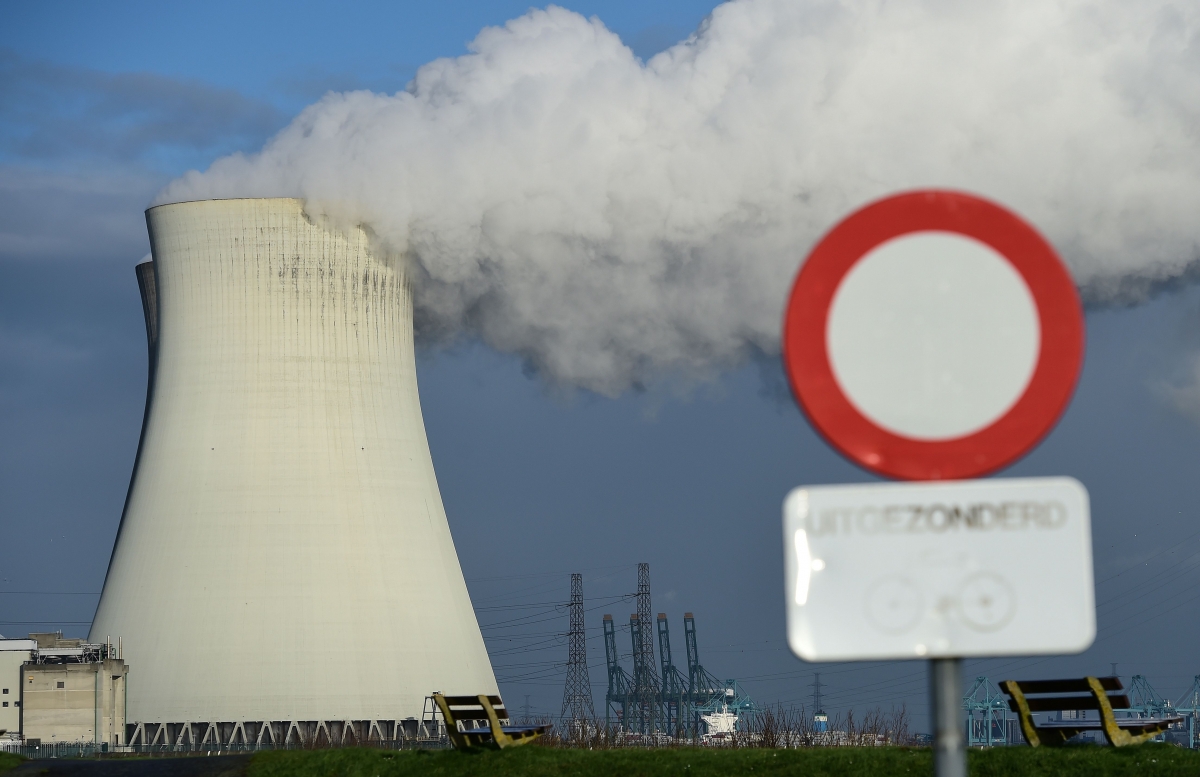
On November 30, 2015 the
Belgian police discovered a film regarding the movements of a Belgian
nuclear researcher and his family who operated in Dohel-1, one of the
seven nuclear production sites in that country, four in the Dohel region
and three in the Tihange region.
The long film of all the nuclear expert’s movements was found in the
Auvelais house of a man linked to the network of Al Baghdadi’s
Caliphate. The jihadists were interested not so much in the nuclear
plant as such, but in the possibility of using radioisotopes, namely
products capable of causing poisonings, diseases, various temporary or
permanent disorders in those who come into contact with them for a
certain period of time. Radioisotopes, also known as radionuclides, are
unstable nuclei which radioactively decay, resulting in the emission of
nuclear radiations. As already said, the effects may be scarcely or
highly significant, depending on the dose of radiations received and/or
the type of emissions absorbed.
The α radiations carry two positive charges and can be stopped by a
thin aluminum foil. They strongly ionize gases (hence air) but, if
produced by a source inside the human body (water, contaminated food),
they can cause very severe damage. The β radiations have a negative
charge only and are more penetrating than the α ones, but they ionize
gases to a lesser extent. They have a greater power to penetrate the
human body than α radiations, but these emissions, too, can become
dangerous when given off by a source inside the human body. On the
contrary the γ radiations have no electric charge but have an undulatory
nature, such as electric waves.
The latter have a very high power of penetrating the human body and
can cross relevant thick layers of lead and other metals. They are a
hundred times more penetrating than the β radiations and are, in effect,
electromagnetic wave emissions. All radioisotopes are widely used in
medicine, biology, pharmacology (the “radiopharmaceuticals”),
archaeology and paleontology. Not to mention industrial applications:
the lasers which use the radioisotope emissions are now fundamental in
telecommunications, through the “fibre optics” technology. Even the
common CD players use these lasers, which are also used for cutting some
metal sheets in the manufacturing industry.
In all likelihood, the jihadists stationed in Belgium wanted to kidnap
that nuclear expert or a member of his family so as to force him to make
one or more “dirty bombs”. Here the technological issue turns into a
strategic and political issue.
A team of experts is needed to make a dirty bomb, but we cannot rule out that a single “lone wolf” may be able to make it alone,
with few recycled materials and using the usual homemade explosives
which now characterize most of the blasts occurred so far in Europe due
to the sword jihad. You only need saltpetre, sugar or normal gunpowder,
which can be easily made at home. It is worth clarifying that the jihad
does not want to conquer our territory, but it wants to fully subjugate
it, particularly at political and cultural levels.
For
the jihadists, a “dirty” bomb” has the same value as a cyber attack or a
demonstration against miniskirts or halal food in public schools. The
important factor is intimidation, leading to hegemony and finally to
dominance. This means that, at geopolitical, economic, cultural and
demographic levels, the jihadist militants want to make their fight
fully functional to the primary interests of the umma, namely the
Islamic global community.
The strategic goal is the cultural and economic submission and
subjugation of our territories to Islam, possibly with some mass
conversion.
The fear, terror and social
dissociation caused by the terrorist actions carried out by the men (and
women) of Daesh/Isis are aimed at weakening the reactions of the
“infidel”. The attacks also serve to increase the costs of our
defence, up to making them economically unsustainable and finally
blocking the European society so as to freeze it until the final
“submission”, just to borrow the title of a smart and successful book by
Michel Houellebecq. Therefore it is a long-term warfare, with strong
elements of traditional war combined with a real psywar, “psychological
warfare.” These actions relate to the management of the good side, the
good cop, of integration up to beyond the limits allowed by our social
system – which implies cultural and mental-mythical submission and
subjugation – and the harsh side, the bad cop, the brutal violence of
the recent massacres in Paris and Brussels. Hence a mechanism “if ….
then” sets in into the victims’ minds, namely us, whereby we start to
think that if we are good and keep quiet and we adapt without saying a
word they will not do us harm any more.
This is not true: if we are good and keep quiet, we will be
subjugated even more cruelly. Needless to explain this to current
politicians in Italy and Europe; they are just canvassers and salesmen
in search for foreign capital, possibly from the countries which have
always funded the jihad. There are also important socio-economic factors
in this psywar using all the elements of our non-orthodox warfare
techniques. Again needless to explain these techniques to the above
stated canvassers and salesmen who, unfortunately, have also “polluted”
the intelligence services.
Firstly, there is the plan already made explicit by Osama Bin Laden
to hit the West – the inevitable advocate, for economic and energy
reasons, of the “apostate” regimes of Islam and the Jewish State – with a
war which is very cheap for the jihad that wages it, but costs a lot,
even too much, to those who must defend themselves from it. Compared to
the relatively scarce funds needed for the attacks of September 9, 2001,
Osama Bin Laden and his Al Qaeda cost over three billion dollars in
fifteen years, including the costs of wars, new security and safety
standards and part of the covert operations necessary for finding and
killing him. Not to mention the still high costs for supporting about
150,000 military staff and one quarter more of the normal US military
budget. The jihad started by Bin Laden – a wealthy “daddy’s boy” who
became radicalized at the university in Saudi Arabia, as a result of his
contacts with a professor linked to the Muslim Brotherhood – is an
asymmetrical war of the poor against us, the would-be “rich”.
Hence the jihadists are used as
proxy warriors by the rich Muslim countries to progressively impoverish
the West, make it suitable for diversified and profitable investment by
the OPEC Sunni area and finally create not only an economic, but also a
political dependence on the Middle East oil and gas. The terrorist
attacks in Paris and Brussels, not to mention the now sadly neglected
affair of mass rapes in Cologne, are the beginning of a new phase of
this non-orthodox Islam war in Europe and other continents.Before Al
Baghdadi’s Caliphate – which has created the territorial entity needed
to the global jihad, for political mythology and as a military base –
Mohammed Badie, the former Supreme Guide of the Muslim Brotherhood in
Egypt and later leader of the Ikhwan International, had explicitly
stated: “There is no need for the sword jihad in Europe, we will conquer
it only with our growing population”.
The transition from the old to
the new jihad, which came to maturity with the establishment of the
Daesh-Isis Caliphate, has already changed this Islamist strategic
project on Europe. This is exactly the reason why we must be very
careful with nuclear “dirty bombs” that will certainly reach their
political goal (which is what matters), regardless of their actual
potential for nucleotide radiation. Fear is a mechanism which now
increases also with small doses of violence. It is hard to estimate how
many sites exist today in the world where radionuclides are produced and
stored, but
the best statistics now available point to over 70,000 storage systems placed in at least 13,000 facilities. The
brutality of the attacks and the size of the widespread jihadist
network discovered so far in Belgium may be explained by the fact that
this country is one of the major world producers of radionuclides and
there is at least one researcher of Islamic origin and faith who works
in this facility, as we will see shortly. It is the nuclear complex
called SK-CEN, a nuclear research centre located near the
Bocholt-Herentals Canal, 53 miles away from Brussels. It no longer
receives the periodical shipments of radioactive material from the
United States, which in 2004 had reported the poor defence structures of
the Belgian system in view of a possible attack by Al Qaeda.
Not to mention the fact that the two fake journalists who killed the
anti-Taliban Afghan leader, Ahmad Shah Massoud, two days before the
September 11 attack came from Molenbeek, the neighbourhood which hosted
and still partially hosts the Caliphate’s jihadists who carried out the
massacres in Paris and Brussels. In 2003 there had been reports of an
attempt by one of the Belgian soccer star, Nizar Trabelsi, to put a bomb
in the military area of Kleine Brogel, 18 miles away from the
aforementioned nuclear research centre, a base hosting twenty US
tactical nuclear weapons related to a F-16 squadron.
The base safety and security structures were later deactivated in
2010, even by a group of peace activists, who run about the military
structure undisturbed for over two hours.Only in 2014, and after the
renovations made by the Belgian government upon US request, did IAEA
confirm that the safety and security net in SK-CEN and the nearby
military base were effective and robust. It is worth noting that the
Belgian nuclear plants supply over 50% of electricity in that country.
Is this series of terrorist actions possibly designed to force Belgium
to supply itself only with the Middle East oil and gas? In Italy, the
disastrous decision to relinquish civilian nuclear energy was taken with
a richly-funded referendum in June 2011, after the equally
richly-funded one in 1987, cunningly held shortly after the disaster
occurred at the Chernobyl power plant. No one better than the peoples
who are not strategically Clausewitzian knows how to better use
“psychological warfare” than Muslims. They do not believe that the war
obeys strict, Kantian rules, but they think that the war confrontation
is always the essence of politics, not its “polarization of extremes”.
Hence there will probably be no need for terrorist actions in Italy: in
this sector we have already simulated and achieved the effects of a
jihad attack on our own.
Furthermore, the Belgian power plants have recently been the target
of a series of accidents which have endangered the city of Antwerp,
geographically close to the SK-CEN centre, and Germany has repeatedly
called into question the technical and strategic safety and security
nets of the Belgian nuclear system.
It is worth noting that Ilyass Boughalab, a Moroccan expert linked to
the old information network, though still operational but today silent,
known as Sharia4Belgium, works in Dohel-1. Today, globally, the
components (and not the finished products of the radioisotopes, about
which we have already spoken) are found in approximately 3,500 sites
located in 110 countries.
In Iraq, Al Baghdadi’s
Caliphate has already reached the nuclear sites of the former regime of
Saddam Hussein and is supposed to already have such a quantity of
radioactive material as to build a “dirty” bomb which could “infect” a
small city, thus making it uninhabitable (and this is the tactical goal
pursued). Moreover, the IAEA countries adhering to the international
safety and security net for the storage and use of radioactive
materials are only 23, accounting for 14% of the total 168 IAEA members.
Statistically, in 2013 and 2014, at least 325 nuclear accidents were
reported officially in the IAEA databases, with heavy losses of
radioactive materials.85% of those accidents regarded non-nuclear
radioactive material – hence nucleotides. According to the most reliable
estimates, the non-reported accidents are supposed to be over 753 in
the two-year period under consideration, already used as statistical
basis. Conversely, highly enriched uranium (HEU) is stored in sites
located in 25 countries while, as already seen, the radioactive
substances are much more widespread. Moreover, “dirty bombs” certainly
cause less damage than nuclear ones, but they can cost a huge amount of
money for “cleaning up” the area, as well as for displacing and
protecting the population. According to the rule of asymmetric economic
war started by Bin Laden and today continued by Al Baghdadi’s Caliphate,
this is exactly what is needed.
“Dirty bombs” have been called weapons of mass disruption and not weapons of mass destruction.
This is the reason why they are suited to reach two goals at the same
time: the psycho-political crushing of the enemy, namely us, as well as
the increase in costs for defending ourselves from the jihad – costs
which could force some European governments (the aforementioned
canvassers and salesmen) into a strategic or anyway political surrender.
Not to mention the area interdiction which could be generated by a
radiological dispersal device (RDD)
so as to later act undisturbed, with traditional terrorism, in areas
close to those hit by the dirty bomb. Technically, the most easily
available and used radionuclides among the 16 theoretically available
include Cobalt-60, with a half-life of 5.3 years, which appears as a
hard metal. It is used for anti-cancer therapies. They also include
Cesium-137, with a half-life of 30.1 years, which appears as powder salt
and is used for blood transfusions in specific therapies.The same holds
true for Iridium-192, which appears as a metal and is still used for
X-rays.
Finally they include Americium-124 and Beryllium, with a half-life of
432.2 years, showing the consistence of a metal oxide and mainly used
for stratigraphic analysis in geology and archaeology.
Out of the total number of nations adhering to the IAEA rules for
radionuclides, only 19 have a specific strategy to monitor or recover
the illegally extorted material; 8 of them are developing a procedure
for notifying neighbouring countries of any illegal release or transfer
of radioactive material, while the others are studying new safer storage
and monitoring systems. The Code of Conduct currently in force for all
the countries adhering to the special IAEA system for radionuclides is
inevitably vague and full of “shortcomings” at procedural and penalty
levels. Moreover only 130 IAEA countries have accepted the Code of
Conduct. So far many thefts of radioactive material have occurred, apart
from those carried out by the so-called Syrian-Iraqi Caliphate (two, as
far as we know).In 1993, the Russian mafia placed small pieces of
radioactive material in the office of a Russian businessman, causing him
to die in a few minutes.In 1995, the jihadist Chechen rebels buried a
container full of Cesium-137 in Moscow’s Ismailovsky Park.
The terrorists let the police know where it was before it could cause
too much damage.In 1998, 19 tubes containing Cesium-137 were stolen
from a hospital in Greensboro, North Carolina.Again in 1998, the secret
services of the pro-Russian Chechen government discovered a container
hidden under a railroad, already connected to an explosive ignition
device.Others thefts were recorded, often not even reported by “open
sources”. Hence, on the basis of logical inferences, how many Chechens
are hosted as foreign fighters by Daesh/Isis? A number ranging between
200 and 700 – an amount exceeded only by militants from Afghanistan,
Bosnia and Somalia.Just to make an example of costs and damage which may
be caused, a dirty bomb charged with an average quantity of Cesium-137
could “pollute” and contaminate 250 square meters at a certain minimum
cost of decontamination/ repopulation equal to over 81 billion euro,
obviously depending on the infrastructure existing in the RDD detonation
area.
Hence what must be done to prevent “dirty bomb” attacks?
Meanwhile, many specific sensors can be placed and monitored often
and very carefully in “sensitive” facilities and densely populated
areas.As already happened in the United States, a government committee
should select a number of critical points for RDD attacks and then
proceed to the ongoing computerized monitoring of the most important
sites which may be targeted by a jihad attack. This holds true also for
parks, cities’ central areas, schools and universities, but this shall
be decided by the relevant committee, when it is established.Furthermore
we shall also significantly improve the storage and destruction, after
use, of such materials, coming from hospitals, research centres or other
structures – a practice to be certified and be entrusted to the police,
not to garbage collectors.How many sites of radionuclide production or
storage are there in Italy? A huge amount: suffice to list – and it
would be virtually impossible – all the hospitals, private radiology
medical centres, as well as biological, archaeological, physical,
chemical and paleontological research centres. Radioactive waste and, in
any case, the waste coming directly from nuclear power plants, have the
size of 30,000 square metres, for a quantity of waste produced over 30
years.Less than a quarter of France and less than a sixth of Germany.
In Italy approximately 140,000 tons of special waste, including
radionuclides, are produced every year, while hazardous waste (including
some specific radionuclides) has a size of 9 tons/year. In Italy the
management of such radioactive waste, mainly coming from hospitals, is
currently regulated by Article 4 of Legislative Decree No. 230/95. The
legislation governs the management of such waste, but mainly defines
stringent criteria for notifications, requirements and regulations, also
in the event of a transfer of such waste abroad.Even with the very
dangerous rule of tacit consent. Hence is the registration of
radionuclide transport companies with the Ministry sufficient?We do not
think so, particularly because said waste thefts occur precisely during
transfers and by staff who may not be registered with the relevant
Authority.
Article 17 of EU Directive 2006/EURATOM, transposed in Italy in 2007,
envisages specific criminal offences for those who abandon or carry out
illicit trafficking of radioactive materials in addition to mandatory
confiscation of the material seized – where possible.Better, but not
enough, because there are no indications, apart from criminal penalties,
specifically protecting from an RDD, of which we will never know the
origin of the radionuclide used in the blast.
Once
again, little can be done, except for quick management and processing
of information in the EU area and careful intelligence prevention on the
radicalization of Islamic subjects from communities near the
radionuclide production or storage sites.
The likelihood of an RDD explosion is statistically not measurable.
Nevertheless, it will be good to think about it in time.
About the author:
*Professor Giancarlo Elia Valori is an eminent Italian
economist and businessman. He holds prestigious academic distinctions
and national orders. Mr Valori has lectured on international affairs and
economics at the world’s leading universities such as Peking
University, the Hebrew University of Jerusalem and the Yeshiva
University in New York.
He currently chairs “La Centrale Finanziaria Generale Spa”, he is
also the honorary president of Huawei Italy, economic adviser to the
Chinese giant HNA Group and Khashoggi Holding’s advisor.
In 1992 he was appointed Officier de la Légion d’Honneur de la
République Francaise, with this motivation: “A man who can see across
borders to understand the world” and in 2002 he received the title of
“Honorable” of the Académie des Sciences de l’Institut de France


![[IMG]](https://lh3.googleusercontent.com/blogger_img_proxy/AEn0k_ubhmVKtYwZ6jz3KtaaQ7iVIvmP4_a37K66LfbUzRpEKkmJFRCh2COmJ_14DvABWLF8cz-hWMKtfTgf9DJW0JWfHKwOOZ2-ZKFVv4v9YzmI1Zqn89aTP8gmf22Guqmw_ka8nIqRTvGpHy5Tocc1nvc4_lO6kzbYdlZeKgl6jM0=s0-d)
![[IMG]](https://lh3.googleusercontent.com/blogger_img_proxy/AEn0k_udDkbSPeli6w9mHXivPmfq4nOyyODOuLofl6n5Q1fxzZHeEhB7uUeKtTj160OIyjtxwoSA-xVuZTd3BO9c3LuGKXQMy4qU2I4fWPTaycOV6KzWZEfhNvcPQ30Q-x515Z_4N58l3GUPUWPuxqiX6AQRjt5EZbVXbrXNvQ=s0-d)
![[IMG]](https://lh3.googleusercontent.com/blogger_img_proxy/AEn0k_sqBE1GvvcGPs5Bi_0DihZe8hyb972DFuV2FovvH2bmEum7o8W06Kjt6FTSVBi-wDYRkknro_jP_DwL3ok69-JZJgzp6tpX9xAiY0wuhpdrvKf4IND9o5QoDe0V54AqOcMNtpMlh9eoTM-oJceN-TlwCXkanfs=s0-d)


