Saturday, 14 May 2016
Hisham Melhem
It is the enemy within that a diminished Europe is facing now; the
alienated sons and daughters of its former colonial subjects are being
inspired by the enchanting sirens coming from the self-appointed high
priests of sacred Islamist violence in the faraway former provinces of
the empire, calling on them to wage a relentless war of terror to
dismantle their societies, and to seek redemption and martyrdom in the
thrill to kill.
A diminished continent
It is a sign of these modern
brittle times that three men laden with explosives and unfathomable
hatreds can bring a European country, nay a continent to a standstill,
while casually strolling into an airport and unloading their wrath. It
may be too late for Europe to raise its drawbridges, man the ramparts
and enlarge the moat; fortified Europe is a thing of the past. In the
age of empire, rebellious subjects in distant provinces were subdued by
expeditionary forces fighting them on their grounds. Now the enemy is
within, living in small enclaves inside the city, and is familiar with
Europe’s ways, habits and vulnerabilities. Instead of dispatching bands
of would be Jihadists from Arab and Muslim lands to wreak havoc in the
heart of Europe, the so-called Caliphate which has attracted tens of
thousands of fighters, including a sizable number from Europe, can
simply train them in the art of terror and send them back on a last
visit to the countries they have abandoned, or just inspire from afar
new recruits to attack the enemy from behind.
These new soldiers are not like the traditional Jihadists who
volunteered to fight Soviet dominion in Afghanistan, or like those who
waged terror against various Arab and Muslim tyrannical regimes with the
objective of restoring Islamist rule,
they are the new European Lumpenproletariat, lacking Islamic consciousness, although they are part of the Muslim communities
living in Europe but not totally of Europe. These young alienated,
angry misfits, petty criminals and former convicts living on the margin
of society, get religion either in prisons or are recruited to “Jihad”
by local heavies, and radical Imams, mostly imported from the Middle
East or South Asia. Thus, their empty lives are given meaning and
purpose after receiving a rudimentary introduction to Islam, with heavy
emphasis on the real and imagined grievances of the Ummah at the hands
of the Imperialists and the Crusaders. Their criminal core is finally
wrapped in an Islamist veneer.
For the last half millennia, the European continent has shaped world
history, initiated the scientific and industrial revolutions, and was
the repository of great culture and art ; and while it had its dark and
ugly side expressed in massive violence and world wars, it nonetheless
laid the foundation of the modern world.
The Islamist inspired terror that has in recent years visited the great cities of Europe; London, Paris, Madrid
and recently Brussels has demonstrated powerfully to what extent the
post-modern Europe as embodied in the European Union, with its open
borders, and diluted sovereignties has been weakened. Coming after
Europe’s failure to check Russia’s aggressive irredentism which is
bleeding the Ukraine, and the confusion and contradictory approaches to
solving the historic influx of refugees and migrants from the Middle
East and Africa, this new strain of terrorism is threatening the very
foundations of an exhausted European Union.
A fake state and a state of emergency
A pretend “Islamic Caliphate”
straddling the two failed states of Syria and Iraq has declared war on
many Muslim lands, the European Union and the United States. Its
self-appointed Caliph, Abu Bakr al-Baghdadi might have been a ghost, but
he knows that none of his Western enemies is willing to engage his
forces on the ground. Such is the nature of terrorism against open
societies in a globalized and interconnected world that it is rewriting
the whole concept of asymmetrical warfare. Never have a small number of
people been capable of inflicting so much damage against so many people
in so many supposedly powerful countries, for so little a cost and for
such a long time. The Caliphate, a non-state fake state, through few men
wreaked havoc in Europe, and created a state of emergency and fear in
the continent.
Of anarchists
A lot has been written about what Belgium should do technically and
administratively to be more effective, in collaboration with the rest of
the EU states in anticipating and combatting its growing Islamist
inspired terrorism scourge. But ‘Molenbeek’ as the archetype of the
impenetrable ISIS infested enclave in the European city, will remain for
the foreseeable future an intractable problem for the continent. But
modern European history is instructive here. In the 19th and early 20th
centuries anarchist violence shook every European capital from Madrid in
the West to Moscow in the East. Anarchist terror was so ubiquitous it
left its deep impact (and scars) on the politics, literature, philosophy
and art of the whole continent. (Anarchism informed the works of some
of the greatest novelists of the 19th century; Dostoyevsky, Turgenev,
Balzac, Zola and others). Violent men armed with pistols and bombs and
helped by philosophers, theoreticians, and pamphleteers justified the
anarchists’ utopia, and terrorized their way into the hearts and minds
of millions of Europeans by assassinating kings, presidents and Prime
Ministers.
It may be too late for Europe to raise its drawbridges, man the
ramparts and enlarge the moat; fortified Europe is a thing of the past
Hisham Melhem
They created and relished anarchy, and like the ISIS assassins of
today, they enjoyed the thrill to kill. The nihilistic, absolutist
impulses that drove the anarchists of Europe in the 19th century in
their take- no- prisoner war against the State as the embodiment of
evil, are essentially the same nihilistic absolutist impulses that are
driving the young, angry and marginalized foot soldiers of ISIS in their
all-out war against the ‘Crusader’ states of Europe. It took European
societies and governments decades and in some cases generations to
eliminate the anarchist’s “culture” and allure by a combination of
counter violence, good governance, economic and social development and
countervailing intellectual force. It will take European states and
institutions similar approaches and tactics and many years to eliminate
the threat of the Islamist foot soldiers of ISIS and like-minded groups
from their own ‘Molenbeeks’.
…And fake Mahdis
The Caliphate in the Levant and Mesopotamia, and its budding branches
in Libya, Yemen and even in faraway Afghanistan can only be defeated by
the sword.
The ‘Islamist State’
is the last of a long string of radical, millennial, apocalyptic,
revivalist and schismatic movements, led by false prophets, fake Caliphs
and usurping Mahdis . In fact the dawn of Islam saw the birth of
the first such bloody movement. The Kharijites, (or Khawarij) literally
‘the outsiders’ was a rebellious movement that practiced a primitive
form of egalitarianism, became infamous when one of its members in 661
AD assassinated the venerable Imam Ali, the last of the four ‘rightly
guided’ Caliphs who was Prophet Muhammad’s cousin and son-in-law, thus
intensifying the Sunni-Shiite schism. Some of these claimants of
prophethood barely deserve a footnote (although the greatest classical
Arab poet Al-Mutanabbi, 915- 965 AD, as his name indicate, claimed the
mantle of Prophethood in his youth) but others ruled large domains. The
most powerful of these movements in modern times was that of the
Mahdiyya movement in Sudan. In June 1881 a religious leader named
Muhammad Ahmad Ibn Abdallah proclaimed himself the Mahdi (the guided
one) who would redeem the Muslim faith. The movement was built on a
reservoir of Sudanese resentment against the Egyptian-Ottoman dominion
of Sudan, and had roots in the revivalist messianic popular beliefs
among the local sects.
The charismatic Mahdi and his successor Abdallah Ibn Muhammad
established an Islamic state in Sudan and in parts of Egypt and Ethiopia
supported by a large army. The famed British General Charles Gordon
fell to the swords of the Mahdi’s holy warriors in the battle of
Khartoum in 1885. The Mahdiyya state terrorized the Nile Valley region,
and their rampages lasted for 20 years, until another renowned British
General, Horatio Kitchener leading an expeditionary British force of
8000 soldiers and an auxiliary 17000 combined Egyptian and Sudanese
force, dispatched a larger Mahdist army of 60000 and destroyed the
Mahdiyya state at the battle of Omdurman in1898. It is instructive here
that the Mahdiyya state was defeated militarily by a combined
Muslim-British force.
Terrorism without borders
Terrorism without borders is the natural outcome of globalization and
the digital age. Countering this qualitatively new threat requires a
strategy without borders too. After the Brussels bombings, President
Obama re-iterated his mantra that the Islamic State is not an
“existential threat” to the United States – “They can’t destroy us. They
can’t defeat us”.
And once again the President is framing the issue the wrong way.
Just as he criticizes those who accuse him of reneging on his threats
and promises regarding Syria, by twisting their words to make them sound
as if they were counseling him to invade Syria, his framing of the
issue of ISIS’ terror misses the point. Yes, it is true that ISIS and al
Qaeda do not constitute an existential threat to America, but that is
not what the critics are objecting to. Obama deals with this strain of
terror as if we are still living in the ancient world of
pre-globalization and the primitive age of the pre-digital
possibilities. A war need not be an existential threat to cause
tremendous damage. The only war that had the potential to destroy the
United States was the civil war. And only during the Cold War the
possibility of a thermonuclear exchange with the Soviet Union could have
been considered a truly existential threat to America. No war in the
twentieth century came close to representing an existential threat to
the United States. America by virtue of geography and capabilities
fights its wars overseas.
But as the American led minimalist war against ISIS, and the long
conflict in Syria have demonstrated, far away wars in our
inter-connected world, could have a devastating effects not only on
Syria and Iraq, the primary theatre of the conflict, but also on
Washington’s allies in the region, and as we have seen with the influx
of refugees and migrants from the Middle East and Africa, the very
foundations of the European Union are being undermined.
It is not only that the Schengen Agreement which led to the creation
of “borderless Europe” is slowly collapsing now, but also the rising
power of exclusionist tendencies and the ascendency of right-wing
politics, and the potential for mass violence between local radical
Islamists and neo-fascist groups that could deal a historic blow to a
post-Cold war Europe that was supposed to be ’whole and free’.
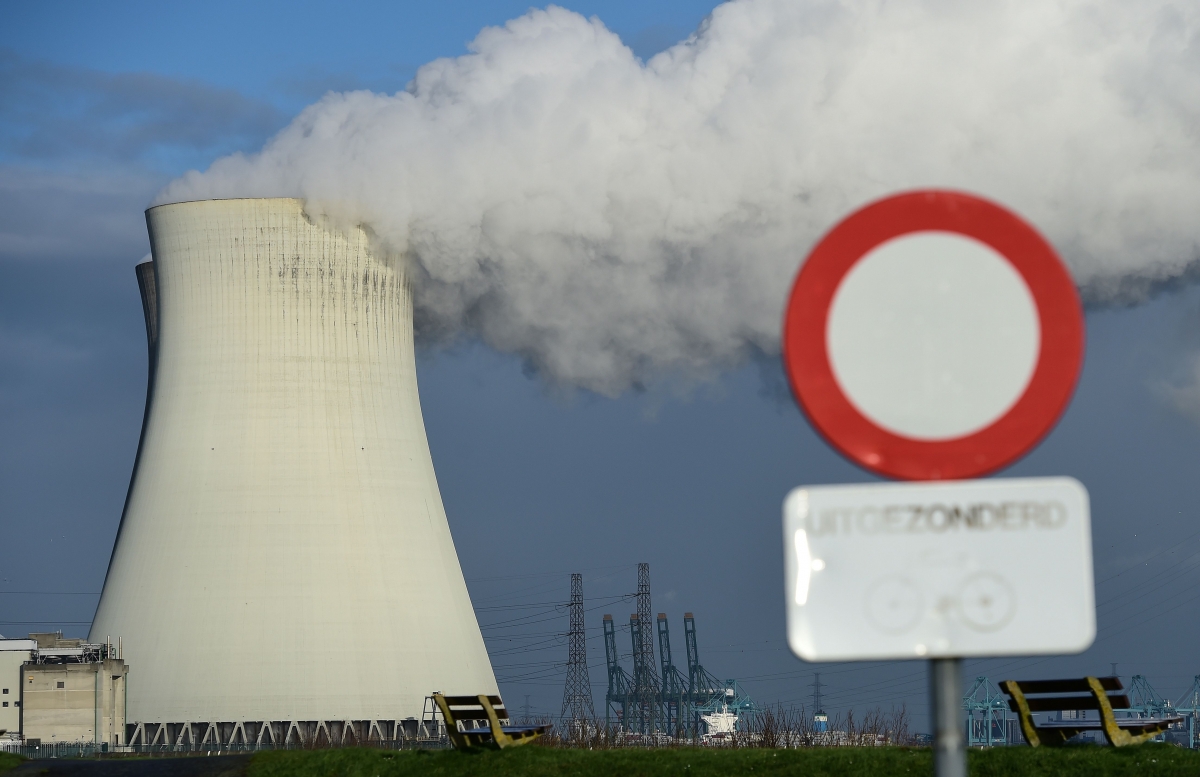
When
hostile terrorist entities like the “Caliphate” control large open
spaces that includes universities, labs, hospitals, and scientists, the
possibility of assembling and detonating a “dirty” bomb to contaminate a
city, or stealing radioisotopes to cause radiation poisoning, cannot be
excluded.
What is to be done?
The American reaction to the mayhem in Brussels was somewhat
predictable. The reaction of the two leading Republican candidates
Donald Trump and Ted Cruz was inflammatory, offensive, ill-advised,
impractical and downright idiotic. Senator Cruz betrayed his ignorance
of the conditions of America’s Muslim population, called for empowering
law enforcement “to patrol and secure Muslim neighborhoods before they
become radicalized”. Someone on his staff should have told him that
there are no American ‘Molenbeeks’ full of resentful and alienated
Muslim youths, and that the majority of Muslim Americans, who live
throughout the country, are well educated, mostly middle class and at
home in America, unlike the relatively, isolated and disenfranchised
Muslim communities in European countries like France and Belgium. Yes,
we had some radicalized American-born Muslim individuals who were
inspired by terrorist groups and theoreticians to commit violence, but
we don’t have radicalized, Muslim communities, holed up, in ‘Molenbeek’
like enclaves ready to explode.
There were other ‘remedies’ by candidate Trump like banning Muslims
from entering the United States, and re-introducing and legalizing
torture to extract quick confessions from detainees. The leading
democratic candidate, Hillary Clinton, after criticizing the infantile
proposals of her Republican rivals, proposed doing more of what
president Obama is already doing, such as intensifying the air campaign,
improving coordination with allies, tightening the visa and
passenger-list systems. She differed with Obama only on her proposal to
establish a safe zone in Syria to stem the flow of refugees.
The Brussel’s bombings, like the Paris attacks last year have
heightened the debate about the best way to deal with the ISIS threat.
The Islamic State’s impressive prowess in electronic warfare and its
early successful use of social media, led to calls for greater emphasis
on the virtual battlefield. Candidate Hillary Clinton called for a
virtual war on ISIS. “We’ve got to defeat them online. This is where
they radicalize, and that’s where they propagandize”. While a
countervailing push online is necessary to fight the diabolically
creative “electronic brigades” that ISIS has been deploying to wage
online hashtag campaigns and to do battle with Twitter, and Google in
the end this epic struggle with ISIS will have to be decided on the
ground and not online, by sharp swords and not by sharply worded tweets.
The “clanging of the swords”
Defeating ISIS will require good old fashion military muscle.
While the air campaign and selective special operations against ISIS
leadership, and military installations have degraded the group, the
decisive blow can only be delivered by ground troops. The Obama
administration’s support for Syria’s opposition groups was invariably,
limited, tepid and tactical. President Obama and his senior advisors
initially stuck to the mantra that there is no military solution to the
conflict, then with the rise of ISIS wanted the nationalist opposition
to fight ISIS and ignore the very Assad regime that brought ISIS to
Syria in the first place. Since the US is not likely to dispatch an
expeditionary force to rout ISIS from its “capital” Raqqa on the
Euphrates, as Britain did in 1898 to defeat the Mahdiyya state,
conceivably a new American President can adopt some of the well thought
out military options proposed by a number of serious experts such as
Kenneth Pollack and Frederic Hof et.al.
Time is of the essence. Barring a Deus ex Machina in the form of
American direct military intervention, or the formation of a new Syrian
opposition force with significant American and Arab support,
Syria’s
wars will continue and could conceivably in a year or two unravel the
Levant region the way we have known it for a century. Only military
force could defeat ISIS and the Assad regime; and as ISIS is fond of
saying, victory can only be achieved by the “clanging of the swords.”
________
Hisham Melhem is a columnist and analyst for Al Arabiya News Channel in
Washington, DC. Melhem has interviewed many American and international
public figures, including Presidents Barack Obama and George W. Bush,
Secretaries of State Hillary Clinton and John Kerry, Secretary of
Defense Robert Gates, and Chairman of the Joint Chiefs of Staff Admiral
Mike Mullen, among others. He is also the correspondent for Annahar, the
leading Lebanese daily. For four years he hosted “Across the Ocean,” a
weekly current affairs program on U.S.-Arab relations for Al Arabiya.
Follow him on Twitter : @hisham_melhem


![[IMG]](https://lh3.googleusercontent.com/blogger_img_proxy/AEn0k_ubhmVKtYwZ6jz3KtaaQ7iVIvmP4_a37K66LfbUzRpEKkmJFRCh2COmJ_14DvABWLF8cz-hWMKtfTgf9DJW0JWfHKwOOZ2-ZKFVv4v9YzmI1Zqn89aTP8gmf22Guqmw_ka8nIqRTvGpHy5Tocc1nvc4_lO6kzbYdlZeKgl6jM0=s0-d)
![[IMG]](https://lh3.googleusercontent.com/blogger_img_proxy/AEn0k_udDkbSPeli6w9mHXivPmfq4nOyyODOuLofl6n5Q1fxzZHeEhB7uUeKtTj160OIyjtxwoSA-xVuZTd3BO9c3LuGKXQMy4qU2I4fWPTaycOV6KzWZEfhNvcPQ30Q-x515Z_4N58l3GUPUWPuxqiX6AQRjt5EZbVXbrXNvQ=s0-d)
![[IMG]](https://lh3.googleusercontent.com/blogger_img_proxy/AEn0k_sqBE1GvvcGPs5Bi_0DihZe8hyb972DFuV2FovvH2bmEum7o8W06Kjt6FTSVBi-wDYRkknro_jP_DwL3ok69-JZJgzp6tpX9xAiY0wuhpdrvKf4IND9o5QoDe0V54AqOcMNtpMlh9eoTM-oJceN-TlwCXkanfs=s0-d)


