Sunday, January 5, 2020

Trump Wanted to Cross the Redline (Revelation 6:6)


From resort amid palm trees, Trump settled on Iran strike
By JONATHAN LEMIRE and MATTHEW LEE, Associated Press
Posted 4 hours, 30 minutes ago
WEST PALM BEACH, Fla. (AP) — At the midway point of his annual Christmas vacation, President Donald Trump huddled at his Florida club with his top national security advisers. Days earlier, a rocket attack by an Iranian-funded group struck a U.S.-Iraqi base, killing an American contractor and wounding several others.
Trump’s advisers presented him with an array of options for responding, including the most dramatic possible response: taking out Gen. Qassem Soleimani, the head of Iran’s elite Quds Force and the man responsible for hundreds of Americans deaths.
Trump immediately wanted to target Soleimani. It was a decision his predecessors had avoided and one that risked inflaming tensions with Tehran. Some advisers voiced concern about the legal justification for a strike without evidence of an imminent attack in the works against Americans. So other options were discussed in the coming days with Secretary of State Mike Pompeo, Defense Secretary Mark Esper and national security adviser Robert O’Brien, including bombing the base of the group blamed for killing the U.S. contractor.
But Trump remained focused on the option to target Soleimani, a preference that surprised the small circle of aides because the president had long been reluctant to deepen U.S. military engagement around the world. By Thursday, officials believed they had intelligence indicating Soleimani was plotting against Americans, though it’s unclear when that intelligence became known to U.S. officials.
Trump slipped out of a meeting with political advisers that day to give the final go-ahead. His decision to authorize the drone strike has sent shockwaves throughout the Middle East and dramatically escalated tensions between the U.S. and Iran.
It wasn’t the first time that Trump’s lush Mar-a-Lago resort, with its $200,000 annual membership and Atlantic Ocean vistas, had been the backdrop for a momentous national security decision.
In February 2017, Trump huddled on the patio with Japan’s Shinzo Abe, in full view of club members eating dinner, to weigh a response to a North Korean missile test. Two months later, Trump authorized a U.S. missile strike on Syria, then shared chocolate cake with China’s President Xi Jinping, who was visiting Mar-a-Lago for meetings.
Trump spent much of this vacation angry about the attack on the American contractor. He stayed largely out of sight in Florida, emerging only for rounds of golf at his other nearby club and mingling with guests at a New Year’s Eve party.
Wearing a tux, Trump was asked by a reporter if he foresaw a chance of war with Iran. Raising his voice to be heard over the holiday revelers, Trump said he wanted “to have peace.”
“And Iran should want peace more than anybody,” he said. “So I don’t see that happening. No, I don’t think Iran would want that to happen. It would go very quickly.”
He betrayed no indication of the momentous decision he was already weighing. More than a half-dozen administration officials, congressional staffers and advisers close to the White House described Trump’s decision-making. Most spoke on the condition of anonymity because they were not authorized to publicly discuss private deliberations.
After Trump leaped at the option to take out Soleimani, national security officials debated about where the targeted strike should happen if they proceeded. Most did not want to attack Soleimani in Iraq, given the presence of U.S. troops there and the already tenuous situation on the ground. Some argued for the operation to occur when Soleimani was traveling in Lebanon or Syria. But when they learned Soleimani would be traveling to Baghdad on Jan. 2, they decided targeting him at the airport was their best opportunity.
Earlier that day, Trump was meeting with his political advisers about his reelection campaign when he was summoned to give the final go-ahead. Officials believed they had a legal justification and would cite intelligence suggesting that Soleimani was traveling in the Middle East to put final touches on plans for attacks that would have hit U.S. diplomats, soldiers and American facilities in Iraq, Lebanon and Syria.
U.S. officials have not been more specific about the intelligence. A congressional aide briefed by the administration on Friday said officials offered compelling details about Iran’s intentions and capabilities, but not about the timing of the supposed attacks on Americans.
The deliberations and Trump’s final decision came quickly enough that in the hours before the attack Thursday night (early Friday in Baghdad), contingency plans for a potential Iranian response were still being finalized. The White House communications team was not given a heads-up about the strike, leaving the staff scrambling as news of the explosion spread.
The president told one confidant after the attack that he wanted to deliver a warning to Iran not to mess with American assets. Trump said he was also eager to project global strength and replicate the message he believed he sent last year after approving the raid to kill Islamic State leader Abu Bakr al-Baghdadi: the U.S. would find its enemies anywhere in the world.
Still, administration officials acknowledged that Soleimani’s killing carried a high risk of Iranian retaliation. The Pentagon is sending nearly 3,000 more Army troops to the Mideast and some troops are on standby to travel to Beirut if more security is needed at the American Embassy there.
Hundreds of soldiers deployed Saturday from Fort Bragg, North Carolina, to Kuwait. A loading ramp was filled with combat gear and restless soldiers. Some tried to grab a last-minute nap on wooden benches. The wife of a member of the 82nd Airborne who deployed earlier this past week said his departure was so abrupt she didn’t have the chance to say goodbye in person or by phone. “The kids kept going, ‘When’s dad going to be home?’” said April Shumard, 42. “It’s literally thrown me for a loop. And him as well. He’s still in disbelief of where he’s gone. Our heads are spun.”
As Trump addressed the nation Friday for the first time after Soleimani’s killing, he declared that the Iranian general’s “reign of terror was over.”
“We took action last night to stop a war. We did not take action to start a war,” he said.
___
Lee reported from Washington. Associated Press writers Robert Burns, Lolita C. Baldor and Zeke Miller in Washington; Sarah Blake Morgan Fort Bragg, North Carolina; and Jonathan Drew in Durham, North Carolina, contributed to this report.

Payback Has Just Begun


Iraqi air base with US troops, Green Zone, struck by several rockets, officials say
Paulina Dedaj4 hours ago
Multiple rockets aimed at an Iraqi air base just north of the U.S. embassy where American troops are deployed, as well as the heavily militarized Green Zone were launched Saturday evening, according to multiple reports.
At least one rocket struck the Balad airbase where an unspecified number of U.S. troops are housed while another hit near the embassy compound in the Green Zone, U.S. Army Public Affairs spokesperson Maj. Charlie Dietz confirmed on Twitter.
Dietz said Balad was the only confirmed point of impact, although a second rocket seemed to strike just south of the Tigris river in the Green Zone.
According to a Reuters report, the Iraqi military said Celebration Square, just a few blocks away from the U.S. embassy, was hit.
“Several rockets targeting Celebration Square and the Jadriya area in Baghdad, and the Balad air base in Salahuddin province, with no loss of life. Further details to come,” the statement read.
Images from one of the impact points appeared to show a car hit with shrapnel and a sidewalk that was blown out.
News of the rockets came just hours after it was reported that a senior Iranian military official threatened an attack on some 35 “American targets” in retaliation of the U.S. airstrike at Baghdad International airport that killed Gen. Qassem Soleimani.
Senior Revolutionary Guards commander Gen. Gholamali Abuhamzeh foreshadowed a possible attack on “vital American targets” located in the Strait of Hormuz.
“The Strait of Hormuz is a vital point for the West and a large number of American destroyers and warships cross there,” Abuhamzeh said according to a Reuters report, citing Tasnim news agency.
“Vital American targets in the region have been identified by Iran since long time ago … some 35 U.S. targets in the region, as well as Tel Aviv, are within our reach.”

Mourners chant slogans against the U.S. during the funeral of Iran’s top general Qassem Soleimani, and Abu Mahdi al-Muhandis, deputy commander of Iran-backed militias in Iraq known as the Popular Mobilization Forces, in the shrine of Imam Hussein in Karbala, Iraq, Saturday, Jan. 4, 2020. (AP)
In addition to threatening the U.S. with a possible attack, Abuhamzeh’s remarks that the targets had been previously “identified by Iran” seemed to confirm the State Department’s statement regarding the motivation behind the airstrike.
His comments come after it U.S. defense officials told Fox News that more than 3,000 troops from the 82nd Airborne Division’s 1st Brigade Combat Team would be deployed to Kuwait.
Iran’s top “shadow commander,” as Soleimani was known, was responsible for the deaths of hundreds of American and coalition service members and the wounding of thousands more. According to the State Department, the airstrike “was aimed at deterring future Iranian attack plans.”

Mourners step over a U.S. flags with pictures of President Trump while waiting for the funeral of Iran’s top general Qassem Soleimani and Abu Mahdi al-Muhandis, deputy commander of Iran-backed militias in Iraq known as the Popular Mobilization Forces, in Baghdad, Iraq, Saturday (AP)
“General Soleimani was actively developing plans to attack American diplomats and service members in Iraq and throughout the region,” the department said. “The United States will continue to take all necessary action to protect our people and our interests wherever they are around the world.”
Mourners gathering in the streets of Baghdad Saturday for Soleimani’s funeral procession. Dressed in black military fatigues, the mostly male-dominated group carried Iraqi flags and the flags of Iran-backed militias that are fiercely loyal to Soleimani.

In this image made from a video, mourners gather for a funeral procession for Gen. Qassem Soleimani, in Baghdad Saturday, Jan. 4, 2020. (PMF Media Office via AP)
They were heard chanting “No, No, America,” and “Death to America, death to Israel.”
The U.S. has since ordered all citizens to leave Iraq and closed its embassy in Baghdad, where Iran-backed militiamen and their supporters staged two days of violent protests earlier this week in which they breached the compound.
There are roughly 5,000 U.S. troops currently deployed to Iraq, and about 60,000 in the region. Some 14,000 have been added since May as the threat from Iran increased, according to the Pentagon.
The aircraft carrier USS Harry S. Truman is currently in the Gulf of Oman. Her strike group is armed with hundreds of Tomahawk cruise missiles, in addition to the dozens of strike aircraft aboard Truman.
Fox News’ Lucas Tomlinson and The Associated Press contributed to this report.
Paulina Dedaj is a writer/ reporter for Fox News. Follow her on Twitter @PaulinaDedaj.

The Shi’a Sickle is Coming


‘Revenge awaits’: Iran’s Ayatollah Khamenei promises retribution for drone strikes
by Spencer Neale  | January 03, 2020 10:09 AM
by Spencer Neale
| January 03, 2020 10:09 AM
Supreme Leader of Iran Ayatollah Ali Khamenei has promised vengeance after his top general was killed during a drone strike led by U.S. forces in Baghdad, Iraq, on Thursday.
“With his departure and with God’s power, his work and path will not cease, and severe revenge awaits those criminals who have tainted their filthy hands with his blood and the blood of the other martyrs of last night’s incident,” said a statement released by Khamenei.
A drone strike outside the Baghdad International Airport killed the Iranian Revolutionary Guard Corps elite Quds force Gen. Qassem Soleimani, 62, and Iranian-backed Popular Mobilization Forces boss Jamal Jafaar Mohammed, 66, better known as Abu Mahdi al Muhandis to Western forces.
Former CIA official John Maguire once referred to Soleimani as “the single most powerful operative in the Middle East today.” He was instrumental in leading insurgents in Northern Iraq and Syria, where he helped support Syrian President Bashar Assad’s regime.
“Gen. Soleimani was actively developing plans to attack American diplomats and service members in Iraq and throughout the region,” said U.S. Secretary of Defense Mark Esper. “This strike was aimed at deterring future Iranian attack plans.”

Why We Must Brace for the Media Persian War


Why the U.S. Assassination of Iranian Quds Force Leader Qasem Soleimani Has the U.S. Bracing for Retaliation
The assassination by U.S. airstrike of Iran’s Gen. Qasem Soleimani on Friday immediately ignited concern that the asymmetrical warfare he famously championed would not only survive his death but also avenge it.
U.S. military facilities across the Middle East ramped up security and the U.S. embassy urged American citizens to “depart Iraq immediately” after the Pentagon confirmed President Donald Trump had ordered the strike against Soleimani.
The killing was not like other attacks to eliminate enemies of the U.S.—the raids that killed Osama bin Laden or ISIS leader Abu Bakr al-Baghdadi. Soleimani was a major public figure in Iran, a Major General in Iran’s Revolutionary Guards Corps, who was easily the most popular official in an Iranian government that generally is not. Inside Iran, and on social media posts circulated globally, he was the frontman of, as well as chief architect for, Iran’s regional ambitions – in Syria, Lebanon, Yemen, and, most immediately in Iraq, where he met his end.

“Soleimani was the international face of resistance,” Iran’s Supreme Leader, Ayatollah Ali Khamenei said in a statement, “and all lovers of resistance will be his avengers.” He promised that “harsh retaliation is waiting.”
In and around Tehran’s grand mosque, Iranians took to the streets to shout “Death to America” and “revenge.”
After announcing his death, Iranian state television suspended all programming and displayed a photograph of Soleimani accompanied by mournful recitations from the Quran, signaling a major event. State TV also began airing footage of Iranian forces in combat, from the Iran-Iraq War— which Soleimani fought in—to Lebanon and Syria.
Soleimani’s death, on a roadway in Baghdad’s international airport, threatened to sharply escalate U.S. hostilities with Iran. The airstrike was Trump’s second military response to Iranian measures that had grown steadily more audacious over the seven months they went unanswered. The current cycle began on Dec. 27, when a sustained rocket attack on a U.S. base in Iraq’s north killed a defense contractor working for the Americans.
Trump blamed the attack on a militia backed by Iran, Kataib Hezbollah, and on Sunday U.S. aircraft hit the militia, killing 24. Two days later, militia backers penetrated the U.S. Embassy in Baghdad, burning outbuildings and chanting “Death to America.” In the crowd at the embassy was Kataib Hezbollah founder Abu Madhi Muhandis, who was killed in the strike along with Soleimani.
Soleimani, 62, commanded the Quds Force, the branch of the Revolutionary Guards responsible for operations abroad, from sabotage and terror strikes to supplying militias that operated as Iran’s proxy forces. In Afghanistan, he reportedly advocated cooperation with U.S. forces against the Taliban, a Sunni-fundamentalist group that had been a constant threat to Iran, which sees itself as the leader of the rival Shi’ite sect of Islam. But the tentative alliance did not survive President George W. Bush’s inclusion of Iran in his “axis of evil,” and then the 2003 U.S. invasion of Iraq, which placed more than 100,000 American troops on Iran’s border.
Iran’s evolving response to the invasion may offer a clue to how it will respond to Soleimani’s assassination. At times when the U.S. has showed off military strength, the Islamic Republic has appeared cowed. Within hours of a 2003 U.S .cruise missiles strike on Ansar al-Islam, a Sunni terrorist group in northern Iraq that Iran had found it convenient to aid, Tehran closed the border over which it had supplied arms, and laid very low. And according to published U.S. intelligence estimates, it was after the fall of Saddam Hussein that Iran, apparently intimidated by the U.S. forces next door, abandoned work on an atomic warhead, while continuing the civilian side of its nuclear program.
But when armed resistance rose against the U.S. during the Iraq War, Soleimani’s Quds Force joined the fight. Iran funded and armed militias that shelled American bases and diplomatic installations—and supplied enhanced booby traps capable of penetrating U.S. armor. The so-called EFPs (explosively formed penetrators) were responsible for at least 250 U.S. deaths in Iraq.
Soleimani was never one to hide his light. In 2008, an intermediary delivered a written message to Gen. David Petraeus, who then commanded the Multi-National Forces in Iraq. “General Petraeus,” it read, “you should be aware that I, Qassem Soleimani, control Iran’s policy for Iraq, Syria, Lebanon, Gaza, and Afghanistan.”

In the decade that followed, Soleimani was the face of an Iranian regime hugely empowered by the U.S. invasion of Iraq, which first toppled its longtime enemy, Saddam Hussein, then unleashed the electoral power of Iraq’s Shi’ite majority in a democratic system the U.S. established on sectarian lines. With the retreat of the U.S. from the region and the destabilization from the Arab Spring, Iran took advantage of the region’s descent into sectarian camps—Sunni against Shi’a— as national identities crumbled.
Into Syria, Iran sent both its own forces to save President Bashar Assad, and those of Hezbollah, the militia it had set up in Lebanon decades ago. It found a new client in the Houthi rebels of Yemen, who drew regional rivals Saudi Arabia and the United Arab Emirates into a cruel war. And despite a $1 trillion U.S. investment, and thousands of American lives, Iran remained by far the most powerful country in Iraq.
When the extremist army of ISIS emerged there in 2014, and rolled over Iraq’s army, Soleimani beat the U.S. to the front lines, providing the first arms to the ethnic Kurdish forces who would halt the terrorist’s advance. In Baghdad, the government called for militias to mobilize against ISIS, another windfall for the Quds Force, as most fighters organized by sect. Among the posters published in Iran in the hours after his death was one reading, in English: “General Soleimani, Antiterrorism”
President Trump Ordered Strike That Killed Top Iran Gen. Qasem Soleimani, Pentagon Says
The Pentagon said Thursday that the U.S. military has killed Gen. Qasem Soleimani, the head of Iran’s elite Quds Force, at the direction of President Donald Trump
In a Twitter post, Iran’s Foreign Minister Javad Zarif called Soleimani “THE most effective force fighting Daesh (ISIS), Al Nusrah, Al Qaeda et al” and called his assassination an “extremely dangerous & a foolish escalation.”
Iran, of course, had done most of the escalating over the previous year—steadily testing Trump in the realm of asymmetrical warfare as he tightened the screws on Iran’s economy in hopes of forcing Tehran to re-open negotiations on the nuclear agreement Trump had unilaterally quit.

But as Trump declined to react military, Iran’s attacks grew bolder—from attacking oil tankers (“very minor,” Trump told TIME, of one), to shooting down a U.S. drone (Trump ordered an counter-attack, then called it off), to, in September, bombing key Saudi oil facilities. Trump’s first military response came only this week, after the contractor’s death. And events quickly spiraled to an aerial assassination that brought gasps among those who knew Soleimani’s importance to Iran.
In 2017, when TIME included Soleimani on its list of the 100 most influential people, former CIA analyst Kenneth M. Pollack wrote that “To Middle Eastern Shi’ites, he is James Bond, Erwin Rommel and Lady Gaga rolled into one.” Inside Iran, his successes abroad evoke the past glories of the Persian empire that, in its early years, the Islamic Republic worked to downplay, because they predated Islam. But the ayatollahs have lately found an asset in nationalism; another poster memorializing Soleimani labels him “PERSIAN GENERAL.”
So popular was he with the Iranian public that Soleimani was envisioned—at least by some in Tehran—as a figure who might provide much-needed public faith in the regime after the eventual passing of the Supreme Leader, now 80—perhaps by becoming the public face of the Islamic Republic while a new top cleric found his feet. That notion, however real or plausible, was also destroyed on the Baghdad pavement.
“The US,” Iran’s foreign minister declared, “bears responsibility for all consequences of its rogue adventurism.”
Contact us at editors@time.com.

Here are the nine countries that have nuclear weapons: THAT WE KNOW OF


img_8356

Here are the nine countries that have nuclear weapons

These five nations are officially recognised as possessing nuclear arms by the Nuclear Nonproliferation Treaty (NPT) – with the US and Russia holding the vast majority between them.
The first nuclear weapons were developed by the US during World War Two as part of the Manhattan Project in reaction to the Nazi threat in Germany.
America received cooperation from the UK and Canada.
The latest nation to build nuclear weapons is North Korea, which carried out its first nuclear test in 2006.
It has since threatened nuclear action against the US and South Korea, and has broken international law with its testing of powerful nuclear weapons.
There were thought to be 13,865 nuclear warheads in 2019, down from 14,465 in 2018.
The statistics used in this piece come from the 2019 report from the Stockholm International Peace Research Institute.
The institute notes that ‘deployed warheads’ are those placed on missiles or located on bases with operational forces.
Other warheads relate to those which have been stored or reserve warheads and retired warheads awaiting dismantlement.  
All estimates are approximate and figures for North Korea are uncertain and therefore not included in total figures.

Saturday, January 4, 2020

The Sixth Seal Is Past Due (Revelation 6:12)

https://www.cheatsheet.com/wp-content/uploads/2015/05/aftershock-640x484.png?044193 

by , 03/22/11
filed under: News
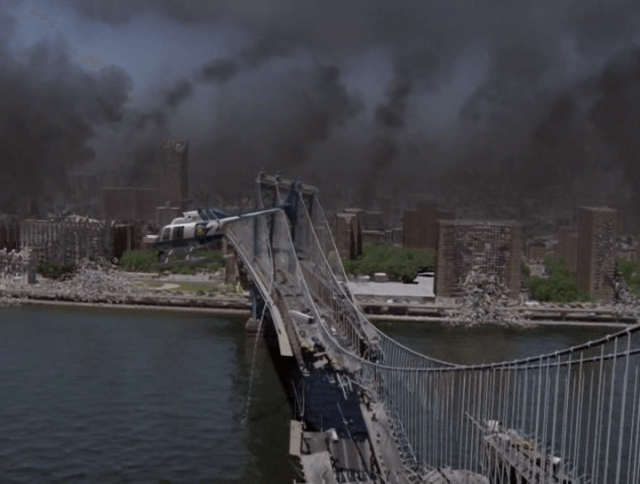
New York City may appear to be an unlikely place for a major earthquake, but according to history, we’re past due for a serious shake. Seismologists at Columbia University’s Lamont-Doherty Earth Observatory say that about once every 100 years, an earthquake of at least a magnitude of 5.0 rocks the Big Apple. The last one was a 5.3 tremor that hit in 1884 — no one was killed, but buildings were damaged.
Any tremor above a 6.0 magnitude can be catastrophic, but it is extremely unlikely that New York would ever experience a quake like the recent 8.9 earthquake in Japan. A study by the Earth Observatory found that a 6.0 quake hits the area about every 670 years, and a 7.0 magnitude hits about every 3,400 years.
There are several fault lines in New York’s metro area, including one along 125th Street, which may have caused two small tremors in 1981 and a 5.2 magnitude quake in 1737. There is also a fault line on Dyckman Street in Inwood, and another in Dobbs Ferry in Westchester County. The New York City Area Consortium for Earthquake Loss Mitigationrates the chance of an earthquake hitting the city as moderate.
John Armbruster, a seismologist at the Earth Observatory, said that if a 5.0 magnitude quake struck New York today, it would result in hundreds of millions, possibly billions of dollars in damages. The city’s skyscrapers would not collapse, but older brick buildings and chimneys would topple, likely resulting in casualities.
The Earth Observatory is expanding its studies of potential earthquake damage to the city. They currently have six seismometers at different landmarks throughout the five boroughs, and this summer, they plan to place one at the arch in Washington Square Park and another in Bryant Park.
Won-Young Kim, who works alongside Armbuster, says his biggest concern is that we can’t predict when an earthquake might hit. “It can happen anytime soon,” Kim told the Metro. If it happened tomorrow, he added, “I would not be surprised. We can expect it any minute, we just don’t know when and where.”
Armbuster voiced similar concerns to the Daily News. “Will there be one in my lifetime or your lifetime? I don’t know,” he said. “But this is the longest period we’ve gone without one.”
Via Metro and NY Daily News
Images © Ed Yourdon

Israel Warns Terrorist Groups Outside the Temple Walls (Revelation 11)


Israel said to warn Gaza terror groups against responding to Soleimani killing

Report says warning relayed to Hamas, Islamic Jihad via Egypt; security cabinet to meet Sunday in wake of heightened threats
By TOI staff3 Jan 2020, 7:36 pm
Israel has reportedly warned the Hamas and Palestinian Islamic Jihad terror groups against any attempted response from the Gaza Strip to the US targeted killing of Iranian general Qassem Soleimani.
The warning was transferred via Egypt, according to a Walla news site report Friday.
Meanwhile, Israel will convene its security cabinet on Sunday in the wake of Iranian threats to avenge Soleimani.
Tehran has threatened both the US and Israel.
Hamas, which rules the Gaza Strip, earlier expressed its “sincere condolences” to Iran’s leadership after Soleimani was killed in Baghdad overnight and hailed his support for the “Palestinian resistance,” but did not issue any overt threat.
The Islamist group’s leader in Gaza, Yahya Sinwar, in the past lauded the “strong, powerful and warm” ties Hamas enjoyed with Soleimani.

Iranian Revolutionary Guard Corps’ Quds Force commander Gen. Qassem Soleimani, center, attends a meeting with Supreme Leader Ayatollah Ali Khamenei and Revolutionary Guard commanders in Tehran, Iran, September 18, 2016. (Office of the Iranian Supreme Leader via AP)
The Iran-backed Islamic Jihad, which in November fought a two-day battle with Israel after one its military commanders was killed in an Israeli strike, has yet to respond to Soleimani’s killing.
Iran has for years sought to arm the Palestinian terror groups with rockets, mortars and missiles.
The Popular Front for the Liberation of Palestine, a left-wing terror group, said the killing of Soleimani called for “a coordinated, comprehensive and continuous response from resistance forces” against “American and Zionist interests.”
The US strike on Soleimani came amid efforts to broker a long-term ceasefire between Israel and Hamas, which have fought three wars since the terror group took control of Gaza in 2007.
Israel’s security cabinet was reported to have convened twice earlier in the week to discuss the proposed ceasefire deal.
According to Channel 12 news, major progress had been made toward a deal since Israel killed Baha Abu al-Ata, the Islamic Jihad commander.
Abu al-Ata was seen as a major force against coming to a truce with Israel in the Strip, and following his elimination Hamas had proven far more inclined to come to an accord, the network said. Contrary to its usual approach, Hamas had shied away from the combat following the Islamic Jihad terror chief’s killing and Israel, too, had avoided hitting the group.
For over a year now, Egypt has been a key player in brokering informal ceasefire understandings between Israel and terror groups in Gaza, including Hamas.
The understandings have largely entailed Israel lifting restrictions on the movement into and out of Gaza, in exchange for Hamas maintaining relative quiet in the border region between the coastal enclave and the Jewish state.
Agencies contributed to this report.
Edit