Showing posts with label the prophecy. anrewtheprophet. Show all posts

Wednesday, April 28, 2021

The Shi’a Horn Strikes Saudi Arabia : Daniel

Explosive-laden ‘drone’ boat targets Saudi port of Yanbu


By JON GAMBRELL and ISABEL DEBRE , Associated Press
April 27, 2021 – 9:50 AM

DUBAI, United Arab Emirates — A remotely piloted boat packed with explosives targeted the Saudi port of Yanbu in the Red Sea on Tuesday, the kingdom said, with the blast sending black smoke into the sky off the coast.

Saudi Arabia claimed to have intercepted and destroyed the attack boat. However, private security firms suggested commercial traffic near the port may have been hit in the assault.

Thursday, February 4, 2021

The Saudis and Iranians will never reconcile: Daniel


Can the Saudis and Iranians reconcile?

A Riyadh-Tehran rapprochement is unlikely, but not impossible.

Under the former Trump administration, the Saudis and its Gulf allies were strongly backed by Washington to challenge Iran’s assertiveness across the Middle East. The Gulf alliance’s interests fit neatly into the US’ ‘maximum pressure’ campaign against the Shia-majority country.

With the new Biden administration, which has indicated it wants a return to the Iran nuclear deal, there is not much incentive for Riyadh to continue to confront Iranian expansion across the region from Yemen to Iraq and Lebanon.

But will a change in political conditions help both sides develop common ground? On Monday, the GCC leadership was in Iraq. It has been reported that backchannel talks are taking place between Iranians and Saudis there.

Sami Hamdi, an Arab political analyst and head of the International Interest, a political risk analysis group, believes that the Biden administration’s attempt to rejoin the nuclear deal will just make things even more complicated for Riyadh.

“Saudi fears that the nuclear talks are in essence a discussion between Washington and Tehran over a power sharing agreement whereby the two parties will cooperate and acknowledge each other’s interests at the expense of Saudi Arabia,” Hamdi tells TRT World.

For the Saudis, Hamdi believes a US green light to Iranian expansion might be disastrous, due to huge discrepancies between the two countries’ military strength and political ambitions.

The Saudis have traditionally been cautious and have outsourced their security, being generally “insular and reactive” while Iran is far more ambitious and self-reliant, according to the analyst.

US Secretary of State Mike Pompeo, left, meets with Saudi King Salman, right, at the Royal Court in Riyadh, Saudi Arabia, Feb. 20, 2020. (Andrew Caballero-Reynolds / AP Archive)

Tehran’s heavy sway in Iraq and its expansion into Yemen, Syria and Lebanon is “cementing its influence over institutions and decision-making processes” in those countries, Hamdi says.

Tehran’s ‘siege’ over Riyadh

The Iranian march across the Middle East will just increase Riyadh’s pain further, according to Hamdi.

“Riyadh believes Iran has surrounded the Kingdom [regionally] via Iraq to the North, Iran mainland to the East, Yemen to the South, and [globally] through political engagement with the Biden administration,” he says.

As a result, the Saudis believe the nuclear negotiations threaten “a complete re-ordering of the power dynamics” in the region through a new US-Iran axis, Hamdi observes.

Despite all these changes, the Kingdom has remained paralysed by its lack of political vision under the inexperienced leadership of Crown Prince Mohammed Bin Salman, whose domestic and foreign policies have been severely criticised across the board.

“Their relations could not be normalised because there are no political conditions for that,” says Mehmet Bulovali, an Iraqi-Kurdish political analyst.

He says there is a massive chasm between the political approaches on both sides.

“One [Riyadh] is trying to defend itself while another [Tehran] is acting in a revolutionary mood, which could not be persuaded to live in a low-profile or an isolated way. The [revolutionary] Shia Persian establishment wants to rule over the Islamic world,” the analyst tells TRT World.

Bulovali thinks rapprochement is based on flimsy grounds. “It’s like a sheep and a wolf wanting to negotiate for a mutual agreement to live together. That’s not possible.”

“There are no major political items on which they could really agree on something,” he adds.

The main issue between the two sides is security, but they can not address this because they don’t trust each other, he says.

Hamdi believes a political rapprochement between the two is a possibility if both countries develop a political mechanism of sharing information in Yemen, Syria, Iraq and Lebanon.

“Saudi Arabia is not after an expansion of its own influence, but rather a check on Iran’s powerful influence. If it feels such a check exists (even if it is outside Riyadh’s control), it will be more inclined to respect a rapprochement with Iran,” he says.

“The second scenario is an increased security presence to check Iran’s militias. However, this is counter-productive in the long term,” he adds.

Gulf-Iraq rapprochement

Recent exchanges of visits between the Gulf Cooperation Council (GCC) and the Iraqi government have increased hopes that Baghdad could be distanced from Iran’s political influence.

Iraq’s President Barham Salih arrives to attend the meeting for the Gulf Cooperation Council (GCC), Arab and Islamic summits in Jeddah, Saudi Arabia, May 30, 2019. (Credit: The Presidency of the Republic of Iraq Office / Reuters Archive)

Under the Prime Minister Mustafa al Kadhimi, Iraq has appeared to follow a more independent political path, reestablishing its ties with the Arab world and limiting Iran’s influence, according to Bulovali. “The Trump administration backed Kadhimi on that move. This is a kind of political experiment.”

The GCC Secretary General Nayef al Hajraf was in Baghdad on Monday to hold talks with Kadhimi on various issues including boosting trade and electricity supply from the Gulf to Iraq.

Constant power outages across Iraq was one of the main reasons for large protests across the country, contributing to political change in Baghdad that helped bring Kadhimi to power.

“Al Hajraf’s visit is the continuation of GCC’s policy to develop better relations with Iraq,” says Bulent Aras, a Gulf expert and professor of international relations in the Gulf Studies Center at Qatar University.

“If we go back to 2011, when the then-Iraqi government declared that it will support Shia rebellions across the Gulf, their relations hit bottom. But since then, both sides have worked to fix relations,” Aras tells TRT World.

According to Aras, the GCC leadership has three main objectives on the development of its relations with Iraq. First, the GCC wants to convey its political perspective to Iraq and expects Baghdad to align its policies accordingly, he says.

“Its second objective is to contain Iran,” says Aras. This objective was probably the main motive for the recent engagement between the GCC and Iraq, he says. “Under the Biden administration, the regional political balance will change and Iraq will play an important role in that,” Aras views.

The main objective of the GCC is to bring Iraq back into the fold of the Arab world in a way “Iran could not feel itself comfortable there anymore,” Aras says.

Lastly, the GCC wants to develop its trade and cultural connections with Iraq, he adds.

During the recent visit, Kadhimi also demanded the GCC to fulfill its pledge to aid Iraq’s reconstruction, which was promised in a joint conference three years ago, according to Aras. While the GCC promised $88 billion for the reconstruction, only $30 billion was given to Iraq.

“It’s crucial for Iraq’s reconstruction,” he says.

“If those promises were not met, it could also lead to a break-up in ties,” he concludes.

Wednesday, December 23, 2020

The Pakistani and Saudi Horns Divide: Daniel

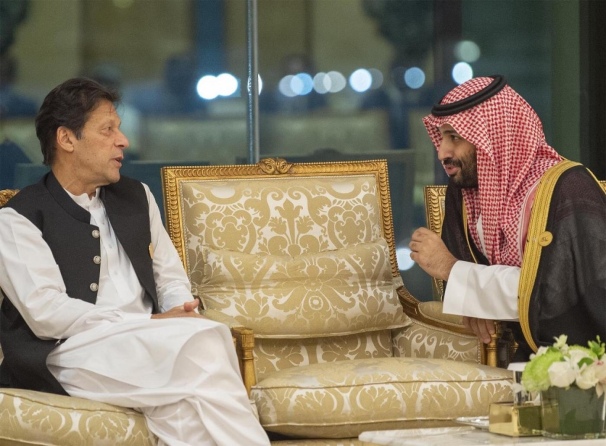
The historic Saudi-Pakistan alliance comes to an end

Veteran Arab journalist Abdel Bari Atwan says Pakistan has taken a decisive shift away from Saudi Arabia and towards China, Turkey and Iran.

A small news item appeared on the business pages of Arab newspapers this week which shed light on a major strategic crisis that has been developing in the relationship between Saudi Arabia and long-time ally Pakistan.

It could mark a turning point in the close partnership that has lasted for more than seven decades (ever since Pakistan’s separation from India in the late 1940s) between the Kingdom that revels in its custodianship of Islam’s holiest shrines and the Islamic world’s only nuclear-armed power.

The news was that Pakistan repaid Saudi Arabia $1billion of a $3 billion loan it provided in late 2018. An earlier billion-dollar tranche was reimbursed in July, leaving a further billion which the Pakistani government intends to refund in January after securing alternative financing from China.

Different views were offered about why the Saudis demanded early repayment of the loan and simultaneously suspended a $3.2 billion credit facility for oil purchases by Pakistan.

Some attributed the move to Saudi Arabia’s financial difficulties: with its economy in recession due to the slump in oil sales it needs every dollar it can get, so it may have pressed Prime Minister Imran Khan – no great friend – to repay the money.

Others viewed it as politically-motivated, related to Saudi Arabia’s burgeoning strategic partnership with India and Pakistan’s growing rapprochement with Iran.

Deteriorating relations

Relations between the two countries have been worsening for some time.

The first big downturn came in 2015 when Pakistan refused to send troops to take part in the Saudi-led war on Yemen. This also signaled Pakistan’s rejection of Crown Prince Muhammad Bin-Salman’s idea of forming an “Islamic NATO” under Saudi leadership.

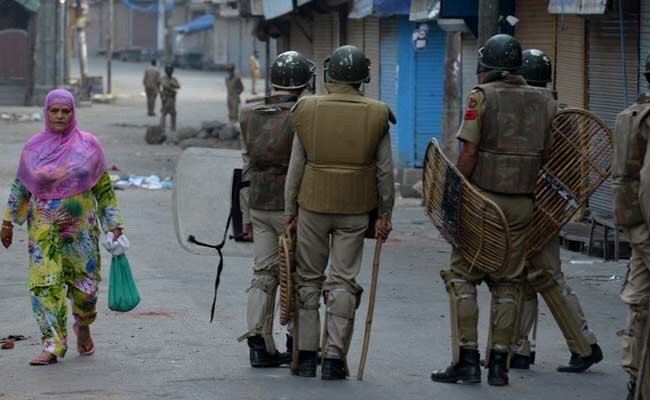
Tensions rose further over the ultra-sensitive issue of Kashmir. Islamabad was dismayed by Riyadh’s non-committal response to India’s decision to revoke the special autonomous status of Jammu and Kashmir. This was viewed as de facto Saudi approval for India’s annexation of the disputed province.

Indian occupation forces in Kashmir

Saudi Arabia also blocked efforts to get the Organisation of Islamic Cooperation (which it effectively controls) to take action on Kashmir. Pakistani Foreign Minister Shah Mahmood Qureshi warned at the time that if Riyadh would not act on the issue, Islamabad would seek a meeting of Muslim-majority countries outside the OIC framework to provide it with backing.

This affront to Saudi Arabia’s Islamic leadership pretensions appears to have prompted its decision to recall the $3 billion loan.

The Pakistani army’s Chief of Staff, Gen. Qamar Javed Bajwa, tried to use his good offices to ease the mounting tension between the two countries. He flew to Riyadh for talks, but was denied a meeting with the Crown Prince and returned empty handed. This snub deeply offended both the Pakistani government and the traditionally pro-Saudi military establishment.

Iran

Saudi Arabia, for its part, is wary of Pakistan’s improved relationship with Iran, fearing among other things that it could involve the transfer of Pakistani nuclear technology.

It balked at Imran Khan’s agreement to attend the “alternative’ Islamic summit convened by Malaysian Prime Minister Mahathir Mohamad – in close coordination with Turkish President Recep Tayyip Erdogan — in December 2019 to discuss problems facing the Islamic world.

The Kingdom put enormous pressure on the Pakistani Prime Minister not to attend. He eventually succumbed, fearing the Saudis would cut off financial support or retaliate against the millions of Pakistani expatriate workers in the Gulf states whose remittances are crucial to sustaining the Pakistani economy.

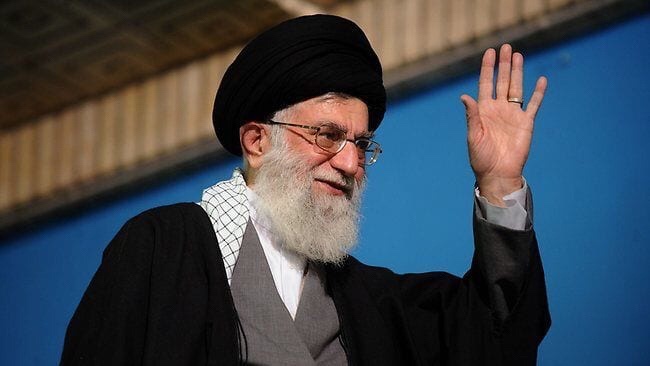
Iranian leader Ayatollah Ali Khamenei

Saudi Arabia, for its part, feels it no longer needs Pakistan. It invested billions of dollars in supporting the country’s economy — and its nuclear program – over many years. In return, it acquired political allegiance, military personnel and expertise that were vital for its armed forces, and a proxy nuclear deterrent against any potential military threat, such as from Iran.

But times have changed. Pakistan and Iran are on good terms, and Saudi Arabia has spearheaded the process of normalisation between Gulf states and Israel – a far more potent nuclear power, which shares its enmity towards Iran.

So the historic strategic alliance between Pakistan and Saudi Arabia and other Gulf is drawing to a close. Pakistan is looking elsewhere: to China, Turkey and Iran and their allies. These include forces deeply antagonistic to Saudi Arabia: Yemen’s Ansarullah (Houthi) movement, Lebanon’s Hezbollah, Iraq’s Hashd ash-Shaabi, and Qatar’s Al Jazeera TV channel, plus any other Muslim country or entity that might want to join.

A powerful Islamic coalition opposed to Saudi Arabia might take shape during the course of 2021. It could join forces with Russia and China in a bid to mount a global pushback against U.S. hegemony.

At a time of American retrenchment and deep domestic problems, some U.S. clients in the Middle East think Israel could serve as an alternative protector. That explains all their normalisation moves, but they will surely, eventually, be disappointed.

Friday, December 18, 2020

How Iran has brought the 10 horns of Daniel 7 together

How Iran Has Brought Israel and Arab States Together

Marc Champion

December 15, 2020, 10:01 PM MST

For more than half a century, conflict between Israel and the Arab nations that surround it has been a defining feature of the Middle East, producing periodic wars, lost opportunities for trade and uncountable hours of fruitless diplomacy. The rift is far from resolved. Yet there’s been a shift. Israel has made peace deals with four Arab countries late this year, underscoring that it’s now Iran — rather than Israel — that’s the common enemy uniting many Arab rulers.

1. Why were the new accords a big deal?

Egypt and Jordan normalized relations with Israel in 1979 and 1994, respectively, but other Arab nations said for years that they would withhold recognition of the Jewish state pending the formation of an independent country for Palestinians in the West Bank and Gaza Strip, two territories Israel conquered in a 1967 war. Some Arab states developed covert relationships with Israel, but it was still extraordinary when one of them, the United Arab Emirates, agreed to formalize ties in August. Bahrain, Sudan and Morocco followed, and Israeli officials predicted Oman and Saudi Arabia would be next. The agreements telegraphed that Arab relations with Israel are no longer tied to the Palestinian cause. And they clarified the growing focus of Arab leaders belonging to the Sunni branch of Islam on countering the rise of Persian Iran, whose people are mostly Shiite Muslims.

2. Why is Iran so mistrusted?

Iran’s influence in the Middle East has grown significantly since 2003, when the U.S.-led invasion of Iraq removed its primary foe, the Sunni-dominated regime of President Saddam Hussein. Iranian leaders have since used their control of militias drawn from Iraq’s majority Shiite population to shape governments in Baghdad. In Syria, Iran called on the same Iraqi militias as well as Hezbollah, the militant Shiite Lebanese group, to help preserve its only state ally, President Bashar al-Assad, from defeat in a civil war that began as a popular uprising in 2011. In Yemen, Iran backed Shiite rebels in their fight against forces supported by Saudi Arabia and the UAE in a war that broke out in 2015. The International Institute for Strategic Studies calls Iran’s influence in Iraq, Lebanon, Syria and Yemen today “a new normal,” a concept once unthinkable even for leaders in Tehran.

3. What’s the role of the U.S.?

Starting in 2016, the U.S. under President Donald Trump adopted a more aggressive approach to Iran, withdrawing from the nuclear deal world powers had struck with it in 2015. That agreement had released Iran from punishing economic sanctions in exchange for rolling back its nuclear program. Under Trump, the U.S. also dropped its stance of neutrality in the Israeli-Palestinian conflict, moving the U.S. Embassy to Jerusalem — claimed as a capital by both sides but controlled by Israel — and downplaying the goal of a two-state solution, under which Israel and the Palestinians were to end their conflict by delineating a new Palestinian state.

4. Do Iran and its foes fight directly?

Since Iran and Iraq battled each other to a standstill at devastating human and economic costs in the 1980s, Iran’s theocratic leaders have avoided direct conflict with the U.S. and its allies in the region, a contest in which they would be spectacularly outgunned. Instead, the Islamic regime has become expert at hybrid warfare. Over time that has included the use of terrorist tactics and proxy militias. The U.S. accused Iran of being behind recent attacks on vessels in the Persian Gulf, U.S. forces in Iraq and targets in Saudi Arabia, including a huge oil-processing facility. The U.S. struck back in January 2020, killing Qassem Soleimani, the general in charge of Iran’s foreign operations. Israel, for its part, has flown numerous bombing missions against Hezbollah and Iranian targets in Syria. In cases where Iran does not deny involvement, it says it is protecting fellow Shiites and allies from U.S., Israeli or Gulf state aggression.

Allied With Iran

Militant groups in the Middle East connected with Iran

5. Apart from Syria and Iraq, are all Arab governments united against Iran?

No. Oman and Kuwait remain friendly with Iran, as does Qatar, with which it shares a gas field. Saudi Arabia, the UAE, Bahrain and Egypt cut diplomatic and transport links to Qatar in 2017, in part because they said it was too close to Tehran.

6. Where does this leave Palestinians?

With diminished leverage and poor prospects. Palestinian leaders criticized the accords with Israel for giving the country the benefits of peace without requiring it to relinquish its grip over the lands it seized in 1967. The UAE says it helped the Palestinians as part of its agreement by securing Israel’s promise to freeze a plan to annex part of the West Bank, but for how long is unclear.

Sunday, December 13, 2020

Saudi Arabia Lines up as One of the Ten Nuclear Horns of Daniel

All Eyes on Saudi Arabia As More Arab Countries Make Peace with Israel

JERUSALEM, Israel – Since the signing of the Abraham Accords between Israel and two Arab states, many speculated Saudi Arabia might soon follow suit, but there are other factors now at play.

Just this past week, a Saudi Prince unexpectedly blasted Israel during a security conference in Bahrain, during a session ironically titled, “New Security Partnerships in The Middle East.”

“They profess that they want to be friends with Saudi Arabia. And yet all Israeli governments are the last of the Western colonizing parts of the Middle East. From the time of the Balfour Declaration, they have forcibly evicted the inhabitants of Palestine after the 1948 war,” said Prince Turki al-Faisal, Former Head of Saudi Intelligence.

Israeli Foreign Minister, Gabi Ashkenazi, spoke by video after the prince.

“I would like to express my regret on the comments of the Saudi representative, the foreign minister, I don’t believe that they reflect the spirit and the changes taking place in the Middle East,” said Ashkenazi.

Dore Gold, a former UN ambassador and president of the Jerusalem Center for Public Affairs, attended the conference and witnessed the prince’s accusations.

“The real question then is, ‘Does that say that the whole Kingdom of Saudi Arabia has an attitude problem? Or does it say that this guy has an attitude problem?’” Gold told CBN News.

“I think he was being used by the highest authorities in Saudi Arabia to put some distance between us and them,” he added.

In 2003, Gold wrote ‘Hatred’s Kingdom’ about Saudi Arabia’s support for terrorism, including an ideology that inspired the 9-11 attacks on the US.  During the height of the Second Intifadah, when Hamas and other suicide bombers were blowing up Israeli buses and cafes in the heart of Israeli cities, Saudi Arabia supplied up to 70 percent of the Hamas budget. But from 2004, they withdrew that support.  After that Iran started funding Hamas.

Gold challenged Prince Turki al-Faisal, who berated him for his book.

Following the public exchange, Gold said he approached the prince who asked if Gold still believed what he wrote in the book.  Gold said he reminded him that the Intifadah (Palestinian uprising) was still in progress.

“Several Saudi spokesmen started going on American television saying that it was Israel because of its attitude toward the Palestinians that created the conditions that led to 9-11,” Gold explained to the prince. “That led me to write my book, ‘Hatred’s Kingdom,” which has nothing to do with the Palestinian issue. It has to do with this kind of deep, visceral hatred of the West and of Israel, that’s prevalent in Saudi Arabia.”

Gold said the attitude of other Gulf attendees toward Israelis appeared very warm except for the prince. Gold believes Saudi Arabia could still come around and make peace with Israel.

“I think like in all of Saudi history…ultimately their security interests will be paramount,” he explained.

Israel, Saudi Arabia, and the Gulf States who recently joined the Abraham Accords all have a common enemy – Iran.

“I think it’s the Iranian factor, which gave birth to the Israeli-Arab peace process as we know it today,” said Gold.

Danny Danon, another former UN ambassador, also believes the Saudis will eventually join the Abraham Accords.

“They are the most important ones for the region, for Israel, and they understand that once they will normalize the relations with Israel, we will see much more stability in the region. And it will be a major force to block the hostility coming from Iran,” Danon told CBN News.

Gold pointed to Washington as being the major part of this puzzle and what happens next with a potential Biden administration.

“If they hear from Washington, ‘We like the Abraham Accords. We want more treaties between Israel and its neighbors.’ Great!” he explained.

Gold said that while the Trump administration has improved the connection between Saudi Arabia and Israel which led to the opening of its airspace to Israeli planes, it could all change if a Biden administration were to take a different approach.

“If on the other hand, they don’t acknowledge that, they say, ‘You want to improve the Middle East environment, give the Palestinians more money and make the Palestinians the center of everything,’” said Gold. “That will not move us very far along.”

Some have seen a larger peace deal in making in the Mideast region for several years.

In 2018, while addressing The Jerusalem Post Diplomatic Conference, Dr. Mike Evans, the founder of the Friends of Zion Heritage Center, spoke about peace in the Middle East and predicted as many as six Arab countries would make peace with Israel.

Referring to Israel Prime Minister Benjamin Netanyahu’s legacy, Evans said, “I believe it very well maybe peace with five to six Sunni Gulf states. And I’m not saying that in theory. Because I’m talking to these leaders and I’m hearing things that are absolutely astonishing.”

Friday, December 11, 2020

The separation of the Saudi and Pakistani nuclear horns: Daniel

Israeli-Saudi-Indian engagement: impact on Pak- Saudi ties?

Much has been reported in both the local and international Media about the covert and overt diplomatic interaction between the Israeli-Saudi officials to normalize the realtions—paving the way for a genuine concern for Pakistan. Needless to say, despite having had a history of their proverbial relations, the two brotherly Islamic countries- Pakistan and Saudi Arabia have recently undergone to experience some asymmetric dynamics/ cross-currents in their relationship. Though a policy statement given by the Saudi FM Faisal Bin Farhan (on August 20) emphasizing that ‘’no deal with Israel without peace for Palestinians’’ has somehow dispelled the confusion arising in the mind of Muslim Ummah about Israel-Saudi rapprochement, a feeling of discomfiture still prevails in Pakistan regarding Saudi Arabia’s growing ties with both Israel and India-the two known foes of Islam and Muslims. To win the hearts and minds of the Pakistanis, Riyadh needs to revive the core of its traditional ties with Pakistan.

As manifested by the current deal concluded between the United Arab Emirates and Israel that today Muslim word faces a challenge of unity among its ranks and files

History is witness to the fact that both Saudi Arabia and Pakistan have had long maintained a strong, strategic relationship. The two brotherly states have worked within the framework of several bilateral, regional and global forums, including the Organisation of Islamic Cooperation. The crux of Saudi Arabia’s cooperation remained financial while the nuclear- armed Pakistan role has been to support on the security front. The former Saudi intelligence chief Prince Turki bin Faisal once described relations between Pakistan and Saudi Arabia as “probably one of the closest relationships in the world between any two countries” As the custodian of the Two Holy sites in Mecca and Medina, Saudi Arabia maintained a legacy of its sustainable relations with Pakistan’s political and military. In return, Pakistan has been helping the Saudi government in maintaining iron-clad security of the two Holy sites for decades. Islamabad has also cooperated closely with Saudi Arabia to uplift its global image. The Saudis have also been allowed to spread their extremist Wahhabi version of Islam in Pakistan through a vast network of mosques and seminaries. During the Cold war period, the relations between the two states reached its zenith, particularly, the collaboration the two sides cemented during the Afghan Jihad-1979-89. Though the Iranian revolution inspired the Shia groups, the Saudi-Pakistani alliance in Afghanistan and General Zia’s Islamisation policies did play the same role for Sunni groups.

In the post 9/11 phase, the Taliban factor gained pivotal consideration for Riyadh because of two obvious reasons. Firstly, Iran might have developed its own ties with the Afghan Taliban; secondly, high-level talks were held with the Taliban in Qatar, with which Riyadh remains at a standoff. Furthermore, in the post –Musharraf era, the Iranian and the Chinese factors also remain instrumental in visualizing the relations between Riyadh and Islamabad as similarly for us the Pakistanis Saudi ties with Israel and India remain the source of genuine concerns.

During MBS’ visit to Pakistan in February 2019, the crown prince told Prime Minister Imran Khan: “Consider me an ambassador of Pakistan in Saudi Arabia. “The fact remains that Prime Minister Imran Khan hasn’t visited any other country more than Saudi Arabia, and similarly the crown prince himself visited Pakistan with a large delegation.” Needless to say, Islamabad-Riyadh always enjoyed historic and diverse relations despite recurring changes in Pakistan’s political landscape. And of course, the relationship grew closer amid the crown prince visit to Pakistan, during which he signed $20 billion in memorandums of understanding, and was given a no-expense- spared, red-carpet welcome by both Imran Khan and the chief of army staff.

And yet undeniably, the relations between Islamabad and Riyadh have largely endured despite recent hiccups such as when Prime Minister Khan had to cancel his participation in the Kuala Lumpur summit late last year under Saudi pressure. That meeting, attended by Turkish President Recep Tayyip Erdogan, and Iranian President Hassan Rouhani, was seen by Riyadh as a challenge to the OIC, which is headquartered in Jeddah.

Recently, Pakistan FM Shah Mehmood Qureshi took a principal stand while reminding our Saudi brothers that if the KSA will not call the OIC meeting on India’s illegal revocation of the Kashmir status, Islamabad would fulfil this moral responsibility. By any diplomatic yardstick, the comments of Pakistan Foreign Minister should have not been taken out of context. It needs no mentioning that for decades, the Saudi-Pakistani relations have been strong in multiple dimensions. Riyadh has been among Pakistan’s strongest supporters on the Kashmir issue and the two have been allies for decades in the Afghan conflict Saudi Arabia is also the source of 50 percent of Pakistan’s oil imports and the two countries have strong defence ties too. Saudi Arabia is also a major source of financial support for Pakistan. Indeed, rarely has Pakistan paid back these loans.

Needless to say, the Saudi -backed UAE -Israel deal– both in form and substance– does not fulfil the credo of the OIC Charter: ‘’…to adhere our commitment to the principles of the United Nations Charter, the present Charter and International Law; o endeavour to work for revitalizing Islam’s pioneering role in the world while ensuring sustainable development, progress and prosperity for the peoples of Member States; to enhance and strengthen the bond of unity and solidarity among the Muslim peoples and Member States; to respect, safeguard and defend the national sovereignty, independence and territorial integrity of all Member States…’’ Obviously, the Arabs’ espoused rapprochement with Israel without settling the question of the simmering Palestinian issue (the right to self-determination) has not only caused perturbation in Pakistan but also in the Muslim Ummah. By no means, Pakistan can leave the Palestinian question of freedom at the helm of the Israeli government.

On the premise of Pakistan foreign relations with the Muslim states, Pakistan knits its cordial relations with Turkey, Iran and Malaysia-a factor that might have been irritating the Saudis. While for we the Pakistanis, Riyadh’s unflinching tilt –towards both Israel and India –irritates us. But in diplomacy, these asymmetric challenges are amicably settled. But Saudis must realise that the Kashmir and the Palestinian issues are the bloodlines of Pakistan’s foreign policy. By no means, Islamabad can downplay its role in galvanizing these issues on the global level. Pakistan-China common stand on Kashmir endorses this objective. The Palestinians rightly argue that normalization with Israel means– opening the door wide to tamper with the security and capabilities of our countries and peoples to serve its settlement colonial project, "the Greater Israel," especially since it has the ability to do so with its own capabilities or open American support.

As manifested by the current deal concluded between the United Arab Emirates and Israel that today Muslim word faces a challenge of unity among its ranks and files. A general perception anchored in the Muslim world holds that the said deal could have not been possible without a Saudi-backing. In this regard, both Riyadh and Islamabad have to save the legacy of their historic relationship.

Monday, December 7, 2020

Why is the Saudi nuclear horn should be taken seriously: Daniel 7

Why Saudi nuclear weapons talk must be taken seriously

Topic | Saudi Arabia

Published: 7:25am, 3 Dec, 2020

Updated: 7:25am, 3 Dec, 2020

Saudi Arabia’s pronouncement that it could acquire nuclear weapons in the face of the possibility of Iran developing them is a dangerous and deadly escalation of the quest for supremacy in the region.


Nuclear weapons present humankind with an immense challenge, one far greater than most people understand. Seventy-five years ago, they were used to destroy the cities of Hiroshima and Nagasaki, with a single weapon destroying each city. These weapons go beyond homicide and genocide, carrying the possibility of omnicide or death to all.


The attacks on Japan have left an indelible mark on human consciousness and our collective conscience. Nuclear weapons are often presented as promoting security, particularly during times of international instability, but weapons that risk catastrophic and irreversible consequences cannot be viewed as protecting civilians or humanity as a whole.


A nuclear strike resulting in the destruction of present life forms on the planet would also obliterate the past and the future, destroying both human memory and possibility.


We cannot hide from the threat that nuclear weapons pose to humanity and life in general. Nuclear weapons are morally and legally unjustifiable because they destroy indiscriminately – soldiers and civilians, men, women and children, the aged and the newly born, the healthy and the infirm. In the aftermath of a nuclear war, the living will envy the dead.


Farouk Araie, Johannesburg

Friday, November 27, 2020

The Saudi horn turns against Pakistan: Daniel

Israel Wants Pakistan’s Nuclear Teeth Broken & Saudi Arabia Could Land The First Punch

OPED By Haider Abbas

EurAsian Times DeskNovember 25, 2020

US’ topmost ally in the Middle East, Saudi Arabia’s King Salman has given a very conflicting message to Turkey, as well as to Qatar, for a ‘handshake’ as it organized the G20 summit. It was, in fact, quite warranted as finally the iron curtains of secrecy between KSA and Israel had to be unveiled, and there might be a ‘brewing reaction’ to it.

Hence, KSA gave into extending the ‘hand of friendship’ to Turkey and Qatar, whereas the reality is that KSA has already cost billions of USD to Turkey by its boycott of Turkish goods, and also did KSA had planned an attack on Qatar with the help of UAE and Bahrain. The ground attack was disallowed by Trump, but which, had made the then US Secretary of State Rex Tillerson cost his job.

KSA after playing a pivotal role in UAE and Bahrain ‘normalizing’ their relations with Israel, has finally come out in the open, as it has come to light, that KSA crown prince MBS secretly met Israel PM Benjamin Netanyahu, along with Mike Pompeo, reported Israeli newspaper Haaretz on November 23, 2020.

This has put to rest all the speculations that maybe even before the US president Donald Trump walks-out, KSA would accept Israel, which perhaps, Trump wishes to carry this sobriquet as last of his achievements.

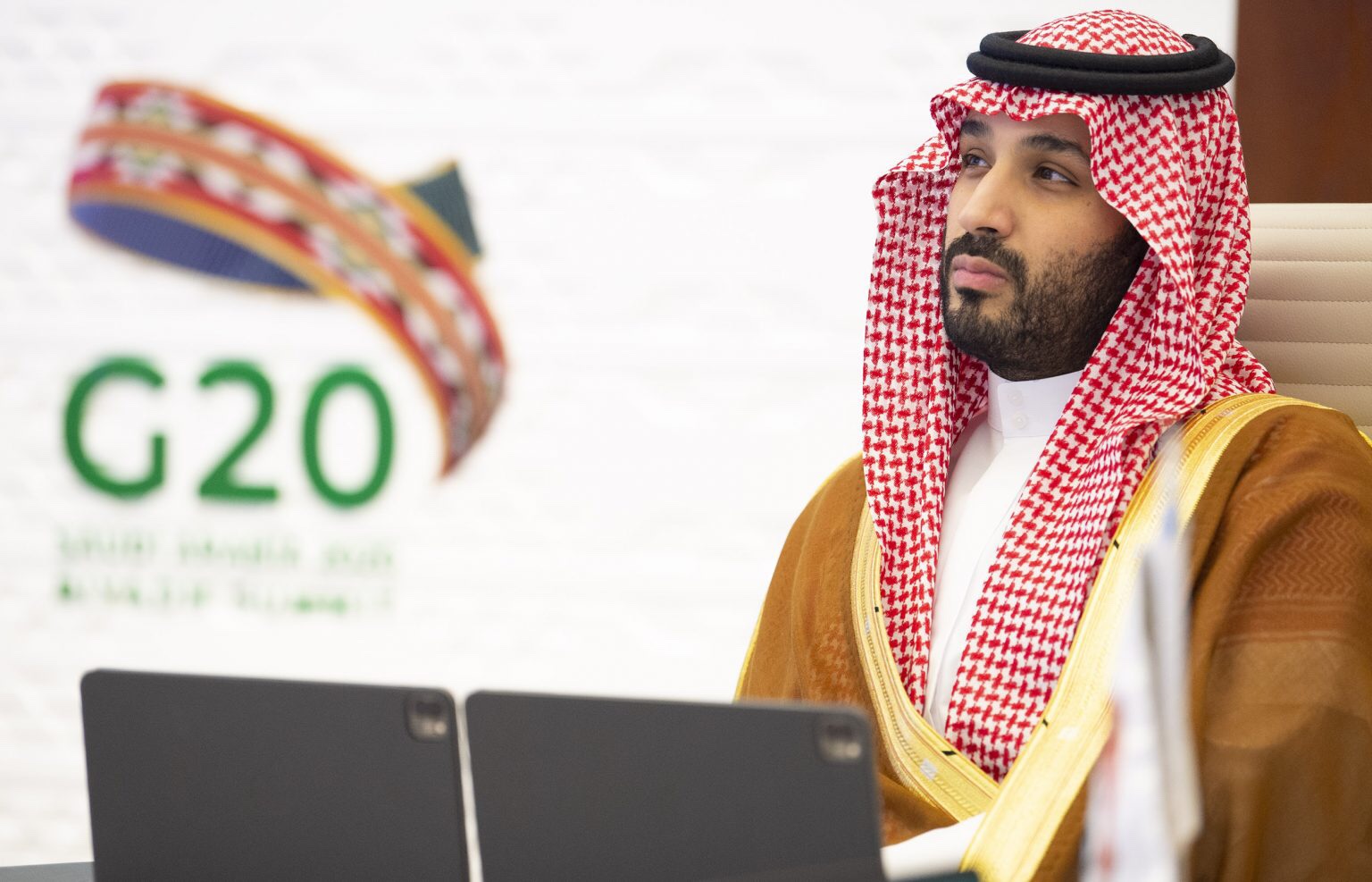
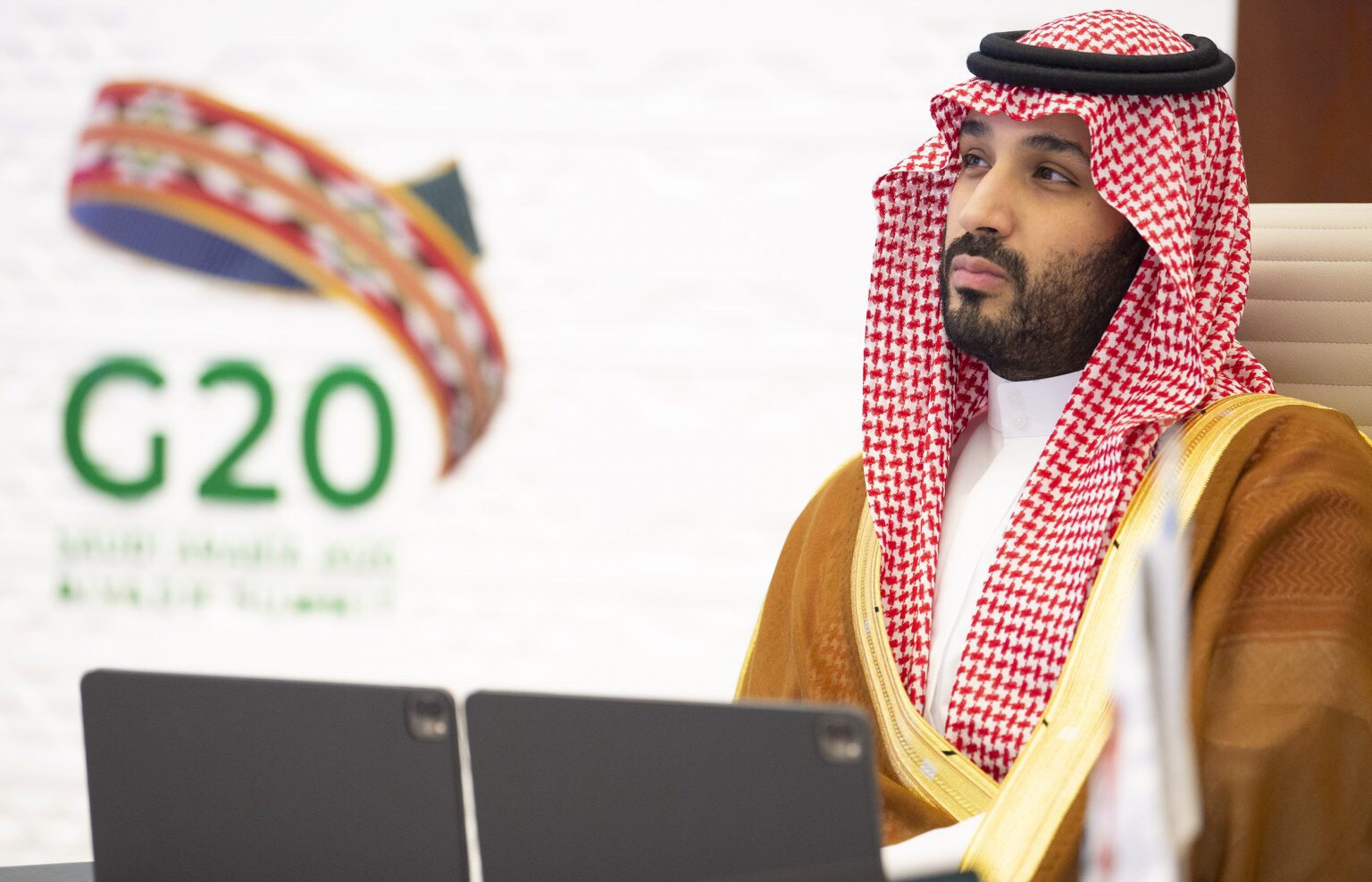
Mohamad bi Salman at the G20 Riyadh Summit

But, the possibility of working out the modalities of a war on Iran as a joint venture of the US, Israel and KSA, has surely grown. India for that matter is firmly with Israel and the US along with KSA, more particularly so, after it had to bow out of the Chabahar project from Iran.

Iran and China, and with it Pakistan, is now the other bloc. KSA denies the meeting but The Wall Street Journal on November 24, 2020, confirmed it.

The world polity is very dangerously poised and there are all signs of a world war getting to its near possibility. Turkey is pitched against Greece, UAE is lobbying against Turkey and cozying up with Greece.

Israel and India are supporting Greece. KSA has long been against Iran alongside Israel while against Turkey too, while China-Pakistan are lined-up against India, and the US is locking horns with China in the South China Sea and supporting Taiwan against China.

The war between Armenia and Azerbaijan has just ended after a ceasefire brokered by the Russian president Vladimir Putin on November 23, 2020, who has also refused to recognize Biden as the new president of the United States. Thus, throwing a reality, that even if Biden makes it to office, he would not be called a full president by Russia, and may be by others too.

Biden, it is quite understood by the way of his politics, is going to wreak wars, and he has particularly vowed not to supply weapons to KSA, in the wake of the allegations of the involvement of KSA crown prince MBS in the murder of Jamal Khashoggi.

Therefore, a US withdrawal from Afghanistan or fresh deployment in Iran is getting near. But what is most intriguing is that while MBS, Netanyahu and Pompeo met, there was an attack on KSA’s biggest oil giant Aramco by Houthis rebels from Yemen, on November 23, 2020. The timing was important. The act has again thrown a big question as to how Houthis have become so technologically advanced?

Is Iran arming them as is widely considered? Or maybe any investigative journalist might unravel it that Israel is supplying it through its proxies? Or is Israel doing it and getting it claimed by Houthis with Houthis not even getting a whiff of it?

The same way Blackwater does it in Afghanistan and Deash comes to claim it. Of course, the attack has opened new avenues for Israeli Dome missile defense technology for KSA to safeguard its boundaries after it had refused to buy Russian S-400 out of pressure from the US.

There is a lot of churning in world polity as Biden will be considered weak both externally, as well as internally, and to bolster the US image a war, therefore, would be a must. While China, which has challenged US superpower status, has given an offer to KSA to change its oil payments from Petro Dollars to Petro Yuans, which KSA is very likely to spurn, as it only plays to the tunes of the US for the last 70 years.

It is also very likely since MBS’ love affair with Israel has gone public that KSA would now openly threaten Pakistan to take back its workforce, and maybe, influence the Saudi-sponsored 56-nation Organization of Islamic Countries (OIC) to accept Kashmir as a part of India.

MBS may also force OIC to forsake Gilgit-Baltistan as Pakistan’s fifth province, which is the gateway of the China-Pakistan Economic Corridor (CPEC) and which the US and India want to get killed at every cost.

As for Israel, it finds Pakistan as the only Muslim state with nuclear teeth, and through KSA it wants Pakistan’s jaws broken, to the ultimate advantage of India. How China will relate to this is for the world to see.

Thursday, November 26, 2020

Why the Saudi Arabian nuclear horn will be an ally: Daniel 7

Why the reported Israeli-Saudi meeting is such a big deal

Henry Olsen

Israeli Prime Minister Benjamin Netanyahu, left, gives a statement in Jerusalem on Thursday. Saudi Crown Prince Mohammed bin Salman, right, addresses the G-20 summit in Riyadh on Sunday. (Maya Alleruzzo/AFP, Getty Images)

The enmity between the Jewish state and the Arab Islamic world is long and deep. Israel fought four wars with its neighbors between 1948 and 1973, and has engaged in continuing conflict with many Arab states ever since. Saudi Arabia and other Persian Gulf nations had participated in some of those wars, bankrolled Palestinian terrorist groups and refused to diplomatically recognize Israel. Even as Israel made peace with Egypt and Jordan, Saudi Arabia and its allies continued to consider peace with any Israeli government as unacceptable.

That has changed for the oldest of diplomatic reasons: self-interest. The Iranian regime views both Israel and the Sunni gulf kingdoms as illegitimate and has worked tirelessly to bring them down. Tehran also funds terrorist groups such as Hezbollah, and rebel groups such as those in Yemen, to put military pressure on Saudi Arabia and Israel. This alone brings these two together.

Iran’s attempt to bring Iraq fully under its sway particularly presents threats to the Saudis and the gulf kingdoms. Iraq shares extensive borders with Kuwait and Saudi Arabia. If Iranian-backed troops were ever stationed in the Shiite regions in southern Iraq, they could easily launch an invasion at a moment’s notice. Saudi Arabia’s Eastern Province, which is directly south of Kuwait, holds much of the kingdom’s oil wealth and Shiite population, and the oil-rich gulf kingdoms also all border the Eastern Province. It is crucial to Saudi and the gulf kingdoms’ security that Iranian forces be kept as far away as possible.

It is against this backdrop that Iran’s pursuit of a nuclear weapon must be understood. Were Iran ever to obtain such a weapon, its ballistic missile technology would put Israel and the Arabs alike at risk of nuclear blackmail. That in turn amplifies the conventional military power of Iran and its proxies. The Islamic republic could launch invasions or incursions as it pleases, secure in the knowledge that its nuclear weapons would deter serious retaliation.

Changes in U.S. policy during the Obama administration sent shock waves into the region. Both Israel, which is believed to possess its own nuclear deterrent, and the Arab kingdoms had long relied on the United States to protect them against Iranian subversion. The Iran nuclear agreement clearly called that implicit guarantee into question. For the Israelis, it meant that they could no longer be sure that U.S. troops would be deployed to assist them in a crisis. For the gulf kingdoms, it meant they needed a firm, nuclear-armed ally whose commitment to opposing Iran was unquestioned.

The recent dramatic changes in Arab policy toward Israel make sense when viewed in this light. For Israel, an alliance with the Arab gulf powers provides military might that could be deployed on its behalf in the event of a mutual threat. It also provides, in theory, geographic proximity to Iran to launch any secret incursions that U.S. ships or bases might currently provide. For the Arabs, it ensures that a nuclear-armed power stands behind them should Iran ever obtain a weapon, and establishes a connection with Israel’s vaunted intelligence agencies. A de facto alliance would also reduce dependence on the United States and its domestic political whims, replacing U.S. mediation with direct ties between the nations’ security apparatuses. Abandoning the Palestinians in the face of such concrete advantages is, if artfully done, obviously in the security interest of the Saudis and gulf kingdoms.

The national security appointments President-elect Joe Biden announced Monday are not likely to give either side more comfort. John F. Kerry, who will serve as Biden’s climate envoy, was secretary of state when the Iranian nuclear accord was signed, and was part of the Obama administration’s not-so-subtle opposition to Netanyahu in the 2015 Israeli election. The incoming director of national intelligence, Avril D. Haines, signed a letter calling on the Democratic Party to revise its draft 2020 platform language on Israel to make it more vocally opposed to Netanyahu’s stated goals regarding the West Bank and Palestinian statehood.

Israel and the Arab kingdoms know that Iran means to destroy them. As writer Samuel Johnson once put it, impending death “concentrates [the] mind wonderfully.” The Biden administration is likely to find that this alliance of strange bedfellows will force its Middle East policy to look much more like the Trump administration’s than any of them currently imagine.

Thursday, September 24, 2015

New York Is Due For The Big One (Revelation 6:12)

New York – The Big Apple is due for the Big One.

earthquake5n-5-web
The trio of earthquakes that surprised New Jersey over the past month has seismologists wondering what’s next – and they say it doesn’t look good.

They call the geological fault lines crisscrossing Manhattan a perfect storm for a temblor that could topple older buildings, cause billions of dollars in damages and kill people citywide.

New York has survived at least three quakes measuring 5.0 on the Richter scale, but two of them hit back in the 1700s and the other centered on Coney Island in 1884, toppling chimneys.

The city should expect a jolt like that last one every 100 years, the experts warn – which means we’re overdue. Jersey’s recent baby quakes, which caused no damage and failed to rise above 3.0 in magnitude, may have been warning shots, they say.

A 6.0-magnitude quake could cause as much as $200 billion in damages, according to a 2003 study by the New York City Area Consortium for Earthquake Loss Mitigation.

Sunday, November 2, 2014

New York Is Due For The Big One (Revelation 6:12)

New York – The Big Apple is due for the Big One.

earthquake5n-5-web

The trio of earthquakes that surprised New Jersey over the past month has seismologists wondering what’s next – and they say it doesn’t look good.

They call the geological fault lines crisscrossing Manhattan a perfect storm for a temblor that could topple older buildings, cause billions of dollars in damages and kill people citywide.

New York has survived at least three quakes measuring 5.0 on the Richter scale, but two of them hit back in the 1700s and the other centered on Coney Island in 1884, toppling chimneys.

The city should expect a jolt like that last one every 100 years, the experts warn – which means we’re overdue. Jersey’s recent baby quakes, which caused no damage and failed to rise above 3.0 in magnitude, may have been warning shots, they say.

A 6.0-magnitude quake could cause as much as $200 billion in damages, according to a 2003 study by the New York City Area Consortium for Earthquake Loss Mitigation.