Showing posts with label persian gulf. Show all posts

Monday, August 6, 2018

How Saudi Arabia Will Become a Nuclear Horn (Daniel 7)

Saudi Arabia is selecting finalists from five countries — the US, China, Russia, France and South Korea. (Shutterstock)
Faced with surging energy demand for economic growth, Saudi Arabia is turning to nuclear power to meet a twin challenge — how to diversify its electricity-generating mix while reducing reliance on fossil fuels.And with electricity demand in the country growing by 8 to 10 percent annually, compared with less than 1 percent in Europe, experts say the move is timely.
Last week, an International Atomic Energy Agency (IAEA) team of experts concluded a 12-day mission to the Kingdom to review its development of infrastructure for a nuclear power program. The review, which ended on July 24, was carried out at the invitation of the Saudi government. “Nuclear is an important way to meet the fast-growing demand for energy in the region, taking into consideration a wish to diversify the energy sources and not rely solely on oil and gas,” said John Bernhard, former Danish ambassador to the IAEA.
“Besides, the use of nuclear power is a significant element in an energy strategy which considers the need to reduce carbon dioxide emissions and implement commitments concerning climate change. Renewable energy sources, such as wind and solar, are beneficial from a climate change point of view, but will often not be sufficient to cover large energy demands.”
The Kingdom plans to build two large nuclear power reactors as part of a program delivering as many as 16 nuclear power plants over the next 20 to 25 years at a cost of more than $80 billion. It has projected 17 gigawatts (GW) of nuclear capacity by 2032 to provide 15 percent of the power then, along with more than 40 GW of solar capacity.
So far, Saudi Arabia has identified two possible sites for power stations, on the Gulf coast at Umm Huwayd and Khor Duweihin.
Plans for small reactors for desalination are also well advanced. “IAEA missions are of crucial importance when preparing for the introduction of nuclear power programs, especially in so-called newcomer states — those with little or no experience regarding nuclear power,” Bernhard said.
“IAEA experts can provide useful advice technically and with regard to nuclear safety and security.
This is of great value both for the nuclear newcomer and the international community.”cSaudi Arabia is selecting finalists from five countries — the US, China, Russia, France and South Korea —that it invited earlier this year to bid on a project to build the two plants. The selection of a winning bid and the signing of contracts are expected by the end of 2018.
“Saudis have recognized that it is important for them to develop a nuclear power program,” said Lady Barbara Judge, former head of the UK Atomic Energy Authority. “The days of oil and gas are waning, and it is not appropriate for any country to rely on one source of energy — more and more of the world’s population is worrying about climate change.”
Nuclear is a carbon-free techno-logy that provides continuous generation. “Even if a country is investing heavily in renewables, they have the problem of only being available when the sun shines and the wind blows,” said Judge, who is a member of the International Advisory Board for the development of nuclear energy in the UAE.
“Accordingly, back-up generation is needed to assure a continuous supply of energy. To me, it seems the Saudis, like Abu Dhabi, are perfectly situated to build a new nuclear power plant — they have the backing of the government and the funds to build a first-class plant, and they understand that it is inappropriate today to rely solely on oil.
“They also have the resources to bring in international experts and to conduct an effective public outreach program to educate the population about the benefits of nuclear energy.”
Judge said that IAEA missions provide an assurance that the construction, operation and safety culture will be of the highest standard. “The IAEA is an independent appraiser and adviser, and it helps countries to appropriately plan and design their new project.”
The move falls in line with the Kingdom’s Vision 2030, which is based on diversifying its economy away from oil and gas. And with desalination and residential cooling set as the two largest uses of power, and desalinated water demand expected to double in the next decade, experts say that it is more profitable for the country to sell oil and gas while using alternative resources, such as nuclear, for water desalination.
Environmentally, nuclear is also expected to significantly reduce carbon dioxide emissions.
“Saudi Arabia has to find ways to diversify and increase its power production capacity for economic growth and development,” said Dr. Peter Bode, former associate professor in nuclear science and technology at the Delft University in the Netherlands.
“Nuclear power is one of the options in the power mix that could also contain wind energy and solar, but these systems cannot take over the major role in the power mix. Moreover, these are also somehow much more vulnerable to damage, like sabotage, and even the effects of climate change.”
He said nuclear power is a proven technology with high reliability and safety — a nuclear power plant typically operates for about 60 to 70 years, and provides jobs for about 1,000 people over that period. “Wind and solar energy are options for local and domestic energy production, but not to provide the needs of industry.”

In 2010, a Saudi royal decree said that the development of atomic energy is essential to meet the Kingdom’s growing requirements for energy. The country formed the King Abdullah City for Atomic and Renewable Energy (KA-CARE).
In July last year, the Cabinet approved the establishment of the National Project for Atomic Energy, and new financial and administrative regulations for KA-CARE, which was set up in Riyadh.
Several years ago, a study by the IAEA explored the economics of nuclear power in the Middle East.

“As long as the future international oil market price was above $60 to $65 per barrel, nuclear power made sense,” said Holger Rogner, an Atomic Reporters director, energy economist and former head of the IAEA’s energy planning section.

“The domestic price of oil used for electricity generation and desalination is highly subsidized, so if they replace electricity generation with nuclear power, and sell this oil at market prices abroad, the difference in revenue would basically pay for the nuclear power plant. There are clear thresholds when things make sense,” he said.

Thursday, July 19, 2018

Iran continues its threats against Israel


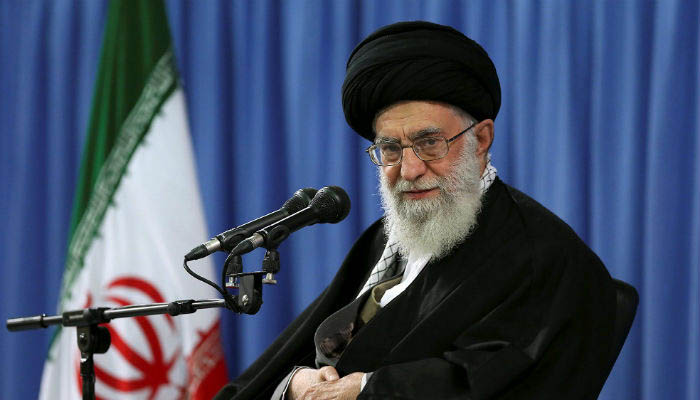
Office of the Iranian Supreme Leader via AP
Iran’s Khamenei Celebrates Birthday By Calling for Destruction of Israel
17 Jul 2018
His Twitter feed on Monday was overlaid with a festive display of multicolored balloons, somewhat incongruous with the deluge of hate messages underneath.


“Everyone should know that the satanic and vicious plot that the U.S. has for #Palestine — calling it the Deal of Century — will never happen,” he tweeted.
“The turbulent dream that Al-Quds [Jerusalem] would be given to the Zionists will never come true.”
He continued: “The Palestinian nation will stand against it and Muslim nations will back the Palestinian nation, never letting that happen.”
“By God’s grace, the Palestinian nation will certainly gain victory over the enemies and will witness the day when the fabricated Zionist regime will be eradicated,” he vowed.
Much of what he tweeted was paraphrased from a speech delivered at a meeting of Iran’s Hajj organization on Monday. Khamenei took the opportunity to blast Saudi Arabia, home to Mecca where the faithful make the Muslim pilgrimage.
“Regrettably, some Muslim governments, due to their lack of faith in the principle of Islam, never mind the Palestinian cause, have chosen to sacrifice themselves for the US,” the state-affiliated Mehr media outlet quoted him as saying. He continued by predicting that “this too will come to nothing and they will see the day when the roots of the fabricated Zionist regime will dry up.”
He added that Mecca’s holy sites “belong to all Muslims, not to the rulers of Saudi Arabia.”
“Today, the Muslim World needs unanimity. Division is forbidden, because the enemy is focused on the Islamic World,” Khamenei emphasized.
He said that in order to conduct a “true” hajj, Muslims must commit to a complete “disavowal of the infidels.”
Khamenei also called for a fresh investigation into a 2015 crush during the hajj that killed hundreds of pilgrims, blaming the tragedy on the Saudi authorities’ alleged indifference to the safety of the participants

Friday, June 22, 2018

Revealing the Saudi Nuclear Bomb (Daniel 7:7)

Saudi Arabia's King SalmanNuclear Arms Race: Saudi Source Reveals Plan for the Bomb
Contact Editor Ari Yashar, 21/07/15 20:52 Share
Saudi Arabia's King Salman
Reuters
While US President Barack Obama claimed he prevented a nuclear arms race in the Middle East when he presented the Iran deal last Tuesday, a key source in Saudi Arabia laid bare that claim by expressing the country's sense of urgency to acquire its own nuclear weapon.
Jamal Khashoggi, head of the Saudi Al Arab news channel that is owned by a prince of the ruling Saudi royal family, and who previously was the media aide to Saudi Arabia's ambassador to the US, Prince Turki al Faisal, revealed that Saudi Arabia may be going nuclear very soon.
"I think Saudi Arabia would seriously try to get the (nuclear) bomb if Iran did. It's just like India and Pakistan. The Pakistanis said for years they didn't want one, but when India got it, so did they," Khashoggi told Reuters on Tuesday.
The statement confirms the warnings by experts, who said that the Saudis will likely rush to obtain a nuclear weapon feeling threatened by the Iran nuclear deal, which critics warn will pave the Islamic regime's path to a nuclear arsenal. Sunni Saudi Arabia and Shi'ite Iran have long been key rivals vying for influence in the region.
If Saudi Arabia were to go for a nuclear bomb it would likely face international sanctions, but it remains unclear if the Saudi economy could actually be threatened given the global dependence on Saudi oil; Saudi Arabia is the leading oil exporter in the world.
"I'm sure Saudi Arabia is ready to withstand pressure. It would have moral standing. If the Iranians and Israelis have it, we would have to have it to," said Khashoggi regarding Saudi ability to withstand sanctions, arguing that the oil export would protect it from pressure.
Strengthening that argument is past evidence, as back in 1973 a Saudi oil embargo proved incredibly detrimental to the global economy, meaning global powers may be loathe to try and pressure Saudi Arabia for fear of a trade backlash.
Saudi nuclear deals
Saudi Arabia has been actively working to obtain nuclear power, recently signing nuclear deals with France, Russia and South Korea in preparation of building its own nuclear facilities; the Saudi nuclear deal with Russia was signed just last month.
Those deals come after the Saudi nuclear organization, the King Abdullah City for Atomic and Renewable Energy (KACARE), back in 2012 recommended installing 17 gigawatts of nuclear power in the Gulf state. No concrete plans have yet been released for implementing that suggestion, but the new nuclear deals may see that change soon.
However, there may be difficulties in turning a potential Saudi nuclear program into a nuclear arms program.
Karl Dewey, the Chemical, Biological, Radiological and Nuclear analyst at IHS Janes, told Reuters, "it's very technically challenging to obtain the fissile material needed for a weapon and with the enhanced safeguard measures of the model additional protocol, the risk of detection is great."
Dewey was referencing a protocol on inspections in the Iran deal that would likely be a condition for a Saudi nuclear program.
Despite that appraisal, Iran has been covertly receiving nuclear weapons technology from North Korea, and Saudi Arabia would potentially be able to similarly get its hands on such technology as well, possibly from Pakistan.
Also, Iran has adamantly said that international inspectors will not be allowed in its covert military facilities where it is said that nuclear weapons testing is being conducted, a precedent that may have impact on Saudi Arabia's standing.
Iran will gain nuclear technology and over $100 billion in sanctions relief from the deal, and in ten years limitations on its program will be lifted allowing it to breakout to a nuclear arsenal in no time.
In an apparent admission of of how the deal will allow Iran to have nuclear weapons, and recognition that the Saudis are likely to do so as a result of the deal as well, US Secretary of State John Kerry reportedly offered the Saudis a nuclear umbrella back in March.
Given Khashoggi's statements, it would appear the Saudis are more interested in having their own nuclear weapons to deter their rival Iran, rather than being reliant upon the US.

Saturday, June 16, 2018

Iran Maintains Hegemony in Iraq (Daniel 8)


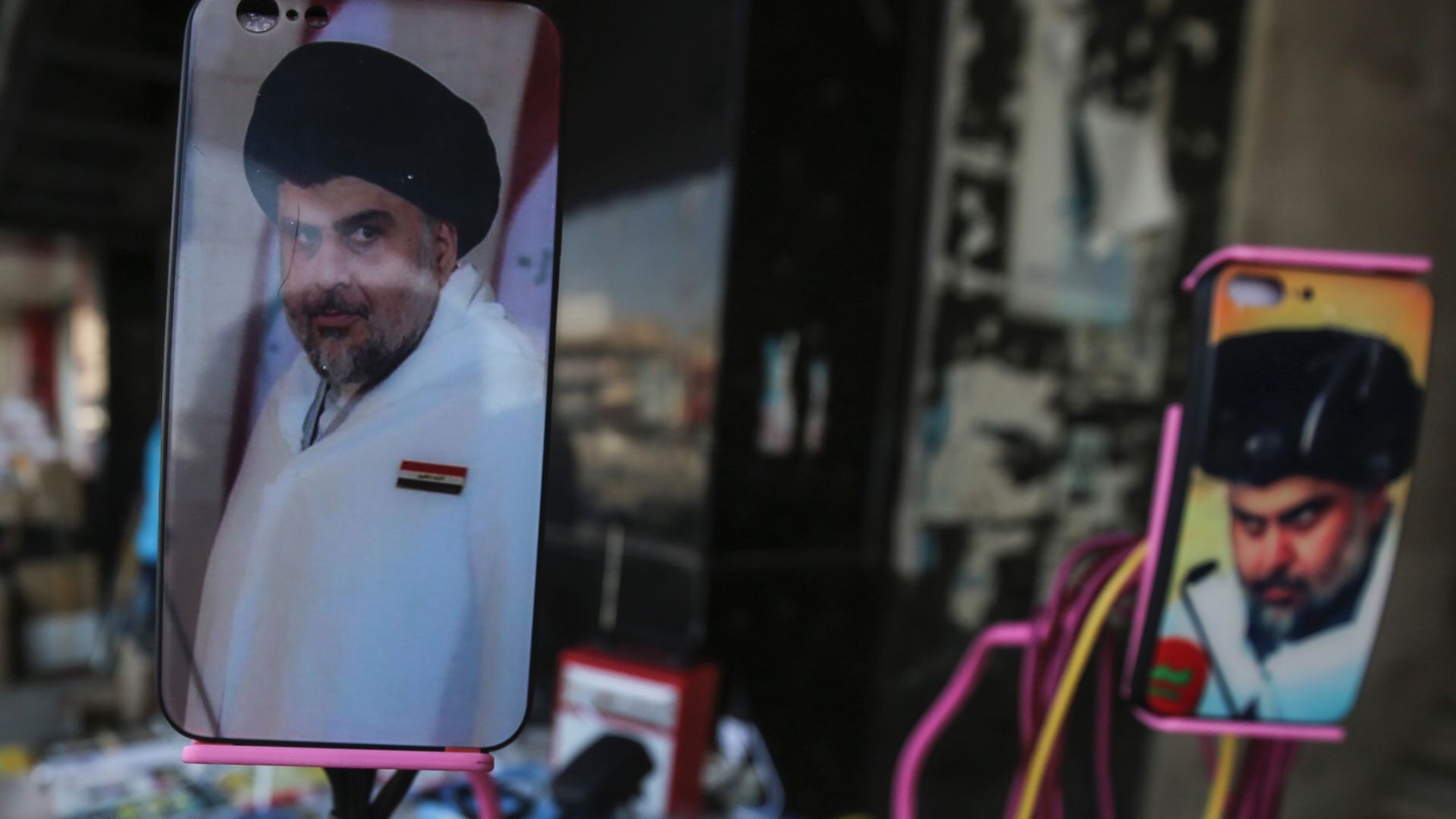
Muqtada al-Sadr on cell phone covers. Photo: Ahmad Al-Rubaye/AFP/Getty Images
Iraq may soon have a pro-Iran government
Haley Britzky
A coalition of blocs loyal to cleric Moqtada al-Sadr and Hadi al-Amiri, an Iran-backed militia chief, has emerged from Iraq's disputed election and is now seeking to ease concerns in Washington as it works to form a government, Al-Monitor reports.
The details: A leader in Al-Amiri's Fatah Alliance, Karim al-Nuri, said in a statement on Wednesday that the coalition "is in tune with the vision of Iran and the United States." The coalition is viewed as a win for Iran, which will be able to "maintain its influence" in Iraq, Al-Monitor notes. The coalition is currently sitting at 141 seats, 24 seats below the 165 needed to form a government, per Al-Monitor.

Monday, May 14, 2018

Korea and Iran are not Parallels

http://www.bbcnewspoint.com/wp-content/uploads/2017/02/Top-10-Countries-With-Best-And-Most-Powerful-Nuclear-Weapons-In-The-World-2017-Iran.jpgKhamenei and the North Korean precedent
Did you know that South Korea’s Gross Domestic Product (GDP) is to the tune of $1.5 trillion, whereas the North Korean GDP is not more than $28 billion? It’s true that North Korea is a nuclear country and it can fire ballistic missiles against the US. In spite of this military strength, North Korea decided to engage in peace talks with the US and its neighbor South Korea that will end with the declaration that it would give up its nuclear weapons arsenal to denuclearize the Korean Peninsula.
The question is, why did the North Korean leader take such a decision? All the objective indicators suggest that the North Korean president apparently realized that his nuclear weapons will neither help feed his people nor solve the country’s several economic problems, but abandoning his nuclear arsenal may help resolve these issues.
Poverty and hunger in Iran
Iran, under Khamenei, suffers from similar economic woes, particularly extreme poverty which continues to increase by the day. But Khamenei does not care about these issues as he only cares about Iran becoming a regional power and about spreading Shiism among the peoples of the region, which is a goal typical to any theocratic country. He thus thinks that he can only achieve these goals by having a strong military that is protected by a nuclear deterrence mechanism to impose whatever he wants, whenever he wants. In fact, he has started splurging Iranian economic revenues on sectarian Shiite militias, moving them from one place to another and investing in any foreign political dispute. He neglected Iran’s domestic affairs and as a result poverty increased and entrapped more than half of the population. According to statistics this percentage is still increasing. This means that there are 40 million hungry people out of a total population of about 80 million.
What if Khamenei and the theocrats abandon their expansionist ambitions and decide to become objective and rational? What if they benefited from the North Korean experience, and decided to cooperate with countries of the world, instead of destabilizing global security?
Mohammed Al Shaikh
The politicized Persian theocrats are not aware that the world standards today differ from those in the past — when invasion, jihad and dominance and exporting ideological revolutions by force controlled the relations of peoples. It has become impossible to invade nowadays. Today’s world would never, I repeat never, let a theocratic state expand and act like terrorist militias, which it’s working to combat and to eradicate their culture.
The option of development
On the other hand, what if Khamenei and the theocrats abandon their expansionist ambitions and decide to become objective and rational? What if they benefitted from the North Korean experience, and decided to cooperate with countries of the world, instead of destabilizing global security?
I am almost certain that Iran would witness massive development if it adopts such a stance because of its rich natural resources. Investors will invest in Iran and develop it economically and help its citizens catch up the 21st century. By the way, first among these countries would be the neighboring Gulf states, headed by Saudi Arabia.
But such a brave decision needs a man like Mohammed bin Salman, someone with his awareness, determination and courage. Khamenei does not have the ability, the qualifications or the mindset, which is still stuck in the past, to execute such a decision. Opportunists around the mullahs are aware that any real economic development and reform and eradication of corruption will turn Iran into a civil state. When civilians rule, the mullahs will return to their mosques and hawzas (seminaries).
This article is also available in Arabic.
_____________________
Mohammed Al Shaikh is a Saudi writer with al-Jazirah newspaper. He tweets @alshaikhmhmd.
Last Update: Sunday, 13 May 2018 KSA 17:00 - GMT 14:00
Disclaimer: Views expressed by writers in this section are their own and do not reflect Al Arabiya English's point-of-view.

Sunday, May 6, 2018

The Large Horn of Iran and the Small Horn of Iraq (Daniel 8)

Iran has maintained a significant interest in Iraq for many years, acting as a safe haven for dissidents from Saddam Hussain’s regime and, following the 2003 intervention, taking up a role as both a major political actor and providing support to Shiite militias who targeted coalition forces and the country’s Sunni population.
This activity has been stepped up considerably since the capture of Mosul by the terrorist organization ISIS in 2014. The then ongoing nuclear negotiations acted to deter any significant U.S. attempt to mitigate Iranian influence. In fact, it appears that the talks may have resulted in just the opposite: in September 2014, it was reported that Iran had offered to work with the U.S. in defeating ISIS in exchange for more flexibility on the number of centrifuges it could retain as part of a deal.
Although it is not possible to quantify in its entirety the impact of the proposal on U.S. behavior, it was ultimately this preferred Iranian option – that they were allowed to retain all of their centrifuges, but with only some in an operation state – which was a cornerstone of the final JCPOA.
Iran currently exerts significant political and economic powers in Iraq. Tehran’s influence is being felt at the highest level by regular visits from General Qassem Soleimani, commander of Iran’s Quds Force – a man described as “the single most powerful operative in the Middle East today” and “Iran’s viceroy for Iraq.”
Former Iraqi Prime Minister Nouri al Maliki was only forced out of power once Tehran withdrew their support of his premiership. But despite this fall from grace, al Maliki – the man most directly responsible for ISIS’ rise – remains Iran’s point man in the country, and continues to plot his own return to the top.
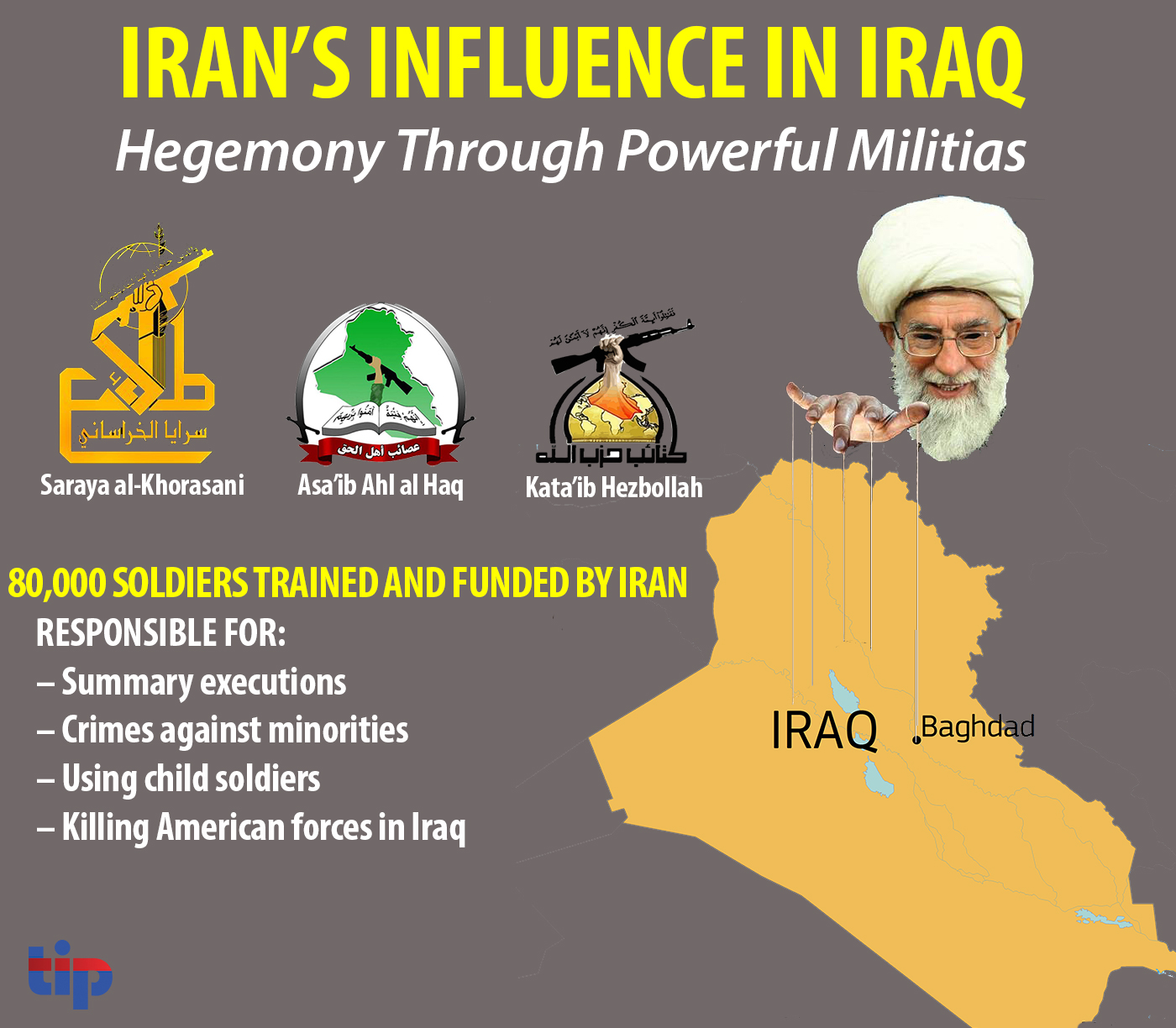
On the ground, Iranian efforts have centered on training and supplying a variety of Shiite militias under the wider umbrella of the “Popular Mobilization Forces” (PMU), a diverse 60,000 to 140,000 strong group formed in 2014 to counter the rise of ISIS and compensate for the repeated failures of the Iraqi Army.
The group’s aggressive behavior has raised concerns over their potential future role in Iraqi society, especially since a number of the militias pledged spiritual allegiance to Iranian Supreme Leader Ali Khamenei, including the Badr Organization and Saraya al-Khorasani. The official logo of the al-Khorsani group is an exact replica of that of Iran’s Revolutionary Guard Corps (IRGC).
iran-in-iraq-graphic
During the Iraqi insurgency of Abu Musab al Zarqawi’s al-Qaeda in Iraq, Hezbollah’s Iraqi branch Kata’ib Hezbollah sprang to prominence in 2007 and was involved in a series of lethal attacks against coalition forces. In the conflict in Iraq against ISIS, Kata’ib Hezbollah joined the alliance of PMU. They have also been party to a litany of human rights abuses and war crimes documented by Human Rights Watch, and yet continue to attract Iranian funding.
Reports from June 2017 claim that dozens of bodies were found in Mosul handcuffed, executed, and buried in shallow, unmarked graves. In May 2017, two aid workers found a group of 15 bodies on the side of the road between Athba and Hammam al-Alil, just outside Mosul. Armed forces reported that they saw Iraqi “security forces”, mostly likely PMU, bring the men to the site and execute them. The U.S. Department of State noted that, under the guise of fighting ISIS, Kata’ib Hezbollah is advancing Iran’s interests in Iraq, further adding: “Iranian-supported Shia militias in Iraq have committed serious human rights abuses against primarily Sunni civilians.”
Asa’ib Ahl al Haq (AAH) is another Shia paramilitary organization operating largely in Iraq in allegiance with the PMU. It was founded by Qais al-Khazali, after his split from Muqtada al-Sadr’s Mahdi Army. Khazali was recruited in 2006 by the IRGC and AAH fighters have since received extensive training either in Iran or at Hezbollah camps in Lebanon. It has been reported that “since its inception, AAH has relied heavily on Iranian funding, training, and logistical support, and in return has acted as an Iranian proxy in Iraq, carrying out its agenda and promoting its interests.” Iraqi intelligence officials estimated that as of March 2014, AAH received $1.5-2m per month from Iran, adding that: “They see themselves as the “Soldiers of the Marjaeen” [the ultimate Shia religious authority]…their power is unchecked.”
AAH forces have also been implicated in human rights abuses including raiding Sunni homes and mosques and murdering Sunni civilians. In 2014, Human Rights Watch reported that AAH had executed at least 109 Sunni men in the villages surrounding Baghdad between March and April of that year. Two years later, Human Rights Watch described AAH attacks on Sunni civilians in Iraq as “serious violations of international humanitarian law” and “deadly abuse.”
Iraqi Prime Minister Haider al-Abadi, who has long had a strained relationship with the regime in Tehran, deserves credit for calling out the lawless behavior of Iranian-backed groups. His government’s policy has been to strengthen state institutions and to reinforce the chain of command to contain Iran’s influence in Iraq. In March, the prime minister signed a decree that formalized the PMU as a force under the command of his office, in an attempt to curb their power.
“The United States also has a crucial role to play in countering Iraq’s malign ambitions in Iraq by maintaining a military presence in the country,” Joshua S. Block, President and CEO of The Israel Project, said. “To keep Tehran in check, the United States must exert pressure on Baghdad to prevent the PMU from receiving the $1 billion allocated to the group from the Iraqi national budget. They could also put checks in place to prohibit Iranian-backed forces from profiting from the billions of dollars pledged to Iraq by the international community for the reconstruction of the country.”
Block warned: “These resources strengthen Iran’s proxies on the battlefield and help them to manipulate Iraq’s political system, social fabric, and ideological nature. With every inch of territory these groups acquire, Tehran’s influence in Iraq becomes stronger.”
As an example, he cited the assault on the former Kurdish-held town of Kirkuk in October 2017 and U.S. failure to come to the aid of Kurdish forces – the most reliable anti-Iran force in Iraq. As a result, Iranian proxies now control the oil-rich city and strategically vital towns nearby.
As Iraqis prepare to go to the polls on May 12 – the same day President Trump is set to “nix or fix” the nuclear deal – powerful Iranian-backed forces have their eyes on the election and are set to win a large chunk of seats, reinforcing concerns over Tehran’s sectarian agenda and interference in Iraq’s democratic election process.
This development has also caused concern in the United States. In March of this year, Reuters reported that U.S. Defense Secretary James Mattis accused Iran of “mucking around” in Iraq’s upcoming elections. Mattis told reporters that the U.S. had what he called “worrisome evidence” that Iran is funneling “not an insignificant amount of money” into Iraq to interfere in Iraq’s democratic election process.
Iran’s Supreme Leader, Ayatollah Ali Khamenei, has previously warned the Iraqi government not to allow U.S. troops to remain in Iraq, after the defeat of ISIS.
In February, Qais al-Khazali, the founder and leader of AAH, vowed that Shiite groups will form Iraq’s next government and their priority will be to “expel the American forces from Iraq and terminate the strategic cooperation agreement between the two countries.” The same month, Kata’ib Hezbollah warned that its fighters will begin to attack American troops “at any moment,” if they build a permanent military presence in Iraq.
Strategically, Iran seeks to secure Iraq as part of its “corridor to the Mediterranean” – allowing them a direct route through to Syria, Lebanon and – ultimately – all the way to the Israeli border. Already, Tehran controls large elements of Iraq’s economy and political system. Blessed with both the financial windfall and political legitimacy the JCPOA has generated, Iran is well-placed to secure its goals.
This is the third in a series of reports prepared by TIP Senior Fellow Julie Lenarz looking at the consequences of the 2015 nuclear deal with Iran.

Friday, May 4, 2018

The Korea and Iran Deal are Closely Intertwined


Any North Korea nuclear deal must involve Iran’s nuclear program
May 02, 2018 - 11:30 AM EDT
By A.J. Caschetta, opinion contributor
The views expressed by contributors are their own and not the view of The Hill
With the prospect of another round of North Korean diplomacy in the air, the United States must take full advantage by insisting that any deal with Kim Jong Un’s regime include full disclosure of everything it knows about the Iranian nuclear program and the decades-long nuclear proliferation abetted by Pakistan’s AQK Network. The president frequently mentions the North Korean and Iranian nuclear threats in the same speech, but he needs to link the two.
As Anthony H. Cordesman at the Center for Strategic and International Studies points out, there is “no reliable open-source data on exactly how Iran reached out to North Korea (or vice versa),” but the evidence of cooperation is incontrovertible. From shared Scud missile technology, to Iranian scientists present at North Korean nuclear tests, North Korea knows many of Iran’s secrets and can certainly provide enough evidence to satisfy even the most skeptical members of the international community.
The origin of North Korea’s success as a nuclear power began with assistance of the world’s most prolific proliferator, Abdul Qadeer Khan (AQK), Pakistan’s “Father of the Islamic Bomb” whose underground network sold centrifuge designs and equipment to numerous countries, both known (North Korea, Libya, Iraq and Iran) and unknown.
AQK provided much of the knowledge and materiel necessary for the North Korean and Iranian nuclear programs, but there were other connections. The founder of the Kim dynasty, Kim Il-Sung, was among the first to congratulate Ruhollah Khomeini after he seized power from the Shah of Iran. When Iraq invaded Iran in 1980, Kim offered Khomeini Scud missiles and sent military advisors to aid the Islamic Revolutionary Guards Corps (IRGC). Amir Taheri with Gatestone Institute suggests that even the Iranian “swarm attack,” or “human wave attack,” was derived from a tactic Kim used against American forces in the 1950s.
North Korea also helped Iran to make giant leaps forward in its missile program. When the Iraq-Iran War ended, North Korea helped Iran develop its own Shahab missile based on the Scud B design it had obtained from the Soviet Union. Iran’s current long-range Shahab-3 missile is based on the North Korean Nodong-1. Even the submarines used to launch missiles are similar; the Iranian Ghadir-class submarine is a close copy of North Korea’s Ono-class submarine.
Perhaps the most alarming evidence of cooperation came when North Korea tested a nuclear device in February 2013 and Iran’s seldom-seen chief nuclear scientist, Mohsen Fakhrizadeh-Mahabadi, was there to witness the event. Some analysts believe that the cooperation is so complete that Iran actually has moved its most secret nuclear research facilities to North Korea.
With the almost dizzying images and prospects coming out of North Korea, it will be tempting to go down the perilous path toward another bad deal with another Kim. It is encouraging that this round of diplomacy is being led by Secretary of State Mike Pompeo, who does not come from the world of traditional, weak diplomacy. And with John Bolton as national security adviser, we can be sure that President Trump is being advised of the North Korean-Iranian link. Bolton wrote in August of last year, “If Tehran’s long collusion with Pyongyang on ballistic missiles is even partly mirrored in the nuclear field, the Iranian threat is nearly as imminent as North Korea’s.”
If a peace deal with North Korea brings an apology for the murder of Otto Warmbier, return of any of the remains of the thousands of U.S. military personnel who disappeared fighting in the Korean War, or even the return of the USS Pueblo, which has sat in a North Korean harbor for over 50 years, Trump will be applauded.
But information that helps us expose and dismantle the Iranian nuclear threat might be the most important thing to come from any deal. Even if the next generation of Kims cheats and reneges on the deal, as the earlier generation of Kims did, we still will have gotten the goods on Iran.
Congress must urge the administration to push for a full disclosure of the entire history of North Korea’s participation with the Iranian nuclear program and everything it knows about the AQK Network. Adopting the tactics of law enforcement will make it possible to “flip” Kim Jong Un and turn him into an informant in return for his regime’s survival and the fabulous rewards that no doubt await him.
A.J. Caschetta is a Ginsburg-Ingerman Fellow at the Philadelphia-based think tank Middle East Forum and a senior lecturer at the Rochester Institute of Technology, where his focus has been the rhetoric of radical Islamists and Western academic narratives explaining Islamist terrorism.

Friday, April 20, 2018

Iran Forms the Shi’a Sickle (Daniel 8:8)


Boosts Ties With Syria, Iraq and Lebanon
By Tom O'Connor On 4/18/18 at 5:55 PM
Iran's supreme leader warned top officials Wednesday that their country was facing threats of espionage and subversion from foreign foes who sought to undermine the Islamic Republic and its increasingly large sphere of influence in the Middle East.
Ayatollah Ali Khamenei told Iranian Ministry of Intelligence officials to be ready to fight an "intelligence war" over public opinion and the integrity of the country's ruling ideology that required both offensive and defensive strategies to win. Without naming any specific foes, Khamenei praised his spies for thwarting the plots of "the intelligence systems of the opposition" and recommended forming a united front at a time when tensions were rising with the U.S., Israel and Saudi Arabia.
"We are now placed in the middle of this great, big battlefield; one side of it being the System of the Islamic Revolution; the other side is the huge, powerful front of the enemies," Khamenei said, according to his official website. "We have to resist during this war, against the plans of the adverse front; to overcome the enemy, we have to develop offensive strategies besides defensive ones, so that a strategical blueprint on playing field is laid out by our intelligence services."
The Iranian Foreign Ministry came out strongly Tuesday against Israeli airstrikes that killed Iranian personnel on a Syrian air base last week, warning that "Tel Aviv will be punished for its aggressive action." The attack was followed by a trilateral U.S., French and U.K. cruise missile strike Friday on three Syrian government research centers allegedly involved in a chemical weapons attack in rebel territory the previous weekend. Iran is a staunch ally of Syrian President Bashar al-Assad and, along with Russia, has helped him overcome a seven-year uprising supported by the West, Turkey and Gulf Arab states.
The U.S. and Iran were both supporting efforts to battle the Islamic State militant group (ISIS), but the former saw a political future in Syria without Assad. As the Syrian leader claimed victories nationwide and the U.S.-led effort to battle ISIS faltered, however, Iran has increasingly invested in the war-torn nation. Alaeddin Boroujerdi, the head of the national security and foreign policy commission in Iran's parliament, said Monday that he would soon visit Syria in the wake of the Western attack, which he said was "was carried out with the aim to boost the terrorists’ morale," according to the semi-official Mehr News Agency.
Iran has also shored up its relations with neighboring Iraq, where a 2003 U.S. invasion installed a Shiite Muslim government much friendlier to Iran and spurred a Sunni Muslim insurgency that ultimately helped to form ISIS. The U.S. and Iran both supported the Iraqi military, while a U.S.-led coalition provided air support and Iran established a powerful collective of militias known as the Popular Mobilization Forces. With ISIS largely defeated, these paramilitary fighters were made official members of the country's armed forces and they have threatened to expel the U.S. military by force.
Iranian Defense Minister Amir Hatami arrived Wednesday in Baghdad for a two-day visit he said was mainly aimed at "enhancing defense and military cooperation between Iran and Iraq," according to The National. The visit came as Iraqi Prime Minister Haider al-Abadi carefully balanced the interests of Iran, Saudi Arabia and the U.S. ahead of next month's elections.

Iranian Defense Minister Amir Hatami and his Iraqi counterpart Arfan al-Hayali listen to their countries' national anthems at the Ministry of Defense in Baghdad, Iraq, on April 18, 2018. Iran has shored up ties with allies Lebanon, Iraq and Syria as tensions rise with Israel, Saudi Arabia and the U.S. Stringer/Reuters
Lebanon was also set to hold elections next month, its first legislative vote in nine years. Iran grew influential in Lebanon after it helped to establish the Shiite Muslim Hezbollah movement that played a main role in resisting two Israeli incursions. Hezbollah, considered a terrorist organization by the U.S. and some of its allies, comprised the second-largest political party in the ruling March 8 alliance and has been deployed in heavy numbers to battle Syrian rebels and jihadis in both Syria and Lebanon, whose regular armed forces receive U.S. support.
Leading Lebanese newspaper Al-Nahar, which is closer to the opposition March 14 bloc, reported Wednesday that Qassem Soleimani, head of the elite Iranian Revolutionary Guards' expeditionary Quds Force, visited the southern suburbs of Beirut earlier this month to meet with Hezbollah Secretary-General Hassan Nasrallah.
President Donald Trump has attempted to roll back the diplomatic efforts of his predecessor, who established a landmark nuclear deal with Iran in 2015. International reviews have shown Iran to be in compliance with the deal and its other signatories—China, France, Germany, Russia and the U.K.—have all urged Trump not to abandon the deal as a deadline approached next month. The White House has argued, however, the deal gave Iran too much in the way of sanctions relief and did not adequately prevent it from funding U.S.-designated terrorist groups, developing ballistic missiles and ultimately pursuing nuclear weapons.

Thursday, April 19, 2018

Iran Continues to Threaten Israel (Daniel 8:4)


Following last week’s airstrike that targeted Iranian forces based at the Tiyas or T-4 airbase in Syria, two Iranian officials have threatened Israel.
On Monday, according to Iran’s Islamic Revolutionary Guard Corps (IRGC)-affiliated Tasnim News,  Iranian Foreign Ministry Spokesman Bahram Qassemi said that Israel would receive “required responses sooner or later,” and that Israel “cannot take (such) an action and be exempt from punishment.”
Seven Iranian military advisers, including one colonel, were killed in the airstrike.
In addition, last Friday, Iranian Army Ground Forces commander Brigadier General Kiumars Heidari said that Israel can no longer attack Iran and that the date has already been set for Israel’s destruction.
The latter comment is an apparent reference to Supreme Leader Ayatollah Ali Khamenei’s prediction that Israel will be destroyed within 25 years.
Heidari also boasted that “Iran is the most stable and strongest country in an unstable and volatile region now.” He did not address the ongoing protests against the regime or the continued devaluation of its currency.
The threats against Israel by Qassemi and Heidari follow one by Ali Akbar Velayati, a foreign policy adviser to Ayatollah Ali Khamenei, last week in the wake of the strikes against the airbase. Velayati said a week ago that the “crimes will not remain unanswered.”
In addition to Iranian officials threatening retaliation for the airstrikes against the T-4 airbase, two officials threatened Tel Aviv and Haifa, two of Israel’s largest cities, with destruction.
On Friday last week, the IDF announced that the Iranian drone that entered Israeli airspace in February was loaded with explosives and showed “an Iranian intent to carry out an attack,” an act of war against Israel.
The threats from Iran, as well as the escalation of military activity in Syria, including a coordinated attack on Syria’s chemical weapons facilities by the United States and its allies, has prompted Israel to be on alert for possible direct attack by Iran.

Wednesday, April 18, 2018

Why Syria Will NEVER Complete the Shia Sickle


 “What kind of a nation wants to be associated with the mass murder of innocent men, women, and children?” President Trump asked Russia and Iran Friday night after launching air strikes against the Syrian regime. “The nations of the world can be judged by the friends they keep.”
Despite his speechwriters’ best efforts, if there is one thing Donald Trump and Iran share it is an inability to be shamed. Over the last seven years no country has done more, financially and militarily, to back the Bashar al-Assad regime’s mass murder of Syrians than the Islamic Republic of Iran, a theocracy that claims to rule from a moral high ground. Within hours of joint American, French, and British targeted military strikes in Syria, Iranian president Hassan Rouhani called Assad to pledge his solidarity.
At a time of great economic hardship in Iran, Tehran has provided billions of dollars to arm, train, and pay tens of thousands of Arab, Afghan, and Pakistani Shia militants help Assad crush Sunni Islamist rebels. Tehran, the victim of heinous chemical weapons attacks by Saddam Hussein three decades ago, has provided Assad the means to deliver these same weapons, while simultaneously denying that he uses them. The question is why?
Distilled to its essence, Tehran’s steadfast support for Assad is not driven by the geopolitical or financial interests of the Iranian nation, nor the religious convictions of the Islamic Republic, but by a visceral and seemingly inextinguishable hatred for the state of Israel. As senior Iranian officials like Ali Akbar Velayati, a close adviser to Supreme Leader Ayatollah Ali Khamenei, have commonly said, “The chain of Resistance against Israel by Iran, Syria, Hezbollah, the new Iraqi government and Hamas passes through the Syrian highway. … Syria is the golden ring of the chain of resistance against Israel.” So long as the 78-year-old Khamenei remains in power, this hatred will justify Tehran’s continued commitment of blood and treasure to support Assad’s use of all means necessary—including chemical weapons—to preserve his rule.
Though Israel has virtually no direct impact on the daily lives of Iranians, opposition to the Jewish state has been the most enduring pillar of Iranian revolutionary ideology. Whether Khamenei is giving a speech about agriculture or education, he invariably returns to the evils of Zionism. “The Zionist regime is a true cancer tumor on this region that should be cut off,” Khamenei said in a 2012 speech. “We will support and help any nations, any groups fighting against the Zionist regime across the world.” Given Israel’s military superiority, Khamenei’s stated strategy is not Israel’s short-term annihilation, but its long-term political dissolution. “If Muslims and Palestinians unite and all fight,” he commonly says, “the Zionist regime will not be in existence in 25 years.”In ostensibly trying to avenge what he portrays as one injustice, however, Tehran has helped Assad perpetrate a far greater one. The number of Syrian deaths since 2011 (an estimated 500,000, though the UN has stopped counting) is more than five times greater than the approximately 90,000 Arabs (roughly 20-30 percent of them Palestinian) killed in the last 70 years of the Palestinian-Israeli conflict, while more than twice as many Syrians (12 million) as Palestinians have been displaced.* Indeed since 2011 far more Palestinians have been killed by Assad (nearly 3,700) than by Israel, including by chemical weapons.  “If their way to return Palestinians back home is displacing millions of Syrians,” said my friend Kassem Eid, one of around half a million Palestinian refugees who grew up in Syria, and a victim of one of Assad’s chemical weapons attack, “I don't want to go back to Palestine.”
* * *The Iran-Assad alliance is a study in contradictions. While Iranian advocates for secularism are viciously repressed, Assad routinely says, “The most important thing is that Syria should be secular.” Iranian women who defy the mandatory hijab are subject to violence and imprisonment, while Hezbollah fighters celebrate military victories in Damascus nightclubs alongside scantily-clad escorts. While nude Renaissance art is censored in Europe so as not to offend the religious sensibilities of visiting Iranian officials, Assad’s forces have deliberately used rape as a tool of repression against opponents. Khamenei implores his subjects to buy Iranian products to boost economic self-sufficiency, while Tehran’s largesse has helped subsidize Assad’s wife Asmaa—an unveiled fashionista—sustain what looks like her primary passion: shopping in London.
From the outset of the Syrian uprising in 2011, Assad and Iran assiduously sought to crush moderate opposition and indulge radical Islamists in order to engineer a no-win proposition for the West: Assad or jihadists. Yet Tehran has tried to portray its role in Syria as an existential battle for Iran, against the forces of Sunni radicalism. “Syria is Iran’s 35th province,” said Mehdi Taeb, a head of the Revolutionary Guards intelligence wing and a close advisor to Iranian Supreme Leader Ayatollah Ali Khamenei. “If we lose Syria we won’t be able to hold Tehran.” While Assad’s collapse would undoubtedly be a strategic blow to the Islamic Republic, Iran has been a nation-state for virtually 2,500 years before now without the benefit of a Syrian vassal state. Just as Russia outlived the USSR, so will Iran outlive the Islamic Republic.
Today the Tehran-Damascus axis has come to resemble a mutually exploitative love affair: Iran likes Syria for its body (which borders Israel and serves as Tehran’s waystation to Hezbollah), and Syria likes Iran for its money. In exchange for Iranian largesse, Assad has forsaken his sovereignty. “Syria is occupied by the Iranian regime,” said former Syrian Prime Minister Riad Hijab. “The person who runs the country is not Bashar al-Assad but [Iranian Revolutionary Guard Corps commander] Qassem Suleimani.” As for the other half of the couple, Tehran’s staggering expenditures in Syria—estimated to be several billion annually—have become a growing cause of popular resentment amidst deteriorating economic conditions in Iran. During anti-government protests last January in Iran, residents of Mashhad—a large Shiite Shrine town—chanted “Leave Syria alone, think about us.”Though Iranians feel the financial costs of the Syria war, Tehran has outsourced the human costs. Iran’s 40,000-strong Shia foreign legion—composed of Lebanese, Afghans, Iraqis, and Pakistanis—have endured five times more casualties in Syria than Iranians. Afghan militias—known as the Fatemiyoun Division—have paid the highest price. Most are not enthusiastic holy warriors but undocumented manual laborers, some underage, whom the Iranian Revolutionary Guards present with an offer they can’t refuse: 10-year residency permits in Iran—mitigating the risk of forced deportation—and $800 per month to go to Syria, purportedly to protect the Shiite shrine of Sayyida Zainab, a granddaughter of the Prophet Muhammad, outside Damascus. Lacking basic training and often illiterate, these Afghan troops are instead used as initial assault cannon fodder. "Sometimes we had no supplies,” said one former Afghan fighter, “no water, no bread—hungry and thirsty in the middle of the desert.” For Palestine.
* * *The burden of defending Iran’s role in Syria to Western audiences has fallen on the shoulders of Tehran’s U.S.-educated Foreign Minister Javad Zarif. Among Zarif’s considerable talents is an ability, and willingness, to tell brazen untruths with tremendous conviction. Shortly after Zarif insisted Iran had “no boots on the ground” in Syria, for example, the Revolutionary Guards announced their 1,000th casualty. In the aftermath of each chemical weapons attack by Assad, Zarif has systematically absolved Assad of responsibility by following the same playbook:
First, remind everyone that Saddam Hussein—backed by Western powers—used chemical weapons against Iran during the 1980-1988 Iran-Iraq war. In other words, Syrian children are not the victims; Iran is still the victim. Second, ambiguously condemn chemical weapons use "by anyone." This allows Zarif’s Western allies to acknowledge his humanity. When pressed, however, Zarif has always claimed that it was the Syrian opposition—backed by American and Israel—that has used chemical weapons, not Assad. Zarif has paid little reputational cost for this whitewashing; the Nobel Peace Prize committee continues to mention him as an annual nominee.
After seven years, and with billions of dollars of sunk costs, an assertive Russian partner, and a U.S. president that aspires to withdraw from the region, Tehran feels vindicated in Syria. It is alleged to be building permanent military bases outside Damascus, with armed drones capable of reaching Israel. Periodic, limited U.S. military strikes against Assad’s weapons depots are not likely to change this calculus. Hopes that Assad’s mass repression or use of chemical weapons would compel Tehran to reassess its support have been proven wrong. Just as Iranians today frequently evoke how Saddam used chemical weapons against Iran over three decades ago, Syrians will have similarly long memories of Iranian complicity.
While Friday night’s missile shower illustrated the clear power asymmetry between Washington and Tehran, the last seven years have also illustrated the two countries’ asymmetry of commitment in Syria. In contrast to Donald Trump—who did not care about Syria last week and will likely not care about Syria next week—Ayatollah Khamenei’s opposition to Israel, and his commitment to Syria, has not wavered for four decades. Like Captain Ahab chasing Moby Dick, the 78-year-old Khamenei will take this pursuit to the grave with him.In the 1998 movie American History X, a vivid portrait of America’s neo-Nazi movement—America’s Islamist equivalent—Edward Norton’s character is a young radical sent to prison for committing a hate crime. When a sympathetic former teacher visits him in prison to try to talk sense, he remains intransigent. The teacher’s simple parting comment, however, was powerful enough to cause Norton to reflect. “Just ask yourself one thing,” said the teacher.  “Has anything you’ve done made your life better?
Amidst all the carnage and destruction in Syria, a similar question could be posed to Khamenei. Has anything that Iran has done in Syria, or elsewhere for that matter, advanced its goal of destroying Israel and liberating Palestine? Khamenei appeared to contemplate this question recently. “Today the body of Muslim world is severely wounded,” he said. “Enemies of Islam have managed to baffle the Muslim world by staging war and discord, giving the enemy more security in the region. In Western Asia, the Zionist regime thrives in a safe haven, while Muslims are posed against one another.” Long live Palestine.

Sunday, April 15, 2018

Iran Correctly Calls the Syria Attack a Crime

Iran leader calls US-led strike 'military crime'

In this picture released by an official website of the office of the Iranian supreme leader, Supreme Leader Ayatollah Ali Khamenei speaks at a meeting in Tehran, Iran, Saturday, April 14, 2018. (Office of the Iranian Supreme Leader via AP)
He spoke at a meeting with Iranian officials and ambassadors from some Islamic countries.
The report quotes Khamenei as calling the leaders of the United States, Britain and France -- the countries that launched the attack -- "criminals."
The allies' operation was intended to punish Syrian President Bashar Assad for an apparent chemical attack against civilians and to deter him from doing it again.

Iran Upset America Attacked the Shia Sickle

Iran´s supreme leader Ayatollah Ali Khamenei. Photo: Reuters

Iran's Khamenei slams 'criminals' Trump, Macron, May | World

By

Iran's supreme leader Ayatollah Ali Khamenei denounced US President Donald Trump, France's Emmanuel Macron and Britain's Theresa May after they launched strikes Saturday against the Syrian regime, branding them "criminals".
"The attack this morning against Syria is a crime," Khamenei said in remarks published on his Telegram channel.
"The American president, the French president and the British prime minister are criminals."
The Iranian Foreign Ministry has also lashed out at the Western states that had conducted a joint massive missile strike on targets in Syria and warned of "regional consequences."
"The United States and its allies have no proof and, without even waiting for the Organisation for the Prohibition of Chemical Weapons to take a position, have carried out this military attack," said Iran's foreign ministry in a statement.
They "are responsible for the regional consequences of this adventurist action," it said, condemning a "clear violation of international rules and laws".
The United States, Britain and France carried out a wave of punitive strikes against Bashar al-Assad´s Syrian regime on Saturday in response to alleged chemical weapons attacks that President Donald Trump branded the "crimes of a monster."
"A short time ago, I ordered the United States armed forces to launch precision strikes on targets associated with the chemical weapons capabilities of Syrian dictator Bashar al-Assad," Trump said, in a prime-time address.
"A combined operation with the armed forces of France and the United Kingdom is now under way. We thank them both," Trump added.
"This massacre was a significant escalation in a pattern of chemical weapons use by that very terrible regime," he said of the suspected deadly gas attack a week ago on the rebel-held Damascus suburb of Douma.
"The evil and the despicable attack left mother and fathers, infants and children thrashing in pain and gasping for air. These are not the actions of a man. They are crimes of a monster instead," he said.

Saturday, April 14, 2018

Iran Threatens Israel...Again (Daniel 8:4)


ANKARA (Reuters) - Iran could destroy Israel so Tel Aviv should avoid any stupid measures against the Islamic Republic, the supreme leader’s representative to the Quds force said on Thursday according to the semi-official Fars news agency.
“If Israel wants to continue its treacherous existence ... it should avoid stupid measures. If they give excuses to Iran, Tel Aviv and Haifa will be destroyed,” Supreme Leader Ayatollah Ali Khamenei’s representative at the Quds force cleric Ali Shirazi was quoted by Fars as saying. “Iran can destroy Israel.”
The Quds Force is the espionage and paramilitary wing, in charge of overseas operations, of the elite Revolutionary Guards.
Fars said Shirazi made the comments in response to Prime Minister Benjamin Netanyahu’s Wednesday speech at Israel’s annual Holocaust commemorations when he called for action against Iran.
The United States has threatened air strikes against Syria over the use of chemical weapons that Syria and its allies Iran and Russia deny.
Writing by Parisa Hafezi; Editing by Matthew Mpoke Bigg

Tuesday, April 10, 2018

Nations Should Be Threatened by Iran's Hegemony

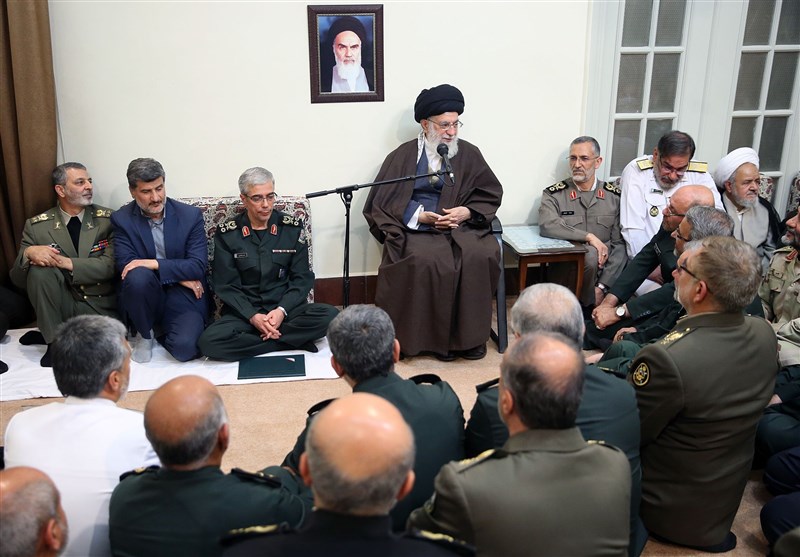
manar-07453150015232608534Enemies Feel Threatened by Iran’s Growing Power – Al-Manar TV Lebanon

Leader: Enemies Feel Threatened by Iran’s Growing Power

Leader of the Islamic Revolution in Iran, Imam Sayyed Ali Khamenei said enemies have stepped up their attacks against the Islamic Establishment as they feel threatened by its rising power.
In a meeting with a group of senior Armed Forces commanders on Sunday, the Leader cited power, security and dignity as the main objectives of the Armed Forces.
His eminence underlined the necessity of training the personnel and designating successors in the Armed Forces.
“The result of the activities and measures carried out in the Armed Forces must be in line with the fulfillment of determined goals,” Imam Khamenei said, according to Tasnim news agency.
He described the current times as the era of pride for the Islamic Republic of Iran.
“The reason behind the unprecedented attacks against the Islamic Establishment is the growing power of the Establishment, because the enemies feel threatened by this ever-increasing power and have stepped up their attacks.”
The Leader stressed meanwhile that “despite threats and enemies’ dismay, the might of the Islamic Establishment will increase day by day.”
According to official website of the Leader, Chief of the General Staff of the Iranian Armed Forces Major General Mohammad Baqeri presented a report on the achievements and activities of the Armed Forces over the past Iranian calendar year, which ended on March 20.
“In the new year, we are committed to boosting our efforts and warrior-like bids to achieve goals,” Baqeri was quoted as saying during the meeting with Imam Khamenei.
Source: Agencies

Tuesday, March 20, 2018

Iraq Continues to Distance Itself from Iran (Daniel 8:6)


The repercussions of Iran's controversial arrest of the Shiite cleric Hussein Shirazi could include a weakening of Iranian influence over Shiites in Iraq. On March 6, Iranian authorities arrested Shirazi, who was beaten and insulted in front of his father, Grand Ayatollah Sayed Sadeq Shirazi, while the Shirazis were on their way home in the city of Qom. Hussein's detention stems from a recent lecture he gave to Qom seminary students on jurisprudence in which he compared the practices of Ayatollah Ali Khamenei, Iran's supreme leader, to those of oppressive Egyptian pharaohs who couldn't be criticized or held accountable for their actions.
Hussein Shirazi and his father hold dual citizenship in Iran as well as in Iraq, where their influence is especially strong. Their family, whose roots date back 150 years in Iraq, founded the Shirazi political movement, which has followers across the Middle East. The Shirazi movement has traditionally held that a council of Islamic jurists should be in a position of authority in a country, rather than just one supreme leader, such as has been the case with Ayatollah Ruhollah Khomeini or Khamenei.
Iraqi demonstrations against Hussein Shirazi's arrest broke out in front of the Iranian Consulate in
Karbala
, the Iranian Embassy in Baghdad and near the border with Iran in
Basra
. The protesters shouted slogans against the Iranian regime's ongoing repression of their religious leaders in Iran, and demanded Shirazi's
immediate release
. They also called on Iraqi Prime Minister Haider al-Abadi and his government to intervene and pressure Iran to release Shirazi.
In London, members of the Iraqi community protested in front of the Iranian Embassy. Four people were arrested after they climbed onto the porch and lowered the Iranian flag and then raised the Shirazi flag. British police intervened to restore calm.
Protests also took place in Kuwait and other Arab countries. During a demonstration in front of the Iranian Embassy in Kuwait City, Sheikh Yussef Mulla Hadi, a leader in the Shirazi movement in the country, described the Iranian regime as a dictatorship masquerading under the banner of velayet-e faqih (clerical rule) and demanded that Shiites around the world renounce it.
Sadeq Shirazi's older brother, Mohammad, was among the founders of the principle of velayet-e faqih, but the family believes Khamenei and Islamic Republic founder Khomeini have corrupted the concept. Mohammad Shirazi, who died in 2001, had called for establishing a velayet-e faqih, or council of jurists, but Khomeini advocated that ultimate authority be held by an individual.
Differences in interpretations appear to be leading to a Shirazi rejection of the concept of velayet-e faqih altogether. Hussein Shirazi now says velayet-e faqih, as implemented by Iran, enslaves the citizenry and contradicts the principles of freedom, equality and democracy
Mohammad Shirazi, who led the Shirazi movement, established his religious authority in Karbala during the 1960s and 1970s, until moving to Iran and settling in Qom in 1979. In the early 1970s, he founded the Islamic Action Organization, which supported liberation movements in the Islamic world, including that of the Palestinians. There also was a third brother, Hassan Shirazi, who was assassinated in Lebanon in 1980 because of his activities on behalf of the Shirazi movement.
Hussein Shirazi has made scathing comments against Khamenei over the years. In his most recent speech, he also criticized the brutal eight-year war (1980-88) between Iran and Iraq, which he described as a Khomeini political venture to expand Iran's Islamic Revolution. Shirazi has even gone so far as to compare Khomeini and Khamenei to the men who killed the Prophet Muhammad's grandson Hussein, revered by Shiite Muslims as the third imam.
Mohsen Kadivar, a prominent Iranian reformist cleric and visiting professor of religious studies at Duke University, has called velayet-e faqih a religious dictatorship. He believes the unprecedented, open criticism of clerical rule by Shiite clerics could create major problems for the Iranian regime. This is especially the case because such criticism is coming from the Shirazi movement, which is so strongly associated with political Shiite Islam and so deeply tied to the establishment of Iran's velayet-e faqih. Kadivar has called on the Shirazi movement's religious jurists to produce a doctrinal theory rejecting velayet-e faqih.
These developments, among a series of previous Iraqi Shiite reactions to Iran's role in Iraq — such as the cleric Muqtada al-Sadr's distancing himself from Iran and Iraqi Ayatollah Ali Sistani's refusal to meet with several Iranian officials — are likely to signal a potential curtailing of Iranian influence among Iraqi Shiites. It appears some Shiites are changing their views after experiencing the repressive practices of religious rule.
Ali Mamouri is Al-Monitor's Iraq Pulse Editor and a researcher and writer who specializes in religion. He is a former teacher in Iranian universities and seminaries in Iran and Iraq. He has published several articles related to religious affairs in the two countries and societal transformations and sectarianism in the Middle East.

Sunday, March 18, 2018

The Usual Iranian Hegemony in Iraq (Daniel 8:4)

 AFP , Friday 16 Mar 2018
Speaking to reporters as he returned from a trip to Oman, Afghanistan and Bahrain, Mattis said officials he met with had expressed frequent concerns about Iranian behavior.
"One thing that came through loud and clear is the suspicion of Iran and the evidence of Iranian destabilizing efforts," said Mattis, a longtime Iran hawk.
"I heard it when I was up in Afghanistan. You know what's going on in terms of Iran's support to Assad. Now Iran is following Russia's example (and) mucking around in Iraq's elections," Mattis said, referring to Syrian President Bashar al-Assad.
"It was just brought home to me again that they are not changing their behavior, they are continuing to be a destabilizing influence," Mattis added.
The Pentagon chief said he would not speculate as to whether Iran's efforts were having any impact on the Iraqi electorate ahead of the May parliamentary and provincial assembly elections.
"Iran is trying to influence using money the Iraqi elections. That money is being used to sway candidates, to sway votes," he said.
"Iran should leave the Iraqis to determining their own future," said Mattis.
Despite increased rhetoric from Washington about Iran's activities in the region and US President Donald Trump's continual railing against the Iran nuclear deal, Mattis noted that Iranian naval vessels in the Gulf have become less provocative toward US ships.
He said ships from both the regular Iranian navy and the Iranian Revolutionary Guards Corps have curtailed the sorts of incidents that had become almost routine over the past few years, and are now staying away from American vessels.
"In the Gulf itself, they are not coming in as close to our ships, the provocative actions in the Gulf seem to have relented somewhat," Mattis said.
"They are not doing as many bellicose confrontations and that sort of thing."
Commander Bill Urban, spokesman for the Navy's Bahrain-based Fifth Fleet, said there had been no "unsafe or unprofessional" interactions with the Iranians at sea since August 14, 2017 when an Iranian drone with no lights on flew close to US aircraft operating in the Gulf.
Urban told reporters that "a substantial period time" has passed since then, "something that we think is great."
He said there has been "an across-the-board change in behavior."
Last year and in 2016, the US Navy frequently complained about the behavior of Iranian Revolutionary Guard Corps vessels, which would often shadow and steer toward American ships.
In at least one incident, US sailors had to fire flares and warning shots before the Iranians turned away.
Urban said that since then, the Iranians have stopped approaching so closely.
Mattis said that off the Yemen coast around the Bab-al-Mandab strait, the Islamic Republic is testing a number of offensive capabilities.
"It's where you find (Iran's) radars, their ballistic missiles, anti-ship cruise missiles," Mattis said.
"We've found their mines, their explosive boats all being tested, increased capability being demonstrated down there."
Fifth Fleet and its associated task forces continually patrol the Gulf and inspect some of the ships passing through the region.
In 2016, sailors seized weapons apparently headed from Iran to Yemen, including machine guns and rocket launchers.
Urban said task forces this year have confiscated record amounts of heroin, much of which may have been grown in Afghanistan to fund the Taliban.
The Iranian Revolutionary Guards Corps is a paramilitary force that answers directly to the Islamic republic's supreme leader.
In January 2016, the Iranians briefly captured the crew of two small US patrol boats that strayed into Iranian waters.
The 10 US sailors were released 24 hours later.

Nuclear Horns Escalate in the Middle East (Daniel)

The Crown Prince of Saudi Arabia Mohammed bin Salman arrives at Lambeth Palace, London, Britain, March 8, 2018. Credit: Yui Mok/Reuters
Saudi Arabia will develop nuclear weapons if its arch-rival Iran does so, the kingdom's crown prince said in remarks released on Thursday, raising the prospect of a nuclear arms race in a region already riven with conflict.
"Saudi Arabia does not want to acquire any nuclear bomb, but without a doubt if Iran developed a nuclear bomb, we will follow suit as soon as possible," Prince Mohammed bin Salman told CBS in an interview that will air in full on Sunday.
The Sunni Muslim kingdom has been at loggerheads with revolutionary Shi'ite Iran for decades. The countries have fought a long-running proxy war in the Middle East and beyond, backing rival sides in armed conflicts and political crises including in Iraq, Syria, Lebanon and Yemen.
He downplayed Iran's power during the interview, saying that Iran was far from being a rival to Saudi Arabia.
Iran's Foreign Ministry spokesman Bahram Qasemi reacted harshly, saying the Saudi crown prince was a "delusional naive person" who has no idea of politics, Iranian state TV reported on Thursday.
"He has no idea of politics apart from bitter talk that emanates from a lack of foresight ... His remarks do not deserve a response, because he is a delusional, naive person, who never talks, but with lies and bitterness," Qasemi said.
Prince Mohammed, who also serves as Saudi defence minister, said last year that the kingdom would make sure any future struggle between the two countries "is waged in Iran," prompting Iranian threats to hit back at most of Saudi Arabia except the holy cities of Mecca and Medina.
Riyadh has criticised the 2015 deal between world powers and Tehran under which economic sanctions on Iran were lifted in return for the Islamic Republic curbing its nuclear energy program. U.S. sanctions will resume unless President Donald Trump issues fresh "waivers" to suspend them on May 12.
The comments by Prince Mohammed, who at 32 is heir to the throne, also have implications for Israel, another U.S. ally which neither confirms nor denies the widespread assumption that it controls the Middle East's only nuclear arsenal.
Israel has long argued that, should Iran develop nuclear weapons, it would trigger similar projects among the Persian power's Arab rivals and further destabilize the region.
It has never joined the 1970 nuclear Non-Proliferation Treaty (NPT) and has said it would consider inspections and controls under the NPT only if was at peace with its Arab neighbors and Iran.

Civilian program

Saudi Arabia is stepping up plans to develop a civilian nuclear energy capability as part of a reform plan led by Prince Mohammed to reduce the economy’s dependence on oil.
The world's top oil exporter has previously said it wants nuclear technology only for peaceful uses but has left unclear whether it also wants to enrich uranium to produce nuclear fuel, a process which can also be used in the production of atomic weapons.
The United States, South Korea, Russia, France and China are bidding on a multi-billion dollar tender to build the country's first two nuclear reactors.
Prince Mohammed's comments, ahead of a trip to the United States next week, could impact the bid by a consortium that includes Toshiba-owned Westinghouse.
U.S. companies can usually transfer nuclear technology to another country only if the United States has signed an agreement with that country ruling out domestic uranium enrichment and the preprocessing of spent nuclear fuel — steps that can have military uses.
In previous talks, Saudi Arabia has refused to sign up to any agreement that would deprive it of the possibility of one day enriching uranium.
Reactors need uranium enriched to around five percent purity but the same technology in this process can also be used to enrich the heavy metal to a higher, weapons-grade level. This has been at the heart of Western and regional concerns over the nuclear work of Iran, Saudi Arabia’s arch-rival which enriches uranium domestically.
Riyadh approved a national policy for its atomic energy program on Tuesday, including limiting all nuclear activities to peaceful purposes, within the limits defined by international treaties.

Saturday, March 17, 2018

Saudi Rhetoric Against the Iranian Horn

60 Minutes
Saudi Arabia's crown prince tells Norah O'Donnell his country would get its own nuclear bomb as soon as possible if Iran were to develop a nuclear weapon. Prince Mohammed bin Salman spoke to O'Donnell, a 60 Minutes contributing correspondent and co-host of CBS This Morning, for his first American television interview. The interview will be broadcast on 60 Minutes, Sunday, March 18 at 7:00 p.m. ET/PT.
An excerpt from the interview, in which the crown prince also compares Iran's foreign policy to that of Hitler's, was broadcast on CBS This Morning, the transcript from it is below.
NORAH ODONNELL: You've been rivals for centuries. At its heart, what is this rift about? Is it a battle for Islam?
MOHAMMED BIN SALMAN: Iran is not a rival to Saudi Arabia. Its army is not among the top five armies in the Muslim world. The Saudi economy is larger than the Iranian economy. Iran is far from being equal to Saudi Arabia.
NORAH ODONNELL: But I've seen that you called the Ayatollah, Khamenei, "the new Hitler" of the Middle East.
MOHAMMED BIN SALMAN: Absolutely.
NORAH ODONNELL: Why?
MOHAMMED BIN SALMAN: Because he wants to expand. He wants to create his own project in the Middle East very much like Hitler who wanted to expand at the time. Many countries around the world and in Europe did not realize how dangerous Hitler was until what happened, happened. I don't want to see the same events happening in the Middle East.
NORAH ODONNELL: Does Saudi Arabia need nuclear weapons to counter Iran?
MOHAMMED BIN SALMAN:  Saudi Arabia does not want to acquire any nuclear bomb, but without a doubt, if Iran developed a nuclear bomb, we will follow suit as soon as possible.
The television interview is scheduled to be broadcast on 60 Minutes two days before the young Saudi leader is to meet with President Donald Trump.
The wide-ranging interview is the crown prince's first for American television, and it is rare for a member of the ruling royal family to sit down for such a conversation. The last time a Saudi leader gave an interview to a U.S. television network was in 2005.
O'Donnell spent a week in Saudi Arabia, reporting first-hand on the political, economic, and social reforms unfolding in the Sunni Muslim kingdom, many of them instituted by the crown prince, who is also known as MBS. The 32-year-old heir to the throne has also helped institute sweeping changes for women, including allowing them the right to drive for the first time in the country's history.
The crown prince is also the kingdom's deputy prime minister and its defense minister. O'Donnell asked him about the country's controversial role in the civil war in Yemen, and Iran, Saudi Arabia's chief rival in the area, and his relations with the U.S. The crown prince also spoke about what happened during his anti-corruption crackdown that resulted in hundreds of prominent Saudis detained at the Ritz Carlton hotel in Riyadh.

Friday, March 16, 2018

Real Threats from the Saudi Nuclear Horn (Daniel 7)

saudicrownprince

Saudi threatens to develop nuclear bomb if Iran does

Xinhua, March 16, 2018
 
Saudi Crown Prince Mohammed bin Salman Al Saud announced on Thursday that his country would develop a nuclear bomb if Iran does so, Al Arabiya local news reported.
"We don't want to own nuclear weapons, but if Iran does that, we would do the same," he said, adding that the Saudi economy is stronger than Iran's.
The crown prince also accused Iranian Supreme Leader Ayatollah Ali Khamenei of harboring expansion ambitions in the Middle East.
The announcement came two days after the Saudi cabinet adopted the national nuclear energy policy that is restricted for peaceful purposes and focuses mainly on the construction of nuclear energy plants.
The policy also requires best exploitation of local natural resources and full application of international standards in radiation waste management.