The prophecy is more than seeing into the future. For the prophecy sees without the element of time. For the prophecy sees things as they were, as they are, and as they always shall be.
By Meteorologist Dominic Ramunni Nationwide PUBLISHED 7:13 PM ET Aug. 11, 2020 PUBLISHED 7:13 PM EDT Aug. 11, 2020
People across the Carolinas and Mid-Atlantic were shaken, literally, on a Sunday morning as a magnitude 5.1 earthquake struck in North Carolina on August 9, 2020.
Centered in Sparta, NC, the tremor knocked groceries off shelves and left many wondering just when the next big one could strike.
Fault Lines
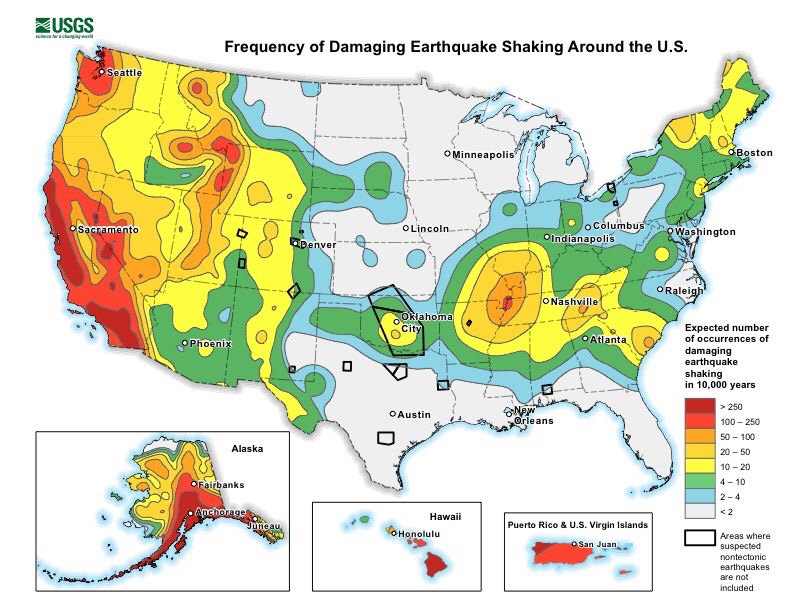
Compared to the West Coast, there are far fewer fault lines in the East. This is why earthquakes in the East are relatively uncommon and weaker in magnitude.
That said, earthquakes still occur in the East.
According to Spectrum News Meteorologist Matthew East, “Earthquakes have occurred in every eastern U.S. state, and a majority of states have recorded damaging earthquakes. However, they are pretty rare. For instance, the Sparta earthquake Sunday was the strongest in North Carolina in over 100 years.”
For example, across the Tennesse River Valley lies the New Madrid Fault Line. While much smaller in size than those found farther west, the fault has managed to produce several earthquakes over magnitude 7.0 in the last couple hundred years.
In 1886, an estimated magnitude 7.0 struck Charleston, South Carolina along a previously unknown seismic zone. Nearly the entire town had to be rebuilt.
Vulnerabilities
The eastern half of the U.S. has its own set of vulnerabilities from earthquakes.
These older rocks have had much more time to bond together with other rocks under the tremendous pressure of Earth’s crust. This allows seismic energy to transfer between rocks more efficiently during an earthquake, causing the shaking to be felt much further.
This is why, during the latest quake in North Carolina, impacts were felt not just across the state, but reports of shaking came as far as Atlanta, Georgia, nearly 300 miles away.
Reports of shaking from different earthquakes of similar magnitude.
Quakes in the East can also be more damaging to infrastructure than in the West. This is generally due to the older buildings found east. Architects in the early-to-mid 1900s simply were not accounting for earthquakes in their designs for cities along the East Coast.
When a magnitude 5.8 earthquake struck Virginia in 2011, not only were numerous historical monuments in Washington, D.C. damaged, shaking was reported up and down the East Coast with tremors even reported in Canada.
Unpredictable
There is no way to accurately predict when or where an earthquake may strike.
Some quakes will have a smaller earthquake precede the primary one. This is called a foreshock.
The problem is though, it’s difficult to say whether the foreshock is in fact a foreshock and not the primary earthquake. Only time will tell the difference.
The United State Geological Survey (USGS) is experimenting with early warning detection systems in the West Coast.
While this system cannot predict earthquakes before they occur, they can provide warning up to tens of seconds in advance that shaking is imminent. This could provide just enough time to find a secure location before the tremors begin.
Much like hurricanes, tornadoes, or snowstorms, earthquakes are a natural occuring phenomenon that we can prepare for.
The USGS provides an abundance of resources on how to best stay safe when the earth starts to quake.
Terrors groups laud Ariel ‘heroic operation,’ call for escalating attacks
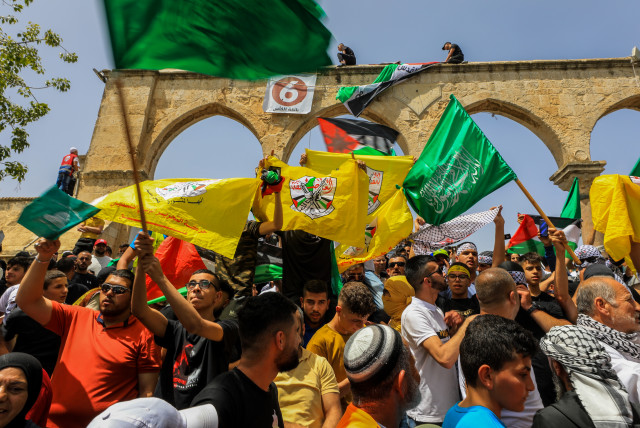
Hamas officials consider the Aqsa Mosque compound rallies a “referendum” in support of the armed “resistance” against Israel.
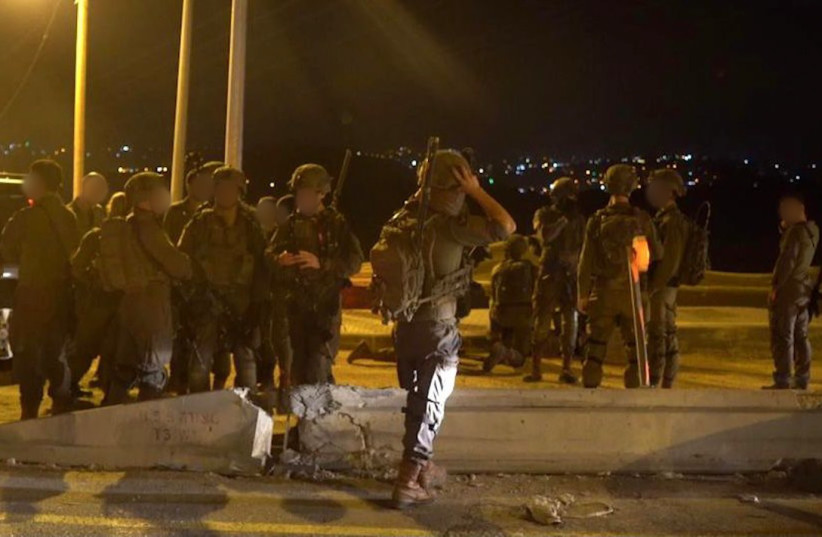
Buoyed by Friday night’s terrorist attack in Ariel and massive support during rallies at the Aqsa Mosque compound (Temple Mount) over the past few weeks, Hamas and other Palestinian terror groups have called for stepping up the fight against Israel. In separate statements, the groups also welcomed the Ariel attack, which resulted in the killing of a security guard.
Top Articles By JPost
Sinwar claims Hamas working on way to break Gaza maritime blockade
Hamas officials said over the weekend that they consider the rallies that took place at the compound as a “referendum” in support of the armed “resistance” against Israel.
During the rallies, thousands of Hamas supporters chanted slogans in support of Hamas military commander Mohammed Deif and the group’s leader in the Gaza Strip, Yayha Sinwar. The demonstrators also called on Hamas to bomb Tel Aviv and “blow up the heads of the Zionists.”
“The decision of the Palestinian people is that the resistance is the option and the shortest way to liberate Palestine and Jerusalem,” said Hamas leader Ismail Haniyeh, who is based in Qatar.
But a leaflet distributed by Fatah activists in east Jerusalem on Friday criticized the worshippers for raising Hamas flags at the holy site. The leaflet also attacked the worshippers for chanting slogans against Palestinian Authority President Mahmoud Abbas.
IDF soldiers prepare for action after a man was killed in a drive by shooting at the entrance to Ariel on April 29, 2022. (credit: IDF SPOKESPERSON’S UNIT)
A senior PA official in Ramallah condemned the use of the holy site as a podium for “raising political banners and slandering President Abbas.” The official argued that the pro-Hamas rallies at the Aqsa Mosque compound caused “huge damage” to the Palestinians.
In a video released early Saturday, a masked man claiming to represent the Aqsa Martyrs Brigades, the armed wing of the ruling Fatah faction headed by Abbas, claimed “full responsibility” for the Ariel attack. He said that the attack came “in response to the oppression and violation of the occupation government against Muslim and Christian holy sites.”
The masked man pledged that his group will continue “in the path of glory and martyrdom.”
It was not clear whether the Fatah-affiliated group was indeed responsible for the attack.
The Palestinian Islamic Jihad (PIJ) organization said that the Palestinians will “continue the fight against the [Israeli] enemy.”
Commenting on the death of Yahya Adwan, a 28-year-old Palestinian from the village of Azun in the northern West Bank who was shot dead by IDF soldiers during clashes shortly after the Ariel attack, PIJ called on Palestinians to avenge his killing.
Abu Hamza, a spokesperson for PIJ’s armed wing, praised the Ariel attack as a “heroic operation” and a “gift from the Palestinians to all the free people on Al-Quds (Jerusalem) Day.”
AL-QUDS DAY, an annual event held on the last Friday of Ramadan, was initiated by Iran in 1979 to express support for the Palestinians and call for the destruction of Israel.
Abu Hamza said that the rallies and demonstrations held in Iran and other countries on the day increased hopes of the imminent “defeat of the Zionist entity.”
He praised Iran’s supreme leader Ali Khamenei for supporting “the path of struggle and jihad against the Zionist enemy.”
Hamas also welcomed “the heroic operation” in Ariel, saying that the fight will continue “until liberation and [the right of] return,” a reference to Palestinian refugees and their descendants who are demanding that they be allowed to return to their former homes in Israel.
“This heroic operation, and the continuous resistance operations, dispel the illusions of those who thought that the settlers’ daily crimes against our people, our land and our Islamic and Christian holy sites, and their incursions into blessed al-Aqsa Mosque, will remain without a price and without a response from the resistance,” Hamas said in a statement. “As we salute our heroic resistance fighters, we affirm that the resistance will continue as long as the occupation remains on our land.”
The PLO’s Popular Front for the Liberation of Palestine (PFLP) and Democratic Front for the Liberation of Palestine (DFLP) also hailed the Ariel terror attack, urging Palestinians to continue the “struggle” against Israel.
“The Popular Front for the Liberation of Palestine saluted the heroes of the attack on the Ariel settlement, who expressed the choice of our Palestinian people to resist the occupation,” the PFLP said in a statement. “The armed action of the resistance factions is the best response to the occupation and its crimes.”
The PFLP called on Palestinians to “expand and escalate all forms of engagement with the Zionist enemy.”
The DFLP, for its part, said that it considers the Ariel attack as “a blow to the occupation’s security system and its fortifications.”
The group said that the attack came “in response to the occupation’s crimes, terrorism, settler violence, attacks on worshipers in the courtyards of al-Aqsa Mosque, and daily arrests and incursions. Our people will continue their resistance in all forms until the liberation of their land.”
Zahid HussainPublished May 1, 2022 – Updated about 11 hours ago
The crowd of Pakistan Tehreek-i-Insaf (PTI) supporters at the Islamabad rally on March 27 was already charged — their party leader seemed to be on his way out, and various other politicians and stakeholders had clearly banded together to ensure his ouster.
The crowd wanted to know what their leader had in store for them. Imran Khan had promised them a revelation, and he surely delivered.
The then prime minister pulled out a paper that would further electrify this crowd. He brandished before them a ‘letter’, evidence of an ‘American-sponsored conspiracy’ to oust his government. What came next was all too familiar to anyone who has lived in, or observed, Pakistan over the decades. Chants of ‘down with America’, and a doubling down of the foreign conspiracy mantra.Given deep-rooted anti-American sentiments in Pakistani society, the public response to the conspiracy narrative has not been surprising. The narrative of a ‘foreign conspiracy’ may have failed to prevent the unravelling of the former ruling coalition, but a populist, ultra-nationalist rhetoric has galvanised Khan’s supporters.
Weeks after former Prime Minister Imran Khan first claimed an American conspiracy to oust his government, he and his party continue to stick doggedly to the narrative — even in the absence of evidence. What do politicians hope to gain from inflaming anti-American sentiments? And why does this narrative continue to resonate in Pakistan?
Interestingly, as is now clear, the allegation has been built around a cable from the outgoing Pakistan ambassador to Washington, based on his conversations with senior-level US State Department officials. It is simply a diplomat’s analysis of the existing views in Washington regarding the Khan-led government.
A file photo shows an anti-US and anti-Israel protest in Karachi | White Star
Imran Khan’s move to weaponise this and whip up nationalist sentiments has dangerously polarised the country. It has not been uncommon in Pakistan’s power game to use the ‘anti-state’ label against political rivals. Almost every political leader in the country has, at one time or the other, been branded a traitor.
But Khan has taken this to a new level. He has declared himself the sole defender of national interests, while painting all his opponents as ‘American agents’.
It is not only the opposition. Journalists and members of the civil society have also been constantly targeted in this ongoing campaign orchestrated by the party’s top leadership. Even social interactions with foreign diplomats have been labelled as anti-state. (Khan’s own recent meeting with a US Congresswoman has been an exception, of course).
Khan is back on the proverbial container, marking the beginning of what he describes as a “freedom struggle” against a “foreign conspiracy of regime change.” He vows to bring down the so-called “imported government”.
The long history of external involvement in Pakistani politics — particularly the decades-long Pak-US relations rollercoaster ride, which has certainly had its ups and downs — has made it easier to whip up anti-American sentiments.
This is what makes the ‘imported government’ narrative such a powerful tool.
The National Security Committee has recently reiterated that there was no foreign conspiracy to topple the Khan-led government. But it hardly matters. PTI supporters and the party leadership have stuck to the narrative.
The distrust towards America strengthens this narrative. Indeed, this distrust has built up over decades. Here we journey back to see why.
DISENCHANTED ALLIES
The history of US-Pakistan relations is full of paradoxes. After gaining independence, Pakistan decided to join the US-led Western alliance against the Communist bloc. And in 1954, Pakistan and the US signed a Mutual Defence Assistance Agreement. In the same year, Pakistan also joined the Southeast Asia Treaty Organisation (Seato), a US-sponsored security alliance.
Because of its geostrategic location, Pakistan became an important cog in America’s regional security strategy to contain communism.
Although there was no assurance for Pakistan of the alliance coming to its help against any aggression from its arch-enemy India, the military aid it received from the US helped strengthen its defence. The US financial aid also provided economic stability to the country. In 1955, Pakistan also joined the Baghdad Pact, later known as the Central Treaty Organisation (Cento).
A new cooperation signed between the two states in 1959 was perhaps the most significant up until that time. Under the treaty, the US was required to assist Pakistan if the country was attacked by any regional power. Pakistan’s decision to join the US-led defence pacts was justified on the grounds that the country faced threats from India on its eastern borders and Afghanistan on the west. But it was mainly meant to improve the country’s defence capabilities against India.
The US supplied a wide range of military hardware, including Patton tanks, artillery, helicopters, bombers, high-level long-distance radars, frigates and submarines. Pakistan also received substantial US aid for infrastructure development. On the other hand, the defence pacts allowed the US to set up a secret intelligence base under the cover of a communication centre at Badaber, near Peshawar.
This centre also served as the base for high-level U-2 ‘spy in the sky’ surveillance aircraft for illegal flights over the erstwhile Union of Soviet Socialist Republics (USSR). Pakistan, however, paid a heavy price for this alliance. It antagonised the Soviet Union. And it also fuelled anti-American sentiments at home.
Then the Sino-Indian War in 1962 drastically changed regional geopolitics. As the US sided with India, it heralded a new period in Pakistan’s relations with China. As Pak-China relations strengthened, there was a steep increase in US military and economic aid to India.
Finally, the 1965 war between India and Pakistan lent a serious blow to Islamabad’s relations with Washington. Instead of helping Pakistan, the US stopped all military assistance to the country. The US action was regarded as a stab in the back.
CHANGING TIDES
A 2006 file photo shows US President Bush with President Pervez Musharraf at the Oval Office | AFPThen Prime Minister Nawaz Sharif greets visiting US Secretary of State John Kerry in 2013 | White StarA 2019 file photo shows US President Donald Trump with then Prime Minister Imran Khan in New York | AFP
The 1971 war brought further Pakistani resentment and US restrictions on Pakistan. A popular feeling of the time was that while the nearby American Sixth Fleet could have intervened in the East Pakistan fighting against India, it did not. This compelled Pakistan to review its foreign and security policy, which was heavily tilted towards the US. There was a realisation among Pakistani policymakers that they could not rely on the US for their nation’s security.
Zulfikar Ali Bhutto, who took over power in the truncated Pakistan after the 1971 war, pulled Pakistan out of the defence pacts. He diversified Pakistan’s foreign policy by improving ties with China and the USSR.
In February 1975, following the Washington visit of then prime minister Zulfikar Ali Bhutto, the US administration lifted its embargo on the supply of arms to Pakistan.
But the Pakistan-US relationship started to deteriorate once again in 1976, when the Ford administration exerted unprecedented pressure on Pakistan to abandon the negotiations concerning the purchase of a nuclear reprocessing plant from France. In 1979, President Carter cancelled American aid to Pakistan, having successfully pressed France to break this nuclear deal.
Pakistan’s nuclear programme, started by Zulfikar Ali Bhutto in 1975, remained a major point of conflict between Islamabad and Washington. But two key regional developments in 1979 — the Islamic revolution in Iran and the Soviet invasion of Afghanistan — compelled the US to review its policy towards Pakistan. The two erstwhile allies got back together to stop the Soviet advance.
The international response to the Soviet occupation of Afghanistan was sharp and swift. US President Jimmy Carter, reassessing the strategic situation in the region in his State of the Union Address in January 1980, identified Pakistan as a “frontline State in the global struggle against communism.” Setting aside the sanctions imposed on Islamabad for its nuclear programme, the US offered massive military and economic aid to Pakistan.
The Soviet invasion ended the decade-long estrangement between the two erstwhile allies and brought them together to help the Afghan ‘Mujahideen’ fight the occupation forces. Pakistan once again became the linchpin in the West’s battle against communism. The American Central Intelligence Agency (CIA) and Pakistan’s Inter-Services Intelligence (ISI) collaborated in conducting the biggest covert war ever in global history.
The Afghan War placed enormous resources at the ISI’s disposal. Weapons provided by the CIA were channelled to Afghan fighters through the ISI.
By the mid-1980s, every dollar given by the CIA was matched by another from Saudi Arabia. The funds, running into several million dollars a year, were transferred by the CIA to the ISI’s special accounts in Pakistan. The backing of the CIA and the funnelling of the massive amounts of US military aid helped Pakistan expand its defence capabilities. The ISI-CIA covert operations eventually forced the Soviet forces to leave Afghanistan in 1989.
The collapse of the Soviet Union and the end of the Cold War in 1990 also gave birth to a new world order. The US walked out of the region after the Soviet forces pulled out of Afghanistan in 1989. And Pakistan was no more as important for the US, which had emerged as the world’s sole superpower.
Relations between the two countries went into deep freeze after the US clamped multiple sanctions against Pakistan once again for developing nuclear weapons. More sanctions came after Pakistan conducted nuclear tests in 1998, in response to India’s tests. Pakistan was further punished after the 1999 military takeover of Gen Musharraf.
From being a close ally in the 1980s, Pakistan had become a pariah nation. The sanctions had hurt military to military relations the most, which had been the pivot of the relationship between the two countries.
This marked yet another period of separation between the two Cold War era partners, causing a deep sense of betrayal in Pakistan. During the 1990s, Pakistan suffered banishment from American favours.
From Pakistan’s perspective, the legacy of the country’s relations with the US during the Cold War has been generally negative. The left in Pakistan had always viewed the state’s tilt towards imperial America with hostility, since they saw US support as bolstering dictatorships such as that of Gen Ayub and Gen Zia. But now a similar hostility also began to be expressed within the establishment and by its allied conservatives. A sense of bitterness and distrust towards the US began to pervade Pakistani society. And clearly, this bitterness continues to persist.
AFTER SEPTEMBER 11
The 9/11 attacks again changed the world. Within hours of the planes crashing into the Twin Towers, the Bush administration declared a war against Osama bin Laden’s Al Qaeda and Afghanistan. Rarely had the world witnessed such unanimous international support. Nations stood behind President Bush in what he had described as the ‘War on Terror’. A UN Security Council resolution bound all nations to support the US action.
The events of 9/11 also, once again, ended Pakistan’s international isolation.
Gen Musharraf had realised, within hours of the September 11 attacks, that the US would accept nothing short of complete compliance from his government on the US war plans. Denying support did not seem like a viable option. Musharraf was apprehensive that the Pakistani military could be completely destroyed in a confrontation with the world’s greatest superpower. His other fear was that the country’s weak economy would not be able to withstand international sanctions. His greatest concern, however, was about US forces using Indian bases in case of Pakistan’s refusal to cooperate.
And just like that, Pakistan and the US were back together after a decade of estrangement.
Pakistan’s policy volte-face after 9/11 was more of an expediency. Ironies abounded in the new relationship. After having spent the past seven years helping the Taliban, Pakistan was required to help the US dislodge the hardline Islamist government that was seen by Pakistan’s military establishment as critical to the country’s security.
Pakistan’s vast cache of intelligence information on Afghanistan was seen as crucial by the US for taking military action against the Taliban and Al Qaeda. But the turnaround was not easy.
It was the most difficult moment for Gen Musharraf when, in an address to the nation on September 19, 2001, he tried to explain why he had decided to side with the US in the so-called ‘War on Terror’. He justified his decision to support the US saying it was necessary to save the country’s strategic assets, safeguard the cause of Kashmir and prevent Pakistan from being declared a terrorist state.
Gen Musharraf was, perhaps, more concerned about the reaction within the military than the general public. He had a tough time in convincing his generals of, once again, getting into a partnership with the US. At least four commanders, including the Vice Chief of Army Staff General Muzaffar Usmani, were opposed to abandoning the Taliban. Musharraf had to walk a very difficult tightrope.
A strong argument in support of the change of policy direction was that the US could obliterate Pakistan if it did not cooperate. India had already offered logistic support and use of all their military facilities to the US. And India had even cleared its air base at Farkhor, near Dushanbe in Tajikistan close to the Afghan border, for American forces to operate from. The fear of an American-Indian alliance, that could lead to Pakistan being declared a terrorist state, finally swung the decision.
Nevertheless, antipathy towards the US ran deep in Pakistan. It was the beginning of an extremely uneasy relationship. There was deep distrust of the US.
This distrust was at the very foundation of this relationship. This new phase of the US-Pakistan partnership was seen as a good opportunity to join the international community, but there was also a vote of caution.
It was another war in Afghanistan that became the pivot around which the new US-Pakistan partnership was built. The circumstances of the two unisons were, however, very different. While there was a strong convergence of interest that had bound the two nations in a strategic relationship in the 1980s, the alliance that emerged after 9/11 was more out of expediency and compulsion. Although it was projected as a strategic partnership, in reality it was a transactional relationship from the outset.
While Pakistan’s support was critical to the US’s war against Al Qaeda and the Taliban in Afghanistan, the new partnership brought an end to Pakistan’s international isolation. The removal of multiple sanctions revived the flow of US financial and military aid to Pakistan. It almost felt like the country had returned to 1979, when the Soviet invasion had ended the estrangement between the two erstwhile allies.
AN INCONVENIENT PARTNERSHIP
The post 9/11 US-Pakistan partnership remained full of ironies. While the cooperation between Washington and Islamabad against Al Qaeda remained extremely effective, that understanding was missing when it came to taking action against the Taliban leadership residing in Pakistan’s border regions.
Meanwhile, the sanctuaries in Pakistan and support from their allies among Pakistani Islamist groups helped the Taliban reorganise. Within a few years, the Taliban had turned into a formidable resistance force challenging the occupation forces.
Increasing Indian influence in Afghanistan was one of the reasons for the Pakistani security agencies not acting against the Taliban safe havens on its soil. The Pakistani military establishment viewed the expanding Indian presence in its ‘backyard’ as a serious threat to the country’s own security. The expanding Indian presence in Afghanistan had compounded Islamabad’s fears of being encircled.
Some of Pakistan’s security concerns were legitimate, but the fears of encirclement verged on paranoia. It also resulted in Pakistan’s continuing patronage of some Afghan Taliban factions, such as the Haqqani Network, which it considered a vital tool for countering Indian influence, even at the risk of Islamabad’s relationship with Washington.
Worsening US-Pak relations had also seriously affected America’s war efforts in Afghanistan. A series of incidents in 2011 had brought an already uneasy alliance to a breaking point.
The Raymond Davis episode in January 2011 exposed the CIA’s secret network operating in Pakistan. The scandal revealed the widening trust gap between the two allies. The crisis was deescalated by both sides taking a step back, but the damage had already been done.
The unilateral raid by the US Special Forces on Osama bin Laden’s compound in Abbottabad on May 2, 2011, further strained the relations between Washington and Islamabad. The US action on Pakistani soil was seen as a national humiliation. But the fact that the world’s most wanted terrorist was living in a garrison town close to the Pakistan Military Academy had put Pakistan in a very embarrassing position.
Pakistan faced many questions. Was this just an intelligence failure? Or was there anything more to the presence of the Al Qaeda leader in a high security zone?
But the most serious blow to the alliance came on November 29, 2011, when US Air Force jets bombed a Pakistani border post at Salala in the Bajaur tribal region, killing several soldiers. It was an inflection point in the rocky relationship. The Obama administration’s reluctance to even offer an apology to the killing of soldiers of an allied country made things worse.
For seven months, Pakistan closed down the vital ground supply line to Nato forces in Afghanistan. The stalemate was finally broken after Secretary of State Hilary Clinton said the magic word: sorry.
But by now the cracks in the alliance had become irreparable. The Salala incident led to a resetting of the relationship. Now there was not even a pretence of a strategic alignment.
There was nothing much left in the partnership, wrecked by allegations of double games and deceit. Almost all US military aid to Pakistan had been stopped and only a trickle of civilian assistance continued.
Yet, a complete rupture was not a choice for either side. Pakistan was still critical for the US to extricate itself from its longest war. While the illusion of any strategic convergence has been absent for long, the mutual interest in ending the war in Afghanistan kept relations alive.
END OF THE WAR
With the end of America’s war in Afghanistan, the post post-9/11 US-Pakistan relations have come full circle.
There is no indication yet of any major shift in Washington’s policy towards Pakistan. The cold response from the Biden administration and some unnecessary rhetoric from Pakistani leaders has made it difficult to move forward.
Indeed, Khan’s attempts to get Biden on the phone last year yielded no results. And surely, the former prime minister’s insistence on igniting anti-US sentiments has not gone unnoticed internationally.
Nonetheless, for the past several years, Washington has seen Pakistan purely from the Afghan prism. There is no indication that the Biden administration will be deviating from that policy approach.
Meanwhile, changing regional geopolitics have created a new alignment of forces. The growing strategic alliance between the US and India on one side, and the China-Pakistan axis on the other, reflect these emerging geopolitics. Pakistan’s growing strategic relations with China and the escalating tension between Washington and Beijing too cast a shadow over future US-Pak relations.
The changing regional geopolitics and consequent realignment of forces have brought China and Pakistan closer. The cooling of Pakistan’s relations with the US, and the rising tensions with arch-rival India, have given further impetus to Pakistan to lean towards China.
BREAKING A PATTERN
Historically, the engagements between Washington and Islamabad have been narrowly framed, dictated either by short-term security interests or the imperative to deal with a common challenge. Resetting the relationship would need this pattern to be broken.
Pakistan says it seeks to have a broad-based relationship with the US. Now that the US military mission is over, there is a need to build a relationship beyond counterterrorism and Afghanistan.
For Pakistan, the US remains an important trading partner. The US is Pakistan’s largest export market and a major source of foreign remittances. Pakistan certainly needs US support to achieve economic stability. The country also has a growing technology sector that could be developed with US support.
But resetting the relationship will not be easy.
Public opinion in Pakistan about the US is not favourable. This is backed by a decades-long history — a history not only of the volatile relations between the two countries, but how these sour relations have been leveraged within Pakistan for political mileage.
Khan may be the latest politician to decry a foreign conspiracy, but he is far from the first. And in all likelihood, he will not be the last to invoke this tried-and-tested narrative.
Iran Moves Centrifuge-Parts Workshop Underground at Natanz, IAEA Says
Baghdad – London – Fadhel al-Nashmi
Thursday, 28 April, 2022
Iranian President Ebrahim Raisi with Iraqi Speaker Mohammad al-Halbousi in Tehran (EPA)
The Secretary of Iran’s Supreme National Security Council, Ali Shamkhani, has warned that Tehran would react swiftly and decisively to any action to harm his country’s security from Iraqi territory.
Shamkhani spoke during his reception of the Iraqi Speaker, Mohammad al-Halbousi, who arrived on his first visit to Tehran since he was elected for a second term in January.
The Speaker and the accompanying delegation met with senior officials in Tehran, including President Ebrahim Raisi.
Shamkhani addressed the “unacceptable” moves made from inside Iraqi soil against Iran’s security, stressing that Tehran adopts a conscious approach to threats and “fully monitors meddlesome activities of the Zionist regime, the US, and their affiliated currents and will react swiftly and decisively to any action meant to harm the security of Iran and the region.”
Halbousi announced that the Iraqi parliament is preparing a plan to criminalize cooperation and relations with Israel to prevent any possible steps from normalizing ties with the regime.
He described the ongoing dialogue and cooperation between the main religious and ethnic groups in Iraq as a condition for forming an effective and strong government in this country.
“Iran can play an important role in creating political cohesion in this country because of its moral influence among some religious and political groups in Iraq,” said Halbousi.
Halbousi said, during a press conference that he held with his Iranian counterpart, Mohammad-Bagher Ghalibaf, that the parliaments represent the peoples and strive to strengthen everything that can be reflected on their people.
He referred to the relations between the two countries, saying they are intertwined and that the “stability of Iran reflects positively on Iraq” and vice versa.
He stressed the respect for the other countries’ sovereignty and the development of the ties between the regional countries.
Halbousi stressed the importance of having common positions for regional countries in the international parliament because they face common challenges.
Iran faces economic problems and sanctions, said Halbousi, adding that Iraq has been under terrorist attacks and faced global crises and the impact of the coronavirus pandemic.
He continued that it is not acceptable to impose sanctions on people, nor should it be intimidated by empowering armed gangs aspiring better future and relations.
Halbousi hoped parliaments in both countries would take their role by pushing the government forward and removing the obstacles that faced previous governments.
The head of the State of Law coalition, led by Nouri al-Maliki, announced he objected to the delegation that accompanied the Speaker in his visit to Tehran.
In a statement, the head of the parliamentary bloc, Atwan al-Atwani, opposed the “discrimination” in choosing the delegation accompanying the Speaker on his visit, saying it was not based on professionalism and parliamentary benefits.
Atwani added that members of the parliament presidency were not aware of the visit, hoping it would not establish personal interests.
Observers expect the visit to focus on the stalled government for more than six months, given Tehran’s influence with most political forces and close relations, namely the “Shiite Coordination Framework.”
Meanwhile, the Iraqi Minister of Electricity, Adel Karim, met the Iranian Oil Minister, Javad Oji, in Tehran.
The meeting addressed the development and consolidation of relations in energy and equipping the Ministry of Electricity with the necessary gas to operate the power plants ahead of summer 2022, according to a statement issued by the Ministry.
The statement stated that the meeting was characterized by a positive atmosphere and the talks were productive to a large extent.
The statement indicated that “the two parties agreed to reach mutually satisfactory solutions regarding legal obligations and prices, and to pay the values of the supplied fuel, according to a mechanism that ensures the flow of processing during 2022.”
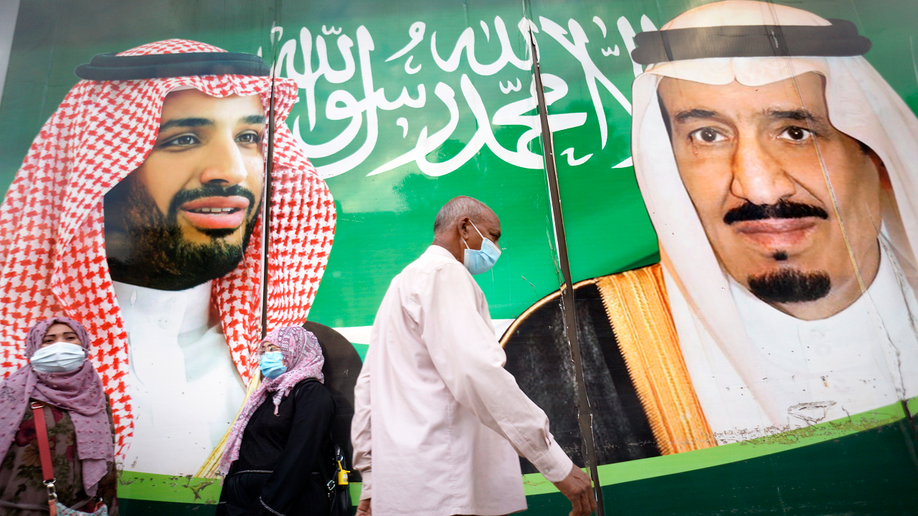
nextImage 1 of 3A banner shows Saudi King Salman, right, and his Crown Prince Mohammed bin Salman, outside a mall in Jeddah, Saudi Arabia, on Feb. 5. (AP Photo)
“If Iran went nuclear tomorrow, the next day the Saudis would probably buy a nuclear weapon from Pakistan or ratchet up their own nuclear program,” said Jim Phillips, a senior research fellow for Middle Eastern affairs at The Heritage Foundation. “They have a long way to go, but they reportedly financed the Pakistani program, and there might be some quid pro quo involved in that.”
Saudi Arabia strongly opposed the original nuclear deal but recently has shown more willingness to engage Tehran on an agreement. Experts point to a number of factors that have drawn Riyadh to the negotiating table – chiefly economic and security concerns for the region.
“I think Saudi Arabia is being more diplomatic, but not really positive because it saw the deal went through in 2015 despite its objection and the objections of Israel,” Phillips argued. “So, I think it’s minimizing its negative reception.”
“It’s publicizing its negative views of a possible deal, but I believe it remains strongly opposed because of the impact of a possible deal on its national interests.”
A nuclear deal would likely see Iran resume its previous level of trade, which would provide a significant impact on the economic balance of the region. Todd Young recently wrote in a Fox News opinion piece that the windfall could total as much as $130.5 billion.
“The Houthis are certainly the number one concern for the Saudis right now,” McInnis said. “That’s the number one thing on the Saudi agenda: how to deal with the Houthis. They want resolution of the conflict.”
The Wall Street Journal reported earlier this year that Saudi crown prince Mohammad bin Salman refused a call from President Biden – which the White House denies – and Phillips argued this was likely in reaction to how Biden has handled the Houthis security concern. Biden removed the Houthis from a list of designated terrorist groups shortly after taking office but has considered adding them back to the list as a means of easing tensions with Riyadh.
But the greatest concern remains Iran’s ability to obtain nuclear weapons should it start to develop its capabilities. The JCPOA limited Iran’s nuclear capabilities for a period of 10 years on centrifuges and 15 years on the amount of enriched uranium it can possess.
Critics argue the 15-year window only delays Iran’s nuclear pathway rather than stops it, and it provides Iran with upfront, permanent benefits of cash that cause immediate concerns for the region. Supporters believe that gap will allow a new generation to take power and make new agreements, but it’s a gamble that some other countries – such as Israel and, until more recently, Saudi Arabia – do not support.
Saudi Arabia’s program remains far less developed compared to Iran’s, but it has some potential shortcuts: A “variety of sources” told BBC Newsnight in 2013 that Saudi Arabia had invested in Pakistan’s nuclear weapons project, largely to prepare for the possibility of Iran obtaining a bomb.
McInnis argues that is may still be the case: Pakistan would likely provide the “easiest” option for Saudi Arabia to arm itself, but he questions how effectively that method would work.
“I think the Iranians probably underestimate the risk of other regional states pursuing nuclear weapons if they do decide to go for a bomb,” McInnis said. “This is one of the reasons why we have to be extremely concerned about the Iranians pursuing a nuclear weapon, considering the possibility of a nuclear arms race in the region.”
“Obviously, with the long-standing connections with Pakistan on a variety of fronts, there is the concern that that would be the avenue by which Saudi Arabia could achieve a nuclear weapon quickly,” he added. “I think the Pakistan pathway is probably the easiest, but I think there are still a number of questions as to whether that would work.”
Jerusalem: Israel’s police said forces entered the compound after “rioters” hurled stones and fireworks, including down towards the Western Wall, the sacred Jewish site below Al-Aqsa.
Jerusalem: The Red Crescent said that most of those injured suffered “upper body injuries.” (File)
Fresh clashes between Palestinians and Israeli police at Jerusalem’s Al-Aqsa mosque compound injured 42 people on Friday, the Palestinian Red Crescent said, following weeks of violence at the flashpoint site.
Israel’s police said forces entered the compound after “rioters” threw stones and fireworks, including down towards the Western Wall, the sacred Jewish site below Al-Aqsa.
The statement said officers used “riot dispersal means” to contain the unrest. Witnesses and AFP reporters said police fired tear gas and rubber bullets.
Police said three people had been arrested, two for throwing stones and one for “inciting the mob”.
But tensions remain high at the site in the heart of Jerusalem’s old, walled city, part of Israeli-annexed east Jerusalem.
Over the past two weeks, nearly 300 Palestinians have been injured in clashes at the Al-Aqsa compound, Islam’s third-holiest site which is the most holy site for Jews, who call it the Temple Mount.
Israel’s incursions into the site during Ramadan have raised global concern, but the Jewish state has insisted it was compelled to act against operatives from the Islamist groups Hamas and Islamic Jihad who were seeking to spark widespread unrest across Jerusalem.
In an apparent attempt to ease tensions, Israel’s Foreign Minister Yair Lapid has stressed that the government was committed to the status quo at the compound, meaning an adherence to long-standing convention that only Muslims are allowed to pray there.
Jews are allowed to visit the Temple Mount.
Muslim leaders have, however, been angered by a recent uptick in such visits. Some voiced fears that Israel was seeking to divide the compound and create a space where Jews may worship. Lapid told journalists that no such plan exists.
The fresh unrest comes as the end of Ramadan early next week.
Violence in Israeli-annexed east Jerusalem has raised fears of another armed conflict similar to an 11-day war last year between Israel and the militant group Hamas, triggered by similar unrest at Al-Aqsa.
Recent weeks have seen isolated rocket fire from Gaza towards Israel and Israeli reprisals, but no casualties reported on either side.
The Al-Aqsa tensions have come against a backdrop of violence since March 22 in Israel and the occupied West Bank. Twelve Israelis, including an Arab-Israeli police officer, and two Ukrainians were killed in four separate attacks inside Israel. Two of the deadly attacks were carried out in the Tel Aviv area by Palestinians.
A total of 26 Palestinians and three Israeli Arabs have died during the same period, among them perpetrators of attacks and those killed by Israeli security forces in West Bank operations.
Iran Nuclear Talks: Negotiations to restore the nuclear deal resumed in late November. (File)
Vienna, Austria:
Iran’s new workshop at Natanz for making parts for centrifuges, machines that enrich uranium, has been set up in one of the halls of the underground Fuel Enrichment Plant there, U.N. nuclear watchdog chief Rafael Grossi said on Thursday.
The International Atomic Energy Agency informed its member states two weeks ago that the machines from a now-closed workshop at Karaj, which was hit by an apparent sabotage attack that Iran blames on Israel, had been moved to Natanz without specifying where exactly at the sprawling site.





 nextImage 1 of 3A banner shows Saudi King Salman, right, and his Crown Prince Mohammed bin Salman, outside a mall in Jeddah, Saudi Arabia, on Feb. 5. (AP Photo)
