Showing posts with label align. Show all posts

Friday, January 19, 2018

Saudis Align with Babylon the Great (Daniel 7)

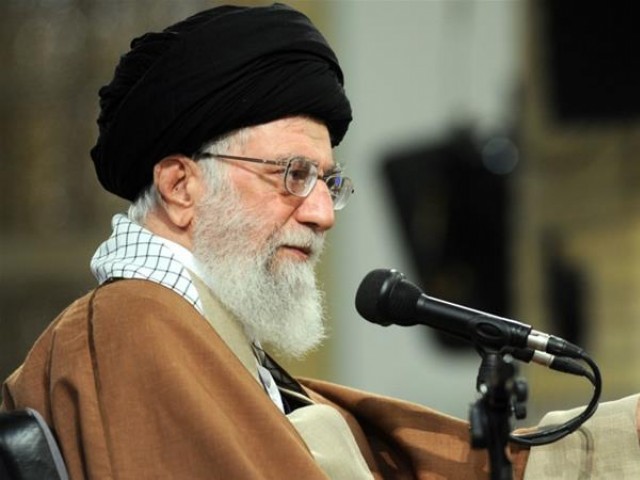
Supreme Leader of Iran Ayatollah Ali Khamenei. PHOTO: AFP
By News Desk
Supreme Leader of Iran Ayatollah Ali Khamenei has said Saudi Arabia’s alliance with the United States (US) and Israel is “certainly a betrayal” of the Muslims, Al Jazeera reports.
Iran’s supreme leader made the comment at a conference attended by parliamentary representatives from Islamic countries on Tuesday, in Tehran, according to a statement published on his official website.
Talking about the US recognition of Jerusalem as the capital of Israel, Khamenei said that the Holy City was “undoubtedly” the capital of Palestine, adding that Washington’s move “will not bear results”.
Khamenei also accused Saudi Arabia of helping the US and the “Zionists”.
“This is certainly a betrayal of the Islamic Ummah and the Muslim World. We are ready to act brotherly even with those among the Muslims who were once openly hostile to Iran,” he said.
“The world of Islam, with such a large population and plenty of facilities, can certainly create a great power within the world and become influential through unity.”
“The warmongering among the world of Islam must be stopped and we should not allow that a safe haven be created for the Zionist regime,” he added.
Saudis and Iran trade insults at conference on ‘positive agenda’
Regional rivals
Iran, a leading regional power, and Saudi Arabia, a key US ally, are dueling for influence in the Middle East, where they support opposing sides in Yemen, Syria, Iraq and Lebanon.
US President Donald Trump said, on a visit to Jerusalem last year, that a shared concern about Iran was driving many Arab states closer to Israel.
An Israeli cabinet minister said in November that Israel had covert contacts with Saudi Arabia amid common concerns over Iran in a bid to increase pressure on the Tehran government.
This article originally appeared onAl Jazeera

Tuesday, December 26, 2017

Saudi Nuclear Deal Will Lead to Catastrophe (Daniel 7)

 Financial Tribune
A lawmaker denounced the prospect of a US uranium enrichment deal with Saudi Arabia, predicting a "global catastrophe" should the oil kingdom mix nuclear technology with its takfiri ideology.
In a recent talk with ICANA, Heshmatollah Falahatpisheh, a member of Majlis National Security and Foreign Policy Commission, said, "Unfortunately, even human rights and international laws have not stopped the Saudi crimes in Yemen. Now, if Saudi Arabia is allowed the uranium technology, it would certainly use it in its military."
Takfiris are hardliners who accuse anyone, including Muslims, not following their extreme interpretation of Islam as infidels and apostates punishable by death.
Reuters has reported that US firms attracted by Saudi plans to build nuclear reactors are pushing Washington to restart talks with Riyadh on an agreement to help the kingdom develop atomic energy. It said the US may be open to the idea of allowing the oil kingdom to one day enrich uranium that can have military uses.
Saudi Arabia's influential Prince Turki al-Faisal said last week that his country should not forfeit its "sovereign" right to one day enrich uranium under its planned civilian nuclear program, especially as world powers have allowed Iran to do so.
Falahatpisheh refuted that argument, highlighting Saudi unaccountability regarding its devastating war in Yemen. He pointed to the Saudi regime's war crimes in Yemen and Bahrain, condemning the broad scale military force used by Al Saud to suppress the impoverished nation.
"Even the European Parliament has passed [a non-binding resolution] banning the exports of weapons to Saudi Arabia because it has breached international laws concerning wars," he said.
A US-backed Saudi-led coalition started a devastating war in Yemen in 2015, killing over 13,000 civilians, displacing three million people and pushing the war-ravaged nation to the brink of famine.
The Saudi-led airstrikes have hit schools, hospitals and markets, killing thousands of civilians and prompting rights groups to accuse the coalition of war crimes. Activists have called on western countries, including the United States and Britain, to cease their military support for the coalition.
Riyadh has also imposed a tight blockade on nearly all Yemeni air, land and sea ports, prompting human rights and charity groups to sound alarm over the deteriorating situation in the country as people, particularly children, are increasingly suffering from the lack of food and medical aid.
Huge Policy Shift
A uranium enrichment deal with Riyadh would be unprecedented, as Washington usually requires a country to sign a nuclear cooperation pact—known as a 123 agreement that forfeits steps in fuel production with potential bomb-making uses.
"Doing less than this would undermine US credibility and risk the increased spread of nuclear weapons capabilities to Saudi Arabia and the region," said David Albright, a former UN weapons inspector and president of the Washington-based Institute for Science and International Security.
It would be "a huge change of policy" for Washington to allow Saudi Arabia the right to enrich uranium, said Mark Fitzpatrick, executive director of the Americas office at the International Institute for Strategic Studies think tank.
Falahatpisheh, however, said the deal may go ahead as part of "US-Saudi shared targets" to counter what they portray as an increasingly powerful Iran that could be a threat for the region in the future.
Pointing to the Saudi excuse of a nuclear Iran allowed to enrich uranium, he said, "Iran has never flouted international law [for its nuclear program] and has cooperated with [relevant international bodies] through JCPOA."
JCPOA stands for the formal name of the nuclear accord, Joint Comprehensive Plan of Action, that was signed between Iran and world powers in 2015 to curb Iran's nuclear program—albeit allowing it to enrich uranium up to the refinement level of 3.67%—in exchange for lifting international sanctions.
Reactors need uranium enriched to around 5% purity but the same technology in this process can also be used to enrich the heavy metal to a higher, weapons-grade level.
Ironically, western countries imposed years of biting international sanctions on Iran because of the same technology that Washington is currently considering to sell to Riyadh, which is currently staging a heavy war on Yemen.
Iran, which has never launched a war on any other country in recent history, denies its nuclear program has had any military dimension.
Yukiya Amano, the head of the UN nuclear watchdog, has repeatedly verified that Iran is complying with its commitments under JCPOA, calling the verification measures in Iran "the most robust regime" currently in existence.

Saturday, December 23, 2017

Saudi Arabia Ready to go Nuclear (Daniel 7)

Saudi Arabia Will Go Nuclear to Counter Iran Threat, Wants to Enrich Uranium
By Callum Paton On 12/22/17 at 7:36 AM
As tensions between Saudi Arabia and its regional rival Iran escalated, the Gulf monarchy said it would reserve its right to enrich uranium, which can be used in nuclear weapons.
Prince Turki al-Faisal, Saudi Arabia’s former intelligence chief, told Reuters the country would not give up its “sovereign” right to a civilian nuclear program. He cited the deal Iran made in 2015 with the U.S. and other world powers, that granted Tehran a civilian program if it gave up its nuclear weapons ambitions, as justification for his stance.

In the coming weeks, Riyadh is due to have talks with the United States on nuclear cooperation, allowing U.S. firms to bid on a multi-billion-dollar contract to build the Gulf kingdom’s first two nuclear reactors.
Saudi Arabia has said it only wants the reactors for peaceful, civilian ends, but has remained elusive on the subject of whether or not it would enrich uranium to create nuclear fuel.
Faisal said that as Iran had specifically been allowed to enrich uranium, Saudi Arabia should be allowed to do the same, within the rules of the global nonproliferation treaty, "so the kingdom, from that point of view, will have the same right as the other members [of the nonproliferation treaty], including Iran."
Ongoing sectarian conflict through proxies between Shiite Iran and Sunni Saudi Arabia in the Middle East inflamed the region. In Iraq, Syria, Lebanon and Yemen, the two rival nations have found themselves on opposing sides of an internal conflict.
The United States said it believed Iran was responsible for a missile attack Tuesday on Riyadh, the capital of Saudi Arabia. Nikki Haley, the U.S. ambassador to the United Nations, said the attack on the Saudi capital bore “all the hallmarks of previous attacks using Iranian-provided weapons.”
Saudi Arabia’s Crown Prince Mohammed bin Salman Al Saud described Iran’s supply of rockets to Shiite Houthi rebels backed by Iran as “direct military aggression” that could be an act of war.
In October, President Donald Trump refused to certify the 2015 nuclear deal with Iran, calling the country a sponsor of international terror. Before he took office and since he arrived in the White House, Trump has been deeply critical of the deal.
Haley said the U.N. must work to counter the perceived threat from Iran, floating the possibility of further sanctions against Tehran.
"We must all act cooperatively to expose the crimes of the Tehran regime and do whatever is needed to make sure they get the message. If we do not, then Iran will bring the world deeper into a broadening regional conflict," she told the U.N.’s Security Council.

Tuesday, December 19, 2017

Building up the Saudi Nuclear Horn (Daniel 7)

Crown Prince of Saudi Arabia Mohammad bin Salman bin Abdulaziz Al Saud announced in 2015 a plan for the country's economic development until 2030, stipulating the cessation of oil dependence.
Saudi Arabia has begun exploring the country's uranium deposits within a program of developing alternative sources of energy, the Saudi al-Okaz newspaper reported Sunday, citing the head of the kingdom's geological administration, Zahir Nawab.
"King Abdullah University of Science and Technology together with Chinese scientists have begun the exploration and the valuation of uranium and thorium deposits in the country's northern region of Ha'il," the official said.
According to the official, the project is being carried out at the order of Crown Prince of Saudi Arabia Mohammad bin Salman bin Abdulaziz Al Saud, involving China's National Nuclear Corporation within an agreement signed earlier this March during the Saudi king's visit to the country.
The kingdom won't use the resources to fulfill its military aims, the official added.
The report comes after the Crown Prince announced back in 2015 a plan for the country's economic development until 2030, stipulating the cessation of oil dependence.

Saturday, December 16, 2017

The Saudi Nuclear Horn (Daniel 7)

Saudi Arabia’s new foreign policy doctrine
Al Arabiya
King Salman’s 2015 accession to the throne and the subsequent appointment of Mohammed bin Salman (MBS) as Crown Prince ushered in a period of unprecedented change in Saudi Arabia. This “tsunami” provoked polarized reactions, confounding many foreign observers while delighting, if not occasionally overwhelming, Saudis themselves.
The myriad challenges associated with restructuring the monarchy while simultaneously tackling extraordinary socioeconomic reforms and urgent foreign policy challenges have been accompanied by inevitable breakdowns in communication and occasional missteps in execution. This has disquieted friends and delighted foes and led many to assume the absence of a coherent plan built on sound strategic thinking. This is an entirely mistaken view.
In the foreign policy arena, a careful reading suggests that the new Saudi doctrine is based on three strategies: strengthening its military, reevaluating its alliances, and aggressively confronting Iranian expansionism.
For decades, Saudi Arabia relied on checkbook diplomacy, quiet mediation, secret agreements, and US guarantees to secure its foreign policy aims. Saudi leaders funneled billions in aid to friends, many of whom used that money to bankroll their own agendas (or line their own pockets), while delivering little in return.
Attempts to buy off enemies often failed or backfired. Neighbors cast aside secret agreements signed in good faith. And US guarantees became less reliable and less credible. Extraordinary geopolitical change accompanied these disappointments. The 2003 invasion of Iraq unleashed a wave of Iranian expansionism, and the chaos created by the 2011 Arab Spring accelerated it.
The Obama administration decided to withdraw US forces from Iraq, announced its pivot toward Asia, and failed to fulfill its “redline” pledge after Bashar al-Assad unleashed chemical weapons on his own people. Unchallenged by American might, Iran tightened its grip on Lebanon, took control of Iraq and Syria, infiltrated Yemen, backed insurgents in Bahrain, and trained and supplied terror cells in Kuwait and Saudi Arabia.
In light of this new reality, the King and the Crown Prince concluded that Saudi Arabia could no longer rely on outdated policies if they wished to successfully confront these rapidly growing threats.
Strengthening the military
With the era of pax Americana in the Middle East seemingly ending, Saudi rulers have moved to rapidly build up a military that does not overly rely on the United States and is capable of meeting both Iranian and jihadist threats.
With some exceptions, today’s Saudi military is, in many ways, a holdover from the parade ground army of the 1960s. In the aftermath of midcentury Egyptian and Iraqi military coup d’états, the Kingdom designed its military to be a predominantly symbolic force, incapable of mounting a takeover of the government.
The United States, in turn, guaranteed the defense of the Saudi state in exchange for secure oil supplies and massive arms purchases. The armed forces were also meant to inspire loyalty by providing employment for ordinary citizens and senior positions for society’s grandees. Sadly, this patronage system also provided opportunities for tremendous corruption.
In Qatar, the Saudis can afford to wait, as the boycott imposes far less of an economic cost on the Kingdom and its allies than it does on Doha
Ali Shihabi
The Kingdom learned hard lessons during its first conflict with the Houthis in 2009–2010, where the Saudi military performed poorly. In response to this, Riyadh has sought to strengthen its armed forces by urgently enhancing its special forces capabilities, upgrading training across the board, localizing military production, reforming the military bureaucracy, and seeking out new sources of arms. Improved relations with Russia, for example, have allowed Saudi Arabia to diversify its arms and equipment purchases and has also augmented the Kingdom’s influence over global oil prices.
Despite these efforts, the Houthi takeover of Sana’a did not provide the Kingdom with adequate time to complete the restructuring of its armed forces.
However, real combat experience gained from the Yemeni conflict has provided the Saudi military, as war inevitably does, with invaluable data on its performance. The sustained air campaign, for example, exposed deficiencies in the Kingdom’s precision bombing capabilities, which it is now working to improve. Changes such as this will inevitably take time to fully implement.
Reevaluating alliances
The second component of the strategy is to reevaluate existing bilateral and multilateral relationships by ensuring that the Kingdom’s “allies” hold up their end of the agreement.
To do this, the Kingdom began by focusing on the Gulf Cooperation Council (GCC), its core regional security and economic alliance. Within the GCC, the recently improved Saudi-UAE cooperative security effort has acted as a force multiplier, augmenting the bloc’s ability to take collective action, as it did in Yemen.
It has also empowered the organization to address internal threats, most notably by imposing a boycott to end two decades of Qatari support for the Muslim Brotherhood, political dissidents, subversive media campaigns against neighboring states, and attempts to co-opt (by buying off) Saudi, UAE, and Bahraini military, government, and religious officials, all of which the Kingdom and its allies saw as undermining their security and stability.
Outside the GCC, the Kingdom has moved to rebalance its relationships with Egypt and Lebanon. For decades, Saudi Arabia’s influence over these states was built on checkbook diplomacy, with an increasingly insignificant return on investment.
Following the 2013 coup against the Morsi Muslim Brotherhood regime, Riyadh poured over $25 billion into Egypt. After Egypt had received this bailout, a 2014 leaked audio exchange caught Egyptian leaders speaking derisively of Saudi aid and Saudis as “having money like rice.” In addition, many of Cairo’s policies seemed designed to demonstrate Egypt’s independence from, rather than deliver political support to, its ally.
Cairo’s vote in favor of a 2016 Russian-backed Security Council resolution on Syria that was strongly opposed by the Kingdom is one such example. Because of these actions, Saudi Arabia temporarily suspended an agreement to supply Cairo with over seven hundred thousand tons of refined petroleum products per month in late 2016. Rice, it seems, would no longer be plentiful.
The same logic seems to have influenced the Kingdom’s recent approach toward Lebanon. In 2013, the late King Abdullah earmarked $3 billion to support the Lebanese Armed Forces. After many in Riyadh objected to the funding of an army they saw as heavily infiltrated by Hezbollah in a state “captured” by Hezbollah, the new Saudi leadership rescinded this offer in 2016.
More recently, Lebanese leaders’ aggressive lobbying of the US Congress to “soften” sanctions against Hezbollah vindicated those who increasingly believed that when forced to choose between Saudi dollar diplomacy and an Iran that assassinates those who cross them, as it did with Prime Minister Rafiq Hariri in 2005, Beirut would take Saudi money but prioritize appeasing Tehran.
The younger Hariri’s shocking resignation in Riyadh suggests that Saudi Arabia is signaling to Lebanon’s political class (and possibly the state) that they risk their political and financial relationships with the Kingdom if their actions (or inaction) continue to provide political cover and international legitimacy for Hezbollah.
Aggressively confronting Iranian expansionism
As Iran’s shadow grew and America’s footprint shrank, Saudi leaders concluded that the Kingdom would need to shift from a reactive to a proactive foreign policy posture when it came to dealing with the Islamic Republic.
Following the 2011 Bahraini uprising and the 2014 Houthi seizure of Sana’a, aggressively confronting Iranian expansionism became a strategic imperative in the Kingdom’s “near abroad.” But whereas Iran could rely on exploiting sectarian fault lines in order to create deadly proxies, the Kingdom had no such capabilities (its one attempt to emulate the Iranian model in Syria was an unmitigated failure). Saudi Arabia therefore needed to turn to multilateral military force to complement its soft power capabilities.
While a Saudi military intervention successfully helped deter an insurgency in Bahrain, Yemen’s mountainous terrain and size, and the considerable capabilities of its Iran-allied Houthi militias, posed a far more dangerous threat. Although it has been widely argued that Saudi Arabia’s foray into Yemen was based on the erroneous belief that the Houthis would quickly cave under a lightning “shock and awe” air campaign, this assertion is incorrect.
On the contrary, the Saudis recognized that the Houthis had acquitted themselves well during their first war against them without the full support of Hezbollah and Iran. In the years hence, Iran dramatically increased arms shipments to, and Hezbollah accelerated its training of, Houthi forces. In addition, the Kingdom understood that fighting a guerrilla force swimming, to paraphrase Chairman Mao, among the civilian population would be a long, arduous, and messy process.
With the Islamic Revolutionary Guard Corps (IRGC) and Hezbollah working hard to upgrade Houthi capabilities, Riyadh concluded that war now was preferable to war later; even if the cost to Yemen (and Saudi Arabia) was high, it would be far higher if the Kingdom waited. Striking now would also clearly communicate to the Houthis and the world that the Kingdom would not tolerate the emergence of a new Hezbollah on its southern border with thousands of ballistic missiles aimed at Saudi cities.
In contextualizing the Saudi response, it is important to recall that the Kingdom reached this crisis point at a time when the regional credibility of the United States was at its nadir. In addition to the United States’ Asia pivot and failure to follow through on its “redline” pledge in Syria, the Obama administration sent clear signals that, post-JCPOA, the Kingdom would have to “carry its own water” and learn to “share the region” when it came to Iran.
While the Americans did ultimately provide refueling and limited targeting support to the Saudi air campaign, the Kingdom also secured the backing of six other nations, most importantly the UAE, to prevent the Iranians from succeeding in Sana’a. Outside the Arabian Peninsula, Riyadh has been strategic in choosing where and how to confront Iran. In Iraq, Saudi Arabia opted to push back against Iranian influence by engaging nationalist leaders like Muqtada al-Sadr and exploring opportunities to engage with the Abadi government by opening the Arar border crossing to pilgrims and commerce.
The Kingdom has also ended its support where the cost was no longer justified. For example, in Syria, Riyadh stopped sending weapons and supplies when it became clear that the fractious opposition could not unseat Assad and was becoming increasingly dominated by radical jihadists.
Conclusion
Admittedly, the Kingdom’s execution of all these plans could have been handled better. Riyadh did not clearly broadcast its intentions, provide sufficient context or background for its actions, or effectively communicate its aims. As a result, the Kingdom’s moves appeared sudden and haphazard, unnecessarily rattling friends and allies.
Also, the Kingdom could have done a better job anticipating some of the unintended consequences of its new policies. While these missteps did serious damage to Riyadh’s public relations image, this does not mean that Saudi Arabia lacks a well thought out strategy or that its strategy is an unsound one.
While critics have been unable to resist pronouncing any Saudi initiative that does not produce instantaneous success a disastrous failure, Saudi leaders are instead operating on a longer timeline and do not expect immediate results. In Qatar, the Saudis can afford to wait, as the boycott imposes far less of an economic cost on the Kingdom and its allies than it does on Doha.
In Lebanon, Riyadh can put Beirut’s valuable ties to Saudi Arabia, the UAE, and their allies at risk, gradually increasing the price Lebanon’s political class pays for providing political cover to Hezbollah. And in Yemen, the Kingdom can wait for the opposition to splinter, the recent collapse of the Houthi-Saleh alliance being one such fracture. Riyadh is also learning from its mistakes. It has taken steps to be more proactive in tackling Yemen’s humanitarian crisis and has improved coordination with some international relief agencies.
For the Saudi leadership, the bottom line was that the cumulative effect of Iranian expansion and US inaction demanded that the Kingdom simultaneously tackle multiple foreign policy challenges quickly and decisively. This approach led to some tactical mistakes that disquieted and confused friends and provided fuel to critics.
But for the Kingdom’s leadership, these missteps are a small price to pay if one believes, as Saudi leaders clearly do, that inaction would have put the country in the position of the proverbial frog sitting in a pot of tepid water that is slowly being brought to a boil.
This article was first published in Arabia Foundation.
_________________________
Ali Shihabi is the founder of the Arabia Foundation. A Saudi national, he graduated with a BA from Princeton University and an MBA from Harvard Business School. His twitter handle is @aliShihabi.
Sunday, December 3, 2017

Preparing the Saudi Nuclear Horn (Daniel 7:7)

U S firms attracted by Saudi Arabia’s plans to build nuclear reactors are pushing Washington to restart talks with Riyadh on an agreement to help the kingdom develop atomic energy, three industry sources said.
One of the sources also said Riyadh had told Washington it does not want to forfeit the possibility of one day enriching uranium —a process that can have military uses— though this is a standard condition of US civil nuclear cooperation pacts, Reuters reported.
“They want to secure enrichment if down the line they want to do it,” the source, who is in contact with Saudi and US officials, said before US Energy Secretary Rick Perry holds talks in Riyadh early next week.
Another of the industry sources said Saudi Arabia and the United States had already held initial talks about a nuclear cooperation pact.
US officials and Saudi officials responsible for nuclear energy issues declined to comment for this article. The sources did not identify the US firms involved in the lobbying.
Under Article 123 of the US Atomic Energy Act, a peaceful cooperation agreement is required for the transfer of nuclear materials, technology and equipment.
In previous talks, Saudi Arabia has refused to sign up to any agreement with the United States that would deprive the kingdom of the possibility of one day enriching uranium.
Saudi Arabia, the world’s top oil producer, says it wants nuclear power solely for peaceful uses —to produce electricity at home so that it can export more crude. It has not yet acquired nuclear power or enrichment technology.
Riyadh sent a request for information to nuclear reactor suppliers in October in a first step towards opening a multi-billion-dollar tender for two nuclear power reactors, and plans to award the first construction contract in 2018.
Reuters has reported that Westinghouse is in talks with other US-based companies to form a consortium for the bid. A downturn in the US nuclear industry makes business abroad increasingly valuable for American firms.
Reactors need uranium enriched to around 5% purity but the same technology in this process can also be used to enrich the heavy metal to a higher, weapons-grade level. This has been at the heart of Western and regional concerns over the nuclear work of Iran, which has mastered the uranium enrichment cycle.
The US claims Tehran has a covert agenda to develop atomic weapons under the guise of a civilian nuclear program. Iran has denied its nuclear program has any military dimension.
Industry sources and analysts say the main reason that Saudi Arabia, which has waged a bloody war against impoverished Yemen since 2015, wants to leave the door open to enrichment in the future may be political —to ensure the kingdom has the same possibility of enriching uranium as Iran.
Under a nuclear deal Iran signed in 2015 with world powers —but which US President Donald Trump has said he might pull the United States out of— Tehran can enrich uranium to around the level needed for commercial power-generation.
Potential Problem for Washington
Saudi Arabia’s position poses a potential problem for the United States, which has strengthened ties with the kingdom under Trump.
Washington usually requires a country to sign a nuclear cooperation pact —known as a 123 agreement— that forfeits steps in fuel production with potential bomb-making uses.
“Doing less than this would undermine US credibility and risk the increased spread of nuclear weapons capabilities to Saudi Arabia and the region,” said David Albright, a former UN weapons inspector and president of the Washington-based Institute for Science and International Security (ISIS).
It would be “a huge change of policy” for Washington to allow Saudi Arabia the right to enrich uranium, said Mark Fitzpatrick, executive director of the Americas office at the International Institute for Strategic Studies think tank.
“Applying the ‘golden standard’ of not allowing enrichment or preprocessing (of spent fuel) has held up a 123 agreement with Jordan for many years, and has been a key issue in US nuclear cooperation with South Korea,” said Fitzpatrick, a nuclear policy expert.
“Perhaps Saudi Arabia is testing the Trump administration and seeing if the administration would be amenable to fewer restrictions in a 123 agreement,” the ISIS’s Albright said.

Saturday, November 25, 2017

The Saudis Join the Alliance (Daniel 8:4)

What's shaping the Israel-Saudi 'alliance'
By Jonathan Marcus
Defence and diplomatic correspondent
To all intents and purposes, Saudi Arabia and Israel are de facto allies in the struggle against Iran's rising influence in the region. It's a developing, but highly sensitive relationship, but every so often there is a hint of what may be going on beneath the surface.
Last week Israel's Chief of Staff, General Gadi Eisenkot, said in an interview with UK-based Saudi newspaper Elaph, that Israel was ready to exchange intelligence with the Saudis in order to confront Iran.
"There are shared interests and as far as the Iranian axis is concerned we are in full accord with the Saudis," he said.
A few days later, speaking after a conference in Paris, a former Saudi justice minister, Dr Muhammad bin Abdul Karim Issa - a close associate of the Saudi Crown Prince Mohammed bin Salman - told the Israeli newspaper Maariv that "no act of violence or terror that tries to justify itself by invoking the religion of Islam is justified anywhere, including in Israel".
This was rare public criticism from inside the Arab world of attacks against Israelis.
Israeli Prime Minister Benjamin Netanyahu says there has been a shift in Arab-Israel relations
And just the other day a former senior Israeli military figure speaking in London told of two recent meetings with senior Saudi princes, both of whom said to him words to the effect that, "you are not our enemy any more".
Such signals are not sent by accident. They are carefully co-ordinated and intended to warn Iran of the developing relationship as well as to prepare Saudi society given the likelihood that such ties may become ever more apparent.
The Israelis - given the nature of their political culture - tend to speak rather more openly about the relationship than do the Saudis. We know little about its practical realities or its strategic content. But it is real and it is developing.
Threat from Iran
This is at one level "a coalition of circumstance". The destruction of Saddam Hussein's regime in Iraq in 2003 by a US-led coalition removed a Sunni Arab strategic counterweight to Shia Iran.
The resulting Shia-dominated political leadership in the new Iraq has close ties to Tehran. It is no accident that Iraqi Shia militias have been active in the fighting in Syria supporting the government of Bashar al-Assad.
Will Saudi Arabia go to war with Iran?
Iran's decision to back President Assad in the Syrian civil war, along with Russian air power and equipment, helped turn the tide in his favour. It opens up the possibility of an Iranian corridor stretching all the way from Tehran to the Mediterranean - something that many Sunnis see as a foreign, Persian intrusion into the heart of the Arab Middle East.
So the enmity between Iran and Saudi Arabia is both strategic and religious.
For the moment Iran and its allies and proxies, like the Shia militia group Hezbollah in Lebanon, appear to be winning. So a strengthening of the relationship between Israel and Saudi Arabia makes sense to both countries.
Both insist that Iran should never be allowed to become a nuclear weapons state. Both are uneasy about aspects of the international agreement limiting Iran's nuclear activities. And both see an increasingly well-trained and well-equipped Hezbollah in Lebanon as a force for instability in the region.
Trump factor
But there is something more going on here as well. It is not just the problem of a rising Iran. Other crucial factors need to be considered too, notably the impact of the new Trump administration in the United States and the broader trajectory of the Middle East in the wake of the Arab Spring and the horrific war in Syria.
At first sight neither Saudi Arabia nor Israel should have any complaints about the new administration in Washington.
Mr Trump in visits to both countries seems to have embraced their strategic outlook and he too is deeply sceptical about the nuclear agreement with Iran.
Donald Trump has squarely backed Saudi Arabia's position on Iran
He is lavishing Washington's allies in the Gulf with new arms sales of ever more sophisticated weaponry.
But empathy is one thing, practical strategy quite another. However welcome many of the president's words may be in Israel and Saudi Arabia, both governments know that US policy seems adrift in the region.
The US and its allies have been out-gunned and out-played in Syria by Russia and Iran.
For all the talk the US has not yet put forward a credible and coherent policy for containing Iranian influence.
No wonder the Saudi Crown Prince has decided that his country must be more active in its own interests. There is a sense in which both Israel and Saudi Arabia are adjusting to a waning of US influence in the region and the return of old actors like Russia.
Israeli fears
And there is something more fundamental too. Prince Salman is embarking on a dual strategy of trying to confront Iranian influence while also re-shaping and modernising the kingdom.
The latter is in many ways a response to the upheavals of the Arab Spring and the threat of Islamist violence.
Prince Salman appears to have determined that the region must change if it is to have any future. And change begins at home. Reform may be as important as containing Iran.
Five things about Saudi Arabia's Crown Prince Mohammed bin Salman
A number of private discussions lead me to believe that this is something that Israel buys into too. They recognise that Prince Salman's activism comes with many risks.
But they have watched with horror from the sidelines of the war in Syria, not least at what some Israelis see as the "normalisation" of the use of chemical weapons; this prompting a very limited response from the wider international community with Moscow actually lending its protection at the UN Security Council to its Syrian ally.
Israelis see Syria as "a laboratory" of what could be the region's future. Hence their willingness to stress the positives in what Prince Salman is trying to do.
How far might this Israeli-Saudi dynamic go? Well that depends upon a lot of factors. Will Crown Prince Salman's bold attempt to change Saudi Arabia's course succeed? Might he over-reach in terms of Saudi Arabia's effort to excerpt regional influence?
Israel is concerned about Iran deepening its presence across the border in Syria
Fundamentally, if the Saudi-Israel relationship is to emerge blinking into the sunlight, there needs to be progress on the Palestinian front. The Saudis have long said this must come before they will openly recognise Israel.
Without the renewal of a meaningful peace process that actually promises Palestinian statehood the Saudi-Israel "alliance" must remain in the shadows.

Sunday, November 12, 2017

Iran Targets the Saudi Horn


US Air Force official: Missile targeting Saudis was Iranian
Associated PressDUBAI, United Arab Emirates
November 10, 2017 11:14 AM
Iran manufactured the ballistic missile fired by Yemen's Shiite rebels toward the Saudi capital and remnants of it bore "Iranian markings," the top U.S. Air Force official in the Mideast said Friday, backing the kingdom's earlier allegations.
The comments by Lt. Gen. Jeffrey L. Harrigian, who oversees the Air Force's Central Command in Qatar, further internationalizes the yearslong conflict in Yemen — the Arab world's poorest country.
Saudi Arabia long has accused Iran of giving weapons to the Shiite rebels known as Houthis and their allies, though Tehran has just as long denied supplying them. Riyadh quickly backed up Harrigian's allegations in a statement to The Associated Press.
"There have been Iranian markings on those missiles," Harrigian told journalists at a news conference in Dubai ahead of the Dubai Air Show. "To me, that connects the dots to Iran."
There was no immediate reaction from Tehran.
Saudi Arabia says it shot down the missile Nov. 4 near Riyadh's international airport, the deepest yet to reach into the kingdom. Saudi Arabia's Foreign Ministry later said investigators examining the remains of the rocket found evidence proving "the role of Iranian regime in manufacturing them." It did not elaborate, though it also mentioned it found similar evidence after a July 22 missile launch. French President Emmanuel Macron similarly this week described the missile as "obviously" Iranian.
Nikki Haley, the U.S. ambassador to the United Nations, said in a statement Tuesday that the July launch involved an Iranian Qiam-1, a liquid-fueled, short-range Scud missile variant. Iran used a Qiam-1 in combat for the first time in June when it targeted Islamic State group militants in Syria over twin militant attacks in Tehran.
Harrigian declined to offer any specifics on what type of missile U.S. officials believed it was, nor did he show any images of the debris. He also didn't explain how Iran evaded the blockade by the Saudi-led coalition, which intensified after the missile targeting Riyadh.
"How they got it there is probably something that will continue to be investigated over time," the lieutenant general said. "What has been demonstrated and shown based on the findings of that missile is that it had Iranian markings on it. That in itself provides evidence of where it came from."
The Houthis have described using Burkan-2 or "Volcano" Scud variants in their recent attacks, including the one Nov. 4. Those missiles are reminiscent of the Qiam, wrote Jeremy Binnie of Jane's Defense Weekly in a February analysis.
"The Burkan-2 is likely to heighten suspicions that Iran is helping Yemen's rebel forces to develop their ballistic missile capabilities," Binnie wrote.
Adding to that suspicion is the fact that Yemen's missile forces previously never had experience in disassembling and rebuilding the weapons, said Michael Knights, a fellow at The Washington Institute For Near East Policy who previously worked in Yemen.
It is "not a stretch to believe that Tehran is supporting the Houthi missile program with technical advice and specialized components," Knights wrote in an analysis Thursday. "After all, the Houthis have rapidly fielded three major new missile systems in less than two years while under wartime conditions and international blockade."
Saudi Arabia's Ministry of Culture and Information later contacted the AP and sent military briefing papers alleging Iran smuggled weapons into Yemen by boat and truck.
"The parts are later assembled under supervision of Iranian military experts, who also help the Houthi militia plan attacks targeting Saudi civilians," the ministry said in a statement to the AP. "Smuggled Iranian Qiam or Zelzal warheads are mounted onto Yemeni-made Burkan ballistic missiles."
The U.S. already is involved in the war in Yemen and has launched drone strikes targeting the local branch of al-Qaida, though it stopped offering targeting information under the Obama administration over concerns about civilian casualties. That prohibition continues today, though the Air Force continues to refuel warplanes in the Yemen theater and offers support in managing airspace over the country, Harrigian said. The Saudi-led coalition also uses American-made bombs and ordinance in its attacks.
The U.S. has come under attack once amid the Yemen war. In October 2016, the U.S. Navy said the USS Mason came under fire from two missiles launched out of Yemen. Neither reached the warship, though the U.S. retaliated with a Tomahawk cruise missile strikes on three coastal radar sites in Houthi-controlled territory on Yemen's Red Sea coast.
At the time, authorities said the missiles used in that attack were Silkworm missile variants, a type of coastal defense cruise missile that Iran has been known to use.
When the Houthis seized Sanaa in September 2014, their allied fighters also took control of the country's ballistic missile stockpile. The Yemeni military was widely believed to possess around 300 Scud missiles at the time, though exact figures remain unknown.
The Saudi-led coalition entered the war in March 2015 on the side of Yemen's internationally recognized government. It then attacked Sanaa's ballistic missile base in April 2015, touching off massive explosions that killed several dozen people. Saudi Arabia implied at the time that the Scud arsenal in Yemen had been seriously degraded, if not entirely destroyed, as a result of the airstrikes.
But by June 2015, the rebels fired their first ballistic missile into Saudi Arabia near the southwestern city of Khamis Mushait. In the time since, Yemen's rebels have fired over 70 ballistic missiles into Saudi Arabia, according to the Center for Strategic and International Studies' missile defense project.
For its part, Iran long has denied offering any arms to Yemen, though it has backed the Houthis and highlighted the high civilian casualties from the Saudi-led coalition's campaign of airstrikes.
But others in Iran have been coy about the ballistic missiles in Yemen. Mehdi Taeb, an influential hard-line cleric who is a brother to the intelligence chief of the hard-line Revolutionary Guard, said in April that Iran tried three times to send missiles to Yemen. The Guard, answerable only to Supreme Leader Ayatollah Ali Khamenei, oversees Iran's missile program.
The cleric said ultimately the administration of Iranian President Hassan Rouhani ordered the transfers stopped over negotiations on the nuclear deal with world powers, without offering a specific time for the attempted shipments.
"They said come back because the Americans said, 'If you send missiles to Yemen, we will end the negotiations,'" Taeb said.

Friday, November 3, 2017

The Saudis Join the American Horn (Daniel 7)

By Rufiz Hafizoglu - Trend:
Radical Islamic currents in the Arab world mainly appeared after the Islamic revolution in Iran as a defense mechanism against the spread of the revolution.
In late October, Crown Prince of Saudi Arabia Mohammad bin Salman stressed that an end will be put to all radical currents soon and Saudi Arabia will return to moderate Islam.
Following the Saudi prince’s statement, a number of Arab media outlets wrote that women will be allowed not to wear a headdress in the new city of Neom, envisaged in the Saudi Vision 2030. However, the Saudi authorities neither confirmed nor denied this information.
Turkey perceived the Saudi prince’s statement about "moderate Islam" ambiguously. For example, Ravza Kan, member of the foreign policy commission of the Turkish parliament and the ruling Justice and Development Party, said that Islam does not need moderation.
"For the first time the term "moderate Islam" was used by leader of the Gulen movement (FETO), Fethullah Gulen," she said.
The "moderate Islam" project is mainly directed against Iran and no matter how the Saudi prince tried to introduce the concept, there are many obstacles to its implementation.
First, the use of the term "moderate Islam" testifies to Saudi Arabia’s recognition of the fact that it was an adherent of "radical Islam".
Secondly, Islamic currents and teachings which are beyond Salafism are considered in Saudi Arabia beyond Islam.
Thirdly, how will the relations between Saudi Arabia and Shia Iran develop after "moderate Islam" as according to Salafi teachings, Shia Islam is considered to be beyond Islam?
Moreover, if Saudi Arabia with "moderate Islam" is open to all religions of the world, then what will be the further status of Mecca and Medina cities, to which only Muslims are allowed?
"Moderate Islam" in Saudi Arabia also means the beginning of a revival of Arab nationalism.
Meanwhile, in August 2017, Iraqi Shiite leader Muqtada al-Sadr visited Saudi Arabia. During the visit, al-Sadr met with the Saudi prince. Although al-Sadr’s visit to Saudi Arabia was not greatly covered by media, the visit was important, given a number of anti-Iranian statements made by al-Sadr.
For example, al-Sadr always urged the Iranian authorities not to interfere in Iraq’s internal affairs.
Despite Iran is also an ideological center for Shia Arabs, there is a number of disagreements between Arab Shia Muslims and Iranian Shia Muslims. These differences are mainly related to ethnicity.
Undoubtedly, if Saudi Arabia returns to "moderate Islam", this will lead to an ideological split among the Salafis and will give an impetus to new growth of radicalism.
--
Rufiz Hafizoglu is the head of Trend Agency’s Arabic news service, follow him on Twitter: @rhafizoglu

Wednesday, November 1, 2017

The Saudi Nuclear Horn Expands (Daniel 8)

img_0764
Why Saudi Arabia is doubling down on its nuclear program
Tom Rogan
Oct 30, 2017, 3:53 PM
Counterbalancing Iran, Saudi Arabia is doubling down on its nuclear program.
That's my analysis of the Saudi statement Monday that it will commence uranium extraction efforts towards nuclear "self-sufficiency." While it's not clear if Saudi Arabia intends to enrich any uranium, its statement is notable nevertheless. For a start, recognizing U.S. concerns in relation to nuclear proliferation, Saudi Arabia has traditionally been hesitant in its nuclear development strategy.
What has changed? Iran's nuclear program.
Under the direction of Crown Prince Mohammed bin Salman, Saudi Arabia has adopted an increasingly aggressive strategy toward Iran. While this dynamic is most evident in the Saudi intervention to counter Iranian influence in Yemen, it follows that bin-Salman would want to ensure parity with Iran in every possible sector, including nuclear.
Still, Saudi Arabia's nuclear strategy is also focused on domestic interests.
First, by diversifying its energy sector away from oil, Saudi Arabia ensures its long term energy security. Second, Saudi Arabia signals to its population and the world that big changes are coming.
That latter point is crucial.
After all, since its inception, the House of Saud has governed in a remarkably sustaining fashion. At home, in return for their recognition of the royal family, Wahhabi clerics have been granted supreme social and cultural power. And abroad, since the end of World War II, Saudi Arabia has sold oil in return for American guarantees of security.
Now, however, the crown prince is determined to alter the status quo by moving towards a westernized model of greater individual freedom and economic diversification. As he undertakes these reforms, bin Salman seems to believe his regime's security requires an independent nuclear program. And while the Saudis are unlikely to weaponize their nuclear program unless and until they view Iran as committed to that same course, the kingdom has an ace card up its sleeve: Pakistan.
Having supported Pakistan with tens of billions of dollars over the decades, the Saudis are convinced that the Pakistani government would, on request, transfer nuclear weapons technology to Riyadh. That gives bin Salman confidence that he has time on his side to first develop a purely peaceful nuclear program.
Ultimately, this development is just another reminder as to why the U.S. has an indispensable role in the Middle East. Absent the influencing mix of our deterrent and diplomatic power, the great game of Iranian vs. Saudi sectarian power politics escalates unhindered. And if that game ever goes nuclear, it will be too late for all of us.

Thursday, October 26, 2017

American and Saudi Horns Stand Together (Daniel 7:7)

Saudi Arabia's Foreign Minister Adel Al-Jubeir affirmed that the Kingdom supports the position of US President Donald Trump on Iran, saying that the nuclear agreement contains several shortcomings.
This came during his participation today in a panel discussion organised by the British Royal Institute of International Affairs (Chatham House) on "the future turbulence in the world."
In his speech during the conference, he said that Tehran's policy of supporting terrorism is not acceptable at all, and its consequences will be dire. The new sanctions would be welcome, he said, stressing that the international community must support these sanctions in order to send a strong message to Iran that its conduct and its shameful activities have consequences.
Regarding Iraq, the foreign minister said that the relations between the Kingdom and Iraq are historic and the two countries have social, economic and geographical ties. He said that the establishment of the Saudi-Iraqi Coordination Council will contribute to enhancing bilateral relations and supporting the security and stability of Iraq and the region.
He added that the interest of the Kingdom in Iraq is a reflection of its desire to restore Iraq's advancement away from ethnic and sectarian conflicts, for a unified, stable and secure Iraq, contrary to what Iran seeks to try to control Iraq, as an extension of its expansion plans.
Asked about the latest developments in the Qatar crisis and the lack of commitment of Doha to implement the demands of countries calling for the fight against terrorism, Adel Al-Jubeir said the matter is up to Qatar. We reject terrorism and extremism and harboring the wanted. We refuse to publish discourses of incitement and hatred and interfere in the affairs of other countries. We do not accept that suicide bombings are justified in the media by extremist religious figures hosted by Qatar, he said.
He added, "Qatar's boycott resulted in the signing of a memorandum of understanding with the United States of America to combat the financing of terrorism, and the Qatari authorities allowed officials of the US Treasury Department to be in Qatari banks, in addition to Qatar's amendments to the regulations on combating terrorism, pointing out that these steps were rejected by the Qatari authorities before the boycott.

Saturday, October 7, 2017

The Saudi Nuclear Horn (Daniel 7)

Image result for saudi nuclear weaponsRussia, Saudi Arabia may develop nuclear cooperation

TASS

Russian Energy Minister Alexander Novak and Khalid A. Al-Falih, Minister of Energy, Industry and Mineral Resources of Saudi Arabia
MOSCOW, October 5. /TASS/. Russia has certain potential for cooperation in nuclear power with Saudi Arabia, which plans for boosting this energy sector, Russia’s Energy Minister Aleksandr Novak who co-chairs the Russian-Saudi inter-governmental commission told the Russian-Saudi investment forum on Thursday.
"We have a vast potential for developing cooperation in nuclear power. Saudi Arabia plans to launch a major nuclear power program," he said. "Nuclear power may become one of the basic sources and an extra catalyst for the development of various industries and innovation technologies in Saudi Arabia. Cooperation in that sphere would be a logical confirmation and prolongation of strategic cooperation between our countries."
Rosatom sent proposals to Saudi Arabia
Russian state nuclear corporation Rosatom has sent its proposals to the Saudi party for the construction of a nuclear power plant in Saudi Arabia, head of Rosatom Alexei Likhachev told TASS.
"Of course, we have sent it," he said, when answering the relevant question.
"I hope that we will reach an agreement on cooperation in peaceful atom and other areas, such as mobile sources of nuclear energy, small and medium-sized power sources, scientific research," he noted.
"Saudi Arabia has got down to creating its own nuclear power industry. The first step has been taken - a request was sent for a parade of vendors prepared to build a major nuclear power plant," he said.
Likhachyov said Rosatom hoped for cooperation with Saudi Arabia in building nuclear power plants and in creating mobile power sources.
"I do hope that we will achieve an agreement on interaction in civil nuclear power and along other lines, such as mobile nuclear power sources, small and medium capacity power plants and research," he said.
In the summer of 2015 Russia and Saudi Arabia concluded an inter-government agreement on cooperation in civil nuclear power. Saudi Arabia’s government approved that treaty.
As he touched upon the new-comers to the nuclear power industry Likhachyov recalled Egypt and Turkey, where the first nuclear power plants would begin to be built soon, and also China and India, whose governments had already coordinated the sites for building their second NPPs.

Monday, August 10, 2015

More Democrats Align Against Iran Deal

image
3 House Democrats Say They Will Oppose Iran Deal

By Jason Devaney
Tuesday, 04 Aug 2015 20:48 PM

Three Democrats in the House said Tuesday they are against the nuclear agreement made with Iran and will work to have it shot down when the chamber votes on it next month.

Reps. Steve Israel, D-N.Y., an assistant Democratic Whip; Nita Lowey, D-N.Y., the ranking Democrat on the House Appropriations Committee; and Ted Deutch, D-Fla., the ranking Democrat on the Middle East Subcommittee of the House Foreign Affairs Committee, are opposed to the deal struck last month between Iran and the group of nations called the P5+1, which includes the United States.

Brian Shankman of the American Israel Public Asffairs Committee announced the opposition in an email to supporters.

“I’m writing with extremely good news, as three prominent members of Congress have just announced that they intend to vote in opposition to the deal with Iran,” Shankman wrote.

All three lawmakers said they have concerns with the deal over security issues.

“I’m going to vote against the Iran deal,” Israel told Newsday.

“I tried very hard to get to yes. But at the end of the day, despite some positive elements in the deal, the totality compelled me to oppose it.”

Lowey, who has served in the House since 1989, said national security is at risk under the terms of the Iran deal.

“Preventing Iran from developing a nuclear weapon is an essential national security imperative,” Lowey said in a statement. “Since the nuclear agreement was reached between Iran and the P5+1 countries, I have reviewed its details and consulted with officials in the Obama Administration, regional experts, foreign leaders, Congressional colleagues, and my constituents.

In my judgment, sufficient safeguards are not in place to address the risks associated with the agreement.”


In an op-ed for the Fort Lauderdale Sun Sentinel, Deutch argued the deal could lead to increased terrorism at the hands of Hamas and Hezbollah.
Too many issues I have long raised as essential to any nuclear deal with Iran are not adequately addressed in this agreement,” Deutch wrote. “I will vote against it when Congress reconvenes in September.

“There are different predictions about what will happen if Congress rejects this deal. But the consequences of approving it aren’t up for debate. Opening Iran up to foreign investment, increasing its oil exports, and unfreezing over $100 billion in assets means more money for Hamas for building terror tunnels in Gaza, more weapons for Hezbollah in Lebanon, more slaughter in Syria, and more violence worldwide.”

Israel, Lowey, and Deutch are all Jewish. Israeli Prime Minister Benjamin Netanyahu joins them in their opposition to the agreement with Iran.

“Israel is not bound by this deal with Iran, and Israel is not bound by this deal with Iran because Iran continues to seek our destruction,” Netanyahu said last month.

“We will always defend ourselves.”

A recent poll shows Americans seem to agree with the trio of Democrats opposed to the Iran deal, with 57 percent saying they are against it.

Friday, June 12, 2015

The Dangers of the Pakistani Horn (Dan 8:8)


‘Surgical strikes in Pakistan can escalate into war’

IANS | New Delhi Jun 11, 2015 05:04 PM IST

Amid voices in the government that the Indian Army’s precision strike against insurgents inside neighbouring Myanmar was a lesson to those who incite terror, former top army officials have said sending troops into Pakistan in hot pursuit of militants can escalate into war.

Former army chief Gen. (retd) V.P. Malik said the situation was different on the western border.

Talking to host Karan Thapar during a programme on India Today television channel, Gen. Malik said surgical strikes do not take place on the western border but there is artillery bombardment.

Another former army chief Gen. (retd) N.C. Vij, who was also present during the programme, said that while the army did a commendable job in its response to the militant attack, there were lessons to be learnt as far as the strike was concerned.

Answering a query, Gen. Malik said India cannot send troops into Pakistan as the issue will escalate.

“Moreover, one needs to bear in mind that Pakistan is an enemy nation whereas Myanmar is not. Sending troops there (Pakistan) will escalate the problem and blow into a full-fledged war. The manner of response is different when it comes to Pakistan,” he said.

Asked about Pakistan possessing nuclear weapons, Gen. Malik said “the nuclear state aspect is a little overblown”.

“First and foremost, Pakistan will not use its nuclear weapons as they would be the first to be affected by it as radiation does not remain limited. Nuclear weapons are meant to prevent wars and not win them.

“Pakistan is well aware of the consequences of using a nuclear weapon. Moreover, do you think they are going to target New Delhi? The diplomatic community of the entire world is in New Delhi and if they are targeted, you can well imagine what would happen to Pakistan,” Gen. Malik said.

He said if Pakistan’s nuclear weapons go into the wrong hands, it was the West that will be targeted.

He said there were three-four very significant points in the army operation along the Myanmar border.

Gen. Malik said there was very good coordination between the intelligence agencies, and the army was able to get actionable intelligence from all sources.

“Second, I would say very good decision-making. Operations of this nature on the border… slightly across the border would require political permission also so the whole decision making has gone (about) very fast and apparently there is no hesitation on the part of the political authority to give this permission.

“Third, I would say as far as the operation is concerned, the air force would be involved also, the helicopters would have been involved in this, so that is another good coordination point.”

Gen. Vij also said the army carried out a commendable job on the Myanmar border but it was caught completely off-guard by the militants during their strike on June 4.

“They were caught off-guard in areas extremely prone to attacks by militants. There was intelligence failure and they had let their guard down.

“The hot pursuit that was conducted along the border of Myanmar is no doubt a rendition of honour, but there are several lessons that need to be learnt as well,” Gen. Vij said.

About the role of the Myanmar government and the army, Gen. Vij said: “I believe the operation could not have been possible without the help and coordination of the Myanmar government and the army. Without informing them, things could have gone wrong.

“Miscommunication could have led to casualties on our side too,” he said.

He said the troops who conducted the operation were commandos specially trained for such tasks and having the latest equipment.

“Militants hiding along the Myanmar border is not a new problem. We have seen this happening since the past 20 years and the Indian Army has been involved in similar operations over there for long.”

Asked about statements that the operation along the Myanmar border was also a kind of message to Pakistan, he said one should think before issuing statements on army operations.

Tuesday, June 9, 2015

The Saudis Will Go Nuclear (Dan 7)


The Saudis are ready to go nuclear

By Con Coughlin
6:00AM BST 08 Jun 2015

The kingdom’s ambassador to London tells the Telegraph that ‘all options are on the table’ if talks fail to keep Iran in check

Since its creation 85 years ago, Saudi Arabia has acquired a reputation as a country that tries to avoid confrontation with its neighbours at all costs. During the long war between Iran and Iraq during the 1980s the Saudis desperately sought to preserve their neutrality, even if Riyadh’s sympathies lay with its fellow Sunni co-religionists in Iraq rather than the Shi’ite Muslim hardliners running Iran.
Similarly, Saudi Arabia’s involvement in the two Gulf wars against Saddam Hussein was kept to a minimum. Saudi warplanes made a modest contribution to the overall air campaign during the 1991 liberation of Kuwait, while Riyadh steadfastly refused to involve itself in the 2003 Iraq war. In other conflicts affecting the region, such as the Palestinian intifada, the Saudis have preferred to channel their immense oil wealth in support of Arab allies rather than become directly involved in the strife.
But then this year came Saudi Arabia’s dramatic military intervention in neighbouring Yemen. Saudi warplanes and troops are now involved in a bitter conflict with Iranian-backed rebels from the Houthi religious movement in Yemen. And Saudi Arabia has been confirmed as one of the region’s dominant military powers.

In the past two years, it has beaten Britain into fourth place in the world’s military spending league with a defence budget of around £37 billion (compared with the UK at around £34 billion). The military offensive in Yemen has seen Saudi Arabia deploy an estimated 150,000 troops – nearly twice the size of the British Army – while Saudi fighter jets, many of them British-made, have flown thousands of sorties.

Now the Saudis have raised the alarming prospect of the Middle East becoming embroiled in a nuclear arms race after the country’s blunt warning that “all options are on the table” if Iran fails to resolve the international stand-off over its nuclear programme.

Prince Mohammed bin Nawwaf bin Abdulaziz al-Saud, Saudi Arabia’s long-serving ambassador to London, says that for many years the kingdom upheld the policy established by the late King Fahd that Riyadh would not pursue a policy of developing nuclear weapons. “Then it became known that Iran was pursuing a policy that could be shifted to a weapons-of-mass-destruction programme,” Prince Mohammed explained in an exclusive interview with The Daily Telegraph. “This has changed the whole outlook in the region.”

Like many in the Arab world and beyond, the Saudis are hoping the current negotiations with Iran on the nuclear issue, being led by US President Barack Obama, will provide assurances that Tehran does not possess the means to build an atom bomb.

“We have always expressed our support for resolving the Iranian nuclear file in a diplomatic way and through negotiation,” said Prince Mohammed. “We commend the American president’s effort in this regard, provided that any deal reached is watertight and is not the kind of deal that offers Iran a licence to continue its destabilising foreign policies in the region. The proof is in the pudding.”
Negotiations between Iran and the P5+1 – the US, the UK, France, China and Russia (the five permanent members of the UN Security Council) and Germany – are due to be concluded by the end of this month. Negotiators are pressing Tehran to freeze key elements of its uranium-enrichment cycle – which can be used to produce nuclear warheads – in return for easing the sanctions that have crippled the Iranian economy.

Despite attempts lasting more than a decade to resolve the issue, Iran has yet to make any significant concessions on its nuclear programme. The New York Times reported last week that Tehran’s stockpile of nuclear fuel had increased by 20 per cent in the past 18 months. That would make a nonsense of the Obama administration’s contention that Iran had frozen its enrichment operations for the duration of the negotiations. Consequently, there are fears in Saudi Arabia and the other Gulf states that Mr Obama is more interested in reaching an accommodation with reformists in Iran than in standing by America’s traditional allies in the Arab world.

Prince Mohammed, who is a senior member of the Saudi ruling family, insists the negotiations must produce serious commitments from Iran not to produce nuclear weapons. “We hope we receive the assurances that guarantee Iran will not pursue this kind of weapon,” he said. “But if this does not happen, then all options will be on the table for Saudi Arabia.

Iran’s nuclear programme poses a direct threat to the entire region and constitutes a major source and incentive for nuclear proliferation across the Middle East, including Israel.”

Western intelligence agencies believe that the Saudi monarchy paid for up to 60 per cent of Pakistan’s nuclear programme, in return for the ability to buy warheads for itself at short notice. Any failure by Iran to provide the necessary safeguards by the end of this month could see Riyadh activate that deal, thereby enabling Saudi Arabia to become the Arab world’s first nuclear power. And if that were to happen, then many other regional powers, such as Egypt and Turkey, would also attempt to follow suit – a nuclear arms race in the world’s most unstable region.

Prince Mohammed’s comments should serve as a warning to Mr Obama as he briefs other G7 leaders on the Iran talks at this week’s summit in Germany.

From Saudi Arabia’s perspective, though, Prince Mohammed believes Riyadh has every right to be alarmed at the prospect of Iran acquiring nuclear weapons, particularly in the light of its involvement in supporting the Houthis to overthrow Yemen’s government. “The Houthi rebels, backed by Iran, set about taking over Sanaa and then attempting to takeover Aden,” he said. “The reason air strikes became necessary was to reverse that advance and keep the road open for a political solution.
“All the evidence supports the fact that Iran is using the Houthis as warring agents for them to transform Yemen into a springboard for the delusional hegemonic designs in the Arab world.”
He played down suggestions that, equipped with its new military might, his country had its own plans for regional domination. “Saudi Arabia does not have the same ambitions for the region as others do,” he said in a reference to Iran. “All we care for is the preservation of our stability and security, and that of the Arab and Muslim worlds.”

The ambassador also expressed his concern about suggestions that Britain was playing a less prominent role in world affairs. Last week Ashton Carter, the US defence secretary, warned against what he called Britain’s “disengagement” from world affairs in the wake of the recent defence cuts.
Prince Mohammed warned that this could have negative repercussions, particularly in the Middle East. “The perception that Britain is withdrawing from the international stage could have a negative impact,” he said. “Britain has played a historical role in the region due to its colonial past. It knows the Arab world very well and it can still have a pivotal positive role. To see a country like Britain no longer playing a central role in the region will have ramifications that are not positive.”

Sunday, June 7, 2015

Saudis And Pakistanis Shall Become Bitter Enemies (Dan 7)


‘No one is getting our nukes, not even Saudis’
June 06, 2015

WASHINGTON/ISLAMABAD/ NEW YORK: Foreign Secretary Aizaz Chaudhry on Thursday denied speculations that Pakistan could sell Saudi Arabia an “off-the-shelf” nuclear weapon.
After meetings at the White House, Pentagon and State Department, Chaudhry described the suggestions Pakistan could sell a weapon as “unfounded, baseless and untrue”.
“Pakistan’s nuclear programme has nothing to do with any other country,” he told reporters. “This is a deterrence that we developed in response to a threat perception that we have from our east. That’s it.”

Pakistan is not talking to Saudi Arabia on nuclear issues, period,” Chaudhry insisted. The arsenal, believed to be in excess of 100 weapons, is focused only on Pakistan’s threat perception from “the East” Chaudhry said, a clear reference to long-standing rival and fellow nuclear power India.
Chaudhry said his country has significantly cracked down in recent years on proliferation, improving its export controls and providing UN nuclear monitors with all necessary information. Pakistan also won’t allow any weapons to reach terrorists, he said.

Pakistan detonated its first nuclear weapons in 1998, shortly after India did.

Chaudhry was in the US capital for a US-Pakistan strategic dialogue and meetings with several senior diplomatic and military officials. The State Department said on Wednesday the agenda included “international efforts to enhance nuclear security” as well as non-proliferation and export controls.

It described the discussions as “productive” and said the governments would work together to prevent the spread of weapons of mass destruction

Speaking to reporters, Chaudhry praised the progress thus far in the Iran nuclear talks. He told reporters that a diplomatic success would have significant economic benefits for Pakistan, allowing it to complete a long-sought gas pipeline project with its neighbour to the west.

Speaking at an event organised by the Atlantic Council, Chaudhry said Pakistan and the US have strong convergences in fighting terrorism and working together to stop extremism espoused by the ISIL and a stable Afghanistan was in the mutual interest of the two countries.

Referring to the ongoing military operations in the tribal areas against extremists, he said that the operation has entered a critical phase since last year. The Operation Zarb-e-Azb, he added, was aimed at clearing all territory in Pakistan from elements that aim to terrorize Pakistan or its neighbours.

“Our latest operations in North Waziristan and Khyber agencies have been a big success and nearly 90% of the areas have been cleared,” he said and added that the core of infamous TTP has been dismantled with its leadership on the run in Afghanistan.

Some remaining high-profile terrorists of al Qaeda were killed or captured in the last one year, the secretary said.

He described the US as a critical partner and said there were strong and enduring bases for this partnership to continue in the future.

The secretary thanked the US support to Pakistan in broad range of areas. “For many years, the US Congress has been supportive of building Pakistan’s capacity and helping us overcome challenges,” he added.

“The US has helped add over 1,400 Megawatt to our electricity grid, the USAID is supporting one of the largest Fulbright scholarship programme for Pakistan, especially for women,” the secretary said.
He said the US assistance in building infrastructure in remote areas such as FATA would leave an enduring impact in stimulating economic development in an area that had been infested with extremist ideologies for decades.

He thanked the Congress and the Americans for the support being extended to Pakistan.

Meanwhile, US Undersecretary for Treasury Adam J Szubin praised steps taken by Pakistan to meet international financial standards to monitor and interdict suspicious transactions.

During a meeting with Chaudhry, Szubin lauded Pakistan’s efforts to combat terrorism in line with the priorities set out in the National Action Plan.

Chaudhry briefed Szubin on various legislative and administrative steps taken by the government in the domain of Anti Money Laundering and Countering Terrorist Financing.

Separately, Aizaz Chaudhry called on US Defence Undersecretary Christine Wormuth. During the meeting, both sides discussed a wide range of issues related to bilateral defence cooperation; Ambassador Jalil Abbas Jilani accompanied the secretary.

Later, Chaudhry flew to New York to take part in the event on his way back to Pakistan.

Chaudhry has expressed his satisfaction over the series of talks he had with American officials during a hectic three-day trip to Washington in the course of which a joint US-Pak statement elaborately acknowledged Pakistan’s nuclear safety and security efforts and export controls.

“I’m fully satisfied with the results of my visit … the joint statement acknowledges that Pakistan is a responsible nuclear weapon State,” he told US-based Pakistan reporters at the Pakistani Mission to the United Nations where he attended a Pakistan Peacekeepers Day function

He also said US officials expressed appreciation for Pakistan’s counterterrorism efforts and the nation’s sacrifices in the fight against terrorists.

To a question, Chaudhry said Pakistan deserves to be fully recognized as a nuclear state as it has made remarkable progress in making peaceful use of the technology and, as endorsed internationally, the country has also ensured safety of its assets.

Saturday, May 30, 2015

The Nuclear House of Saud (Dan 7:7)


Nuclear Saudi Arabia: Rising ambitions of the House of Saud

Catherine Shakdam is a political analyst, writer and commentator for the Middle East with a special focus on radical movements and Yemen.

Get short URL Published time: May 29, 2015 10:51

Saudi Arabia’s seemingly ever-expanding ambitions threaten now to draw the region and the world
closer to the edge of a dangerous precipice as it seeks to buy out Pakistan’s nuclear power.

Just as Iran and the P5+1 are set to finalize a tentative nuclear deal by June’s end, offering the world a much-needed respite from talks of war and aggravated political tensions, Saudi Arabia is stretching its nuclear ambitions.

The most violent, reactionary and arguably most oppressive regime, in not just the region but the world, is now has ambitions to rise to a nuclear power. It is actually much worse than that – the very state which interpretation of Islam, Wahhabism, has inspired an entire generation of radical wannabe jihadists is vying for access to nuclear weapons.

If Iran’s alleged nuclear race was mainly the expression of western political posturing – even Mossad agreed that both Washington’s and Tel Aviv’s concerns have been largely over-hyped and over-played – Riyadh’s ambition is no laughing matter, especially when the Islamic State (IS, formerly ISIS) leadership boasted a similar desire.

Although the kingdom has yet to officially verbalize its nuclear intentions, enough breadcrumbs have been left in the media to spell the writing on the wall. In true PR fashion, Saudi Arabia has planted a sufficient amount of stories on its “covert” nuclear program and military aspirations in the press to prove how serious its officials are about conditioning public opinion and driving the narrative.

The main axis of Riyadh’s campaign has been and will be to justify going nuclear on the basis that Iran stands a regional threat – however unfounded and ludicrous this logic may be, wars have been fought over less sophisticated allegations. We’re still looking for those weapons of mass destruction.

Beyond this clever media stunt, one truth remains – unless stopped Saudi Arabia will become the next world nuclear power, joining Israel (believed to possess nukes) in this potentially-apocalyptic arm race.

Rumors of a forthcoming Saudi nuclear race first surfaced in November 2013 in a report by Mark Urban for the BBC. The article read, “Saudi Arabia has invested in Pakistani nuclear weapons projects, and believes it could obtain atomic bombs at will, a variety of sources have told BBC Newsnight.”

If developing a nuclear arsenal remains a complicated and time consuming endeavor, notwithstanding the technological prowess that entails, leeching on another power’s capability – Pakistan in this case – could prove as simple as wiring money to an offshore account. What Saudi Arabia lacks, it will buy. There is literally nothing Al-Saud’s petrodollars cannot acquire: from political support to moral blank checks, the kingdom moves immune to all criticism and legal hindrance, cloaked under America’s exceptionalism.

After Western powers took so much pain in demonizing Iran and its leadership, painting the Islamic Republic as a devilish warmonger, a destroyer of world which only seeks to indoctrinate the Middle East, how will Washington and Europe’s capitals react to a nuclear Riyadh? They simply won’t!

Unlike Iran, Saudi Arabia remains a useful and ever so rich western ally, and therefore it will be allowed the means of its ambitions. Whatever rumors and reports are circulating today have long been known to the intelligence community. The US actually anticipated Riyadh’s move long before Iran’s own program became such a contentious matter.

For almost a decade now, the Saudis have more and more openly staked their claim, pushing their pawns across the chess game without bothering to cover their tracks.

In 2007, the US mission in Riyadh noted they were being asked questions by Pakistani diplomats about US knowledge of “Saudi-Pakistani nuclear cooperation.”  By 2012, Saudi officials went to the Times warning, “it would be completely unacceptable to have Iran with a nuclear capability and not the kingdom.”

From that point on, Riyadh has worked toward that goal, using Iran as both an excuse and an alibi.

Reportedly, Prince Mohammed bin Salman, the Saudi defense minister and deputy crown prince, is currently visiting Pakistan to iron out the details of this covert nuclear deal. In hindsight, Yemen’s war proves a perfect and all too suspiciously timely distraction.

And though a Saudi Defense Ministry official dismissed in comments to CNN on May 19 that the kingdom intends to purchase Pakistan A-bombs, experts like Stephen Lendman, a veteran political analyst and acclaimed author are not biting.

Looking at developments in the region, Saudi Arabia’s nuclear aspirations are not a figment of the imagination, but rather an affirmation of the kingdom’s new hawkish stance vis a vis foreign policy. Unlike his predecessor, King Abdullah ibn Saud, King Salman ibn Saud is no longer waiting for Washington to call the shots – it is drawing its ally in.

If the last ‘missed’ meeting at Camp David is anything to go by, it appears rather evident that Salman’s snub was more than just a political play; it could prelude deeper ideological divergences, especially where foreign policy is concerned. Syria remains a sour point the kingdom has yet to get over.

Where it could not intervene militarily as it wished against Syrian President Bashar Assad, Saudi Arabia might seek to compensate vis a vis Iran by acquiring the weapon of all weapons.

In any case and whatever rationale Riyadh is following, a nuclear arm race in the Middle East can only end in more bloodshed and violence, especially when the IS army is planning its second expansionist wave.

Suspicious minds would even argue that Saudi Arabia’s nuclear timing oddly overlaps with IS’ allegations that it’s now “infinitely” closer to buying a nuclear weapon. In an article titled ‘The Perfect Storm’, in the latest issue of ISIS’ monthly English propaganda magazine, Dabiq, the terror group presents the idea that IS could purchase nuclear weapons from corrupt Pakistani officials, by way of militants in Islamic State’s affiliated Pakistani militia group.

Thursday, May 28, 2015

Saudi Arabia Nukes: Not If, But When (Dan 7)


Addressing the Saudi Nuclear Option

May 26, 2015
By Brett Daniel Shehadey
Special Correspondent for In Homeland Security

As if the stakes weren’t high enough in the Middle East, Saudi Arabia put out a feeler in the media regarding its desire to obtain nuclear weapons from Pakistan. This is in response of Iran’s long ambitions for nuclear weapons, the P5+1 nuclear talks with Iran and Saudi Arabia’s deep-rooted discontent and distrust of both the talks and Iranian sincerity of stalling or abandoning those efforts.
From the Saudi perspective, Tehran is building a nuclear weapon in a secret facility that is not and will not be on the map for inspections. They are also using the talks to lift the sanctions. Lastly, they are wreaking havoc in the Middle East and to Riyadh, Iran is worse than ISIS.

Since 2009, the Saudis have in various ways warned that if Iran crosses the line, they had access to nuclear missiles through a variety of sources. Importantly, Saudi Arabia has its own red-line threshold for Iran’s nuclear ambitions. At the time, these often off-the-wall comments were good enough for them to warn Tehran and later discourage them that should the P5+1 talks fail or the Iranians employ a strategy of deceit and duplicity, the Saudis will instantly have nuclear weapons from their ally Pakistan.

A number of changes have precipitated in raising the stakes: First, the death of King Abdullah. The new monarch, King Salman, has shown himself to be far more assertive in the region and feels estranged from the West. He saw a more passive Abdullah fail to elicit a firm commitment from the Americans in Syria and on the nuclear issue. With Syria, the Saudis were in position and ready to strike but Washington backed down and accepted a largely successful chemical weapons ban by leaving Assad in power. Iran also got another ingredient that it wanted through prolonged nuclear talks with world leaders (the U.S., the UK, Russia, France, China and Germany). Here, Iran ingratiated itself nicely with the West and is currently seeking to remove economic sanctions by June. To the Saudis it is all just the perfect ploy.

The second major event could be the block of stalemate in Syria, which helps Iran. Assad is still in power and ISIS is thriving with its transnational terrorist enterprise. The stalemate follows major setbacks in Iraq as well, with ISIS gains taking Mosul, Tikrit and Ramadi. Although Tikrit was recently taken back, there is now greater Iranian activity through militias and the politics of both countries. Most importantly, the Saudis have overexaggerated the role of Tehran in the Yemeni civil war and underestimated the workings of the former longtime dictator and ally of Saddam Hussein—President Ali Abdullah Saleh—also the man who engineered the Yemeni democracy protests and then slaughtered hundreds of them.

Saleh was eventually forced to relinquish power to his Vice President at the pressure and behest of the Saudis, his people and other international players. The Houthi takeover was a shock in that it went from protest to coup but the Saudi-backed government of Abd Rabbuh Mansur Hadi was weakened by a loss of the strongman, continuous war on two fronts between Shia Houthi and al-Qaida in the South, a poor economy, rampant abuse, corruption and ethno-religious discrimination. The Saudis want to reinstall Hadi, the right-hand man of the butcher, President Saleh. So it is no great wonder the Houthis wanted him out too and placed him under house arrest; however the Houthis have proven to be worse for stability and are tearing the country apart with the help of Saudi-led air raids.

The third major break for Riyadh was the feeling of necessity and last resort to strategically steer the Middle East military coalition away from U.S. leadership. GCC Sunni states began testing the waters for airstrikes of their own even before Yemen’s government fell. Close Saudi Arabian partner, the United Arab Emirates conducted covert airstrikes with Egypt in Libya last August, attacking the violent extremists there. But the Sunni military coalition came to its peak in Yemen, where Saudi Arabia led 11 Sunni majority states in heavy and sustained airstrikes in Yemen since late March of this year. This was just after the U.S. had disengaged itself diplomatically from Sana’a, through anther exodus following its embassy in Libya. The U.S. did not offer or participate in the attacks and gave the impression that it was caught unaware; deciding instead to supply the Saudis with intelligence.

Across the map, Riyadh is redirecting its efforts from ISIS to Iran. For Iraq, the U.S. supplied and trained national army is cutting and running from the enemy and crumbling before the world’s eye. In its place is more control from Iran and more Iranian backed militias. For Syria, Iran still holds sway. The Saudis have sided with Turkey in order to remove President Bashar al Assad from power.
Riyadh is no longer waiting for Washington but is willing to draw its ‘partner’ into the messy fog of regionwide political instability. The meeting that should have seen two heads of state, the King and the president, together, has been a blatant rebuke to the White House from Riyadh; without love. They plan to send the heir to the throne and defense minister to the president’s summit. The U.S.-Sunni alliance has fallen beyond repair.

Anything that Riyadh demands now, especially in their current state of mind, would not be in the interest of the U.S. This does not mean need to entail a future relationship of abandonment but caution and constraint; especially in their present military operations; such as cluster bombing. Washington still has a deal to close with Iran on nuclear weapons that will, in spite of assurances by the president mid-May that the U.S. would use force to defend Saudi Arabia if attacked, derail any Saudi perceptions of trustworthiness and commitment. As the Sunni states distant themselves from the West, Iran edges closer, diplomatically.

As far as nuclear proliferation in the Middle East, the U.S. must partner with the U.N. and demand a nuclear weapon free zone in the Middle East. They must act as a superpower as well as a dominion of international powers and develop a hasty trust with Saudi Arabia and Iran. The U.N. is holding talks May 28 in regard to Yemen but the date could not get here soon enough and the U.S. and its allies have a lot of work to do to get the Saudis and Iranians to the table before then.

Shadowing the Iranian cargo ship with military escorts using the Iwo Jima is a responsible precaution but U.S. defense officials have warned that the Iranians could have humanitarian supplies or international observers aboard, waiting to pin an attempted search and seizure or confrontation at sea unnecessarily. On the other hand, this could also be a weapons resupply. The U.S. has encouraged Iran to port humanitarian supplies at the U.N. station in Djibouti. Iran has given mixed signals, first stating publically that they intend to port in Yemen ignoring and bypassing the U.N. and then through their state run news deciding to go to Djibouti. Either way, it is a bad development for the U.S. more than the Saudi-coalition, who are already involved directly in the conflict.

Best Political Options for the U.S.: Stay out of it militarily.

Immediately demand, press and hold talks in the U.N. between the Sunni GCC states and Iran to diplomatically rebalance over the crisis in Yemen and what is presently seeing a military/paramilitary rebalancing between states and proxies in regional cold war context.

The U.S. must kick-start an international diplomatic effort with key global players. Getting at them at the table will be the hard part. Once there, both states should hash out a formal truce with terms that outline and discourage negative and hostile actions or at the very least table the nuclear cross talk.
Washington must demand that neither Iran nor Saudi Arabia pursue nuclear weapon development or procurement programs with the backing of the international community.

Other states need to speak out but these two regional players need Russia, China and Europe on their backs diplomatically too as well as the other Middle Eastern states involved.

Note: The opinions and comments stated in the preceding article, and views expressed by any contributor to In Homeland Security, do not represent the views of American Military University, American Public University System, its management or employees.