Showing posts with label Labels america. Show all posts

Friday, February 21, 2020

Khamenei is Correct: Babylon the Great Will Fall

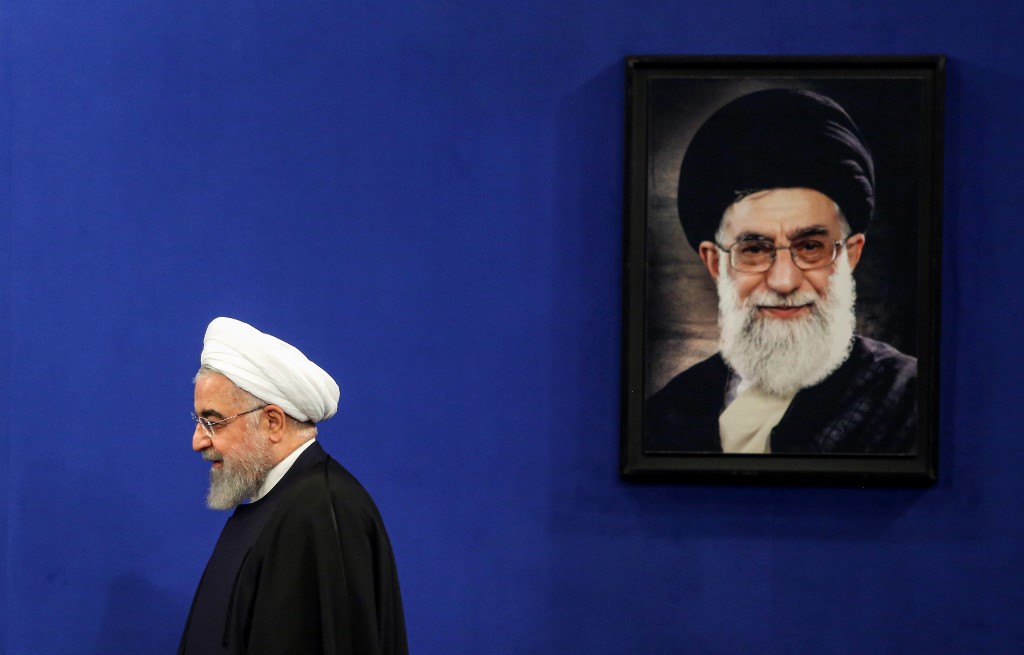
Iranian President Hassan Rouhani walks past a portrait of Supreme Leader Ayatollah Ali Khamenei as he arrives for a news conference in the capital Tehran, on February 16, 2020.(Photo by ATTA KENARE / AFP)

Iran’s Khamenei says ‘Zionist-controlled’ US government will sink like Titanic

Supreme leader appears to indicate he’s referencing progressive Democratic talking points, says most of US riches going to a few billionaires while ordinary Americans suffer

Iranian Supreme Leader Ayatollah Ali Khamenei on Wednesday said the United States will sink like the “Titanic,” blaming it on “wealthy Zionist individuals and corporate owners” who he said controlled the US economy.
In a long series of tweets, Khamenei said the strength of the US economy was a “facade” and appeared to quote  progressive Democrats saying that US President Donald Trump was overseeing the transfer of US wealth to a few billionaires.
“Today, the epitome of rebellion, arrogance and tyranny is the US government, which is controlled by the wealthy Zionist individuals and corporate owners,” Khamenei tweeted.
Khamenei took aim at Trump’s economic policies, which the president often touts as one of his greatest accomplishments, noting that markets are at record highs and and the unemployment rate is at its lowest  in decades.
“The current US President claims he has improved the economic situation there. Others say yes, it’s become better, but only for the billionaires, not for the people of the US,” Khamenei said.
Without mentioning names, Khamenei appeared to cite Democratic candidates like Bernie Sanders or Elizabeth Warren.
“These aren’t my words, but the words of a member of the U.S. ruling body. He says over $100B has been added to the wealth of the 5 richest people in the US in the 3 years of Trump’s presidency. 3 of them own wealth equal to half the US population. Look at this social gap!
Khamenei.ir@khamenei_ir
These aren’t my words, but the words of a member of the U.S. ruling body. He says over $100B has been added to the wealth of the 5 richest people in the US in the 3 years of Trump’s presidency. 3 of them own wealth equal to half the US population. Look at this social gap!
459 people are talking about this
Khamenei’s comments come as Iran gears up for a crucial parliamentary election in two days, with many people in the country feeling that their lives have been crippled by an economic slump exacerbated by harsh US sanctions since Trump pulled the United States out of a landmark nuclear deal with the Islamic Republic in 2018.
Conservatives are expected to make an overwhelming resurgence in Friday’s vote, which comes after months of steeply escalating tensions between Iran and its decades-old arch foe the United States.
Their gains would be made at the expense of those who back President Hassan Rouhani, a relatively moderate conservative who was re-elected in 2017 promising people more freedoms and the benefits of engagement with the West.
Rouhani urged people to go and vote, saying that taking part would give Iran the “strength and unity” needed in its stand against the United States.
“We are going to the polls to choose the best people for parliament, which is a very important institution,” he said in televised remarks after a meeting of his cabinet.
“We are under severe sanctions and pressure by the global arrogance, and we have to break these sanctions and improve people’s lives,” he added, referring to the United States.
“Sanctions are a terrorist and tyrannical act against Iran.
“One cannot say sanctions have no effect and the government should be doing more… It’s lies, it’s supporting America.”
Iran’s electoral watchdog on Wednesday defended its decision to disqualify thousands of candidates from the vote.
The Interior Ministry said around half of the 16,033 hopefuls would contest the election after the Guardian Council barred thousands, most of them relative moderates and reformists.
But the Council said it was “neutral” in its dealings with all political camps and acted in accordance with the law when it blocked their candidacy.
“The Guardian Council follows the laws and regulations parliament has passed at different times,” said its spokesman Abbas Ali Kadkhodaee.

Friday, November 8, 2019

Iran’s Khamenei is Correct: Babylon the Great has failed to defend itself

Iran’s Khamenei: US has failed to defend itself

Nov 06, 23:03 GMT
Iranian Supreme Leader Ali Khamenei was on the wires last minutes, via Reuters, making some comments concerning its relationship with the US.
This comes after the Trump administration imposed new sanctions on Monday on the core inner circle of advisers to Khamenei and added $20 million to a reward for information about a former FBI agent who disappeared in Iran 12 years ago, as cited by the Washington Post (WaPo).
In response to the US sanctions, Iranian Foreign Ministry Spokesman Mousavi said that the New American sanctions are a sign of US bullying.
Meanwhile, we are seeing a bit of a risk reset in early trades on some positive US-China trade headlines, with a Chinese trade source citing that the US is unlikely to impose the December 15 tariffs on China.
Information on these pages contains forward-looking statements that involve risks and uncertainties. Markets and instruments profiled on this page are for informational purposes only and should not in any way come across as a recommendation to buy or sell in these assets. You should do your own thorough research before making any investment decisions. FXStreet does not in any way guarantee that this information is free from mistakes, errors, or material misstatements. It also does not guarantee that this information is of a timely nature. Investing in Open Markets involves a great deal of risk, including the loss of all or a portion of your investment, as well as emotional distress. All risks, losses and costs associated with investing, including total loss of principal, are your responsibility.

Wednesday, November 6, 2019

Iran Mocks Babylon the Great

by Agencies , (Last Updated 15 hours ago)
TEHRAN: Iran on Monday broke further away from its collapsing 2015 nuclear deal with world powers by announcing it’s doubling the number of advanced centrifuges it operates, calling the decision a direct result of President Donald Trump’s withdrawal from the agreement.
The announcement — which also included Iran saying it now has a prototype centrifuge that works 50 times faster than those allowed under the deal — came as demonstrators across the country marked the 40th anniversary of the 1979 U.S. Embassy takeover that started a 444-day hostage crisis.
By starting up these advanced centrifuges, Iran further cuts into the one year that experts estimate Tehran would need to have enough material for building a nuclear weapon — if it chose to pursue one. Iran long has insisted its program is for peaceful purposes, though Western fears about its work led to the 2015 agreement that saw Tehran limit its enrichment of uranium in exchange for the lifting of economic sanctions.
Tehran has gone from producing some 450 grams (1 pound) of low-enriched uranium a day to 5 kilograms (11 pounds), said Ali Akbar Salehi, the head of the Atomic Energy Organization of Iran.
Salehi dramatically pushed a button on a keyboard to start a chain of 30 IR-6 centrifuges at Iran’s Natanz nuclear facility, where he was being filmed, increasing the number of working centrifuges to 60.
“With the grace of God, I start the gas injection,” the U.S.-trained scientist said.
The nuclear deal limited Iran to using only 5,060 first-generation IR-1 centrifuges to enrich uranium by rapidly spinning uranium hexafluoride gas. Salehi also announced that scientists were working on a prototype he called the IR-9, which worked 50-times faster than the IR-1.
As of now, Iran is enriching uranium to 4.5%, in violation of the accord’s limit of 3.67%. Enriched uranium at the 3.67% level is enough for peaceful pursuits but is far below weapons-grade levels of 90%. At the 4.5% level, it is enough to help power Iran’s Bushehr reactor, the country’s only nuclear power plant.
Iranian President Hassan Rouhani will announce further steps away from the accord sometime soon, government spokesman Ali Rabiei separately said Monday, suggesting Salehi’s comments could be followed by additional violations of the nuclear deal. An announcement had been expected this week.
Iran has threatened in the past to push enrichment back up to 20%. That would worry nuclear nonproliferation experts because 20% is a short technical step away from reaching weapons-grade levels of 90%. It also has said it could ban inspectors from the United Nations’ nuclear watchdog, the International Atomic Energy Agency.
The Vienna-based IAEA did not immediately respond to a request for comment Monday on Iran’s announcement.
Iran broke through its stockpile and enrichment limitations to try to pressure Europe to offer it a new deal, more than a year since Trump unilaterally withdrew America from the accord. But so far, European nations have been unable to offer Iran a way to help it sell its oil abroad as it faces strict U.S. sanctions.
Meanwhile Monday, demonstrators gathered in front of the former U.S. Embassy in downtown Tehran as state television aired footage from other cities across the country making the anniversary.
“Thanks to God, today the revolution’s seedlings have evolved into a fruitful and huge tree that its shadow has covered the entire” Middle East, said Gen. Abdolrahim Mousavi, the commander of the Iranian army.
However, this year’s commemoration of the embassy seizure comes as Iran’s regional allies in Iraq and Lebanon face widespread protests. The Iranian Consulate in Karbala, Iraq, a holy city for Shiites, saw a mob attack it overnight. Three protesters were killed during the attack and 19 were wounded, along with seven policemen, Iraqi officials said.
Trump retweeted posts by Saudi-linked media showing the chaos outside the consulate. The violence comes after the hard-line Keyhan newspaper in Iran reiterated a call for demonstrators to seize U.S. and Saudi diplomatic posts in Iraq in response to the unrest.
The collapse of the nuclear deal coincided with a tense summer of mysterious attacks on oil tankers and Saudi oil facilities that the U.S. blamed on Iran. Tehran denied the allegation, though it did seize oil tankers and shoot down a U.S. military surveillance drone.
The U.S. has increased its military presence across the Mideast, including basing troops in Saudi Arabia for the first time since the aftermath of the Sept. 11, 2001 terror attacks. Both Saudi Arabia and the neighboring United Arab Emirates are believed to be talking to Tehran through back channels to ease tensions.

Thursday, October 31, 2019

Beware of War With Iran

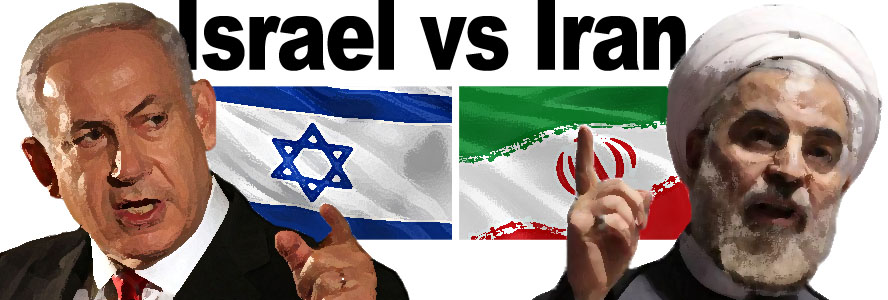
Image result for iran vs israel

Ordinarily, dialogue or even diplomatic accords are the best way to avoid armed conflict; but not in this case. It’s obvious that a new nuclear deal between the US and Iran, one that doesn’t fundamentally differ from its predecessor, could actually make war more likely rather than less.
Last week, IDF Chief of Staff Lt. Gen. Aviv Kochavi, who is normally measured and cautious in his speech, surprised a lot of people by sounding the alarm over the possibility of a war breaking out in the near future, whether on the northern front or southern front. His words highlighted the concern and even anxiety in Israel about the intentions of Iran, which dictates the actions of its proxies, Hezbollah in Lebanon and Hamas in Gaza.
The IDF chief emphasized, however, that our enemies are not interested in going to war. After all, Israel is not Saudi Arabia or the Kurds; it doesn’t have a reputation for turning the other cheek, but for responding immediately and doggedly, and sometimes disproportionately, to any provocation. Israel also has first-class operational and intelligence capabilities, which allow it to deter the Iranians and even foil many of their plans. And yet, the ongoing friction between Israel and Iran in Syria and Iraq could spill over into Lebanon and Gaza.
In Israel, there will always be those who blame the government and defense establishment for the rising tensions between Israel and Iran, but the truth is that Tehran and Jerusalem have been on a collision course for a long time now. The friction between the two countries stems from Iran’s fundamental enmity toward Israel, its stated devotion to destroying it, and its persistent efforts to establish a presence in Syria and Iraq, bringing those countries under its sphere of influence that stretches from Tehran to Beirut and Gaza.
Alongside the concern in Israel over Iran’s belligerence and brazenness, which could drag the region toward an all-out war, Israel must also closely monitor and prepare for the possibility of an improved nuclear deal between Tehran and Washington.
Ordinarily, dialogue or even diplomatic accords are the best way to avoid armed conflict; but not in this case. The dilemma facing Israel and the international community isn’t a war with Iran or making a deal with it. In this case, it’s obvious that a new deal, one that doesn’t differ from its predecessor in any fundamental way, could actually make war more likely rather than less.
The signs pointing to a new deal have accumulated in recent months. The Americans aren’t hiding their desire for dialogue with Iran, and have repeatedly opted for restraint to Iranian provocations. It appears the American administration has decided not just to disengage from the region, but also close the “Iran file” so that the US doesn’t find itself dragged back to a region it wants to leave in a few months’ time.
Under these circumstances, it’s hard to assume a new nuclear deal will significantly improve upon the original, the one that Trump angrily withdrew from over a year ago. Indeed, Iran is straining under the weight of painful American sanctions, which are severely hindering its economy. But the assumption that economic steps would be enough to bring the Iranians to their knees or even topple the ayatollah regime has been debunked. Iran, therefore, will return to the negotiating table from a position of strength, because they have been audacious, confrontational, aggressive and successful. If anyone will be brought to their knees, it will be Iran’s adversaries.
The United States is Israel’s greatest and most important friend, and Jerusalem must respect America’s vast array of interests. Along with its concerns over a conflict, however, Israel must also prepare for the possibility of an improved nuclear deal between Washington and Iran, which, although it could delay Iran’s march to an atomic bomb, could also provide a tail wind for Tehran’s efforts to entrench itself in the areas surrounding Israel.

Iran to Cross Redline at Iraq’s US Embassy

Hossein Shariatmadari, representative of Ayatollah Ali Khamenei in Kayhan newspaper,undated. File photo

Hossein Shariatmadari, representative of Ayatollah Ali Khamenei in Kayhan newspaper,undated. File photo
Hossein Shariatmadari, editor of hardliner Kayhan newspaper, directly controlled by Ayatollah Ali Khamenei, has again alleged that protests in Iraq “are being managed by the embassies of America and Saudi Arabia”.
Iranian officials have been making the allegation since the protests in Iraq against corruption and mismanagement began in early October, without presenting any evidence.
Iran has gained extensive influence within Iraq’s parliament and politics, seeing the current political leadership as best suited to its interests.
Shariatmadari in an editorial note has said that even without any direct evidence, “devious slogans” during the protests are enough to prove his allegation.
In addition to demanding the resignation of politicians, Iraqi protesters have also chanted slogans against Iran’s influence in Iraq and its interference in the country’s politics. Iran also finances and controls armed Shiite militias, which have apparently intervened in the protests and are accused of opening fire on protesters.
Shariatmadari whose words are seen to reflect Khamenei’s opinions, has directly called on Iran-backed militias to capture the American and other embassies in Baghdad.
The United States had warned against any attack in Iraq on its interests by “Iran-backed groups” and had warned in case of such attacks Iran would be held responsible and the U.S. would “act decisively” to defend American lives.

Tuesday, October 15, 2019

Iran prepares for World War III


Khamenei Calls On IRGC To Get Ready For Ground, Sea, Space Combat
Radio Farda
Iran’s Supreme Leader Ali Khamenei says the designation of the Islamic Revolution Guards Corps (IRGC) as a terrorist group by the United States has led to its increased popularity in Iran and abroad.
Khamenei who was speaking during a graduation ceremony at the IRGC’s Imam Hussain Academy in Tehran on Sunday October 13, did not elaborate on the designation, and referred to it as “America showing a hostile frowning face to the revolutionary guards.”
Meanwhile, speaking about his assessment of the IRGC Academy’s performance, he said: “I am proud of the academy’s successes, but I am not satisfied with what it has achieved so far”, insisting that he expects more.
Elsewhere in his speech on Sunday, Khamenei reiterated that the IRGC should have access to modern “defensive, operational and intelligence equipment as well as knowledge of cyberspace” to be ready for combat “on the ground, in the air, in the space, in the sea, at the borders and inside the country.”
Khamenei claimed that before the 1979 revolution, Iran had a stockpile of U.S. made weapons at its disposal but was not allowed to use them or even master the skills required to use them. However, he contradicted himself by saying that Iran under the Shah, was tasked to suppress any opposition to the United States in the region.
“Today,” he claimed, “things are the other way around and the nation makes decisions and acts based on its national interests.”

Monday, October 14, 2019

Iran Prepares to Cross the Redline (Revelation 6:6)


Khamenei tells Iran’s Guards to develop advanced, modern weapons
DUBAI (Reuters) – Supreme Leader Ayatollah Ali Khamenei told Iran’s elite Revolutionary Guards on Sunday to develop more advanced and modern weapons, amid increasingly tense disputes with the United States and Gulf Arab states.
FILE PHOTO: Iran’s Supreme Leader Ayatollah Ali Khamenei gives a speech to a group of scholars and seminary students of religious sciences in Tehran, Iran September 17, 2019. Official Khamenei website/Handout via REUTERS
Tensions in the Gulf have risen to new highs since May 2018, when the Trump administration withdrew from a 2015 international nuclear accord with Tehran that put limits on its nuclear program in exchange for the easing of sanctions.
As U.S. sanctions have been reimposed, there have been a series of attacks in Saudi Arabia and the Gulf that Washington and its allies have blamed on Iran, which denies responsibility.
“The Guards should have advanced and modern weapons … Your weapons should be modern and updated. It should be developed at home. You need to develop and produce your weapons,” Khamenei said in a speech at Imam Hossein Military University in Tehran.
“Today the Guards have a powerful presence inside and outside Iran … America’s hostile approach has increased the Guards’ greatness,” Khamenei said, according to state TV.
Washington and Riyadh have accused Iran of being behind attacks on Saudi oil facilities on Sept. 14, which temporarily knocked out half Saudi oil output. Tehran denies any role in the strikes which were claimed by Yemen’s Iran-backed Houthi forces.
Amid the tensions, Washington plans to deploy about 3,000 troops to Saudi Arabia, including fighter squadrons, an air expeditionary wing and air defense personnel.
Pakistani Prime Minister Imran Khan arrived in Tehran on Sunday, saying he would continue efforts to defuse the row between Tehran and Riyadh, which have been locked in proxy conflicts in the Middle East.
Khan, who also met Khamenei, is visiting Tehran after he said U.S. President Donald Trump had asked him to help reduce tensions with Iran.
“Pakistan does not want conflict between Iran and Saudi Arabia,” Khan told a joint news conference with Iranian President Hassan Rouhani, broadcast on state television.
“I am happy to facilitate talks between Tehran and Riyadh,” said Khan, saying he had “constructive talks” with Rouhani and planned to visit Saudi Arabia on Tuesday.
Khamenei told Khan that U.S.-allied Gulf Arab States were “under the will of the United States” and warned that any attacker would regret taking action against Iran, according to state television. “Ending the war in Yemen will have a positive impact on the region.”
Saudi Minister of State for Foreign Affairs Adel al-Jubeir said on Sunday that Riyadh had not asked Islamabad to mediate.
The minister told reporters in Riyadh the Pakistani prime minister was acting “on his own initiative” and said Iranians needed “to change their behavior, their policies if they want countries to deal with them as with normal countries.”
Iran’s foreign ministry said before Khan’s visit that Tehran was ready for talks with Riyadh with or without a mediator.
Rouhani told the news conference after meeting Khan that “any effort based on goodwill is welcomed … during the meeting, we agreed that the regional issues can be resolved through diplomacy and through dialogue between countries.”
Writing by Parisa Hafezi, additional reporting by Olesya Astakhova in Riyadh; Editing by Raissa Kasolowsky and Edmund Blair

Sunday, October 13, 2019

Babylon the Great Sends Troops to Saudi Arabia


More troops to Middle East© Department of Defense More troops to Middle East   The move to bolster troops in the Middle East comes as President Donald Trump’s decision to pull back US military forces from northeastern Syria has prompted bipartisan criticism from lawmakers who say the President has given Turkey an opening to attack US Kurdish allies who helped in the fight against ISIS.
And it follows a Thursday tweet from Trump decrying US involvement in the Middle East, in which he said that “going into the Middle East is the worst decision ever made!” He added that “we are slowly and carefully bringing our great soldiers & military home.”
The Pentagon said Friday that the deployment to Saudi Arabia will include two fighter squadrons, one air expeditionary wing, two Patriot batteries and one Terminal High Altitude Area Defense (THAAD) system. Defense Department officials said they had sent 200 troops in September and 1,000 troops earlier in October, plus an additional 1,800 being sent Friday. Initially, officials had said “about 1,500” troops would be sent before clarifying with the higher number.

Enhancing defenses

“Secretary Esper informed Saudi Crown Prince and Minister of Defense Muhammad bin Salman this morning of the additional troop deployment to assure and enhance the defense of Saudi Arabia,” Chief Pentagon spokesman Jonathon Hoffman said in a statement Friday. “Taken together with other deployments, this constitutes an additional 3,000 forces that have been extended or authorized within the last month.”
The US has increased the deployment of forces in the region by 14,000 since May.
The carrier USS Harry S Truman, which was scheduled to deploy to the region in the last several weeks, has been unable to sail due to a broken electrical distribution system. The current carrier in the region, USS Abraham Lincoln, is rescheduled to end its deployment in the next several days.
That has now led to the need for additional capability in the region to replace what a carrier airwing can provide.
Additional aircraft are on standby and some warships may move from the Pacific into the Middle East, officials told CNN.
The request for the forces had been in place for the past several weeks, the officials said.
Gen. Frank McKenzie, head of US Central Command, had long wanted additional air, ground and maritime forces, especially after a devastating September attack on Saudi oil facilities that the US has attributed to Iran.
McKenzie this week again pressed the case that more military force was needed, officials say.
When the Pentagon announced additional deployments after the Saudi attack, Defense Secretary Mark Esper told reporters that the US troops would be “defensive in nature and primarily focused on air and missile defense.”
Iran has denied responsibility for the coordinated strikes on the Saudi facility that disrupted 5% of the daily global oil supply and caused another spike in tensions between the US and Tehran
After Trump’s Sunday announcement that US troops would pull back in northeastern Syria, Turkey began a planned military offensive into the region on Wednesday, launching airstrikes and artillery fire to try and push Kurdish forces away from Turkey’s border.
Trump on Wednesday downplayed the US alliance with the Kurds, who played a key strategic role in the fight against the terrorist group ISIS, saying “they didn’t help us in the second World War.”
The President had announced in December that he would withdraw all US troops from Syria, which sparked outrage. including from his own party, and led to the resignation of then-Defense Secretary James Mattis.
Trump then later agreed to allowing a small residual US presence in the region to ensure stability and continue fighting the remnants of ISIS.

Saturday, October 12, 2019

The Saudis Damage the Oil (Revelation 6:6)


Iranian oil tanker hit by two missiles near Saudi port: state news
Updated 4:44 AM EDT October 11, 2019
An oil tanker belonging to the National Iranian Oil Company (NIOC) was hit and damaged by two missiles on Friday, Iranian state news IRNA reported.
The missiles were “possibly” fired from Saudi soil, Saheb Sadeghi, head of the public relations of the National Iranian Tanker Company, told state-run Press TV.
No Iranian government officials have blamed the attack on any side at this stage.
The tanker was 60 miles (96 kilometers) from the Saudi port of Jeddah on the Red Sea when the incident occurred, damaging its body, IRNA reported.
According to the news service, the resulting explosions caused oil to leak into the Red Sea.
Iran’s Press TV also tweeted Friday: “Report: Explosion in #Iranian tanker has set vessel on fire near #Saudi port city of #Jeddah.”
All the tanker’s crew members are safe, IRNA reported. Investigators are looking into the sources of the missiles.
News of the incident caused oil prices to rise on Friday. Prices for Brent Crude jumped 2% to just over $60, while WTI Crude climbed nearly 2% to $54.
A series of attacks on oil tankers and production facilities in the region has increased tensions in recent months.
In September, Saudi Arabia’s Abqaiq oil processing facility — the largest of its kind in the world — was attacked in a series of drone strikes which halved the country’s production.
Houthi rebels claimed responsibility for the attack, but both Saudi and US investigators claimed “with very high probability” that it was launched from an Iranian base.
Shortly after that attack, President Donald Trump said the US was “locked and loaded.” He added that the US was waiting on Saudi Arabia to find out “under what terms we would proceed.”
Speaking to CNN, Iranian Foreign Minister Javad Zarif denied responsibility for the September attack and warned of “all-out war” if the US or Saudi Arabia conducted military strikes against his country.
The drone strikes followed attacks on tankers in the Strait of Hormuz in July, including the capture of the UK-flagged oil tanker Stena Impero by Iran. The vessel was eventually released from the Iranian port of Bandar Abbas in late September

Tuesday, October 8, 2019

Trump’s Gift: An Iran with Nuclear Weapons


Trump’s Parting Gift: An Iran with Nuclear Weapons?
Rarely are one’s predictions as quickly tested as those I made in August. I suggested that the United States’ lame response to Iran’s aggressive actions would lead to escalation. It was not hard to predict. It seemed obvious to me that, unable to get the European Union to help meaningfully circumvent U.S. sanctions, Iran concluded that it ought to cause pain to those who imposed them. It carefully probed how far it could go without facing a forceful response. First, its forces planted mines on oil tankers, but above their waterline, so the tankers did not sink and there was no loss of life. Iran denies any involvement in this initial act. It then admitted that it shot down a U.S. drone, but tried to argue that it was flying over Iranian territory when it happened. These aggressions led to a very weak Western response (mainly the application of meaningless sanctions on Supreme Leader Ali Khamenei). As a result, Iran escalated further by capturing an oil tanker and openly acknowledging that it had begun enriching its uranium. 
When all these actions elicited declarations that the United States does not want war and that the United States is seeking to de-escalate—and the Pentagon warned against overreaction– Iran became more audacious and struck oil facilities in Saudi Arabia (though denying that it was involved). Since then, the thesis that the lame reaction by the United States and the rest of the world community will embolden Iran has become the conventional wisdom. As Dennis Ross noted on September 24 in Foreign Affairs, “Iran has chosen to act very brazenly with these strikes [in Saudi Arabia]. If there is no consequence for that choice, the Islamic Republic will be even more emboldened.” A New York Times news article noted on September 19 that “seeking to exact a price from the United States for its sanctions on Iranian oil sales, Tehran may also now be emboldened to carry out further attacks, calculating that President Trump will balk at another war in the region. The attack on Saudi Arabia was just the latest in a string of recent attacks carried out by Iran or a proxy—including attacks on oil tankers and the downing of an American drone—with little or no cost to Iran.”
Trump has been coming up with one excuse after another to explain his reluctance to respond forcefully to Iran’s aggressive tactics. He suddenly became interested in meticulous intelligence, claiming he needed to be 100 percent certain that the missiles came from Iran (though who else in the Middle East has these kinds of missiles and would hit Saudi Arabia?). He said that he was waiting for Saudi Arabia to tell him what it wanted and waiting to learn if they were willing to pay for the intervention. He sought approval from the UN—the institution he often maligns and despises and where Russia is sure to veto any meaningful action. The president produced smokescreen headlines by announcing his plan to send troops and assets to the Middle East, but that number is minuscule and hardly makes up for those he recently removed from the region. He also declared the imposition of more sanctions, even though it is difficult to come up with activities that have not yet been sanctioned.
Iran cannot read all these U.S. actions (or lack thereof) without concluding that it can continue to impose costs on those who sanction it. Actually, Trump did better—from Iran’s viewpoint—than responding very lamely to it provocations. He showed that the pressure is beginning to work. It is hard to believe, but prior to the attack on Saudi Arabia’s oil facility Trump had discussed offering to lift some of the sanctions—merely in the hope that the offer would encourage Khamenei to meet with him. I assume he hoped for a photo opportunity and declaration that the problem has been solved, as he did with North Korea.
He fired National Security Advisor John Bolton, most specifically, because Bolton called for a strong response to Iran’s provocation; whether firing Bolton was a good or bad idea, the timing reinforced to Iran that it has nothing to be unduly concerned with. Indeed, the end of Bolton’s tenure in the White House delighted Iran to no end. On September 10, the spokesperson for the government of Iran, Ali Rabiei, tweeted: “Months ago #JohnBolton had promised that #Iran would not be there in 3 months; we are still standing & he is gone. With the ousting of its biggest proponent of war & economic terrorism, the White House will have fewer obstacles to understanding the realities of Iran.”
Trump repeated his opposition to another war in the Middle East. Iran notes that the Gulf states, including Saudi Arabia, are muting their criticism of Iran. They realize that they cannot rely on U.S. backing and cannot take on Iran alone. In effect, they are moving to find ways to cope with the new dominant force in the region.
During a normal presidency, the head of the world superpower would not consider announcing that he is keen to meet with another powerful leader—unless his staff first ensured that the invitation would be well-received or if both leaders jointly announced the meeting. For the president of the United States to announce that he is anxious to meet the head of a small power like Iran, and for the leader of the smaller state to flatly refuse, would be considered a major diplomatic failure and read by the other side as a sign that the American leader is rather desperate to avoid acting forcefully.
How can Iran not come to view all these moves as assurance that it can continue to lash out against the sanctions, in a variety of ways, while making some speeches about peace in the region?
To proceed, we need to realize that we have come to false conclusions. This belief that we lost the war in Afghanistan and are doing poorly in Iraq is based on a basic misconception. We have conflated the wars—which we won easily, in a few weeks, with few casualties on both fronts—with the eighteen years of nation-building, which is a failing effort. It is this vain attempt to turn these nations into democracies and U.S. allies that costs a great number of lives and half a trillion dollars. The United States would have little trouble taking on Iran militarily (though it is more powerful than Saddam Hussein’s Iraq, which, by the way, Iran was unable to defeat). Indeed, there is good reason to believe that threatening military action is the only way to bring Iran to the negotiating table. The United States should avoid making the same mistakes it made in Afghanistan and Iraq by seeking only to change the regime by use of force, without engaging in nation-building, leaving it to the people of Iran to fight for the kind of government they want.
If Iran faces no forceful reactions to its provocations, then sooner or later it will either openly or clandestinely seek to expand its nuclear armament program. Iran has long-observed how well North Korea is treated compared to Libya, which gave up its program of building weapons of mass destruction. It has good reason to believe that nukes are the best guarantees to its national security and proactive shield, under which it can continue to dominate the region.
It is not hard to imagine that a nuclear-armed Iran is going to be one of Trump’s going-away presents to the international community.
Amitai Etzioni is a university professor and professor of international affairs at The George Washington University. His latest book, Reclaiming Patriotism, was just published by the University of Virginia Press.
Image: Reuters
Author update: Following the submission of this story, international inspectors announced that Iran had started more centrifuges and further enriched uranium.

Iran Urges Iraqis to Seize the US Embassy


Demonstrators protest in Baghdad, Iraq, October 2019
Demonstrators protest in Baghdad, Iraq, October 2019. (photo credit: THAIER AL-SUDANI/REUTERS)


An Iranian newspaper linked to Supreme Leader Ayatollah Ali Khamenei called on Iraqis to seize the US embassy in Baghdad, in a move similar to the takeover of the US embassy in Tehran during the Iranian revolution of 1979, according to Radio Farda.
“Historical evidence has shown that US embassies in all countries, even in friendly and allied countries, are the focus of conspiracy. The US Embassy in Iran is a clear and exemplary example of this bitter reality,” wrote Hossein Shariatmadari, the editor of the Kayhan newspaper, in reference to the former US embassy that was taken over and held hostage during the revolution in 1979.
Documents found in the embassy in 1979 “revealed the betrayal of some Iranian political figures and exposed the countless US crimes in Iran and some other countries in the region,” according to Kayhan.
The author of the Kayhan article asked “young Iraqi revolutionary believers” why they don’t “end the presence of the US Embassy in Baghdad, the same espionage and conspiracy center against the oppressed Iraqi people.”
Shariatmadari claimed that “There are many documents about the presence of U.S., Israeli and Saudi Wahabi agents, as well as Ba’thist elements behind the Iraqi protests.”
Iranian media has blamed the United States and Saudi Arabia for inciting anti-Iranian protests in Iraq.
Protests broke out throughout Iraq against the deterioration of living conditions and health services, government corruption, unemployment and Iranian interference in the country.
Some protestors have spoken out against Iran’s influence in the country and the presence of Iranian-backed Shi’ite militias in the there. Some of the protesters have called on the government to resign.
In the past week, security forces have used live fire on crowds of protestors. Over 100 people have died in the protests.
Some protesters have claimed that Iranian forces were the ones firing on protesters, not Iraqi forces.
“There is no work, you come to protest, they fire at you. Live gunfire,” said one unnamed protester to Reuters.”They are all Iranian-speaking in Farsi. You want to speak to them; they answer in Farsi. The Iraqis would not fire at you.”
The Shi’ite Popular Mobilization Forces (PMF) militia in Iraq is backed by Iran. Witnesses at the protests in Baghdad said that pro-Iranian security forces opened fire on protesters.
Videos from the protests show security forces firing into large crowds. Steven Nabil, a correspondent for Al Hurra TV news, posted a video of the protests on Twitter, adding that protesters were claiming that men dressed in black who were firing on protesters were really Iranian.
#baghdad protesters are accusing the black fask mask forces of being Iranian pic.twitter.com/nnCCQONhos
— Steven nabil (@thestevennabil) October 3, 2019
A video being circulated on social media appears to show the Iraqi flag being raised over the Iranian embassy in Iraq during the protests. Additional videos showed protesters burning Iranian flags.
#العراق_ينتفض انزال العلم الايراني واستبداله ب العلم العراقي في السفارة الايرانية في بغداد pic.twitter.com/oRpJAKRmWy
— Laieth Alrawi (@alrawi_laieth) October 4, 2019
Last week, a top commander from Iraq’s Counter-Terrorism Service was decommissioned, in a move that may have been pushed for by the PMF.
Ghaleb al-Shabandar, a political commentator, described the move as “the beginning of the Iraqi army’s dismantling and handover to the Hashed and other armed groups.”
Staff Lt.-Gen. Abdulwahab al-Saadi helped recapture Mosul from ISIS in 2017, served in the CTS, which was created and trained by the United States.
Saadi said he considered the shift to a position at the Defense Ministry as an “insult” and a “punishment” on Friday.
The hashtag “We are all Abdulwahab al-Saadi” began trending on Twitter, with pictures of the commander aiding civilians in Mosul and other cities, as Iraqis across the country responded with shock.
“He won the people’s friendship but the [politicians’] hatred,” said one supporter, while another said that there was “no more space for patriots in this country.”
Jerusalem Post Staff contributed to this story.

Monday, October 7, 2019

Iran Threat Still Biggest in World


Published: 05 October 2019
The 2015 Nuclear Deal was supposed to contain the Iranian nuclear threat and tame its regional rogue behavior, but the Iranian regime still remains the biggest threat in the Middle East to the United States and its allies, according to Professor Raymond Tanter.
Tanter, who served as a senior member on the Middle East Desk of the National Security Council staff in the Reagan-Bush administration, wrote an op-ed about the Regime’s recent attack on Saudi oil installations, citing evidence from the National Council of Resistance of Iran (NCRI) that the attack was carried out  by the Revolutionary Guard Corps (IRGC) and approved by Supreme Leader Ali Khamenei and President Hassan Rouhani.
The NCRI reported that top IRGC commanders from the aerospace forces were deployed from Tehran to Omydieh base in Khuzestan province to command the operation. NCRI official Alireza Jafarzadeh said the attack was overseen by IRGC Major General Gholamali Rashid, who reports directly to Khamenei.
Tanter wrote: “There is mounting evidence that the resistance group is correct, US Government officials said privately about the NCRI press conference on the Iranian attack on the Saudi oil installations… The information provided by the NCRI is significant because it indicates Tehran is willing to take serious risks to threaten the countries in the region and the free flow of oil in the Persian Gulf, as a means to extract concessions from the United States and western nations.”
There is a big risk that the Regime’s behavior in the Persian Gulf region could trigger a military response from the West and cause another war in the Middle East.
Of course, Khamenei seems confident that the US will not start a war and that, instead, oil sanctions will be lifted in order to avoid Iran’s terrorism and destabilizing activities. That’s a central part of Iran’s foreign policy. It’s why Foreign Minister Javad Zarif feels confident that he can boast about close ties with IRGC Qods Force commander and notorious terrorist Qassem Soleimani.
Tanter wrote: “The information [from the NCRI] also demonstrates that in light of internal crisis resulting from systemic corruption engulfing the regime like cancer, widespread discontent of the population because of poverty and inflation, strikes by workers and other sectors of the society, and continued protests in Iran, Tehran has found no other way but to escalate regional aggression. Such aggressive behavior, if not confronted with decisiveness and power, would boost the morale of the IRGC commanders, and further emboldens the regime.”

Sunday, October 6, 2019

The Iranian Threat Rises (Daniel 8:4)

A damaged installation in Saudi Arabia’s Abqaiq oil processing plant is pictured on September 20, 2019. (Fayez Nureldine/AFP/Getty Images)
By Raymond Tanter
Thursday, 03 Oct 2019 2:07 PM
Nearly five years after the Iran Nuclear Deal, which was meant to contain the Iranian nuclear threat as well as taming its regional rogue behavior, the Iranian regime remains the biggest threat to the United States and its allies in the region.
Intelligence from the main Iranian Resistance coalition, the National Council of Resistance of Iran Office in Washington (NCRI-US), shows that Iran’s Supreme Leader, Ali Khamenei and President Hassan Rouhani approved the Islamic Revolutionary Guard Corps (IRGC) attack on Saudi oil installations from Iranian territory, according to a press conference and report by the group.
The information shows that top IRGC commanders of aerospace force were deployed from Tehran to Omydieh base in Khuzestan province in southwestern Iran to command this operation.
The attack was overseen by the most senior military commander of Iran during the war/crisis situation, namely IRGC Major General Gholamali Rashid, who directly reports to Supreme Leader Ali Khamenei, according to NCRI official Alireza Jafarzadeh who provided the details at the press conference.
There is mounting evidence that the resistance group is correct, U.S. Government officials said privately about the NCRI press conference on the Iranian attack on the Saudi oil installations, according to the Washington Times.
The information provided by the NCRI is significant because it indicates Tehran is willing to take serious risks to threaten the countries in the region and the free flow of oil in the Persian Gulf, as a means to extract concessions from the Unites States and western nations.
The regime’s behavior in the Persian Gulf region has a high level of risk, because it could trigger a military response and much harsher reaction from the West.
The Supreme Leader seems to be confident that the United States will not get engaged in any military actions. Supreme Leader Khamenei hopes to get the oil sanctions lifted using terrorism and destabilizing activities in the region as a bargaining chip. Khamenei relies on his regime’s past behavior of four decades of terrorism and hostage taking as a profitable tool to gain concession from the west and the central core of its foreign policy.
That device explains why the Foreign Minister Javad Zarif and President Hassan Rouhani are in line with such behavior. Zarif has repeatedly boasted about his close ties and friendship and cooperation with notorious IRGC Qods Force commander Qassem Soleimani.
The information also demonstrates that in light of internal crisis resulting from systemic corruption engulfing the regime like a cancer, widespread discontent of the population because of poverty and inflation, strikes by workers and other sectors of the society, and continued protests in Iran, Tehran has found no other way but to escalate regional aggression. Such aggressive behavior, if not confronted with decisiveness and power, would boost the morale of the IRGC commanders, and further emboldens the regime.
After Pompeo’s accusations against Iran and Trump’s “locked and loaded” tweet, Trump struck a more oblique posture, including both threats and diplomacy.
Pompeo made trips to Europe to underscore our relationship to transatlantic security and economic prosperity, for which many Americans and Europeans sacrificed across generations to build and safeguard.
President Hassan Rouhani tried to push back against the, “maximum pressure strategy” of Trump and Pompeo.
Looking at the developments in Iran and Tehran’s behavior domestically and internationally, clearly indicates the major weaknesses of the regime and its vulnerability inside Iran. Tehran’s aggressive behavior is more of a sign of desperation rather than its strength.
President Trump’s repeated statements about his reluctance to use military force does not play well with a regime which only understands the language of force and decisiveness. He should continue with the maximum pressure strategy, coupled with sending supportive signals to the people of Iran and their organized opposition.
The administration’s 12-point demands announced by Secretary Pompeo a year ago should remain as the prerequisite if the Iranian regime seeks to end its international isolation. Nothing more, and nothing less.
Prof. Raymond Tanter (@AmericanCHR) served as a senior member on the Middle East Desk of the National Security Council staff in the Reagan-Bush administration, Personal Representative of the Secretary of Defense to international security and arms control talks in Europe, and is now Professor Emeritus at the University of Michigan. Tanter is on the comprehensive list of conservative writers and columnists who appear in The Wall Street Journal, Townhall.com, National Review, The Weekly Standard, Human Events, The American Spectator, and now in Newsmax. To read more of his reports.

Friday, October 4, 2019

Khamenei Tells IRGC to Prepare for Asymmetric War


Khamenei Tells Guards Commanders To Prepare For ‘Major Events’
Radio Farda
Iran’s Supreme Leader Ayatollah Ali Khamenei has called on revolutionary Guards (IRGC) commanders to prepare themselves for “big events.”
Speaking to IRGC leaders who went to see him at the end of a 3-day national gathering of Revolutionary Guard commanders, on Wednesday October 2, Khamenei said: “Do not fear the enemy at all. Be alert and have thorough assessment of the enemy’s potentials.”
“You should not fear the enemy no matter how strong, but at the same time you should not underestimate its capability,” Said Khamenei.
Khamenei made the statement as tensions have been escalating between Tehran and Washington and its allies in the Persian Gulf region following attacks on Saudi oil facilities in September for which U.S. blames Iran, and some observers have been talking about the possibility of a military confrontation.
Meanwhile, Khamenei advised that the IRGC should extend its outlook beyond Iran’s geographic bordersand pay attention to threats “beyond the borders”. Iranian officials have occasionally said that Syria, Yemen and Lebanon are part of the country’s “strategic depth.”
In an odd comment in a country where most civilian officials and military commanders, not to mention Khamenei himself serve much beyond their retirement age, Khamenei advised the commanders “Not to allow the IRGC become old and conservative or complacent with the status quo.”

A handout picture provided by the office of Iran’s Supreme Leader Ayatollah Ali Khamenei on October 2, 2019, shows him during a meeting with the members of the Islamic Revolutionary Guard Corps (IRGC) in Tehran.

Thursday, October 3, 2019

PMF Units Have Green Light to Attack Israel


Shi'ite Popular Mobilization Forces (PMF) advance towards the city of Al-Qaim, Iraq November 3, 2017
Shi’ite Popular Mobilization Forces (PMF) advance towards the city of Al-Qaim, Iraq November 3, 2017. (photo credit: REUTERS/STRINGER)

Iraqi militia commander claims ‘green light’ to retaliate against Israel

Tzvi Joffre
Iraqi prime minister’s claim that Israel was behind recent attacks on PMF positions was a “green light to retaliate against Israel,” the commander said.
October 3, 2019 02:40

Iraqi Prime Minister Adil Abdul-Mahdi’s claim that Israel was behind recent attacks on PMF positions was a “green light to retaliate against Israel,” according to a commander of a group within the Iranian-backed Shi’ite Popular Mobilization Forces militia.
Iranian Press TV reported that Abu Ala al-Walai, commander of the Kata’ib Sayyid al-Shuhada group within the PMF, tweeted the statement after Abdul-Mahdi told Al Jazeera that “investigations into the targeting of some Popular Mobilization Forces positions indicate that Israel carried it out.”

Ahmed al-Maksousi, second in command of the group, told al-Arabu al-Jadeed news that he called on the Iraqi government to go through diplomatic channels by submitting complaints to the United Nations, adding that different factions will meet in the next few days in Baghdad.
Maksousi stressed that “all options are open, especially since we reserve the right to respond – and the Zionist entity is not far from the range of fire.”
Hamid al-Jazairi, deputy secretary-general of the Khorasani Brigades, stated that they would have a position on the matter, and pointed out that the “resistance factions” aren’t just present in Iran but also in Syria and Lebanon. He added that “the response to Israel doesn’t have to be from Iraqi territory.”
Jazairi stated that there will be an “appropriate” response by the factions to the bombings “very soon,” adding that it will be announced in “a timely manner.”
During a cabinet meeting in August, Abdul-Mahdi talked about the “high readiness” of the Iraqi armed forces to defend Iraq and its citizens, stressing Iraq’s readiness to respond firmly and with all means available to any aggression.
Ahmed al-Asadi, a Popular Mobilization Forces official, said in August that the targeting of PMF headquarters at two Iraqi bases that month and the entrance of Israel into Iraqi territory is a “declaration of war against Iraq, its people and its sovereignty,” according to Al-Sumaria.
“Israel’s entry into our national sphere declares war against Iraq, its people, sovereignty and capabilities… silence on aggression is not a rational position, but rationality and political realism require the exhaustion of diplomatic options with the UN Security Council so that Iraq, its army and its people are in a situation of military deterrence against aggression and drones,” he said.
Multiple air strikes have hit bases held by Iranian-backed Shi’ite militias in Iraq since the beginning of July. Recent attacks have hit positions near the Syria-Iraq border.

Iran Pushes the Nuclear Envelope (Daniel 8:4)


Khamenei: We’ll further breach nuke deal until we get ‘desired results’
Iranian supreme leader doesn’t specify what additional steps Tehran may take to violate accord, says US ‘maximum pressure’ campaign has failed
By TOI staff and AgenciesToday, 2:57 pm
Iranian Supreme Leader Ayatollah Ali Khamenei on Wednesday threatened that Iran would further breach the international accord that set limits on its nuclear program until it obtains the “desired results.”
Since May, Iran has taken a number of steps in violation of the 2015 agreement, including stockpiling uranium above the permitted limit and installing advanced centrifuges for uranium enrichment.
Iran says the moves ae in protest over a lack of economic relief from the deal’s European signatories since US President Donald Trump pulled out of the accord last year and reimposed sanctions on Tehran.
“Regarding the nuclear issue, we will seriously pursue reduction of our commitments. The Government should precisely, thoroughly pursue that until we reach the desired results—and we will certainly by the Grace of God achieve the desired outcomes,” Khamenei wrote on his Twitter account.
He did not specify what additional steps Iran may take in breach of the pact.
Regarding the nuclear issue, we will seriously pursue reduction of our commitments. The Government should precisely, thoroughly pursue that until we reach the desired results—and we will certainly by the Grace of God achieve the desired outcomes.
— Khamenei.ir (@khamenei_ir) October 2, 2019
The Iranian leader also declared that the Trump administration’s “maximum pressure” campaigned, aimed at forcing Iran to negotiate a more stringent agreement curbing its nuclear program, had failed.
“Recently and through their European friends, they also begged to force our president to meet (Trump) to make a symbolic status for making Iran surrender,” state TV quoted Khamenei as saying during a meeting with elite Revolutionary Guard members. “They eventually did not succeed and the policy will definitely fail until the end.”
Khamenei, who has final say on all state matters, has repeatedly expressed pessimism about Europe’s intentions for saving the nuclear deal, which aimed at preventing Iran from obtaining nuclear weapons in return for lifting sanctions. Iran has routinely denied seeking a nuclear weapon.
Earlier Wednesday, Iranian President Hassan Rouhani said Iran supports a plan by European countries to bolster the nuclear deal.
Rouhani said the plan included preventing Iran from obtaining nuclear weapons, securing its support for regional peace, lifting US sanctions and the immediate resumption of Iranian oil exports.
Speaking during a weekly cabinet meeting, Rouhani said: “We agree with the general framework by the Europeans.” France, Britain and Germany had urged Tehran to enter talks about a new arrangement on the nuclear deal.
Rouhani’s comments come amid heightened tension between Tehran and Washington following Trump’s decision to unilaterally pull out of the nuclear deal. The US has imposed sanctions that have kept Iran from selling its oil abroad and have crippled its economy.
Rouhani said the plan could have been discussed during his New York visit last week to attend the UN General Assembly but that Trump scuppered chances by openly threatening to impose more sanctions.
He said Trump in a private message had told the Europeans he was ready but later told media outlets he wanted to intensify sanctions. Rouhani expressed gratitude for efforts by French President Emmanuel Macron regarding the plan.
Iranian Foreign Minister Mohammad Javad Zarif told state TV later Wednesday that even though Macron’s four-point plan did not include Iran’s views, “it is necessary that negotiations continue in an accurate way. We will continue the communications.”
On Tuesday, Politico reported that Trump and Rouhani agreed to a four-point plan drafted by Macron that would have seen the two leaders meet and declare a resumption of negotiations. However, the diplomatic effort fell through when Rouhani backed out, over what other reports characterized as his deep mistrust of the US administration.

US President Donald Trump speaks during the 74th Session of the United Nations General Assembly at UN Headquarters in New York, September 24, 2019. (Johannes Eisele/AFP)
Tuesday’s report followed a New Yorker report on Sunday that said Macron was close to brokering a phone call between Trump and Rouhani during the UN gathering, but the French president’s secretive effort fell apart because of the Iranian leader’s lack of trust in the US president.
Speculation was abuzz last month that the leaders could meet on the sidelines of the General Assembly.
But Rouhani said he would only hold talks with the US if Trump lifted economic sanctions on Tehran.