The prophecy is more than seeing into the future. For the prophecy sees without the element of time. For the prophecy sees things as they were, as they are, and as they always shall be.
Sunday, October 31, 2021
The US Hits the Iran Horn with sanctions ahead of key nuke talks meeting
The United States has hit Iran with a fresh set of sanctions as President Joe Biden prepares for a key weekend meeting with European leaders to discuss the possible resumption of nuclear talks with the Islamic Republic
The Treasury Department announced the new penalties against two senior members of Iran’s Revolutionary Guard Corps and two affiliated companies for supplying lethal drones and related material to insurgent groups in Iraq, Lebanon and Yemen and to Ethiopia, which has been fighting rival Tigray forces for almost a year.
Although the sanctions are unrelated to Iran’s atomic program, the Biden administration has said it wants to build on a potential agreement to revive the languishing 2015 nuclear deal to include Iranian support for such groups and curtail its ballistic missile development.
Iran has yet to commit to a date to return to the nuclear talks in Vienna but has signaled it will do so next week with a target of late November for resuming the negotiations. The U.S. and others have expressed skepticism about Iranian intentions, and Biden is set to meet the leaders of Britain, France and Germany on Saturday in Rome to plot strategy on Iran.
The Vienna negotiations halted in June ahead of Iran’s election that brought hard-line President Ebrahim Raisi to power. The talks, which do not directly involve the U.S. because President Donald Trump withdrew from the nuclear deal in 2018, have languished since despite the stated intentions of both Washington and Tehran to return to compliance with the agreement.
Friday’s sanctions block any assets that those targeted may have in U.S. jurisdictions, bar Americans from transactions with them and, perhaps more importantly, also subject foreign people and firms that do business with them to potential penalties.
The two targeted Revolutionary Guard Corps commanders, Brig. Gen. Saeed Aghajani and Brig. Gen. Abdollah Mehrabi, oversee the Guard’s drone activities, including support for unmanned aerial vehicle, or UAV, attacks by proxies on commercial vessels, Saudi oil facilities and U.S. and allied interests throughout the Middle East, according to Treasury.
“Iran’s proliferation of UAVs across the region threatens international peace and stability. Iran and its proxy militants have used UAVs to attack U.S. forces, our partners, and international shipping,” Treasury said in a statement. “Treasury will continue to hold Iran accountable for its irresponsible and violent acts.”
The two firms, the Kimia Part Sivan Co. and the Oje Parvaz Mado Nafar Co., along with the latter’s managing director, were sanctioned for supplying engines and technical assistance to the drone programs, Treasury said.
In a speech at the United Nations last month, Israeli Prime Minister Naftali Bennett warned that Iran’s nuclear program had hit a “watershed moment.” “Words do not stop centrifuges from spinning,” he said. “We will not allow Iran to acquire a nuclear weapon.” But consensus is growing that it is almost too late to stop Iran from getting the bomb.
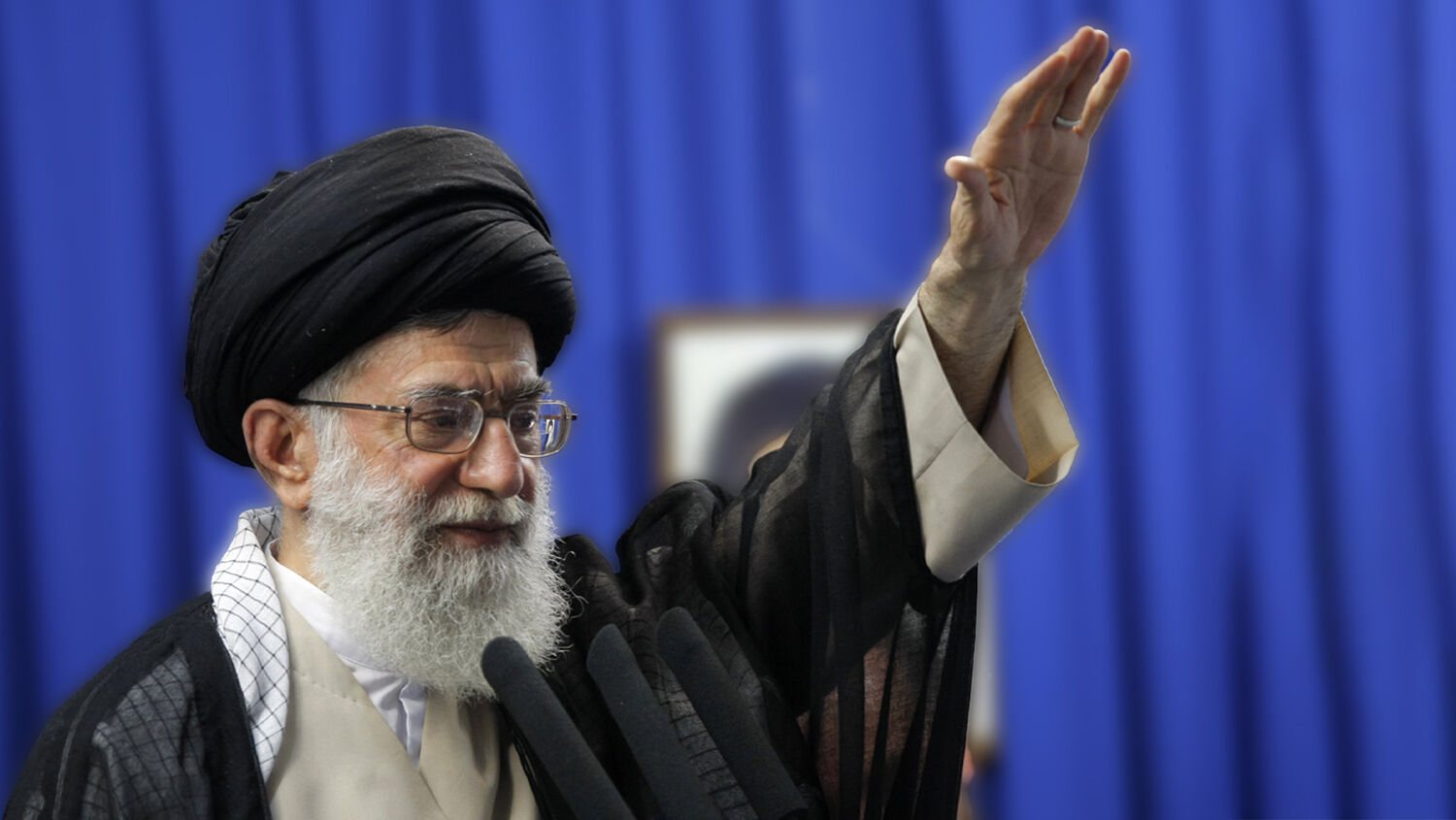
According to former Central Intelligence Agency officer Reuel Gerecht and senior fellow at the Council for Foreign Relations Ray Takeyh, Iranian Supreme Leader Ayatollah Ali Khamenei “and his henchmen haven’t spent billions and endured a tidal wave of sanctions and social unrest only to get close to a nuclear weapon. They will build the bomb as soon as they can and justify it afterward” (October 19; Wall Street Journal).
Israeli Finance Minister Avigdor Lieberman said that “no diplomatic process or agreement will stop Iran’s nuclear program.” He added that “a confrontation with Iran is only a matter of time, and not a lot of time.”
Backing up the rhetoric, Israel has begun making preparations to strike Iran. The Israeli Air Force has started training drills for potential strikes on Iranian facilities. In addition, the Israeli government approved a budget of $1.5 billion for a potential military strike on Iran.
But would an air strike be enough?
According to Gerecht and Takeyh, “Tehran’s advances in centrifuge development will soon make preemption impossible.” Iran has done everything in its power to cover up and conceal these advances. Director General of the International Atomic Energy Agency Rafael Grossi warned that the measures taken to monitor Iran’s nuclear program were no longer “intact.” Last month, Grossi protested that Iran refused to allow monitoring of tesa Karaj, believed to be an important facility for manufacturing centrifuges.
Israel has already tried using limited force to stop Iran. Israel has bombed sites, sabotaged key installations, and assassinated prominent figures in Iran’s nuclear program. None of this has stopped Iran. At best, a simple air strike would delay the inevitable. Nothing short of a full-scale military invasion could stop Iran now. And Israel simply doesn’t have the resources, manpower or international support for a full-scale invasion.
Couldn’t the United States use its vast military resources to stop Iran?
Iran doesn’t fear the U.S. anymore, and with good reason. Iranian President Ebrahim Raisi mocked the U.S. in front of the entire United Nations General Assembly, saying: “From the capitol to Kabul, one clear message was sent to the world: The U.S. hegemonic system has no credibility, whether inside or outside the country.” America’s surrender in Afghanistan demonstrated to the world it lacks the will to fight. The United States has become a paper tiger.
Unfortunately, the U.S. has done nothing to disprove Raisi’s taunt. Even as Iran brazenly marches toward the bomb, the U.S. continues to waffle. The strongest reactions from Washington have been pathetic. According to U.S. Special Envoy for Iran Robert Malley, the U.S. plans to work with its global partners in “the coming days and weeks” to “discuss where we go from here.”
How has the international community allowed Iran to get this far? At the heart of the matter is the West’s failure to understand the preeminent role religion plays in Iran.
For decades, Western leaders and diplomats have treated Iran like a normal nation. They’ve believed that the Iranian leadership acts rationally and in good faith, that Iran can be persuaded, moved or influenced by diplomacy. This thinking has been a fatal mistake and allowed Iran to walk right up to the banks of the nuclear Rubicon.
The governments of the West are blind to religion. The average politician or diplomat is a product of secular higher education. These elites view religion in the light of post-history liberalism and dismiss it as primitive and backward.
Contrast this with Iran. The head of Iran is not the Iranian president but Supreme Leader Ayatollah Ali Khamenei, the highest religious authority in the nation. The Iranian government, at its foundation, is a religious government. Article 1 of Iran’s Constitutionstates that Iran is an “Islamic republic.” Article 2 states that the Islamic republic is based on a belief in Allah and “divine revelation and its fundamental role in setting forth the laws.” Finally, 99.4 percent of Iran’s population is Muslim.
Western elites have failed to understand that Iran is first and foremost a religious state. More importantly, they have failed to understand Iran is a fanaticallyradicalreligious state.
Iran is the largest Shiite majority nation in the world. Within Iran, 90 to 95 percent of Muslims identify as Shiite, and the majority of those are Twelvers, which believe “their savior—the 12th imam, or mahdi—will return sooner if they cause more apocalyptic chaos and violence,” Trumpet editor in chief Gerald Flurry explains in his free booklet The King of the South.
Joel Rosenburg, a former aide to Benjamin Netanyahu, writes in his book Enemies and Allies, that Iran’s supreme leader and his inner circle follow this extreme ideology, which is “far more dangerous than mere radical Islam.” They believe the way to bring about the return of the mahdi is “to methodically acquire weapons of mass destruction and then launch the war that will bring about the consummation of the end of days.”
For Iranians, pursuing nuclear weapons is a sacred undertaking that will result in the coming of their “messiah.” We are soon to wake up in a horrifying world where these religious zealots have nuclear weapons, if they don’t have them already.
This fanaticism is why international laws, norms, treaties and nonproliferation agreements have done nothing to stop Iran. As Iran’s leaders see it, the “great Satan,” the United States of America, designed and runs the entire international order. Iran has no desire to join a global community that it intends to throw into “apocalyptic chaos and violence.” Up until this point, it has made a show of playing along with the International Atomic Energy Agency and the international community. Judging by its recent actions, Iran believes that is no longer necessary.
What we are seeing today is exactly what Mr. Flurry has warned about for over 30 years. In The King of the South, Mr. Flurry proves that the Bible is not silent about something so dire as a nuclear-armed Iran. His booklet revolves around an important end-time prophecy in Daniel 11. “And at the time of the end shall the king of the south push at him: and the king of the north shall come against him like a whirlwind, with chariots, and with horsemen, and with many ships; and he shall enter into the countries, and shall overflow and pass over” (verse 40).
Mr. Flurry explains that the king of the south is radical Islam, led by Iran and the king of the north is a German-led European superstate. Iran will push at this superstate and provoke it into a final crusade between radical Islam and Catholic Europe.
Yet Mr. Flurry explains, “As bad as this news is, it leads to the best news this world has ever heard!” To learn more about God’s plan and purpose behind these events please request free copies of The King of the Southand Germany’s Secret Strategy to Destroy Iran.
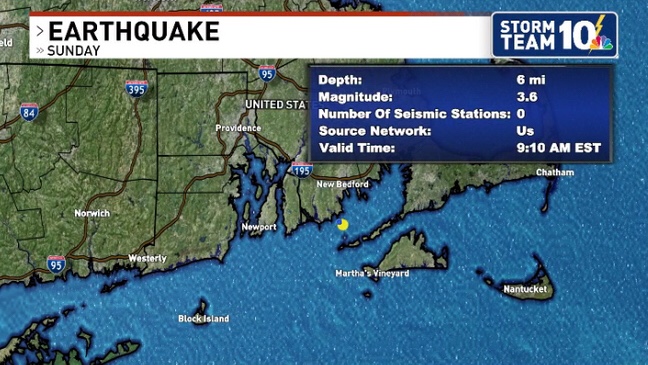
Did you feel it? At 9:10 am EST Sunday morning, a Magnitude 3.6 earthquake struck just south of Bliss Corner, Massachusetts, which is a census-designated place in Dartmouth. If you felt it, report it!
While minor earthquakes do happen from time to time in New England, tremors that are felt by a large number of people and that cause damage are rare.
Earthquakes in New England and most places east of the Rocky Mountains are much different than the ones that occur along well-known fault lines in California and along the West Coast.
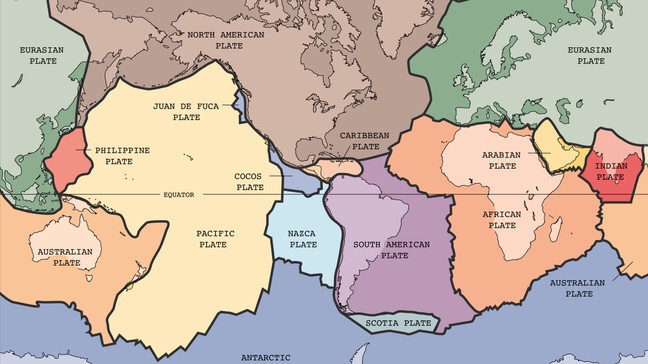
Rhode Island and Southeastern Massachusetts fall nearly in the center of the North American Plate, one of 15 (seven primary, eight secondary) that cover the Earth.
Earth’s tectonic plates
Tectonic plates move ever-so-slowly, and as they either push into each other, pull apart, or slide side-by-side, earthquakes are possible within the bedrock, usually miles deep.
Fault lines left over from the creation of the Appalachian Mountains can still lead to earthquakes locally, and many faults remain undetected. According to the USGS, few, if any, earthquakes in New England can be linked to named faults.
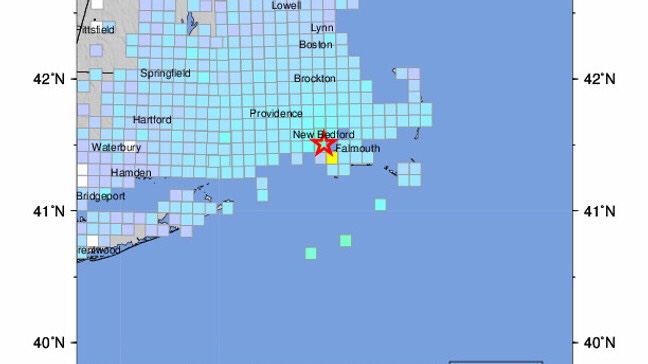
While earthquakes in New England are generally much weaker compared to those on defined fault lines, their reach is still impressive. Sunday’s 3.6 was felt in Rhode Island, Massachusetts, Connecticut, New York, and New Hampshire.
USGS Community Internet Intensity Map
While M 3.6 earthquakes rarely cause damage, some minor cracks were reported on social media from the shaking.
According to the USGS, moderately damaging earthquakes strike somewhere in the region every few decades, and smaller earthquakes are felt roughly twice a year.
The top US military officer, General Mark Milley, has provided the first official US confirmation of a Chinese hypersonic weapons test that military experts say appears to show Beijing’s pursuit of an Earth-orbiting system designed to evade American nuclear missile defences.
Key points:
Hypersonics move at speeds of more than five times the speed of sound, or about 6,200 kph
Sources say the test involved a weapon that first orbited the earth, something called ‘fractional orbital bombardment’
China has denied the claims, saying what it tested was a space vehicle
The Pentagon has been at pains to avoid direct confirmation of the Chinese test this summer, first reported by the Financial Times, even as President Joe Biden and other officials have expressed general concerns about Chinese hypersonic weapons development.
But General Milley explicitly confirmed a test and said that it was “very close” to a Sputnik moment – referring to Russia’s 1957 launch of the first man-made satellite, which put Moscow ahead in the Cold War-era space race.
“What we saw was a very significant event of a test of a hypersonic weapon system. And it is very concerning,” Mr Milley, chairman of the Joint Chiefs of Staff, told Bloomberg television, in an interview aired on Wednesday.
Nuclear arms experts said China’s weapons test appeared to be designed to evade US defences in two ways.
First, hypersonics move at speeds of more than five times the speed of sound, or about 6,200 kph, making them harder to detect and intercept.
Second, sources tell Reuters that the United States believes China’s test involved a weapon that first orbited the Earth.
Last month, Air Force Secretary Frank Kendall alluded to his concerns about such a system, telling reporters about a weapon that would go into an orbit and then descend on a target.
“If you use that kind of an approach, you don’t have to use a traditional ICBM trajectory – which is directly from the point of launch to the point of impact,” he said.
“It’s a way to avoid defences and missile warning systems.”
Fractional orbital bombardment would also be a way for China to avoid US missile defences in Alaska, which are designed to combat a limited number of weapons from a country like North Korea.
Jeffrey Lewis at the Middlebury Institute of International Studies summed up fractional orbital bombardment this way:
“The simplest way to think about China’s orbital bombardment system is to imagine a space shuttle, put a nuclear weapon into the cargo bay, and forget about the landing gear,” Mr Lewis said.
He said the difference was that the Chinese re-entry system was a glider.
It said it had carried out a routine test in July, but added: “It was not a missile, it was a space vehicle.”
US defences are not capable of combating a large-scale attack from China or Russia, which could overwhelm the system.
But the open US pursuit of more and more advanced missile defences has led Moscow and Beijing to examine ways to defeat them, experts said, including hypersonics and, apparently, fractional orbital bombardment.
The United States and Russia have both tested hypersonic weapons.
In this January 26, 2013 photo, the long-range ballistic Agni-5 missile is displayed during the Republic Day parade in New Delhi [File: Manish Swarup/AP Photo]
India test-fires its nuclear-capable intercontinental ballistic missile with a range of 5,000km (3,125 miles) from an island off its east coast.
India has test-fired a nuclear-capable intercontinental ballistic missile with a range of 5,000km (3,125 miles) from an island off its east coast amid rising border tensions with China.
The successful launch on Wednesday was in line with “India’s policy to have credible minimum deterrence that underpins the commitment to no first use”, said a government statement.
The Agni-5 missile splashed down in the Bay of Bengal with “a very high degree of accuracy”, said the statement issued on Wednesday night.
Beijing’s powerful missile arsenal has driven New Delhi to improve its weapons systems in recent years, with the Agni-5 believed to be able to strike nearly all of China.
India is already able to strike anywhere inside neighbouring Pakistan, its archrival against whom it has fought three wars since gaining independence from British colonialists in 1947.
India has been developing its medium- and long-range missile systems with and without nuclear warheads since the 1990s amid increasing strategic competition with China in a major boost to the country’s defence capabilities.
Tension between them flared last year over a long-disputed section of their border in the mountainous Ladakh area.
India is also increasingly suspicious of Beijing’s efforts to heighten its influence in the Indian Ocean.
Talks between Indian and Chinese army commanders to disengage troops from key areas along their border ended in a deadlock earlier this month, failing to ease a 17-month standoff that has sometimes led to deadly clashes.
Development flight test for the W88 Alt 370 (National Nuclear Security Administration)
A little-noticed, new fuze that better controls a nuclear blast’s timing will enable the United States to more easily destroy protected targets in other countries.
This story was published in partnership with the WashingtonPost.
A sophisticated electronic sensor buried in hardened metal shells at the tip of a growing number of America’s ballistic missiles reflects a significant achievement in weapons engineering that experts say could help pave the way for reductions in the size of the country’s nuclear arsenal but also might create new security perils.
The new components — which determine and set the best height for a nuclear blast — are now being paired with other engineering enhancements that collectively increase what military planners refer to as the individual nuclear warheads’ “hard target kill capability.” This gives them an improved ability to destroy Russian and Chinese nuclear-tipped missiles and command posts in hardened silos or mountain sanctuaries, or to obliterate hardened military command and storage bunkers in North Korea, also considered a potential U.S. nuclear target.
The increased destructiveness of the new warheads means that in some cases fewer weapons could be needed to ensure that all the objectives in the nation’s nuclear targeting plans are fully met, opening a path to future shrinkage of the overall arsenal, current and former U.S. officials said in a series of interviews, in which some spoke on condition of anonymity to discuss sensitive technology.
Production of the first of many high-yield nuclear warheads containing the gear, developed over the past decade at a cost of billions of dollars, was completed in July for installation on missiles aboard Navy submarines, the National Nuclear Security Administration announced. It follows the development and installation of similar fuzes — designed by the same nuclear laboratory — on hundreds of smaller-yield submarine warheads in a program completed in January 2019. After the Air Force installs some of the same technology aboard new land-based missiles slated for deployment by the end of the decade, it will be deployed on more than 1,300 warheads in the U.S. arsenal.
The Defense Department has publicly described the components as a routine engineering improvement that provides no substantial new military capabilities. Air Force budget documents provided to Congress describe it as a “form, fit, and functionally equivalent replacement” for existing nuclear warhead fuzes. But those familiar with highly sensitive nuclear planning say it will make the warheads significantly more damaging than previous such weapons.
“It’s an astounding piece of technology,” said mechanical engineer Paul J. Hommert, who directed the government-owned Sandia National Laboratories during the initial years of the technology’s development by a team of several hundred people on its New Mexico campus. He said that while existing U.S. weapons are highly accurate, the sensors the lab created are even better at computing the best moment for a blast to be ignited to produce the highest pressures on targets. They accomplish this even while the warheads approach at speeds that other experts have said exceed 15,682 miles per hour.
“There is more flexibility [in its use] and more robustness,” he said. “And that has to lead to sustained confidence and the possibility of additional damage capability.” Hommert said he agreed with others that there are a lot of deeply buried installations, like command posts, that “these will give you a better chance of holding at risk.” He called it an “underappreciated” enhancement.
Georgetown University professor Keir Lieber, and Dartmouth University associate professor Daryl Press, a consultant to the Defense Department, have estimated that the fuzes have roughly doubled the destructive power of the U.S. submarine fleet alone.
This shift in weapons capabilities has both military and political consequences, current and former officials and experts said. On one hand, the leaders of target countries, knowing that U.S. nuclear strikes are more certain to be effective in destroying their weapons, might be more deterred from taking provocative actions that could draw a U.S. nuclear attack, some said.
Others worry, however, that those leaders — knowing that many of their protected, land-based weapons and associated command posts could not escape destruction — might be more prone to order their use early in a crisis or conflict, simply to ensure they are not destroyed when incoming warheads arrive, promoting a hair-trigger launch policy that could escalate into a general cataclysm.
Physicist James Acton, who co-directs the nuclear policy program at the Carnegie Endowment for International Peace and has written extensively about the need to avert unnecessary conflicts, said that efforts to modernize the nuclear arsenal should be more focused on ensuring the weapons’ safety, security, and reliability, and less on goosing their accuracy.
“If China or Russia believe in a conflict or a crisis that we are going to attack or destroy their nuclear forces and command posts, that gives them an incentive to use nuclear weapons first, or to threaten their use. They have strong incentives to take steps that would further escalate the crisis and create new dangers,” Acton said.
Distributing impressive accuracy improvements throughout the U.S. arsenal “will raise concerns in Russia and China about targeting their leadership.” He said “I would like to see the United States being more restrained in this,” because the additional escalation risks “outweigh a relatively modest increase in utility” against such targets as deeply-buried command posts.
Already, the U.S. can hold at risk many but possibly not all of the key Russian and Chinese targets. “There’s an element that exists today” of heightened fear of preemptive attack as a result, said John R. Harvey, a physicist who was the principal deputy to the Defense Department’s top nuclear weapons authority from 2009 to 2013 and the director of policy planning at the National Nuclear Security Administration for eight years before that.
But Harvey acknowledged that it’s hard to know whether the deployment of additional capabilities to target key enemy warheads will put “the adversary in a posture that would generate a rapid response, which could conceivably be the result of misinterpretation” — a launch of weapons based on the erroneous sensing of an attack or false anxiety about an imminent attack.
DETONATING AT THE OPTIMAL SECOND
The warhead fuze and its accompanying sensors and computers are embedded in a stubby capsule about two feet high and a foot wide, compact enough for Hommert to carry a model with him to a congressional hearing in 2014. There he said they would be installed on three new types of warheads atop land and sea-based missiles as well as, in part, a warhead to be carried by U.S. F-16 and F-35 warplanes deployed in Europe.
Hommert and other advocates for the new technology emphasized that by deploying a single new component across the warhead force — a rare exception to the longstanding insistence of the Navy and the Air Force on using unique warhead designs — the government would save around $170 million. But in practice, the decision to field a common device backfired, when a $5 capacitor in the fuzing system that stores and generates electrical current tested poorly and had to be abruptly replaced by a more expensive device in hundreds of the modules. The resulting production delays set the entire effort back about a year and led to a roughly $750 million hike in its budget.
Widespread installation of the fuzing system nonetheless has aroused little controversy on Capitol Hill, partly because both Democratic and Republican administrations have depicted it as a slight modernization of a single component that they say doesn’t violate a 2010 promise by President Barack Obama to foreswear the development of new nuclear weapons or their modification to support new military missions.
It’s part of a major, two-decade long effort to modernize major components in five types of existing nuclear warheads at a cost exceeding $40 billion. The government is also simultaneously modernizing virtually all the launchers for these warheads, including key elements in the U.S. missile, bomber, and submarine force, requiring an investment of $634 billion over the next decade and bringing the complete cost of the nuclear arsenal to roughly $1.2 trillion over the next three decades.
Officials say the ambition of the Sandia team was partly to make the fuze of U.S. warheads more resilient in the face of electronic jamming efforts (typically aimed at making a fuze malfunction or detonate too early) and in the midst of high radiation levels caused by other nuclear blasts, including those deliberately set off by Russia at an altitude of about 30 miles over key command centers as part of that country’s brutalist missile defense system.
But another aim was to ensure that warheads arriving from varied angles could more assuredly obliterate their targets even if their prospective landing points were slightly off-center.
Older warheads set to detonate when they hit the ground, using a contact fuze, or those that used a less advanced radar or barometric fuze to ignite it at a pre-set altitude were not as assuredly able to destroy all hardened targets, says Theodore Postol, a professor emeritus of science, technology and national security policy from MIT and former consultant to the chief of naval operations on warhead engineering. Bursts too close to the ground or on it also caused higher radioactive fallout and more collateral damage.
“The new radar has the ability to measure the altitude within a few meters of precision” and “can tell you whether you are on the right trajectory” by sensing terrain features. Taking into consideration winds, gravitational forces, and other sensitive flight characteristics, it senses how far off the warhead might land and compensates by adjusting the burst height to maintain the maximum possible force on the target, he said.
Several experts said that enabling the warheads to determine their location while traveling at blinding speed and in milliseconds calculate the right moment to ignite proved a solvable problem with advanced electronics and a team working for a decade with what Sandia boasts is “some of the best tools, equipment and research facilities in the world.”
Citing the sensitive nature of the technology in the assembly, the lab declined to make a member of its staff available to discuss it; nor would the National Nuclear Security Administration in Washington, which funded the work. But a Sandia employee overseeing the work, Dolores Sanchez, was quoted in a lab publication in August describing the assembly as “the brains of the warhead. … It looks for the correct code and the correct environmental signals that will unlock the system, and it also ensures that it’s an authorized flight. In short, it makes sure it always works when we want it to and never when we don’t.”
The lab’s news release explained further that it was “more than a decade in the making” and that it required multiple tests of the fuze’s vulnerability to “impact, vibration, drops, extreme temperatures and massive electrical impulses.” Sandia’s design was subsequently turned into hardware by Honeywell, which not only manages the lab but operates the federally-owned nuclear weapons production facility in Kansas City that’s churning out hundreds of the new systems.
One of the aircraft-delivered warheads that incorporates the fuzing system’s new radar and a new, maneuverable tailkit, the B61-12, will be considerably more accurate than its predecessors but have a lower explosive force, producing somewhat less radioactive fallout and destruction outside the vicinity of the target. Both of the submarine-based warheads with the parts of the new fuzing and firing gear, the W76-1 and W88 Alt 370, are also meant to be more destructive, a circumstance that affords the submarines’ commanders more latitude to station their vessels in a broader ocean area and launch their missiles toward their targets along more varied trajectories, officials say.
Hans Kristensen, who monitors such technological efforts for the Federation of American Scientists, a nonprofit group in Washington, says that the warhead improvements in total look uncomfortably like new designs. He says in some ways this is not surprising: As the U.S. arsenal has shrunk by roughly a third due to arms agreements struck in the past two decades, “the engineers and weaponeers began looking for ways to enhance the capabilities of the weapons that would be left.” And the results, he said, “are so far removed from the Obama era’s limitation that [they are] one step short of a new nuclear weapon.”
Building weapons like the B-61 that are more accurate and destructive while producing lower collateral damage “makes them easier to use, [and] this is completely accepted now” as a reasonable ambition for weapons designers, Kristensen complained. The issue has been hotly debated, however. Don Cook, who helped oversee nuclear weapons production efforts during the Obama administration, wrote in 2016 that “I believe, a lower-yield, more accurate U.S. weapon constitutes a better deterrent specifically because it will be regarded by an adversary as more usable and that the likelihood of weapons use is, therefore, lower, not higher.”
A NEW PATH TO NUCLEAR REDUCTIONS?
Arms reduction agreements between the United States and Russia have typically measured the relative military might of both nations by the numbers of nuclear weapons they held, not how destructive the weapons were. The most recent one, known as New START — a deal that came into force in 2011 and was recently extended until 2026 by President Joe Biden and Russian President Vladimir Putin, limited each nation to 1,550 warheads (the actual numbers are higher because bombers carrying many warheads are counted as carrying one).
Navy Admiral Charles A. Richard (U.S. Navy)
But Navy Admiral Charles A. Richard, who commands the U.S. Strategic Command that stewards the nuclear arsenal, told the House Armed Services Committee last April that “the size of a nation’s weapons stockpile is a crude measure of its overall strategic capabilities. … It is necessary to consider the capability, range, and accuracy of the associated delivery systems.”
Richard’s words were intended to rebut any claims that China’s nuclear arsenal — which has an estimated 350 warheads, or less than a tenth of those deployed and stored by U.S. forces — poses a comparatively small threat to America. “I have no choice but to view China as a significant strategic nuclear threat,” Richards said.
But other experts say the same conclusions can be drawn from the improved capabilities of the U.S. force. Their enhanced nuclear killing power justifies taking a look at the plan to spend a trillion dollars on its modernization, operation and maintenance, or the need to keep so many warheads in the stockpile, they say.
The fuze will be “more reliable, almost certainly,” said Michael Elliott, a former nuclear bomber weapons system officer who was deputy director of strategic stability for the Joint Chiefs of Staff while the New START treaty was negotiated and previously worked on nuclear plans for the U.S. Strategic Command. “When you improve reliability, you improve effectiveness, and that drives up the probability of success,” which could mean that “fewer warheads are needed,” including fewer required in a stockpile reserve that others say presently has 2,000 warheads. But Elliott added that any decision to reduce warheads should also be based on “the projected strategic situation and health of our forces.”
“Our hard-target kill capability was good before, but it’s great now,” said Jon Wolfsthal, a key White House adviser on arms control and nuclear issues when Biden was vice president. He said this enhancement had already helped convince the Pentagon’s military leaders to agree that the nuclear force could be smaller than it was then and is now.
President Obama made this verdict public in June 2013 after a comprehensive classified review, through a statement affirming that even after the New START limitations were fully met, “we can ensure the security of the United States and our allies and partners and maintain a strong and credible strategic deterrent while safely pursuing up to a one-third reduction in deployed nuclear weapons” beyond what that treaty required.
Wolfsthal, who is now a senior adviser to the Global Zero advocacy group, which seeks the eventual elimination of nuclear arms, said the military’s support for this reduction of a third — or about 500 warheads — from the current arsenal wasn’t conditioned during the Obama administration’s review on a requirement for similar reductions to be taken by Russia, but was decided instead based on an assessment of what the country needed to be able to hold key Russian targets at risk. He and others explained that this was determined in part by a recognition that the American arsenal was becoming more accurate and in part by the fact that the total number of targets that America needed to destroy in Russia had declined.
“Our hard-target kill capability was good before, but it’s great now.”
JON WOLFSTHAL, WHITE HOUSE ADVISER ON ARMS CONTROL AND NUCLEAR ISSUES WHEN JOE BIDEN WAS VICE PRESIDENT
Wolfsthal said that in his view the reason Obama didn’t implement these approved reductions was political, rather than military. Obama and Biden, he said, opposed taking action unilaterally because they hoped to persuade Russia to act similarly, contributing to an overall reduction in global nuclear risks. He said he thought it was “crazy” to be spending so much on new weapons when “we could live with a smaller force.”
So far, the Biden administration has said little about its larger plans for the nuclear arsenal besides affirming in budget plans that it intends no major change in the modernization programs created by Obama and continued or slightly expanded by President Donald Trump. An internal administration review of the nation’s nuclear posture is just getting under way at the Pentagon, and its leadership changed, drawing expressions of concern from arms control advocates.
Leonor Tomero, a comparatively independent-minded veteran of nuclear oversight on Capitol Hill who Biden had appointed early this year as the deputy policy chief for nuclear matters, was relieved of responsibility for the review and it was handed off to another defense official working in an acting capacity.
While the administration described the resulting personnel change as a simple interoffice reorganization, Sen. Ed Markey, D-Mass., said in a Sept. 24 letter to Biden that he was “concerned that the sudden departure of a top appointee, charged with presenting you options on the future of the U.S. nuclear weapons enterprise, will result in a draft Nuclear Posture Review that reflects the Cold War era’s overreliance on nuclear weapons.”
Any prospect of changing paths indeed feels alarming to some. Richard, the Strategic Command commander, told reporters in January that the upcoming review should include “validation that we like the strategy that we have. … And then to be satisfied that the [nuclear weapons] capabilities that we have are able to accomplish that.”
But Andrew Weber, the assistant secretary of defense for nuclear, chemical, and biological defense programs from 2009 to 2014 and chair of the Nuclear Weapons Council that approved development of the fuzes, said that in his view their deployment reduces the need to keep developing some smaller nuclear weapons slated for deployment in the next decade.
New air- and sea-launched cruise missiles in particular, he said, are not necessary, and will undermine deterrence because they are stealthy, surprise-attack weapons that will make opponents nervous enough to adopt hair-trigger launch policies. Since they can be deployed with both conventional and nuclear warheads and it’s impossible for opponents to tell the difference, their use could cause unintentional escalation from a conventional to a nuclear war.Those two programs are estimatedto cost more than $35 billion. It’s time, Weber said, to stop “replacing everything mindlessly.”
FILE – Soldiers of People’s Liberation Army march in formation past Tiananmen Square during the military parade marking the 70th founding anniversary of People’s Republic of China, on its National Day in Beijing, Oct. 1, 2019.
General John Hyten, vice chairman of the Joint Chiefs of Staff and Washington’s second-most-senior military officer, called the rapid rise of the Chinese military “stunning.”
“The pace they’re moving and the trajectory that they’re on will surpass Russia and the United States if we don’t do something to change it,” he told the Defense Writers Group on Thursday, responding to a question from VOA.
“We have to do something,” he added.
The warning from Hyten, who is set to retire next month, comes a day after the top U.S. military officer publicly confirmed that China tested a hypersonic weapon system in July, sending a glider around the world at five times the speed of sound.
General Mark Milley, chairman of the Joint Chiefs of Staff, told Bloomberg Television on Wednesday the Chinese test was “very concerning.”
“I don’t know if it’s quite a Sputnik moment, but I think it’s very close to that,” Milley added, referring to Russia’s launch of the world’s first artificial satellite in the 1950s. The feat sparked the space race that dominated the next several decades.
Like Milley, Hyten refused to share details of the Chinese hypersonic test, saying the information remained classified.
But he did acknowledge that simply by conducting such a test, China was sending a message.
“All the hypersonic weapons they’re building, all of the nuclear weapons they’re building, are not meant for their own population,” Hyten said of China. “It is meant for the United States of America, and we have to assume that, and we have to plan for that.”
Hyten expressed confidence that for now, America’s own hypersonic program is more advanced, though he raised concerns that even that could be changing.
“In the last five years, maybe longer, the United States has done nine hypersonic tests,” Hyten told reporters. “The Chinese have done hundreds.”
“Single digits versus hundreds is not a good place,” he said.
Hyten also repeated concerns he first voiced as commander of U.S. Strategic Command, that the U.S. capability to defend against hypersonic weapons, from China and Russia, needs work.
“The most important thing about defending yourself against hypersonics is not the weapon. It is not building your own hypersonics. It’s building a sensor that can see hypersonics,” he said. “Right now, we don’t have the sensors.”
Hyten said one way to boost visibility would be for the U.S. to work with allies to create an integrated network of ground-based and space-based systems to track the high-speed weapons.
But building such a capability will take time, and Hyten warned its development could get bogged down by the Pentagon’s growing bureaucracy, which he said continues to slow critical programs, despite recent efforts to boost efficiency.
“We’ve finally reached the point in technology in lasers that it has reached the maturity that it can actually be lethal on incoming missile threats,” Hyten said. “We need to invest in that.”
Russia
Despite concerns about China’s rapidly progressing military prowess, Hyten said that for the moment, Russia remains the biggest existential threat to the U.S.
“Russia is still the most imminent threat, simply because they have 1,500 deployed nuclear weapons, plus or minus, and China’s got roughly 20% of that,” the general said in response to a question from VOA. “So, you have to worry about Russia in the near term.”
“They already have operational hypersonic capabilities with nuclear weapons on it,” Hyten said of Russia. “And they continue to experiment with hypersonics, but not nearly at the pace of China, not anywhere close to the pace of China.”