The prophecy is more than seeing into the future. For the prophecy sees without the element of time. For the prophecy sees things as they were, as they are, and as they always shall be.
The threat of nuclear war has been considered by world leaders and civilians alike, despite Russia, the United States and UK all having signed the Nuclear Non-Proliferation Treaty (NPT) and therefore, on paper, agreeing to nuclear peace.
So how real is the risk that nuclear arms could be used? And what systems are in place to minimise that risk?
There are three main parts to the agreement: non-proliferation, disarmament, and the right to peacefully use nuclear energy.
Only four countries with nuclear capabilities have not signed the NPT, including Pakistan, India, Israel, and North Korea.
Who has nuclear weapons?
Nuclear weapons are known to be possessed by nine countries, but only five of these have signed the NPT.
Russia has the most, at 6,257, of which 1,458 are active (already deployed), 3,039 are available (can be deployed if needed) and 1,760 are retired (out of use and awaiting dismantlement).
The United States follows with 5,550 nuclear weapons in total, of which 1,389 are active, 2,361 are available, and 1,800 are retired.
Of the remaining NPT countries, China has 350 active nuclear weapons, France has 290, and the UK has 225.
Pakistan, India, and Israel have never signed the NPT but have 165, 156, and 90 available nuclear weapons respectively.
North Korea originally signed the NPT but became the only country to ever withdraw from it in 2003, and is currently believed to have around 40 to 50 nuclear weapons.
He added: “To anyone who would consider interfering from outside: If you do, you will face consequences greater than any you have faced in history. All the relevant decisions have been taken. I hope you hear me.”
France’s foreign minister Jean-Yves Le Drian said on French television channel TF1 that this message was understood to be a threat of using nuclear weapons.
Has Nato responded?
Le Drian countered with his own mention of nuclear capabilities, however. He added: “I think Vladimir Putin must also understand that the Atlantic alliance (Nato) is a nuclear alliance. That is all I will say about this.”
Nato itself does not own any nuclear weapons but some United States-owned missiles are reportedly kept at six airbases across five European countries.
When Russian President Vladimir Putin announced his invasion of Ukraine on February 24, he also made a more nebulous threat: “No matter who tries to stand in our way or … create threats for our country and our people, they must know that Russia will respond immediately, and the consequences will be such as you have never seen in your entire history.”
Another part of his speech seemed to make his meaning clear. “Today’s Russia remains one of the most powerful nuclear states,” Putin said. As justification for the invasion, Putin also made unfounded claims that Ukraine was on a path to build its own nuclear arsenal. “There’s no evidence of that at all,” said Hans Kristensen, director of the Nuclear Information Project at the Federation of American Scientists.
The Russian invasion has relied entirely on conventional weapons — tanks rattling down highways, bombers flying overhead, ships landing in the port city of Odesa — and experts told Vox that in the absence of a shocking escalation, that isn’t likely to change.
Still, Putin’s remarks were a stark reminder that nuclear weapons aren’t just the boogeymen of a bygone age, but remain a key part of the security order that emerged after the end of World War II. By Kristensen’s count, Russia has about 6,000 nuclear weapons and the United States has about 5,500. Either nuclear arsenal is large enough to kill billions of people — but also to serve as a deterrent against attack.
In recent decades, the so-called nuclear order has remained fairly stable. The seven other countries known to have nuclear weapons have much smaller arsenals. Most countries in the world have signed onto the Treaty on the Non-Proliferation of Nuclear Weapons (NPT), which limits the development of nuclear weapons. We asked three researchers of nuclear arms control about the risks the world faces now and what we might be able to do about them.
While Putin’s remarks are certainly cause for concern — especially since they introduced the largest military operation in Europe since the Second World War — the scholars who spoke to Vox said a nuclear strike is still unlikely. “I think there is virtually no chance nuclear weapons are going to be used in the Ukraine situation,” said Matthew Bunn, a professor at the Harvard Kennedy School and former adviser to President Bill Clinton’s Office of Science and Technology Policy.
The main reason, Bunn said, is that the United States and its NATO allies have made it clear that they will not send troops to Ukraine. Without the threat of military intervention, Putin has little reason to use his nuclear weapons, especially since Russia has a staggering numbers advantage over the Ukrainian military.
“His objective is not to bring the world to nuclear war,” said Paul Hare, senior lecturer in global studies at Boston University. “His objective is to simply swallow Ukraine — and restore not just the [power of the] Soviet Union, but the Tsarist empire.”
Still, said Kristensen, “I’m more worried than I was a week ago.” He pointed out that NATO increased its readiness levels for “all contingencies” in response to Putin’s speech, and with increased military buildup comes increased uncertainty. “That’s the fog of war, so to speak,” Kristensen said. “Out of that can come twists and turns that take you down a path that you couldn’t predict a week ago.”
What does Russia’s nuclear arsenal look like? How does it compare to others in the world?
Russia’s roughly 6,000 warheads make it the country with the largest nuclear arsenal. Kristensen said most of those warheads are in reserves, with only about 1,600 deployed as land, sea, and air-based weapons, such as missiles in silos or bombs dropped by planes. (When the USSR fell apart at the end of the Cold War, there were nuclear weapons left behind on Ukrainian soil, but Ukraine returnedthem to Russia.)
The countries known to have nuclear weapons are Russia, the US, China, France, the UK, Pakistan, India, Israel, and North Korea. That includes every permanent member of the United Nations Security Council, which have been working to modernize their nuclear weapons over the past few decades, and three members of the North Atlantic Treaty Organization. The total number of weaponshas dropped by about 80 percent since the end of the Cold War, from an estimated 70,300 in 1986 to 12,700 in early 2022.
That’s still a lot of nukes. “There has been much discussion about whether that means Russia has a sort of trigger-happy nuclear posture,” Kristensen said. “It’s hard to pin down. if Russian officials were asked to sit down around a table and entirely consider how many tactical nuclear weapons were needed, purely based on real, strategic rationales, I suspect that number would quickly drop to a lot less [than what it is today].”
Does Putin have a reason to consider using nuclear weapons?
From a strategic standpoint, the experts said, there’s no reason for Russia to use nuclear weapons. But they said Putin himself was the biggest source of uncertainty. “The element of emotion and anger that’s crept into Putin’s statements in particular is striking,” said Hare. “Normally we’ve associated Russia’s diplomatic style with a kind of laconic, almost sarcastic manner.”
It’s worth remembering, Kristensen added, that Putin often makes allusions to Russia’s nuclear arsenal as a show of strength. In 2015, he said in a Russian state TV documentary that he had considered putting Russian nuclear forces on alert during the Russian annexation of Crimea a year prior.
This could be a sign that Putin’s nuclear rhetoric is more bark than bite, but Kristensen wasn’t ready to say that for sure. “He lives in a very small bubble, and he’s deeply paranoid,” Kristensen said. “He’s willing to do really not very rational things.”
Is the fear of a nuclear war enough to stop countries from using nuclear weapons?
“The physical fact of a nuclear weapon’s destructive power absolutely creates fear,” said Bunn. Nuclear deterrence — the idea that one country wouldn’t dare attack another for fear of a nuclear strike — was the major security policy of the Cold War period, and experts say it remains very much alive today. As my colleague Zack Beauchamp recently wrote, the threat of nuclear weapons is the reason the US won’t send troops to Ukraine.
But nuclear deterrence clearly didn’t end all wars. The existence of nuclear weapons “didn’t help us in Vietnam, they didn’t help us in Iraq, they didn’t help us in Afghanistan,” Bunn said. “Nuclear weapons aren’t useful for the majority of the security and well-being challenges that the United States faces.”
Since the Cold War, it’s been widely accepted that nuclear deterrence would help ensure that the borders of Europe would not be challenged. The Ukraine crisis, said Hare, is casting some doubt on that idea. “The credibility of deterrence hasn’t been tested for decades,” Hare said. “The whole international order is sort of being thrown up in the air. Is the Ukraine attack going to be a prelude to an attack on, say, the Baltic states that are even more vulnerable, or is Putin going to be satisfied with Ukraine?”
The answer, Hare said, will shape how the United States and its NATO allies decide to deploy their forces — conventional and nuclear — around the world. “We’re starting to see large powers begin to sort of entertain the thought of limited tactical nuclear weapons use scenarios, in a way that they didn’t spend very much time thinking about 10 years ago,” said Kristensen. These are the sorts of unlikely scenarios that have been tossed around in war games as contingencies since the Cold War, and could entail strikes on isolated military targets that are far from population centers, for example.
“The theory is very much like it was during the Cold War,” Kristensen explained. “You just sort of have some smaller nukes that you can pop off here and there, to force an adversary to take an off-ramp during a conflict.”
Is the world doing a good job keeping nuclear weapons under control?
For the most part, global efforts to prevent nuclear weapons from spreading, like theNon-Proliferation Treaty, have been strikingly successful. But these efforts need constant attention and maintenance.“Globally, the nuclear order is in pretty bad shape,” said Bunn. North Korea continues to build up its nuclear arsenal, India and Pakistan appear to be engaging in an arms race to build up short-range tactical nuclear weapons, and hostility is ratcheting up between the US, Russia, and China.
“People should pay attention,” said Kristensen. “They have to be vigilant about holding their governments accountable, and make sure that the policies that are in place and the way they’re implemented are constructive, that they actually lead to improving the situation rather than making it worse.” A key US-Russia agreement to limit nuclear-armed missiles, known as the New START Treaty, is set to expire in February 2026, and the degraded relations between the United States and Russia will make negotiating a renewal much harder.
“The huge increase in US-Russian hostility will lead to increased risks of conflict and make it more difficult to work with Russia,” Bunn said. “Whether it’s working to prevent the spread of nuclear weapons to other countries or improving security for nuclear weapons and materials and facilities, all of that goes better if the United States and Russia are working together. And they’re not going to be doing that for some time to come.”
There is some good news, Bunn said. There are promising signs for the reinstatement of the Iran nuclear deal, which would affirm the principles of the Non-Proliferation Treaty. “It’s important to remember that only 5 percent of the countries in the world have nuclear weapons,” Bunn said. “Every other state has pledged to never develop nuclear weapons.”
For decades, Bunn added, about one in every 10 US lightbulbs was powered by uranium from decommissioned Russian warheads, which was sent to American nuclear power plants — a reminder that the world actively worked together to turn a tool of destruction into a force for good. “That’s remarkable,” Bunn said. “It’s never been true before in human history that the most powerful weapon available to our species was widely forsworn.”
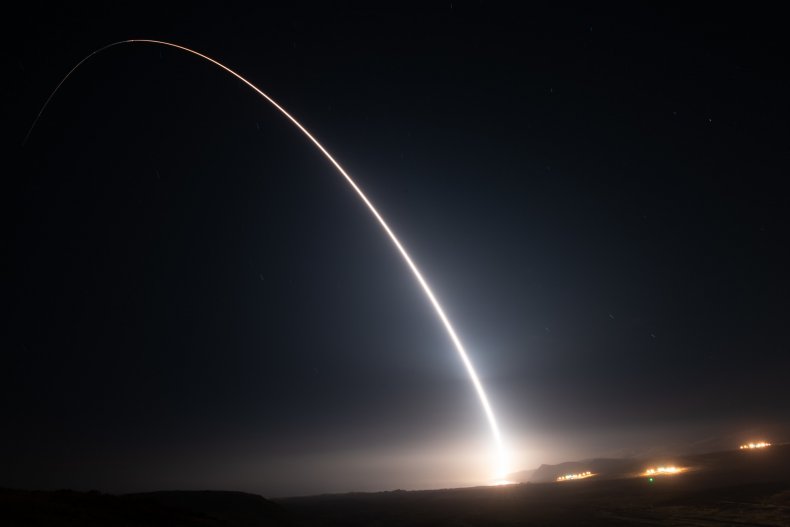
An unarmed Minuteman III intercontinental ballistic missile launches from Vandenberg Space Force Base, California, during an Air Force Global Strike Command operational test, on August 11.MICHAEL PETERSON/U.S. ARMY SPACE AND MISSILE DEFENSE COMMAND
BY TOM O’CONNOR ON 11/4/21 AT 12:29 PM EDTAD Loading
AChinese official has responded to the Pentagon‘s latest report on China’s military power in comments shared with Newsweek, saying it is the United States, not China, that is bringing the world closer to nuclear war.
The Department of Defense released on Wednesday its annual “Report on Military and Security Developments Involving the People’s Republic of China,” covering a wide range of assessments regarding China and its People’s Liberation Army, the world’s largest armed forces and the top military competitor of the U.S.
Among the more notable findings was the observation that China was “accelerating the large-scale expansion of its nuclear forces,” which it was seeking to “modernize” and “diversify.” The report noted that the current number of Chinese warheads is believed to be “in the low-200s,” but stated that this number was expected to grow.
“The accelerating pace of the PRC’s nuclear expansion may enable the PRC to have up to 700 deliverable nuclear warheads by 2027,” the report found. “The PRC likely intends to have at least 1,000 warheads by 2030, exceeding the pace and size the DoD projected in 2020.”
These capabilities were noted specifically as they could potentially impact the U.S. The report added that the “number of warheads on the PRC’s land-based ICBMs capable of threatening the United States is expected to grow to roughly 200 in the next five years.”
In response to this report, the spokesperson for China’s embassy in Washington offered a different characterization of his nation’s strategic prowess.
“China has always adhered to its self-defensive nuclear strategy,” the spokesperson told Newsweek. “China abides by the policy of no-first-use of nuclear weapons at any time and under any circumstances, and undertakes unequivocally not to use or threaten to use nuclear weapons against non-nuclear-weapon states or nuclear-weapon-free zones. China has never participated in any form of nuclear arms race, nor has it deployed nuclear weapons abroad.”NEWSWEEK SUBSCRIPTION OFFERS >
The spokesperson argued that the same could be said for the U.S., pointing to the Pentagon’s far larger arsenal, believed to consist of about 5,550 warheads.
“As we all know, the United States has the largest and most advanced nuclear arsenal in the world,” the spokesperson said. “The US has not only violated international consensus and refused to fulfill its special priority responsibility for nuclear disarmament, but also willfully ‘reneged’ and ‘withdrew’ from nuclear disarmament.”
He also highlighted the U.S. military budget that still soars above that of China, arguing that Washington “has spent trillions of dollars to upgrade its nuclear arsenal, lowered the threshold for the use of nuclear weapons and expanded the scope of nuclear strikes, thus seriously undermining global strategic security and stability.”
“The world will decide who is doing nuclear madness,” the spokesperson said. “By smearing China and playing the trick of thief crying ‘stop thief,’ the US can only amuse itself and deceive the world.”
The Iranian society acts like a bomb that is fast approaching its explosion stage, or according to Ahmadinejad, the former president of the same regime, a flood is on its way that will take everyone away. Writes Hossein Beizayi
The brain drain from any country generally happens for three reasons: economic, social, or political problems. Iran’s ongoing brain drain crisis can be attributed to the compounding effects of many factors, including decades of poor governance, wide and ongoing political and social repression, severe human rights abuses, bleak economic outlook, corruption, and socio-demographic factors.
In Kurdistan province, many people carry goods on their backs and carry them to the other side of the border, known as “kolbars” or border porters. Every month, they are killed by border police who shoot at them with impunity.
Furthermore, widespread and institutionalized corruption in the government has led to unbelievable class divides between the regime’s officials and affiliates and ordinary people. It has been revealed that regime’s officials and affiliates have access to the lower rate foreign currency, which is about one-seventh of the market rate. They sell it in the open market at a much higher price and pocket the gains. That is why Iran is ranked to have the highest number of millionaires in the Middle East.
According to the regime’s published statistics, there are currently 4.4 million addicts in Iran. The real number is much higher, of course. The same statistics state that the number of addicts in the country has doubled in the last ten years. Drug distribution centers are indirectly run and operated by Iran’s Revolutionary Guards and the regime’s officials. They operate the drug distribution network with no fear of arrest and accountability. To cover up such a lucrative operation, every now and then, several addicts and drug dealers are arrested and executed. But the growing number of addicts clearly shows that drug distribution networks are immune. In fact, obtaining drugs are now cheaper and easier than obtaining some food items.
The motivation behind most of this immigration is the fact that Iranians cannot tolerate the mullahs’ despotism imposing unbearable political and social limitations. The unfortunate truth is that as long as the mullahs are in power, we will only witness an increasing number of college students and experts leaving Iran for good.
However, according to politicians and sociologists familiar with the situation in Iran, this situation cannot continue for long. This resonates with what some of the Iranian officials are saying. The Iranian society acts like a bomb that is fast approaching its explosion stage, or according to Ahmadinejad, the former president of the same regime, a flood is on its way that will take everyone away.
Royal Saudi Air Force F-15 Strike Eagles break away from a US B-1B Lancer strategic bomber over the Red Sea on SaturdaySENIOR AIRMAN JERREHT HARRIS/US AIR FORCE/AP
A B-1B Lancer, which can be adapted to deliver the “bunker buster” bombs necessary to strike Iranian nuclear facilities, was escorted by Israeli F-15s at the end of military exercises in which the British RAF and other Nato allies also took part.
It then flew over other Middle East flashpoints — the Strait of Hormuz at the entrance to the Gulf, and the Bab al-Mandab, at the foot of the Red Sea, which is being fought over by Iran-backed Houthi rebels and the internationally recognised Yemen government.
The Lancer was accompanied by Israeli, Egyptian, Saudi and Bahraini jets
Continued moves by Iran to advance its nuclear programme while refusing to cooperate fully with the International Atomic Energy Agency (IAEA) could “jeopardize” ongoing efforts to revive the 2015 Iran nuclear deal, the leaders of the US, UK, France, Germany warned on 30 October.
The two most significant steps — the production of highly enriched uranium and enriched uranium — are “important to nuclear weapons programs” and have “no credible civilian” use, they said.
“These steps have only been made more alarming by Iran’s simultaneously decreased cooperation and transparency with the IAEA. We agreed that continued Iranian nuclear advances and obstacles to the IAEA’s work will jeopardize the possibility of a return” to the nuclear deal.
The Vienna talks, which had begun in April under the stewardship of Raisi’s predecessor Hassan Rohani, had been aimed at securing an agreement from both Iran and the US to return to full compliance with the 2015 deal, known formally as the Joint Comprehensive Plan of Action (JCPOA).
Iran began gradually ramping up its nuclear activities beyond the limits allowed under the JCPOA in 2019, in response to then US president Donald Trump’s decision to exit the deal in May 2018 and reimpose economic sanctions which at one point removed close to 2mn b/d of Iran’s crude and condensate from the market.
Iranian foreign minister Hossein Amir-Abdollahian said last week that Tehran remains keen on a full and mutual return to the deal by all parties but stressed the need for assurances that it will get all the benefits promised to it under the original agreement. Tehran feels that although many US and European sanctions were lifted in 2016, after the original JCPOA was implemented, the US and European signatories fell well short of delivering on their pledges.
The 30 October statement appeared to take note of that particular concern, and underline Biden’s readiness to return to the agreement on a ‘full-compliance’ for ‘full-compliance’ basis.
“The current situation underscores the importance of a negotiated solution that provides for the return of Iran and the US to full compliance with the JCPOA and provides the basis for continued diplomatic engagement to resolve remaining points of contention,” the leaders said. “In this spirit, we welcome President Biden’s clearly demonstrated commitment to return the US to full compliance…and to stay in full compliance, so long as Iran does the same.”
The leaders called on the Iranian president to “seize this opportunity and return to a good faith effort to conclude our negotiations as a matter of urgency.”
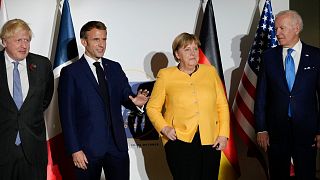
British Prime Minister Boris Johnson, French President Emmanuel Macron, German Chancellor Angela Merkel, and U.S. President Joe Biden at the G20 summit in Rome. – Copyright AP Photo/Kirsty Wigglesworth, Pool
The leaders of Germany, France, the United Kingdom and the United States expressed their “grave and growing concern” about Iran’s nuclear programme after meeting on the sidelines of the Group of 20 summit in Rome.
The four leaders said Iran “has accelerated the pace of provocative nuclear steps, such as the production of highly enriched uranium and enriched uranium metal.”
“Iran has no credible civilian need for either measure, but both are important to nuclear weapons programs,” they noted.
The leaders said the situation underscored the importance of Iran and the United States coming back to the 2015 nuclear deal known as the Joint Comprehensive Plan of Action.
Former US President Donald Trump withdrew from the deal, which imposed limits on Iran’s nuclear enrichment programme, in 2018. Britain, France, Germany, Russia, China and the European Union remain part of the deal.
France’s Emmanuel Macron, Britain’s Boris Johnson, Germany’s Angela Merkel and the US’ Joe Biden said they believed it was “remains possible to quickly reach and implement an understanding on return to full compliance to ensure for the long term that Iran’s nuclear program is exclusively for peaceful purposes, and to provide sanctions lifting with long lasting implications for Iran’s economic growth.”
They called on Iranian President Ebrahim Raisi to avoid a “dangerous escalation” of the situation.
The UN’s nuclear watchdog, the International Atomic Energy Agency, has said they are concerned that nuclear material is present at undeclared locations in Iran.
While talks to bring Washington and Tehran back into compliance have been on hiatus since June, when Iranian President Raisi took power, Iran recently said the country had agreed to restart negotiations.
The meeting comes days after US officials blamed Iran for resourcing a drone attack on a US outpost in Syria. No deaths or injuries were reported as a result of the attack.
In retaliation, the U.S. Treasury Department on Monday announced new penalties against two senior members of Iran’s Revolutionary Guard Corps and two affiliated companies for supplying lethal drones and related material to insurgent groups in Iraq, Lebanon, Yemen and Ethiopia.
This story has been updated with the statement from the leaders.
OPINION — Last week, aircraft and personnel from 14 NATO countries carried out the annual exercise, code-named Steadfast Noon, which involved practicing nuclear strike missions with dual-capable aircraft and unarmed, American-made B61 tactical nuclear bombs, similar to the roughly 150 B61s the U.S. currently has on bases in five European countries.
According to a NATO statement on the exercise, “No live weapons are used. This exercise helps to ensure that NATO’s nuclear deterrent remains safe, secure and effective.”
No scenario was given for what led to a U.S. President authorizing the apparent use of such devastating weapons in last week’s exercise, and that fact alone encouraged me to go back into records to try to show again how doubtful it would be for any such Presidential order to occur.
In this case, I went to the amazing set of Presidential Oral Histories compiled by the Miller Center at the University of Virginia that contain revealing interviews with personnel from the past administrations of Presidents Jimmy Carter, Ronald Reagan, George H. W. Bush, William J. Clinton and George W. Bush.
I focused on the President George H. W. Bush administration with Dick Cheney, when he was Secretary of Defense, and the late Colin Powell, when he was Chairman of the Joint Chiefs. Here is what they said when the issue of possibly using U.S. tactical nuclear weapons came up in late 1990 as the U.S. was preparing Operation Desert Storm to push Saddam Hussein’s Iraqi troops out of Kuwait.
As Cheney put it when questioned at the Miller Center in March 2000, “If he [Saddam] uses biological or chemical agents against our troops, all bets are off and we reserve the right to use any means at our disposal to respond…The threat clearly was that we’d use, or threaten to use, nuclear weapons.”
Cheney went on, “I asked for—and had to ask a number of times—for there to be some planning done in the Joint Staff about how we would react if in fact, that happened. I said, I want to know how many tactical nuclear weapons will it take to destroy a division of the Iraqi Republican Guard. Here’s your divisions laid out there. You come back and tell me how many nukes.”
As for President Bush, who would have had to order their use, Cheney said, “He [Bush] would have been aware that this was a problem, as I say, without question, but I don’t recall a conversation with him. The nuclear, tactical nuclear weapons option was something I wanted. I wanted to know myself, if something happened, is this an option? What do you do to them? So as I say, I found out it takes 17 weapons to destroy an Iraqi Republican Guard division. Or at least that is what I was told.”
Cheney said he had “read the history of the Eisenhower years and we’re trying to build nuclear weapons, and Hiroshima and Nagasaki aren’t that far in the past. We’d used them. By the time you get to the 1990s it is not a very realistic option from the standpoint of the U.S. military.”
The Cold War scenario had been “we might have to resort to nuclear weapons to stop—and reserved the right to do so—to stop a Soviet invasion of Western Europe,” Cheney said, but then he added, “We had problems with some of those weapons; we had to redeploy them. I think there was always doubt, at least in some of our minds, about an 8-inch nuclear round that you are going to launch out of some artillery piece over here and hit a target 10 or 12 miles away, if that was what you were doing. Didn’t seem to be necessarily the right thing to do if you didn’t have to.”
As for Joint Chiefs Chairman Powell, Cheney said, “Colin had strong feelings, Powell did, about tactical nuclear weapons. He didn’t like them. Maybe it was his European experience…He was not a big fan of tactical nukes. I think part of that was based on his earlier experiences in the service. But that was, I would say, the dominant thinking in the U.S. Army especially, and the military.”
I, myself, know that to have been true, having written about the neutron warhead in 1977. I studied nuclear weapons thereafter and can say the Army disliked the thought of using tactical nuclear weapons because no one knew what would happen after the first one was used.
When Powell, himself, was interviewed in 2011 for the Miller Center collection, he looked back to the 1990s and said, “The Army did not need to have nuclear weapons. We could make the rubble bounce everywhere now. I was pushing Secretary Cheney to eliminate nuclear weapons in the Army. The Marine Corps was already getting rid of them and some of the Air Force weapons and all of the tactical nuclear weapons aboard the ships.”
In fact, in advance of President George H. W. Bush’s doing away with most deployed U.S. tactical nuclear weapons in September 1991, Powell recalled, “We sat at the President’s desk one afternoon and I said, Mr. President, I’ve talked to the Chiefs, and they all agree with this…even the Chief of Staff of the Army agrees—surprise, surprise. In ten minutes, he approved the elimination of all of our tactical nuclear weapons, except for the number we kept in the Air Force for fighter-bomber delivery.”
In a broader sense, Powell said, “Nukes are of course a weapon of mass destruction, but I can list as many countries that have given them up as those who have tried to pursue them…South Africa gave it up. Even Libya gave it up, and Chile. They all abandoned it. And Iran and North Korea. They can’t be used. It would be suicidal.”
In his Miller Center 2000 interview — and remember this was before the 2003 Iraq invasion when Cheney was Vice President – Cheney recalled during 1990 he had ordered a review of the SIOP, the Single Integrated Operational Plan that provides target options for a U.S. President in the event strategic nuclear weapons are to be used.
Cheney found, as he said back in March 2000, “The number of weapons [in the SIOP plan back then] that were actually going down in a particular geographic area, it didn’t make a hell of a lot of sense, frankly. It was clear that there were places where there were one hell of a lot of weapons going down because we just added stuff over the years and had never really gone back and looked at it in those terms.”
As a result, he said, “We concluded…we had a lot more nuclear warheads than we needed. That we could cover the target base and do what needed to be done with fewer weapons…We wanted to preserve the Triad [nuclear delivery by submarines, bombers and land-based ICBMs]…But it also offered up the opportunity to put stuff on the table in the course of strategic arms control talks, because now we had something to trade away.”
In fact, Cheney’s 1991 SIOP study became the basis for Bush’s radical arms control reduction proposals to Russia’s Mikhail Gorbachev in September 1991.
Other parts of Cheney’s 2000 interview are even pertinent today as the Biden administration is preparing its own Nuclear Posture Review, due in the next few months.
For example, Cheney said, “I’m just trying to recreate in my own mind some of my thinking. In a whole other part of the DoD arena, cruise missile technology, we had developed the capability—with standoff conventional weapons, which we demonstrated conclusively in Iraq [meaning Operation Desert Storm]—that we can go in and hit key nodes and shut down a country, take down the power grid, shut down their transportation system, their telecommunication system, whatever it meant. It meant pinpoint strikes with accurate weapons, but a conventional warhead [emphasis added]. You give me a few cruise missiles, I can shut down any country in the world for a period of time.”
In short, Cheney in 2000 recognized that some, if not many, targets programmed for nuclear weapons could be hit by precision conventional weapons.
I would say almost all could be hit with precision conventional weapons or even taken down with cyber weapons. It’s time to see nuclear weapons for what they are – and were back in 1945 – terror weapons to end a war, not to fight one.
Another issue being considered for the Biden Nuclear Posture review is a proposal for the U.S. to adopt a “no first use” policy for its nuclear weapons. The Trump Administration, in the 2018 Nuclear Posture Review, rejected that idea and stated that “the United States would only consider the employment of nuclear weapons in extreme circumstances to defend the vital interests of the United States, its allies, and partners.”
Again, I turn to the Miller Center oral histories, this time to James Baker’s interview in March 2011 when he talked about his time as Secretary of State in the days before Operation Desert Storm. Baker recalled that before he met with Saddam Hussein’s closest advisor, Tariq Aziz in January 1991, the Defense Department, meaning Cheney, told him, Baker, “that if they use weapons of mass destruction on our troops, we would respond,” meaning use nuclear weapons.
Baker continued, “And so what I said to the Minister [Aziz] was, Minister, if you use weapons of mass destruction on our forces, the American people will demand revenge, and we have the means to exact it. Then I said, ‘That is not a threat, it is a promise.’ So, after they captured Saddam and debriefed him, they said, ‘Why didn’t you use your chemical weapons when the Americans were coming?’ And he implied—maybe he didn’t say this in so many words, but implied—it was because of what Baker told Aziz at Geneva. So, it [the nuclear threat] was effective.”
Baker said, “Based on this real-time example of how such a threat really worked to protect our troops,” the Obama 2010 Nuclear Posture Review made a mistake when it said it would only use conventional weapons against a non-nuclear state that employed chemical or biological weapons.
Thus, although the NATO exercise last week tested whether the U.S. and its allies were prepared to use tactical nuclear weapons, it’s doubtful any real order to do so will ever occur.
On the other hand, as long as the threat to use nuclear weapons exists, such exercises could, as they have done in the past, help avoid lesser military conflicts between countries that possess them or other weapons of mass destruction.
The US Hits the Iran Horn with sanctions ahead of key nuke talks meeting
The United States has hit Iran with a fresh set of sanctions as President Joe Biden prepares for a key weekend meeting with European leaders to discuss the possible resumption of nuclear talks with the Islamic Republic
The Treasury Department announced the new penalties against two senior members of Iran’s Revolutionary Guard Corps and two affiliated companies for supplying lethal drones and related material to insurgent groups in Iraq, Lebanon and Yemen and to Ethiopia, which has been fighting rival Tigray forces for almost a year.
Although the sanctions are unrelated to Iran’s atomic program, the Biden administration has said it wants to build on a potential agreement to revive the languishing 2015 nuclear deal to include Iranian support for such groups and curtail its ballistic missile development.
Iran has yet to commit to a date to return to the nuclear talks in Vienna but has signaled it will do so next week with a target of late November for resuming the negotiations. The U.S. and others have expressed skepticism about Iranian intentions, and Biden is set to meet the leaders of Britain, France and Germany on Saturday in Rome to plot strategy on Iran.
The Vienna negotiations halted in June ahead of Iran’s election that brought hard-line President Ebrahim Raisi to power. The talks, which do not directly involve the U.S. because President Donald Trump withdrew from the nuclear deal in 2018, have languished since despite the stated intentions of both Washington and Tehran to return to compliance with the agreement.
Friday’s sanctions block any assets that those targeted may have in U.S. jurisdictions, bar Americans from transactions with them and, perhaps more importantly, also subject foreign people and firms that do business with them to potential penalties.
The two targeted Revolutionary Guard Corps commanders, Brig. Gen. Saeed Aghajani and Brig. Gen. Abdollah Mehrabi, oversee the Guard’s drone activities, including support for unmanned aerial vehicle, or UAV, attacks by proxies on commercial vessels, Saudi oil facilities and U.S. and allied interests throughout the Middle East, according to Treasury.
“Iran’s proliferation of UAVs across the region threatens international peace and stability. Iran and its proxy militants have used UAVs to attack U.S. forces, our partners, and international shipping,” Treasury said in a statement. “Treasury will continue to hold Iran accountable for its irresponsible and violent acts.”
The two firms, the Kimia Part Sivan Co. and the Oje Parvaz Mado Nafar Co., along with the latter’s managing director, were sanctioned for supplying engines and technical assistance to the drone programs, Treasury said.
In a speech at the United Nations last month, Israeli Prime Minister Naftali Bennett warned that Iran’s nuclear program had hit a “watershed moment.” “Words do not stop centrifuges from spinning,” he said. “We will not allow Iran to acquire a nuclear weapon.” But consensus is growing that it is almost too late to stop Iran from getting the bomb.
According to former Central Intelligence Agency officer Reuel Gerecht and senior fellow at the Council for Foreign Relations Ray Takeyh, Iranian Supreme Leader Ayatollah Ali Khamenei “and his henchmen haven’t spent billions and endured a tidal wave of sanctions and social unrest only to get close to a nuclear weapon. They will build the bomb as soon as they can and justify it afterward” (October 19; Wall Street Journal).
Israeli Finance Minister Avigdor Lieberman said that “no diplomatic process or agreement will stop Iran’s nuclear program.” He added that “a confrontation with Iran is only a matter of time, and not a lot of time.”
Backing up the rhetoric, Israel has begun making preparations to strike Iran. The Israeli Air Force has started training drills for potential strikes on Iranian facilities. In addition, the Israeli government approved a budget of $1.5 billion for a potential military strike on Iran.
But would an air strike be enough?
According to Gerecht and Takeyh, “Tehran’s advances in centrifuge development will soon make preemption impossible.” Iran has done everything in its power to cover up and conceal these advances. Director General of the International Atomic Energy Agency Rafael Grossi warned that the measures taken to monitor Iran’s nuclear program were no longer “intact.” Last month, Grossi protested that Iran refused to allow monitoring of tesa Karaj, believed to be an important facility for manufacturing centrifuges.
Israel has already tried using limited force to stop Iran. Israel has bombed sites, sabotaged key installations, and assassinated prominent figures in Iran’s nuclear program. None of this has stopped Iran. At best, a simple air strike would delay the inevitable. Nothing short of a full-scale military invasion could stop Iran now. And Israel simply doesn’t have the resources, manpower or international support for a full-scale invasion.
Couldn’t the United States use its vast military resources to stop Iran?
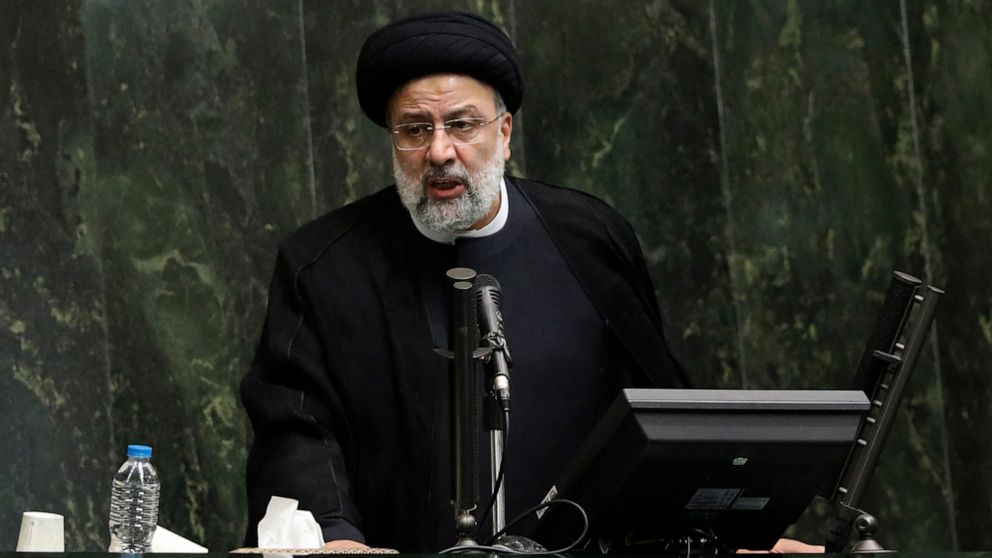
Iran doesn’t fear the U.S. anymore, and with good reason. Iranian President Ebrahim Raisi mocked the U.S. in front of the entire United Nations General Assembly, saying: “From the capitol to Kabul, one clear message was sent to the world: The U.S. hegemonic system has no credibility, whether inside or outside the country.” America’s surrender in Afghanistan demonstrated to the world it lacks the will to fight. The United States has become a paper tiger.
Unfortunately, the U.S. has done nothing to disprove Raisi’s taunt. Even as Iran brazenly marches toward the bomb, the U.S. continues to waffle. The strongest reactions from Washington have been pathetic. According to U.S. Special Envoy for Iran Robert Malley, the U.S. plans to work with its global partners in “the coming days and weeks” to “discuss where we go from here.”
How has the international community allowed Iran to get this far? At the heart of the matter is the West’s failure to understand the preeminent role religion plays in Iran.
For decades, Western leaders and diplomats have treated Iran like a normal nation. They’ve believed that the Iranian leadership acts rationally and in good faith, that Iran can be persuaded, moved or influenced by diplomacy. This thinking has been a fatal mistake and allowed Iran to walk right up to the banks of the nuclear Rubicon.
The governments of the West are blind to religion. The average politician or diplomat is a product of secular higher education. These elites view religion in the light of post-history liberalism and dismiss it as primitive and backward.
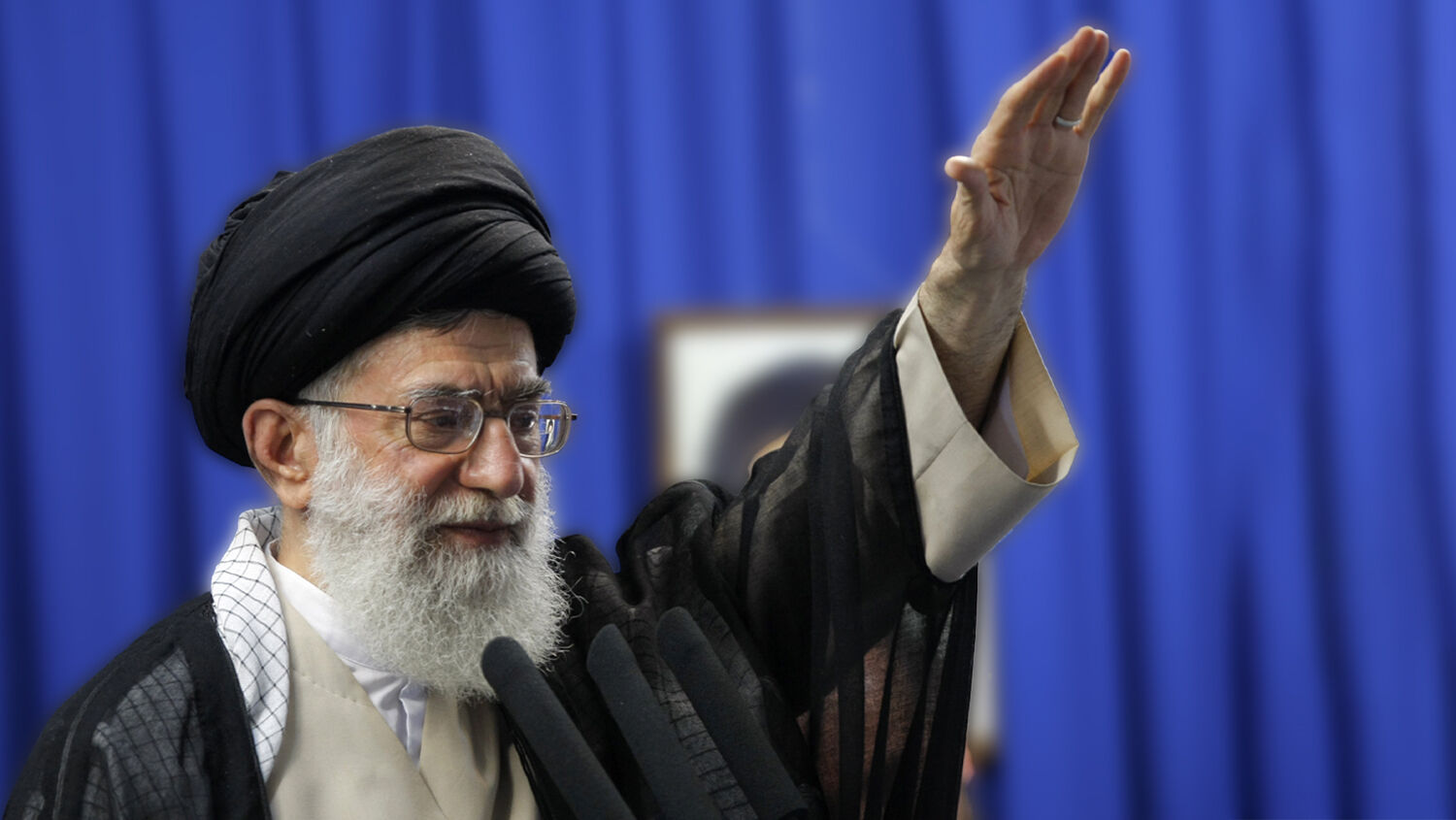
Contrast this with Iran. The head of Iran is not the Iranian president but Supreme Leader Ayatollah Ali Khamenei, the highest religious authority in the nation. The Iranian government, at its foundation, is a religious government. Article 1 of Iran’s Constitutionstates that Iran is an “Islamic republic.” Article 2 states that the Islamic republic is based on a belief in Allah and “divine revelation and its fundamental role in setting forth the laws.” Finally, 99.4 percent of Iran’s population is Muslim.
Western elites have failed to understand that Iran is first and foremost a religious state. More importantly, they have failed to understand Iran is a fanaticallyradicalreligious state.
Iran is the largest Shiite majority nation in the world. Within Iran, 90 to 95 percent of Muslims identify as Shiite, and the majority of those are Twelvers, which believe “their savior—the 12th imam, or mahdi—will return sooner if they cause more apocalyptic chaos and violence,” Trumpet editor in chief Gerald Flurry explains in his free booklet The King of the South.
Joel Rosenburg, a former aide to Benjamin Netanyahu, writes in his book Enemies and Allies, that Iran’s supreme leader and his inner circle follow this extreme ideology, which is “far more dangerous than mere radical Islam.” They believe the way to bring about the return of the mahdi is “to methodically acquire weapons of mass destruction and then launch the war that will bring about the consummation of the end of days.”
For Iranians, pursuing nuclear weapons is a sacred undertaking that will result in the coming of their “messiah.” We are soon to wake up in a horrifying world where these religious zealots have nuclear weapons, if they don’t have them already.
This fanaticism is why international laws, norms, treaties and nonproliferation agreements have done nothing to stop Iran. As Iran’s leaders see it, the “great Satan,” the United States of America, designed and runs the entire international order. Iran has no desire to join a global community that it intends to throw into “apocalyptic chaos and violence.” Up until this point, it has made a show of playing along with the International Atomic Energy Agency and the international community. Judging by its recent actions, Iran believes that is no longer necessary.
What we are seeing today is exactly what Mr. Flurry has warned about for over 30 years. In The King of the South, Mr. Flurry proves that the Bible is not silent about something so dire as a nuclear-armed Iran. His booklet revolves around an important end-time prophecy in Daniel 11. “And at the time of the end shall the king of the south push at him: and the king of the north shall come against him like a whirlwind, with chariots, and with horsemen, and with many ships; and he shall enter into the countries, and shall overflow and pass over” (verse 40).
Mr. Flurry explains that the king of the south is radical Islam, led by Iran and the king of the north is a German-led European superstate. Iran will push at this superstate and provoke it into a final crusade between radical Islam and Catholic Europe.
Yet Mr. Flurry explains, “As bad as this news is, it leads to the best news this world has ever heard!” To learn more about God’s plan and purpose behind these events please request free copies of The King of the Southand Germany’s Secret Strategy to Destroy Iran.
Tehran is already enriching uranium to up to 60%, UN nuclear watchdog says will boost the “frequency and intensity” of inspections at the facility. Iran’s top nuclear negotiator to hold talks with EU officials in Brussels.
Iran is expanding its enrichment of uranium beyond the highly enriched threshold of 20% purity at a Natanz plant where it is already enriching to 60%, but the new activity does not involve keeping the product, the U.N nuclear watchdog said on Monday.
The move is likely to help Iran refine its knowledge of the enrichment process – something Western powers generally condemn because it is irreversible – but since this time the product is not being collected, it will not immediately accelerate Iran’s production of uranium enriched to close to weapons-grade.
As of around 90%, uranium is considered weapons-grade.
The IAEA said in a statement outlining the report that Iran informed it last week of changes to the setup of centrifuges, machines that enrich uranium, at the plant – Iran would feed uranium enriched to up to 20% into limited numbers of extra centrifuges without collecting the product.
“On 25 October 2021, the Agency verified that Iran began feeding (uranium hexafluoride gas) enriched up to 20% U-235 into a single IR-6 centrifuge in R&D line 2 at PFEP and that the resulting product and tails streams were being re-combined,” the IAEA report said, meaning that after separating the enriched product it was mixed with the centrifuge’s waste and not kept.
Iran had said it planned to also feed uranium enriched to up to 20% into other single centrifuges or small- to medium-sized cascades, or clusters, of machines on the same line, but those were not being fed at the time, the IAEA said.
Iran has yet to announce a date to resume discussions in Vienna about reviving the 2015 nuclear pact under which it curbed its nuclear program in return for relief from US, EU and UN economic sanctions, but Tehran’s top nuclear negotiator Ali Bagheri Kani will hold a second meeting this month with the European Union’s Enrique Mora, who coordinates talks between Tehran and six powers.
“I will meet [EU] coordinator in Brussels on Wednesday to continue our talks on result-oriented negotiations (between Iran and the six powers),” Bagheri Kani tweeted Monday, alluding to Mora’s initial round of discussions in Tehran on Oct. 14.
In April, Iran and six powers started talks to reinstate the deal, which then-US President Donald Trump ditched three years ago before reimposing sanctions that have crippled Iran’s economy. But the talks were put on hold after Iran’s presidential election in June that brought anti-Western hardliner Ebrahim Raisi to power.
The United States and European powers have urged Iran to return to negotiations, warning that time is running out as the Islamic Republic’s uranium enrichment program is advancing well beyond the limits set by the nuclear pact.
Iran has repeatedly said it will return to negotiations but it has yet to specify a date.
“Iran is determined to engage in negotiations that would remove unlawful and cruel sanctions in a full & effective manner, secure normalization of trade & economic relations w/ Iran, and provide credible guarantee for no further reneging,” Bagheri Kani tweeted.