Friday, July 1, 2022

No normalization outside the temple walls: Revelation 11

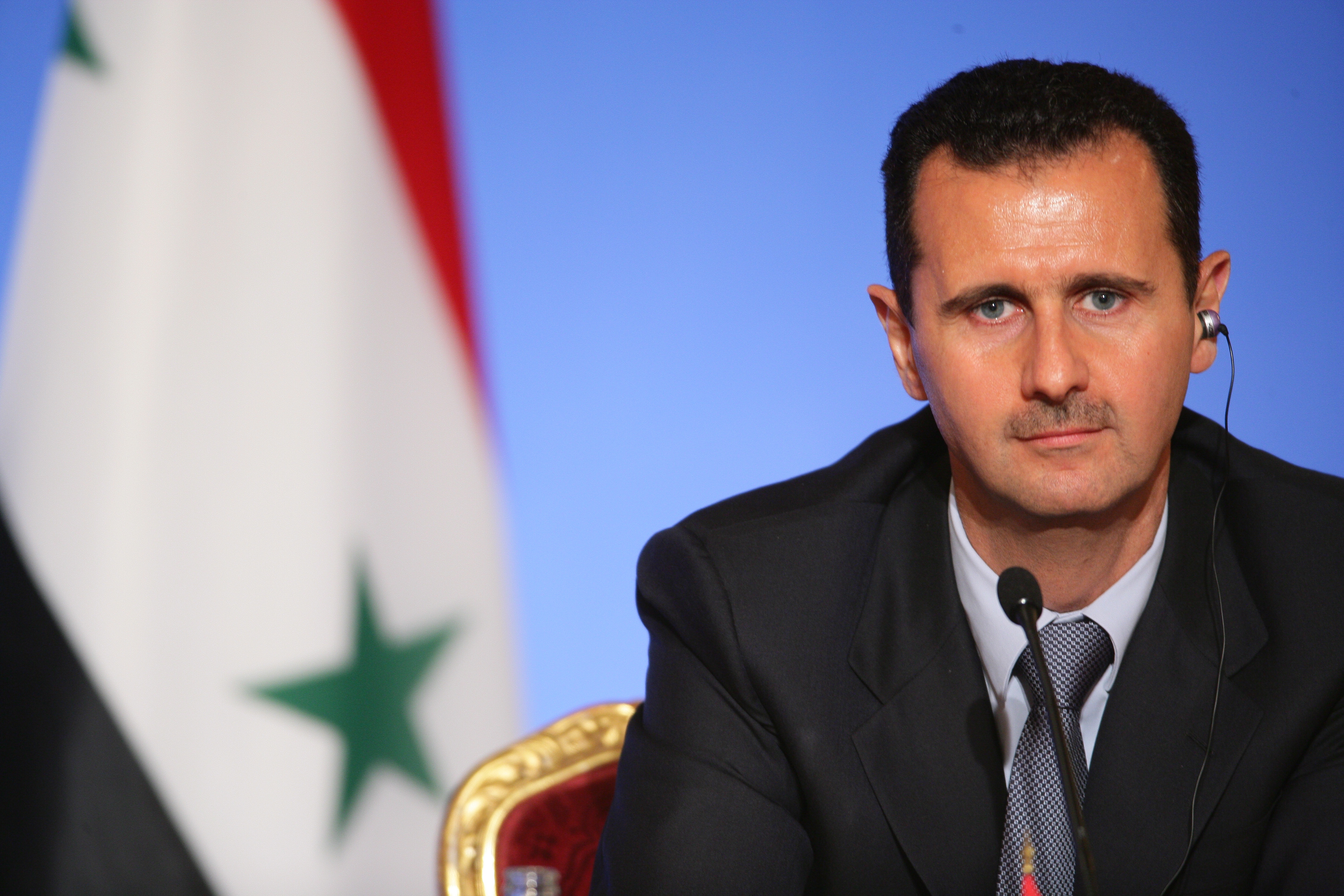
The Syrian National Coalition has condemned a reported decision by Hamas to restore ties with President Bashar al-Assad’s regime, ten years after it cut them off following the outbreak of the Syrian conflict.ShareFlipboardRedditWhatsAppTwitterFacebook

Hamas leaders had previously endorsed the uprising against Assad’s autocratic rule [Getty]

The National Coalition for Syrian Revolutionary and Opposition Forces has said they oppose a reported decision by Hamas to restore ties with the regime of Syrian President Bashar al-Assad.

The coalition – which includes a number of groups opposed to the Syrian regime – labelled the move a “disregard for the lives of Syrians and Palestinians who were killed by this regime and its allies”, in a statement on Thursday.

The Palestinian Islamist group reportedly decided to restore ties 10 years after shunning Assad for his brutal crackdown on a peaceful uprising against his rule, Reuters said earlier this month.

The movement withdrew from Damascus, where it previously had offices, in 2012 and publically endorsed the revolution after the regime’s bloody suppression of the uprising.

An official – who requested anonymity – told the international news agency the two sides had embarked on “high profile meetings to achieve that goal”.

The Syrian opposition body has now called on Hamas to rethink its decision.

“The Syrian National Coalition calls upon Hamas not to distort the history of the struggle for freedom and independence, by aligning with a criminal regime,” the coalition stated.

“Hamas will not be of any service for the Palestinian cause if it sides with sabotage, murder, rape and torturing [people] to death.”

The statement added that normalisation with the Assad regime would not represent the “just cause of the Palestinian people” living under Israeli occupation.

RELATED

World

The New Arab Staff

It warned that Hamas would “lose its support in the nation” if it restored ties with the Assad regime, saying the regime had a “deep-seated grudge” against Hamas and all Palestinians.

The recently revealed 2013 massacre in the Damascus suburb of Tadamon – where many Palestinian refugees displaced by Israel in 1948 had resettled- showed the regime horrifically executing at least 41 people, some of whom are believed to be Palestinians.

During the Syrian conflict, the regime also imposed a starvation siege on the Palestinian Yarmouk refugee camp south of Damascus, which was captured by opposition forces.

The conflict in Syria began in 2011 and has seen over 500,000 people killed, most of them in bombardments of civilian areas by the regime and its ally Russia.

Syria was suspended from the Arab League in 2011 but since then several Arab states have restored relations with the regime, including the UAE, Oman and Jordan.

New 3.6 earthquake felt before the Sixth Seal: Revelation 6

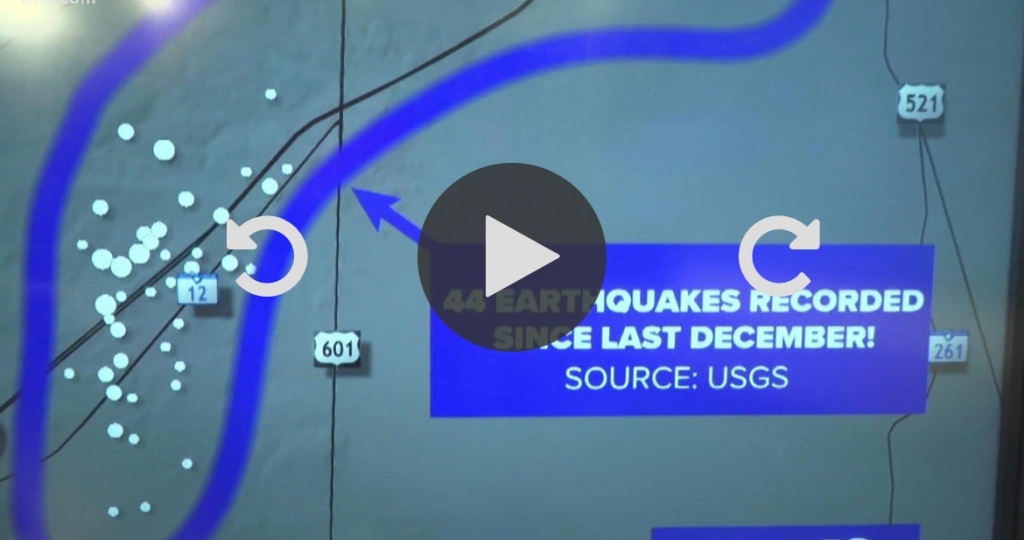
New 3.6 earthquake felt in South Carolina, strongest one in 8 years

This was the second stronger earthquake in the central South Carolina region Wednesday.

COLUMBIA, S.C. — Another earthquake has shaken much of the Midlands, just hours after another strong tremor rattled the area.

The U.S. Geological Survey says the 3.6 magnitude quake struck at 7:03 p.m. Wednesday about 1.24 miles east of Elgin. It was at a depth of just a tenth of a mile, which is very close to the surface for an earthquake.

The USGS has confirmed two aftershocks, both at 7:22pm. One was 1.5 magnitude and the other was 1.8 magnitude. The two aftershocks happed at different times in the same minute.   

It was the seventh quake of the day. 

This week has seen 12 earthquakes. 

News19 has gotten reports of people feeling the earthquake throughout the central Midlands and up near the Charlotte area. At WLTX, we were on the air when the 3.6 quake took place and that moment was captured on-air.

Watch Below: The moment when the earthquake struck at News19 

The later tremor a bit stronger than the one that took place just hours earlier. The earlier one was a 3.5 magnitude quake that happened at 2:43 p.m. in an area 3.2 miles east of Elgin. The USGS shake map got well over 3,000 reports of people feeling it, with reports all across Richland, Kershaw, and Lexington Counties and has far north as Charlotte.  

The Kershaw County Emergency Management division says the power outages in the area were caused by the earthquake.  The earthquake triggered the switch plates which caused the power to blink off for a while. 

Three much smaller aftershocks also took place. 

Earthquakes happen throughout the state but most occur near the coast. Approximately 70 percent of earthquakes are in the coastal plain, with most happening in the Lowcountry. 

Back in 1886, Charleston was hit by a catastrophic earthquake. It had an estimated magnitude of 7.3, and was felt as far away and Cuba and New York. At least 60 people were killed, and thousands of building were damaged.

Structural damage extended hundreds of miles to cities in Alabama, Ohio, and Kentucky.

Geologists say that Charleston lies in one of the most seismically active areas in the eastern United States.

Hamas and the PA left outside the Temple Walls: Revelation 11

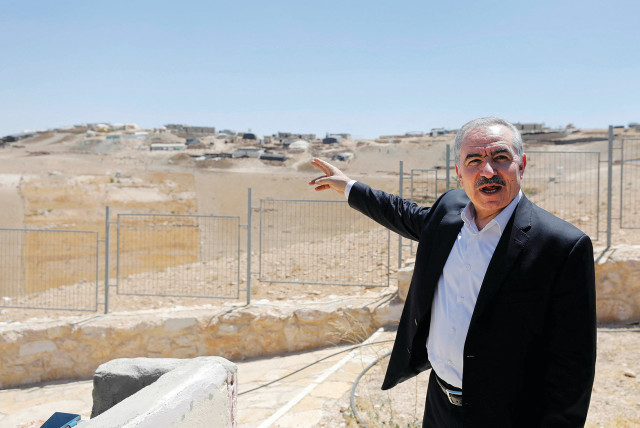
 PALESTINIAN AUTHORITY Prime Minister Mohammad Shtayyeh gestures as he visits Masafer Yatta, in the South Hebron Hills, earlier this week. (photo credit: MUSSA QAWASMA/REUTERS)

Hamas and the PA left out of the Middle East

PALESTINIAN AFFAIRS: The PA is concerned that the Palestinian issue will be sidelined in the wake of a new Middle East security alliance.

On the eve of US President Joe Biden’s visit to Israel and Saudi Arabia, both the Palestinian Authority and its rivals in Hamas have good reason to be worried.

The PA and its leader, Mahmoud Abbas, are concerned that the Palestinian issue will be sidelined in the wake of the talk of a new Middle East security alliance that would see Israel and some Arab countries, including Saudi Arabia, come together to confront Iran and its terrorist proxies.

For some time now, the rapprochement between Israel and some Arab countries has been keeping Abbas and the PA leadership up at night. They see it as a violation of the 2002 Arab Peace Initiative, according to which the Arabs would establish normal relations with Israel only after a “full Israeli withdrawal from all the territories occupied since 1967… and the establishment of a sovereign independent Palestinian state… with East Jerusalem as its capital.”

Although Biden is scheduled to meet Abbas in Bethlehem, the PA leader is aware that the US president’s visit to the region is mainly aimed at establishing the new security alliance, discussing the possibility of promoting normalization between Israel and Saudi Arabia and strengthening US-Saudi relations.

The Palestinians are not expected to be part of the security alliance. Their primary goal is to make sure the growing cooperation between Israel and the Arab countries does not come at the expense of the Palestinian issue. “President Abbas is not opposed to the security alliance,” said a senior Palestinian official in Ramallah. “He’s just telling the Americans and the Arabs that the alliance should not divert attention from the Palestinian cause.”

As part of his effort to keep the Palestinian issue at the top of the agenda of the Biden administration and the international community, Abbas traveled earlier this week to Amman, where he held talks with Jordan’s King Abdullah. As far as Abbas is concerned, his talks with the Jordanian monarch were successful. The king assured him that despite his support for the proposed alliance, he would make a big effort to ensure the Palestinian issue is not “marginalized” during the Biden visit.

Still, Abbas is worried the Biden administration has no real intention to fulfill most of its promises to the Palestinians, including the reopening of the US consulate in Jerusalem, which was closed by the Trump administration in 2018. In addition, Abbas and other Palestinian officials in Ramallah have expressed deep disappointment with the Biden administration for its alleged failure to exert pressure on Israel to halt settlement construction and refrain from unilateral actions that could “sabotage” the prospects of achieving a two-state solution.

Palestinian officials argue that the Biden administration’s continued “bias” in favor of Israel and failure to carry out its promises to the Palestinians is undermining the PA leadership’s credibility in the eyes of its people and playing into the hands of the extremists, especially Hamas.

“The US does not want to put any pressure on Israel,” said Mahmoud al-Aloul, deputy chairman of Fatah.

“[The US] keeps telling us that we need to be patient because the political situation in Israel is unstable.”

none

Mahmoud al-Aloul

Walid al-Awad, a member of the Palestinian Central Council, one of the key decision-making institutions of the PLO, said the Palestinians should reject Biden’s “suspicious” visit and make it clear they won’t allow themselves to continue falling victim to “American deception.”

Awad and other Palestinian officials have been demanding that the PA leadership carry out its threats to halt security coordination with Israel and renounce all signed agreements between the Palestinians and Israelis. But they know that Abbas, whose popularity among the Palestinians is on the wane, is not eager to cut off his ties with Israel. While he has lost the support of the majority of the Palestinians, Abbas continues to enjoy the backing of the US and the European Union.

A PUBLIC opinion poll published this week by the Ramallah-based Palestinian Center for Policy and Survey Research (PCPSR) indicated a significant drop in support for Abbas’s ruling Fatah faction and a similar drop in support for the two-state solution.

The results of the poll also revealed a rise in support for a return to an armed intifada and majority support for the recent terrorist attacks inside Israel.

If new presidential elections were held today, Hamas leader Ismail Haniyeh would receive 55% of the votes, while Abbas would get only 33%, according to the poll. The percentage of Palestinians who want the 86-year-old Abbas to resign has risen from 73% three months ago to 77%.

Another disturbing finding for Abbas: 65% of the Palestinians are opposed to dialogue with the US administration under President Joe Biden.

The results of the poll show that a vast majority of the Palestinians have no confidence in Abbas and the PA leadership, do not see the US as an honest broker in the conflict with Israel and support Hamas and armed attacks against Israel.

Abbas, however, is not oblivious to the sentiments on the Palestinian street. In fact, he does not seem to care much about what the Palestinian public says or wants. Last year, he called off the presidential and parliamentary elections, to the dismay of many Palestinians. Moreover, he does not appear keen on ending his rivalry with Hamas, which has resulted in the emergence of two separate Palestinian entities in the West Bank and Gaza Strip.

This is in addition to the fact that Abbas has been running the PA as an authoritarian regime, refusing to share powers or even consult with others on major issues concerning the Palestinian issue. He has even alienated some of his loyalists by appointing Hussein al-Sheikh to the top position of secretary-general of the PLO. The appointment boosts Sheikh’s chances of succeeding Abbas as president of the PA.

It’s already obvious that the next PA president will not be chosen through a general election, mainly due to the split between the West Bank and Gaza Strip and mounting tensions among the top brass of the Fatah leadership. Several veteran Fatah officials are said to be vehemently opposed to the appointment of Sheikh, arguing that he does not have the credentials to step into the shoes of the PA president.

“Abbas is always keen on appeasing the Americans, Europeans and Israelis more than tending to the needs of his people,” said a senior Fatah official who previously served as a minister in the PA cabinet. “How can he complain that Biden is not fulfilling his promises to the Palestinians when he himself is doing the same? How many times has Abbas promised to halt security coordination with Israel? How many times has he promised and threatened to cancel all signed agreements with Israel? How many times has he promised to end the conflict between Fatah and Hamas? How many times has he promised to hold general elections?”

During the meeting with Biden, Abbas is expected to repeat his call to the US administration to work toward paving the way for creating a “political horizon” that would lead to the resumption of the stalled peace talks with Israel, according to Palestinian sources. This is part of Abbas’s strategy to put the Palestinian issue back at the center of the world’s attention. From Abbas’s point of view, if Saudi Arabia joins the Abraham Accords, the Palestinians may drop even further off the radar of the Arab world than where it currently stands.

But even if Biden reopens the US consulate in Jerusalem, which previously served as a diplomatic mission to the Palestinians, this is unlikely to bolster Abbas’s standing among his own people. The controversy surrounding the consulate is not at the top of the Palestinian public’s list of priorities. Rather, most Palestinians are worried about the security situation in the West Bank, the harsh economic situation and Israeli measures in Jerusalem, including at al-Haram al-Sharif (Temple Mount).

And the Palestinians do not seem to care about any “political horizon” with Israel, at least not under the current circumstances when many of them have lost confidence in any peace process.

HAMAS, FOR its part, is also concerned about the idea of establishing a new Middle East alliance. The Hamas leadership is convinced that the security cooperation between Israel and the Arab countries aims to undermine Iran’s growing influence in the region and deal a blow to the “axis of resistance” against Israel.

As part of an effort to disrupt Biden’s upcoming visit, Hamas leader Ismail Haniyeh flew last week from Qatar to Lebanon, where he held meetings with Hezbollah Secretary-General Hassan Nasrallah and leaders of several Palestinian and Lebanese extremist organizations.

Iran and its Palestinian and Lebanese proxies believe the proposed security alliance in the Middle East is part of a “Zionist-American-Arab conspiracy” to facilitate the integration of Israel in the region. They are particularly worried that the alliance’s main goal would be to diminish the power of Hamas and Hezbollah and end Iran’s intervention in the internal affairs of Yemen, Iraq, Syria and Lebanon.

Judging from the statements of its leaders, Hamas’s current strategy is to encourage violent clashes between Palestinians and Israel in the West Bank and Jerusalem, while preserving the unofficial ceasefire in the Gaza Strip. At this stage, Hamas is obviously not interested in, nor prepared for, another round of fighting with Israel.

Hamas knows that increased tensions and violence in the West Bank and Jerusalem further undermine the credibility of Abbas and the PA leadership among the Palestinians. As far as Hamas is concerned, the death of each Palestinian in clashes with the IDF is another nail in the coffin of the PA leadership and any “political horizon” with Israel. The daily IDF raids on Palestinian cities, villages and refugee camps are increasing the anger and frustration not only against Israel, but also against Abbas and the PA leadership.

Like Abbas, the leaders of Hamas are also worried about their group’s growing isolation in the Arab world. In an attempt to shift attention to the Gaza Strip, Hamas has renewed the talk about a possible prisoner exchange deal with Israel by releasing a video of Israeli-Arab citizen Hisham al-Sayed, who has been held captive by the terror group since he crossed into the Gaza Strip in 2015.

The purpose of the video is to put the issue of a prisoner swap back on the agenda ahead of Biden’s visit to the region. Hamas is hoping to send a message to the Americans, the Arabs and Israel to the effect that the terror group remains a major and relevant player in the Palestinian arena and that it holds the key to security and stability.

By raising the issue of the prisoner swap, Hamas is also hoping to score points with the Palestinian public by showing that it is the only party working to secure the release of Palestinian prisoners held in Israeli prisons at a time when Abbas is not doing anything in this regard. Hamas is well aware that securing a prisoner exchange agreement would increase its popularity among the Palestinians.

It’s hard to find a single Palestinian who believes Biden’s visit to the region will yield positive change for the Palestinians, especially in light of the recent collapse of the ruling coalition in Israel.

The day after Biden leaves, Abbas will realize the current stalemate with Israel is likely to remain intact, at least until the next Israeli elections, which are scheduled for four months from now. Moreover, Abbas and Hamas will wake up to a new Middle East in which the Arabs continue to shift their attention from the PA/Hamas-engineered Palestinian plight to their own pressing problems. •

The Obama Deal is Dying: Daniel 8

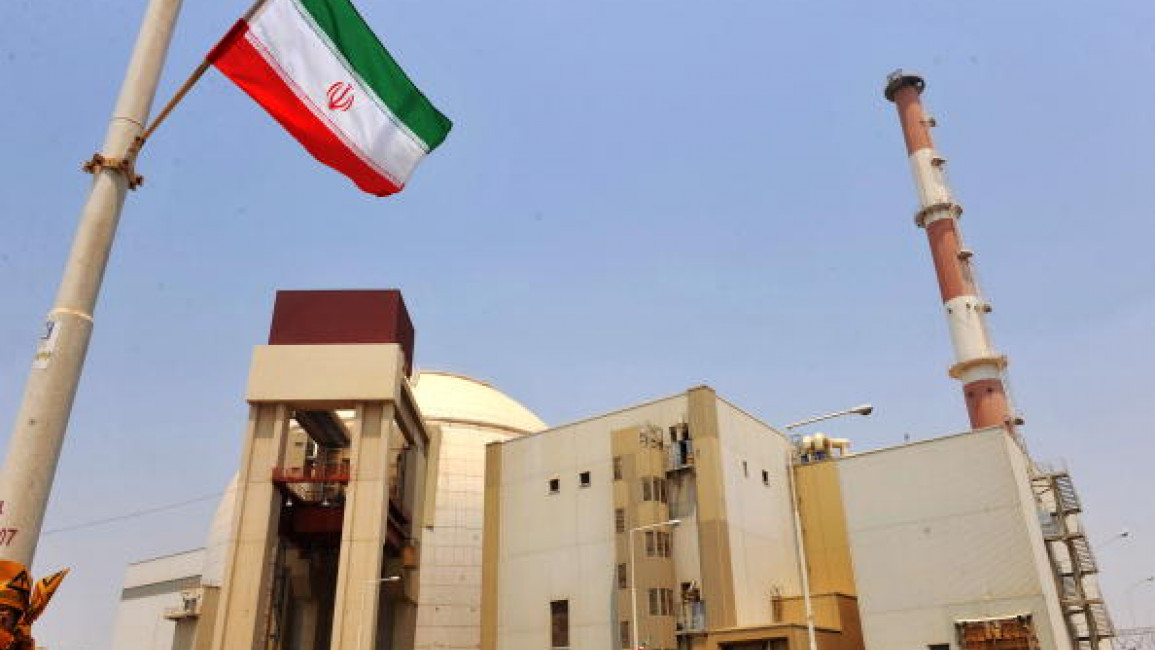
Indirect talks in Qatar’s capital between Iran and the US on reviving a 2015 nuclear dealhave concluded with “no progress made,” a State Department spokesperson said late Wednesday.

The negotiations in Doha were an attempt to reboot long-running European Union-mediated talks on a return to the 2015 agreement between Tehran and world powers.

No time limit was previously announced on the most-recent negotiations, which had been taking place in a Doha hotel with special envoy Robert Malley heading the US delegation.

But by Wednesday night, a US State Department spokesperson said the “indirect discussions in Doha have concluded”.

MENA

The New Arab Staff & Agencies

“While we are very grateful to the EU for its efforts, we are disappointed that Iran has, yet again, failed to respond positively to the EU’s initiative and therefore that no progress was made,” the spokesperson told AFP in an email.

EU coordinator Enrique Mora had earlier said the parties engaged in “two intense days of proximity talks” in Doha that had “not yet” yielded the progress the EU team sought.

“We will keep working with even greater urgency to bring back on track a key deal for non-proliferation and regional stability,” he said on Twitter earlier in the day, posting a photo of himself meeting with Iran’s chief negotiator Ali Bagheri.

The comments came after Iran’s foreign ministry spokesman Nasser Kanani said that the talks would last only two days.

The parties have “exchanged views and proposals on the remaining issues”, he said.

An EU source told AFP that the discussions, which come two weeks before US President Joe Biden makes his first official visit to the region, were supposed to last several days.

‘Red lines’

Foreign Minister Hossein Amir-Abdollahian had said Iran was “serious” about finalising a deal in Doha, but that it wouldn’t cross its “red lines”.

“If the American side has serious intentions and is realistic, an agreement is available at this stage and in this round of negotiations,” he was quoted as saying by state news agency IRNA earlier Wednesday.

IRNA has previously described the “red lines” as lifting all sanctions related to the nuclear agreement, creating a mechanism to verify they have been lifted and making sure the US does not withdraw once again from the deal.

Washington has “made clear our readiness to quickly conclude and implement a deal on mutual return to full compliance”, the US State Department spokesperson said after indirect talks concluded.

“Yet in Doha, as before, Iran raised issues wholly unrelated to the JCPOA (Iran nuclear deal) and apparently is not ready to make a fundamental decision on whether it wants to revive the deal or bury it,” the spokesperson said.

Differences between Tehran and Washington have notably included Iran’s demand that its Islamic Revolutionary Guard Corps be removed from a US terror list.

‘Trump method’

The arch-rivals have been meeting indirectly – passing messages from different areas of the same hotel – to try to break an impasse in attempts to restart the 2015 agreement.

That deal, which lifted sanctions in return for Iran curbing its nuclear programme, was abandoned unilaterally in 2018 by former US president Donald Trump, who reimposed biting sanctions.

Iranian officials earlier said they were hoping for progress in Qatar – but warned the Americans to abandon the “Trump method” of negotiating.

“We hope that, God willing, we can reach a positive and acceptable agreement if the United States abandons the Trump method,” Iranian government spokesman Ali Bahadori-Jahromi said.

He described the method as “non-compliance with international law and past agreements and disregard for the legal rights of the Iranian people”.

The international talks on reviving the deal began in April 2021 in Vienna, before the process stalled in March.

ussian Horn Vows Retribution Va Against NATO: Revelation 7


Russian Deputy Foreign Minister Sergei Ryabkov looks on during a press conference following talks with US counterpart on soaring tensions over Ukraine, in Geneva, on January 10, 2022. - Russia told the United States at tense talks that it had no plans to invade Ukraine, as the two sides agreed to more efforts to keep tensions from turning into a full-blown confrontation. After more than seven hours of negotiations in Geneva, the Russian and US negotiators both offered to keep talking, though there was no sign of a major breakthrough. (Photo by Fabrice COFFRINI / AFP) (Photo by FABRICE COFFRINI/AFP via Getty Images)

Russia Vows Retribution for NATO’s ‘Historic,’ ‘Transformative’ New Moves

A bungled campaign in Ukraine leaves a little Russia with fewer – and more dangerous – options for retaliation against NATO’s dramatic new deployments.

Russia on Wednesday threatened to further escalate its military posture in Europe to defend against new deployments by NATO that leaders within the alliance call “historic” and “transformative.”

“What is happening will invariably lead to compensatory measures on our part,” Deputy Foreign Minister Sergey Ryabkov told reporters Wednesday morning. “We have the capabilities and resources. Security will be 100% guaranteed.”

Ryabkov was responding to announcements out of the ongoing NATO summit in Spain that the alliance would increase its high-readiness force to well over 300,000 troops, that the U.S. would station a major military headquarters in Poland – the first permanent basing of American forces on NATO’s “eastern flank” – and that the historically neutral Nordic countries Sweden and Finland on Russia’s northern periphery now face a clear path to NATO membership.

The sudden developments – many unthinkable at the end of last year – come as the U.S. and its Western partners seek new ways to impose costs on Russia for its unprovoked invasion of Ukraine in late February, gambling that what they consider acts of deterrence won’t, in fact, push Russia into expanding its war into other parts of Europe.

And the potency of Russia’s response also remains a question as it continues to sustain its war in Ukraine by diverting the bulk of its military capabilities there – though stopping short of declaring war and fully mobilizing its forces. An at-times bungled campaign has created intense strains on many of its reserves, leaving the Kremlin and Putin to rely instead on more malevolent forms of posturing, including growing references to its nuclear arsenal.

“We are sending an unmistakable message that NATO is strong, united,” President Joe Biden said at the summit on Wednesday morning. “In our meetings today we are going to approve a new NATO strategic concept and reaffirm the unity of determination of our alliance to defend every inch of NATO territory.”

“Putin was looking for the Finlandization of Europe,” Biden said, referring to Russian leaders’ historic pressure on their consequential northeastern neighbor with a border roughly 100 miles from St. Petersburg. “He’s going to get the NATO-ization of Europe.”

NATO Secretary-General Jens Stoltenberg said the allies were meeting “in the midst of the most serious security crisis we have faced since the Second World War,” adding, “This will be a historic and transformative summit where we will make decisions that will actually change this alliance for many years to come.”

The summit comes as the alliance drafts a new strategic concept to include permanent deployments of aircraft to the U.K., navy destroyers to Spain and other rotational forces to Romania and Poland. As evidence of how much European security has changed since Russia first invaded Ukraine in 2014, the last time the alliance drafted a strategic concept – in 2010 – it referred to Russia as “a strategic partner.”

Putin also finds himself further isolated by previously friendly governments. Turkish President Recep Tayyip Erdogan – whose autocratic tendencies have included closer ties with the Russian leader in recent years – announced this week that he would not block the ascension of Sweden and Finland to join NATO despite previously expressing concerns about their support for Kurdish groups that Ankara consider terrorists.

The alliance’s latest moves put further pressure on mainland Russia but also on the isolated oblast of Kaliningrad, the strategic bastion of Russian territory encircled by Lithuania, Poland and the Baltic Sea. A burgeoning diplomatic crisis has emerged there in recent weeks after Lithuania limited the transit of goods there.

Despite Russia’s latest threats, it remains unclear whether it could field an army of any consequence in response to the buildup from Europe. It has relegated itself to unearthing mothballed tanks to replace those destroyed by Western-supplied precision weapons in Ukraine, and has had to reactivate retired generals – some of them visibly unfit for combat – to command forces on the ground as a replacement for the dozen or so that have been killed at the front lines.

Western intelligence indicates that many of these forces appear unfit for battle, with Russian commanders cannibalizing units with reservists with combat experience to fill out its front-line battalions.

The U.K. Ministry of Defense’s military intelligence concluded in an assessment this week that the Russian leadership likely remains reluctant to order a general mobilization, “despite a continued shortfall in the number of deployable reservists for Ukraine.”

The Institute for the Study of War, which has tracked Russian movements, documented earlier this month that Moscow was sending some recruits into battle with less than a week of training.

“Russia continues to deploy insufficiently prepared volunteer and reserve forces to reinforce its ongoing operations,” it concluded in an analysis note published June 13.

These realities don’t necessarily mean that Russia is without options to intimidate its Western adversaries.

Following its standoff with Kaliningrad, Lithuania suffered a massive cyberattack on the scale of what other Western countries expected would follow their condemnation of Russia’s invasion of Ukraine. A Russian hacker group claimed credit for that attack and said they would continue until Lithuania acquiesced to Moscow’s demands.

And, more dramatically, Putin this week noted he planned to move nuclear-capable missiles into Belarus, one of his few remaining allies along Ukraine’s northern border. The Pentagon blasted his rhetoric as “cavalier.”

“I can’t think of a more irresponsible thing for a senior leader to say than talk about the employment of nuclear weapons in this case,” a senior defense official told reporters from the Pentagon on Monday.

70% of Australians support the Australian nuclear horn: Daniel 7


70% of Australians support nuclear submarines under AUKUS

Country’s public increasingly views Russia and China as threats in new poll

SYDNEY — Australia’s plan to acquire nuclear submarines under the AUKUS trilateral security partnership enjoys support from 70% of the country’s public, a poll released Tuesday shows, as a growing number of people view Russia and China as threats.

The results of an annual survey by the Lowy Institute, a Sydney-based think tank, come after Australia, the U.K. and the U.S. unveiled AUKUS in September.

As part of the pact, the two other members will help Australia acquire nuclear-powered submarines. Lowy’s poll found 33% of respondents were “strongly in favor” of Australia obtaining the submarines, while another 37% were “somewhat in favor.”

Only 11% were “strongly against” the move while 17% were “somewhat against” it.

This contrasts sharply with the general antinuclear sentiment in Australia. A full 63% of respondents in the poll either strongly or somewhat opposed Australia acquiring nuclear weapons. Just 11% strongly favored obtaining nuclear weapons, while 25% were somewhat in favor.

Lowy asked respondents to rank a list of potential threats to Australia’s vital interests over the next decade. “Russia’s foreign policy” was picked as a critical threat — the most serious kind — by 68% in the latest poll, which follows Russia’s invasion of Ukraine.

China’s foreign policy was seen as a critical threat by 65%. This edged a military clash between the U.S. and China over Taiwan, which came in at 64% of respondents. Climate change was regarded as a critical threat by 62%.

Russian and Chinese foreign policies had been viewed as critical threats by 32% and 36%, respectively, in Lowy’s 2017 poll. Meanwhile, the share of people citing international terrorism declined to 48% from 68% over the same five years.

When it comes to countries that can be trusted to act responsibly in global affairs, the U.K. and Japan topped the list with a score of 87% each. France ranked third at 82%, while the U.S. was fourth at 65%.

China trailed at 12%, slipping by 4 points from last year’s poll. Russia lost 21 points to sink to 5%.

The poll collected responses from roughly 2,000 Australian adults, mostly in March.

No Obama Nuclear deal in Qatar


Iran report: Nuclear talks with US end without deal in Qatar

by Naharnet Newsdesk 8 hours ago

Indirect negotiations between Iran and the U.S. over Tehran’s tattered nuclear deal with world powers have ended without breaking a deadlock over the talks, a semiofficial Iranian news agency reported Wednesday.

The U.S. State Department and the European Union, which is mediating the talks in Qatar, did not immediately acknowledge the end of the negotiations in Doha.

However, the semiofficial Tasnim news agency, believed to be close to Iran’s hard-line Revolutionary Guard, described the negotiations as finished and having “no effect on breaking the deadlock in the talks.”

U.S. Special Representative Rob Malley spoke to the Iranians through EU official Enrique Mora during the talks. Mora then took messages to Iran’s top nuclear negotiator Ali Bagheri Kani.

Tasnim claimed that the American position did not include “a guarantee for Iran benefiting economically from the deal,” quoting what it described as unnamed “informed sources.”

“Washington is seeking to revive the (deal) in order to limit Iran without economic achievement for our country,” the Tasnim report claimed.

Iran and world powers agreed in 2015 to the nuclear deal, which saw Tehran drastically limit its enrichment of uranium in exchange for the lifting of economic sanctions. In 2018, then-President Donald Trump unilaterally withdrew America from the accord, raising tensions across the wider Middle East and sparking a series of attacks and incidents.

Talks in Vienna about reviving the deal have been on a “pause” since March. Since the deal’s collapse, Iran has been running advanced centrifuges and rapidly growing stockpiles of enriched uranium.