Showing posts with label merica. Show all posts

Saturday, June 20, 2020

World War 3 and the Chinese Nuclear Horn (Revelation 7)


World War 3: How many nuclear weapons does china have? | World | News | Express.co.uk
PUBLISHED: 09:00, Fri, Jun 19, 2020
WORLD WAR THREE fears have ignited once more this week as China and India were locked in border hostilities which left at least 20 casualties and 10 prisoners. How many nuclear weapons does China have?
World War 3 fears have materialised amid the coronavirus pandemic this month, as border clashes erupted between India and China. The two nations have skirmished before, but the latest conflict comes with an already fraught backdrop of global health, worrying officials of potential escalation.
How many nuclear weapons does China have?
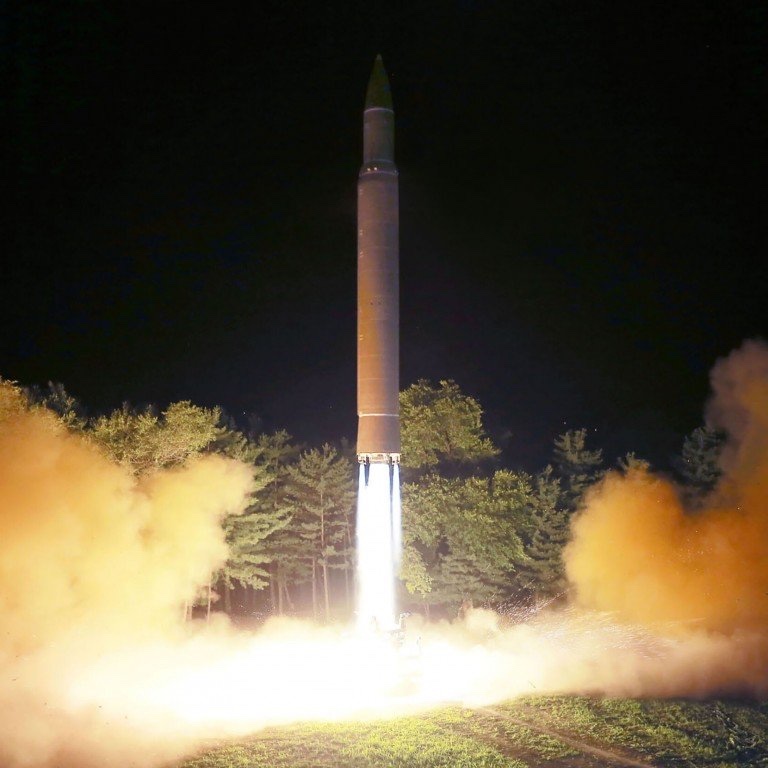
The Nuclear Threat Initiative (NTI) estimates China may have 200 to 300 nuclear warheads in its possession-based on estimates made in 2011.
In 2015, atomic scientists Robert Norris and Hans Kristensen suggested the country has approximately 260 warheads.
They added the number is slowly increasing and includes roughly 190 operational examples.
READ MORE: India unveils plan to ease tensions with China
World War 3: China tested its first nuclear warhead in 1964 (Image: GETTY)
World War 3: China may have six different types of nuclear payload assembly (Image: GETTY)
Leaders have insisted their nuclear weaponry exists as a “minimum deterrent”, but have never publicly disclosed warhead numbers.
The country successfully tested its first in 1964, and their resulting nuclear programme runs on a “no first use” basis according to the NTI.
A policy of no first use would mean China only ever uses its nuclear arsenal in retaliation from another nation’s attack.
The country is one of several to engage in the policy and includes their occasional rivals India.
DON’T MISS
World War 3: North Korea ‘secretly stockpiling nuclear warheads’ – INSIGHT
Kim Jong-un on brink: How North Korea leader’s ‘power is not secure’ – ANALYSIS
World War 3: Safest places to holiday in the UK with bunkers – EXPLAINER
World War 3: India has an estimated 130 to 140 warheads (Image: GETTY)
How many nuclear weapons does India have?
India arrived on the nuclear scene a decade after China, having tested its first weapon in July 1974.
The country’s continued conflict against neighbouring Pakistan has kept it engaged in nuclear proliferation, with a growing arsenal according to the NTI.
The Stockholm International Peace Research Institute (SIPRI) estimated in 2019 India has some 130 to 140 warheads, and possesses both weapons-grade plutonium and highly enriched uranium.
The latter material also has uses in research reactors and nuclear submarines, outlining the country’s dual focus on nuclear energy.
India is outside the international Treaty on the Non-Proliferation of Nuclear Weapons (NPT), and the Comprehensive Nuclear Test Ban Treaty (CTBT) but has agreements and a waiver in place with the International Atomic Energy Agency (IAEA) and the Nuclear Suppliers Group (NSG).
The latter two agencies allow it to participate in global civilian technology commerce.
Although it is not a CTBT signatory, Indian officials maintain a unilateral moratorium on nuclear testing.

Thursday, June 18, 2020

India and China Go To War

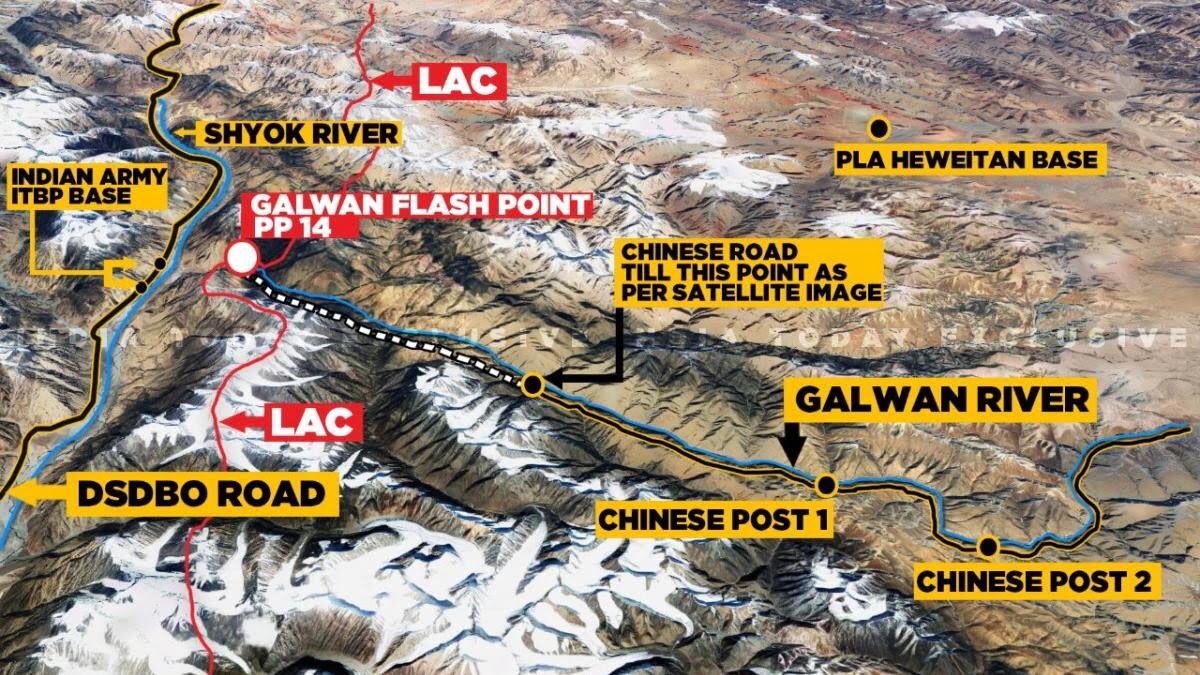
Twenty Indian soldiers were killed in a “violent face-off” with Chinese troops at Galwan Valley in Ladakh, the army said on Tuesday, in the most serious escalation between the two countries along the border in five decades. News agency ANI claimed that sources had confirmed 43 Chinese soldiers have been killed or seriously injured because of intercepts, though the army’s statement did not refer to this. A statement on Tuesday confirmed the death of a Colonel and two jawans spoke of “casualties on both sides”. India blamed the clashes on “an attempt by the Chinese side to unilaterally change the status quo there”, rebutting China’s claims that Indian soldiers crossed the border.
Here are the top developments in this big story:
Colonel B Santosh Babu of the Bihar regiment, Havildar Palani and Sepoy Ojha laid down their lives for India, the army confirmed earlier on Tuesday. “17 Indian troops who were critically injured in the line of duty at the stand-off location and exposed to sub-zero temperatures in the high altitude terrain have succumbed to their injuries. Indian Army is firmly committed to protect the territorial integrity and sovereignty of the nation,” the army’s fresh statement said tonight.
The statement opened by saying Indian and Chinese troops “have disengaged” at the Galwan area where they earlier clashed on the night of June 15/16, indicating that they do not expect any fresh violence in the area.
India said the clash arose from “an attempt by the Chinese side to unilaterally change the status quo” on the border. “India is very clear that all its activities are always within the Indian side of the Line of Actual Control. We expect the same of the Chinese side,” said foreign ministry spokesperson Anurag Shrivastava.
The clash took place just as Chinese troops were getting ready to move away from a location per an agreement that was part of recent talks between the two sides to defuse tension. The Colonel was reportedly assaulted with stones and Indian soldiers retaliated, which led to close unarmed combat for several hours. The soldiers disengaged after midnight.
Beijing, in an aggressive statement, accused India of crossing the border, “attacking Chinese personnel”. China’s Foreign Ministry was quoted by Reuters as saying India should not take unilateral actions or stir up trouble.
The only admission of casualties on the Chinese side came from the editor of their government mouthpiece Global Times. “Based on what I know, Chinese side also suffered casualties in the Galwan Valley physical clash. I want to tell the Indian side, don’t be arrogant and misread China’s restraint as being weak. China doesn’t want to have a clash with India, but we don’t fear it,” tweeted Hu Xijin, Editor-in-Chief of Global Times.
Prime Minister Narendra Modi held meetings with Home Minister Amit Shah and Defence Minister Rajnath Singh met with military chiefs twice as India discussed a response to the escalation.
For more than six weeks, soldiers from both sides have been engaged in a stand-off on at least two locations along the Line of Actual Control — the 3,488 km de-facto boundary between India and China, and rushed additional troops to the border. They have been facing each other at the Galwan River, which was one of the early triggers of the 1962 India-China war, and at the Pangong Tso — a glacial lake at 14,000 feet in the Tibetan plateau.
As part of the talks to defuse tension, the Chinese Army pulled back its troops from the Galwan valley, PP-15 and Hot Springs. The Indian side also brought back some of its troops and vehicles from these areas.
AFP quoted Indian sources and news reports as suggesting that Chinese troops remained in parts of the Galwan Valley and of the northern shore of the Pangong Tso lake, which caused the clash. China has been upset about the Indian construction of roads and air strips in the area, say diplomats. The government has pushed for improving connectivity and by 2022, 66 key roads along the Chinese border will have been built. One of these roads is near the Galwan valley that connects to Daulat Beg Oldi air base, which was inaugurated last October.

Wednesday, June 17, 2020

The Growing Chinese Nuclear Horn (Daniel 7)


New threats such as chemical and biological weapons emerge, adding to global instability, finds peace research institute
Kristin Huang
Published: 7:30pm, 15 Jun, 2020
Updated: 10:25pm, 15 Jun, 2020
The five other countries were India, Britain, Pakistan, Israel and North Korea, the report said, but all increased by fewer than 20 warheads.
“China is in the middle of a significant modernisation and expansion of its arsenal, and India and Pakistan are also thought to be increasing the size of their nuclear arsenals,” the report said.
In China, military vehicles carrying DF-41 intercontinental ballistic missiles pass Tiananmen Square in October, 2019. Photo: Reuters
Despite six countries having increased the number of their nuclear warheads, global inventories continue to decline, according to the report. This is mainly because the owners of the two largest arsenals – Russia and the United States – have decreased their number of warheads, mostly to dismantle retired stocks.
“At the same time, both the USA and Russia have extensive and expensive programmes under way to replace and modernise their nuclear warheads, missile and aircraft delivery systems, and nuclear weapon production facilities,” the report said.
The US has 1,750 deployed warheads – placed on missiles or located on bases with operational forces – and 4,050 reserve warheads or retired warheads awaiting dismantlement. Russia has 1,570 deployed warheads and 4,805 warheads either stored or to be dismantled.
At the start of 2020, nine states – the US, Russia, Britain, France, China, India, Pakistan, Israel and North Korea – had an estimated total of 13,400 nuclear weapons, of which 3,720 were deployed with operational forces. About 1,800 of these were kept in a state of high operational alert, the report said.
India is capable of striking anywhere in China with a nuclear warhead, India’s government has said. Photo: Universalashic
Though six countries had increased their stocks, the combined number of their nuclear warheads was little more than 2,000, less than one-third of Russia’s total stockpile.
Outside nuclear armaments, new threats such as chemical and biological weapons kept emerging, making the world less stable than before, according to the report.
The report also warned of an arms race in outer space. Since 2017, the US has notably declared space to be a domain of war or an area for both offensive and defensive military operations, and France, India and Japan have followed the American lead by announcing dedicating military space units.
Zhou Chenming, a military expert based in Beijing, said the changes in the world’s military build-up signalled an increasingly precarious balance of peace.
“Many countries are now developing their own anti-missile systems that protect countries from being hit by a nuclear warhead, but once the systems are highly developed, it will lead to military adventurism – some countries might take the initiative to attack other nations – and make the world even more dangerous,” Zhou said.
Sign up now for a 50% early bird discount on the 100+ page China Internet Report 2020 Pro Edition, which includes deep-dive analysis, trends, and case studies on the 10 most important internet sectors. Now in its 3rd year, this go-to source for understanding China tech also comes with exclusive access to 6 webinars with C-level executives. Offer valid until 30 June 2020.

Tuesday, June 16, 2020

The Rise of the Chinese Nuclear Horn (Daniel 7)


The head of the military alliance has urged the West not to ignore China’s growing military might. He says Beijing’s expanding stockpile of nuclear weapons capable of reaching Europe, demands a stronger response.
NATO Secretary-General Jens Stoltenberg warned Saturday that China’s increasing influence had created a “fundamental shift in the global balance of power” that should not be overlooked. 
In an interview with Germany’s Welt am Sonntag newspaper, that was released in advance, the Norwegian official said that Beijing had the second-largest defense budget in the world after the United States, and was investing heavily in nuclear weapons and long-range missiles that could reach Europe.
Read more: China unveils plans to step up military power
New opportunities, new challenges
NATO’s mission has expanded since its creation in 1949 as a counterweight to the power of the Soviet Union. Its security remit is limited to North America and Europe, but the military alliance has also acknowledged that China’s rise posed new challenges.
Stoltenberg stressed that no member country was “directly” threatened by the Asian powerhouse, but he did flag several concerns, which he said required a strong NATO response.
He noted Beijing was investing heavily in European infrastructure and cyberspace, as well as expanding its presence in Africa, the Arctic and the Mediterranean.
China has also increasingly sought to boost its claims over parts of the South China Sea, in some cases by hindering ships traveling there in international waters.
Stoltenberg said he found developments in the sea worrying, calling on Beijing to respect international shipping rules, but added that there was no reason to send NATO troops to the region. 
Chinese foreign ministry spokeswoman Hua Chunying said earlier this week that China does not pose a threat to any country. “We hope that NATO can continue to hold a correct opinion about us and view our development rationally,” she said.
nm/mm (dpa, AFP, Reuters)

Thursday, June 11, 2020

America Threatens the China Nuclear Horn

An experimental version of a new cruise missile is fired from San Nicolas Island, Calif., last August, part of the Pentagon’s effort to develop new intermediate range missiles that could be based in Asia.
(Defense Department/Scott Howe)
Jun 10, 2020 1:24 PM EDT
By David S. Cloud, Los Angeles Times
The governor of a Japanese territory where the Pentagon is thinking about basing missiles capable of threatening China has a message for the United States: Not on my island.
“I firmly oppose the idea,” said Gov. Denny Tamaki, the governor of Okinawa, in an email to The Times.
But Pentagon planners aren’t backing down after the Trump administration withdrew last year from a 33-year-old arms-control treaty that barred U.S. land-based intermediate range missiles in Asia.
Senior officials now say that putting hundreds of American missiles with non-nuclear warheads in Asia would quickly and cheaply shift the balance of power in the western Pacific back in the United States’ favor amid growing Pentagon concern that China’s own expanding arsenal of missiles and other military capabilities threaten U.S. bases in the region and have emboldened Beijing to menace U.S. allies in Asia.
But it also highlights the complex relationship between the U.S and its Asian allies, many of whom feel increasingly threatened by China but are reluctant to back new U.S. military measures that might provoke Beijing, which has built the biggest navy in the world in the last decade.
Australia and the Philippines publicly ruled out hosting American missiles when the Trump administration first floated the idea last year. South Korea is also considered an unlikely location, current and former officials say.
In Japan, the decision on whether to allow U.S. missiles on its territory will be made by the central government in Tokyo. Gov. Tamaki said officials at the Pentagon and in Tokyo have told him there are no definite plans to put missiles on Okinawa. But Tamaki isn’t reassured.
With a Japanese mother and an American father who served with the Marines on Okinawa before abandoning the family, Tamaki personifies the complex relationship between the U.S. and its allies in Asia. He was elected two years ago after pledging to oppose expansion of the already-substantial U.S. military presence on the island.
More than half of the 50,000 U.S. military personnel stationed in Japan are in Okinawa, most concentrated at a Marine base surrounded by residential areas in the largest city. Opposition to the 70-year-old U.S. military presence has sparked local protests for years, which would likely intensify if there were a move to base missiles there.
“If there is such a plan, I can easily imagine fierce opposition from Okinawa residents,” Tamaki said.
The first of the new weapons could be in operation within two years, though no decision has been announced about where they will be based. Similar missiles are now carried on U.S. warships and planes based in Asia, but there are no land-based systems.
U.S. officials say that many allies are privately supportive of the missile plan and may come around to permitting them on their territory but don’t want to provoke opposition from Beijing and their own public before decisions are on the table.
The U.S. has a defense treaty with Japan, as it does with South Korea, the Philippines and Australia. Taiwan is not a formal ally but has close, unofficial defense ties with Washington.
“We are very attentive to our allies’ concerns, and we recognized their political challenges,” said a senior defense official, who agreed to discuss Pentagon planning if he was not identified. “Everything that’s said in the media is not necessarily what’s said behind closed doors.”
To lessen the political opposition, the U.S. could rotate missile batteries in and out of locations around the region or place them in strategic locations without publicly disclosing it.
“It wouldn’t make much sense to announce plans now, which would stoke Chinese anger and possibly play into the domestic politics,” said Randy Schriver, who was a senior Pentagon official responsible for Asia until his resignation last year.
A decision to go ahead in Asia would intensify an arms race between the region’s two biggest powers whose relations — already tense over President Trump’s confrontational trade agenda and Chinese President Xi Jinping’s hawkish policies — have nosedived since the coronavirus outbreak.
“It’s naïve and dangerous,” said Alexandra Bell, a former Obama administration arms control official and a critic of deploying U.S. missiles. “Instead of looking at how we can prevent a full-out arms race, that’s our opening salvo?” added Bell, a senior policy director at the Center for Arms Control and Non-Proliferation in Washington.
Putting land-based missiles in Asia capable of attacking China is not a new strategy.
In the 1950s and 1960s, the U.S. kept them at bases across the region, including in Okinawa, where hundreds of nuclear-armed warheads were stored secretly for decades even though Japan’s constitution prohibited the presence of nuclear weapons on its territory.
The missiles were gradually taken out of service in the 1960s and 1970s, due to budget cuts and a shift in U.S. strategy away from defense of the region focused on nuclear weapons. In 1987, the Reagan administration signed an arms control treaty that prohibited the U.S. and the Soviet Union (and later Russia) from deploying any land-based intermediate range missiles, including in Asia.
China was not a signatory, leaving it free to build up its missile arsenal.
The Trump administration withdrew from the treaty last year after accusing Russia of developing new land-based missiles that violated its terms. The exit opened the way for the Pentagon to consider reintroducing ground-launched missiles in Asia.
“Ground-based missiles aren’t some kind silver bullet,” said Eric Sayers, a former consultant to U.S. commanders in the Pacific and a fellow at the Center for New American Security, a Washington think tank. “But they are a way in the near term … to create dilemmas for the [People’s Liberation Army] planners.”
Although the risk of large-scale conflict with China seems low, tensions have continued to ratchet up over Beijing’s crackdown in Hong Kong, its military maneuvers near Taiwan, its border dispute with India and its offshore maritime claims in the East China Sea and South China Sea.
Nearly a quarter of world trade travels through the South China Sea, making the contest between Beijing and Washington over control of its sea lanes and rich resources especially tense and certain to continue, no matter who wins the U.S. presidential election in November.
The U.S. Navy for decades dominated the “first island chain,” as strategists call the area of the western Pacific stretching from Japan to Taiwan to the Philippines that fell within America’s defense umbrella after World War II.
But American reliance on bases, warships and airfields in the region has become increasingly risky, officials and analysts say.
China has developed its own missiles, sophisticated radars and anti-satellite weapons as well as a growing fleet of warships and submarines in recent decades that could threaten American bases and other targets early in a conflict, said Collin Koh, a research fellow in Asian maritime security at the Rajatnam School of International Studies in Singapore.
China’s People’s Liberation Army can project significant firepower on U.S. and allied military installations in the western Pacific and “threaten to overwhelm” American forces “in times of armed conflict,” Koh said.
The Chinese weapons in many cases have ranges that exceed those on U.S. warships, though the U.S. retains a significant advantage in attack submarines and in advanced fighters and bombers armed with cruise missiles that can be fired from long distances.
“Their capability and their reach has created vulnerabilities for our legacy basing structure,” said the defense official, who agreed to discuss U.S. planning on the condition that he not be identified.
———
©2020 the Los Angeles Times. Distributed by Tribune Content Agency, LLC.
Wednesday, June 10, 2020

The China Horn Will Not Be Coerced Into Arms Control

Robert Farley
Credit: CCTV YouTube screen capture
Arms control is always complicated, and a multilateral agreement across multiple weapons systems between China, the U.S., and Russia would tax even the best diplomats. The Trump administration has adopted an adversarial approach to China, attempting to threaten China into compliance by withdrawing from other arms control agreements, to test nuclear weapons, and to overwhelm China through a massive increase in defense spending. But is there any reason to believe that China can be compelled?
States certainly do engage in arms control in order to protect their physical security, as well as their economic and financial well-being. Concerns about the economic impact of the arms race informed both the Soviet and American approaches to arms control in the 1980s. Fear that the industrial power of the United States might swamp them both convinced Japan and the United Kingdom to pursue naval arms limitation in the 1920s.
But the United States cannot, at present, threaten to swamp China. Both Japan and the Soviet Union struggled to compete with the U.S., devoting far greater percentages of their economies to defense spending than Washington. Today, the opposite holds; China spends less as percentage of its GDP than the United States. There surely are concerns about the vitality China’s long-term economic growth (although the same can be said of the United States) but China nevertheless has sufficient slack in its defense spending to maintain its military position relative to the United States without risking bankruptcy.
Moreover, unlike the Soviet Union, China has demonstrated a willingness to accept military vulnerability in its relationship with the United States. The Soviet Union sought first to balance U.S. strategic advantages with massive conventional superiority in Central Europe, then directly matched U.S. strategic nuclear forces. China has never sought nuclear equality with the United States, and is only now approaching a point in which it can threaten conventional parity in the Western Pacific. An arms race can only bring an enemy to its knees if the enemy decides to run the race, and Beijing has yet to indicate it’s willing to commit.
Finally, it should go without saying that the cavalier fashion with which the United States has treated arms control agreements as of late inspires no confidence in Beijing, Moscow, or anywhere else that Washington will adhere to any agreements in the long-term. The pervasive sense that the United States has either given up on arms control or that it will give up on any agreement as soon as the next Republican President enters office will make any foreign leader with any sense at all reluctant to pay the costs and take the risks associated with a major arms limitation initiative.
Authors
Contributing Author
Robert Farley
Robert Farley is an assistant professor at the Patterson School of Diplomacy and International Commerce.

Tuesday, June 9, 2020

China Will Not Be Compelled Into Arms Control

Credit: CCTV YouTube screen capture
There is little reason to believe that Chinese leaders will see incentives to enter arms control arrangements anytime soon.
Robert Farley
Arms control is always complicated, and a multilateral agreement across multiple weapons systems between China, the U.S., and Russia would tax even the best diplomats. The Trump administration has adopted an adversarial approach to China, attempting to threaten China into compliance by withdrawing from other arms control agreements, to test nuclear weapons, and to overwhelm China through a massive increase in defense spending. But is there any reason to believe that China can be compelled?
States certainly do engage in arms control in order to protect their physical security, as well as their economic and financial well-being. Concerns about the economic impact of the arms race informed both the Soviet and American approaches to arms control in the 1980s. Fear that the industrial power of the United States might swamp them both convinced Japan and the United Kingdom to pursue naval arms limitation in the 1920s.
But the United States cannot, at present, threaten to swamp China. Both Japan and the Soviet Union struggled to compete with the U.S., devoting far greater percentages of their economies to defense spending than Washington. Today, the opposite holds; China spends less as percentage of its GDP than the United States. There surely are concerns about the vitality China’s long-term economic growth (although the same can be said of the United States) but China nevertheless has sufficient slack in its defense spending to maintain its military position relative to the United States without risking bankruptcy.
Moreover, unlike the Soviet Union, China has demonstrated a willingness to accept military vulnerability in its relationship with the United States. The Soviet Union sought first to balance U.S. strategic advantages with massive conventional superiority in Central Europe, then directly matched U.S. strategic nuclear forces. China has never sought nuclear equality with the United States, and is only now approaching a point in which it can threaten conventional parity in the Western Pacific. An arms race can only bring an enemy to its knees if the enemy decides to run the race, and Beijing has yet to indicate it’s willing to commit.
Finally, it should go without saying that the cavalier fashion with which the United States has treated arms control agreements as of late inspires no confidence in Beijing, Moscow, or anywhere else that Washington will adhere to any agreements in the long-term. The pervasive sense that the United States has either given up on arms control or that it will give up on any agreement as soon as the next Republican President enters office will make any foreign leader with any sense at all reluctant to pay the costs and take the risks associated with a major arms limitation initiative.
Contributing Author
Robert Farley
Robert Farley is an assistant professor at the Patterson School of Diplomacy and International Commerce.

China Sends Nuclear Warning to Babylon the Great

DPRK Calls U.S. Country of ‘Extreme Racists’ After George Floyd Protests
BY TOM O’CONNOR ON 6/08/20 AT 1:08 PM EDT
China has urged the United States not to resume nuclear testing after reports that officials within President Donald Trump’s administration had discussed doing so after nearly a 30-year pause.
Chinese Foreign Ministry spokesperson Hua Chunying told reporters Monday in Beijing that China is “gravely concerned about this internal discussion in the U.S. administration on resuming nuclear tests.” She joined Russia in voicing support for a recent statement issued by the Comprehensive Nuclear-Test-Ban Treaty Organization (CTBTO) Group of Eminent Persons (GEM), which also called on Washington not to restart nuclear tests.
“The CTBT, which sets out international norms in prohibiting nuclear tests, serves as an important pillar of the international nuclear arms control system and is of great significance in promoting nuclear disarmament, prohibiting nuclear proliferation and upholding world peace and security,” Hua said of the 1996 agreement.
“We also hope that the U.S. side will heed the call from the international community and contribute to safeguarding the international nuclear disarmament and international non-proliferation regime,” she said. “It should take no more steps down the wrong path of undermining global strategic stability.”
The Priscilla nuclear test, part of Operation Plumbbob in 1957 at the Nevada Test Site.
GALERIE BILDERWELT/GETTY
Russian President Vladimir Putin has extended an offer to renew the agreement, which limits the number of nuclear warheads and weapons in the U.S. and Russian arsenals and provides channels for mutual verification and inspection measures. Trump, however, has called for a new deal that addressed new technologies such as highly maneuverable hypersonic weapons, and other countries, such as China, which has repeatedly rejected the proposal.
A U.S. nuclear weapons test would mark a major departure from one of the most widely-observed moratoriums in arms control and set the stage for other countries to ramp up nuclear weapons development in the post-Cold War era.
The last recorded U.S. nuclear test was conducted in 1992 as negotiations for a multilateral testing ban began to take place. China continued to detonate nuclear devices until 1996 and since that year, only India, Pakistan and North Korea—non-parties to the Non-Proliferation Treaty—are known to have conducted such tests. These countries have not signed the test ban treaty. Egypt, Iran and Israel, like the U.S. and China, have signed but not ratified the accord.
In the latest edition of its annual arms control compliance report, the State Department accused Beijing of potentially violating Washington’s “zero-yield” standard of international commitments to not testing nuclear weapons. Chinese Foreign Ministry spokesperson Zhao Lijian dismissed the allegations as “irresponsible” at the time.
Russian officials have also rejected U.S. allegations of Moscow violating its treaty obligations.
The ascending fireball of the world’s first atomic cannon, the U.S. Army’s experimental 280-mm M65, is seen during the 15-kiloton Operation Upshot-Knothole test at the Nevada Proving Grounds. Frenchman’s Flat, Nevada. The United States was the first country to develop a nuclear weapon and the only one in the world to have used one in combat.U.S. Army/National Nuclear Security Administration

Sunday, June 7, 2020

No Chance of a China Nuclear Deal

Mike Yeo
The analysis, titled “The End of the Intermediate Range Nuclear Forces Treaty: Implications for Asia,” is one of the chapters of the annual Asia-Pacific regional security assessment published by the International Institute for Strategic Studies think tank. IISS’ report was released June 5 and covered regional security topics such as Sino-U.S. relations, North Korea and Japanese policy.
The treaty, signed between by the United States and the Soviet Union in 1987, banned all ground-launched ballistic and cruise missiles systems with ranges between 310 and 3,420 miles (500-5,500 kilometres). The U.S. withdrew from the INF Treaty in August 2019, citing Russian violations of the agreement with its development and fielding of the 9M279 missile, although Russia denies that the missile violated range restrictions.
However, the IISS report suggested the U.S. withdrawal was done with an eye toward China’s missile arsenal, which has grown to what is believed to be the world’s largest inventory of short- and medium-range ballistic missiles. IISS’ own figures estimate China possesses more than 2,200 missiles that fall under the INF Treaty’s restrictions.
These short- and medium-range missiles are important assets in exerting pressure on Taiwan, which China sees as a rogue province and has vowed to reunite with the mainland, by force if necessary, although it continues to describe its fielding of ground-launched ballistic and cruise missiles as solely for defensive purposes.
The U.S, for its part, has already started testing missiles previously prohibited by the treaty, and there have been suggestions that the country might deploy such missiles to the Asia-Pacific region to address an imbalance in such weapons between itself and its rivals without solely relying on air- and sea-launched cruise missiles. (Those cruise missiles existed under the INF Treaty, as they did not violate the pact.)
The report cautioned there is a two-fold risk in deploying such weapons to the Asia-Pacific. Chief among those: exacerbating Chinese concerns that the missiles will be positioned for use against it, increasing the potential for a response from China that could lead to an “action-reaction cycle of weapons development and deployment” and continued regional instability.
The U.S. is also faced with the quandary of basing any potential INF-busting systems, with regional allies and partners unlikely to accede to locating such missiles on their territory, partly because of the diplomatic and economic reprisals Beijing could inflict on them. And there’s precedent here: China targeted South Korea’s economy in response to and expressed its distaste at the deployment of a U.S. missile defense system on South Korean soil in 2017.
As for the U.S. territory of Guam, basing missiles there would limit their utility due to the distances involved.
The IISS report also raised questions about whether U.S. moves to develop and deploy weapons previously prohibited by the INF Treaty will bring China to the arms control negotiating table. However, the think tank conceded that not deploying such weapons is also unlikely to persuade China, noting that that Beijing has shown little appetite for participating in any form of strategic and regional arms control.

Saturday, June 6, 2020

The impact of Indo-Pacific nuclear boats on the first nuclear war


Pakistan's tool of war: Agosta 90B, our submarine in the deep ...Increasing Indo-Pacific nuclear boats and the impact on strategic stability


Stephen Kuper
As the Indo-Pacific continues to evolve economically and strategically, one of the traditional measures of great power status – nuclear attack and missile submarines – will become more prominent. For ASPI academic Stephan Fruehling, this will have a dramatic impact on the strategic stability and calculus Australia depends upon.
Much like the submarine competition between the US and Soviet Union, this new arms race is resulting in fleets of hunter-killers and strategic missile submarines stalking the depths, however the US and China are far from the only emerging and established Indo-Pacific nations seeking to leverage the power of nuclear submarines. 
The growing proliferation of advanced nuclear weapons systems, including the relatively crude, yet still capable submarine launch ballistic missiles recently tested by North Korea, and the increasingly capable nuclear-powered submarine fleets introduced by China and Russia, South Korea has moved to address a tactical and strategic shortfall: a lack of nuclear-powered submarines. 
While seemingly a shock move, the South Korean strategic policy institute, the Korea Defense Network (KDN), commissioned a research review into the feasibility of developing an indigenous nuclear-powered attack submarine. 
India also fields a growing array of domestic and foreign nuclear submarine designs in both the attack and ballistic missile variants providing an already tense regional balance of power with yet another platform to complicate the tactical and strategic decision making processes for many nations, including Australia.
Contemporary combat submarines are typically broken down by role and either conventional or nuclear propulsion into three different classes, namely: 
• Attack submarines (SSK/SSN): These vessels designed specifically to hunt and kill enemy submarines, surface combatants and merchant vessels. These submarines also serve a protective role, escorting major naval strike groups, logistics and troop convoys and merchant vessels. Recent advances in propulsion, power generation and weapons systems have also enabled these vessels to conduct long-range land strikes using torpedo or vertically-launched cruise missiles. 
• Ballistic missile submarines (SSBN): Significantly larger than their smaller, more nimble hunter-killer focused cousins, ballistic missile submarines serve as the sea-borne leg of a traditional nuclear deterrence triangle, armed with submarine-launched ballistic missiles capable – these submarines, often termed ‘boomers’, serve as the ultimate in strategic insurance for great powers like the US and China. 
• Cruise missile submarines (SSG/SSGN): Often modified ballistic missile submarines, cruise missile submarines leverage the unlimited range of nuclear-powered vessels combined with advances in weapons technology to pack vast numbers of land attack and anti-ship cruise missiles into specially modified vertical launch systems to provide immense levels of conventional strike capabilities.
Towards a nuclear region?
Recognising the mounting challenges, ASPI academic Stephan Fruehling has penned a piece, ‘Nuclear-armed submarines and strategic stability in the Indo-Pacific’, highlighting the challenges facing Australia as it seeks to navigate the demise of the post-Second World War strategic order, guaranteed by the US nuclear umbrella, in the face of a multipolar, nuclear-armed region.
“No other weapon system embodies the menacing, but also out-of-sight, presence of nuclear weapons better than the stealthy nuclear-powered ballistic missile submarines (SSBNs) that have, for six decades, ceaselessly prowled the world’s cold ocean depths, waiting for an order that has never come,” Fruehling articulates. 
“SSBNs on continuous at-sea deterrence missions remain the mainstay of the nuclear forces in the United States and France, and the sole platform carrying British nuclear weapons. Despite Russia’s significant investment in road-mobile missiles, SSBNs also remain an important element of its nuclear forces.”
While the Cold War balance of power between the nuclear powers maintained a relative peaceful status-quo, the advent of nuclear powered and, critically, armed submarines in the Indo-Pacific presents a significant and new challenge for Australian consideration. 
“In Asia, however, nuclear-armed submarines are a newer phenomenon. China has had a longstanding interest in developing SSBN technology, but has only in recent years put them into service, in numbers comparable to Britain’s and France’s,” Fruehling says. 
“Israel has reportedly fielded nuclear-armed (cruise) missiles on its conventionally powered submarines, and India, Pakistan and North Korea have also all shown an interest in moving nuclear weapons under the sea. As these countries’ programs mature, undersea nuclear deterrence will cease to be a preserve of the major powers.
“The relevance of nuclear-armed submarines for strategic stability in the Indo-Pacific area will thus increase — but what will their impact be?”
Fruehling poses this important question for Australian consideration, particularly as we close in on a new Defence White Paper. 
How will SSBNs impact the balance of power?
Fruehling is quick to highlight the pivotal role the concept of ‘mutually assured destruction’, or MAD, played in keeping the Cold War ‘cold’ is somewhat of an ambiguous concept in light of a radically evolving regional balance of nuclear power. 
“Whether the increased deployment of SSBNs in the Indo-Pacific will thus be stabilising or destabilising — in arms competition as well as in crises and war — remains an open and important question for regional security,” Fruehling states. 
“Given the multiple centres of power in the Indo-Pacific, its connected conflict dyads, and its regional order that lacks both the informal rules and clear dividing lines of the Cold War, conceiving of a regional concept for ‘stability’ is fraught in general.”
For Australia, this raises the question, can the nation depend on the nuclear umbrella provided by the US or, for that matter, the UK at a stretch? If not, what is the solution for Australia? How does the nation respond and what role will Australia’s conventionally powered Attack Class submarines play in a nuclear-armed, contested region?
Questions to be asked
As an island nation, Australia is defined by its relationship and access to the ocean, with strategic sea-lines-of-communication supporting over 90 per cent of global trade, a result of the cost effective and reliable nature of sea transport.
While the Indian Ocean and its critical global sea-lines-of-communication are responsible for more than 80 per cent of the world’s seaborne trade in critical energy supplies, namely oil and natural gas, which serve as the lifeblood of any advanced economy.
Submarines are critical to the nation’s ability to protect these strategically vital waterways and key naval assets, as well as providing a viable tactical and strategic deterrent and ensure the nation’s enduring national and economic security – recognising this, the previously posed questions will serve as conversation starting points.
However, given the geographic area of responsibility Australia will become increasingly responsible for and dependent on, is the RAN and the recapitalisation and conventionally-focused modernisation program for Australia’s submarine fleet enough for Australia to maintain its qualitative and quantitative lead over regional peers?
Traditionally, Australia has focused on a platform-for-platform acquisition program – focused on replacing, modernising or upgrading key capabilities on a like-for-like basis without a guiding policy, doctrine or strategy, limiting the overall effectiveness, survivability and capability of the RAN.

Trump Asks For The Impossible Nuclear Trinity

Updated May 21, 2020 9:31 pm ET
The Trump administration says that it plans to propose more intrusive verification measures than under New START. This includes a demand for greater sharing of missile-test telemetry and measures that allow faster on-site inspections.
The British and French nuclear forces wouldn’t be part of the accord under the U.S. plan, though Russian officials have sometimes argued that they should.
Negotiating a major arms-control treaty is a yearslong process, raising the question of what constraints will be kept in place once the negotiations are under way.
The collapse of the New START constraints, and the verification provisions it includes, would mark a further unraveling of the arms-control regime. Last year, the U.S. withdrew from the Intermediate-range Nuclear Forces Treaty, which it alleged Moscow was violating.
Of all the looming obstacles toward a new accord, the principal one is persuading China to join.
China has about 320 warheads, according to the Federation of American Scientists. That is a fraction of the 1,750 nuclear weapons the U.S. has deployed on its long-range and shorter-range systems, among the 3,800 warheads in the U.S. stockpile, according to the group’s estimate.
The U.S. Defense Intelligence Agency has said, however, that the Chinese arsenal is expected to at least double over the next decade.
Frank Klotz—a retired three-star general and the former head of the National Nuclear Security Administration, which oversees the development of the U.S. nuclear arsenal—said that the idea of drawing China into a new three-way accord was fraught with difficulties.
Establishing equal limits on Chinese, U.S. and Russian forces wouldn’t be an option in seeking a new agreement because Washington doesn’t want to allow China to match the current American level. Nor does the Pentagon want to cut its force to China’s level.
—Gordon Lubold and James Marson contributed to this article.
Write to Michael R. Gordon at michael.gordon@wsj.com

The Asian Nuclear Horns (Daniel)

Stephan Fruehling
Nuclear-armed submarines and strategic stability in the Indo-Pacific
No other weapon system embodies the menacing, but also out-of-sight, presence of nuclear weapons better than the stealthy nuclear-powered ballistic missile submarines (SSBNs) that have, for six decades, ceaselessly prowled the world’s cold ocean depths, waiting for an order that has never come. SSBNs on continuous at-sea deterrence missions remain the mainstay of the nuclear forces in the United States and France, and the sole platform carrying British nuclear weapons. Despite Russia’s significant investment in road-mobile missiles, SSBNs also remain an important element of its nuclear forces.
In Asia, however, nuclear-armed submarines are a newer phenomenon.China has had a longstanding interest in developing SSBN technology, but has only in recent years put them into service, in numbers comparable to Britain’s and France’s. Israel has reportedly fielded nuclear-armed (cruise) missiles on its conventionally powered submarines, and India, Pakistan and North Korea have also all shown an interest in moving nuclear weapons under the sea. As these countries’ programs mature, undersea nuclear deterrence will cease to be a preserve of the major powers. The relevance of nuclear-armed submarines for strategic stability in the Indo-Pacific area will thus increase—but what will their impact be?
A common idea in the international commentariat on nuclear weapons and international affairs is that strategic stability could be ‘assured’ by ‘mutually assured destruction’, based on a relatively small number of large-yield, survivable warheads, such as those carried on an SSBN. But while using submarines to strike the land promises survivable nuclear forces, it also provides long reach and the ability to conduct surprise attacks with short warning, and from unexpected angles—factors much less prone to promote stability. Indeed, the latter two considerations were particularly important for the development and geographic deployment of SSBNs during the Cold War, especially by the Soviet Union. They may be so again as countries in Asia look to overcome the missile defence capabilities fielded by the United States and its allies.
The survivability of SSBNs has also recently been called into question by many commentators, especially in the debates on the replacement of the Trident nuclear submarines in the United Kingdom. A confluence of new technologies, such as unmanned vehicles and big-data analytics, with improved sonar, signals and imagery sensors, and the potential for completely new sensing technologies based on, for example, quantum effects, may render the oceans ‘transparent’ to anti-submarine forces.
The historical record on the vulnerability of SSBNs is already more ambiguous than often acknowledged in these debates. Technology is but one factor influencing the survivability of SSBNs, which has historically differed widely for different countries based on their geographic situation and adversary capabilities.
During the Cold War, the US developed long-range passive sonar systems that could track specific tonal frequencies of Soviet submarines in the North Atlantic and Pacific oceans. These systems made Soviet undersea capabilities far more vulnerable than realised by the public at the time and, until the 1970s, even by the Soviet Union. Insofar as there was an undersea ‘arms race’, it occurred not between adversaries’ nuclear forces, but between Soviet SSBNs and US anti-submarine warfare (ASW) forces.
In this and future contests, geography remains a central factor, because it conditions the ability of countries to make use of (or counter) new ASW technologies that might increase the risk to SSBNs. Moreover, only the US and Russia openly seek the ability to hold other countries’ nuclear forces at risk as part of their deterrence posture, and hence have an operational need to counter adversary SSBNs.
There are also other ways of protecting SSBNs than relying on stealth alone. Once the Soviet Union realised that its SSBNs were vulnerable and that the range of its submarine-launched missiles allowed it to target the continental US from the Arctic Ocean, it began to confine its SSBN deployments to ‘bastions’ in the Barents Sea and Sea of Okhotsk that were actively defended against allied submarines by the Soviet navy and by land-based aircraft.
But if the survival of SSBNs depends not on stealth but on one’s own defensive ASW capabilities to protect them from adversary hunter–killer submarines, the implications of radical improvements in ASW for SSBN survivability and crisis stability also become less clear-cut. Indeed, this dynamic may in fact make SSBNs more survivable, not less—if at the cost of significant investment in defensive ASW forces—such as that which we might now see underway by China in the South China Sea.
Whether the increased deployment of SSBNs in the Indo-Pacific will thus be stabilising or destabilising—in arms competition as well as in crises and war—remains an open and important question for regional security. Given the multiple centres of power in the Indo-Pacific, its connected conflict dyads, and its regional order that lacks both the informal rules and clear dividing lines of the Cold War, conceiving of a regional concept for ‘stability’ is fraught in general.
When assessing the current and future impacts of SSBN technology and deployments on strategic stability in the Indo-Pacific, we thus need to look beyond superficial readings of Cold War history that equate SSBN forces with a supposedly stabilising way of deploying nuclear forces as a secure second-strike capability—for they may be neither intended for second strike, nor particularly secure.
Rather than being a technologically deterministic relationship, the consequences of changes in ASW technology and of the deployment of SSBNs in the region will reflect the particular geographic and strategic circumstances of each adversarial dyad, and defy easy generalisation.
This piece was produced as part of the Indo-Pacific Strategy: Undersea Deterrence Project, undertaken by the ANU National Security College. This article is a shortened version of chapter 3, ‘SSBN, nuclear strategy and strategic stability’, as published in the 2020 edited volume The future of the undersea deterrent: a global survey. Support for this project was provided by a grant from Carnegie Corporation of New York.
Stephan Frühling is a professor in the Strategic and Defence Studies Centre of the Australian National University. Image: US Navy.