The prophecy is more than seeing into the future. For the prophecy sees without the element of time. For the prophecy sees things as they were, as they are, and as they always shall be.
On
April 4, 2004, the 2-5 battalion of the 1st Cavalry Division was just
taking over responsibility for Sadr City, a large Baghdad slum with a
population of 2 million. A platoon of 18 soldiers and their interpreter
was returning to its base from the most routine of missions, providing
security for sewage trucks, when it suddenly came under fire.
Within
minutes, a gunner, Sgt. Eddie Chen, was fatally injured. Others were
wounded and two of the platoon’s four Humvees were disabled. Lt. Shane
Aguero, the platoon leader, directed the team down an alleyway, where
the soldiers took cover in a house.
Back at the battalion’s base,
Camp War Eagle, located just outside Sadr City, the new commander, Lt.
Col. Gary Volesky, was taking over command as radio reports came in from
the platoon detailing the increasing intensity of the fight. Then
reports arrived of enemy fighters seizing the local police stations in
the neighborhood. Volesky and rescue teams from the battalion’s Charlie
and Alpha Company raced into the city, facing an onslaught of gun fire,
rocket propelled grenades (RPGs) and pipe bombs.
By the end of the
night, eight soldiers would be dead and more than 60 wounded -- the
largest casualty count in one day for the First Cavalry Division since
Vietnam.
Here’s more about the ambush that would be known as Black Sunday:
Back at the house in the alley, with
an Iraqi family still inside, soldiers from the platoon took up
positions on the roof. Sgt. 1st Class Jerry Swope stayed down in the
alley in one of the remaining Humvees. As enemy fighters continuously
assaulted the platoon, Swope was on the Humvee’s radio for the entire
fight, the only point of contact with rescue teams struggling to get to
them.
Up on the roof, the soldiers were frantically trying to
signal their location, using smoke grenades, electronic signaling
equipment, even ripping off the sleeves of their uniforms to start a
fire.
Out on the streets of Sadr City, the multiple rescue teams
attempting to reach the pinned down platoon came under fierce attack and
incurred heavy casualties.
“It was multiple rounds constantly,”
Capt. Troy Denomy, the commander of Charlie Company, recalled. “I
remember looking at the street, you’d see the rounds that were missing,
you could see the impact on the street, and it kind of looked like rain
when it hits puddles.”
Charlie Company passed by the alleyway, but
with the antennas shot off the lead Bradley fighting vehicles, the
Bradleys were unable to hear the radio calls to stop.
Eventually, a
tank company came up the adjoining road. Watching the tanks rolling by,
SFC Swope frantically called into the radio for them to stop. The
platoon leader, Lt. Aguero, in a last-ditch effort, ran down the alley
waving his flashlight in the dark. The tank company commander saw the
light, and stopped, bringing the power and might needed to push back the
enemy fighters and get the platoon out.
What was the toll?
In addition to Sgt. Eddie Chen, the gunner
with the pinned-down platoon, seven other soldiers were killed that
evening: Spc. Robert Arsiaga, Spc. Ahmed Cason, Spc. Israel Garza, Spc.
Stephen Hiller, Cpl. Forest Jostes, Sgt. Michael Mitchell and Spc. Casey
Sheehan. Most of them were in their 20s. More than 60 others were
wounded.
Why did it matter?
The fight to rescue the team in the alley was
just the beginning. Within hours, many of the soldiers involved were
back battling on the streets of Sadr City
to retake the police stations that had been seized. They would go on to
fight this new insurgency for 80 straight days, and then after a brief
respite, would endure another 60.
Who are the heroes?
As Volesky put it, “Uncommon valor was common
that day.” Sgt. 1st Class Swope would be awarded a Silver Star for
staying in the Humvee in the alley and remaining on the radio for the
entire battle. Staff Sgt. Robert Miltenberger was also awarded the
third-highest medal for valor because of his actions that night. As part
of a rescue mission, he and more than a dozen other soldiers were in
the rear of an open-bed LMTV truck. Exposed to the enemy like the
proverbial fish in a barrel, Miltenberger was credited with saving the
lives of three soldiers while treating many other wounded.
Wathiq Khuzaie/Getty Images
U.S. troops patrol the deserted streets of the sprawling Shia slum of Sadr City at
sunset after a day of tense clashes across the country with supporters
of controversial Shia cleric Moqtada al-Sadr, April 4, 2004, in Sadr
City, Iraq. more +For soldiers of the 2-5 battalion, it was moment that would define the days to follow.“I
don’t think the bonds that they’ve made here with their fellow soldiers
will ever break,” Volesky said. “I understand now what it means when
you go to a veterans’ ceremony and you see the old veterans get together
and hug and cry and you never really understood it. I understand it
now.”
By Conor Finnegan
The U.S.’s ranks of diplomats are losing key leaders at a
“dizzying speed” as the State Department struggles to recruit talent
amid a hiring freeze and sinking morale in the Trump administration,
according to a new letter from a top ambassador.
Sixty percent of
the agency’s career ambassadors, the highest rank for diplomats, have
retired or quit since January. Nearly half of career ministers — the
next level down and equivalent to the military’s three-star generals —
are gone too, down to 19 from 33. The next-level minister counselors
have seen their numbers drop by 62 diplomats since Labor Day alone “and
are still falling,” writes Ambassador Barbara Stephenson, the president
of the American Foreign Service Association union.
Without
these leaders, the U.S. could face a diminished role on the world
stage, unable to keep up with the increasingly aggressive foreign
policies of rising countries like China, she argues.
“There is
simply no denying the warning signs that point to mounting threats to
our institution — and to the global leadership that depends on us. There
is no denying that our leadership ranks are being depleted at a
dizzying speed,” Stephenson, who has headed the AFSA since 2015, writes
in a new essay in the group’s monthly publication.
AFSA rarely makes forays into political issues, making Stephenson’s letter that much more surprising.
There
has been a sharp impact on the next generation as well, AFSA reports. A
department-wide hiring freeze prevents new employees from coming
onboard and limits current employees’ ability to take on new roles,
unless granted special permission. After 366 new foreign service
officers were admitted in 2016, only about 100 will join in 2018,
according to AFSA.
What’s worse, they say, is that interest in
joining the foreign service is plummeting now because of these policies.
More than 17,000 people applied to take the foreign service test last
year, but fewer than half that number have taken it so far this year.
The
implications of that trend could be felt long term, with a new crop of
talented diplomats missing and unable to take the helm in a couple of
decades, Stephenson argues.
“The talent being shown the door now
is not only our top talent but also talent that cannot be replicated
overnight,” she writes.
While the union and many outside the
government as well are raising alarms about the situation, the president
has made clear that he does not see the need to fill many of the roles
or build talent.
“The one that matters is me. I’m the only one
that matters because, when it comes to it, that’s what the policy is
going to be,” he said in a Fox News interview last week.
Secretary of State Rex Tillerson
has said he is revamping the State Department to be more efficient and
sustainable — calling the project “the most important thing I want to do
during the time I have.”
That “redesign” began with an employee
survey and hundreds of employee interviews, led by an outside consulting
firm, to hone the department’s focus and mission, Tillerson’s team has
said. Until it is complete, he has implemented that hiring freeze and
left several top roles vacant or filled by staff in an acting capacity.
AP
In this June 5, 2017, file photo, U.S.
Secretary of State Rex Tillerson, right, and U.S. Secretary of Defense
Jim Mattis participate in talks at Government House in Sydney.more +Tillerson
has said he has the “utmost respect for the foreign service officer
corps here, and they’re vital ... and critical to the country’s ability
to carry out its foreign policy,” telling the New York Times magazine he doesn’t understand the backlash to the redesign. “I’m mystified by it. I’m perplexed by it.”But
to foreign policy hands, he is depleting the nation’s diplomats, which
will diminish America’s role on the world stage — or lead to a heavier
reliance on the Pentagon at a time when the military is already
stretched thin by two wars in Afghanistan and Iraq and Syria, as well as other hotspots around the world.
“The
rapid loss of so many senior officers has a serious, immediate and
tangible effect on the capacity of the United States to shape world
events,” Stephenson writes. “Were the U.S. military to face such a
decapitation of its leadership ranks, I would expect a public outcry.”
Military leaders have often called for robust funding of the State Department. Secretary of Defense James Mattis
is often quoted from his 2013 Congressional testimony, when he told the
Senate Armed Services Committee, “If you don’t fund the State
Department fully, then I need to buy more ammunition.”
Tillerson
and Mattis have worked closely in the Trump administration, with Mattis
pointing out at every turn that Tillerson and diplomacy are at the helm
on their North Korea strategy.
It’s not just the loss of personnel or lack of hiring. There have been complaints about mismanaging talent as well.
Politico
reported Monday that the State Department has assigned “several
hundred” employees to process public information requests, often known
as FOIAs, because of a backlog that has built up over more than a
decade.
While the State Department would not confirm that number,
an official told ABC News, “The current processing system just wasn’t
working,” citing over 13,000 requests outstanding since 2006.
“The
Secretary is taking an approach of calling on many capable hands to
step in, as part of a surge, to clear the backlog,” the official added.
“This is about accountability and efficiently getting these outstanding
FOIA requests down.”
Despite the criticism, the personnel moves seem to have satisfied Tillerson’s boss.
“It’s
called cost-saving. There’s nothing wrong with cost-saving. Rex is in
there working hard. He’s doing his best,” Trump told Fox News last week.
If
Trump does seem to have any concern about staffing at the State
Department, it’s that there are not enough of “his” people in the agency
to implement in the “America First” vision he promised — agreeing with
conservative commentator Laura Ingraham on this point in that Fox News
interview.
The Associated Press
FILE - In this Aug. 7, 2008 file
photo, then-US ambassador to Tanzania Mark Green is seen at the US
embassy in Tanzania. Green is a rare bird in Washington these days: A
nominee of President Donald Trump enjoying broad bipartisan support. But
there’smore +So
far, the Trump administration has only seven high-level political
appointees confirmed by the Senate and working in the department —
outside of Tillerson but including USAID Administrator Mark Green and
Deputy Secretary of State John Sullivan. An additional eight nominees
are working their way through the confirmation process now, with the
Senate either awaiting their paperwork or the nominees awaiting a Senate
hearing or vote.But in the absence of Trump nominees, there
are 30 senior roles filled by career diplomats in acting capacities.
Although there is someone doing the work, they do not enjoy the full
legal authority of their role or the image of speaking on the
administration’s behalf to the world.
There are 39 other senior
roles that are vacant, but Tillerson has said he plans to eliminate 18
of those and fold their responsibilities into other jobs. The Trump
administration has named a nominee for one of the 39 roles — the chief
of protocol — who is awaiting confirmation.
Nearly three dozen
ambassadorships remain vacant as well, with the embassies’ No. 2, called
the charge d’affaires, leading those U.S. missions.
Trump Can’t Afford to Forget About Iraq
Having won the war, will the United States end up yet again squandering the peace?
John HannahApril 2, 2018, 6:50 PM
Members of Iraq's Popular Mobilization Forces in the city of Basra watch a televised statement by Iraqi Prime Minister Haider al-Abadi on Dec. 9, 2017. (Haidar Mohammed Ali/AFP/Getty Images) Members of Iraq's Popular Mobilization Forces in the city of Basra watch a televised statement by Iraqi Prime Minister Haider al-Abadi on Dec. 9, 2017. (Haidar Mohammed Ali/AFP/Getty Images)
In January, with an eye toward national elections on May 12, Iraqi Prime Minister Haider al-Abadi stunned many observers when he agreed to a political alliance with a group representing the country’s most hard-line Shiite militias — some of them designated by the United States for terrorism, all of them loyal instruments of Iran’s Islamic Revolutionary Guard Corps (IRGC).
The move was surprising, largely because Abadi was among Washington’s most important partners in the fight to defeat the Islamic State. For more than three years, the United States had provided him unwavering political, economic, and — most critically — military and intelligence support. How, people wondered, could he suddenly embrace those elements of Iraqi society most hostile to the United States and the U.S.-Iraqi partnership, and most beholden to the IRGC?
As it turned out, the alliance lasted barely a day. The outcry from across Iraq’s political spectrum was immediate — not just from Sunnis and Kurds, but from many Shiites, too, especially those of a more nationalist bent who mostly look for religious guidance to the quietist school of clerics in Iraq’s holy city of Najaf rather than the band of revolutionary theocrats ruling Iran. Indeed, it was strongly rumored that Najaf’s most important source of authority, Grand Ayatollah Ali al-Sistani, also communicated his disapproval of Abadi’s flirtation with Iran’s proxies. As quickly as it emerged, the new alliance collapsed under the weight of the domestic backlash.
Nevertheless, the incident should have served as a wakeup call for the Trump administration. Not so much for anything it revealed about Abadi. He’s no Iranian stooge. His dalliance with the militias almost certainly wasn’t part of some grand scheme to supercharge the IRGC’s very real efforts to consolidate its Hezbollah model in Iraq. Rather, it was more likely a myopic, short-term political calculation to secure himself a second term as prime minister. While controversial, the Iranian-backed militias — flush with IRGC money and weapons, and legitimately laying claim to a role in helping beat back the Islamic State — are predicted to win a significant block of seats in May’s elections. Abadi’s gambit was a misguided attempt to secure their backing for his return to power — and, as important, deny their support for the comeback of his bitter Dawa Party rival, Nouri al-Maliki, whose job Abadi took in 2014 after the Islamic State was able to bring its jihad to the gates of Baghdad.
Of greater concern is what Abadi’s ill-fated pact with the militias says about the state of U.S. diplomacy toward Iraq. In what universe could the United States’ closest ally in Baghdad think for even a second that it might be fine for him to enter a formal alliance with a group that counted U.S.-designated terrorists among its most powerful leaders? Had no senior official in the U.S. government bothered to mention to Abadi that while we may not expect him to rid Iraq of the IRGC’s most dangerous proxies overnight, empowering them as full-fledged political partners would be crossing a red line that endangers all U.S. support for his government? Has the United States not regularly been having those kinds of discussions with Abadi about the future of Iraq and U.S.-Iraqi relations?
If not, I certainly hope those conversation are happening now. Lack of diplomatic bandwidth has been a perennial problem for the Trump administration. And as luck would have it, Iraq’s elections are happening at the same time as the United States’ challenges with both the Iranian and North Korean nuclear programs are (each in their own ways) rapidly coming to a head. Indeed, President Donald Trump’s deadline for deciding whether to renounce the Iran nuclear deal is scheduled for exactly the same day — May 12 — that Iraqis are going to the polls. Of course, putting even greater strain on current U.S. diplomatic capacity is the fact that the administration is now in the throes of relatively prolonged leadership changes at both the State Department and the National Security Council. It won’t be until mid-April at best that both those key foreign policy agencies are firing on anywhere close to all cylinders. With so much going on, it’s not hard to imagine that Iraq strategy could end up getting short shrift in the coming weeks and months.
This shouldn’t be the case. While the issue may not rise to the urgency of a rogue state acquiring nuclear weapons, the stakes in Iraq are nevertheless extremely high for the United States — certainly higher than most people appreciate. Iran’s strategy for the elections appears quite clear: ensure that its proxies in the militias and other political parties win sufficient power to compel any new Iraqi government to demand the withdrawal of all U.S. forces. Rather than use armed attacks or terrorism to drive out the Americans, and risk a dangerous confrontation, the IRGC would much rather manipulate Iraq’s democratic politics to send the U.S. packing. If it succeeds, it’s very hard to see how the United States could resist a request from a newly elected, sovereign Iraqi government to pack up and leave.
That would be borderline catastrophic — not just a humiliation for the United States, but a major strategic victory for Iran. Without a secure military foothold from which to operate in Iraq, America’s ability to counter the IRGC’s hegemonic ambitions across the Middle East’s northern tier would be put at severe risk. The position of the 2,000 U.S. forces in neighboring Syria — already shaky in light of escalating tensions with Turkey (and by Trump’s own gut instinct to cut and run) — would become untenable. The likelihood of Iran establishing a land bridge that would entrench the IRGC threat directly on both the Israeli and Jordanian borders with Syria would increase exponentially. The United States would be facing outright strategic collapse in a part of the world long deemed vital to U.S. interests — and all at Iranian hands, all without a shot being fired. Iran and its allies in Moscow and Damascus would no doubt be rejoicing. The United States’ regional friends, in contrast, would be left shuddering at the thought of what comes next for them.
The Iranians and their Iraqi proxies have been hard at work for months laying the predicate for just such a scenario. Iran’s Supreme Leader Ali Khamenei has warned Abadi on at least two occasions not to allow U.S. troops to remain in Iraq after the Islamic State’s defeat. Designated terrorist and militia leader Qais Khazali declared in late February that Iranian-backed militias will form Iraq’s next government and their priority will be to “expel the American forces from Iraq and terminate the strategic cooperation agreement between the two countries.” Other IRGC-backed militia leaders have regularly echoed that call, making the expulsion of U.S. troops among their most important campaign themes. As a preview of their agenda, on March 1, with just over half of the parliament in attendance, Iran’s surrogates pushed through a non-binding resolution demanding that Abadi set a timetable for the withdrawal of foreign (read, U.S.) forces.
With sufficient diplomatic investment, the United States certainly has tools to counter Iran’s election schemes. Abadi and other Iraqi political leaders should be disabused of any illusions they may harbor: If Iran and its proxies succeed in manipulating the post-elections environment to expel American forces, it will be impossible for Washington to sustain the military and intelligence support that enabled Iraq to overcome its recent near-death experience with the Islamic State.
Ditto U.S. backing for Iraq’s mounting post-war economic needs. At a recent conference in Kuwait, the United States and other international donors pledged some $30 billion of investment, loans, and assistance to Iraq’s rebuilding efforts. It’s hard to imagine many of them being willing to follow through, much less do more, if the security anchor currently provided by U.S. forces is replaced by the hegemony of the IRGC. It’s a certainty that neither Iran nor Russia will make up the difference.
These potentially dire consequences need to be drilled home repeatedly to Iraqi politicians — and not just by U.S. embassy officials in Baghdad, but in direct communications from the highest levels of the Trump administration, ranking members of Congress, and U.S. allies in Europe, Asia, and the Middle East. In this regard, close coordination with Saudi Arabia could be particularly useful in light of the unprecedented openness its new leadership has recently demonstrated to political and economic engagement with Baghdad, and the inroads the Saudis have made not just with Sunnis and Kurds, but with Abadi and other Shiite politicians leery of Iranian domination.
Also important: The United States’ unique ability, if it chooses to do so, to facilitate the kind of pragmatic political coalitions across Iraqi sects and ethnicities that could effectively counter the worst post-election machinations of Iran and its proxies. Despite their ongoing grievances against Baghdad, both the Kurds and Sunnis should be encouraged to maximize their participation in the elections and their potential influence over Iraq’s next government. Realizing the kingmaker role that the Kurdish bloc has played in past parliaments, Abadi — to his credit and with U.S. encouragement — has in recent weeks been working to overcome the dangerous deterioration in relations that occurred after last fall’s referendum on Kurdish independence. Washington should redouble its efforts to move that reconciliation forward and see it manifested after the elections in a common agenda to protect Iraq’s long-term strategic partnership with the United States. As for the Sunnis, the immediate imperative is for the United States and the international community to help ensure that a way is found for the millions of Sunnis displaced by the Islamic State to cast their vote from their places of exile.
With U.S. forces having played an essential role in dispatching the Islamic State’s caliphate, the United States once again faces the perennial question: Having won the war, will the United States — for lack of attention, staying power, and strategic vision — end up yet again squandering the peace? With just six weeks to go until the Iraqi elections, Iran is no doubt banking on the answer being yes. Here’s hoping that even as it confronts the other daunting national security challenges that the United States faces, the Trump administration can find the capacity to prove America’s enemies wrong.
John Hannah is a senior fellow at the Foundation for Defense of Democracies, focusing on U.S. strategy. During the presidency of George W. Bush, he served for eight years on the staff of Vice President Cheney, including as the vice president's national security advisor.
Shiite alliance turns on Iraqi PM as election looms
Iraqi Prime Minister Haider Abadi is fighting for his political career even as he rides a wave of popular support thanks to his victories on the battlefield. (FIle/Reuters)
BAGHDAD: Shiite political and paramilitary groups have called for the withdrawal of the remaining US troops in Iraq as they seek to make electoral gains on the man who helped empower them, Prime Minister Haider Abadi.
The demand by the opposition Al-Fattah alliance is just the latest sign that the Iranian-backed forces who played a key role in the defining achievement of his premiership — the defeat of Daesh in much of the country — are trying to outmaneuver the Iraqi leader before a nationwide vote that will decide his fate this spring.
While the two sides continue to cooperate militarily and there is no suggestion of their political rivalry degenerating into violence, their contest could have far-reaching consequences for Iraq.
Parliamentary elections for the 329-member Council of Representatives are scheduled to be held on May 12. The MPs will then choose Iraq’s prime minister and president, meaning Abadi is fighting for his political career even as he rides a wave of popular support thanks to his victories on the battlefield.
Last week the Al-Fattah alliance submitted a draft resolution to the national assembly calling for the final few thousand American soldiers in Iraq to be withdrawn “as their mission has been achieved.” Although the resolution cannot become legislation under Iraqi law, it is highly symbolic of the precarious position in which Abadi finds himself.
Having built his reputation on the defeat of Daesh, the prime minister is being pressured into making political concessions by the very militias he used to crush the extremists and strengthen his hold on the country. The resolution calling for the Americans to withdraw is “a typical way to embarrass him,” an MP and Al-Fattah alliance member told Arab News on condition of anonymity. “He is the Americans’ man, so let them protect him.”
A former electrical engineering student who spent several years in exile in the UK during the regime of Saddam Hussein, Abadi is himself a Shiite Muslim. He returned to Iraq after the 2003 US-led invasion and was elected to Parliament less than three years later.
He was appointed prime minister in September 2014 and has had to face down a Kurdish referendum for independence, as well as the Daesh insurgency that swept through Iraq.
The challenge he now faces, however, comes from former allies backed by Iran and their pressure may already be paying off.
On Thursday, the prime minister issued a decree that will allow an assortment of Shiite militias from the Al-Fattah alliance to be formally absorbed into Iraq’s security forces. The move will go some way to appeasing his political opponents, but it is unlikely to silence them entirely with the election just two months away.
The Al-Fattah alliance is made up of some of Iraq’s most powerful paramilitary groups including the Badr Organization and Asai’b Ahl Al-Haq, two groups that played pivotal roles in the bloodshed and sectarian violence that dominated the early years of the US-led occupation.
The Badr Organization has its roots in the Supreme Council for Islamic Revolution in Iraq, which fought on the side of Tehran in the 1980-1988 Iran-Iraq war. Many of its members joined the Iraqi security forces after the 2003 American invasion. The Asai’b Ahl Al-Haq is an offshoot of the Iranian-backed Mahdi Army, which fought pitched battles with US troops in the cities of Baghdad and Najaf in 2004.
Last December the US said it had 5,200 troops in Iraq and Abadi has insisted these remaining forces only provide security and logistical support, and are not involved in combat.
Sa’ad Al-Hadaithi, a spokesman for the Iraqi government, told Arab News the country still needed American military help.
“Until the battle with Daesh is resolved on the Syrian side (of the border) and pockets of Daesh militants are eliminated in those areas, we still need the support of the coalition forces,” he said.
The US insists its continued presence in Iraq will be “conditions-based.”
In recent years, it has launched air strikes in aid of Shiite militias fighting Daesh, but the upcoming elections have emboldened the paramilitary groups and their allies in Parliament, giving them the confidence to turn the tables on both Abadi and Washington.
“We are not the only ones who demand the departure of these forces; this decision is consistent with the will of the Iraqi people,” said Mahmoud Al-Rubaiai, a leading member of Al-Fattah.
He added that if the US troops did not leave, “then we will consider them as occupation forces and deal with them on that basis.”
Hipsters, Sadrists, Shi’ites plan for Iraq’s future
By SETH J. FRANTZMAN
Iraqi cities will take years to recover from ISIS. In Mosul, a member of Iraq’s elite Emergency Response Division was killed by an IED recently. It is one of thousands that Islamic State left behind. ISIS is still active in Hawija, south of Mosul, with almost daily clashes with the security forces and the paramilitary Shi’ite militias that operate alongside them. But in southern Iraq, mostly untouched by years of war against the extremists, things are different. America, which helped liberate the Shi’ites from Saddam Hussein’s iron grasp, is not popular today. Anastasio says that whereas in northern Iraq among Kurds there is a lot of friendliness to Americans and foreigners, people are more suspicious in the south. “They are against US culture and government for obvious reasons. People are conspiratorial and they believe in various theories that they regurgitate from watching TV. So a lot think there are secret elites running the world or that the US invasion was a CIA and Zionist plot to destabilize the Middle East.”
Because of this they oppose Western influence and outsiders. “They don’t want non-Muslims or non-Shia in the holy cities.”
THE RELATIONSHIP with Iran and its hegemonic pretensions is complex. While many are influenced by Iran’s power, they are also critical of it. “But a lot less critical than of the US or Israel.”
There is little thanks for the US role in 2003. They are still influenced by Muqtada al-Sadr, whose Mahdi army militia opposed the Americans after the invasion. “They read a lot of pro-Iran propaganda.”
While they may like Iran as a cultural influencer, some reject Iran’s theocratic form of government and oppose Supreme Leader Ayatollah Ali Khamenei, he says.
Security in the south has improved in recent years. ISIS has not been able to penetrate this area south of Baghdad. Where once Sunni jihadists targeted Shia mosques and holy sites, there has been quiet.
Surprisingly for the American visitor, there were Christmas trees on display in Muslim areas over the holiday. He says that there is interest among young people in Western holidays such as Valentine’s Day.
“The older people are traditional and conservative and oppose Western culture or values being imposed on them, but there is a new Millennial generation that is more liberal and international. Although he says he never saw a woman not wearing a hijab, or alcohol for sale, he was surprised to find wanna-be hipsters. Trendy cafes are opening. It’s not nearly as trendy or wealthy as the Kurdish cities of Sulaimaniya or Erbil in the north, but he was surprised to see people seeking a new quality of life.
With elections coming up in Iraq and ISIS seemingly defeated, he characterizes the population as partly optimistic. “Many are also pessimistic about the future under current Prime Minister Haider al-Abadi and the corruption among the business class.”
Abadi came to power during the war against ISIS and he is seen by the US and the West as a kind of hope for Iraq. However, opposition parties in the Kurdish region and Shi’ite leader such as Sadr plan to oppose his rule in the election. The small Communist Party is also seeking out allies against the administration.
“Corruption and politicians stealing money and getting favors from business class is discussed a lot, and people oppose the Islamist parties in government. Most people would like to see him [Abadi] out of power and lose the election, but they expect him to win. I’m not sure who they think should replace him.”
SINCE THE independence referendum in the Kurdish region in September 2017 there has been a lot of populist anger against the Kurdish autonomous region in the north. Whereas the Shi’ites and Kurds cooperated against Saddam, now that the Shi’ite parties are in power they see he Kurds as competitors. During clashes in Kirkuk province last October, Shia militias burned Kurdish shops in the city of Tuz Khurmatu. The burned Kurdish shops were still visible two months ago, he says.
“A lot of the anti-Kurdish sentiment stems from jealousy,” says the American. “You also hear conspiracy theories regarding the Kurds from the Arabs. They say Kurds are not from the Middle East or they are European interlopers or Gypsies,” he says. They also resent that the Kurds are pro-American and that their region prospered after 2003 while the rest of Iraq was damaged by insurgency.
The Kurdish region is relatively liberal as well, and people feel it has progressed socially compared to the south. “They have nicer highways and buildings and the Kurdish region is cleaner and has better government, that’s the perception.”
He says the presence of trash in the south is particularly egregious. “I rarely saw a street cleaner in my time in Karbala.” The hospitals were also lacking staff. “You call the local version of 911 and no one is there. Here are no ambulances.”
According to the visitor, who spent months in the south of Iraq, the presence of armed Shi’ite militias is ubiquitous. The Popular Mobilization Units were called up in 2014 by Grand Ayatollah Ali al-Sistani to defend Baghdad from ISIS. Now the militia genie can’t be put back in the bottle and they have been incorporated into the official Interior Ministry forces with federal pay. “You see armed men all over the place. There are checkpoints on all roads leading into the cities. Some are controlled by the Iraqi police or army and others by the Popular Mobilization Units. “The central government isn’t strong enough to control the entire land area so they outsource the security to the militias.”
And the militias have political hopes as well. They are connected to influential individuals and groups such as the Badr Organization that are both political and military, like Hezbollah in Lebanon. Anastasio says that locals support these armed men and see them and Iran as a protector against “Western imperialism and Zionist incursions.” They won’t be going away any time soon.
Iraqi Communists and Shia Sadrists unite to tackle corruption and sectarianism
Alex MacDonald
It is perhaps the most unlikely of political alliances, even for a country where electoral rules encourage strange bedfellows. As Iraq prepares for its first post-Islamic State elections, the Communists have thrown their lot in with the Shia conservatives of Muqtada al-Sadr and the result, they promise, is not as bizarre as it may first appear.
Although the pairing of religious conservatives in Sadr's party and the ultra-secular Marxist-Leninists of the Iraqi Communist Party has raised many eyebrows - not least internally - both argue they ultimately draw support from the same social base: the poor, working class and those angry at the rampant cronyism and mismanagement which have seen the country ranked 11th most corrupt in the world by Transparency International. Both maintain headquarters in the eponymous Sadr City, the highly impoverished and frequently attacked district of Baghdad. And both say they are fighting - politically speaking - for the same future for its three million residents, and the millions of Iraqs beyond.
Salam Ali, a member of the Iraqi Communist Party's central committee, told Middle East Eye that the coalition, named the "Sairoun Alliance", could have a major effect on the nature of Iraqi politics.
"It is a very important development politically in Iraq and, if successful - and that’s a big if because the challenge is great - it will have an impact on politics in the region as well," he explained, speaking to MEE in London.
This coalition is national, civil in character, it opens the possibilities of a change in the political scene - Salam Ali, Iraqi Communist Party member The alliance has grown out of on-going street protests - largely beginning in August 2015 - targeting systemic corruption and advocating political reform. These have seen secular activists, under the banner of the Civic Movement, gathering alongside largely Shia Islamists in common cause.
Despite the surprise at the announcement of the coalition, after the communists broke from the secular Civil Democratic Alliance coalition, Ali said the relationship had been building since 2015.
"It’s not a sudden change," he said. "It is built on cooperation, coordination between this broad civil democratic movement, the protest movement and the Sadrist movement."
He said that it created "a greater climate for open campaigning and to be able to reach out to areas in Baghdad, in the provinces as well, where our party and the other civil democratic forces could not campaign as effectively as it is possible now."
"Now there are examples of coordination with Sadrists in these areas, with young people - now they can coordinate on issues, local issues, like services, the provinicial council, elements of corruption here and there," he said.
In addition, the Communist Party has long championed itself as the one genuinely non-sectarian party in Iraq. This has made Sadr's recent public attempts to cross the sectarian divide and support a unified Iraqi identity another point of common interest.
"This is fundamental - he has distanced himself from sectarian politics," said Salam. "This is the essence of our policy on the protest movement, on its demands, on its electoral strategy as well."
He said that it was possible that, if successful in elections, a "new political map of coalitions" could be formed in Iraq, with further alliances between left-wing forces and what he described as "enlightened, moderate Islamists". Sadr himself hit back at criticism of the alliance in January, stressing that he was committed to reform and calling for technocrats in place of corrupt ministry officials.
“If we enter into an alliance with the Shia, people say it is a sectarian alliance," he said. "And if we enter an alliance with the Sunnis, people accuse me of Wahhabism, Baathism or loyalty to Saudi Arabia. If we enter into an alliance with the civil society stream, they say we are Communists.
"When we enter into an alliance with parties close to Iran, they accuse us of being Iranian loyalists and when we get closer to Arab parties, they say we are secret agents for them."
"I will participate in elections for the sake of Iraq, to support moderate people and to expel extremists, to achieve reform and to end corruption and nepotism."
Ally with the Devil
At one point the Iraqi Communist party was the largest of its kind in the Middle East and in the 1950s and 1960s exerted a lot of influence on Iraqi politics.
However, the coming to power of the Baath Party, and later Saddam Hussein as president in 1979, led to the repression of the party, often with backing from the CIA.
Salam himself spent the years between 1967 and 2003 in exile in the UK, after coming to the country on a scholarship.
Today everyone who has the desire and the means to become prime minister is prepared to ally themselves even with the devil - Bahaa al-Araji, former Sadr supporter
Following Saddam's removal after the 2003 invasion (opposed by the Communist Party), the party enjoyed something of a resurgence and although it never regained the influence it previously enjoyed, it is still a presence in Iraqi politics in a way that other Middle Eastern communist parties could only envy.
Despite this, the party still maintains a level of discretion - the internal party structure and membership is secretive. The longstanding perception of communists as atheists and their public criticism of well-connected business interests has made life very difficult in a highly religious and highly corrupt landscape, and the party has had to endure repeated attacks on its offices and the murder of its leaders.
Last year, seven anti-corruption activists with the Civic Movement (a number Communist party members) were kidnapped by unknown gunmen. Although the group were later released, the culprits were never found - though one activist told MEE there were "many corrupted powerful men who could be happy to see them out of the political scene".
Members of the Sairoon Alliance have also faced threats and intimidation - on Sunday, Iraqi media reported that Abbas Adel Khader, a lecturer at the Faculty of Management and Economics at Muthanna University and parliamentary candidate for the coalition, was shot at by a gunmen, who demanded that he withdraw his candidacy.
While few current Sadrists would publicly disagree with Sadr himself, former supporters of the Sadrist movement have been critical.
Bahaa al-Araji, a former energy minister whom Sadr forced to resign over corruption allegations, slammed the alliance, rhetorically asking on Iraqi TV in January how a party whose slogan was “Workers of the World Unite” could join with a party whose message should be to "send blessings upon the Prophet?"
"Today everyone who has the desire and the means to become prime minister is prepared to ally themselves even with the devil in order to gain the votes of the Iraqi people," he said.
Iran opposition
The alliance also appears to have upset senior figures outside Iraq, including Iran, which has long had a tense relationship withSadr, who resents Iran's overweaning influence in Iraq.
Speaking at an event alongside former prime minister Nouri al-Maliki - arguably the fiercest rival of Sadr - Ali Velayati, chief advisor to Iran's Supreme Leader Ali Khamenei, warned that “the Islamic awakening will not allow the return of communists and liberals to power.”
The intervention was condemned as interference in Iraq's domestic politics.
"Iraq is bigger than you! Iraq is not your state!" wrote Jassim al-Helfi, another Communist Party central committee member.
He also criticised Maliki, who has long been seen as close to Iran, for not speaking out against Velayati's comments.
"It is a legacy of the Iraqi officials, who sat humbly on the speech of Ali Velayati, violating the constitution, attacking political and intellectual pluralism by interfering in Iraq's internal affairs. Without any of them uttering one word of objection!"
The build-up to the elections has already been hit by controversy. Iraqi Prime Minister Haider al-Abadi, riding high after the defeat of the Islamic State group in Mosul, had been seen by many as the best hope of rooting out corruption and breaking the stranglehold of sectarianism in Iraqi politics.
It was a shock therefore when he announced on 14 January that he would be joining an electoral pact with the Victory Alliance, which consists of parties and politicians affiliated to the Hashd al-Shaabi, or Popular Mobilisation Units (PMUs), largely Iran-backed groups who have been accused of carrying out sectarian reprisals against Sunnis. Sadr, who has repeatedly called for the PMUs to be disbanded, condemned the move as "abhorrent and sectarian" and within 24 hours the alliance had collapsed.
But the controversy dampened the belief that Abadi might move to challenge the controversial "sectarian quotas" system which has been one of the main demands of reformists in Iraq.
Under the current system, installed by the US following the 2003 invasion, ministers are appointed to different ministries on the basis of ethnicity and sect, in a fashion similar to Lebanon.
Although this system was never written into the Iraqi constitution, it has remained in place and has angered those who claim appointments should be overseen by the prime minister. But abolishing the system will prove difficult without enraging the highly influential political actors who currently benefit from the system.
"There were hopes, especially when [Abadi] announced this list of political reforms in September 2016, that he would be able to do something - but Abadi’s problem is his fluctuation and faciliation and indecision on the one hand, and the fact that he lacks a power base," said Ali.
"Unlike Maliki, who managed after eight years in powers to really build up his power base in the state, in the security forces, in the ministries."
A 'big political battle'
No matter how assertive the communists and their allies may be, there are few who doubt that Sadr will continue to dominate the electoral alliance.
"There are reasons to be skeptical this will work out," said Kirk Sowell, publisher of the biweekly newsletter Inside Iraqi Politics.
"The secularists were never able to bring out large crowds without the Sadrists, and so they may be viewed as window dressing."
He also pointed out that even at their strongest, the Sadrists still had a hill to climb when it came to electoral success.
"We'll see, but remember that the Sadrist lists got 34 seats in 2014. So unless their alliance with the secularists brings 40-50 seats, this shouldn't be viewed as a big deal," he explained to MEE.
Iraq is still reeling from the defeat of IS and with about two million internally displaced people still to return to their homes, there are fears that the election could still be delayed or carried out in a less-than-representative fashion. There have even been reports of refugees being forcibly returned in order to ensure the elections take place on time.
Salam Ali said the coming months would be a "big political battle" but expressed optimism.
"This coalition is national, civil in character, it opens the possibilities of a change in the political scene in favour of reform of the system, it brings in a new dynamic in the political process and hopefully will give a boost to the protest movement as well," he said.
"And with this from above and below, as they say, this might - might - hopefully open up space for change."
With the upcoming Iraqi elections in May, Iranians have stepped up their actions to manage their alliances in Iraq to ensure the continuity of their influence.
REUTERS/Thaier al-Sudani
An Iraqi policeman casts his vote into a ballot box during early voting for the parliamentary election in Baghdad, Iraq, April 28, 2014.
Ali Akbar Velayati, Supreme Leader Ayatollah Ali Khamenei's top adviser on international affairs, paid an official visit to Iraq from Feb. 15-18. He made statements on issues related to Iraq's internal affairs, including the upcoming elections, which sparked controversy in the Iraqi political scene.
“We will not allow liberals and communists to govern in Iraq,” Velayati said during a speech Feb. 17 at the Founding Conference of the Iraqi Assembly of Islamic Unity in Baghdad.
It is clear that Velayati was referring to the electoral alliance between the Sadrist movement, the civil movement and the Iraqi Communist Party in the upcoming elections. Since the last elections in 2014, the leader of the Sadrist movement, Muqtada al-Sadr, has been adopting a stance independent of Iran. His followers have repeatedly shouted slogans against Iran and its regional symbols such as the Iranian Revolutionary Guard Corps' Quds Force commander, Maj. Gen. Qasem Soleimani.
Raed Fahmi, the secretary of the Central Committee of the Iraqi Communist Party, running in the elections with the Sairoun coalition allied with the Sadrist movement, saw Velayati’s statement as an intervention in Iraqi affairs and against the Iraqi Constitution.
Velayati’s statement stirred the ire of other civil entities, too. Faeq al-Sheikh Ali, a member of parliament with the civil movement, said in a Facebook post Feb. 17 that it expresses contempt for and disregard of the Iraqis. “The civil movement, liberals, communists, nationalists, democrats and all the honorable people of Iraq will not allow Ali Akbar Velayati and other Iranians to interfere in Iraqi affairs,” he wrote.
In turn, the Sunni currents were also disturbed by the statements of Velayati. Parliamentarian Abdul Karim Abtan, a prominent leader with the Iraqi National Movement, said in a TV interview, “We do not work for Velayati or any other person. … We are Iraqis. Our national project is an Iraqi project. Even if Velayati has power over one or two Iraqis, this power will not last. We will not allow anyone to have influence at the expense of the Iraqis and to intervene in Iraqi affairs.”
In addition to his official meetings with President Fuad Masum and Prime Minister Haider al-Abadi, Velayati met with Shiite leaders close to Iran, such as former Prime Minister Nouri al-Maliki, head of the Wisdom Movement Ammar al-Hakim, head of the Badr Organization Hadi al-Amiri and Sheikh Humam Hamoudi, the head of the Islamic Supreme Council of Iraq.
The choice of the figures Velayati met with indicates that Iran is apprehensive about the state of political disintegration within Iraq's Shiite community, which could have serious post-elections repercussions that would result in the formation of an Iraqi government that is more distant and independent from Iran.
An official in the Iraqi National Dialogue Front, Haidar Nuri Sadeq al-Mulla, told Al-Monitor, “Iran's tools in Iraq can no longer play the Iraqi sectarian card since the Iraqi people have become aware of such maneuvers. Therefore, Iran is trying to mobilize the Iraqi street from abroad so that the elections lead to results in favor of the blocs that still support its agenda.”
Mulla pointed to other similar statements by Rahim Bor Azghadi, a member of the Iranian Supreme Council for the Cultural Revolution. Azghadi had said, “We are intervening in the countries in the region that are close to the United States in order to bring down the ruling regimes in those countries and to be able to control them. There are five countries that are no longer controlled by Washington and currently under the control of Supreme Leader Ayatollah Ali Khamenei.”
Mulla called upon the Iraqi Foreign Ministry to take a clear stance on Iran’s interference in Iraq’s affairs, saying, “Iraq will not be part of the sectarian axis policy that Iran seeks to create in the region.”
"Iraq is not subject to the domination or control of any foreign country," Foreign Ministry spokesman Ahmed Mahjoub said Feb. 22 in response to Azghadi's statements that Iran controls five countries in the region, including Iraq, and that it was Iran (via its agents) that executed Saddam Hussein.
As usual, Velayati failed to meet with top Shiite cleric Ali al-Sistani and other religious authorities during his trip to Najaf, because of the policy of the city’s religious figures not to receive Iranians who make inflammatory statements about Iraqi domestic affairs.
Lebanese Shiite activist Mustafa Fahs said that Velayati, in a statement at the Baghdad conference, called Khamenei “the leader of the Islamic nation,” without any mention of Sistani despite the latter’s major role in the stability of Iraq. Fahs said this is evidence of Iran’s resentment of Sistani.
Velayati also called on the Popular Mobilization Units to stand tall in the face of the American forces in Iraq. “Americans are in the process of creating a NATO base in Iraq with the help of some Islamic countries to prevent unity among Muslims,” Velayati said in his speech. He said Iran will not allow the American plan to see the light; he said the plan aims to block land passage between Tehran, Baghdad, Damascus and Beirut.
During his encounter with Maliki, Velayati said US troops should not be present east of the Euphrates. He added, “The resistance front should not allow NATO to set up a base in western Asia.”
Recently, NATO agreed to carry on with and expand its mission in Iraq to train Iraqi security forces, upon the request of the United States.
Pro-Iran Shiite militias promptly responded. The secretary-general of Harakat Hezbollah al-Nujaba, Sheikh Akram al-Kaabi, said Feb. 21 that his movement is making tremendous efforts “to clean up Iraqi soil of any US presence and terrorist sleeper cells; we have warned against their being under US protection under different names and descriptions.”
Parliamentarian Abdul Bari Zebari, the chairman of the Foreign Relations Committee, criticized Velayati's remarks, saying, “Any remarks that do not come following coordination with the Iraqi government could influence Iraqi public opinion and have negative repercussions — particularly as the election approaches.”
Iran will continue to pressure its proxies in Iraq to set up a strong political alliance against their rivals in order to make sure they win a political majority that would enable them to form a government following the election.
Iraq’s religious groups fragmented Qassim Abdul-Zahra Sinan Salaheddin| Associated Press
BAGHDAD: Long beset by toxic divisions, Iraq seems to be growing even more fragmented ahead of national elections scheduled for May, with Iranian influence set to grow and the minority Sunnis seething as they fend for themselves in areas of the country shattered by the three-year war against Daesh (ISIS). The Sunnis, many of them in displacement camps, bore the brunt of the war’s destruction and have been left so bereft that many don’t even have the papers needed to register to vote. If they don’t end up feeling the vote was fair, that could badly undermine the international community’s goal of bringing about the more inclusive government critical to maintaining a unified state and avoiding a repeat of the Daesh disaster. Adding to the volatile mix are the Iranian-backed Shiite militias, now even more politically involved, which are allied with but not controlled by the Shiite-led Baghdad government, and appear set to gain influence that would alarm many in the region trying to check the power of Shiite, non-Arab Iran.
If divisions among Sunnis, Shiites and Kurds persist they could lead to more protracted talks to form a new government, potentially delaying the colossal task of rebuilding Iraq after Daesh overran nearly a third of the country in 2014, mostly Sunni towns, and then hung on as a U.S.-led coalition surrounded and bombarded the areas they controlled.
The militant group was able to at least initially benefit from some popular support among Sunnis.
After the ouster of Saddam Hussein, a Sunni, many Sunnis felt marginalized as parties led by Shiites were able to win elections by sheer numbers; Sunnis, in turn, felt they had lost their fair share of power.
Sunnis are worried that the Shiite influence mainly of the Iran-backed militias will grow in their areas if the Shiite-backed Sunni candidates win, and that will make it hard for them to come together in the future.
Aware of the problem, politicians now appear to be trying to distance themselves from openly sectarian rhetoric in the run-up to the vote, saying they will form diverse and cross-sectarian coalitions. But many expect the generally chaotic post-election creation of a Parliament majority will be sectarian in nature nonetheless.
“Differences now are deeper than before in that everyone is seeking influence in the next government,” said Ali al-Adeeb, a leading Shiite politician. “Thus, the process of forming the new government will be complicated and any further delay will further complicate the political and security scene.”
Nearly 7,000 candidates will vie for 329 seats in Parliament the May 12 elections, the fourth since the 2003 U.S.-led invasion that removed Saddam from power, according to the Independent High Electoral Commission.
Candidates have formed 27 political coalitions and last month, the electoral commission extended the deadline for registering the alliances as political parties worked to negotiate deals, but failed.
Sunni candidates are divided among three big alliances and up to seven small ones. Leaders had demanded a delay in elections for up to six months arguing that their voters are in areas that suffered some of the worst destruction in the war.
Constituents would not have enough time to gather paperwork and update their personal information in time to cast their ballots, they argued. There are still nearly 2.5 million people displaced by the war around the country.
Sunni lawmaker Mohammad al-Karboli said Sunni candidates will have a difficult time facing more dominant Shiite political groups who have far more resources.
“The Sunnis will have a weak presence in the next Parliament. We are not optimistic about the coming elections,” he said.
Iraqi Prime Minister Haider al-Abadi announced he is seeking re-election with his recently formed Victory Alliance, running separately from rival Nouri al-Maliki’s State of Law coalition. Maliki is currently vice president; he was prime minister from 2006 to 2014.
Both men are members of the Shiite Islamist Dawa party, which has said its supporters can vote for either candidate.
Primed to play a major role in the election is the Conquest Alliance, a coalition of popular Iran-backed militias led by Hadi al-Amiri, leader of the Badr Brigade, one of the country’s most prominent Shiite militia groups. Lawmaker Ahmad al-Asadi said the Conquest Alliance has its eye on the position of prime minister.
A deal had been announced between Abadi’s party and the Alliance but it lasted only two days. The breakup came at the behest of Qasem Soleimani, head of Iran’s elite Al-Quds Force and a key adviser to the Shiite militias, two senior Shiite politicians said. Both spoke on condition of anonymity as they were not authorized to release information.
Soleimani’s involvement suggests Iran is endeavoring to install its militia allies into power for its own political purposes.
A source who also asked to go unnamed said neither Abadi nor the Conquest Alliance could agree on what percentage of representation the Alliance would have inside Abadi’s coalition. Another source close to Abadi said it was Iran who first asked the Conquest Alliance to join Abadi and then withdrew in order to embarrass the prime minister in front of the West.
Lawmaker Mohammad Mahdi al-Bayati said he believes the militias, who were instrumental in defeating Daesh, will do well because of their popularity in both Shiite and Sunni areas. If they do well enough, they plan to propose Amri, the Badr Brigade leader, for prime minister, he said.
“Iran stands with us in the fight, so it will be happy if we win in the elections,” Bayati said.
The prime minister position is reserved for Shiites under an unofficial agreement dating back to 2003.
The same agreement stipulates that the widely ceremonial president post be held by a Kurd, while the Parliament speaker is Sunni. Meanwhile, the followers of Iraq’s firebrand Shiite religious scholar Moqtada al-Sadr will also field candidates in their Marchers Alliance, while Shiite religious scholar Ammar al-Hakim, who previously split from the Islamic Supreme Council of Iraq, will lead his National Wisdom Movement.
In the country’s north, ethnic Kurds who used to run on two or three lists inside and outside their self-ruled region are broken into at least six lists as differences have been exacerbated after the September referendum on independence resulted in harsh measures from Baghdad.
Some prominent Kurdish politicians have joined Arab-led lists.
In his briefing to the United Nation Security Council on Feb. 20, special envoy to Iraq Jan Kubis said cross-sectarian and cross-ethnic coalitions across the political spectrum are essential.
“Only a new government based on such an approach will guarantee the future of Iraq as a united, democratic, fully sovereign and independent federal state, as a factor of stability, cooperation and prosperity for its people and for the region,” he said.
Reconstruction and the future of post-ISIS Iraq
Paul Davis
I became very upset recently over the state of mind that has settled over the very dangerous issues encompassing the Middle East.
I recently attended a panel discussion on the Iraq reconstruction conference held in Kuwait that ultimately became a discussion on the future of Iraq. The discussion was held at the Hudson Institute, a world-renowned think tank in Washington DC. I have attended many discussions at Hudson and other organizations and think tanks, and have walked away in disagreement with some of the panelists, although respecting their point of view. This time however I walk away with a feeling of dread and danger.
While the Hudson panelists Senior Fellow Jonas Parello-Plesner and Adjunct Fellow Michael Pregent spoke to facts on the ground and potential problems as well as solutions, the others were more political. While it can be expected that Iraqi Ambassador to the US Fareed Yesseen would mouth Iraqi government talking points, the statements from RAND Corporation Senior Analyst Linda Robinson were particularly disturbing. The ambassador spoke of the increasing capabilities of the Iraqi Army and that it is not the same army that ran from ISIS. He pointed out that it was this new army that, with the aid of coalition forces, defeated ISIS – no mention of the Peshmerga who were the first to hold back the tide of ISIS aggression.
When asked about the upcoming elections and the fear of some that it will cement Iranian control of the Baghdad government, he pointed out that the outcome will be the decision of the Iraqi people in a fair election, with no mention of the reaction of Baghdad to the decision of the Kurdish people in a free and fair open election on independence.
He did say that he was at a recent meeting between “PM Abadi and Nechirvan Barzani” that was very cordial. I put the quotes around the statement to point out that while he said PM Abadi he did not use the title for Barzani. While this may sound petty it is a very serious insult in diplomatic terms.
Worst however was Ms. Robinson. Her credentials as a Woodrow Wilson Center Scholar and now a senior research analyst at RAND Corporation, which has strong ties to US policy makers, increase the danger of her comments and observations. The most dangerous notion she put out was her apparent support to the Popular Moralization Forces (PMF), also known as Hashd al-Shaabi.
She pointed out to the room that the PMF were incorporated into the Iraqi armed forces by law and were therefore under the control of Abadi. This last of course is a bad cover and was implemented long after the atrocities committed against Sunni civilians. An indication of the lie was when the PMF were incorporated into the assault on the Kurds in Kirkuk. Muqtada al-Sadr withdrew the Badr Corp units shortly afterwards, showing they were not under government control.
The most incredulous statement she made was at the end when she said in her travels she found many Iraqis that were happy to see the PMF enter their villages. I guess she forgot to talk to the families of victims and survivors of those Sunnis who were slaughtered by the PMF. I guess she also missed the PMF’s call for attacking US forces.
It was not all bad news. In the end a question was asked as to policy recommendations should the elections bring in a very pro-Iranian government. Mr. Pregent answered that his recommendation would be to move American assets such as Joint Special Operations Command (JSOC) troops to Erbil.
An excellent follow up read to all this is Mr. Parello-Plesner’s paper co-authored with Peter Rough, a fellow of the Hudson Institute, titled “Reconstructing Iraq: A Test Case for Trumpian Burden-Sharing.”
Speaking to the fact that the US worked to help bring over 2,300 private companies to the Kuwait conference he points out: “Even so, the rebuilding of Iraq has a Sisyphean quality to it: After spending billions of dollars on reconstruction last decade, US partners are weary to sink money into the country again.”
Regardless of the ambassador’s words of a better, rebuilt Iraq, the world does not trust what is happening and fears the return of ISIS or some variant based on the actions of the Iraqi government.
Paul Davis is a retired US Army military intelligence and former Soviet analyst. He is a consultant to the American intelligence community specializing in the Middle East with a concentration on Kurdish affairs. Currently he is the president of the consulting firm JANUS Think in Washington D.C.
The views expressed in this article are those of the author and do not necessarily reflect the position of Rudaw.
In the Battle of Fallujah, Marines swept in to take the city away from ins
urgent forces, only to have politicians pull them out — and send them right back in months later. The first and second Battles of Fallujah have entered Marine Corps lore, alongside Iwo Jima and Chapultepec.
But what many don’t know is what happened at the Battle of Najaf, which played out before the 2nd Battle of Fallujah kicked off.
An Najaf is another sacred city in Iraq. It has approximately seven square miles of cemeteries — as above, so below. Under the cemeteries are miles of catacombs, haunting places where enemy fighters could be hiding, concealed in the dark. A major player in the battle was the insurgent leader, Muqtada al-Sadr, a Shia cleric who brought disgruntled Iraqis together under the idea of an Islamic democracy. To enforce that idea, he created a military wing, Jaysh al-Mahdi, also known as the Mahdi Army. He suddenly turned on the coalition, demanding an immediate withdraw of all coalition forces from Iraq.
Though the mayor of An Najaf brokered a ceasefire between the coalition and the Mahdi Army in June 2004, this only lasted until the end of August. In July of that year, the 11th Marine Expeditionary Unit took over operational command from Task Force Dragon. That’s when the fighting in the city started to escalate.
In August, the Mahdi Army attacked the 1st Battalion 4th Marines, starting a significant battle of the new Iraq War. The next days were long and drawn out, characterized by house-to-house fighting, open-street engagements, and fighting across open farm fields. For eight days, the battle raged through the city.
Much like what happened in Fallujah a few months earlier, Marines and soldiers were taking the fight to insurgents. American troops were surprised by incoming small arms fire and indirect fire. Though the enemy forces were not well trained, there was a lot of them, which compensated for their lack of real infantry tactics.
At one point, the battle swept over the city’s huge cemetery, which was the stage for some of the most intense fighting of the entire Iraq War. Surrounded by the resting dead, Marines fought against extreme numbers and both sides suffered heavy casualties. Fighting on the surface was so brutal that soldiers and Marines were also forced to fight in the catacombs below.
Fallujah was the biggest urban battle since Hue City and An Najaf saw the first tunnel fighting since Vietnam.
The end of the battle brought with it a final tally of dead and wounded. Twelve Americans were killed in action and 94 were wounded. Iraqi soldiers also saw significant losses. The numbers for the Mahdi Army, however, are far greater, with 1,500 killed in action and an unknown number wounded, estimated to be in the thousands.
The battle removed Al-Sadr and most of those loyal to him from the city. Marines began to secure their area of operations and returned to rebuilding Najaf and the surrounding region. However, some of the Mahdi Army’s militiamen stayed in the city, challenging the 1st battalion, 4th Marines at every opportunity.
Instead of their normal black militia uniforms, they now wore street clothing. This allowed them to blend into the local populace. Coalition troops could no longer differentiate between friend or foe when the streets turned to a battlefield.
Marines and soldiers at the Battle of Najaf should be proud of the accomplishment of securing the city. As time passes, they remain hopeful that Americans will know about the heroes that came out of the battle and the ones who fell there — that we never let this battle be lost to history.
It will be remembered, just as much as The Battles of Fallujah.
Iraq Elections: A Very Divided Political Landscape
By Ibrahim al-Marashi
Iraq's parliamentary elections, scheduled for May 2018, will serve as the first national referendum since defeating the Islamic State (IS) in 2017. Sectarianism will remain a problem in this election, an endemic dynamic in Iraqi politics since 2003 when Saddam Hussein was overthrown.
Nonetheless, a greater problem, that rarely garners attention in international media and policy circles, will persist: intra-sectarianism.
Observers of the lead-up to the elections will invariably examine the Shia versus Sunni rivalries during the process, but I believe that the most salient dynamic is the division within Iraq's Shia and Sunni political elites respectively, in addition to intra-Kurdish tensions.
Divisive domestic politics
While sectarianism has contributed to violent conflict and acerbic political discourse in Iraq, the divisions within respective Shia and Sunni political elites have further exacerbated Iraq's divisive domestic politics, thus hindering the government's ability to tackle pressing issues such as corruption, reconstruction, and reconciliation necessary for peace building.
This problem, along with tensions between Arab and Kurdish parties in light of the failed Kurdish vote on independence, raises two pressing questions: first, how will the Kurdish parties fare in a national electoral process given their failed independence initiative?
Second, how will voters react to the contentious role of the Shia militias in the electoral process, who - as armed groups - are technically barred from running by the Iraqi constitution?
The answers to these questions will be determined at the ballot box and will decide whether these parties can come to a consensus to tackle Iraq's looming humanitarian and economic issues.
Beleaguered Arab Sunni coalitions
While the elections are a few months away, Arab Sunni parties have demanded a delay of the polls so as to allow Iraq's internally displaced peoples sufficient time to return to their homes and cast their votes.
The largest Arab Sunni bloc, the "United" (al-Mutahidoon), have insisted that fair elections can only be held once refugees return to their hometowns. Estimates indicate that at the end of 2017 2.6 million people were still displaced within the country; most of them happen to be Arab Sunni constituents.
The delay has been rebuffed by Iraq's Supreme Court as well as by Iraq's incumbent prime minister, Haidar Abadi, since Iraq's election had already been rescheduled from September 2017 due to the fighting with IS.
Holding the elections on time is one among many issues that Abadi will have to tackle in the lead-up to the polls, contested by a myriad of rival Shia parties.
The Shia coalitions
Since 2003, Iraq's elections have been based on a list system where votes are cast for electoral alliances rather than politicians directly. Parties tend to form coalitions prior to each election to maximise votes. In the first elections of 2005, almost all the Shia parties ran under a single electoral list, as did the Kurdish parties.
This pattern has collapsed since then. For example, Arab Sunni parties have failed to agree to run under a single list for 2018, further dividing the Arab Sunni vote.
In the lead up to the 2018 vote, Iraq's rival Shia coalitions included Abadi's, who will run for reelection as the head of the "Victory of Iraq" (Nasr al-Iraq) bloc, its name capitalising on the Iraqi victory over IS.
Second, former prime minister Nouri al-Maliki is seeking a political comeback since he stepped down in 2014, leading the "State of Law" (Dawlat al-Qanun) coalition.
Third, the Shia militias have fielded candidates in the "Conqueror" (al-Fatih) bloc. Even though the candidates resigned from their militia posts to run in the elections, they will maintain informal connections to their military units, some of which are connected to Iran.
While these candidates were initially slated to run under Abadi's coalition, this alliance collapsed just a day after its formation. The reasons for the collapse remain opaque, most likely due to disagreements during the closed-door negotiations.
In theory the militia candidates could have realigned with al-Maliki, however, they chose to run independently.
These are just three groupings among a myriad of other established Shia political factions that emerged since 2003, an indication of the divisiveness within Iraq's Shia political elite.
Rival Kurdish coalitions
The ballot box will also decide the fate of the two traditional Kurdish parties. Will the Kurdistan Democratic Party (KDP) suffer for its leader Massoud Barzani's failed push for independence for Iraq's Kurds?
Will the Patriotic Union of Kurdistan (PUK) suffer for failing to wholeheartedly endorse this effort and its tacit role in allowing the oil-rich city of Kirkuk to revert back to Iraqi government control?
In all reality these parties might suffer for both actions, but will most likely lose votes due to accusations of corruption and failure to create new jobs, issues that have led to a wave of protests in the KRG.
Other Kurdish political parties that will capitalise on this discontent, such as the opposition party "Change" (Gorran), will run with two other KRG opposition parties to form a coalition called "Homeland" (Nishtiman).
It will be interesting to see which party the voters in the contested city of Kirkuk will support. First, the KDP indicated that it will not field candidates in the city, due to its disputed status.
The Kurdish opposition may be able to take advantage of this boycott to augment its voter base there.
Regardless, the fractured Kurdish political landscape, like the Shia political landscape, demonstrates that Kurdish ethnicity is not in and of itself sufficient to unite Iraq's Kurds, as is the case for sectarian identity among Iraq's Shia and Arabs.
Some positive indicators
Despite this gloomy prognosis for Iraq's 2018 electoral cycle, there are some positive signs.
First, it seems possible in Iraq for sectarian parties to reinvent themselves as national movements. The Sadrists, followers of Shia religious leader Muqtada al-Sadr, were implicated in sectarian reprisal killings during the conflict from 2006 to 2008.
In 2018 Al-Sadr announced a joint list with the Iraqi Communist Party, an anomalous example of Islamists uniting with an established secular party.
Second, the questions about the outcome of Iraq's elections is a reminder that the outcome of the vote is not necessarily pre-determined, a rarity in a region where elections are never held, or whose outcome will be 99.9 percent in favour of the leader-for-life.
Iraq is a flawed democracy, but in relative regional terms, offers some prospects for a new Iraqi government that can capitalise on the defeat of IS and deal with the underlying issues that led to its rise in the first place.
Ibrahim al-Marashi is Associate Professor of Middle East History at California State University San Marcos. His publications include: Iraq's Armed Forces: An Analytical History (2008), The Modern History of Iraq (2017), and A Concise History of the Middle East (forthcoming).
Maliki signals he is not interested in becoming Iraqi prime minister again Gareth Browne
February 3, 2018
Former Iraqi prime minister Nouri Al Maliki is no longer interested in regaining the post, The National has learned, strengthening his rival Haider Al Abadi's prospects of winning a second term.
Mr Al Maliki heads the ruling State of Law coalition's list for the May election, while Mr Al Abadi heads the now weakened but still significant Victory Coalition. Both men are members of the Dawa party.
Although Mr Al Maliki bwould be the prime ministerial candidate should State of Law win the coming election, he has told close aides that he has does not want the job, a senior Dawa member close to the former prime minister and another senior political figure close to the government have told The National.
Both sources say Mr Al Maliki has repeatedly said in private conversations that he does not want to be prime minister again and that he is only heading the State of Law list to give it the best chance in the elections. “He wants to stay in the shadows, to be powerful, but out of scrutiny,” said the Dawa party member.
Mr Al Maliki was forced out of office in disgrace in 2014 following the fall of Mosul to ISIL. Mr Al Abadi replaced him, and the two have been bitter rivals since.
Mr Al Abadi is widely considered a certainty for re-election following the military defeat of ISIL and the federal government’s recapture of Kirkuk from Kurdish forces, although his prospects were set back by an attempt at a grand political alliance, through his Victory Coalition, that he hoped would deliver the decisive support of the Shiite bloc.
Criticism began to mount after Mr Al Abadi, who has largely preached a non-sectarian vision of Iraq, entered into an electoral pact last month with some of Iraq’s most controversial Shiite militias. The so-called Victory Coalition saw Mr Al Abadi aligning with, among others, the Badr Organisation and Asaib Ahl Al Haq — both widely seen as sectarian, and Iran’s strongest allies in Iraq.
The coalition began to falter within 48 hours as discussions touched on the conferring of ministerial positions. Mr Al Abadi refused to make any guarantees to Badr, so they pulled out, the Dawa party source told The National.
After more withdrawals, the Victory Coalition now is substantially smaller than the grand alliance Mr Al Abadi thought he had managed to assemble.
The source said the short-lived grand coalition attempt was a successful ploy by Qassem Suleimani, head of the Iranian Revolutionary Guard's overseas arm, to neutralise Mr Al Abadi’s ability to criticise political groupings linked to the Hashed Al Shaabi, the umbrella organisation of mostly Iran-backed Shiite militias mobilised to fight ISIL. “They never planned to actually run together, it was always a ruse by Suleimani to neutralise Al Abadi’s potential lines of attack," the Dawa member said.
The political figure close to the government said Mr Al Abadi had been convinced the grand coalition would ensure a second term.
“He was given indications by the Iranians and others that it would more or less secure the Shia bloc — the Islamists within the Shia, which means that it was his to lose. That was his intention. He was enticed — it was entrapment."
However, it is a setback Mr Al Abadi can overcome, he said.
“It dented his character, in the sense it reflected to the West and to certain Iraqis that all politicians are opportunist. So it has done damage, but has it permanently or irreparably damaged him? I don’t think so.”
With such a fragmented field, the next government will likely be built through coalitions and post-election deals, and Mr Al Abadi remains best placed to make these deals. The most significant groups in this regard are the Sadrists, led by firebrand nationalist cleric Moqtada Al Sadr, who is weary of Iran, and the Hikmah party led by Ammar Al Hakim, another cleric.
“It’s still his to lose, the alternative candidates are not clear," said the political figure.
“Let’s say for argument's sake that Hikmah or the Sadrists want to play a part in the government’s formation, they are unlikely to side with the Hashed, they may not side with Maliki, their natural alliance is with Abadi."
Lukman Faily, Iraq’s former ambassador to the US and a former Dawa party member, told The National that pre-election coalitions should not be taken as an indication of the composition of the next government. "Think of it as everybody organising themselves for the election day, not for government formation. It’s more short-term, specific-goal orientated, not what you might call a medium to long-term strategic coalition.”
The source close to Mr Al Maliki said that despite not vying for the top job, the former prime minister still felt he had an important role to play in the election. “Maliki is still a strong man for many Iraqi Shia. He will leverage this reputation in the elections," he said.
As the political figure close to government put it, "Maliki is the list” when it comes to the State of Law coalition.
The Dawa source added that Mr Al Maliki may have already appointed a successor in Tariq Najm, his influential and shadowy chief of staff. Mr Najm was linked to the prime minister’s post in 2014 before Mr Al Abadi ascended to the office.
Influential Iraqi cleric warns ‘corrupters could win power’ if elections boycotted
Sangar Ali
Iraqi supporters of Shia cleric Muqtada al-Sadr wave the national flag as they listen to his speech during a demonstration in Baghdad's Tahrir Square on Feb. 26, 2016, calling for governmental reform and elimination of corruption. (Photo: AFP/Ahmad al-Rubaye)
ERBIL, Kurdistan Region (Kurdistan 24) – Muqtada al-Sadr, a key Shia Muslim cleric in Iraq, called his supporters to participate in the upcoming elections, warning people that boycotting the ballot would pave the way for corrupters to gain power.
The parliamentary election is scheduled to be held across Iraq on May 12 and will include the semi-autonomous Kurdistan Region.
“Whoever wants to sell Iraq to the corrupters and abandon reform and patriotism, let the elections be boycotted, and whoever wants to complete the project, let him win the elections and keep the power corrupt,” Sadr addressed his supporters on his official social media network.
He warned his followers against boycotting the elections and said the move would pave the way for those who are suspected of corruption to reach Parliament again. The Shia cleric, who has previously organized demonstrations with the participation of over one million people, called his supporters to participate in the elections heavily and cast their votes.
“We do not elect a particular religion, a particular faith, a particular doctrine, a certain ideology, a particular party, a particular bloc, not a specific person, but we elect Iraq for Iraq, for all freedom of religion, belief and thought,” he added.
Sadr warned that returning the same “current faces” to power in the upcoming elections would “end Iraq.” Sadr has previously led many protests demanding reform and the end of corruption which has partially contributed to the financial crisis and instability in the country. The Iraqi Shia cleric has a parliamentary bloc with 34 seats in the Iraqi Parliament with considerable influence in Baghdad and the predominantly Shia southern provinces. He is also known for being against Iran’s influence in the country.
Editing by Karzan Sulaivany
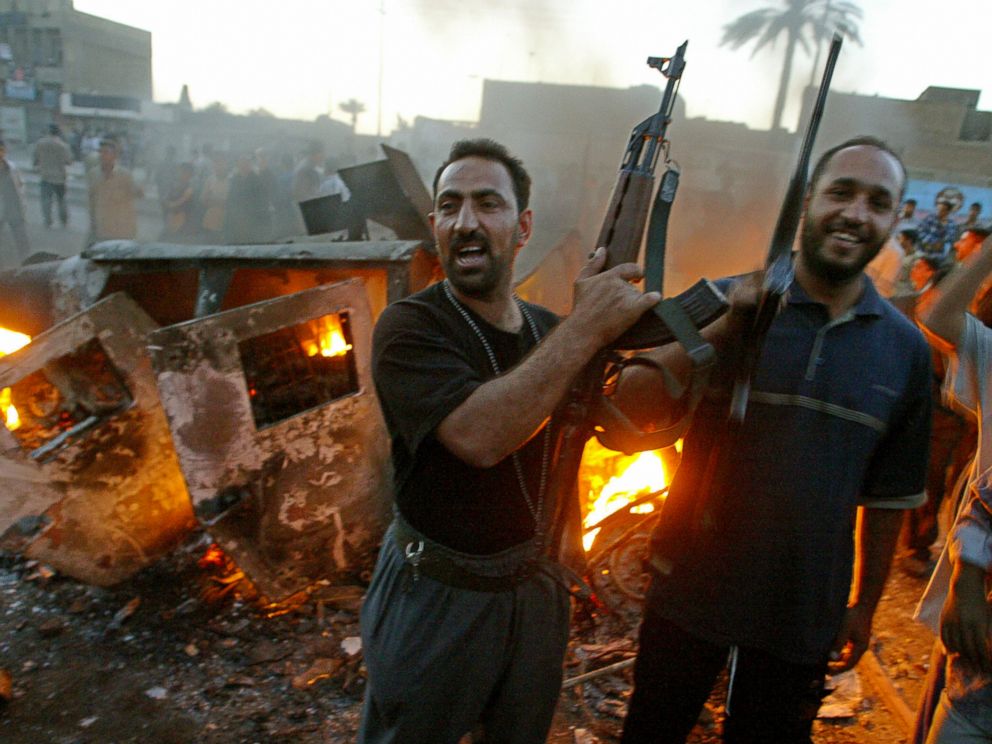
 Ahmad Al-Rubaye/AFP/Getty Images
 Wathiq Khuzaie/Getty Images
 AP
AP
 The Associated Press

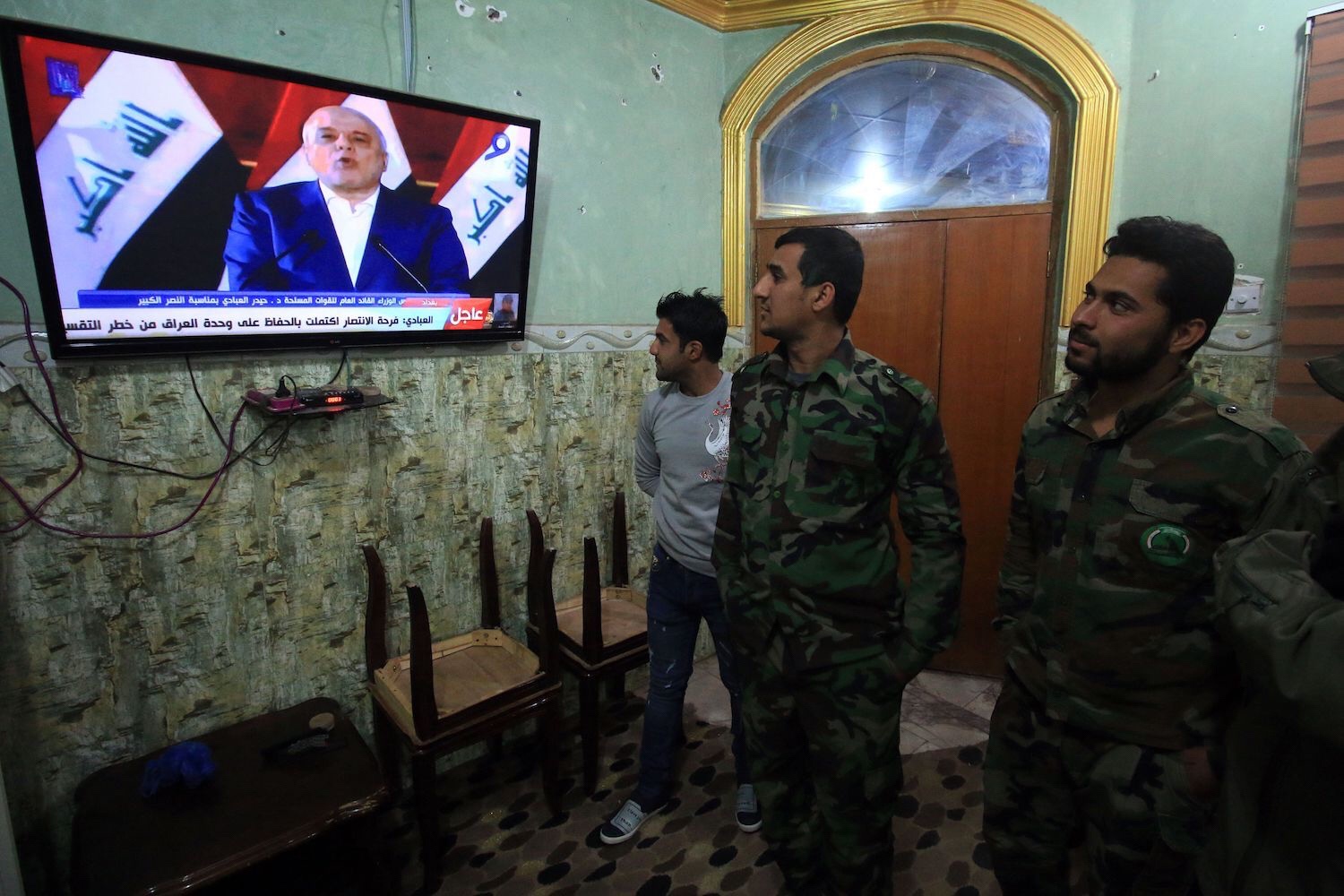

 Hipsters, Sadrists, Shi’ites plan for Iraq’s future