The prophecy is more than seeing into the future. For the prophecy sees without the element of time. For the prophecy sees things as they were, as they are, and as they always shall be.
Showing posts with label Antichrist Cancels Kurd Independence (Revelation 13)Andrew the Prophet. Show all posts
Showing posts with label Antichrist Cancels Kurd Independence (Revelation 13)Andrew the Prophet. Show all posts
On
April 4, 2004, the 2-5 battalion of the 1st Cavalry Division was just
taking over responsibility for Sadr City, a large Baghdad slum with a
population of 2 million. A platoon of 18 soldiers and their interpreter
was returning to its base from the most routine of missions, providing
security for sewage trucks, when it suddenly came under fire.
Within
minutes, a gunner, Sgt. Eddie Chen, was fatally injured. Others were
wounded and two of the platoon’s four Humvees were disabled. Lt. Shane
Aguero, the platoon leader, directed the team down an alleyway, where
the soldiers took cover in a house.
Back at the battalion’s base,
Camp War Eagle, located just outside Sadr City, the new commander, Lt.
Col. Gary Volesky, was taking over command as radio reports came in from
the platoon detailing the increasing intensity of the fight. Then
reports arrived of enemy fighters seizing the local police stations in
the neighborhood. Volesky and rescue teams from the battalion’s Charlie
and Alpha Company raced into the city, facing an onslaught of gun fire,
rocket propelled grenades (RPGs) and pipe bombs.
By the end of the
night, eight soldiers would be dead and more than 60 wounded -- the
largest casualty count in one day for the First Cavalry Division since
Vietnam.
Here’s more about the ambush that would be known as Black Sunday:
Back at the house in the alley, with
an Iraqi family still inside, soldiers from the platoon took up
positions on the roof. Sgt. 1st Class Jerry Swope stayed down in the
alley in one of the remaining Humvees. As enemy fighters continuously
assaulted the platoon, Swope was on the Humvee’s radio for the entire
fight, the only point of contact with rescue teams struggling to get to
them.
Up on the roof, the soldiers were frantically trying to
signal their location, using smoke grenades, electronic signaling
equipment, even ripping off the sleeves of their uniforms to start a
fire.
Out on the streets of Sadr City, the multiple rescue teams
attempting to reach the pinned down platoon came under fierce attack and
incurred heavy casualties.
“It was multiple rounds constantly,”
Capt. Troy Denomy, the commander of Charlie Company, recalled. “I
remember looking at the street, you’d see the rounds that were missing,
you could see the impact on the street, and it kind of looked like rain
when it hits puddles.”
Charlie Company passed by the alleyway, but
with the antennas shot off the lead Bradley fighting vehicles, the
Bradleys were unable to hear the radio calls to stop.
Eventually, a
tank company came up the adjoining road. Watching the tanks rolling by,
SFC Swope frantically called into the radio for them to stop. The
platoon leader, Lt. Aguero, in a last-ditch effort, ran down the alley
waving his flashlight in the dark. The tank company commander saw the
light, and stopped, bringing the power and might needed to push back the
enemy fighters and get the platoon out.
What was the toll?
In addition to Sgt. Eddie Chen, the gunner
with the pinned-down platoon, seven other soldiers were killed that
evening: Spc. Robert Arsiaga, Spc. Ahmed Cason, Spc. Israel Garza, Spc.
Stephen Hiller, Cpl. Forest Jostes, Sgt. Michael Mitchell and Spc. Casey
Sheehan. Most of them were in their 20s. More than 60 others were
wounded.
Why did it matter?
The fight to rescue the team in the alley was
just the beginning. Within hours, many of the soldiers involved were
back battling on the streets of Sadr City
to retake the police stations that had been seized. They would go on to
fight this new insurgency for 80 straight days, and then after a brief
respite, would endure another 60.
Who are the heroes?
As Volesky put it, “Uncommon valor was common
that day.” Sgt. 1st Class Swope would be awarded a Silver Star for
staying in the Humvee in the alley and remaining on the radio for the
entire battle. Staff Sgt. Robert Miltenberger was also awarded the
third-highest medal for valor because of his actions that night. As part
of a rescue mission, he and more than a dozen other soldiers were in
the rear of an open-bed LMTV truck. Exposed to the enemy like the
proverbial fish in a barrel, Miltenberger was credited with saving the
lives of three soldiers while treating many other wounded.
Wathiq Khuzaie/Getty Images
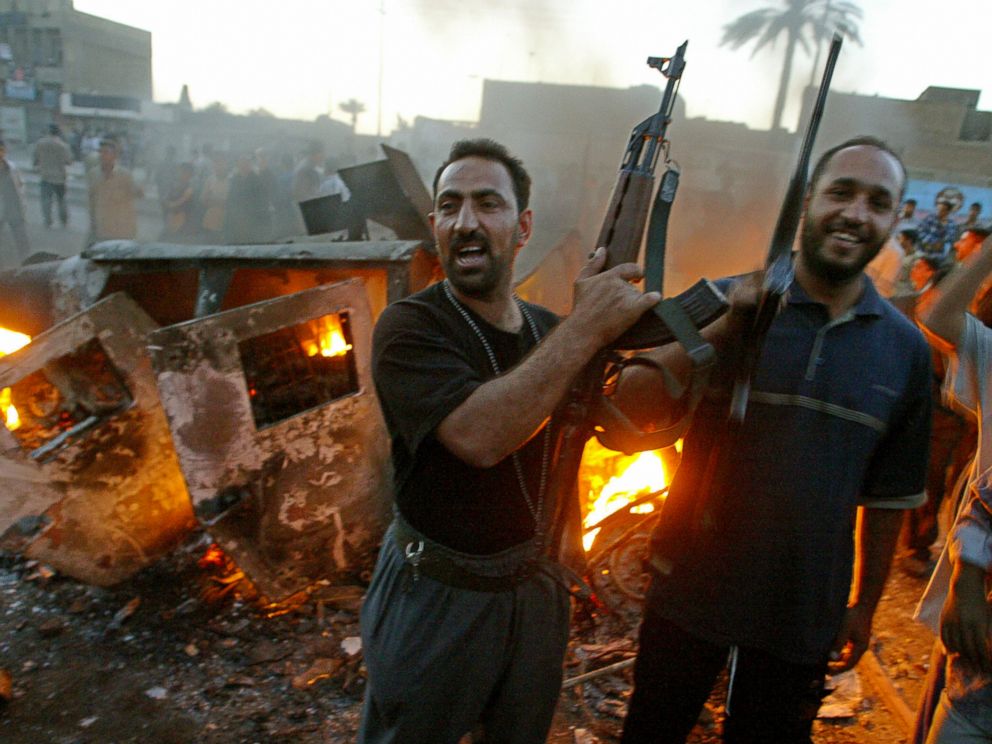
U.S. troops patrol the deserted streets of the sprawling Shia slum of Sadr City at
sunset after a day of tense clashes across the country with supporters
of controversial Shia cleric Moqtada al-Sadr, April 4, 2004, in Sadr
City, Iraq. more +For soldiers of the 2-5 battalion, it was moment that would define the days to follow.“I
don’t think the bonds that they’ve made here with their fellow soldiers
will ever break,” Volesky said. “I understand now what it means when
you go to a veterans’ ceremony and you see the old veterans get together
and hug and cry and you never really understood it. I understand it
now.”
By Conor Finnegan
The U.S.’s ranks of diplomats are losing key leaders at a
“dizzying speed” as the State Department struggles to recruit talent
amid a hiring freeze and sinking morale in the Trump administration,
according to a new letter from a top ambassador.
Sixty percent of
the agency’s career ambassadors, the highest rank for diplomats, have
retired or quit since January. Nearly half of career ministers — the
next level down and equivalent to the military’s three-star generals —
are gone too, down to 19 from 33. The next-level minister counselors
have seen their numbers drop by 62 diplomats since Labor Day alone “and
are still falling,” writes Ambassador Barbara Stephenson, the president
of the American Foreign Service Association union.
Without
these leaders, the U.S. could face a diminished role on the world
stage, unable to keep up with the increasingly aggressive foreign
policies of rising countries like China, she argues.
“There is
simply no denying the warning signs that point to mounting threats to
our institution — and to the global leadership that depends on us. There
is no denying that our leadership ranks are being depleted at a
dizzying speed,” Stephenson, who has headed the AFSA since 2015, writes
in a new essay in the group’s monthly publication.
AFSA rarely makes forays into political issues, making Stephenson’s letter that much more surprising.
There
has been a sharp impact on the next generation as well, AFSA reports. A
department-wide hiring freeze prevents new employees from coming
onboard and limits current employees’ ability to take on new roles,
unless granted special permission. After 366 new foreign service
officers were admitted in 2016, only about 100 will join in 2018,
according to AFSA.
What’s worse, they say, is that interest in
joining the foreign service is plummeting now because of these policies.
More than 17,000 people applied to take the foreign service test last
year, but fewer than half that number have taken it so far this year.
The
implications of that trend could be felt long term, with a new crop of
talented diplomats missing and unable to take the helm in a couple of
decades, Stephenson argues.
“The talent being shown the door now
is not only our top talent but also talent that cannot be replicated
overnight,” she writes.
While the union and many outside the
government as well are raising alarms about the situation, the president
has made clear that he does not see the need to fill many of the roles
or build talent.
“The one that matters is me. I’m the only one
that matters because, when it comes to it, that’s what the policy is
going to be,” he said in a Fox News interview last week.
Secretary of State Rex Tillerson
has said he is revamping the State Department to be more efficient and
sustainable — calling the project “the most important thing I want to do
during the time I have.”
That “redesign” began with an employee
survey and hundreds of employee interviews, led by an outside consulting
firm, to hone the department’s focus and mission, Tillerson’s team has
said. Until it is complete, he has implemented that hiring freeze and
left several top roles vacant or filled by staff in an acting capacity.
AP
In this June 5, 2017, file photo, U.S.
Secretary of State Rex Tillerson, right, and U.S. Secretary of Defense
Jim Mattis participate in talks at Government House in Sydney.more +Tillerson
has said he has the “utmost respect for the foreign service officer
corps here, and they’re vital ... and critical to the country’s ability
to carry out its foreign policy,” telling the New York Times magazine he doesn’t understand the backlash to the redesign. “I’m mystified by it. I’m perplexed by it.”But
to foreign policy hands, he is depleting the nation’s diplomats, which
will diminish America’s role on the world stage — or lead to a heavier
reliance on the Pentagon at a time when the military is already
stretched thin by two wars in Afghanistan and Iraq and Syria, as well as other hotspots around the world.
“The
rapid loss of so many senior officers has a serious, immediate and
tangible effect on the capacity of the United States to shape world
events,” Stephenson writes. “Were the U.S. military to face such a
decapitation of its leadership ranks, I would expect a public outcry.”
Military leaders have often called for robust funding of the State Department. Secretary of Defense James Mattis
is often quoted from his 2013 Congressional testimony, when he told the
Senate Armed Services Committee, “If you don’t fund the State
Department fully, then I need to buy more ammunition.”
Tillerson
and Mattis have worked closely in the Trump administration, with Mattis
pointing out at every turn that Tillerson and diplomacy are at the helm
on their North Korea strategy.
It’s not just the loss of personnel or lack of hiring. There have been complaints about mismanaging talent as well.
Politico
reported Monday that the State Department has assigned “several
hundred” employees to process public information requests, often known
as FOIAs, because of a backlog that has built up over more than a
decade.
While the State Department would not confirm that number,
an official told ABC News, “The current processing system just wasn’t
working,” citing over 13,000 requests outstanding since 2006.
“The
Secretary is taking an approach of calling on many capable hands to
step in, as part of a surge, to clear the backlog,” the official added.
“This is about accountability and efficiently getting these outstanding
FOIA requests down.”
Despite the criticism, the personnel moves seem to have satisfied Tillerson’s boss.
“It’s
called cost-saving. There’s nothing wrong with cost-saving. Rex is in
there working hard. He’s doing his best,” Trump told Fox News last week.
If
Trump does seem to have any concern about staffing at the State
Department, it’s that there are not enough of “his” people in the agency
to implement in the “America First” vision he promised — agreeing with
conservative commentator Laura Ingraham on this point in that Fox News
interview.
The Associated Press
FILE - In this Aug. 7, 2008 file
photo, then-US ambassador to Tanzania Mark Green is seen at the US
embassy in Tanzania. Green is a rare bird in Washington these days: A
nominee of President Donald Trump enjoying broad bipartisan support. But
there’smore +So
far, the Trump administration has only seven high-level political
appointees confirmed by the Senate and working in the department —
outside of Tillerson but including USAID Administrator Mark Green and
Deputy Secretary of State John Sullivan. An additional eight nominees
are working their way through the confirmation process now, with the
Senate either awaiting their paperwork or the nominees awaiting a Senate
hearing or vote.But in the absence of Trump nominees, there
are 30 senior roles filled by career diplomats in acting capacities.
Although there is someone doing the work, they do not enjoy the full
legal authority of their role or the image of speaking on the
administration’s behalf to the world.
There are 39 other senior
roles that are vacant, but Tillerson has said he plans to eliminate 18
of those and fold their responsibilities into other jobs. The Trump
administration has named a nominee for one of the 39 roles — the chief
of protocol — who is awaiting confirmation.
Nearly three dozen
ambassadorships remain vacant as well, with the embassies’ No. 2, called
the charge d’affaires, leading those U.S. missions.
Those killed were travelling in convoy deployed to support raid on suspected Daesh men
BAGHDAD: An air strike by the US-led coalition battling Daesh hit Iraqi security personnel on Saturday, officials said, in an apparent mistake that killed eight people.
The friendly fire incident drew swift criticism of the US military presence in Iraq from pro-Iranian figures in Baghdad.
“Eight people — a senior intelligence official, five policemen and a woman — were killed by a US strike on the centre of Al Baghdadi,” a town in western Iraq, a provincial official said, asking not to be identified.
“It seems the strike was a mistake,” the official said of the incident in the Euphrates Valley town, adjacent to the Ain al-Asad airbase 250 kilometres west of the capital.
Those killed were travelling in a convoy which had been deployed to support a dawn raid on suspected Daesh terrorists in the area.
Despite the government’s declaration of victory over Daesh last month, the terrorists remain active underground in several regions of Iraq, particularly along the Euphrates Valley and in the vast desert to its west.
The US-led strike destroyed most of the vehicles in the convoy and also wounded 20 people, including the town’s police chief, who was in a serious condition, the provincial official said.
Iraq’s Joint Operations Command, which coordinates the country’s campaign against Daesh, said it had ordered a special forces raid in the town after receiving intelligence of a “meeting to be attended by terrorist commander Karim Al Samarmad”.
It said it had requested “air support from the international coalition”.
“Once the terrorist was arrested and while troops were carrying out searches, a grenade was thrown from an adjacent building.”
As the special forces troops withdrew to base, they ran into a convoy of police and paramilitaries of the Hashed Al Shaabi auxiliary force that had been sent to support them.
The convoy was composed of pickup trucks and the returning forces mistook them for terrorists and called in a coalition air strike, the JOC said, lamenting the lack of coordination.
“An inquiry has been opened,” it added.
Coalition spokesman Colonel Ryan Dillon said the strike had been carried out at the request of Iraqi forces, who would take the lead in investigating any failings.
“Anything we do in Iraq is in support of the Iraqi security forces. We were asked for support and we provided it,” Dillon told AFP.
“Iraqi forces have announced an investigation, they are on the lead for the investigation.
“For any allegation, especially of civilian losses, we conduct an investigation.”
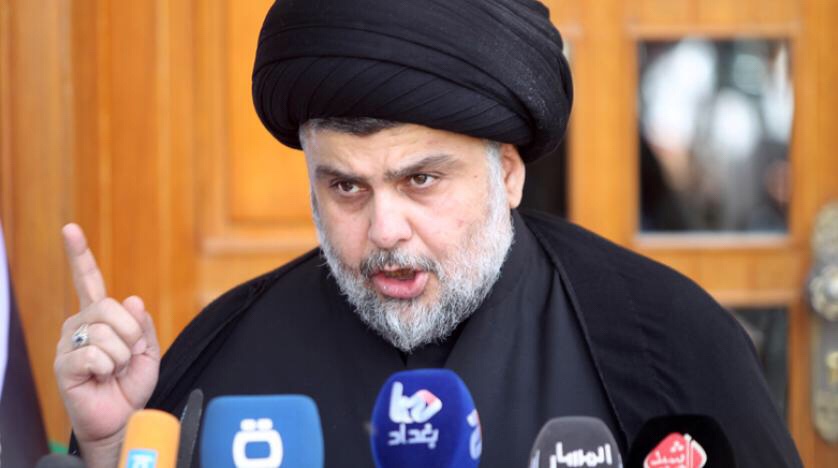
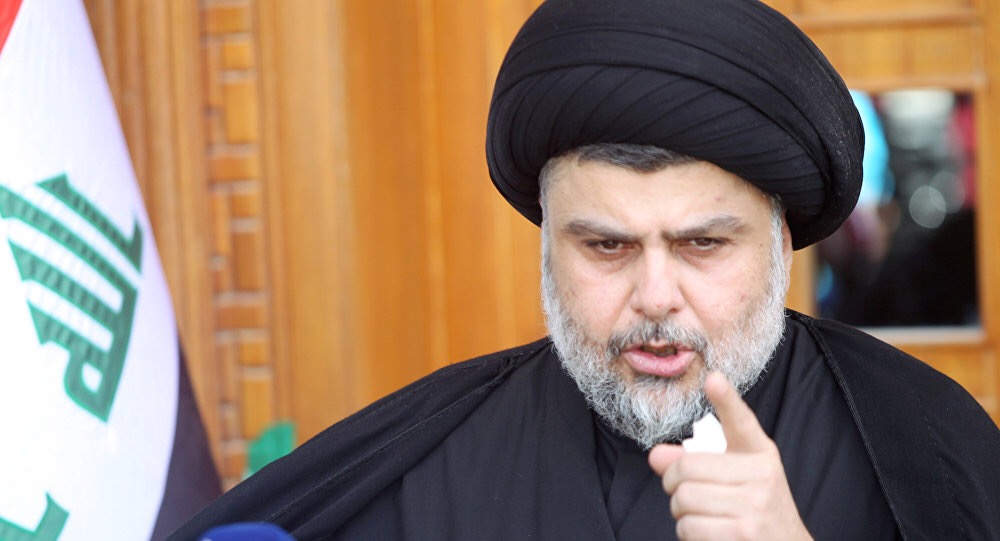
But leaders of the pro-Iran militias that form the backbone of the Hashed auxiliary force, which played a major role in the campaign against Daesh independently of the coalition, were unswayed by the explanation. Populist Shiite militia leader Moqtada Al Sadr, who led repeated uprisings against coalition troops during the US-led occupation that followed the 2003 invasion, demanded immediate action against those responsible for the strike. “Once again the American occupation forces have shown their tyranny and arrogance by flagrantly violating the independence and sovereignty of the Iraqi government,” he said on Twitter.
Senior Hashed commander Qais Al Khazali, who heads the Asaib Ahl Al Haq militia, said the strike “raises serious and dangerous questions”.
Those questions concern “the American military presence in Iraq, the role it intends to play and the justification for its presence after the military defeat of Daesh,” he said on Twitter.
Sistani calls for Shiite militias to be part of Iraq state security
Agence France-Presse
Iraq's most revered Shiite cleric, Ayatollah Ali Al Sistani, has opposed calls to disband a controversial paramilitary force which was instrumental in defeating ISIL group in the country.
Iraq is "always in desperate need of heroic men who have backed up the army and federal police and who fought alongside them on different fronts", said Abdel Mahdi Al Karabalai, the ayatollah's representative.
"We need to continue to benefit from this important source of energy, within the constitution and judicial framework," he said in a sermon at Friday prayers in the Shiite holy city of Karbala, south of the capital.
Mr Al Karabalai stressed that the Hashed Al Shaabi's arms belonged to the state and its mission was to defend national security.
The force was established in 2014 after Mr Al Sistani urged Iraqi citizens to take up arms against ISIL militants who had swept aside government forces and seized control of much of northern Iraq.
But the Hashed, a Shiite-dominated alliance, remains deeply divisive and has been accused of a string of abuses.
Known in English as the Popular Mobilisation Units, the various forces within the Hashed can field a total of between 60,000 and 140,000 fighters.
Iraq's parliament has classed it as a state force operating within the constitution.
Calls have been growing from the West for the Hashed to disband, with French president Emmanuel Macron proposing "a gradual demilitarisation" of the group and for all militias in Iraq to be "dismantled".
On Monday, the influential Shiite cleric Moqtada Al Sadr ordered his fighters in the Hashed Al Shaabi, known as the Saraya Al Salam, or Peace Brigades, to disband and hand over territory held by them to state security forces.
But Hashed spokesman Ahmad Al Assadi, who is also a member of parliament, said that Mr Al Sistani wanted the Hashed units to be retained as part of Iraq's security system.
The Hashed suffered 7,637 dead and 21,300 wounded in the three-year war to drive out ISIL, according to a top Hashed commander, Qais Khazali.
Iraq declared final victory over ISIL on December 9, saying the extremist group had been driven out of all the Iraqi territory it once held.
Top Iraqi Shiite cleric calls for scaling back militia influence, backing prime minister
By Tamer El-Ghobashy and Mustafa Salim
December 15 at 10:13 AM
BAGHDAD — Iraq’s top Shiite cleric on Friday called on the powerful Shiite militias that helped reconquer the Islamic State’s territory to choose between politics and arms, backing a key demand of the prime minister.
Grand Ayatollah Ali Sistani stopped short, however, of rescinding a religious edict he made in June 2014 urging Iraqi citizens to join security forces at a time when the Islamic State was sweeping through the country, eventually taking over about a third of Iraq’s territory.
Instead, he said that all weapons should be under the control of the state and that armed groups should steer clear of political participation — marking a significant step in Iraq’s demobilization from a war footing now that major combat against the Islamic State has ended.
Sistani’s call, made during a weekly prayer sermon delivered in the city of Karbala by a representative of the reclusive cleric, comes ahead of elections next spring in which Prime Minister Haider al-Abadi is expected to face challenges from leaders of Shiite militias, whose influence and visibility have grown during the three-year battle against the militants of the Islamic State. Many of the militias are backed by Iran.
Maintaining Abadi’s hold on power is a major priority for the United States, which worked closely with the Iraqi prime minister in the war. Abadi is seen by Washington and many Iraqis as a reliable check on Iranian influence in Iraq, and a conciliatory figure who could lead a national reconciliation between Sunnis and Shiites.
Sistani’s comments are likely to bolster Abadi, who has said that reining in the many armed Shiite militias is an immediate imperative to stabilize the country as it reckons with the physical and social damage of the Islamic State occupation. In an interview with The Washington Post in October, Abadi said the militias must either join the formal Iraqi security forces or disband and separate their political and military activities. Those that refuse will become “outlaws,” he warned.
On Friday, Sistani did not call out the militias by name but hewed to Abadi’s line, raising the possibility that the militias could lose popular support if they disobey him.
He said Iraq still needs the manpower of the volunteers but exclusively within Iraq’s regular security forces.
“It is necessary to make continued use of this important energy within the constitutional and legal frameworks that restrict arms to the state,” Sistani’s representative said.
He added that the volunteers, known as the popular mobilization units, earned a reputation exceeding that of any political force in Iraq and that exploiting their popularity for political purposes would sully their “holy status.”
Sistani’s words resonate deeply in majority-Shiite Iraq.
His 2014 edict prompted a stampede to join Iraq’s security forces. Although he had urged them to sign up for Iraq’s police and army, the majority raced to join established and newly formed militias that were hungrily recruiting under a banner of religious obligation.
Sistani’s call helped swell militia ranks to about 100,000. They operate under the umbrella of the popular mobilization units, which were legally incorporated into Iraq’s security apparatus in 2016, ostensibly commanded by the prime minister’s office. But the legislation left their mandate vague and did not touch their command structure.
The legislation did, however, bring 100,000 fighters under Iraq’s strained municipal budget. Dismantling or reducing the force would leave many unemployed.
The deputy commander of the popular mobilization units is Abu Mahdi al-Muhandis, who the United States has designated a terrorist and who maintains close ties with Maj. Gen. Qasem Soleimani, commander of the elite Quds Force of Iran’s Revolutionary Guard Corps.
The largest and most powerful militias — the Badr Organization, al-Nujaba, Asaib Ahl al-Haq, the Peace Brigades and Kitaeb Hezbollah — all have charismatic commanders, and most rely on Iran financially and ideologically. They actively fought American troops after the 2003 invasion.
Their interests have aligned with the Iraqi government’s over the past three years, but they have shown repeated disregard for Abadi’s orders. Despite Iraq’s pledge not to interfere in regional conflicts, thousands of militia fighters have participated in battles in Syria on the side of Iran, Russia and Syrian President Bashar al-Assad.
The popular mobilization units have fought in nearly every major battle against the Islamic State, to the chagrin of the United States and many Iraqi Sunnis who see them as a sectarian force. In the early years of the war, they were implicated in the summary executions and disappearances of Sunni civilians seen by the militias as Islamic State sympathizers.
More recently, the militias’ participation in the swift campaign to reclaim Kirkuk from Kurdish control after a failed Kurdish effort to secede has alarmed Kurdish Iraqis, who accuse the popular mobilization units of being Iranian proxies.
They also are deeply enmeshed in Iraq’s governing structure. The Badr Organization, which was created in Tehran in the 1980s, holds seats in parliament, and successive interior ministers have been senior leaders of the group.
This week, several prominent militia commanders, including the Peace Brigade’s Moqtada al-Sadr and Badr Organization leader Hadi al-Amiri, said they would be willing to disarm or decouple their political activities from their armed wings. This is the clearest signal yet that these commanders intend to participate in national elections next year. Experts doubt that the move would actually weaken either group and see it as a public relations maneuver that cannot be fully carried out.
Ahmed al-Mayali, a political-science professor at Baghdad University, said some elements of the popular mobilization units that mustered after Sistani’s call will be easy to disband because they are loyal to the cleric. But those with close links to Iran will never realistically give up their weapons, he said, setting the stage for a protracted political or armed struggle.
“One of the games that Iran is playing is they will do their best to keep these groups strong in Iraq to use them in case there is pressure against them from the West,” he said. “That will put the Iraqi government in a critical situation that might escalate to armed battles to disarm these groups.”
Iraqi Shi'ite Paramilitary Chief Seeks to Put Troops Under National Army
Reuters
BAGHDAD (Reuters) - The commander of Iraq's biggest Shi'ite Muslim paramilitary group told its fighters on Thursday to take their orders from the national military and cut their ties with the group's political wing.
Hadi al-Amiri, leader of the Iran-backed Badr Organisation, also called on the group's fighters to withdraw from the cities under their control.
The move paves the way for Amiri to stand in parliamentary elections on May 12.
Participation in the election by members of Iraq's Iran-backed Shi'ite paramilitaries, collectively known as Popular Mobilisation Forces (PMF), has been hotly debated in Iraq. PMF members cannot run for office unless they formally resign their posts.
Amiri is the second commander to issue such a call in as many days. He called on those in charge of his armed wing to cut their ties with the group's political party, which holds 22 seats in the Iraqi parliament.
"I also call on all my brothers, the commanders of various formations, to clear cities of all signs of militarisation," he said in a speech.
Badr, which says it is loyal to both Iraq and Iran, is the biggest group within the PMF, which fought alongside security forces against Islamic State.
Sunni Muslims and Kurds have called on Prime Minister Haider al-Abadi, who declared victory over Islamic State last week, to disarm the PMF, which they say are responsible for widespread abuses.
The PMF were officially made part of the Iraqi security establishment by law and formally answer to Abadi in his capacity as commander-in-chief of the armed forces.
Abadi has said the state should have a monopoly on the legitimate use of arms.
Qais al-Khazali, head of Asaib Ahl al-Haq, announced a similar move on Wednesday when he said he would place his fighters under Abadi's command. The fighters and their political wing were now separate entities, he said. Powerful Shi'ite cleric Moqtada al-Sadr set out conditions on Monday for his followers to give the government the weapons they used to fight Islamic State.
Iran-backed Harakat Hezbollah al Nujaba, which has about 10,000 fighters and is one of the most important militias in Iraq, said last month it would give any heavy weapons it had to the military once Islamic State was defeated.
(Reporting by Ahmed Aboulenein; Editing by Hugh Lawson)
Sadr sets conditions for disarming Iraq fighters Reuters
Demands they be given jobs or be incorporated into official forces Reuters 17:58 December 12, 2017
BAGHDAD: Iraqi powerful Shiite cleric Moqtada Al Sadr set conditions on Monday for his followers to hand over to the government the weapons they used to fight Daesh.
Iraqi Prime Minister Haider Al Abadi declared final victory over the militant group on Saturday and said “the state should have a monopoly on the use of arms”. Iraq’s armed forces held a victory parade in Baghdad on Sunday.
In a televised speech, Sadr demanded that his fighters, drawn largely from among the urban poor of Baghdad and southern Iraqi cities, be given jobs or be incorporated into the official armed and security forces.
He also demanded that the government “looks after the families of the martyrs” who fell during the three-year war against Daesh. Sadr’s Saraya Al Salam, or Peace Brigades, are part of the mainly Shiite Popular Mobilisation Forces (PMF) formed in response to Daesh’s swift advance across Iraq in 2014.
Iran has armed and trained many PMF groups but not his.
Iran-backed Harakat Hezbollah Al Nujaba, which has about 10,000 fighters and is one of the most important militias in Iraq, said last month it would give any heavy weapons it had to the military once Daesh was defeated.
Sadr Orders Fighters to Hand Over Arms to State AAWSAT Head of the Sadrist Movement Moqtada Sadr ordered on Monday his affiliated Saraya al-Salam brigade to hand over their arms to the state and he indirectly demanded the questioning of former Iraqi Prime Minister Nouri al-Maliki for the fall of Mosul.
Speaking from Najaf, Sadr suggested transforming the Saraya al-Salam to a service organization, and called on the brigade’s fighters to hand over weapons they had received from the state to the Iraqi government and leave liberated areas for the Iraqi army to control. Sadr's Saraya al-Salam, or Peace Brigades is a paramilitia operating under the umbrella of the "Hashd al-Shaabi" in Iraq.
The Iraqi cleric warned that no party should run under the banner of the "Hashd al-Shaabi" in the country’s upcoming elections.
He added that the central government should “remove uncontrollable elements” in the Iraqi security forces, and “punish those responsible” in human rights violations during the fight against ISIS.
Sadr also requested that government to reopen the cases of the fall of Mosul in 2014 to ISIS and the Camp "Speicher" massacre in Tikrit where an estimated 1,700 Iraqi soldiers were mass killed by ISIS in June 2014.
Maliki is considered as the first suspect in this case.
Although “Abu al-Fadl al-Abbas” brigade announced two days ago it was dismantling itself, the fate of the armed factions, which are part of the "Hashd al-Shaabi", remains the main concern of all Iraqi parties.
Several observers still ignore how the operation of dismantling those groups would exactly be achieved, particularly that some factions say that their military wings are legitimately related to the State under the umbrella of the official “Hash al-Shaabi.”
For his part, Safa Tamimi, spokesperson for Saraya al-Salam told Asharq Al-Awsat that the arms used by the Saray in its war against ISIS was originally owned by the State and therefore, those weapons will be returned to the state.
Iraq's Moqtada al-Sadr urges Shia militias to return weapons
SULAIMANI – Iraqi Shia political leader Moqtada al-Sadr on Monday (December 11) called on the Shia militias, including his own, to lay down and return their weapons to the state after the defeat of the Islamic State (ISIS) militant group.
In a videotaped speech broadcast on Iraq television, Sadr also called on his forces from Saraya al-Salam, or Peace Brigades, to withdraw from the Iraqi territories that they control. Sadr, however, said that his forces would remain in the holy Shia city of Samarra, north of Baghdad.
Sadr also urged most of Saraya al-Salam offices to be shut and directed his armed forces to suspend their military actions in those areas.
While speaking he discussed the unorganized armed forces within Hashid al-Shaabi and warned his listeners of them.
Moreover, he cautioned against the participation of any party under the banner of the Hashid al-Shaabi in the country’s upcoming elections.
“No leader from Hashid al-Shaabi must run in the upcoming elections and the name of Hashid al-Shaabi must be prevented in the electoral process,” he said.
The Iraqi government has decided to hold parliamentary and provincial elections on May next year.
Prime Minister Al Abadi has also spoken out strongly that military leaders will not be allowed to run in the upcoming elections.
The last election took place in April 2014 when the State of Law alliance of former Prime Minister Nuri al-Maliki won most of the votes but fell short of an overall majority.
Maliki ceded power to Abadi that August amid political gridlock as Islamic State group jihadists entered and occupied vast regions of Iraq.
(NRT)
An Iraqi Shiite fighter from the Saraya al-Salam (Peace Brigades), a group formed by Iraqi Shiite Muslim cleric Muqtada al-Sadr, on the back of a vehicle leaves Baghdad for the city of Samarra, some 120 kilometers north of the Iraqi capital, to fight against ISIS on March 15, 2015. Photo: AFP/Sabah Arar
“We didn’t enter Kirkuk to control territory,” Safa al-Tamimi, a commander and spokesperson for Saraya al-Salam told Rudaw TV on Saturday. “Rather, we went there to protect the security of the people of the city, and convey the message of peace, love and certainty.”
Al-Tamimi said that upon entering Kirkuk, his militia group was welcomed by the city’s Kurdish, Turkmen and Arab communities. He also said they want to integrate the Hashd al-Shaabi forces with the Iraqi army and security forces.
Al-Tamimi said the main objective of the Saraya al-Salam from day one has been to support the Iraqi army.
“We have always been a supporting group within the Iraqi army and security establishments.” Al-Tamimi maintained. “Our only objective has been to support the Iraqi army and neutralize the danger against sacred places that were attacked by ISIS militants.”
“This has been our aim since our establishment, since ISIS attacked Iraq in 2014.”
Sayara al-Salam militiamen were part of the overall Iraqi incursion into Kirkuk and other disputed territories in October.
Al-Tamiki said that his group has carried out no armed activity since entering the region and that they have reassured all parties of their intentions.
“We have done no military activities in Kirkuk and every party knows this,” he said. “We reiterate that we will always be a guarantor for the entire nation of Iraq,” al-Tamimi detailed.
On reports of human rights abuses al-Tamimi said that all militia groups should not be lumped together, and that some of the violations might have been perpetrated by individuals.
“Not all the units of the Hashd al-Shaabi forces are responsible for these violations if there had been any,” he said. “The wrongdoings should have been on a personal level, if some disorganized and disobedient units have done something wrong.”
“The Hashd al-Shaabi commanders were doing their best to prevent these individual violations.” Al-Tamimi said.
Al-Tamimi claimed that their leader, al-Sadr, wants his and all other militia groups to be incorporated into government forces and come under the prime minister’s control.
“Since the formation of the Saraya al-Salam, Muqtada Sadr has been calling for the Hashd al-Shaabi units to be under the command of the commander-in-chief of the armed forces,” he explained. “In his first statement, his request was that we form a military unit that is part of Iraq’s security forces.”
“This is our request too, and we hope this happens. We hope that organized units are incorporated into the Iraqi army and security forces. And this is to reach the high aim which is to raise the Iraqi flag and that of its army.”
On November 7, Sadr called upon his Saraya al-Salam militia group to pull out their forces from the city of Kirkuk within 72 hours.
Sadr explained then that the administrative affairs of Kirkuk as well as all the others “have to be handed over to the security forces.”
KRG deputy PM, Shia cleric Sadr stress on solution of issues in phone call NRT
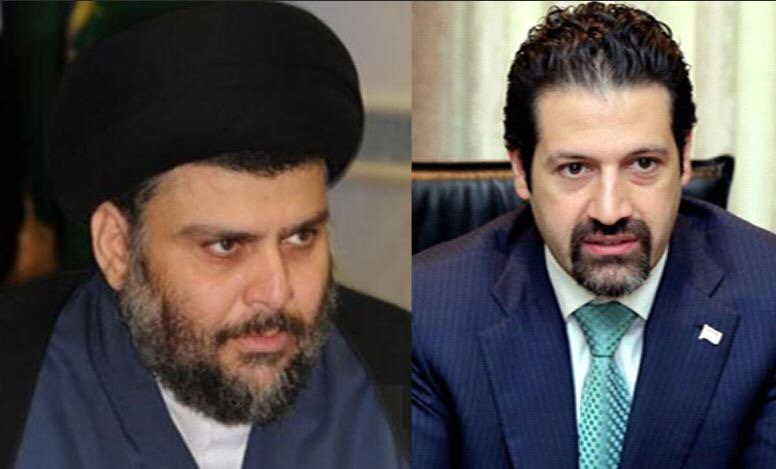
SULAIMANI – Kurdistan Regional Government (KRG) Deputy Prime Minister Qubad Talabani spoke by phone with Shia cleric leader Moqtada Sadr stressing the need to solve the issues between Baghdad and Erbil.
The office of the deputy premier said in a statement on Friday (November 10) that both sides discussed the security and political situation in the country.
Talabani and Sadr have stressed the issues between the region and Baghdad should be resolved according to the basis of Iraqi constitution, the statement read.
The Kurdish deputy prime minister said during the phone call that each side should act with responsibility to play a positive role to facilitate the “unwanted situation” in the country and make efforts to calm the situation in the disputed areas.
Since the referendum on Kurdistan independence in September, Baghdad has taken economic and military measures, shutting the region’s border points and seizing large swathes of territory disputed between Erbil and Baghdad.
In mid-October, Iraqi forces along with Hashid al-Shaabi launched an operation to take control of the disputed areas from the Kurdistan forces in the wake of the Kurdish referendum on independence.
KRG expressed readiness to hold talks with Baghdad to resolve the issues between both sides according to the Iraqi Constitution. However, the Iraqi government has not yet responded to their requests to meet.
Deputy PM Talabani asks Shiite cleric to mediate between KRG and Iraq Rudaw Muqtada al-Sadr, the head of the Shiite Sadr movement, says the Kurdistan Region must first annul the outcome of the Kurdish vote on independence. Photo: media office of Sadr movement
ERBIL, Kurdistan Region – Kurdistan Region’s Deputy Prime Minister Qubad Talabani has asked the influential Shiite cleric Muqtada al-Sadr to mediate talks between his government and Baghdad on the basis of the Iraqi constitution, a statement from the office of the Shiite cleric read.
In a phone call on Thursday, Talabani asked the Shiite cleric to aid a renewed commitment to the Iraqi constitution, the statement detailed.
Sadr’s stance echoes that of Baghdad, arguing that the referendum result must be annulled.
"Holding the referendum was not constitutional in the first place, so how can the constitution be adhered to without cancelling the referendum?" asked the statement from his office.
Talabani’s spokesperson Samir Hawrami confirmed to Rudaw that the phone call took place. The two "reaffirmed the need for dialogue to solve the problems between the Kurdistan Region and Baghdad," Hawrami said. Sadr’s statement said they also discussed Iraq’s 2018 budget.
Baghdad has allocated over 12 percent of the budget for the Kurdistan Region in its draft bill. Erbil insists it is entitled to 17 percent. Sadr said that the Iraqi state is in a difficult financial situation and people in the south and centre of the country are no better off than the Kurds.
The Kurdistan Regional Government (KRG) has offered to freeze the outcome of the independence vote in return for open dialogue with Iraq in light of the Iraqi constitution, but Baghdad has so far rejected this and demanded Erbil declare the vote null and void before any talks begin.
On April 4, 2004, the 2-5 battalion of the 1st Cavalry Division was just taking over responsibility for Sadr City, a large Baghdad slum with a population of 2 million. A platoon of 18 soldiers and their interpreter was returning to its base from the most routine of missions, providing security for sewage trucks, when it suddenly came under fire.
Within minutes, a gunner, Sgt. Eddie Chen, was fatally injured. Others were wounded and two of the platoon’s four Humvees were disabled. Lt. Shane Aguero, the platoon leader, directed the team down an alleyway, where the soldiers took cover in a house.
Back at the battalion’s base, Camp War Eagle, located just outside Sadr City, the new commander, Lt. Col. Gary Volesky, was taking over command as radio reports came in from the platoon detailing the increasing intensity of the fight. Then reports arrived of enemy fighters seizing the local police stations in the neighborhood. Volesky and rescue teams from the battalion’s Charlie and Alpha Company raced into the city, facing an onslaught of gun fire, rocket propelled grenades (RPGs) and pipe bombs.
By the end of the night, eight soldiers would be dead and more than 60 wounded -- the largest casualty count in one day for the First Cavalry Division since Vietnam.
Here’s more about the ambush that would be known as Black Sunday:
Back at the house in the alley, with an Iraqi family still inside, soldiers from the platoon took up positions on the roof. Sgt. 1st Class Jerry Swope stayed down in the alley in one of the remaining Humvees. As enemy fighters continuously assaulted the platoon, Swope was on the Humvee’s radio for the entire fight, the only point of contact with rescue teams struggling to get to them.
Up on the roof, the soldiers were frantically trying to signal their location, using smoke grenades, electronic signaling equipment, even ripping off the sleeves of their uniforms to start a fire.
Out on the streets of Sadr City, the multiple rescue teams attempting to reach the pinned down platoon came under fierce attack and incurred heavy casualties.
“It was multiple rounds constantly,” Capt. Troy Denomy, the commander of Charlie Company, recalled. “I remember looking at the street, you’d see the rounds that were missing, you could see the impact on the street, and it kind of looked like rain when it hits puddles.”
Charlie Company passed by the alleyway, but with the antennas shot off the lead Bradley fighting vehicles, the Bradleys were unable to hear the radio calls to stop.
Eventually, a tank company came up the adjoining road. Watching the tanks rolling by, SFC Swope frantically called into the radio for them to stop. The platoon leader, Lt. Aguero, in a last-ditch effort, ran down the alley waving his flashlight in the dark. The tank company commander saw the light, and stopped, bringing the power and might needed to push back the enemy fighters and get the platoon out.
What was the toll?
In addition to Sgt. Eddie Chen, the gunner with the pinned-down platoon, seven other soldiers were killed that evening: Spc. Robert Arsiaga, Spc. Ahmed Cason, Spc. Israel Garza, Spc. Stephen Hiller, Cpl. Forest Jostes, Sgt. Michael Mitchell and Spc. Casey Sheehan. Most of them were in their 20s. More than 60 others were wounded.
Why did it matter?
The fight to rescue the team in the alley was just the beginning. Within hours, many of the soldiers involved were back battling on the streets of Sadr City to retake the police stations that had been seized. They would go on to fight this new insurgency for 80 straight days, and then after a brief respite, would endure another 60.
Who are the heroes?
As Volesky put it, “Uncommon valor was common that day.” Sgt. 1st Class Swope would be awarded a Silver Star for staying in the Humvee in the alley and remaining on the radio for the entire battle. Staff Sgt. Robert Miltenberger was also awarded the third-highest medal for valor because of his actions that night. As part of a rescue mission, he and more than a dozen other soldiers were in the rear of an open-bed LMTV truck. Exposed to the enemy like the proverbial fish in a barrel, Miltenberger was credited with saving the lives of three soldiers while treating many other wounded.
Wathiq Khuzaie/Getty Images
U.S. troops patrol the deserted streets of the sprawling Shia slum of Sadr City at sunset after a day of tense clashes across the country with supporters of controversial Shia cleric Moqtada al-Sadr, April 4, 2004, in Sadr City, Iraq. more +For soldiers of the 2-5 battalion, it was moment that would define the days to follow.
“I don’t think the bonds that they’ve made here with their fellow soldiers will ever break,” Volesky said. “I understand now what it means when you go to a veterans’ ceremony and you see the old veterans get together and hug and cry and you never really understood it. I understand it now.”
By Conor Finnegan
The U.S.’s ranks of diplomats are losing key leaders at a “dizzying speed” as the State Department struggles to recruit talent amid a hiring freeze and sinking morale in the Trump administration, according to a new letter from a top ambassador.
Sixty percent of the agency’s career ambassadors, the highest rank for diplomats, have retired or quit since January. Nearly half of career ministers — the next level down and equivalent to the military’s three-star generals — are gone too, down to 19 from 33. The next-level minister counselors have seen their numbers drop by 62 diplomats since Labor Day alone “and are still falling,” writes Ambassador Barbara Stephenson, the president of the American Foreign Service Association union.
Without these leaders, the U.S. could face a diminished role on the world stage, unable to keep up with the increasingly aggressive foreign policies of rising countries like China, she argues.
“There is simply no denying the warning signs that point to mounting threats to our institution — and to the global leadership that depends on us. There is no denying that our leadership ranks are being depleted at a dizzying speed,” Stephenson, who has headed the AFSA since 2015, writes in a new essay in the group’s monthly publication.
AFSA rarely makes forays into political issues, making Stephenson’s letter that much more surprising.
There has been a sharp impact on the next generation as well, AFSA reports. A department-wide hiring freeze prevents new employees from coming onboard and limits current employees’ ability to take on new roles, unless granted special permission. After 366 new foreign service officers were admitted in 2016, only about 100 will join in 2018, according to AFSA.
What’s worse, they say, is that interest in joining the foreign service is plummeting now because of these policies. More than 17,000 people applied to take the foreign service test last year, but fewer than half that number have taken it so far this year.
The implications of that trend could be felt long term, with a new crop of talented diplomats missing and unable to take the helm in a couple of decades, Stephenson argues.
“The talent being shown the door now is not only our top talent but also talent that cannot be replicated overnight,” she writes.
While the union and many outside the government as well are raising alarms about the situation, the president has made clear that he does not see the need to fill many of the roles or build talent.
“The one that matters is me. I’m the only one that matters because, when it comes to it, that’s what the policy is going to be,” he said in a Fox News interview last week.
Secretary of State Rex Tillerson has said he is revamping the State Department to be more efficient and sustainable — calling the project “the most important thing I want to do during the time I have.”
That “redesign” began with an employee survey and hundreds of employee interviews, led by an outside consulting firm, to hone the department’s focus and mission, Tillerson’s team has said. Until it is complete, he has implemented that hiring freeze and left several top roles vacant or filled by staff in an acting capacity.
AP
In this June 5, 2017, file photo, U.S. Secretary of State Rex Tillerson, right, and U.S. Secretary of Defense Jim Mattis participate in talks at Government House in Sydney.more +Tillerson has said he has the “utmost respect for the foreign service officer corps here, and they’re vital ... and critical to the country’s ability to carry out its foreign policy,” telling the New York Times magazine he doesn’t understand the backlash to the redesign. “I’m mystified by it. I’m perplexed by it.”
But to foreign policy hands, he is depleting the nation’s diplomats, which will diminish America’s role on the world stage — or lead to a heavier reliance on the Pentagon at a time when the military is already stretched thin by two wars in Afghanistan and Iraq and Syria, as well as other hotspots around the world.
“The rapid loss of so many senior officers has a serious, immediate and tangible effect on the capacity of the United States to shape world events,” Stephenson writes. “Were the U.S. military to face such a decapitation of its leadership ranks, I would expect a public outcry.”
Military leaders have often called for robust funding of the State Department. Secretary of Defense James Mattis is often quoted from his 2013 Congressional testimony, when he told the Senate Armed Services Committee, “If you don’t fund the State Department fully, then I need to buy more ammunition.”
Tillerson and Mattis have worked closely in the Trump administration, with Mattis pointing out at every turn that Tillerson and diplomacy are at the helm on their North Korea strategy.
It’s not just the loss of personnel or lack of hiring. There have been complaints about mismanaging talent as well.
Politico reported Monday that the State Department has assigned “several hundred” employees to process public information requests, often known as FOIAs, because of a backlog that has built up over more than a decade.
While the State Department would not confirm that number, an official told ABC News, “The current processing system just wasn’t working,” citing over 13,000 requests outstanding since 2006.
“The Secretary is taking an approach of calling on many capable hands to step in, as part of a surge, to clear the backlog,” the official added. “This is about accountability and efficiently getting these outstanding FOIA requests down.”
Despite the criticism, the personnel moves seem to have satisfied Tillerson’s boss.
“It’s called cost-saving. There’s nothing wrong with cost-saving. Rex is in there working hard. He’s doing his best,” Trump told Fox News last week.
If Trump does seem to have any concern about staffing at the State Department, it’s that there are not enough of “his” people in the agency to implement in the “America First” vision he promised — agreeing with conservative commentator Laura Ingraham on this point in that Fox News interview.
The Associated Press
FILE - In this Aug. 7, 2008 file photo, then-US ambassador to Tanzania Mark Green is seen at the US embassy in Tanzania. Green is a rare bird in Washington these days: A nominee of President Donald Trump enjoying broad bipartisan support. But there’smore +So far, the Trump administration has only seven high-level political appointees confirmed by the Senate and working in the department — outside of Tillerson but including USAID Administrator Mark Green and Deputy Secretary of State John Sullivan. An additional eight nominees are working their way through the confirmation process now, with the Senate either awaiting their paperwork or the nominees awaiting a Senate hearing or vote.
But in the absence of Trump nominees, there are 30 senior roles filled by career diplomats in acting capacities. Although there is someone doing the work, they do not enjoy the full legal authority of their role or the image of speaking on the administration’s behalf to the world.
There are 39 other senior roles that are vacant, but Tillerson has said he plans to eliminate 18 of those and fold their responsibilities into other jobs. The Trump administration has named a nominee for one of the 39 roles — the chief of protocol — who is awaiting confirmation.
Nearly three dozen ambassadorships remain vacant as well, with the embassies’ No. 2, called the charge d’affaires, leading those U.S. missions.
This is the real Iraq War battle behind 'The Long Road Home'
By Blake Stilwell Nov. 06, 04:11 PM
In April 2004, a convoy from the US Army’s 2nd Battalion, 5th Cavalry Regiment, 1st Brigade Combat Team, 1st Cavalry Division was on a routine escort mission. The Baghdad neighborhood they were operating in – Sadr City – would become notorious among American and Coalition forces for at least the next four years. What happened to 1st Cav that day came to be known as "Black Sunday," a battle then- Maj. Gen. Martin Dempsey called "the biggest gunfight since the fall of Baghdad."
Soldiers from B Co., 3/15 Infantry hand out hard candy to kids in Sadr City, Iraq, Feb. 28, 2003. An ominous stencil of Shia cleric Muqtada al-Sadr looms in the background.
The mission started like any other escort mission. Soldiers in a convoy escorted sewage trucks, known as "honey wagons," to locations inside the Sadr City area of the Iraqi capital. Though times were tough for the Iraqi people, lawlessness was on the rise throughout Baghdad. Still, everything was for the most part peaceful…until Palm Sunday 2004.
The neighborhood now known as Sadr City housed three and a half million people in five square miles – roughly half of the city’s entire population. Built by Iraqi dictator Saddam Hussein, it was full of mostly Shia muslims who were persecuted under Saddam’s rule. As a result, this densely populated area – smaller in size than most American cities, but with a population higher than Houston or Chicago – was deeply impoverished.
A U.S. Army soldier assigned to Company B, 1st Battalion, 12th Calvary Regiment, armed with a 5.56mm Colt M4 carbine, provides security during a patrol near Forward Operating Base Camp Eagle, Sadr City, Iraq, during Operation Iraqi Freedom. The area came under control of the anti-American Shia cleric Muqtada al-Sadr, who took the citizens’ distrust of the occupying Americans and turned in into full-fledged anger. His militant followers formed the formidable Mahdi Army, which attracted fighters from other countries as well as Iraqis. By the time the U.S. was ready to take down al-Sadr, he had grown too powerful. When American shut down his newspaper for inciting violence, Sadr City residents were outraged.
They protested peacefully in the streets at first, but that outrage soon boiled over.
American troops raided al-Sadr’s house and arrested one of his senior aides on the order of Paul Bremer, head of the Coalition Provisional Authority. That same day, unbeknownst to the Coalition, al-Sadr’s militia captured Iraqi Police stations across the city.
April 4, 2004 was the day 2-5 Cav was escorting honey wagons as they worked in Sadr City. They had just deployed to Camp War Eagle, on the edge of Sadr City, allegedly the "safest place in Iraq." They were ambushed by the Mahdi Army as they made their way out of the city. Unable to move all their men out of the area, 19 soldiers holed up in a civilian house, awaiting rescue amid hundreds of enemy fighters.
They had only been in country for a few days. Siege of Sadr City
Gary Volesky, commander, 2-5 Cav., addresses Soldiers of Task Force Lancer in April 2004 at Camp War Eagle, shortly after the unit’s arrival in Sadr City. Volesky is portrayed by actor Michael Kelly in "The Long Road Home."
Relief columns were mounted by 1st Cavalry but those were unable to use the heavy guns on their Bradley M-2A3 Infantry Fighting Vehicles due to the rules of engagement. The rescuers were themselves ambushed by the forces hidden in Iraqi Police stations and, unable to bring firepower to bear, were pushed back.
Eventually, the superior firepower was authorized against the Mahdi Army’s superior numbers. 1st Cav’s use of the Bradleys’ main turret was complimented by a force of 1st Armored Division M-1A2 Abrams tanks.
Eight soldiers were lost in the initial ambush and rescue of those trapped and surrounded in Sadr City that April Day. The fight to rescue the platoon from 2-5 Cav is dramatized in National Geographic Channel’s miniseries The Long Road Home, which begins Nov. 7, 2017.
But the fighting for Sadr City didn’t end in April 2004. The fighting in the Baghdad neighborhood would rage on in the streets between American forces and Muqtada al-Sadr’s Mahdi Army for another four years. It ended with a ceasefire agreement that allowed Iraqi government troops to enter the area.
Twin bombings occur near Shia paramilitary base in Kirkuk BRT
andrewtheprophet.com
KIRKUK – At least six people were killed and 18 others were wounded on Sunday (November 5) following twin blasts near a base of Shia Hashid al-Shaabi in the oil-disputed city of Kirkuk.
NRT reporter Aso Ahmed said the blasts were carried out by two suicide bombers near Saraya al-Salam (Peace Brigades) base on Kirkuk’s Atlas street.
According to medical sources, the casualties include fighters from Hashid al-Shaabi (Popular Mobilization Units).
The first attacker blew up an explosives-rigged car, followed by the second, who used an explosive belt, a security official said. Saraya al-Salam is the military wing of the Iraqi Shia Sadr Front led by Iraqi Shia leader Moqtada al-Sadr. The building was used by the Kurdistan Democratic Party (KDP) before the Iraqi forces and Hashid al-Shaabi took control of the city on October 16.
Sadr's force, formerly known as the Mahdi Army, is part of the Hashed al-Shaabi paramilitary alliance that has battled the Islamic State (ISIS).
Iraqi security forces backed by Hashid al-Shaabi in mid-October seized oil-rich Kirkuk province from Peshmerga forces in the wake of a Kurdish independence vote held in defiance of Baghdad.
Riding on the nationalist fervor from defeating the Islamic State (IS) and now through armed confrontation to drive back the Kurds, Iraqi Prime Minister Haider al-Abadi sought to dispel criticism of being a weak leader and simultaneously put himself in the driving seat ahead of national elections in 2018.
However, with many parties with divergent affiliations and allegiances dotting the political and military landscape, Abadi’s political future is far from certain.
The crucial upcoming elections in Iraq will usher a critical post-IS phase in the country. This phase begs a number of questions.
Will the recent show of force against the Kurds backfire on Baghdad? Have Sunni concerns that spawned IS been truly addressed? Can Iraq undertake the huge rebuilding exercise required? Can Baghdad deliver on its elusive reform package? And, importantly, will the growing power and influence of the Shia Popular Mobilization Forces (PMF) undercut the political scene?
The heavy-handed approach to damage Kurdish statehood aspirations may have spurred Arab nationalism, but the disproportionate measures against the Kurdish people as a whole only masks the enormous challenges and fractures faced in Iraq.
Former Iraqi Prime Minister Nouri al-Maliki remains fixated on returning to the hot seat and has already amassed a string of allies among the pro-Iranian elements of the PMF as well as support from Iran.
Meanwhile, the PMF itself is deeply polarized with groups split broadly between loyalty to Iran, Grand Ayatollah Ali Sistani, or influential cleric Moqtada al-Sadr.
Abadi may give the impression that he commands the PMF forces but, in reality, these forces, who wield significant sway, have a great deal of autonomy. Abadi will remain cautious in approaching and appeasing the PMF, especially the pro-Iranian elements such as the Badr Organization, Sayara al-Salam, and Asa’ib Ahl al-Haq.
These groups can make or break the Prime Minister, and Abadi will have to achieve a delicate balancing act. In recent actions against the Kurds, many sides, not least Iran, would have pressured and greatly influenced Abadi’s decision making. The likes of Sadr, who has assumed an increasingly anti-Iranian stance and who commands significant influence among the working class, will remain a thorn in the side of the future Prime Minister as well as the Iranian-allied groups. Sadr’s mass protests in 2016 lead to a great dilemma for Baghdad, and he can easily mobilize such protests again if desired. When Maliki tried to reign in Sadr and his militias in the past, it largely backfired.
Almost all political parties have armed wings that further their own agendas. With such a diverse number of groups and end goals, there is every danger of intra-Shia fighting that will complicate the huge work that Baghdad has in front of it.
With the Kurds dominating the news, the Sunni voice has taken a quieter tone. However, the same sectarian undertones that saw Iraq slip into a vicious cycle of violence long before IS even took power have not been addressed. The Sunni insurgency is far from over, and Baghdad needs to take practical and meaningful measures to appease the long disenfranchised Sunni population.
With Shia militias dominating the security apparatus, the Sunnis remain as wary as ever.
Abadi’s strong reaction against the Kurds was as much for the audience in Baghdad as that in Erbil. However, with a tussle for power and influence among several groups and pressure to appease many state and non-state actors, Abadi’s quest to retain power is far from certain. Bashdar Pusho Ismaeel is a London-based freelance writer and analyst whose primary focus and expertise is on the Kurds, Iraq, and current Middle Eastern affairs. The views expressed in this article are those of the author and do not necessarily reflect the position of Kurdistan 24.
For almost two years, US-backed Iraqi government forces, along with Kurdish Peshmerga forces and other allies, fought to push ISIL fighters out of the country.
One of the key actors, who played a major role in the campaign declared by Iraqi Prime Minister Haider al-Abadi, were Shia-dominated paramilitaries.
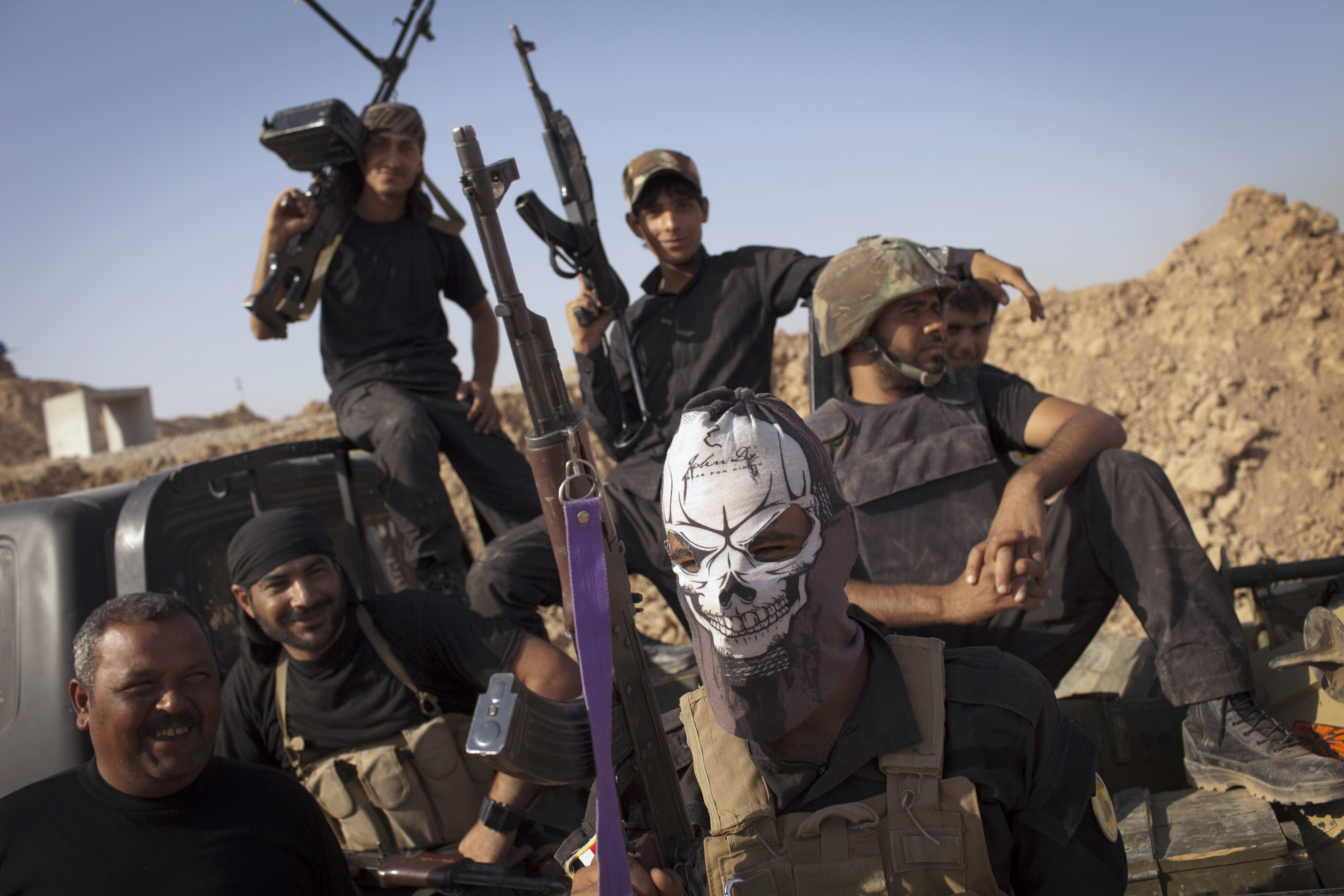
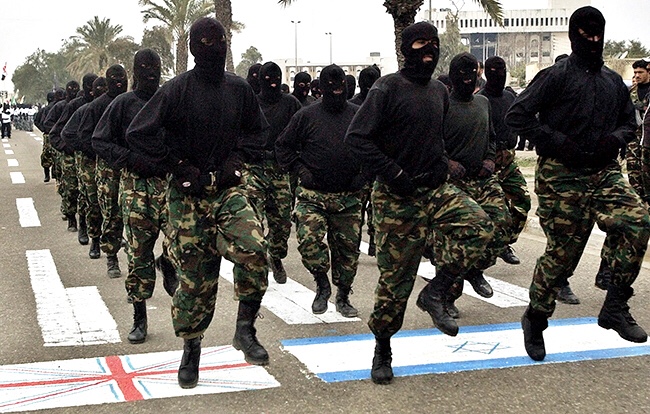
Roughly 63 factions make up Iraq's Popular Mobilisation Forces (PMF, also known as PMU) - an umbrella of groups rallied by ethnic and tribal leaders, whose fighters are either loyal to religious scholars, Iraqi political leaders, or Iran's Revolutionary Guard Corps (IRGC). The diverse makeup of the PMF's 40 divisions - comprising more than 60,000 fighters - sheds light on many of Iraq's sectarian tensions and its ambiguous political future.
Although formed via a religious decree to fight ISIL in 2014 by Grand Ayatollah Ali al-Sistani, Iraq's top Shia religious scholar, many of the fighters are empowered by Iran and other non-state actors. Some have existed for decades prior, and others have political representation in parliament.
The PMF is largely outside government control, yet the Iraqi parliament formally recognised it as a state-affiliated institution when its own forces became depleted in the fight against the Islamic State of Iraq and the Levant group (ISIL, also known as ISIS).
There are three main distinct factions in the PMF with various ideological underpinnings: those loyal to Iran's supreme leader, Ayatollah Ali Khamenei; those loyal to Iraqi popular Shia religious leader Muqtada al-Sadr, who heads the Peace Brigades; and those loyal to Sistani.
All of these groups have one thing in common: They are backed by Iran and have become the most powerful military force in Iraq, analysts say, since ISIL leader Abu Bakr al-Baghdadi stood at the pulpit of Mosul's Grand al-Nuri mosque and announced the creation of a Sunni caliphate.
Since the PMF is not a single unified body, its various factions operate under the policy recommendations of different heads.
Political recognition
The PMF has not publicly demanded political recognition in Baghdad due to the absence of government control and the involvement of non-state actors.
However, two main groups already have political recognition and are members of the Iraqi parliament.
The Badr organisation, which is part of a coalition - the National Iraqi Alliance (NIA) - is headed by former Iraqi Transport Minister Hadi al-Ameri.
Out of the Iraqi parliament's 328 seats, the NIA holds 183 seats, 22 of which belong to the Badr organisation.
The Badr organisation was well established in Iraq's political system prior to 2014, and before entering the realm of politics was previously known as the Badr Brigades, Iran's oldest proxy in Iraq.
The other, Asa'ib Ahl al-Haq, is a Shia armed group founded by Qais al-Khazali. One member of the group is currently sitting in parliament, Chatham House fellow Renad Mansour told Al Jazeera.
"These [groups] will continue to be involved in politics," he said.
Basically, the PMF became an umbrella for anyone who wanted to fight ISIL … There is no standard process to say ok, you are now part of the PMF - it's a loose term.
Renad Mansour, Chatham House
Considered to be the senior, de-facto leaders of the PMF, Ameri and Khazali have established close ties to the PMF's administrator, Abu Mahdi al-Muhandis, who works in alignment with the two and is among the PMF's leadership.
Muhandis is an Iraqi military commander who leads organisations close to Iran's Quds Force, an IRGC offshoot that oversees operations overseas. Like Ameri, he is considered to be among the top military leaders who have maintained close ties with Tehran.
"There is no question that someone like Hadi al-Ameri definitely has political ambition. He was upset when he wasn't made interior minister by Abadi a few years ago, but continues to influence the Ministry of Interior because the Badr organisation has a lot of influence in that industry," Mansour said.
"And they have good relations with Nouri al-Maliki, the former Iraqi prime minister, and he created the PMF."
According to Mansour, who frequently travels to Iraq, it has become clear that Ameri's popularity in the Badr organisation increased significantly through the fight against ISIL.
"When we used to go to Baghdad, we'd see big posters with pictures of martyrs and the logo of the organisation - so basically, using the fight against ISIL, and using slogans like 'we defended Iraq, we defended Baghdad, from Daesh [ISIL]', either way to gain political favour," he said.
"But at the same time, Abadi's influence has also grown, so it's a struggle between these two spheres of influence."
Facade of control
Similarly, Middle East Forum analyst Aymenn Jawad al-Tamimi told Al Jazeera that various PMF factions have been fighting to expand their political influence.
"The idea is to gain ground for the 2018 parliamentary elections, using the victory over the Islamic State, preserving Iraq's unity and restoring security as playing cards," he said.
Despite this, many other smaller PMF factions who emerged in 2014 remain weak, although political ambitions among them cannot be ruled out, Tamimi said.
Prior to becoming a state-recognised institution, the PMF received much of its budget from Iran. Currently, the PMF reportedly receives about $1.5bn a year from Abadi's government - but Muhandis, the PMF's administrator, decides where to allocate the funds.
"The government doesn't have much control over it," Mansour said.
The lack of transparency with budget management has resulted in smaller factions claiming they have not received salaries. Some, said Mansour, have accused Muhandis of favouritism.
Since taking office in September 2014, Abadi has worked on developing Iraq's security sector and has succeeded in revamping "three or four divisions, including the police", Mansour said, "but he needs the PMF as well … that's why there is still a role for the PMF".
According to Tamimi, Abadi allowed for the recognition of the PMF in hopes of being able to control them.
"The idea of the numbering for brigades, for example, is probably based on the idea that the PMF should not be political, but function as a reserve force of the state," he said.
Tamimi noted that some PMF factions "clearly" have a good relationship with state institutions, but others are tied to pro-Iranian factions, which have an agenda differing from Abadi's.
Where were they before ISIL?
According to Mansour, seven groups existed before the 2014 decree and Maliki's creation of the PMF.
"Some have existed for decades and used to be a part of the Islamic Supreme Council of Iraq, which was Ayatollah al-Hakim's party," said Mansour, referencing the late Iraqi top Shia leader.
Some of the pre-existing groups fought against the United States and the Iraqi state itself, but have since shifted closer towards Iran and Maliki, such as Sadr's Peace Brigades.
Iran realises that Abadi isn't someone they can trust completely, so they need to work with people like Nouri al-Maliki and other PMF leaders to ensure that they have influence on the ground.
Renad Mansour
When Maliki was in office back in 2010, he grew closer to the Badr organisation and to Khazali's forces - essentially relying on them, Mansour said.
"These seven groups continued to exist in one way or another until 2014, when they created a commission, and then, 50 or so more groups emerged - some of them just local groups, some just gangs and criminal networks, and others tribal forces including Sunnis, Christians, Turkmen," he said.
"Basically, the PMF became an umbrella for anyone who wanted to fight ISIL … There is no standard process to say ok, you are now part of the PMF - it's a loose term."
Iranian proxy
After taking control of the Kurdish-held province of Kirkuk, Iraqi forces, backed by PMF fighters, defeated Peshmerga forces on the outskirts of the oil-rich city.
Over the past week, Abadi has sought to maintain relationships with neighbouring countries as he visited Turkey, Iran and Jordan, while preserving an alliance with the US - a move Mansour said was aimed at limiting Iranian influence in Iraq.
"Iran realises that Abadi isn't someone they can trust completely, so they need to work with people like Nouri al-Maliki and other PMF leaders to ensure that they have influence on the ground," he said.
According to him, Iran's main objectives are to ensure that Iraq remains stable, and to ensure that whoever is leading Iraq is "loyal, but then again not too powerful at the same time".
While it is unlikely for rival PMF factions to seek political recognition in Baghdad, it is in Iran's best interests for various PMF groups to expand or gain a political foothold "as a means of ensuring Iraq remains an ally of Tehran", Tamimi said.
"From Iran's perspective, it is best to have multiple pro-Iranian Shia factions and have them compete for influence, with Iran acting as kingmaker among the various groups."
Given the country's large Shia population, it is difficult to unite Iraq's Shia behind one ideology or a single ideological group.
In 2014, when Sistani issued the religious decree calling on Iraqis to fight against ISIL, he referred to potential fighters as volunteers. In his statement, Sistani urged fighters to steer away from violence so as not to threaten Iraq's long-term stability.
And, earlier this year, local media reported that his office expressed concern over the actions committed by various PMF subgroups.
"Sistani is against what happened with the PMF, and is against what is largely a misinterpretation of the decree - the misuse and politicisation of it," Mansour said.
As such, both Mansour and Tamimi agreed that the differing loyalties of PMF factions create the possibility of future infighting, as well as infighting for less ideological reasons, such as "control of extortion opportunities in various areas".
With Islamic State in fatal decline and the edges of Kurdistan afire, the Middle East is entering a new era, dominated by the Saudi-Iranian power struggle. The United States, which did so much via its unnecessary invasion of Iraq and tragic handling of the post-incursion period to nurture the growth of Islamic State, will be largely missing from the scene. Instead, the struggle will, as it did during the fight against the Sunni extremists of Islamic State, involve shifting Sunni and Shi’ite allegiances.
For the moment, there seems to be an easing in the historic tensions between the two main – and often warring – branches of Islam. Religious differences are not the focus; this is a classic geopolitical power struggle for control of Iraq, Syria, and Kurdistan, and for expanding diplomatic and strategic reach throughout the region.
Iran is lined up to be the big winner in Syria. Islamic State's defeat will significantly lessen Sunni influence, and Tehran’s role as Syrian President Bashar al-Assad's protector will only increase now that it appears Assad will remain in control of some portion of the country. Iran will have pieced together a land corridor to the Mediterranean. The Saudis will be left with little influence.
In Saudi Arabia, meanwhile, Riyadh appears to be pivoting towards warmer relations with the Shi’ite government in Baghdad. That a Saudi airline is announcing the first return of direct service between the two countries since Saddam Hussein invaded Kuwait in 1990 is no coincidence, nor is it an isolated event.
The Saudis also appear ready to take advantage of a looming intra-Shi’ite power struggle in Baghdad among Prime Minister Haider al-Abadi, former Prime Minister Nouri al-Maliki, and Shi’ite cleric Moqtada al-Sadr. Sadr, the most religiously zealous of the group, has always been something of a nationalist and is wary of Iranian influence. It is thus not surprising he made friendly trips under official invitation to Sunni Riyadh, and the United Arab Emirates, in recent months.
The Saudis otherwise have little to work with in Iraq compared to Iran. Tehran’s ties to officials in Baghdad are just a tiny part of a deep relationship forged in the bloody fight against the American occupiers and the ousting of Islamic State. Iranian money continues to support Iraq, and the Shi’ite militias are still mostly under Iranian influence.
Iran is also probably the most stable Muslim nation in the Middle East. It has existed more or less within its current borders for thousands of years, and is largely religiously, culturally, and linguistically homogeneous (though keep an eye on the Kurdish minority.) While governed in significant part by its clerics, the country has held a series of increasingly democratic elections. And unlike the Saudi monarchs, Iran’s leaders do not rule in fear of an Islamic revolution. They already had one.
Power struggles create flashpoints, and the Saudi-Iranian fight post-Islamic State is no exception. The Saudi-Iranian proxy war in Yemen has settled into a version of World War One-style trench warfare, with neither side strong enough to win nor weak enough to lose. In an ugly form of stasis, the conflict seems likely to stay within its present borders.
The powder keg is Kurdistan. Though arguably a de facto state since 2003, after the Kurds voted formally voted for independence in a Sept. 25 referendum, Iran and the Iranian-backed government in Baghdad were pressed to make clear they will not tolerate an actual Kurdish nation. With Islamic State nearly defeated and combat-tested Shi’ite militias ready for their next tasks, Tehran and Baghdad no longer need to keep the Kurds on their side. Fighting has already broken out around Kirkuk, an oil-rich city in Iraqi Kurdistan, between forces supported by Baghdad/Tehran and Kurdish fighters – leaving a gap for the Saudis to offer financial or covert support to the Iraqi Kurds.
Saudi involvement could morph an Iraqi civil war into a new proxy struggle right on Iran’s own western border, with the possible complication of further unrest inside Iran by its Kurdish minority.
While it may seem odd to write about the changing balance of power in the Middle East largely leaving out the United States, that may well describe America’s range of options post-Islamic State.
Washington’s influence in Baghdad is limited and relations with Iran are in shambles under the Trump administration. It is highly unlikely America will join Iran to fight against Kurdish allies who helped defeat Islamic State. Nor are American troops likely to battle Iranian-led militias in support of Kurdish independence that Washington says it doesn’t really support right now. That leaves the United States sidelined, with few options other than perhaps supporting the Saudis from afar in whatever anti-Iranian meddling they do in Iraq. A long fall from the heady days of 2003 when America was going to remake the Middle East. The victor after some 14 years of overlapping struggles? In the post-Islamic State Middle East, look for Tehran to emerge dominant.
About the Author
Peter Van Buren, a 24 year State Department veteran, is the author of We Meant Well: How I Helped Lose the Battle for the Hearts and Minds of the Iraqi People and Hooper’s War: A Novel of WWII Japan. Views expressed here do not represent those of the Department of State. @WeMeantWell
 Ahmad Al-Rubaye/AFP/Getty Images
 Wathiq Khuzaie/Getty Images
 AP
AP
 The Associated Press








![Roughly 63 factions make up Iraq's PMF, an umbrella of groups rallied by ethnic and tribal leaders [Getty Images]](https://lh3.googleusercontent.com/blogger_img_proxy/AEn0k_v0vj4aJvo7CKGQ1gUXreVuLP6TgHkNkZsOOpAmubtH3D5kUnR7ZyVzlgp6R7fwpVRjoPRLJgmACoTJe25lHg3Y4v-3wDJSLJDbiFeQ3GeuQHdBm971kjucICutICLbSWwM9LKG06j3zkfxoFCti15-pT0GHrum_JYUtdPUiR4Le4Zbdx3uDLTmMjJlR1kCzS-I2_mxs_IERxA-ZA=s0-d "Iraq's second army: Who are they, what do they want?")

