The prophecy is more than seeing into the future. For the prophecy sees without the element of time. For the prophecy sees things as they were, as they are, and as they always shall be.
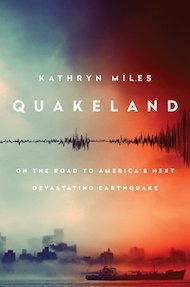
Quakeland: On the Road to America’s Next Devastating Earthquake
Roger BilhamQuakeland: New York and the Sixth Seal (Revelation 6:12)
Given recent seismic activity — political as well as geological — it’s perhaps unsurprising that two books on earthquakes have arrived this season. One is as elegant as the score of a Beethoven symphony; the other resembles a diary of conversations overheard during a rock concert. Both are interesting, and both relate recent history to a shaky future.
Journalist Kathryn Miles’s Quakeland is a litany of bad things that happen when you provoke Earth to release its invisible but ubiquitous store of seismic-strain energy, either by removing fluids (oil, water, gas) or by adding them in copious quantities (when extracting shale gas in hydraulic fracturing, also known as fracking, or when injecting contaminated water or building reservoirs). To complete the picture, she describes at length the bad things that happen during unprovoked natural earthquakes. As its subtitle hints, the book takes the form of a road trip to visit seismic disasters both past and potential, and seismologists and earthquake engineers who have first-hand knowledge of them. Their colourful personalities, opinions and prejudices tell a story of scientific discovery and engineering remedy.
Miles poses some important societal questions. Aside from human intervention potentially triggering a really damaging earthquake, what is it actually like to live in neighbourhoods jolted daily by magnitude 1–3 earthquakes, or the occasional magnitude 5? Are these bumps in the night acceptable? And how can industries that perturb the highly stressed rocks beneath our feet deny obvious cause and effect? In 2015, the Oklahoma Geological Survey conceded that a quadrupling of the rate of magnitude-3 or more earthquakes in recent years, coinciding with a rise in fracking, was unlikely to represent a natural process. Miles does not take sides, but it’s difficult for the reader not to.
She visits New York City, marvelling at subway tunnels and unreinforced masonry almost certainly scheduled for destruction by the next moderate earthquake in the vicinity. She considers the perils of nuclear-waste storage in Nevada and Texas, and ponders the risks to Idaho miners of rock bursts — spontaneous fracture of the working face when the restraints of many million years of confinement are mined away. She contemplates the ups and downs of the Yellowstone Caldera — North America’s very own mid-continent supervolcano — and its magnificently uncertain future. Miles also touches on geothermal power plants in southern California’s Salton Sea and elsewhere; the vast US network of crumbling bridges, dams and oil-storage farms; and the magnitude 7–9 earthquakes that could hit California and the Cascadia coastline of Oregon and Washington state this century. Amid all this doom, a new elementary school on the coast near Westport, Washington, vulnerable to inbound tsunamis, is offered as a note of optimism. With foresight and much persuasion from its head teacher, it was engineered to become an elevated safe haven.
Miles briefly discusses earthquake prediction and the perils of getting it wrong (embarrassment in New Madrid, Missouri, where a quake was predicted but never materialized; prison in L’Aquila, Italy, where scientists failed to foresee a devastating seismic event) and the successes of early-warning systems, with which electronic alerts can be issued ahead of damaging seismic waves. Yes, it’s a lot to digest, but most of the book obeys the laws of physics, and it is a engaging read. One just can’t help wishing that Miles’s road trips had taken her somewhere that wasn’t a disaster waiting to happen.
Catastrophic damage in Anchorage, Alaska, in 1964, caused by the second-largest earthquake in the global instrumental record.
In The Great Quake, journalist Henry Fountain provides us with a forthright and timely reminder of the startling historical consequences of North America’s largest known earthquake, which more than half a century ago devastated southern Alaska. With its epicentre in Prince William Sound, the 1964 quake reached magnitude 9.2, the second largest in the global instrumental record. It released more energy than either the 2004 Sumatra–Andaman earthquake or the 2011 Tohoku earthquake off Japan; and it generated almost as many pages of scientific commentary and description as aftershocks. Yet it has been forgotten by many.
The quake was scientifically important because it occurred at a time when plate tectonics was in transition from hypothesis to theory. Fountain expertly traces the theory’s historical development, and how the Alaska earthquake was pivotal in nailing down one of the most important predictions. The earthquake caused a fjordland region larger than England to subside, and a similarly huge region of islands offshore to rise by many metres; but its scientific implications were not obvious at the time. Eminent seismologists thought that a vertical fault had slipped, drowning forests and coastlines to its north and raising beaches and islands to its south. But this kind of fault should have reached the surface, and extended deep into Earth’s mantle. There was no geological evidence of a monster surface fault separating these two regions, nor any evidence for excessively deep aftershocks. The landslides and liquefied soils that collapsed houses, and the tsunami that severely damaged ports and infrastructure, offered no clues to the cause.
“Previous earthquakes provide clear guidance about present-day vulnerability.” The hero of The Great Quake is the geologist George Plafker, who painstakingly mapped the height reached by barnacles lifted out of the intertidal zone along shorelines raised by the earthquake, and documented the depths of drowned forests. He deduced that the region of subsidence was the surface manifestation of previously compressed rocks springing apart, driving parts of Alaska up and southwards over the Pacific Plate. His finding confirmed a prediction of plate tectonics, that the leading edge of the Pacific Plate plunged beneath the southern edge of Alaska along a gently dipping thrust fault. That observation, once fully appreciated, was applauded by the geophysics community.
Fountain tells this story through the testimony of survivors, engineers and scientists, interweaving it with the fascinating history of Alaska, from early discovery by Europeans to purchase from Russia by the United States in 1867, and its recent development. Were the quake to occur now, it is not difficult to envisage that with increased infrastructure and larger populations, the death toll and price tag would be two orders of magnitude larger than the 139 fatalities and US$300-million economic cost recorded in 1964.
What is clear from these two books is that seismicity on the North American continent is guaranteed to deliver surprises, along with unprecedented economic and human losses. Previous earthquakes provide clear guidance about the present-day vulnerability of US infrastructure and populations. Engineers and seismologists know how to mitigate the effects of future earthquakes (and, in mid-continent, would advise against the reckless injection of waste fluids known to trigger earthquakes). It is merely a matter of persuading city planners and politicians that if they are tempted to ignore the certainty of the continent’s seismic past, they should err on the side of caution when considering its seismic future.
Iraqi parliament suspends session following breach by supporters of Moqtada al-Sadr
BAGHDAD
Iraq’s parliament session was suspended on Saturday following the breaching of its building by supporters of Moqtada al-Sadr, the parliament speaker announced.
In a statement published by Iraqi official agency INA, Mohammed al-Halbusi said the country is going through difficult and sensitive times, and that differences of opinion between political groups are a normal situation in democratically based, developed countries.
Stressing that no matter the size of the disagreements, the solution is dialogue, Halbusi called on all political parties to prioritize the interests of the state.
He stated that parliamentary sessions are suspended until a decision based on public safety, national responsibilities, and constitutional rights is made, and called for peaceful action and protection of state property.
Halbusi also called on Prime Minister Mustafa Al-Kadhimi to take necessary measures to protect state institutions and demonstrators.
Due to political differences, a new Iraqi government has not been formed since early parliamentary elections were held last October.
On July 25, the Coordination Framework alliance chose Mohammed Shia’ al-Sudan, 52, as a candidate to head the next government, to help end the over eight-month crisis.
Stances on al-Sudani’s candidacy were divided between supporters and opponents, as the protest movement and the Shiite Sadrist movement demanded the nomination of a figure without any history with the government.
Iran Is Trying to Play the Saudis Against the US. It Won’t Work.
With US President Joe Biden having departed the Middle East, the region’s two prime antagonists are thinking about just getting along. Iran and Saudi Arabia, having completed five rounds of talks in Iraq over the past year, both said last week they were moving toward higher-level negotiations on reconciliation. Paradoxically, this budding rapprochement between friend and foe offers important opportunities for Washington.
After severing diplomatic ties following a January 2016 mob attack on the Saudi Embassy in Tehran, the Riyadh government hoped sanctions on Iran by President Donald Trump’s administration might produce a change in Iranian conduct. Instead, Iran became more aggressive than ever, culminating with a devastating missile strike on Saudi Aramco facilities in September 2019.
The Trump administration, usually bellicose toward Iran, turned a blind eye, noting that no Americans had been killed. That proved a final straw for the Saudis. They were already upset that the Barack Obama administration’s 2015 nuclear deal with Iran ignored two main concerns — Iran’s drone and missile arsenal, and its network of armed gangs in Arab countries including Iraq, Lebanon, Syria and Yemen.
Story continues below advertisement
The Saudis concluded that Washington was no longer reliable, and that if they wanted their top security issues involving Tehran to be on the negotiating table, they were going to put them there by themselves. After the 2020 US election, that realization dovetailed with the Biden administration’s encouragement of diplomacy over the use of force in the region.
The formal reconciliation talks began in April 2021 at the Baghdad airport; Iraq constituting something approximating neutral ground. Initially, little progress was made. The Saudis focused on getting Iran to pressure its Houthi clients in Yemen to agree to a cease-fire and eventual peace settlement in a war that has turned into a quagmire for Riyadh. The Iranians wanted only to discuss restoring diplomatic relations.
But after the fifth round earlier this year, and amid the growing sense that Iran was stubbornly blocking Biden’s effort to revive the nuclear deal, there was a minor, but real, breakthrough. Responding to Iranian prodding, the Houthis finally agreed to a truce, which has lasted more than two months and allowed significant humanitarian relief into the beleaguered country.
Story continues below advertisement
The Saudis’ securing and maintaining the cease-fire in the bloody conflict pleased the White House and Congress. Riyadh also took the opportunity to finally rid itself of the obstreperous Yemeni president, Abd Rabbuh Mansur Hadi, replacing him with a new Presidential Leadership Council.
Another round of talks, which seems imminent, will come at a pivotal moment in US relations with friends and foes in the Middle East. Biden’s visit was intended to repair strained US-Saudi relations. But perhaps more importantly, the president encouraged Saudi Arabia to join other Arab countries, and even Israel, in building a set of informal cooperative security arrangements. These would include air- and missile-defense systems to offset Iran’s increasingly powerful arsenal.
The eventual aim of such expanded collaboration is for the US military to reduce its Middle East footprint, doing less with more, because regional cooperation could prove more effective and sustainable than outside intervention.
Story continues below advertisement
Not everything is going smoothly. There are already signs that the Houthis may break the uneasy truce in Yemen. Iran will play a central role in whether that happens, because it uses such militias to increase or relieve pressure on its adversaries, adjusting violence like turning a spigot.
It’s also clear that Tehran hopes to use the reconciliation talks with Riyadh to drive a wedge between the US and Saudi Arabia. The idea is to make the Saudis choose between either rebuilding close cooperation with Washington or achieving rapprochement with Iran and extraction from the Yemen war.
It’s a crude trap. Washington can outflank Tehran by strengthening security commitments to Saudi Arabia, while making it clear it expects greater Saudi cooperation on energy production and pricing, keeping Russia and China at arm’s length, and being open to greater regional security coordination. The Gulf Arab countries still have major doubts about US commitment and reliability, but they understand there’s no practical alternative to American support.
Story continues below advertisement
Iranian media are playing up Saudi Arabia’s supposed enthusiasm for wide-ranging reconciliation, but in fact the Saudis remain highly skeptical. The US and Saudi Arabia can give the Iranians a set of clear choices: They can have relations restored with the Saudis, a renewed nuclear agreement with Washington, and respect for legitimate security concerns — but only on reasonable terms, starting with curbing violence by their regional proxies.
The partnership between Washington and Riyadh may not be as strong as it once was, but it’s clearly on the mend. And it’s certainly still strong enough to be able to show Iran that it can’t score cheap victories by trying to divide them.
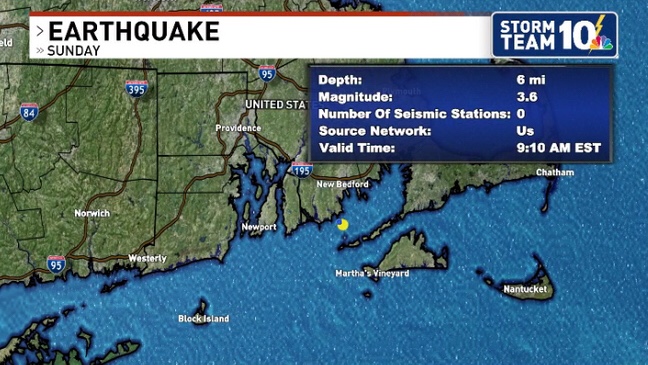
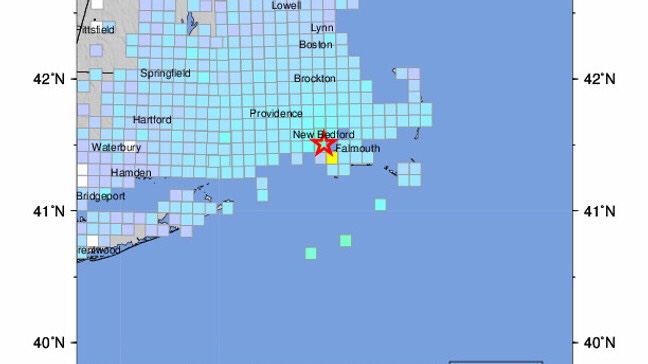
Did you feel it? At 9:10 am EST Sunday morning, a Magnitude 3.6 earthquake struck just south of Bliss Corner, Massachusetts, which is a census-designated place in Dartmouth. If you felt it, report it!
While minor earthquakes do happen from time to time in New England, tremors that are felt by a large number of people and that cause damage are rare.
Earthquakes in New England and most places east of the Rocky Mountains are much different than the ones that occur along well-known fault lines in California and along the West Coast.
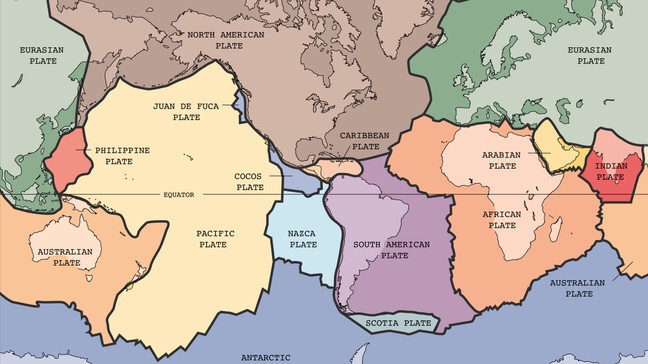
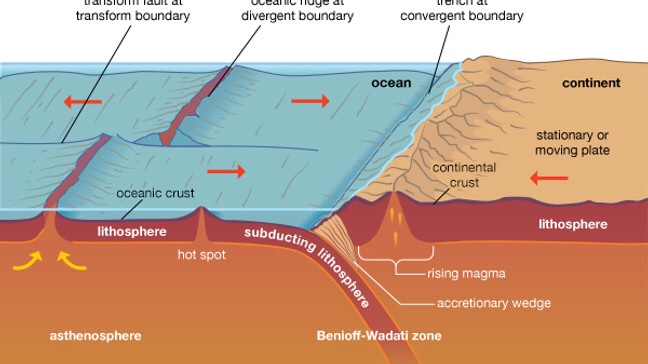
Rhode Island and Southeastern Massachusetts fall nearly in the center of the North American Plate, one of 15 (seven primary, eight secondary) that cover the Earth.
Earth’s tectonic plates
Tectonic plates move ever-so-slowly, and as they either push into each other, pull apart, or slide side-by-side, earthquakes are possible within the bedrock, usually miles deep.
Fault lines left over from the creation of the Appalachian Mountains can still lead to earthquakes locally, and many faults remain undetected. According to the USGS, few, if any, earthquakes in New England can be linked to named faults.
While earthquakes in New England are generally much weaker compared to those on defined fault lines, their reach is still impressive. Sunday’s 3.6 was felt in Rhode Island, Massachusetts, Connecticut, New York, and New Hampshire.
USGS Community Internet Intensity Map
While M 3.6 earthquakes rarely cause damage, some minor cracks were reported on social media from the shaking.
According to the USGS, moderately damaging earthquakes strike somewhere in the region every few decades, and smaller earthquakes are felt roughly twice a year.
“Now I am become Death, the destroyer of worlds” was J. Robert Oppenheimer’s infamous response to seeing the first atomic bomb test detonation in 1945. This single event ushered in the so-called “Atomic Age” that saw the beginning of the age of harnessing of the power of the atom, for good and bad.
While no nuclear weapons have been used in anger since WW2, there are now thousands of nuclear warheads whose combined power would probably cause the collapse of all human civilization if ever unleashed en masse.
Let’s take a closer look at these most destructive of human inventions.
What are the differences between a hydrogen bomb and an atomic bomb?
Nuclear weapons come in a variety of forms, but atom and hydrogen bombs, while related, are about as similar as chalk and cheese. Both chalk and cheese have calcium in them, but they are very different things.
In essence, a hydrogen bomb employs fission to fuel a fusion process, whereas an atomic bomb is solely a fission-based weapon. In other words, a hydrogen bomb is set off by an atomic bomb.
To better understand this, it is probably worth giving a quick overview of each.
An atomic bomb, or A-bomb for short, is a form of nuclear weapon that detonates as a result of the tremendous energy unleashed by nuclear fission. Because of this, this kind of bomb is also often referred to as a fission bomb.
A material capable of fission (fissile material) is given supercritical mass, which is the point at which fission occurs — the nuclear breaks apart. This can be done by either firing one portion of a sub-critical mass into another or by compressing the sub-critical material with conventional explosives.
This material usually consists of either enriched plutonium or enriched uranium. The fission reaction is incredibly powerful. Atomic bombs are measured in kilotons, with each unit equal to the explosive force of 1,000 tons of TNT. The atomic weapon which leveled Hiroshima in 1945 had a yield of around 15 kilotons; or the explosive power of 15,000 tons of TNT.
A single atomic bomb can produce between around a ton and 500 kilotons of the explosive TNT. Additionally, radioactive fission fragments are released by the bomb as a result of the heavier nuclei splitting into smaller ones.
When detonated, fission fragments make up the majority of nuclear fallout.
Hydrogen bombs, or H-bombs for short, are also a type of nuclear weapon, which detonate as a result of the enormous energy produced by nuclear fusion. This is usually achieved through the use of deuterium and tritium (two hydrogen isotopes) that fuse to provide energy.
In a hydrogen bomb, the energy created during a fission reaction is used to heat and compress the hydrogen in order to start a fusion reaction, which can then lead to more fission reactions. About half of the output of a big thermonuclear device is produced by the fission of depleted uranium.
Although the fusion reaction doesn’t actually contribute to fallout, H-bombs produce at least as much of it as atomic bombs do since the process is started by fission and leads to more fission. In comparison to atomic bombs, hydrogen bombs have a far larger yield that is comparable to megatons of TNT. The greatest nuclear explosion ever created by humans, the 50 megaton yield Tsar Bomba, was an example of a hydrogen bomb (1 megaton has the energy equivalent of 1 million tons of TNT).
Both types of nuclear bombs emit radioactive fallout and unleash enormous amounts of energy from a relatively small amount of material.
But, while the yield of the hydrogen bomb is much larger, building one is a lot trickier. This is impressive enough, but these are not the only kinds of nuclear bombs that exist.
Who dropped the first atomic bomb and when?
Mercifully, to date, the only nation to ever use an atomic weapon in war is the United States of America. They unleashed not one, but two, atomic weapons on two cities in Japan at the end of World War II.
The first of these two unlucky targets was the Japanese city of Hiroshima, which was bombed on August 6, 1945, by an American B-29 bomber. An estimated 80,000 people perished in the explosion directly, while tens of thousands more perished from radioactive exposure. An additional A-bomb was detonated on Nagasaki three days later by a second B-29, killing an estimated 40,000 people.
In a radio address on August 15, Japan’s Emperor Hirohito declared Japan’s surrender and cited the devastating impact of “a new and most merciless/cruel bomb.”
But what was the rationale for unleashing the power of the atom on these cities?
To fully understand this, it is necessary to understand the state of affairs leading up to the dropping of the two bombs.
In 1945, by the time of the Trinity test as part of the Manhattan Project, the Allied powers had already vanquished Germany (the Trinity test took place on July 16, and Germany had surrendered on May 7).
Despite obvious signs (as early as 1944) that they had little prospect of prevailing, Japan had signalled that they were willing to fight to the final end in the Pacific. In fact, between mid-April 1945 (when President Harry Truman assumed office) and mid-July, Allied deaths in the Pacific Theater totalled almost half of all those sustained in three full years of fighting, demonstrating that Japan was not slowing its attacks, even while facing defeat.
The Potsdam Declaration, calling for Japan’s unconditional surrender and threatened the Japanese with “prompt and utter devastation” if they refused to surrender, was rejected by Japan’s militarist leadership in late July.
Top military leaders, including General Douglas MacArthur, advocated extending the current conventional bombardment of Japan and then launching a large invasion known as “Operation Downfall.” However, they warned Truman that such an invasion may result in up to 1 million American casualties if the Japanese decided to fight city-by-city and house-to-house.
Over the moral objections of Secretary of War Henry Stimson, General Dwight Eisenhower, and a number of the Manhattan Project scientists, Truman decided to deploy the atomic bomb in an effort to hasten the conclusion of the war. The reasoning was that the bomb would ultimately lead to fewer casualties than prolonging the war for several more months or years.
James Byrnes, Truman’s secretary of state, and other A-bomb proponents also reasoned that the weapon’s catastrophic force would not only end the war but also place the United States in a dominant position to shape the postwar world. Part of this reasoning was that the bombs would serve as a warning to the Soviet Union, an ally during WWII, but already turning into an enemy.
How many atomic bombs are in the world?
According to some sources, there are thought to be somewhere in the order of 12,705 nuclear weapons in existence right now. Although this number is considerably lower than either the United States or Russia had at the height of the Cold War, it is noteworthy that there are now more nuclear-armed nations than there were 30–40 years ago.
With an estimated 6,257 total warheads, Russia has the most nuclear weapons in existence to date. The New START treaty currently limits both the United States and Russia to a total of 1,550 weapons deployed on ICBMs, SLBMs, and heavy bombers. Of these, somewhere around 1,458 are thought to be currently deployed, around 3,039 are dormant but might be activated, and approximately 1,760 are retired and awaiting dismantlement. With about 5,428 nuclear weapons in total— including around 1,708 warheads, of which about 1,744 are deployed, approximately 1,964 are held in reserve and around 1,720 are retired and scheduled for destruction—the United States is not far behind Russia in terms of the nuclear stockpile.
At present, there are 9 nuclear-armed nations. These are: –
Facts about the atomic bomb
So, you should now have a good grounding as to what an atomic bomb (and other nuclear weapons) are. But, if you are hungry for more information, here are some interesting facts about these incredibly potent weapons.
1. The first atomic bomb(s) were developed by a diverse team
The “Father of the Atomic Bomb,” theoretical physicist J. Robert Oppenheimer, oversaw much of the work on the Manhattan Project in Los Alamos, New Mexico. The Trinity Test, the first atomic bomb to be successfully detonated, took place on July 16, 1945, in a remote desert location close to Alamogordo, New Mexico. It brought about the Atomic Age and produced a massive mushroom cloud that reached a height of 40,000 feet.
Many refugees joined the Manhattan Project in England and America. Among the scientists who fled Europe at the outset of the war, or just before, and contributed to the development of the bomb were Albert Einstein, Hans Bethe, John von Neumann, Leo Szilard, James Franck, Edward Teller, Rudolf Peierls, and Klaus Fuchs.
2. Nagasaki was an unfortunate victim of circumstance
While Nagasakiwas made famous for the unfortunate events of the Second World War, it was never initially selected as a potential target.
The initial list of potential targets included Kokura (present-day Kitakyushu), Hiroshima, Yokohama, Niigata, and Kyoto. According to legend, Kyoto was spared by US Secretary of War Henry Stimson, who argued that the city’s vast cultural heritage should be spared destruction. When the military insisted on the city’s inclusion, Stimson pled with Truman, and pointed out that destroying Kyoto would lead to lasting bitterness that could lead the Japanese to turn towards the Soviets.
On the morning of August 9, 1945, the B-29 carrying the “Fat Man” bomb took off for Kokura, home to a large Japanese arsenal. However, on finding Kokura obscured by cloud cover, the bomber’s crew decided to head to their secondary target, Nagasaki.
3. The bombs that were dropped on Nagasaki and Hiroshima were very different designs
The first, “Little Boy”, that was dropped on Hiroshima was made of highly enriched uranium-235 and was a kind known as a gun-type assembly. While the second, “Fat Man”, that was dropped on Nagasaki was made of plutonium and was an implosion assembly type of atomic bomb.
Of the two, “Fat Man” was regarded as a more complex design.
4. Despite their power, the atomic bombings of Japan were not the most destructive of the war
While the destructive power of nuclear weapons is without question, their use was not the most destructive bombing event of the war. Far from it, in fact.
The European Theatre had some very serious bombing campaigns, with some events, like the Blitz or bombing of Dresden, now burned (literally and figuratively) into the memories of those nations. However, there was a far more devastating bombing event in the Japanese Theatre; “Operation Meetinghouse”.
The US firebombing of Tokyo on March 9, 1945, known as “Operation Meetinghouse“, is widely regarded as the worst bombing raid in history. “Meetinghouse” was a napalm strike by 334 B-29 aircraft that claimed well over 100,000 lives, left 1,000,000 people homeless, and destroyed more than a quarter million buildings and homes.
5. There have been a few “close calls” since WW2
Since World War II, there have been several situations where nuclear weapons could have been used again. But, of these, the two “closest calls” were as follows.
In October 1962, it seemed as though a nuclear war was about to break out. Only 90 miles from the coast of the United States, the Soviet Union had placed nuclear-armed missiles on Cuba. This led to the Cuban Missile Crisis, a 13-day military, and political standoff.
In order to defuse the perceived danger, President John F. Kennedy imposed a naval blockade around Cuba and made it apparent that the US was ready to use force if necessary.
When the United States accepted Nikita Khrushchev’s offer to withdraw the Cuban missiles in exchange for a commitment from the United States not to invade Cuba (and to remove the US nuclear missiles from Turkey), disaster was averted.
The second, less well-known event, occurred in the September of 1983. Several weeks after the downing of Korean Air Lines Flight 007 over Soviet airspace, a satellite early-warning system near Moscow reported the launch of one American Minuteman ICBM.
It announced shortly after that five missiles had been fired. Lieutenant Colonel Stanislav Petrovof the Air Defense Forces refused to report the threat or acknowledge it as legitimate and persisted in persuading his superiors that it was a false alarm until this could be verified by ground radar, because he believed a true American offensive would involve many more missiles. In fact, the system had mistaken the sun’s reflection off clouds for the missiles.
This act, in effect, saved millions of innocent lives!
4. There are enough warheads to destroy every city on Earth
Each of these cities would only need between one and three nuclear warheads to be destroyed, so we can probably safely say that there are enough warheads to completely decimate every major city on Earth (assuming they reach their targets without being intercepted).
The energy of this many warheads is comparable to several billion tons of TNT and many times that of the Krakatoa volcano, which erupted with the greatest amount of force ever recorded.
If all these bombs were concentrated in one place, the combined explosion would produce a blaze that was 50 km across and a blast wave that would destroy anything within a 3,000 km radius. The pressure wave that followed the explosion traveled the globe for several weeks and could be heard everywhere.
The mushroom cloud would reach close to space and would extend to the farthest reaches of the Earth’s atmosphere. An explosion in the Amazon Rainforest of South America would start a fire that would destroy almost the entire continent.
Everything in the blast radius would die from radiation, and the area surrounding it for hundreds of kilometers would be uninhabitable. The world’s ecosystem would be very radioactive and the Amazon Rainforest be entirely destroyed, and it would likely eradicate humanity.
What a lovely thought.
5. While only two have ever been used in combat, thousands more have been detonated
Although there have only ever been two instances of nuclear weapons being used in hostilities, there have been over 2,000 nuclear tests over the interim decades since. Many of them released enormous amounts of radiation into the atmosphere and have rendered some areas of the world uninhabitable for many years to come.
6. Modern weapons are orders of magnitude more powerful than “Fat Man” or “Little Boy”
Around 5 square miles (13 square kilometers) of the Japanese city of Hiroshima were destroyed by the 15 kiloton bomb that was unleashed on it in 1945. Several million degrees Celsius were achieved at the explosion’s center. Around 70% of the city’s structures were destroyed or damaged, and everyone within half a mile of the blast’s epicenter died.
Approximately 75,000 people died right away, but many more perished from radiation sickness. The number of fatalities reached 200,000 by the end of the 1950s.
Three days later, 40,000 people were killed by the Nagasaki bomb, and by 1950, 140,000 had perished from the effects.
Horrifying.
But, nuclear weapons today are significantly more powerful than those used to attack Japan. The combined populations of Britain, Canada, Australia, Aotearoa/NZ, and Germany, totaling 200 million people, could all be killed by just 50 modestly-sized warheads.
7. There is no proven defense against nuclear attack, as yet
Despite numerous attempts over the years, there is no real defense against a nuclear assault. Instead, states use a strategy called “Mutually Assured Destruction,” or MAD, which effectively threatens an apocalypse that would wipe out everyone, and thus serves as a deterrent.
While some argue the merits of this stance, it may be the main reason that no nuclear warheads have been used in anger since the Second World War. Various initiatives have been experimented with in the past to intercept incoming nuclear weapons, but, to date, none have proved fruitful.
However, advances in space-based weapons and hypersonic missiles may provide some hope if way can be found to scrapping all nuclear arsenals. Although hypersonic missiles can, of course, be extremely destructive as well.
And that, atomic bomb addicts, is your lot for today.
The invention, and initial use, of the atomic bomb, has, undoubtedly, significantly changed the history of our species. For better or worse, these weapons now exist and can be deployed at any time.
Depending on your point of view, this has either made the world a more dangerous or a safer place.
At least 125 people, including demonstrators and police, were wounded during the breach, according to the health ministry
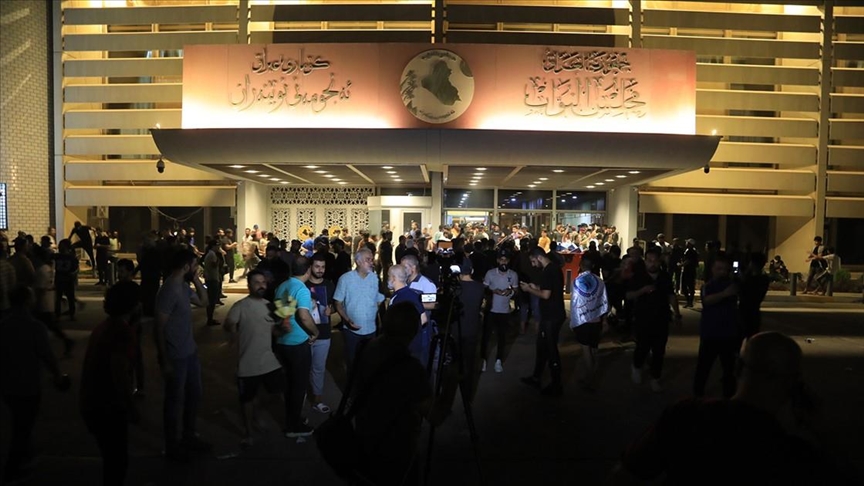
Supporters of the powerful Iraqi cleric Muqtada al-Sadr on Saturday stormed Baghdad’s fortified government zone and broke into parliament for the second time in four days, leaving at least 125 people injured and escalating a political stand-off.
The demonstrators were seen waving Iraqi flags and pictures of Sadr inside, as thousands protested outside amid a deep political crisis that has left Iraq without a government since October elections.
“The demonstrators announce a sit-in until further notice,” Sadr’s movement said in a brief statement to journalists over the WhatsApp messaging platform and carried by state news agency INA.
“We are calling for a government free from corruption… and those are the demands of the people,” one protester, Abu Foad, said.
Security forces had fired tear gas and stun grenades near an entrance to the district, home to foreign embassies and other government buildings as well as parliament.
Some protesters on the bridge were injured and carried off by their fellow demonstrators.
“All the people are with you Sayyed Muqtada,” the protesters, some of whom threw stones, chanted, using his title as a descendant of the Prophet Muhammad.
Supporters of the populist Shia cleric oppose the recently announced candidacy of Mohammed al-Sudani, a former minister and ex-provincial governor, who is the pro-Iran Coordination Framework’s pick for premier.
The protests are the latest challenge for oil-rich Iraq, which remains mired in a political and a socio-economic crisis despite elevated global crude prices.
Saturday’s demonstration comes three days after crowds of Sadr supporters breached the Green Zone despite volleys of teargas fire from the police.
They occupied the parliament building, singing, dancing and taking selfies before leaving two hours later but only after Sadr told them to leave.
‘We are here for a revolution’
On Saturday, security forces shut off roads in the capital leading to the Green Zone with massive blocks of concrete.
“We are here for a revolution,” said protester Haydar al-Lami.
“We don’t want the corrupt; we don’t want those who have been in power to return… since 2003, they have only brought us harm.”
By convention, the post of prime minister goes to a leader from Iraq’s Shia majority.
Sadr, a former militia leader, had initially supported the idea of a majority government.
That would have sent his Shia adversaries from the pro-Iran Coordination Framework into opposition.
The Coordination Framework draws lawmakers from former prime minister Nuri al-Maliki’s party and the pro-Iran Fatah Alliance, the political arm of the Shia-led former paramilitary group Hashed al-Shaabi.
But last month, Sadr’s 73 lawmakers quit in a move seen as seeking to pressure his rivals to fast-track the establishment of a government.
Sixty-four new lawmakers were sworn in later in June, making the pro-Iran bloc the largest in parliament.
That triggered the fury of Sadr’s supporters, who according to a security source also ransacked the Baghdad office of Maliki’s Daawa party on Friday night, as well as that of the Hikma movement of Ammar al-Hakim which is a part of the Coordination Framework.
“We would have liked them to wait until the government was formed to evaluate its performance, to give it a chance and to challenge it if it is not,” Hakim said in a recent interview with BBC Arabic.
“The Sadrist movement has a problem with the idea that the Coordination Framework will form a government,” he said.
“If it doesn’t turn out to be Sudani and a second or third candidate is nominated, they would still object,” he said.
The warning comes as the U.S. and our allies are facing threats from Russia, North Korea and China.
It is believed North Korean leader Kim Jong-un is preparing a seventh nuclear test and has been ramping up anti-U.S. rhetoric in recent weeks.
At a Korean War anniversary event, the North Korean dictator insisted his nation was prepared to mobilize a nuclear arsenal as a deterrent to American and South Korean “aggression.”
North Korea is not the only concern.
As he wages war in Ukraine and faces backlash from the international community, Russian President Vladimir Putin continues to issue threats pertaining to his nuclear arsenal.
His latest threat was issued on June 17. Putin was attending the St. Petersburg International Economic Forum when he warned Russia “will use such weapons to defend its sovereignty.”
Former Russian President Dmitry Medvedev has vowed “the horsemen of the apocalypse” are on their way.
Since the early days of the war in Ukraine, Putin had put Russia’s nuclear forces on high alert.
China also possesses nuclear warheads. France, India, Israel, Pakistan and the United Kingdom are also nuclear states, but are either allies with the United States or on friendly terms.
What if the unthinkable did happen? What would the impact of a nuclear attack be on New Jersey?
The most likely targets would be cities like New York, Los Angeles, Philadelphia or Washington, DC. New Jersey’s proximity to three of those primary targets could be devastating for the Garden State.
Using data from what is known of Russia’s nuclear arsenal and missile capable of hitting the U.S., we simulated the potential impact of a nuclear blast on New York, Philadelphia and Washington, D.C., as well as targets in New Jersey in the event that a missile went astray.
The biggest factor in terms of casualties, damage and nuclear fallout: An aerial detonation as opposed to ground impact (which results in nuclear fallout contamination spreading downwind), and the direction of atmospheric winds. For these simulations, we used a default Northeast wind direction.
Scroll through the gallery below to see the simulated impact of a nuclear blast.
The models show what would happen in aerial detonation, meaning the bomb would be set off in the sky, causing considerable damage to structures and people below; or what would happen in a ground detonation, which would have the alarming result of nuclear fallout. The models do not take into account the number of casualties that would result from fallout.