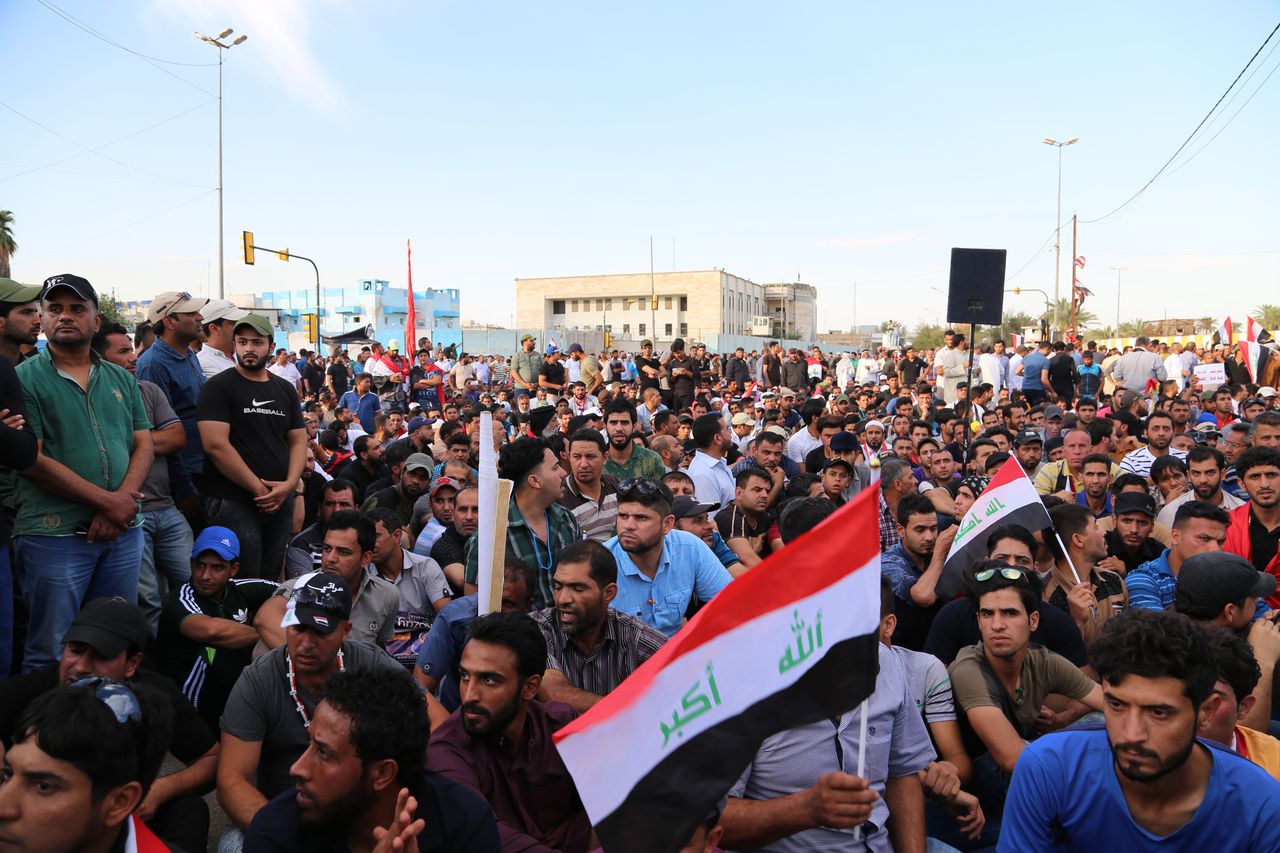
On Monday, Iraqi government ministries located in Baghdad’s heavily
fortified Green Zone were closed and staff was evacuated out of fear
of riots from thousands of protesters led by the influential Shia
cleric and militia leader turned politician Muqtada al-Sadr.
The protests over perceived corruption and mismanagement by the government of Prime Minister Haider al-Abadi have been running off and on since August, and restarted most recently on Friday. They do not appear to have grown violent, but security forces have deployed to protect government buildings.
The protests are, at least nominally, over relatively narrow political demands: Sadr wants the prime minister to appoint a new cabinet. (Abadi actually agreed a few weeks ago, after which the protesters went home; they have now returned because parliament is blocking the vote on the new cabinet.)
This is just the latest in a string of political crises that expose just how fractious and unstable Iraq’s government remains. The political turmoil is even affecting the fight against ISIS — the Iraqi government has reportedly recalled some troops who were fighting ISIS back to Baghdad, in case of clashes with the protesters.
But beyond the immediate fight against ISIS, Baghdad’s political chaos raises concerns about the future political stability of the country.
They’re angry over Baghdad’s failure to provide basic services such as electricity, and government corruption in general. Public outrage is further exacerbated by Iraq’s deepening economic crisis, due to exceptionally low oil prices and the costs of the war against ISIS.
In late March, Sadr and his supporters organized a sit-in in the Green Zone calling on Abadi to form a new cabinet made up of technocrats — that is, professionals who are ostensibly qualified to run the various ministries they’d be overseeing — to replace the current party-affiliated cabinet members, who are seen as deeply corrupt and inept. And Abadi seemed to try to push this through.
But many of Iraq’s political parties opposed this, seeing it as a threat to their hold on government ministries. Political leaders in parliament are reluctant (to say the least) to give up such powerful and potentially lucrative positions.
Indeed, Sadr himself, for his own political reasons, may have a hand in blocking some of Abadi’s attempts at reform, Brookings’s Kenneth Pollack wrote recently. (Sadr presumably would do this to make Abadi, who is also a political rival, look ineffectual.)
Last week, lawmakers tried to prevent the vote for a new cabinet by staging a sit-in inside parliament and tried (unsuccessfully) to oust the speaker of parliament, Salim al-Jabouri.
At one point the political fight over the cabinet reshuffle turned into a literal fight, with members of parliament trading blows and throwing water bottles at each other, as seen in this video:
Sadr has once again sent his protesters to the Green Zone to demand lawmakers vote on the new cabinet, prompting the recent fears (so far seemingly unfounded) that protests could escalate into violence.
“The only party that benefits from the political divisions and chaos … is Daesh,” said the UN’s acting head of mission to Iraq, Gyorgy Busztin, using the derogatory Arabic acronym some use for the group.
It is not the case that ISIS will win because of protests in the Green Zone, of course, but it is an unhelpful distraction at a time when Iraqi officials could stand to focus less on Baghdad politics and more on fighting ISIS, which still controls much of northern and western Iraq. This crisis comes as the Iraqi army, with US assistance, is gearing up to try to retake the city of Mosul, an ISIS stronghold.
But more broadly, while this one political crisis is not so catastrophic on its own, it is symptomatic of Iraq’s larger, longer-running problems with corruption and political instability. And most analysts believe that Iraq’s political turmoil was one of the conditions that allowed ISIS to rise in the first place. Those problems make defeating ISIS, and preventing it or another group like it from rising up yet again, much harder.
In this way, it can help to think of ISIS as a symptom of the underlying disease of political instability in Iraq (along with, of course, factors such as the chaos created by the 2003 US-led invasion). Defeating ISIS militarily is important, but it only treats the symptom. Unless you successfully treat the underlying disease, the symptoms may keep coming back.
That’s the hard lesson the rise of ISIS taught us. In 2009, as US troops were beginning their drawdown from Iraq, al-Qaeda in Iraq (ISIS’s predecessor organization) was largely defeated.
However, the power-sharing arrangement set up to govern Iraq was far from stable, and as the US was leaving, Iraq’s prime minister at the time, Nouri al-Maliki, made a series of political moves designed to bolster his own power that resulted in dramatically escalating sectarian tensions in the country and severely weakening the country’s military.
Thus, as I have written elsewhere, when the remnants of al-Qaeda in Iraq, who had been quietly rebuilding their organization amid the growing chaos in neighboring Syria, exploded back into Iraq under the new name ISIS, they were able to capitalize on the political chaos, heightened sectarian tensions, and crippled Iraqi army to take over a huge chunk of Iraq and establish their so-called caliphate.
Although a number of factors came together to enable ISIS’s rise in Iraq, there is little question that the absence of a stable, functional, representative government in Baghdad played a real role.
The fight against ISIS on the ground is far from over — in fact, Secretary of Defense Ash Carter just announced the US would be sending an additional 200 troops along with some Apache helicopters to Iraq to assist the Iraqis in the fight to retake Mosul — and the current political instability in Baghdad is distracting attention and resources from the fight on the ground.
But even more important, the continued failure of Iraq’s political leaders to create a stable and inclusive government in Baghdad means that any battlefield successes against ISIS may, in the long run, prove to be short-lived.
The protests over perceived corruption and mismanagement by the government of Prime Minister Haider al-Abadi have been running off and on since August, and restarted most recently on Friday. They do not appear to have grown violent, but security forces have deployed to protect government buildings.
The protests are, at least nominally, over relatively narrow political demands: Sadr wants the prime minister to appoint a new cabinet. (Abadi actually agreed a few weeks ago, after which the protesters went home; they have now returned because parliament is blocking the vote on the new cabinet.)
This is just the latest in a string of political crises that expose just how fractious and unstable Iraq’s government remains. The political turmoil is even affecting the fight against ISIS — the Iraqi government has reportedly recalled some troops who were fighting ISIS back to Baghdad, in case of clashes with the protesters.
But beyond the immediate fight against ISIS, Baghdad’s political chaos raises concerns about the future political stability of the country.
The political drama
Thousands of Iraqis have been protesting on and off for months, calling for government reforms.They’re angry over Baghdad’s failure to provide basic services such as electricity, and government corruption in general. Public outrage is further exacerbated by Iraq’s deepening economic crisis, due to exceptionally low oil prices and the costs of the war against ISIS.
In late March, Sadr and his supporters organized a sit-in in the Green Zone calling on Abadi to form a new cabinet made up of technocrats — that is, professionals who are ostensibly qualified to run the various ministries they’d be overseeing — to replace the current party-affiliated cabinet members, who are seen as deeply corrupt and inept. And Abadi seemed to try to push this through.
But many of Iraq’s political parties opposed this, seeing it as a threat to their hold on government ministries. Political leaders in parliament are reluctant (to say the least) to give up such powerful and potentially lucrative positions.
Indeed, Sadr himself, for his own political reasons, may have a hand in blocking some of Abadi’s attempts at reform, Brookings’s Kenneth Pollack wrote recently. (Sadr presumably would do this to make Abadi, who is also a political rival, look ineffectual.)
Last week, lawmakers tried to prevent the vote for a new cabinet by staging a sit-in inside parliament and tried (unsuccessfully) to oust the speaker of parliament, Salim al-Jabouri.
At one point the political fight over the cabinet reshuffle turned into a literal fight, with members of parliament trading blows and throwing water bottles at each other, as seen in this video:
Sadr has once again sent his protesters to the Green Zone to demand lawmakers vote on the new cabinet, prompting the recent fears (so far seemingly unfounded) that protests could escalate into violence.
What it means for Iraq’s future
The UN on Friday called on Iraqi leaders to resolve the political crisis.“The only party that benefits from the political divisions and chaos … is Daesh,” said the UN’s acting head of mission to Iraq, Gyorgy Busztin, using the derogatory Arabic acronym some use for the group.
It is not the case that ISIS will win because of protests in the Green Zone, of course, but it is an unhelpful distraction at a time when Iraqi officials could stand to focus less on Baghdad politics and more on fighting ISIS, which still controls much of northern and western Iraq. This crisis comes as the Iraqi army, with US assistance, is gearing up to try to retake the city of Mosul, an ISIS stronghold.
But more broadly, while this one political crisis is not so catastrophic on its own, it is symptomatic of Iraq’s larger, longer-running problems with corruption and political instability. And most analysts believe that Iraq’s political turmoil was one of the conditions that allowed ISIS to rise in the first place. Those problems make defeating ISIS, and preventing it or another group like it from rising up yet again, much harder.
In this way, it can help to think of ISIS as a symptom of the underlying disease of political instability in Iraq (along with, of course, factors such as the chaos created by the 2003 US-led invasion). Defeating ISIS militarily is important, but it only treats the symptom. Unless you successfully treat the underlying disease, the symptoms may keep coming back.
That’s the hard lesson the rise of ISIS taught us. In 2009, as US troops were beginning their drawdown from Iraq, al-Qaeda in Iraq (ISIS’s predecessor organization) was largely defeated.
However, the power-sharing arrangement set up to govern Iraq was far from stable, and as the US was leaving, Iraq’s prime minister at the time, Nouri al-Maliki, made a series of political moves designed to bolster his own power that resulted in dramatically escalating sectarian tensions in the country and severely weakening the country’s military.
Thus, as I have written elsewhere, when the remnants of al-Qaeda in Iraq, who had been quietly rebuilding their organization amid the growing chaos in neighboring Syria, exploded back into Iraq under the new name ISIS, they were able to capitalize on the political chaos, heightened sectarian tensions, and crippled Iraqi army to take over a huge chunk of Iraq and establish their so-called caliphate.
Although a number of factors came together to enable ISIS’s rise in Iraq, there is little question that the absence of a stable, functional, representative government in Baghdad played a real role.
The fight against ISIS on the ground is far from over — in fact, Secretary of Defense Ash Carter just announced the US would be sending an additional 200 troops along with some Apache helicopters to Iraq to assist the Iraqis in the fight to retake Mosul — and the current political instability in Baghdad is distracting attention and resources from the fight on the ground.
But even more important, the continued failure of Iraq’s political leaders to create a stable and inclusive government in Baghdad means that any battlefield successes against ISIS may, in the long run, prove to be short-lived.

