Showing posts with label khameneia. Show all posts

Friday, December 20, 2019

Projectile Fired From Outside the Temple Walls (Revelation 11)

No reports of injuries or damages as mortar shell strikes open field; projectile was the second to be launched at Israel on Thursday
By Judah Ari Gross and TOI staff
Today, 8:56 pm
The projectile — apparently a mortar shell — struck an open field in the Sha’ar Hanegev region, a local government spokesperson said. There were no injuries or damage caused the attack.
Incoming rocket sirens were set off in Kfar Azza, a kibbutz near the Gaza border, the army said.
Hours later, the Israel Defense Forces launched a series of strikes on Hamas targets in the Strip.
News outlets in Gaza reported that the strikes targeted Hamas posts throughout the enclave, from the area around Rafah in the south to near Beit Lahia in the north.
“A short while ago, IDF aircraft attacked underground infrastructure and a naval target belonging to the Hamas terror group in the southern Gaza Strip, as well as a military installation belonging to the terror group in the north of the Strip,” the military confirmed in a statement, noting that the attack was in retaliation for the rocket strike earlier in the evening.
There were no immediate reports of Palestinian injuries.
The Israel Defense Forces said the earlier rocket was intercepted by the Iron Dome defense system, with no reports of injury or damage. In response, Israeli aircraft struck a Hamas weapons production facility in northern Gaza, the army said, noting it holds the terror group, which rules Gaza, responsible for all violence emanating from it.
Israel later announced it had restricted the permitted fishing zone off the coast of the Gaza Strip to 10 nautical miles in response to the rocket fire.
On Wednesday, an Israeli aircraft fired at and hit an armed Palestinian who approached the border fence between the Gaza Strip and Israel, the military said.
The military said the Palestinian was spotted by IDF observation posts as he neared the security fence in southern Gaza.
Authorities in the Hamas-run Strip did not comment on the Palestinian suspect’s condition.
Footage of the incident, which was later distributed by the IDF, showed the suspect approaching the security fence armed with what appears to be an assault rifle. The video ends before the airstrike.
On Friday several thousand Palestinians protested on the Gaza border, including several hundred rioting and clashing with Israeli forces, as the coastal enclave’s Hamas rulers marked 32 years since the founding of the terror group.
The Hamas-run Gaza health ministry said five Palestinians were hurt in the clashes, which saw the hurling of Molotov cocktails and other objects at IDF soldiers.
In addition to the border clashes, thousands took part in rallies in Gaza over the weekend to mark the 1987 anniversary of the terror group’s establishment.
Friday’s border demonstrations were part of the weekly March of Return protests that began last March and resumed earlier this month after a three-week hiatus following a large-scale battle in November between the IDF and Palestinian Islamic Jihad, the second largest terror group in Gaza.

Tuesday, December 17, 2019

Persecution Outside the Temple Walls (Revelation 11)

A 60-year-old Christian from Gaza is now living on the streets of Nazareth but says he prefers to stay there than to go back to Gaza, where he had lived his entire life.
“The moment they took control, they started persecuting us, ruining our churches and forcing Christians to convert to Islam”, the 60-year-old Christian recalls.
The Turning Point
It was then that Tarazi decided to organise demonstrations against the movement, uniting Christians and Muslims alike. The calls to act didn’t move the masses, but they did anger Hamas.
“I was jailed several times. Do you know what a Hamas prison is? It is pure torture”, he explains, adding that the Islamic group decided to keep him alive to avoid depicting themselves as persecutors of the local Christian population, something that could potentially anger the international community.
After two months in prison, Tarazi had had enough. Shortly before Christmas, he applied for a permit that would allow him to cross the border into Israel and then travel to Bethlehem – located in the West Bank – to attend a series of religious ceremonies.
Once the permit was given and the border was crossed, Tarazi vowed he would never go back, and he is not alone.
“I am sure there are no more than 500 Christians left in Gaza and it is just part of the general trend”, he explains.
Over the years, many Gazans decided to flee the Strip, unable to cope with the difficult security and economic situation.
In 2018 alone, some 35,000 Gazans fled the Strip and Tarazi says the number of those who have left since 2007 surpassed 200,000 people.
“For Gaza, with its total population of 1.8 million, this number is significant”, he continues.
The Comeback
Despite promises he would never go back fearing for his life, Tarazi decided to give it a try in 2014, shortly before Israel started its operation Protective Edge aimed at putting an end to the continuous rocket barrage emanating from the Strip and targeting Israel’s southern communities.
“I missed my family and wanted to see how they were doing”, he says. But when he came home, he found an empty place.
“My wife and daughter left the flat where we used to live and moved in with my parents-in-law. As for my house, Hamas turned it into a warehouse, where they kept rockets and various ammunition”, he goes on, adding that he wanted to flee again but the Islamic group wouldn’t let him do so, imprisoning him for several months.
That, however, didn’t silence Tarazi and every time he was out of prison, he gathered crowds sending a clear message to Hamas: “Bidna Naesh” – Arabic for “we want to live”.
Similar protests have been staged by other peace activists but just like in the case of Tarazi, they too were silenced.
Hamas’s Days Numbered?
But Tarazi says the policy to silence those who oppose the Hamas regime cannot continue for too long. “Christians and Muslims live well together in Gaza but both are tired of this organisation that kills and damages everything around them. Their days are numbered”, he warns, adding that the situation in Gaza is explosive.
In Gaza, where 75 percent of the population lives in poverty, the unemployment rate is 52 percent, and the average salary is less than $20 a day, some 68 percent of Palestinians describe their situation as either bad or very bad, according to a recent poll conducted by the Palestinian Centre for Policy and Survey Research.
Leaving for good
“My situation was so bad and I was so desperate to leave that at some stage I tore my clothes off in public and wanted to set myself ablaze”, Tarazi recalls, adding that Hamas prevented him from doing so. To hush him they finally gave him a permit to leave Gaza, five years after his return.
“Initially I went to Bethlehem and from there to a church in Nazareth that gave me shelter for some time, until one day they asked me to pay for the accommodation they provided me with, which of course I couldn’t afford, and that pushed me to the streets of Nazareth, where I currently live”, he continues.
With winter approaching, no money in his pocket, and no Israeli job permit, Tarazi relies on the aid of charity organisations.
But help won’t come as Israel lacks relevant bodies that could take care of Tarazi’s needs.
“Israel has organisations that take care of African refugees and NGOs that help Palestinians with mainly legal advice but none of them will be able to provide him with housing, medication or even food”, explained a representative of Gisha, a non-profit organisation that protects the freedom of movement of Palestinians.
Tarazi, mewanwhile, continues to stroll along the streets of Nazareth, hoping that ordinary citizens will show more empathy.
Sputnik reached out to a number of other NGOs and aid organisations but none was able to help. Hamas hasn’t responded to a request for comment by the time of publication.
The views and opinions expressed in the article do not necessarily reflect those of Sputnik.

Persecution Outside the Temple Walls (Revelation 11)

A 60-year-old Christian from Gaza is now living on the streets of Nazareth but says he prefers to stay there than to go back to Gaza, where he had lived his entire life.
“The moment they took control, they started persecuting us, ruining our churches and forcing Christians to convert to Islam”, the 60-year-old Christian recalls.
The Turning Point
It was then that Tarazi decided to organise demonstrations against the movement, uniting Christians and Muslims alike. The calls to act didn’t move the masses, but they did anger Hamas.
“I was jailed several times. Do you know what a Hamas prison is? It is pure torture”, he explains, adding that the Islamic group decided to keep him alive to avoid depicting themselves as persecutors of the local Christian population, something that could potentially anger the international community.
After two months in prison, Tarazi had had enough. Shortly before Christmas, he applied for a permit that would allow him to cross the border into Israel and then travel to Bethlehem – located in the West Bank – to attend a series of religious ceremonies.
Once the permit was given and the border was crossed, Tarazi vowed he would never go back, and he is not alone.
“I am sure there are no more than 500 Christians left in Gaza and it is just part of the general trend”, he explains.
Over the years, many Gazans decided to flee the Strip, unable to cope with the difficult security and economic situation.
In 2018 alone, some 35,000 Gazans fled the Strip and Tarazi says the number of those who have left since 2007 surpassed 200,000 people.
“For Gaza, with its total population of 1.8 million, this number is significant”, he continues.
The Comeback
Despite promises he would never go back fearing for his life, Tarazi decided to give it a try in 2014, shortly before Israel started its operation Protective Edge aimed at putting an end to the continuous rocket barrage emanating from the Strip and targeting Israel’s southern communities.
“I missed my family and wanted to see how they were doing”, he says. But when he came home, he found an empty place.
“My wife and daughter left the flat where we used to live and moved in with my parents-in-law. As for my house, Hamas turned it into a warehouse, where they kept rockets and various ammunition”, he goes on, adding that he wanted to flee again but the Islamic group wouldn’t let him do so, imprisoning him for several months.
That, however, didn’t silence Tarazi and every time he was out of prison, he gathered crowds sending a clear message to Hamas: “Bidna Naesh” – Arabic for “we want to live”.
Similar protests have been staged by other peace activists but just like in the case of Tarazi, they too were silenced.
Hamas’s Days Numbered?
But Tarazi says the policy to silence those who oppose the Hamas regime cannot continue for too long. “Christians and Muslims live well together in Gaza but both are tired of this organisation that kills and damages everything around them. Their days are numbered”, he warns, adding that the situation in Gaza is explosive.
In Gaza, where 75 percent of the population lives in poverty, the unemployment rate is 52 percent, and the average salary is less than $20 a day, some 68 percent of Palestinians describe their situation as either bad or very bad, according to a recent poll conducted by the Palestinian Centre for Policy and Survey Research.
Leaving for good
“My situation was so bad and I was so desperate to leave that at some stage I tore my clothes off in public and wanted to set myself ablaze”, Tarazi recalls, adding that Hamas prevented him from doing so. To hush him they finally gave him a permit to leave Gaza, five years after his return.
“Initially I went to Bethlehem and from there to a church in Nazareth that gave me shelter for some time, until one day they asked me to pay for the accommodation they provided me with, which of course I couldn’t afford, and that pushed me to the streets of Nazareth, where I currently live”, he continues.
With winter approaching, no money in his pocket, and no Israeli job permit, Tarazi relies on the aid of charity organisations.
But help won’t come as Israel lacks relevant bodies that could take care of Tarazi’s needs.
“Israel has organisations that take care of African refugees and NGOs that help Palestinians with mainly legal advice but none of them will be able to provide him with housing, medication or even food”, explained a representative of Gisha, a non-profit organisation that protects the freedom of movement of Palestinians.
Tarazi, mewanwhile, continues to stroll along the streets of Nazareth, hoping that ordinary citizens will show more empathy.
Sputnik reached out to a number of other NGOs and aid organisations but none was able to help. Hamas hasn’t responded to a request for comment by the time of publication.
The views and opinions expressed in the article do not necessarily reflect those of Sputnik.

Hamas Threatens to Resume Trampling Outside the Temple Walls (Revelation 11)

Hamas fighters take part in a rally marking the 31st anniversary of the terror group’s founding, in Gaza City, Dec. 16, 2018. Photo: Reuters / Ibraheem Abu Mustafa.
At an event in Gaza marking 32 years since the formation of the terrorist entity and attended by tens of thousands, senior Hamas political leader Osama al-Mazini said: “The enemy must understand that we will draw new equations if the siege is not lifted.”
The crossings between Gaza and Israel have been under tight Israeli control since Hamas seized power in 2007, however, the coastal territory also shares a border with Egypt.
Israel has argued that Hamas engages in numerous illegal imports, including of illicit weapons and bomb-making equipment, which necessitates strict supervision of the crossings.
At the rally, Mazini claimed that Hamas had made dozens of efforts to reconcile with the Palestinian Authority since 2007, when Hamas seized control of Gaza and killed Fatah supporters, booting out forces loyal to PA leader Mahmoud Abbas.
Hamas has also called for elections in the PA, which haven’t been held since 2006.
At another Hamas anniversary rally, on Friday, Hamas politburo member Fathi Hammad reportedly said, “Israeli soldiers won’t see the light until our prisoners see the light,” Israel’s Channel 12 reported. Hammad was referring to Israeli citizens Avraham Abera Mengistu and Hishal al-Sayed, who entered Gaza in 2014-2015 and have been held there since, and also to fallen Israeli soldiers Hadar Goldin and Oron Shaul, whose bodies have been held by Hamas since their deaths in the 2014 Gaza war.
Mazini was personally involved in a highly controversial prisoner swap orchestrated by Israeli Prime Minister Benjamin Netanyahu in 2011, in which 1,027 convicted Palestinian terrorist were exchanged for captive Israeli soldier Gilad Schalit, who was kidnapped in a cross-border raid by Hamas in 2006.
Ahead of border riots on Friday, Israel Defense Forces Chief of Staff Aviv Kochavi said Israel had a “unique opportunity” to reach a long-term ceasefire with terror groups in Gaza, and met with border community mayors to discuss the possibility.

Sunday, December 15, 2019

Gazans Clash with IDF Troops Outside the Temple Walls (Revelation 11)

Palestinians clash with Israeli troops during along the border with Israel, east of Bureij in the central Gaza Strip, on December 6, 2019. (Mahmud Hams/AFP)
Army vehicle hit by molotov cocktail but no injuries to troops; 5 Palestinians said hurt; senior Hamas member: Israeli captives won’t be freed ‘until our prisoners see the light’
By TOI STAFF
13 Dec 2019, 6:22 pm
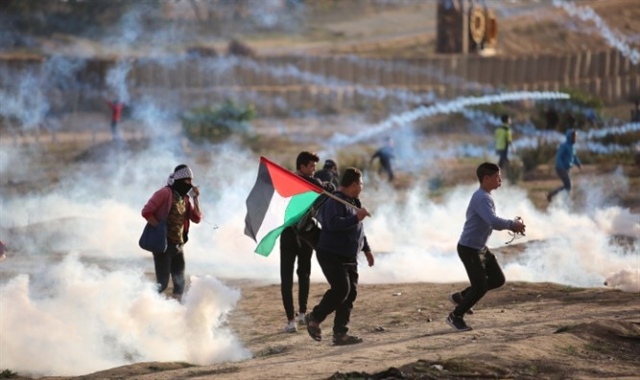
Several thousand Palestinians protested on the Gaza border Friday, with several hundred rioting and clashing with Israeli forces, as the coastal enclave’s Hamas rulers marked 32 years since the founding of the terror group.
The Hamas-run Gaza health ministry said five Palestinians were hurt in the clashes, which included the hurling of molotov cocktails and other objects at IDF soldiers.
Video shot near the southern city of Khan Younis showed a fire breaking out on the hood of an Israel Defense Forces vehicle after it was apparently struck by a fire bomb.
No soldiers were injured.
Around 2,000 people took part in protests at various spots along the Gaza border, according to Hebrew media reports.
In addition to the border clashes, thousands took part in a pair of rallies in the Gaza Strip to mark the 1987 anniversary of Hamas’s establishment.
Fathi Hammad, a member of the Islamist terror group’s politburo, thanked Hamas fighters who fired rockets at Israel, Channel 13 news reported.
“[Prime Minister Benjamin] Netanyahu’s time is over,” he was quoted saying, in apparent reference to the Israeli premier’s political and legal woes.
Hammad also commented on Israeli captives held by Hamas, following recent reports of efforts to broker a prisoner exchange between Israel and the terror group.
Left to right: Oron Shaul, Hadar Goldin and Avraham Mengistu. (Flash90/The Times of Israel)
“The Israeli soldiers won’t see the light until our prisoners see the light,” Channel 12 quoted him as saying.
Hamas is believed to be holding captive two Israeli citizens — Avraham Abera Mengistu and Hisham al-Sayed — who are said to have entered the Gaza Strip of their own accord in 2014-2015.
It also holds the bodies of Hadar Goldin and Oron Shaul, IDF soldiers killed in the 2014 Gaza war.
“On the issue of prisoners, the enemy’s dawdling won’t help it,” Hammad said.
He warned the armed wing of Hamas would soon unveil a “new chapter in the battle” against Israel, without elaborating.
“Hamas will cut off the hand of anyone who tries to undermine the stability of security in Gaza,” he said. “Hamas will remain a torch of glory and pride for the Palestinians.”
Palestinians attend a rally marking the 32nd anniversary of the founding of the Hamas terror group, in Khan Younis in the southern Gaza Strip, December 13, 2019. (Said Khatib/AFP)
Friday’s border demonstrations were part of the weekly March of Return protests that began last March and resumed last week after a three-week hiatus following a large-scale battle in November between the IDF and Palestinian Islamic Jihad, the second largest terror group in Gaza.
Ahead of last week’s protests, IDF Chief of Staff Aviv Kohavi said Israel had a “special opportunity” to reach a long-term ceasefire with terror groups in the Gaza Strip.
Meeting with mayors of Gaza-adjacent communities, Kohavi indicated that Israel believed it could negotiate an oft-discussed long-term ceasefire agreement with Hamas, which has been the de facto ruler of Gaza since violently overthrowing the internationally recognized Palestinian Authority in 2007.
The army chief said this is due to the success of the IDF’s recent two-day battle with the Islamic Jihad, an operation that was dubbed “Black Belt.” Unlike in previous rounds of fighting, the Izz ad-Din al-Qassam Brigades, Hamas’s armed wing, stayed on the sidelines.
For more than the past year, Hamas has negotiated a series of unofficial ceasefire understandings with Israel.
The understandings have largely entailed Israel lifting restrictions on the movement of goods and people into and out of Gaza in exchange for Hamas and other terror groups in the coastal enclave maintaining relative quiet in the border region.
However, the informal agreements have not put an end to cross-border violence, as both Israel and terror groups in Gaza have recently participated in several short flareups.

Iraq suicide bombers kill 11 fighters loyal to the Antichrist

13 DEC 2019 / 15:34 H.
The first attack took place late in the day near Tharthar Lake southwest of Samarra, a longtime stronghold of Sunni jihadist groups some 100km north of Baghdad.
The blast killed seven fighters and wounded three, the army said, adding it was carried out by “a suicide terrorist” — its standard term for Islamic State group jihadists.
Later, a second attacker blew up a car packed with explosives at the same site, killing another four fighters, the army said.
No group immediately claimed responsibility.
Sadr’s Saraya al-Salam (Peace Brigades) force took part in the gruelling Iraqi operation against IS after the jihadists seized a third of Iraq and swathes of neighbouring Syria in 2014.
In late 2017, Iraq declared victory over the jihadist group, but its sleeper cells continue to carry out attacks across the country. — AFP

Saturday, December 14, 2019

Nations Clash Outside the Temple Walls (Revelation 11)

By TOI staffToday, 6:22 pm
Several thousand Palestinians protested on the Gaza border Friday, with several hundred rioting and clashing with Israeli forces, as the coastal enclave’s Hamas rulers marked 32 years since the founding of the terror group.
The Hamas-run Gaza health ministry said five Palestinians were hurt in the clashes, which included the hurling of molotov cocktails and other objects at IDF soldiers.
Video shot near the southern city of Khan Younis showed a fire breaking out on the hood of an Israel Defense Forces vehicle after it was apparently struck by a fire bomb.
No soldiers were injured.
Around 2,000 people took part in protests at various spots along the Gaza border, according to Hebrew media reports.
In addition to the border clashes, thousands took part in a pair of rallies in the Gaza Strip to mark the 1987 anniversary of Hamas’s establishment.
Fathi Hammad, a member of the Islamist terror group’s politburo, thanked Hamas fighters who fired rockets at Israel, Channel 13 news reported.
“[Prime Minister Benjamin] Netanyahu’s time is over,” he was quoted saying, in apparent reference to the Israeli premier’s political and legal woes.
Hammad also commented on Israeli captives held by Hamas, following recent reports of efforts to broker a prisoner exchange between Israel and the terror group.
“The Israeli soldiers won’t see the light until our prisoners see the light,” Channel 12 quoted him as saying.
Hamas is believed to be holding captive two Israeli citizens — Avraham Abera Mengistu and Hisham al-Sayed — who are said to have entered the Gaza Strip of their own accord in 2014-2015.
It also holds the bodies of Hadar Goldin and Oron Shaul, IDF soldiers killed in the 2014 Gaza war.
“On the issue of prisoners, the enemy’s dawdling won’t help it,” Hammad said.
He warned the armed wing of Hamas would soon unveil a “new chapter in the battle” against Israel, without elaborating.
“Hamas will cut off the hand of anyone who tries to undermine the stability of security in Gaza,” he said. “Hamas will remain a torch of glory and pride for the Palestinians.”
Palestinians attend a rally marking the 32nd anniversary of the founding of the Hamas terror group, in Khan Younis in the southern Gaza Strip, December 13, 2019. (Said Khatib/AFP)
Friday’s border demonstrations were part of the weekly March of Return protests that began last March and resumed last week after a three-week hiatus following a large-scale battle in November between the IDF and Palestinian Islamic Jihad, the second largest terror group in Gaza.
Ahead of last week’s protests, IDF Chief of Staff Aviv Kohavi said Israel had a “special opportunity” to reach a long-term ceasefire with terror groups in the Gaza Strip.
Meeting with mayors of Gaza-adjacent communities, Kohavi indicated that Israel believed it could negotiate an oft-discussed long-term ceasefire agreement with Hamas, which has been the de facto ruler of Gaza since violently overthrowing the internationally recognized Palestinian Authority in 2007.
The army chief said this is due to the success of the IDF’s recent two-day battle with the Islamic Jihad, an operation that was dubbed “Black Belt.” Unlike in previous rounds of fighting, the Izz ad-Din al-Qassam Brigades, Hamas’s armed wing, stayed on the sidelines.
For more than the past year, Hamas has negotiated a series of unofficial ceasefire understandings with Israel.
The understandings have largely entailed Israel lifting restrictions on the movement of goods and people into and out of Gaza in exchange for Hamas and other terror groups in the coastal enclave maintaining relative quiet in the border region.
However, the informal agreements have not put an end to cross-border violence, as both Israel and terror groups in Gaza have recently participated in several short flareups.

Friday, December 13, 2019

Terrorism and Conflict Outside the Temple Walls (Revelation 11)

Published: 11/12/2019
• On December 6, 2019, the return march was renewed after a hiatus of three weeks. About 4,200 Palestinians participated. Despite the presence of Hamas security operatives, routine demonstrations of violence continued near the border (throwing IEDs and Molotov cocktails and shooting firecrackers).
• On December 7, 2019, three rockets were fired at Israel from the Gaza Strip. In response the IDF attacked Hamas targets. In the weeks since the most recent escalation there have been four rocket fire attacks in which seven rockets were fired at Israel. No organization claimed responsibility for the rocket fire, but rogue organizations were responsible and not Hamas. No casualties or damage were reported but the continued rocket fire disrupts the daily lives of the residents of southern Israel, mainly in the communities near the Gaza Strip.
• This past week a senior Hamas and Palestinian Islamic Jihad (PIJ) delegation arrived in Egypt to discuss a lull arrangement. Egyptian sources reported that a long-term lull is being formulated. However, senior Hamas figure Khalil al-Haya, interviewed by various media outlets, said that the reports about a long-term understanding that would lead to ending the “resistance activities” were incorrect. He said any understanding had to be based on those reached after Operation Protective Edge, and would ease the “siege” of the Gaza Strip without tying Hamas’ hands.
• On December 9, 2019, Fatah called a general strike in the Hebron district to protest Israel’s plan to build in the city’s wholesale market. The strike, enforced by Fatah operatives, was complete and included educational institutions and businesses. In the meantime, senior Fatah and Palestinian Authority (PA) figures continue to strongly criticize the Israeli plan to build in Hebron, threatening to cancel all Palestinian agreements with Israel and the United States.

Thursday, December 12, 2019

Gaza 2020: the Palestinian territory has reached the point of no return (Revelation 11)


Gaza 2020: Has the Palestinian territory reached the point of no return?
In 2012, a United Nations report painted a bleak picture of the Gaza Strip and the conditions facing its Palestinian inhabitants.
Its economy was sluggish, its healthcare system beleaguered and its natural resources dwindling. But darker days were to come, the UN predicted. 
By 2020, Gaza’s population would surpass two million. Peak demand for electricity would soar by more than 50 percent, the report projected, and the territory’s coastal aquifer could be damaged beyond repair. The UN called for a massive injection of resources, including thousands more doctors and nurses, a doubling of electricity capacity and at least 440 new schools.

It is now almost 2020. The UN’s projections about Gaza’s ballooning demands have proven largely accurate – but the delivery of essential services has failed to catch up. 
Unemployment has reached nearly 50 percent, the per-person ratio of doctors and nurses has dropped, more than two-thirds of households are food insecure, and just three percent of Gaza’s aquifer water is safe to drink, according to official statistics and aid agencies.
Michael Lynk, the UN’s special rapporteur on human rights in the Palestinian territories, told MEE: “The prediction of unliveability has already arrived. The common measuring stick used by the UN or any other international organisation to be able to evaluate how people live is human dignity, and Gaza has been without human dignity for years now.”
Surviving in Gaza
Since Hamas rose to power in Gaza in 2007, Israel has blockaded the coastal enclave, with severe restrictions on the movement of people and goods. Fuel shortages, power cuts, contaminated water and crumbling infrastructure have been compounded by repeated Israeli offensives. The most recent war, in the summer of 2014, killed more than 2,200 Palestinians and devastated tens of thousands of homes.
During the early years of the siege, Israel calculated the minimum number of calories that Palestinians in Gaza would need to survive (the information came to light following a successful legal fight by the Israeli NGO Gisha). These figures were then used to determine how much food aid should be trucked in, essentially keeping the territory on life support.

“It was going to keep Gaza hungry but not starving, and that continues to be … the Israeli strategy towards this,” Lynk said.
“As long as Gaza doesn’t revolt; as long as there isn’t another periodic pounding of Gaza, using among the most sophisticated armaments that the world has; as long as Gaza stays off headlines in the world, the world is not going to do very much to change this.”
Haidar Eid, an associate professor at Al-Aqsa University in Gaza, described Israel’s policy towards Palestinians in the enclave as “genocidal”.
“They are a constant reminder of the original sin committed in 1948,” Eid told MEE, referencing the Nakba, the mass expulsion of Palestinians that accompanied Israel’s founding. “Israel wants to punish them for their resistance, for not being subservient subjects, and make them give up on their internationally guaranteed right of return.”
Decline for Palestinians
Other observers have noted how, long before the 2020 deadline, the Israeli siege had already produced untenable conditions throughout Gaza. Restrictions on fishing zones – reduced to 10 nautical miles from 15 earlier this year – impede people’s livelihoods. Import bans prevent critical goods, such as fuel and cooking gas, from entering the territory. And routine blackouts make daily life a struggle, with power sometimes available for just a few hours a day.
For some of the hardest-hit Palestinians, relief is impossible. This past September, Israel approved fewer than two-thirds of applications for patients to leave the territory for medical reasons. Some were interrogated as a prerequisite for permit approval – a practice denounced by human rights groups, such as Physicians for Human Rights, who point to Israel’s history of coercing patients into becoming collaborators in exchange for needed hospital care.

The “de-development” of health services means that basic technology often isn’t available in Gaza, while drugs and medical personnel are in short supply, noted Gerald Rockenschaub, head of the World Health Organization’s office for the occupied Palestinian territories.
“It’s not an abrupt decline; it’s a chronic decline,” he told MEE. “The system is always very close or on the brink of collapse.”

International aid to the densely populated territory, while preventing a total shutdown, has created humanitarian dependence rather than fostering development in Gaza, experts note. At the same time, funding cuts this year by the Trump administration to UNRWA, the UN agency for Palestinian refugees, have deepened the crisis.
“There is a development abyss in the Gaza context,” Jamie McGoldrick, the UN’s humanitarian coordinator for the occupied Palestinian territories, told MEE, noting that it has been felt acutely in the health and education sectors.
Schools are running double – and even triple – shifts to accommodate the growing youth population. Meanwhile, hospitals have been stretched beyond their capacity, especially as the Great March of Return protests, which began in 2018, have resulted in thousands of injuries.
Yet, while humanitarian assistance is little more than a quick-fix solution, analysts say, weaning the territory off of this aid will be a complex and difficult process.
“You can’t just say, ‘OK, tomorrow no more food, no more support. You go elsewhere.’ There is no ‘elsewhere’ in Gaza … People are dependent on humanitarian [aid],” McGoldrick said.
“We have to switch that to something which is more sustainable, and certainly something much more dignified than what we have right now.”
Palestinians: ‘Alive for lack of death’
Kamel Hawwash, a British-Palestinian professor based at the University of Birmingham, told MEE that to the people of Gaza, the UN’s 2020 prediction has long since come true. He said that many cite the Arabic saying: “We are alive for lack of death.”
Israel’s policy is one of containment, Hawwash said, and at the end of the day, “Israel wants to keep ‘quiet’ in Gaza. If Hamas provides it, then fine. If it doesn’t, then [Israel] attacks the strip.”
Israel has also reportedly been encouraging Palestinians to leave Gaza permanently, aiming to further reduce their presence on the ground. Earlier this year, a government source reportedly acknowledged that “attempts have been made” to persuade other nations to take them in, adding that Israel would assist with transportation.

For Gaza to emerge from its current predicament, Hawwash said, the intra-Palestinian rift between Fatah and Hamas must be mended and the Israeli siege must end, allowing stability to take root.
“Clearly, if the refugees who make up 80 percent of the population were to return to their homes – as they are entitled under international law – then Gaza could be liveable and prosper.”
A successful political process could pave the way for a more development-oriented strategy in Gaza, McGoldrick said, potentially attracting new investments in water-supply systems, industrial zones and job creation.
He called the blockade “the biggest inhibitor to development” while acknowledging that the 2020 deadline of unliveability was in itself “an artificial creation” of the UN.

“That doesn’t mean anything to any Palestinian … People are just trying to get through the day, surviving day by day,” he said.
Yet, with the continuing population growth, service reduction and soaring unemployment, Gaza may be approaching a point of no return.
Sara Roy, a senior research scholar at Harvard University’s Center for Middle Eastern Studies, told MEE: “The term ‘unliveable’ … is meant as an alarm bell for the international community, but that bell has been ringing for a long time.”
The warning, she said, has been ignored amid international indifference and humanitarian interventions that merely serve as a substitute for human rights.
“Without the unencumbered movement of people and goods,” Roy said, “Gaza will be condemned to continued ruination.”
Hamas, Islamic Jihad Violate Cease Fire Outside the Temple Walls

December 8, 2019 David Wexelman Africa, Egypt, Featured News, Israel, Middle East, News Article, World
• A cease fire was called through negotiations with Egypt, which have continued until this new attack.
• While under attack, Hamas warned Israel that an escalation will be dangerous for Israel.
• Hamas and Palestinian Islamic Jihad have assured Egyptian Intelligence officials that they remain committed to the ceasefire.
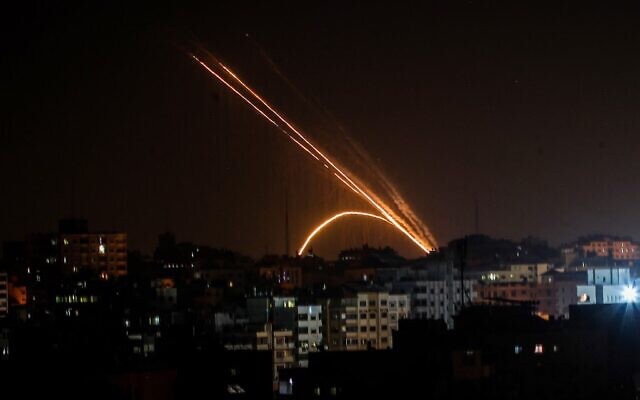
In the middle of negotiations in Cairo with Hamas and Islamic Jihad for a five year cease fire, three missiles were launched at southern Israel Saturday night. Two of the missiles were intercepted by the Iron Dome and one fell in open area. Several people were treated for trauma. A group of students had gathered to watch a basketball tournament at the time of the explosions.  They dispersed quickly to find cover from this potential danger.
The PIJ and Hamas officials discussed ways of achieving national unity with Egypt, including the plan of Mahmoud Abbas, President of the Palestinian National Authority, to hold long-overdue presidential and parliamentary elections.
More than four hundred missiles were shot at Israel from Gaza recently, after Israel targeted one of the leaders of Islamic Jihad for assassination in Gaza. A cease fire was called through negotiations with Egypt, which have continued until this new attack. Naftali Bennett, the new Defense Minister, made a statement warning Hamas and Islamic Jihad that the IDF will not sit quietly and allow these attacks to continue. Israel retaliated, attacking several military locations in Gaza by the air and through artillery.  Bennett said whatever Israel will do will be at the right time.
While under attack, Hamas warned Israel that an escalation will be dangerous for Israel. Hamas already made a statement that they have enough rockets to fight a war for several months. On Friday an estimated 4,000 Gazans took part in protests at the Gaza fence.  Hundreds of these protesters rioted, throwing explosive devices and rocks at the IDF, defending Israel from the other side of the fence. Twenty-seven Palestinians were injured in these riots. After a three-week interruption, Gazans resumed the “Great March of Return” on Friday. This, it seems, led to them violating the cease fire.
Hamas and Palestinian Islamic Jihad have assured Egyptian Intelligence officials that they remain committed to the ceasefire understandings reached with Israel under the auspices of Egypt, Qatar, and the UN. Egypt, for its part, has promised a series of measures to ease travel and trade restrictions imposed on the Gaza Strip. Hamas is firm about preventing Israel from using live ammunition against them while demonstrating at the Gaza border, like what happened on Friday during the riots. Hamas maintains their goal of alleviating the suffering of their people, lifting the blockade, and carrying out humanitarian projects in Gaza.  The riots, which occurred on Friday, they claim, were not under their control.
Ismail Haniyeh is a senior political leader of Hamas and formerly one of two disputed Prime Ministers of the Palestinian National Authority. Haniyeh became prime minister after Hamas won the Palestinian legislative elections of 2006.
The PIJ and Hamas officials discussed ways of achieving national unity with Egypt, including the plan of Mahmoud Abbas, President of the Palestinian National Authority, to hold long-overdue presidential and parliamentary elections. The PIJ has announced that it won’t participate in these elections, while Hamas has welcomed the Abbas initiative, and said it is waiting for Abbas to issue a decree setting a date for the vote.
There are two major factions in control of politics in Gaza, Hamas and Palestinian Islamic Jihad. Relations have become strained after the last episode of fighting prior to the cease fire. Without unity between these two terrorist groups, negotiations for the five year cease fire by Egypt can only be temporary. Ismail Haniyeh of Hamas traveled today to Turkey, and is also expected to travel to Malysia, Qatar, Russia, Lebanon and Kuwait.

Monday, December 9, 2019

Israel Conducts Air Raid Outside the Temple Walls (Revelation 11)

By Daniel Uria
Israel said it conducted air raids in the Gaza Strip after intercepting two of three rockets fired from the region with its Iron Dome defense system, like the one pictured here. File Pool photo by Jack Guez/UPI | License Photo
Dec. 8 (UPI) — Israel Defense Forces conducted air raids early Sunday in the Gaza Strip after Palestinian rockets were fired from the region toward southern Israel.
The IDF tweeted that three rockets were fired from Gaza and two were intercepted by its Iron Dome Aerial Defense System and hours later Israel deployed fighter jets and attack helicopters to the region in response.
No Palestinian groups took responsibility for the rocket fire but, Israel said the Islamist militant group launched the missiles.
“Hamas is responsible for what is happening in and out of the Gaza Strip and it will bear the consequences for actions against Israeli citizens,” the Israeli military said.
The air raids struck several targets associated with Hamas including a camp and a naval position in the northern Gaza Strip, IDF said.
Israel’s defense minister, Naftali Bennett, warned that the nation would seek to move from a “defensive approach to an attacking approach” on the Gaza Strip.
“Whatever we’ll do — we’ll do it at the right time — in the right way and with great power,” Bennett said. “No one will drag us to it. A good ruse is served cold, not when the blood is boiling and the other side waits of it.”
Last month, rocket fire was also exchanged between Israel and the Gaza Strip after an Islamic Jihad commander in Northern Gaza and his wife were killed in a strike on his bedroom.

Thousands Protest Outside the Temple Walls (Revelation 11)

Some 4,000 Palestinian Arabs protested at several locations along the Gaza border on Friday, as the Hamas-orchestrated “March of the Return” protests resumed. In an unusual move, many of them were children, noted Channel 13 News.
Some of the demonstrators threw explosives at IDF forces, who in turn used riot dispersal means.
The Hamas-run “health ministry” in Gaza reported that 27 protesters were wounded, four of whom by live fire.
At the conclusion of the demonstrations, the “national authority for the return marches and breaking the siege on the Gaza Strip” announced the continuation of their activities next week.
The weekly “March of the Return” riots, orchestrated by Hamas, had been held every Friday since March of 2018 until several weeks ago, when Hamas cancelled them, likely due to the efforts being made through mediators to achieve a long-term ceasefire with Israel.
(Arutz Sheva’s North American desk is keeping you updated until the start of Shabbat in New York. The time posted automatically on all Arutz Sheva articles, however, is Israeli time.)

Sunday, December 8, 2019

Thousands Protest Outside the Temple Walls (Revelation 11)


Some 4,000 Palestinian Arabs protested at several locations along the Gaza border on Friday, as the Hamas-orchestrated “March of the Return” protests resumed. In an unusual move, many of them were children, noted Channel 13 News.
Some of the demonstrators threw explosives at IDF forces, who in turn used riot dispersal means.
The Hamas-run “health ministry” in Gaza reported that 27 protesters were wounded, four of whom by live fire.
At the conclusion of the demonstrations, the “national authority for the return marches and breaking the siege on the Gaza Strip” announced the continuation of their activities next week.
The weekly “March of the Return” riots, orchestrated by Hamas, had been held every Friday since March of 2018 until several weeks ago, when Hamas cancelled them, likely due to the efforts being made through mediators to achieve a long-term ceasefire with Israel.
(Arutz Sheva’s North American desk is keeping you updated until the start of Shabbat in New York. The time posted automatically on all Arutz Sheva articles, however, is Israeli time.)