Showing posts with label l Sadr. Show all posts

Wednesday, December 16, 2020

The Shi’a Horns of Prophecy: Daniel 8


Battleground Iraq: The Power of Iran’s Coalition Rests on Its Influence in Iraq

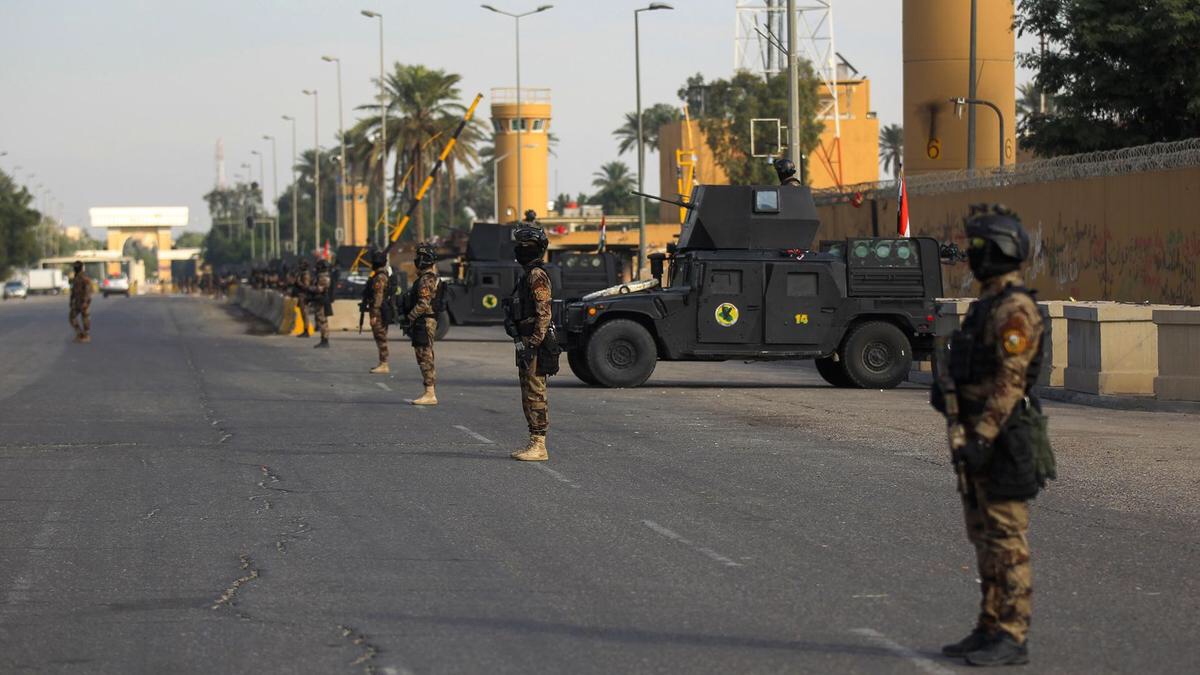
The end of the War on Terror, as suggested by the near-simultaneous resignations of ISIS coordinators at the State Department and Defense Department, is something of the end of an era.  For nearly two decades the United States has been at war with various shades of Sunni militants from Al Qaeda to the Afghan Taliban. During most of this time the heart of the fight, per the Bush administration, was in Iraq, and particularly the sprawling, 104-acre U.S. Embassy compound that served as the political face of an occupying army. With that army gone, it is no less critical.

The main American challenge in the Middle East for the foreseeable future will be, as it was under the Trump administration, stabilizing the Gulf States and their allies against Iranian power which in a vacuum would overwhelm them and allow Iran to dominate the Persian Gulf.  The basic strategic problem is that Iran and its allies have become stronger than their primarily Sunni Arab opponents, thanks to a sequence of geopolitical events beginning with the fall of the Taliban. They have more people, more effective combat power, and greater deterrence. The unprecedented introduction of Russian combat power in the region on the side of Iran only made them more formidable. Left alone, this amalgamation of states could gradually induce the Gulf States and particularly Saudi Arabia to quietly accommodate Iranian wishes: in a worst-case scenario, permitting it to dominate the Persian Gulf and thus the price of oil, making Iran a great power.

The power of Iran’s coalition rests on its influence in Iraq. Without Iraq, Iran is effectively isolated, its population and even its military advantages largely scratched. With an allied Iraq, it far outclasses its regional opponents. Critically for the United States, it does not yet have full control of Iraq. It has tactical and operational control of certain outcomes: for example, trafficking missiles through the eastern border westwards towards Syria, and the ability to attack U.S. facilities. The Iraqi political class is also conscious of and reacts to perceived Iranian threats. But at the strategic level, Iran has wanted the United States and its forces out of Iraq for a decade and a half and has not gotten it, militia groups and missiles be damned.

Iraq is thus the main battleground for Iranian political influence. It is contested in a way that Lebanon with Hezbollah is not. It is the only place where the United States is politically on offense against Iranian power, with few advantages, and it is hard. Counter-Iran policy, for the most part, is not hard. Everyone likes announcing new sanctions on Iran. Everyone likes condemning whatever terrible thing the Islamic Republic is doing and conferring with allied monarchs in luxury. But far fewer people actually want to get into the political weeds and fight out America’s interests in the Iraqi parliament: finessing, cajoling, and occasionally threatening political actors, often walking out of a meeting as the Iranians are walking in.

The transfer of mission from counter-Sunni, basically, to counter-Iran in the U.S. government has had a significant impact on the type of military actions and diplomacy that is practiced, making the Embassy even more critical. There is less need for diplomats to travel into the hinterlands to meet village elders. That has been replaced in Iraq and other Shia areas by engaging with politicians who are constantly assessing the costs and benefits of siding with the Iranians versus siding with America. Major Shia politicians may not love the Iranians but they perceive the Iranians provide the certainty of a tactical payoff. They, or their proxies, will bribe you or kill you. America’s tools are less acute and thus its payoffs far less certain, even if, ceteris parabis, the ministers of parliament from Diyala might prefer us at the end of the day.

The U.S. Embassy is a tool in this fight. It is perhaps our best one. It is one of the few remaining symbols in Iraq of America as superpower. The embassy complex was built for a day when the United States had a one-hundred-thousand-strong army in Iraq and functioned as something of a shadow amalgamation of every Iraqi government ministry rolled into one. It can be downsized territorially, but there is a limit to how much manpower the United States will save by slicing off chunks of its land. Reporting staff are already relatively few, and as long as the Embassy needs a security perimeter the manpower reductions that can be achieved by downsizing the facility are minimal. Even the downsizing is restricted by the nature of the competitive environment: as long as Iraq’s fire department is not fully reliable, for example, the embassy will need its own fire department, no matter how many city blocks it takes up.

In any case, Embassy Bagdad is safer now than it has been at any point since the United States invaded Iraq. Its countermeasures and Iraqi commitment to its safety have increased. Critically, the domestic political cost of attacking the embassy has also increased, dramatically. The threat from Shia militants has also declined from the heyday of the Mahdi Army battles in 2007, though it will never go away, not without also taking away this zero-sum quasi-sectarian balance of power that dominates strategic life in the Gulf.

This, then, is the main reason to keep the embassy open and keep it—if not imperial—then perhaps imposingly neoclassical. Not because our diplomats want to serve there, in the fight, though they do. Not because their personal risk is much lower than in the past, though it is. But because it is one of the most valuable chips in the most valuable piece on the board of the region. The Iranians know it and the Iraqis know it. Our leaders should too.

Andrew Peek is a nonresident fellow at the Atlantic Council. He was previously the Senior Director for European and Russian Affairs at the National Security Council and the Deputy Assistant Secretary for Iran and Iraq at the U.S. Department of State’s Bureau of Near Eastern Affairs.

Sunday, October 11, 2020

A threat from within’: Iraq and the rise of the Antichrist’s men: Revelation 13


‘A threat from within’: Iraq and the rise of its militias

Ghaith Abdul-Ahad

Last modified on Thu 8 Oct 2020 14.34 EDT

The dust had barely settled on the fall of Iraq’s second city when the call came. It was June 2014 and Islamic State had just captured Mosul, the prize in a fight for control of a country already scarred by more than a decade of war.

Just four days after the city’s capture, Grand Ayatollah Ali al-Sistani, the most revered Shia cleric in Iraq, issued a fatwa urging Iraqis to volunteer in the fight against the militants. Tens of thousands of mostly young men from the poor Shia south and Baghdad suburbs flocked to recruiting centres, military camps and militia headquarters.

Iraqi men marching to a recruiting centre in west Baghdad in June 2014. Photograph: Ghaith Abdul-Ahad/The Guardian

One such gathering took place in a sprawling compound in eastern Baghdad, where a large crowd of young men packed into a lecture hall. Excited to volunteer for the fight against Isis, they came with plastic shopping bags stuffed with clothes and little else. Many of the prospective fighters wore brightly coloured bermuda shorts, their mood as carefree and as boisterous as if they were going on a picnic.

Some were wearing green bandanas with the logo of the Kata’ib Hezbollah militia, formed in 2006 by the military commander Abu Mahdi al-Muhandis and closely associated with Iran’s Revolutionary Guards.

Iraqi men marching to a recruiting centre in west Baghdad, June 2014. Photograph: Ghaith Abdul-Ahad/The Guardian

The walls around them were lined with pictures of militiamen who fell in the civil war in neighbouring Syria. Muhandis would go on to become the key leader of the Shia militia umbrella organisation the Popular Mobilisation Forces, known as the Hashed al-Shaabi, or the Hashed.

In January this year he was killed in the same US drone strike that took out Iran’s top military commander, General Qassem Suleimani. By the time of his death the militias under his command, acting at the behest of Iran, were at the heart of the Iraqi establishment. In killing him, the US disrupted a fiendishly complicated set of power relations. It is on Iraqi soil, and not in Iran, that many fear the impact of the strike will be felt in the long term.

Shia militia commanders on the frontlines against Isis near Falluja, August 2015. Photograph: Ghaith Abdul-Ahad/The Guardian

“Previously, we chose only people who were committed to protecting the [Shia] sect and observed their religious commitments, who prayed and fasted, but now we are accepting anyone,” said the militia chief’s “recruiting officer” in 2014 . A tall, broad-shouldered man with a thin beard and short-cropped hair, he walked among the rows of enthusiastic young men, jotting down names on a yellow notepad.

Only a few weeks earlier he had been commanding a unit of fighters in Aleppo against Isis, signalling the ever-shifting pace of Iraq’s military and political landscape. “We fought the Americans, and we are fighting Daesh [Isis] in Syria,” he said. “Our experience will make them strong. We will give them the best training anyone can give here. Even army soldiers are joining us – they want to get rid of the corruption that caused the defeat of the army.”

Iraqi Shia recruits in a training centre in the east of Baghdad in August 2014. Photograph: Ghaith Abdul-Ahad/The Guardian

The young recruits were joined by veteran Shia fighters such as Abu Hashem, who fought against Saddam Hussein in the 1980s and 1990s under the command of Muhandis. The day Mosul fell, Muhandis called his veteran fighters to come to meet him.

“To be honest, after the fall of Mosul we didn’t go to war because of Sistani’s fatwa,” said Abu Hashem, a white-haired senior intelligence officer in the Hashed. Instead, he said, it was Muhandis who had spurred the older fighters into action. “We met him in his house in the Green Zone and he told us that the Iraqi state had fallen,” Abu Hashem said.

“There is no state,” Abu Hashem recalled Muhandis saying. “I am the state now.”

***

The extent of Muhandis’ influence over the various and bickering factions that comprised the Hashed is clear from accounts of how he marshalled fighters in the counter-campaign to drive Isis out of Iraq and how he was able to draw on Tehran’s resources to do so.

Iraqi Shia recruits in a training centre in the east of Baghdad in August 2014. Photograph: Ghaith Abdul-Ahad/The Guardian

After Abu Hashem and his comrades arrived ready to take up arms in that summer of 2014, Muhandis ordered them to head to the Taji military base north of Baghdad to set up a new force. Their first task was to protect the Shia shrines in Samara and stop the advance of Isis militants to Baghdad.

“When we arrived at the base, we found complete chaos,” Abu Hashem said. “Thousands of young volunteers had gathered there, and no one knew what to do with them.” They were joined by demoralised and broken soldiers, whose units had collapsed, and who had abandoned their armour and weapons in the retreat.

“Those of us who knew how to drive a tank took over abandoned army tanks and started forming new tank battalions and teaching the young volunteers. Others set up a radio and communications network. I had spent my life in intelligence, so I was assigned to run the security and the intelligence apparatus.”

Many of the veteran fighters were men in their 50s and 60s, but their younger relatives joined them too. “Each one brought two or three sons. A lot of the young had come with their older fathers or uncles,” Abu Hashem said.

When Muhandis arrived, the organisation was there for him on the ground. According to Abu Hashem and other commanders, Iranian flights soon started delivering weapons to the newly opened airport in Najaf.

“One of the ministers in the government at that time used to be head of logistics in the [Shia political party and military group] Badr Corps. He sat on the floor in a white dishdasha, picked up phones and arranged for shipments of pickup trucks, munitions and weapons, then distributed them among the different factions.”

With weapons, cars and men came Iranian advisers. They dispersed across the country in a wide geographic arch from Diyala in the east to the western border with Syria. Their voices could be heard on the military radio directing mortar fire in Falluja, installing thermal cameras in a small besieged village in the west of Mosul and accompanying the advance of an Iraqi special forces brigade in Tikrit.

Members of the Asa’ib Ahl al-Haq, on the frontlines against Isis, in Diala province to the east of Baghdad, in July 2014. Photograph: Ghaith Abdul-Ahad/The Guardian

“The reality is, without the Iranians we wouldn’t be able to do anything,” Abu Hashem said. “If the Iranian advisers weren’t there, the battalions wouldn’t attack. Their presence gave the men confidence in the early days.

“Suleimani had a halo around his head, and he became the symbol that everyone was devoted to. And [Muhandis] was negotiating these multiple factions that were unruly and difficult to control. He was like a music conductor.”

***

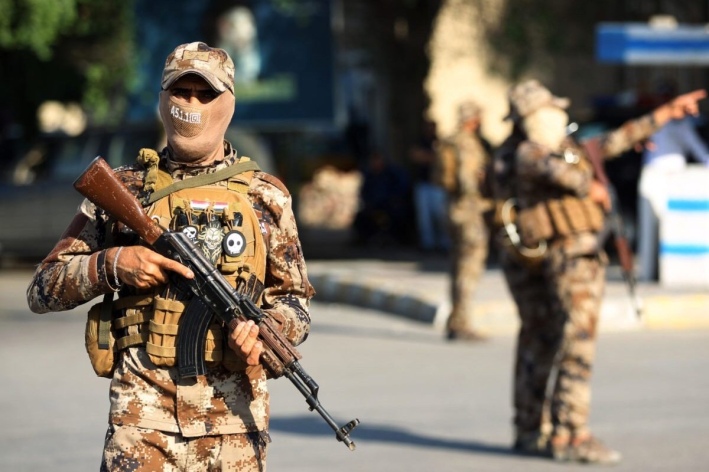
The Hashed was never a single fighting force but a heterogenous umbrella for multiple militias and paramilitary units. Some were well organised, battle hardened and had a clear hierarchy; others consisted of a few dozen men hired by a local warlord or tribal sheikh.

The factions can be roughly divided into three categories. First there are the military wings of the parties that dominated Iraqi politics since 2003 and played a significant role during the civil war. The remnants of Muqtada al-Sadr’s Mahdi army, since renamed as the Peace Battalion, is the most well-known.

Second are the smaller, more radical groups, including Kata’ib Hezbollah and Asa’ib Ahl al-Haq. They refer to themselves as the “loyalist factions”, closely follow Iranian leadership religiously and politically, and their fighters came of age in the civil war in Syria. Following the defeat of Isis in 2017, this group of loyalist factions sent aligned MPs to Iraq’s parliament, and they have become in effect a militia with their own political wing.

Lastly are the factions formed by the clergy in the influential shrine cities of Kerbala and Najaf or by tribes, who have no clear political agenda beyond the preservation of their founders’ interests.

“When we formed the Hashed, we tried to replicate the experience of the Basij [the Iranian Revolutionary Guard], but we failed in one thing, and that is the multiplicity of factions,” Abu Hashem said. “Some of the battalions have just a few dozen men, but they insist on fighting under their flag and refuse to accept the command of others.”

Divisions within the Hashed over command, strategy and the division of its loot, as well as which religious authority its factions followed – Sistani in Iraq or Iran’s supreme leader, Ayatollah Ali Khamenei – had long been rife, but Muhandis had some key advantages in his leadership. Since his death, the pro-Sistani factions have detached themselves from the Hashed leadership, which they now perceive as unacceptably aligned with Iranian interests rather than their own.

“When [Muhandis] wanted a certain faction to do something, during the fighting, he had to convince, urge, kiss them on the shoulders, and dangle many rewards before they did his biddings,” said a member of the Hashed shura council, a consultancy council that includes all the senior commanders of the Hashed.

“[Muhandis] had no faction of his own, and this was why he could run the Hashed and everyone listened to him, no one could outbid him. He had been in the Shia struggle for 30 years doing this job,” he said.

Under his watch, the Hashed grew to a formidable force, playing an essential role in the defeat of Isis. By the end of 2019 it was fielding tens of thousands of men, with tanks, artillery and an intelligence network, along with a sophisticated propaganda arm and extensive commercial interests.

“Muhandis turned a bunch of militiamen into an establishment, he created all these militias – he is the cook. He institutionalised them and enrolled them in politics, appointed them ministers, made them wear suits, and helped them realise the potential of being a stakeholder in the state and think of their political future after they were just a bunch of gunmen,” said the Shura council member.

From a governance point of view, Muhandis’s “cooking” had profound consequences for Iraq.

“The fact is that you have some military factions that receive their salaries from the Iraqi state but don’t follow the military chain of command of the commander in chief,” said an Iraq analyst, who requested anonymity.

“They act according to their alliances with the Iranian Revolutionary Guards, and serve the larger Iranian strategy in the region, and their own commercial interests. They constitute a threat to the state of Iraq from within.”

***

In the months leading up to Muhandis’ death, its fighters were on the back foot, denounced in a series of mass demonstrations by protesters who had grown weary of their immense power in all echelons of Iraqi life – and with it, the wealth the militias had acquired through often corrupt means.

But the US strike not only triggered a battle for control, it also revived the group with a new sense of purpose.

Members of the Asa’ib Ahl al-Haq, on the frontlines against Isis, in Diala province to the east of Baghdad, in July 2014. Photograph: Ghaith Abdul-Ahad/The Guardian

The deaths of two of the region’s most influential commanders enabled the Hashed to regain the initiative with key displays of force: tens of thousands of men marched on the streets in demonstrations condemning the US attack, and a week-long funeral was held for Muhandis.

More ominously, the pro-Iranian militias stepped up killings and kidnappings of activists, started firing rockets at the US embassy in the Green Zone and at military camps, and targeted supply convoys with improvised explosive devices (IEDs). So emboldened have the various factions become in 2020 that Iraqis speak of their country effectively being two parallel states – one with a weak government at its helm and the other at the mercy of militias.

The killing of the two commanders helped shift the narrative, observers said, from one of “the people v a kleptocratic regime” to one in which, according to a close friend of Muhandis, “everything was an American plot to weaken Iran and its allies, first by mass demonstrations, assassinations and eventually military confrontations”.

Then in April a new prime minister, Mustafa al-Kadhimi, was named, ending a five-month stalemate that followed the resignation of the former prime minister, Adel Abdul-Mahdi. An urbane former intelligence chief, Kadhimi is the first prime minister since 2005 not to belong to any of the Islamist parties.

The challenges facing him are formidable, from an economy in tatters due to the collapse in oil prices and endemic corruption to a failed healthcare system unable to deal with the coronavirus, and continuing anti-government demonstrations in Baghdad and other cities.

But the premier’s most fearsome task is trying to negotiate a new path for the country between a belligerent US and a defiant Iran, whose influence on Iraqi politics and security remains profound. Any future confrontation or war between the two countries is bound to take place on Iraqi soil.

“The assassinations of Suleimani and Muhandis broke the rules of the game that allowed both Iran and the US to exist together in Iraq and support each other’s factions during the fighting, not just because they faced the same enemy but because these were the rules that allowed Suleimani to travel across Iraq while the Americans were maintaining bases nearby,” said another source close to Muhandis and to the political leadership. “In a second all these rules were destroyed, and now they need to set up new rules.”

The shura council member said: “Everyone was looking at Iran, what it would do [and] how it would retaliate, but the reaction is here in Iraq. These factions have weapons, and they are well trained and violent, any one of them can take action either to avenge the killing of Muhandis and Suleimani or to show the leadership in Iran that he is their new man in Iraq. Any of these factions can start a war.”

And yet at the same time, nine months on from the US airstrike, the different factions are more divided than ever, even as they have been emboldened and given new purpose by his death.

“The killing of Suleimani disrupted the flow of the decision process for these factions, and they don’t act according to a general strategy,” the government official said.

He said Kadhimi believed that any direct confrontation with the factions was dangerous and could have serious political and security repercussions, with no guaranteed positive outcome.

He pointed to a raid in June on a militia cell in south Baghdad as an example. A unit from the counter-terrorism force raided a farmhouse and detained a group of Iraqi and Lebanese militiamen, accusing them of planning to fire a barrage of Katyusha rockets at the heavily fortified Green Zone. The same night, hundreds of members of the militia gathered on the streets in a show of force, while others moved on the strategic targets in the Green Zone. The next day the men were released.

“They sent a strong message to the prime minister, by coming close to his house, and he found himself alone,” the government official said. “The units he requested from the minister of defence never arrived. In a way the factions exposed their cards, showing the major positions they hold within the Green Zone and how will they react in any future confrontation.”

Kadhimi’s strategy, according to the official, is based on strengthening the army by advancing young officers, expanding the power of the counter-terrorism force and exploiting the rift between the pro-Sistani forces and the loyalist factions.

A senior Iraqi army officer said: “I sometimes think that the only solution to this crisis, of two states and two armies is a military solution. First we close Baghdad, issue an ultimatum for Hashed units to either join regular forces or we fight you.

“It will cause a bloodbath, but better to have two weeks of war than to keep postponing the confrontation.”
Friday, October 2, 2020

‘Do not wage war against your people’: Antichrist to militias

‘Do not wage war against your people’: Sadr to militias

Zhelwan Z. Wali

Iraqi Shiite cleric Muqtada al-Sadr drives a car as he joins anti-government demonstrations in Najaf on October 29, 2019. Photo: AFP

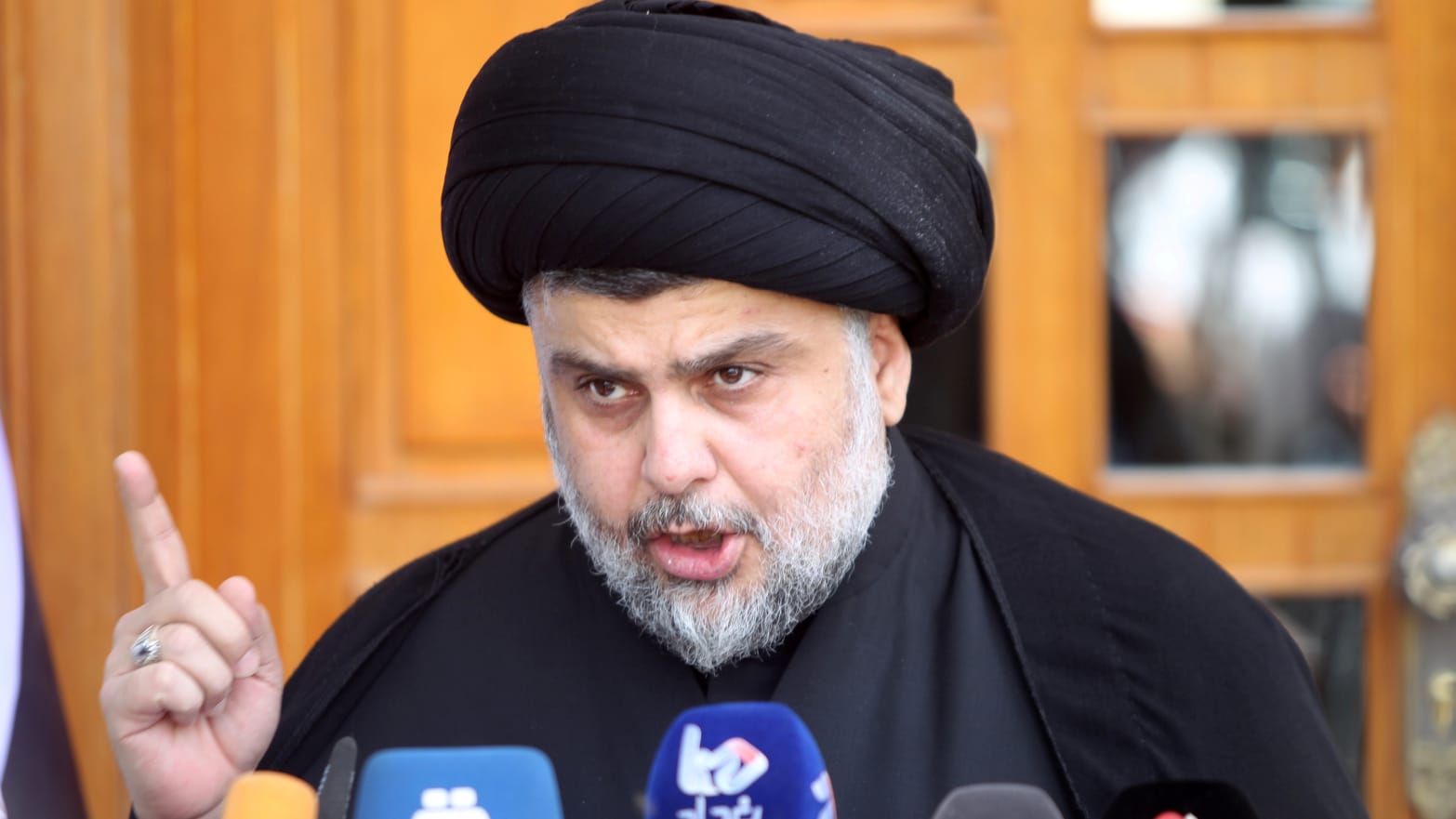
ERBIL, Kurdistan Region — Shiite cleric Muqtada al-Sadr took to Twitter on Wednesday to condemn civilian deaths in a recent rocket attack in Baghdad.

“Do not wage war against your people and nation, and do not bombard them and kill them for no reason,” Sadr wrote.

“Brothers, do not shift your gun barrel, which was pointed at our enemy, now at the chest of our brothers and people,” he said.

Three women and two children were killed on Monday after a Katyusha rocket hit a home near Baghdad International Airport.

Sadr’s tweet came moments after a roadside bomb hit a civilian vehicle at Baghdad International Airport according to the Iraqi Security Media Cell. No one was hurt. 

The cleric warned on  Monday that Iraq will plunge into “civil war”, or witness an internal Shiite conflict should “suspicious parties” continue attacks in the country.

Sadr has led the Saraya al-Salam (Peace Brigades) militia, part of the Popular Mobilization Forces (PMF, or Hashd al-Shaabi in Arabic), since 2014 and has pushed for the withdrawal of foreign troops from Iraq.

“I am not of those people who is afraid of threats and menaces… but some foreign forces want revenge upon our Iraq and its security, integrity and sovereignty,” Sadr added.

The US has told Iraqi Prime Minister Mustafa al-Kadhimi that it will close its Baghdad embassy and withdraw all troops if attacks on foreign actors continue. 

“I was the first who opposed the existence of the American forces which are occupying Iraqi territory, and I am the son of the one who chanted in the grand mosque of Kufa ‘no, no to the USA’,” Sadr wrote.
 
Convoys driven by Iraqis and contracted by the US-led coalition have come under almost daily attacks in recent months at the hands of pro-Iranian Shiite militias. Baghdad airport is also frequently targeted, as it hosts a coalition base.

The US Embassy and Iraqi military bases hosting coalition troops have been repeatedly targeted since the US assassination of Iranian General Qasem Soleimani in Baghdad in January.

It is believed that the Iran-backed Islamic Front for Resistance inside Iraq (al-Muqawama) is responsible for the attacks. Its aim is to force US troops to withdraw from the country and units of the group have claimed responsibility for similar attacks.

Diplomatic missions have also come under attack. A British diplomatic vehicle hit an IED in Baghdad earlier this month and a blast at an English-language institute in Najaf’s city centre on September 18 caused substantial material damage.

The attack on the British embassy vehicle was condemned by Sadr and the commander of Iranian-backed militia Kataib Hezbollah, Abu Ali al-Askari.

Diplomatic targets are more often hit by missiles within Baghdad’s Green Zone, home to foreign diplomatic offices and Iraqi government buildings. Two Katyusha rockets fired at the American embassy in mid-September were intercepted by a US air defense system. Three mortars landed in the area last week.

Kadhimi on Tuesday slammed armed groups who target diplomatic missions in Baghdad.

“There are ongoing mortar attacks to destabilize the situation, the latest was of which was an attack which resulted in the killing of five innocent civilians including a woman and children,” he said.

“The European Union’s mission in Iraq is also thinking of leaving, and this is because of insecurity in the Green Zone,” Kadhimi said, agreeing that continued threats to them make them unable to “continue work in Iraq.”

“They are not blaming the Iraqi government for that, but lack of security in Iraq,” he added.

“Closure of the embassies in Iraq means closing down the economic, cultural and military cooperation at a time that we are facing huge challenges,” the premier decried.

Numerous foreign missions met with Kadhimi on Wednesday to discuss the ongoing attacks. 

“We underlined our support for Iraq and its people, our respect for Iraqi sovereignty and our desire to see a stable and secure Iraq” read an official statement, expressing “deep concern” at the rise “in the number and sophistication of attacks against diplomatic premises in Iraq.”

Thursday, October 1, 2020

Civil war in Iraq if attacks don’t stop: Antichrist

Civil war in Iraq if attacks don’t stop: Sadr

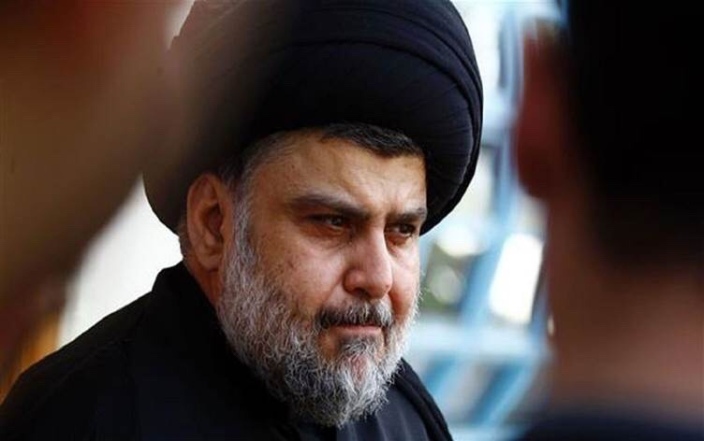
ERBIL, Kurdistan Region – Iraqi Shiite cleric Muqtada al-Sadr warned late Monday that Iraq may shift into  “civil war” or witness an internal Shiite conflict if “suspicious parties” continue attacks in the country.

“There are suspicious parties fueling the situation and endangering peaceful security in Iraq,” Sadr tweeted.

Sadr called on all sides to act “wisely” and show love for Iraq “before undertaking any step that would drag the country into civil war or a Shiite vs Shiite clash.”

Sadr has led the Saraya al-Salam (Peace Brigades) militia, part of the Popular Mobilization Forces (PMF, or Hashd al-Shaabi in Arabic), since 2014 and has pushed for the withdrawal of foreign troops from Iraq.

His tweet comes after a Katyusha rocket hit a home near Baghdad International Airport on Monday night, killing three children and two women, as injuring two others, according to a statement by Iraqi joint operation command.

Iraq’s Prime Minister Mustafa al-Kadhimi has ordered investigations into security forces responsible for security in the area, according to state media.

The US has told Iraqi Prime Minister Mustafa al-Kadhimi that it will close its Baghdad embassy and withdraw all troops if attacks on foreign actors continue, the Washington Post reported.

Convoys driven by Iraqis and contracted by the US-led coalition have come under almost daily attacks in recent months at the hands of pro-Iranian Shiite militias. Baghdad airport is also frequently targeted, as it hosts a coalition base.

The US Embassy and Iraqi military bases hosting coalition troops have been repeatedly targeted since the US assassination of Iranian General Qasem Soleimani in Baghdad in January.

It is believed that the Iran-backed Islamic Front for Resistance inside Iraq (al-Muqawama) is responsible for the attacks. Its aim is to force US troops to withdraw from the country and units of the group have claimed responsibility for similar attacks.

Diplomatic missions have also come under attack. A British diplomatic vehicle hit an IED in Baghdad earlier this month and a blast at an English-language institute in Najaf’s city centre on September 18 caused substantial material damage.

The attack on the British embassy vehicle was condemned by Sadr and the commander of Iranian-backed militia Kataib Hezbollah, Abu Ali al-Askari.

Diplomatic targets are more often hit by missiles within Baghdad’s Green Zone, home to foreign diplomatic offices and Iraqi government buildings. Two Katyusha rockets fired at the American embassy in mid-September were intercepted by a US air defense system. Three mortars landed in the area last week.

Wednesday, September 30, 2020

Antichrist Tells US to Evacuate Iraq

Moqtada al-Sadr, the Donald Trump of Iraq

Threat to evacuate U.S. diplomats from Iraq raises fear of war

By John Davison

6 MIN READ

BAGHDAD, Sept 28 (Reuters) – Washington has made preparations to withdraw diplomats from Iraq after warning Baghdad it could shut its embassy, two Iraqi officials and two Western diplomats said, a step Iraqis fear could turn their country into a battle zone.

Any move by the United States to scale down its diplomatic presence in a country where it has up to 5,000 troops would be widely seen in the region as an escalation of its confrontation with Iran, which Washington blames for missile and bomb attacks.

That in turn would open the possibility of military action, with just weeks to go before an election in which President Donald Trump has campaigned on a hard line towards Tehran and its proxies.

Secretary of State Mike Pompeo threatened to close the embassy in a phone call a week ago to President Barham Salih, two Iraqi government sources said. The conversation was initially reported by an Iraqi news website.

By Sunday, Washington had begun preparations to withdraw diplomatic staff if such a decision is taken, those sources and the two Western diplomats said.

The concern among the Iraqis is that pulling out diplomats would be followed quickly by military action against forces Washington blamed for attacks.

Populist Iraqi cleric Moqtada al-Sadr, who commands a following of millions of Iraqis, issued a statement last week pleading for groups to avoid an escalation that would turn Iraq into a battleground.

One of the Western diplomats said the U.S. administration did not “want to be limited in their options” to weaken Iran or pro-Iranian militias in Iraq. Asked whether he expected Washington to respond with economic or military measures, the diplomat replied: “Strikes.”

The U.S. State Department, asked about plans to withdraw from Iraq, said: “We never comment on the Secretary’s private diplomatic conversations with foreign leaders … Iran-backed groups launching rockets at our Embassy are a danger not only to us but to the Government of Iraq.”

PERENNIAL RISK

In a region polarised between allies of Iran and the United States, Iraq is the rare exception: a country that has close ties with both. But that has left it open to a perennial risk of becoming a battle ground in a proxy war.

That risk was hammered home in January this year, when Washington killed Iran’s most important military commander, Qassem Soleimani, with a drone strike at Baghdad airport. Iran responded with missiles fired at U.S. bases in Iraq.

Since then, a new prime minister has taken power in Iraq, supported by the United States, while Tehran still maintains close links to powerful Shi’ite armed movements.

Rockets regularly fly across the Tigris towards the heavily fortified U.S. diplomatic compound, constructed to be the biggest U.S. embassy in the world in central Baghdad’s so-called Green Zone during the U.S. occupation after a 2003 invasion.

In recent weeks rocket attacks near the embassy have increased and roadside bombs targeted convoys carrying equipment to the U.S.-led military coalition. One roadside attack hit a British convoy in Baghdad, the first of its kind against Western diplomats in Iraq for years.

Two Iraqi intelligence sources suggested plans to withdraw American diplomats were not yet in motion, and would depend on whether Iraqi security forces were able to do a better job of halting attacks. They said they had received orders to prevent attacks on U.S. sites, and had been told that U.S. evacuations would begin only if that effort failed.

DOUBLE-EDGED SWORD

Iraqis are concerned about the impact of November’s presidential election on the Trump administration’s decision-making.

While Trump has boasted of his hard line against Iran, he has also long promised to withdraw U.S. troops from engagements in the Middle East. The United States is already drawing down its force sent to help defeat Islamic State fighters in Iraq from 2014-2017.

Some Iraqi officials dismissed Pompeo’s threat to pull out diplomats as bluster, designed to scare armed groups into stopping attacks. But they said it could backfire by provoking the militias instead, if they sense an opportunity to push Washington to retreat.

“The American threat to close their embassy is merely a pressure tactic, but is a double-edged sword,” said Gati Rikabi, a member of Iraq’s parliamentary security committee.

He and another committee member said U.S. moves were designed to scare Iraqi leaders into supporting Prime Minister Mustafa al-Kadhimi, who has tried to check the power of Iran-aligned militia groups, with scant success.

HAWKS ON BOTH SIDES

The militias are under public pressure to rein in supporters who might provoke Washington. Since last year, public opinion in Iraq has turned sharply against political groups seen as fomenting violence on behalf of Iran.

Publicly, the powerful Iran-backed Shi’ite militia groups which control large factions in parliament have tried to distance themselves from attacks on Western targets.

U.S. officials say they think the Shi’ite militias or their Iranian backers have created splinter offshoots to carry out such attacks, allowing the main organisations to evade blame.

A senior figure in a Shi’ite Muslim political party said he thought Trump might want to pull out diplomats to keep them out of harm’s way and avoid an embarrassing pre-election incident.

Militia attacks were not necessarily under Tehran’s control, he said, noting that Iran’s foreign ministry had publicly called for a halt to attacks on diplomatic missions in Iraq.

“Iran wants to boot the Americans out, but not at any cost. It doesn’t want instability on its Western border,” the Shi’ite leader said. “Just like there are hawks in the U.S., there are hawks in Iran who have contact with the groups carrying out attacks, who aren’t necessarily following state policy.” (Reporting by John Davison, additional reporting by Ahmed Rasheed Editing by Peter Graff)

Tuesday, September 29, 2020

Antichrist urges opposes end to attacks on foreign troops

Iraqi Parliament, Moqtada Al-Sadr urges opposes end to attacks on foreign troops

Anadolu10:32 PM | September 27, 2020

A key committee of Iraq’s parliament has called for a halt on attacks on foreign missions and US forces in the country.

“Iraq is facing serious challenges which require the adoption of clear and courageous stances before the [Iraqi] people,” Mohammad Redha al-Haidar, chair of the Security and Defense Committee, told a press conference on Saturday.

He said attacks on diplomatic missions and Iraqi institutions “put Iraq’s reputation in jeopardy and weaken the country’s posture on the international stage.”

Al-Haidar called on Iraqi Prime Minister Mustafa al-Kadhimi to form a committee from security apparatuses to probe attacks against foreign missions in the country.

On Friday, Iraqi Shia cleric Muqtada al-Sadr called for an investigation into repeated attacks on foreign missions in Iraq and bringing the perpetrators to justice.

The call came after two Shia groups, Iraqi Hezbollah and al-Nujaba, threatened to launch more attacks against US forces in Iraq.

‘US-Greece relations at ‘All-Time High’ amidst tensions with Turkey,’ claims Pompeo in Athens visit

In recent weeks, several attacks targeted the US Embassy in Iraq, US forces, and other troops involved in the International Coalition against Deash/ISIS terror group in Iraq.

Al-Sadr says Iraq won’t become ‘foreign colony’

Firebrand Shia cleric Muqtada al-Sadr said on Sunday that Iraq will not become a foreign colony.

“We will not allow Iraq to become a foreign colony…,” he said in a tweet. “[Iraq] will be a strong and sovereign state.”

On Friday, al-Sadr called for an investigation into repeated attacks on foreign missions in Iraq and bringing perpetrators to justice.

The call came after two Shia groups, Iraqi Hezbollah and al-Nujaba, threatened to launch more attacks against US forces in Iraq.

In recent weeks, several attacks targeted the US Embassy in Iraq, US forces, and other troops involved in the International Coalition against Deash/ISIS terror group in Iraq.

Monday, September 28, 2020

Iraqi MPs sceptical about Antichrist’s idea to stop attacks on diplomats

Iraqi parliamentarians voiced doubts about a leading cleric’s plan to stop attacks on diplomatic targets, despite reports that the US might be considering closing its embassy in Baghdad.

Moqtada Al Sadr proposed last week to form a committee to halt attacks on diplomats after repeated rocket fire at the US embassy since the start of this year and at a British embassy convoy this month.

But officials in Baghdad expressed scepticism to The National the committee would yield results because it is beyond Parliament’s authority.

“The government has the executive power to enforce these things,” Iraqi MP Sarkwat Shams said.

“The government wants to share their failure with others, for example with Parliament, but it’s the government’s responsibility to protect foreign diplomats and not Parliament’s.

Another official said that an increase in attacks on diplomats and the potential closure of the US embassy would enhance Iran’s influence in Iraq.

“It is really up to the government to provide protection to foreign personnel stationed in the country and to ensure that no foreign powers will intervene in our internal politics,” he said.

Mr Al Sadr, who led the Mahdi army that fought foreign troops in Iraq after the 2003 US-led invasion, said: “Given the seriousness of the security situation that threatens the country’s present and future … we find it is an urgent interest to form a committee of security, military and parliamentary nature.”

Reports suggested that US Secretary of State Mike Pompeo told Iraqi leaders that Washington would shut down its embassy in Baghdad if the attacks did not stop.

Washington has blamed Iran-backed militias for the attacks.

Michael Knights of the Washington Institute for Near East Policy, who advises the US government, confirmed that the US was beginning the process of suspending embassy operations in Baghdad.

“That process takes quite a while, many, many months,” Mr Knights said.

“But intervening events in securing the IZ [Green Zone] can stop and reverse that process, something the US has flagged.”

US President Donald Trump’s decision to order the killing of Iranian general Qassem Suleimani outside Baghdad airport in January sparked widespread anger among Iraqi officials.

Since then, the Iraqi government has faced pressure to have foreign troops leave the country.

Parliament voted in January for the departure of forces, which was followed by a slow withdrawal of US and other coalition troops.

Shortly after the drone strike on Suleimani Iran-backed militia groups increased rocket and small-scale bomb attacks on the US embassy and Iraqi military bases that host US-led coalition troops.

The troops have been stationed in Iraq since 2014 to fight ISIS.

But because of the repeated attacks on US troops, the coalition has withdrawn from several bases across the country and reduced numbers amid fears of the coronavirus pandemic.

There are about 7,500 coalition forces in the country, including 5,000 US personnel.

Washington said this month that it planned to reduce its troops in Iraq to 3,000.

Updated: September 27, 2020 11:24 PM

Antichrist calls for investigations into attacks on international targets

Sadr calls for investigations into attacks on international targets

ERBIL, Kurdistan Region – Iraqi Shiite cleric Muqtada al-Sadr on Friday called for an investigation into the recent attacks on international targets in Iraq.

This comes one day after Sadr called on paramilitary network the Popular Mobilization Forces (PMF, also known as Hashd al-Shaabi in Arabic) to prevent some of its armed groups from conducting rocket attacks and assassinations in Iraq, saying the country will otherwise shift into the unknown.

In a tweet, Sadr says that “due to the seriousness of the security situation that threatens the present and future of the country, and in the midst of security breaches that threaten the prestige of the Iraqi state, and pose a direct threat to the life and fate of our dear people, we find it an urgent interest to form a committee of a security, military and parliamentary nature to investigate the violations.”

Following months of heightened tensions between the US and Iran, rocket attacks on US infrastructure and personnel in Baghdad’s fortified Green Zone and elsewhere in Iraq have become increasingly frequent.

The targeting of convoys belonging to Iraqi companies transporting for the US-led coalition inside Iraq has become an almost daily occurrence in central Iraq.

“The results of the investigation should be announced to the public opinion and within a specific time limit so that the necessary legal and executive measures are taken in this regard,” added Sadr, noting that “if this is not achieved, the government will be negligent in its work to restore prestige and impose security.”

A number of recent attacks on US and Western targets in Iraq are believed to have been conducted by the Iran-backed Islamic Front for Resistance inside Iraq (al-Muqawama), a group whose aim is to force US troops to withdraw from the country. Units of the group have claimed responsibility for some previous attacks.

Sunday, September 27, 2020

Antichrist’s men condemn targeting diplomatic missions

Iraq: Pro-Iran coalition condemns targeting diplomatic missions

Members of the Hashed al-Shaabi, or Popular Mobilisation Forces (PMF) in the Iraqi capital Baghdad on October 26, 2019. [AHMAD AL-RUBAYE/AFP via Getty Images]

September 25, 2020 at 5:13 am

The Iraqi Fatah Alliance condemned on Thursday the missile attacks launched by unknown parties on the headquarters of “diplomatic missions and official institutions”, expressing that these attacks weaken the state and will lead to “dangerous results”.

The Fatah Alliance led by Hadi Al-Amiri includes the political branches of the Popular Mobilisation Forces (PMF), comprising those who receive support and funding from Iran. The alliance holds 48 seats in parliament out of 329.

The Fatah Alliance announced in a statement: “We declare our rejection and condemnation of any attack targeting diplomatic missions and official institutions.”

The statement stressed that: “These actions weaken the state and undermine its prestige, which is unacceptable and leads to dangerous results.”

In the past few weeks, Iraq witnessed the escalation of attacks taking place almost daily, targeting Washington’s embassy in Baghdad, the US troops and the forces and interests of other countries participating in the Global Coalition against Daesh.

Washington accused Iran-backed factions of targeting its embassy and military bases where its soldiers are deployed.

The statement called on the judiciary and the security forces to: “Stand firmly and work to end the series of kidnappings, assassinations and violence which terrorised the population,” confirming that “unrighteous parties are attempting to stir up chaos and create a state of confusion in the country.”

Since October 2019, Iraq has witnessed popular protests against the ruling political class, which the protesters accuse of corruption and subordination to foreign parties.

Activists who participated in the protests are being frequently assassinated and kidnapped by unknown gunmen. The most recent incident was the abduction of activist Sajjad Al-Iraqi in Dhi Qar Governorate on Saturday, who still remains missing.

The Fatah Alliance also called on the PMF to avoid tarnishing “the image of this holy entity”.

The statement asserted that: “Everyone must be careful not to make hasty accusations, because terrorism, the remnants of the former regime (of late President Saddam Hussein), deviant groups and the enemies of Iraq are always trying to stir up chaos in the country.”

Leader of the Sadrist movement Muqtada Al-Sadr alleged on Wednesday in statement that the PMF factions were behind the repeated missile attacks, kidnappings and assassinations, calling on the PMF leaders to stop these acts of violence.

The Iraqi Shia armed factions, including the pro-Iran Hezbollah Brigades, threatened to target US military bases, in case the US soldiers do not adhere to the Iraqi parliament’s resolution and vacate the country.

On 5 January, Iraqi parliament voted by a majority in favour of ending the foreign military presence in the country, three days after the Iranian Quds Force Commander Qasem Soleimani and the Deputy Head of the PMF Abu Mahdi Al-Muhandis were killed in a US raid near Baghdad International Airport.

Friday, September 25, 2020

Antichrist condemns militia violence: Revelation 13

Iraqi Shia leader condemns militia violence | Joe Oliver | AW

BAGHDAD – Powerful Shia cleric and leader of the Sadrist movement Muqtada al-Sadr said Wednesday that factions of the Popular Mobilisation Forces (PMF) are implicated in rocket attacks and assassinations in the country.

In a tweet late on Wednesday, Sadr said, “What some armed groups affiliated with the Hashd al-Shaabi [PMF] are doing is weakening Iraq, its people and country, and weakening these three aspects means strengthening the external forces, on top of the list is the great evil America.”

He added, “It is necessary to seek wisely and deliberately to end making Iraq an arena for the struggle of others and to strive together for the independence, sovereignty, peace, security of Iraq, or Iraq will be shifted away from our hands.”

The PMF are mostly composed of armed Shia factions that were trained to fight ISIS in 2014 and formally affiliated with the Iraqi armed forces. Some PMF factions, however, respond only to the orders of leaders close to Iran.

Sadr supports the Sairoon coalition, which is the largest coalition in parliament (54 out of 329 seats).

The Shia cleric’s message is the most prominent statement from a political leader on who is behind repeated rocket attacks since last year against the US embassy in Baghdad and military bases that host US diplomats and troops.

Sadr’s statements also implicitly accuse some PMF factions of being behind the assassination of activists who participated in protests against political elite that are accused of corruption and collaboration with foreign countries, particularly Iran.

“We, in turn, renew the demand for non-interference in Iraq’s internal affairs from all parties. We also emphasise peace in all dealings, as Iraq can no longer endure more violence, wars, clashes, political conflicts and riots,” Sadr said.

The Shia cleric expressed on September 18 his rejection of the operations targeting foreign missions in the country, following their escalation during the past weeks.

He said in a tweet at the time, “It’s not for Iraq’s interest to drag the country into a dark tunnel and into the furnace of violence.”

“It’s not for Iraq’s interest to target cultural and diplomatic headquarters, “he said, adding that “political and parliamentary means can be followed to end the occupation and prevent their interference, and those who attack the headquarters are exposing Iraq and its people to the imminent danger.”

Over the past few weeks, attacks targeting US and foreign forces of the international coalition against ISIS have escalated.

Washington accuses armed Iraqi factions linked to Iran, including Kata’ib Hezbollah, of being behind the attacks targeting its embassy and military bases, from which American soldiers are sometimes deployed in the country.

Kata’ib Hezbollah, whose leader Abu Mahdi al-Muhandis was assassinated in January by the US military while he was with Iranian Major General Qassem Soleimani near Baghdad airport, is considered one of the factions with the closest relationship with Tehran.

Iraqi political forces and activists from the protest movement accuse militias loyal to Iran of kidnapping and torturing protesters, placing them in secret prisons and shooting demonstrators.

Iraqi Prime Minister Mustafa al-Kadhimi promised to hold the killers of demonstrators accountable and made surprise visits to numerous prisons to find out whether they included detainees from the protest movement.

On July 7, the Iraqi judiciary announced the formation of an investigative body to look into assassination crimes, hours after an expert on armed groups, Hisham Hashemi, was assassinated.

Sadr is one of the fiercest opponents of the US’s military presence in Iraq, but has refused to resort to violence to drive American forces out of the country.