Showing posts with label antimissile. Show all posts

Monday, May 1, 2017

Why Nuclear Missile Shields Are A Misnomer


U.S. Missile Defense Program Costly, Unreliable, And Exempt From Oversight, Report Finds

Follow Elliott Negin on Twitter: www.twitter.com/ElliottNegin
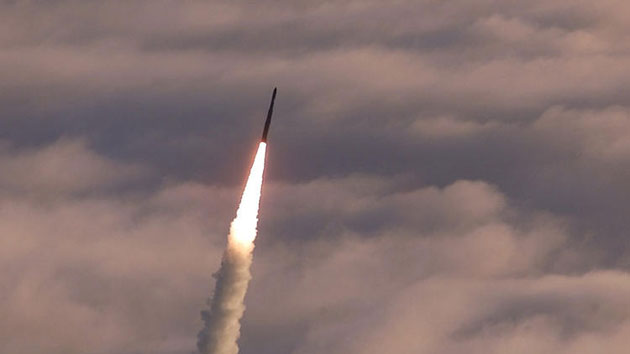
2016-07-15-1468544421-5463373-AirForcePhoto.jpg
Congress is currently considering expanding the U.S. national missile defense system, despite the fact that — nearly 15 years after the Bush administration began deploying it — it has not been demonstrated to work under real-world conditions and is not on a path to do so.
What’s the problem? According to a new report by the Union of Concerned Scientists (UCS), it’s that old adage, “haste makes waste.” Lack of accountability, UCS found, doesn’t help, either.
In its rush to get the system up and running, the George W. Bush administration exempted the program from standard Pentagon oversight protocols. That ill-advised decision has not only run up a $40-billion price tag for the Ground-based Midcourse Defense (GMD) program, it also has produced a system that is incapable of defending the United States from a limited nuclear attack.
“The missile defense system is one of the most expensive and complex military systems in history, yet it is the only major defense program not subject to standard ‘fly before you buy’ performance standards,” said UCS Senior Scientist Laura Grego, the report’s lead author. “Fifteen years of this misguided, hands-off approach has resulted in a costly system that won’t protect the homeland.”
A Record of Failure
The goal of the GMD system is to defend all 50 states from an attack by a limited number of nuclear-tipped intercontinental ballistic missiles. The presumed culprit? Iran or North Korea.
Testing began at a methodical pace at the tail end of the Clinton administration, but in the wake of the September 11, 2001, terrorist attacks, there was a greater sense of urgency to deploy a system. Using North Korea’s embryonic ballistic missile program as a pretext, the Bush administration withdrew the United States from the Anti-Ballistic Missile Treaty with Russia, which prohibited each side from fielding a missile defense system to protect its entire territory. That opened the door for then-Secretary of Defense Donald Rumsfeld to exempt the Missile Defense Agency from customary procurement rules and testing standards to field a system within two years.
The results have been abysmal. Since the system was initially fielded in 2004, the Missile Defense Agency has conducted nine tests pitting an interceptor against a target. The system failed to destroy its target in six of them, even though operators knew ahead of time when and where the target missile would be launched, its expected trajectory, and what it would look like to sensors. Despite that record of failure — which has worsened over time — the Missile Defense Agency currently fields 26 interceptors at Fort Greely in Alaska and four at Vandenberg Air Force Base in Santa Barbara County, California, and plans to install 14 more at Fort Greely.
That less-than-reassuring 33 percent success rate, however, doesn’t tell the whole story. Not only would U.S. missile defense operators not know the coordinates of an incoming missile in the event of a real attack, but any country capable of launching a long-range missile also would be able to outfit it with decoys and other countermeasures that could fool the GMD system’s sensors and interceptors. Analysts at UCS and the Massachusetts Institute of Technology pointed out that inconvenient fact in a joint report they published back in 2000.
Unfortunately, the Obama administration insists on continuing this charade. It has not reinstituted normal oversight and accountability standards, and continues to claim the GMD system could destroy future, hypothetical long-range missiles from Iran or North Korea. Earlier this year, for example, Brian P. McKeon, principal deputy undersecretary of defense for policy, told the Senate Armed Services Committee that the “U.S. homeland is currently protected” against such attacks.
Likewise, as the UCS report points out, a number of Pentagon officials have made “unsubstantiated claims about the system’s effectiveness,” but at least one insider — Pentagon chief weapons tester J. Michael Gilmore — has acknowledged the program’s serious limitations. His 2015 report on the GMD system concluded that that the tests have been “insufficient to demonstrate that an operationally useful defense capability exists.”
In plain English, there’s no proof the system would work against a real attack.
Making a Bad Situation Worse
Instead of demanding better performance, some members of Congress want to broaden the dysfunctional program’s scope. Among other things, they want to build a third missile defense installation, which the Pentagon has not requested. They also want to develop a space-based defense system, despite the fact that a 2012 National Academy of Sciences study concluded that one with only a limited capability would still cost at least $300 billion.
Some even want to resurrect the idea of a building a missile shield that would defend the nation from a massive attack. The 1999 National Missile Defense Act called for deploying an “effective” system that would protect the United States from a “limited” nuclear attack. It was purposely defined that way to avoid provoking Russia or China into expanding their nuclear forces as a counterweight. The current fiscal 2017 draft defense authorization bill in the Senate includes an amendment proposed by Sen. Ted Cruz (R-Texas) that would delete the word “limited” from the legislation. Rep. Trent Franks (R-Ariz.) went even further in the House version of the 2017 authorization bill, tacking on an amendment that would strip both “limited” and “effective” from the 1999 law.
“Given the missile defense system’s sorry track record, it would be reckless to expand it,” said Grego, “not to mention the fact that it would only serve to exacerbate tensions with China and Russia. What Congress needs to do now is demand accountability, not promote a technologically and economically unrealistic pipe dream. And that means putting the missile defense system back under rigorous oversight. We still have serious doubts it would ever work in a real-world situation, but until there’s some accountability, we will never know.”
Elliott Negin is a senior writer at the Union of Concerned Scientists.

Friday, April 7, 2017

US Finally Honest About Its Defenses


Russian servicemen watch the launch of the S-300 air defense system missile during the International Army Games 2016 at the Ashuluk military polygon outside Astrakhan, Russia, August 7, 2016.
© Maxim Shemetov/Reuters Russian servicemen watch the launch of the S-300 air defense system missile during the International Army Games 2016 at the Ashuluk military polygon outside Astrakhan, Russia, August 7, 2016.
The U.S. could be vulnerable in the face of the threat posed by nuclear-capable Russian cruise missiles deployed by Moscow last month, according to the head of the U.S. Strategic Command.Air Force Gen. John Hyten, who was the chief commander of the U.S. missile and nuclear warhead arsenal, told members of Congress Tuesday that Moscow’s deployment last month of at least two battalions of the SSC-8 cruise missile, also called the RK-55 Relief, violated a 1987 arms treaty and put most of Europe at risk. Hyten told the Senate Armed Services Committee that Moscow’s latest move left the U.S. and its NATO allies off guard.”We have no defense for it, especially in defense of our European allies,” Hyten told the Senate Armed Services Committee, according to the Agence France-Presse. “That system can range and threaten most of the continent of Europe depending on where it is deployed. … It is a concern and we’re going to have to figure out how to deal with it as a nation.”The ground-launched missiles could be fitted with nuclear warheads and had a range of at least 1,200 miles, according to Popular Mechanics. They were reportedly similar to the Kalibr cruise missiles that have been fitted on a number of Russian warships and submarines. At least two battalions of SSC-8 cruise missiles were deployed in the southern Russian city of Volgograd and another unknown location, according to a report by The New York Times. The missile was reportedly tested as far back as 2008 and Russia pursued its production despite protests from the administration of former President Barack Obama. Last month, Vice Chairman of the U.S. Joint Chiefs of Staff Air Force Gen. Paul Selva said Russia’s deployment of the SSC-8 was a threat to U.S. and allied facilities in Europe. His remarks came after U.S. officials said in January that the missiles violated the “spirit and intent” of the 1987 Intermediate-Range Nuclear Forces Treaty signed between the U.S. and the Soviet Union. Moscow has argued that the SSC-8 does not break the agreement, according to Defense News, and has charged the U.S. and NATO with threatening Russia’s national security through its own military build-up along Russia’s borders.

Thursday, January 19, 2017

Israel Displays Its Antinuclear System

Israel deploys 'Star Wars' missile killer system

Israel's upgraded ballistic missile shield became operational on Wednesday, in a "Star Wars"-like extension of its capabilities to outer space where incoming missiles can be safely destroyed.
The Defence Ministry said the U.S.-funded Arrow 3 system, jointly developed by state-owned Israel Aerospace Industries and U.S. firm Boeing Co. (BA.N), was handed over the Israeli Air Force.
The Arrow 3, together with the Arrow 2, which has been operational since 2000, would "significantly reduce the possibilities of ballistic missiles" hitting Israel, the ministry said in a statement.
The Arrow 2 is designed to intercept projectiles high and low within the atmosphere. Arrow 3 missiles will fly into space, where their warheads detach to become "kamikaze" satellites that track and slam into their targets.
Such high-altitude shoot-downs are meant to safely destroy incoming nuclear, biological or chemical missiles. Israel has frequently voiced concern about a ballistic missile threat posed by its arch-foe, Iran.
The United States has its own system for intercepting ballistic missiles in space, Aegis.
Arrow serves as the top tier of an integrated Israeli shield built up to withstand various potential missile or rocket salvoes. The bottom tier is the already-deployed short-range Iron Dome interceptor, which was used extensively with high success rates in a 2014 Gaza war against Hamas militants.
Another Israeli system called David's Sling is being developed to shoot down mid-range, lower-altitude missiles, such as those in the arsenal of Iranian-backed Hezbollah, a Lebanese group which last fought a war with Israel in 2006.
Reporting by Jeffrey Heller; Editing by Ori Lewis and Alison Williams

Saturday, June 6, 2015

Babylon Considering Nuclear Strike Against Russia (Dan 7)

Obamas war 
US Officials Consider Nuclear Strikes Against Russia

By Niles Williamson
05 June, 2015
WSWS.org

US Defense Secretary Ashton Carter is meeting today at the headquarters of the US European Command in Stuttgart, Germany with two dozen US military commanders and European diplomats to discuss how to escalate their economic and military campaign against Russia. They will assess the impact of current economic sanctions, as well as NATO’s strategy of exploiting the crisis in eastern Ukraine to deploy ever-greater numbers of troops and military equipment to Eastern Europe, threatening Russia with war.

A US defense official told Reuters that the main purpose of the meeting was to “assess and strategize on how the United States and key allies should think about heightened tensions with Russia over the past year.” The official also said Carter was open to providing the Ukrainian regime with lethal weapons, a proposal which had been put forward earlier in the year.

Most provocatively, a report published by the Associated Press yesterday reports that the Pentagon has been actively considering the use of nuclear missiles against military targets inside Russia, in response to what it alleges are violations of the 1987 Intermediate-range Nuclear Forces (INF) treaty. Russia denies US claims that it has violated the INF by flight-testing ground-launched cruise missiles with a prohibited range.

Three options being considered by the Pentagon are the placement of anti-missile defenses in Europe aimed at shooting Russian missiles out of the sky; a “counterforce” option that would involve pre-emptive non-nuclear strikes on Russia military sites; and finally, “countervailing strike capabilities,” involving the pre-emptive deployment of nuclear missiles against targets inside Russia.
The AP states: “The options go so far as one implied—but not stated explicitly—that would improve the ability of US nuclear weapons to destroy military targets on Russian territory.” In other words, the US is actively preparing nuclear war against Russia.

Robert Scher, one of Carter’s nuclear policy aides, told Congress in April that the deployment of “counterforce” measures would mean “we could go about and actually attack that missile where it is in Russia.”

According to other Pentagon officials, this option would entail the deployment of ground-launched cruise missiles throughout Europe.

Pentagon spokesman Lt. Col. Joe Skewers told AP, “All the options under consideration are designed to ensure that Russia gains no significant military advantage from their violation.”

The criminality and recklessness of the foreign policy of Washington and its NATO allies is staggering. A pre-emptive nuclear strike against Russian forces, many of them near populated areas, could claim millions of lives in seconds and lead to a nuclear war that would obliterate humanity. Even assuming that the US officials threatening Russia do not actually want such an outcome, however, and that they are only trying to intimidate Moscow, there is a sinister objective logic to such threats.

Nuclear warmongering by US officials immensely heightens the danger of all-out war erupting accidentally, amid escalating military tensions and strategic uncertainty. NATO forces are deploying for military exercises all around Russia, from the Arctic and Baltic Seas to Eastern Europe and the Black and Mediterranean Seas. Regional militaries are all on hair-trigger alerts.

US officials threatening Russia cannot know how the Kremlin will react to such threats. With Moscow concerned about the danger of a sudden NATO strike, Russia is ever more likely to respond to perceived signs of NATO military action by launching its missiles, fearing that otherwise the missiles will be destroyed on the ground. The danger of miscalculations and miscommunications leading to all-out war is immensely heightened.

The statements of Scher and Carter confirm warnings made last year by the WSWS, that NATO’s decision to back a fascist-led putsch in Kiev in February, and to blame Russia without any evidence for shooting down flight MH17, posed the risk of war. “Are you ready for war—including possibly nuclear war—between the United States, Europe, and Russia? That is the question that everyone should be asking him- or herself in light of the developments since the destruction of Malaysian Airlines Flight MH17,” the WSWS wrote .

In March, Putin stated that he had placed Russian forces, including its nuclear forces, on alert in the aftermath of the Kiev putsch, fearing a NATO attack on Russia. Now the threat of war arising from US policy has been confirmed directly by statements of the US military.

These threats have developed largely behind the backs of the world working class. Workers in the United States, Europe and worldwide have time and again shown their hostility to US wars in Iraq or in Afghanistan. Yet nearly 15 years after these wars began, the world stands on the brink of an even bloodier and more devastating conflict, and the media and ruling elites the world over are hiding the risk of nuclear war.

US President Barack Obama is expected to escalate pressure on Russia at the G7 summit this weekend, pressing European leaders to maintain economic sanctions put in place in response to Russia’s annexation of Crimea last year. The latest outbreak in violence in Ukraine this week, which the US blames on Russia, is to serve as a pretext for continuing the sanctions.

Speaking to Parliament on Thursday, Ukrainian President Petro Poroshenko warned of a “colossal threat of the resumption of large-scale hostilities by Russian and terrorist forces.” He claimed without proof that 9,000 Russian soldiers are deployed in rebel-held areas of Donetsk and Luhansk, in eastern Ukraine.

“Ukraine’s military should be ready for a new offensive by the enemy, as well as a full-scale invasion along the entire border with the Russian Federation,” Poroshenko said. “We must be really prepared for this.” He said the Ukrainian army had at least 50,000 soldiers stationed in the east, prepared to defend the country.

Poroshenko’s remarks came a day after renewed fighting in eastern Ukraine between Kiev forces and Russian-backed separatists resulted in dozens of casualties. This week’s fighting marked the largest breach to date of the cease-fire signed in February.

Kremlin spokesman Dimitry Peskov told reporters on Thursday that Russia believed the previous day’s hostilities had been provoked by Kiev to influence upcoming discussions at the G7 summit this weekend and the EU summit in Brussels at the end of the month. “These provocative actions are organized by Ukraine’s military forces, and we are concerned with that,” he stated.

Each side blamed the other for initiating fighting in Marinka, approximately nine miles west of the rebel stronghold of Donetsk. Yuriy Biryukov, an adviser to Poroshenko, reported on Thursday that five Ukrainian soldiers had been killed in the fighting, and another 39 wounded. Eduard Basurin, deputy defense minister and spokesman for the Donetsk People’s Republic (DPR), told Interfax that 16 rebel fighters and five civilians had been killed.

Ukrainian forces also fired artillery at the rebel-held city of Donetsk on Wednesday. Shells landed in the southwest districts of Kirovsky and Petrovsky, killing 6 people and wounding at least 90 others. The city’s Sokol market was severely damaged, with several rows of shops burned to the ground.

Responding to Wednesday’s developments, members of the fascistic Right Sector militia have been called to mobilize for battle. Andrey Stempitsky, commander of the militia’s paramilitary battalion, posted a message on Facebook calling on those who went home during the cease-fire to “return to their combat units.” He warned that the Right Sector would “wage war, ignoring the truce devotees.”

Friday, June 5, 2015

US Missile Defense In Europe (Ezekiel 17)


US missiles to counter Russia in Europe?

Options weighed after alleged nuclear treaty breach

Published June 04, 2015
Associated Press

WASHINGTON – The Obama administration is weighing a range of aggressive responses to Russia’s alleged violation of a Cold War-era nuclear treaty, including deploying land-based missiles in Europe that could pre-emptively destroy the Russian weapons.

This “counterforce” option is among possibilities the administration is considering as it reviews its entire policy toward Russia in light of Moscow’s military intervention in Ukraine, its annexation of Crimea and other actions the U.S. deems confrontational in Europe and beyond.

The options go so far as one implied — but not stated explicitly — that would improve the ability of U.S. nuclear weapons to destroy military targets on Russian territory.

It all has a certain Cold War ring, even if the White House ultimately decides to continue tolerating Russia’s alleged flight-testing of a ground-launched cruise missile with a range prohibited by the treaty.

Russia denies violating the treaty and has, in turn, claimed violations by the United States in erecting missile defenses.

It is unclear whether Russia has actually deployed the suspect missile or whether Washington would make any military move if the Russians stopped short of deployment. For now, administration officials say they prefer to continue trying to talk Moscow into treaty compliance.

In public, administration officials have used obscure terms like “counterforce” and “countervailing strike capabilities” to describe two of its military response options, apparently hoping to buy time for diplomacy.

The Pentagon declined to make a senior defense policy official available to discuss the issue. A spokesman, Lt. Col. Joe Sowers, said, “All the options under consideration are designed to ensure that Russia gains no significant military advantage from their violation.”

At his Senate confirmation hearing in February, Defense Secretary Ash Carter noted his concern about Russia’s alleged violation of the 1987 Intermediate-range Nuclear Forces, or INF, treaty. He said disregard for treaty limitations was a “two-way street” opening the way for the U.S. to respond in kind.

The standoff speaks volumes about the depths to which U.S.-Russia relations have fallen. And that poses problems not only for the Obama administration but also for the NATO alliance, whose members in eastern Europe are especially leery of allowing Russian provocations to go unanswered.

Western leaders are meeting Sunday and Monday for a G-7 summit — from which Russian President Vladimir Putin has been excluded — where Russian aggression will be a key topic. On Friday, Carter plans to meet in Germany with American defense and diplomatic officials to map out a counterstrategy to Russia’s military intervention in Ukraine and to reassure allies worried about Moscow. The treaty issue is not a specific agenda item for Carter, but aides said regional nuclear force issues could come up.

The U.S. and its Western partners have tried to use economic and diplomatic leverage against Putin on a range of conflicts, including Ukraine. But they also recognize that Moscow still plays an important role in international affairs, including the nuclear talks with Iran that are among President Barack Obama’s highest foreign policy priorities.

The administration is considering three options for responding militarily to Russian missile treaty violations: defenses to stop a treaty-violating missile, the “counterforce” option to attack a missile preemptively and the “countervailing strike capabilities” option that implies the potential use of nuclear forces.

One of Carter’s nuclear policy aides, Robert Scher, testified in April that “counterforce” means “we could go about and actually attack that missile where it is in Russia.” Another Pentagon official, Brian McKeon, testified in December that this option involved potential deployment in Europe of ground-launched cruise missiles.

Scher said another option would involve “not simply attacking” the Russian missile but seeing “what things we can hold at risk within Russia itself.” Hans Kristensen, a nuclear weapons expert at the Federation of American Scientists, said this could mean further improving the ability of U.S. nuclear or conventional forces to destroy Russian military targets in addition to missiles deemed to violate the INF treaty.

Kristensen said the public discussion of these options amounts to “one hell of a gamble” that Putin will back down on INF.

The Obama administration has been relatively gentle in poking Moscow publicly on the INF issue. The State Department’s top arms control official, Rose Gottemoeller, has called the alleged Russian violations a “very grave concern.” In December she argued against declaring the treaty dead, saying America’s allies also are opposed to that approach.

The State Department said last July that Russia had tested a missile in violation of the treaty, which bans indefinitely the possession, production and flight-testing of missiles — both nuclear and conventional — with ranges between 500 and 5,500 kilometers (310 and 3,410 miles)..

The administration has not said whether it believes the Russian missile is nuclear or conventional. But Carter said, in responses for his confirmation hearing, “Russia’s INF treaty violation is consistent with its strategy of relying on nuclear weapons to offset U.S. and NATO conventional superiority.”

Much about the subject is classified, including a Pentagon assessment of the threat posed by Russian violations.

The Associated Press was given an unclassified portion of a report written by the office of Gen. Martin Dempsey, chairman of the Joint Chiefs of Staff, that examines weapons the U.S. could develop and deploy if freed from INF treaty constraints.

It identified four such weapons that “could assist in closing … a capability gap.”

Among the four are ground-launched cruise missiles deployed in Europe or Asia, and ground-launched intermediate-range ballistic missiles equipped with technology that adjusts the trajectory of a warhead after it re-enters Earth’s atmosphere and heads for its target.

The prospect of returning U.S. medium-range missiles to Europe recalls some of the darker days of the Cold War when Washington’s NATO allies hosted U.S. ground-launched cruise missiles and Pershing 2 ballistic missiles, countering Soviet SS-20 missiles. The U.S.-NATO response prompted a Europe-wide protest movement, followed by U.S.-Soviet negotiations leading to the INF treaty, the first to ban an entire class of missile.

___

Associated Press writer Deb Riechmann contributed to this report.