Showing posts with label The Antichrist’s Men Push Back ISISAndrew the Prophet. Show all posts

Sunday, September 24, 2017

Antichrist's Men Expand the Shia Horn

https://49yzp92imhtx8radn224z7y1-wpengine.netdna-ssl.com/wp-content/uploads/2017/03/harakat-hizbullah-al-nujaba-44.jpg
BAGHDAD - In late May, an Iraqi cleric called Akram Kaabi visited militia fighters in a desolate Iraqi town near the Syrian border. Kaabi, who heads a Shi’ite Muslim militia named Harakat Hezbollah al Nujaba, was decked out in a camouflage uniform and led the fighters in prayer on mats laid on the dusty ground. A video of the session showed heavily armed militiamen standing guard.
The event took place in Qayrawan, a town the Nujaba militia had seized back from Islamic State, the radical Sunni Muslim group. Nujaba, whose name means ‘the Virtuous,’ have also fought across the border in Syria, where they have lent support to President Bashar al-Assad in the fight against Islamic State and others.
The Nujaba group, which has about 10,000 fighters, is now one of the most important militias in Iraq. Though made up of Iraqis, it is loyal to Iran and is helping Tehran create a supply route through Iraq to Damascus, according to Iraqi lawmaker Shakhwan Abdullah, retired Lebanese general Elias Farhat, and other current and former officials in Iraq. The route will run through a string of small cities including Qayrawan. To open it up, Iranian-backed militias are pushing into southeast Syria near the border with Iraq, where U.S. forces are based.
The Nujaba militia is one example of the way Iran is seeking to expand its Shi’ite influence in Iraq and across the wider region. In the 1980s, Shi’ite-dominated Iran was at war with Iraq, where Sunni Muslims held power despite being a minority of the population. But after the fall of Saddam Hussein, the Shi’ite majority in Iraq took control of the government.
Since then, ties between the Shi’ite-led governments in Tehran and Baghdad have become stronger, and Iran has acquired growing influence in Iraq. Iranian money and religious backing are now key to the Iraqi government’s power.
Kaabi has repeatedly said that Nujaba is allied with Iran. Last autumn, he said his group follows “Velayat-e Faqih,” or Guardianship of the Jurist, the ideological cornerstone of Iran's theocratic system of government, according to the Iranian Tasnim news agency.
Current and former Iraqi officials told Reuters they worry Nujaba will help Iran make a decisive strategic breakthrough.
“If Iran can open this road they will have access through Iraq and Syria all the way to Hezbollah in Lebanon,” said Farhat, the retired Lebanese army general.
Iran, which backs Syria’s Assad, has stated that it wants to see its influence extend through Iraq to its allies in Damascus and beyond to Hezbollah, a Shi’ite militant group in Lebanon it has long supported.
A security adviser who works with a number of governments in the Middle East said Iran needs road access to Damascus to supply the conflict in Syria. “There is a very high cost for air transport for the militias. Troops and small supplies are easy to transport but it's hard to load heavy weapons on airplanes,” said the adviser, who asked not to be identified because of the sensitivity of the subject.
“If Iran can open this road they will have access through Iraq and Syria all the way to Hezbollah in Lebanon.”  Elias Farhat, retired Lebanese general
“The goal is to open a road on both sides for logistics … They want to bring in artillery, rockets and heavy equipment like bulldozers," the adviser said.
In Iraq, the Nujaba fights under the umbrella of the Popular Mobilization Forces (PMF), which encompass tens of thousands of Shi'ite militiamen. Last year Iraq’s parliament passed a law that put these fighters under the control of the Iraqi government. But current and former officials in Iraq and militia members say many of the militias have been armed and trained by Iran’s Revolutionary Guards.
A representative at an Iranian Revolutionary Guards office in Tehran declined to comment on the Nujaba militia.
Iraqi Prime Minister Haider al Abadi and other senior Iraqi officials have not spoken out in public about Nujaba or the new road. But some players within Iraq’s governing coalition want to distance Iraq from Iran.
Ayad Allawi, a vice president, is Shi’ite, but he has a nationalist outlook and wants to prevent the conflict in Syria from spilling over further into Iraq. He said in an interview: “The government of Iraq should prevent them (Shi’ite militias) from going to Syria. We are not supposed to supply fighting people to support a dictatorship in Syria.”

Friday, September 15, 2017

The Antichrist's Men (Revelation 13:18)

As Iraqi forces are confidently advancing through Islamic Stateheld territories in the country, the future of post-ISIS Iraq is slowly unraveling, and although some details might now be clearer, there is a lot of uncertainty looming over the fate of the country, where more than half of the population has lived their lives knowing nothing but war, chaos and destruction.
Sunni Muslims in Iraq, once a ruling minority, nowadays face absolute political and representational annihilation. Flagged as eternal suspects for the country’s flourishing fundamentalism, which saw the ultimate rise of Islamic State, deeply divided along the ideological, tribal and class lines, at the moment, Sunnis are only able to look up to Shi’ite leaders as the channel for their reintegration and national reconciliation.
In that sense, the future of both Iraqi society and its position in the regional and international arena seems to hinge on the growing Shi’ite rift in the ruling Islamic Da’wa Party, where current and former Prime Ministers, Haider al-Abadi and Nouri al-Maliki, respectively, are competing for the mandate in the 2018 general elections.

Al-Abadi vs. Al-Maliki – A Rift in the Dawa Party

The situation seems to be rather simple al-Abadi is pro-Western, and by extension, pro-Sunni Arab states’ camp, eager to move away from Iranian influence, with good PR as the face of Iraqi unity against the all-encompassing evil of Islamic State.
His arch-rival, al-Maliki, is pro-Iranian, supported by Tehran, more conservative, more religious and more sectarian, eager for possible rapprochement with the increasingly present and powerful Russia and he plays well into the mood of a country destroyed by what comes down to a jihadi Salafism.

Division is nothing new in the Dawa Party, which was founded in 1950s. During its tumultuous history, it has opposed different secularist and nationalist narratives, fought for different ends and ambivalently had both allies and foes in Iran and the United States, often splitting into various factions on that road. Yet these factions, especially after 2003, maintained a pragmatic approach towards Dawa’s unity and ideology of Islamic rule. 
However, the nuances of Iraqi Shi’ite domestic and regional affairs are much better reflected through the leanings of other prominent political players, including the Sadrist Movement and Islamic Supreme Council of Iraq. After all, both al-Maliki and al-Abadi are typical representatives of alienated dissidents who spent decades outside of Iraq, while some other politicians were more successful at rallying the masses by successfully playing the card of their family’s legacy and street credibility.

The Call of Sadr(ists)

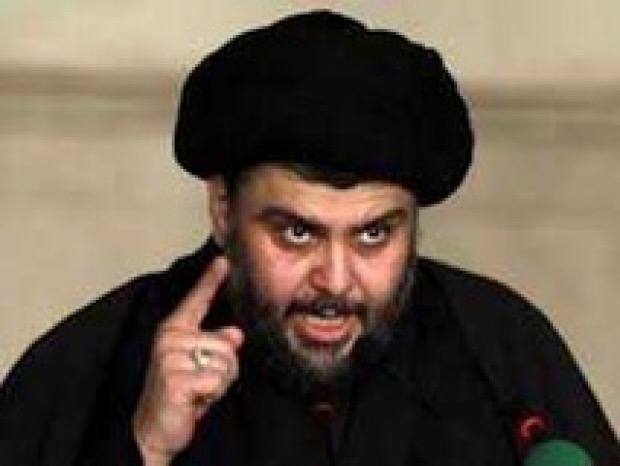
Hardline cleric Moqtada al-Sadr has always been nothing short of a star in Iraq — a true successor to his father, Mohammad Baqir al-Sadr, one of the leaders of the Dawa Party in its early days, who was assassinated by Saddam Hussein’s regime in late 1990s and celebrated as a martyr by Iraqi Shi’ites.
“He is a very charismatic leader, possibly the only charismatic leader in the Iraqi political arena,” Dr. Ronen Zeidel from Center for Iraq Studies at the University of Haifa told Intelligencer Post. “He is infatuated with his power, his charisma, he is very much like Nasrallah (Hassan Nasrallah, leader of Shi’ite Lebanese group Hezbollah), almost like a stand-up comedian. He enjoys listening to his voice. He enjoys listening to his speeches and having people react to them.”

Sadr swiftly emerged in the post-Saddam era as a fierce opponent of occupation, organizing a powerful Mahdi Army militia that effectively fought both foreign forces and Sadr’s rivals in Iraq. His social services network, built by his father during the 1990s regime’s crackdown on Shi’ites, further elevated his popularity among the Shi’ite lower classes. Some even argue that it was soft power, rather than militias – that embedded Sadr, and even Iranian influence, so deeply into Iraqi society.
“What Iraqi Shi’ite sectarian leaders and parties prioritized was the ability to dispense patronage, a core component of a strategy long employed by Lebanese Hezbollah and encouraged by their Iranian advisors,” resident scholar at American Enterprise Institute Michael Rubin wrote. “Firebrand cleric Muqtada al-Sadr… placed his followers in the health ministry… By controlling hospitals and clinics, Sadr could either use services to expand his influence among ordinary people or simply employ his followers in a personnel-rich bureaucracy.”
However, none of Sadr’s allies should feel too comfortable. Despite owing much to Iran and even spending a few years in self-imposed exile in Tehran, Sadr proved himself to be a savvy political player who can easily switch narratives, allegiances and goals to keep himself afloat. He bears a lot of responsibility for fueling a devastating sectarian conflict in Iraq in the name of Shi’ism, and ironically, at the moment, he is the voice behind de-militarization and de-sectarianization efforts.

Since 2011, his Mahdi Army was refurnished into a social services organization, which maintained its ability to swiftly revert back to battle-ready militias, as seen after 2014, when Sadr’s units became a crucial part of Hashd al-Sha’abi, also known as Popular Mobilization Forces (PMF), which fought Islamic State.
As the offensive against ISIS jihadists gets closer to its end, so do Sadr’s calls for dismantling PMF become louder. Numerous militias spawned under the predominantly Shi’ite PMF umbrella, under command of Qasem Soleimani from Iranian Revolutionary Guards Corps Quds force, could be a source of support for a powerful domestic rival, and more importantly, Iranian influence, something Sadr has been wary of for a while.
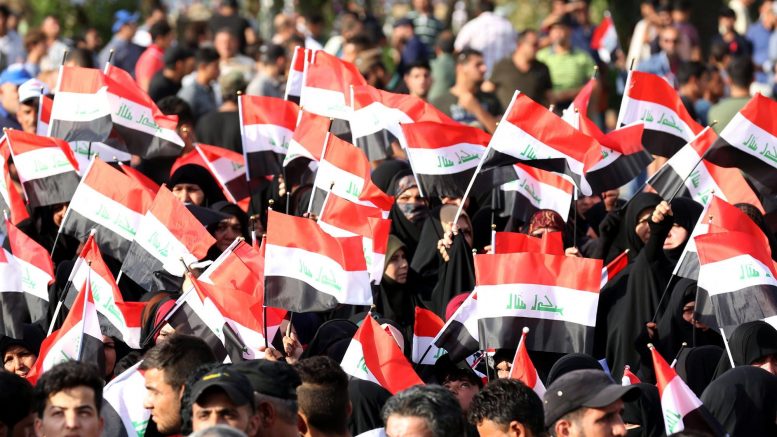
“He gave up on military involvement because he is already very strong in Baghdad and in the South, and he does not need any militias, because there is no conflict there. But if he tells people to go and demonstrate, they go out and demonstrate. He can send word of mouth and have hundreds of thousands of people come to the streets, right to the Green Zone, and even outside of its borders.” Ronen Zeidel says.

“He wants to be involved in social, economic and political issues, and he gambles on his political influence to fight the problems within the existing political oligarchy. He gambles on demonstrations and civil protests.”
Having a knack for feeling the shifting currents in a society exhausted by almost two decades of perpetual conflict, Sadr also has a knack for picking the right allies, be it in Tehran or Riyadh. In July and August, he embarked on a tour in Saudi Arabia and the United Arab Emirates, which was unequivocally seen as a push to minimize Iran’s influence in Iraq and the region. The visits were rather fruitful. After Sadr’s meeting with Saudi Arabia’s Crown Prince Mohammed bin Salman, Riyadh decided to donate $10 million to help displaced Iraqis and announced possible investments and the opening of a consulate in Iraq’s holy Shi’ite city of Najaf.

Thus, Sadr came full-circle, siding with some of his former enemies’ patrons and supporting a pro-Western candidate in al-Abadi. But is he a voice of reform?
“In the long run, Sadr and his organization are ill-equipped to engage in the business of governance; they lack the capacity to translate mobilization into public policy, and ultimately are part of the problems that plague Iraq,” a fellow at the Brookings Doha Center Ranj Alaaldin wrote. “Through the sheer pressure of mobilizing the masses, the Sadrist movement could, nevertheless, engineer the space that allows for a culture of accountability to emerge, which Iraq’s reformist actors could then capitalize on, with the necessary support from the region and the international community.”
However, one should not put too much stock into this optimistic view. After all, one could argue whether Sadr’s changes of heart and policies come from his pragmatic approach towards the greater good of Iraqi society or building his own power. At the moment, Sadr’s grand ego seems content right where he is, but who is to say that won’t change in a few years, when some other reformists’ grand ego starts to surpass his?

Iranian Influence as a Double-Edged Sword

Sadr successfully reinvented his public persona by distancing himself for Tehran, and some other influential politicians might follow his suite. This brings the conversation to the question one cannot escape when discussing Shi’ite politics — the matter of Iranian influence. Many easily fall into a trap of portraying Iraqi Shi’ism as some sort of extension of Iranian ideology and crown proof of Tehran’s overwhelming influence in the country. The truth is far from that sweeping generalization.
“There is a big difference between Iranian and Iraqi Shi’ism, to start from theoretical basis. Islamic Republic in Iran’s ideology is heavily embedded in the involvement of clergymen in politics and the judiciary system. The Iraqi clergy refrains from this and has generally rejected being involved in politics on this level,” Zeidel explains. “Ayatollah Sistani is the most powerful Shi’ite cleric, and he has never been a supporter of involvement in politics, let alone the idea that they bend to someone like Khamenei.”
This, however, does not mean that Iraqi Shi’ite leaders, often very pragmatic, have never worked with Iran, as seen from Sadr’s example. On the contrary, their past and present have often been closely intertwined with Tehran, and another major Iraqi Shi’ite party has spent much of its existence defined by Iran.

For the Supreme Council for the Islamic Revolution in Iraq (SCIRI), close connections with Tehran served both as a blessing and a curse. It was founded during the bloody war between Iraq and Iran in the 1980s, sparked by Baghdad’s fear from greater Shi’ite insurgency in Iraq following the Iranian Islamic Revolution. SCIRI was based in Tehran and led by Iraqi Shi’ite cleric Mohammed Baqir al-Hakim. Following the usual pattern of Iranian patronage, SCIRI presided over Badr Corps, a militia trained by the Iranian Revolutionary Guard Corps, and also controlled a charity organization called the Shahid al-Mihrab Foundation.
Despite enjoying solid popularity and influence after 2003, SCIRI has never been able to shake off the burden of being a “foreign influence” in Iraq, where certain level of the national narrative has always managed to survive.
“SCIRI claims, with justification, that it was established and inspired in response to the Iraqi regime’s tyranny and crimes, but perceptions forged during the hard years of the Iran-Iraq war, in which the party and its Badr militia fought alongside Iranian forces, have been slow to change,” the International Crisis Group report concluded back in 2007.

SCIRI leadership was well aware of that, changing its name to the Islamic Supreme Council of Iraq in 2007 to exclude that pesky Iranian-sounding word “revolution.” But even after Abdulaziz’s son and successor, Ammar al-Hakim, further broke ties with Tehran after his father’s death, parting ways with its pro-Iranian Badr military wing and refashioning ISCI into a political option aimed at middle-class Shi’ite Iraqis, Iranian influence hindered.
“When the ISCI-led Muwatin parliamentary bloc was created in 2014, it included nearly 20 different groups, some with close links to Iran. One such group is the Movement for Jihad and Building… Hassan al-Sari, a parliamentarian who serves as the group’s secretary-general, formerly led the Hezbollah Movement in Iraq and was a member of SCIRI’s advisory council,” a researcher at the University of Maryland focused on Iran-backed Shi’ite proxy groups, Phillip Smith, wrote. “More recently, he has advocated an armed Iranian presence in Iraq and vociferously opposed U.S. operations against ISIS.”

But if ISCI could not shake off Iran, Ammar al-Hakim could shake off ISCI, and in July, he stepped down as the leader to form a new party, National Wisdom. It is not much of a stretch to suggest that al-Hakim, just like Sadr, accepted that he cannot court Sunni Iraqis with ISCI’s history, and that general mood towards Iran changed with a new U.S. administration. At the moment, a bet on new party, new faces and some distance from Tehran might be a lucky draw.
Following Hakim’s resignation, Iranian Supreme Leader Ayatollah Khamenei sent an envoy, Mahmoud Shahroudi, but Iraqi Ayatollah Al Sistani did not find the time to meet him, signaling which way the political currents in 2017 flow.
Iran is not going to accept the new reality — it is likely to engage it in the best way it can: through its well-organized and well-established soft power network.

“The extent of Iranian influence depends on the election’s outcome, but even if pro-Iranian al-Maliki wins, Iraq is not going to be Iran’s marionette, satellite state,” says Ronen Zeidel.
Ultimately, Shi’ite politicians decided to fix one mistake that plunged the country into prolonged internal conflict: they embraced the national narrative as a top priority. However, at this point, it is just that: a national narrative.
The road towards turning it into social reality is long and booby trapped with a legacy of rampant corruption, class differences and tribal affiliations. All of these simultaneously went off in the oil-rich southern city of Basra in recent weeks, where Shi’ite tribes are fighting over valuable land, while the governor and head of the regional council had to step down and flee, faced with corruption allegations. It sounds like a broken record of the past, but if Sadr and Hakim were ready to change their own song reserved for voters, friends and foes, one might hope they could also try and set this record straight.

Tuesday, September 12, 2017

The Antichrist's New Middle East (Revelation 13)


A new Middle East?
In this Middle East in flux, fundamental alliances are crumbling, old paths are being abandoned, political articles of faith questioned and new plots are taking shape. Emerging actors who don't like to play it safe are asserting their presence, and traditional powers are groping to find their way amid increasing difficulties.
The contours of some of these changes already manifested themselves in the crisis that erupted in June, between the United Arab Emirates (UAE), Saudi Arabia, Egypt and Bahrain on one hand, and Qatar on the other.
The crisis marked the demise of the role of regional institutions, such as the Gulf Cooperation Council and the Arab League, and their replacement by other, less formal and institutionalised groupings.
For instance, instead of its traditional reliance on the Arab League and the Organisation of Islamic Cooperation, Saudi Arabia has preferred to work within the so-called Arab Alliance in Yemen, and the Quartet in regional politics. If this trend continues - which seems likely - long-standing institutions run the risk of descending into total irrelevance.
In Gaza, an unanticipated political warming of relations between Hamas and its erstwhile bitter rival, Fatah's former security honcho Mohamed Dahlan, has been in the making for months. It has been widely speculated that Dahlan will return from his exile in the UAE to become prime minister of Gaza, while Hamas will retain its control of the security portfolio, and Egypt will reopen the Rafah Crossing.
Obviously, this step is taken in open defiance of Fatah and Palestinian President Mahmoud Abbas, with whom Dahlan has been at loggerheads for many years.
If finalised, the new arrangement - mediated by Egypt, financed by the UAE and indirectly backed by the United States - would significantly reshape Palestinian politics.
It would reinforce the current division between Gaza and the West Bank, and undermine the influence of Abbas over Palestinian political and armed factions. It would also subject solid regional alliances to a drastic reconfiguration. News of the plan has already drawn the ire of Abbas and strained Cairo's longstanding relations with Fatah.
Yet the most striking outcome of this deal is that it may turn the cautious rapprochement between Hamas and Egypt into a substantial alliance, an unthinkable development in light of the antagonism and mistrust that have governed their relations over the past decades.
Hamas has already tightened its control of the Egypt border, and organised a huge rally to declare its support for the Egyptian army in its war against "terrorism". In return, Cairo has, as scholar Michele Dunne explained, "abandoned earlier efforts to isolate or crush Hamas", the Palestinian offshoot of its domestic nemesis, the Muslim Brotherhood.
Meanwhile, another political storm may be brewing in the heart of the Arab world. A solution for the Palestinian question - the "ultimate deal" in the words of Donald Trump, or the "deal of the century" as the Egyptian President Abdel-Fattah al-Sisi dubbed it - has slowly come to the surface.
The deal has apparently gained currency in Washington and Arab capitals in recent months.
US and Middle Eastern leaders have not explained what exactly is meant by these terms, and whether they describe a workable short-term framework agreement or just a distant long-term objective.
However, media reports indicate that the plan offers a formula to solve the Palestinian-Israeli conflict that involves the entire Arab world, and imply that it would radically transform both Middle Eastern politics and geography.
According to reports, the vision includes the establishment of a Palestinian state in Gaza, which would include parts of northern Sinai, and would accommodate Palestinian refugees. Israel would in return concede parts of its territory to Egypt.
Full normalisation between Israel and Arab states would ensue, which might pave the way for the formation of an Israel-Sunni Arab coalition against Iran.
The time-honoured norms of Arab politics are also slowly changing. Most Arab states no longer pay deference, or even lip service, to the ideals of pan-Arabism or Islamism, which have consistently been seen as sources of domestic legitimacy.
For decades following the inception of the modern Arab state system, Arab regimes used to agitate for Arab unity, and protest over the plight of the Palestinians and the wellbeing of the Islamic Ummah. But now they make no effort to hide that realpolitik, not ideology, has become a fact of life in Arab politics.
Saudi Arabia, for one, has to a large extent relinquished its historic role as a leading "Muslim" country as the guardian of the Muslim holy shrines. It is now wagering on military might, rather than Muslim diplomacy. That's not entirely a surprise in light of Riyadh's relentless bombing of a fellow Muslim country, Yemen, and its alleged endeavours to develop ties with Israel - both taboos in the eyes of Arab
people.
Other crucial developments include a possible rapprochement between two of the region's leading powers: Iran and Saudi Arabia. Indications of a possible thaw in relations include a handshake between the foreign ministers of the two countries in Istanbul, a rare visit by Iraq's Shia cleric Muqtada al-Sadr to Saudi Arabia and a plan to exchange diplomatic visits after the end of the Hajj season.
In the shifting sands of the Levant, the Islamic State group is losing territory and influence; the balance of power is tipping in favour of the Syrian regime of Bashar al-Assad who is clawing back territory from the rebels; and a referendum for the independence of Kurdistan is slated for September 25.
The implications of these developments for the international relations of the Middle East are still not entirely clear, but are likely to be extremely significant. Assad's victory will likely embolden Arab autocrats and undermine the already meagre prospects of democratic transition in their countries.
The rise of an independent Kurdistan in Iraq will encourage separatist Kurds in Turkey to follow suit, and may ignite a new civil war in Iraq for the control of the oil-rich city of Kirkuk. The "deal of the century" would, meanwhile, put an end to the 70-year-old Arab-Israeli conflict.
A shift in regional alliances would likely breed a change in the region's balance of power, disrupt the pecking order of the Arab state system and, perhaps even trigger the birth of an entirely new regional order.
Domestically, meanwhile, a world of difference still exists between the expectations of Arab people and the foreign policies of their states. Legitimacy deficits persist, patience is wearing thin and instability remains the order of the day.
Nael Shama is a political researcher and writer who is specialised in Middle East politics.
Opinions expressed in this article remain those of the authors and do not necessarily represent those of The New Arab, al-Araby al-Jadeed, its editorial board or staff.

Sunday, September 10, 2017

Antichrist Restructures His Men (Revelation 13)


Iraq's Shiite cleric promises to dissolve military wing after IS full defeat
BAGHDAD, Sept. 7 (Xinhua) -- Iraq's firebrand Shiite cleric Moqtada al-Sadr on Thursday announced that he will dissolve his military wing after full defeat of the Islamic State (IS) in Iraq.
A statement issued by Sadr urged the militants loyal to the Shiite cleric known as Saraya al-Salam, or Peace Companies militia, to join the government security forces and the government-run paramilitary Hashd Shaabi units.
The statement also said Sadr will block many branches of his private offices across Iraq, and maintain only one of his religious offices in the holy Shiite city of Najaf in central Iraq.
Sadr will also keep his loyal demonstrations committees, which have been leading the protests against the wide-spread government corruption in the country.
Moreover, the Shiite cleric decided to activate peaceful protests before Iraq's general elections in 2018.
Sadr's militia is a reformation of the previous militia Mahdi Army, which he led during the U.S. occupation of Iraq and the subsequent sectarian strife in the years after 2003.
Sadr announced the formation of Peace Companies to protect Shiite shrines from IS militants following the June 10, 2014 blitzkrieg when the group seized large swathes of territories in predominantly Sunni provinces in northern and western Iraq.

Saturday, September 9, 2017

Antichrist Restructures His Men (Revelation 13)


Iraq’s Shiite cleric promises to dissolve military wing after IS full defeat
BAGHDAD, Sept. 7 (Xinhua) — Iraq’s firebrand Shiite cleric Moqtada al-Sadr on Thursday announced that he will dissolve his military wing after full defeat of the Islamic State (IS) in Iraq.
A statement issued by Sadr urged the militants loyal to the Shiite cleric known as Saraya al-Salam, or Peace Companies militia, to join the government security forces and the government-run paramilitary Hashd Shaabi units.
The statement also said Sadr will block many branches of his private offices across Iraq, and maintain only one of his religious offices in the holy Shiite city of Najaf in central Iraq.
Sadr will also keep his loyal demonstrations committees, which have been leading the protests against the wide-spread government corruption in the country.
Moreover, the Shiite cleric decided to activate peaceful protests before Iraq’s general elections in 2018.
Sadr’s militia is a reformation of the previous militia Mahdi Army, which he led during the U.S. occupation of Iraq and the subsequent sectarian strife in the years after 2003.
Sadr announced the formation of Peace Companies to protect Shiite shrines from IS militants following the June 10, 2014 blitzkrieg when the group seized large swathes of territories in predominantly Sunni provinces in northern and western Iraq.