Monday, May 25, 2026

The History Of New York Earthquakes: Before The Sixth Seal (Rev 6:12)


Historic Earthquakes
Near New York City, New York
1884 08 10 19:07 UTC
Magnitude 5.5
Intensity VII
USGS.gov
This severe earthquake affected an area roughly extending along the Atlantic Coast from southern Maine to central Virginia and westward to Cleveland, Ohio. Chimneys were knocked down and walls were cracked in several States, including Connecticut, New Jersey, New York, and Pennsylvania. Many towns from Hartford, Connecticut, to West Chester,Pennsylvania.
Property damage was severe at Amityville and Jamaica, New York, where several chimneys were “overturned” and large cracks formed in walls. Two chimneys were thrown down and bricks were shaken from other chimneys at Stratford (Fairfield County), Conn.; water in the Housatonic River was agitated violently. At Bloomfield, N.J., and Chester, Pa., several chimneys were downed and crockery was broken. Chimneys also were damaged at Mount Vernon, N.Y., and Allentown, Easton, and Philadelphia, Pa. Three shocks occurred, the second of which was most violent. This earthquake also was reported felt in Vermont, Virginia, and Washington, D.C. Several slight aftershocks were reported on August 11.
Teilen mit:
TwitterFacebook

History Says Expect The Sixth Seal In New York (Revelation 6:12)

               image-8


According to the New York Daily News, Lynn Skyes, lead author of a recent study by seismologists at the Lamont-Doherty Earth Observatory adds that a magnitude-6 quake hits the area about every 670 years, and magnitude-7 every 3,400 years.
A 5.2-magnitude quake shook New York City in 1737 and another of the same severity hit in 1884.
Tremors were felt from Maine to Virginia.
There are several fault lines in the metro area, including one along Manhattan’s 125th St. – which may have generated two small tremors in 1981 and may have been the source of the major 1737 earthquake, says Armbruster.
“The problem here comes from many subtle faults,” explained Skyes after the study was published.
He adds: “We now see there is earthquake activity on them. Each one is small, but when you add them up, they are probably more dangerous than we thought.”
Armbruster says a 5.0-magnitude earthquake today likely would result in casualties and hundreds of millions of dollars in damage.
“I would expect some people to be killed,” he notes.
The scope and scale of damage would multiply exponentially with each additional tick on the Richter scale. (ANI)

Sunday, May 24, 2026

New York is America’s Next Major Quake

 America’s Next Big Quake

Doug Fabrizio
The devastation wrought in Mexico City by a recent massive earthquake may have rattled more than a few nerves along the Wasatch Front. Salt Lake City is, of course, overdue for a significant seismic event. So are other places in the United States, such as Los Angeles, the Pacific Northwest, even New York City. In a new book, science writer Kathryn Miles tours the country in search of the latest research on America’s next big earthquake and what’s being done to address the threat. She joins us Wednesday to talk about it.
Kathryn Miles is the author of several books, including her newest, Quakeland: On the Road to America’s Next Devastating Earthquake [Independent bookstores|Amazon|Audible].
Learn more about predicting earthquakes in Utah and how well the state’s buildings could stand-up to a great shake from KUER’s news team.

A Closer Look At the Sixth Seal of NYC

img_2674LOOK AT NEW YORK CITY’S EARTHQUAKE RISKS
By Spectrum News NY1 | April 2, 2018 @4:32 PM
Not every New Yorker felt when the ground shook on August 23, 2011.
When a magnitude 5.8 earthquake cracked the soil near Mineral, Virginia that day, the energy traveled through the Northeast.
Some New Yorkers watched their homes tremor, while others felt nothing.
Researchers say New York City is due for a significant earthquake originating near the five boroughs, based on previous smaller earthquakes in and around the city. While New York is at moderate risk for earthquakes, its high population and infrastructure could lead to significant damage when a magnitude 5 quake or stronger hits the area.
Unbeknownst to many, there are numerous fault lines in the city, but a few stand out for their size and prominence: the 125th Street Fault, the Dyckman Street Fault, the Mosholu Parkway Fault, and the East River Fault.
The 125th Street Fault is the largest, running along the street, extending from New Jersey to the East River. Part of it runs to the northern tip of Central Park, while a portion extends into Roosevelt Island.
The Dyckman Street Fault is located in Inwood, crossing the Harlem River and into Morris Heights, while the Mosholu Parkway Fault is north of the Dyckman Street and 125th Street Faults.
The East River Fault looks a bit like an obtuse angle, with its top portion running parallel, to the west of Central Park, before taking a horizontal turn near 32nd St. and extending into the East River and stopping short of Brooklyn.
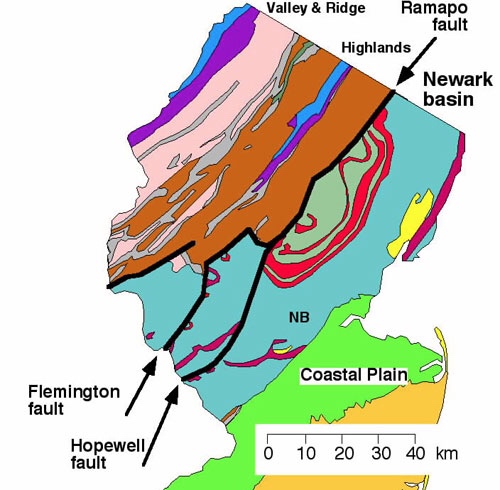
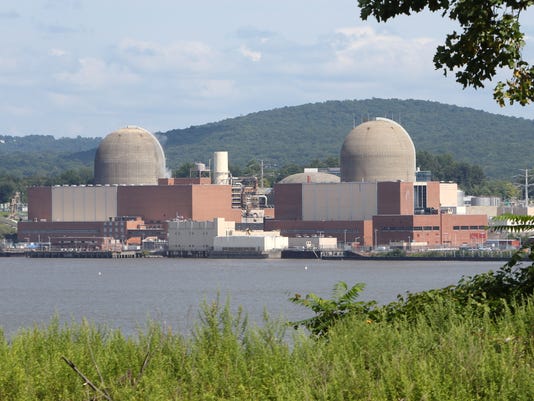
Just outside of the city is the Dobbs Ferry Fault, located in suburban Westchester; and the Ramapo Fault, running from eastern Pennsylvania to the mid-Hudson Valley, passing within a few miles northwest of the Indian Point Nuclear Plant, less than 40 miles north of the city and astride the intersection of two active seismic zones.
The locations of faults and the prevalence of earthquakes is generally not a concern for most New Yorkers. One reason might be that perceptions of weaker earthquakes vary widely.
On Nov. 30, a magnitude 4.1 earthquake, centered near Dover, Delaware, could be felt in nearby states. Less than 200 miles away in New York City, some people reported on social media that they felt their houses and apartments shaking. At the same time, some New Yorkers, again, did not feel anything:
Won-Young Kim is a senior research scientist at Columbia University’s Lamont-Doherty Earth Observatory, which monitors and records data on earthquakes that occur in the northeast. Kim says it’s not clear who feels smaller earthquakes, as evident by a magnitude 0.8 quake in the city in December of 2004.
“Hundreds of people called local police, and police called us. Our system was unable to detect that tiny earthquake automatically,” Kim said. “We looked at it, and, indeed, there was a small signal.”
Kim says some parts of the city will feel magnitude 1 or 2 earthquakes even if the seismic activity does not result in any damage.
You have to go back to before the 20th Century, however, to find the last significant earthquake that hit the city. According to Lamont-Doherty researchers, magnitude 5.2 earthquakes occurred in 1737 and 1884. In newspaper accounts, New Yorkers described chimneys falling down and feeling the ground shake underneath them.
“1737 — that was located close to Manhattan,” Kim said. “It was very close to New York City.”
According to Kim, the 1884 quake was felt in areas in or close to the city, such as the Rockaways and Sandy Hook, New Jersey. But it was felt even as far away as Virginia and Maine.
From 1677 to 2007, there were 383 known earthquakes in a 15,000-square-mile area around New York City, researchers at Lamont-Doherty said in a 2008 study.
A 4.9 located in North Central New Jersey was felt in the city in 1783; a 4 hit Ardsley in 1985; and in 2001, magnitude 2.4 and 2.6 quakes were detected in Manhattan itself for the first time.
But the 1737 and 1884 quakes remain the only known ones of at least magnitude 5 to hit the city.
Smaller earthquakes are not to be ignored. Lamont-Doherty researchers say frequent small quakes occur in predictable ratios to larger ones and thus can be used — along with the fault lengths, detected tremors and calculations of how stress builds in the crust — to create a rough time scale.
The takeaway? New York City is due for a significant earthquake.
Researchers say New York City is susceptible to at least a magnitude 5 earthquake once every 100 years, a 6 about every 670 years, and 7 about every 3,400 years.
It’s been 134 years since New York was last hit by at least a magnitude 5. When it happens next, researchers say it won’t be much like 1884.
The city’s earthquake hazard is moderate, according to the New York City Area Consortium for Earthquake Loss Mitigation (NYCEM), but experts agree that, due to its higher population and infrastructure, the damage would be significant.
Before 1995, earthquake risks were not taken into consideration for the city’s building code. Thus, Lamont-Doherty says many older buildings, such as unenforced three- to six-story buildings, could suffer major damage or crumble.
The damage an earthquake causes is also dependent on what’s in the ground. According to the U.S. Geological Survey, bedrock is more resistant to earthquakes than sediment.
The upper third of Manhattan has harder soil that is more resistant to shaking. Parts of Midtown are more susceptible, while Downtown Manhattan’s soil is even softer, according to the NYCEM.
Exceptions to Upper Manhattan’s strength? Portions of Harlem and Inwood — both areas consist of a large amount of soft soil. Central Park has the strongest soil in Manhattan, outside of a small segment of Inwood..
Not all boroughs are created equal. While the Bronx is also made of solid bedrock, the ground in Queens and Brooklyn is softer.
“If you go to Queens and Brooklyn, you have sediment, so there would be more shaking relative to Manhattan,” Kim said. “So, it’s not easy to say the damage would be the same.”
Analysis pins the damage from a magnitude 5 earthquake hitting New York City in the billions, according to Lamont-Doherty.
New York City is not a hotbed for seismic activity; it is not close to a tectonic plate, and it is not clear if one of the faults would be the source of a strong quake. But the predicted damage to the city has concerned many experts.
Until that day, earthquakes are isolated events for New Yorkers. Some have felt the ground move, while others have only felt shaking when subway cars travel underground.
But researchers agree: One day, the ground will wake up in the city that never sleeps, and all New Yorkers will understand what Mineral, Virginia felt when their homes rattled with the earth.

Saturday, May 23, 2026

The Sixth Seal by Nostradamus (Revelation 6:12)


The Sixth Seal by Nostradamus
To Andrew the Prophet
Completed February 5, 2008
Nostradamus and the New City
Les Propheties
(Century 1 Quatrain 27)
Michel de Nostredame Earth-shaking fire from the center of the earth.Will cause the towers around the New City to shake,Two great rocks for a long time will make war, And then Arethusa will color a new river red.(And then areth USA will color a new river red.) Earth-shaking fire from the center of the earth.Will cause the towers around the New City to shake,Two great rocks for a long time will make war
There is recent scientific evidence from drill core sampling in Manhattan, that the southern peninsula is overlapped by several tectonic plates. Drill core sampling has been taken from regions south of Canal Street including the Trade Towers’ site. Of particular concern is that similar core samples have been found across the East River in Brooklyn. There are also multiple fault lines along Manhattan correlating with north-northwest and northwest trending neo-tectonic activity. And as recently as January and October of 2001, New York City has sustained earthquakes along these plates. For there are “two great rocks” or tectonic plates that shear across Manhattan in a northwestern pattern. And these plates “for a longtime will make war”, for they have been shearing against one other for millions of years. And on January 3 of 2010, when they makewar with each other one last time, the sixth seal shall be opened, and all will know that the end is near.
And then Arethusa will color a new river red.
Arethusa is a Greek mythological figure, a beautiful huntress and afollower of the goddess Artemis. And like Artemis, Arethusa would have nothing to do with me; rather she loved to run and hunt in the forest. But one day after an exhausting hunt, she came to a clear crystal stream and went in it to take a swim. She felt something from beneath her, and frightened she scampered out of the water. A voice came from the water, “Why are you leaving fair maiden?” She ran into the forest to escape, for the voice was from Alpheus, the god of the river. For he had fallen in love with her and became a human to give chase after her. Arethusa in exhaustion called out to Artemis for help, and the goddess hid her by changing her into a spring.But not into an ordinary spring, but an underground channel that traveled under the ocean from Greece to Sicily. But Alpheus being the god of the river, converted back into water and plunged downthe same channel after Arethusa. And thus Arethusa was captured by Artemis, and their waters would mingle together forever. And of great concern is that core samples found in train tunnels beneath the Hudson River are identical to those taken from southern Manhattan. Furthermore, several fault lines from the 2001 earthquakes were discovered in the Queen’s Tunnel Complex, NYC Water Tunnel #3. And a few years ago, a map of Manhattan drawn up in 1874 was discovered, showing a maze of underground waterways and lakes. For Manhattan was once a marshland and labyrinth of underground streams. Thus when the sixth seal is broken, the subways of the New City shall be flooded be Arethusa:the waters from the underground streams and the waters from the sea. And Arethusa shall be broken into two. And then Arethusa will color a new river red.
And then areth USA will color a new river red.
For Arethusa broken into two is areth USA. For areth (αρετη) is the Greek word for values. But the values of the USA are not based on morality, but on materialism and on wealth. Thus when the sixth seal is opened, Wall Street and our economy shall crash and “arethUSA”, the values of our economy shall fall “into the red.” “Then the kings of the earth and the great men and the commanders and the rich and the strong and every slave and free man hid themselves in the caves and among the rocks of the mountains; and they said to the mountains and to the rocks, ‘Fall on us and hide us from the presence of Him who sits on the throne, and from the wrath of the Lamb; for the great day of their wrath has come, and who is able to stand?’” (Revelation 6:15-17)

Wednesday, May 20, 2026

A Closer Look At The Sixth Seal in NYC

A Look at the Tri-State’s Active Fault Line
Monday, March 14, 2011
By Bob Hennelly
The Ramapo Fault is the longest fault in the Northeast that occasionally makes local headlines when minor tremors cause rock the Tri-State region. It begins in Pennsylvania, crosses the Delaware River and continues through Hunterdon, Somerset, Morris, Passaic and Bergen counties before crossing the Hudson River near Indian Point nuclear facility.
In the past, it has generated occasional activity that generated a 2.6 magnitude quake in New Jersey’s Peakpack/Gladstone area and 3.0 magnitude quake in Mendham.
But the New Jersey-New York region is relatively seismically stable according to Dr. Dave Robinson, Professor of Geography at Rutgers. Although it does have activity.
“There is occasional seismic activity in New Jersey,” said Robinson. “There have been a few quakes locally that have been felt and done a little bit of damage over the time since colonial settlement — some chimneys knocked down in Manhattan with a quake back in the 18th century, but nothing of a significant magnitude.”
Robinson said the Ramapo has on occasion registered a measurable quake but has not caused damage: “The Ramapo fault is associated with geological activities back 200 million years ago, but it’s still a little creaky now and again,” he said.
“More recently, in the 1970s and early 1980s, earthquake risk along the Ramapo Fault received attention because of its proximity to Indian Point,” according to the New Jersey Geological Survey website.
Historically, critics of the Indian Point Nuclear facility in Westchester County, New York, did cite its proximity to the Ramapo fault line as a significant risk.
In 1884, according to the New Jersey Geological Survey website, the  Rampao Fault was blamed for a 5.5 quake that toppled chimneys in New York City and New Jersey that was felt from Maine to Virginia.
“Subsequent investigations have shown the 1884 Earthquake epicenter was actually located in Brooklyn, New York, at least 25 miles from the Ramapo Fault,” according to the New Jersey Geological Survey website.

Errors Leading to the Sixth Seal in NYC


Indian Point


 Independent pipeline study needed


Riverkeeper has joined calls for an independent study to assess the risk to the Indian Point nuclear power plant from the Algonquin pipeline expansion.
Riverkeeper’s letter to the Federal Energy Regulatory Commission echoed an assessment made by Accufacts, a public records research company that called Entergy’s analysis “seriously incomplete, even dismissive.”
On Tuesday Entergy defended its safety study.
“Entergy places plant and community safety first and foremost and is required by federal regulation to analyze new potential safety impacts, such as potential impacts of the proposed AIM pipeline project,” Entergy spokesman Jerry Nappi wrote in an email. “Entergy engineers spent hundreds of hours analyzing data provided by Spectra Energy and concluded the project, if built, would pose no increased risks to safety at the plant. Experts at the Nuclear Regulatory Commission conducted their own independent analysis and reached the same conclusion. Entergy takes no position on the pipeline project itself.”
Spectra Energy needs New York and federal permits to expand a pipeline that runs through Putnam, Rockland and Westchester counties. More than 15 miles of the pipeline would be dug up in New York.
The state Department of Environmental Conservation will hold public hearings this week on the pipeline expansion.
The Jan. 21 meeting at 6 p.m. will be held in the auditorium of the Henry H. Wells Middle School, 570 Route 312, Brewster. The 6 p.m. hearing on Jan. 22 at the Stony Point Community Center, 5 Clubhouse Lane, Stony Point.
Twitter: @ErnieJourno