Showing posts with label nuclear plant. Show all posts

Saturday, November 10, 2018

Indian Point is NOT radiologically ready for the Sixth Seal


Recent series of Indian Point shutdowns worst in years
Ernie Garcia, elgarcia@lohud.com
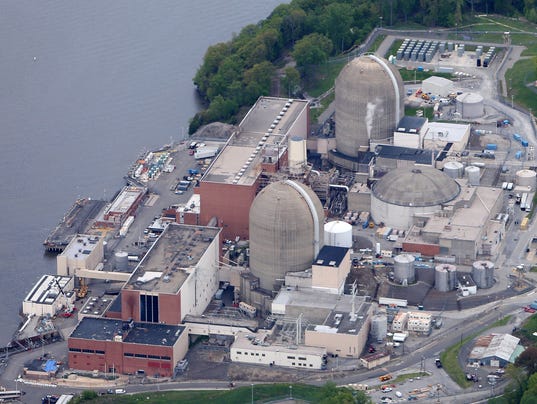
BUCHANAN — Four unplanned reactor shutdowns over a two-month period at Indian Point are the most setbacks the nuclear power plant has experienced in years.
A review of unplanned shutdowns from January 2012 to the present showed this year’s events happened within a short time frame, between May 7 and July 8, in contrast with events from other years that were more spread out, according to data released by Indian Point.
So many mishaps at the Entergy-owned plant haven’t occurred since 2009, when one of two units at the Buchanan site experienced a similar series, said plant spokesman Jerry Nappi.
Besides a May 9 transformer failure that spilled some 3,000 gallons of oil into the Hudson River, this year’s shutdowns were prompted by a May 7 steam leak, a July 8 pump motor failure and a June 15 switch yard breaker failure offsite in a Consolidated Edison substation.
If a nuclear plant has more than three unplanned shutdowns in a nine-month period, its performance indicator could be changed by the federal Nuclear Regulatory Commission, which results in additional oversight. That’s what happened with Entergy’s Pilgrim Nuclear Power Station in Plymouth, Mass., after four unplanned shutdowns in 2013.
So far, Entergy said there doesn’t appear to be a pattern to the Indian Point shutdowns.
“You do want to look at these events holistically to see if there is something in common, but you also look individually to see what the causes were,” Nappi said. “A plant shutdown in and of itself is not a safety issue.”
One of the four recent Buchanan shutdowns triggered a special inspection by the NRC and calls to close the nuclear plant by environmental groups and elected officials. Gov. Andrew Cuomo has said in the past Indian Point should close, but his office did not respond to a request for comment about whether the recent shutdowns have prompted any state scrutiny.
The NRC is expected to release a quarterly report on Indian Point this month that will address the transformer failure and, by year’s end, is planning an inspection of the transformer and an analysis of transformer issues since 2007.
Besides its transformer-related inquiries, the other three shutdowns have not raised “any immediate safety concerns or crossed any thresholds that would result in additional NRC oversight,” agency spokesman Neil Sheehan wrote in an email.
The unplanned shutdowns at Indian Point and Pilgrim in Massachusetts were mostly preventable, said Paul Blanch, a former Indian Point employee with 45 years of nuclear power experience.
“For this to happen this frequently indicates a deeper problem,” he said. “I believe it’s management oversight in the maintenance of these plants.”
Nappi said the transformer that failed May 9 and caused a fire and oil spill into the Hudson was regularly monitored. Investigators determined the failure was due to faulty insulation.
“The transformer inspection and reviews were in accordance with our standards and industry expectations, yet there was no indication the transformer was going to fail,” Nappi said.
The NRC conducted a separate, but related special inspection into the May 9 incident that focused on a half-inch of water that collected in an electrical switchgear room floor. Inspectors determined a fire suppression system’s valve failed to close properly.
Inspectors noted in their report that Entergy knew about that problem since April 2011 and replaced the valve but didn’t discover the actual cause — a dysfunctional switch — until after the fire.
Indian Point’s Unit 3 was down 19 days May through July, with the transformer failure accounting for 16 days. The shutdowns didn’t cause the public any supply problems because New York’s grid can import electricity from other states and New York has an energy plan to maintain reliability, according to the U.S. Energy Information Administration.
The nuclear energy industry judges a power plant on how continuously it produces energy, which is called a capacity factor.
There were 100 nuclear plants in the United States in 2014, a record year in terms of efficiency. In January, the Nuclear Energy Institute announced the U.S. average capacity factor was 91.9 percent.
Indian Point has an above-average efficiency rate. The plant’s Unit 2 and 3 reactors were each online more than 99 percent of the time during their most recent two-year operating cycles. They are currently in the middle of other cycles.

Tuesday, November 6, 2018

Testing Indian Point Before the Sixth Seal (Revelation 6:12)

image-1351Siren testing for Indian Point Wednesday morning

Thomas C. Zambito, Rockland/Westchester Journal News
 Published 11:55 a.m. ET Oct. 30, 2018 | Updated 6:27 a.m. ET Oct. 31, 2018
Dennis Malles, of Malles Auto Body in Montrose and the Montrose Business Association, talks about the future of local businesses after the closure of the nearby Indian Point Energy Center nuclear power plant. Peter Carr/lohud
Indian Point will be testing its emergency evacuation sirens between 10:30 and 11 a.m. Wednesday.
Sirens in Dutchess, Orange, Putnam, Rockland and Westchester counties will sound at full volume for four minutes.
“Sirens are not a signal to evacuate,” Indian Point’s owner, Entergy, said in a statement.
In a real-life emergency, sirens are used to alert residents to tune into local radio or television stations for further information.\
A list of the stations can be found hereon the nuclear power plant’s website. Stations are also listed in the emergency planning booklet mailed to homes and businesses within a 10-mile radius of the Buchanan plant.
During a February test last year, two of the 172 sirens in the Lower Hudson Valley — one in Rockland, the other in Putnam — failed to sound. Those issues have been resolved, officials said.
Entergy plans to shut down its two working reactors at Indian Point in 2020 and 2021 as part of a 2017 agreement reached with the state.
Read or Share this story: https://www.lohud.com/story/news/2018/10/30/siren-testing-indian-point-wednesday/1817524002/

Friday, November 2, 2018

Closing Indian Point is Too Late (Revelation 6:12)

image-1351Closing Indian Point is good
Posted October 14, 2018
To the editor:
(re: “Reforming energy vision,” Sept. 27)
In her Sept. 27 letter, Phoebe O’Connor claims that closing the Indian Point nuclear power plant would change our ability to provide reliable, clean power to downstate New York. But this claim is full of holes.
Let’s start with some actual numbers about power supply and demand. The figures supplied by the New York Independent System Operator, the non-profit which runs New York’s electrical grid, show that we’ll have enough energy thanks to reduced demand and increased renewable capacity, to replace Indian Point.
First, a December report by NYISO found that we already have replacement supplies for 1,900 out of Indian Point’s 2,000-megawatt output, and that further buildout of renewables and efficiency measures could meet the remaining 100-megawatt “compensatory need.” Several months later, NYISO released its April Gold Book, with updated numbers showing that continuing reductions in demand mean that there is now, officially, no projected power gap in connection with the closure of Indian Point.
To illustrate, NYISO’s Gold Book forecast for “peak” demand in downstate New York during Summer 2020 plummeted by 380 megawatts, compared to the forecast for that same 2020 time period just one year earlier. Plus, we’re not nearly done saving energy: The state’s commitment to ramp up energy efficiency-related demand reductions to 3 percent a year will strengthen the trends reported above, which are mirrored in countless other states.
And let’s not forget just how much Indian Point puts New Yorkers at risk. Over the past four years, Indian Point repeatedly suffered major malfunctions — pump and power failures, a transformer explosion, damaged O-rings, radiation leaks, a fire and an oil spill. Twice, this 45-year-old plant’s operations discovered a record number of failures in the bolts holding the inner walls of the reactors together.
Indian Point is just too old and too dangerous, and we have plenty of safe, sustainable energy to replace it. That’s why Indian Point’s stipulated closure in 2021 — under the agreement between its operator Entergy, the State of New York, and Riverkeeper, is the right move.
Cliff Weathers
The author is communications director for Riverkeepe

Sunday, October 28, 2018

Indian Point Tests Sirens Before the Sixth Seal (Revelation 6:12)


Indian Point Photo Credit: File
Indian Point Will Test Sirens On Halloween
Fear not, it's just a test, not a Halloween scare.
There will be a test of the Indian Point Energy Center sirens in Westchester, Rockland, Putnam and Orange counties during a regular test of the system. At approximately 10:30 a.m. on Wednesday, Oct. 31, officials will conduct the test, which will involve sounding the sirens at full-volume in the area.
Officials noted that, because this is a test, the public is not required to respond when they hear the siren.
“Please note that sirens are not a signal to evacuate,” Entergy stated. “In an actual emergency, the sirens would sound to alert the public to tune in to a local EAS radio or television station for important information and direction.”
According to the Stony Point Police Department, "this is only a test. If there was an emergency at the nuclear power plants, the sirens would be sounded continuously at full volume for 4 minutes, followed by an activation of the Emergency Alert System (EAS) on radio and television stations to broadcast important information and instructions. The sirens are not a signal to evacuate, rather they are intended to alert the public to tune to this or another EAS radio or TV station for important information. This siren sounding is only a test. No action by the public is necessary.

Friday, October 26, 2018

Too Little Too Late (Revelation 6:12)

Closing Indian Point is good
Posted October 14, 2018
To the editor:
(re: “Reforming energy vision,” Sept. 27)
In her Sept. 27 letter, Phoebe O’Connor claims that closing the Indian Point nuclear power plant would change our ability to provide reliable, clean power to downstate New York. But this claim is full of holes.
Let’s start with some actual numbers about power supply and demand. The figures supplied by the New York Independent System Operator, the non-profit which runs New York’s electrical grid, show that we’ll have enough energy thanks to reduced demand and increased renewable capacity, to replace Indian Point.
First, a December report by NYISO found that we already have replacement supplies for 1,900 out of Indian Point’s 2,000-megawatt output, and that further buildout of renewables and efficiency measures could meet the remaining 100-megawatt “compensatory need.” Several months later, NYISO released its April Gold Book, with updated numbers showing that continuing reductions in demand mean that there is now, officially, no projected power gap in connection with the closure of Indian Point.
To illustrate, NYISO’s Gold Book forecast for “peak” demand in downstate New York during Summer 2020 plummeted by 380 megawatts, compared to the forecast for that same 2020 time period just one year earlier. Plus, we’re not nearly done saving energy: The state’s commitment to ramp up energy efficiency-related demand reductions to 3 percent a year will strengthen the trends reported above, which are mirrored in countless other states.
And let’s not forget just how much Indian Point puts New Yorkers at risk. Over the past four years, Indian Point repeatedly suffered major malfunctions — pump and power failures, a transformer explosion, damaged O-rings, radiation leaks, a fire and an oil spill. Twice, this 45-year-old plant’s operations discovered a record number of failures in the bolts holding the inner walls of the reactors together.
Indian Point is just too old and too dangerous, and we have plenty of safe, sustainable energy to replace it. That’s why Indian Point’s stipulated closure in 2021 — under the agreement between its operator Entergy, the State of New York, and Riverkeeper, is the right move.
Cliff Weathers
The author is communications director for Riverkeeper.

Sunday, October 21, 2018

A Nuclear Disaster Awaits Indian Point Plant at the Sixth Seal

PIPELINEAIM gas pipeline opponents lose legal challenge, may appeal

Thomas C. Zambito, Rockland/Westchester Journal News
Gubernatorial candidate Cynthia Nixon spoke to students about their proximity to the Algonquin natural gas pipeline. She then shared her thoughts. Seth Harrison, sharriso@lohud.com

Opponents of the AIM pipeline expansion say they may refocus their legal challenges on the next phase of the project


While a federal appeals court has rejected a pivotal challenge to the expansion of a natural gas pipeline near the Indian Point nuclear power plant, opponents say they’re not done trying to get the courts to block the project.
The U.S. Court of Appeals for the District of Columbia, in a July 27 decision, sided with the Federal Energy Regulatory Commission (FERC) in turning back a legal challenge to the Algonquin Incremental Market (AIM) pipeline expansion.
The Hudson Valley environmental group Riverkeeper claimed the installation of 2,159 feet of natural gas pipeline across from Indian Point posed a serious threat to public safety, particularly if the pipeline ruptured.
Riverkeeper spokesman Cliff Weathers said a decision to appeal has not been made yet.
But Courtney Williams, who heads the grassroots group SAPE (Stop the Algonquin Pipeline Expansion), said the opposition may focus its future legal challenges on the next phase of the expansion, known as the Atlantic Bridge Project.
“We’re still in discussions with Riverkeeper to determine whether we will appeal this portion of the decision,” Williams said. “But the legal challenge to Atlantic Bridge is already underway.”
Another challenge coming
SAPE joined Riverkeeper, the City of Boston and others in challenging FERC’s decision-making process.
Opponents argued that FERC should have considered the environmental impacts of all three phases of the expansion, including the Atlantic Bridge Project, as one. But the appeals court sided with FERC. “We find no basis to set aside the Commission’s order on those grounds,” the appeals court wrote.
The Atlantic Bridge Project is an extension of the Algonquin pipeline that runs through Yorktown and Somers in northern Westchester before heading into Putnam County and Connecticut.
It is part of a $972 million expansion that will make it possible for the pipeline’s current owner, Enbridge Energy Partners, to deliver natural gas to New England from Pennsylvania, by way of a pipeline that cuts through New Jersey and New York.
The project has impacted several Hudson Valley towns in Putnam, Rockland and Westchester counties and touched off a number of public demonstrations. In 2016, several protesters were arrested after locking themselves inside a section of pipeline in Verplanck while it was being readied to be installed under the Hudson River.
SAPE has staged protests outside Gov. Andrew Cuomo’s New Castle home, urging the governor to shut down the pipeline. And last month at a rally in Peekskill, Cynthia Nixon, Cuomo’s opponent in the September Democratic primary, accused the governor of moving too slowly to address the opposition's concerns.

In June, state officials sent a letter to FERC, urging the commission to re-evaluate its decision allowing the pipeline near Indian Point.
NRC signs off on plan
The appeals court ruling said FERC’s decision allowing the pipeline near Indian Point was supported by an analysis by the Nuclear Regulatory Commission (NRC), which the commission found "persuasive."
NRC’s review determined that Indian Point’s two reactors could safely operate or temporarily shut down if a gas line ruptured near the plant.
FERC’s 2015 ruling credited NRC’s expertise in assessing safety threats to nuclear facilities.
“We see no basis to reject the Commission’s to do so,” the appeals court wrote.
The NRC said it could re-evaluate its decision after Indian Point’s owner, Louisiana-based Entergy, submits a plan for how the plant will be dismantled. Entergy has plans to shut down the Buchanan plant by 2021.
Read or Share this story: https://www.lohud.com/story/news/investigations/2018/08/14/algonquin-gas-pipeline/978104002/

From The USA TODAY NETWORK

Friday, September 28, 2018

Preparing Futilely for the Sixth Seal (Revelation 6)


Studying the evacuation zone map around the reactors
Indian Point drill conducted
CARMEL – It was only a drill, but for eight hours Tuesday more than 100 volunteers and employees of Putnam County participated in a disaster exercise relating to an emergency response at the Indian Point nuclear power plant in Buchanan.
Putnam joined its neighbors in Westchester, Orange and Rockland counties for the drill that was monitored by both officials from the Federal Emergency Management Agency and the State Office of Emergency Management.
The scenario centered on an explosion at the plant and release of radiation that headed north towards Putnam.
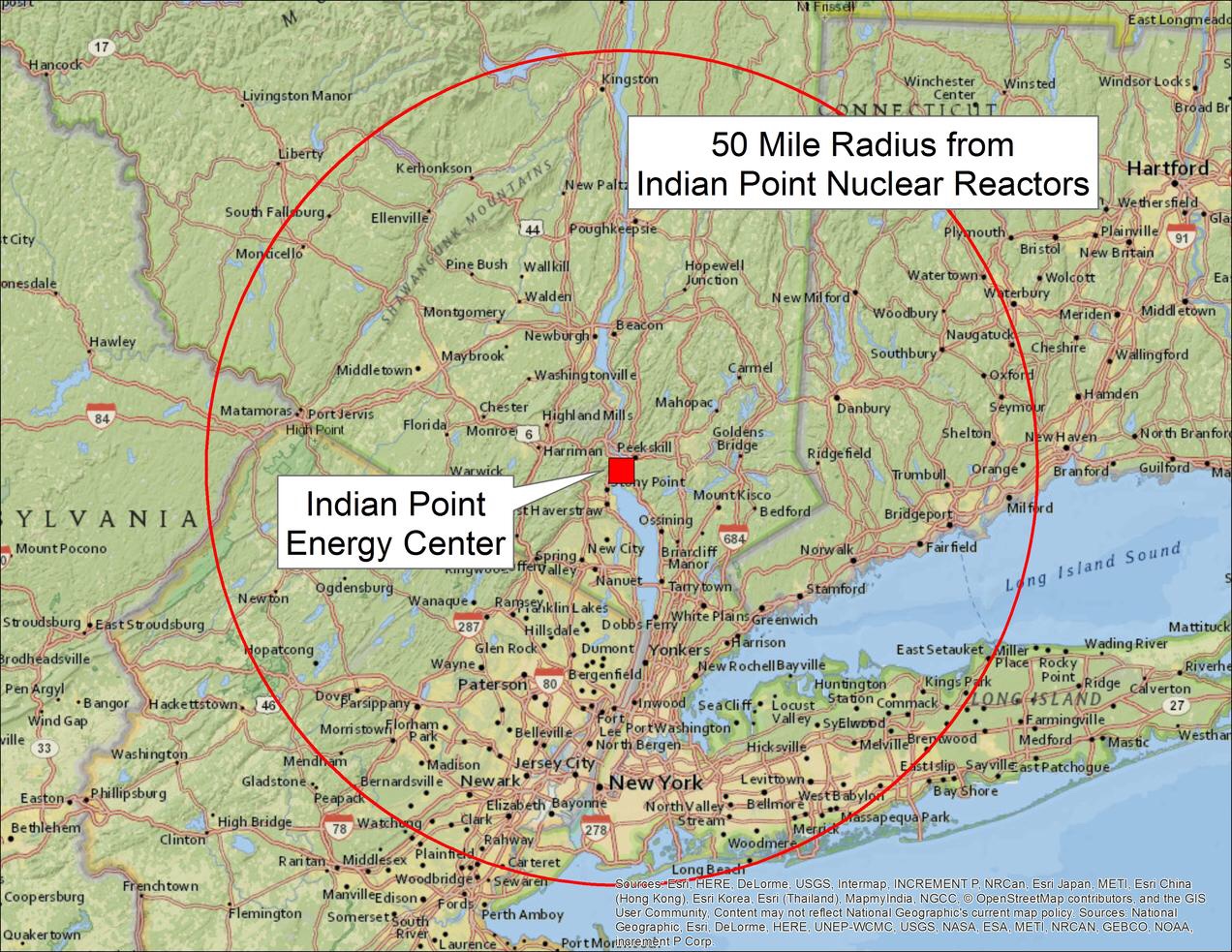
At the county's Emergency Operations Center in Carmel, representatives of law enforcement, education, public health, utilities, Office for Senior Resources, fire and EMS charted an evacuation plan for the Philipstown-Putnam Valley area with residents of the 10-mile radius of Indian Point affected. While no real evacuations occurred, on paper residents living in sections of southern Philipstown, Continental Village, lower Garrison and Putnam Valley were “safely removed.”
The exercise also practiced for the safe evacuations of children attending schools in the affected areas.
Putnam County Commissioner of Emergency Services Ken Clair, Acting County Executive Paul Eldridge and Putnam's Director of Informational Technology and Geographical Information Systems Thomas Lannon were in command of the drill in Putnam County.
Clair said the county was looking forward to receiving the evaluations from both federal and state monitors: "It's important that we plan and practice just in case the unthinkable ever occurs. In Putnam County, we are prepared."

Thursday, September 27, 2018

A Nuclear Disaster Awaits Indian Point Plant at the Sixth Seal

PIPELINEAIM gas pipeline opponents lose legal challenge, may appeal

Thomas C. Zambito, Rockland/Westchester Journal News
Gubernatorial candidate Cynthia Nixon spoke to students about their proximity to the Algonquin natural gas pipeline. She then shared her thoughts. Seth Harrison, sharriso@lohud.com

Opponents of the AIM pipeline expansion say they may refocus their legal challenges on the next phase of the project


While a federal appeals court has rejected a pivotal challenge to the expansion of a natural gas pipeline near the Indian Point nuclear power plant, opponents say they’re not done trying to get the courts to block the project.
The U.S. Court of Appeals for the District of Columbia, in a July 27 decision, sided with the Federal Energy Regulatory Commission (FERC) in turning back a legal challenge to the Algonquin Incremental Market (AIM) pipeline expansion.
The Hudson Valley environmental group Riverkeeper claimed the installation of 2,159 feet of natural gas pipeline across from Indian Point posed a serious threat to public safety, particularly if the pipeline ruptured.
Riverkeeper spokesman Cliff Weathers said a decision to appeal has not been made yet.
But Courtney Williams, who heads the grassroots group SAPE (Stop the Algonquin Pipeline Expansion), said the opposition may focus its future legal challenges on the next phase of the expansion, known as the Atlantic Bridge Project.
“We’re still in discussions with Riverkeeper to determine whether we will appeal this portion of the decision,” Williams said. “But the legal challenge to Atlantic Bridge is already underway.”
Another challenge coming
SAPE joined Riverkeeper, the City of Boston and others in challenging FERC’s decision-making process.
Opponents argued that FERC should have considered the environmental impacts of all three phases of the expansion, including the Atlantic Bridge Project, as one. But the appeals court sided with FERC. “We find no basis to set aside the Commission’s order on those grounds,” the appeals court wrote.
The Atlantic Bridge Project is an extension of the Algonquin pipeline that runs through Yorktown and Somers in northern Westchester before heading into Putnam County and Connecticut.
It is part of a $972 million expansion that will make it possible for the pipeline’s current owner, Enbridge Energy Partners, to deliver natural gas to New England from Pennsylvania, by way of a pipeline that cuts through New Jersey and New York.
The project has impacted several Hudson Valley towns in Putnam, Rockland and Westchester counties and touched off a number of public demonstrations. In 2016, several protesters were arrested after locking themselves inside a section of pipeline in Verplanck while it was being readied to be installed under the Hudson River.
SAPE has staged protests outside Gov. Andrew Cuomo’s New Castle home, urging the governor to shut down the pipeline. And last month at a rally in Peekskill, Cynthia Nixon, Cuomo’s opponent in the September Democratic primary, accused the governor of moving too slowly to address the opposition's concerns.

In June, state officials sent a letter to FERC, urging the commission to re-evaluate its decision allowing the pipeline near Indian Point.
NRC signs off on plan
The appeals court ruling said FERC’s decision allowing the pipeline near Indian Point was supported by an analysis by the Nuclear Regulatory Commission (NRC), which the commission found "persuasive."
NRC’s review determined that Indian Point’s two reactors could safely operate or temporarily shut down if a gas line ruptured near the plant.
FERC’s 2015 ruling credited NRC’s expertise in assessing safety threats to nuclear facilities.
“We see no basis to reject the Commission’s to do so,” the appeals court wrote.
The NRC said it could re-evaluate its decision after Indian Point’s owner, Louisiana-based Entergy, submits a plan for how the plant will be dismantled. Entergy has plans to shut down the Buchanan plant by 2021.
Read or Share this story: https://www.lohud.com/story/news/investigations/2018/08/14/algonquin-gas-pipeline/978104002/

From The USA TODAY NETWORK

Thursday, August 16, 2018

A Nuclear Disaster Awaits Indian Point Plant at the Sixth Seal

PIPELINEAIM gas pipeline opponents lose legal challenge, may appeal

Thomas C. Zambito, Rockland/Westchester Journal News
 
Gubernatorial candidate Cynthia Nixon spoke to students about their proximity to the Algonquin natural gas pipeline. She then shared her thoughts. Seth Harrison, sharriso@lohud.com

Opponents of the AIM pipeline expansion say they may refocus their legal challenges on the next phase of the project

While a federal appeals court has rejected a pivotal challenge to the expansion of a natural gas pipeline near the Indian Point nuclear power plant, opponents say they’re not done trying to get the courts to block the project.
The U.S. Court of Appeals for the District of Columbia, in a July 27 decision, sided with the Federal Energy Regulatory Commission (FERC) in turning back a legal challenge to the Algonquin Incremental Market (AIM) pipeline expansion.
The Hudson Valley environmental group Riverkeeper claimed the installation of 2,159 feet of natural gas pipeline across from Indian Point posed a serious threat to public safety, particularly if the pipeline ruptured.
Riverkeeper spokesman Cliff Weathers said a decision to appeal has not been made yet.
But Courtney Williams, who heads the grassroots group SAPE (Stop the Algonquin Pipeline Expansion), said the opposition may focus its future legal challenges on the next phase of the expansion, known as the Atlantic Bridge Project.
“We’re still in discussions with Riverkeeper to determine whether we will appeal this portion of the decision,” Williams said. “But the legal challenge to Atlantic Bridge is already underway.”
Another challenge coming
SAPE joined Riverkeeper, the City of Boston and others in challenging FERC’s decision-making process.
Opponents argued that FERC should have considered the environmental impacts of all three phases of the expansion, including the Atlantic Bridge Project, as one. But the appeals court sided with FERC. “We find no basis to set aside the Commission’s order on those grounds,” the appeals court wrote.
The Atlantic Bridge Project is an extension of the Algonquin pipeline that runs through Yorktown and Somers in northern Westchester before heading into Putnam County and Connecticut.
It is part of a $972 million expansion that will make it possible for the pipeline’s current owner, Enbridge Energy Partners, to deliver natural gas to New England from Pennsylvania, by way of a pipeline that cuts through New Jersey and New York.
The project has impacted several Hudson Valley towns in Putnam, Rockland and Westchester counties and touched off a number of public demonstrations. In 2016, several protesters were arrested after locking themselves inside a section of pipeline in Verplanck while it was being readied to be installed under the Hudson River.
SAPE has staged protests outside Gov. Andrew Cuomo’s New Castle home, urging the governor to shut down the pipeline. And last month at a rally in Peekskill, Cynthia Nixon, Cuomo’s opponent in the September Democratic primary, accused the governor of moving too slowly to address the opposition's concerns.
In June, state officials sent a letter to FERC, urging the commission to re-evaluate its decision allowing the pipeline near Indian Point.
NRC signs off on plan
The appeals court ruling said FERC’s decision allowing the pipeline near Indian Point was supported by an analysis by the Nuclear Regulatory Commission (NRC), which the commission found "persuasive."
NRC’s review determined that Indian Point’s two reactors could safely operate or temporarily shut down if a gas line ruptured near the plant.
FERC’s 2015 ruling credited NRC’s expertise in assessing safety threats to nuclear facilities.
“We see no basis to reject the Commission’s to do so,” the appeals court wrote.
The NRC said it could re-evaluate its decision after Indian Point’s owner, Louisiana-based Entergy, submits a plan for how the plant will be dismantled. Entergy has plans to shut down the Buchanan plant by 2021.
Read or Share this story: https://www.lohud.com/story/news/investigations/2018/08/14/algonquin-gas-pipeline/978104002/
From The USA TODAY NETWORK

Friday, August 10, 2018

Unfortunately, Indian Point is NOT Prepared for the Sixth Seal (Revelation 6:12)

Last week we activated Rockland County’s Emergency Operations Center in Pomona, thankfully not for an actual emergency but for an Indian Point disaster drill. Rockland was one of four counties that practiced emergency responses in case an incident ever happened at the Indian Point nuclear power plant located just across the Hudson River in Buchanan.
Westchester, Putnam and Orange counties, as well as the State of New York also participated along with Entergy, the plants owner. For Rockland’s part, officials from County and State departments gathered at the fire training center in Pomona where they were graded by monitors from New York State Department of Homeland Security and Emergency Services on how well they responded to the scenario in the exercise.
Let me be clear; Rockland is ready to respond should a major crisis arise at the nuclear power plant owned and operated by Entergy. These exercises are held multiple times a year to ensure all first responders, and employees are well prepared in the event of an emergency.
The drill was led by our Office of Fire and Emergency Services but included the Departments of Health, Mental Health, Social Services, Planning, Transportation, Highway, Office for the Aging, Highway Department, Sheriff’s Department, Purchasing, and numerous other agencies from around the region and state.
Through coincidence a heavy thunderstorm struck during the drill, disrupting communications and injecting a real-world situation into this mock exercise. As a former law enforcement professional, I understand just how important it is to maintain our readiness for anything the real world may throw at us.
During the drill, Rockland employees tracked wind direction, radiation levels, implemented protective actions, tested communications, held media briefings, and issued updates about evacuations.
Rockland County stands ready to handle whatever comes next, but I sincerely hope we never have to put these skills to the test. Thank you to all the employees, first responders and especially our Office of Fire and Emergency Services for cooperating and coordinating so well before, during and after this drill.
For more information on what you should do in the event of a real emergency at Indian Point, including evacuation routes, emergency planning and ways to receive notifications visit the Fire and Emergency Services section of Rocklandgov.com.

Monday, August 6, 2018

USA’s Fukushima At The Sixth Seal (Revelation 6)


Recent series of Indian Point shutdowns worst in years
Ernie Garcia, elgarcia@lohud.com
BUCHANAN — Four unplanned reactor shutdowns over a two-month period at Indian Point are the most setbacks the nuclear power plant has experienced in years.
A review of unplanned shutdowns from January 2012 to the present showed this year’s events happened within a short time frame, between May 7 and July 8, in contrast with events from other years that were more spread out, according to data released by Indian Point.
So many mishaps at the Entergy-owned plant haven’t occurred since 2009, when one of two units at the Buchanan site experienced a similar series, said plant spokesman Jerry Nappi.
Besides a May 9 transformer failure that spilled some 3,000 gallons of oil into the Hudson River, this year’s shutdowns were prompted by a May 7 steam leak, a July 8 pump motor failure and a June 15 switch yard breaker failure offsite in a Consolidated Edison substation.
If a nuclear plant has more than three unplanned shutdowns in a nine-month period, its performance indicator could be changed by the federal Nuclear Regulatory Commission, which results in additional oversight. That’s what happened with Entergy’s Pilgrim Nuclear Power Station in Plymouth, Mass., after four unplanned shutdowns in 2013.
So far, Entergy said there doesn’t appear to be a pattern to the Indian Point shutdowns.
“You do want to look at these events holistically to see if there is something in common, but you also look individually to see what the causes were,” Nappi said. “A plant shutdown in and of itself is not a safety issue.”
One of the four recent Buchanan shutdowns triggered a special inspection by the NRC and calls to close the nuclear plant by environmental groups and elected officials. Gov. Andrew Cuomo has said in the past Indian Point should close, but his office did not respond to a request for comment about whether the recent shutdowns have prompted any state scrutiny.
The NRC is expected to release a quarterly report on Indian Point this month that will address the transformer failure and, by year’s end, is planning an inspection of the transformer and an analysis of transformer issues since 2007.
Besides its transformer-related inquiries, the other three shutdowns have not raised “any immediate safety concerns or crossed any thresholds that would result in additional NRC oversight,” agency spokesman Neil Sheehan wrote in an email.
The unplanned shutdowns at Indian Point and Pilgrim in Massachusetts were mostly preventable, said Paul Blanch, a former Indian Point employee with 45 years of nuclear power experience.
“For this to happen this frequently indicates a deeper problem,” he said. “I believe it’s management oversight in the maintenance of these plants.”
Nappi said the transformer that failed May 9 and caused a fire and oil spill into the Hudson was regularly monitored. Investigators determined the failure was due to faulty insulation.
“The transformer inspection and reviews were in accordance with our standards and industry expectations, yet there was no indication the transformer was going to fail,” Nappi said.
The NRC conducted a separate, but related special inspection into the May 9 incident that focused on a half-inch of water that collected in an electrical switchgear room floor. Inspectors determined a fire suppression system’s valve failed to close properly.
Inspectors noted in their report that Entergy knew about that problem since April 2011 and replaced the valve but didn’t discover the actual cause — a dysfunctional switch — until after the fire.
Indian Point’s Unit 3 was down 19 days May through July, with the transformer failure accounting for 16 days. The shutdowns didn’t cause the public any supply problems because New York’s grid can import electricity from other states and New York has an energy plan to maintain reliability, according to the U.S. Energy Information Administration.
The nuclear energy industry judges a power plant on how continuously it produces energy, which is called a capacity factor.
There were 100 nuclear plants in the United States in 2014, a record year in terms of efficiency. In January, the Nuclear Energy Institute announced the U.S. average capacity factor was 91.9 percent.
Indian Point has an above-average efficiency rate. The plant’s Unit 2 and 3 reactors were each online more than 99 percent of the time during their most recent two-year operating cycles. They are currently in the middle of other cycles.
Tuesday, July 24, 2018

The Nuclear Meltdown at the Sixth Seal (Revelation 6:12)


INDIAN POINT 

NYS agencies urge more scrutiny of Algonquin pipeline at Indian Point

Jorge Fitz-Gibbon, Rockland/Westchester Journal News
A group of residents opposed to the Algonquin gas pipeline project meet at Somers Intermediate School Monday, Dec. 4, 2017. Peter Carr/The Journal News
State asks Federal Energy Regulatory Commission for more steps 'to minimize risk and protect public safety' near the Buchanan plant
Several New York state agencies are urging the Federal Energy Regulatory Commission to institute additional safety measures on the Algonquin Pipeline portions near the Indian Point nuclear reactor.
In a letter to the commission, officials from the state health, public safety, environmental conservation and homeland security agencies called for "additional scrutiny and monitoring" to minimize risks near the Buchanan plant.
"While the probability of pipeline incidents is low, the proximity to the Indian Point nuclear plant makes the potential consequences of such an event very significant," the state agencies said in a joint statement. "Additional scrutiny and monitoring to better understand and reduce risks associated with the Algonquin pipelines is warranted."
Pipeline owner Enbridge is in the midst of expanding the half-century old natural gas pipeline from Pennsylvania, through Westchester, Rockland and Putnam counties, and north into New England.
Work done so far includes a new section through Stony Point, under the Hudson River, into Verplanck and near the Indian Point Energy Center.
The plan has sparked protests throughout the pipe's path.
On Friday, the state agencies asked the federal commission for additional safety measures near the Indian Point property, including:
• Ensure that Enbridge will not be allowed to send additional natural gas at higher pressure through the pipeline to meet high demand for gas in the Northeast.
• The commission should work with the Nuclear Regulatory Commission to examine Entergy Corp.'s decommission plan for Indian Point "to determine potential impacts to the original Algonquin pipelines."

Wednesday, June 27, 2018

The Nuclear Meltdown at the Sixth Seal (Revelation 6:12)


INDIAN POINT 

NYS agencies urge more scrutiny of Algonquin pipeline at Indian Point

Jorge Fitz-Gibbon, Rockland/Westchester Journal News
 
A group of residents opposed to the Algonquin gas pipeline project meet at Somers Intermediate School Monday, Dec. 4, 2017. Peter Carr/The Journal News
State asks Federal Energy Regulatory Commission for more steps 'to minimize risk and protect public safety' near the Buchanan plant
Several New York state agencies are urging the Federal Energy Regulatory Commission to institute additional safety measures on the Algonquin Pipeline portions near the Indian Point nuclear reactor.
In a letter to the commission, officials from the state health, public safety, environmental conservation and homeland security agencies called for "additional scrutiny and monitoring" to minimize risks near the Buchanan plant.
"While the probability of pipeline incidents is low, the proximity to the Indian Point nuclear plant makes the potential consequences of such an event very significant," the state agencies said in a joint statement. "Additional scrutiny and monitoring to better understand and reduce risks associated with the Algonquin pipelines is warranted."
Pipeline owner Enbridge is in the midst of expanding the half-century old natural gas pipeline from Pennsylvania, through Westchester, Rockland and Putnam counties, and north into New England.
Work done so far includes a new section through Stony Point, under the Hudson River, into Verplanck and near the Indian Point Energy Center.
The plan has sparked protests throughout the pipe's path.
On Friday, the state agencies asked the federal commission for additional safety measures near the Indian Point property, including:
• Ensure that Enbridge will not be allowed to send additional natural gas at higher pressure through the pipeline to meet high demand for gas in the Northeast.
• The commission should work with the Nuclear Regulatory Commission to examine Entergy Corp.'s decommission plan for Indian Point "to determine potential impacts to the original Algonquin pipelines."

Tuesday, January 26, 2016

Indian Point Will Be America’s Fukushima At The Sixth Seal


a -  Indian Point
Indian Point. (Patrick Stahl)
By Scott Waldman 5:26 a.m. | Jan. 25, 2016 2
follow this reporter
On Thursday, the administration began proceeding with the Clean Energy Standard, which Gov. Andrew Cuomo ordered to be completed by July to reach the state’s clean energy goals of powering half of the electrical grid with wind, solar and other sources by 2030. However, at least two of the state’s nuclear reactors are in danger of closing within the next few years and would significantly increase air pollution because they would be replaced by fossil-fuel burning power plants in the near future.
The administration policy will prolong the life of nuclear facilities for a few years, to serve as a bridge to the cleaner-energy options. To meet that goal, the state Department of Public Service is recommending a policy to require utilities to purchase a certain amount of nuclear power. Utilities and other energy companies, such as energy service companies, will purchase power from nuclear facilities.
“These zero emissions credits will represent the emissions-free value of energy produced by the nuclear power plants specifically,” said Scott Weiner, deputy for markets and innovation at DPS, at Thursday’s meeting.
The administration’s treatment of nuclear facilities could serve as a national model for other states, where nuclear plants are also struggling to compete against cheaper power sources.
Nuclear facilities do not produce air pollution like power sources that burn fossil fuels. The state’s nuclear fleet is struggling to compete against an influx of cheap natural gas, largely from neighboring Pennsylvania. The James A. FitzPatrick plant in Oswego County has already announced it will close within the next year. The R.E. Ginna facility on Lake Ontario is also in danger of closing, but is currently being subsidized by ratepayers because it is needed for electrical grid reliability.
States are also under pressure to reduce air pollution from power sources under the Obama administration’s Clean Power Plan. While New York is on track to meet its federal emissions reduction target, the loss of two or more reactors would make it considerably more difficult.
The owner of the FitzPatrick facility, Entergy, says the administration’s actions come too late to save it. The plant, which will lose an estimated $60 million this year, has to make refueling decisions now and has been unable to reach a deal with the Cuomo administration to stay open.
Entergy has two separate lawsuits against the Cuomo administration, one for interfering in the state’s energy markets and another for targetting Indian Point.
State officials referred to licensed plants as the beneficiaries of the Clean Energy Standard, which should not exclude Indian Point, said Entergy vice president Mike Twomey. He said Indian Point is fully licensed and should not be considered as separate under the plan from other nuclear facilities.
“It appears the state is attempting to draw a distinction between Indian Point and the upstate plants based on its license and there is no distinction,” he said.
Officials from Exelon, which owns the Ginna plant as well as the Nine Mile Point facility outside Rochester on Lake Ontario, praised the Cuomo administration plan.
“Progressive energy policies will help ensure that Exelon’s upstate nuclear stations can continue delivering zero-carbon electricity and driving local economies for many years to come,” said Joe Dominguez, Exelon’s executive vice president of governmental and regulatory affairs and public policy, in a statement.
Saving nuclear facilities will likely cost consumers. If utilities are forced to buy more expensive power, that will be passed along to customers.
The Clean Energy Standard requirements would last through 2020 and with additional targets added through 2023, Weiner said at Thursday’s meeting.