Saturday, March 31, 2018

Khamenei Suppresses Christianity in Iran (Daniel 8:4)

Christian Property in Iran to Be Taken Over by Supreme Leader’s Organization – Center for Human Rights in Iran

Sharon Gardens, a valuable property near Tehran confiscated from Iran’s largest Christian Protestant organization by a group controlled by the country’s supreme leader, was hit with an eviction order on March 7, 2018.

“This action is part of the pressure put on individuals with different beliefs and religious minorities in Iran,” Kiarash Alipour, a spokesman for the London-based Article 18 Christian organization, told the Center for Human Rights in Iran (CHRI) on March 26, 2018.
In essence, they are trying to eliminate Protestant Christians from Iranian society,” he said.
Alipour added that representatives of Sharon Garden’s new owners had visited the property and ordered the live-in caretaker to evacuate even though he has nowhere else to go.
Sharon Gardens is located on 2.5 acres of land in the Valadabad district of Karaj, 32 miles west of the Iranian capital. It had belonged to the Jama’at-e Rabbani Church Council, also known as the Iran Assemblies of God, since the early 1970s.
Alipour told CHRI that many Iranian Christians have fond memories of the garden property, which was used as a camp for youths and their families before it was confiscated.
In August 2016, an Appeals Court upheld the confiscation order in favor of an organization under the control of Supreme Leader Ali Khamenei known as the Headquarters for Implementation of the Imam’s Decree, which accused Jama’at-e Rabbani of having ties to the CIA.
The Headquarters for Implementation of the Imam’s Decree, which had sued to take over Sharon Gardens, was established by the founder of the Islamic Republic, Rouhollah Khomeini, in 1989 to confiscate properties abandoned after the revolution. Today it operates under the supervision of current Supreme Leader Ali Khamenei and is not accountable to the government or Parliament.
Besides the financial damages resulting from the confiscation of this garden, our members are living under the shadow of espionage allegations,” Alipour told CHRI, adding that the charges have never been substantiated.
“The church has been accused of being a branch of an American church in Philadelphia that was operated by the CIA to infiltrate Muslim countries, which is a complete and baseless lie,” he added.
“The Jama’at-e Rabbani Church Council was very popular in Iran and had many branches in different cities,” said Alipour. “But, unfortunately, the church was shut down between 2011 and 2012 during Mahmoud Ahmadinejad’s presidency. Not just this church, but all the churches performing prayers in Persian [Farsi language] were closed.”
“One reason was a speech by Khamenei in Qom [city] around that time [October 2010] accusing these churches of being a gateway for enemies to infiltrate the country,” he added.
Despite assertions by government officials that Christians enjoy full rights as citizens of Iran, the Christian community—particularly Evangelicals and Protestant communities, which are seen as encouraging conversion to Christianity—suffers severe and widespread discrimination and persecution in Iran, as documented in CHRI’s report, “The Cost of Faith: Persecution of Christian Protestants and Converts in Iran.”
Article 18 advocates for the rights of Christians in Iran based on Article 18 of the International Covenant on Civil and Political Rights (ICCPR), which states, “No one shall be subject to coercion that would impair his freedom to have or to adopt a religion or belief of his choice.”
Iran’s Constitution recognizes the rights of Christians to “perform their religious rites and ceremonies” (Article 13), but the state has only tolerated non-Farsi speaking churches.
“Although Article 13 of the Constitution recognizes Christians as a religious minority, in reality we see that the state has divided them into two groups; one is officially recognized, the other is not,” Alipour told CHRI.
“Persian speakers are not recognized at all,” he said. “In other words, only Assyrian and Armenian Iranians born to Christian families are accepted, but those from Muslim backgrounds are not.”
He added: “In 1991, the Islamic Republic, which felt threatened when many former Muslims joined the growing number of Persian churches, shut down the Bible Society, the only publisher of Christian books in the country and since then you can only buy Christian books on the black market because our Holy Book is no longer allowed to be published in Iran.”

Friday, March 30, 2018

The Sixth Seal Is Past Due (Revelation 6:12)

https://www.cheatsheet.com/wp-content/uploads/2015/05/aftershock-640x484.png?044193 
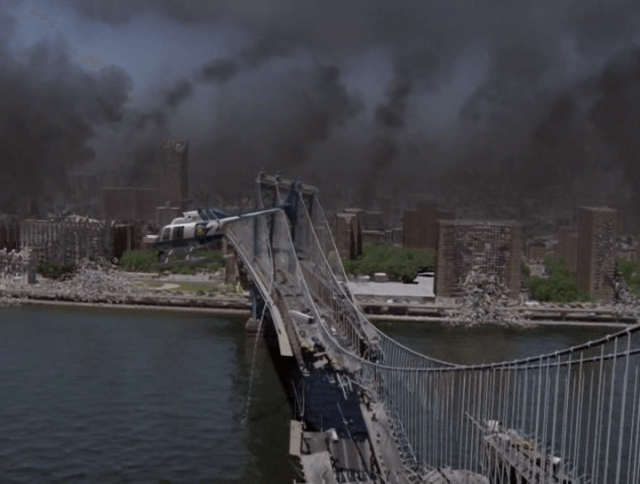
New York City is Past Due for an Earthquake
by , 03/22/11
filed under: News
New York City may appear to be an unlikely place for a major earthquake, but according to history, we’re past due for a serious shake. Seismologists at Columbia University’s Lamont-Doherty Earth Observatory say that about once every 100 years, an earthquake of at least a magnitude of 5.0 rocks the Big Apple. The last one was a 5.3 tremor that hit in 1884 — no one was killed, but buildings were damaged.
Any tremor above a 6.0 magnitude can be catastrophic, but it is extremely unlikely that New York would ever experience a quake like the recent 8.9 earthquake in Japan. A study by the Earth Observatory found that a 6.0 quake hits the area about every 670 years, and a 7.0 magnitude hits about every 3,400 years.
There are several fault lines in New York’s metro area, including one along 125th Street, which may have caused two small tremors in 1981 and a 5.2 magnitude quake in 1737. There is also a fault line on Dyckman Street in Inwood, and another in Dobbs Ferry in Westchester County. The New York City Area Consortium for Earthquake Loss Mitigation rates the chance of an earthquake hitting the city as moderate.
John Armbruster, a seismologist at the Earth Observatory, said that if a 5.0 magnitude quake struck New York today, it would result in hundreds of millions, possibly billions of dollars in damages. The city’s skyscrapers would not collapse, but older brick buildings and chimneys would topple, likely resulting in casualities.
The Earth Observatory is expanding its studies of potential earthquake damage to the city. They currently have six seismometers at different landmarks throughout the five boroughs, and this summer, they plan to place one at the arch in Washington Square Park and another in Bryant Park.
Won-Young Kim, who works alongside Armbuster, says his biggest concern is that we can’t predict when an earthquake might hit. “It can happen anytime soon,” Kim told the Metro. If it happened tomorrow, he added, “I would not be surprised. We can expect it any minute, we just don’t know when and where.”
Armbuster voiced similar concerns to the Daily News. “Will there be one in my lifetime or your lifetime? I don’t know,” he said. “But this is the longest period we’ve gone without one.”
Via Metro and NY Daily News
Images © Ed Yourdon

Pakistan Completes the Nuclear Triad (Daniel 8:8)

 
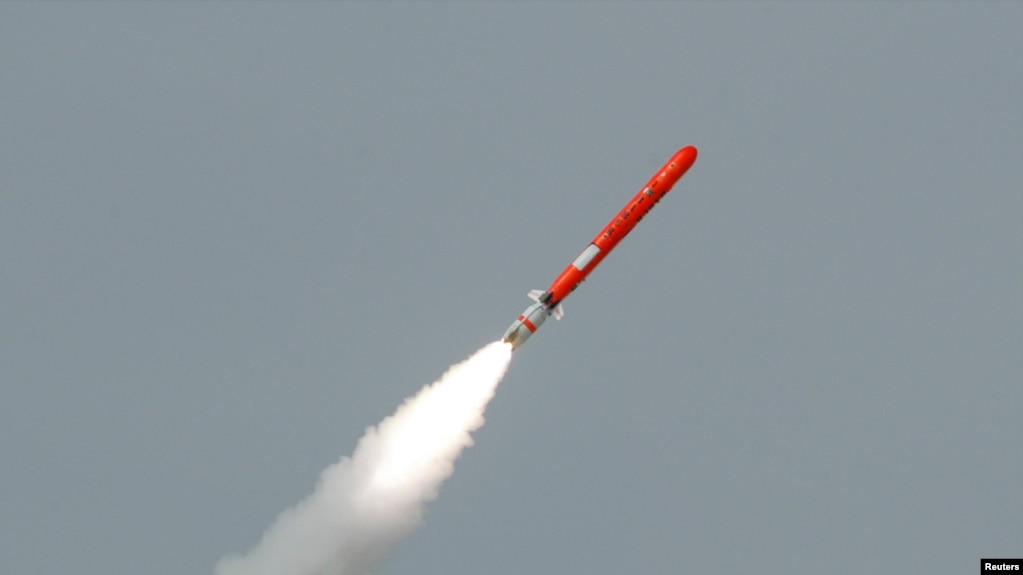
ISLAMABAD —Pakistan announced Thursday that it had successfully conducted another test-firing of a nuclear-capable, submarine-launched cruise missile (SLCM), which has a range of 450 kilometers.
The indigenously developed Babur missile was fired from an underwater platform and "engaged its target with precise accuracy," a military statement said.
The rocket is capable of delivering "various types of payloads" and provides Pakistan a "credible" second-strike capability.
Military spokesman Major-General Asif Ghafoor, while referring to the country's archrival India, said the development of Babur was a response to "provocative nuclear strategies and posture being pursued in the neighborhood." He also released some footage of the testing.
Pakistan said its nuclear and missile development programs are India-specific and have effectively deterred the bigger neighbor, with its larger military power, from imposing another war on the country.
"When it comes to responding to India for their threat, anything and everything that we have is for them and for nobody else," Ghafoor told reporters a day earlier.
Military tensions are running high over the divided Kashmir region, which has caused two of the three wars between nuclear-armed India and Pakistan.
Both South Asian nations are locked in almost daily skirmishes along the Line of Control, which separates Pakistan's portion from the Indian-ruled two-thirds of the Himalayan region.
Meanwhile, earlier this week the United States imposed sanctions on seven Pakistani companies for alleged links to the nuclear trade.
The Commerce Department's Bureau of Industry and Security (BIC) places those companies on its Entity List, which the U.S. uses to identify foreign parties that are "acting contrary to the national security or foreign policy interests of the United States," the BIC website explains.

Making the Deal with Korea

https://image.tmdb.org/t/p/original/7lmQIJt7IKjSlii9w6Ybjx7Cnhz.jpg
Never mind about John Bolton. Trump's ego could force a North Korea deal anyway
Michael Desch is the Director of the Notre Dame International Security Center. The views expressed are his own.
(CNN)Many people are understandably alarmed by President Trump's appointment of unrepentant George W. Bush-era hawk John Bolton as his new National Security Adviser to replace General H.R. McMaster, who is unceremoniously marching off into the sunset on the heels of his predecessor, General Michael Flynn.
In 2003, Bolton rode in the vanguard of the war party, pushing to topple Saddam Hussein on the specious grounds that Iraq was pursuing nuclear and chemical weapons and in cahoots with al Qaeda. Unchastened by the Iraq debacle and the exposure of the bogus rationales for the war, an out-of-power Bolton has sniped at the Obama administration's Iran nuclear agreement and beat the drums for war to denuclearize North Korea.
While putting Bolton back in power may signal the demise of the Joint Comprehensive Plan of Action (JCPOA) for Iran, I am less worried, ironically, about the prospects for a diplomatic solution to the North Korean nuclear crisis. Indeed, I can see a way that the President's ego, combined with his penchant for ignoring his advisers, could advance a diplomatic solution to the tinderbox straddling both sides of the 38th Parallel even while they drive the last nail in the coffin of the Iran nuclear deal.
This would be a shame, given that the JCPOA has broad international support among our allies and other important powers such as Russia and China. Like most arms control agreements, it is not perfect, but most of its supposed defects involve things like Iranian meddling in other countries, support for terrorist organizations, or development of ballistic missiles which were not covered by the original agreement.
Kim Jong Un's cunning strategy could lead the world down a dangerous path
Most knowledgeable observers inside and outside the United States concede, even if grudgingly, that Iran has abided by the narrow terms of the agreement itself.
So why would President Trump discard a good agreement with Iran and pursue what is likely to be a far more flawed one with North Korea? Such an approach makes little strategic sense, but strategy has little to do with how the President thinks about the world. Rather, our Art-of-the-Deal President operates primarily on a personal level.
While he hates former President Obama's Iran deal, primarily because he, himself, did not cut it, I could imagine him reaching a far worse deal with North Korea which he would love, warts and all, because it was his.
To be sure, there are also more credible reasons for him to pursue a diplomatic, rather than military, solution to the North Korean nuclear crisis. It has become apparent in recent months that, despite the President's badgering of his military advisers for a plan to pre-emptively knock out the Hermit Kingdom's budding nuclear arsenal, the best he can get out of them are plans to give Pyongyang a bloody nose through symbolic strikes, hoping that will scare Kim into surrendering his arsenal.
Nor can America's military planners assure the President that even a reasonably successful first strike on Kim's nuclear arsenal would prevent a catastrophic conventional war that would kill hundreds of thousands of Korean civilians. This realization that their capitol Seoul and millions of their citizens are within range of tens of thousands of North Korean artillery pieces has led our South Korean allies to push hard for jaw-jaw rather than war-war, to borrow Winston Churchill's famous phrase.
China is joined at the hip with North Korea in a dysfunctional marriage of inconvenience, in which the Middle Kingdom provides its wayward younger brother with most of its food and energy supplies to avoid having an American ally on its border and preserve the last shred of its increasingly threadbare international Communist legitimacy. So it would also welcome a deal that ends the slow-motion crisis between Washington and Pyongyang.
Finally, North Korean dictator Kim Jong Un's flurry of diplomacy with the South and hasty train trip to visit his patrons in Beijing could signal that North Korea's foremost Dennis Rodman fan may also want to play Let's Make a Deal.
Predicting what President Trump will likely do is as fraught an endeavor as divining the murky palace politics of "little rocket man's" regime. But assuming that ego trumps strategy in Washington these days, the desire to cut a North Korean nuclear deal makes sense of some of the recent puzzling moves from the President, particularly the indecent alacrity with which he accepted Kim's olive branch delivered via Seoul a couple of weeks ago.
Incoming Trump National Security Adviser Bolton will surely not want to play along with this diplomatic Kabuki dance, which is unlikely to roll back North Korea's nuclear program. Indeed, most analysts think that in exchange for an easing of the crippling economic sanctions, the best President Trump is likely to get is a "freeze" on additional North Korean missile tests. This is hardly a great deal from Bolton's global regime change perspective or even compared with the JCPOA.
But if I am right that Trump's ego will trump Bolton's hardline strategic agenda, any flaws in an agreement with North Korea may be irrelevant.
Ironically, this might be one instance in which the President's well-documented penchant for bypassing his advisers may favor diplomacy. Indeed, a cynic might wonder whether Bolton's appointment was in part Trump's effort to protect his right flank as he pursues a historic, if flawed, North Korean nuclear "deal."

The Russian Nuclear Horn and Satan


Russia Says It Launched Something Worse Than Satan
MOSCOW (AP) — Russia has successfully tested its latest intercontinental ballistic missile, the country's military said Friday.
The Defense Ministry said the launch from Plesetsk in northwestern Russia tested the Sarmat missile's performance in the initial stage of its flight.
Sarmat is intended to replace the Soviet-designed Voyevoda, the world's heaviest ICBM that is known as "Satan" in the West.
Presenting Sarmat and an array of other nuclear weapons earlier this month, President Vladimir Putin said that they can't be intercepted.
Putin said that Sarmat weighs 200 metric tons and has a higher range than Satan, allowing it to fly over the North or the South Poles and strike targets anywhere in the world. He added that Sarmat also carries a bigger number of nuclear warheads, which are more powerful than the ones on Satan.
The Russian president also said the new ICBM accelerates faster than its predecessor, making it harder for the enemy to intercept in its most vulnerable phase after the launch. He also said Sarmat could carry an array of warheads capable of dodging missile defenses.
Copyright 2018 The Associated Press. All rights reserved. This material may not be published, broadcast, rewritten or redistributed.

Saudi Arabia and Ending the Iran Deal


Saudi Crown Prince Urges U.S. to Withdraw from Iran Nuclear Deal During Visit
by Adelle Nazarian28 Mar 2018
AFP/ FAYEZ NURELDINE
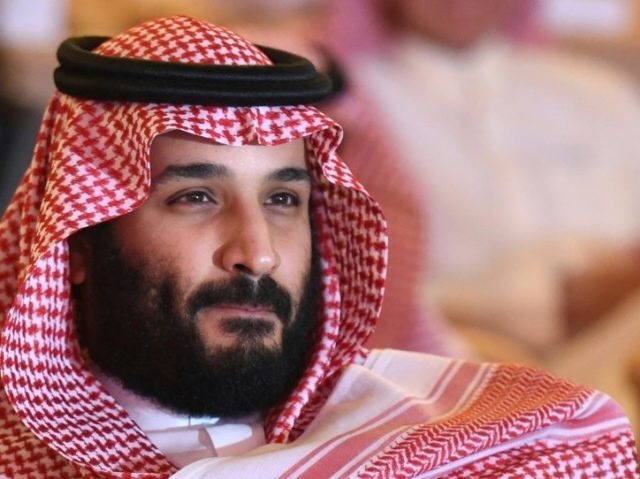
During his two-week visit to the United States, Saudi Arabia’s Crown Prince Mohammed bin Salman (MBS) renewed his calls for the U.S. to fully withdraw from the nuclear Iran deal, saying the accord would not prevent Iran’s regime from acquiring nuclear weapons and likened it to “waiting for the bullet to reach your head.”
“Delaying it and watching them getting that bomb, that means you are waiting for the bullet to reach your head,” MBS, 32, said Monday during a meeting with the New York Times. “So you have to move from today.”
MBS’s visit reportedly will include Washington, New York, Silicon Valley, and Houston before he returns home.
“We know the target of Iran,” MBS reportedly said. “If they have a nuclear weapon, it’s a shield for them to let them do whatever they want in the Middle East, to make sure that no one attacks them or they will use their nuclear weapons.”
MBS asserted this month during a CBS interview that Riyadh will pursue the development of nuclear weapons development if Iran acquires one. In that same interview, MBS said Iran’s Supreme Leader Ayatollah Khamenei is “very much like Hitler” and referred to him as “the new Hitler.”
“Iran is not a rival to Saudi Arabia. Its army is not among the top five armies in the Muslim world,” MBS said. “The Saudi economy is larger than the Iranian economy. Iran is far from being equal to Saudi Arabia.”
Both nations follow different sects of Islam, with Iran being mostly Shia and Saudi Arabia being Sunni. They are also in the midst of a bloody power struggle throughout the Middle East which includes Yemen, Syria, and Libya.
On Sunday, Saudi Arabia intercepted and destroyed seven missiles that were fired at it by Iranian-backed Houthi rebels in Yemen. According to CNN, one person, an Egyptian resident, died as a result of falling debris, marking the first such casualty on Saudi soil in three years.
“These hostile acts continue to pose a direct threat to the Kingdom of Saudi Arabia and threaten regional, as well as international, security,” a statement from Saudi coalition forces spokesman Col. Turki al-Maliki read.
Saudi Arabia intercepted an Iranian missile launched by Iran-backed Houthi rebels in Yemen in December.
That same month, U.S. Ambassador to the United Nations Nikki Haley said a marker on one of the fragments bore distinct signatures and markings of a typical Iranian missile.
However, Iran denied this and claimed the missile Haley displayed was “fabricated.”
Adelle Nazarian is a politics and national security reporter for Breitbart News. Follow her on Facebook and Twitter.

Making A Golden Deal with Trump

http://kanivatonga.nz/wp-content/uploads/2017/08/Trump-and-Kim.jpgDumping North Korea nuclear weapons: What does Kim Jong Un want from Trump?
Oren Dorell
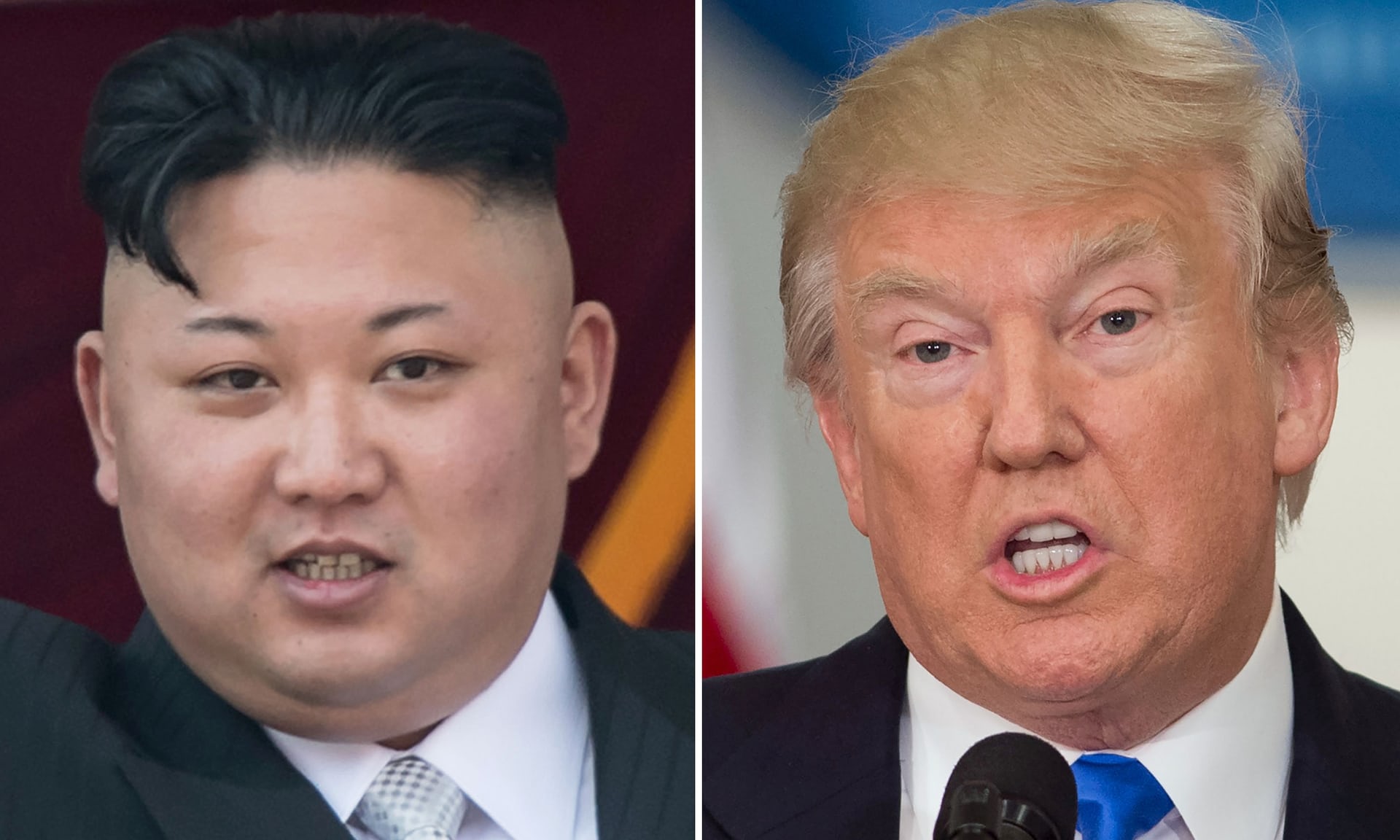
North Korean leader Kim Jong Un has committed to a nuclear free Korean Peninsula ahead of his planned summit with President Trump, according to Chinese media. But what will he want in return for his prized possessions?
Past agreements and statements by the North's government show that Kim wants normalized relations with the United States, something no American president has had the stomach to deliver to one of the most brutal regimes in the world.
“An end to US enmity remains Kim Jong Un’s aim just as it was his grandfather’s and father’s for the past thirty years,” says Leon Sigal, author of Disarming Strangers: Nuclear Diplomacy with North Korea.
Kim may be willing to denuclearize and even take steps to disarm if Trump commits to end hostile relations with the North — and takes action to show he means it, Sigal wrote Monday in 38 North, a publication of the U.S.-Korea Institute at Johns Hopkins University.
The problem for U.S. leaders has always been that the highly militarized and totalitarian North Korean government is so brutal to its own people and aggressive toward its neighbors that exchanging ambassadors and conducting normal trade would be politically unappetizing.
Trump, however, signaled Tuesday that this time might be different.
"For years and through many administrations, everyone said that peace and the denuclearization of the Korean Peninsula was not even a small possibility," Trump said on Twitter. "Now there is a good chance that Kim Jong Un will do what is right for his people and for humanity. Look forward to our meeting!"
For years and through many administrations, everyone said that peace and the denuclearization of the Korean Peninsula was not even a small possibility. Now there is a good chance that Kim Jong Un will do what is right for his people and for humanity. Look forward to our meeting!
— Donald J. Trump (@realDonaldTrump) March 28, 2018
Received message last night from XI JINPING of China that his meeting with KIM JONG UN went very well and that KIM looks forward to his meeting with me. In the meantime, and unfortunately, maximum sanctions and pressure must be maintained at all cost!
— Donald J. Trump (@realDonaldTrump) March 28, 2018
U.S. statements and failed agreements under past presidents show what the Kim family has always wanted.
The Clinton years
During the Cold War, Kim’s grandfather, Kim Il Sung, sought to reduce over-dependence on China by working with the Soviet Union. As the Soviet Union was about to collapse, he reached out to the U.S., Japan and South Korea for the same reason.
That led to the 1994 Agreed Framework, which required North Korea to freeze work on nuclear reactors suspected of being part of a covert nuclear weapons program in exchange for two nuclear power reactors that would be hard to use for weapons' work.
The agreement, negotiated under then-President Bill Clinton, also required the U.S. and North Korea “to move toward normalizing economic and political relations, including by reducing barriers to investment, opening liaison offices, and ultimately exchanging ambassadors,” according to the Arms Control Association.
That level of agreement never happened. And U.S. intelligence agencies later concluded that the North had launched a new nuclear weapons project in secret.
George W. Bush
Under President George W. Bush, White House officials said they had no hostile intent toward North Korea. But after the 9/11 terrorist attacks, Bush named North Korea in his “Axis of Evil.” Then the White House issued a report that discussed pre-emptive attacks on countries like North Korea that were developing weapons of mass destruction.
Kim’s father, Kim Jong Il, restarted his dormant nuclear reactors. And the Bush administration returned to negotiations with the North.
That led to the 2005 Joint Statement of the Six Party Talks, in which North Korea committed to “the verifiable denuclearization of the Korean Peninsula in a peaceful manner,” and “to abandoning all nuclear weapons.”
Again, the North and the U.S. said they would “respect each other's sovereignty, exist peacefully together, and take steps to normalize their relations subject to their respective bilateral policies.”
Two more rounds of talks took place, with no substantial results.
Barack Obama and Trump
In April 2009, North Korea tested a long-range missile and later announced it would no longer negotiate or abide by previous agreements. In all its statements since, it asserted its right to develop nuclear weapons to deter the U.S. threat.
North Korea quickly ramped up its nuclear weapons program when President Barack Obama was in office, and during the first year of Trump's presidency.